



Abstract
Despite the relevance of team boundary spanning in new product development (NPD), there is great deal we still do not know about these activities. For example, little is known about how these activities affect the development of team identification, an important emergent state with critical implications for new product performance. This study extends our understanding of this topic by exploring the relationship between team boundary spanning and team identification. This relationship is examined via the intervening mechanisms of team potency and team boundedness and the moderating effect of intra-team communication. Data from a time-lagged survey study of 140 NPD projects revealed that team potency and team boundedness, respectively, positively and negatively mediate the relationship between team boundary spanning and team identification. Intra-team communication was found to reduce the negative effect of team boundary spanning on team boundedness.
Keywords
Introduction
In today highly competitive and fast-paced business environment, it is increasingly common for new product development (NPD) teams to partake in boundary spanning activities (Carboni et al., 2021; Zhang & Li, 2021). Team boundary spanning is defined as “the team’s actions to establish linkages and manage interactions” with parties external to the team (Marrone, 2010, p. 914). Team boundary spanning encompasses a broad range of activities including scouting, ambassadorial, and task coordination activities targeting a diverse set of external actors such as other teams or departments, senior managers, customers, suppliers, research organizations, and the general public (Ancona & Caldwell, 1992; Choi, 2002). Despite the prevalence of team boundary spanning in NPD teams, there are still important questions and unknowns in relation to the consequences of these activities for team functioning and performance (Carbonell & Rodriguez Escudero, 2023; Kaiji et al., 2022). This study extends our understanding of this topic by exploring the relationship between team boundary spanning and team identification. This relationship is examined via the intervening mechanisms of team potency and team boundedness and the moderating effect of intra-team communication.
Team identification, defined as the perception of oneness with the team (Ashforth & Mael, 1989), has been described as an important determinant of NPD performance. Research in NPD has revealed that high levels of team identification can lead to greater team member satisfaction (Brockman et al., 2010), higher new product innovativeness (Sethi et al., 2001), and better new product market performance (Brockman et al., 2010; Sethi, 2000). Currently, evidence on the impact of team boundary spanning on team identification is lacking. Nevertheless, a review of the literature suggests both positive and negative effects. Thus, it has been speculated that team boundary spanning, which requires frequent interactions with external parties, can reduce clarity regarding team membership (Wimmer et al., 2019). Because team membership is perhaps the most defining characteristic of teams—“after all, what makes a team recognizable as a specific team is its members” (Benishek & Lazzara, 2019, p. 2)—a lack of clarity about who is or is not a member of the team is likely to result in low levels of team identification. At the same time, however, there exists evidence that team boundary spanning can improve a team internal functioning. Thus, Marrone et al. (2007) noted that boundary spanning activities “enable teams to acquire needed resources, support and guidance from external parties, thus promoting a highly productive internal team dynamic and a satisfying team experience” (p. 1428). Such gratifying experience could well improve team identification. This study sheds light into the relationship between team boundary spanning and team identification by predicting and testing, for the first time, positive and negative effects of team boundary spanning on team identification. Furthermore, the study seeks to explain the intervening mechanisms responsible for the positive and negative effects. Drawing on research on how team identification emerges (Thomas et al., 2017; Vignoles et al., 2006), the study proposes that team boundary spanning activities can foster team identification by improving team potency or the belief that the team can be effective (Guzzo et al., 1993). In addition, we argue that engaging in boundary spanning activities could also undermine team identification by reducing team boundedness—or clarity about who is or is not a member of the team (Wageman et al., 2005). Team identification is expected to have a positive effect on new product competitive advantage (Brockman et al., 2010; Sethi, 2000; Sethi et al., 2001).
Finally, prior research has suggested that holding frequent and high-quality communications among team members can make it easier to keep tap of who is or is not a team member and get to know each other (Ancona et al., 2002, 2009). Accordingly, we expect the negative effect of team boundary spanning on team identification to become weaker when intra-team communication is high than when it is low.
Findings from this study contribute to the literature in several ways. First, the explosive growth in the use of team boundary spanning in NPD along with the importance of team identification for NPD performance call for a deeper understanding on how team boundary spanning impacts team identification in NPD teams. This study addresses this call and untangles some of the apparent contradictions in the literature by predicting and testing positive and negative effects of team boundary spanning on team identification. Second, the scant research that has focused on the impact of team boundary spanning on team identification has not examined the process by which this effect takes place. This study fills this research gap by exploring the roles of team potency and team boundedness as intervening mechanisms of the dual effects of team boundary spanning on team identification. Third, by incorporating the moderating of intra-team communication on the relationship between team boundary spanning and team identification, the study provides new important insights into the conditions under which team boundary spanning is likely to deliver the best results to NPD teams.
Definitions and theoretical framework
Team boundary spanning is defined as the team’s actions to establish linkages and interact with relevant actors inside and outside the organization for the purpose of meeting team’s goals and objectives (Marrone, 2010). Team boundary spanning encompasses a broad range of external activities including ambassador, task coordination, and scouting activities. Ambassador activities include developing relationships with external groups, keeping them informed of the team’s progress, and talking up the NPD project. Task coordination activities involve discussing technical and marketing problems with others, getting feedback on product concepts, prototypes, and team’s ideas, and monitoring cross-team progress and workflow (Ancona & Caldwell, 1992). Scouting activities reflect team interactions with external parties to gain access to various types of information including competition, market, and technological information as well as political data about support or opposition to the group activities. Collectively, ambassador, scouting, and task coordination activities define team boundary spanning activity (Ancona & Caldwell, 1992; Marrone, 2010). Team identification is defined as the perception of oneness with the group (Ashforth & Mael, 1989). Team potency refers to a group’s belief that it can be effective (Guzzo et al., 1993). Team boundedness alludes to the level of clarity in relation to team membership, that is, clarity regarding who is or is not part of the team (Wageman et al., 2005).
Figure 1 illustrates our theoretical framework. As shown, team boundary spanning is expected to have both positive and negative indirect effects on team identification via team potency and team boundedness, respectively. Furthermore, we expect intra-team communication to moderate the relationship between team boundary spanning and team boundedness. Social identity theory serves as the theoretical basis for this study. A review of theories of social identity processes suggests that the processes shaping group identities are guided by various motives. One of the more agreeable claims in the field is that people are motivated to protect and enhance their self-esteem, and thus, they seek to be members of groups that have a positive perceived identity (Ashforth et al., 2008; Tajfel & Turner, 1986; Tyler & Blader, 2001). When people identify with groups that have a positive image, it enhances their self-esteem as they acquire a more positive evaluation of selves (Dutton et al., 1994). In other words, a group with a perceived positive identity enables individuals to “bask in the reflected glory” of their group (Cialdini et al., 1976). Drawing on this research, we propose that boundary spanning activities can foster team identification through its positive effect on team potency. Thus, it is contended that engaging in team boundary spanning can increase feelings of potency within the team (Carbonell & Rodriguez Escudero, 2023). Because confidence is said to be a major source of team self-esteem and satisfaction (Gil et al., 2005), members of team boundary spanning teams are expected to show high levels of team identification.
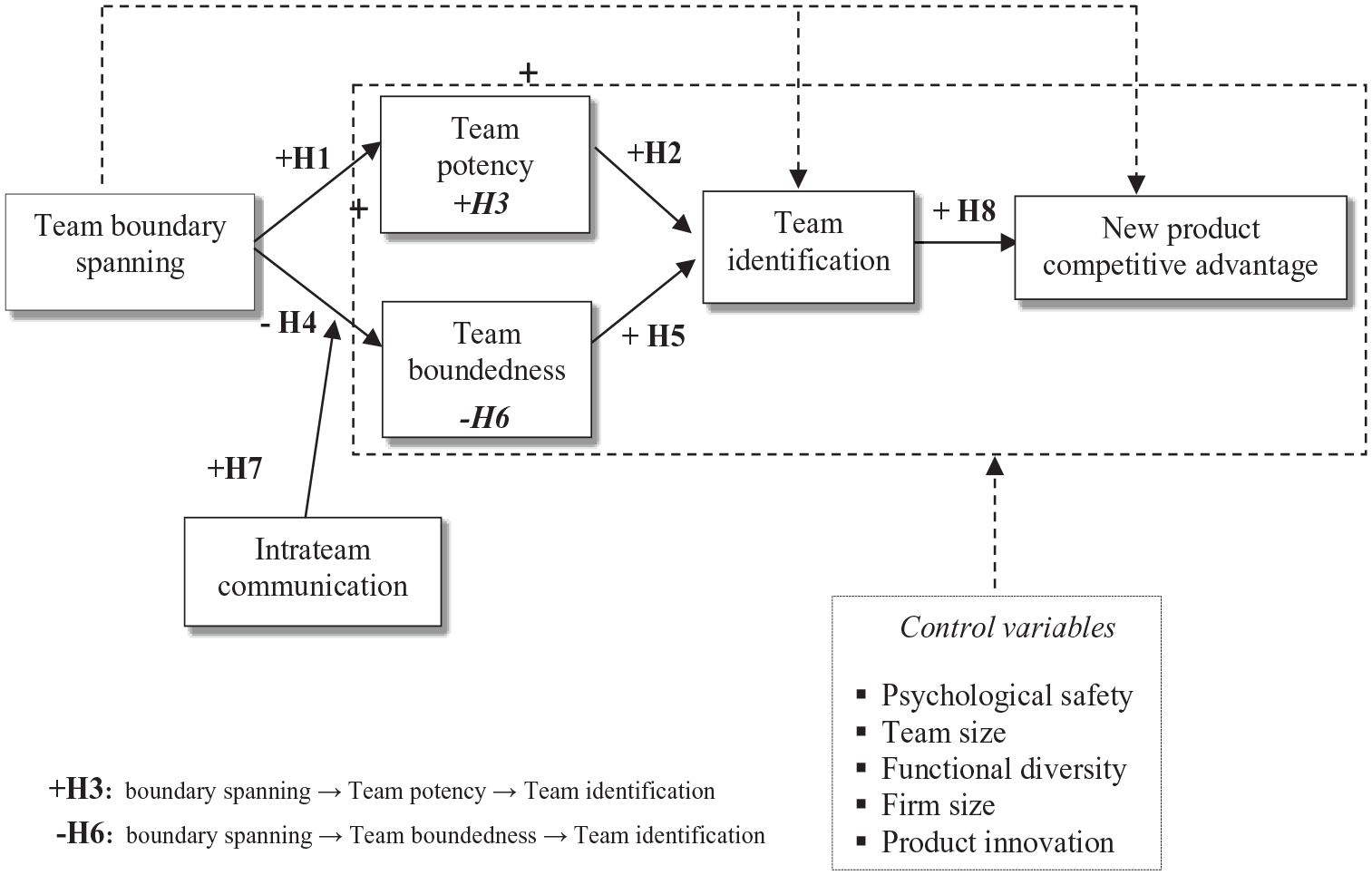
Conceptual framework.
However, self-enhancement is not the only motivator for group identification. Members’ desire for distinctiveness is another motivator (Vignoles et al., 2000). Social identity theories assert that people seek to accentuate their own distinctiveness in interpersonal contexts (Tajfel & Turner, 1986). As a result, members will find groups attractive “when their social identities there provide them with a sense of distinctiveness” (Dutton et al., 1994, p. 246). In keeping with this argument, Mael and Ashforth (1992) and Dutton et al. (1994) report high levels of team identification among members who perceived their groups as distinctive in relation to others. Drawing on this research, we propose a negative indirect effect of team boundary spanning on team identification through team boundedness. Our premise is that the modus operandi of boundary spanning teams can reduce team boundedness, making it difficult for team members to differentiate between outsiders and those who belong to the team (Ancona et al., 2002, 2009). The lack of clarity about the group membership ensued from team boundary spanning will, in turn, undermine members’ view of the group as a distinctive social unit. As a result, members of boundary spanning teams could experience low levels of team identification. Moreover, based on the premise that intra-team communication can improve knowledge of who is or is not part of the team (Mortensen & Hinds, 2002), we expect intra-team communication to be an important mechanism in reducing the negative mediating effect of team boundedness on the relationship between team boundary spanning and team identification. Intra-team communication refers to the extent to which team members maintained frequent, open, and high-quality communication during the NPD project (Hoegl & Gemuenden, 2001).
Finally, we expect team identification to have a positive effect on new product competitive advantage. This is based on research suggesting that groups that exhibit higher levels of team identification exhibit greater cooperation (Dukerich et al., 2002; Scott, 1997), better citizen behaviors (Janssen & Huang, 2008), and higher levels of motivation and task performance (Sethi, 2000; Sethi et al., 2001).
Hypothesis development
Positive indirect effect of team boundary spanning on team identification via team potency
Direct effect of team boundary spanning on team potency
Team boundary spanning is expected to foster an NPD team’s sense of confidence in their capacity to effectively develop NPD projects. Thus, it has been noted that task coordination activities can help NPD teams better synchronize and coordinate work efforts with interdependent entities inside and outside the organization, improving the team’s ability to meet deadlines and keep the work flowing (Marrone, 2010). Also, these activities can be used to accelerate understanding of complex problems and to check the feasibility of product concepts, preliminary designs, and ideas for marketing plans (Ancona et al., 2009). Through ambassadorial activities, NPD teams can build visibility for their projects which, in turn, can prove useful in securing the resources and support needed to facilitate successful product development (Ancona & Caldwell, 1992; Howell & Shea, 2006; Joshi et al., 2009). Finally, scouting activities can be used to keep pace with emergent market, organizational, and technological developments relevant to the NPD project (Ancona et al., 2009). In keeping with our arguments, Carbonell and Rodriguez Escudero (2023) report a positive relationship between team boundary spanning and team potency. Thus, we propose that:
H1. Team boundary spanning will have a positive effect on team potency.
Direct effect of team potency on team identification
Social identity research asserts that people are motivated to secure and maintain positive self-esteem (Vignoles et al., 2006). Accordingly, individuals seek to be members of groups that have a positive image (Dukerich et al., 2002; Dutton et al., 1994) and to maintain membership of those groups to reinforce the positive contribution that such membership makes to their self-esteem (Paulsen, 2003). Drawing on this research, we propose a positive effect of team potency on team identification. Team potency has been described as one of the most important ingredients of team motivation and team effectiveness (J. Hu & Liden, 2011). Teams with a strong sense of confidence set more challenging goals, persevere in the face of unexpected challenges and adversity, and are ultimately more likely to succeed (Guzzo et al., 1993; Larson & LaFasto, 1989). Against this backdrop, we argue that association with groups that possess those qualities will enhance members’ self-esteem because such affiliation will provide them with an opportunity to see themselves with the same positive qualities (Dutton et al., 1994). To this effect, we expect members of high-potency teams to exhibit higher levels of team identification.
H2. Team potency will have a positive effect on team identification.
Indirect effect of team boundary spanning on team identification via team potency
As noted earlier (H1), team boundary spanning activities can assist NPD teams in acquiring needed resources, support, and guidance from external parties, positively influencing the development of a sense of potency in the group. In keeping with H2, we contend that the feeling of potency accrued from a team’s boundary spanning efforts will increase the extent to which team members feel good about themselves and their group membership, thus strengthening team identification. Thus, we propose that:
H3. Team potency positively mediates the relationship between team boundary spanning and team identification.
Negative indirect effect of team boundary spanning on team identification via team boundedness
Direct effect of team boundary spanning on team boundedness
Although no empirical studies have examined this relationship, there is evidence to suggest that team boundary spanning can reduce team boundedness, namely, the extent to which team members perceive team membership to be clear as opposed to blurred or fuzzy (Mortensen & Haas, 2018). First, members of teams engaged in boundary spanning activities interact with a wide range of external parties during the lifespan of the NPD project. However, the pattern of these interactions is not always consistent across the team. For example, whereas an individual member may be interacting with senior managers within the organization to portray the benefits of the project, others can be reaching out to external experts to gather the latest market and technological information to cooperate in various aspects of the project (Ancona et al., 2009). We argue that this modus operandi can lead team members to perceive group membership differently. For example, a team member may view an external individual with whom she or he interacts as a teammate, whereas the perception of the other members might be different. Second, it has been noted that boundary spanning teams often operate through distinct tiers of membership. For instance, Ancona et al. (2002) observed that teams engaged in boundary spanning have core, operational, and outer-net members. Albeit helpful to access new knowledge and information quickly, we argue that this multiple-tier structure can also create uncertainty regarding who is or is not part of the team. For example, some core members could believe that individuals from the operational or outer-net groups do not interact enough with them to qualify as a team member. Thus, we propose that:
H4. Team boundary spanning will have a negative effect on team boundedness.
Direct effect of team boundedness on team identification
Self-enhancement is not the only motivator for group identification. Members’ desire for distinctiveness is another motivator (Vignoles et al., 2000). The distinctiveness motive refers to the need to maintain a sense of differentiation from others. Individuals who believe that their group has a distinctive characteristic are likely to experience strong levels of team identification (Ashforth & Mael, 1989). Drawing on this research, this study suggests a positive effect of team boundedness on team identification. Our argument is that team membership is a distinctive feature of the self as individuals define themselves through the groups to which they belong. For example, in his seminal work, Alderfer (1976) contended that membership boundaries hold a group together as an organized entity and help distinguish what the group is from what it is not. However, group membership is not always clear. Mortensen and Haas (2018) noted that in teams, the distinction between members and non-members can become blurred and fuzzy. When this happens, group members are likely to perceive the team as less distinctive and experience lower levels of team identification (Scott, 1997). Based on the previous discussion, we propose that:
H5. Team boundedness will have a positive effect on team identification.
Indirect effect of team boundary spanning on team identification via team boundedness
Hypothesis H4 posited that engaging in team boundary spanning can decrease team boundedness. Here, we argue that the lack of clarity about the group membership ensued from team boundary spanning will undermine team identification. As noted earlier (H5), clear membership boundaries play an important role in satisfying individuals’ need for differentiation (Scott, 1997). Thus, to the extent that members of boundary spanning teams perceive their group membership to be unclear, association with such groups will not satisfy team members’ need for differentiation, reducing the salience of the team as a target for identification. Therefore, we propose that:
H6. Team boundedness negatively mediates the relationship between team boundary spanning and team identification.
Moderating effect of intra-team communication on the relationship between team boundary spanning and team boundedness
We argue that extensive and high-quality communication among team members will increase team member salience, contributing to higher levels of boundedness in boundary spanning teams based on the following two reasons. First, when team members communicate among themselves, they not only share information about the team tasks but also information about team membership (Mortensen & Hinds, 2002). Thus, maintaining frequent communication can keep members of boundary spanning teams informed of who is or is not part of the team, decreasing the incidence of membership blurring in these teams. Second, it has been noted that despite the presence of formal membership rosters, individuals’ models of team membership are largely based on the extent to which team members interact with one another (Mortensen & Hinds, 2002). In keeping with this argument, we suggest that to the extent that members of boundary spanning teams maintain frequent, open, and high-quality communications among each other, they will be more likely to see each other as team members. Drawing on this research, we propose the following hypothesis:
H7. Intra-team communication positively moderates the negative effect of team boundary spanning on team boundedness.
Positive effect of team identification on new product competitive advantage
Finally, we expect team identification to have a positive effect on new product competitive advantage. This is based on research suggesting that groups that exhibit higher levels of team identification exhibit greater cooperation (Dukerich et al., 2002; Scott, 1997) and citizen behaviors toward other members (Janssen & Huang, 2008). Thus, it has been noted that high team identification enhances the perception of intra-team similarities, making team members more receptive to other members’ ideas, their work methods, and their knowledge (Dukerich et al., 2002; Sethi et al., 2001). Also, when team identification is high, individuals are more likely to help and cooperate with other team members, and to act in the best interest of the project (Janssen & Huang, 2008). According to Sethi et al. (2001), such motivations and behaviors can increase knowledge sharing and integration among team members, something which prior research in NPD has shown to contribute to enhanced new product’s competitive advantage (Hong et al., 2004; McAdam et al., 2008). Thus, we propose that:
H8. Team identification will have a positive effect on new product competitive advantage
Methodology
Sample and data collection
The data for this study were drawn from Spanish manufacturing firms in five high-technology and medium-technology sectors, mainly chemical and plastics products, machinery equipment, computer, electronic and electrical products, metal and non-metallic mineral products, and transportation equipment. The food and beverages sector, although classified as low-technology, was also included in the sampling frame because of its high values of research and development (R&D) spending (INE, 2021). We randomly selected 25% of the firms in each of the above-mentioned industry groups, resulting in 946 manufacturing firms.
To reduce the presence of common method bias, we collected the data in two stages (Podsakoff et al., 2012). During the first stage of the data collection, a questionnaire focused on boundary spanning activities of NPD teams was sent to each of the companies in our database. The questionnaire was addressed to the person in the company responsible for NPD activities. These individuals were instructed to answer the questionnaire in relation to a recently completed NPD project that he or she had led and for which the NPD team was engaged in boundary spanning activities. A total of 146 completed surveys were returned. Those that responded to the first survey received a second questionnaire. This questionnaire collected data on the remaining variables in the model. For the second round, respondents were reminded of the NPD project chosen to answer the first survey and asked to answer the survey having the same project in mind. A total of 140 of the 146 firms contacted, completed the second survey. The time lag between the first and second surveys ranged between 1 and 4 months. Of the key informants responding to the survey, 45.2% were R&D managers, 34.1% were technical managers, 13.3% were general managers, and 7.4% were managers of other departments.
A post hoc power analysis was conducted to verify the appropriateness of the sample size. Using the G*Power 3.1.9 software (Faul et al., 2009), the minimum sample size was calculated as 92 based on a medium effect size (f2 = 0.15), a target power of 0.80, and an alpha of 0.05. Because our sample size of 140 exceeds by more than 50% the G*Power minimum sample size value, we consider it sufficient for hypothesis testing (Cohen, 1988).
We tested for non-response bias by comparing early and late respondents and found no statistically significant differences in the mean scores of the constructs used in this study. We also checked for response bias by industry. Results from a two-proportion test indicated that the firms in the “computer, electronic and electrical manufacturing” industrial sector were over-represented in the sample in relation to the population (20% vs 11.5%, respectively). Table 1 shows the population and the sample for each industry group.
Population and sample distribution by industry: proportion test.
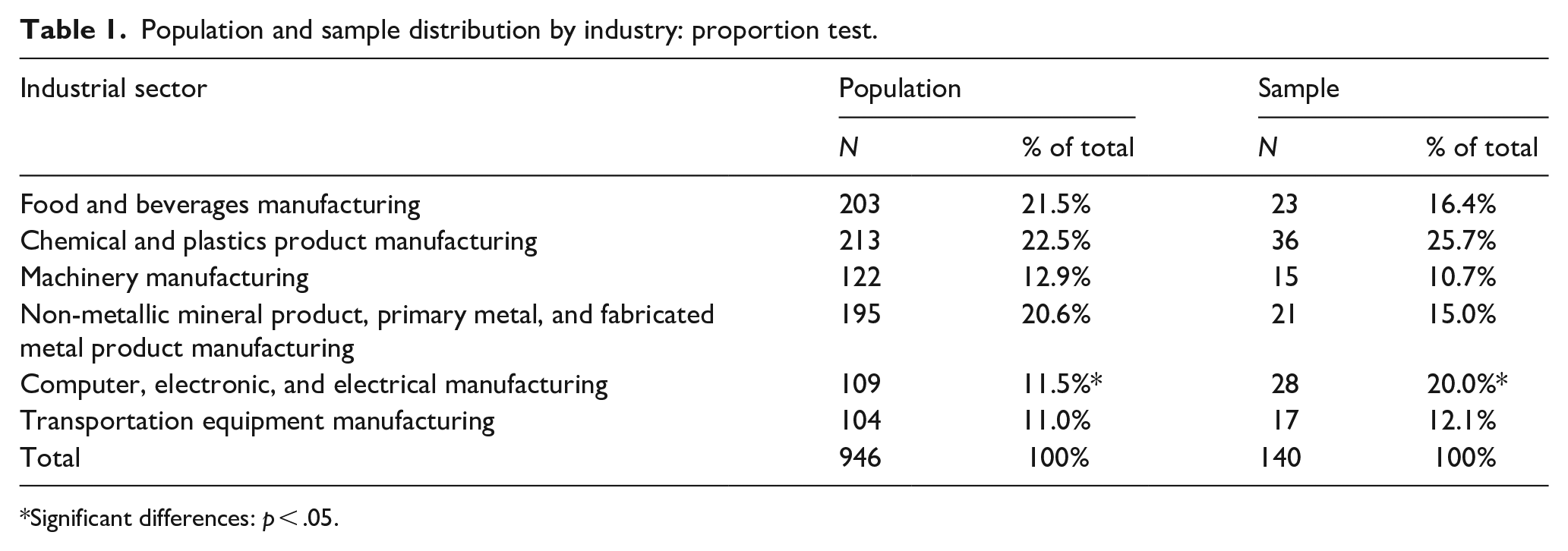
Significant differences: p < .05.
Measurement scales
Existing scales were employed to measure all the constructs depicted in the theoretical model. To assess team boundary spanning, we follow Carbonell and Rodriguez Escudero’s (2019) approach which operationalizes team boundary spanning as a second-order formative construct consisting of seven first-order reflective dimensions. These dimensions capture the three main activities of team boundary spanning (i.e., ambassador, task coordination, and scouting), each of them taking place inside (i.e., intra-firm) as well as outside (i.e., extra-firm) the organization (see Table 2). Team boundedness was measured with Wageman et al.’s (2005) boundedness scale. Team potency was operationalized with six items taken from Guzzo et al.’s (1993) team potency scale, and team identification was assessed with five items from Sethi’s (2000) scale of superordinate identity. For intra-team communication, we borrowed six items from Hoegl and Gemuenden’s (2001) scale of team communication. New product competitive advantage was measured with a 3-item scale from McNally et al. (2010).
Team boundary spanning dimensions.
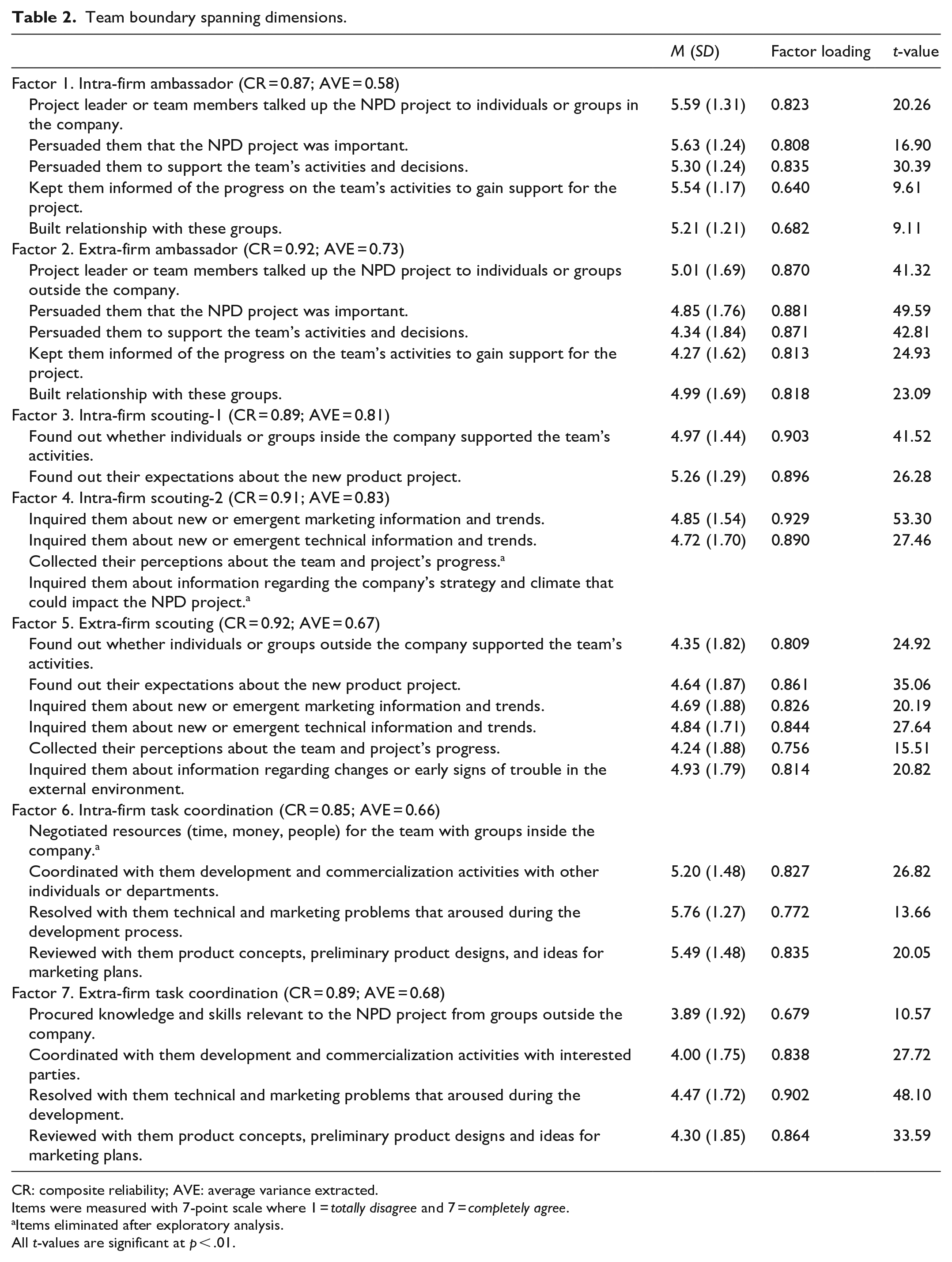
CR: composite reliability; AVE: average variance extracted.
Items were measured with 7-point scale where 1 = totally disagree and 7 = completely agree.
Items eliminated after exploratory analysis.
All t-values are significant at p < .01.
The model incorporates several control variables including team psychological safety, team size, functional diversity, firm size, and product innovation. Team psychological safety is defined as a “shared belief that the team is safe for interpersonal risk” (Edmondson, 1999, p. 354). Team psychological safety has been depicted as an important predictor of team potency (Kim et al., 2020) and team identification (Johnson & Avolio, 2019). Psychological safety was operationalized with four items from Nembhard and Edmondson’s (2006) psychological safety scale.
Team size refers to the number of full-time members in the team (Sethi et al., 2001). Prior research has posited a positive effect of team size on team potency (Hirschfeld et al., 2005) and a negative effect on team boundedness (Mortensen & Hinds, 2002). Functional diversity refers to the number of functional areas represented in the NPD team (Sethi et al., 2001). Because team potency reflects a sense of effectiveness across a range of multiple NPD tasks, we expect functional diversity to positively impact team potency (de Jong et al., 2005). Research, however, suggests a negative effect of functional diversity on team identification (Sethi et al., 2002) and team boundedness (Mortensen & Haas, 2018). In particular, Sethi et al. (2002) note that members of cross-functional teams often hold deep-rooted alliances to their functional areas that can compromise their ability to identity with the team. Similarly, Mortensen and Haas (2018) argue that members of cross-functional teams are less likely to expend the time and effort required to ensure they know all the members of the team, which suggests a negative effect of functional diversity on team boundedness.
Firm size is expected to positively influence new product competitive advantage based on previous research suggesting that large organizations typically have enough R&D, marketing, and financial resources to successfully develop and commercialize new products and services (Ali et al., 1995; Pemartin & Rodríguez-Escudero, 2021). Firm size is measured in terms of the number of employees in the company. Product innovation refers to the emphasis a company places on new products for creating and retaining a competitive position (Zahra, 1993). Past research has noted that firms with a strong product innovation orientation are more likely to collect and disseminate information about customers and competitors and to devote resources to NPD (Siguaw et al., 2006). Accordingly, we expect product innovation to positively influence new product competitive advantage and team potency. Product innovation was measured with three items adapted from Zahra (1993).
Finally, we expect team boundary spanning to have positive and direct effects on team identification and new product competitive advantage. Thus, it has been speculated that boundary spanning activities can bring respect and prestige to the team (Matous & Wang, 2019) which, according to social identity research, is likely to increase team identification (Carmeli et al., 2011; Dukerich et al., 2002; Dutton et al., 1994). Furthermore, building relationships with external parties (including customers) can give NPD teams an opportunity to better understand customers’ needs and wants and to clarify expectations (Ancona & Caldwell, 1992), improving their ability to deliver superior products (Carbonell & Rodriguez Escudero, 2019).
Tables 2 and 3 list the measurement items used for study’s constructs of the study along with factor loadings, average variance extracted (AVE), and composite reliability (CR) values. As shown, while a few scale items have factor loadings between 0.40 and 0.70, the AVE and CR’s values of all the constructs exceed the standard of 0.50 and 0.70, respectively, indicating good validity and reliability. Therefore, to preserve content validity, all items were retained (Hair et al., 2016).
Measurement scales of the remaining study’s constructs.
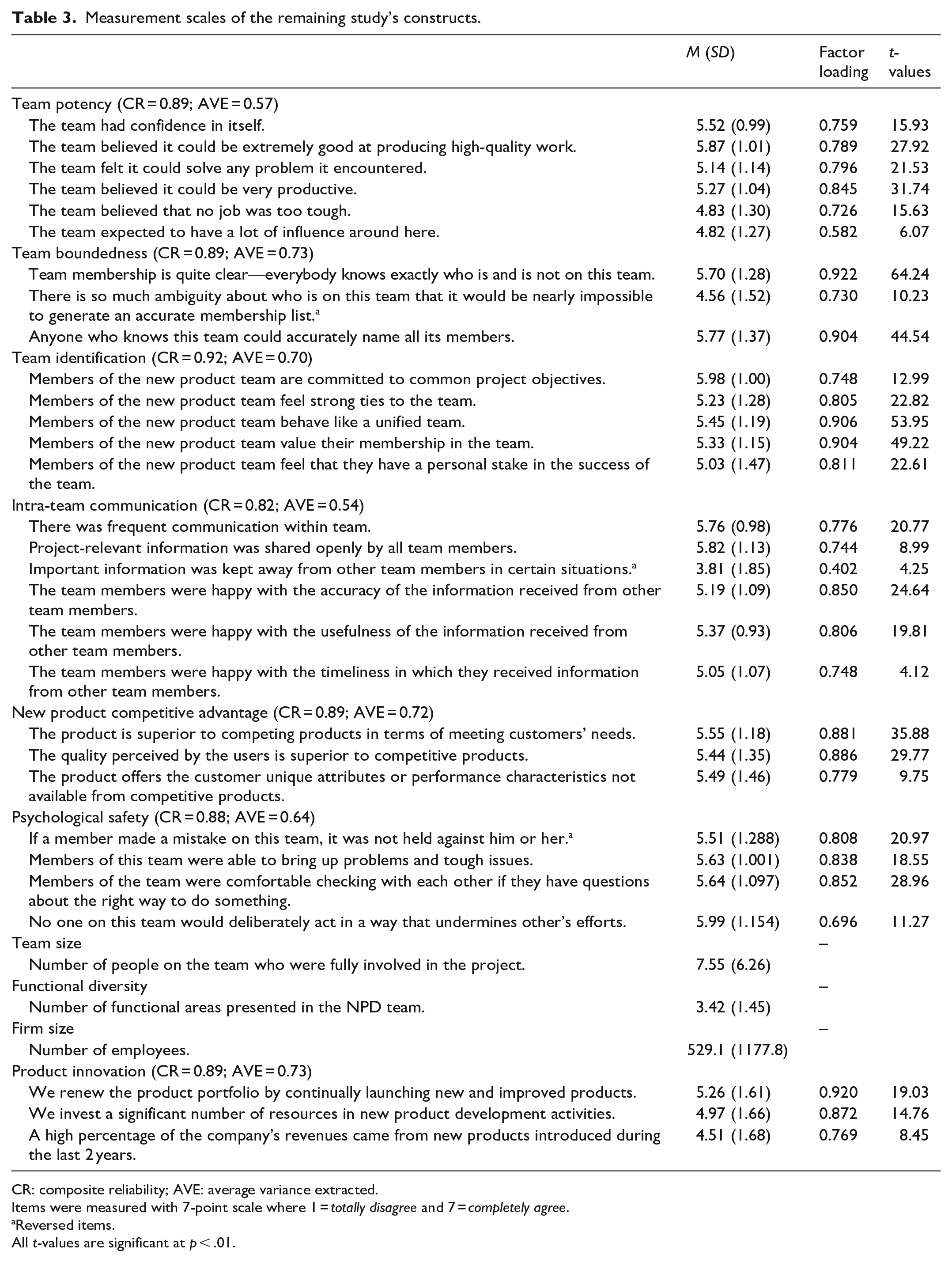
CR: composite reliability; AVE: average variance extracted.
Items were measured with 7-point scale where 1 = totally disagree and 7 = completely agree.
Reversed items.
All t-values are significant at p < .01.
Finally, we validated the formative character of the team boundary spanning scale through two methods. First, we checked for multicollinearity using the variance-inflation factor (VIF). Results suggest no multicollinearity issues as all VIF values were below the cut-off value of 10 (maximum VIF = 2.198). Next, we examined the significance of the contribution of each dimension to the main construct. Fit of the formative measurement model was good as evidenced by the fact that the outer weights of all seven dimensions were significant at p < .01 (Table 4).
Quality criteria of formative measurement.
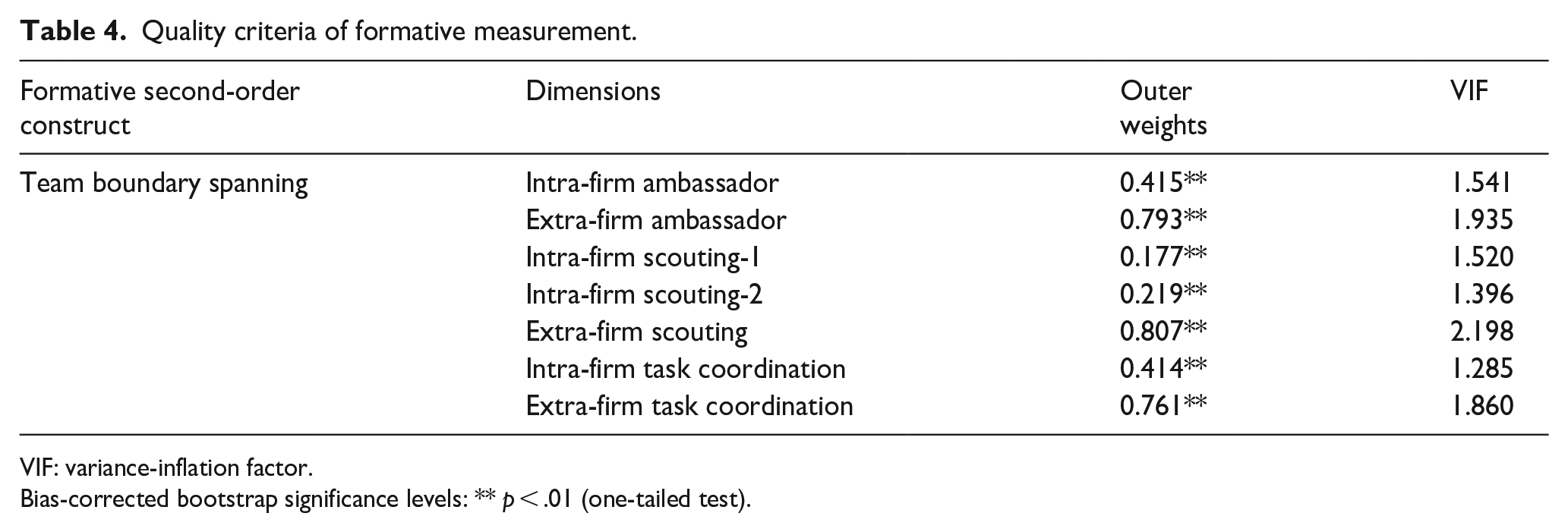
VIF: variance-inflation factor.
Bias-corrected bootstrap significance levels: ** p < .01 (one-tailed test).
Discriminant validity was assessed by comparing the square root of each construct’s AVE with the correlation of the specific construct with any of the other constructs in the model. If the square root exceeds the correlations, discriminant validity is achieved. As shown in Table 5, all pair of constructs passed this test, suggesting discriminant validity of the study’s variables. Furthermore, the heterotrait–monotrait (HTMT) ratio of correlations proposed by Henseler et al. (2015) also indicated discriminant validity, as all HTMT ratios were clearly below the conservative threshold of 0.85.
Zero-order correlations and discriminant validity (HTMT ratios). a .
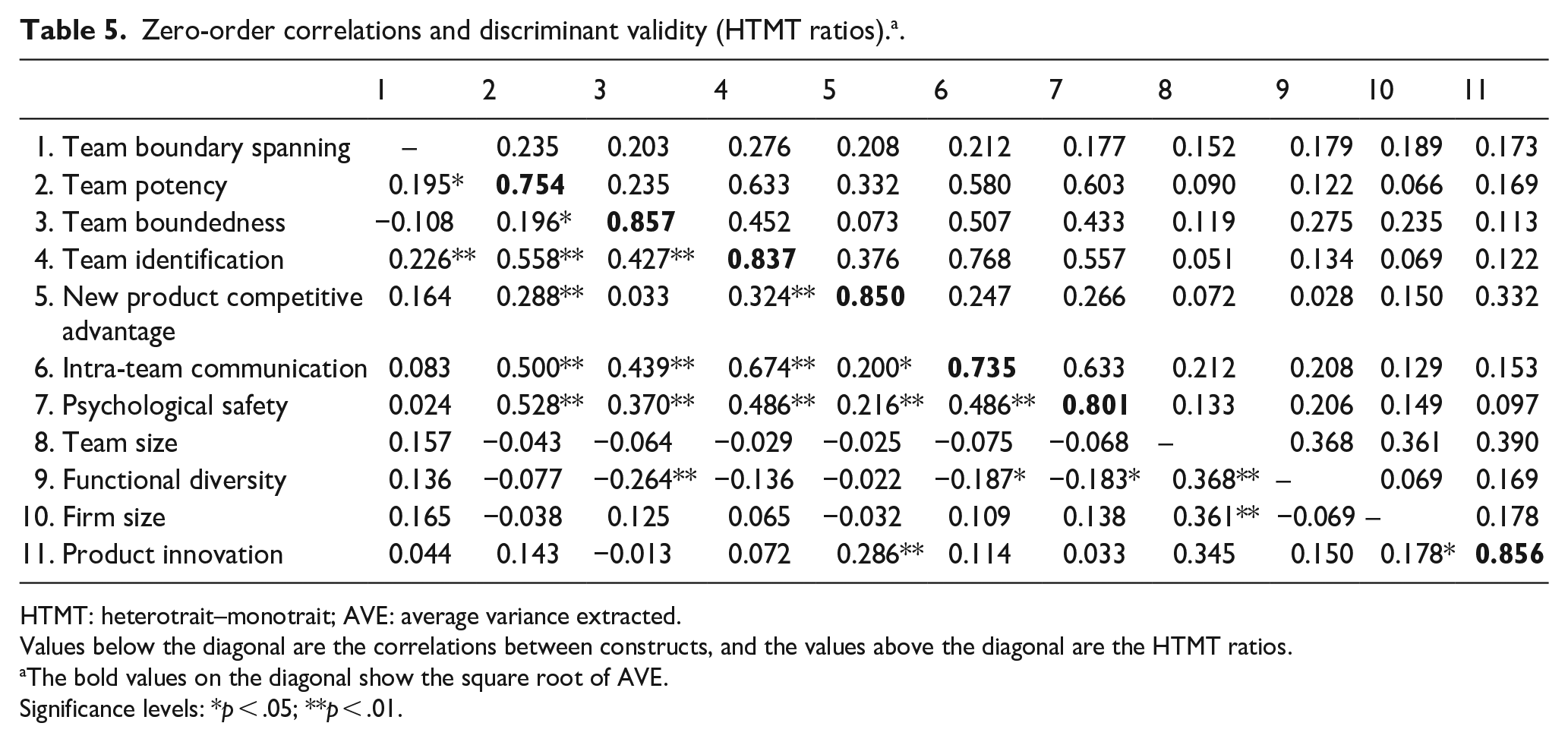
HTMT: heterotrait–monotrait; AVE: average variance extracted.
Values below the diagonal are the correlations between constructs, and the values above the diagonal are the HTMT ratios.
The bold values on the diagonal show the square root of AVE.
Significance levels: *p < .05; **p < .01.
Data analysis and results
The study’s hypotheses were tested using the partial least squares structural equation modeling (PLS-SEM) algorithm (SmartPLS 4.0). A bootstrap test (5000 sub-samples) was used to generate the standard error and t-values of the parameters. The explained variance (R2) of the endogenous variables is all higher than 10% exceeding the threshold proposed by Falk and Miller (1992) (see Table 6). Following Henseler et al. (2014), we assessed the model fit through the standardized root mean square residual (SRMR), which is defined as the root mean square discrepancy between the observed correlations and the model-implied correlations. The result shows an SRMR value of 0.08 which indicates a well-fitting model (L. T. Hu & Bentler, 1998). Finally, we ran the PLSpredict procedure to evaluate the out-of-sample predictive relevance of the model (Shmueli et al., 2019). All
Standardized parameter estimates.
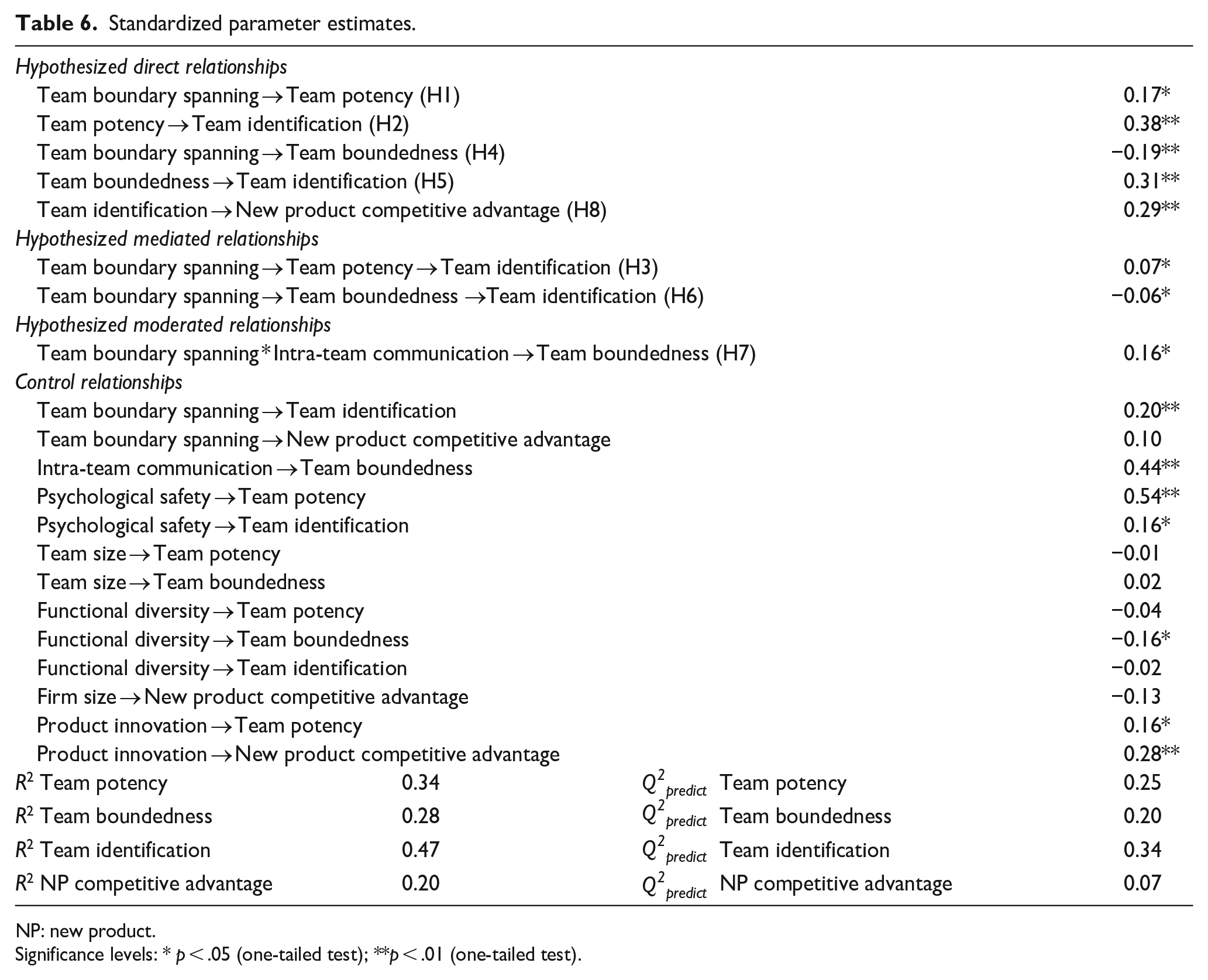
NP: new product.
Significance levels: * p < .05 (one-tailed test); **p < .01 (one-tailed test).
Table 6 shows the study’s results. In keeping with H1 and H2, the results show positive and significant effects of team boundary spanning on team potency (β = 0.17, p < .05) and of team potency on team identification (β = 0.38, p < .01). Also, we found a negative and significant relationship between team boundary spanning and team boundedness (β = −0.19, p < .01) and a positive and significant relationship between team boundedness and team identification (β = 0.31, p < .01), providing support for H4 and H5. Furthermore, as expected in H8, the results show a positive and significant effect of team identification on new product competitive advantage (β = 0.29, p < .01).
A bootstrapping procedure was applied to formally test for the mediating effects of team potency and team boundedness on the relationships between team boundary spanning and team identification. Results from this procedure (5000 sub-samples) revealed a positive indirect effect of team boundary spanning on team identification via team potency (β = 0.065, p < .05) and a negative indirect effect of team boundary spanning on team identification via team boundedness (β = −0.058, p < .05). Altogether, these results suggest that team potency and team boundedness mediate the relationship between team boundary spanning and team identify, providing support for H3 and H6. It is worth noting that because the results show a positive and significant direct effect of team boundary spanning on team identification (β = 0.20, p < .01), these mediation effects are partial rather than full.
Regarding the moderating effect of intra-team communication, Table 6 shows a positive interaction effect of intra-team communication and team boundary spanning on team boundedness (β = 0.16, p < .01), providing support for H7. Findings from Aiken and West’s (1991) procedure reveal that the effect of team boundary spanning on team boundedness is negative and significant when intra-team communication is low (β = −0.35, p < .01). For high levels of intra-team communication, the relationship between team boundary spanning and team boundedness becomes not significant.
Because this study found significant mediation and moderating effects for team boundedness and intra-team communication, respectively, we ran an additional analysis to examine the possibility of moderated mediation between intra-team communication and team boundedness. Using the PROCESS macro developed by Hayes (2017) and available in SmartPLS 4.0, we estimated conditional indirect effects of team boundary spanning on team identification through team boundedness at low, medium, and high values of intra-team communication (the moderator). For this analysis, we used 5000 bootstrap samples and 95% bias corrected confidence intervals. Results from this analysis show differences in the significance of the indirect effects. In particular, we found significant indirect effects at medium (β = −0.058, p < .05) and low (β = −0.105, p < .05) levels of intra-team communication. For high levels of intra-team communication, however, the indirect effect was not significant (β = −0.009).
Discussion and implications for theory and practice
Findings from the study reveal that boundary spanning activities can both increase and reduce team identification in NPD and, in turn, new product competitive advantage. Boundary spanning activities can assist NPD teams in acquiring needed resources, support, and guidance from external parties (Ancona et al., 2009), positively influencing the development of a sense of potency in the group. The feeling of potency accrued from the team’s boundary spanning efforts will increase the extent to which team members feel good about themselves and their group membership, thus strengthening team identification. At the same time, however, the modus operandi of boundary spanning teams can reduce team boundedness, making it difficult for team members to differentiate between outsiders and those who belong to the team (Ancona et al., 2002, 2009). The lack of clarity about the group membership ensued from team boundary spanning is likely to undermine the distinctiveness of the group, resulting in lower levels of team identification.
In relation to intra-team communication, the study’s results indicate a moderating effect of intra-team communication on the relationship between team boundary spanning and team boundedness. In particular, findings from the study reveal that whereas low levels of intra-team communication accentuate the negative effect of team boundary spanning on team boundedness, maintaining frequent, open, and high-quality communication among team members can keep members of the team informed of who is or is not part of the team, thus eliminating the negative effect of team boundary spanning on team boundedness.
Theoretical implications
The findings of this study contribute to the literature in several ways. First, despite the growing empirical evidence on boundary spanning in NPD teams, we still have limited understanding of how and when these activities influence NPD performance (Carbonell & Rodriguez Escudero, 2023; Kaiji et al., 2022). To some degree, this article fills this knowledge gap by examining two important mediators—team potency and team boundedness and one moderator—intra-team communication—of the relationship between team boundary spanning and team identification. Team identification, in turn, is expected to benefit new product competitive advantage.
Second, our examination of the boundary spanning–team identification relationship addresses an apparent contradiction in prior research. Thus, while some studies have speculated that team boundary spanning activity may promote team identification (Marrone et al., 2007), others have argued the contrary (Wimmer et al., 2019). Drawing on social identity research that suggests that both distinctiveness and self-enhancement are important motives for group identification (Tajfel & Turner, 1986), this study demonstrates that both arguments are true. Through its positive effect on team potency, boundary spanning activities uplift self-esteem among team members, positively contributing to team identification. The negative effect of team boundary spanning on team identification is the result of the reduction in team distinctiveness that arises as a consequence of team boundary spanning’s negative effect on team boundedness.
Third, by examining the impact of team potency on team identification this study furthers our understanding of the benefits of team potency for NPD teams. Despite the relevance of team potency to NPD performance, much of the extant research on team potency has focused on settings other than NPD teams such as higher education teams (e.g., Lee et al., 2002; Lester et al., 2002; Rodriguez-Sanchez et al., 2021; Shelton et al., 2010; Sivasubramaniam et al., 2002), top management teams (e.g., Carmeli et al., 2011; Clark & Maggitti, 2012; Ensley & Pearson, 2005), and front-line service/sales teams (e.g., de Jong et al., 2005; Weinstein & Mullins, 2012). As a result, evidence on the impact of team potency on NPD performance remains sparse and limited to three empirical studies, namely, Howell and Shea (2006), Akgün et al. (2007), and Carbonell and Rodriguez Escudero (2023). This study adds new evidence to our understanding of the value of team potency for NPD teams by demonstrating a positive effect of team potency on team identification and, in turn, new product competitive advantage.
Finally, findings from this study provide new evidence regarding potential sources of membership blurring. Team boundedness has traditionally been a central characteristic of the definition of effective teams (Wageman et al., 2005); however, in recent years, this premise has been challenged (Benishek & Lazzara, 2019; Mortensen & Hinds, 2002). Thus, Mortensen and Haas (2018) noted that current trends toward increasing team fluidity, overlap, and dispersion are contributing to the blurring of team membership boundaries. This study responds to recent calls for further research into the antecedents of membership blurring. In particular, Wimmer et al. (2019) noted that “future research could more closely integrate the research on boundary spanning and the demarcation of team boundaries” (p. 721). By examining the impact of team boundary spanning on team boundedness, our results show that boundary spanning activities can create uncertainty and confusion regarding who is or is not a member of the team, thus promoting membership blurring.
Managerial implications
Our findings suggest a number of managerial implications. First, findings from this study suggest that NPD teams can benefit from engaging in boundary spanning activity. As shown, team boundary spanning has a direct and indirect effect, through team potency, on team identification which, in turn, increases new product competitive advantage. However, for members of boundary spanning teams, engaging with external parties does not come easy. As noted by Edmondson and Nembhard (2009), it takes resourcefulness and skills to identify key external parties, communicate with them, get on their calendar, identify how they can help, and push for action in a timely manner.Accordingly, it is recommended that NPD managers provide team members with coaching and agency for them to successfully execute such team boundary work (Ancona et al., 2009). Furthermore, NPD managers can assist boundary spanning teams with the outreach process by helping them identify critical contacts and set up initial and follow-up meetings (Ancona et al., 2009).
Despite the potential benefits of team boundary spanning for NPD teams, the study’s results suggest that these activities also present some challenges to team identification and, in turn, new product competitive advantage by contributing to unclear membership boundaries. Nevertheless, as shown in this study, NPD managers can reduce the likelihood of membership blurring in boundary spanning teams by encouraging frequent and high-quality communication among team members. According to Valls et al. (2016), managers can facilitate intra-team communication by stressing its value and importance in their interactions with team members and conducting weekly team meetings where rich quality dialogue among team members is encouraged. Intra-team communication can also be promoted by implementing technology infrastructure and systems that support communication between members of the NPD team (Liao et al., 2015) and with training on team communication skills (Mascareño et al., 2020). Finally, prior research suggests that demonstrations of participative leadership by the team leader can also promote higher and better levels of communication within the team (Sarin & O’Connor, 2009).
Limitations and future research lines
This study has some limitations that should be acknowledged. First, the study’s results are based on retrospective data. It should be noted that Dayan and Di Benedetto (2009) noted that “the use of retrospective data is acceptable if reported measures are reliable and valid” (p. 148). As discussed earlier, the measures used in this study show reliability and validity and have been drawn from existing validated scales. Second, the study used a single key-informant per organization. Nevertheless, as mentioned in section “Methodology,” in order to decrease the risk of common method bias, data on the independent and dependent variables were collected at different times. Moreover, results from the marker-variable technique (Lindell & Whitney, 2001) and the Harman’s one-factor procedure (this test generated 15 factors that explained 75% of the variance, with the first factor explaining only 18%) suggest that common method bias is not a significant issue affecting our results. Third, data for this study were provided by NPD team leaders. While one can expect team leaders to have a great deal of knowledge about their NPD projects (Hoegl & Gemuenden, 2001), their outlook in matters pertaining to the team (e.g., intra-team communication, team potency) could diverge from that of individual team members. It is thus suggested that future studies test the proposed research model using data collected from multiple informants within each team. Fourth, the cross-sectional survey design prevents us from claiming causality. Accordingly, future studies may consider longitudinal designs in order to examine the causal relationships proposed in the model. Finally, although a sample size of 140 was sufficient for hypothesis testing, a larger sample size would be desirable to increase statistical power (Ringle et al., 2014).
This study also points to some avenues for future research. For example, findings from this study shows that in addition to its indirect effects through team potency and team boundedness, team boundary spanning still has a direct positive effect on team identification. Thus, it might be interesting for future studies to examine other potential mediators of the relationship between team boundary spanning and team identification. Moreover, future studies could shed new light on other equally interesting paradoxes associated with team boundary spanning. Thus, prior research suggests that team boundary spanning can impede and support team psychological safety (Faraj & Yan, 2009; Mortensen & Haas, 2018). Similarly, team productivity can be both facilitated or inhibited by team boundary spanning activity (Choi, 2002; Faraj & Yan, 2009; Margolis, 2020; Marrone et al., 2007). Investigating these effects is important to fully understand the benefits and challenges of team boundary spanning. Finally, future studies could also focus on exploring additional drivers of team boundedness. In particular, with so many employees currently operating in a multiteam context (Bertolotti et al., 2015), it might be interesting to examine how multiple team membership (MTM) impacts team boundedness. Whereas research in team boundary spanning could provide insights into this matter, Margolis (2020) noted that this research focuses on a focal team and thus does not fully capture the MTM context or experience, requiring MTM to be studied independently.
Footnotes
Declaration of conflicting interests
The author(s) declared no potential conflicts of interest with respect to the research, authorship, and/or publication of this article.
Funding
The author(s) received no financial support for the research, authorship, and/or publication of this article.