




Abstract
This study explores both the individual impact of geographical diversification and its effect combined with product diversification on small and medium-sized enterprises’ (SMEs) performance. Unlike most prior studies, this study distinguishes between related and unrelated product diversification. The research setting is a sample of manufacturing SMEs (1994–2014). By using dynamic panel data models, the results provide statistical support for the existence of a horizontal S-shaped relationship between geographical diversification and performance. The findings also indicate that while related product diversification positively enhances the performance of those SMEs engaged in geographical diversification (albeit not indefinitely), unrelated product diversification may significantly impair it, especially for SMEs opting for low and high levels of international diversification. Our study reveals that product and international diversification strategies in the case of SMEs are complementary or substitutive strategies depending on the specific type of product diversification strategy and the level of geographical diversification adopted.
Keywords
Introduction
Product diversification and geographical diversification (henceforth PD and GD, respectively) are two of the most popular strategies for corporate development (Qian, 2002). In fact, it is common to find firms that simultaneously implement PD and GD strategies. The literature has called this phenomenon “global diversification” (e.g., Chang et al., 2016; Denis et al., 2002; Gao & Chou, 2015), as there is a common belief that the implementation of one type of diversification strategy (either GD or PD) might enable managers to better handle the complexity and diversity created by the other. For example, firms engaged in PD activities might more readily reproduce the structures and capabilities established in their business activities abroad. In addition, economies of scope and scale arising from interdependencies across business units in the case of firms engaged in PD might also provide these firms with greater opportunities to achieve different types of synergies associated with product diversity as they expand into international markets (Chang & Wang, 2007, p. 61; Gao & Chou, 2015).
The last 30 years have witnessed the emergence of a growing body of research interested in exploring the joint effects of PD and GD (i.e., global diversification) on performance. However, the extant empirical evidence is inconclusive. While some studies have found that PD positively enhances the performance of internationally diversified firms (e.g., Chang et al., 2016; Hitt et al., 1997; Jouida et al., 2017), other studies have reported a negative joint effect (e.g., Denis et al., 2002; Kumar, 2009; Oh et al., 2015; Qian, 2002). There are also a handful of studies that fail to find any significant interaction (e.g., Geringer et al., 1989; Tallman & Li, 1996; Wan, 1998) or even obtain mixed results (e.g., Chang & Wang, 2007; Geringer et al., 2000; Wan & Hoskisson, 2003).
After reviewing the literature on the combined effects of PD and GD on performance, we can highlight some key ideas. First, most past research has been based on large multinational corporations. To the best of our knowledge, there are still very few studies interested in exploring such effects in small and medium-sized enterprises (SMEs)—some noteworthy exceptions are the studies by Qian (2002), Muñoz-Bullón and Sánchez-Bueno (2011), and Li et al. (2012). This is somewhat surprising as SMEs (firms with fewer than 250 employees) are key players in most economies around the world and in the wider business eco-system. For example, SMEs in Organisation for Economic Co-operation and Development (OECD) countries account for approximately 99% of all firms, about 70% of jobs, and on average generate between 50% and 60% of gross value added (GVA) (OECD, 2017). Second, most studies have been conducted on samples of large US firms, with few studies based on firms from other countries. Third, although the importance of PD on performance is well documented (e.g., Bausch & Pils, 2009; Benito-Osorio et al., 2012; Palich et al., 2000), most prior studies on the combined effects of GD and PD have considered the potential effect of overall PD, but not the differential, and hence the separate effects of two of the most popular PD strategies, namely, related and unrelated PD (RPD and UPD, respectively). Finally, many studies are not entirely clear about the model’s specifications when considering the relationship between GD and performance. This is also a critical aspect because, as Chang and Wang (2007) argue, “the conflicting findings may be related to the model specifications on the relationship between internationality and firm performance” (p. 62). The literature reveals the existence of different GD–performance models in both large firms and SMEs: linear and curvilinear ones—such as the U-shaped form, the inverted U-shaped form, or the horizontal S-shaped form. Accordingly, we first need to understand the nature of the underlying GD–performance model when exploring the combined effects of GD and PD strategies on performance.
Past research has certainly focused much more on large firms than SMEs, as the conventional belief is that firms need to be large before they can compete successfully in several product segments across different countries. In fact, it is generally assumed that, compared to their large counterparts, SMEs can experience shortages of resources, diseconomies of scale, and a lack of market power, and hence be more likely to have to compete in narrower product segments within limited national markets (Li et al., 2012, p. 941). However, it is clear that SMEs today are also being forced to compete on a global basis if they want to remain competitive, and thus guarantee their survival. This is, for example, the case with “born globals” (Hashai & Almor, 2004). Therefore, considering that the simultaneous adoption of GD and PD strategies may also be possible for those SMEs that manage to overcome their resource limitations, and given the paucity of empirical studies, it is expedient to ask the following question: what are the combined effects of GD and PD strategies on performance in SMEs?
In this article, we look to answer this question by first examining the nature of the relationship between GD and performance in SMEs. Specifically, we investigate whether the impact of GD on performance is curvilinear (horizontal S-shaped form), as suggested by Three-Stage Theory. This theory posits that a firm’s evolution abroad can be stated as follows: firm performance will be negatively related to lower and higher ranges of internationalization (i.e., early and highly internationalized firms) and positively related to middle ranges of internationalization (i.e., mid-stage internationalizers) (Contractor et al., 2003; Lu & Beamish, 2004; Thomas & Eden, 2004). We then examine the joint effects of GD and PD strategies on performance. In this case, the aim is to gather fresh evidence to determine whether PD has a significant impact on the performance of firms that have adopted a GD strategy by exploring whether RPD and UPD strategies differ in their influence on the performance of international SMEs. This study therefore provides new insights into the lively academic debate on whether GD and PD can be viewed as complementary or substitutive strategies in SMEs of a medium-size developed country (Spain). Importantly, our findings may also help to further knowledge on how SMEs can build firm-specific advantages to remain competitive in today’s changing market.
The hypotheses formulated in this study are tested on a sample of manufacturing SMEs over the period 1994–2014. It may therefore be of the utmost importance to understand how the global strategic behavior of these SMEs influences their performance, and hence their competitiveness. Entry into new businesses has been a common practice in many of these firms in recent years, up to the point of becoming one of their most important alternatives for corporate growth, along with internationalization and innovation. Compared to most prior research, this study also uses a longer time period (21 years). This is a key issue because the consideration of such a long period of time allows adopting a dynamic approach, and thus more accurately discovering how the impact of the combined effects of GD and PD strategies on performance has evolved over time.
Theory and hypotheses
Impact of GD on firm performance in SMEs
The Three-Stage Theory of international expansion has been traditionally considered an appropriate framework for reconciling the contradictory evidence on the GD and performance relationship in most past research (Contractor, 2007; Contractor et al., 2003; Lu & Beamish, 2004; Thomas & Eden, 2004). This theory assumes that a firm’s evolution abroad follows three different stages or moments. Specifically, it is assumed that a firm’s internationalization is costly up to a first level of combination of domestic and foreign operations (Stage 1); it is then beneficial up to a second level (Stage 2), beyond which performance will stagnate or decline (Stage 3). This implies that firm performance will be negatively related to higher and lower ranges of internationalization, and positively related to longer middle ranges of internationalization, thus providing a dynamic or longitudinal explanation for the effect these three sequential stages have over time on the performance of firms expanding abroad.
The last 15 years have seen researchers show greater interest in testing the validity of the Three-Stage Theory. However, the extant evidence on the nature and shape of the GD–performance linkage in SMEs is scant, and the results are mixed (Chiao et al., 2006; Hsu et al., 2013; Li et al., 2012; Lu & Beamish, 2004; Muñoz-Bullón & Sánchez-Bueno, 2011; Pangarkar, 2008; Qian, 2002). To our knowledge, only Fisch (2012), Benito-Osorio et al. (2016), Cantele et al. (2016), and Cho and Lee (2018) provide empirical support for this theory in the specific case of SMEs.
The conventional assumption is that large firms may internationalize at will because they usually have more resources at their disposal, allowing them to exploit high levels of GD in a more effective way. By contrast, SMEs are characterized by a lack of key resources and capabilities (e.g., finance, technology or technical expertise, and managerial skills and knowledge) (European Commission, 2010). In addition, many SMEs (and especially small ones) may suffer problems of scale or lack of market power, placing them at a cost disadvantage as regards their larger competitors, with an adverse impact on their GD initiatives’ likelihood of success (Pangarkar, 2008; Yip et al., 2000).
Nonetheless, many SMEs are now becoming increasingly internationalized (Karagozoglu & Lindell, 1998). In fact, SMEs may achieve high levels of GD as long as they can largely overcome their limitations in terms of resources and capabilities. As in the case of large firms, foreign markets can also be very attractive for SMEs because they provide major opportunities for growth (e.g., via access to an extended customer base), and ultimately improve their chances of survival in today’s changing global market (Qian, 2002). The search for new opportunities in international markets may also be an important choice when the domestic market shrinks. In addition, continuous advances in information and communication technologies and logistics systems, the progressive deregulation of markets, and free-trade areas (e.g., the European Union [EU] Single Market) have significantly reduced the costs of expanding overseas, providing SMEs with new opportunities for internationalization. Most SMEs also enter foreign markets as direct and/or indirect exporters because these entry modes usually require fewer resources, and are therefore less risky compared to other entry modes, such as direct investments—which tend to be used more by large corporations.
In this study, we argue that in the specific case of SMEs, it might also be possible to single out three stages or moments in the relationship between GD and performance. In the first stage, firms have to cope with the “liability of foreignness”—that is, the additional burdens or costs that a firm expanding abroad must initially bear (Contractor et al., 2003). Firms also have to face the “liability of newness” stemming from the difficulties or costs a firm has to deal with to establish their legitimacy in a foreign market (Morse et al., 2007; Zhang & White, 2016). These costs may be especially important for SMEs because these firms also have to bear the “liability of smallness” related to the lack of resources and capabilities typically characterizing them, and making the risks of expanding abroad more difficult to assimilate – especially when compared to resource-richer multinational companies (Cho & Lee, 2018; Lee et al., 2012). In view of their limited resources, it is likely that SMEs need to make a greater effort to gain competitive advantages in foreign markets (Cho & Lee, 2018; Lu & Beamish, 2001; Majocchi & Zucchella, 2003). Moreover, SMEs have to compete with host-country firms and with more established multinational companies that have the scale, knowledge, and experience to operate in regional markets (Lee et al., 2012). The added demand for resources and capabilities such as logistics, technological expertise, human capital, or even information processing skills may significantly compromise an SME’s performance (Cho & Lee, 2018; Schwens et al., 2018). Therefore, because the potential costs might exceed the potential benefits during the initial internationalization effort, SMEs might perform poorly during the initial stage of internationalization.
When the level of GD is moderate (Stage 2), SMEs can substantially mitigate some of these previous liabilities and obtain economic benefits in the following ways: achieving economies of scale from improved production and sales volume through revenue growth as a result of deploying their operations across more foreign markets (Cho & Lee, 2018; Schwens et al., 2018); achieving economies of scope, as these firms have more opportunities to share their strategic resources across a reasonably broad range of foreign markets (Kim et al., 1993; Li et al., 2012); improving market power, for example, by developing brand equity and logistics capabilities in the relevant foreign markets (Li et al., 2012); extending their product’s life cycle (Contractor et al., 2003); and acquiring and developing novel and useful knowledge, which could improve these firms’ resources through being exposed to a broader range of experiences and a bigger knowledge pool (Barkema & Vermeulen, 1998; Lu & Beamish, 2001). By increasing their GD, some SMEs could also attempt to shift from low-cost manufacturing to offer higher value-added products because they can access the required technology and knowledge in foreign markets (Cho & Lee, 2018; Jeong et al., 2017). Therefore, because the potential benefits during the mid-internationalization stage are more likely to exceed the potential costs, SMEs’ performance might be positive for moderate GD levels.
When GD increases further, however, it may again impair SMEs’ performance. With high levels of GD (Stage 3), firms incur higher transaction and governance costs because of the growth of cultural, societal, and economic diversity across global market regions (Bobillo et al., 2010; Li et al., 2012). As a result of operating in more diverse regional markets, firms can also be more affected by the “liability of foreignness.” These costs will place smaller firms in an unfavorable position, as broad international operations spread resources and capabilities too thinly across different regional markets. This may, therefore, significantly exacerbate the limitations on existing resources and capabilities that are characteristic of most SMEs (Kogut, 1985; Li et al., 2012). Moreover, the requirements for coordination, control, and communication within firms increase, which could pose major challenges for SME managers, as they frequently lack the managerial resources needed to overcome the increasing requirements of information processing (Cho & Lee, 2018; Marano et al., 2016). Ultimately, as Hitt et al. (1997) contend for high levels of GD, “the coordination required (for multiple transactions among many geographically diverse units) may cost more than the benefits derived from sharing resources and exploiting market opportunities” (p. 769). Thus, SMEs are also more likely to perform poorly on the stage of high internationalization. This leads us to propose the following:
Hypothesis 1. GD and firm performance will have a horizontal S-shaped relationship in SMEs, whereby performance decreases for low levels of GD, increases for intermediate or moderate levels, and again decreases for high levels.
Impact of PD strategies on the GD–performance relationship in SMEs
Initially, the benefits of GD were considered a separate topic of analysis regarding PD and performance. Indeed, for 30 years now, several studies, both theoretical and empirical, have set out to analyze the interrelationship between PD and GD (e.g., Bowen & Sleuwaegen, 2017; Geringer et al., 2000; Hitt et al., 1994, 1997; Kistruck et al., 2013). As noted earlier, some scholars refer to the interaction between these two types of diversification as “global diversification” (e.g., Chang et al., 2016; Denis et al., 2002).
The somewhat inconclusive findings of the research based on the relationship between GD and firm performance may converge through Three-Stage Theory (Benito-Osorio et al., 2016; Contractor et al., 2003; Thomas & Eden, 2004). Some researchers also suggest that the mixed results in previous studies may also be because, apart from depending on certain contingencies, the GD–firm performance relationship might need a “conversion factor” (or in other terms, a mediator between GD and performance) (Hult, 2011, p. 173). In fact, some scholars have therefore claimed that ignoring PD (e.g., Kim et al., 1989) may contribute to the inconsistency of prior findings between GD and performance. In this regard, for example, Hitt et al. (1994) have suggested that the relationship between GD and performance may be significantly affected by the degree of PD. This is because, on one hand, the combined effects of both corporate strategies can help most firms exploit interdependencies across their different products to achieve potential synergies (Geringer et al., 1989; Qian, 2002). On the other hand, experience with one type of strategy (e.g., GD) can inform managerial capabilities that allow a more effective management of the other strategy.
As also noted above, the empirical evidence on the moderating role PD has on geographically diversified firms has also been contradictory. This happens both in the case of large corporations (e.g., Geringer et al., 1989; Hitt et al., 1997; Jouida et al., 2017; Kumar, 2009) and small ones (Li et al., 2012; Muñoz-Bullón & Sánchez-Bueno, 2011; Qian, 2002). Following to Chang and Wang (2007) and Li et al. (2012), a clear distinction is made here between both PD strategies (related vs. unrelated) that SMEs could also implement, as these strategies may have significant contrasting effects on firm performance.
Drawing from the knowledge-based view and organizational learning theory, some researchers highlight the relevance of knowledge relatedness to achieve successful organizational learning (Grant, 1996; Simonin, 1999). It is thus argued that significant differences in knowledge and skills across different business units might hinder effective learning. If business units have a similar background, the establishment of a shared understanding of skills and capabilities across units is more likely to be less costly for firms opting for a related PD strategy than for those firms choosing an unrelated one. Accordingly, the implementation of an RPD strategy by international SMEs, compared to their UPD counterparts, might put them in a better position to rapidly apply the capabilities generated through international knowledge-sharing to foreign markets (Chang & Wang, 2007).
It is also interesting to note how international SMEs implementing a UPD strategy are more likely to encounter more serious internal control problems resulting from asymmetric business operations. For example, manufacturing processes, technological resources, and marketing competences will be more diverse in unrelated businesses compared to SMEs engaged in similar business sectors. This greater diversity will make it more difficult to apply strategic controls for integrating each business unit’s different strategic goals. The difficulty in implementing strategic controls in unrelated diversifiers may be compounded by the greater amount of information that frequently needs to be processed in unrelated businesses. When a firm combines diversification in international markets with unrelated businesses, the implementation of strategic controls may become even more difficult (Chang & Wang, 2007). Thus, from the perspective of the establishment of the internal control mechanisms required to manage and maintain relations between corporate headquarters and business units, the adoption of an RPD strategy might be more beneficial than an unrelated one for those SMEs that are also internationally diversified.
Drawing from the organizational evolutionary theory, some researchers suggest that, as firms expand their product portfolio and markets, the subsequent changes in environmental conditions might create an organizational complexity that raise additional problems for managers (Abatecola et al., 2016). If managers want to safeguard their firms’ performance, they are probably going to be forced to implement several organizational changes. The main purpose of these changes will be to achieve a suitable fit between new external contexts and internal settings (Chang & Wang, 2007). Managers in SMEs adopting an RPD strategy may well have to deal with relatively similar customers and suppliers (Kumar, 2013; Pennings et al., 1994). In contrast, SMEs diversifying into unrelated businesses tend to have to face and deal with the more diverse preferences of customers, suppliers, distribution systems, and competitive environments. Resources and time devoted to achieve an appropriate internal–external adjustment will increase the organizational costs. However, due to the greater symmetry of activities among business units in related diversifiers, the necessary adjustments can be applied with less difficulty and, thus, the total adjustment costs are likely to be minimal and, in any case, lower with respect to unrelated diversifiers. Because of the greater dissimilar activities across business and geographic regions, it may be necessary that SMEs with UPD strategies carry out more complex organizational changes to better fit the diverse global markets (Chang & Wang, 2007; Ruigrok & Wagner, 2003; Sullivan, 1994). Therefore, it is expected that in SMEs with a UPD strategy along with low and moderate levels of GD, the costs of internal–external adjustments are to be greater than in those SMEs with similar levels of GD but an RPD. In the case of these SMEs, it is more likely that the benefits associated to related diversification (i.e., exploitation of economies of scale and scope across different global market regions) outweigh more than proportionally the total costs of adjustment.
The transaction cost theory posits that governance costs increase as the level of diversification also increases (Williamson, 1985). When firms diversify into unrelated businesses, units with specific tasks are usually created, and the coordination between such units becomes more difficult to manage. Moreover, when GD increases up to a high level, not only the cultural and social diversity increases but also competitive and demand diversity, which, ultimately, also increase the complexity of management. In most cases, SMEs have not the resources and capabilities needed to effectively manage such complexity. This might significantly contribute to hinder the ability of SMEs to exploit synergies between different products and it might involve high transaction costs. These costs could be higher in unrelated diversifiers with respect to their related counterparts as managing unrelated products in an increasing number of foreign markets frequently requires a higher level of managerial competence (Li et al., 2012). Interestingly, these managerial costs might entail a certain reduction in the positive performance of those SMEs choosing an RPD strategy, while for those SMEs opting for a UPD strategy, the existence of such managerial problems could even aggravate their negative performance. Ultimately, because related diversifiers are more likely to share similar knowledge backgrounds and structures of communication and information across their different business units, the performance of SMEs with high levels of GD might suffer less, and hence remain positive to a certain extent.
Based on all the above arguments, we expect international SMEs implementing an RPD to benefit more from the advantages of global diversification, and suffer less from its disadvantages. The S-curve should therefore be higher. In contrast, those international SMEs implementing a UPD strategy suffer more from such disadvantages, and so in this specific case, global diversification will negatively affect their performance. Thus, the S-curve should be lower. This leads us to propose:
Hypothesis 2.1. The performance of international SMEs (i.e., the S-curve) will be higher when these firms also choose an RPD strategy.
Hypothesis 2.2. The performance of international SMEs (i.e., the S-curve) will be lower when these firms also choose a UPD strategy.
Method
Data and sample
The empirical analysis is based on data from the Survey on Business Strategies (SBS; in spanish, ESEE) for the period 1994–2014. This is a statistical research instrument drawn up by the SEPI Foundation (an entity dependent on the Spanish Government) that each year surveys a panel of Spanish manufacturing firms. In fact, SBS seeks to delimit and maintain a representative sample of Spanish manufacturing firms over time. Therefore, the inferences drawn from the sample can be deemed valid for the reference population. The reference population is composed of Spanish manufacturing firms with 10 or more employees. Importantly, all the information contained in the SBS is subject to quality and consistency controls. It is also worth noting that this survey has been used in numerous studies on business diversification in Spain (e.g., Benito-Osorio et al., 2015; Merino & Rodríguez, 1997; Muñoz-Bullón & Sánchez-Bueno, 2011).
The final sample size used for the estimation, after conducting a prior analysis of our dataset (i.e., identify and/or discard potential outliers and missing data values), is an unbalanced panel of 2,217 SMEs and 21,138 observations (firm × year). This sample meets certain valuable requirements as an appropriate empirical setting for testing the hypotheses posited here. On one hand, it only includes SMEs belonging to manufacturing sectors in the Spanish economy. Here, we have also followed the definition of SMEs given by the EU in terms of headcount. According to the EU recommendation 2003/361, SMEs are defined as firms with fewer than 250 employees. On the other hand, our sample includes both SMEs with international activity through exports and domestic SMEs. In fact, exporting is typically considered the dominant strategy for SMEs’ international expansion (e.g., Benito-Osorio et al., 2016; Golovko & Valentini, 2011; Salomon & Jin, 2010). Furthermore, we have chosen this sample over the period 1994–2014 because some variables used in our study did not have enough data for the years prior to 1994 and because 2014 was the last year for which this survey has provided us with disaggregated data on related and unrelated PD, and this is a key issue for testing our Hypotheses 2.1 and 2.2.
Measurement of variables
Dependent variable
The dependent variable is represented by firm performance. Its measure is still highly disputed between those in favor of accounting measures and those in favor of market measures. Each measure obviously reflects a different dimension of performance, and each one has its advantages and disadvantages, although they are both interrelated (Jacobson, 1987; Keats, 1988). Given that the source of the data used in the empirical study provides solely accounting data and the bulk of the SMEs considered are not listed on the stock market, the focus here will be on data of this nature. The choice has therefore been to use return on assets (ROA) as the measure of business profitability. ROA is defined as the ratio between gross earnings and total assets. It is precisely the performance of assets that, independently of their financing, generally determines whether or not a company is viable in economic terms. This variable has also been used widely in many prior studies examining both the individual effects of GD on performance (e.g., Benito-Osorio et al., 2016; Contractor et al., 2003; Lu & Beamish, 2004; Stadler et al., 2018) and the joint effects of PD and GD (e.g., Geringer et al., 1989; Hitt et al., 1997; Jouida et al., 2017; Kang & Lee, 2014).
Independent variables
GD is the independent variable of interest. It is defined as the expansion abroad into other countries or geographical areas. This means a firm’s level of internationalization is given by the number of different markets (countries or geographical areas) in which a firm is operating and their relative importance (measured as the total percentage of sales each market accounts for) (Hitt et al., 1997, p. 767). We therefore consider the entropy index to be a valid way of measuring not only the PD variable but also GD. Moreover, it is interesting to note that some scholars (Hitt et al., 1997) have found a high correlation between the entropy index, the measure of foreign sales as a percentage of total sales (FSTS) used in prior research (e.g., Geringer et al., 1989; Tallman & Li, 1996), and the “country scope” measure of Tallman and Li (1996). Our GD index is calculated as follows
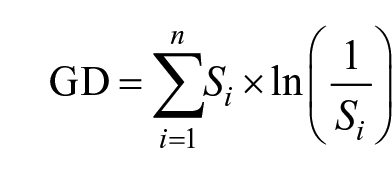
where Si is the sales figure attributed to global market region i, and ln(1/Si) is the weight given to each one of these regions. This measure considers the number of such regions in which a firm operates (n) and each one’s relative importance to the firm’s sales. The higher the value of this index, the higher will be the level of GD. We calculated the degree of GD assuming the four regions considered in the database over the period 1994–2014: Spain, EU countries, Rest of OECD, and Rest of the World. Given the lack of sales data at country level, we used these regional markets instead. The reasoning behind this regional classification is, to some extent, the level of economic development, as well as geographical proximity across countries. This type of measure has also become increasingly popular among researchers over the last years (e.g., Chang & Wang, 2007; Hitt et al., 1997; Li et al., 2012; Stadler et al., 2018).
In Hypotheses 2.1 and 2.2, GD is delayed (1 year lag), and it crosses over the measures of RPD and UPD provided by the SEPI Foundation. For this study, the SEPI Foundation has provided us with accurate information on those firms that have followed both RPD and UPD for the whole period of analysis considered in this study. Specifically, it provided us with two dummies variables—a variable called Related PD, which takes in our study a value of 1 when an SME follows a related diversification strategy and 0 otherwise, and another variable called Unrelated PD, which takes a value of 1 when an SME follows an unrelated diversification strategy, and 0 otherwise. Appendix provides more detailed information on how RPD and UPD were built by the SEPI Foundation for this study.
Control variables
There are numerous studies in the literature that have sought to identify the main variables that may affect firm performance. Following prior research (e.g., Chang & Wang, 2007; Cho & Lee, 2018; Hitt et al., 1997; Li et al., 2012; Lu & Beamish, 2004; Qian, 2002), our aim here is to control for certain variables that may have some kind of impact on the performance measure used (i.e., ROA). We also include the following control variables for the purpose of avoiding the potential omitted variable bias: Sales growth, measured as the increase corresponding to a firm’s sales in a given period of time; Firm age, computed as the difference between the current year and that of the firm’s incorporation; Human capital qualification, measured as the log of the ratio between personnel costs and the firm’s overall headcount; Firm size, measured according to the natural log of the firm’s overall headcount; Advertising intensity, measured according to the ratio of expenditure on publicity, advertising, and public relations over total sales; R&D intensity, measured through the ratio between the firm’s R&D expenditures and its total sales; Productivity, measured through the ratio of value added to an approximation of the average headcount throughout the year; Debt, measured as the ratio of liabilities over equity; Market listing, which is a dichotomous variable that takes a value of 1 if the firm is listed on the stock market, and 0 otherwise; although there are few listed firms in our sample, we are interested in controlling for its potential effect; Foreign ownership, measured through a dichotomous variable based on foreign capital investment in the firm (as a percentage), which takes a value of 1 when it is more than or equal to 30%, and 0 otherwise; Export intensity, measured as the ratio of foreign sales over total sales. In addition, year and industry effects have also been included (we use year and dummies variables) to take into account the heterogeneity of both variables—excluding one of them in each case, which acts as a reference for the others, and so avoid multicollinearity.
Econometric model selection
Given the dynamic nature of the relationship we seek to assess in this study, the technique used for estimating GD’s impact on firm performance, as well as the interaction between prior GD and PD (mainly in terms of RPD and UPD), consists of System-GMM (Generalized Method of Moments) estimation, following Arellano and Bover (1995) and Blundell and Bond (1998). This approach—by adding additional moment restrictions—provides lagged first differences of the dependent and independent variables to be used as an instrument in the level equations, and this corrects for any bias that would emerge using the standard GMM estimator. 1 We use a two-step procedure, as two-step GMM estimators are asymptotically more efficient than one-step ones.
Nonetheless, System-GMM has a potential problem, as the proliferation of instruments may overfit the endogenous variable. In line with Roodman (2009b), we restrict the number of instruments used in the System-GMM estimation by using only three lags for the instruments in the first-differenced equations and collapsing the instrument sets. 2 Accordingly, we estimate the following dynamic panel model
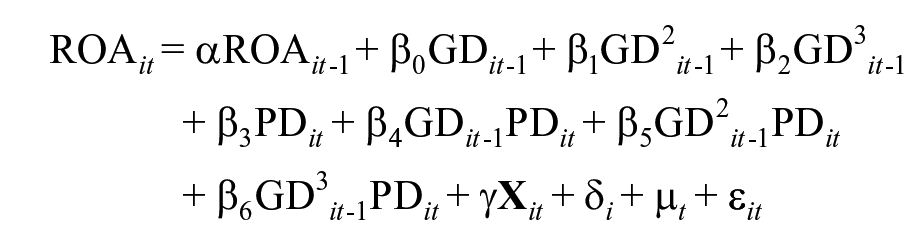
where ROA measures the performance of firm i in year t; ROAit–1 is the lagged term of the dependent variable; GDit–1 is the lagged GD (its squared and cubic terms are also introduced to test for a S-shaped relationship between GD and ROA); PD
it
denotes PD (i.e., RPD and UPD, respectively);
In addition, the Hansen J-test and the Diff-in-Hansen test are applied to test the null hypothesis of instrument validity and the validity of the additional moment restriction required for System-GMM, respectively. We are unable to reject the null hypothesis in any of the estimations, which means the instruments are valid. Moreover, the Arellano-Bond test for serial correlation is adapted to test whether there is a second-order serial correlation in the first-differenced residuals—the null hypothesis is that the residuals are serially uncorrelated. We cannot reject the null in any case, which shows there is no second-order serial correlation, and the GMM estimator is consistent.
Regarding the number of lags to be included in the model’s specification for the GD measure, we follow Serena and Perron (2001) for the selection of the lag lengths and use a modified information criteria, which accounts for the severity of size distortions and power loss, using local asymptotic properties. In all cases, the optimal lag length is equal to 1.
Results
Table 1 shows the descriptive statistics (mean and standard deviation), the signs of the correlations, and the variance inflation factor (VIF) for analyzing the collinearity of all the model’s variables, and Table 2 reports the GMM estimation results. Table 1 shows that some variables are highly and significantly correlated. This is, for example, the case of FSTS and GD, Productivity and Human capital qualification, or Foreign ownership and Human capital qualification. The VIFs of all the explanatory variables enable us to assess the problem of multicollinearity more carefully. This analysis reveals that multicollinearity does not appear to be a major problem in our empirical analysis, as all explanatory variables (independent and control) have VIFs below the 5.3 and 5.0 criteria advocated by Kennedy (1992), and by Marquardt and Snee (1975), respectively. In fact, most explanatory variables have VIFs below 1.5.
Descriptive statistics, VIFs, and correlations.
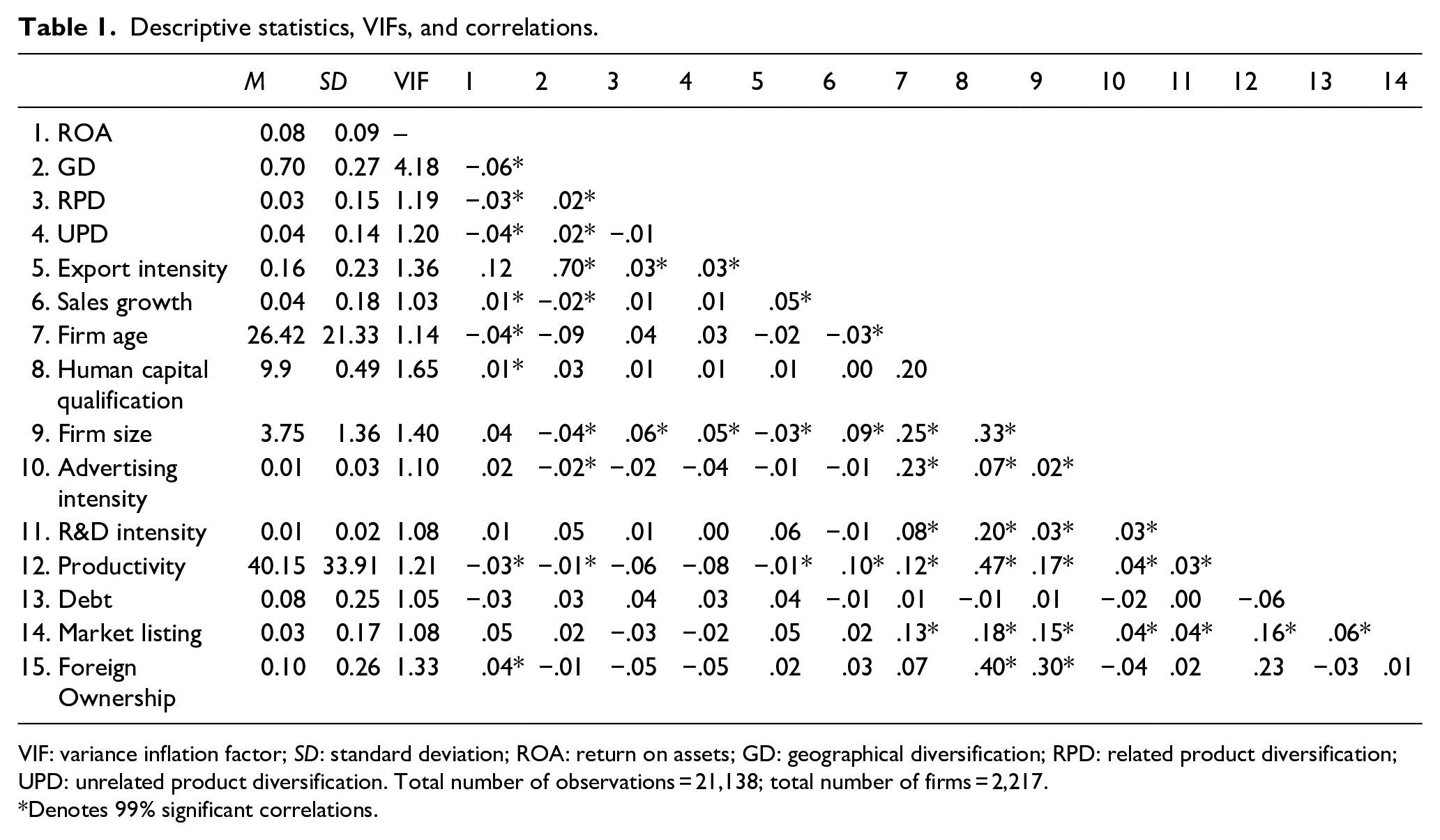
VIF: variance inflation factor; SD: standard deviation; ROA: return on assets; GD: geographical diversification; RPD: related product diversification; UPD: unrelated product diversification. Total number of observations = 21,138; total number of firms = 2,217.
Denotes 99% significant correlations.
PD regressions on the link between prior GD and ROA 1994–2014.
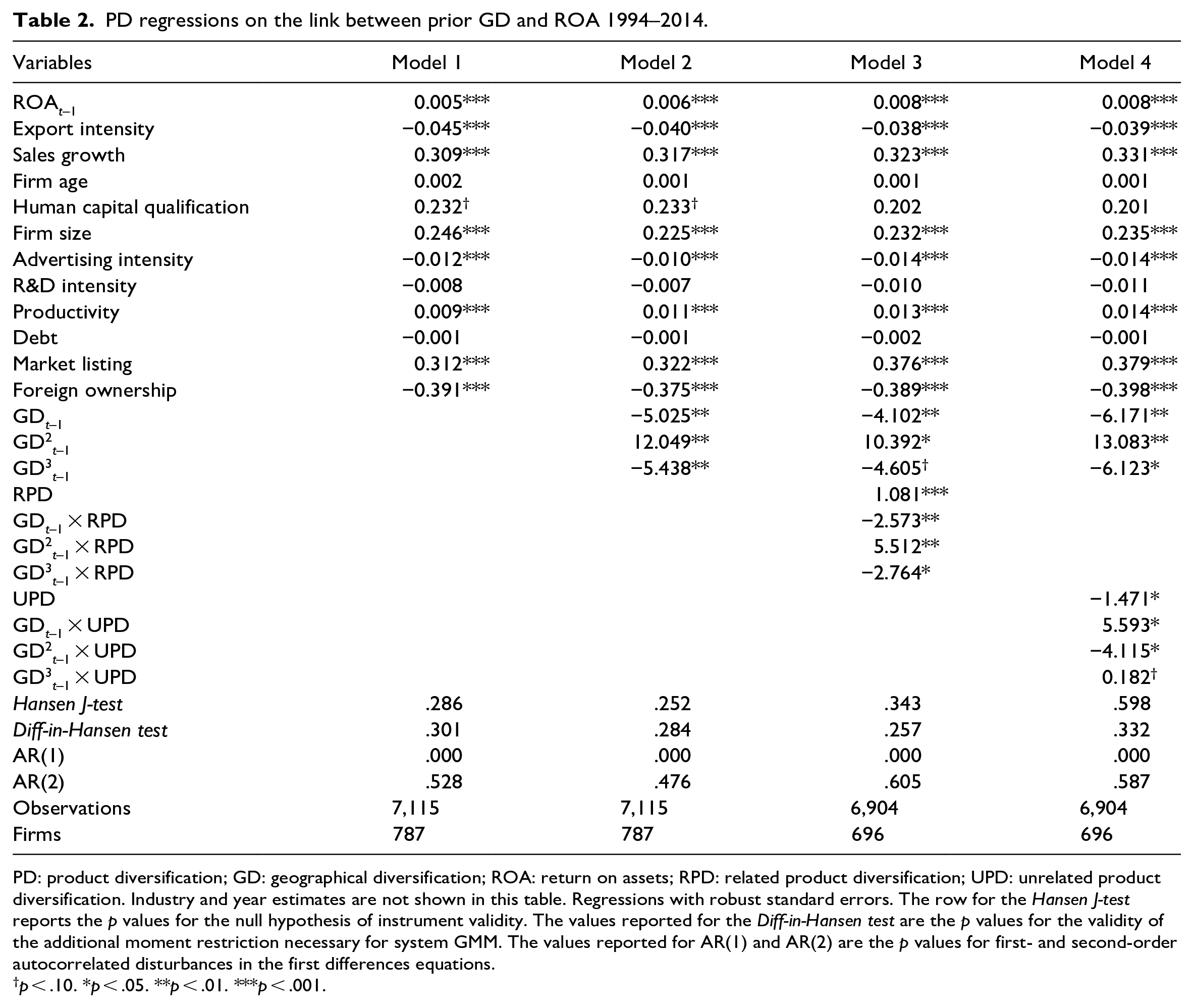
PD: product diversification; GD: geographical diversification; ROA: return on assets; RPD: related product diversification; UPD: unrelated product diversification. Industry and year estimates are not shown in this table. Regressions with robust standard errors. The row for the Hansen J-test reports the p values for the null hypothesis of instrument validity. The values reported for the Diff-in-Hansen test are the p values for the validity of the additional moment restriction necessary for system GMM. The values reported for AR(1) and AR(2) are the p values for first- and second-order autocorrelated disturbances in the first differences equations.
p < .10. *p < .05. **p < .01. ***p < .001.
We have estimated four models. Model 1 is the basic model, as it considers solely the effects of control variables. In turn, Model 2 shows the main effects of the linear, quadratic, and cubic terms of GD. This model tests the nature of the relationship between GD and performance: linear or curvilinear. Finally, Models 3 and 4 show the effects of the interaction between PD and GD. Model 3 reports the effect of RPD on the GD–performance link, while Model 4 illustrates the effect UPD has on this link.
In Model 2, the coefficient of the linear term of GD is negative and significant (p < .01), while the squared term is positive and significant (p < .01), and the cubic term is negative and significant (p < .01). These results suggest the existence of a horizontal S-shaped or sigmoid curvilinear relationship between GD and ROA in the sample of firms under study, which is precisely consistent with the theoretical arguments presented in Hypothesis 1. These findings, therefore, provide strong statistical support for this hypothesis.
In Model 3, the coefficients of the linear, quadratic, and cubic terms of GD maintain their signs and are also significant. In addition, the coefficient of RPD is positive and significant (p < .001). This means SMEs implementing an RPD strategy may perform better than those SMEs that do not implement PD strategies or implement a UPD strategy. On the contrary, the coefficient of the interaction effect of RPD with the linear term of GD is negative and significant (p < .01), while the interaction effects of RPD with the quadratic and cubic terms are also positive and negative and significant, respectively (p < .01 and p < .05). Our results therefore suggest that the adoption of an RPD strategy has a positive effect on the relationship between GD and performance. These results provide strong statistical support for Hypothesis 2.1., which assumes that the performance of international SMEs is higher when these firms also opt for an RPD strategy. To further examine the potential effect of RPD on the GD–performance relationship, we construct Figure 1 by drawing on Model 3’s results. This figure confirms the positive effect of RPD. Moreover, this figure also reveals that the positive effect of an RPD strategy seems to be stronger when SMEs have moderate levels of GD, whereas this effect weakens when SMEs have high levels of GD.
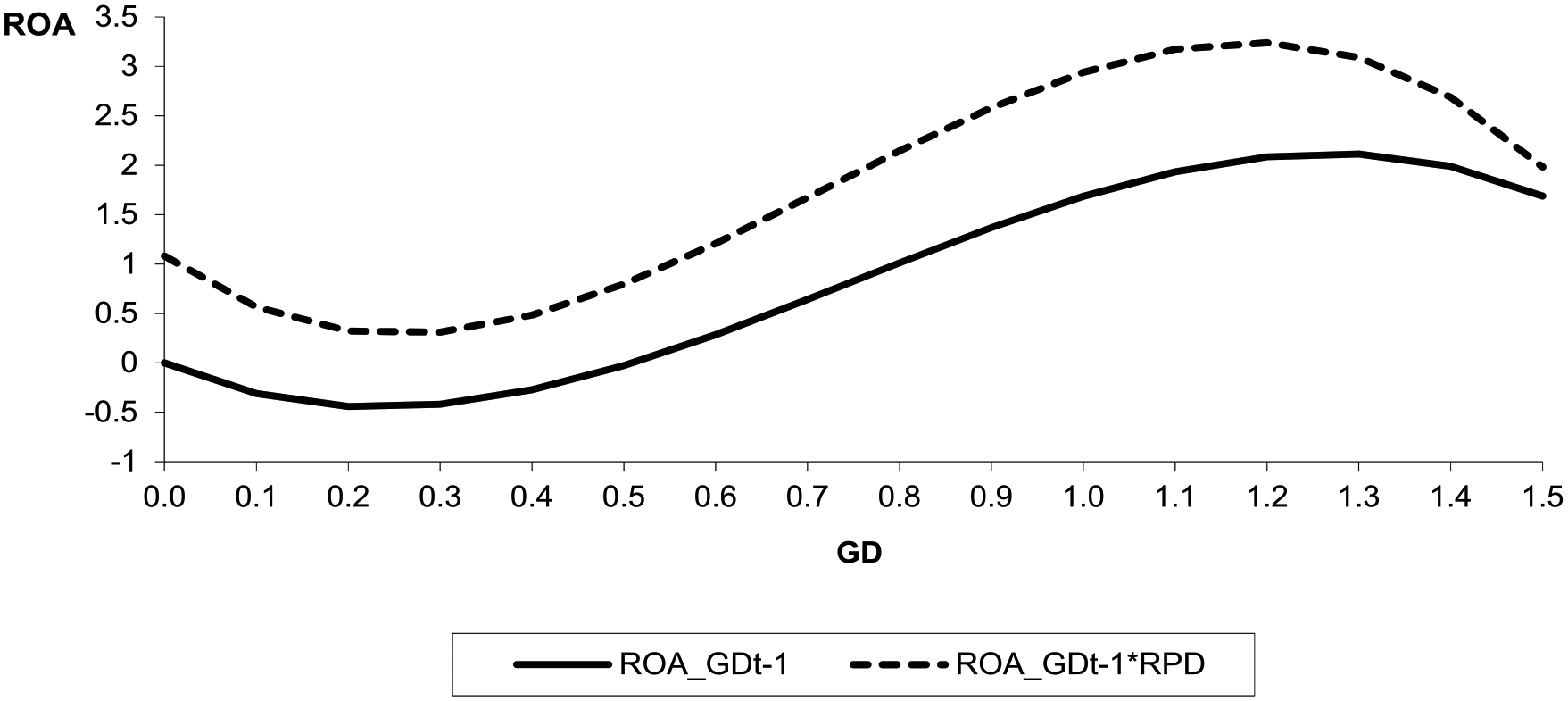
The effect of a related PD strategy on the relationship between GD and ROA.
As occurs in Models 2 and 3, the coefficients of the linear, quadratic, and cubic terms of GD in Model 4 maintain their signs, and are also all significant. Furthermore, the coefficient of UPD is negative and significant (p < .05). This means the adoption of an unrelated diversification strategy is associated with a weaker performance. Interestingly, the coefficient of the interaction effect of UPD with the linear term of GD is now positive and significant (p < .05), while the interaction effects of UPD with the quadratic and cubic terms of GD are also significant, but negative and positive, respectively (p < .05 and p < .1, respectively). At first, these results suggest that the implementation of UPD strategies has a negative impact on the GD–performance relationship. In light of these findings, we may conclude that this study also provides statistical support for Hypothesis 2.2., whereby the adoption of a UPD strategy will have a negative impact on the performance of SMEs involved in GD. Figure 2, which is constructed by drawing on Model 4’s results, provides more detail on the true nature of the UPD’s effect. This figure confirms the joint negative effect of UPD and GD on performance, especially for SMEs with high and low levels of GD. However, in the case of SMEs with moderate levels of GD, the implementation of a UPD might be beneficial. Therefore, this finding seems to partially contradict our initial assumption in Hypothesis 2.2, because, as reported in Figure 2, the S-curve is higher when SMEs simultaneously opt for moderate levels of GD and a UPD strategy.
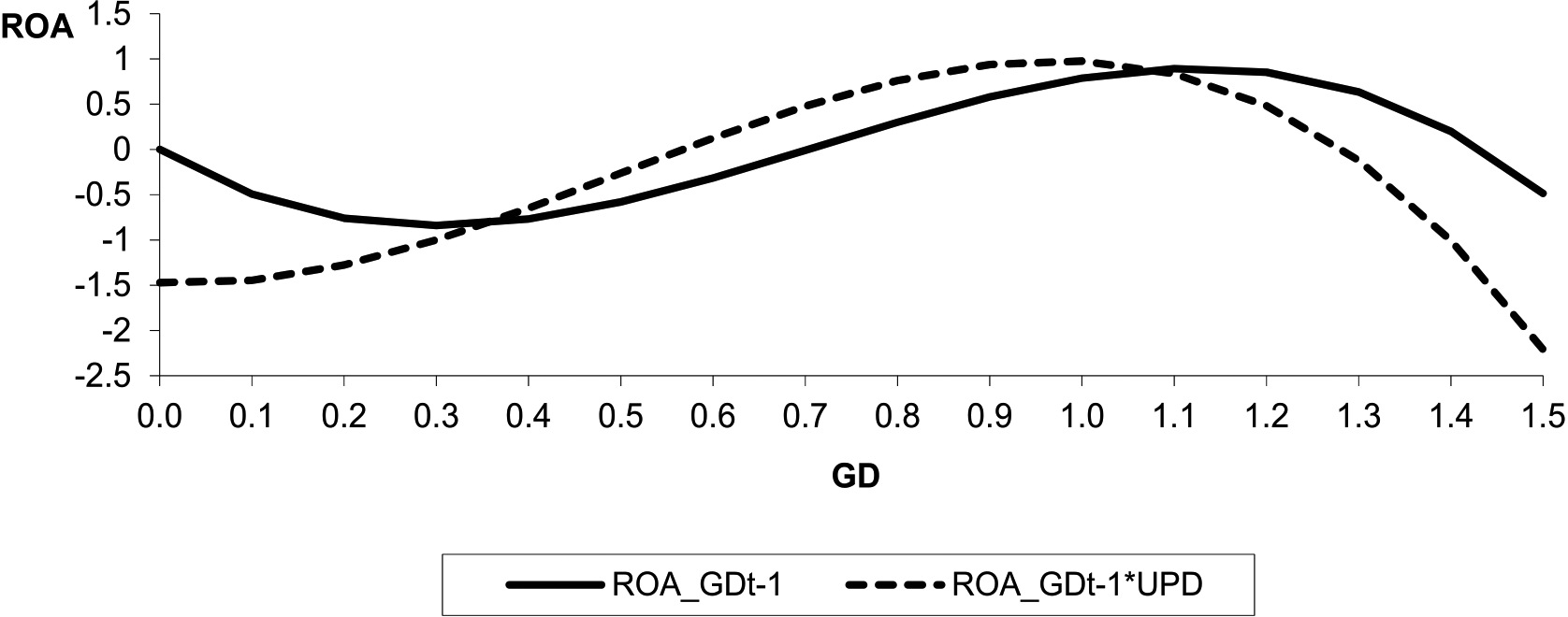
The effect of an unrelated PD strategy on the relationship between GD and ROA.
As additional findings, Figure 3 also reports the relationship between GD and performance in the case of those international SMEs that choose a Single-Business strategy (i.e., Non-Diversified SMEs). This figure shows the existence of a negative combined effect of Single-Business-GD strategies on performance. Interestingly, this combined effect of both corporate strategies on ROA seems to be worse for SMEs with high levels of GD.
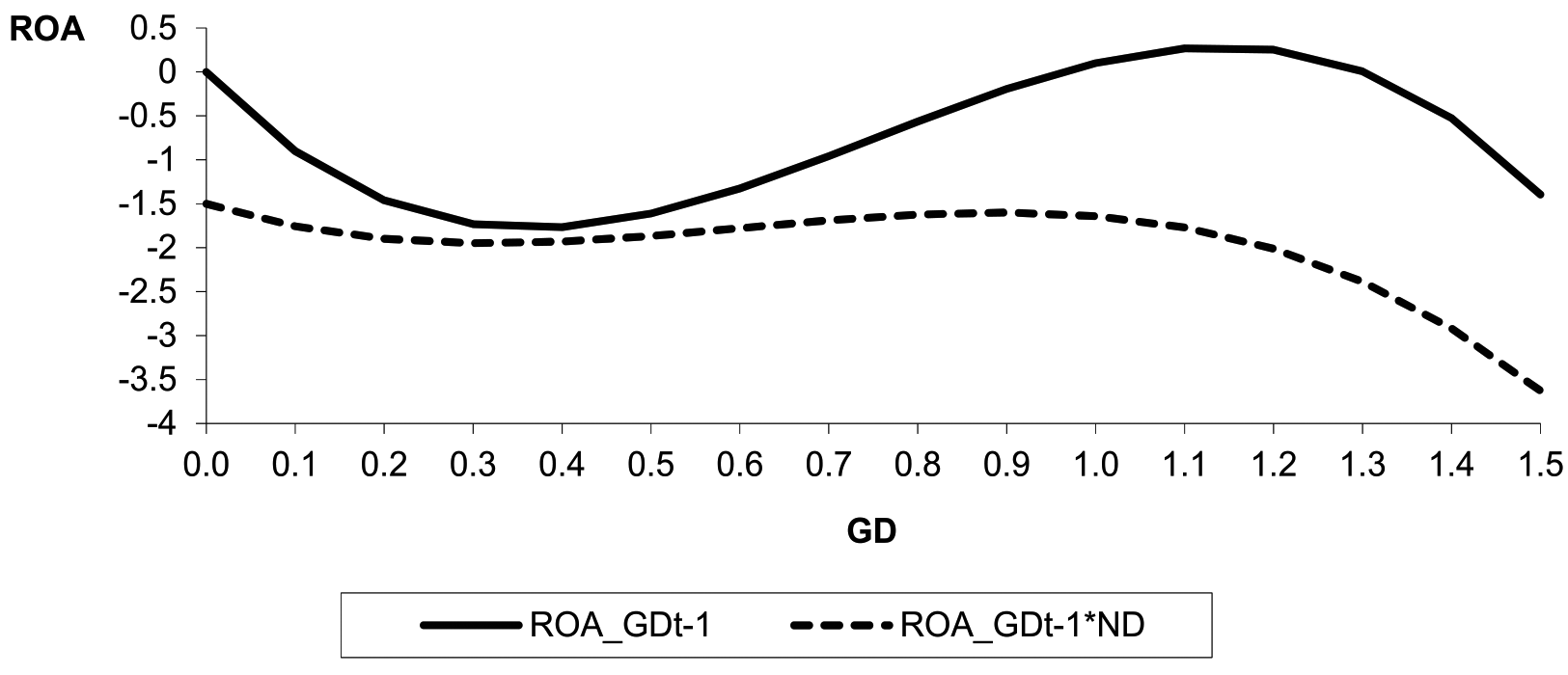
The relationship between GD and ROA in non-diversified SMEs.
Finally, most of the control variables maintain their signs and/or significance levels in almost all the models. For example, the coefficients of lagged ROA, Sales growth, Firm size, Productivity, and Market listing are positive and significant in all the models (Models 1–4). In contrast, the coefficients of Export intensity, Advertising intensity, and Foreign ownership are also negative and significant in all the models (Models 1–4).
Discussion and conclusion
The last 50 years have seen abundant empirical studies examining the impact international and PD strategies have on the bottom line. This study integrates both corporate strategies into the analysis of the impact on performance, making it one of the first attempts to investigate the effect that two of the most popular PD strategies (i.e., related and unrelated diversification) have on the relationship between GD and performance in the specific case of SMEs belonging to a medium-sized developed country (Spain) that is heavily dependent on these firms both in terms of employment and GVA. Most prior research has primarily focused on exploring the combined effect of overall PD in large multinational corporations in the United States, Japan, and other European countries, such as the United Kingdom, France, or Germany. These research findings have revealed the existence of different GD–performance models (linear vs. curvilinear ones), so we now recognize the need to first identify the model that better explains the relationship between GD and performance in the sample of firms under study. We have then examined the potentially different impact of RPD and UPD strategies on the relationship between GD and performance by contending that diversifying into related products is expected to have more favorable impacts on the performance of international SMEs than diversifying into unrelated products.
Regarding the effect of GD on performance, Hypothesis 1 was statistically supported by the suggested existence of a horizontal S-shaped form, hence confirming the validity of the Three-Stage Theory in the sample of Spanish SMEs considered. Specifically, our findings have revealed that SMEs’ early efforts to internationalize are negative. After this point, mid-levels of internationalization are associated with increasing economic profitability. However, high levels of foreign involvement are also associated with declining profitability. This horizontal S-shaped relationship between GD and performance sheds new light on the findings of a number of prior studies also based on samples of SMEs. For example, this finding is similar to those obtained by Fisch (2012), and Cho and Lee (2018) using samples of German and Korean manufacturing SMEs, respectively. It is also in line with the findings of other past studies based on samples of large firms (e.g., Benito-Osorio et al., 2016; Chang & Wang, 2007; Contractor et al., 2003; Lu & Beamish, 2004; Thomas & Eden, 2004). At this point, it is also interesting to note that in a prior study, Benito-Osorio et al. (2016) have used Spanish manufacturing SMEs over the period 1994–2008 to report a U-shaped form between GD and performance (mainly in the case of medium-sized firms). This study revealed that Spanish SMEs have not yet achieved high levels of international diversification during the period under study, so the internationalization–performance link may be size-dependent. The findings obtained in the current study, which considers 6 years more than the study by Benito-Osorio et al. (2016), suggest that Spanish manufacturing SMEs are already present in the three stages of internationalization (i.e., Stage 1, Stage 2, and Stage 3). A plausible explanation for this finding is that the prolonged weakness of domestic demand during the past economic crisis—which in Spain lasted from 2008 to 2014—prompted a search for new markets and strengthened the competitive position of a large number of Spanish firms in international markets. Although the internationalization of Spanish firms of different sizes has significantly accelerated since 2010, the available evidence reveals that, in general, Spanish SMEs have played a bigger role than large firms in the changes in their international activity—mainly through exports. For example, between 2010 and 2013, SMEs account for almost all the increase in the number of firms that internationalized (González Sanz & Martín Machuca, 2015).
Concerning the potential effect PD strategies have on the GD–performance relationship, the empirical results provide statistical support for our Hypotheses 2.1 and 2.2. (albeit only partially in the case of Hypothesis 2.2). In this case, the findings indicate that, in general, RPD can positively and significantly enhance the economic profitability of internationally diversified SMEs, albeit not indefinitely. Conversely, the implementation of a UPD strategy may significantly impair the economic profitability of those SMEs that are also engaged in a GD strategy. More specifically, our study reveals that GD and PD strategies could be considered complementary strategies in the following situations: (1) when SMEs implement an RPD strategy and opt for low and moderate levels of GD and, to a lesser extent, for a high level, and (2) when SMEs implement a UPD strategy, and especially if they opt for a moderate level of GD. In addition, our findings reveal that the performance of international SMEs will always be lower when these firms also choose not to diversify, although the performance is weaker when these firms also opt for high levels of GD.
With respect to the effect of RPD, our findings suggest that, in comparative terms, those SMEs that implement an RPD strategy are more likely to be more competitive in international markets, especially when these firms opt for low and moderate levels of GD (i.e., SMEs in Stages 1 and 2 of internationalization). In particular, the interaction of close product relatedness and low and moderate levels of international diversification may facilitate the more effective implementation of differentiated synergies that provide customers with a high value that is competitive in international markets (Hitt et al., 1997; Qian, 2002, p. 629). In these situations, SMEs in foreign markets are therefore more likely to take advantage of (or better exploit) benefits related to economies of scope and learning that are usually linked to an RPD strategy. Furthermore, the implementation of an RPD strategy may improve the management of the diversity and complexity generated when an SME is also engaged in low and moderate levels of GD. A plausible explanation for this is that those SMEs engaging in an RPD strategy might more easily replicate the structures and capabilities also established in their international operations, whereby they could reduce their potential governance and transaction costs.
Importantly, too, our findings suggest that when SMEs engage in high levels of GD (i.e., SMEs in Stage 3 of internationalization), the simultaneous implementation of an RPD strategy can also lead to a positive moderating effect on ROA, but lower than in the case of low and moderate levels of GD. Interestingly, this effect gradually decreases as the level of GD increases. As geographical and cultural distance increase as a direct result of higher levels of GD, so too can governance and coordination costs increase (Chang & Wang, 2007; Hitt et al., 1997; Lee et al., 2012). In this case, there is also a need to compete internationally with more requirements and preferences among customers than in low and moderate levels of GD. It is therefore logical to expect that the ability to generate synergies and develop new products that do not cater for local tastes and requirements may lead SMEs to incur higher costs that may outweigh to a greater extent the potential benefits obtained with new related products abroad. These results differ slightly from those obtained by Li et al. (2012). While these researchers obtain that profitability varies positively and significantly with an RPD strategy and these effects turn out to be negative with high levels of GD, our findings show that profitability varies positively and significantly regardless of the level of GD (albeit for high levels of GD, the positive effect is gradually decreasing).
We have also observed that a UPD strategy has a significant and negative interactive effect on performance when SMEs opt for high and low levels of GD (i.e., SMEs in Stages 1 and 3 of internationalization). Specifically, our findings suggest that SMEs opting for high and low levels of international diversification and implementing a UPD strategy at the same time will record a drop in ROA compared to their counterparts that are also internationalized, but have not diversified their products or have diversified in a related way. In line with Qian (2002), our findings suggest that, in general, it is not easy for both strategies to go hand-in-hand in SMEs (as also occurs in the case of large corporations). In these situations, as suggested by Chang and Wang (2007, p. 67) and others (e.g., Ruigrok and Wagner, 2003; Sullivan, 1994) regarding an RPD strategy, the greater diversity in products, distribution channels, and customers associated with a UPD strategy is more likely to add greater costs to the adjustment between firms’ internal structure and their external environments.
Moreover, as with an RPD strategy, as the level of GD substantially increases in the case of a UPD strategy, the complexity and level of diversity also increases, and firms will incur in higher coordination and governance costs (Chang & Wang, 2007). Importantly, our findings also suggest that a moderate level of GD (i.e., SMEs in Stage 2) combined with the implementation of a UPD strategy has a positive effect on the performance of the SMEs considered in the study. In this situation, SMEs may well take advantage of certain unique and inimitable synergies: for example, by sharing marketing and technological information, or even transferring the managerial competences required to manufacture different types of products (Markides & Williamson, 1996; Robins & Wiersema, 1995).
In addition, as also suggested by Hitt et al. (1997) and others (e.g., Chang & Wang, 2007), because the customer base is broader for moderate levels of GD, firms might benefit more from the economies of scale associated with the manufacture of different products. The ability to offer different types of products at competitive prices might also help these firms to maintain a sustainable advantage while putting greater competitive pressures on their rivals. This finding is also consistent, to a certain extent, with the results obtained by Li et al. (2012). These authors also find that UPD may not necessarily harm SMEs’ performance when they internationalize moderately their operations. Therefore, our results also seem to contradict to a certain extent the common belief that small firms should not implement a UPD strategy.
This study’s main implication is that managers of SMEs should pay special attention to the level of “global diversification” they choose for their firms, as this may have a major impact on performance. Elsewhere, our study suggests that these managers also need to focus not just on the international expansion of their operations but also on their PD strategies to obtain further benefits or avoid some of the costs in the specific stages of the process. In any case, it seems obvious that special care should initially be taken in recognizing the different thresholds of GD. Managers should then be able to identify those factors through which the implementation of an RPD or a UPD strategy may also have a significant impact on the performance of GD. As also recognized by Chang and Wang (2007) in the case of large corporations, “By doing well in implementing both international and product diversification strategies, [managers of SMEs] can extend the peak of the internationalization and performance relationship and move the threshold of internationalization to a higher level” (p. 77). Managers of SMEs are therefore encouraged to endeavor to identify different thresholds of internationalization in the firms they manage.
Our results suggest that if managers of SMEs opt for a low level of international expansion (i.e., SMEs in Stage 1), it might be convenient to implement an RPD strategy to improve performance. In such a case, it would be inadvisable to combine international expansion with a UPD strategy (not even a single-business strategy), as profitability could be further impaired. By contrast, if they opt for moderate levels of international diversification (i.e., SMEs in Stage 2), choosing one PD strategy or another (i.e., related or unrelated) might not matter if what they seek is simply to improve the profitability of their international expansion. Nonetheless, if they seek to maximize this profitability, it might then be advisable to choose an RPD strategy. In any case, it would be inadvisable to choose not to diversify, as profitability might also be negative.
Finally, if managers of SMEs opt for high levels of international diversification (i.e., SMEs in Stage 3), involving an RPD or UPD strategy, they should choose the former. It is true that both PD strategies combined with high levels of international diversification might be associated with lower profitability, although this reduction could be higher with a UPD strategy. In this case, choosing a UPD strategy and not diversifying could be equally damaging for the bottom line. According to our findings, therefore, managers of SMEs should give more importance to moderate levels of GD as profitability increases, and this level of GD combines well with both PD strategies.
Although this study’s main objective has been accomplished, it is also worth noting certain limitations. First, our sample focuses on SMEs. While there are significant differences between SMEs and large companies, it is important to remember that SMEs are also a heterogeneous group of firms. The SME population itself is usually composed of highly diverse businesses in terms of age, size, ownership structure, innovation activity, or entrepreneurs’ profiles and aspirations. The evidence reveals that the group of SMEs tends to be highly heterogeneous in their international behavior. In this regard, for example, it would also be interesting to test the extent to which our results are similar in the case of medium-sized firms (those with between 50 and 249 employees), small firms (between 10 and 49 employees), and micro-firms (up to 9 employees). In a similar vein, it would be very interesting to investigate whether there are significant differences in the strategic behavior of these firms in terms of their ownership structure (e.g., family vs. non-family businesses). In a recent study, Stadler et al. (2018) have found that family managers are usually more suited to overseeing PD than international diversification.
A further limitation involves the method used to measure the degree of international diversification. Due to data availability, and to facilitate comparisons with past studies, this study has also used an entropy measure of international diversification, measuring the degree of GD by grouping countries into four regions. We are conscious that this approach, conditioned by the available data, may not be entirely satisfactory because the countries in each region considered in this study may be institutionally very different (e.g., in terms of their cultural, political, social, and economic systems, or their market environment). Future research on this topic should use, as far as possible, more detailed country-specific data. These data could allow us to explore whether an SME’s domestic geographical dispersion also influences its initial and subsequent decisions to engage in operations abroad (see Santangelo & Stucchi, 2018).
Although we dynamically examine the relationships proposed, our empirical study does not cater either for possible shifts or changes in relationships across time. In this sense, for example, there are some studies suggesting that the relationship between PD strategies may be time or economic cycle-dependent (e.g., Benito-Osorio et al., 2012; Zúñiga-Vicente et al., 2019). Future studies are also encouraged to address this critical issue in the specification of empirical models. On the contrary, our sample was limited to manufacturing SMEs in Spain. It would be interesting to replicate this study using samples of service SMEs to see to whether our findings can also be extrapolated to them. Finally, it would also be interesting to see whether our results are similar in the specific case of the so-called born-global SMEs (i.e., those SMEs that internationalize from start-up).
Footnotes
Appendix
Product diversification (PD) is measured here in a way that total diversification entropy can be broken down into two related dimensions: related and unrelated PD (i.e., RPD and UPD). PD can therefore be expressed as the sum of RPD and UPD (PD = RPD + UPD).
According to the SEPI Foundation, both diversification dimensions are measured according to the CNAE classification. 3 CNAE industries at the two-digit level are treated as the industry groups, while those at the four-digit level are treated as the industry segments. Related diversifiers do so in different four-digit industry segments within the same two-digit industry groups, whereas unrelated diversifiers do so across two-digit industry groups. The firm’s annual report is checked to establish the (main) industry in which each firm operates, and the number of product segments in each industry group.
The calculation method for the entropy measure of PD (which represents total diversification entropy) is as follows
where Pi is the ratio of the firm’s total sales within the ith industry segment, and n is the number of industry segments in which the firm operates, as identified by the four-digit CNAE code. Thus, a larger PD means a higher degree of overall diversification at firm level.
The entropy measure of RPD is calculated as follows
where RPD j is the degree of diversification within industry groups, M is the number of industry groups (with n ⩾ M), and Pj is the ratio of the firm’s total sales within the jth industry group.
RPD represents related diversification entropy in a way that RPD j is the related diversification arising from operating in several business segments within an industry group j.
Finally, the entropy measure of UPD is calculated as follows
where M is the number of industry groups and Pj is the ratio of the firm’s total sales within the jth industry group.
The SEPI Foundation has given us information solely on which firms (in our case, SMEs) were diversified and which firms adopted an RPD and a UPD strategy, respectively, but not the values of the entropy measures of RPD and UPD because the Survey on Business Strategies’ quantitative information for building these variables is subject to statistical confidentiality. It is precisely for this reason that we have had to use RPD and UPD as categorical variables.
Acknowledgements
We thank the two anonymous reviewers and the Guest Editors for their helpful comments and suggestions that greatly improved the quality of this paper.
Declaration of conflicting interests
The author(s) declared no potential conflicts of interest with respect to the research, authorship, and/or publication of this article.
Funding
The author(s) disclosed receipt of the following financial support for the research, authorship, and/or publication of this article: This paper has been supported by the Ministry of Science, Innovation and Universities (Spain) (Project: RTI2018-097447-B-I00).