



Abstract
In today’s world, it is unavoidable for older adults to use technology, which causes some challenges for them. In this qualitative study, we used grounded theory to evaluate information and communication technology (ICT) adoption strategies among Iranian older adults. The participants included 18 older adults, five experts, and five family members of older adults. The data collection method included conducting semi-structured interviews, taking field notes, and observation. The data were analyzed using the Corbin and Strauss approach. Three main themes were extracted as follows: support from others, effort for learning, and smart choice. The subthemes of support from others included creativity in educating older adults; having access to an educational supporter; and receiving informational, emotional, and financial support. The subthemes of effort for learning included utilizing aids, adaptive measures, shortcut techniques, and self-learning. The subthemes of smart choice included physical characteristics, technical features, price sensitivity, and availability of an active sales representative. Accordingly, it is essential to teach older adults to increase their ICT adoption rate and continued use of technology. In this respect, developing a standard ICT manual for older adults can be beneficial.
Introduction
Technology adoption refers to adopting, integrating, and using new technology in society (Granić, 2023). It points out users’ willingness to incorporate technology into their lives to help them with daily activities(Sitorus et al., 2016). With the increasing population of older adults worldwide, technology and its use in everyday life are also expanding (Arabian & Zakerian, 2019). Mobile networks are more accessible to people than any other system and have rapidly penetrated human societies (Safdari et al., 2018). Among the influential technologies in the lives of older adults, we can refer to smartphones. Also, the need to use electronic communication devices such as mobile phones has become increasingly necessary in recent times, and there has been a growing development of infrastructure in this field over the past few years. In this respect, we may refer to health monitoring software (Bert et al., 2014; Damant et al., 2017; McCausland & Falk, 2012), comprehensive health assessment software, fall prevention software (Hosseini & Afkhami, 2019), and other software aimed at improving the quality of life in older adults that previously required a lot of time and energy (Abbaszade et al., 2019; Di Giacomo et al., 2020; Morasae et al., 2012).
The impact of information and communication technologies (ICT) on our daily lives has been continuously increasing (Broos, 2005). Therefore, older adults’ inclination toward utilizing technology is steadily growing. The adoption rate of the Internet as a modern technology among older adults increased from 14% in 2000 to 67% in 2016 (Anderson & Perrin, 2017). Different demographic groups throughout the globe do not have the same resources, and their ability to use technology-related devices varies. This matter pertains to the accessibility of ICT and the disparity in internet usage (Kazemi & Hajesmaeili, 2016). In Iran, the current penetration rate of ICT tools has increased. The Ministry of Information and Communication Technology of Iran’s data indicate that the total number of Internet customers in 2020 amounted to 70.6 million individuals. It is important to highlight that the development of internet usage among senior individuals has been quite restricted. Specifically, the average internet adoption rate among individuals aged 50 to 74 was 6.4%, while for those aged 75 and over, it was less than 0.1% (Shanehband, 2021). According to statistics in Iran, the prevalence of digital devices in the lives of senior Iranians is approximately 10% (Alsswey & Al-Samarraie, 2020; Safdari et al., 2018).
Older Iranians use smartphones more frequently than computers, laptops, or tablets. Basakha et al. (2019) states that an estimated 10% of the population aged 50 and above utilizes electronic devices such as laptops, computers, and tablets. Smartphone usage is higher than laptops and computers due to easier access, simpler usability, and reduced purchase and maintenance costs (Ng et al., 2017). Although the number of seniors using smartphones is growing, the acceptance rate of modern technology among older people remains significantly lower than that of younger people (Tang et al., 2022).
Understanding how technology is accepted is essential, considering the critical role that technology plays in the lives of older people and the growing popularity of ICT (Y. Kim & Crowston, 2011; Yap et al., 2022). Thus, adoption begins with the user discovering the technology and ends with complete utilization. This process frequently begins with opting to embrace technology (e.g., investigating buying decisions) and concludes with persistent use (e.g., integrating it into daily life) (Weger et al., 2022).
Many studies investigated technology acceptance, resulting in several hypotheses. Older people have distinct expectations, requirements, and difficulties when using technology. Therefore, current theories that attempt to explain the technology adoption process might not work for them (Sana’a, 2016; Wang et al., 2017). However, models for older people’s use of technology have been developed and presented in recent decades. The Senior Technology Acceptance and Adoption model (STAM) is one such concept. STAM focuses on accepting new technology among older adults (Renaud & Van Biljon, 2008). Both acceptance and adoption include users’ ongoing use of technology, but acceptance is an attitude. Research shows that acceptance drives technology adoption (Weger et al., 2022). STAM accounts for technology acceptability criteria and adoption but not how older persons learn and use technology (Tsai et al., 2019).
Technology adoption and acceptance among older people have been studied extensively (Berkowsky et al., 2013; Braun, 2013; Czaja et al., 2006; Pan & Jordan-Marsh, 2010; Zhou et al., 2019). These studies have helped healthcare practitioners, technology designers, and developers learn about aging technologies. However, we know little about how older people utilize technology and how they learn to use it (Schlomann et al., 2022).
Many experts are looking for ways for older people to overcome technology challenges. These tactics help seniors use technology consistently (Tang et al., 2022). Culture and social norms can impact technology adoption because it is a complicated, contextually dependent, and intrinsically social process. Thus, it is essential to conduct research that contributes to a better understanding of technology adoption among older adults in Iran. Gaining insight into this phenomenon can help accelerate older people’s adoption of technology. Given the high illiteracy rate among Iranian older adults and their recent engagement with these technologies, it is critical to compile thorough and insightful data regarding the strategies that older adults use to adopt ICT. Therefore, the current study aims to evaluate ICT adoption strategies among Iranian older adults.
Methods
Design
Technology adoption is complex, inherently social, and context-based (Straub, 2009). Additionally, various factors, such as technological design characteristics, socioeconomic circumstances, and cultural and individual characteristics, affect older adults’ adoption of technology. Considering the limited data on these factors, we used the grounded theory proposed by Corbin and Strauss (2015) to explain the technology adoption strategies of Iranian older adults. This study is a portion of a larger research project that explains how older people come to adopt ICT. Hence, as the phenomenon being examined is a process, the grounded theory approach has proven to be an appropriate methodology for the current investigation.
Sampling
This qualitative study used purposive, theoretical, and maximum variation sampling methods. Ten older adults who were active on social media were selected from the Farzanegan Foundation and Comprehensive Health Centers in Shiraz, Iran. Farzanegan Foundation is the largest adult day care center in Shiraz and offers health, prevention, education, and empowerment services. The Comprehensive Health Center provides primary healthcare services to all age groups in the community. The inclusion criteria were being 60 years or older, having a score of 7 or above on the Abbreviated Mental Test (Bakhtiyari et al., 2014), ability to interview, ability to understand and speak Persian, and daily use of information and communication technologies. It should be mentioned that social media platforms like WhatsApp, Telegram, and Instagram serve as ICTs for older Iranians concurrently.
The researcher then used theoretical sampling to extract and clarify conceptual categories from the data analysis. This method was used to interview six senior people, five family members, and five experts (a psychologist, two computer engineers, a mobile repair technician, and a technology education instructor). The inclusion criteria for family members involved being willing to participate in the study and helping their parents to use ICT. For experts, the inclusion criteria were willingness to participate in the study and having knowledge and experience in the field of ICT for older adults.
The researcher also interviewed two older people using maximum variation sampling to get different opinions on the phenomenon. To guarantee variety in interview selection, the researcher considered age, gender, marital status, education, lifestyle, health, and average ICT use.
Data Collection
We used semi-structured interviews, field notes, and observation methods to collect the needed information. The interview guide was prepared and compiled by the cooperation and consensus of the research team. Interviews started with some general questions as follows: “Do you use smartphones? The Internet? And social networks such as WhatsApp, Telegram, or Instagram?,” “Why did you start using it?,” “What made you feel that you needed it?,” and “Please tell us about your experience of using this type of technology.” Next, based on the participant’s responses and the issues raised, specific questions were asked to obtain more details and increase the depth of the interviews (Appendix 1). Field notes supplemented verbal behavior and participant interaction data. Detailed field notes were taken during and after the interviews.
Field Note Sample: September 27, 2022
After the interview, at twelve o’clock in the afternoon, as I was gathering my belongings, I observed two elderly individuals conversing in the yard of the Farzangan Foundation. One of the seniors explained that he had been receiving inappropriate photographs on Instagram for some time. Uncertain of what to do and unwilling to discuss the matter with his family, he asked a friend for assistance. His friend stated that he had never encountered such a problem before but could ask his children for help.
This study also collected data through unstructured observation. According to Strobert and colleagues, this helps researchers understand the events researched by seeing the world from the participants’ perspective. In this study, the researcher observed senior people’s technology methods, which may not be covered in interviews. Observations occurred before, during, and after the interview.
Observation Sample: January 29, 2023, 08:48 AM.
Participant 17 decided to display an image from the gallery of their mobile phone following the interview. When he selected the gallery icon, he was informed that it had reached capacity and “could not be reopened.” Additionally, he stated, “When something like this occurs, I am never sure of what to do.” I always have my grandson fix it. “I have no idea how he manages to fix it.”
The participants determined the time and place of the interviews after completing an informed consent form. The time frame for the interviews was from February 1, 2022, to February 19, 2023. Due to the COVID-19 pandemic during the study period, the first author conducted interviews in a public setting with appropriate social distancing protocols. Also, the interviews (average duration: 63 min) were tape-recorded and transcribed immediately.
Data collection was continued until data saturation, when no new codes were generated, or the existing themes were further developed. All interviews were conducted in Persian and transcribed, coded, and translated into English by research team members fluent in both languages. Moreover, a professional translator was employed to ensure cultural and linguistic accuracy. FB conducted all interviews. Conceptualization by YAM, FMSH, and FB. Analysis of findings: YAM, FB, ZHZ.
Data Analysis
For data analysis, we used the approach proposed by Corbin and Strauss (2015). Data analysis started immediately after the first interview. For data categorization, we used the MAXQDA software version 20. The researchers repeatedly read and coded the interview texts to understand the details. Next, the extracted codes were examined for similarities and differences using constant comparative analysis. Finally, all main themes and subthemes were formed. We used open coding to determine the concepts, develop concepts according to their characteristics and dimensions, analyze data for context, relate the process to data analysis, and integrate the categories (Amini et al., 2021; Corbin & Strauss, 2015). Also, the researchers used memo writing to examine the extracted codes regarding similarities and differences.
Quality and Trustworthiness
The study team, which included gerontology and qualitative research experts, examined and approved the interview transcripts and codes to further enhance the credibility of the data. In order to increase the dependability of the findings, we used constant comparative analysis and reviewed the data collection and analysis process. In addition, all steps of the study process were detailed for confirmability. The quality of the study was evaluated using the COREQ (Consolidated Criteria for Reporting Qualitative Research) checklist (Booth et al., 2014) (Appendix 2).
Ethical Consideration
The research proposal was approved by the research ethics committee at the University of Social Welfare and Rehabilitation Sciences (code: IR.USWR.REC.1400.260). The interviews were conducted after obtaining informed written consent from all participants. Also, all participants were informed about the research aims before entering the study. They were assured that their records and identity would remain confidential. The participants were free to leave the study at any stage if they wished so.
Results
Participant Characteristics
We included 28 participants in this study (18 older adults, five family members, and five experts). Also, 61% (n = 17) of the participants were female (11 older adults, 4 family members, and 2 experts). The mean age of older adults, family members, and experts was 61.83 ± 2.26, 31.2 ± 10.45, and 30.2 ± 2.92, respectively. Sixty-one percent of older adults (n = 11) lived with their spouses and children. Among the older adults, 55% (n = 10) had a high school diploma or a higher degree. Sixty-six percent of the older adults (n = 12) were selected from comprehensive health centers and 33% (n = 6) from daycare centers. Over half of older individuals (n = 10) used Samsung, 22% Apple, and 23% Xiaomi, Huawei, and Poco. The mobile phones of 83% (n = 15) of older adults were equipped with a physical HOME button. Also, each participant had a flat-screen smartphone. Older adults used smartphones and social networks for an average of 3.42 ± 6.68 hr daily. Moreover, the experts had 2.6 ± 1.35 years of experience working with older adults in technology (Table 1).
Demographic Characteristics of Participants.
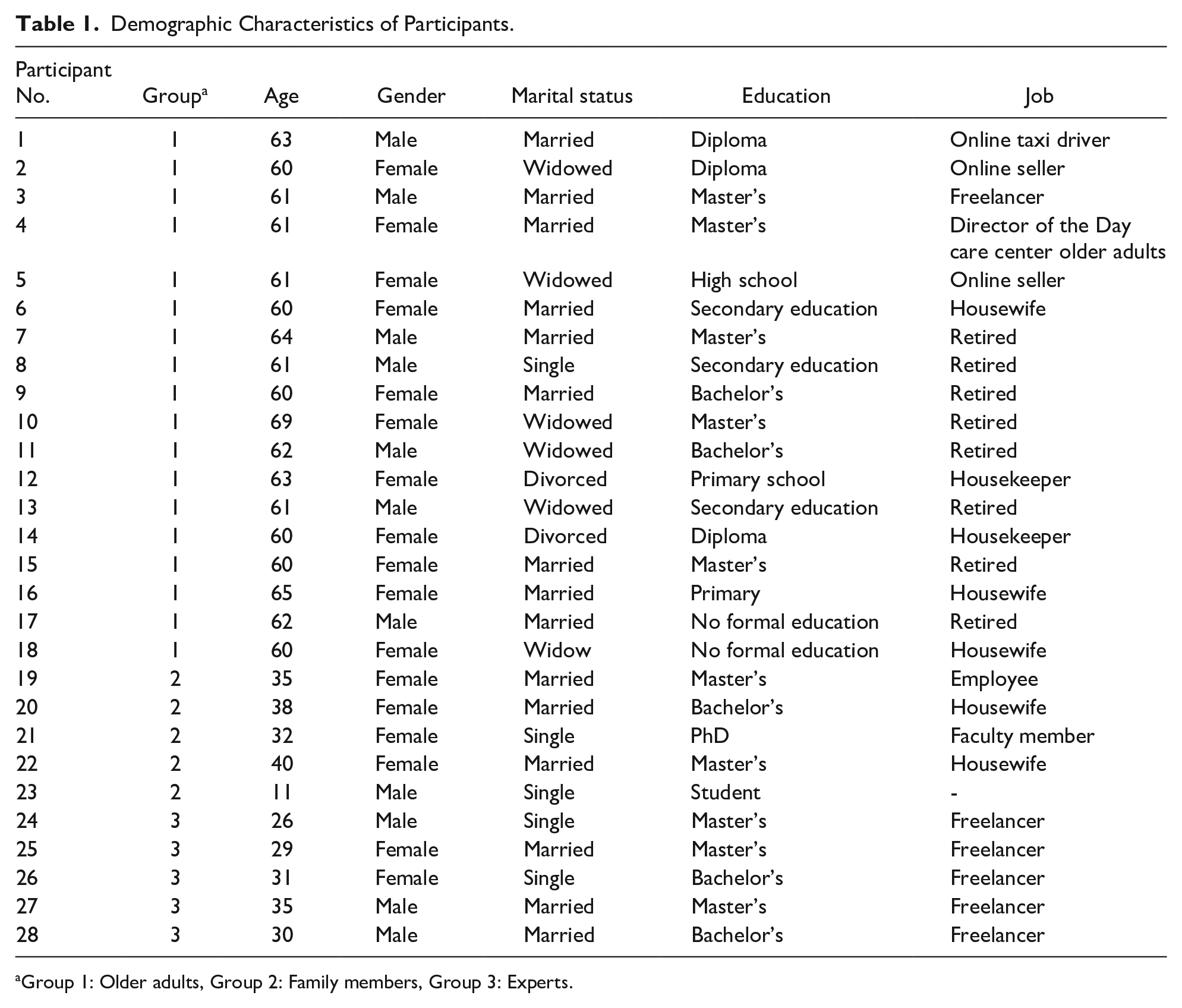
Group 1: Older adults, Group 2: Family members, Group 3: Experts.
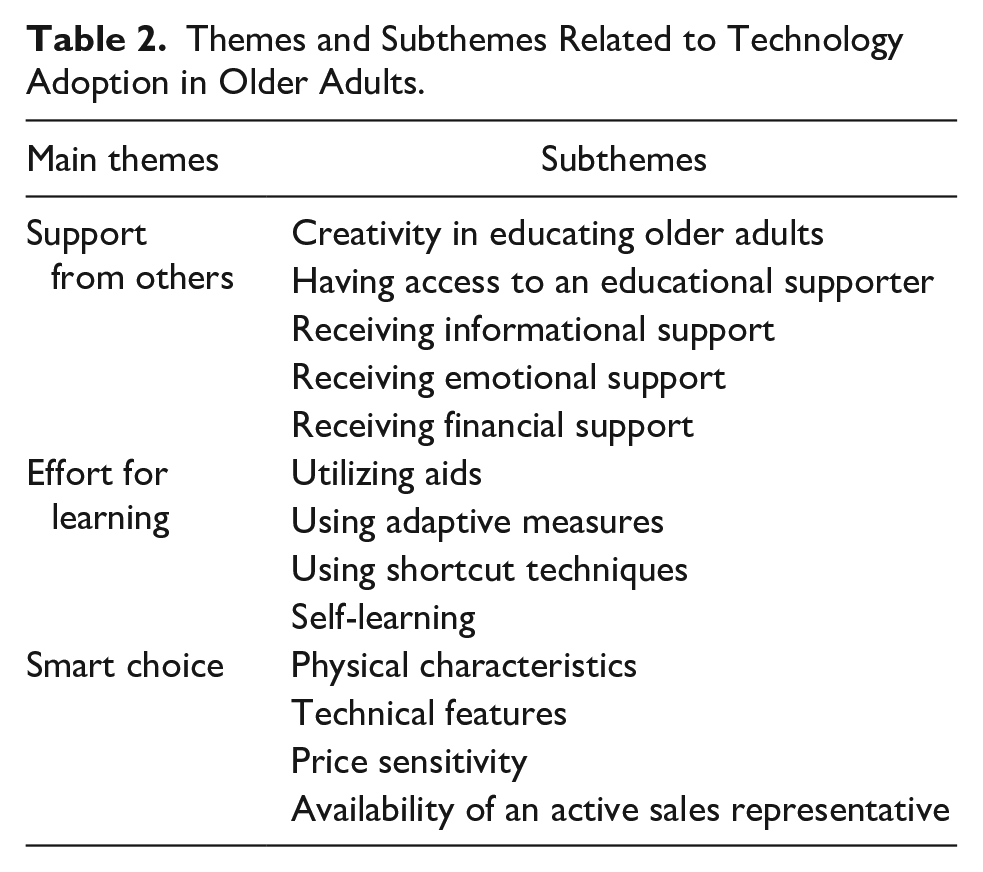
Following a detailed analysis using the Corbin and Strauss (2015) method, we identified three main themes and 11 subthemes related to technology adoption in older adults. The main themes included support from others, efforts for learning, and smart choice. The reasons for selecting these themes differed depending on the participants’ skill levels, education, and past experiences (see Table 2).
Themes and Subthemes Related to Technology Adoption in Older Adults.
Technology adoption is a dynamic process. Older people confront several barriers to adopting and using smartphones, the internet, and social media. There are macro, meso, and micro layers to these barriers. Government planning and suitable initiatives are necessary to address the obstacles at the macro and meso levels. Micro-level limitations include inadequate knowledge, hand tremors, sensory deterioration, and age-related cognitive changes. Older adults use learning and adaptability as coping mechanisms to overcome technology challenges. Older people have shown to gain much from the voluntary assistance of friends and family when implementing this technology. These assist senior strategies citizens in consistently and efficiently utilizing technology (Figure 1).
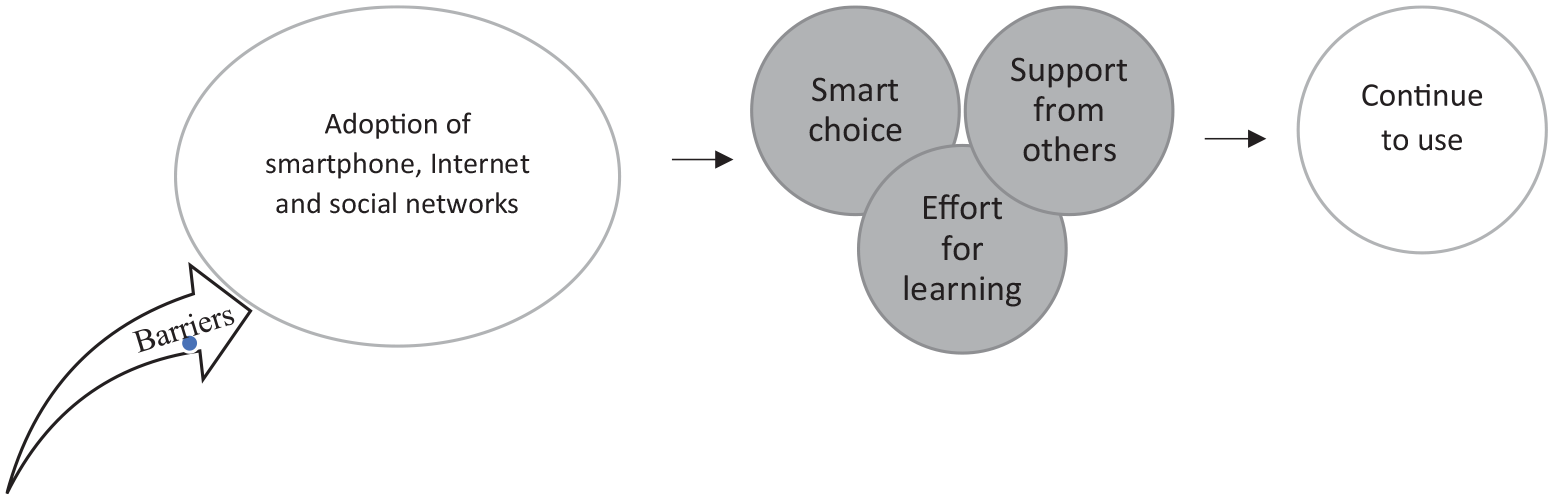
Information and communication technology adoption strategies in older adults.
Theme 1: Support From Others
Older adults often encounter difficulties surfing the internet and utilizing various features of smartphones. To overcome these challenges, they rely on support from their family members. When family support is unavailable, older individuals may seek assistance from IT professionals. The interviews with older adults, family members, and experts identified the following subthemes: creativity in educating older adults, having access to an educational supporter, and receiving informational, emotional, and financial support.
Subtheme 1: Creativity in Educating Older Adults
Family members and experts have noted difficulties, including memory problems, when educating older adults. Family members and experts expressed that using multiple methods simultaneously could have a greater impact on the education of older adults. These methods included utilizing social networks for education (video calls, voice calls, sending audio, sending screenshots, text messages with details), educational videos, teaching the features by drawing instructional pictures, peer education, and group learning. According to feedback from family members and older adults, social networks are considered the most effective platform for addressing educational needs. In this regard, one expert expressed: “In my opinion, it is more effective for individuals to educate themselves. . .. I realized that when one of their friends explains something, they understand it much better than when I explain. . . When they are together, one of them talks about his/her experiences, and the other one shows it in practice. . . Often, one takes the lead in demonstrating each step to others using the phone.” (Expert, Participant 23).
Subtheme 2: Having Access to an Educational Supporter
Older adults stated that when they encounter issues with mobile phones and social media, they turn to the most accessible person for help. It is essential to have easy and quick access to someone who can assist them. Some older adults acknowledged that their daughters were the most accessible assistant for them. Daughters are the most significant people to teach their elderly parents how to utilize technology because of the strong emotional connection and intimacy between them and their parents. Due to age-related physical and cognitive changes, teaching elder parents requires a unique educational strategy, according to family interviews. Family members mentioned the following conditions for educating parents appropriately: allocating enough time, teaching in a calm environment, teaching at a close distance, teaching in simple language, providing content tailored to the needs of older adults, not providing multiple solutions to solve a problem, dispelling misunderstandings by repeating the solution by older adults, ensuring that older adults understood the solution, and repeating educational materials to consolidate skills.
“I always explain it to my mom and then ask her what I said. . . I want to make sure she understood it correctly. . . Sometimes, she says the opposite of what I said, so that’s why I always tell her to repeat it. This way, I can explain it more until she fully understands.” (Family member, Participant 21).
Subtheme 3: Receiving Informational Support
Older adults encounter various difficulties when trying to navigate the various functions of social networks and smartphones. To overcome these challenges, they need assistance from other people around them. Family members and experts helped older adults with their problems. Some of the essential problems included the following: safeguarding personal information on social networks, becoming familiar with the diverse features of social networks, establishing new connections, updating contact details, installing social network applications, utilizing Google Play and the App Store, accessing the internet, managing device storage, creating social media accounts, sharing content on social networks, using the camera, recording videos, utilizing voice and video call features in WhatsApp, setting up mobile alarms, using a calculator, utilizing a notepad, activating internet packages, and employing VPN to bypass filtering.
One of the experts said: “There is an old man, may God protect him, living alone as all his children are abroad. He is not very tech-savvy. He comes to the store every day and asks me how to put his phone on the alarm so he can take his pill. . . How to make a video call with his children. . . How to send a video to his relatives and friends. . . Every time he comes, I remind him, and no matter how much he insists on paying, I don’t take any money.” (Expert, Participant 28).
Subtheme 4: Receiving Emotional Support
Older adults reported feeling disappointed, hopeless, and unmotivated when they struggled with using smartphones and social media, forgot solutions they had learned, or did not receive responses to their previous solutions. Encouragement, support, and creating motivation by family members lead to coping with these negative feelings. As a result, this support makes them more determined to use smartphones and social networks. Many older adults admitted that their daughters were their main motivators for engaging in social media activities.
One of the older adults expressed: “Daughters are careful about their parents. My daughter insisted on buying a phone for me, but not the sons. . . She had told her brothers to put money aside for me to buy a mobile phone. . . She cares so much about me. If she realizes my internet package has finished, she quickly buys a new one for me. . . Whenever I have a question, I only ask my daughter.” (Older adult, Participant 14).
Subtheme 5: Receiving Financial Support
Older people reported that their children provided financial assistance to access social media platforms. This support came in the form of purchasing internet packages, modems, and high-quality smartphones.
One older adult said: “My daughter ensures that I always have internet by purchasing a new package before the current one runs out. . . She has given her mobile number to the Shatel [name of an internet service provider in Iran], so when they notify her that the internet is running out at home, she promptly recharges it for us. She doesn’t want us to be without internet even for one hour.” (Older adult, Participant 6).
Theme 2: Efforts for Learning
In order to use technology, older adults seek to overcome the related obstacles while using ICT. In this regard, the subthemes related to the second main theme included the following: utilizing aids, using adaptive measures, using shortcut techniques, and self-learning.
Subtheme 1: Utilizing Aids
Older adults reported that certain age-related changes (presbyopia) and illnesses (rheumatoid arthritis) cause difficulties when using smartphones and participating in social networks. They rely on glasses, mobile phone holders, touchscreen gloves, and stylus pens to overcome these challenges.
A 60-year-old female participant said: “Without my glasses, I’m practically blind. . . I can’t send a message without them. . . I’ve been coping with rheumatoid arthritis for a few years, and I have to wear gloves in all seasons because the cold affects me. That’s why I purchase gloves that are compatible with touch screens.” (Older adult, Participate 6).
Subtheme 2: Using Adaptive Measures
Older adults reported needing to make specific adjustments to their smartphones to use them more effectively due to age-related changes such as presbyopia and decreased touch sensitivity. These adjustments increase compatibility and tailor the smartphone to their current needs. They include increasing screen brightness, installing suitable fonts, increasing the size of settings and keyboard, and enhancing touch sensitivity.
A family member said: “Since my mom’s eyesight has weakened, I installed an application for her with various fonts. . . Since the previous font was unsuitable, I selected one that I thought would work best for her and made it very large so she could use her phone without glasses. . . To help her see better, I ensured that the phone’s brightness is always set to the maximum, which has been more effective for her.” (Family member, Participant 23).
Subtheme 3: Using Shortcut Techniques
Older persons and their families said they used simpler techniques to complete tasks due to their limited ICT knowledge and trouble remembering multi-step and complex solutions. Consequently, they utilized the voice search feature when unable to access glasses, switched from voice messages to text, activated easy mode, substituted voice navigators with Google Maps, created shortcuts for commonly used applications on the mobile home screen, and deleted unnecessary applications.
One female participant expressed: “I mostly send voice messages because I get annoyed when I type. I have to constantly delete and rewrite due to my poor eyesight, and I make errors in everything I write. . . It’s the same in the case of the internet. With the microphone feature, I simply speak what I want to say, and it quickly brings it up for me. I don’t have to type anymore.” (Older adult, Participant 14).
Subtheme 4: Self-Learning
Older adults expressed that, due to limited access to their family members and a desire not to bother others, they actively sought solutions to issues related to social networks and smartphones. In order to obtain the needed information, older adults used the following self-learning techniques: finding solutions on the internet, preparing a manual from the obtained information, using a smart mobile manual, practical learning, using the experiences of peers active in social networks, and trial and error in acquiring the skills of working with social networks.
One older adult said: “I created a notebook for these things. . . Whatever I learn, the kids tell me to find it online, and I write it down for future reference. . . Sometimes, if I haven’t done something for a while, I forget. . . But if I forget it, I can check my notebook and understand what I must do.” (Older adult, Participant 14).
Theme 3: Smart Choice
Older adults expressed that their first mobile phones were usually their children’s second-hand phones or devices purchased without fully understanding their needs, leading to various challenges. These difficulties hindered their ability to utilize smartphone features and social networks. Consequently, they had to replace their mobile phones to utilize the diverse features of social networks fully. Due to the prior knowledge of using mobile phones, older adults can identify and prioritize their requirements much better. In this regard, the subthemes related to the third main theme included the following: physical characteristics, technical features, price sensitivity, and availability of an active sales representative.
Subtheme 1: Physical Characteristics
When shopping for a new smartphone, older persons mainly consider design, portability, keypad size, and the presence of a physical home button.
One older adult stated: “When I wanted to buy a new smartphone, I told the seller it should be light because my previous phone was weighty. . . Some mobile phones are very comfortable and fit nicely in the hand.” (Older adult, Participant 8).
Subtheme 2: Technical Features
Older adults reported that some hardware issues hindered their activity on social networks. The durability, high battery life, simple user interface, large display, high internal memory, high-quality camera, loudspeaker with high volume, and the ability to change the language of the mobile phone to Persian were among the prioritized technical criteria for older adults when purchasing a new smartphone.
“I am passionate about photography. . . So when I went to buy a mobile phone, I immediately checked its camera. I wanted to make sure that its camera is OK. . . My previous phone had disappointed me, its camera was terrible. . . It also had poor sound quality. I always turned up the speaker, but it was ineffective, and the sound was weak. . . The voice was not clear at all. I spent much money on it, but it was useless. When I wanted to buy a phone, I first checked its sound.” (Older adult, Participant 6).
Subtheme 3: Price Sensitivity
Older adults indicated that their limited income, low pensions, and various expenses related to their daily life and medical needs restricted their ability to purchase smartphones and access the Internet. They cannot afford to look for expensive mobile phone options. Instead of focusing on specific brands, they prioritize finding choices within their budget. Additionally, they emphasize the importance of free application updates and the absence of installation fees.
“When older adults consider buying a mobile phone, the most crucial factor is the price. . . They mention that they have a set amount of money and are seeking a quality mobile phone. . . Unlike younger individuals, they are not interested in, for example, iPhones. . . They need to purchase something that functions well and is affordable.” (Expert, Participant 26).
Subtheme 4: Availability of an Active Sales Representative
The inadequate services provided by the customer service office and the unavailability of mobile phone parts in case of damage caused some severe difficulties. Older adults reported that the frequent smartphone malfunction resulted in not using the device regularly, forgetting relevant skills, and feeling demotivated. Older adults mentioned that they minimized usage or only used it for essential needs to prevent further damage. These challenges prompted older adults to be more discerning in their product choices. Consequently, they sought products with responsive and accessible customer service and reliable warranty provisions.
“My previous mobile phone had daily issues. Unfortunately, its parts were not available. . . I had to take it to customer service every time, and it took from one week to ten days, costing me much money, but it still wasn’t properly fixed. . . Every time, they charged me a significant amount for the warranty. . . That’s why I search for much information when purchasing a new phone to ensure the quality of its customer service. . . I even inquired about the availability of its parts [in Iran] in case of damage.” (Older adult, Participant 10).
Discussion
This study used grounded theory to evaluate ICT adoption strategies among Iranian older adults.
This article discusses the strategies employed by older Iranians in adopting technology. Older people who have embraced technology will seek a substitute if it malfunctions. Older individuals use diverse and innovative methods to overcome challenges in utilizing advanced technology. They discover innovative applications for technology and cannot envision life without it since technology has become essential to their lives.
We identified 3 main themes and 11 subthemes. The study found that support from others was the most important theme, with subthemes including creativity in educating older adults, having access to an educational supporter, and receiving informational, emotional, and financial support. Due to Iranians’ strong traditions, rich culture, and religious beliefs, older adults are valued as a social heritage, and family members strive to support them in maintaining their position within the family. Additionally, children endeavor to accompany their parents in all matters in return for the parents’ past sacrifices. Thus, the family is considered a potential source of support for Iranian older adults. Our results showed that family support played a significant role in increasing ICT adoption in older adults.
An individual’s network of loved ones, acquaintances, and neighbors can all play a role in finding a solution. Each answer depends on human circumstances, technology penetration, and society’s culture. According to several studies (Leung et al., 2012; Luijkx et al., 2015; Pang et al., 2021; Peek et al., 2016), the use of self-learning solutions by the elderly increases with both the educational level of the population and the duration of technology’s presence.
Society’s reception of technology depends on culture. In Western societies, older people play the most crucial role in learning to use technology because they receive less support from others around them (Leung et al., 2012).In contrast, Asian countries value providing for parents. Thus, family support helps senior Asians learn technology (Gutierrez & Ochoa, 2016).
Support from family is crucial for older adults, especially in helping them use the internet. This assistance can take the form of material and cognitive support, such as purchasing a mobile device and providing information and advice. The family’s material support can be purchasing a mobile phone or tablet. Cognitive support includes providing information, knowledge, and advice that helps older adults use mobile internet to obtain the necessary information (Chu, 2010). Emotional support from family members can significantly enhance internet literacy and mobile internet information literacy among older adults. The results also showed that emotional family support had a stronger impact on improving mobile internet literacy compared to family cognitive support (Xiong & Zuo, 2019). This is consistent with Chu’s findings, which suggested that emotional support is more crucial than skill support in the learning process for older adults (Chu, 2010). Providing sufficient emotional support can prevent older adults from feeling tired and discouraged when using the mobile internet; instead, they can experience enjoyment and efficiency in obtaining information through new media (Gatto & Tak, 2008).
Older adults need training to use the diverse features of smartphones. Thus, it is important to provide training that addresses age-related changes in suitable conditions. Instructors should pay special attention to specific training points for this age group, as age-related changes can affect training effectiveness. These changes, such as decreased eye size, lens opacity, and neurological changes in the ears, necessitate training nearby, with a soft voice, and in a calm environment (Alywahby, 1989). To enhance training effectiveness, instructors should use simple and clear language, coordinate images with explanatory text, and provide written instructions with large font sizes and clear symbols. Other important measurements include speaking slowly, allocating ample time for learning, and minimizing distractions. Group training can help older individuals improve their problem-solving abilities. It is also essential to evaluate educational content at the end of each lesson, as older individuals are active participants in the learning process (Ahmad et al., 2022).
Teaching older adults requires selecting an appropriate method that allows them to derive the maximum benefit from the instruction. The instructor must be flexible in choosing the teaching method for older adults, ensuring easy access and avoiding complexity. The present study’s findings are consistent with the study by Chiu et al. (2019), which found that using peers to teach the use of new technology and simultaneously using multiple teaching approaches was essential due to the heterogeneity of this age group (Chiu et al., 2019). In a case study conducted by Ahmad et al., which examined the effectiveness of designed teaching strategies for older adults in learning digital technology, the findings showed that collaborative learning was an effective strategy for older adults, with active participation among peers positively impacting learning and skill application (Ahmad et al., 2022). Willis et al. compared the effectiveness of telephone calls versus social media platforms for remote weight management learning and found that online social networks (OSN) were more effective than telephone calls for teaching (Willis et al., 2016). Distance learning offers advantages such as flexibility in time and location, accessibility for individuals with physical disabilities, and enhanced education security due to eliminating transportation (Mulenga & Liang, 2008).
One of the main themes identified in the present study was effort for learning, which included the following subthemes: utilizing aids, using adaptive measures, using shortcut techniques, and self-learning. Older people try to use aids due to the loss of physical capabilities associated with age or resulting from their illness. For example, they use glasses to compensate for the decline in vision in old age. They also use typing pens to control hand tremors. Additionally, older adults with rheumatoid arthritis use touchscreen gloves to control pain caused by the disease and protect themselves from the cold. Using these gloves enables them to be active on social networks for extended periods. The use of mobile phones poses multiple challenges for older adults due to their visual impairments; fortunately, the use of glasses can be very helpful, allowing older adults to use mobile phones for longer hours (Carmien & Manzanares, 2014). The study by Thelen et al. was consistent with the present research. In their study, individuals with Parkinson’s disease had difficulties controlling hand tremors while using mobile phones; to address this, they used mobile phone holders to control tremors and facilitate usage (Thelen et al., 2022).
Older individuals require adjustments to their mobile phone settings to enhance their smartphone usage and engagement in social networks. These adjustments and installing specific applications are crucial to facilitate their mobile phone usage. Smartphones and popular apps for older adults must be built to match their sensory, cognitive, and motor capacities. Implementing motion interfaces and larger displays can help overcome barriers to smartphone usage among older adults (Petrovčič, Rogelj, & Dolničar, 2018). Furthermore, increasing the font size and ensuring easy accessibility are additional measures to support older adults’ smartphone use (Al-Razgan et al., 2012, 2014). The study by Morris emphasized the need to design a user interface for older adults, highlighting the importance of features such as screen brightness adjustment and high-contrast backgrounds due to age-related visual changes (Morris, 1994). Another study by Elboim-Gabyzon et al. highlighted the effect of age on touch screen manipulation. The results showed that older individuals had reduced skills in various touch screen movements compared to middle-aged individuals, emphasizing the necessity to consider these limitations in touch screen design (Elboim-Gabyzon et al., 2021).
Some older adults have difficulty remembering multi-step solutions due to limited experience, insufficient technological skills, and age-related cognitive changes. As a result, they tend to opt for the simplest and most direct methods to carry out tasks and solve problems. These individuals often prefer to use only essential features of smartphones and are less inclined to learn all the capabilities due to their complexity. Salman et al. evaluated the usability of the smartphone user interface in supporting older adult users from the perspective of experts and reported that while designing mobiles, it is necessary to have commonly used applications available to older adults; also, less frequently used applications should be categorized and placed in a separate file to reduce confusion (Salman et al., 2018). Sayago et al. conducted an ethnographic study to investigate how older persons utilize computer communication tools daily and how that use has changed over time. They discovered that older adults with visual impairments could use computers more proficiently by employing keyboard shortcuts (Sayago et al., 2011).
Older adults may require instruction to understand smartphones’ diverse functions and participate in social networks. This instruction can be provided by family members or through self-learning. Older adults suffering from empty nest syndrome often seek solutions independently. The choice of self-learning method depends on the individual’s experience and knowledge in this area. A user guide is one of the available resources to help older adults become comfortable with using smartphones. Klimova et al. investigated the effect of a new educational application on the cognitive health of healthy older adults. They found that the new mobile application for teaching the English language met the cognitive needs of healthy older adults. The researchers recommended that older adult applications include a clear instructional guide or manual matching their learning pace (Klimova & Sanda, 2021). This method is useful if the guide has translations. However, most smartphone user guides are in English, which can be confusing for older adults who are not proficient in English. To cope with this issue, older adults usually gather their own experiences, those of their peers and family members, and information from the internet to create a personal user guide. This guide can assist in using various features of smartphones and offer solutions to common issues in social networks. Visual impairment, inappropriate fonts, and small font sizes can hinder older adults from reading user guides (Mohadisdudis & Ali, 2014). So, mobile manufacturers and designers must address these challenges.
In some instances, older adults use the internet to address issues related to social networks because they lack access to a manual and acquaintances. This aligns with Schlomann’s research that reported older adults used the internet to acquire various ICT (Schlomann et al., 2022). Currently, the Internet has become a popular platform for delivering behavioral and health interventions, offering a cost-effective and potentially accessible alternative to traditional methods while reducing barriers to participation (such as costs, transportation issues, educational spaces, etc.) (Willis et al., 2016). It serves as a resource for older individuals to find answers to their questions and address problems in social networks.
Another solution that older adults use to solve the problems related to social networks is practical learning. Older adults were involved in practical activities by receiving verbal guidance from friends and reading solutions on the Internet; they also found this method highly effective in resolving their issues and retaining the knowledge for a significant period. This solution was very popular among older participants in Schlomann et al. (2022). Toyota et al. explored the impact of a user-friendly self-learning program for older adult beginner smartphone users; the results demonstrated that participants could quickly learn how to use smartphones without prior knowledge. This type of training instilled greater confidence in older individuals to acquire practical skills independently (Toyota et al., 2014). Also, this educational approach is accessible, cost-efficient, and beneficial for older adults.
Having dealt with many unfriendly mobile phones in the past, older adults try to choose smartphones more carefully these days. They prioritize appearance, technical features, price, and product support to make the right choice.
The main considerations for designing elderly-friendly smartphones are the visual appearance, weight, size of the screen and buttons, speaker sound quality, and button positioning (H. Kim et al., 2007). Petrovčič et al. aimed to design suitable smartphones for older adults and found that larger keypads, prominent buttons, sufficient spacing, high contrast, simple icons, larger and lighter phones, comfortable grip, simplicity, and easy menu access were important factors for designing elderly-friendly smartphones (Petrovčič, Taipale et al., 2018). Older adults experience changes in sensory, motor, and cognitive abilities, which can affect their smartphone use. Therefore, mobile designs should be suitable for these changes to meet the needs of older adults. However, mobile developers have not adequately addressed the needs of older adults while designing smartphones despite the growing elderly population. Universal design, which aims to provide equal usability to all users, is crucial for increasing elderly smartphone use (Zain, 2019). Massimi et al. conducted a study using the participatory activities of older adults for the review, manufacture, and evaluation of mobile phones; they found that the preference of older adults is to have smartphones with a physical button on the home screen, as it helps them return to the home screen when encountering errors while using various features of the phone (Massimi et al., 2007). Wong et al. assessed the usability and user interface design of smartphones and mobile applications for older adults; they found that while voice calls had the highest usability for older adults, downloading applications from Google Play had the lowest usability. Although WhatsApp was their favorite communication application, older adults reported problems such as sending voice recordings and fear of application updates due to unfamiliarity with notifications; these problems could lead to their discontinuous use of the application. Therefore, it is essential to adjust the user interface design of smartphones to enhance the effective use of these popular applications by older adults (Wong et al., 2018). Due to income limitations, price is also a significant factor for older adults when purchasing smartphones. Older adults cannot afford expensive smartphones because other needs take priority over purchasing a mobile phone (Harris et al., 2022).
Conclusion
This study aimed to evaluate ICT adoption strategies among Iranian older adults. The results revealed that older adults usually rely on support from others, efforts to learn, and smart choices for ICT adoption. The choice of strategy varied depending on participants’ skill level and prior experience. Also, older adults with lower education and less experience received more assistance from their families in using smartphones and social networks. In contrast, those with higher education and more experience required less support. Educating older adults was found to be the most cost-effective and accessible approach to utilizing ICT. Given the increasing elderly population, the integration of technology into daily life, and the rise in isolated older adults and those lacking family support or with disabilities, the importance of educating and empowering older adults in ICT usage has increased. Based on the results of this research, it is recommended that an educational manual be developed for older adults to address the common issues and challenges related to using smartphones and social networks. However, further quantitative studies are required to assess the impact of the proposed solutions on older individuals’ smartphone usage and social network engagement. It is also recommended that the present study be conducted in various communities, as well as different cultures and care settings.
Limitation and Strength
Due to the limitations inherent in all studies, the collection of data during the COVID-19 pandemic may have influenced the perspectives and responses of the participants in the research. Researchers acknowledge this as the main limitation of the study. This investigation had difficulties because it was carried out during the COVID-19 pandemic. Challenges emerged in choosing participants, synchronizing the time and place of interviews, and experiencing noncompliance from certain older adults and healthcare centers due to enforced quarantines. In addition, although attempts were made to ensure a wide range of variety in the selection of participants, the inability of certain older adults and their family members with more varied cultural and social backgrounds to participate was seen as a limitation. Since the interviews were conducted at a single point in time, a longitudinal investigation (i.e., repeated interviews over time) may provide further insight into the adoption/acceptance of technology (and may even provide data on why some older adults stop using technologies). The strength of the present study was collecting information from three groups of older adults, family members, and experts. Following data collection from three groups, additional subthemes were identified. With the help of these subthemes, we now have a clearer picture of the tactics used by caregivers and older people to adopt new technologies.
Implications for Research, Practice, and Policy
The examination of ICT adoption among older adults is a central topic in discussions about aging. The findings of this study can offer a comprehensive and realistic understanding of ICT adoption among older adults. Furthermore, our findings can have potential applications in implementation and policy-making, education, and research. In addition, ICT adoption can provide valuable insights for adult healthcare providers. The concepts identified can form a solid foundation for developing guidelines to enhance technology adoption among older adults.
Supplemental Material
sj-docx-1-ggm-10.1177_23337214241246315 – Supplemental material for Information and Communication Technology Adoption Strategies Among Iranian Older Adults: A Qualitative Evaluation
Supplemental material, sj-docx-1-ggm-10.1177_23337214241246315 for Information and Communication Technology Adoption Strategies Among Iranian Older Adults: A Qualitative Evaluation by Farzaneh Bahadori, Yadollah Abolfathi Momtaz, Farahnaz Mohammadi Shahboulaghi and Zhale Zandieh in Gerontology and Geriatric Medicine
Supplemental Material
sj-docx-2-ggm-10.1177_23337214241246315 – Supplemental material for Information and Communication Technology Adoption Strategies Among Iranian Older Adults: A Qualitative Evaluation
Supplemental material, sj-docx-2-ggm-10.1177_23337214241246315 for Information and Communication Technology Adoption Strategies Among Iranian Older Adults: A Qualitative Evaluation by Farzaneh Bahadori, Yadollah Abolfathi Momtaz, Farahnaz Mohammadi Shahboulaghi and Zhale Zandieh in Gerontology and Geriatric Medicine
Footnotes
Declaration of Conflicting Interests
The author(s) declared no potential conflicts of interest with respect to the research, authorship, and/or publication of this article.
Funding
The author(s) received no financial support for the research, authorship, and/or publication of this article.
Ethical Consideration
The research proposal was approved by the research ethics committee at the University of Social Welfare and Rehabilitation Sciences (code: IR.USWR.REC.1400.260).

Supplemental Material
Supplemental material for this article is available online.
References
Supplementary Material
Please find the following supplemental material available below.
For Open Access articles published under a Creative Commons License, all supplemental material carries the same license as the article it is associated with.
For non-Open Access articles published, all supplemental material carries a non-exclusive license, and permission requests for re-use of supplemental material or any part of supplemental material shall be sent directly to the copyright owner as specified in the copyright notice associated with the article.
