



Abstract
This qualitative study explores the experiences of elderly beggars who transitioned from a life of homelessness to a hopeful life through rehabilitation programs. The aim is to gain insights into their lived experiences, challenges faced during their homeless phase, and the transformative effects of rehabilitation interventions. The study employs Case study approach applying thematic analysis to capture the narratives of elderly individuals who have undergone rehabilitation. The data was collected directly from the elderly using purposive sampling method. The in-depth interview guide was used to collect data from 30 elderly people in Atchayam Beggars Rehabilitation centre at Erode. From the findings, it was clear that homeless phase is characterized by extreme poverty, social exclusion, health issues, and a lack of basic necessities. The elderly beggars face numerous challenges, including stigma, discrimination, and a sense of hopelessness. The study documents the transformative journey of the elderly beggars, highlighting the positive changes they experience after rehabilitation. These changes include improved physical and mental well-being, restored self-esteem, regained social connections, and the acquisition of new skills. The elderly experience a renewed sense of hope, dignity, and empowerment as they move from vulnerability to independence and self-sufficiency. The study also highlights the significance of destigmatization efforts and community involvement in fostering the successful reintegration of elderly beggars into society. The study also contributes to the existing literature by shedding light on the possibilities for positive change and the journey from homeless life to a hopeful life among this vulnerable population.
Introduction
The presence of homeless elderly beggars represents a poignant and complex issue within societies worldwide (Khan, 2013). These individuals, in their advanced age and dire economic circumstances, find themselves without stable housing and resorting to begging as a means of survival. The phenomenon of homeless elderly beggars raises significant concerns related to their vulnerability, health and well-being, economic opportunities, social stigma, lack of support and rehabilitation services tailored to their unique needs. The number of elderly individuals experiencing homelessness is on the rise, driven by factors such as inadequate retirement benefits, limited income sources, rising housing costs, and a lack of affordable housing options. As a result, a growing population of elderly individuals finds themselves destitute, relying on begging to meet their basic needs (Khan, 2013). This vulnerable segment of society faces numerous challenges that are compounded by their age, physical limitations, and often deteriorating health.
The health and well-being of homeless elderly beggars are of particular concern. They are more susceptible to chronic physical ailments, mental health issues, malnutrition, and a lack of access to appropriate healthcare. The harsh conditions of living on the streets, combined with inadequate nutrition and healthcare, exacerbate their health problems, leading to a deteriorating quality of life and premature mortality. Economic opportunities for homeless elderly beggars are severely limited. Age-related discrimination, physical limitations, and a lack of marketable skills make it challenging for them to secure employment. Consequently, they often resort to begging as a means of survival, trapped in a cycle of poverty and dependence.
The social stigma and discrimination associated with begging further marginalize homeless elderly individuals, isolating them from society. Negative stereotypes and perceptions contribute to their devaluation, making it difficult for them to reintegrate into the community. The stigma attached to begging creates additional barriers to accessing support and resources, perpetuating their disadvantaged position. Despite the pressing need for support and rehabilitation, homeless elderly beggars often lack access to comprehensive services that address their specific needs. There is a gap in the provision of shelter, healthcare, vocational training, and social integration programs tailored to the unique challenges faced by this population. The absence of specialized interventions makes it difficult for them to escape the cycle of begging and achieve self-sufficiency. Addressing the complex issue of homeless elderly beggars requires a comprehensive approach that encompasses social welfare, healthcare, income support, and social inclusion. Efforts should focus on developing targeted interventions that address their unique needs, combat stigma and discrimination, create economic opportunities, and provide access to comprehensive support systems. Collaboration between governmental and non-governmental organizations, community engagement, and the active involvement of homeless elderly individuals themselves are crucial for implementing effective solutions.
This study aims to shed light on the experiences and challenges of the homeless elderly beggars, with a particular focus on their journey from homelessness to a life of hope and dignity. By understanding their circumstances and needs, society can work toward developing strategies that offer meaningful support, empowerment, and opportunities for homeless elderly beggars to regain stability and improve their overall well-being.
Review of Literature
Homelessness is a serious and social developmental concern as it is increasing. Elderly facing homelessness is viewable problem even in a developed country. Kushel (2020) in his study on homelessness among older adults highlighted the supply of affordable housing facilities for the elderly. Similarly, a study by Brown et al. (2022) remarked on the pressing policy initiatives are required in the United States to prevent and end homelessness among older individuals. Another study by Kertesz et al. (2009) examined the effectiveness of the scheme “Housing First approach” and found challenges of providing immediate housing without requiring sobriety as a precondition. Similar study by Raphael et al. (2015) revealed the experiences and perspectives of older homeless individuals in a transitional housing program. It sheds light on their unique challenges, coping strategies, and needs for support. Another study by Loubiere et al. (2022) evaluates the effectiveness of the Housing First approach for older homeless adults. It assesses housing outcomes, health, and well-being improvements, and highlights the importance of stable housing for this population. “The State of Homelessness in America” report offers valuable insights into the scale and nature of homelessness across the country (The Council of Economic Advisors 2019). The report by the National Law Center on Homelessness and Poverty (2019) on criminalization of homelessness in U.S. cities stated that individuals experience homelessness and also examines the impacts for alternative approaches that focus on housing and support. Another study by Shinn et al. (2013) focused on the causes and consequences of family homelessness, the effectiveness of interventions, and the distinct requirements and experiences of homeless families in US. The preceding studies emphasizes the need of providing affordable homes for the elderly in order to reduce the number of senior homeless people.
Health is another concern for all the individuals. The Sustainable Development Goal 3 “Good health and well-being for all ages” also speaks about the importance of health and wellbeing of all ages. Elderly face many health problems due to their age factor, it is more worsen for elderly beggars who don’t have accessibility and affordability for health care by Ye et al. (2019). The study conducted by Dey et al. (2012) revealed that the elderly suffer from more illnesses than people of other ages, according to an analysis of morbidity patterns by age. Another study explores the connection between homelessness and health outcomes in Canada. It examines patterns of healthcare utilization, chronic health conditions, and mortality rates among homeless individuals, shedding light on the complex health challenges they face (Hwang, 2001). Health is one of the major aspects of elderly beggars across county. A study by Kuluski et al. (2017) highlighted the complex health needs of this population and the importance of providing appropriate healthcare services. Another study on mental health of homeless older adults by Fazel et al. (2008) observed the prevalence of mental health disorders, risk factors, and barriers to accessing mental healthcare services. The study on homeless older adults by Gutwinski et al. (2021) explained the experiences shared by the homelessness older adults and insisted to develop effective interventions and support systems. The aforementioned research covered the health issues that elderly homeless people face as well as discussed about the interventions and their unique needs related to the health.
Homelessness is not a recent issue of concern as it been existing since 1980s (Rishi, 2022). A study by Malik and Roy (2012) discussed the living circumstances of beggars and their knowledge of various government initiatives. The study also clarified why people resort to begging and provides insight into the financial situation of beggars. At the end comprehensive programing and reorientation of the current programs are required. Similar study states that homelessness and mental illness act as a risk factor for each other. The study also highlighted that to assist this elderly population, there is a need for government-NGO cooperation and additional psychosocial rehabilitation centers (Tripathi et al., 2021). Another study sheds light on the socioeconomic circumstances of beggars, identifies the causes and contributing elements that lead to their life of begging, pinpoints the difficulties they encounter while begging, and offers corrective actions for enhancing their socioeconomic situation (Vaithiyanathan & Geetha, 2016). Effective action must be taken because homelessness affects everyone, regardless of country, religion, or caste.
Statement of the Problem
The phenomenon of homeless elderly beggars presents a multifaceted problem that necessitates attention and intervention. The statement of the problem related to homeless elderly beggars encompasses several key aspects:
In light of all these factors, this study was done to understand more about the issues and difficulties experienced by the elderly and how lives changed after completing rehabilitation programs.
Need of the Study
The need for a study related to homeless elderly beggars arises from several pressing factors which includes:
Research can investigate the role of public perceptions, media representations, and community attitudes in shaping social interactions and opportunities for social integration. Additionally, studying successful initiatives that promote social inclusion and destigmatization can provide valuable insights for future interventions.
By addressing these research needs, it will be easy to understand the complexities surrounding homeless elderly beggars. This will facilitate to develop evidence-based strategies to improve their well-being, social inclusion, and overall quality of life. Ultimately, such a study can contribute to the development of comprehensive policies, programs, and services that effectively support and empower homeless elderly individuals to transition out of homelessness and lead dignified lives in their later years.
Objectives of the Study
To explore the root cause of their journey as homeless beggars.
To understand their way of living before and after rehabilitation process.
To suggest recommendation based on the findings to improve their well-being.
Research Methodology
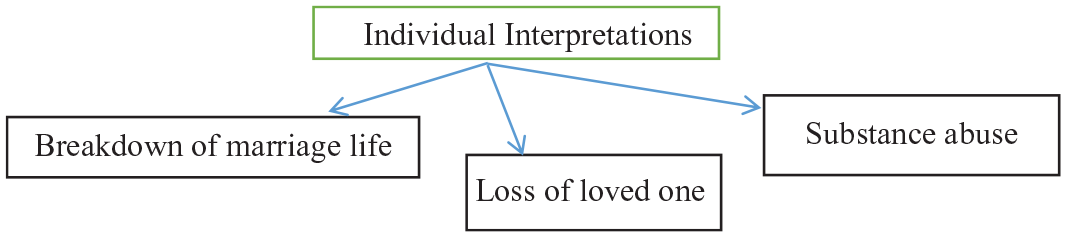
Individual interpretations of homelessness.
Theoretical Framework of the Study
Structural Theory of Homelessness
Structural theory of homelessness defines “Individual interpretations hold that homelessness is caused by personal defects such as substance usage and social disaffiliation, whereas structural interpretations hold that it is caused by systemic reasons such as a lack of affordable housing and employment prospects” (Main, 2008).
In this study, the individual interpretations mentioned that homelessness is caused due to
According to Structural Interpretations, homelessness is caused by
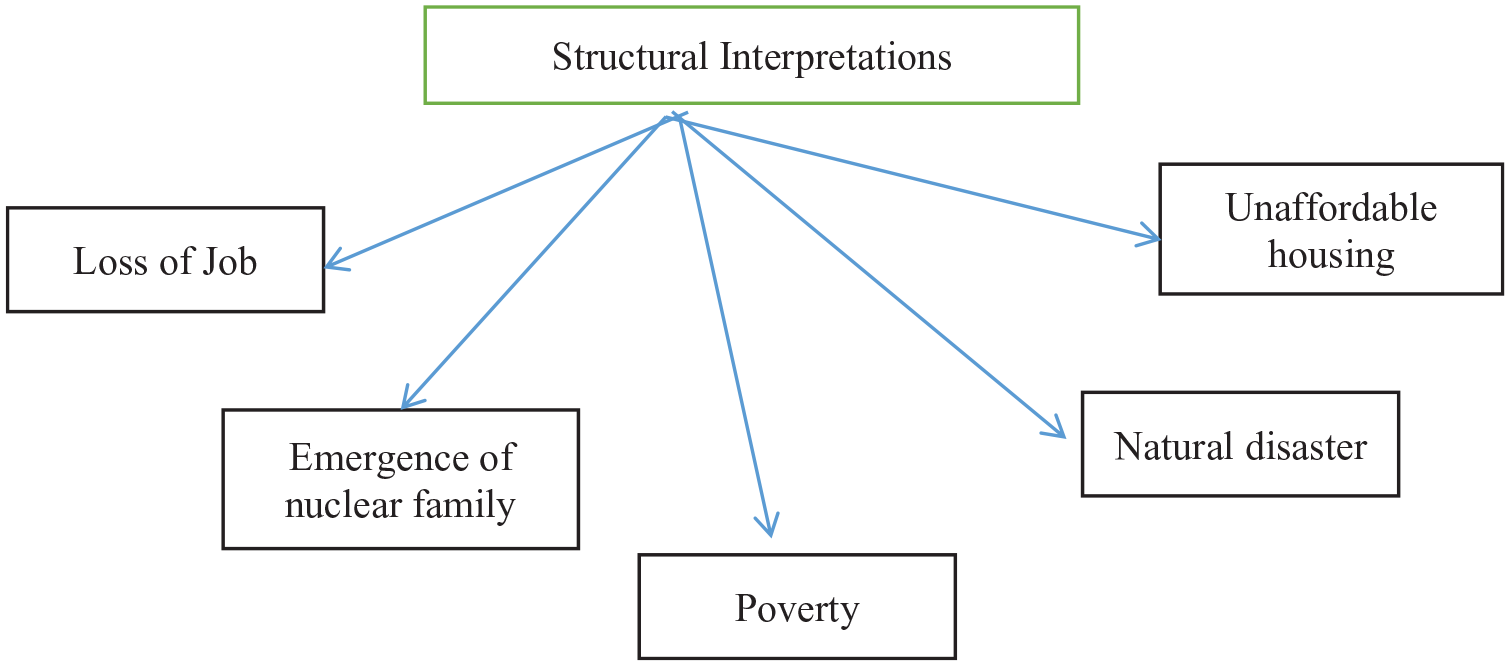
Structural interpretations of homelessness.
Findings

Components related to the journey of homelessness.
Reason for Homelessness
Breakdown of Marriage Life
Out of 30 respondents, 15 started their journey of homeless beggars due to breakdown in marriage life.
“Due to some conflicts with my wife and childrens I left the home. I was able to manage for 10 days, with whatever I had. After that I had no money for food. So I started begging nearby shops and bus stand. It became my routine. I’m doing this for more than 10 years. No one is there to take care of me. Without home, proper food and shelter I’m residing near the bus stand. Due to age factor I cant walk, having body pain. Life is going on without any hope.”
Loss of Job
Eight of the respondents, started their journey of homeless beggars due to loss of job.
“ My wife and I left the home because our childrens didnt take care of us after their marriage. My wife cant do any work due to severe leg pain. I worked as a watchman in a private company nearby our home. Then we shifted to Erode and stayed near the railway station. Due to my age factor no one was willing to give job for me. It was pathetic situation, so we began to beg, in need of food we started begging. Some people will give food, dresses etc.. at their special occasions. We are doing this for more than 4 years.”
Loss of Loved One
Fifteen of the respondents out of 30, started this journey of homeless beggars due to loss of loved ones.
“I lost my wife and childrens in a bus accident, after that I had no hope for my life. Lost all my property and my investment in lottery ticket, Alcohol etc.. later no money to feed myself. So started begging for buying drugs. I’m doing this for more than 5 years.”
Substance Abuse
Five of the respondents, started this journey of homeless beggars due to substance abuse.
“Due to peer pressure I have started consuming alcohol during my teenage, it continued till my wife and my childrens left me. After that no one is there to take care of me and I started begging for in need of food. I have been doing this for more than 15 years .”
Emergence of Nuclear Family System
Out of 30 respondents 12 started the journey of homeless beggars due to emergence of nuclear family system.
“We had 2 childrens, after their marriage they moved to cities due to their employments. They got the properties from us and left us in some old age home. We were not interested to stay in the home. So we left that place and without money we cant go anywhere, so we stayed near the railway station. For in search of food we started begging. We were doing this for more than 7 years.”
Poverty
Ten of them stated that they started their journey of homeless beggars due to poverty.
“My husband and me depend on Agriculture, due to some poor situation, we have no money as well as no water for the agriculture. We were unable to manage our expenses, so we migrated to else and got job for 2 months. After that no one was willing to give job for us nor we had a place to stay. In need of food we started begging. We were doing this for more than 6 years.”
Natural Disaster
Two respondents were started their journey of homeless beggars due to natural disaster.
“ Due to natural disaster in our native I lost my family and migrated, there I couldn’t find any proper job or home for rent due to caste discrimination. I was unable to come to my native at that time due to money constrain. So in need of food started begging. I’m doing this for more than 10 years.”
Unaffordable Housing
Out of 30 respondents five started their journey of homeless beggars due to unaffordable housing.
“After the death of my parents I stayed in rented house where I worked but, due to loss of job, I cant pay the rent for house. I have managed few days with my savings. After that I didn’t get any job due to my health conditions and no money for buying food. So at that situation I have started begging and I’m doing this for more than 5 years.”
Effects of Homelessness
From the findings it was clear that the effects of homelessness can vary depending on individual circumstances and the duration of homelessness. Efforts to address homelessness should aim not only to provide immediate shelter and support but also to address the underlying eff and work toward long-term solutions. Some of the effects of homelessness were mentioned below:
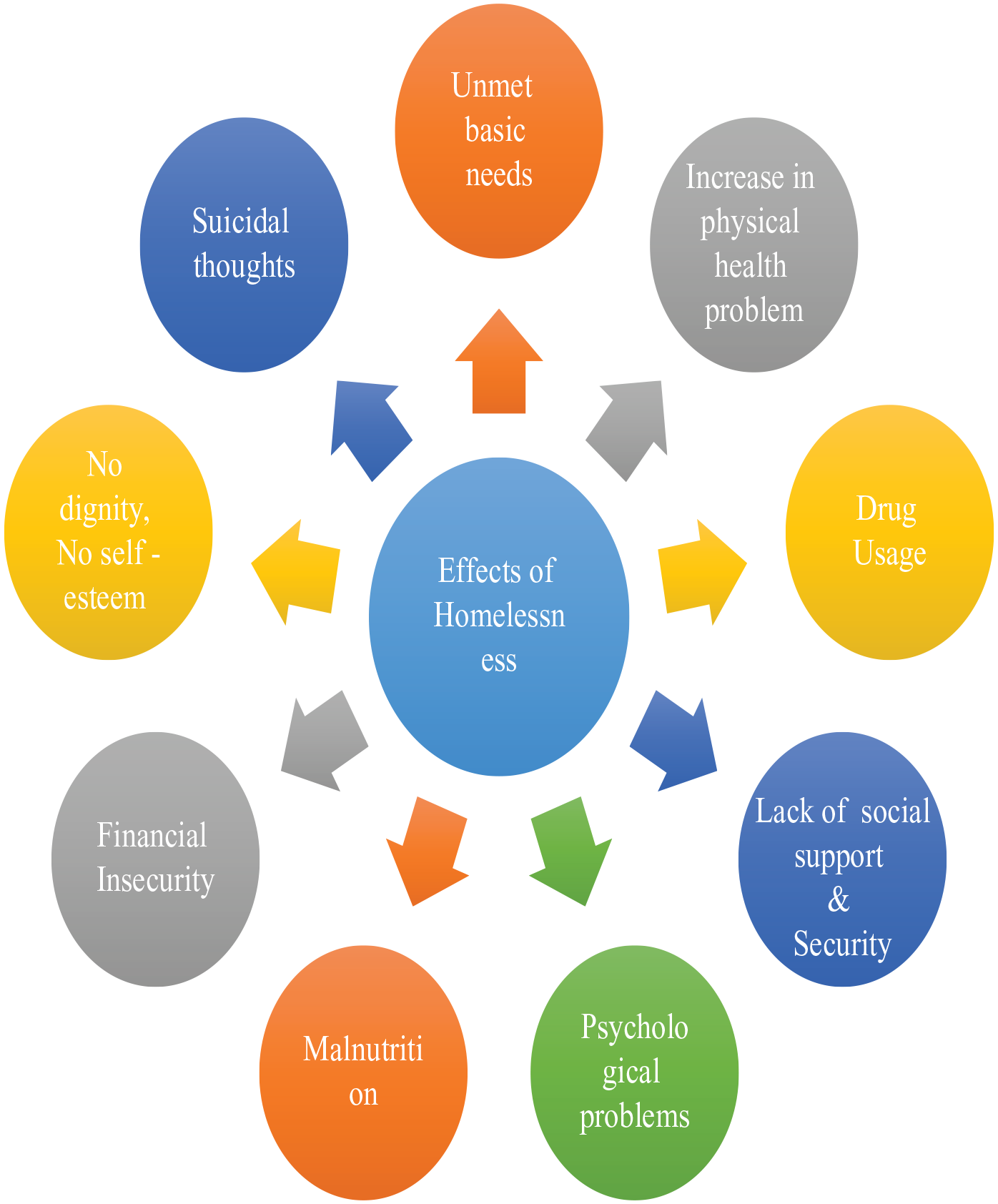
Effects of homelessness.

Life of the homeless elderly beggars before rehabilitation.
Techniques Used During the Rehabilitation Process
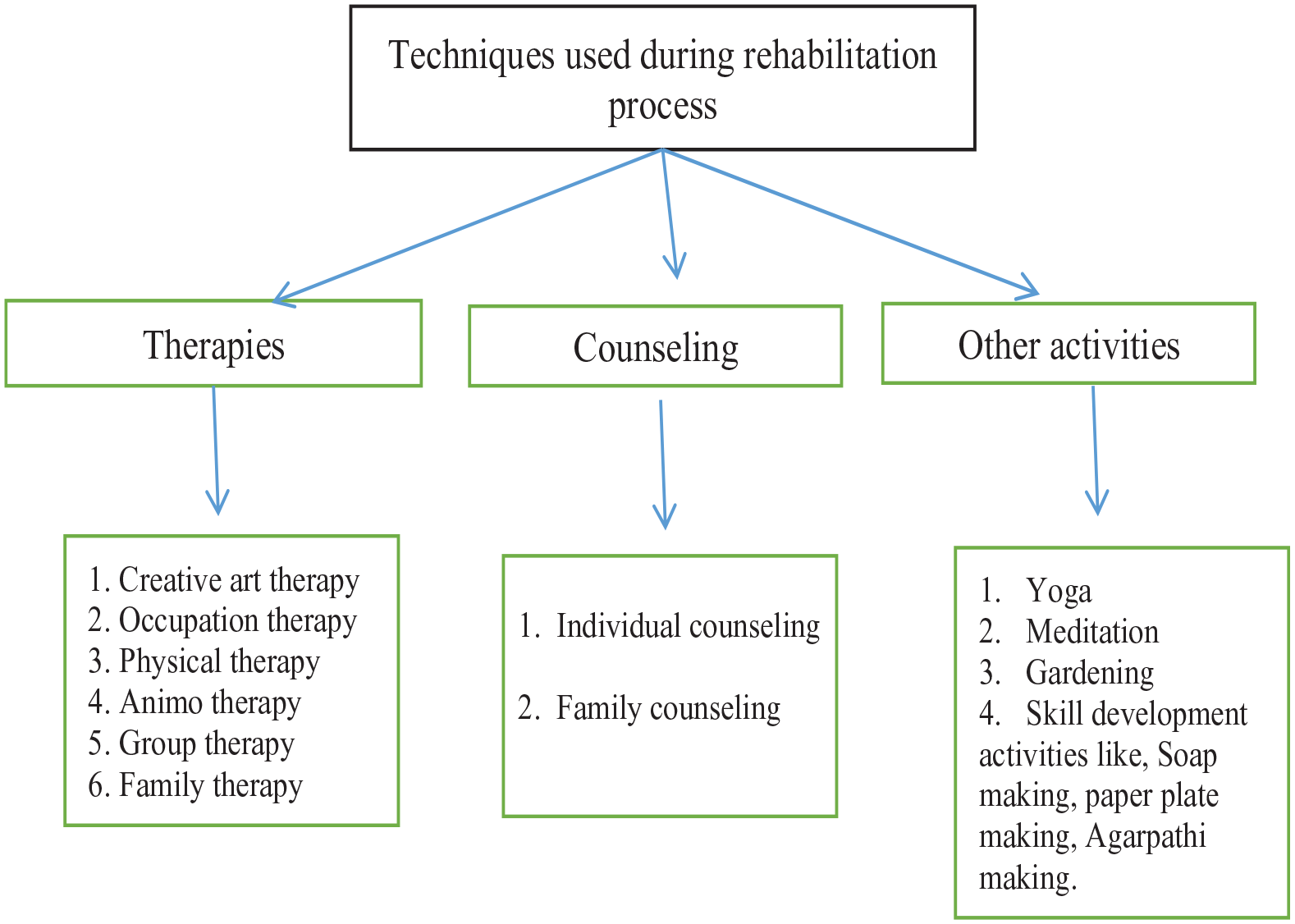
Techniques used during the rehabilitation process.
Observation Based on the Interview
Life of Elderly Homeless Beggars Before and After Rehabilitation.
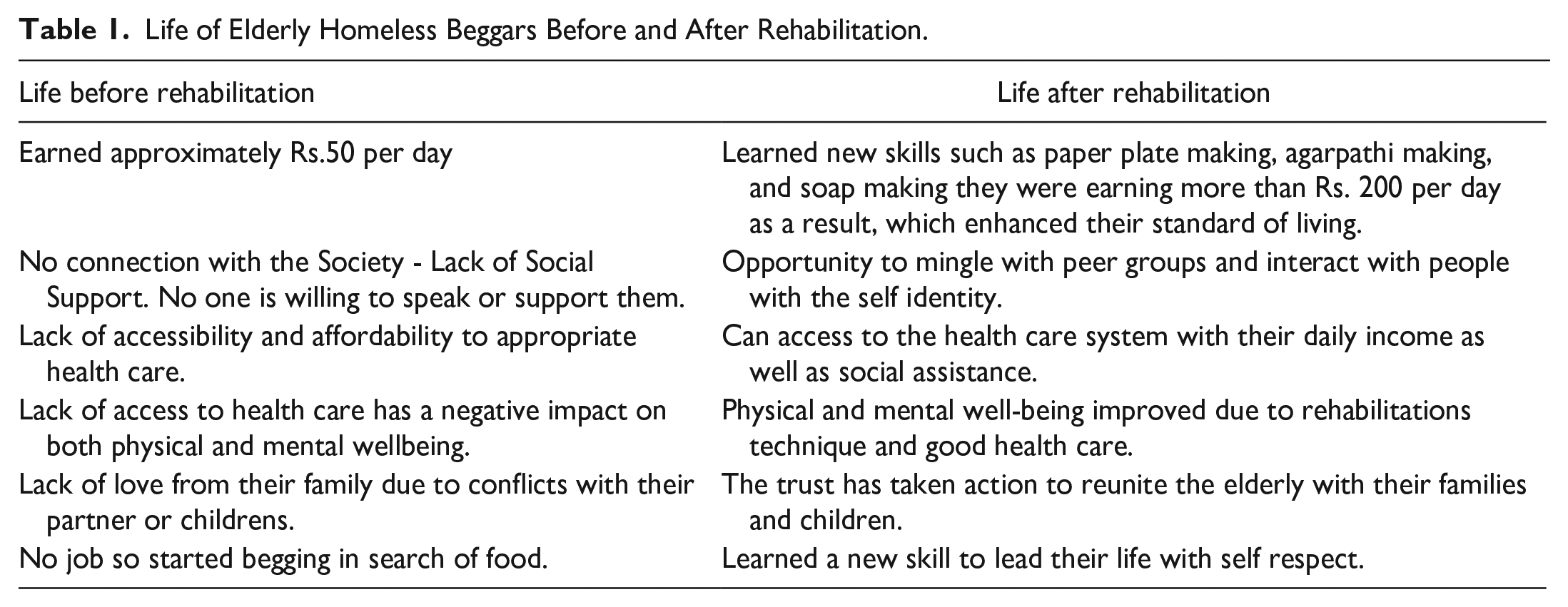

Life of the homeless elderly beggars after rehabilitation.
Discussion
Homeless elders represent a vulnerable and often overlooked segment within the homeless population. They have distinct issues that necessitate specialized attention and customized solutions.
In summary, homelessness among the elderly is a pressing issue that requires attention and action. By understanding the challenges faced by homeless elderly individuals and implementing comprehensive policies, society can work toward providing them with the support and resources necessary to improve their lives.
Recommendation
The following recommendations should be given by the
The following recommendations should be given by the
The following recommendations should be given through
By incorporating these suggestions and recommendations into intervention and policy development, we can work toward creating a supportive and inclusive environment for homeless elderly beggars.
Conclusion
Addressing the issue of homeless elderly beggars requires a multifaceted approach that encompasses social, economic, and healthcare interventions. The problem of homeless elderly individuals resorting to begging is a complex one that requires a comprehensive understanding of the underlying causes and a holistic response to effectively address the issue. Firstly, it is crucial to recognize that homelessness among the elderly is often a result of various factors, including poverty, lack of affordable housing, limited social support networks, and inadequate access to healthcare services. These factors contribute to their vulnerability and increase the likelihood of resorting to begging as a means of survival. To tackle this issue, governments and communities must prioritize the development and implementation of social welfare programs and policies aimed at alleviating poverty and ensuring access to affordable housing for the elderly population. This could include measures such as increasing social security benefits, expanding subsidized housing options, and providing targeted financial assistance to low-income elderly individuals.
Additionally, efforts should be made to enhance support systems and social services specifically customized to the needs of homeless elderly individuals. These services may include outreach programs that connect them with shelters, healthcare facilities, and community resources, as well as mental health services and substance abuse treatment if needed. Collaborations between government agencies, non-profit organizations, and community stakeholders are essential for the effective delivery of these services. Furthermore, raising public awareness about the challenges faced by homeless elderly individuals can help combat stereotypes and stigma associated with begging. This can be achieved through educational campaigns and community initiatives aimed at fostering empathy, understanding, and compassion toward the elderly population.
Footnotes
Acknowledgements
I would like to thank Founder, Atchayam Rehabilitation Centre at Erode for their support and elderly who participated in this research. I would like to extend my gratitude to my Institution, Dean Academic Research, Associate dean SSL, and my Guide for their continuous support.
Declaration of Conflicting Interests
The author(s) declared no potential conflicts of interest with respect to the research, authorship, and/or publication of this article.
Funding
The author(s) received no financial support for the research, authorship, and/or publication of this article.

Data Availability Statement
The participants of this study did not give written consent for their data to be shared publicly, so due to the sensitive nature of the research supporting data is not available.
IRB Approval Number
Not applicable, because in our institution there is no IRB. So I have verified with the subject experts and field experts for the interview guide.