




Abstract
This article explores medical, midwifery, and nurse practitioner students’ attitudes about women who may consume alcohol throughout their pregnancies. Twenty-one health care students responded to a scenario-based vignette addressing alcohol consumption during pregnancy, as well as a semistructured interview, which were analyzed using Braun and Clarke’s thematic analysis approach. Two primary themes related to students’ attitudes concerning alcohol consumption during pregnancy were identified: (a) divergent recommendations for different women, based on perceptions of their level of education, culture/ethnicity, and ability to stop drinking; and (b) understanding the social determinants of health, including the normalization of women’s alcohol consumption and potential partner violence. Health care professionals in training need further education about the risks of alcohol consumption during pregnancy and fetal alcohol spectrum disorder (FASD). In addition, health care students need training in how to engage in reflective practice to identify their own stereotypical beliefs and attitudes and how these attitudes may affect their practice.
Keywords
Introduction
Despite public health knowledge that alcohol consumption during pregnancy can lead to negative outcomes such as fetal alcohol spectrum disorder (FASD), one in 10 pregnant women in Canada consume alcohol during pregnancy (Chalmers, Dzakpasu, Heaman, & Kaczorowski, 2008; Lange, Quere, Shield, Rehm, & Popova, 2015; Public Health Agency of Canada, 2009). Among Canadian women who reported consuming alcohol during pregnancy, 28.5% reported consuming alcohol at least once a month or more at some point in their pregnancy (Lange et al., 2015). Additional studies from Canada (McDonald et al., 2014) and Australia (O’Connor, Nyquist, & McLellan, 2011) demonstrate that almost half of women report drinking alcohol during pregnancy, with many women continuing to drink at low to moderate levels (McDonald et al., 2014) or reporting binge drinking (O’Connor et al., 2011), signifying an increase in binge, risky, and hazardous alcohol consumption, as well as potentially alcohol-exposed pregnancies. One recent systematic review estimated that one in every 67 women who consumed alcohol during pregnancy would give birth to a child with fetal alcohol syndrome (Popova, Lange, Probst, & Rehm, 2017).
Health care professionals play a pivotal role in the prevention of FASD through their counseling and recommendations regarding alcohol consumption during pregnancy. However, despite international recognition that no alcohol during pregnancy is the safest course of action (e.g., pregnancy guidelines in countries such as Canada, the United States, the United Kingdom, Austria, China, Denmark, France, Germany, and Australia; see International Alliance for Responsible Drinking, 2016), recent findings indicate that the message that there is no safe level of alcohol consumption during pregnancy is still not always disseminated by health care students or professionals (Coons, Watson, Yantzi, Lightfoot, & Larocque, 2017; Inoue, Entwistle, Wolf-Branigin, & Wolf-Branigin, 2017). It is unclear why some health care professionals, particularly physicians and midwives, are inconsistent in their recommendations regarding alcohol consumption during pregnancy. However, it remains possible that personal attitudes regarding the safety of low levels of alcohol consumption during pregnancy and challenging the no alcohol is safest recommendation (Kelly et al., 2013; Lundsberg, Illuzzi, Belanger, Triche, & Bracken, 2015), as well as stereotypical beliefs about the women in their care, may be contributing factors. This article explores health care students’ attitudes and beliefs about women who may continue to consume alcohol throughout their pregnancies.
Risk Factors for Alcohol Consumption During Pregnancy
There are a number of reasons why women may drink during pregnancy. For example, women may be unaware that they are pregnant or are uninformed about the extent alcohol can damage the developing fetus (Floyd, Decoufle, & Hungerford, 1999; Sedgh, Singh, & Hussain, 2014; Toutain, 2010). Anecdotally, women report knowing other women who drank during their pregnancies and whose children appear healthy (Raymond, Beer, Glazebrook, & Sayal, 2009; Toutain, 2010), and may also report being encouraged or pressured to drink by close family and friends (Crawford-Williams, Steen, Esterman, Fielder, & Mikocka-Walus, 2015). Alcohol consumption may also be the norm in some social groups, as Canadian data show that 70% to 80% of women of childbearing age consume alcohol (Health Canada, 2014; Tough, Tofflemire, Clarke, & Newburn-Cook, 2006). Women may also use alcohol to cope with other determinants of health such as violence, depression, poverty, and isolation, or may have an alcohol addiction (Coons, 2013; Public Health Agency of Canada, 2005). However, it is critical to note that many diverse groups of women are likely to consume alcohol during pregnancy, regardless of socioeconomic status or ethnicity (Peadon et al., 2011).
A systematic review of predictors of any drinking during pregnancy identified two consistent factors: previous exposure to abuse or violence and pre-pregnancy alcohol consumption (Skagerstrom, Chang, & Nilsen, 2011). Other risk factors for alcohol consumption during pregnancy identified over the past three decades include increased maternal age, higher maternal education levels, and maternal smoking (Bobo, Klepinger, & Dong, 2006; Chambers et al., 2005; Day, Cottreau, & Richardson, 1993; Floyd et al., 1999; Lepper et al., 2016; O’Connor et al., 2011). These risk factors demonstrate a need for health care professionals to understand the potential influences on women’s alcohol consumption during pregnancy and to identify women who may be at a higher risk and require targeted interventions. However, it is also important to understand how health care professionals’ attitudes and beliefs may influence their perceptions about who is at risk of having a child with FASD, and consequently, who they may identify as a higher risk. Despite clinical evidence that a variety of women are at risk to consume alcohol during pregnancy, health care professionals may hold certain biases, stereotypes, and attitudes regarding who they perceive as likely to drink during pregnancy.
Conceptual Definitions
Attitudes represent individuals’ feelings of favor or disfavor toward a person, place, or thing, and are a concept in psychology used to characterize an object (Perloff, 2017). In this study, attitudes refer to health care students’ personal and professional views regarding alcohol consumption in general (e.g., definition of “moderate” alcohol consumption), alcohol consumption during pregnancy, and women who drink during pregnancy in terms of their behaviors and motivations. Health care students’ attitudes toward pregnant women who consume alcohol during their pregnancies are likely to be influenced by their personal experiences, as well as their beliefs about their preparedness and competency to care for these individuals. The purpose of this study was to investigate Northern Ontario health care students’ attitudes, beliefs, and perceptions as they pertain to alcohol consumption during pregnancy, as well as the recommendations provided to pregnant women.
Method
As part of a larger, ongoing project examining health care professionals’ knowledge, attitudes, and self-efficacy regarding FASD, health care students in Northern Ontario, Canada participated in a two-phase, sequential explanatory mixed-methods study. Phase I included two quantitative questionnaires regarding developmental disabilities, in general, and FASD, specifically. All students who participated in Phase I (N = 45) were invited to take part in Phase II (N = 21). The purpose of Phase II was to qualitatively understand health care students’ knowledge of FASD and the potential consequences of alcohol consumption during pregnancy, attitudes toward alcohol consumption throughout pregnancy, as well as their perceived self-efficacy beliefs about their competency to work with individuals with FASD, their families, and pregnant women. Two qualitative data collection methods were employed: a scenario-based vignette about alcohol consumption during pregnancy and a semistructured interview.
Participants
After receiving ethics approval from the Laurentian University Research Ethics Board, participants in this study were recruited from the Northern Ontario School of Medicine (NOSM), as well as the Midwifery and Primary Care Nurse Practitioner programs at Laurentian University in Northern Ontario, Canada. Respondent-driven, purposive convenience sampling was used, whereby individuals known to the researchers (e.g., colleagues, peers, program coordinators) were contacted in the hopes of identifying students who would be willing to participate. Students were also accessed through various social media sites, including Facebook and Twitter. Students were directed to an online survey link in REDCap (Research Electronic Data Capture; Harris et al., 2009) hosted at Laurentian University if they expressed interest in participating in the study. Students who participated in the qualitative phase received a CAD$10 Tim Horton’s gift card to thank them for their time. Participants included students in their final 2 years of school and the total sample (N = 21) comprised of seven undergraduate medicine students (Mage = 28.71 years, SD = 6.05 years), eight midwifery students (Mage = 26.63 years, SD = 2.83 years), and six nurse practitioner students (Mage = 33.33 years, SD = 11.15 years). Students who took part in the qualitative phase were predominantly female, representing 57.1% of the medical student group, 87.5% of the midwifery student group, and 83.3% of the nurse practitioner group. None of the participants was currently pregnant, but 50% of both the midwifery and nurse practitioner students had been pregnant in the past, which is important to note given the potential influence of personal experience on students’ attitudes. All participants in this study will be referred to by pseudonyms to protect their identities.
Vignettes
Participants responded to one of three different scenario-based vignettes (see the appendix) addressing their perceived knowledge and self-efficacy about alcohol consumption during pregnancy, in general, as well as the potential consequences of varying levels of alcohol consumption during pregnancy (e.g., continuous, moderate drinking throughout pregnancy compared with a one-time, binge occasion). The scenarios were rotated between interviews and each participant responded to one vignette prior to the semistructured interview, which were conducted back to back; students responded to the vignette scenario first, followed immediately by the semistructured interview. Students were instructed to read the vignette, and were then asked prompting discussion questions including the following: “What are your first impressions of this vignette?” “As a health care professional, what advice would you give at this stage of her pregnancy?” “Do you think what Shannon/Kimberly/Jessica is doing during her pregnancy poses any risks to her unborn child? Why or why not?” and “How comfortable do you feel addressing this situation?”
The use of vignettes allowed students to demonstrate their perceived level of knowledge through a clinical application exercise and was crucial to interpreting health care students’ existing beliefs and prejudices about FASD, as well as their perceived ability to apply their knowledge in practical situations. The vignettes were modeled after classic research vignettes created by Reiss and colleagues (Reiss, Levitan, & Szyszko, 1982; Reiss & Szyszko, 1983) and were informed by social media discussions about alcohol consumption during pregnancy, as well as previous research regarding parental experiences raising children with FASD in Ontario, Canada (Coons, Watson, Schinke, & Yantzi, 2016; Coons, Watson, Yantzi, & Schinke, 2016). Each vignette was written and revised several times by the first two authors and was pilot tested with a second-year medical student. Parents of children with FASD who had participated in previous research (Coons, Watson, Schinke, et al., 2016; Coons, Watson, Yantzi, et al., 2016) and whose stories informed the written scenarios also reviewed the vignettes and approved their content and realism. Please see Part I (Coons et al., 2017) of this two part article for a more detailed description of the vignettes.
Semistructured Interviews
Informed by social constructionism as a guiding theoretical framework, and more specifically by theoretical and conceptual perspectives such as knowledge, attitudes, and self-efficacy, the primary researcher developed 10 open-ended questions, with follow-up prompts if needed. For example, sample questions included the following: “Where do you obtain your information about FASD? How do these sources impact your perception of FASD?” “What would you tell a woman who was pregnant about alcohol consumption during pregnancy?” and “What previous experience, if any, do you have working with people with FASD?” These questions were posed to identify students’ personal experiences in counseling women about alcohol consumption during pregnancy, as well as their exposure to individuals with FASD. Participants were asked prompting questions to enrich understanding. For example, “Could you give an example of a situation in which you felt particularly successful in meeting the needs of an individual with FASD?” was a prompt for the question, “How have these previous experiences influenced your perceived self-efficacy to care for individuals with FASD? Their families? Pregnant women?”
Interviews were conducted by the lead researcher, who has several years of experience conducting qualitative research. Semistructured interviews were scheduled at the convenience of participants and took place at locations agreed upon by both the participant and the interviewer, such as local coffee shops. Interviews were also conducted over the phone or via Skype. Interviews lasted between 25 and 90 minutes. All interviews were digitally recorded and transcribed verbatim. Follow-up questions were asked using email and telephone conversations, and participants also had the opportunity to review their interview transcript to provide further clarification.
Data Analysis
Both the vignette responses and the semistructured interview transcripts were analyzed using Braun and Clarke’s thematic analysis approach, which is congruent with social constructionism, given its theoretically flexible nature (Braun & Clarke, 2006), and emphasizes patterns or themes within the data. Because we collected qualitative data in two ways, the vignettes and interviews were initially analyzed separately. Students’ responses to the vignette scenarios were analyzed first to look for emerging themes pertinent to students’ attitudes about alcohol consumption during pregnancy. Following the analysis of the vignettes, the semistructured interviews were analyzed in the same way. Finally, after an individual analysis of both methods, the vignette and interview responses were compared and contrasted between each participant.
Vignette and interview transcripts were read and reread multiple times to familiarize the lead researcher with the content of the interviews, noting initial ideas and comments (e.g., specific words, phrases, paragraphs), that were further refined in a systematic fashion, and finally assembled into relevant codes. Coded data were used to generate budding themes, which were further reviewed and refined into themes. Each theme was given a descriptive label taken directly from the words of participants to clearly define and organize the themes based on their scope and story. The data analysis process was a recursive one, with movement back and forth between different phases of data analysis to ensure the continued refinement and accuracy of the final themes. A member check was also conducted during the data analysis phase to ensure the themes generated were representative of the participants’ experiences. The member check was conducted by providing the participants with a summary table of themes to ensure the accuracy of the lead researcher’s interpretations (Shenton, 2004).
Results
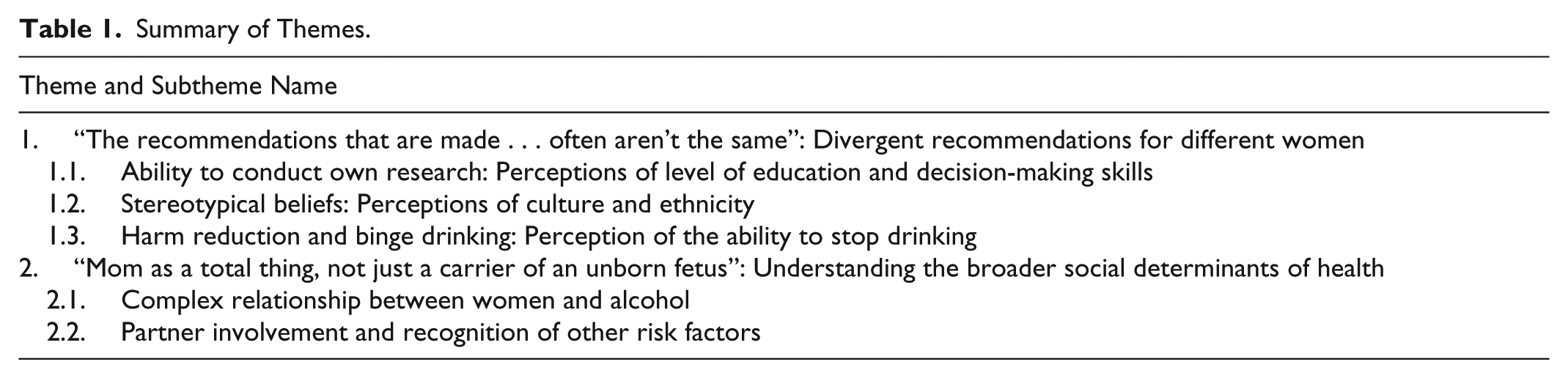
Almost all students identified that no alcohol consumption during pregnancy was the safest recommendation for their pregnant patients. However, students conferred that this advice is not always provided, and discussed the realities of providing care to women when strict abstinence may not be possible. Whereas the results of Part I (Coons et al., 2017) focused on students’ attitudes regarding recommendations about alcohol consumption during pregnancy, this article identifies the biases, prejudices, and beliefs that students may experience, and focuses on students’ attitudes and perceptions about who is at risk to have a child with FASD. Using thematic analysis, two primary themes related to students’ attitudes were identified: divergent recommendations for different women and a broader understanding of the social determinants of health. Each of these main themes had subthemes that show the complexity involved. Please refer to Table 1 for a summary of main themes and subthemes. Please refer to Table 2 for additional illustrative quotations for each subtheme that are not presented in text.
Summary of Themes.
Illustrative Quotations.

Note. FASD = fetal alcohol spectrum disorder.
“The Recommendations That Are Made . . . Often Aren’t The Same”: Divergent Recommendations for Different Women
This theme title describes different levels of care that may occur in practice when health care students appraise the women in their care. As described below, students hold varying perceptions about women who may consume alcohol during their pregnancy. On one hand, students tended to believe that women who appear to be more “well-off” or “in control” of their pregnancies are better informed about the potential risks of alcohol consumption during pregnancy, and were, consequently, not concerned about low to moderate consumption. On the other hand, students also believed that women who come from disadvantaged communities or who are from a group that was stereotypically associated with FASD, such as Indigenous populations, were more at risk of having a child with FASD and, therefore, reflected on how recommendations and prenatal care may be different for these groups. In these instances, students also elaborated on their perceived abilities when it came to identifying women who may not be able to manage their drinking and who may better benefit from harm reduction approaches.
Ability to conduct own research: Perceptions of level of education and decision-making skills
A significant point of conversation regarding alcohol consumption during pregnancy stemmed from the belief that women who were “educated” and “professional,” have “a good job,” and are “organized” and “from well-off communities” tend to be “very well informed” and “fairly confident” about the decisions they make regarding their pregnancy, including the decision to drink in low or moderate amounts throughout all three trimesters. Several students alleged that women who were more “educated and stable” were the women who “tend to know more about the effects of alcohol on pregnancy and have more resources to not drink during pregnancy” (Eva, fourth-year midwifery student).
Students who responded to the vignette about Shannon, a woman in her early 30s with an undergraduate degree, a stable job, a group of close female friends, and a decision to only consume a “moderate” amount of alcohol during her second and third trimesters, perceived her to be knowledgeable and informed about the potential risks of alcohol consumption during pregnancy, and noted that it sounded like she had “really done her research.” Students held this belief, even though Shannon’s main source of information on the risks of alcohol consumption during pregnancy were her friends and a blanket statement that she believes there is no conclusive evidence that light drinking during pregnancy will harm her baby. On the contrary, students who responded to the vignette about Kimberly, a woman in her early 20s who lives in a small, rural community, perceived there to be a greater risk during her pregnancy because of the “pressure to drink” and the situation with her partner. Notably, students went on to discuss that their concern for Kimberly was not necessarily because of a binge exposure early in the first trimester, but rather because of the psychosocial factors at play in her life including her young age, marital status, lack of education, region of the province, and potential partner violence.
Students who responded to Kimberly’s vignette spoke more hesitantly compared with those who responded to Shannon’s scenario, and raised additional concerns about patient trust and safety. Students noted that Kimberly was making positive and responsible choices (e.g., refraining from drinking further alcoholic beverages), but perceived that her statement about abstaining from alcohol might not be entirely truthful. This attitude was also prevalent in the students’ responses to the vignette about Jessica, a 30-year-old woman whose family doctor encouraged her to have a couple of drinks to help ease her anxiety regarding her pregnancy. For example, Ruby, a third-year midwifery student, used the phrase “if you can trust that she never drinks alcohol” when discussing Jessica’s situation, and went on to reflect that some women in their care may be recovering alcoholics or binge drinkers, without these women knowing or acknowledging it. Students also raised concerns about whether allowing women to have one or two drinks during their pregnancy would encourage women to drink more and wondered whether certain women, such as Jessica, could “be able to drink one glass of wine and leave it alone thereafter.” Interestingly, students did not hold this attitude in Shannon’s situation and did not perceive Shannon to be at risk.
Rebecca, a fourth-year medical student, noted that there is still “a lot of stigmatization around asking moms about whether they’ve had a couple drinks in pregnancy.” She further elaborated that, despite knowledge that it is not “just alcoholics” who may have children with FASD, it is still sometimes “difficult not to fall for [the] stereotype” that women who drink during pregnancy may be those who come from lower income families and have other social comorbidities, such as trouble with the law, struggles with alcohol use, and lack of formal education. Many students held the belief that low to moderate levels of alcohol consumption were not really of concern for either the mom or the baby (see Coons et al., 2017), and likely have little motivation to dissuade their pregnant patients from drinking occasionally if they do not fall into their view of at-risk pregnancies. As a result of these attitudes, students hold different beliefs about which women should, or should not, be allowed to drink during their pregnancies. Ruby, a third-year midwifery student, discussed one specific example of where recommendations were different for women who were perceived to be educated, compared with those who were perceived to be a higher risk:
My experience in clinical placements has been a glass of wine with dinner once a week in the second or third trimester and beyond is probably okay. And those are recommendations that are selectively made to selective types of people, depending on their educational level, depending on whether or not we have concerns about alcohol and drug use otherwise in the pregnancy, and if that one drink is gonna tip somebody back into binge drinking . . . Often women who have maybe just completed high school or not completed high school and then . . . it usually feels like one end of the spectrum or the other where they’ve gone to university or gone to college . . . So the recommendations that are made to women who don’t have the higher level of education of university or college or beyond, they often aren’t the same recommendations in terms of alcohol use.
When prompted further about why she may hold this particular attitude, Ruby elaborated that this style of recommendation had been passed down to her “not in words but in actions” from her preceptors and identified instances where she picked up on cues of “you said this to this person, but not to this person . . . and noticing that this population gets this spiel and this population gets this spiel and this must be why,” reflecting that these attitudes may be, in part, caused by “classist or racist” beliefs.
Stereotypical beliefs: Perceptions of culture and ethnicity
Students in all three program groups reflected that there is often an “underlying judgment” and observation of shame toward mothers of children with FASD, and tended to focus their discussion on women from “marginalized populations,” including mothers who had “an addiction or an illness,” “First Nations” and “Aboriginal populations [with] a high incidence of FASD,” and “more rural areas . . . that acknowledge they have a higher incidence of . . . alcohol consumption in pregnancy.” Although students acknowledged that FASD “can happen in pregnancies where the mother has just a couple of drinks,” students were more concerned about potentially high-risk populations, including mothers who consume “too much alcohol,” drink “excessively,” or have “chronic alcohol use.” Students noted that these groups may need further intensive support to cut down on their drinking. However, it is important to note the word choices used when describing these populations and the ingrained, often unconscious, attitudes toward communities and populations that are traditionally associated with FASD. The words “too much,” “excessive,” “chronic,” and “alcohol abuse” draw attention to the fact that students still associate FASD predominantly with women who binge drink or consume alcohol on a regular basis throughout their pregnancies.
Students in this study were living and working in a variety of communities across Northeastern and Northwestern Ontario, and took note that their individual placement experiences and patient demographics may have influenced their personal attitudes and beliefs about FASD and alcohol consumption during pregnancy. Several midwifery students spoke of their experiences doing community outreach in Indigenous communities, and described that issues such as alcohol consumption and FASD are often seen in Northern, rural areas. Other students, such as Layla, a third-year medical student, discussed that her educational experiences touched on alcohol consumption and FASD from a “social perspective and how it affects First Nations people.” Layla went on to elaborate that her experiences are directly related to her living in Northern Ontario, because “everybody I’ve ever met who has FASD has been First Nations.” These examples demonstrate that students are making several assumptions beyond their attitudes about the prevalence of FASD in Indigenous communities, including their belief that FASD is a visible disability and that individuals from certain populations or demographic groups may be more or less likely to have a formal diagnosis of FASD. Importantly, although students did hold some stereotypical beliefs, many participants, especially medical students, highlighted the significance of providing culturally sensitive care for these individuals in the North.
Beyond their beliefs about Indigenous and First Nations communities in Northern Ontario, and even while acknowledging that women from many different social backgrounds consume alcohol during pregnancy, participants still tended to speak to already stigmatized populations, perhaps not even aware of their own ingrained perceptions and attitudes. For example, many students ruminated about whether they thought the women in their care were at a “higher risk” of alcohol use or drug use during pregnancy or came from a “population that seem to have a higher risk of FASD,” and implied that screening for alcohol consumption was necessary only in instances where they thought women may be vulnerable. However, these decisions tended to be based on personal feelings and perceptions of the women in their care.
Students struggled to identify whether varying levels of “moderate” amounts of alcohol consumption during pregnancy would be considered problematic and whether they would screen further. For example, Grace, a fourth-year midwifery student, questioned Shannon’s alcohol consumption during pregnancy in Vignette Scenario 1:
I probably might want to see why she’s drinking, ’cause she says she could go the nine months without drinking so does she feel any social pressure, is it because of her job? Does she still want to fit in? Are there other social issues attached to this? That would kind of have to be broken down if she’s willing.
When considering Shannon in the first vignette, some students noted that the amount she describes would give them pause and would be considered an “upper limit” before they started to worry, whereas other students were not concerned about the level of exposure. Interestingly, Grace raised an important point when she stated that Shannon says she could go the 9 months without drinking, but as some students elaborated, even though she says she could go without drinking, she still continues to do so, and some students considered that, perhaps, this would be an instance where they needed to screen further.
Typically, students, such as Sally, a fourth-year midwifery student, also noted the “tone” with which FASD and alcohol consumption during pregnancy were discussed compared with other disabilities such as Down’s syndrome or autism, and identified that because FASD has a known cause, prevention takes a different mood or feeling because it “is considered likely to be a problem for only mothers who are ‘troubled’ and not being ‘careful enough’ in their pregnancy. There’s an element of shame there.” This quote demonstrates the ingrained negative perceptions that are often associated with FASD and mothers who consume alcohol during pregnancy, such as shame, judgment, harm, and the belief that these mothers are bad mothers or bad people. Kylie, a fourth-year midwifery student, was one of only a few participants to elaborate on the issue of alcohol consumption prior to pregnancy and identified the need to understand the woman’s pregnancy in the context of her own life. As she questioned, “How many drinks do they normally consume prior to pregnancy? Has this changed since?” Given the significance of the relationship between alcohol consumption prior to pregnancy and continued consumption during pregnancy, students identified a need to know how much alcohol a woman may be drinking prior to conception and whether she would need help to cut back or stop drinking during her pregnancy.
Harm reduction and binge drinking: Perception of the ability to stop drinking
Students observed that most women, in their clinical experience, abstain from alcohol or significantly cut down their alcohol consumption upon discovering they are pregnant. However, students, such as Eva, a fourth-year midwifery student, acknowledged the reality of providing more rigorous care to certain patients and discussing,
if she is going to be drinking, how to do that in a . . . less harmful way . . . [because] if she felt uncomfortable with the amount she was drinking, unable to stop, I would encourage her to be open with me and we could explore some ways to change the behaviour.
As Eva elaborated, “one or two drinks would be a lot less harmful theoretically than eight or ten drinks in one sitting,” and many students discussed the importance of harm reduction.
Although participants acknowledged that no alcohol consumption during pregnancy was the official recommendation, they also spoke to the reality that conveying this message to all women may not be effective. Several students from all three programs noted that this blanket statement promoting abstinence from alcohol may make some women feel discouraged or as though they are a “lost cause” if they are not able to abstain from drinking during their pregnancy. Instead, many students discussed that harm reduction was a much more positive and beneficial approach in certain situations. As Mackenzie, another fourth-year midwifery student, spoke,
If I had someone who came in and who was having problems with drinking I think I would definitely try to reduce it as opposed to trying to get them to stop completely ’cause that just doesn’t seem very realistic.
Charlotte, a second-year nurse practitioner student, shared a similar belief that it was better not to consume any alcohol at all, but that she would not want the woman in her care to feel judged if she does drink and so she would
try and work with her and see “okay, what can we do? Let’s do what’s best for you and your baby. Let’s work with the resources that we have.” If the person really doesn’t want to stop, I have to do my very best to guide her.
Charlotte’s remark also highlights the importance of building a strong relationship in the patient–health care provider relationship and allowing women to feel supported instead of judged. This sense of trust is incredibly important, as women who do not have faith in their provider may be unlikely to work with them to cut back on their alcohol consumption or may not accurately report how much they are currently drinking. Jacqueline, a fourth-year midwifery student, conversed about the need to “start off whenever we can” by supporting women to achieve practical goals, such as to “cut down from 2 glasses a day to 1. Or to switch to something with a lower alcohol content. Or make sure that they are taking it on a full stomach” to ensure a reduction in the amount of alcohol exposure, even if it does not reach an “ideal situation” of complete abstinence.
However, not all students were as positive regarding harm reduction, and some participants were more jaded when it came to discussing women who may struggle with alcohol. As Sierra, a first-year nurse practitioner student, stated,
It’s a sad thing when it can be prevented. But you can’t stop women that drink from getting pregnant. Even though you have them come in and they’re having their second one [child], you tell . . . Children’s Aid and they just go back to the home anyways, I’m sorry to say. I’m being negative, from experience.
Harm reduction was a controversial topic, and not all students were in agreement that this approach should be employed with patients.
Whereas Sierra spoke in a tired and frustrated manner about her perception regarding the frequency with which women who struggle with addictions may have multiple children with FASD, Braden, a fourth-year medical student, discussed his belief that women need to be thought of “holistically,” and care in the context of FASD needs more of a harm reduction approach. Braden also argued for the need to go beyond just employing the harm reduction approach itself to an actual understanding of why this method may be the best solution for some women:
We need to think about why people are drinking so much during pregnancy or before pregnancy . . . If we don’t address the context in which the alcohol, the drugs, or the smoking are the coping mechanism . . . then we’re going to disenfranchise the moms to be further and separate them from good care and, frankly, make them feel quite crappy about themselves on top of already probably feeling quite crappy about themselves because they know they’re dependent on alcohol.
Braden highlighted the critical importance of not only acknowledging the need to support women in cutting down on their alcohol consumption but also contextualizing the social determinants of health and their contribution to why some women may continue to consume alcohol throughout pregnancy. He went on to emphasize the need to understand the motives behind a woman’s alcohol consumption:
She’s [drinking] for a reason. She’s not doing it just because there’s a cup with a beer in it. There’s a whole series of events that get to the place where there’s a glass of wine in front of the pregnant mom, whether she knows she’s pregnant or not.
As Jacqueline, a fourth-year midwifery student, also said, “You need to address the whole clinical picture and who she is and what brought her to that situation.”
“Mom as a Total Thing, Not Just a Carrier of an Unborn Fetus”: Understanding the Broader Social Determinants of Health
This theme title identifies students’ understanding of the social determinants of health (Commission on Social Determinants of Health, 2008; Mikkonen & Raphael, 2010), which encompass the “conditions in which people are born, grow, work, live, and age, and the wider set of forces and systems shaping the conditions of daily life” (World Health Organization, 2017, line 1). As described below, all students were aware of the social and economic factors that influence people’s health and their potential interaction in the context of women’s health and FASD. Students acknowledged that some women may be at risk of having a child with FASD based on a number of factors including misinformation or lack of access to information, cultural norms and the role of alcohol in society, level of education, family violence, unemployment, homelessness, lack of more appropriate coping strategies, social pressure or isolation, and a lack of access to health care in general. Students tended to describe how important it was to understand the reasons why women may drink during pregnancy.
Complex relationship between women and alcohol
In addition to discussing the realities of their clinical experiences, students spoke to the importance of understanding why women drink, both in general and during pregnancy. Several students brought up the perceived culture of normalized drinking during their interviews, and participants conversed about the increasing rates of alcohol consumption and binge drinking among women in Canada. As Eva, a fourth-year midwifery student, stated,
It’s interesting to mesh together that relationship between how people actually consume alcohol versus what the research actually says . . . There’s a normalizing of alcohol consumption . . . So I feel like . . . it doesn’t necessarily reflect the lived realities of people who are drinking during their pregnancies.
In this regard, students often understood that their life circumstances, and perhaps privileged experiences, may often separate them from the women they perceived to be at risk of having a child with FASD. Students also revealed their surprise regarding the current recommended Canadian guidelines, including the Low Risk Drinking Guidelines, given how normalized alcohol consumption has become in Canada. Although many students were familiar with the guidelines, several participants noted that most people, including themselves and their own social circles, drink beyond the recommended quantities and that these behaviors were typical of patterns of alcohol consumption. Eva further hinted that sometimes health care providers may have a “saviour complex,” which entails trying to help patients stop their “bad habits.” However, as students reflected, these approaches are not always “grounded in reality” because students may be unable to reconcile their own life situation with those of their clients who may be struggling with alcohol.
Participants acknowledged that personal and institutional barriers (e.g., lack of access to regular health care) contribute to women’s health, including systemic obstacles, political hindrances, social issues or difficult relationships, financial concerns, mental health disparities, and a lack of social support. Despite acknowledging that a multitude of factors can influence women’s health, students did not provide specific examples of how these circumstances may affect women’s health in general or during pregnancy specifically. However, students did elaborate broadly on how these barriers may affect health in general, as well as how they could interact and compound to influence women’s health during pregnancy. Consequently, participants identified a need to “really access why” a woman may be drinking throughout pregnancy and determine what can be done “to make life healthier, so that the desire to drink is not as strong.” Students were adamant that women who may have an issue with alcohol consumption during pregnancy are often lacking in social support from their families or communities. In particular, students discussed the critical importance of having a supportive social network, which included a positive and sympathetic partner.
Partner involvement and recognition of other risk factors
One important social determinant of health that participants discussed was the issue of partner violence and related social pressure. However, students were only prompted to discuss these issues in a situation that directly mentioned a significant other (i.e., in Kimberly’s vignette), supporting the notion that students focus predominantly on women when counseling about alcohol consumption during pregnancy and preventing FASD. Despite the critical importance of a partner’s involvement during pregnancy and the significant contribution of domestic abuse to alcohol consumption, the topic of partner alcohol use or partner involvement rarely, if at all, came up and only arose in interviews where students were provided with Kimberly’s vignette. In this vignette, Kimberly’s partner and the father of her child continued to drink in front of her, despite Kimberly’s request that he not drink. Kimberly’s partner also encouraged her to drink in certain situations to “help her relax and have fun.”
Every student who was provided with Kimberly’s vignette noted that they were “concerned” or “worried” about her situation. When asked what their first impression was of the scenario, several students first spoke to the partner’s drinking and the need to “flesh that out more” to understand the social context of the relationship. As Eva, a fourth-year midwifery student, questioned, “Does he drink every day? Does it bother her? Does she ever feel unsafe when he’s drinking? . . . It is a red flag for me that he drinks around her and encourages her to drink as well.”
Students in all three programs discussed the notion that working with Kimberly is within their scope of practice, but were uneasy about addressing her partner’s alcohol consumption. Charlotte, a second-year nurse practitioner student, stated that if Kimberly’s partner came to her prenatal visits that she would “reinforce the message that he can have drinks, that’s his choice, but I would suggest that Kimberly doesn’t, because that’s her choice and also because it’s for the safety of the fetus.” The issue of personal choice was an important, and contentious, point of discussion for many students and has been discussed more in depth in Part I of this two part article (see Coons et al., 2017). Sierra, a first-year nurse practitioner student, also emphasized that when providing counseling about alcohol consumption during pregnancy, that she would “tell [patients] if you’re thinking about getting pregnant to abstain and [your] partners as well,” encouraging spouses to be involved and to also limit their own alcohol consumption during the pregnancy.
Perhaps most troubling, several students, such as Reece, a fourth-year midwifery student; Layla, a third-year medical student; and Regina, a fourth-year medical student, noted that the situation presented in Kimberly’s vignette was “pretty normal almost” and “common” in rural and Northern Ontario. As Regina further reflected,
It sounds like it could be a typical Northern Ontario female. I feel like lots of people might be in this situation . . . ’cause I know Northern Ontario has a higher rate of alcohol use. Socially . . . she’s single, unmarried, young, first time being pregnant so . . . that might be difficult for her.
Layla, also a medical student, had similar concerns for Kimberly’s social situation and contemplated that her partner is “continuing to drink in front of her and seems like he’s pushing it on her, so I’d be worried that she’s at risk of drinking during pregnancy.” Layla also elaborated that she would be concerned because Kimberly seemed isolated within her community, demonstrating the need to understand women’s social contexts within their home communities and personal relationships.
In their interviews, students highlighted the potential limitations in access to care in rural and Northern Ontario, both for individuals diagnosed with FASD and pregnant women at risk of having a child with FASD who may require more intensive interventions. Students noted that the risk of FASD may be elevated in rural, Northern Ontario communities, given increased rates of alcohol consumption in these communities, as well as the lack of access to regular primary health care. Students also discussed barriers to care that may contribute to a patient’s isolation, such as travel and transportation, as well as a scarcity of providers who are knowledgeable about substance use in general, substance use during pregnancy, and developmental disabilities or FASD. These attitudes, and students’ remarks presented earlier regarding stereotypical beliefs about FASD, may reflect that they have become desensitized or normalized to these issues based on their experiences in rural and Northern Ontario.
Discussion
The authors of this study found that health care students hold a number of biases, prejudices, and beliefs about the safety of alcohol consumption during pregnancy and the populations who may be at risk to consume alcohol throughout pregnancy. Students discussed providing patients with diverse recommendations, depending on several factors including perceptions of level of education, culture and ethnicity, and the ability to stop drinking, as well as the situations in which women in their care lived and drank. Consequently, some students held the perception that certain types of women may be protected from having a child with FASD. This attitude is problematic because it implies that students may not be engaging in effective FASD prevention with all women. In Canada, the Public Health Agency of Canada has a four-part model of prevention (Poole, 2008). FASD prevention is complex and requires different approaches when supporting women, their larger social and community networks, and their children. These four levels of prevention include the following: Level 1 prevention, focusing on broad awareness building and health promotion efforts; Level 2 prevention, concentrating on the discussion of alcohol consumption and related risks with all women of childbearing years; Level 3 prevention, targeting specialized and holistic support for pregnant women, specifically with alcohol misuse and other health or social challenges; and Level 4 prevention, increasing postpartum support for new mothers and helping them to maintain or initiate changes in their life, as well as to support the development of their children.
If health care students, including medical, nurse practitioner, and midwifery students, are not educated about FASD and the potential risks of alcohol consumption during pregnancy, they may be missing key opportunities to engage in FASD prevention across the four levels (Poole, 2008). The inclusion of other primary care providers in this study, such as nurse practitioners and midwives, was critically important, given their scopes of practice in relation to FASD. Nurse practitioners play an influential role in FASD prevention, management, and education, as they can identify high-risk women and their partners before a pregnancy occurs, they can work with caregivers to facilitate early identification and prompt referral for diagnosis, they can utilize evidence-based interventions to prevent adverse outcomes, and they can support both children and adults with FASD (Caley, Shipkey, Winkelman, Dunlap, & Rivera, 2006; Quick, 1996). In addition, nurse practitioners can reduce the prevalence of FASD through educating their patients about FASD and the risks of alcohol consumption during pregnancy, and facilitating public awareness through educational efforts with individuals, families, and communities (Quick, 1996). However, the results of this study demonstrate that health care students have significant gaps in their knowledge regarding women who may be more likely to consume alcohol during pregnancy.
Despite research findings that higher educated women are at a higher risk (Kitsantas, Gaffney, Wu, & Kastello, 2014; O’Connor et al., 2011), students’ statements in this study indicate that they perceive women with higher levels of education (e.g., Shannon in Vignette 1) as being the lowest risk. The view that only certain kinds of women can have a child with FASD was demonstrated by participants’ divergent recommendations to women they perceived to be better educated and from a higher social standing compared with those who they believed to be high risk. These attitudes were also evident in their responses to the vignettes, as students were not particularly concerned about Shannon’s drinking compared with Kimberly and Jessica, in part, because of the statement that Shannon was making an “informed choice” about her pregnancy. Students held this belief, even though Shannon’s main source of information on the dangers of alcohol consumption during pregnancy were her friends and a vague, uninformed statement that she believes there is no conclusive evidence that light drinking during pregnancy will harm her baby. This finding may demonstrate, in part, the wide and systemic acceptance of this particular belief and the confusion derived from the continued debate about the consequences of low to moderate alcohol consumption during pregnancy. Researchers have suggested that this disconnect between knowledge of potential risks and continued alcohol consumption may be related to the perceived lack of evidence regarding harm to the fetus following exposure to low and moderate alcohol consumption in pregnancy (Henderson, Gray, & Brocklehurst, 2007), and women may, in turn, perceive their risk as low if they choose to consume alcohol (Peadon et al., 2011).
In addition, students may be experiencing confusion about the best recommendations to provide their pregnant patients, given the mixed messages they report receiving from their formal education compared with their experiences in clinical placements. Students in this study, such as Ruby, a third-year midwifery student, indicated receiving nonverbal instructions from their preceptors that drinking was acceptable in certain populations. It is possible that students may be feeling inadequate or ill prepared to question their mentors about their recommendations. Consequently, the power dynamic between students and mentors is likely to influence the information that students accept or disregard, as students may not wish to challenge their mentors about the dangers of light or occasional drinking during pregnancy.
These challenges demonstrate significant implications for clinical practice. In particular, there is a need to assist health care students in feeling more prepared to engage in critical discussions about the potential consequences of prenatal alcohol exposure, as well as the need to identify areas for further learning or professional development. Because of students’ demonstrated gaps in knowledge in this study, there is a pressing need to educate health care providers and women about the risks associated with certain patterns of consumption, as many participants indicated that they do not see an issue with low levels of exposure and may have no intention of dissuading their pregnant patients from drinking infrequently or occasionally, if they do not fall into the classic view of an “at-risk” pregnancy. Although other approaches, such as harm reduction, may be more appropriate and realistic for certain patients (British Columbia Ministry of Health, 2005; Nathoo et al., 2015; The Society of Obstetricians and Gynaecologists of Canada, 2010), health care providers should make an active effort to discourage alcohol consumption in pregnancies where exposure could be prevented through their recommendations about alcohol consumption, alcohol screening, and brief interventions or motivational interviewing. Distinct recommendations about alcohol consumption are extremely important given that qualitative research with pregnant and recently pregnant women demonstrates that women are not clear on the potential risks of light drinking and that the occasional drink during pregnancy is becoming a normalized behavior (Holland, McCallum, & Walton, 2016).
Health care students may also need to be prepared to continue their own learning about FASD and alcohol consumption during pregnancy and should be coached in how to identify their individual learning needs. Nanson, Bolaria, Snyder, Morse, and Weiner (1995) identified that the current medical education system may have already lost interest in FASD. More recent research on medical education had also determined that the topic of substance use disorders has been given a low priority in medical school curricula (Walter & Kerr, 2011) and that there is a disparity in FASD content of curricula (Zoorob, Aliyu, & Hayes, 2010). Prioritizing practical skills and abilities to address patients’ substance use into health care education is critical in assuring that health care providers are equipped with the tools to provide adequate evidence-based care to their patients (O’Connor et al., 2011). As Walter and Kerr (2011) discussed, there is currently a dearth of baseline data on medical students’ (and presumably other students’) knowledge and perceived self-efficacy to counsel and screen pregnant women for alcohol use and addiction. Much of the research in this area has focused on medical education, and it remains unclear to what extent these issues are addressed in other health care educational programs, such as nursing. Undoubtedly, if students are not receiving sufficient education about FASD and alcohol consumption during pregnancy, and are not prepared to engage in rigorous self-assessment of their own skills and leaning needs, they will likely feel ill prepared to work with these populations.
Furthermore, health care providers should screen all women about their alcohol consumption using validated screening tools. Women often do not feel safe about disclosing their use of alcohol out of fear or judgment by health care professionals, or the potential for child removal by welfare authorities (Poole, Schmidt, Green, & Hemsing, 2016). The belief that only certain types of women can have a child with FASD, as was demonstrated in this study, may perpetuate this fear and stigma as women who may need help to reduce their drinking may be deterred from asking for it, and women who come forward about their alcohol consumption may be reassured that their drinking is not problematic (e.g., they are not perceived as high risk). In addition, as students in this study discussed, providers should feel comfortable and efficacious having discussions about harm reduction. For women who are pregnant and aware of the risks of alcohol consumption but struggle to abstain due to a multitude of factors (e.g., social pressure, life circumstances, violence or trauma, or addiction), an approach that focuses solely on promoting abstinence can compound the stigma and shame they may already be experiencing. This stigma may further perpetuate negative life circumstances, including drinking to self-soothe and avoiding accessing appropriate services that may help her and her child (Bell et al., 2016; Choate, 2017; Poole & Isaac, 2001). Research findings indicate that women who have given birth previously, women who currently drink more frequently or have a higher level of alcohol consumption, and women with higher levels of education are more likely to drink during pregnancy (O’Connor et al., 2011).
More recent Canadian findings from Lange and colleagues (2015) demonstrated that women who consumed alcohol during pregnancy were more likely to be older (>35 years), White, employed, have postsecondary education, and have a household income of CAD$80,000 and above. Other studies from developed nations also support a more broad cultural trend that women who consume low to moderate levels of alcohol during pregnancy are likely to be older, more affluent, and generally in good health (Hutchinson, Moore, Breen, Burns, & Mattick, 2013). However, if health care providers are not screening all women for alcohol consumption during pregnancy, some women who may be drinking at higher levels, underreporting their alcohol consumption, or drinking on a regular basis may be missed, and a critical opportunity for intervention will have been overlooked. Students in this study believed that the women in the vignettes may be drinking more than they were reporting, but were unsure how to address their potential alcohol misuse.
In addition to the perception that women who are more educated have more control over their pregnancies and their drinking, students also associated FASD and alcohol consumption during pregnancy with Indigenous populations in rural and Northern Ontario. Previous dominant Canadian discourse in the 1980s and 1990s perpetuated the stereotype that FASD was an “Aboriginal problem,” due to the limited scope and methodology of early Canadian studies (McKenzie, Dell, & Fornssler, 2016). Consequently, Indigenous communities and Indigenous women are continuously subjected to stigma, stereotyping, and surveillance (Salmon, 2004; Tait, 2003, 2009). Although Indigenous women are less likely to drink alcohol than non-Indigenous women in Canada, they are more likely to drink heavily (i.e., binge drink) and to drink as a result of a variety of social determinants of health (e.g., poverty, experience of violence and abuse, and coping with intergenerational trauma associated with colonization; McKenzie et al., 2016). Despite the stereotype that FASD is a greater issue in Aboriginal populations compared with the general population, emerging data show that there is not a substantial difference in the prevalence of FASD among Indigenous and non-Indigenous people (Ospina & Dennett, 2013). Although the prevalence rate of FASD is difficult to establish in large geographical areas, recent data show that FASD may actually be 5 times higher than previously believed (May, 2017), and early studies have likely underreported the magnitude of the problem in the general population. However, given the demographics of Northern Ontario and the populations that students identified seeing in their clinical placements (i.e., Indigenous communities), it is possible that students associated FASD with these communities based solely on their clinical placements in these specific settings.
Upon discovering they are pregnant, most women who are not alcohol dependent significantly cut down the amount and/or frequency of alcohol they consume, or they abstain altogether (Ethen et al., 2009). However, as was highlighted by the students in this study, there is an ingrained cultural acceptance and normalization of frequent alcohol consumption. Canadian data demonstrate that alcohol consumption among women is increasing, as is binge or risky drinking (Drapkin, Eddie, Buffington, & McCrady, 2015; Organisation for Economic Co-Operation and Development, 2015; Public Health Agency of Canada, 2016; Thomas, 2012). This trend establishes the need for appropriate screening for alcohol use before pregnancy, given the influence of pre-pregnancy behaviors on alcohol consumption at different time points during pregnancy (McDonald et al., 2014).
However, screening and discussion of alcohol consumption during pregnancy is not currently conducted systematically; typically only women who are perceived to be at high risk are targeted (Poole et al., 2016). In addition, recent data from the United States indicate a discrepancy between patients and providers; although providers indicated that they frequently screen women for alcohol consumption, most women reported that their provider did not ask them about their alcohol consumption (Tan, 2017). Furthermore, only one in three women were asked whether they binge drank, and only one in 15 was advised to reduce or quit her drinking (Denny, 2017). If providers are not asking about alcohol consumption during pregnancy and the amount of alcohol patients may be consuming, they are missing critical opportunities to provide holistic care to women in need. These barriers may be further compounded by issues related to rural and Northern living, as access to treatment may be limited and women may be required to leave their families and children to seek treatment in a larger urban center (Poole et al., 2016). Students in this study seemed disillusioned and disappointed with health care delivery in their regions of the province and reflected that some of the negative circumstances involved in the vignette scenarios are reflective of issues with access to care in rural and Northern Ontario. Therefore, there is also a need to provide support to health care providers. Health care professionals should feel empowered to help their patients, which includes being informed about the services and supports available in their region, both for women who need further intervention, as well as for the provider themselves to avoid burnout or depression.
Finally, as was highlighted by students in this study who were prompted with Kimberly’s vignette, there is a clear need for partner involvement when discussing FASD and addressing alcohol consumption during pregnancy. Even though many women report that they believe their partner’s behavior will not influence their own alcohol consumption during pregnancy (e.g., O’Connor et al., 2011), partner drinking habits are likely to affect the drinking habits of pregnant women (May et al., 2005). Partners who continue to drink during a woman’s pregnancy may cause her to feel pressured or influence her to continue consuming alcohol (e.g., Bottorff et al., 2014; Elek et al., 2013; Walker, Al-Sahab, Islam, & Tamin, 2011). In previous studies, women have indicated that they would be less likely to drink alcohol during pregnancy if their partners encouraged them to stop or cut back, or if their partner also stopped drinking alcohol during the pregnancy (O’Connor et al., 2011). Qualitatively, women have reported that their partners continued to drink around them during their pregnancies, with some women stating that their partner encouraged them to drink (Elek et al., 2013), as was described in Kimberly’s vignette. The fact that participants perceived Kimberly’s situation as “normal” or “typical” of women in Northern Ontario is troubling, and demonstrates the need for students to feel equipped to care for patients in these situations. However, only students who were prompted with Kimberly’s vignette spoke in detail about the critical importance of partners, demonstrating that many students may still hold the perception that FASD is a women’s issue. Women do not hold the sole responsibility for their pregnancies and FASD prevention initiatives should address individuals in the mother’s larger social sphere.
Limitations and Future Directions
Although this study had a number of strengths, including the triangulation of multiple qualitative methods and the unique use of vignettes, a number of limitations were present in the research. Despite an ongoing and continued effort to recruit students, the number of participants included in this study was limited, which may make it difficult to generalize the findings to all health care students in Northern Ontario, in the province of Ontario, or in Canada. Although we strived to recruit as many participants as possible for the qualitative phase of this study, only 21 of the 45 participants from Phase I were interested in completing the qualitative phase. Although this number is potentially small given the dispersion of students across the three programs, there is ongoing debate regarding data saturation (see Fusch & Ness, 2015; O’Reilly & Parker, 2012) that suggests that large numbers of participants are not needed and that data saturation does not necessarily need to be met, as uniqueness in the data can be further explored. Nonetheless, the limited number of participants makes it difficult to provide specific comparisons across the three programs studied, and there is a need for more information and participants to make further inferences.
Furthermore, given the relatively small sample size and specific area of recruitment, it is difficult to know whether these same perceptions and attitudes are present across all health care students in these programs or within Northern Ontario specifically. There is also potentially a limited applicability of the findings of this study outside of the province of Ontario, given differences in provincial and territorial policies to address FASD (e.g., well-established government strategies to address FASD, such as those in British Columbia and Alberta). Future research should include a larger sample of health care students in training, as well as practicing health care professionals and preceptors, to establish the extent to which these attitudes and stereotypes may be ingrained within the health care system and within different care settings or specialties. Furthermore, future research should explore differences across health care professional groups (e.g., comparison across medical schools, midwifery programs, and nurse practitioner programs), given their varying perceptions and approaches to care, to determine whether, and how, knowledge and attitudes may differ across Northern Ontario, Ontario as a whole, nationally, and internationally. The midwifery students in this study were a special population who described a number of differences that may be related to their scope of practice and their more explicit focus on care for women, rather than the child, as compared with the medical or nurse practitioner students. However, the nurse practitioner students in this study also discussed feeling less prepared to care for and access resources for pregnant women. Despite a fair amount of knowledge about FASD and alcohol consumption during pregnancy, nurse practitioner students in this study qualitatively reported feeling unprepared and lacking in self-efficacy. The experiences of providers and students should also be explored in conjunction with their patients and caregivers impacted by FASD. Future research exploring health care services and delivery in rural and Northern Ontario, as well as internationally, is needed to address the needs of individuals with FASD living in these regions and women with addictions.
Finally, it is possible that students’ responses to the vignettes could be different from those they would make in their actual practice, and students may have felt the need to respond in a socially desirable way, especially for students whose interviews took place in coffee shops or other public spaces. In addition, because this study was situated within the social constructionism paradigm, it is important to bear in mind that each student’s lived reality may be different and, consequently, may have affected their interpretation and response to each vignette. For example, students may have replied to the vignettes in discrete ways based on differences between the scope of the programs and the individual differences of the students. For example, participant demographics; experiences of their own pregnancies or those of a partner; those who have had clinical experience in developmental disabilities, FASD, or alcohol consumption; and those who have received prior training or education about FASD (e.g., in a previous degree) all may have influenced their constructed realities about FASD and alcohol use during pregnancy.
However, during the qualitative interviews, students did discuss their limited experiences with FASD and alcohol consumption during pregnancy and continually referred to the vignettes in their more general discussions regarding alcohol consumption during pregnancy. We feel that their responses are truthful and accurate and reflect their current levels of comfort in this area. It seems likely that with further education and additional clinical experience, students may feel better equipped to address FASD and discuss alcohol consumption during pregnancy. Future research should explore the relationship between personal and professional exposures to individuals with developmental disabilities and perceived self-efficacy and identify specific experiences that may help students feel more efficacious in these areas (e.g., increased exposure to individuals with FASD and their caregivers, clinical placements with addiction treatment centers).
Conclusion
The findings of this study demonstrate a need for health care students to be provided with further education about FASD and the risk factors for alcohol consumption during pregnancy. Students’ responses indicate that FASD is still thought of as a female issue; however, there is a clear need to address FASD as a societal issue, which includes addressing the role of the partner, as well as other individuals in the woman’s social circle or community (e.g., friends, family members). Health care professionals should be cognizant of the potential risk factors for alcohol consumption during pregnancy to appropriately screen and counsel all women early who may be at risk or those for whom they should be screening about current alcohol consumption patterns.
On a practical level, the findings of this study establish a need to educate health care students and professionals about critical self-reflection or self-positioning within their health care practice. There is a need to ensure that students can identify what they do not know to identify potential areas for continuing professional development. Physicians, midwives, and nurse practitioners are all expected to engage in continuous improvement by identifying their own personal needs and learning from their practice, typically done through a self-assessment (College of Nurses of Ontario, 2015; Davis et al., 2006; Eva & Regehr, 2008; Frank, Snell, & Sherbino, 2015). However, if students are not educated about how to conduct a critical self-assessment, they may be unable to identify areas of need (e.g., FASD, alcohol consumption during pregnancy) and may remain unaware of how their own personal attitudes and stereotypes can influence their clinical practice recommendations. It is critical that health care providers appropriately recognize their unique strengths and weaknesses in specific contexts of care, rather than in an acontextual or general manner. Concrete skills to help providers engage in rigorous self-assessment should be taught as part of their health care training, and students should also have coaches (Sargeant et al., 2010) or peers (Eva & Regehr, 2013) who can facilitate and guide them in identifying their own needs and goals to develop realistic, individualized plans. Many providers in practice may have never had explicit education or relevant experience of effective self-assessment during their training. For those who have had formal education in engaging in critical self-reflection, students may feel that they are unable to apply those skills in their everyday practice. Students should be encouraged to seek out opportunities to learn from practice and to utilize tools that will aid them in engaging in reflective practice (e.g., the College of Nurses of Ontario’s Practice Reflection Worksheet; College of Nurses of Ontario, 2015). Fostering these reflective skills, as well as increased exposure to pregnant women and individuals with FASD, will be critical in improving the knowledge, confidence, and self-efficacy of future health care professionals. If students are appropriately informed about FASD and the potential risks associated with alcohol consumption during pregnancy, students will be able to effectively engage in all four levels of FASD prevention (Poole, 2008) when they begin their professional work.
Footnotes
Appendix
Ethical Approval
Ethics approval was received from the Laurentian University Ethics Board and is in line with the Canadian Tri-Council Recommendations for Research With Human Participants.
Declaration of Conflicting Interests
The authors declared no potential conflicts of interest with respect to the research, authorship, and/or publication of this article.
Funding
The authors disclosed receipt of the following financial support for the research, authorship, and/or publication of this article: This research has been funded by an Ontario Women’s Health Scholars Award. The Ontario Women’s Health Scholars Award is funded by the Ministry of Health and Long-Term Care. The views expressed in this material are the views of the authors and do not necessarily reflect those of the Ministry of Health and Long-Term Care. This research has been funded by the CIHR Strategic Training Program in Public Health and the Agricultural Rural Ecosystem (PHARE), and Partner Institutes including the Institute of Health Services and Policy Research, Institute of Circulatory and Respiratory Health, Institute of Infection and Immunity, and the Institute of Population and Public Health. This research has also been funded by an Ontario Graduate Scholarship.