




Abstract
Background
Over the past few years, a growing number of studies have explored massage robots. However, to date, a dedicated systematic review focused solely on robot-assisted massage has not been conducted.
Objective
To systematically identify and summarize evidence from studies concerning robot-assisted massage in healthcare settings.
Methods
An extensive literature search, involving electronic databases Ovid and Scopus, was conducted from the inception of the databases up to March 2023. This systematic review adhered to the Preferred Reporting Items for Systematic Reviews and Meta-Analyses statement, and relevant papers were chosen based on the predefined inclusion criteria. Given the substantial methodological diversity among the included studies, a qualitative analysis was conducted.
Results
Seventeen studies met the inclusion criteria, comprising 15 preliminary trials, one quasi-experimental study, and one randomized controlled trial. Approximately 29% of the studies focused on the application of robotic massage for patients, 24% targeted both healthy volunteers and patients, and the remaining 47% were preclinical trials assessing the effectiveness of robotic massage solely on healthy volunteers. Primary interventions included robotic massage for oral rehabilitation, scalp massage, low back massage, shoulder massage, and full-body massage. All studies provided evidence that robotic massage interventions can enhance health and well-being, indicating a promising future for the integration of robotics in the field of massage therapy.
Conclusions
In general, robotic massage interventions offer physical and mental health benefits. Robot-assisted massage may be integrated into care provision as an adjunct to enhance human well-being. Nonetheless, further research is needed to confirm these findings.
Background
Massage therapy, which typically involves a range of manual techniques applied to soft and connective tissues, is widely adopted across the globe as an adjunct in the management of various diseases and the promotion of wellness and relaxation. It has been proven to be a highly effective noninvasive, nonpharmacological complementary therapy 1 across all age groups. 2 There are many proposed mechanisms behind how massage alleviates patient symptoms, the most accepted being its modulation of local blood flow and regulation of oxygenation. 3
The manual manipulation of soft tissues and muscles by skilled practitioners has been the traditional approach to administering massage therapy. However, challenges such as the availability of trained therapists, the occurrence of overuse syndromes among therapists, inconsistencies in technique, and the need for personalized treatments have prompted the exploration of alternative methods for delivering massage therapy. Robot massage is performed by machines or devices with minimal human interaction. 4 This renders robot-assisted massage an attractive alternative when compared with traditional manual massage, which can be repetitive, labor-intensive, and time-consuming. Given the prevalent shortages of healthcare workers in the industry, it is worthwhile to explore the utilization of autonomous robots to supplement the role of therapists with autonomous robots, while bearing in mind that collaborative approaches between therapists and machines require strict adherence to safety and efficacy standards, within the healthcare industry. 5 The integration of robotics is gaining traction, alongside advancements in artificial intelligence, within the healthcare industry. This is particularly evident in the field of massage therapy, where specialized robotic devices have been designed to replicate the techniques used in manual massages. Beyond the increased convenience and efficiency they provide, these devices have the capability to deliver controlled, precise, and customizable mechanical stimulation to the body. This opens new possibilities for massage therapy.
Numerous studies have explored the application of robotics in massage therapy across various contexts and demographics. These studies have evaluated its effectiveness in delivering massage treatments, patient satisfaction, and impact on clinical outcomes. However, despite these findings, this technology is still not widely used in clinical practices in many countries and regions. Furthermore, a comprehensive review regarding the efficacy and safety of robot-assisted massage has not been reported. Hence, through a comprehensive analysis of the existing literature, this study aimed to examine the benefits and risks and benefits of robot-assisted massage. This will serve as a reference for future clinical decision-making and as a guide for further research in the field of robotic massage.
Methods
This review was performed according to the Preferred Reporting Items for Systematic Reviews and Meta-Analyses 2020 statement. 6 Electronic databases (i.e., EBM Reviews—Cochrane Central Register of Controlled Trials, EBM Reviews—Cochrane Database of Systematic Reviews, Embase, Ovid MEDLINE(R) and Epub Ahead of Print, In-Process, In-Data-Review and Other Non-Indexed Citations, Daily and Versions, and Scopus) were searched from their inception until March 2023.
The search strategy encompassed the use of specific phrases associated with both modern robotics and traditional Far East medicine. The following phrases were employed in the literature search: “Robotics,” “robot,” “telerobot,” “haptic,” “haptics,” as well as terms rooted in Far East medicine such as “tuina,” “Tui Na,” “tui-na,” “Chu na,” “massage,” and “An mo.” It is noteworthy that these terms from Far East medicine, such as Tui Na and An Mo, are deeply embedded in traditional practices and contribute to the holistic understanding of massage therapies in Eastern cultures. No restrictions on study outcomes or geographic location of the publications were applied. Only articles published in English were included. In addition, the reference lists of all identified articles were examined to identify studies not captured by electronic searches. Reports of trials involving the use of robotic massage either in the management of health conditions or relaxation were included in this study. The results of the literature search were uploaded to EndNote X9.3.1. This qualitative review relied on summary data for analysis. The electronic search and the eligibility of the studies were assessed by two authors independently. Differences were discussed, and consensus was reached.
Results
A total of 284 articles were found during initial literature retrieval. After the removal of duplicates, 283 articles entered the next phase of preliminary screening on title, abstract, and main text. Ten conference abstracts, 15 review protocols, 146 device introductions, and 79 other irrelevant records were further removed. Of the remaining citations, 15 studies were excluded as they did not involve robotic massage trials. Finally, 17 publications met our inclusion criteria. The literature inclusion process is detailed in Figure 1.
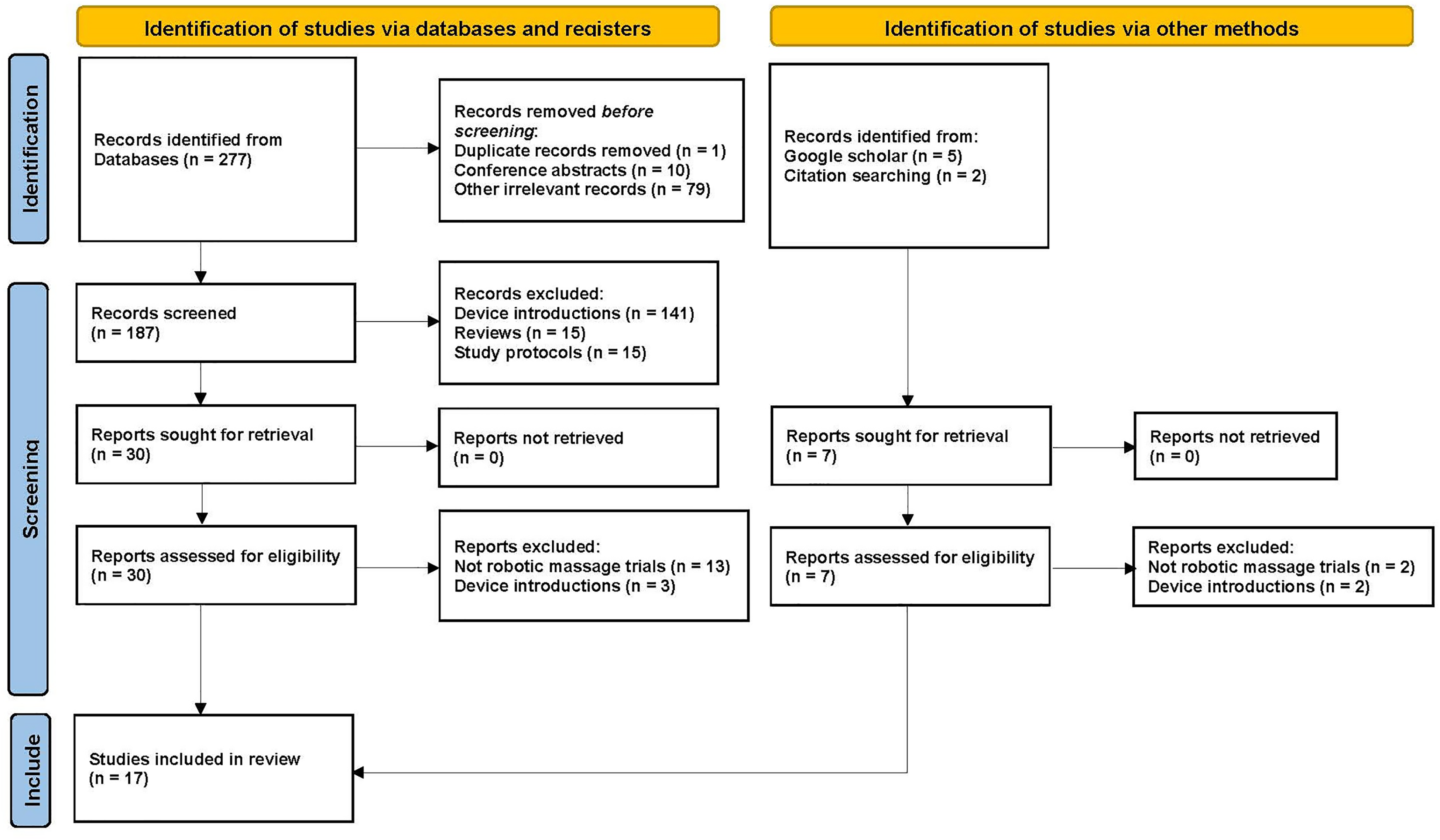
Flow chart of study selection.
The summary of each article has been presented in Tables 1 and 2. Fifteen preliminary studies, along with one quasi-experimental, and one randomized controlled trial study, involving a total of 841 adults, comprising 621 healthy volunteers and 220 patients, were included in this review. Geographically, these studies were conducted in various regions: Japan (10 studies),7–16 China (2 studies),17,18 Taiwan (2 studies),19,20 and individual studies in New Zealand, 21 Vietnam, 22 and Spain. 23 Of the 17 studies, five studies11,13,16–18 did not specify participants’ age and gender. The remaining 12 trials detailed the inclusion of a total of 297 males and 361 females, with ages ranging from 18 to 83 years. The massage was applied to various focal points, including the oral (n = 9, 53%),7,8,10–16 head (n = 3, 18%),9,21,22 shoulder (n = 1, 6%), 20 lower back (n = 3, 18%),17,18,23 and full body (n = 1, 6%). 19 Massage treatments were administered to both healthy volunteers9,11,13,16,17,21,22 and individuals with various conditions such as temporomandibular joint (TMJ) dysfunction associated with myofascial pain,7,8,10,12,14,15 muscular fatigue, 20 anxiety during menopause, 19 and lower back pain.18,23 These interventions were administered over differing timeframes.
Characteristics of the Included Studies.

Note: TMD, temporomandibular disorder.
Characteristics of the Included Studies.
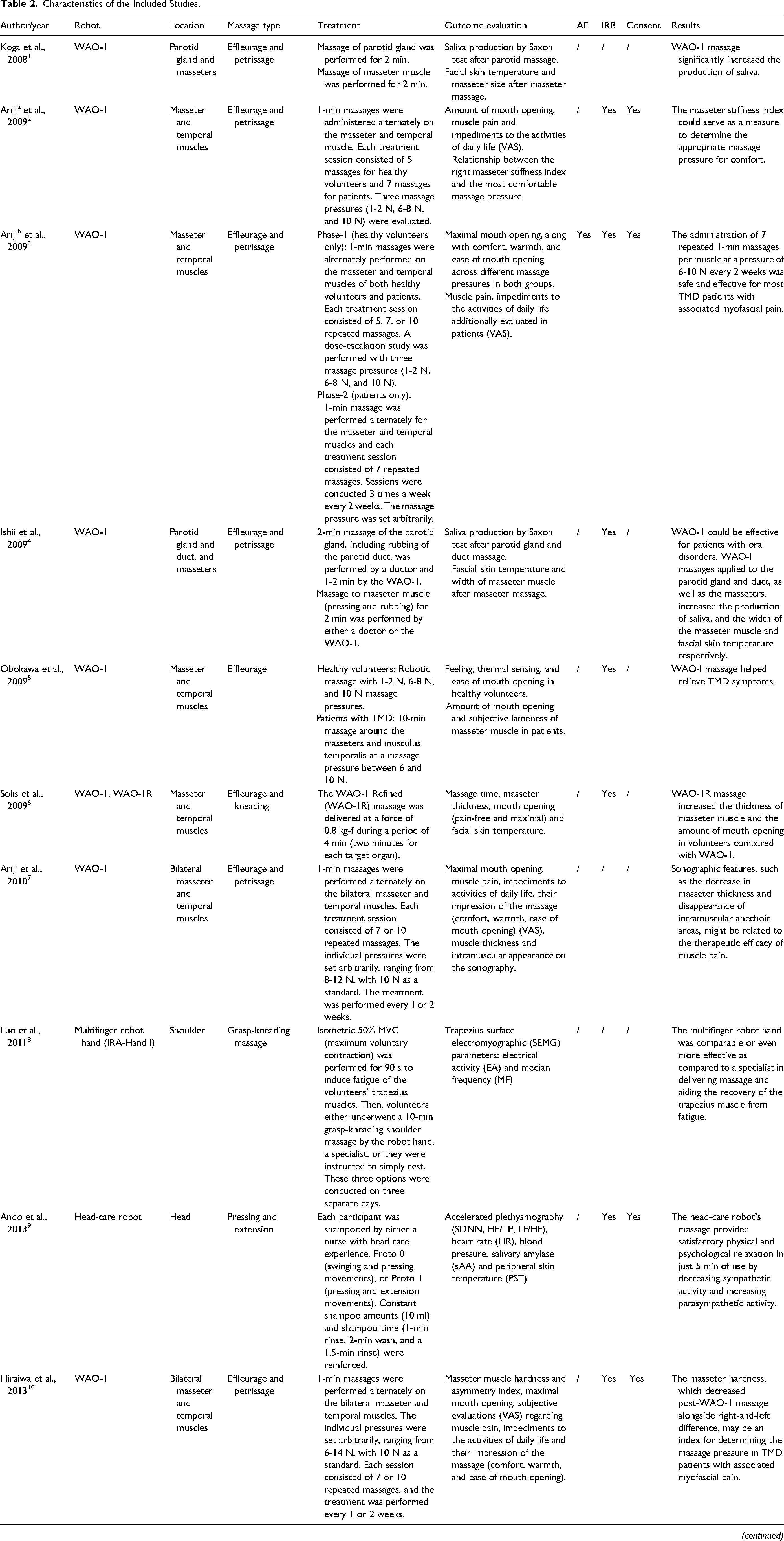
Note. TMD, temporomandibular disorder; AE, adverse events; WAO-1, Waseda-Asahi oral-rehabilitation robot No.1; VAS, visual analog scale; ODI, oswestry disability index; IRB, Institutional Review Board.
Notably, only one study documented muscle pain experienced by two healthy volunteers who underwent massages on the masseter and temporal muscles, using 6 N and 10 N forces respectively. 14 No mechanical adverse events were observed. Safety considerations were not addressed in the remaining studies. Approximately 59% of the studies received applicable ethics approval from the Institutional Review Board7–9,11–15,21,23 or acquired informed consent from participants.7–9,14,15,19,21,23
Oral Rehabilitation Massage
Nine studies investigated the use of robot-assisted massage in the setting of oral massage therapy. In 2008, Koga et al 16 designed a novel rehabilitation robot, the Waseda-Asahi Oral-Rehabilitation Robot No.1 (WAO-1), to provide massage to the maxillofacial region of patients with xerostomia. They programed WAO-1 to provide massage to the parotid glands of 6 healthy volunteers and to the masseter muscle of 11 healthy volunteers without any maxillofacial disorders. They found that the massage therapies provided by WAO-1 could enhance the production of saliva. However, it is crucial to note that this study primarily focused on the technical aspects of the robot's development and did not include empirical data on its effectiveness in clinical settings or patient outcomes. Between 2009 and 2016, eight additional preliminary studies were conducted using WAO-1 robots to assess different massage techniques targeting the mouth and surrounding tissues. This included massaging the masseter and temporal muscles, as well as the parotid gland, to address myofascial pain and xerostomia respectively. Three studies were conducted on healthy volunteers,11,13,16 2 studies on patients with TMD with associated myofascial pain,7,10 and 4 on both healthy and patients with TMD with associated myofascial pain.8,12,14,15 In 2010, Ariji et al 10 utilized sonographic evaluation of the bilateral masseter and temporal muscles to evaluate the efficacy of WAO-1 massage treatment in 15 patients with TMD (10 with unilateral and 5 with bilateral muscle pain). Changes in sonographic features of the relevant muscles were found to be correlated with improvements in pain and range of motion following WAO-1 massage treatment. In 2016, Ariji et al 7 conducted further research to evaluate the use of sonographic features as predictors of the efficacy of robotic massage treatment in 37 patients with TMD with associated myofascial pain. A standard WAO-1 massage pressure of 10 N was applied to the masseter and temporal muscles for a duration of 16 min, over the course of 5 sessions every 2 weeks. The median total treatment duration was 9.5 weeks. Their findings revealed that sonographic features of the masseter and temporal muscles after the third treatment session could predict treatment efficacy. Specifically, patients with more pronounced changes in muscle features experienced more significant improvements following the treatment.
Additionally, in 2009, Jorge Solis et al 11 noted the development of the revised oral rehabilitation robot, known as the WAO-1 Refined (WAO-1R). This included the redesign of the arms of WAO-1 to enable precise massage therapy on maxillofacial regions and expand the range of massage techniques available for addressing oral motor dysfunction or facial muscle weakness. The authors verified the effectiveness of the improved mechanical design of WAO-1R in providing massage to 12 healthy volunteers. The study findings suggested that massages with WAO-1R increased the thickness of the masseter muscle on volunteers and the amount of mouth opening, compared to the previous robot model. However, this was also a study primarily focused on the technical aspects of the robot's development and did not include empirical data on its effectiveness in clinical settings or patient outcomes.
Head Massage
Three studies shed light on the potential of robot-assisted scalp massages. The efficacy of a head-care robot was evaluated using biosignal, reflecting the direct biological impact of massage therapy on user relaxation. 9 Fifty-four healthy subjects were randomized to receive scalp massage with shampooing from either a nurse with head care experience, the earlier head care robot prototype, or the latest head care robot model. Participants in each arm received 5 min of head massage with the same amount of shampoo. The study results revealed that the robotic head massage provided physical and psychological relaxation as evidenced by decreased sympathetic activity and increased parasympathetic activity, highlighting the potential of robots to provide relaxation and stress relief. The subjective experience of receiving a head massage from a robot compared to that of a human masseuse was also evaluated among 18 healthy volunteers. 21 Although the experience of a robotic massage was reportedly less enjoyable and relaxing, participants receiving a robotic massage expressed significantly more happiness compared to being served by a human masseuse. In 2021, a combination of robotic scalp massage, shampooing, and reflexology (Vietnamese traditional medicine) was administered to 300 healthy volunteers. The robotic scalp massage, which used water jets with trajectories predicted by machine learning based on physical factors to meet the desired position on the human scalp, enhanced the recovery of bed-bound patients and thereby reduced the risk of bedsores-related infection. 22 These studies collectively suggest that robots are capable of providing pleasurable and relaxing experiences that are comparable to those provided by human touch and can also be tailored to promote rehabilitation.
Shoulder Massage
The role of electromyography (EMG) in evaluating the therapeutic effects of massage was demonstrated with a multifinger robot hand on the upper trapezius muscle, which is commonly associated with muscle tension and pain. The robot hand resulted in a significant decrease in EMG activity, signifying muscle relaxation under the simulated fatigued conditions, which was comparable to the effect achieved by a human therapist. However, it is worth noting that the study had a limited number of healthy participants and did not assess the robot hand's efficacy in treating specific health conditions. More research is necessary to validate these results and assess the potential effectiveness of robot-assisted massage therapy across a broader range of health conditions. 20
Lower Back Massage
A single-blinded, two-arm randomized controlled trial showed encouraging results with the use of a robot to treat nonspecific low back pain (NSLBP). In this trial, 44 participants were assigned to either the conventional physical therapy plus robot-assisted therapy group or the conventional physical therapy group. The conventional physical therapy group received 10 sessions of standard treatment, involving thermotherapy and rehabilitation exercises, for NSLBP at the Rehabilitation Service. The robot-assisted therapy group received 10 sessions of robot-controlled air pressure massage for 10 min in addition to the standard physical treatment. The study found that both groups experienced significant improvements in functional disability after the intervention (p < .05). Uniquely, only pain improvement was statistically significant in the robot arm (p = .0001). Patients of both sexes obtained similar benefits from either treatment. Overweight patients (body mass index ≥ 25 kg/m2) in the robot arm benefited more from the treatment (p = .008) than patients with normal weight. The researchers concluded that robot-assisted therapy could be a feasible and effective alternative for treating NSLBP, especially for patients with excessive weight. 23
Two other studies incorporating robot-assisted massage into Chinese massage (Tuina) therapy were also reviewed. In 2013, Hu et al 18 designed a robotic system that replicated the key movements and techniques used in Chinese massage therapy. While demanding less manual effort, the massage robot was still found to have been able to integrate the experience and skills of professionals into reproducing expert techniques with individualized manipulation parameters and improved safety measures. Furthermore, in 2015, Huang et al 17 developed an anthropomorphic robotic arm with integrated elastic joints specifically designed for Traditional Chinese Medicine (TCM) massage. The anthropomorphic robotic arm showed promise in simulating human-like massage techniques, providing more stable pressure distribution and accurate manipulation as compared to human therapists. These massage robots have the potential to offer advantages such as consistent performance, extended treatment duration, and improved availability of TCM massage therapy.
Full Body Massage
The use of artificial intelligence and robotic arms in combination with aromatherapy was explored in menopausal women to study its effects on anxiety. Forty menopausal women were randomly divided into the aromatherapy robot massage group or control group without aromatherapy robot massage. The interventions were provided weekly for 3 months. Anxiety levels were measured before and after the interventions using a standardized questionnaire. Study results indicated that aromatherapy robot massage reduced anxiety levels of menopausal women significantly. However, the small sample size highlights the need for further research to confirm these findings and evaluate the effectiveness of the intervention across diverse populations and health conditions. 19
In summary, while the field of robotics in massage therapy is still in its nascent stages, it shows significant promise. Future research could benefit from larger and more comprehensive clinical trials to better ascertain the efficacy and acceptability of robotic massage.
Discussion
The collective data compiled from the seventeen observational studies that fulfilled the inclusion criteria in this systematic review suggests that robot-assisted massage is feasible and can be performed safely for health and well-being enhancement. The interventions primarily encompassed oral rehabilitation and included head, shoulder, back, and full-body massages. The robotic massage interventions not only improved health conditions but also alleviated pain and stress, enhancing overall wellness in the process.
Robot-assisted massage in the setting of oral rehabilitation has been the most explored. The oral rehabilitation robot WAO-1R demonstrated substantial potential in providing relief to patients with oral disorders, such as TMJ disorders with associated myofascial pain. Moreover, the use of sonographic elastography to optimize massage pressure and the evaluation of masseter muscle sonographic features to assess treatment efficacy emphasizes the strong interplay between robotics and imaging technologies in the field of massage therapy.
The existing literature is mainly centered on the capability of robotic interventions in executing various massage techniques on humans. However, the psychological aspects of robotic massage therapy should not be overlooked. As indicated by Ando et al., 9 patients’ experiences and psychological acceptance of a robot-assisted massage were generally marked by positive reactions. This finding suggests that the lack of the “human touch” element of traditional massage therapy may not be a limiting factor in the acceptance and effectiveness of robotic massages. Furthermore, the incorporation of robots to perform culturally specific techniques such as Tuina (Chinese massage therapy) highlights the robots’ versatility and extends their potential applications.
Of note, the literature search identified numerous publications, that though related to robot-assisted massage, were regarding study designs, study protocols, reviews of mechanical and electrical concepts, and robotic engineering designs. These studies did not fit into the predefined inclusion criteria and thus were not included in this systematic review.
The potential for integration of robot-assisted technology into massage therapy is noteworthy. However, based on the review of the existing literature, future studies employing rigorous methodologies are needed. Future prospective studies should focus on robot-assisted massage effectiveness, safety, and cost-efficiency. Additionally, future studies should delve into comprehending and enhancing the psychological experiences and interactions between users and robots to amplify the comprehensive impact of robotic massage therapy. Furthermore, additional studies should be performed in various healthcare settings (inpatient, outpatient, home-based) as well as for numerous different medical conditions.
Strengths
As demonstrated in this review, the field of robotic massage therapy is both diverse and expanding. This systematic review represents the first comprehensive synthesis of trials within this domain. This systematic review followed a rigorous, predefined protocol with multiple independent reviewers. The thorough examination of data is crucial as the growing amount of evidence supporting the effectiveness of robotic-assisted massages could raise ethical and medicolegal considerations in the future.
Limitations
While the available evidence indicates several potential advantages, it is imperative to acknowledge several limitations of this systematic review. A considerable number of the trials encompassed within this review are of a preliminary nature, characterized by small participant cohorts and limited follow-up periods. Most of these trials lacked randomization or blinding, thereby diminishing the overall credibility of the findings.
It appears that robotic massages, categorized as electric massagers, were not subject to 510 K regulations. 24 Despite the many trials, only 29% of studies targeted patients,7,10,18,19,23 while 24% involved both healthy volunteers and patients8,12,14,15 and, 47% comprised preclinical trials focused on healthy volunteers assessing the viability of robotic massage9,11,13,16,17,21,22 in this review. Primarily, these trials featured preliminary investigations on healthy volunteers. Considering the early stage of published reports, the potential costs and accessibility barriers of these technologies could pose challenges to their widespread adoption. The sample size examined in this review was relatively modest, which could potentially impact the robustness of its findings due to the limited literature available. Additionally, the variability in robot design, massage techniques, and assessment protocols complicates the applicability and generalizability of the study outcomes. The lack of standardized norms for robotic massage interventions might undermine the accuracy of results. Notably, only English-language publications were included, potentially introducing a language bias by overlooking articles in other languages.
Conclusions
In conclusion, the potential physical and mental benefits brought about by the integration of robotic technology into massage therapy are evident. However, caution is warranted when processing the evidence due to limitations in existing literature such as the small sample sizes, nonrandomized trials, and heterogeneity in methodologies. Despite these challenges, robot-assisted massage may be incorporated into care provision as an adjunct to enhance human well-being. Nonetheless, further research is required to validate these findings.
Footnotes
Acknowledgments
We thank the experienced librarian Larry J. Prokop, M.L.S., Mayo Clinic Rochester Campus for the literature research of this review.
Author Contributions
BAB contributed to the study conceptualization, investigation, and funding acquisition. JY, KHL, and DEJ curated and analyzed the data. JY and AD developed the study methodology. BAB contributed to project administration and supervision. JY contributed to software. JY and ABM wrote the original draft of the manuscript. SCF, JJC, MRM, TYC, and BAB reviewed and edited the manuscript. All authors approved the final manuscript.
Data Availability Statement
The data that support the findings of this study are available from the corresponding author upon reasonable request.
Declaration of Conflicting Interests
The authors declared no potential conflicts of interest with respect to the research, authorship, and/or publication of this article.
Funding
The authors disclosed receipt of the following financial support for the research, authorship, and/or publication of this article: This work was supported by the National Institutes of Health (Grant No. R61 AT01218).
Informed Consent Statement
Informed consent was obtained from all subjects involved in the study.
