




Abstract
Dual enrollment (DE) courses are a prominent strategy for promoting college access and success, but racial/ethnic and socioeconomic inequalities in participation remain stark. DE programs that broaden access may need to deploy strategies that provide targeted support and interventions to specific populations of students. However, whether DE programmatic elements are conducive to equity is unknown. In this study, we analyzed trends in student performance before COVID-19 and in COVID-19-impacted years in a hybrid DE program that made programmatic changes during the pandemic. We found that student performance in these DE courses improved during the pandemic, suggesting that modifications the program made may have benefited student performance overall, but racial/ethnic and socioeconomic inequalities also widened during this time. These results suggest the need for future research and reform on equitable interventions and support in broad-access DE courses.
Keywords
Introduction
College enrollment and completion rates continue to increase, but inequalities in college attainment persist (National Center for Education Statistics, 2024). Among youth aged 25–29 years in 1980, 25% of White young adults held a bachelor’s degree or higher, more than twice the rate of Black young adults (12%) and three times the rate of Hispanic youth (8%). By 2022, the baccalaureate attainment for Black and Hispanic young adults had climbed to 28% and 25%, respectively, but the attainment rate for White youth had increased to 46%. Thus, while proportional racial/ethnic gaps in baccalaureate attainment have shrunk, they are growing in real terms. Similarly, although the college enrollment rates of low-socioeconomic-status (low-SES) students have increased, roughly two thirds of high-SES high school sophomores earned a bachelor’s degree within 8 years of graduating high school compared with fewer than one sixth of low-SES students (National Center for Education Statistics [NCES], 2024). The COVID-19 pandemic further widened inequalities in college enrollment and retention, exacerbating concerns about our nation’s ability to prepare students from all backgrounds to succeed in higher education (National Student Clearinghouse Research Center, 2021).
Against this backdrop, dual enrollment (DE) courses, which allow high school students to enroll in college-level courses for both high school and college credit, have become one of the most prominent strategies for preparing students for success in college (NCES, 2013, 2019). More than 80% of high schools offer students the opportunity to take DE courses, and roughly one third of students complete at least one DE course in high school (NCES, 2019, 2020). DE has been increasingly prioritized through federal and state policy, including the Every Student Succeeds Act, the Strengthening Career and Technical Education for the 21st Century Act (Perkins V), and state accountability and funding policies that incentivize DE participation (Jamieson et al., 2022).
Although a growing body of research has found that participation in DE courses is positively associated with a range of postsecondary education outcomes (Allen & Dadgar, 2012; An, 2013a, 2013b; An & Taylor, 2019; M. Giani et al., 2014; Hemelt et al., 2020; What Works Clearinghouse, 2017), whether DE is helping to address inequalities in college access and success remains unclear. Research has found considerable racial/ethnic disparities in access to DE (An & Taylor, 2019; Xu et al., 2021). Concerningly, some state policies associated with promoting access to DE correlate with larger racial/ethnic gaps in participation, suggesting that simply incentivizing DE may have unintended consequences if we seek to address disparities in access to DE (Xu et al., 2021). Similarly, broadening access to DE without ensuring that DE students and instructors have access to the supports and resources they need may exacerbate rather than ameliorate inequalities in student outcomes (Hart, 2019; Miller et al., 2018). These insights have led to new research agendas and conceptualizations of DE that call for increased evidence on the supports and resources that can ensure the success of increasingly diverse populations of DE students (Fink & Jenkins, 2023; Griffin et al., 2024; Taylor et al., 2022).
This renewed emphasis on identifying, developing, and evaluating equitable DE practices is promising. And yet, the field has limited evidence about how changes to DE program design elements relate to inequalities in student outcomes. This study helps to address this gap. We examined a large, innovative DE program we refer to as College Ready Now (CRN, a pseudonym). CRN implemented many program changes in response to the COVID-19 pandemic, described further below. By examining trends in students’ academic performance throughout the year for pre-COVID-19 versus COVID-19 cohorts, we highlight two key findings: (a) the supports CRN implemented resulted in improvements in the academic performance of COVID-19 versus pre-COVID-19 cohorts, and (b) more privileged students may have benefited more from these supports, evidenced by widening racial/ethnic and socioeconomic inequalities in student performance during the pandemic. Although our study was not designed to evaluate the effects of the COVID-19 pandemic nor any particular intervention or support CRN implemented on student performance, our results provide novel evidence underscoring the need for future research and reforms on the targeted interventions and supports that may be needed to promote equity in DE, particularly broad-access programs.
This paper proceeds as follows: In the next section, we describe the literature on equity in access, performance, and the postsecondary benefits of DE courses, highlighting the interconnectedness of all three components with the design of DE programs. Next, we contextualize our study by discussing the literature on COVID-19’s impacts on educational outcomes generally and DE students specifically. We then describe the CRN program in greater detail before presenting the methods we used to examine changes in academic performance and inequality before and during the pandemic. After presenting our results, we conclude by discussing the implications of our findings for future research on support and interventions that can reduce inequalities in the experiences and performance of students enrolled in DE courses.
Equity of Access, Performance, and Postsecondary Benefits in DE
Given the large and persistent racial/ethnic and socioeconomic inequalities in academic achievement and educational resources (Reardon, 2018; Reardon et al., 2014), three interrelated components of DE programs must be considered if they are to reduce racial/ethnic and socioeconomic inequalities in students’ college outcomes. First, DE programs must reflect the demographic composition of the broader population of students they serve. Second, DE programs must minimize inequalities in academic performance (and the conferral of college credit) in DE courses. Third, DE programs must provide equivalent or greater postsecondary benefits to students from historically marginalized backgrounds.
DE programs tend not to reflect the demographic composition of the student populations from which they are drawn. Studies have shown that DE students are more likely to be White, Asian, not low income, and continuing generation (i.e., students whose parents went to college) compared with the general population of students (Museus et al., 2007; NCES, 2019; Pretlow & Wathington, 2014; Shivji & Wilson, 2019). Data from the High School Longitudinal Study of 2009 showed that 26% of students whose parents had less than a high school diploma participated in DE compared with 42% of students whose parents had a bachelor’s degree or higher (NCES, 2019). The same study found that 38% of Asian and White students participated in DE compared with 27% and 30% of Black and Hispanic students, respectively. In their national analysis of DE participation data at the district level, Xu et al. (2021) found that most districts exhibited White–Black and White–Hispanic gaps in participation in DE.
In statistical models exploring predictors of racial/ethnic gaps in DE participation, Xu et al. (2021) estimated that the presence of state policies that provided financial support for participation in DE was associated with smaller White–Black and White–Hispanic gaps in participation. However, state accountability measures that emphasize student participation and outcomes in DE were associated with larger racial/ethnic gaps in participation. Indeed, one of the primary challenges in broadening access to DE is that most states restrict DE access to students deemed eligible for DE courses, typically through standardized exam scores, prior course taking, and/or prior grades (Taylor et al., 2015). State policies that encourage DE access without changing eligibility policies therefore may exacerbate rather than ameliorate equity gaps in DE participation rates. Although some have argued for the use of multiple measures or nonacademic skills and beliefs (e.g., self-efficacy and college aspirations) to broaden participation, racial/ethnic and socioeconomic inequalities in these measures also exist among DE students (Giani et al., 2023). Changing eligibility policies without addressing background inequalities in preparation for DE courses, broadly construed, therefore may not be conducive to equity.
Because DE programs tend to be restricted to only students deemed prepared for college-level coursework, pass rates for DE courses are often high. In their statewide study of DE in Texas, Miller et al. (2018) estimated that only 2.5% of DE students received a failing grade in their course, and the failure rate did not change after Texas passed a bill expanding access to DE coursework to ninth and tenth grade students (HB 505, 2015). Nevertheless, some students struggle in their DE courses, and the benefits of DE participation are likely mediated by students’ experiences and performance in the course (Hart, 2019; Karp, 2012; Taczak & Thelin, 2009). In Hart’s (2019) qualitative research, students who performed well in DE courses felt “college ready” and “prepared for what professors expect with regards to quality and effort” (p. 101), whereas failing DE courses “negatively impacted [students’] self-confidence heading into college and their college aspirations” (p. 103). In some studies, students described their challenges in DE courses as a reason why they chose to attend a 2-year over a 4-year college or forgo postsecondary education altogether (Hart, 2019; Taczak & Thelin, 2009). This threat of poor performance is one reason why well-intentioned educators may hesitate to recommend that students participate in DE if they do not perceive them to be sufficiently prepared for the coursework (Witkowsky & Clayton, 2020).
The risk of negative experiences in DE courses has underscored the need for understanding how DE design elements relate to student outcomes in DE courses. For example, Ryu et al. (2024) examined how DE course characteristics such as the subject of the course, whether it was taken as DE only or mixed (i.e., DE and non-DE students in the same course), the characteristics of the instructor (e.g., degree attainment, high school vs college instructor), the location of the course (high school, college, or other), and the course’s instructional modality (i.e., in-person, online, or hybrid) influenced academic performance in the course and subsequent postsecondary outcomes. This study and others (e.g., Hu & Chan, 2021) provided important evidence regarding the association between DE design elements and student outcomes. However, existing research has not specifically examined the relationship between DE design elements and inequalities in student experiences and performance in DE courses.
With regard to the postsecondary benefits of DE, the consensus that has emerged from the literature is that participation in DE is positively associated with a range of positive postsecondary outcomes, including college enrollment, performance, and persistence/attainment (An & Taylor, 2019; Taylor et al., 2022; What Works Clearinghouse, 2017). Additionally, some studies suggest that the benefits of DE on college outcomes are greater for students from populations historically underrepresented in higher education (An, 2013a; Miller et al., 2018). However, the equitable postsecondary benefits of DE are not guaranteed. Hu and Chan (2021) found that DE was positively associated with college outcomes for higher-SES students but not lower-SES students. Similarly, Miller et al. (2018) found that DE participation positively impacted the college outcomes of non-low-income students but had limited effect on college enrollment and was estimated to negatively impact the likelihood of college completion among low-income students. A primary mechanism explaining this finding may be prior academic achievement. High-achieving students received greater postsecondary benefits from DE than low-achieving students in the study by Miller et al. (2018), and low-income students were more likely to be low achieving.
Taken together, the existing literature suggests that DE programs have the potential to equalize opportunities for access and success in higher education, but this vision likely can only be realized if states and districts employ strategies that broaden access to DE coursework while simultaneously providing students with the targeted support and interventions they need to succeed in the course. However, just as prior research has found that some policies and strategies may broaden inequalities in DE access (Xu et al., 2021), interventions and supports targeting DE students could ameliorate or exacerbate inequalities in DE performance, depending on their design and implementation.
COVID-19, Educational Inequalities, and DE
Although the full picture of the effect of the COVID-19 pandemic on students’ long-term educational and socioeconomic outcomes will not be known for years, the existing research has produced three fairly consistent findings. First, the pandemic negatively impacted students’ achievement and attainment. Data from the National Assessment of Educational Progress (NAEP) long-term trend reports showed that students lost decades of progress in both reading and math (NAEP, 2023), and college enrollment rates declined considerably, particularly at 2-year institutions (National Student Clearinghouse Research Center, 2021). Second, students learned considerably less during periods of school closures (Clark et al., 2021; Contini et al., 2021; Donnelly & Patrinos, 2021; Education Policy Institute and Renaissance Learning, 2021; Engzell et al., 2021; Hevia et al., 2022; Kuhfeld et al., 2020; Lewis & Kuhfield, 2021; Organization for Economic Cooperation and Development, 2021; Schult et al., 2022b). Third, the educational effects of the pandemic have tended to be most pronounced among disadvantaged populations, including low-SES students (Engzell et al., 2021; Hevia et al., 2022), students of color (Lewis & Kuhfield, 2021), students in high-poverty schools (Gore et al., 2021; Lewis & Kuhfield, 2021), and students without access to the technology needed to facilitate online learning (Clark et al., 2021).
Despite this emerging consensus, not all studies have produced findings consistent with these themes. A small number of studies have documented increases in academic achievement amid COVID-19-induced school closures (Giani et al., 2021; Gonzalez et al., 2020; Meeter, 2021; Spitzer & Musslick, 2021) and even narrowing of achievement gaps (Spitzer & Musslick, 2021). The common theme across these studies is that students were engaged in online learning before the pandemic, which may have softened the academic blow of school closures. As Spitzer and Musslick (2021) concluded, “Online learning environments may be effective in preventing educational losses associated with current and future shutdowns of schools” (p. 1).
Although students may have been able to maintain, or even accelerate, their rate of learning during periods of school closure if they were engaged in online learning, less is known about the conditions under which online and hybrid learning can be effective and the extent to which these conditions enabled learning gains during COVID-19. This is important given that some research has found that students perform significantly worse in online versus face-to-face courses on average and that lower-achieving students may struggle the most (Xu & Jaggars, 2013). Limited research has examined trends in student performance in online or hybrid modalities across different periods of the pandemic. Studies have shown that learning gains and losses varied considerably across these COVID-19 periods (Kuhfeld et al., 2022), but to our knowledge, studies have not specifically examined the impact of COVID-19 across time periods in online or hybrid learning modalities. Additionally, results are inconclusive about whether online and hybrid learning ameliorated educational inequalities during COVID-19. Although some studies have found evidence that lower-performing students’ achievement accelerated even faster than that of high-achieving students during COVID-19 lockdowns in online learning contexts (Spitzer & Musslick, 2021), NAEP data clearly showed that educational inequalities by race/ethnicity and prior achievement widened overall (NAEP, 2023), making it important to examine trends in inequalities in online learning contexts.
Finally, limited research examined trends in academic performance in DE courses during COVID-19. Although it stands to reason that student performance in DE courses suffered in a similar manner to other courses due to the COVID-19 pandemic, thus far, few studies have specifically examined the effects of COVID-19 on student performance in DE courses. A national survey of K–12 and postsecondary DE providers found that respondents overwhelmingly felt that COVID-19 had a pronounced negative impact on student engagement, instruction, and academic performance in DE courses (Perry, 2021). However, to our knowledge, no studies have examined trends in student performance in DE courses during the pandemic.
Study Context
Our study examined College Ready Now (CRN), 1 a DE program created by a university in the Southwest. CRN courses are designed by faculty from the university in partnership with staff from the CRN program. CRN then recruits high school teachers from across the state and trains them in the content, pedagogy, and technologies used in the courses. The courses are hybrid, with both an in-person teaching component at the high school and an online component where high school students access the same learning-management system used by undergraduates at the university to complete assignments and assessments. Importantly, students receive two separate grades from their participation in CRN courses: a high school grade given by their high school CRN instructor and a college grade provided by the CRN program on behalf of the sponsoring university. High school assignments are graded by the high school instructor, whereas college assignments are graded by CRN program staff overseen by college faculty. This model allows high schools to retain autonomy over expectations for student learning while the CRN program ensures that students’ college-level work is graded consistently regardless of the high school in which a student is enrolled or who their teacher is.
Unlike most other DE programs across the country (Taylor et al., 2015), the program does not require students to demonstrate college readiness prior to enrolling in the program. Instead, the program uses students’ midterm grades to determine whether they are eligible to earn college credit at the end of the academic year. If a student is eligible per their midterm grade, they can then earn college credit at the end of the year based on their final grade. If their midterm grade is below the credit eligibility threshold, they may remain enrolled in the course for high school credit but would not be able to earn college credit based on their grade at the end of the year. Importantly, the program also provides students with the option to claim the grade and credit or decline it. For example, if the student passed the course but received a D, they could choose to keep that grade and the credit or decline both. This approach provides a low-stakes opportunity for students to attempt academically challenging courses without the risk of receiving a college grade lower than what they expect of themselves that goes on their permanent record.
Even before the COVID-19 pandemic, CRN had developed and implemented multiple strategies to provide additional support and flexibility to schools and teachers. CRN courses may be delivered according to the school district’s academic calendar rather than forcing high schools to abide by the collegiate academic calendar for undergraduate courses. Teachers receive extensive technical assistance in all learning technologies used in the program’s courses, in addition to receiving professional learning and development on content, curriculum, and pedagogy three times throughout the year (summer, fall, and spring). CRN also provides schools and districts with midyear reports after the fall semester each year that include data on student performance in the courses. This allows districts to understand whether students are on track to earn college credit by the end of the year.
Perhaps the program’s most notable response to COVID-19 is something the organization did not do: shift to a pass/fail approach for its courses. Colleges and universities across the state and country made the decision to allow students to change their course registration to pass/fail to ensure that COVID-19 did not negatively impact their grades and grade point average, and some DE programs allowed students to withdraw from their courses without academic penalty due to the pandemic (Ison et al., 2022). However, even before COVID-19, CRN provided students with the option of claiming their grade and credit or not. The program therefore made the decision to continue with this grading model. This is important to note because it suggests that the estimates discussed later are not simply a result of the dual enrollment program changing its grading practices or adopting a hold harmless approach where students’ grades could not decline after March 2020, neither of which were implemented.
Part of the reason that the program was able to make the decision to continue with its standard grading model is because there was confidence that students could continue to learn effectively in hybrid or fully remote modalities. Even before the pandemic, school districts seeking to offer CRN courses had to commit to providing students with access to a computer or tablet and access to the internet at school. This language is included in the agreements districts sign to partner with the program. Although district responses to COVID-19 varied widely, many districts in Texas allowed students to continue accessing a district-issued device, particularly if students did not have their own computer or tablet at home. This context allowed students to continue engaging in their DE courses even after the shift to remote learning. In the end-of-year survey, 83.5% of students agreed or strongly agreed that they were “able to navigate the course in [the learning-management system] independently,” and only 1.3% of students strongly disagreed with this statement.
Finally, CRN has a robust district partnership team and numerous course staff members who work with schools and teachers to support their implementation through an organizational framework referred to as adapting to instructional modalities that provides schools with guidance on pacing, assessment administration, addressing individual absences, and accommodating campus-level closures. During the pandemic, the partnership team collaborated with districts to identify which districts were shifting to fully remote learning and when, and course staff issued guidance to instructors about which lessons and assignments should be prioritized if teachers needed to adjust their pacing guides due to lost instructional time. Although these strategies did not eliminate the substantial disruptions to teaching and learning wrought by the pandemic, they may have minimized the potential negative impact on student performance caused by the sudden shift to remote learning. In the following section we describe our methods for examining trends in student performance in CRN courses before and during the pandemic.
Methods
Research Questions
This study addressed the following research questions:
How did different COVID-19 periods relate to hybrid DE students’ midterm and final grades?
How did different COVID-19 periods relate to hybrid DE students’ grade trajectories between midterm and final grades?
To what extent were demographic inequalities in academic performance exacerbated during COVID-19?
To what extent did COVID-19 relate to withdrawal rates from hybrid DE courses?
Data Sources and Sample
We drew on the CRN program’s institutional datasets between the 2017–18 and 2020–21 academic years. These datasets contained information on students’ demographic profiles, course enrollments, and course performance as well as identifying information on teachers, schools, and districts. We delimited the sample to students who were enrolled in year-long CRN courses that were offered both before and after COVID-19 to ensure that our estimates were not biased by new courses being added over time. We excluded CRN courses that were semester length because they did not follow the pattern of year-long courses that give students a midterm grade at the end of the fall semester and a final grade at the end of the spring semester, which is the course structure needed for our analytic approach. The full sample included 78,435 unique students and 92,619 student-by-course enrollments (referred to simply as enrollments throughout). The college grade and withdrawal outcomes described below are course specific—students receive different grades for each course and can withdraw from one course while remaining in another. The analyses described below therefore used enrollments as the sample rather than unique students. Roughly 85% of CRN students enrolled in only one course, 13–14% enrolled in two courses, and 1–2% enrolled in more than two courses each year for the cohorts observed in this study. Table 1 provides demographic characteristics of the sample by year using the predefined terminology from the original dataset (female and male, for instance). The table also highlights how the demographic characteristics of the sample only modestly changed between the pre-COVID-19 and COVID-19 time periods, with no more than a 1–2% change for any demographic group. This suggests a minimal threat of our estimates being biased by major shifts in the student population due to COVID-19.
Descriptive Characteristics of College Ready Now Student Samples, by Year.

Analytic Method
To address the first research question, we used ordinary-least-squares regression with high school fixed effects represented by the following equation:

where
In the second research question, we restructured the dataset so that each student had two records, one for their midterm grade and one for their final grade, and added interaction terms to the model between the grading-period indicator (midterm vs final) and the year indicator. This approach resembles two-way fixed-effects estimation statistically, but we make no strict assumptions of parallel trends for different populations or time periods. Rather, we simply examined whether changes in midterm versus final grades were significantly different for pre-COVID-19 versus COVID-19-impacted cohorts. The three cohorts included in this analysis include were (a) pre-COVID-19 cohorts from 2016–17 to 2018–19 (n = 30,971), the first COVID-19-impacted cohort in 2019–20 (n = 28,788), and the second COVID-19-impacted cohort in 2020–21 (n = 32,860). Although the pandemic impacted both of the latter cohorts, we hypothesized that the transition from in person to online for the 2019–20 cohort and the fully virtual environment for the 2020–21 cohort would yield different results. The following equation was used to estimate our model:

where all the terms are the same as in the preceding model, apart from a change in the outcome variable and two additional parameters. The model added the term
To address the third research question, we used the same model shown in Equation (2) but delimited the samples to certain demographic groups to assess the heterogeneous impact of the pandemic. This allowed us to examine whether the change in midterm versus final grades for prepandemic versus pandemic-affected cohorts varied across different student populations based on race/ethnicity (i.e., Asian, Black, Latino/a, and White), gender (female vs male), and parental education (first generation vs continuing generation). We prefer this approach over three-way interactions among grading period, cohort, and demographic group due to the complexity of interpreting such three-way interactions.
Although CRN’s consistent and standardized grading policies—both across cohorts and across teachers—limit threats to the validity of our estimates stemming from temporal changes or between-teacher variation in grading, one of the most significant threats could arise from differential attrition. Specifically, if students in pandemic-affected cohorts were more likely to withdraw from their CRN courses and students who withdrew from the courses differ systematically from students who remained in the courses (e.g., they were lower achieving), our estimates could be biased. To examine this threat and investigate whether the pandemic affected students’ likelihood of withdrawing from the courses, we addressed our fourth research question using the same statistical model as in Equation (1) but examining the dichotomous outcome variable of whether students withdrew from their CRN course. 2 The equation for this model (3) is provided below. The only difference between Equations (1) and (3) is the outcome variable.

Because of the large number of estimates and associated hypotheses tests produced by our analyses, there is a risk of reaching false conclusions about the statistical significance of relationships, particularly given our large sample size. However, across models, there were fewer than 50 estimates that were of primary interest, excluding covariates used to reduce bias and increase precision in our estimates. A conservative Bonferroni adjustment would require us to divide our significance level of p < .05 by the number of hypothesis tests we sought to interpret, which in our case would produce p < .001 as a conservative threshold. As shown next, nearly all estimates of interest reached this threshold.
Outcome Variables
A key distinction between CRN and many other DE programs relates to grading. In typical DE courses, students receive a single grade for the course that is added to both their high school and college transcripts. In CRN courses, students receive two separate grades: a high school grade and a college grade. The high school grade is determined solely by the high school instructor teaching the CRN course, whereas the college grade is awarded by the CRN program. CRN faculty, staff, and graders assess specific assignments and exams that are predesignated as college-level assignments and award CRN students a college grade based on those assignments. The high school teachers have no direct influence on the college grades, ensuring consistency in grading for students at schools and districts across the state.
Of the four outcome variables examined in this study, three were created using students’ college grades. First, we subtracted students’ numerical midterm college grade from the numerical passing threshold for each course to create a centered midterm college grade variable. The purpose of centering the grade was to account for the variation in grading scales across courses. Second, we subtracted students’ numerical final college grade from the numerical final college grade threshold for each course to create centered final college grade. Third, in our models discussed below, we transformed our dataset from wide to long by combining midterm and final college grades into a single centered college grade variable. We then accounted for whether the grade was for the midterm or final period with a dummy variable. The final outcome variable is students’ withdrawal status, a dichotomous variable that indicates whether the student withdrew from the DE course at any point in the academic year. Withdrawal from CRN courses operates similarly to withdrawal from college-level courses, where students can withdraw from a course without penalty before the official census date at the end of the add/drop period.
Study Limitations
There are three primary limitations that readers should bear in mind before reviewing the results. First, we make no claims as to the effects of specific support, interventions, or programmatic changes CRN implemented before or during COVID-19. These changes were not implemented in a manner that would allow causal claims to be drawn regarding their efficacy. Second, we do not claim that students’ grades in CRN courses were equally aligned with the knowledge and skills they gained in CRN courses before or during COVID-19. Put differently, the relationship between grades and learning could have softened during COVID-19 if CRN relaxed grading standards. This limitation is of secondary importance if we assume that grades still matter in DE courses because they determine the conferral of college credit. Third, CRN is a unique, hybrid DE model administered by a university. We assume that our findings are not broadly generalizable to the full population of DE students. However, the uniqueness of the CRN program model, which combines open-access practices with extensive support for students and instructors, makes it an illustrative case to examine trends in student performance during COVID-19.
Results
Table 2 presents our results examining factors that predict students’ midterm college grades in CRN courses. Our primary estimate of interest is the categorical variable that represents the cohort in which students were enrolled. As the results show, the estimated midterm grades for the two pre-COVID-19 cohorts (2017–18 and 2018–19) and the first COVID-19 cohort (2019–20) are roughly equivalent. The results align with our hypothesis that the midterm grades of the 2019–20 cohort would not be affected by COVID-19 given that the pandemic began after midterm grades were awarded (around January 2020). All three cohorts are estimated to have significantly higher midterm grades than students in the second COVID-19 cohort (2020–21), with estimates ranging from 1.4 to 1.9 grade points. In addition to the cohort estimates, the results show that Asian and White students significantly outperformed Latino/a students, who, in turn, earned higher grades than Black and Native American students. Continuing-generation students earned significantly higher grades than first-generation students, female students outperformed males and those who preferred to self-describe their gender, and students with access to computers and smartphones at home earned higher midterm grades than students who did not have access to such technologies.
Results of Ordinary-Least-Squares Regression Models of Centered Midterm Number Grade.

Notes. Reference categories are provided in parentheses for each variable. The models also controlled for high school and course fixed effects. Standard errors are clustered at the school level.
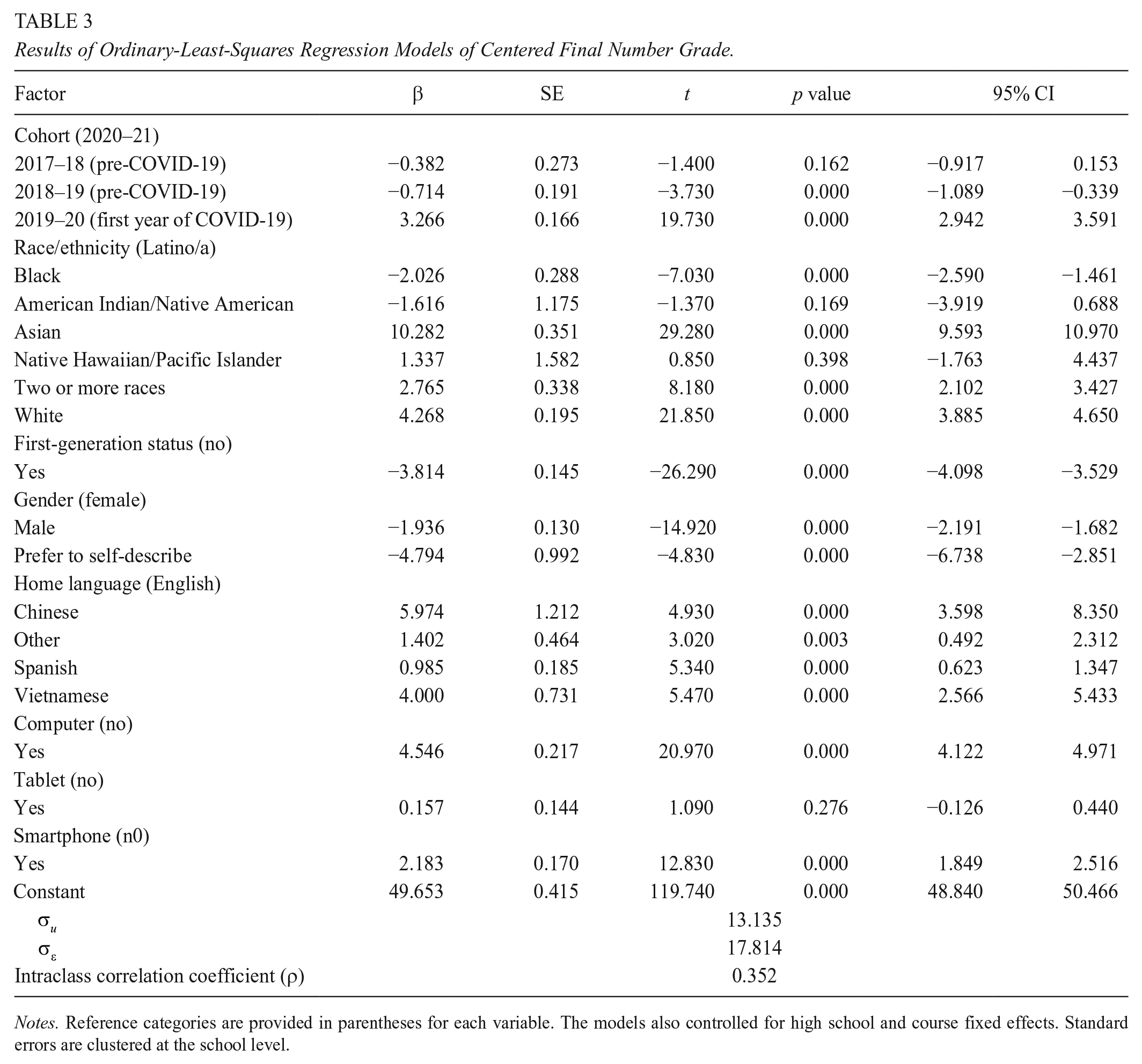
In Table 3, M2 repeats the model from M1 with centered final college grade as the outcome variable instead. In this model, students in 2019–20 (first year of the pandemic) outperformed students in all other cohorts by 3.2 grade points (p < 0.001), although the findings from 2017–18 were not significant. In both models, Asian and White students were likely to score higher than Latino/a students by >9 and 3 points, respectively. Conversely, first-generation students were likely to score lower than non-first-generation students on their midterm grades and even lower on their final grades across all cohorts.
Results of Ordinary-Least-Squares Regression Models of Centered Final Number Grade.
Notes. Reference categories are provided in parentheses for each variable. The models also controlled for high school and course fixed effects. Standard errors are clustered at the school level.
Table 4 shows the results of the models that estimated the extent to which the difference in college grades from midterm to final varied across pre-COVID-19 and COVID-19-affected cohorts (M3–M11). The first column contains the results of the model with the full sample of students (M3), whereas the remaining eight columns display the estimates for specific demographic groups (M4–M11). For simplicity, the primary estimates of interest are also contained in Figure 1 (the full sample) and Figures 2 and 3 (demographic groups). Because of the presence of the interaction terms, the cohort main effects are interpreted as the differences in midterm grades between the COVID-19 cohorts and pre-COVID-19 cohorts, and the final grade point estimate is interpreted as the difference in final versus midterm grades for the pre-COVID-19 cohort. As shown in Figure 1, in pre-COVID-19 years, students’ college grades declined by about 4.3 points between their midterm and final grades, represented by the blue line. The red line represents the change in grades for students in the first COVID-19 cohort (2019–20). Students in this cohort had roughly the same midterm grades as students in the pre-COVID-19 cohorts, but surprisingly, their grades declined far less than those of students in pre-COVID-19 cohorts. The difference in midterm versus final grades was 3.3 grade points higher for the 2019–20 cohort than for the pre-COVID-19 cohorts.
Results of Ordinary-Least-Squares Regression Models Examining Trends in Course Grades Across Grading Time Periods and Cohorts, by Demographic Group.

Notes. Reference categories are provided in parentheses for each variable. The models controlled for student race/ethnicity, gender, first-generation status, language spoken at home, availability of internet-connected technology at home, and high school and course fixed effects. Models fit to separate demographic groups removed the grouping demographic variable from the model but retained all other covariates. Standard errors are clustered at the school level.
p < .001; **p < .01,
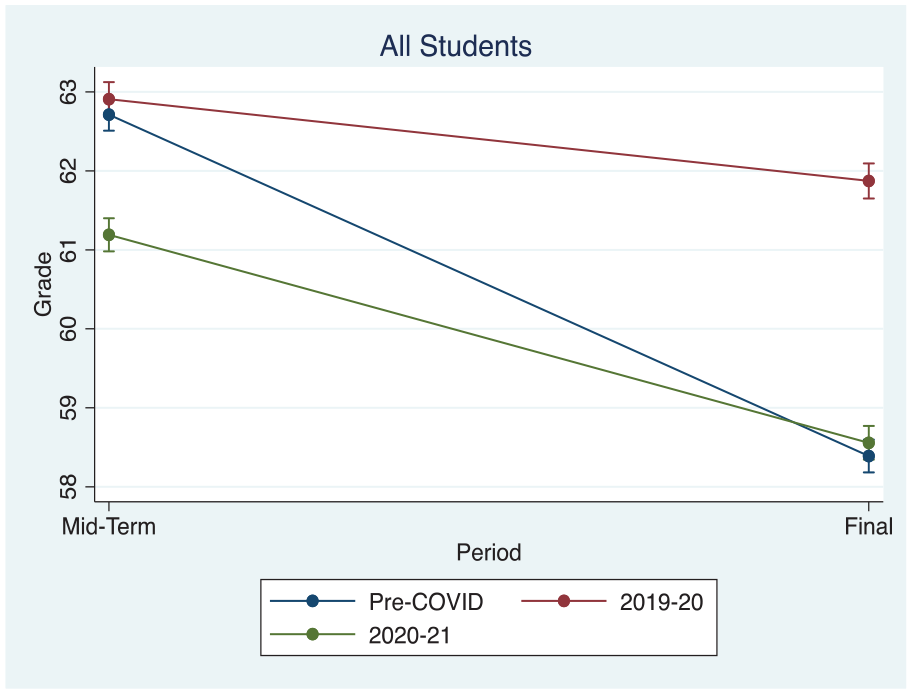
Estimated differences in final versus midterm grades across cohorts, all students.
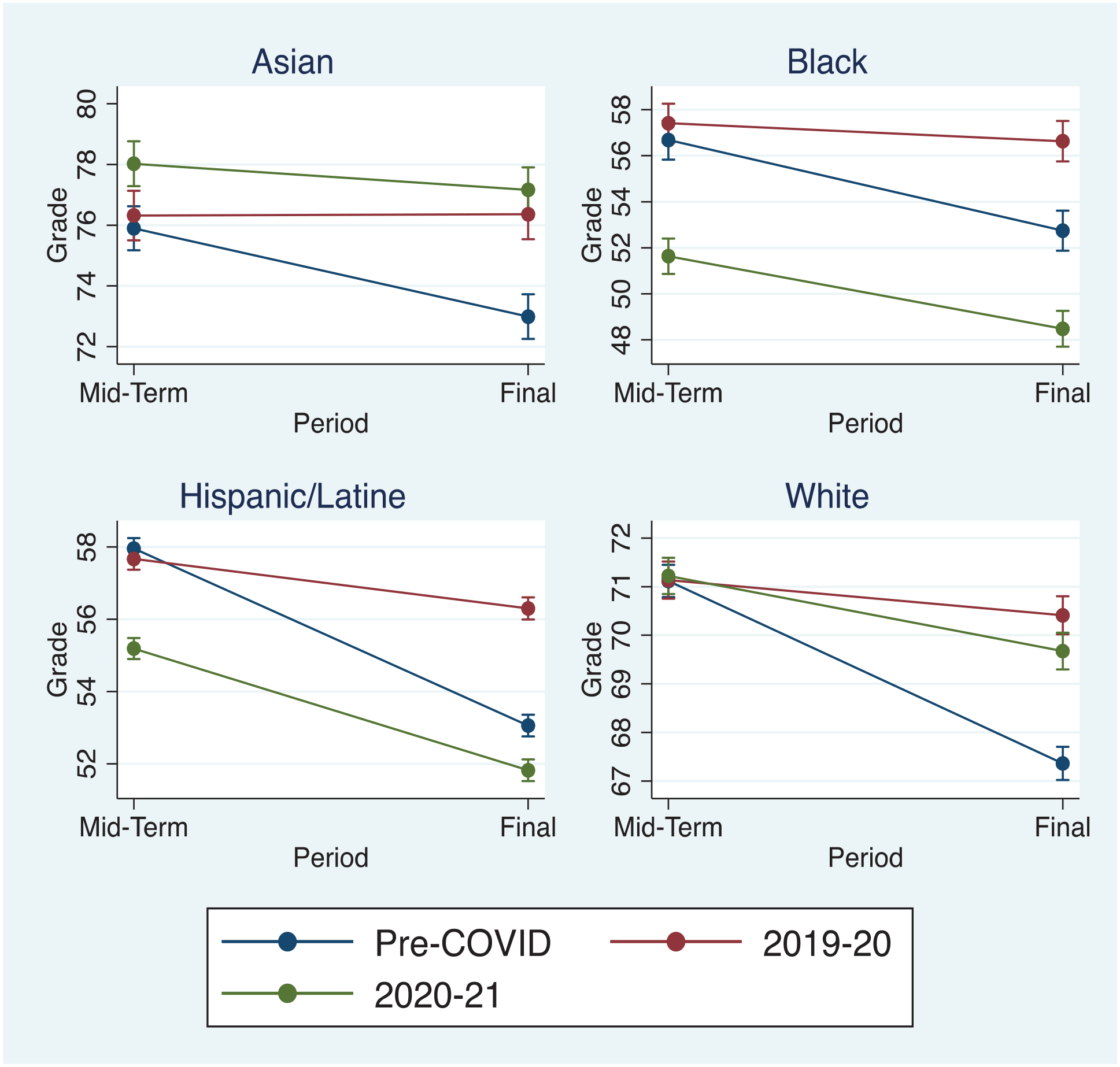
Estimated differences in final versus midterm grades across cohorts, by race/ethnicity.

Estimated differences in final versus midterm grades across cohorts, by gender or first-generation status.
The estimates are quite different for the second COVID-19 cohort (2020–21) that was affected by the pandemic for the full year. On average, students in the 2020–21 cohort performed significantly worse (−1.5 grade points) on their midterm grades than the pre-COVID-19 cohorts. However, although their grades still declined between midterm and final, the decline for this cohort was not as steep as for the pre-COVID-19 cohorts. Indeed, the difference in midterm versus final grades for the 2020–21 cohort (1.7 grade points) more than offsets the magnitude of the disadvantage in midterm grades for this cohort, which is why the 2020–21 cohort’s final grades were actually higher than those of the pre-COVID-19 cohorts. Overall, these results suggest that students started the 2020–21 year with lower performance, likely caused by both learning loss from the previous year and a slower pace of learning during the fall of 2020, but their performance declined less throughout the year than that of the pre-COVID-19 cohorts.
The results of the models in Table 4 and Figure 2 highlight both the commonalities and variability in these patterns across racial/ethnic groups. With regard to similarities, for all racial/ethnic groups, the decline in college grades between midterm and final was actually larger during the pre-COVID-19 period (blue line) and smallest for the 2019–20 cohort. All but one of the interaction estimates were positive and significant for both the 2019–20 and 2020–21 cohorts. Additionally, for the 2019–20 year, the estimates were highly consistent across all demographic groups, ranging from 2.95 to 3.61. The initial COVID-19 term in the spring of 2020 did not appear to have increased inequality in performance across racial/ethnic groups.
However, many of the other patterns were fundamentally distinct across racial groups. Perhaps the most noteworthy finding was the difference across racial/ethnic groups in their midterm grades in 2020–21 compared with the pre-COVID-19 years. Although all but one of the demographic estimates for the 2019–20 cohort were nonsignificant (which we would predict given that COVID19 should not have affected midterm grades for the 2019–20 cohort), the estimates were highly variable across demographic groups for 2020–21. Asian students performed better on their midterm grades in 2020–21 than in the pre-COVID-19 years, White students performed equivalently, whereas Black and Latino/a students performed significantly worse. The five-point decline for Black students is roughly equivalent to a 0.25 SD decline. Similarly, continuing-generation students performed equivalently on their midterm grades in 2020–21 as in the pre-COVID-19 years, whereas first-generation students performed significantly worse. Thus, much of the inequality in academic performance related to COVID-19 manifested in the fall of 2020 term.
The estimates for the 2020–21 year suggested that the decline between midterm and final grades was smaller for all demographic groups in 2020–21 versus in the pre-COVID-19 years. However, these estimates tended to be larger for less disadvantaged groups (i.e., Asian, White, and continuing-generation students) than for more historically disadvantaged groups (i.e., Black, Latino/a, and first-generation students). By combining the cohort effects on midterm grades with the estimates of the change in midterm versus final grades across cohorts, we can conclude that Black and Latino/a students ended the 2020–21 school year with worse than average grades than in the pre-COVID-19 years, whereas Asian and White students ended the 2020–21 year with better than average grades than in the pre-COVID-19 years. This pattern is illustrated in Figure 2.
The results by gender and parental education are presented in Figure 3. The patterns are mostly equivalent for female and male students: Both gender groups earned lower midterm college grades in 2020–21 than in prior years, experienced the largest decline in final versus midterm grades in the pre-COVID-19 years, and experienced the smallest decline in final versus midterm grades in 2019–20. The one key difference between the two groups is that females ended the 2020–21 year with higher final college grades than in the pre-COVID-19 years, whereas male students had slightly worse final college grades in 2020–21 than in the pre-COVID-19 years (although this difference was not statistically significant).
The patterns are quite different for first-generation versus continuing-generation students. Whereas both groups experienced the largest decline in grades before COVID-19 and the smallest decline in 2019–20, first-generation students earned significantly lower midterm grades in 2020–21 than in prior years, whereas continuing-generation students had roughly equivalent midterm grades for all three time periods. First-generation students also ended the 2020–21 year with significantly worse final college grades than in both the pre-COVID-19 years and 2019–20, whereas continuing-generation students ended the year with higher final college grades in 2020–21 than in the pre-COVID-19 years.
Our last analysis examined withdrawal from CRN courses, both to investigate whether COVID-19 may have influenced students’ likelihood of withdrawing from their courses and to ensure that our estimates of the impact of COVID-19 on college grades were not influenced by disproportionate withdrawal rates across cohorts. Descriptively, withdrawal rates were higher in the 2017–18 (8.6%) and 2018–19 (9.7%) cohorts than in the 2019–20 (7.6%) and 2020–21 (7.2%) cohorts. We found essentially the same patterns in the statistical model controlling for the full set of covariates, the results of which are presented in Table 5. Students in the two pre-COVID-19 cohorts were statistically significantly more likely to withdraw from their courses than students in the two COVID-19 cohorts, although the magnitude of the differences (1–2 grade points) would not substantially influence the estimates of grades discussed earlier.
Results of Linear Probability Models of Student Withdrawal.

Notes. Reference categories are provided in parentheses for each variable. The models also controlled for high school and course fixed effects. Standard errors are clustered at the school level.
Discussion
Barring fundamental changes to patterns of inequality in educational resources and academic preparation across racial/ethnic and socioeconomic lines, DE programs are likely to be faced with a difficult choice: restrict access to only students deemed fully prepared to succeed in college-level courses or enroll a more diverse population of students that likely demonstrates greater needs for academic, social, and psychological supports. Historically, most states and DE programs have chosen the former option, resulting in considerable racial/ethnic and socioeconomic disparities in DE participation (An & Taylor, 2019; NCES, 2019; Xu et al., 2021). Although some have recommended using nonacademic measures to broaden access, inequalities in students’ college aspirations and academic self-efficacy exist among DE students (Giani et al., 2023). If DE programs are to choose the latter option and broaden access to DE courses, the field needs greater evidence regarding how DE design elements relate to inequalities in students’ experiences and performance in DE courses.
This is particularly critical given prior research suggesting that even well-intentioned efforts can exacerbate rather than ameliorate inequalities. For example, state accountability policies that incentivize DE access are associated with larger racial/ethnic participation gaps, and high-income and high-achieving students may derive greater benefits from participating in DE than their peers (Hu & Chan, 2021; Miller et al., 2018; Xu et al., 2021). In theory, interventions and supports implemented in DE courses should be targeted toward students who need them most (Griffin et al., 2024. However, we have limited evidence regarding whether programmatic changes made by DE programs may be inequality reducing.
In this study we examined how a large, innovative hybrid DE program responded to the COVID-19 pandemic and explored whether these responses may be related to trends in student academic performance. Even though prior studies found that student achievement accelerated during the COVID-19 lockdowns in some online learning contexts (Gonzalez et al., 2020; Meeter, 2021; Spitzer & Musslick, 2021), it was still unexpected that DE students in our sample performed significantly better in the spring of 2020—the period with arguably the most substantial educational disruptions caused by COVID-19—than in prior years. However, our results also complicate the conclusion reached by some prior studies that online learning can be just as effective as in-person instruction during periods of school closure (Spitzer & Musslick, 2021). If this were the case, we likely would have found similar learning gains during the fall of 2020, particularly given that teachers, schools, and districts had even more time to prepare for the shift to fully remote instruction before this semester. Instead, we found that this period exhibited large declines in student performance, incongruent with the perspective that online learning can inevitably maintain student learning progress during periods of disrupted schooling.
Our results raise two possibilities that should be explored in future research. First, online learning may not be a substitute for in-person instruction in all cases, but it may be effective in cases where educators have established relationships with their students or students have established relationships with each other. We believe that this is one of the key differences between the experiences of students in this program across the different time periods. In the spring of 2020, teachers had 6 months of in-person instruction with their students before the COVID-19 lockdowns began in March 2020. This context combined with the fact that CRN courses are hybrid by design may have allowed students to continue learning effectively during this period. In contrast, the fully remote start in the fall of 2020 may have prevented students and teachers in CRN courses from establishing the relationships with each other needed to facilitate effective online learning. Student learning did accelerate during the spring of 2021 when most schools in the state returned to in-person instruction, lending support to the benefits of this hybrid approach to learning.
Nevertheless, other explanations are congruent with the patterns we demonstrated. Because many high schools limited instruction and even froze students’ grades after the national lockdown and the discontinuation of in-person schooling, but the CRN program did not, CRN students may have had even more time and incentive to focus on the online college assignments and assessments in the course. The CRN program did reduce the scope of topics assessed during the spring of 2020. Although the program did not freeze student grades or shift to a pass/fail model, the estimated improvements in students’ midterm to final grades in 2019–20 compared with prior years could simply be an artifact of these curricular changes. Put differently, student learning still may have declined in the Spring of 2020 even if that decline was not apparent in student grades. Nevertheless, grades are important, particularly in the context of DE programs, where college grades determine whether students receive college credit for the course. Although we cannot definitively state the cause, our results suggest that the CRN program prevented student grades from plummeting in the immediate wake of COVID-19 without artificially freezing student grades or eliminating all remaining assignments after the lockdowns.
Our results also clearly show that COVID-19 exacerbated inequalities in student performance congruent with the majority of prior research on the effects of COVID-19 (Clark et al., 2021; Contini et al., 2021; Donnelly & Patrinos, 2021; Education Policy Institute & Renaissance Learning, 2021; Engzell et al., 2021; Hevia et al., 2022; Kuhfeld et al., 2020; Lewis & Kuhfield, 2021; Organization for Economic Cooperation and Development, 2021; Schult et al., 2022a). However, our findings add nuance to this literature base. Inequalities did not grow during the initial lockdowns in the spring of 2020, a finding aligned with those of other studies of online learning during COVID-19 (Spitzer & Musslick, 2021) but grew during both the fall of 2020 and the spring of 2021. This is largely due to the considerable declines in midterm college grades in the fall of 2020 compared with prior years experienced by historically marginalized students, Black, Latino/a, and first-generation students in particular.
Although the trend in academic performance between midterm and final grades was better for all groups in 2020–21 than in the pre-COVID-19 years, the disproportionate impact of COVID-19 on midterm grades for historically marginalized students was compounded by Asian, White, and continuing-generation students demonstrating greater improvements in performance than Black, Latino/a, and first-generation students during the spring of 2021 compared with the pre-COVID-19 years. Whatever strategies the CRN program used to support student learning during 2020–21 appear to have benefited more advantaged students at least as much as, if not more than, the benefits provided to less advantaged students. As the results of the final model show, these findings are not explained by disproportionate withdrawal rates in CRN courses across cohorts despite other research suggesting that students would be significantly more likely to withdraw from courses that shifted to a fully online modality (Clabaugh et al., 2021).
Finally, we conclude by drawing parallels between recent reforms made to developmental education courses, in which academically underprepared students historically enrolled in non-credit-bearing courses to remediate academic deficiencies. A growing number of states have shifted to a co-requisite model, in which students are enrolled directly in college-level courses but are required to receive supplemental support to address their academic needs. Although evidence of this reform is nascent, the results are promising (Douglas et al., 2023; Logue et al., 2019; Meiselman & Schudde, 2022). We hypothesize that DE programs will be most equitable if they can broaden access to increasingly diverse students while providing them with co-requisite support based on their academic, social, and psychological needs.
Footnotes

Notes
Authors
MATT S. GIANI is a research associate professor in the Department of Sociology at the University of Texas, Austin. His research examines how policies, programs, and interventions ameliorate or exacerbate inequalities in students’ college and career readiness, access, and success.
SHRUTI KHANDEKAR is a doctoral student in the Department of Government at the University of Texas, Austin. Her research examines the politics of education and the priorities of educational policymakers.
JENNIFER PORTER is the executive director of OnRamps at the University of Texas, Austin. She has led schools, districts, and educational organizations for more than 20 years.