




Abstract
Drawing from a context of reception framework, this article asks the following questions: How do educators describe issues of safety and belonging in the context of a charged immigration policy climate? What practices have educators developed to support immigrant-origin youth? And, what are the relationships between educators’ perceptions of safety and belonging and educator practices? We analyze educators’ survey responses administered across six school districts in different contexts across the United States, including the Northeast, Midwest, South, and West. We synthesize four domains of educator practice: signaling affirmation, building shared knowledge and capacity, finding and mobilizing resources, and creating space for conversation. Through this work, we connect the domain of safety as a perennial theme to safety as a practice. We discuss the implications of this and the need for future work that critically analyzes educators’ practice in relation to immigrant-origin youth for more generative contexts—contexts of development, not merely reception.
The political climate keeps me awake at night. We work so hard to keep our students safe and immigration looms with uncertainty.
In recent years, immigrant-origin children and youth have faced an increasingly challenging set of circumstances: federal policies that narrowly circumscribe everyday worlds (Gonzales, 2016), enforcement practices that sow fear (Hipsman & Meissner, 2017), and a polarized political landscape that has negatively affected their schooling (Ee & Gándara, 2020; Rogers et al., 2017). 1 While the safety and belonging of these students are perennially at stake (Gonzales, 2016; Gonzales et al., 2013; Ríos-Rojas, 2011), the years from 2016 to 2020 were an especially difficult period (Callahan et al., 2020; Rogers et al., 2017). The Trump administration’s expansion of immigration enforcement, child separation policies, and attempts to repeal Deferred Action for Childhood Arrivals (DACA)—among other actions—have threatened the safety of immigrant communities across the country (García, 2019), with a direct impact on K–12 school districts (Costello, 2016; Ee & Gándara, 2020; Quinn et al., 2017). This article builds on a small but growing body of research exploring educational stakeholders’ experiences of schooling during periods of intensified anti-immigrant discourse and policymaking, specifically examining how educators perceive of their role and responsibilities in relation to their immigrant-origin students (Callahan et al., 2020; Ee & Gándara, 2020).
We seek to understand how educators’ understandings of safety and belonging shape the practices they enact in schools. 2 Prior research has shown that educators’ interpretation of policies shapes their practices in ways that matter for immigrant-origin students’ sense of safety and belonging in a hostile anti-immigration climate (Hopkins et al., 2021; Jaffe-Walter & Lee, 2018; Quinn et al., 2017; S. Rodriguez et al., 2020). This article addresses two research questions: How do educators describe safety and belonging against the backdrop of a charged immigration policy climate? What practices have educators developed to support immigrant-origin youth and how do they relate to those educators’ perceptions of safety and belonging? Investigating these questions carries particular urgency if we hope to better understand what educators do to create safe and welcoming schools for their immigrant-origin students.
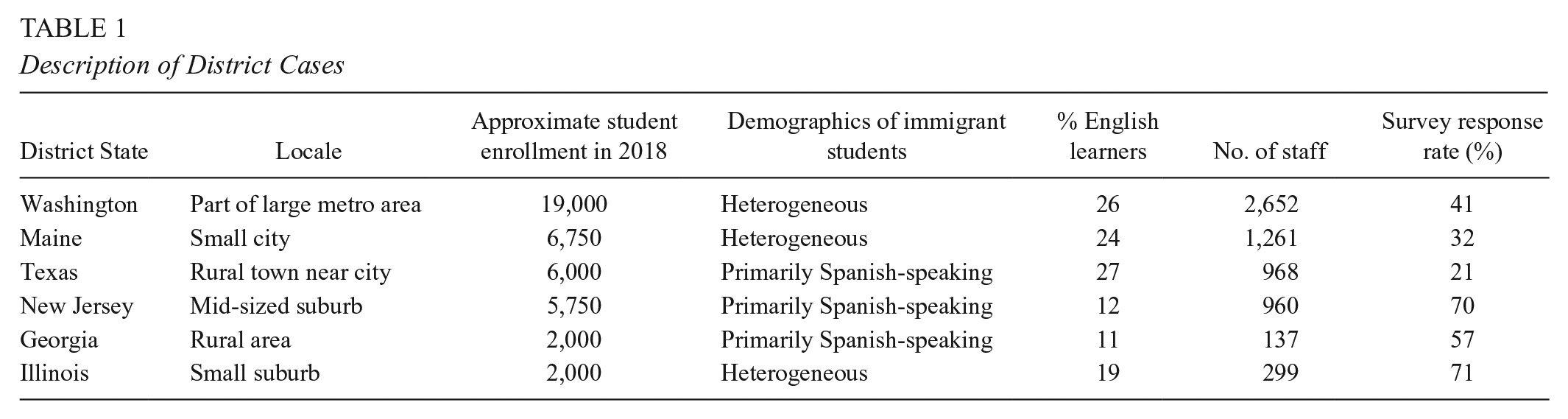
Drawing from a study of six U.S. school districts, we analyze educators’ responses to an all-staff survey administered in the spring of 2018 (n = 2,661). Spanning the Northeast, Midwest, South, and West, the six districts in our study vary by size and locale. They also vary widely in terms of student demographics. Three of the districts served primarily Spanish-speaking immigrants from Mexico and Central America, while others served groups from multiple regions, including Africa and the Middle East. Additionally, districts in our study served a mixed-status student population that included undocumented, visa-holding (and/or losing) populations, asylum seekers and refugees, and the U.S.-born children of immigrants. 3 (For more on our sample, see online Supplemental Appendix A.)
Our findings highlight educators’ perceptions of their immigrant-origin students’ experiences of safety and belonging, and we analyze educators’ reports of the practices they developed to mitigate threats to students both within and outside of school. This article shows how these perceptions relate to educators’ practices in four domains: (a) signaling affirmation, (b) building shared knowledge and capacity, (c) finding and mobilizing resources, and (d) creating space for conversation. These domains of practice offer a heuristic for understanding educators’ practices and the ways in which they develop sets of practices to support their immigrant-origin students. Characterizing these domains is the first step of a longer-term exploration about how these practices vary across contexts in order to ascertain how to create safe and inclusive schooling experiences for immigrant-origin students.
Conceptual Framework and Literature Review
We first situate our study within the literature on immigrant incorporation, highlighting a key concept—“contexts of reception” (CORs)—and arguing for a need to expand this to include generative contexts of reception. We then define safety and belonging in existing studies of immigrant-origin students before discussing the connections between immigration and education policy and educator practice.
Contexts of Reception
Our work is anchored in theories of immigrant incorporation that emphasize the important role CORs play in the immigration process (Portes & Rumbaut, 2014). The concept of COR encourages inquiry into the ways in which a host societies’ existing racial, political, economic, and social structures stratify immigrants through differential modes of incorporation (Bloemraad, 2006, 2013; Marrow, 2011; Portes & Rumbaut, 2014). This work moves beyond research that correlates immigrants’ individual or personal characteristics with inclusion or exclusion in their host country, often leading to deficit views of those deemed unsuccessful at incorporation. Recent studies of COR show that contexts are “nested” within national, state, and local settings—highlighting the disparate ways in which immigrant-serving institutions relate to federal, state, and local policies and respond to newcomers in uneven ways (Golash-Boza & Valdez, 2018; Perez, 2020).
Studies of public school settings serving immigrant-origin students in the United States have highlighted the various ways in which schools are nested within broader sociopolitical dimensions of context (Callahan et al., 2020; Dabach, 2015b). In regions considered nontraditional immigration sites—known in the literature as parts of the New Latino Diaspora in the Midwest and Southeast—school districts are often unfamiliar with the particular experiences of their growing immigrant-origin populations and may be unprepared to offer relevant educational and social resources (Hamann et al., 2015; Hopkins et al., 2015; Mangual Figueroa, 2013). At the same time, schools may function as supportive receiving sites, providing immigrant-origin students with opportunities to learn (Hopkins & Lowenhaupt, 2016) and creating bridges between students, families, and social services in the community (S. Rodriguez, 2020). Some schools have become trusted spaces where families can share their worries and dilemmas about safety, providing an alternative context of reception distinct from broader anti-immigrant discourses and policies (Bajaj & Suresh, 2018; Crawford, 2017).
We build on these efforts and argue that schools and school districts constitute a COR nested within the broader society in which immigrant-origin students live (Hopkins et al., 2021). Understanding public schooling and educators’ practices in this light permits us to view variation in immigrant-origin students’ experiences not only as individual and idiosyncratic but also as linked to processes of ongoing stratification affected by educator’s practices. Yet questions remain about how CORs can become more responsive to the changing realities in immigrant communities and the role of districts in being responsive (Brezicha & Hopkins, 2016). Analyzing educator’s practices may help us imagine possibilities for interrupting social stratification by locating and amplifying generative contexts of reception within schools (Dabach et al., 2018).
Safety and Belonging in School
Concerns about safety and belonging are perennial in the lives of immigrant-origin youth and communities—particularly those from minoritized backgrounds who are racialized as non-White. Histories of spatial removal continue to challenge any sense of safety in the present, particularly through the threat of “deportability” (De Genova, 2013). For undocumented immigrants and their families, the negative impact on the psychological, social, and physical safety of youth has been well-documented (García, 2019; Gonzales, 2016; Lopez, 2019; Zayas, 2015). Along with ongoing racialized violence and the increasing openness of White supremacy movements, the marginalization, othering, and fear experienced by racialized immigrant groups in the United States has grown (S. Rodriguez, 2020). The rise of anti-immigrant policies and discourse promoted by the Trump administration during the time of this study threatened the physical and emotional safety of immigrant-origin communities within and beyond schools (García, 2019; Ee & Gándara, 2020; R. M. Rodriguez et al., 2019).
Immigrant-origin students’ sense of belonging has long been viewed as a crucial component of their well-being in school. Defined as the emotional attachment to a place and community, evidenced by feelings of comfort, welcome, and safety—sense of belonging has been identified as a key factor in immigrant-origin youth educational trajectories (DeNicolo et al., 2017; Suárez-Orozco et al., 2010; Yuval-Davis, 2006). Of course, these trajectories are also related to shifting definitions of citizenship and who is afforded the attendant rights and responsibilities accorded citizens (Gonzales & Sigona, 2017; Yuval-Davis, 2006). Educators play an active role in incorporating or excluding immigrant-origin students (Dabach, 2014; Dabach et al., 2018; Yuval-Davis, 2006; Jaffe-Walter & Lee, 2018; Ríos-Rojas, 2011; Suárez-Orozco et al., 2009). At odds with belonging are practices that produce a sense of marginalization and othering through “the collective force of hegemonic ideologies, strategic actions, and unconscious perceptions and biases, that consistently devalue students’ histories, languages, and cultural knowledge” (DeNicolo et al., 2017, p. 507). And yet, Dabach et al. (2018) demonstrated that “safety can be intentionally cultivated and involves signaling through both verbal and nonverbal linguistic tactics in the classroom . . . positioning undocumented students, families and communities as legitimate participants in school spaces” (p. 357).
The literature conceptualizing safety for immigrant-origin youth is often framed in terms of school safety more broadly, a recent priority among educational policymakers and leaders. School safety movements have focused on preventing school shootings through a range of zero tolerance policies, lockdown procedures, and bullying prevention plans (Peguero & Bondy, 2017). Studies of visible security measures such as surveillance, metal detectors, and cameras have been critiqued but these approaches to policing students continue to be implemented nonetheless (Garver & Noguera, 2012; Tanner-Smith et al., 2018). Some have called for attention to the specific impact on immigrant-origin students, for whom increased surveillance can undermine feeling safe in light of fears regarding immigration authorities (Peguero & Bondy, 2017; Wallace, 2018). Critical perspectives on school safety initiatives emphasize the detrimental implications for students’ sense of belonging (Cuellar, 2018).
Immigration Policy in Educator Practice
Although immigration and education policy tend to be viewed by policymakers and scholars as separate domains, they are in fact intertwined in the everyday practices of U.S. public schools (Callahan et al., 2020; Ee & Gándara, 2020). Turner and Mangual Figueroa (2019) outline three ways in which immigration policy shapes educational policy and vice versa: first, immigration policy shapes which populations of children and youth become students in public schools; second, educators enact policies that can uphold or violate immigrants’ legal rights to access public schooling as ensured by the landmark case Plyler v. Doe; and third, educators’ actions can unintentionally evoke immigration policy (Mangual Figueroa, 2011, 2013, 2017).
A growing body of research has deepened our understanding of the impact of immigration policy in classrooms (Dabach et al., 2018; Gallo & Link, 2016; Oliveira et al., 2020; Turner & Mangual Figueroa, 2019). As Ee and Gándara (2020) put it, immigrant-origin students are “terrorized by fear of losing their families, absent from school due to upheaval at home, or facing homelessness or food insecurity because their parents have lost their jobs due to immigration raids.” (p. 481). Mangual Figueroa’s (2011) study of mixed-status families showed that teacher’s use of the language of citizenship as metaphorical—where citizenship means good behavior—actually connotes a high-stakes legal framework for undocumented families with children enrolled in public school. Indeed, safety fears experienced by families outside of school shape the educational experiences of students of school. Researchers have established links between increasing enforcement and educational outcomes such as student achievement (Kirksey et al., 2020), students’ well-being (Ee & Gándara, 2020; Rogers et al., 2017), and intergroup tensions among students (Rogers et al., 2017).
Beyond the classroom, research has found that educator practices can determine how immigrant-origin students access educational opportunities via academic and language programs, structured interactions with nonimmigrant peers, and a range of support services (Crawford & Fishman-Weaver, 2016; Hopkins et al., 2015; Lowenhaupt & Scanlan, 2020). Schoolwide practices that build on students’ assets, such as bilingual programs, have been shown to promote student belonging (DeMatthews & Izquierdo, 2018; Dorner, 2012). In addition to teachers, school social workers, administrators, and other staff are also responsible for supporting immigrant-origin students and families (Crawford, 2017; DeMatthews & Izquierdo, 2018; Mavrogordato & White, 2020; S. Rodriguez, 2020). Schoolwide programming providing immigrant-origin students with explicit instruction about the immigration system has been shown to foster their sense of inclusion (Jaffe-Walter et al., 2019; Jaffe-Walter & Lee, 2018). Collaborating with immigrant families in meaningful, culturally responsive ways can also shore up students’ sense of belonging by building trust between home and school (Ishimaru, 2019; Lowenhaupt, 2014; Lowenhaupt & Montgomery, 2018). After-school and summer school programs can positively shape immigrant-origin students’ sense of belonging and access to social services (Brezicha & Hopkins, 2016; Orellana, 2015).
A key premise here is that alongside the draconian policies that inflict substantive harm onto immigrant communities, variations in educators’ practice can change the nature of immigrant-origin students’ experiences for better and at times, for worse. On the one hand, researchers have shown how educators’ attempts to advocate for immigrant-origin students with varying legal statuses have often been idiosyncratic—taken up by individual teachers (Gallo & Link, 2015; Jefferies & Dabach, 2014)—or at times not at all (Gonzales et al., 2015). 4 On the other hand, some have documented how leadership practices can foster more collective school or systemwide responses (Crawford, 2017; Hopkins et al., 2021; Jaffe-Walter & Lee, 2018; Lowenhaupt & Reeves, 2015). To date, research in this area has largely consisted of small-scale qualitative case studies, with a few notable exceptions (e.g., S. Rodriguez & McCorkle, 2020; Umansky et al., 2020). This article contributes a broader view of various contexts to identify emerging educators’ practices and their relationship to immigrant-origin students’ safety and belonging.
Method
To answer our research questions, we conducted a descriptive, thematic analysis of educators’ responses to an online all-staff survey administered in six districts across the country. We describe our approach below and in more detail in the online Supplemental Appendices about our methodology.
District Sampling
We took a purposeful sampling approach (Patton, 2014) to allow us to develop illustrative case studies highlighting educator practices within particular contexts of reception. Drawing on case sampling principles articulated by Small (2009), we identified particular sites of study in relation to the broader social forces shaping them: regional politics and culture, local dynamics of racialization, racism, and activism, as well as varied histories of immigration. Our case selection affords cross-case comparisons at the same time that our survey methods allow us to explore trends across a large, heterogeneous sample of educators. Districts in the study represent a range of CORs, as summarized in Table 1 and described in detail in online Supplemental Appendix A.
Description of District Cases
Data Collection and Participants
In collaboration with district administrators, we administered an all-staff survey online in the spring of 2018. Framed in relation to immigrant-origin students, the online survey focused on school climate and leadership, the impact of immigration policies, educators’ responses to policies, and resources needed (see online Supplemental Appendix B for details about the survey). We solicited responses from all staff via an ongoing, responsive recruitment process and adjusted our approach based on initial response trends and district support (Tourangeau et al., 2017). In total, we solicited responses from 2,661 educators across all six districts with a response rate ranging from 21% to 71%. As illustrated in Table 2, our sample included a wide range of educator roles (see online Supplemental Appendix C for further details about data collection and participants).
Participants by Role by District

Data Analysis and Limitations
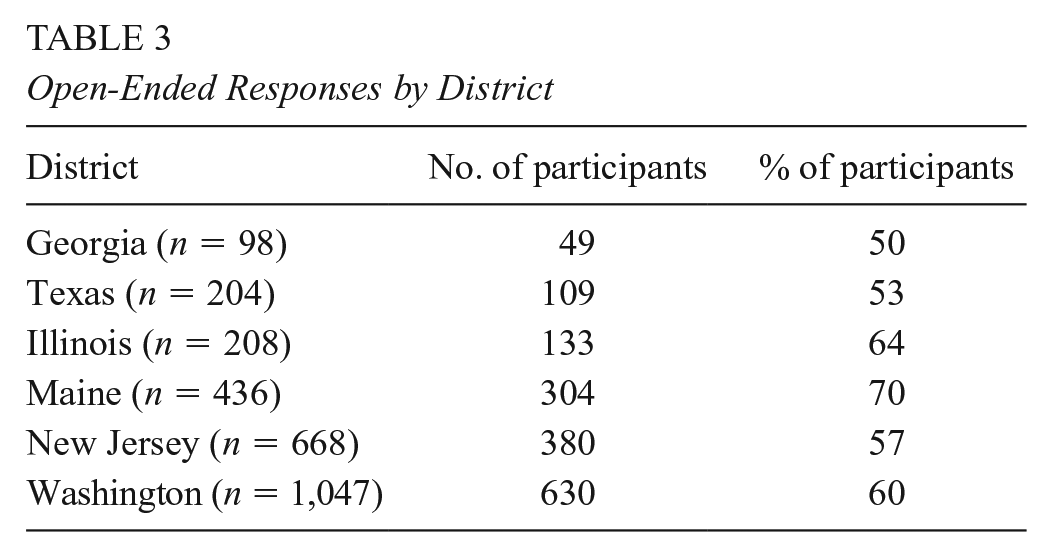
Our analysis focused primarily on participants’ open-ended responses to questions about the practices they used to support immigrant-origin students and the ways that they view safety and belonging. We used descriptive statistics to identify initial patterns in the data before conducting qualitative analyses. While we provide summary results from particular items to anchor our findings (Groves et al., 2012), the findings presented here come from our textual analysis of open-ended textboxes (Strauss & Corbin, 1990). Out of 2,661 participants, 60% (n = 1,605) responded to at least one of the open-ended questions aimed at soliciting descriptions of practices and key terms. This varied across districts, as illustrated in Table 3.
Open-Ended Responses by District
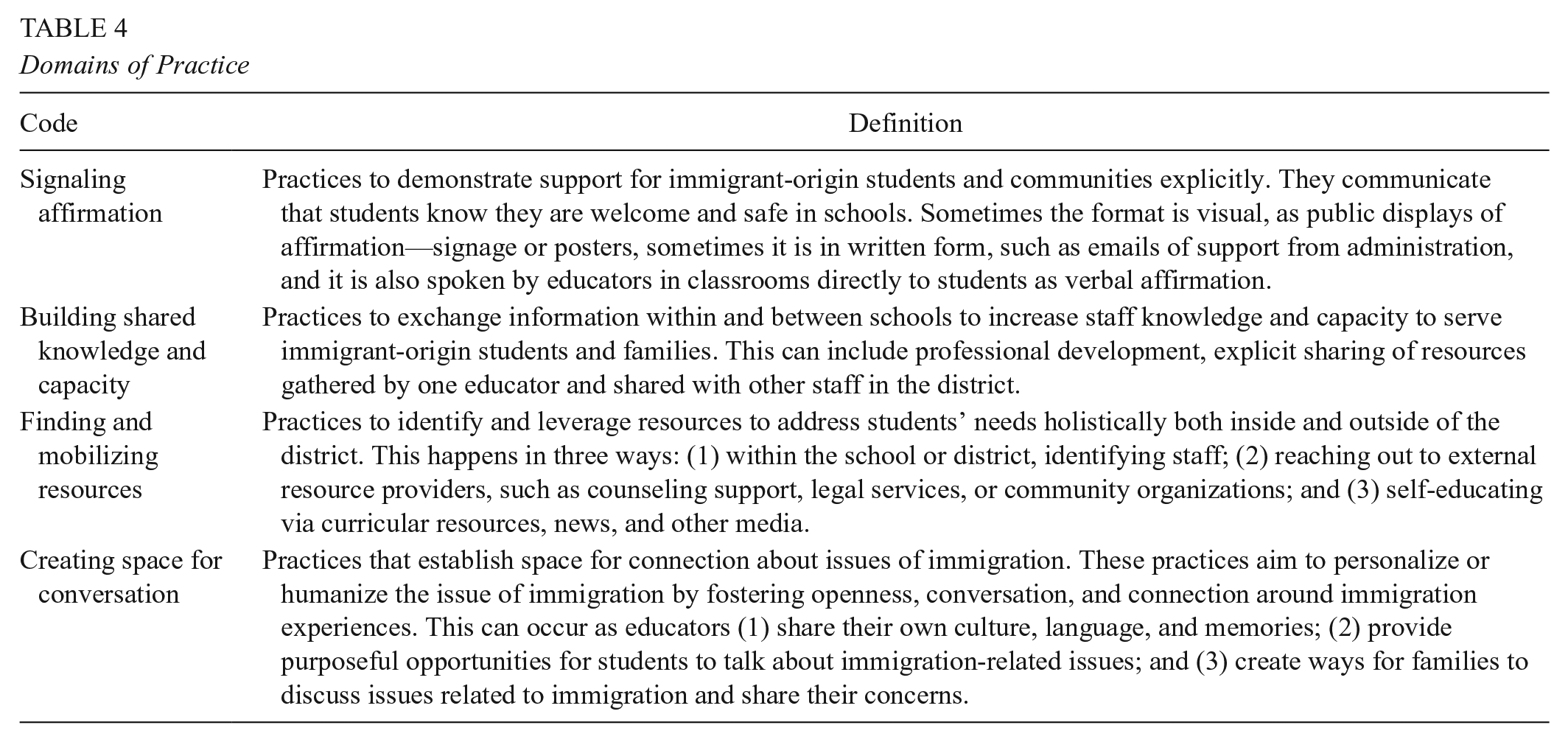
Through structured and open-ended responses on the survey, educators articulated a range of practices that we synthesized into four domains: signaling affirmation, building shared knowledge and capacity, finding and mobilizing resources, and creating space for conversation (see Table 4 for definitions).
Domains of Practice
Using an iterative process described in detail in online Supplemental Appendix D, we coded all open-ended responses and created a set of matrices and memos to examine the relationship between practices, domains, and safety/belonging codes (Miles et al., 2013).
Although our empirical study provides a window into the perspectives and initiatives of educators in six distinct contexts of reception, our work has several limitations, which we discuss in detail in online Supplemental Appendix E. Recognizing these limitations, we take a narrative approach to delineating findings, providing specificity where possible and avoiding sweeping generalizations. We embrace what Luttrell (2005) defines as a multimethodological approach that aims to break down the boundaries between qualitative and quantitative inquiry. In so doing, we present descriptive summaries of general themes as well as narrate particular examples. Both kinds of data illustrate key themes and provide insight into educators’ perspectives.
Findings
In this section, we first discuss educators’ views on student safety and belonging. We then turn to an examination of the relationship between those views and the four domains of practice we have identified.
A Grounded Look at Educator Perspectives on Safety and Belonging
The study’s respondents highlighted safety and belonging as important concerns: 539 (34%) of 1,605 participants provided a snapshot of how these concerns were relevant within their school or district. Additionally, 398 participants (25%) addressed how these issues affected their students outside of schools. In responses to Likert-type scale items about school climate, the participants did not report substantial changes in student safety and belonging over time overall across districts. 5 Notably, the mean response to this question varied by district: with the highest means in Georgia (3.25 for safety and 3.22 for belonging), and the lowest in Washington (2.60 for safety and 2.84 for belonging). We turn to the educators’ open-ended responses for further insights.
Safety and Belonging Within and Outside School
Educators’ open-ended responses referenced safety and belonging both within their schools and in the broader community. As shown in Figure 1, the extent to which participants referenced safety and belonging varied by district. Maine and Illinois provided the highest percentage of responses coded as safety and belonging within school. Regarding safety and belonging outside of school, educators in Washington, Illinois, and Maine made fewer comments than they did about safety and belonging inside of school. Perhaps this was due to the types of districts sampled in each of those states where educators believed that out-of-school safety was not a concern in their progressive town.

Prevalence of safety/belonging codes by district.
Of all six districts, the border district in Texas was the only one where a higher percentage of participants commented on safety and belonging outside of school than inside it. This greater emphasis on external factors may stem from the realities of the militarized border and federal approach to immigration enforcement. At the same time, the percentage of educators in Texas and Georgia who identified safety and belonging as a theme was substantially lower when compared to the other four districts in the study.
Still, in these districts as well as the others, numerous participants spoke about the importance of ensuring safety for students within school, particularly in contrast to the dangers facing them and their families outside of school. One Illinois educator reported, “Our social workers have shared that some children have expressed fear and concern about their or their parents’ immigration status, and worry about whether their parents will be there when they get home.” Several participants highlighted their concerns about students facing immigration enforcement within their families and communities.
Participants established a relationship between safety and belonging inside and outside of school. One Texas educator explained, “A few students are very apprehensive about what is going on because it has a direct impact on their personal lives. However, the school environment is, I believe, still seen as a safe place.” Similarly, a New Jersey educator stated, My students are young, 8–10 years old, but some undocumented parents have shared with their American-born children who they will be left with if parents get detained or deported. This is another stress that these students have to deal with. They hear bits of news and don’t usually have a complete understanding. I try to give them a more complete understanding of what’s going on while making them feel safe, especially in school.
These responses stemmed from an understanding that students’ safety was threatened by immigration enforcement outside of school. This educator recognized that helping students “feel safe” in school was important; in other words, offering safety was centered as a key aspect of educator practice.
Respondents described their work as part of a professional imperative to counteract increased threats to immigrants in a hostile policy context. One Washington educator described how school was a “safe space for our students to be. They may feel unsafe with their status in the country, but at school, they feel supported by other students, their teachers, and administrators.” The perception that school provided a safe, welcoming space for students despite an exclusionary external environment was common among participants who referred to efforts they and other educators made to keep school safe for students.
Defining Safety and Belonging for Immigrant-Origin Students
Although the academic literature portrays safety and belonging as conceptually distinct, many participants referred to the two ideas in tandem or as interchangeable. For example, one Washington educator referred to their district’s “commitment to keeping our students safe and to making sure they know they are welcomed and belong.” An Illinois educator referred to ensuring students, “feel safe and included at school.” Across districts, conceptualizations about safety within school were framed in relation to inclusion and welcome. Respondents integrated safety and belonging when describing their efforts to support immigrant-origin youth, at times emphasizing inclusion for all students.
Several participants linked safety concerns for immigrant students to fears about school shootings. One Washington educator explained, “The general feeling that ‘no one is safe’ has increased. It’s difficult to tell how much is related to gun violence, and how much to immigration issues.” Another Washington educator elaborated, Overall, students of color feel unsafe and unwelcome in our country. I had an African American male third-grader whose family has lived in the US for generations ask, “Are all Black people getting kicked out of the US?” We had a Muslim family voluntarily decide not to send their children to school on a particular day that hate groups had encouraged people to “target Muslims.” I have weekly conversations with my students about race, gender, ability, & other equity issues because there seems to be almost daily examples of injustice & violence.
In this example, a young student connected two sets of ideas: their own racialization and lived experience of racism with the racialization of Muslim-origin students from communities targeted by federal policy and Islamophobia. As they listened to students navigating their own identities, educators brought their own frames of reference to bear on making sense of students’ sense of safety. As participants reflected on immigrant-origin youth in their schools, they evoked various views of safety: those specific to immigrant-origin students, such as immigrant enforcement, and those relevant to all students and families in the context of mass shootings and racialized violence.
Some educators identified particular safety concerns related to immigrant enforcement. They described keeping an eye out for immigrant authorities in the vicinity. A few remarked on their efforts to identify contacts in case families were unable to pick students up after school. One Maine educator reported, “We are ‘on guard’ and careful to make sure that our immigrant population is, and feels safe. We also are much more aware of building safety and also keep close watch on non-school personnel in and around the building.” In this example, efforts to promote safety were directly linked to defining a protected space within the boundary of school for immigrant-origin students.
Importantly, in many of the examples shared above, educators qualified their use of the term safe as an affective term: either referring to school as being “seen as a safe place” or as a place where students “feel safe.” Many participants referred to safety as a feeling. Several voiced concerns about their own ability to mitigate those external threats to negatively affect their students. In other words, respondents openly wondered about their ability to change the systemic policies and institutional practices that hurt the various immigrant-origin communities that they served. However, they did communicate an ability to positively influence students’ affective experience within school and they described practices aimed at supporting immigrant-origin students’ feelings of safety at school.
In sum, issues of safety and belonging were central in educators’ descriptions of their students’ experiences. Respondents defined safety and belonging for immigrant-origin students within and outside of school, often as distinct sites. They framed their concerns in relation to broader social issues, linking their reflections on immigrant experiences to general fears about inclusion and security in their schools. Some educators framed safety as a feeling that they could actively promote within school, while others reflected on their limited ability to ensure students’ safety given external threats.
The Relationship Between Educator Practices and Safety and Belonging
Four Domains of Practice
We present a set of four key domains of practice that educators reported using to support immigrant-origin students’ sense of safety and belonging. First, educators engaged in signaling affirmation in multiple ways. This meant, for example, displaying visible inclusion signs such as the one in Figure 2; it also involved making public statements in local media or on district websites.
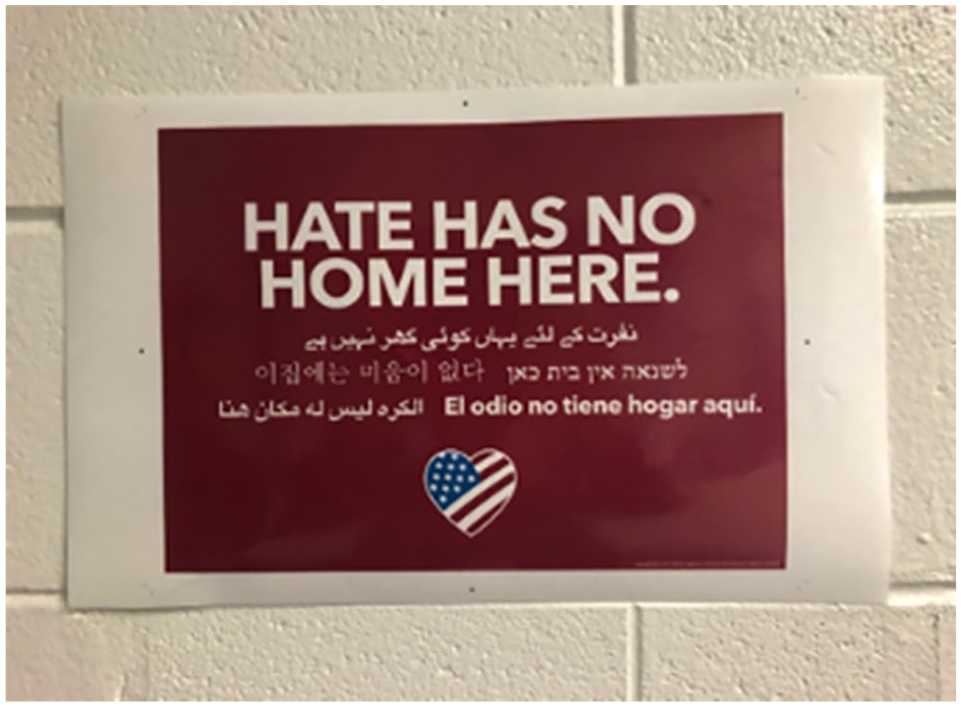
Example inclusion sign.
One Washington participant explained, Morning intercom reminders let students know that they are believed in and cared about especially by our principal. She refers to the students as “her kids” at assemblies and whole school gatherings so the students know they are included and we want them to be here.
The survey responses illustrated how educators signaled affirmation in multiple ways both inside and outside of school and in print as well as in speech.
Second, educators reported building knowledge about immigrant-origin youth both via formal professional development opportunities and informal information sharing between one another. Participants’ responses made clear the differences between practices aimed at providing more expansive support to ensure that all students had access to crucial resources or equitable programs versus those that tried to explicitly address the immigration system. For example, an Illinois educator explained, “We have established a district-wide committee dedicated to improving school climate and culture. Student and staff safety and the idea of safe space is one of the main issues this team is reviewing.” Several educators described similar efforts to improve school culture generally for all students, linking the specific needs of immigrant-origin students to the needs of all students.
An alternative to this broader approach was shared from Maine, where participants described district-led initiatives specifically focused on immigrant rights. One educator explained, “We have had district professional development about the DACA changes and ways that we can support immigrant students and families.” Training about the immigration system addressed issues of immigration directly and sought to build shared knowledge about immigrant-origin youth in particular. The balance between providing general support and specific information about the immigration system relates to our previous discussion of safety and belonging. Participants’ responses highlighted the longstanding educational question about how to address the needs of all students while recognizing the unique circumstances of particular groups of students.
Third, the domain of finding and mobilizing resources included practices that leveraged resources both within and outside of districts by seeking external support from advocacy, news, and community organizations. For example, a Georgia educator explained, “A community organization has organized a meeting for families of college bound immigrants to help with FAFSA and financial aid.” Practices in this domain involved bridging to external supports to access additional, immigrant-specific resources. While this domain was the most common across districts, the types of supports available in the communities varied greatly, as we discuss in further detail below.
Fourth, creating space for conversations emphasized the value of bringing stakeholders together to talk about immigration and humanize immigrant-origin students. Providing opportunities for students and families to share their stories, these practices were often depicted at the classroom level, although some practices were broader. For example, a Texas educator described “restorative circles” for students at the school level. At times, educators referred to one-on-one relationships that allowed immigrant students to share their experiences in a private, confidential setting. A Maine educator explained how this also helped educators, who were able to “ask how [students] want to be supported and what makes them feel supported.” Creating face-to-face opportunities for dialogue across difference was viewed as a way to foster sense of belonging for immigrant-origin students.
As educators described practices in each of these four domains, they reported that they were implemented by educators in various roles and positions within their districts. For example, in Illinois, signaling affirmation occurred both through inclusion signs posted in schools and classrooms and through official statements made by district and school leaders. In Maine, building shared knowledge and capacity occurred through staff meetings held at both school and district levels. As such, these domains of practice spanned from the classroom to school to district level. At times, participants also described practices that spanned into the community as educators accessed resources from advocacy and community-based organizations.
Variation Across Districts
As we illustrate in Figure 3, the prevalence of these four domains of practice varied across districts. The most common domain across districts was finding and mobilizing resources.

Domains of practice by district.
In Texas, educators described accessing resources such as immigration attorneys, social services, and material resources, including clothing and food from outside the district. One Texas educator explained, “I personally have sought out an immigration attorney, an immigration advocacy agency, and our local state representative.” While this response exemplifies accessing resources as the most recurring domain of practice, it is important to note that the types of available resources varied by district. For example, Maine educators reported a large list of more than a 100 nonprofit and community organizations providing support for immigrant communities. Georgia educators discussed the importance of faith-based organizations that helped provide material resources such as food and clothing.
Signaling affirmation was the second most prevalent domain in Maine and Illinois, which accounted for almost half of the practices described by our respondents. Notably, in Texas and Georgia, almost no open-ended responses fell into this domain. We hypothesize that context matters substantially for this domain. In Texas, for example, where children of border patrol agents sat in the same classrooms as immigrant students—some of whom were undocumented—publicly signaling affirmation may have been untenable. However, in Illinois where posted inclusion signs were prevalent in shop windows, residences, and religious buildings, educators who signaled affirmation did not appear to carry concerns about jeopardizing students’ safety via their public affirmations.
The Relationships Between Educator Practices and Perceptions
Many of our respondents asserted that immigrant-origin students’ safety and belonging was both a means and an end. They elaborated a recursive relationship that both accounted for the ways in which concerns for safety and belonging motivated their practices and their hopes for the ways in which these emergent practices could positively shape their students’ sense of safety and belonging. In so doing, they spoke fluidly across the four domains of practice that we have identified as a heuristic. For example, one Washington educator referenced both signaling affirmation and building capacity in the service of “protecting” students, explaining, Our district is extremely cognizant of the issues our students and families are facing, and all of the messaging from the district is about protecting and serving our families. Communications emphasize our commitment to keeping our students safe and to making sure they know they are welcomed and belong. All staff have also been briefed on our legal obligations to our students and how to address ICE or law enforcement if they should come to our school looking for one of our students.
Here, the educator first explained that the district and school signaled affirmation through messaging and communications out of a commitment to “keep our students safe” and “make sure they know they are welcomed and belong.” The educator then described the practice of building shared knowledge and capacity by briefing staff about how to respond to immigrant authorities. One goal of this practice was to prepare educators to ensure student safety by protecting them from immigration authorities, a practice that has been identified in other contexts as well (Crawford, 2017). This educator’s view on safety motivated the use of multiple domains of practice.
In another example, a Maine educator shared a series of practices traversing multiple domains: We had an immigration advocacy group come and do a workshop for families—we spread the message by word of mouth so families would not be worried to attend. Schools held discussion groups about the impact of the anti-immigrant rhetoric, and we also held a series of professional development sessions so school staff could learn about where our students and families are coming from. As a result, families learned of their rights, got access to resources and learned how to make a plan. Students felt empowered to speak out and the community felt supported based on turnout and enthusiasm. Staff learned more about where families come from and what can be done to support students.
This educator linked practices across three domains and related them to students’ and families’ sense of belonging in school. They identified a practice that was designed to promote safety, framing the mode for recruitment as “word of mouth,” in order to ensure that the process of implementing the practice also ensured safety. These examples of connecting educator practices to issues of safety and belonging spanned domains of practice.
Discussion
Our findings showed how educators’ perceptions of safety and belonging for immigrant-origin youth traversed multiple dichotomies: specific versus generalizable and within versus beyond the school site. When describing safety and belonging, educators evoked various discourses of inclusion and welcome for all students. In so doing, they grappled with the enduring question of whether and which practices for immigrant students were really best practices for all students. At the same time, some educators emphasized threats to feeling safe and welcome specific to immigrant communities while also connecting to the psychological damage done by vitriolic discourses aimed at particular groups and sanctioned by the federal administration at the time. As they reported on these concerns, educators described a range of practices enacted by colleagues in various roles and across levels (e.g., classroom, school, and district) that fell into four domains. We noted distinctions in how these domains of practice were employed across districts, positing that educator practices were enabled and constrained by their nested levels of COR (Golash-Boza & Valdez, 2018). For example, to openly signal affirmation along the border carried different meaning for educators and students than it did in communities buffered by multiple levels at local and state contexts, shaping how districts and schools could and should support immigrant communities.
In addressing concerns about safety and belonging outside of school, some educators described practices that aimed to influence district and school culture to buffer immigrant-origin students facing threats outside of school. While “buffering” as a strategy for shielding educators and students from harmful experiences has been explored in other domains (i.e., policy implementation and instructional reform; Spillane & Anderson, 2014; Wenner & Settlage, 2015), little research has applied it within the intersecting areas of immigration policy and educational practice. The practices examined in this article link up to broader conversations in the adjacent fields of immigration and education focused on the possibilities and limitations of schools aiming to become “sanctuary” places for immigrant students with the goal of ameliorating dangers their students face outside of school (Peguero & Bondy, 2017).
This approach may stem from educators’ perceptions of their own lack of agency in influencing factors within the broader community and at other levels of COR that might threaten their students’ safety and belonging (Brezicha & Hopkins, 2016; Golash-Boza & Valdez, 2018). By engaging practices to shape their microlevel of COR, respondents acknowledged their own limitations to directly influence other more macrolevels. It’s possible that educators’ sense of limited agency related to external factors may have motivated their engagement in buffering practices to influence student’s experiences of schools as safe because they believed this to be within their control. In other words, in some contexts it may be easier to signal affirmation through an inclusionary comment to a student than to engage in practices that directly resist broad systems of oppression.
On the other hand, some of our participants did also address immigration enforcement head on. Our findings showed that many educators identified practices spanning the boundaries between school and the surrounding community, especially as they sought to find and mobilize resources. Some educator practices extended beyond the school to seek external resources, bridging efforts within school to organizations outside of school. For example, many noted efforts to link families with legal and other advocacy groups.
Understanding these practices in terms of both buffering within the district and reaching beyond it emphasizes the dynamic relationship between schools and their communities, as depicted by other scholars in relation to leadership practice (Spillane & Lowenhaupt, 2019). Our study shows that these practices were not limited to leaders but were also implemented by classroom teachers, school counselors, and other educators. To address the acknowledged threats to safety in the external environment, some educators sought community support to access cross-sector services (Honig, 2006; Miller, 2008). These efforts to leverage and engage resources in the broader community demonstrated how educators engaged in boundary spanning to support immigrant-origin students (Brezicha & Hopkins, 2016; Shiffman, 2019). In theory, these boundary spanning practices could contribute to building more generative CORs than what immigrant-origin youth would otherwise experience.
And yet, some educators expressed concerns over their limitations to counteract external threats. They emphasized the affective and ephemeral dimensions of safety by describing it as a feeling, rather than a concrete, manifested feature of school even as they worked to create a safe space for students. Some also made connections between discourses of immigrant-origin students’ safety and broader fears regarding school shootings and racial violence as they worked out complex definitions of safety in what they perceived as an increasingly threatening environment, externally and within the boundaries of schools. In the midst of these converging concerns, educators faced the reality that they may not be able to ensure safety and belonging for their students. Indeed, prior research has shown that many immigrant-origin students do not feel safe in school, and that, at times, the very practices educators implement to ensure safety can have the opposite effect (Ee & Gándara, 2020; Mangual Figueroa, 2013, 2017; S. Rodriguez, 2020). While our study focused on the perceptions of educators, it is important to remember that these perceptions may not reflect the lived experiences of students. Even so, our work suggests that educators’ perceptions of safety and belonging did connect to their efforts to implement practices that they hoped would support immigrant-origin students.
Implications
Issues of safety and belonging of immigrant youth have a long-standing history, particularly in relation to intersectional histories of injustice in the United States (Banks, 2021). Our work builds on prior work that has shown how educator practices can help increase students’ sense of safety and belonging (Dabach et al., 2018; S. Rodriguez, 2020). This study confirms that safety and belonging are indeed central issues to educators serving immigrant-origin students and extends prior work by synthesizing four domains of educator practice, from the ground up. By looking at scale across multiple distinct districts in varied states and regions in the United States, we have illustrated how educators in different roles in distinct contexts described enacting practices in response to their understanding of safety and belonging for immigrant-origin students. This work has implications both for future research and for the field.
For Future Research
The findings presented here set the stage for future research to deepen our understanding of the dynamic relationship between educator perceptions of safety and belonging and their efforts to implement practices to support immigrant-origin students. Importantly, our work shows that these domains of practice appeared across contexts as educators worked to support immigrant communities. Our work suggests that educators’ contexts informed their perceptions of safety and belonging, as well as their agency and motivation to enact practices to support immigrant-origin students and their families. Future work might explore further how educators in different roles interacted to deepen the collective influence of practices as they work in tandem to positively influence a sense of safety and belonging in schools and communities.
Additionally, this article lays the groundwork for additional studies on the bundles of practices that can foster safety and belonging by highlighting how educators narrated practices across the four domains. Although our work here is not able to fully explore the relationships among domains, future work may explore how domains of practice work together or independently and the relative influence of implementing multiple practices at the same time. This work might further conceptualize the relationship between these four domains of practice and the creation of more generative CORs. In other words, future work could go beyond documenting the variation among nested CORs to further understand the role of educators’ roles in creating more generative CORs in concert with immigrant communities and educators across formal and informal educational settings. This would help us unpack how generative COR frameworks might further develop the relationships between context, role, and practice.
We also call specifically for future work that critically analyzes educators’ practice in relation to students’ perceptions of safety and belonging. In this article, we have focused on the connection between educators’ perceptions and practices. But at the heart of this work is the influence these practices have on student experiences. Prior research suggests that educator practices can positively influence student experiences of safety and belonging (e.g., Bajaj & Suresh, 2018; Crawford, 2017; Jaffe-Walter & Lee, 2018). Future research could investigate the impact of the domains of educator practices on student perceptions of safety and belonging, as well as explore how student experiences are shaped by racialization and other forms of oppression reproduced through educator practices. Building on the work of others in the field who address the intersections of race, immigration, and education (e.g., Ray, 2019; S. Rodriguez, 2020), we call for future work that attends directly to the role of racialization in the experiences of immigrant-origin students.
For Practice
Prior research has focused on the role of formal leaders in developing a coordinated approach to supporting immigrant-origin students (Crawford, 2017; DeMatthews & Izquierdo, 2018; Lowenhaupt & Scanlan, 2020; Mavrogordato & White, 2020). Our work suggests that formal leaders are not the only ones with a role to play in creating and enacting practices across levels. In fact, our study has shown that educators across multiple roles engaged in the four domains of practice. At both the preservice and in-service stages of an educator’s trajectory, it is important to support the development of an understanding of their own role in and responsibility to schools and to the broader community of students and families that they serve.
This means that higher education professionals engaged in preparing teachers, administrators, and other staff have a part to play in helping develop educators who are equipped to support immigrant-origin communities. Considering the role of training programs in teaching about Plyler v. Doe, critically examining terms such as safety and belonging, and even providing training in how to collaborate with community-based organizations might provide concrete steps that might foster educators’ sense of purpose and support them in implementing the practices we describe above. It will take the work of multiple educational stakeholders and experts working together to distinguish between general best-practices approaches in our field and the specific practices that can support immigrant-origin students’ sense of safety and belonging.
Furthermore, our work has highlighted the dynamic relationship between educators within school districts and resources outside of school when it comes to supporting immigrant-origin students and families. Coordinating these efforts requires cross-sector collaboration and purposeful partnering within communities. Identifying and fostering meaningful partnerships relies on both individual and institutional relationships that can support students’ safety and belonging beyond the walls of school. Within these cross-sector partnerships, there is an important role for research to play in documenting and providing evidence for the wide array of collaborations emerging from the field to elevate their innovative practices, identify promising approaches, and implement support for immigrant-origin students.
Conclusion
In this article, we have contributed an understanding of how domains of educators’ practices are linked to their perspectives of safety and belonging for their immigrant-origin students. We have identified the ways in which these practices aimed to both buffer students from external threats and engage in boundary spanning to leverage support from and shape the broader communities they serve. Taken together, our work suggests the reciprocal relationship between educators’ conceptualizations of safety and belonging and the practices they use to develop contexts in which immigrant-origin students can feel safe and welcomed.
Returning to the COR frameworks we discussed at the outset, we have shown that specific aspects of a school district’s COR shape educators’ perceptions about safety and belonging for immigrant-origin students in their schools. In turn, these distinct contexts coupled with diverse educators’ perspectives inform the practices they enact, which in turn shape the CORs, creating the possibility for generative contexts that can positively influence students’ experiences of schooling. This conceptual contribution builds on a progression from early work on COR, to “nested” COR, to “generative” COR (Dabach et al., 2018). In closing, we call for a research and policy focus on expanding practices—like those described in this article, and like others yet to be imagined—that can work to advance just, inclusive, and safe learning contexts for directly-impacted immigrant-origin communities across the United States.
Supplemental Material
sj-docx-1-ero-10.1177_23328584211040084 – Supplemental material for Safety and Belonging in Immigrant-Serving Districts: Domains of Educator Practice in a Charged Political Landscape
Supplemental material, sj-docx-1-ero-10.1177_23328584211040084 for Safety and Belonging in Immigrant-Serving Districts: Domains of Educator Practice in a Charged Political Landscape by Rebecca Lowenhaupt, Dafney Blanca Dabach and Ariana Mangual Figueroa in AERA Open
Footnotes
Acknowledgements
We wish to acknowledge the generous support of the W. T. Grant and Spencer Foundations. We also wish to acknowledge the contributions of Julie Kim Yammine, Jennifer Queenan, Paulette Andrade, Edom Tesfa, Brian Tauzel, Elizabeth E. Schuster, and Michelle Salgado who contributed to the data collection and analysis presented here. Finally, we share our gratitude and respect for our district partners who have demonstrated throughout our collaboration their deep understanding, leadership, and care for immigrant-origin students and families.

Notes
Authors
REBECCA LOWENHAUPT is an associate professor of educational leadership and policy at Boston College. Her research investigates educational leadership and policy in the context of immigration.
DAFNEY BLANCA DABACH is an associate professor at the University of Washington’s College of Education. Her research focuses on immigration and education.
ARIANA MANGUAL FIGUEROA is associate professor at the Graduate Center of the City University of New York. Her work draws from the fields of language socialization and linguistic anthropology to document the ways in which an individual’s linguistic and cultural development is shaped by citizenship status and educational policies and the ways in which this becomes evident in daily, routine interactions.
References
Supplementary Material
Please find the following supplemental material available below.
For Open Access articles published under a Creative Commons License, all supplemental material carries the same license as the article it is associated with.
For non-Open Access articles published, all supplemental material carries a non-exclusive license, and permission requests for re-use of supplemental material or any part of supplemental material shall be sent directly to the copyright owner as specified in the copyright notice associated with the article.
