



Abstract
Previous research on family violence in sub-Saharan Africa highlighted the importance of lineage to women’s experiences of intimate partner violence (IPV). The findings suggest women in patrilineal societies face a greater risk of experiencing IPV than those in matrilineal societies. However, a major critique of this body of work is the operationalization of lineage with ethnicity. This study highlights the weaknesses/strengths of using ethnicity as a proxy for lineage by comparing it to direct measures of lineage. Specifically, we tested the validity of lumping ethnic groups together to create lineage categories against measures that directly ask respondents to self-identify their lineage. We also explored the effects of lineage on different types of IPV. We used representative cross-sectional data collected between May and August 2022 from 1,624 ever-married Ghanaian women aged 18 years and older and residing in three major ecological zones—Coastal, Middle, and Northern Zones—that reflect differences in ecology, culture, and modernity in Ghana. Descriptive and multivariate statistical techniques were used to analyze the data. The findings suggest significant differences in direct (self-identified) and indirect (ethnic) measures of lineage. The majority of respondents who were classified as matrilineal or patrilineal based on their ethnic backgrounds self-reported as belonging to these lineage categories. Both direct and indirect measures of lineage were significantly associated with IPV. However, given the limited operationalization of lineage based on ethnicity, self-identified measures were more useful. While ethnicity remains an important proxy for lineage, self-identified measures of the construct are better if available.
Introduction
Over the last decade, research on family violence in sub-Saharan Africa has expanded significantly. This is certainly the case in Ghana, where the majority of studies have focused on domestic and intimate partner abuse against women (Adjei 2016; Cantalupo et al. 2006; Dery, Akurugu, and Baataar 2023; Takyi and Mann 2006; Tenkorang 2018). As women continue to be marginalized in patriarchal settings such as Ghana, studies have attempted to unravel the gendered inequities and power asymmetries that increase their vulnerabilities to domestic and intimate partner violence (IPV). For instance, some studies have focused on women’s economic marginalization (Coll et al. 2020; Gibbs, Jacobson, and Wilson 2017; Peterman et al. 2017; Peterman, Valli, and Palermo 2022; Sedziafa, Tenkorang, and Owusu 2018) and others on the socio-cultural norms that oppress and discriminate against women, entrenched gender norms that perpetuate gender inequality, and women’s lack of autonomy and self-efficacy in the domestic space (Cardoso et al. 2016; Fulu and Miedema 2015; Tenkorang 2018; United Nations Women 2012).
In recent years, debates on IPV in sub-Saharan Africa and Ghana have evolved to include the contributions of key indigenous structures to women’s victimization. Some researchers associate polygynous family arrangements—a key feature of traditional African societies—to women’s risk of IPV (Amo-Adjei and Tuoyire 2016; Behrman 2019; Jansen and Agadjanian 2020; Tenkorang 2023). Others suggest ethnic and lineage ties increase women’s risks of experiencing IPV (Asiedu 2016; Campbell and Mace 2022; Lowes 2016; Sedziafa and Tenkorang 2016; Sitawa, Tenkorang, and Djamba 2018). For instance, using data collected in Kananga, the capital of Kasai Central Province in the Democratic Republic of Congo, Lowes (2020a) found women in matrilineal societies experienced less domestic violence and had higher autonomy. Some work on lineage and IPV in Ghana by Asiedu (2016), using data from the 2008 Ghana Demographic and Health Survey (DHS), showed women from patrilineal societies were significantly more likely to experience physical violence than women from matrilineal societies. With the same data, Sedziafa and Tenkorang (2016) found married women from patrilineal societies reported higher levels of physical and sexual violence than those from matrilineal societies. However, matrilineal women reported higher levels of emotional violence. Sedziafa, Tenkorang, and Owusu (2018) used qualitative data to explore comparative differences in the experiences of IPV among women identifying with matrilineal and patrilineal kin groups. They discovered severe and higher frequency of physical, sexual, and emotional abuse for women in patrilineal than matrilineal groups.
Two main points can be gleaned from previous research on lineage and IPV. First, although the evidence is scant, there appears to be consensus on the links between lineage/kinship ties and IPV among women. Second, there is also some consistency in how lineage has been measured across studies. Ethnicity is generally used as a proxy or as an indirect measure of lineage. However, no study has collected data on direct measures of lineage. The reasons for the lack of data are unclear, but we suspect this may be connected to the limited focus on lineage as a powerful indigenous structure, especially in family violence research. It may also be connected with the relative difficulties involved in operationalizing lineage compared to ethnicity.
Our study contributes to family violence research by examining the validity of ethnicity as a proxy for lineage as a determinant of IPV. We did so by comparing it with direct measures, where respondents self-reported and self-identified their lineage identities. We looked for congruence/consistency and differences between the derived/indirect measure of lineage and direct measures where respondents were asked to self-identify. We expected a large proportion of those categorized as matrilineal or patrilineal based on their ethnicity would self-identify as belonging to these same groups. We also explored whether there were significant differences in the effects of these various operational measures of lineage on IPV.
Findings have implications for family violence research. For instance, if large differences are observed across direct and indirect measures of lineage, researchers will have to consider critically which measures to employ. They also add to the literature on lineage; other researchers have examined the impact of lineage on key demographic outcomes, including fertility and mortality (see Takyi and Dodoo 2005; Takyi and Gyimah 2007).
Measuring Lineage in Family Violence Research
Conceptualizing Ethnicity and Lineage
Ethnicity, often used interchangeably with tribe or band, is a broad concept that differentiates individuals and groups based on language, culture, religion, customs, or any other shared identity (Baumann 2004; Nukunya 2003). Although not a lineal descent, an ethnic group may claim descent from a putative/mythical ancestor that, in the words of T. Baumann (2004), gives it “a sense of fictive kinship” (p. 12). Examples of ethnic groups in sub-Saharan Africa include the Akan in Ghana, the Igbo in Nigeria, the Zulu in South Africa, the Luo in Kenya, etc. An ethnic group may have some similarities with a lineage group, but the latter is different in that its definition is mainly based on the concepts of descent and inheritance. Thus, lineage may consist of a group of people who are descended through a line headed by an ancestor or ancestress from whom they can inherit property. According to G. K. Nukunya (2003), unlike ethnic groups, members of the lineage are localized and may be aware of the genealogical ties that connect them with their ancestor/ancestress.
In sub-Saharan Africa, two lineage systems are predominant: matrilineal and patrilineal. Matrilineal groups trace their ancestry and inheritance to a maternal ancestor, while patrilineal groups trace theirs to a paternal ancestor. For instance, there is a large matrilineal belt in sub-Sahara Africa that stretches from Angola, through Central Africa to Tanzania and Mozambique (Gonzales, Saidi, and Fourshey 2017). Using the Ethnographic Atlas—a data set compiled by anthropologists—S. Lowes (2016) found matrilineal kin groups constituted 15% of the 527 societies represented in the Atlas. Patrilineal kin groups were in the majority and were represented across the eastern, southern, western and central corners of the continent.
Ethnicity and Lineage in Ghana
In Ghana, the focus of this study, matrilineal and patrilineal kin groups co-exist, although the latter group is more dominant. It has also been argued that bilateral kin groups exist in some Ghanaian communities, but they are a minority and constitute a small fraction of the population (Burns 2009; Sedziafa, Tenkorang, and Owusu 2018). In the bilateral descent system, members identify and inherit from both maternal and paternal sides of the family as in several Western industrialized countries (see Siegel 1996). Nukunya (2003) argues that although group identification is not solely based on a lineal principle (non-unilineal), the bilateral descent system is a strong basis for group alignment in some societies. The co-existence of several lineage groups in Ghana sharply contrasts with other African countries that are largely matrilineal (e.g., Malawi) or patrilineal (e.g., Nigeria). This makes Ghana an important social laboratory for studying lineage identities and key societal outcomes, including violence.
Women in Ghana identify with different lineage structures, and these determine their socialization and their access to power and resources. In matrilineal societies, women have access to socio-economic resources and cultural power because they are the “carriers” of the lineage and, as such, are relevant to its economic and political survival (Brule and Gaikwad 2021; Lowes 2020a; Oppong, Okali, and Houghton 1975; Stoeltje 2006; Takyi and Dodoo 2005). This means women who identify with matriliny have access to economic capital because they can inherit lineage property. In contrast, in patrilineal societies, inheritance goes through a male line, and women cannot inherit lineage property (Giovarelli 2005; Gray and Kevane 1999; Hakansson 1994). Even with increasing modernization and the strengthening of formal legal inheritance rules, the influence of lineage persists. In Ghana, an Interstate Succession Law (PNDC Law 111) was passed in 1985 in hopes of changing perceived adverse effects of traditional and lineage norms (see Kutsoati and Morck 2012; Woodman 1985). However, after several years of passing this law, traditional and lineage norms of inheritance have not eroded and have an impact on most Ghanaians (Kutsoati and Morck 2012).
As discussed earlier, there are areas of overlap between ethnicity and lineage to the extent that members belonging to these groups may trace their descent to an ancestor. It is thus not surprising that a strong relationship exists between ethnicity and lineage in Ghana. Akans, 1 the largest ethnic group and likely the earliest settlers in Ghana (Gocking 2005), are considered the archetypical matrilineal culture and trace their lineage to a maternal ancestor. Other major ethnic groups, including Ewes, Ga Adangmes, and the northern ethnic tribes, are patrilineal and trace their ancestry and lineage to a paternal ancestor (Kutsoati and Morck 2012).
Operationalizing Lineage in Family Violence Research
Despite the similarities between ethnicity and lineage, there are differences, as the lineal principle and inheritance are crucial to lineage. The distinction between ethnicity and lineage means identification with the former carries a broader meaning than the latter. The conceptual distinction between the two also suggests it may be problematic to use ethnicity as a proxy for lineage, especially as the latter is specific to descent and inheritance. Yet studies in Ghana and elsewhere have often used ethnicity and lineage interchangeably. Based on these assumptions, researchers have categorized ethnic groups along lineage lines and used this in their analysis. Lowes (2020b) used data from the Democratic Republic of Congo to examine kinship norms in matrilineal societies and spousal cooperation. Lowes identified patrilineal and matrilineal groups based on ethnicity. Her patrilineal sample came from ethnic groups, including the Luluwa, Luntu, Luba, Tetela, Songe, Bindi, and Dekese, while the matrilineal sample was derived from ethnic groups such as the Kuba, Sala, Mbala, Kete, Lele, Chokwe, and Kongo. In her article on lineage ties and domestic violence in Ghana, Asiedu (2016) used ethnicity as a proxy for lineage by creating a dummy variable that categorized all Akans as matrilineal and non-Akans as patrilineal. The author acknowledged the limitations of using ethnicity as a proxy for the lineage but added that there was no question in the data to measure lineage. Sedziafa and Tenkorang (2016) used a similar strategy to model the effects of kin group affiliation on marital violence against women in Ghana. With no data on lineage, they categorized the Akan ethnic group as matrilineal and all other ethnic groups as patrilineal.
The use of ethnicity as a proxy for the lineage goes beyond family violence research. In their article on matrilineal family ties and marital dissolution in Ghana, B. K. Takyi and S. O. Gyimah (2007) pooled the DHS from 1988 to 2003 to construct a lineage variable based on respondents’ answers to a question on ethnicity. They bemoaned the lack of data on lineage ties in the demographic and health surveys. Moscona, Nunn, and Robinson (2017) examined segmentary lineage organizations and conflict in sub-Saharan Africa. Similar to others, they used the Ethnographic Atlas to select ethnic groups that are segmentary lineage societies for analysis
To the best of our knowledge, no study has used direct measures of lineage. Studies on family violence and beyond have employed indirect measures, mainly ethnicity, as a substitute for lineage. While this approach to operationalizing lineage is simple and intuitively appealing, it may be disempowering because it requires the researcher to assign respondents to lineage categories based on their ethnic backgrounds. A direct approach to measuring lineage is more empowering and allows respondents to self-identify. In this regard, respondents have the autonomy to identify with any lineage based on their personal experiences, even if they belong to a specific ethnic category that automatically maps them to a particular lineage.
The lumping together of ethnic groups to create lineage categories also reduces the operationalization of lineage to a binary dichotomous construct (matrilineal vs patrilineal), leaving little room for those who identify with or belong to both lineages. Although in a minority, some groups in Ghana follow a bilateral descent system. For instance, most Akans in Ghana are matrilineal, but it has been noted that a few are bilateral and trace their descent to both parents (Asiedu 2016; Nukunya 2003; Takyi and Dodoo 2005). This is equally true for some ethnic groups in the northern parts of Ghana, including the Gonja, Mampmrusi, and Dagomba (Nukunya 2003). Putting ethnic groups into lineage categories makes it difficult, if not impossible, to discern bilateral respondents. Data collected previously on ethnicity were limited to broader ethnic categories that failed to capture smaller ethnic groups, some of which identify as bilateral. B. K. Takyi and F. N. Dodoo (2005) highlighted that it was impossible to disaggregate previous data on some ethnic groups to capture their bilateral identities, and this posed significant challenges to their interpretation of the data. Furthermore, some may not identify with any lineage at all or may be the child of a cross-ethnic marriage, and this makes such identification difficult. The dichotomous operationalization of lineage with ethnicity glosses over the possibility that some may not want to identify, or even if they do, may identify as bilateral. In their study on gender, lineage, and fertility outcomes in Ghana, Takyi and Dodoo (2005) used ethnicity as an operational indicator of lineage but acknowledged that relying on a unidimensional indicator of lineage may be problematic, especially given the nuanced meanings of this concept.
We improved on previous research by collecting and using data on direct measures of lineage. We examined whether direct measures of lineage are different from or similar to the derived/indirect measure of the construct, in which one can be used as a proxy for the other. We also examined the effects of both direct and indirect measures of lineage on IPV.
Data and Methods
To examine our hypotheses, we used representative cross-sectional data collected between May and August 2022 from 1,700 ever-married Ghanaian women aged 18 years and older. The data were collected as part of a larger project investigating kinship, lineage ties, and IPV among Ghanaian women. Study participants were asked to respond to questions on lineage identities, bride wealth and gender norms, women’s ability to exercise agency and acquire resources within a context of gender inequality, and their personal experiences with various types of IPV. Participants also provided socio-economic and demographic information, including ethnicity, religion, age, education, employment, etc. They provided similar demographic information for their partners/husbands.
Sampling
We used a multistage sampling strategy to select participants. First, simple random sampling was used to select nine from the sixteen administrative regions, three each from the three ecological zones: the Coastal Zone (Accra, Volta, and Central); Middle Zone (Ashanti, Bono East, and Eastern); and Northern Zone (Upper East, Savannah, and Northern). Drawing on the Ghana Statistical Service’s Gazetteer, we selected a municipality from each of the regions using simple random sampling. We then used systematic random sampling to select two communities from each municipality, for a total of 18 communities. To ensure fair representation, communities were stratified by rural/urban residents. Households in all 18 communities were listed to serve as the sampling frame for selection. Systematic random sampling was used to select households from which the study participants were interviewed. Only one woman was selected for an interview in each selected household in keeping with the WHO’s recommendation of privacy and confidentiality. In the event of having many women in the household aged 18 years and above, the woman with the closest birthday to the interview day was selected. The analytic sample was limited to 1,624 participants who provided answers to the questions on lineage and experiences with IPV.
Data Collection and Protocol
Data for this study were collected by eight team members including six research assistants (RAs) recruited and trained at the Institute of Statistical, Social, and Economic Research (ISSER), University of Ghana. Two RAs were assigned to each ecological zone. All RAs could speak English, but to facilitate data collection, they also spoke the local languages specific to their communities. Although all RAs had previous data collection experience, several training sessions were held at ISSER to hone their skills. Language competence, combined with in-depth knowledge of data collection, expedited the process, as RAs easily established rapport with the study participants. Questionnaires for data collection were pre-tested with about 3% of the sample and modified accordingly. Participants used in the pre-testing phase of data collection were not included in the final sample. Face-to-face interviews were used to solicit information from research participants. Interviews were largely conducted in English but also local languages specific respondents’ ethnic group.
Before data collection, ethical clearance was received from the Interdisciplinary Committee on Ethics in Human Research at Memorial University, Canada. RAs were trained to be sensitive to the emotional needs of study participants and adhere strictly to confidentiality and privacy requirements, given the sensitive nature of the topic. RAs were also trained to adhere to the WHO’s recommendations on conducting research on domestic violence (World Health Organization 2001). They assured the participants that no one else knew the questions asked or the answers given. Participation in the survey was voluntary, and participants’ consent was fully sought before the interview. They were given the right to withdraw, freely choose, reschedule and relocate the time and place of interview. Pseudonyms were used to mask their identity. Counseling was provided for participants in abusive situations who needed such services after the interview.
Measures
Three lineage variables were employed for analyses. The first was a derived/indirect measure of lineage based on participants’ ethnic affiliation. As mentioned earlier, there is a strong relationship between ethnicity and lineage in Ghana. For instance, Akans are matrilineal, while members of other ethnic groups, such as Ewes, Ga Adangbes, and most ethnic groups of northern extraction, are patrilineal. These ideas informed our transformation of ethnicity into two lineage categorizations (matrilineal and patrilineal). The two other lineage variables were developed based on the concepts of descent and inheritance. The first self-identifying measure of lineage asked: “Which of these descent systems do you identify with?” Response options were: “matrilineal=0”; “patrilineal=1”; “bilateral=2”; “don’t identify with any lineage=3”; “don’t know=4.” The second question asked: “In which of these descent/kin groups can you inherit property?” Response options were: “mother’s line=0”; “father’s line=1”; “both lines=2”; “none of these lines=3”; “don’t know=4.” Both self-identifying measures of lineage were recoded as: “matrilineal=0”; “patrilineal=1”; “bilateral=2” based on the response to the questions.
We used four variables measuring IPV given our interest in examining the effects of both direct and indirect measures of lineage on IPV. Sexual violence was conceptualized as attempts to obtain sexual favors without consent, including making unwanted sexual comments or jokes and using physical strength to gain sexual advantage. This was derived from four questions asking participants if their husbands/partners ever: physically forced them to have sex when they did not want to; forced them to perform sexual acts they did not want to; performed inappropriate sexual acts that made them feel uncomfortable; penetrated them with an object against their will. All variables were coded “yes=1” or “no=0” A summative index was created after using principal component analysis (PCA) to determine whether all indicators loaded on the same construct experienced sexual violence if they answered in the affirmative to at least one of the questions; otherwise, they did not experience sexual violence.
Physical violence was conceptualized as an act perpetrated to inflict physical harm on a partner. This was derived from five questions asking participants if their husbands/partners ever: pushed, shook, or threw something at them; slapped them; twisted their arm or pulled their hair; punched them with their fists; kicked, dragged, or beat them. All variables were coded “yes=1” or “no=0.” A summative index was created after using PCA to determine whether all indicators loaded on the same construct experienced physical violence if they answered in the affirmative to at least one of the questions; otherwise, they did not experience physical violence.
Emotional violence was defined as any acts of abuse that cause or have the potential to cause psychological harm. This measured by four questions asking participants if their husbands/partners ever: said or did something to humiliate them in front of others; threatened to harm them or someone close to them; insulted them or made them feel bad about themselves; accused them of stealing money. All variables were coded ”yes=1” or “no=0.” A summative index was created after using PCA to determine whether all indicators loaded on the same construct. Participants experienced psychological violence if they answered in the affirmative to at least one of the questions; otherwise, they did not experience psychological violence.
Economic violence was understood as behaviors that deprive or threaten to deprive individuals of economic and financial resources, causing them to be dependent on their partners. This was measured by eight questions asking participants if their husbands/partners ever refused to give them enough housekeeping money, even though they had enough money to spend on other things; took cash or withdrew money from their bank account or other savings without permission; controlled their belongings and/or their spending decisions; destroyed or damaged property they had material interest in; prohibited them from working or forced them to quit work; forced them to work against their will; prevented them from working in a paid job; refused to give them or denied them food or other basic needs. All variables were coded “yes=1” or “no=0.” A summative index was created after using PCA to see if all indicators loaded on the same construct. Participants experienced economic violence if they answered in the affirmative to at least one of the questions; otherwise, they did not experience economic violence. All indicators from which the latent IPV variables were derived were adapted from the 2015 Ghana Family Life and Health Survey (GFLHS; Institute of Development Studies, Ghana Statistical Services and Associates 2016). GFLHS uses locally adapted measures of violence from various sources: WHO’s Survey for the Study of Women’s Health and Violence against Women, domestic violence modules from the Demographic and Health Survey and Multiple Indicator Cluster Survey, and the 2007 Ghana Domestic Violence Act (Institute of Development Studies, Ghana Statistical Services and Associates 2016). We controlled for participants’ socio-economic and demographic characteristics in the analyses.
Data Analysis
We used both descriptive and multivariate techniques to analyze the data. Cross-classification analyses were employed to show how women were assigned to various lineage categories based on their ethnicity and self-identified with different lineage types. Given their suitability in analyzing dichotomous outcomes, we used binary logit models to examine how different measures of lineage predicted IPV. However, standard logit models, including those employed here, are built under the assumption of independence, the violation of which could bias standard errors and affect statistical inferences. We acknowledge that the hierarchical/multilevel structure of our data, where participants were nested in districts and communities, posed a significant threat to this assumption because of clustering. We dealt with this methodological problem by building random effects logit models using the Generalized Linear Models (GLM) available in STATA with logit specified as the link function. This type of model allows the standard errors to be adjusted for clustering and unobserved heterogeneity at district and community levels, ensuring robust parameter estimates. Model fitness was checked using the Akaike Information Criterion and the Bayesian Information Criterion available in GLM.
Results
In Table 1, we show descriptive results for the focal predictors, outcome variables, and control variables. Respectively, about 66 and 34% of participants were categorized as patrilineal and matrilineal by ethnicity. While 66.3% of women identified as patrilineal by descent, 33.8 and 2.5% identified as matrilineal and bilateral, respectively. With respect to lineage by inheritance, 45.3% of the sampled women identified as patrilineal, while 31.2 and 23.5% self-identified as matrilineal and bilateral, respectively. The majority of participants had experienced economic abuse (56.2%), followed by psychological/emotional (59.3%), physical (32.6%), and sexual abuse (28.1%).
Distribution of Selected Variables.
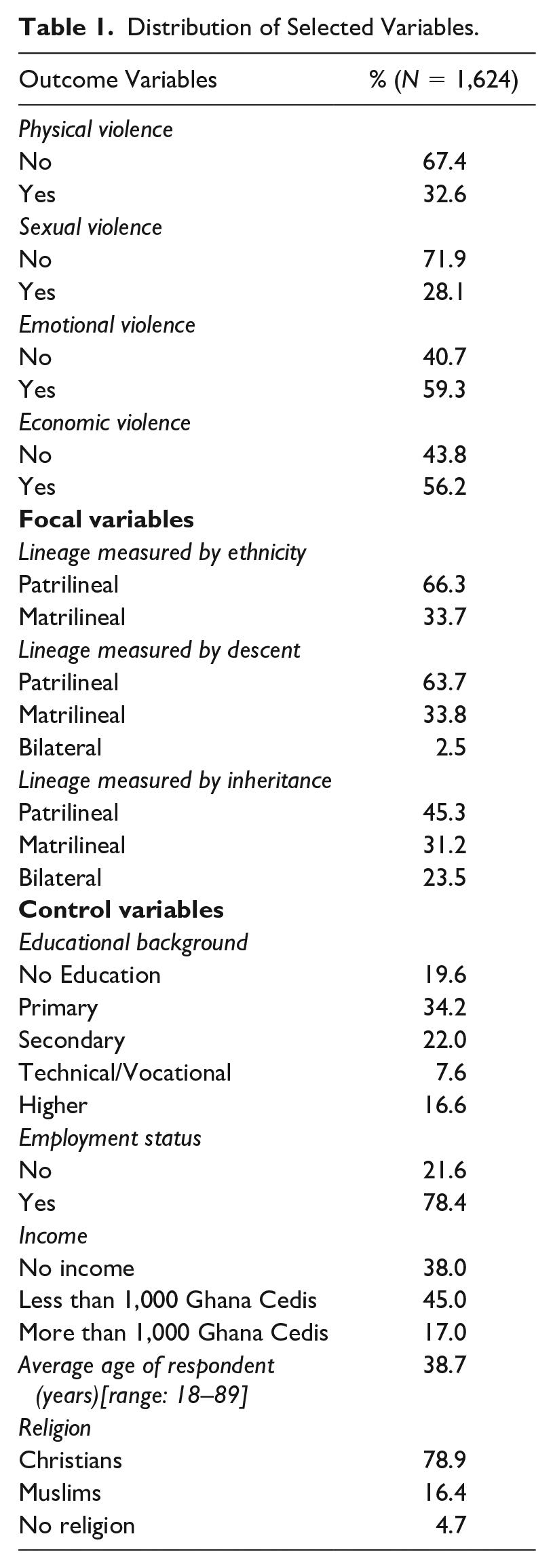
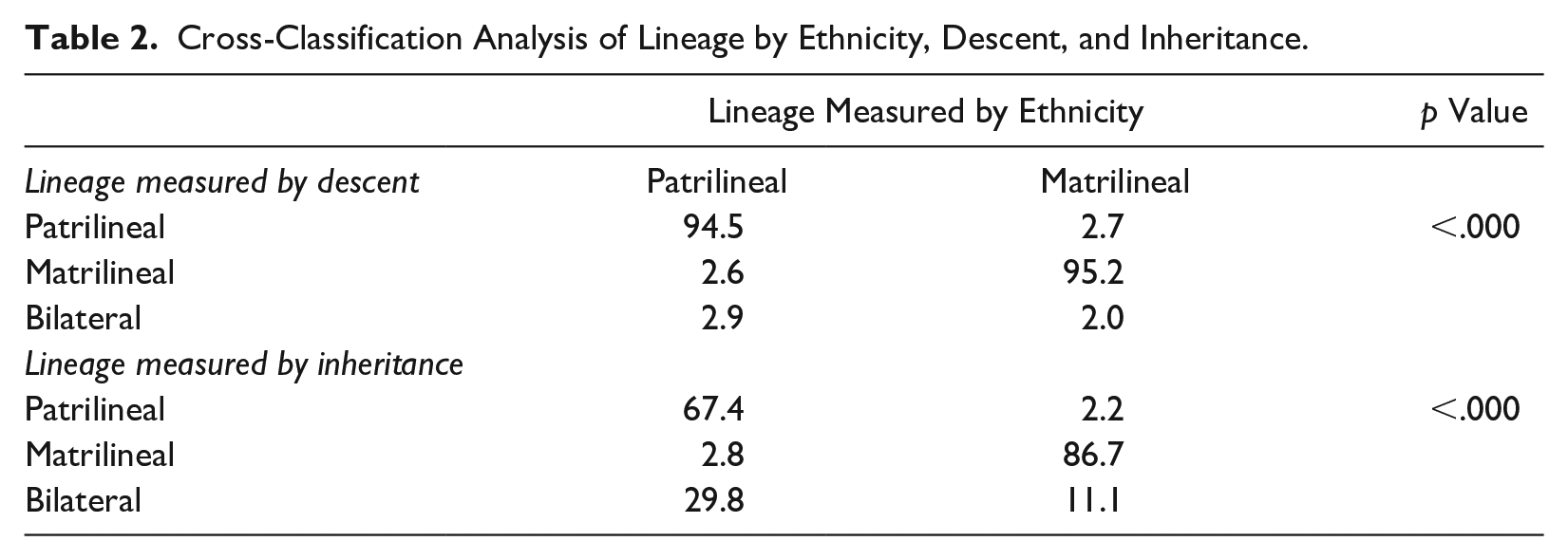
Table 2 shows a cross-classification analysis of the three lineage variables to determine congruence/incongruence in participants’ categorization by ethnicity and self-identification with lineage. We interpret the diagonal elements first. For the most part, diagonal elements of the table’s matrix show congruence, while off-diagonal elements show incongruence. For instance, 95% of participants categorized as patrilineal by ethnicity self-identified as patrilineal by descent, but only 67.4%, self-identified as patrilineal by inheritance. Similarly, 95% of participants categorized as matrilineal by ethnicity self-identified as matrilineal by descent, but only 86.7% self-identified as matrilineal by inheritance. For the off-diagonal elements, 2.6 and 2.9% of participants categorized as patrilineal by ethnicity self-identified as matrilineal and bilateral by descent, respectively; 2.7 and 2% of matrilineal women by ethnicity self-identified as patrilineal and bilateral by descent. Other results on lineage were more instructive. For example, 2.8 and 29.8% of patrilineal participants by ethnicity self-identified as matrilineal and bilateral by inheritance, respectively. Meanwhile, 2.2 and 11.1% of participants categorized as matrilineal by ethnicity self-identified as patrilineal and bilateral by inheritance, respectively.
Cross-Classification Analysis of Lineage by Ethnicity, Descent, and Inheritance.
Tables 3 and 4 show bivariate and multivariate findings of the three lineage variables on various measures of IPV (physical, sexual, emotional, and economic). Bivariate results showed that for all three measures of lineage, matrilineal women were significantly less likely to experience physical, sexual, emotional, and economic violence compared to patrilineal women. Importantly, the self-identified measures of lineage showed bilateral women were less likely to experience IPV than patrilineal ones. Multivariate models indicated some attenuation of the odds ratios after controlling for participants’ socio-economic and demographic characteristics. Even so, the effects of lineage by ethnicity and self-identification continued to be robust predictors of IPV. After controlling for other variables, matrilineal women by ethnicity were less likely to experience physical (AOR = .404), sexual (AOR = .193), emotional (AOR = .517), and economic abuse (AOR = .650) than patrilineal women. Matrilineal women by descent were less likely to experience physical (AOR = .462), sexual (AOR = .217), emotional (AOR = .531), and economic abuse (AOR = .702) than patrilineal women by descent. Bilateral women by descent were less likely to experience sexual abuse (AOR = .396) than patrilineal women by descent. The most robust predictor of IPV was lineage by inheritance. Matrilineal women by inheritance were less likely than patrilineal women by inheritance to experience physical (AOR = .346), sexual (AOR = .138), emotional (AOR = .515), and economic abuse (AOR = .488). Finally, bilateral women by inheritance were less likely to experience physical (AOR = .394), sexual (AOR = .164), emotional (AOR = .353), and economic abuse (AOR = .501) than patrilineal women by inheritance.
Bivariate Analyses of Lineage and Intimate Partner Violence Among Ghanaian Women, 2022.
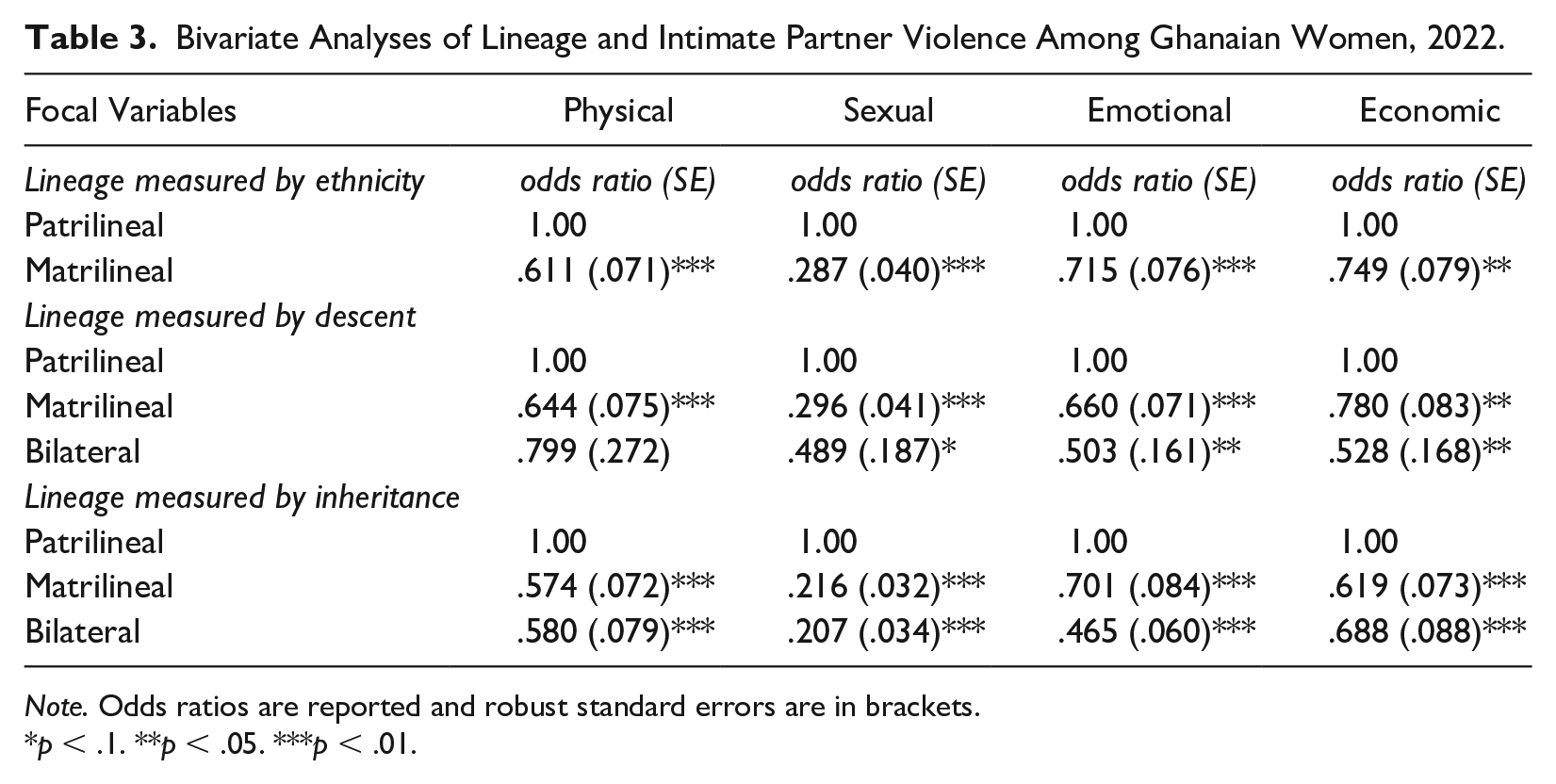
Note. Odds ratios are reported and robust standard errors are in brackets.
p < .1. **p < .05. ***p < .01.
Multivariate Analyses of the Lineage and Intimate Partner Violence Among Ghanaian Women, 2022.
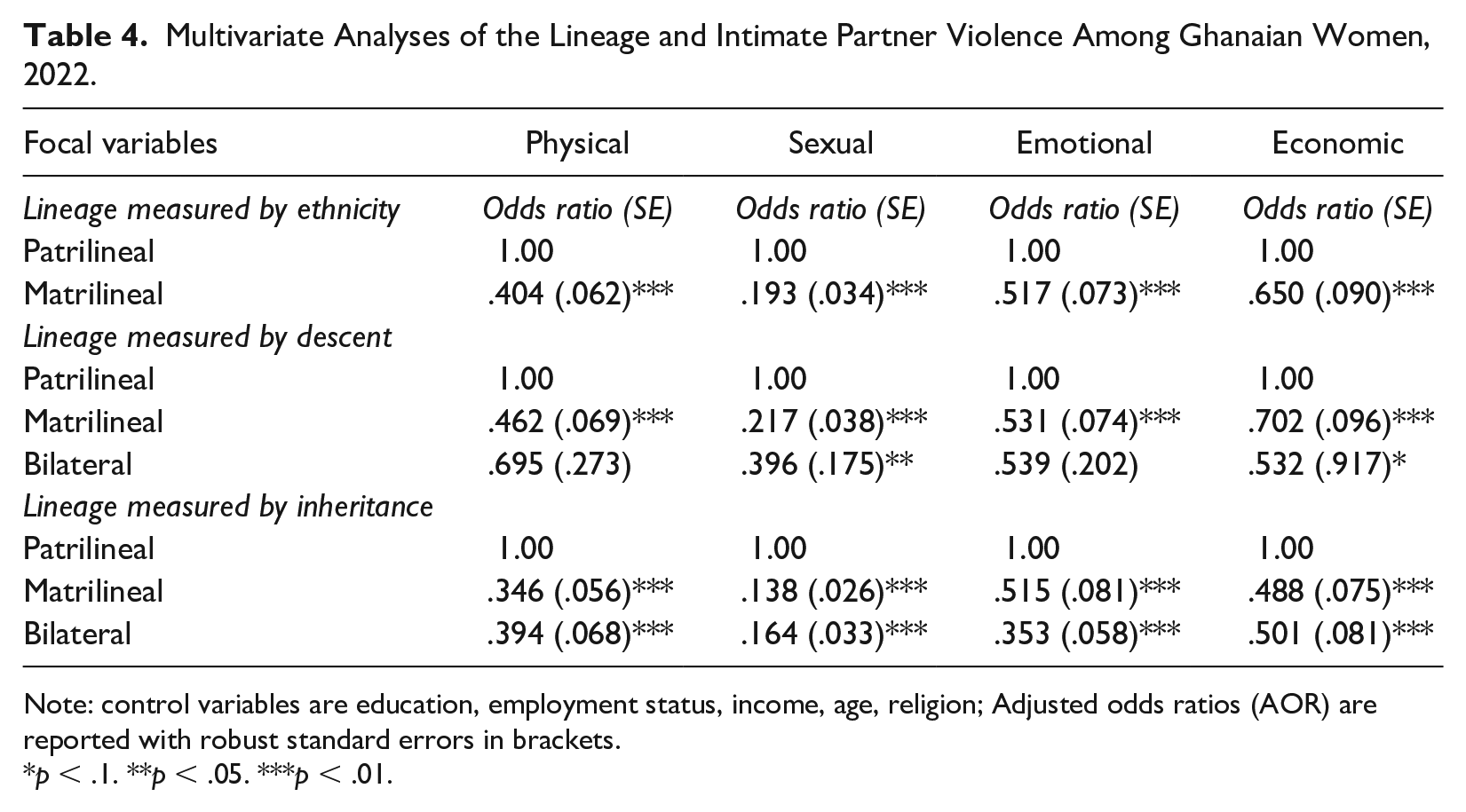
Note: control variables are education, employment status, income, age, religion; Adjusted odds ratios (AOR) are reported with robust standard errors in brackets.
p < .1. **p < .05. ***p < .01.
Discussion and Conclusion
In many sub-Saharan African countries, lineage is an important socio-cultural institution that shapes behaviors. Previous literature in Ghana and elsewhere demonstrates the impact of lineage on key demographic outcomes, including fertility and mortality (Caldwell and Caldwell 1987; Hollos and Larsen 1997; Takyi and Dodoo 2005; Takyi and Gyimah 2007). Elsewhere, others show lineage differences in political behavior and entrepreneurship (see Gottlieb and Robinson 2016; Shahriar 2018). In recent years, discussions of the impact of lineage have been extended to family and domestic violence research (Asiedu 2016; Lowes 2020a; Sedziafa and Tenkorang 2016; Sedziafa et al. 2018). However, the measurement of lineage has been limited, with previous research mainly relying on lineage variables derived from ethnicity and geographical mappings tied to ethnic configurations (Asiedu 2016; Gneezy, Leonard, and List 2009; Lowes 2016; Lowes 2020b; Sedziafa and Tenkorang 2016). While this has been useful, it has truncated the operationalization of lineage to a binary/dichotomous construct and might have confounded a holistic understanding of the impact of lineage on key demographic and family violence outcomes. Furthermore, such an operationalization of lineage is controlled by the researcher, not the researched. This is problematic, as one’s identification with lineage may be socially constructed and could be based on one’s experiences rather than one’s lineage affiliations per se.
Our study has contributed to discussions of the impact of lineage on IPV by providing the first documented self-identified measures of lineage and by moving beyond the dichotomous and ethnic operationalization of the concept. We compared two self-identified measures of lineage to one derived from participants’ ethnic affiliation to look for congruence and inconsistencies. We also examined the impact of the various measures of lineage on IPV.
Our results are instructive. They largely show congruence among the lineage variables derived from the ethnic affiliation of participants and self-identified measures. In particular, we found significant overlaps among lineage variables based on ethnicity and descent to the extent that one may be used as a proxy for the other, especially in situations where self-identified measures are lacking. Even so, the self-identified measure of lineage based on descent appears to be a better measure, as it does not marginalize a section of the sample that identifies as bilateral, no matter how small. A comparison of lineage by ethnicity and inheritance paints a different picture. While we observed some congruence for matrilineal women, a significant number of patrilineal women by ethnicity now moved to bilateral by inheritance. While the reasons for this change are unclear, it is possible that these participants self-identified based on their experiences dealing with members of their maternal family, including the material benefits derived from their mothers. In patriarchal societies such as Ghana, it is not uncommon for fathers to be absent from the lives of their female children, especially in patrilineal cultures where emphasis is placed on male rather than female children (Frempong and Codjoe 2017; Lowes 2020b; Rossi and Rouanet 2015). These experiences underscore the relevance of using a lineage variable that allows research participants to self-identify instead of placing this determination in the hands of researchers.
An important objective of the study was to examine the effects of the various measures of lineage on different IPV outcomes. We consistently found matrilineal women were significantly less likely to experience all types of violence (physical, sexual, emotional, and economic) than patrilineal women. These findings were consistent for all measures of lineage in spite of the expected differences in the odds ratios. Although the mechanisms linking lineage to IPV are not well researched, some explanations of patrilineal women’s exposure to IPV compared to matrilineal women have been offered by researchers (Asiedu 2016; Lowes 2016; Sedziafa and Tenkorang 2016). Using qualitative data from Ghana, Sedziafa et al. (2018) attributed the differences to the power dynamics, lineage norms, and resources available to women. They claimed that matrilineal norms of respect for women and the fact that they wield some power may restrain, at least to some extent, “patriarchal terrorism” and more frequent violence toward them. Moreover, matrilineal women may have more access to lineage resources that help them negotiate their way out of violent relationships—sometimes even through divorce—than their patrilineal counterparts.
What we do not yet know is the outcome for bilateral women. The lack of knowledge on IPV outcomes for bilateral women is not particularly surprising and reflects the limited operationalization of lineage in previous research. With lineage measured by descent, we found bilateral women had lower odds of experiencing sexual violence than patrilineal women. Similar findings were observed for physical, emotional, and economic IPV, but these were not statistically significant. It is possible that the lack of significance may be due to the smaller sample size. In fact, when we used the larger sample size for bilateral women that we created when we measured lineage by inheritance, we found these participants were less likely to experience all four types of IPV. While the reasons for these outcomes are not clear, it is possible that bilateral women have some unique advantages, including being able to access resources from both maternal and paternal families. Similar to matrilineal women, it is possible bilateral women leverage these resources to protect themselves against violence.
Our findings have implications for researchers interested in lineage and IPV and beyond. First, validity concerns have been raised about using ethnicity as proxy for lineage. Previous researchers have addressed these concerns by providing a theoretical justification that points to a strong relationship between ethnic identities and lineage ties in Ghana and other sub-Saharan African countries (Asiedu 2016; Lowes 2020a; Takyi and Dodoo 2005; Takyi and Gyimah 2007). However, this theoretical relationship has not been shown empirically. To the best of our knowledge, our work represents the first attempt to quantify relationships between ethnic and lineage ties. On the one hand, the findings show strong overlaps between ethnic ties and lineage identities to such an extent that one may be used as proxy for the other. On the other hand, the study demonstrates the danger of truncating the measurement of lineage to two groups in family and domestic violence research. Beyond this, our findings suggest new directions for measuring lineage in family violence research. Both instruments for lineage emerged as robust predictors of IPV and can be useful in the future, with the potential to replace unidimensional indicators of lineage (Asiedu 2016; Takyi and Dodoo 2005; Takyi and Gyimah 2007).
Despite these findings and their implications, some limitations are worth noting. Our data are largely cross-sectional, so we are unable to draw causal connections between the various measures of lineage and IPV. The data are self-reported, and concerns have been raised about the reliability of such data on sensitive topics, including gender-based violence. In spite of these limitations, our work is seminal and makes a significant contribution to the literature on family and domestic violence in Africa.
Footnotes
Funding
The author(s) disclosed receipt of the following financial support for the research, authorship, and/or publication of this article: This work was supported with funding from the Harry Frank Guggenheim Foundation.
