



Abstract
Executive Summary
This study explores the relationship between “sanctuary policies” that bar local law enforcement agencies from cooperating with federal immigration authorities and immigrant attitudes toward law enforcement agencies. It draws upon original survey data collected in New Mexico in 2019 and finds:
• First, that immigrants who believe they are protected by sanctuary have more trust in their police and sheriffs than immigrants who anticipate collaboration between local law enforcement and immigration authorities;
• Second, that awareness of sanctuary policies is nonetheless the exception to the rule, particularly among immigrant men.
The study therefore highlights not only the limits to sanctuary policies sensu stricto but the limited scope and gendered nature of legal consciousness among immigrants in a multilayered enforcement regime.
Our findings suggest that promoting sanctuary policies to immigrant communities, particularly through immigrant-serving agencies, may be nearly as critical in improved immigrant-police relations, as adopting sanctuary policies. The Department of Homeland Security and the courts should therefore adopt a uniform definition of sanctuary and disseminate it to state and local officials — especially in law enforcement — throughout the country. Furthermore, localities that adopt sanctuary policies should publicize them as widely as possible so that they have the desired effect in immigrant communities and facilitate the improvement of police-community relations in particular.
Introduction
“Sanctuary jurisdictions” (CRS 2019) include cities and counties that refuse to cooperate with federal immigration authorities. While their critics view their refusal as a source — and perhaps symptom — of crime and disorder, and therefore disdain their proliferation (Elcioglu 2017, 251), their advocates view their protections as a key to police-community cooperation, and therefore offer a rosier portrait of them. “Sanctuary cities make us safer,” in the words of one activist, “because they improve relations between immigrant communities and police departments” (Chirico 2017). Is he correct?
Most empirical studies find a negative or no relationship between sanctuary policies and crime (Lyons, Vélez and Santoro 2013; Gonzalez O’Brien, Collingwood, and El-Khatib 2017; Martínez, Martínez-Schuldt, and Cantor 2017; Wong 2017; Light and Anadon 2020). However, these studies tend to operate at the aggregate level and leave untested the alleged links between public policy and individual attitudes toward law enforcement. We address the lacuna by examining original survey data on the relationship between immigrant attitudes toward law enforcement and the availability of sanctuary in two non-adjacent New Mexico counties marked by decidedly different immigration regimes and come to a surprising conclusion. While perceptions of sanctuary are associated with trust in local law enforcement, these perceptions are not necessarily accurate. Most respondents in the so-called sanctuary county are unaware of their legal protections. A few residents of the non-sanctuary county wrongly believe that they are protected by sanctuary. When asked whether their communities afford immigrants sanctuary, a plurality of respondents admit to being unsure. And women are much more likely to know about their rights and protections than men. The results speak not only to the limits of sanctuary policies sensu stricto but to the limited scope and gendered nature of immigrant “legal consciousness” (García 2015; Santos et al. 2018; Abrego 2019; Flores et al. 2019; Chua and Engel 2019).
We have divided the rest of the paper into four sections. The first discusses the “multilayered” (Wells 2004; Varsanyi et al. 2012; Menjívar 2014) enforcement regime induced by the adoption of different — and at times conflicting — approaches to immigration enforcement by federal, state, and local jurisdictions. It draws a distinction between legal sanctuary, however ambiguously defined, and perceived sanctuary, and holds that the latter is no less important than the former. The second discusses our data. We addressed the likely under-representation of undocumented immigrants in existing surveys by surveying visitors to mobile Mexican consulates in two northern New Mexico counties in late 2019. We interpret the results in light of our own observations and media reports. The third presents our key results in a series of bivariate and multivariate models. We find that trust in local law enforcement is less a product of immigration status or sanctuary policy per se than perceived residence in a sanctuary community, and that perceptions are not necessarily accurate, particularly the perceptions of the male immigrants who are most vulnerable to deportation (Golash-Boza and Hondagneu-Sotelo 2013; Amuedo-Dorantes and Deza 2019). The fourth discusses our findings and their broader implications: first, that improvements in police-community relations will in all likelihood demand not only the definition and adoption but the advertisement of sanctuary policies, particularly to men; and, second, that a multilayered enforcement regime is conducive to legal confusion as well as legal consciousness, and that neither is randomly distributed by gender. Men are more likely to be confused in a “jurisdictional patchwork” (Varsanyi et al. 2011) like the contemporary United States. Women are more likely to be aware of their legal rights. The differences arguably reflect their differential involvement in social networks that have traditionally offered immigrant women, in particular, everything from employment leads and gossip, to information about their legal rights and protections (Hondagneu-Sotelo 1994, 178; Menjívar 2000, 177; Menjívar and Salcido 2002, 903; Valdez et al. 2013, 307).
Sanctuary Policies in the Contemporary United States
Over the past two decades, the federal government has devoted more human and financial resources to interior immigration enforcement. By way of illustration, the number of border security personnel employed by the Department of Homeland Security (DHS) almost doubled between 2003 and 2019, while the number of Immigration and Customs Enforcement (ICE) agents engaged by DHS and empowered to work more than 100 miles from the border almost tripled (American Immigration Council [AIC] 2020, 4).
Interior enforcement is not, however, pursued by ICE alone. DHS increasingly relies upon partnerships with local law enforcement agencies to detain individuals who are arrested for criminal offense for reasons that are unrelated to their citizenship, nationality, or immigration status. For instance, the Secure Communities (S-Comm) program established by the George W. Bush administration linked biometric data collected at state prisons and local jails to federal immigration databases, giving ICE access to information on non-citizens when they are arrested or incarcerated for criminal offenses. This initiative resulted in tens of thousands of deportations, concerns about civil rights violations, antipathy toward enforcement agencies, and no visible drop in crime (Miles and Cox 2014; New York Times 2014; Flagg 2019). The Obama administration abandoned Secure Communities (S-Comm) in 2014, on the grounds that it had “become a symbol for general hostility toward the enforcement of our immigration laws” (Johnson 2014, 1), and adopted the Priority Enforcement Program to target national security risks, violent felons, and repeat offenders for removal with the help of biometric data collected at prisons and jails. However, President Trump reversed Obama’s decision, raised the specter of mass deportations (Warren and Kerwin 2017; Waslin 2020, 64), and issued an executive order declaring “sanctuary jurisdictions” ineligible for federal grants (Trump 2017, 8801; Lasch et al. 2018, 1705).
Nor is Secure Communities unique. Section §287(g) of the Immigration and Nationality Act (INA) allows “ICE to train and rely upon state and local law enforcement officers to handle certain immigration enforcement functions, under federal supervision” (Kandel 2016, 9), and is designed not only to offer DHS a “force multiplier” in terms of personnel but to address ICE’s lack of familiarity with the local landscape in the interior of the country. Municipal police officers and county sheriffs may “have stronger connections to local communities, further enhancing their ability to contribute to ICE’s enforcement efforts” (Rosenblum and Kandel 2012, 29).
The results have been mixed. While deportations during the Trump administration were accelerated by force multipliers (Kerwin, Alulema and Nicholson 2018, 237), they came nowhere near their Obama-era peak, in part due to resistance from “sanctuary jurisdictions” (CRS 2019; Chishti and Pierce 2021), and in spite of the Trump administration’s efforts to withhold federal aid and otherwise punish these jurisdictions (Chishti and Bolter 2018; Lind 2018; TRAC 2018; Caldwell and Radnofsky 2019; Somin 2019; Waslin 2020).
The word sanctuary has been used by advocates and critics of interior enforcement to describe all cities, states, and counties that in one way or anot-her refuse to cooperate with federal immigration authorities. For example, San Francisco’s Sanctuary Ordinance bars the use of city “resources to assist in the enforcement of federal immigration law or to gather information regarding the immigration stat-us of individuals in the city and county of San Francisco, unless such assistance is required by federal or State statute, regulation or court decision” (National Conference of State Legislatures 2019). The Trump administration threatened to release detained immigrants on the streets of “sanctuary cities,” including San Francisco, in an effort to retaliate against perceived enemies like former Speaker of the House Nancy Pelosi, whose district covers most of the city. Pelosi responded by embracing the term, saying that the whole “point is to give immigrants a way to come forward to report crimes without fear of being deported—not to protect criminals” (Garofoli 2017).
Other officials have expressed similar concerns. For instance, the leaders of police departments in cities like Boston, Houston, Philadelphia, and Seattle portrayed Trump’s effort to draw their personnel into immigration enforcement as a waste of resources, a recipe for mistrust, and a threat to community-based policing (Law Enforcement Immigration Task Force 2017). The Los Angeles County Sheriff agreed (Jonsson 2017). And experts argue that crime rates are actually lower in sanctuary jurisdictions than in communities that are less hospitable to immigrants (Lyons, Vélez and Santoro 2013; Wong 2017; Amuedo-Dorantes and Deza 2019); that sanctuary policies allow victims of crime who might otherwise fear deportation to come forward and cooperate with law enforcement agencies (Martínez-Schuldt and Martínez 2021); and that these policies are central to the struggle against gender-based violence in particular in that women who fear deportation are less likely to report victimization or seek support (Amuedo-Dorantes and Arenas-Arroyo 2022). 1
In recent years, Republican governors in Texas, Arizona, and Florida have sent immigrants to fiscally strapped sanctuary cities in an effort to “bring the border” to the interior (Cox, Wieder, and Ceballos 2022; Goodman 2023; Weisman and Fandos 2023). While pro-immigrant activists in the interior have responded by calling for federal aid and compassion, their critics have condemned their efforts and belittled their concerns. Critics from non-sanctuary localities view sanctuary policies as mistakes or misdeeds, and see no reason for their own constituents to “subsidize” them through taxes and transfers (Weisman and Fandos 2023).
“Sanctuary jurisdiction” is not an official designation, however, and so-called sanctuary communities do not all have identical policies (Chishti and Hipsman 2015; Bello 2017; Gulasekaram, Su, and Villazor 2019, 848). The Congressional Research Service (CRS) distinguishes between “don’t enforce” policies that ban all state, county and municipal cooperation with federal authorities; “don’t ask” policies that bar state and local officials from asking people about their nationality, citizenship, or immigration status; and “don’t tell” policies that prohibit information exchange between state and local officials and federal immigration authorities (CRS 2019, 1; Light and Anadon 2020, 954–5). Others draw more subtle distinctions (Avila et al. 2018, 1–2; Cuison Villazor and Gulasekaram 2019, 1218–19; AIC 2020, 1; Mourão Permoser and Bauböck 2023).
In short, DHS has established a “multilayered enforcement regime” (Menjívar 2014, 1805), consisting of multiple federal agencies (DHS and others) and extensive formal agreements and working relationships with states and localities (Meissner et al. 2013; Kerwin 2018). This regime poses different levels of threat to immigrants and their families in different jurisdictions. New Mexico offers an illustration of both the inconsistencies that result from this regime and the confusion and uncertainty they produce. The state’s urban centers are relatively friendly toward immigrants, but their suburbs, and the state’s smaller towns and rural areas, are typically less tolerant, vary in their treatment of immigrants, and their policies are less clear to residents and passers-through (Feldman 2019, 7).
The issue is both lack of information, or misinformation, and mistrust. Laws change. Officials leave. Promises are broken. And immigrants may therefore understandably “play it safe” (Kittrie 2006, 1482; Carlberg 2009, 743; Vishnuvajjala 2012, 212; Armenta 2016, 122; Martínez-Schuldt and Martínez 2017, 7). In fact, immigrants may be “hyper aware of the law” (Menjívar 2011, 383) due to the omnipresent threat of detention and deportation, which has significant consequences for their day-to-day and long-term decision-making (Menjívar 2011, 378; Simmons, Menjívar, and Valdez 2020).
Nor is “legal hyper awareness” limited to immigration law and unauthorized immigrants. On the contrary, Cecilia Menjívar finds at least two spillover effects that compound the sensitivities of documented as well as undocumented immigrants. The first is that legal hyper awareness spills over “into other areas of life, including legal rights in those spheres” (Menjívar 2011, 368). So, for example, her subjects gain familiarity with labor and employment law, worry about insurance liability, and handle “their own legal paperwork” (ibid., 390–92). And the second is that hyper awareness is not limited to unauthorized immigrants but extends to their authorized friends and family members (Menjívar 2016, 725; Becerra et al. 2017; Preston 2020; Ascherio 2023). “Moreover, to compound this situation further, there are thousands of lawful permanent residents also being deported” (Menjívar et al. 2018, 119).
Immigration is a gendered process (Dreby 2012), and the aforementioned spillovers of hyper awareness into different spheres and communities are particularly likely to affect immigrant women in their traditional roles as mothers and caretakers. Immigrant women have traditionally developed social networks that allow their families to access public services, for example, and to organize protests against immigration crackdowns (Hondagneu-Sotelo 1994; Menjívar 2000; Terriquez 2009; Milkman and Terriquez 2012). Additional studies suggest that their networks have atrophied in recent years, albeit with variable effects “by the specific context where immigrants live” (Simmons, Menjívar, and Valdez 2020, 10–11). In fact, Catherine Tactaquin of the National Network for Immigrant and Refugee Rights argued that immigrant women were being “targeted” for self-deportation by laws designed to make their lives impossible during the Obama years (Ms. Foundation for Women 2011). Others advanced similar arguments at the same time (García et al. 2009; Esquivel and Glionna 2012). And more recent studies find persistent evidence of hyper awareness among undocumented women through the Trump era (Rios Casas et al. 2020, 12).
Sanctuary policies — defined operationally to include “don’t enforce,” “don’t ask,” and/or “don’t tell” policies — could therefore improve police-community relations in a time of heightened anxiety, or just add a new element to a multilayered enforcement regime that is already baroque and intimidating. Which outcome is more likely? Does legal sanctuary translate into perceived sanctuary?
Data and Methods
Our goal is relatively straightforward: We want to evaluate the relationships between sanctuary policies, perceived sanctuary, and individual legal status and attitudes toward law enforcement authorities in immigrant communities. Our chief dependent variables are confidence in the police and sheriff.
It is easier to study immigrants in theory than in practice, however, due to both their under- or nonrepresentation in existing surveys and sampling frames and their understandable reluctance to discuss their legal status with unfamiliar investigators (Stepick and Dutton Stepick 1990; Font and Méndez 2013; Massey 2014). Some have addressed the resultant data deficit by means of surveys administered to subjects contacted by means of random digit dialing (RDD) in Latino or immigrant communities (Theodore 2013). 2 Others have surveyed people face-to-face at venues — like construction sites, churches, and health care clinics — known to be populated or frequented by immigrants (Wasserman et al. 2005; Torres-Cantero et al. 2007; Standish et al. 2010; Morales and Ros 2013; Theodore 2017; Schneider 2018).
We employ the “venue-based” (Muhib et al. 2001; Daniel 2012; Lee et al. 2014) approach to sampling for two reasons; first, doubts about the efficiency of RDD, particularly for mobile populations and narrow geographic areas, when cell phone numbers and places of residence increasingly and systematically diverge (Harkness et al. 2014, 252; Dost and McGeevey 2016; Kali and Flores Cervantes 2016); and, second, evidence that venue-based samples offer a low-cost source of relatively high-quality data on hard-to-reach populations (Lee and Cheng 2006). 3
Perhaps the best-known venue-based surveys of immigrants are the consular surveys pioneered by Roberto Suro, who surveyed undocumented immigrants at Mexican consulates in 2004 and early 2005 (Suro 2005). This strategy was later adapted by investigators with distinct needs and goals (Fussell 2011; Levine and LeBaron 2011; Morales and Ros 2013; Schrank and Garrick 2013). The portraits thereby produced are in all likelihood more accurate but less generalizable than samples generated via traditional survey methods and should be interpreted as such (Fussell 2011, 600).
The success of venue-based sampling obviously depends on the location of the venue (Drumright 2018, 7). Best practices counsel for locations that not only attract the target population (Stueve et al. 2001, 923) but capture the relevant range of the independent variable and minimize the likelihood of “unit heterogeneity” (Rosenbaum 2005), and the corresponding risk of selection bias. In an effort to minimize bias, we administered surveys at Mexican consulates in two broadly similar northern New Mexico communities — Santa Fe and San Juan — with disparate immigration policies in the fall of 2019.
The city of Santa Fe has not collaborated with federal immigration authorities for more than 20 years and bars the use of city resources to facilitate deportation (Chacón 2016). The Santa Fe County jail refuses to collaborate with ICE. Both Santa Fe “police officers and the county sheriff’s deputies operate under policies against detaining individuals due to their immigration status and against asking suspects or anyone else about their immigration status” (Last 2015). Local officials have also gone to great lengths to note the limits of sanctuary, that is, that federal officials can still deport immigrants without the support of localities (Last 2015).
By way of contrast, the San Juan County sheriff offers ICE rent-free office space and views the agency as a “resource” (Jennings 2019). The county jail no longer holds immigrants on behalf of ICE, in light of a 2017 lawsuit brought forth by community activists — an increasingly common outcome for “zealous jurisdictions” that have sought to advance immigration enforcement by honoring detainer requests (Rodriguez 2017, 520). Yet the settlement does not apply to other county — let alone city — agencies, and people crossing jurisdictional lines are therefore subject to different, and potentially inconsistent, policies (Feldman 2019, 12).
In other words, Santa Fe is the very essence of a sanctuary community (Dax 2017). San Juan is marked by the “multilayered enforcement regime” (Menjívar 2014) that is becoming the norm in the contemporary United States. Both are located in northern New Mexico and familiar to the authors, who are former residents and recurrent visitors to the region and who draw upon their experiences, as well as local media reports, in interpreting the survey results. 4 And by surveying and comparing their immigrant families we are able to assess the relationship between sanctuary policies and police-community relations in the southwestern United States. 5
Our surveys asked respondents questions about their attitudes toward public officials, interactions with public service providers, migration histories, and socio-demographic profiles. We tried to tap their legal consciousness, however, by asking respondents not only whether they lived in Santa Fe or San Juan but whether they believed they were protected by a sanctuary policy. Legal consciousness, in our sense, refers to an awareness of both the laws and how they operate (Santos et al. 2018, 1673; Flores et al. 2019, 14), and the latter is no less important than the former (Feldman-Savelsberg 2016, 13). Legal consciousness informs people’s self-concepts, experiences, and individual and collective behaviors — and varies markedly over space in light of cultural and legal differences (Abrego 2019, 643 and 648).
Our surveys were administered by trained volunteers from Somos un Pueblo Unido, a Santa-Fe based immigrant rights organization, at mobile consulates in Santa Fe and San Juan counties, with the gracious support of the Mexican consul in Albuquerque. Consular officials occasionally sponsor mobile consulates in an effort to meet the needs of their citizens in remote areas.
Surveyors approached adults in the waiting room of the temporary consulate and explained the purpose of the study — to understand perceptions and utilization of public officials and services in the immigrant community — and asked if they were at least 18 years old, live in Santa Fe or San Juan County, and wanted to participate. More than 65 percent of eligible participants agreed. The surveys themselves were administered on tablets and laptops in the respondent’s preferred language. The vast majority chose Spanish. Table 1 summarizes the data for the principal variables used in the analysis.
Summary Statistics.
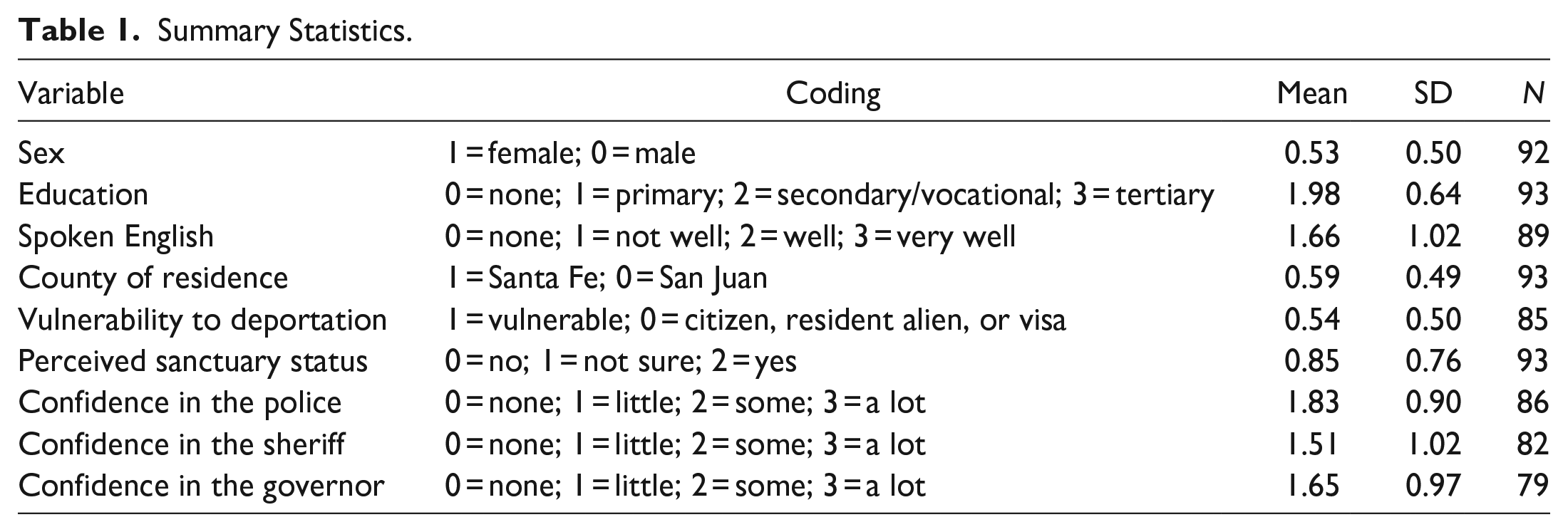
Almost 60 percent of the respondents live in Santa Fe, which is the larger of the two counties, and the modal respondent is “not sure” about the sanctuary status of his or her community. Women and men are evenly represented in the sample and distributed by county; their education levels and English-language abilities are both correlated with their immigration status and comparable to recent estimates for both immigrants and Latino/as derived from government data (Passel and Cohen 2019); and their median age (39) is 11 years higher than the national median among Hispanics (Patten 2016). The latter is unsurprising in light of our age-based eligibility criteria. The data are by no means representative of immigrants and their families in northern New Mexico, therefore, but would appear to offer a reasonable facsimile for now.
Statistical Results
We present our initial results in four principal steps: First, we display bivariate tests of the relationship between confidence in the police and county of residence, vulnerability to deportation by ICE, and perceptions of sanctuary policy. Second, we discuss the same results with confidence in the sheriff substituted for confidence in the police. Third, we provide a “placebo test” that replaces confidence in law enforcement with an outcome variable “for which the variable of interest is expected to not have an effect” (Neumayer and Plümper 2017, 63). And, fourth, we present a multivariate test of our principal results. Like Menjívar et al. (2018), we include non-immigrants as well as immigrants in order to capture any “spillover” effects of ICE enforcement efforts (p. 107).
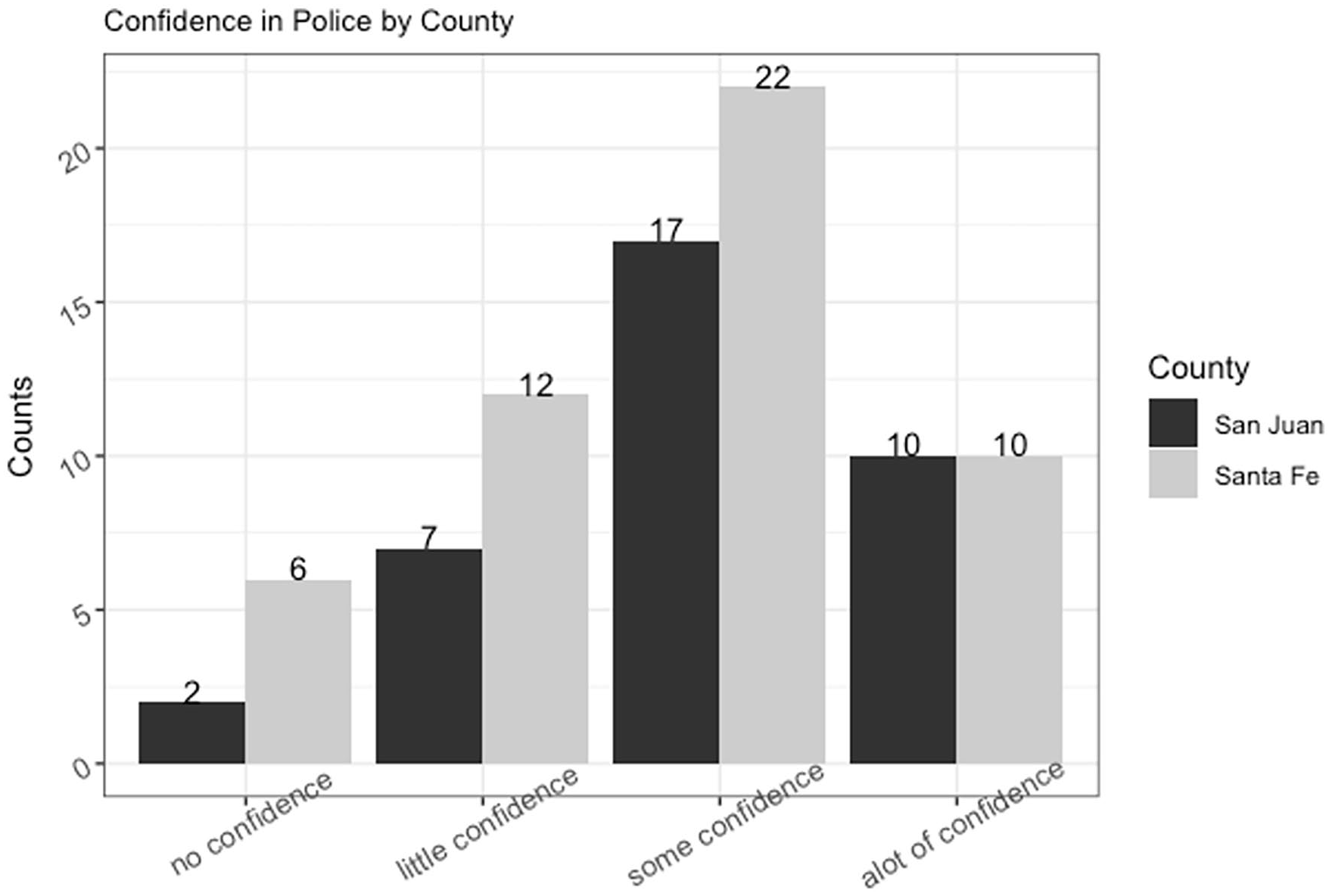
Figure 1 suggests that respondents in the sanctuary community of Santa Fe are, if anything, slightly less confident in the local police than their counterparts in San Juan County: three-quarters of San Juan respondents express at least some confidence in the police; in Santa Fe, the number falls to 64 percent.
Confidence in Police by County.
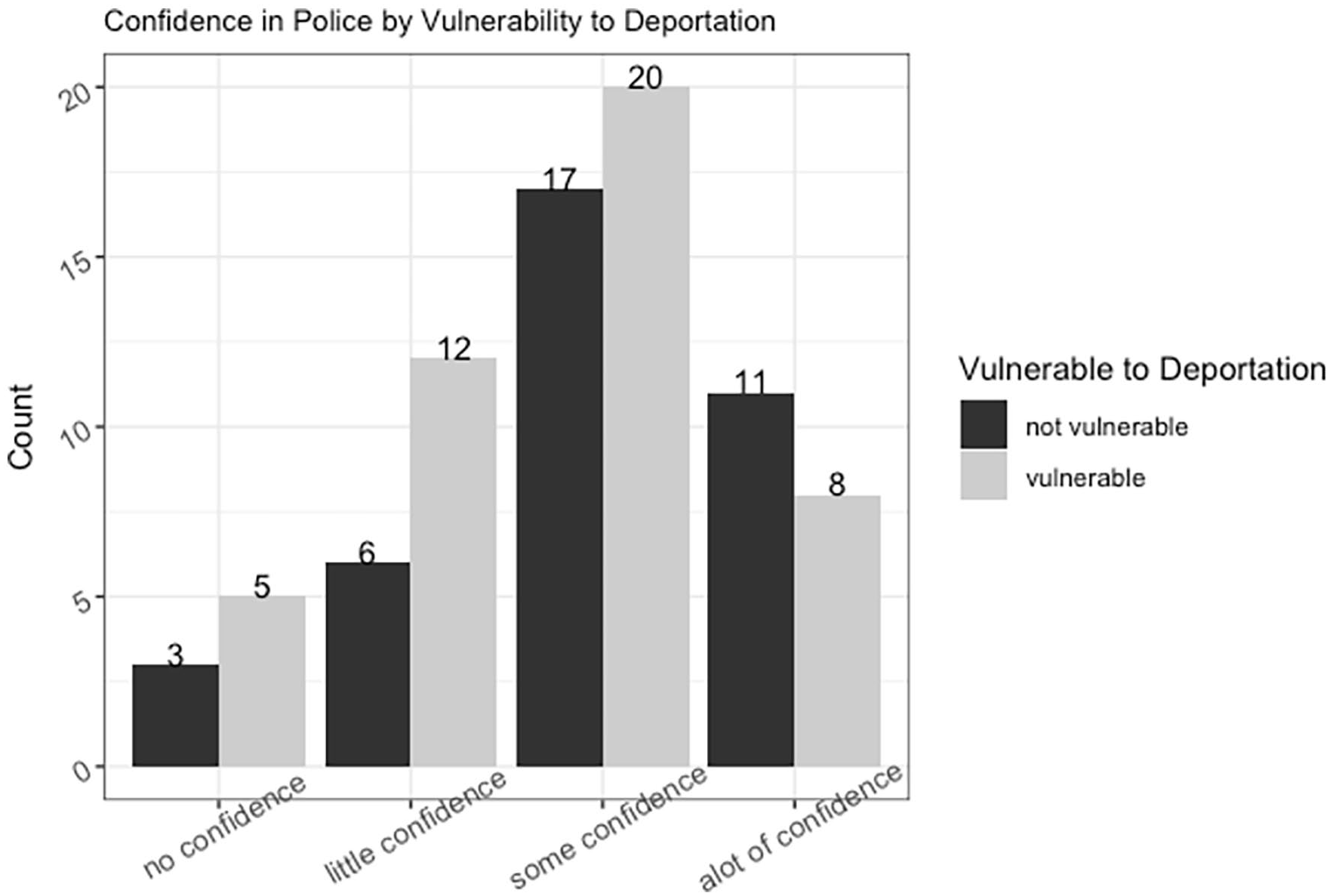
Figure 2 classifies respondents by their degree of vulnerability to deportation — coded “no” for respondents who are US citizens, resident aliens, or in possession of a valid visa — and reveals similar null findings. While doubts about the police are associated with the risk of deportation, the results are neither statistically nor substantively significant.
Confidence in Police by Vulnerability to Deportation.
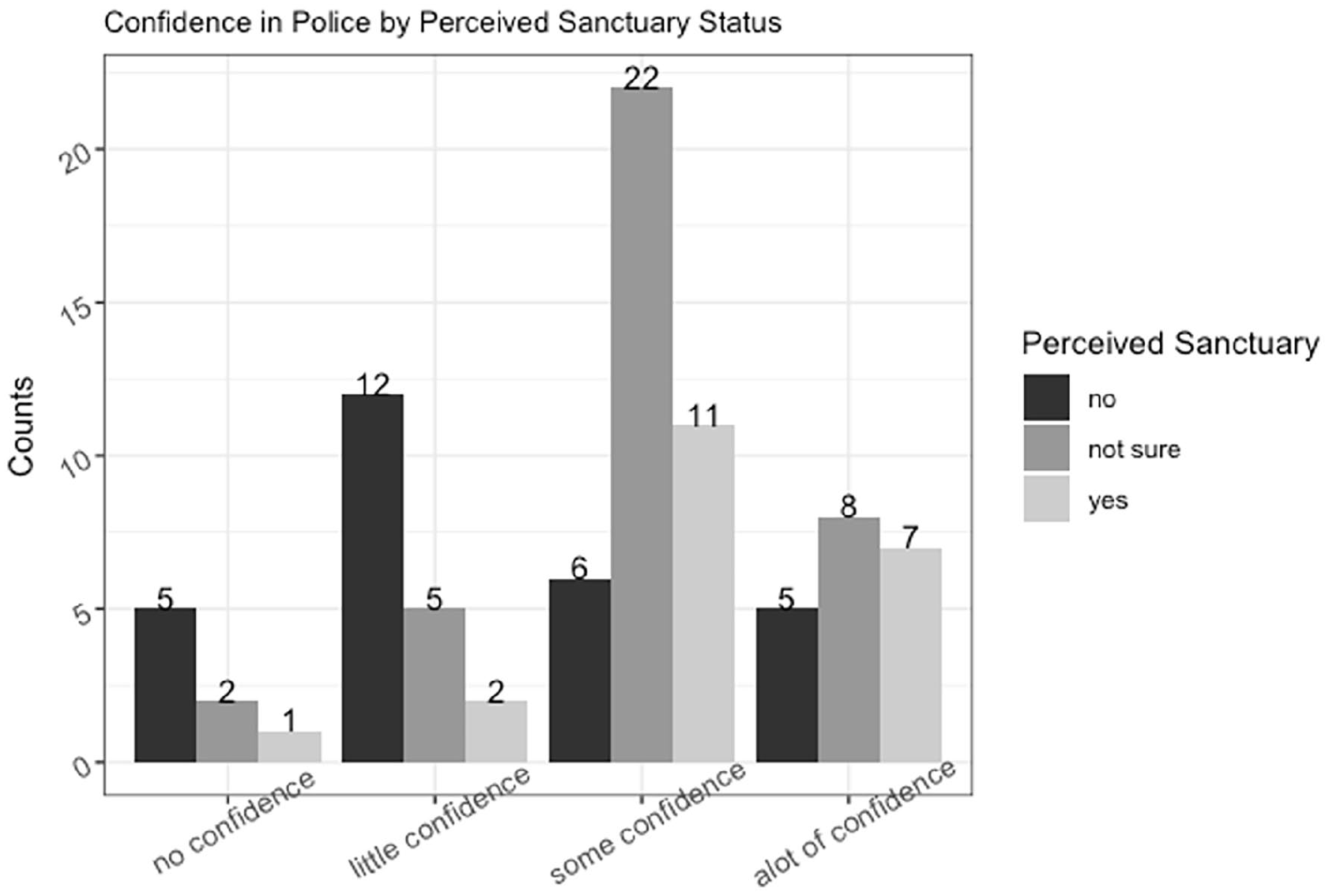
However, Figure 3 suggests that confidence in the police is, in fact, related to perceived sanctuary. Respondents who answer the question, “Does your community have a sanctuary policy?” in the affirmative are about twice as likely to express “some confidence” or “a lot of confidence” in the police as respondents who answer in the negative.
Confidence in Police by Perceived Sanctuary Status.
We went on to substitute “confidence in the sheriff” for “confidence in the police” and perform the same tests in an effort to see whether the initial results extended to local law enforcement in general. The results are entirely consistent. Well over half of the respondents who believe that their communities offer sanctuary have at least some confidence in their sheriffs; more than two-thirds of respondents who believe that their communities lack sanctuary policies express little to no confidence (p < .05); and neither county of residence nor deportability is significant.
The results are thus consistent with the idea that perceptions are more important than reality — that is, sanctuary policy and perhaps legal status — in shaping attitudes toward law enforcement. But the possibility of a spurious relationship or reverse causality — from confidence in the police to perceived sanctuary — cannot be ruled out, and we therefore perform two additional tests.
First, we examined the relationship between confidence in the governor and the three predictors on the assumption that she was a constant in both communities, and thus served as a valid placebo (Neumayer and Plümper 2017, 63). 6 Confidence in the governor is significantly related to neither county of residence, vulnerability to deportation, nor perceived sanctuary status. And the bivariate results thus pass the placebo test.
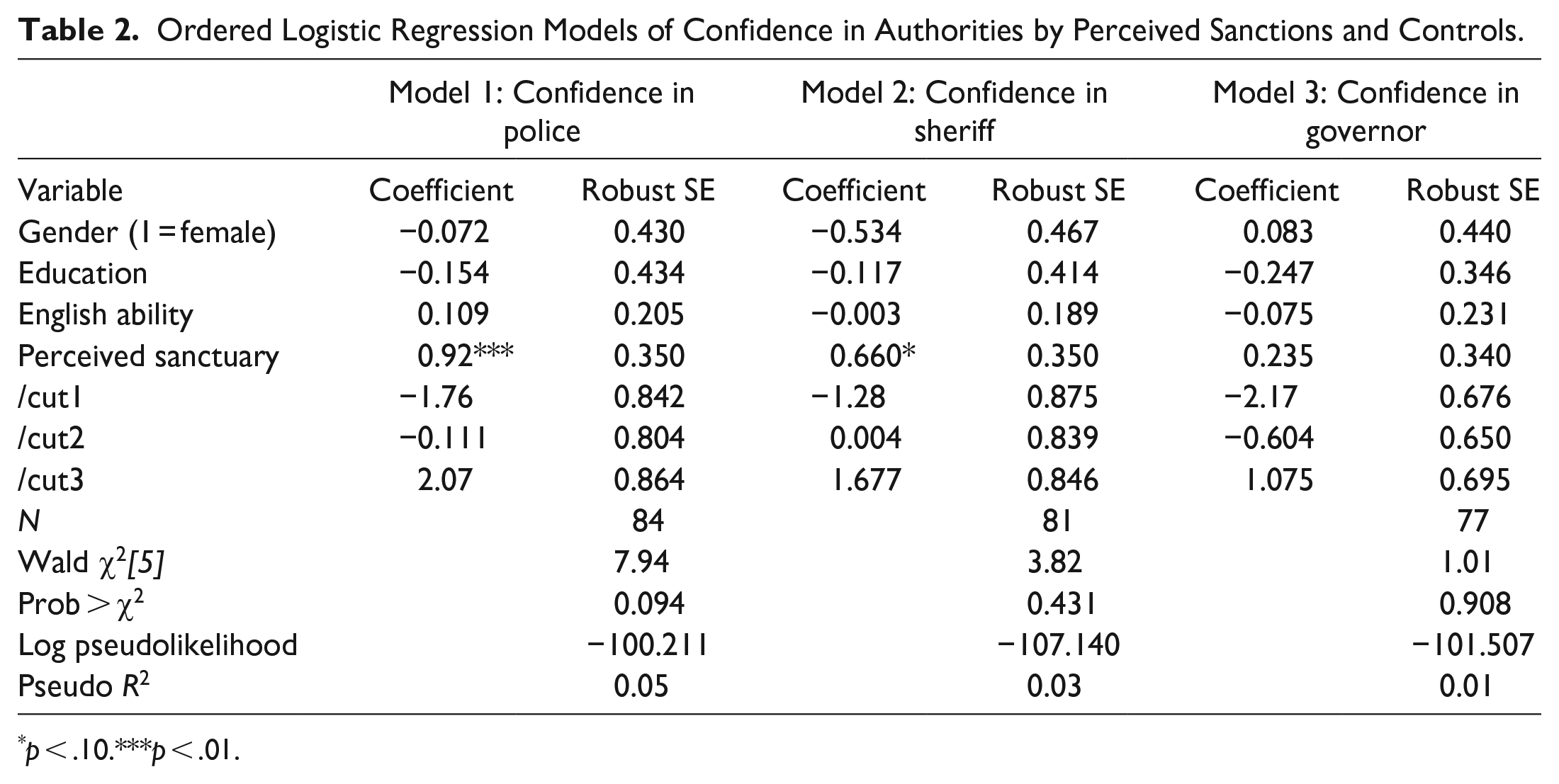
Second, we conducted a multivariate test of the relationship between confidence in the police, the sheriff, and the governor and a series of theoretically motivated control variables in an effort to assess the possibility of spuriousness. We have already established that women, the better educated, and English speakers are expected to be more sensitive to sanctuary policies than men, the less educated, and non-English speakers. Given that confidence in local law enforcement could easily vary by gender, education, and language for independent reasons, we control for all three variables in a series of ordered logistic regressions displayed in Table 2.
Ordered Logistic Regression Models of Confidence in Authorities by Perceived Sanctions and Controls.
p < .10.***p < .01.
Model 1 suggests that confidence in the police is best predicted by perceived sanctuary net of other factors. Perceived sanctuary is the only variable to achieve statistical significance, and the predicted probability that a respondent displays a lot of confidence in the police goes from about 10 percent, for respondents who believe that their communities lack sanctuary, to 40 percent, for respondents who believe that they are protected by sanctuary, with the other variables held at their means.
Model 2 treats confidence in the sheriff as a function of the same variables and produces similar results. While the level of statistical significance declines a bit (p = .06), the other predictors are nowhere near significant, and respondents who think they are protected by sanctuary are three times more likely to express confidence in the sheriff (30 percent vs. 10 percent) net of other factors.
And, finally, Model 3 places the placebo test in multivariate context and in so doing bolsters our confidence in our results. Perceived sanctuary does not predict confidence in the governor with any degree of reliability — unsurprising given that the governor does not vary across the sample.
Discussion
Our statistical results suggest that perceptions of sanctuary are more important than immigration policy itself in driving immigrant attitudes toward the police. However, they leave the sources of perceptions unexplored. What are the correlates or correct and incorrect understandings of immigrant risks and protections?
We address the question in three steps. First, we ask whether misperceptions are more likely to be “false positives” or “false negatives.” Do immigrants think they are protected by sanctuary in communities where they are more exposed, or fail to recognize sanctuary where it is on offer? We find that false negatives are more common than false positives. Second, we explore four potential correlates of misperception alluded to in the prior discussion: legal status, education, English-language ability, and gender. We find that perceptions are best predicted by gender, and that women are decidedly more likely to be familiar with their rights and protections than men. And, finally, we develop more rigorous tests of the relationship between gender and “hyper awareness of the law” (Menjívar 2011, 383; Dreby 2012, 833; García 2015, 227; Menjívar 2016, 725; Rios Casas et al. 2020, 945) and place them in multivariate context.
A Typology of Misperception: False Positives and False Negatives
We begin by exploring the nature of misperception. Figure 4 includes data on perceived sanctuary by county.
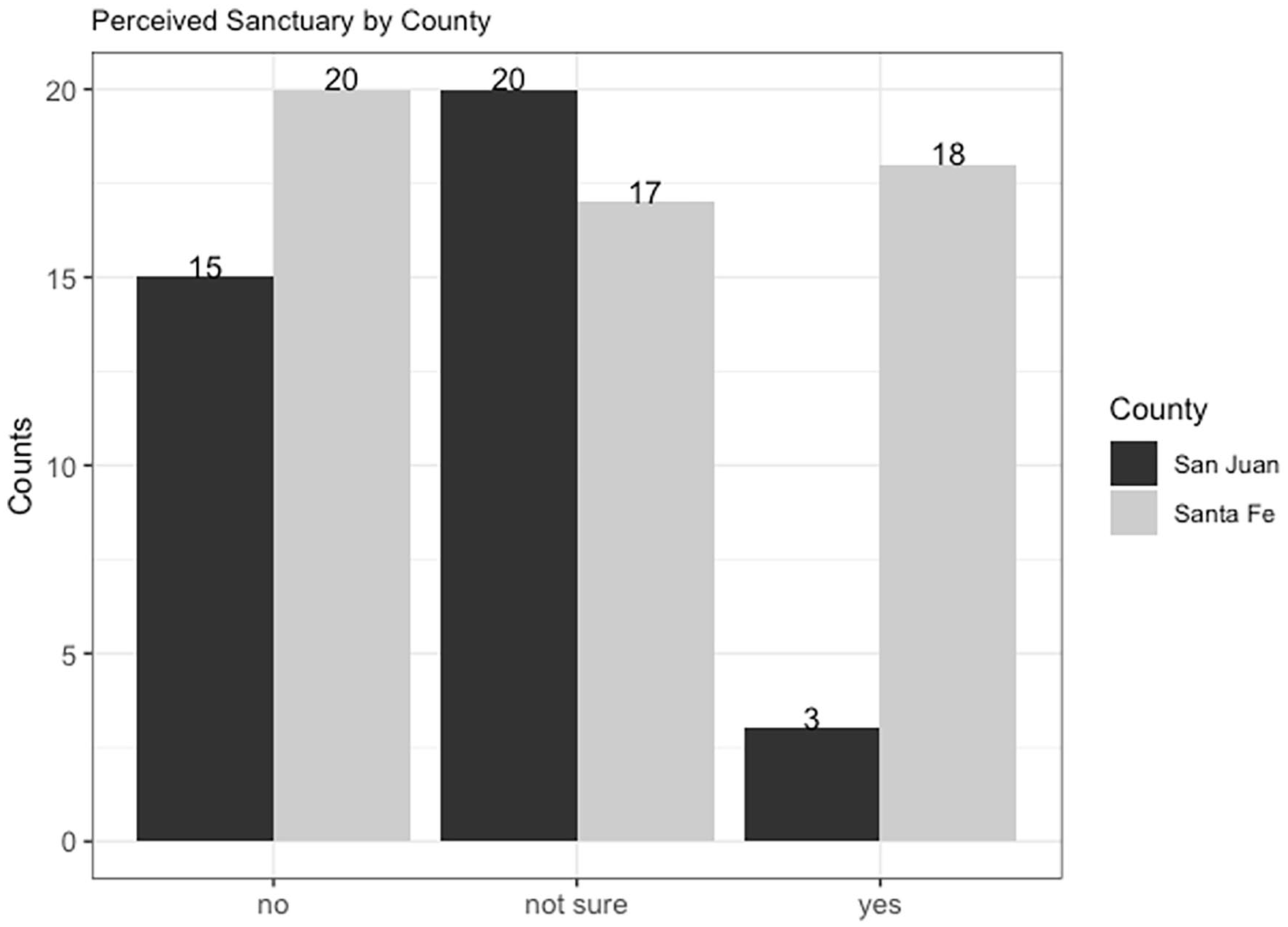
Perceived Sanctuary by County.
We can draw several conclusions. First, misunderstandings are the norm in the sample. Only 35 percent of the respondents ([15 + 18]/93 = 35) understand their own situation. Second, the relationship between perceptions and reality is weak. In fact, the bivariate correlation between an ordered ranking of perceptions (e.g., 0 = no sanctuary and 1 = unsure, etc.) and an indicator variable for county is statistically insignificant. And, third, false positives (n = 3) are less common than false negatives (n = 20) in both absolute and relative terms. Less than 10 percent of San Juan respondents falsely believe that they are protected by sanctuary; more than one-third of Santa Fe respondents believe that they lack sanctuary, and almost as many are unsure.
The Correlates of Misperception: Legal Status, Language Ability, Education, and Gender
What are the correlates of misperception? The literature suggests that deportable immigrants and Latinas, in their traditional roles as caretakers, have an outsized incentive to pay attention to the law (De Genova 2002; Abrego 2011, 361; Dreby 2012, 833; Hartry 2012, 18; Menjívar et al. 2018, 122; Rios Casas et al. 2020, 945; Simmons, Menjívar, and Valdez 2020, 9). In addition, educated immigrants and English speakers have the greatest ability to understand the law (McMillan and O’Neil 2012, 41).
We explored the correlates of misperception by looking at the bivariate relationships between understandings of sanctuary (coded 1 for accurate; 0 otherwise) and legal status, education, English-language ability, and gender (coded 1 for women), and found not only that gender is the only significant predictor of an accurate understanding but that it predicts a good deal of the variation. Of 49 women in the sample, 23 could correctly classify their county by our criteria; of 43 men in the sample, only 10 could do so (χ2 = 5.58; p < .025); and the results are, if anything, strengthened by the inclusion of the remaining variables — deportability, education, and English-language ability — as controls. 7
Robustness Tests
These results are consistent with both the growing literature on the gendered nature of legal consciousness in immigrant communities (Menjívar 2000; Calavita 2006; Graca 2018; De Hart and Besselsen 2020) and the situation on the ground in northern New Mexico. Immigrant women in San Juan condemn collaboration between the sheriff and ICE, and the corresponding deportation of their partn-ers and children (Grover 2019; Jennings 2019; Simonich 2019). Women have been at the forefront of immigrant rights campaigns in Santa Fe and beyond (Martínez 2010; García 2017). And Verónica Velasquez Ruíz, an undocumented immigrant in Santa Fe, says “sanctuary city policies are for people like me who are mothers whose children expect them to show up at school to pick them up, or expect them to be at home when they get home. If I get stopped by a police officer for a traffic infraction,” she worries, “that stop might lead to me not being able to pick up my child” (see Weaver 2017).
Does women’s legal consciousness extend beyond sanctuary policy to immigration enforcement more generally? We addressed the question by asking immigrants whether they had noticed any changes in ICE enforcement practices in the Trump era (2017–2019) and found a substantial gender gap in Figure 5.
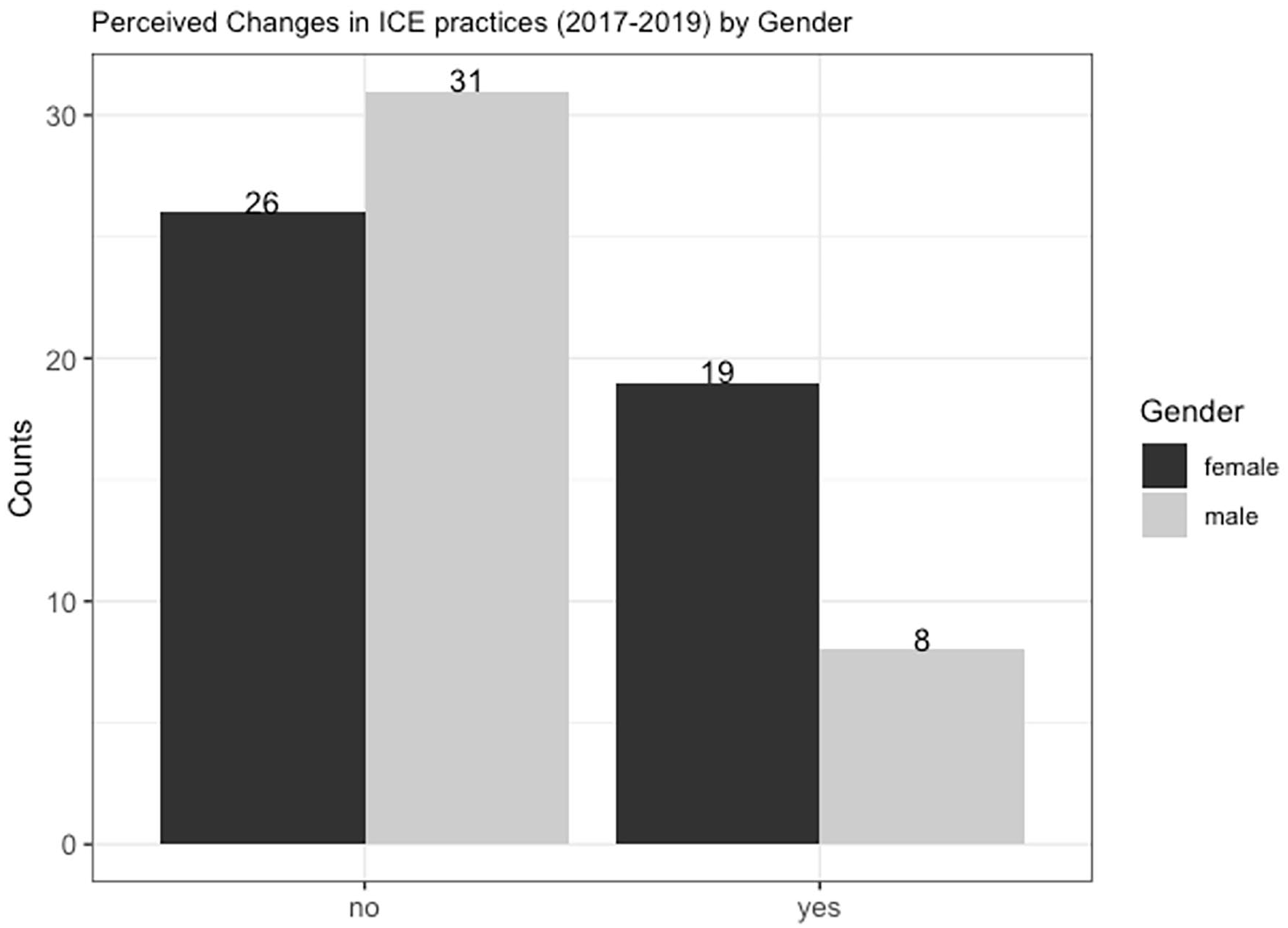
Perceived Changes in ICE Practices (2017–2019) by Gender.
Women were almost twice as likely as men to have noticed the crackdowns that ICE has been prosecuting throughout the state (Cantú 2018; Jennings 2019). It is perhaps worth pointing out, moreover, that perceptions of changes at ICE are positively correlated with accurate perceptions of sanctuary (χ2 = 3.82; p = .051).
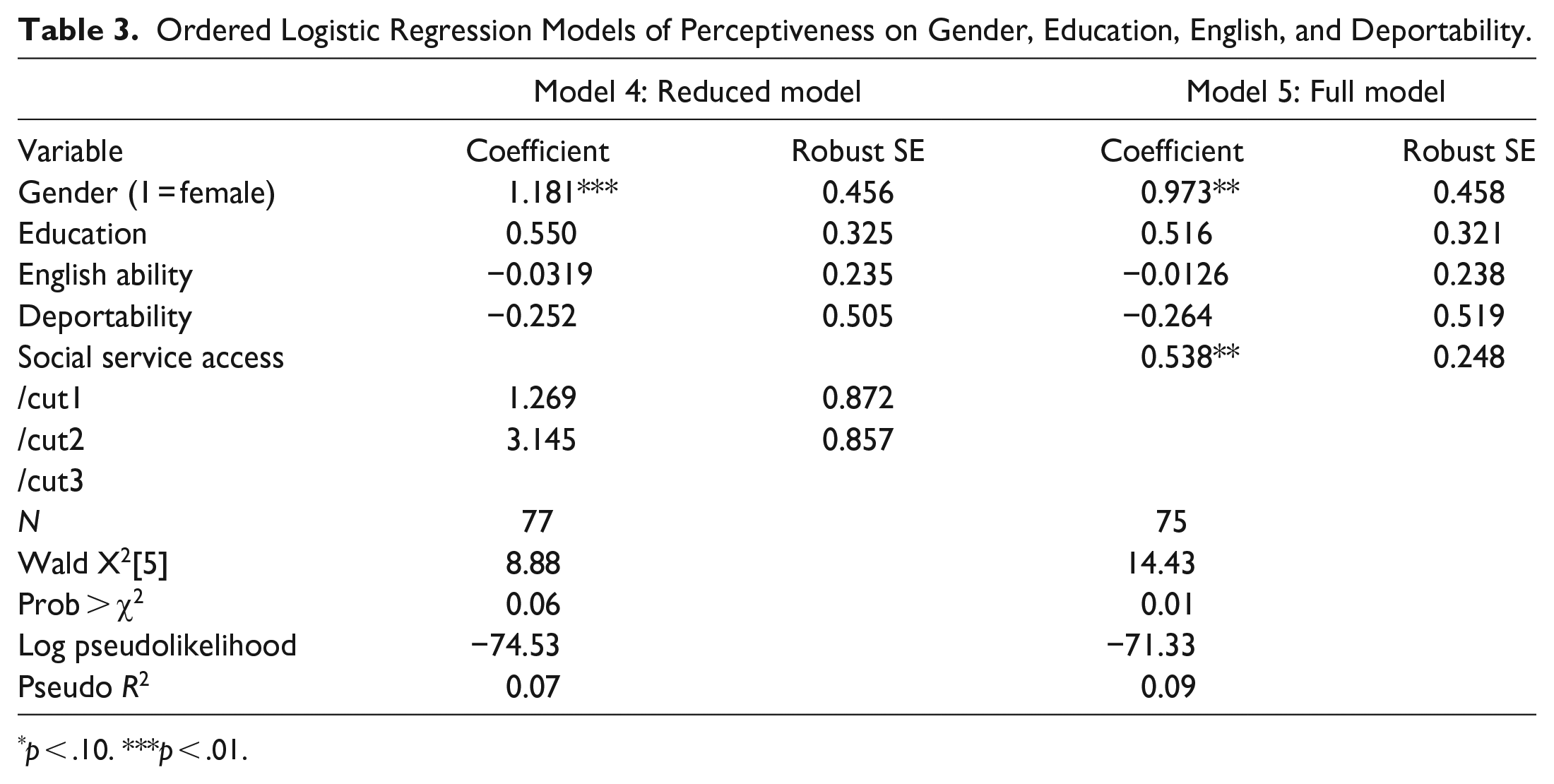
In a final effort to assess the robustness of our results, however, we developed an index of overall perceptiveness — coded 2 for respondents who perceived both the current status of their county and the growth of ICE activity accurately, 1 for respondents who could identify one but not both factors, and 0 for respondents who perceived neither — and conducted two more regressions: a reduced Model 4 that regresses the index on the predictors we have considered so far (i.e., gender, education, English-language ability, and deportability); and a full Model 5 that adds a 4-point Likert scale that taps the frequency with which respondents access social services in an effort to control for their broader willingness to enter the public sphere. The results are in Table 3 and are entirely consistent with the story so far.
Ordered Logistic Regression Models of Perceptiveness on Gender, Education, English, and Deportability.
p < .10. ***p < .01.
They suggest not only that perceptiveness is higher among women net of controls, including the propensity to enter the public sphere, but that gender is by far the most powerful differentiator of legal consciousness and legal confusion. In fact, the predicted probability that a man answers neither question correctly is 55 percent, in the full model, when the controls are set at their sample means, whereas for women it is 30 percent. The predicted probability that a woman answers both questions correctly is almost 25 percent, in the full model, when the controls are set at their sample means, whereas for men it is less than 10 percent. And, finally, the predicted probability of a perfect score on the index of perceptiveness goes from 28 percent for the most publicly engaged man (social service scale = 4) to more than 50 percent for the most publicly engaged woman. 8
Our point is not to imply causality. The data are not only observational but cross-sectional. The key predictors (e.g., gender and deportability) are “concomitants” that are not “manipulable” (Freedman 2004, 17) in a statistical sense. And the “fundamental problem of causal inference” (Holland 1986) therefore looms large in Table 3. Insofar as the data are drawn from a single state, moreover, they say little about the relationship between people’s perceptions and punitive policies at the national level (cf. Vargas, Sanchez, and Valdez 2017). However, the results do speak to a robust correlation between gender and perceptiveness that is consistent both with prior theory and our observations in northern New Mexico; and they imply that interior enforcement is experienced differently by men and women in part due to their different roles and identities.
Conclusion
In an effort to discern the relationship, if any, between sanctuary policies and police-community relations we carried out consular surveys in two New Mexico counties marked by large immigrant populations: the more welcoming Santa Fe County; and the more hostile San Juan County. We found that on their own sanctuary policies bore no relationship to police-community relations, but that immigrants who perceived that they were protected by sanctuary had more trust in the police and sheriff. We went on to draw two conclusions about immigrant perceptions of law enforcement: first, false negatives are more common than false positives, meaning that immigrants and their families are hypervigilant (Enriquez 2015); second, women are more aware of their rights and protections than men. The latter may be due to their greater involvement in informal social networks (Hondagneu-Sotelo 1994, 178; Menjívar 2000, 177; Menjívar and Salcido 2002, 903). We would like to highlight two broader implications.
The first relates to the relationship between sanctuary and crime. A growing body of evidence suggests that sanctuary communities have lower crime rates, on average, than non-sanctuary communities (see, e.g., Wong 2017). But why this is the case is unclear. Some believe that sanctuary policies encourage immigrants to cooperate with the police in their efforts to enforce the law. Others believe that immigration enforcement wastes police resources that could better be spent on violent crime in particular. Still others hold both views. Because most of our respondents did not know whether they had access to sanctuary or not, our results are more consistent with the resource-diversion hypothesis than police-community cooperation in sanctuary cities. Insofar as almost half of the women we surveyed were aware of their situations, however, our results suggest that the dynamics of gender-based violence, and the behavior of women more generally, may differ. Women who are abused may be more likely to come forward when they live in sanctuary jurisdictions, and may well cooperate with the authorities in other ways, as suggested by existing scholarship (Gonzalez O’Brien, Collingwood, and El-Khatib 2017, 13; Amuedo-Dorantes and Deza 2019). 9 Insofar as multilayered enforcement is conducive to legal confusion, our results suggest that DHS and the courts should adopt a uniform definition of sanctuary, if this term is to be used in public policy, and localities that adopt sanctuary policies should publicize them so that the policies have their desired effects.
The second relates to the relationship between legal consciousness and immigration. While legal consciousness has frequently been portrayed as a prelude to immigrant mobilization, the concept itself “has Marxist origins, developing from the question of why people go along with systems of inequality in which they are disadvantaged” (Merry in Coutin et al. 2014, 3–4). Our study goes a long way toward reconciling the two perspectives by suggesting that legal consciousness is the exception to the rule in a multilayered enforcement environment, and that most immigrants — and male immigrants in particular — are more likely to be confused by the “patchwork of overlapping and potentially conflicting authority” (Varsanyi et al. 2011, 138) than cognizant of their rights and protections. Immigrant legal consciousness is by no means imaginary, therefore, but it is much less common than legal confusion — especially among immigrant men.
We do not want to exaggerate the generality of our results. They are based on small surveys of non-probability samples drawn from the populations of two communities in a single state at a single point in time, albeit communities with which we were already fa-miliar and surveys carried out by their residents. In essence, therefore, we have provided a comparative case study of Santa Fe and San Juan counties at the end of the Trump era. However, our results are consistent with a broader body of literature on gender, migration, and legal consciousness, and merit further study of a broader array of communities at a minimum, perhaps using venue-based sampling. Otherwise, we will squander an important opportunity to better understand not only the consequences of multilayered enforcement but the nature of immigrant legal consciousness more generally.
Footnotes
Acknowledgements
We’d like to thank the staff and members of Somos un Pueblo Unido for their work in carrying out the survey, and the Mexican Consulate for their cooperation and support. We’d also like to thank Lisa Martinez for her helpful comments on the paper.
Declaration of Conflicting Interests
The author(s) declared no potential conflicts of interest with respect to the research, authorship, and/or publication of this article.
Funding
The author(s) received financial support for the research, authorship, and/or publication of this article: Schrank would like to acknowledge the support of the Canadian Institute for Advanced Research.
1
The degree to which sanctuary policies actually impede deportation is nonetheless controversial and in need of further investigation (Pedroza 2019, 640, footnote 5; AIC 2020, 2). Compare, for example, the recent findings of Hausman (2022), who maps individual-level data on deportation to the county-level data on the presence of sanctuary policies between 2010 and 2015 and finds that the policies are “effective at reducing deportations” (p. 27262), and  , who challenges both his methods and findings (Ch. 3).
2
Menjívar et al. (2018) and Simmons, Menjívar, and Valdez (2020) analyze data drawn from Theodore’s dual-frame RDD survey of immigrants in four major metropolitan areas and find that immigrants exhibit less fear in the sanctuary cities of Chicago and Los Angeles than in Houston and Phoenix. While these studies are focused on the relationship between legal status and fear of the authorities within the cities, they identify differences across the cities as well, and conclude that “Chicago’s sanctuary policies may be having the effect of promoting interactions with the police, especially for immigrants with status” ().
3
For instance, Nandi et al. (2008) tried to recruit unauthorized Mexican immigrants in New York City by approaching candidates at venues where they’re known to congregate in neighborhoods with high concentrations of Mexican-born residents and found that 85% of their recruits fit their criteria and that their broader profiles matched what is known about the undocumented Mexican community in the city (p. 7). Others have achieved similar results in different settings (Wasserman et al. 2005; Standish et al. 2010; , 19).
4
According to the US Census Bureau (2023), Santa Fe County has a population of 155,664, of whom 50.3 percent identify as Hispanic, and San Juan County has a population of 120, 418, of whom just over 20 percent identify as Hispanic. Voter registration skews sharply Democratic in Santa Fe and Republican in San Juan (). We originally planned to follow-up on the surveys with focus groups. However, the COVID-19 pandemic forced us to abandon the second half of the data collection; hence, the greater reliance on media reports and our experiences collaborating with Somos Un Pueblo Unido, and immigrant rights group and longtime collaborator discussed in more detail below.
5
In the year we conducted our survey Santa Juan County also outscored Santa Fe County on the Immigrant Legal Resource Center’s scale of county-level involvement with ICE (ILRC 2019).
6
7
Complete results available from authors on request.
8
9
We do not want to ignore the downside to legal consciousness among immigrant women in the context of interior enforcement. A growing body of evidence suggests that women are not only more sensitive to immigration policy but are more likely to experience anxiety, stress, and their psychological and physical manifestations in the context of immigration enforcement crackdowns (Dreby 2012, 837; ).