



Abstract
Teacher communication influences students’ cognitive and emotional well-being, yet mechanisms linking communication behaviors to learning outcomes remain underexplored. Grounded in the conservation of resources framework, this study tested an ecological model in which teacher clarity and rapport indirectly reduced writing apprehension through perceived immediacy, self-efficacy, and burnout. Undergraduate students (N = 389) in Business and Professional Communication courses completed validated measures. Structural equation modeling supported a serial mediation: clarity and rapport predicted immediacy and self-efficacy, which reduced burnout and, in turn, writing apprehension. Findings highlight burnout as a psychological conduit linking instructional communication to student anxiety.
The transition to college presents students with numerous academic and social stressors that can threaten their motivation, confidence, and well-being (Jagodics & Szabó, 2023; Maslach & Leiter, 2016; Nielsen, 2020). College students often report elevated levels of burnout, anxiety, and academic disengagement, which in turn predict lower test scores, decreased writing performance, and reduced retention (Jagodics & Szabó, 2023; Kelly et al., 2022; Mascle, 2013). Business and professional communication students, specifically, face intensive performance demands requiring sustained cognitive effort and repeated public evaluation through presentations and writing tasks (Foutz et al., 2021; Kelly et al., 2022; Mascle, 2013; Violanti et al., 2024). Consequently, understanding how classroom communication shapes students’ capacity to manage stress and persist in such environments remains a pressing concern for instructional researchers (Kelly et al., 2015; Maslach & Leiter, 2016).
Research has consistently shown that students draw on a range of psychological and interpersonal resources to cope with academic stress (Alarcon et al., 2011; Hobfoll, 1989; Hobfoll et al., 1992; Jagodics & Szabó, 2023; Kim et al., 2017). These include personal resources such as self-efficacy, social resources such as peer and teacher support, and environmental resources such as clear instructional structure (Bolkan, 2017; Kim et al., 2017; Serki & Bolkan, 2024; Titsworth et al., 2015). Teachers, therefore, serve not only as transmitters of information but also as social and emotional resource providers whose communicative behaviors influence how students experience challenge, motivation, and recovery from stress (Frisby et al., 2016, 2024; Kelly et al., 2015; Kelly, Violanti, et al., 2025; Zheng, 2021).
From this perspective, the classroom can be viewed as an ecological system of resource exchange, where instructional communication regulates the balance between students’ cognitive investment and emotional resilience (Hobfoll et al., 1992). Behaviors such as teacher clarity, rapport, and immediacy operate as interdependent forces within this ecosystem, with clarity conserving students’ cognitive energy (Bolkan, 2016; Serki & Bolkan, 2024) and immediacy replenishing affective resources through relational connection (Kelly & Gaytan, 2020; Kelly et al., 2015). When these dynamics are in equilibrium, students are better able to sustain engagement and avoid burnout or anxiety (Jagodics & Szabó, 2023; Maslach & Leiter, 2016). Conversely, when communicative support is inconsistent or ambiguous, students may experience resource depletion, manifesting as exhaustion, inefficacy, or writing apprehension (Kelly & Gaytan, 2020; Kelly et al., 2022; Kelly, Romero, et al., 2020).
This ecological framing aligns with calls to integrate conservation of resources (COR) theory into instructional research (Hobfoll, 2001). Previous research emphasizes the importance of examining a variety of resources, categorized as personal (e.g., self-efficacy, conscientiousness; Nielsen, 2020), condition (e.g., teacher rapport/social support/perceived immediacy: Kelly et al., 2015; Kim et al., 2017), and energy (e.g., teacher clarity: Bolkan, 2016; Serki & Bolkan, 2024) resources to better understand student burnout (Jagodics & Szabó, 2023; Prapanjaroensin et al., 2017). Applying COR theory to the classroom context provides a systematic way to conceptualize how communication behaviors help students conserve and regenerate psychological resources over time (Bolkan, 2016; Kelly et al., 2015).
Additional research indicates that teacher clarity (LaBelle et al., 2013), teacher rapport (Frisby et al., 2024), and perceived immediacy (L. Johnson & Kelly, 2020) increase students’ self-efficacy. In turn, perceived immediacy (Violanti et al., 2024) and self-efficacy (Autman & Kelly, 2017) have been shown to attenuate writing apprehension. Student burnout suppresses the positive effects of perceived immediacy (Violanti et al., 2024). Self-efficacy, rapport, and perceived immediacy have not been combined to address student burnout and writing apprehension.
The present study addresses this literature gap and calls from researchers by investigating how teacher clarity and rapport, two foundational communicative resources, relate to students’ perceived immediacy, self-efficacy, burnout, and writing apprehension in business and professional communication courses. Grounded in COR theory and informed by an ecological view of classroom communication, this study tests a serial mediation model that traces how instructional behaviors (e.g., teacher clarity, rapport) indirectly influence students’ emotional (e.g., perceived immediacy, self-efficacy) and cognitive (e.g., burnout, writing apprehension) outcomes through interconnected resource processes.
Literature Review
Teacher Clarity
Teacher clarity behaviors help students choose, understand, and remember course material (Titsworth & Mazer, 2016), thus requiring less cognitive effort when learning new information (Bolkan, 2016). Communication that prevents overloading students’ working memory, is well organized, and offers opportunities to ask questions is considered a behavior associated with a clear teacher (Bolkan, 2017). Additionally, teachers who use many immediate behaviors (Kelly et al., 2024; Zheng, 2021) and humor are perceived as clearer (Violanti et al., 2018). Teachers are also perceived as clearer when they use a moderate number of emojis (Vareberg & Westerman, 2023) and when they opt for rich media in online classes (Limperos et al., 2015). Students benefit greatly from teachers’ clarity behaviors, particularly when the course content is complex (e.g., business statistics, analytics).
When teachers engage in clarity behaviors, students experience greater cognitive (Bolkan, 2017; Serki & Bolkan, 2024; Titsworth et al., 2015) and affective learning (Titsworth et al., 2015). Students are also more motivated to learn (Bolkan et al., 2016) and find more value in what they are learning (Kelly et al., 2024) when they perceive a teacher as clear. Teacher clarity may also reduce classroom anxieties, such as writing apprehension (Kelly & Gaytan, 2020) and general anxiety about learning new material (Bolkan & Goodboy, 2024). Teacher clarity can reduce students’ cognitive load, but only if they are not experiencing negative emotions while learning (Bolkan et al., 2025). Teacher clarity also positively influences academic self-efficacy (LaBelle et al., 2013), perceptions of teacher immediacy, student participation (Goke et al., 2021), and potential to build rapport with teachers (Napier & Anzur, 2021). Thus, teacher clarity is heavily linked to rapport and immediacy when creating a positive classroom environment.
Teacher Rapport
Teacher rapport refers to the overall feelings of mutual trust, respect, and enjoyment that teachers and students experience with one another, encompassing both relational and emotional connections (Frisby et al., 2024). These personal connections also must be maintained over time (Flanigan et al., 2023). Positive rapport is essential to enhancing classroom connectedness and students’ motivation to accomplish course objectives (Frisby et al., 2016). Teachers can value students’ viewpoints, care for their well-being, provide space for them to express themselves, employ humor, and provide valuable feedback to foster a sense of rapport (cf. X. Zhou, 2021). Teacher rapport can also yield numerous benefits in the classroom.
Students experience increased self-efficacy, cognitive learning (Frisby et al., 2024), motivation (Frisby et al., 2017), and affective learning (Frisby & Martin, 2010), which are especially pertinent during high-engagement classroom activities and skill-building classes (e.g., professional writing and presentations). Xie and Derakhshan (2021) report that teacher rapport and clarity, in tandem, affect student learning, engagement, class attendance, and willingness to communicate. Rapport also creates a space where classroom anxieties may be decreased. D. Zhou et al. (2020) report that students who perceive positive rapport with their teachers also experience less math anxiety. Some evidence also suggests that participation apprehension may be partially alleviated by teacher rapport (Frisby et al., 2014). However, Frisby et al. (2014) also note that other factors (e.g., students’ anxiety levels, classroom perceptions) may require more than teacher rapport to mitigate these issues, as rapport alone may be inadequate for some students. Other positive perceptions students hold of their teachers (e.g., perceived immediacy) are also significant factors in managing classroom stressors that require significant resource expenditure.
Perceived Immediacy
Perceived immediacy refers to the sense of psychological closeness between communicators, which mediates the sender’s communication and the receiver’s response (Kelly & Westerman, 2014). A teacher may employ verbal (e.g., addressing students by name, seeking feedback, using inclusive language), nonverbal (e.g., smiling, eye contact, relaxed body posture), and text-based (e.g., moderate emoji use; Vareberg & Westerman, 2023; Vareberg et al., 2023) immediate behaviors to increase perceived immediacy (cf. Liu, 2021). Much attention has also been given to the mediating role of perceived immediacy in classroom anxiety research, which is particularly helpful in high-stakes academic areas (e.g., writing-intensive courses).
Perceived immediacy mediates the relationships between teacher immediate behaviors and students’ writing apprehension (Kelly & Gaytan, 2020; Violanti et al., 2024), math anxiety (Kelly et al., 2015), and public speaking anxiety (Foutz et al., 2021). It also mediates the relationships between teacher antagonism and students’ writing apprehension (Kelly et al., 2022) and math anxiety (Kelly, Romero et al., 2020). Teachers’ active empathetic listening behaviors also indirectly impact students’ math anxiety through the mediation of perceived immediacy (Minuci et al., 2025). Relatedly, perceived immediacy negatively correlates with student burnout (Ojeda-Hecht et al., 2022). As such, research consistently demonstrates that the anxiety and emotional exhaustion students experience are mediated by their sense of closeness to their teacher. Another benefit of perceived immediacy is its enhancement of student self-efficacy (L. Johnson & Kelly, 2020), a key factor in students’ academic success.
Student Self-Efficacy
A student’s self-efficacy is their belief in their own ability to complete tasks successfully (Bandura, 1977). Many teacher communicative behaviors impact students’ self-efficacy, including clarity (LaBelle et al., 2013) and affirmation of students’ contributions (Z. Johnson & LaBelle, 2023). Effective feedback also enhances students’ self-efficacy, thereby reducing public speaking anxiety and increasing communication competence (Ledford & Ashby-King, 2025). Teachers can also enhance students’ self-efficacy by engaging in intellectually stimulating teaching practices (e.g., encouragement and challenges), which in turn influence their intrinsic motivation to learn course material (Shin & Bolkan, 2021). Students experience many positive outcomes associated with enhanced self-efficacy, which is particularly relevant in more challenging academic environments (e.g., foundational skill-building and senior-level content courses). Self-efficacy is beneficial not only for performing well in the course, but these skills also carry over into students’ organizational lives (Cavanagh et al., 2019). Self-efficacy predicts time spent on tasks and students’ ability to control their attention to learning (Weber et al., 2011). Students with high self-efficacy are more motivated to persist through challenging tasks (Cassidy, 2015) and participate in class (L. Johnson & Kelly, 2020). Kelly, Smith, et al. (2020) report that student self-efficacy can alleviate public speaking anxiety, but not writing apprehension, as found by Autman and Kelly (2017). Thus, other variables may be involved when mitigating the stressors students experience in the classroom. Student burnout becomes a complex factor in this regard. Research consistently indicates that the positive effects of self-efficacy (Maricuţoiu & Sulea, 2019), as well as perceived immediacy (Violanti et al., 2024), may be weakened when students also experience burnout.
Student Burnout
When the stressors of school become overwhelming, students may experience a state of burnout. In general, burnout is understood to be persistent feelings of depersonalization, emotional exhaustion, and decreased personal accomplishment (Maslach & Leiter, 2016). In academic settings, students may exhibit cynicism or a sense of inefficacy due to burnout (cf. Kim et al., 2017). Students may also experience a loss of resources (e.g., free time, social support) during stressful situations, which can lead to maladaptive coping mechanisms (e.g., cynicism, disengagement) that exacerbate burnout issues (Alarcon et al., 2011). However, evidence shows that various teacher behaviors can attenuate student burnout, making it an important and complex factor in many college classrooms.
Kim et al. (2017) indicate that social support (e.g., family, friends, teachers) can buffer the negative effects of burnout, and teacher–student support is the strongest predictor. Similarly, teacher responsiveness and caring also reduce burnout (Kelly, Minuci, et al., 2025). However, students’ perceptions of social support behaviors, such as perceived immediacy, may be suppressed by student burnout (Violanti et al., 2024). Burnout consistently leads to various classroom stressors, such as struggling to stay on task (Ojeda-Hecht et al., 2022), decreased student participation (Atkinson et al., 2020), and, especially, writing apprehension (Kelly et al., 2022; Violanti et al., 2024).
Student Writing Apprehension
Writing apprehension is understood as students’ tendency to avoid writing situations in the hopes of reducing the stress associated with such activities (Daly & Miller, 1975). Students may experience fear of being evaluated, a dislike of peers reading their work, or negative emotions while writing (Autman & Kelly, 2017). Students who experience writing apprehension may also exhibit a lack of motivation for, or avoidance of, writing assignments (Fischer et al., 2017). Many aspects of the learning environment (e.g., teacher behaviors) can contribute to writing apprehension. Kelly et al. (2022) report that teachers’ antagonism and poor lecturing can lead to students’ burnout, which then increases their writing apprehension. Positive teacher behaviors, on the other hand, may mitigate these issues.
Teachers may reduce writing apprehension by increasing students’ self-efficacy through building their confidence, providing meaningful opportunities to master writing, or making writing enjoyable (cf. Mascle, 2013). Teachers’ affirming messages (e.g., interest, encouragement) and social presence (e.g., nonverbal immediacy, genuineness) can alleviate writing apprehension through the mediation of perceived immediacy (Violanti et al., 2024). Kelly and Gaytan (2020) report that teacher clarity and perceived immediacy may also reduce writing apprehension in face-to-face learning environments. As prior research indicates, teachers can provide various resources (e.g., clarity, rapport, immediate behaviors) that may need to be used in conjunction as students navigate through burnout and writing apprehension.
Previous studies have primarily examined writing apprehension through cognitive or affective explanations, such as self-efficacy deficits (Autman & Kelly, 2017; Mascle, 2013) or feedback anxiety (Daly & Miller, 1975; Fischer et al., 2017). Although these perspectives clarify important mechanisms, they tend to isolate individual factors rather than examine how multiple instructional and emotional processes interact to shape students’ writing experiences. Recent work suggests that cognitive resources (Bolkan, 2016; Serki & Bolkan, 2024) and relational resources (Frisby et al., 2014; Kelly & Gaytan, 2020) jointly influence anxiety and engagement (Kelly et al., 2015, 2022). Yet, research has rarely integrated these dimensions within a single, system-level framework that explains how teaching behaviors help students conserve effort, sustain motivation, and manage stress. The next section introduces a theoretical approach that addresses this gap by conceptualizing writing apprehension as part of a broader process of resource management in the learning environment.
Conservation of Resources Theory
Conservation of Resources (COR) theory (Hobfoll, 2001) predicts that the threat or loss of personal resources is a primary catalyst for stress, and people either protect or gain resources to combat this loss. The various resources a person has can be placed into one of four categories (i.e., object, personal, conditions, or energy). For example, a person can have a nice car (object), positive self-esteem (personal), valuable relationships (conditions), and free time (energy) as resources. However, if one of these resources is lost (e.g., the nice car breaks down), COR predicts that a person invests in other resources to cope with the stress of this loss (e.g., pursue social support). A key aspect of COR is the notion that a person’s ability to cope with stress is heavily reliant on social factors, such as one’s relationships or community (Hobfoll et al., 2016). COR has historically been studied across a variety of contexts, with education being a widely studied area.
Alarcon et al. (2011) found that various forms of social support provide students with coping strategies to combat burnout and increase classroom engagement. Indeed, social support plays a crucial role in mitigating student burnout, reducing stress and feelings of inefficacy (Kim et al., 2017). Research also indicates that reducing mental and emotional demands and providing other social resources (e.g., meaningful support) are key factors in combating student burnout (Jagodics & Szabó, 2023). Teacher clarity reduces cognitive demand (Bolkan, 2016), while rapport fosters social connections within the classroom (Frisby et al., 2016). Both variables enhance students’ self-efficacy (Frisby et al., 2024; LaBelle et al., 2013) and perceived immediacy (Kelly & Gaytan, 2020). Therefore, conservation of these resources may provide pathways to mitigate students’ burnout and, subsequently, writing apprehension (Violanti et al., 2024).
Hypotheses
Based in conservation of resources theory, this study set out to examine the ways in which teacher behaviors and student-teacher relationships allow students to conserve their time, effort, and energy in handling the stress associated with burnout and writing apprehension. Specifically, this study is designed to test four hypotheses:
(a) clarity, rapport, self-efficacy, and perceived immediacy are positively related to each other; (b) clarity, rapport, self-efficacy, and perceived immediacy are negatively related to burnout; (c) clarity, rapport, self-efficacy, and perceived immediacy are negatively related to writing apprehension; and (d) burnout and writing apprehension are positively related.
Hypothesis 4 is pictured in Figure 1 (the hypothesized model).
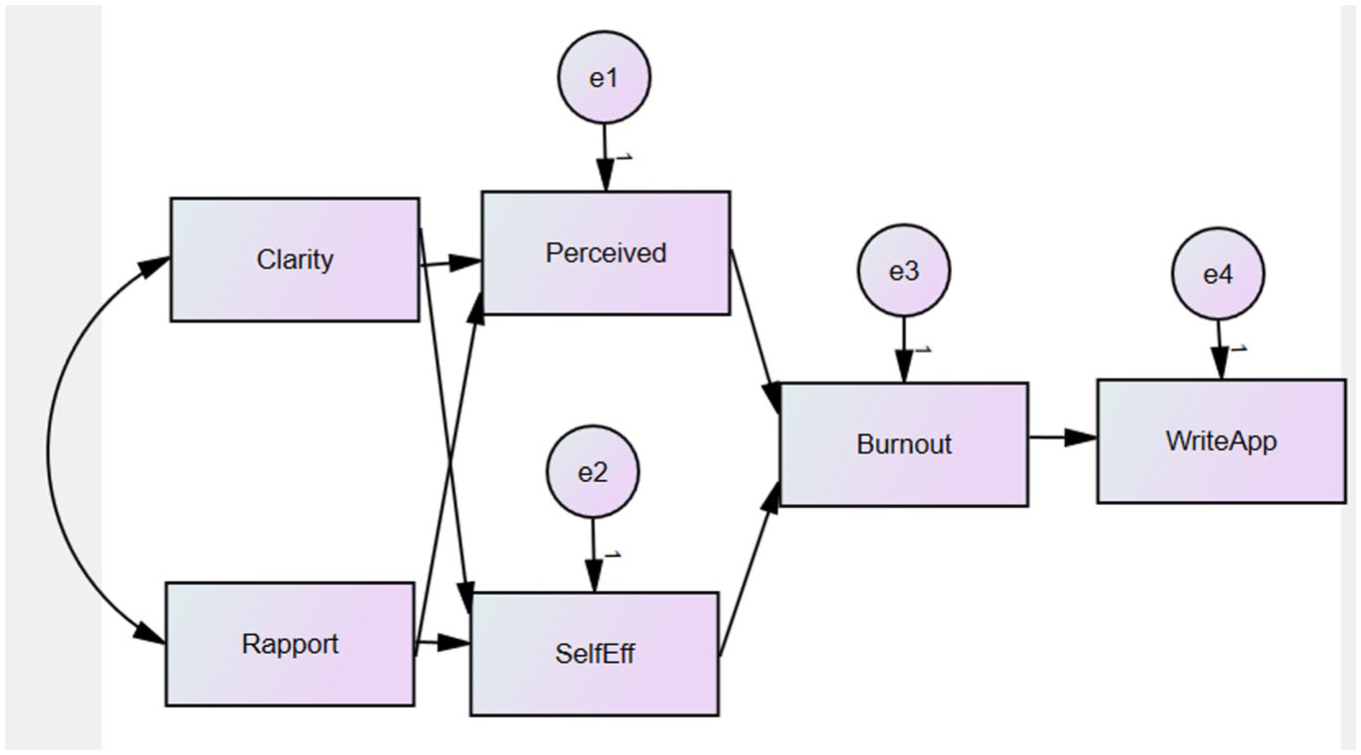
The hypothesized model.
Methods
These data were collected as part of a larger study on business and professional communication students’ instructional experiences that was open for data collection throughout the Fall 2024 and Spring 2025 semesters. Upon receiving institutional review board approval, the online questionnaire utilized for this study was made available to students as part of a research pool that contained many studies from which they could choose to earn 12.5 out of 1,000 points in the course. (For those who did not wish to participate in research, an alternative written assignment was provided.) Students who opted for research as part of the course were registered in the college’s human subject’s pool where they could choose among current research studies for participation. Those who chose to participate in this study were presented with an informed consent. In total, the questionnaire required approximately 12 minutes to complete. No incentive was offered beyond course credit.
Participants
A total of 389 business and professional communication students participated in the study, with just over 40% identifying as male (n = 166), just under 60% identifying as female (n = 222), and 0.1% identifying as non-binary or trans (n = 1). Almost 60% of the students were sophomores (n = 220), with 20% being first-year students (n = 78), 18% being juniors (n = 70), and 5% being seniors (n = 21). Their ages ranged from 18 to 32 years (M = 19.58, SD = 1.24). Just under 60% were taking the course as part of the core education requirements (n = 218), almost 40% were taking it as part of their major requirements (n = 148), with approximately 5% taking it as part of their minor (n = 12) or an elective (n = 10). Typical of courses on this campus, over 70% of students were taking the course face-to-face (n = 287), and approximately 25% were taking it online asynchronously (n = 42) or synchronously (n = 55). About 1% (n = 5) were enrolled in a hybrid version of the course, with some meetings face-to-face and some online.
Measures
Unless noted, all scales were measured on a 7-point Likert scale from strongly disagree to strongly agree. Descriptive statistics for these scales are available in Table 1. Each scale was subjected to confirmatory factor analysis to assess its validity. Results from these analyses are available in Table 2. Finally, Table 3 contains the correlations for each pair of variables.
Descriptive Statistics.
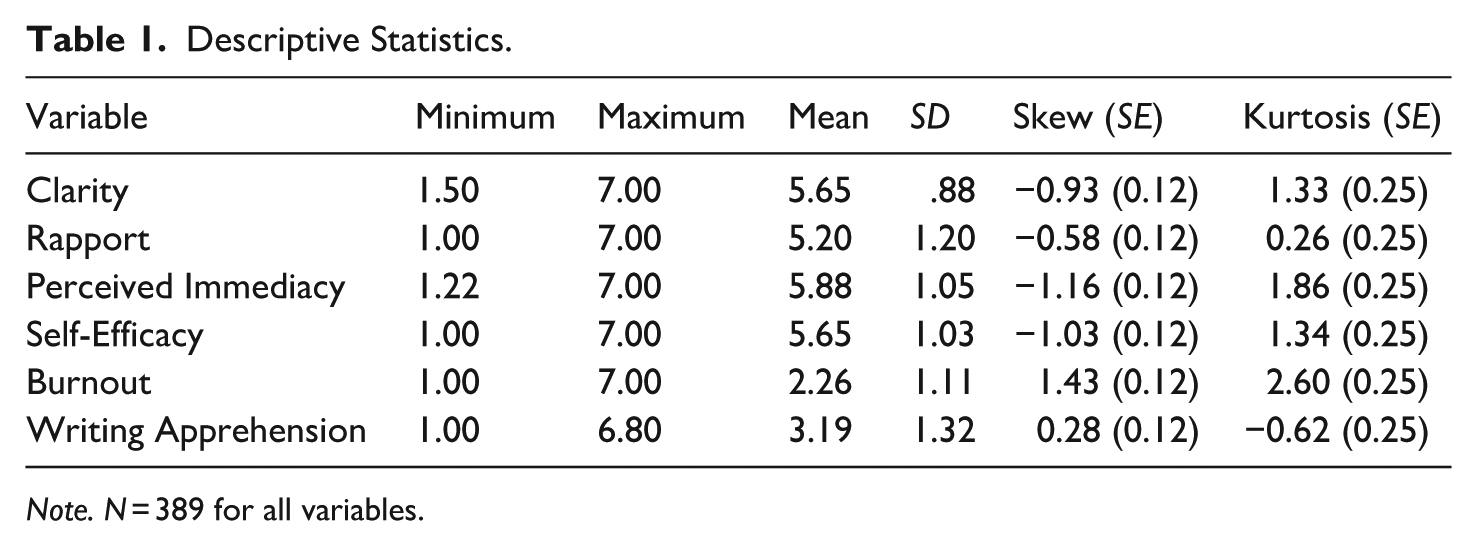
Note. N = 389 for all variables.
Reliability and Validity Statistics.
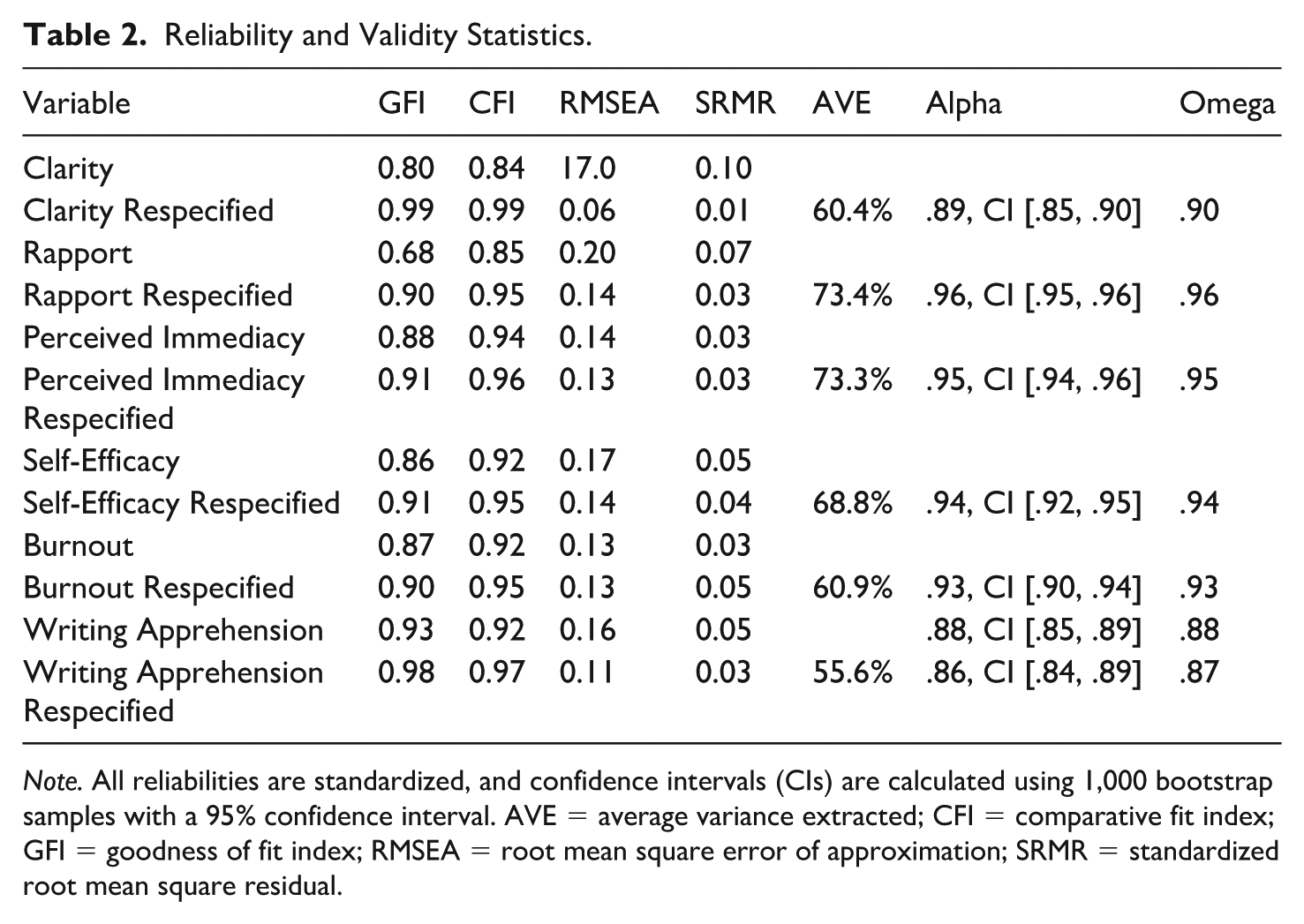
Note. All reliabilities are standardized, and confidence intervals (CIs) are calculated using 1,000 bootstrap samples with a 95% confidence interval. AVE = average variance extracted; CFI = comparative fit index; GFI = goodness of fit index; RMSEA = root mean square error of approximation; SRMR = standardized root mean square residual.
Correlation Table.
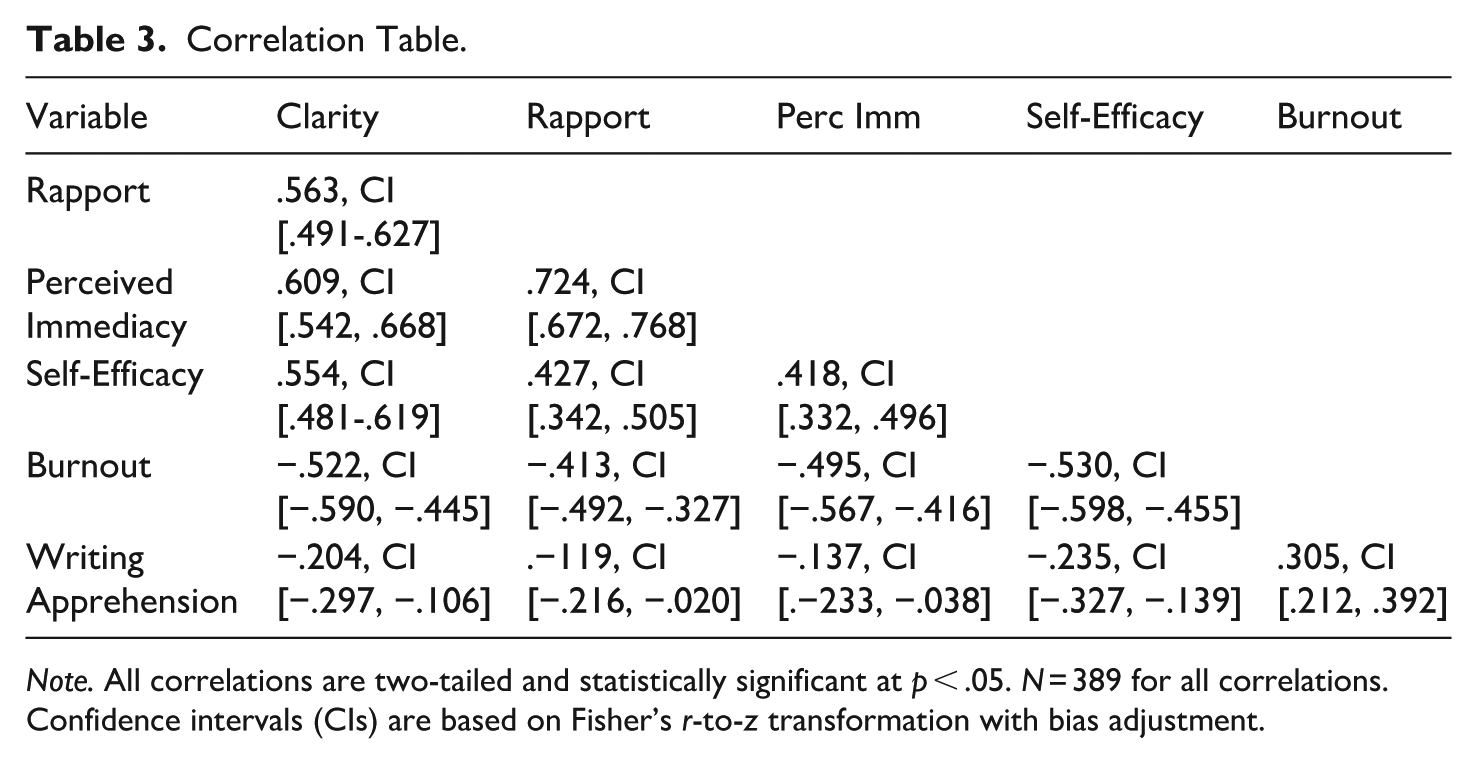
Note. All correlations are two-tailed and statistically significant at p < .05. N = 389 for all correlations. Confidence intervals (CIs) are based on Fisher’s r-to-z transformation with bias adjustment.
Clarity
This study used the Chesebro and McCroskey (1998) short-version 10-item, Likert-type clarity behaviors scale. Sample items include “My teacher is not clear when defining guidelines for our class assignments” and “My teacher’s objectives for the course are clear.” Previous reliability for the scale has consistently been above .85 (Chesebro & McCroskey, 1998; Violanti et al., 2018). Despite the original scale being validated with 10 items (four negatively worded), more recent research has indicated issues with the negatively worded items (cf. Kelly, Violanti, et al., 2025; Violanti et al., 2018).
Rapport
The 10-item, Likert-type Frisby and Martin (2010) modified rapport measure was used. Sample items include “My instructor relates well to me” and “I look forward to interacting with my instructor.” Despite its age, there have been a limited number of studies that used the scale and assessed its reliability and validity. The scale has been consistently found to have alpha reliabilities above .90 for the unidimensional revised measure (Frisby & Housley Gafney, 2015; Kaufmann & Vallade, 2022); convergent and discriminant validity testing has been minimal (cf. Tatum, 2019).
Perceived Immediacy
Nine bipolar items measured perceived immediacy (Kelly et al., 2015). Sample items include “warm-cold” and “responsive-nonresponsive.” Reliabilities for the unidimensional scale have been consistently above .90 (Foutz et al., 2021; Kelly et al., 2015). Over time, Items 8 and 9 have been problematic, causing the scale to be re-specified by removing one of them (Kelly, Violanti, et al., 2025; Minuci et al., 2025; Violanti et al., 2018).
Self-Efficacy
Eight Likert-type items from the Pintrich et al. (1993) of the Motivated Strategies for Learning Questionnaire measured self-efficacy for learning and performance. Sample items include “I’m confident I can learn the basic concepts taught in this course” and “I expect to do well in this class.” Recent research indicates the scale remains reliable (Nielsen, 2020). Validity testing has primarily been done with versions that have been translated to languages other than English (cf. Morais et al., 2025).
Burnout
Burnout was measured with Kelly and Westerman’s (2014) 10-item, Likert-type scale. Sample items include “Disappointed with people” and “Hopeless.” Previous studies have used alpha reliability, omega reliability, and confirmatory factor analysis to demonstrate that the scale has reliabilities above .85 and content validity (cf. Kelly et al., 2022; Ojeda-Hecht et al., 2022). Because the conceptual boundary between anxiety and burnout can be subtle (cf. Koutsimani et al., 2019), prior research has sometimes treated them as overlapping or has operationalized them in ways that blur the distinction. In light of this measurement history, we retained the same instruments used in Kelly et al. (2022) to keep the operationalization consistent and to rely on measures with demonstrated validity in business and professional communication student samples.
Writing Apprehension
Six Likert-type items measured writing apprehension (Autman & Kelly, 2017). Sample items include “I avoid writing” and “I dislike having my writing evaluated.” Reliability and validity testing have been reported in Gaytan et al. (2022) and Kelly et al. (2022).
Validity and Reliability
Each scale was initially tested individually using confirmatory factor analysis (CFA). Byrne’s (2016) acceptable fit statistics of goodness of fit index (GFI) ≥ 0.90, comparative fit index (CFI) ≥ 0.90, root square mean error of approximation (RMSEA) ≤ .10, and standardized root mean square residual (SRMR) ≤ 0.08. Validity statistics for the original and respecified versions of the scales are available in Table 2. Similar to previous studies, the clarity scale retained all of its positively worded items (cf. Kelly, Violanti, et al., 2025; Violanti et al., 2018) with the negatively worded ones producing what appeared to be a second false negative factor (Kotowski et al., 2009). The last three items of the rapport measure (“I strongly care about my instructor,” “instructor has taken a personal interest in me,” and “close relationship with my instructor”) created high standardized covariance residuals. These are the three items in the scale that would indicate a high level of closeness between a teacher and student, which may be a level of closeness beyond the relationships current students are developing with their teachers. Similar to previous studies (e.g., Foutz et al., 2021), the perceived immediacy scale had issues with Item 8 (“involved-aloof”). Of the self-efficacy items, only Item 2 (“I’m certain I can understand the most difficult material presented in the readings for this course”) produced high standardized covariance residuals. Anecdotally, students are spending less time and effort reading textbooks; issues with this item may be supported by empirical evidence, as they were confident they could learn the most complex information presented by the teacher. Two items in the burnout scale (“difficulty sleeping” and “depressed”) created high standardized covariance residuals. Finally, Item 5 (“writing is not fun”) caused standardized covariance residual in the writing apprehension scale. This is the only item that focuses on the effect associated with writing. After respecifying the scales, standardized alpha reliability with confidence intervals, omega reliability, and average variance extracted (AVE) were computed (see Table 2). AVE indicates the convergent validity of items contained in a scale; all respecified scales have an AVE above 0.5, which is considered acceptable (see Table 2 for values calculated using AMOS software and the Weiss, 2011, AVE calculator).
Finally, all re-specified scales were subjected to CFA as a measurement model. The results indicated acceptable fit for CFI (0.91), RMSEA (0.07), and SRMR (0.06); GFI was lower than acceptable (0.83); however, this value does not indicate the presence of problematic indicators requiring removal (Brown, 2015; Hair et al., 2019; Kline, 2023). Rather, the lower GFI reflects model complexity and theoretically meaningful item overlap, as GFI is known to be sensitive to sample size and the number of indicators (Brown, 2015; Byrne, 2016). Removing items solely to improve fit would be atheoretical and risk overfitting, thereby undermining construct validity and replicability (Hair et al., 2019; Kline, 2023).
Results
Correlations
In Table 3, the correlations reveal positive relationships among teacher clarity, teacher rapport, perceived immediacy, and self-efficacy, with between 17% and 52% of the variance in one variable being explained by the other. The correlations also reveal a negative relationship between the prosocial variables (clarity, rapport, perceived immediacy, self-efficacy) and burnout (variance explained ranges from 17% to 28%) as well as writing apprehension (variance explained ranges from 1% to 5%). Burnout and writing apprehension were positively related, with 9% of the variance in one being explained by the other. With all variables being related as they should be, Hypotheses 1a to 1d are supported.
Indirect Effects
Hypothesis 2 tested the first indirect relationship between the antecedent variables (teacher rapport and teacher clarity) and burnout as mediated by perceived immediacy and self-efficacy. As indicated in Table 4, perceived immediacy and self-efficacy fully mediate the relationship (χ2 = 13.28, df = 3, p = .004, GFI = 0.99, CFI = 0.99, RMSEA = 0.09, SRMR = 0,03). Thus, Hypothesis 2 is supported.
Direct and Indirect Effects.
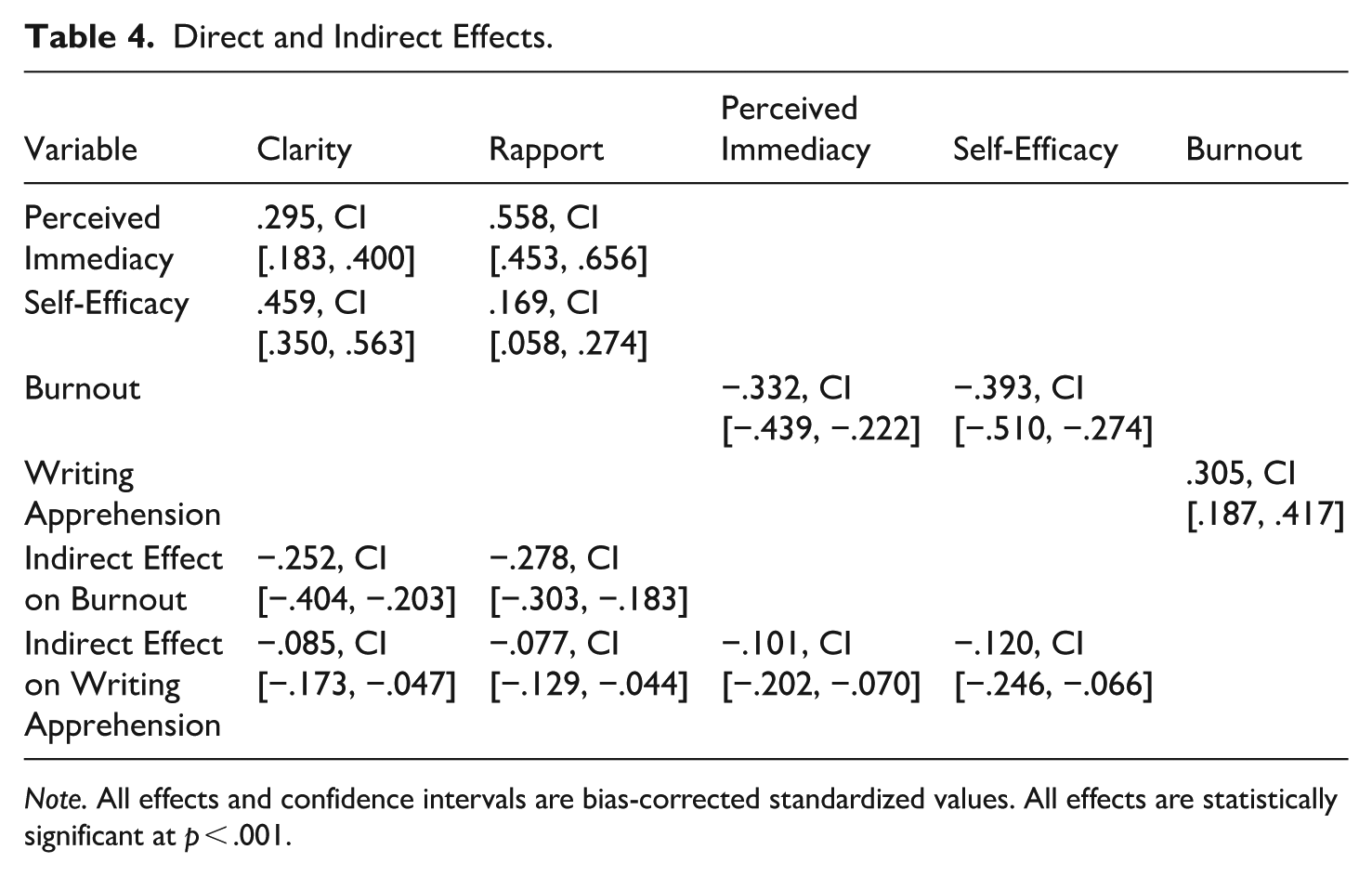
Note. All effects and confidence intervals are bias-corrected standardized values. All effects are statistically significant at p < .001.
Hypothesis 3 tested the relationship between the first set of mediators (perceived immediacy and self-efficacy) and the outcome variable of writing apprehension. As indicated in Table 4, burnout fully mediates the relationship (
As indicated in Table 4 and Figure 2 (the supported model), there is serial mediation between the antecedents of teacher clarity and teacher rapport and the outcome variable of writing apprehension through both perceived immediacy/self-efficacy and burnout (χ2 = 17.86, df = 7, p = 0.013), GFI = 0.99, CFI = 0.99, RMSEA = 0.06, SRMR = 0.03). Thus, Hypothesis 4 is supported.
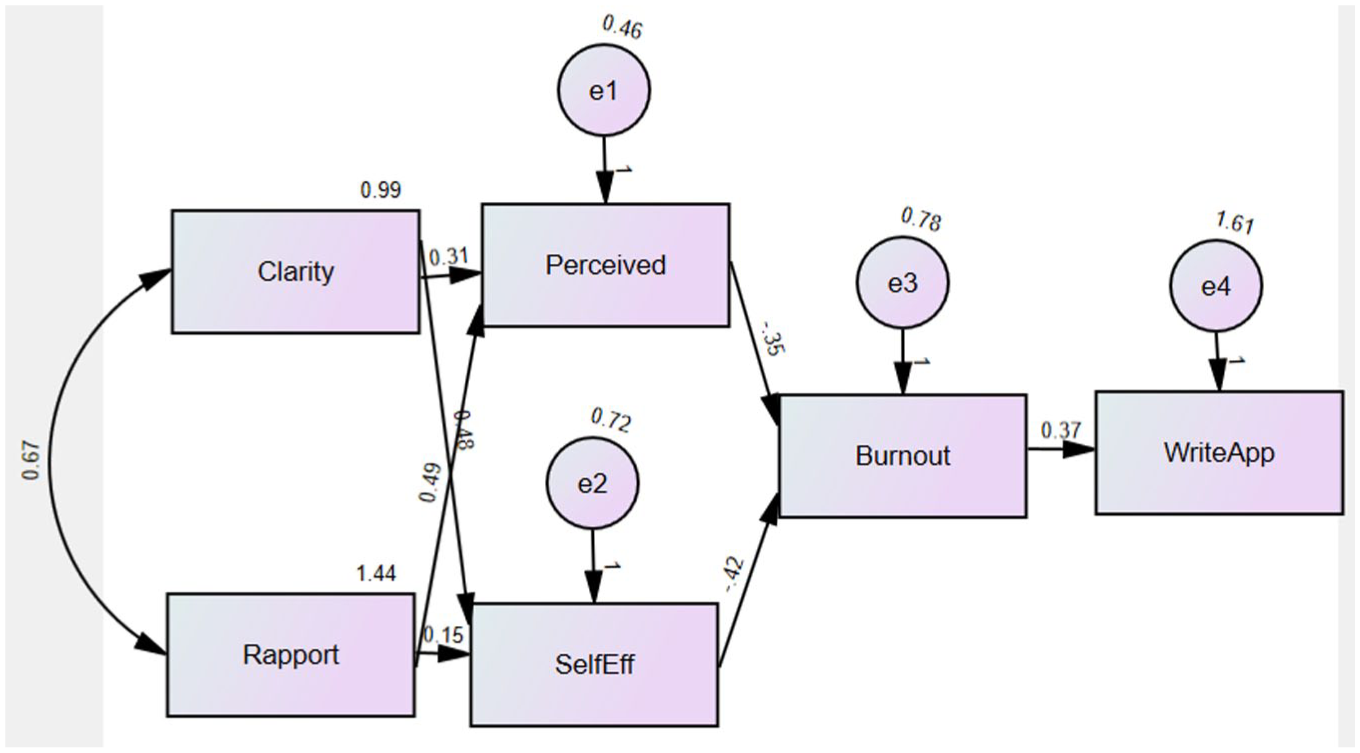
Supported model.
Discussion
This study examined a COR-based serial mediation in which teacher clarity and rapport relate to lower writing apprehension via perceived immediacy and self-efficacy, which in turn relate to lower burnout. The tested model was supported: clarity and rapport were positively associated with perceived immediacy and self-efficacy; these mediators accounted for their associations with burnout; and burnout accounted for the associations of perceived immediacy and self-efficacy with writing apprehension through a serial path. Taken together, the pattern is consistent with the view that writing apprehension is linked to resource depletion (Hobfoll, 2001; Hobfoll et al., 2016) rather than solely to deficiencies in writing skill.
The findings suggest that writing apprehension can be interpreted not only as a skills-based challenge, but also as a stress-related manifestation of resource imbalance. Within the framework of the COR theory (Hobfoll, 2001, Hobfoll et al., 2016), stress emerges when individuals perceive that their valued resources are threatened, lost, or insufficiently replenished. In educational settings, burnout and anxiety signal this depletion, as students’ cognitive and emotional capacities are taxed by sustained instructional and social demands (Alarcon et al., 2011). Consistent with this framework, the present results show that higher teacher clarity and immediacy are associated with lower burnout and, indirectly, with reduced writing apprehension, patterns that align with the notion that supportive communication acts as a resource buffer (Bolkan, 2016; Bolkan & Goodboy, 2024; Gaytan et al., 2022). From this perspective, writing apprehension reflects a classroom-level resource drain, a kind of energy crisis in which students’ psychological reserves erode when instructional communication fails to replenish cognitive and emotional balance.
Extending this perspective, instructional communication represents a central channel through which students’ cognitive and emotional resources are supported. Within this framework, clarity and perceived immediacy operate as complementary processes of conservation and replenishment. Clarity acts as a cognitive safeguard, reducing extraneous load and directing students’ effort toward comprehension rather than ambiguity management (Bolkan & Goodboy, 2024), while perceived immediacy functions as an affective buffer, fostering warmth, responsiveness, and empathy that are associated with lower emotional exhaustion and stronger motivation (Violanti et al., 2024). Consistent with the COR framework, the present model is consistent with the interpretation that clarity contributes indirectly to reduced burnout through its relationships with perceived immediacy and self-efficacy, and together they relate to lower burnout and writing apprehension (Kelly & Gaytan, 2020). These patterns highlight two interdependent pathways, a cognitive route (clarity → self-efficacy) and an affective route (rapport/perceived immediacy → reduced burnout), which converge to sustain student engagement.
Together, these dynamics point toward the capacity of instructional communication to preserve equilibrium in students’ psychological resources over time as a broader principle of communicative sustainability (Frisby & Martin, 2010; Kelly et al., 2015). When teachers enact clarity and promote perceived immediacy in concert, they create learning environments that balance cognitive investment with emotional resilience (Titsworth et al., 2015). Within such contexts, the classroom functions as a regenerative system in which communication continually redistributes mental and affective energy to sustain engagement (Alarcon et al., 2011; Kelly et al., 2015). From a COR perspective, this equilibrium reflects an ongoing alignment between resource demands and gains (Hobfoll, 2001; Jagodics & Szabó, 2023) where clear instruction limits cognitive depletion (Serki & Bolkan, 2024; Titsworth et al., 2015), while perceived immediacy promotes relational security that buffers emotional loss (Frisby et al., 2014; Kelly et al., 2015). Prior research likewise indicates that transparent organization, responsive feedback, and supportive teacher–student relationships strengthen self-efficacy and reduce exhaustion (Kim et al., 2017; LaBelle et al., 2013; Martin et al., 2013). Thus, a sustainable classroom is distinguished not by the volume or intensity of instruction but by its ability to maintain the steady flow of cognitive clarity and emotional support that enables students to learn with confidence and endurance (Alarcon et al., 2011; Frisby & Martin, 2010).
This ecological framing suggests important implications for future research on communicative resource sustainability in higher education. The present findings point toward a probable unifying framework that could integrate the COR theory with cognitive load and self-efficacy perspectives (Hobfoll et al., 2018; Weber et al., 2011) to explain how instructional communication helps maintain balance between cognitive demand and emotional resilience. Future investigations might test this integration more directly by modeling resource gain and depletion processes over time and across different instructional contexts. Also, in reframing writing apprehension and burnout as potential manifestations of systemic resource depletion (Kelly, Smith, et al., 2020; Ojeda-Hecht et al., 2022), the present study offers an initial step in extending COR theory into the pedagogical domain, identifying clarity and perceived immediacy as interdependent mechanisms that may help restore depleted cognitive and affective resources (Bolkan et al., 2016; Kelly & Gaytan, 2020; Titsworth et al., 2015). A promising avenue for future work involves examining resource resilience (i.e., the learner’s capacity to regenerate mental and emotional energy through supportive instructional climates) as a bridge between COR, self-efficacy, and educational resilience. Pursuing this direction would enable a more transdisciplinary understanding of how communication fosters sustainable learning and psychological renewal over time (Hobfoll, 2001; Mascle, 2013; Shin & Bolkan, 2021).
Practically, the findings position teachers as resource stewards who sustain students’ psychological energy through communicative clarity and immediacy. These behaviors function not as stylistic preferences but as sustainability practices that guard against burnout and disengagement while strengthening confidence and persistence. Evidence-based strategies that operationalize this framework include clarity signaling, using explicit outcomes, previews, and summaries to reduce cognitive load (Bolkan, 2016; Sweller et al., 2011); worked examples and modeling, which translate expectations into observable performance (Titsworth et al., 2015); timely, responsive feedback that replenishes motivational resources (Kelly et al., 2015); immediacy behaviors such as warmth, acknowledgment, and prompt communication that alleviate emotional exhaustion (Flanigan et al., 2023; Frisby et al., 2016); and structured reflection activities that foster awareness and regeneration of personal resources consistent with COR principles (Hobfoll, 2001). Collectively, these practices promote pedagogical designs that balance cognitive efficiency with relational support, enabling classrooms to operate as regenerative environments that sustain engagement, resilience, and psychological well-being.
Limitations and Future Direction
Several limitations should be acknowledged. First, the cross-sectional and self-report design limits causal inference and raises potential common-method concerns; longitudinal or experimental approaches could clarify temporal ordering among clarity, immediacy, self-efficacy, burnout, and writing apprehension. These limitations are acknowledged to clarify that the findings reflect students’ perceived instructional and affective experiences rather than objective instructional quality or clinical indicators of burnout. Second, contextual factors such as course modality, class size, institutional setting, and cultural norms of teacher–student interaction may moderate how these communicative resources function. Future research should test the model across diverse contexts using multigroup or comparative designs to determine whether these dynamics hold consistently. Finally, examining the proposed notion of communicative resource sustainability across disciplines and other forms of academic anxiety (e.g., mathematics, public speaking) would extend the framework’s scope and reveal how resource renewal processes influence long-term motivation, retention, and well-being.
Future research could extend this resource ecology model by examining how instructional communication resources fluctuate over time and across course modalities, including how specific classroom strategies for clarity, immediacy, and efficacy support contribute to cycles of resource accumulation, depletion, and recovery. Such work would further clarify how communicative resource systems are sustained or disrupted through instructional design choices and teaching practices across contexts and stages of students’ academic development. This study advances understanding of how instructional communication functions as a resource ecology, linking teaching behaviors to students’ cognitive and emotional outcomes. Grounded in COR theory, the results show that teacher clarity and immediacy predict burnout and writing apprehension indirectly through self-efficacy and perceived immediacy, thereby operationalizing COR principles within the classroom context. The ecological framing developed here portrays communication as a network of interdependent resources that must remain in balance to sustain engagement. By positioning burnout and writing apprehension as indicators of resource imbalance rather than isolated deficits, the study extends COR theory into higher education and provides a foundation for modeling communicative resource sustainability. Effective instruction thus emerges as a form of resource stewardship, a process of conserving and replenishing students’ cognitive and affective capacities to learn, adapt, and persist.
Footnotes

Funding
The authors received no financial support for the research, authorship, and/or publication of this article.
Declaration of Conflicting Interests
The authors declared no potential conflicts of interest with respect to the research, authorship, and/or publication of this article.
Author Biographies
References
 goes a long way: Examining the limits of immediacy cues on students’ perceptions of instructor credibility, immediacy, liking, and clarity