




Abstract
Globalization and advancements in technology have driven the rise of global virtual teams (GVTs), a trend accelerated by COVID-19. While prior literature highlights the significance of GVTs and digital communication, recent trends in the roles of communication and culture are understudied. This article reviews 51 empirical studies from the past decade to explore the interplay between communication, culture, and GVT operations. Key findings include managing cultural differences through communication, team cohesion challenges, the role of communication tools, and the impact of human factors on GVT performance. Theoretical and practical implications are discussed to guide future research and global team management.
Globalization has consistently presented both opportunities and challenges to working teams. The international market has experienced a rise in global trade and the movement of goods, services, resources, and individuals worldwide across borders. The combination of global growth, increased mobility, and technological advancements has prompted and enabled teams to evolve beyond the standard co-located setups, leading to the widespread adoption of global virtual teams (GVTs) (Jimenez et al., 2017). Particularly after the COVID-19 pandemic, the conventional office environment faced significant disruptions and unpredictability. Consequently, GVTs have continued to emerge as a prominent component of the evolving work landscape (Makarius & Mukherjee, 2020). Despite extensive research on GVTs, there is a need for a systematic understanding of how communication and culture shape their effectiveness. Special emphasis should be placed on the intercultural nature of GVTs and their communication processes.
The article employs a narrative literature review analysis approach on 51 empirical studies published within the past decade, which captures the interaction between culture, communication, and GVT operations. As noted by Jones (2004), systematic reviews aim to consolidate data for a specific query, whereas narrative reviews provide thoughts and critiques to enhance readers’ understanding of a specific topic. The primary focus is on the intercultural nature of GVTs and the communication process, which plays a crucial role in shaping team interactions, information sharing, and trust-building across cultural boundaries. In this way, it provides a more discursive perspective into the specific contents and findings of each article compared with previous bibliometric analyses (Kargina, 2023). Furthermore, the article updates prior reviews by incorporating recent advancements and trends from the past decade.
This study begins with the definition of GVT and the theoretical basis regarding culture and cultural exchange in teams. The selected studies are then categorized and analyzed thematically to uncover recurring patterns and insights. The findings from this review focus on four key areas: managing cultural differences, team member negotiation and cohesion, communication technology and tools, and human factors influencing GVT dynamics.
Literature Review
GVTs: Traits, Benefits, and Challenges
A GVT refers to a culturally diverse, geographically dispersed, and electronically communicating workgroup (Jarvenpaa & Leidner, 1999). These teams, with members spread across countries, primarily rely on communication technologies such as video conferencing, chat platforms, and email to coordinate tasks, share information, make decisions, and accomplish goals (Gibbs, 2009; Jarvenpaa & Leidner, 1999). GVT members come from various countries or continents, use multiple communication technologies, and rarely meet in person (Jarvenpaa et al., 1998). Compared to traditional teams, GVTs can unite top talent across borders without the need for commuting (Jimenez et al., 2017). Moreover, team diversity within GVTs helps improve creativity and problem solving by drawing on a wide range of perspectives and cognitive resources (Taras et al., 2019) and encourages teams to address rather than overlook the challenges of collaboration (Magnusson et al., 2014).
Companies increasingly adopt GVTs to leverage strategic advantages. By assembling talent from diverse geographic locations, organizations gain access to a broader pool of expertise, which leads to innovation and enhanced problem-solving capabilities (Alkoud & Qatamin, 2023). Moreover, GVTs reduce expenses on infrastructure, including office space and utilities, as well as travel and relocation costs (Paul et al., 2016). The implementation of GVTs also enables continuous operations across time zones, speeding up project timelines and enhancing responsiveness to global markets (Carmel et al., 2010). Additionally, the virtual nature of these teams supports outsourcing strategies, allowing companies to delegate specific tasks to regions where they can be performed more cost-effectively without compromising on quality (Alblas, 2022).
Despite the widespread adoption, GVTs could also encounter significant challenges. The term “virtuality” includes geographic dispersion, electronic dependence, structural dynamism, and national diversity (Gibson & Gibbs, 2006; Gluesing & Gibson, 2017). Virtuality fosters the “global” nature of these teams by allowing people to work across national boundaries, which provides team diversity and space-time dispersity but also challenges communication and coordination (Jimenez et al., 2017). The most salient characteristics of GVTs are geographic dispersion and electronic dependence (Gibson & Gibbs, 2006). They encounter challenges stemming from geographical and temporal distance, perceived gaps in connection, the structure of distributed teams, and the diverse backgrounds of team members (Morrison-Smith & Ruiz, 2020). Moreover, national culture significantly influences how individuals interpret information and collaborate with team members, as individuals tend to process information through their own cultural frameworks, which increases the risk of misinterpretation (Han & Beyerlein, 2016). Because of their significant cultural and national diversity, global teams often face challenges related to subgroup formation. These subgroups can emerge along geographical, cultural, and other divisions, leading to potential fragmentation within the team (Gibbs et al., 2021).
The rapid growth of GVTs highlights the need to understand intercultural communication and to emphasize cultural perspectives in their operations. Many of the challenges inherent in GVTs stem from their virtual nature and are deeply intertwined with cultural differences. In this context, a psychologically safe communication climate moderates the negative relationship between virtuality and innovation (Gibson et al., 2014). Therefore, an intercultural communication perspective is essential to look at GVTs for addressing these challenges, fostering trust, and enhancing more effective collaboration in culturally diverse, geographically dispersed teams.
Understanding GVTs Through Cultural Theories
Understanding GVTs requires careful observation of cultural patterns and intercultural communication processes. Cultural theories provide a necessary background foundation for this review and frameworks to analyze and interpret these dynamics. For example, high-context cultures, such as East Asia and the Middle East, rely on implicit messages, nonverbal cues, and shared understandings, where communication is deeply rooted in relational and contextual nuances. Conversely, low-context cultures, like the U.S. and Germany, prioritize explicit verbal communication and directness, emphasizing clarity and precision (Hall, 1959). These differences in communication styles can significantly impact how GVT members interpret messages, establish trust, and manage workflows (Adair et al., 2024). Another key cultural factor in global workplaces is the distinction between individualistic and collectivist cultures (Hofstede, 1980). Members from individualistic cultures prioritize personal achievements and often use direct communication to express goals. In contrast, collectivist cultures, such as those in China and Japan, emphasize group harmony and favor indirect communication to maintain relationships and align with team objectives (van Hoorn, 2015). These culturally influenced communication styles can cause misunderstandings and conflicts in GVTs if not effectively managed.
Given the importance of culture theories in GVT communication practice, Trompenaars’s model of national cultural differences (Trompenaars & Hampden, 1998) provides a reference in global business and management to understand and navigate cross-cultural differences. The seven dimensions of culture address universal versus particular approaches to rules, individual versus group priorities, distinctions between private and public spaces, merit-based versus inherent status recognition, sequential versus concurrent task management, control over or adaptation to the environment, and varying emotional expressiveness (Trompenaars & Hampden, 1998). This model emphasizes the significance of recognizing and comprehending cultural variances, suggesting that individuals should bear in mind that these cultural differences indicate there is not a singular “best way to manage” organizations (Vaiman & Brewster, 2015; Woolliams & Trompenaars, 2024).
Virtual teams have their unique characteristics that influence team effectiveness and pose challenges in managing cultural differences: lack of nonverbal communication, physical isolation, cultural differences based on national dimensions, and the potential requirement to communicate in English as a non-native language (Krawczyk-Bryłka, 2016). In virtual teams, cultural diversity influences internal communication processes, and misunderstanding or neglecting cultural differences in GVTs can lead to communication breakdowns, confusion, and even conflict. Previous studies have found that learning others’ cultural logic, as well as fostering acceptance and tolerance, are key to work efficiency and intercultural constructive competence (Cagiltay et al., 2015).
In summary, cultural theories offer a structured framework for understanding how culture affects GVT team members’ decision-making, communication styles, and collaboration practices, which indicates the necessity of paying attention to intercultural communication to effectively understand and optimize GVT management.
Existing Reviews on GVTs
Existing literature reviews on GVTs have focused on the role and importance of these teams in the contemporary business environment. Martins and Schilpzand (2011) emphasized that GVTs, made up of members from multiple countries communicating primarily through digital channels, have become integral to modern organizations. Their research provided an overarching view of major developments, identifying areas needing further exploration and proposing directions for theoretical advancements. Similarly, Scott and Wildman (2015) offered comprehensive insights into the rise of GVTs in response to the demands of a globalized marketplace. Their work highlighted the increasing reliance on advanced information technology tools such as email, video conferencing, and instant messaging to bridge national boundaries. They identified the dynamics of culture, communication, and conflict in the context of GVTs as antecedents, mediators, and moderators of GVT effectiveness. Jimenez et al. (2017) accentuated the prevalence and significance of GVTs in international management, proposed a framework to guide future research and highlighted the complexities inherent in GVTs. More recently, Kargina (2023) undertook a bibliometric analysis of a vast number of academic articles spanning two decades. This analysis illustrated the evolution and shift in research focus, from the organizational level to the individual perspective.
Despite the extensive body of research on GVTs, there are notable gaps in the existing reviews, particularly concerning the critical role of communication. While previous studies have provided comprehensive overviews, they often lack a specific focus on communication processes, often treating it as a secondary variable within broader discussions on leadership, efficiency, or team performance. This gap is significant as effective intercultural communication is essential for overcoming the challenges of geographical and cultural distances in GVTs. Moreover, cultural aspects were studied but have often been underemphasized in previous reviews, with limited attention given to their impact on team management and communication effectiveness. Given the background, this article seeks to critically review recent scholarly contributions about GVTs with communication- and culture-centered views, with particular emphasis on the intersection of organizational and intercultural communication.
Method
Literature Search Strategy and Screening
This review was guided by the following primary research question focusing on the role of communication in GVTs.
Research Question: How do communication processes and cultural dimensions influence the functioning, structure, and performance of GVTs?
To undertake a comprehensive literature review on GVTs with a cultural perspective, an initial literature scoping was conducted using multiple academic databases, including Scopus, Google Scholar, EBSCOhost, and the Web of Science. The search was limited to articles published after 2014 to include recent advancements in the field. Search terms included combinations of keywords like “global virtual teams,” “cross-cultural virtual teams,” and “multinational virtual teams.” An initial search of the online database revealed a total of 1,570 articles. After an initial screening of titles and abstracts, 149 articles were identified as directly relevant to GVTs, excluding those focused solely on virtual or global teams. Further screening examined the communication attributes (relevance to organizational and cross-cultural communication) and cultural attributes (focus on differences stemming from multicultural backgrounds). The primary inclusion criteria for selecting articles were as follows (see Figure 1):
The article must be an English-language journal article published after 2014.
The article must be an empirical study focusing on the cultures and interculturality of GVTs.
The article must center on communication processes or the communication effects of GVT interculturality.
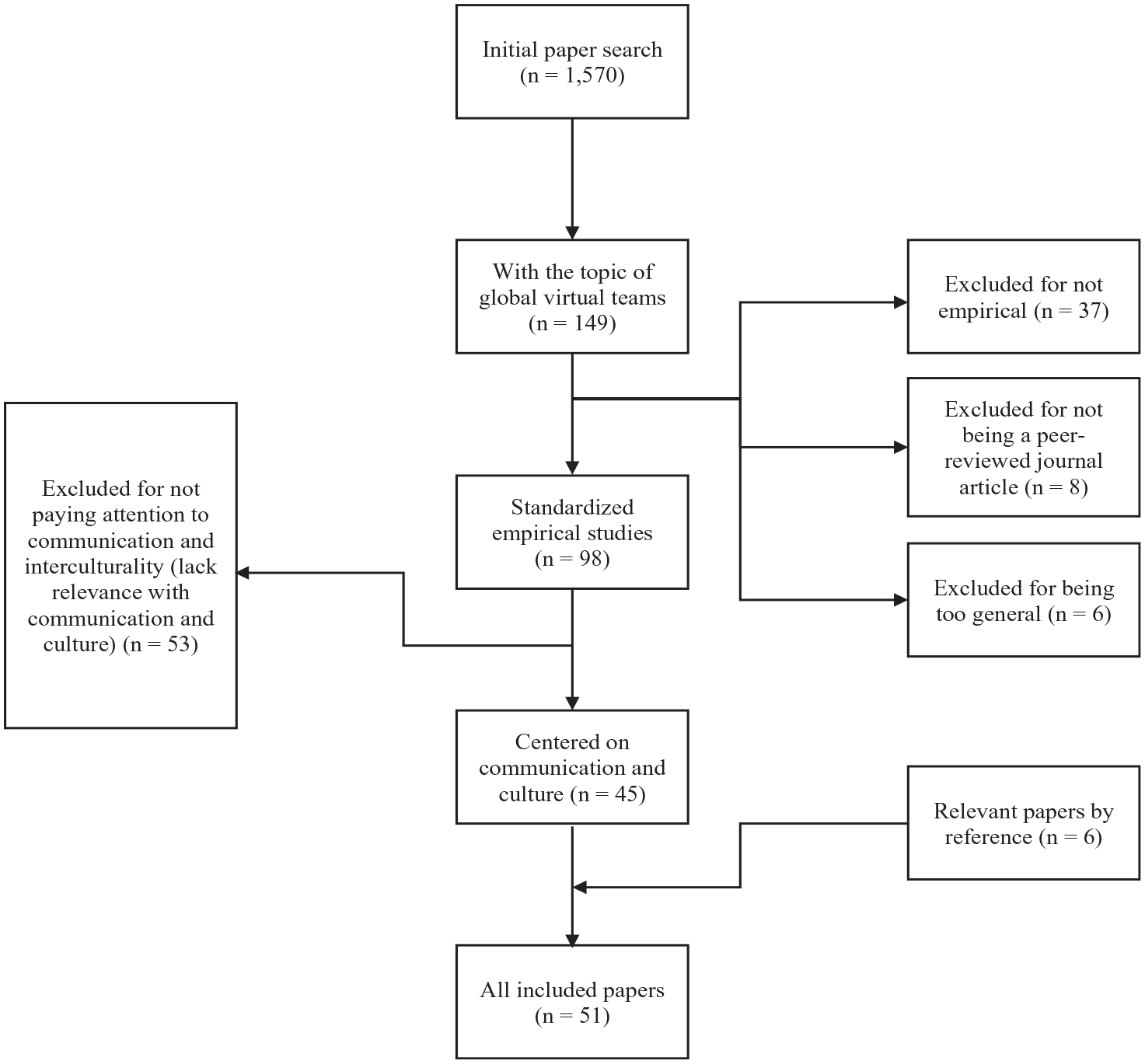
Search process and results.
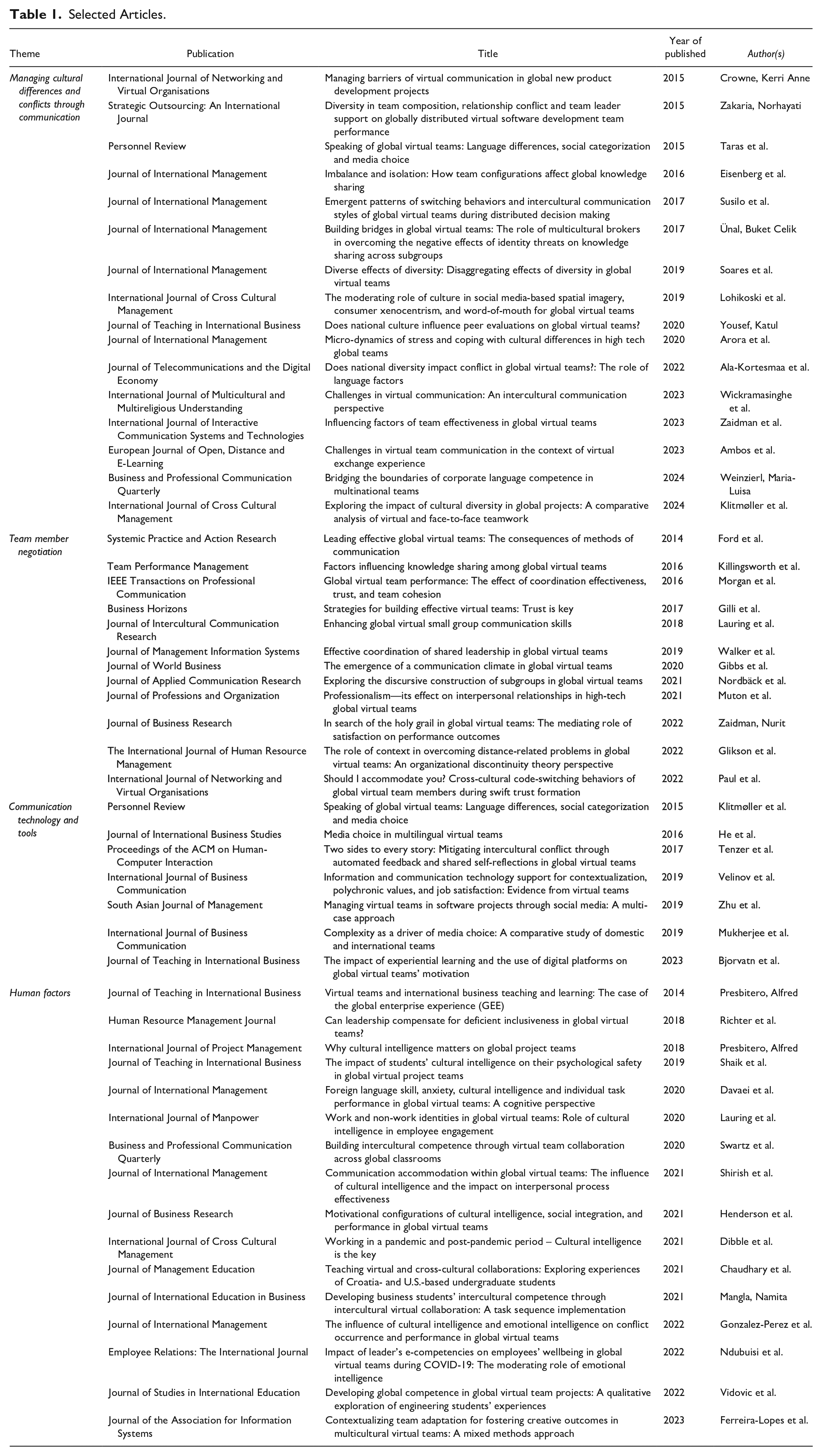
In the second-phase abstract screening, 37 articles were excluded because they were not empirical studies, consisting instead of reviews or illustrative chapters. Eight articles were excluded for not being peer-reviewed journal articles. Additionally, six articles were excluded for being too general and lacking significant findings. A full-text review led to the exclusion of 53 articles that did not address the core themes of communication and interculturality. Instead, these articles primarily concentrated on business-related variables such as financial performance, operational efficiency, or management strategies, without sufficient emphasis on the intercultural and cultural factors that are central to this study. Additionally, six additional papers were identified and included by reviewing reference lists from the initially selected studies or from recommendations from other scholars. Ultimately, 51 articles were selected to provide a comprehensive view of the cultural dimensions of communication in GVTs (see Table 1).
Selected Articles.
Data Collection and Analysis
Once the literature was identified, a narrative analysis approach was employed (Popay et al., 2006), which allowed for the identification and clustering of common themes, patterns, and insights related to the cultural dynamics in GVTs. Initially, the selected studies were sorted into distinct categories. Then each study was reviewed and compared, with their outcomes integrated. In the subsequent phase, the author analyzed the data within each category, identifying factors contributing to variations between studies. Finally, the data were grouped under specific themes. Through comparison of the findings, the following themes were identified: (1) managing cultural differences and conflicts through communication, (2) team member negotiation, (3) communication technology and tools, and (4) human factors of GVT dynamics (see Figure 2).
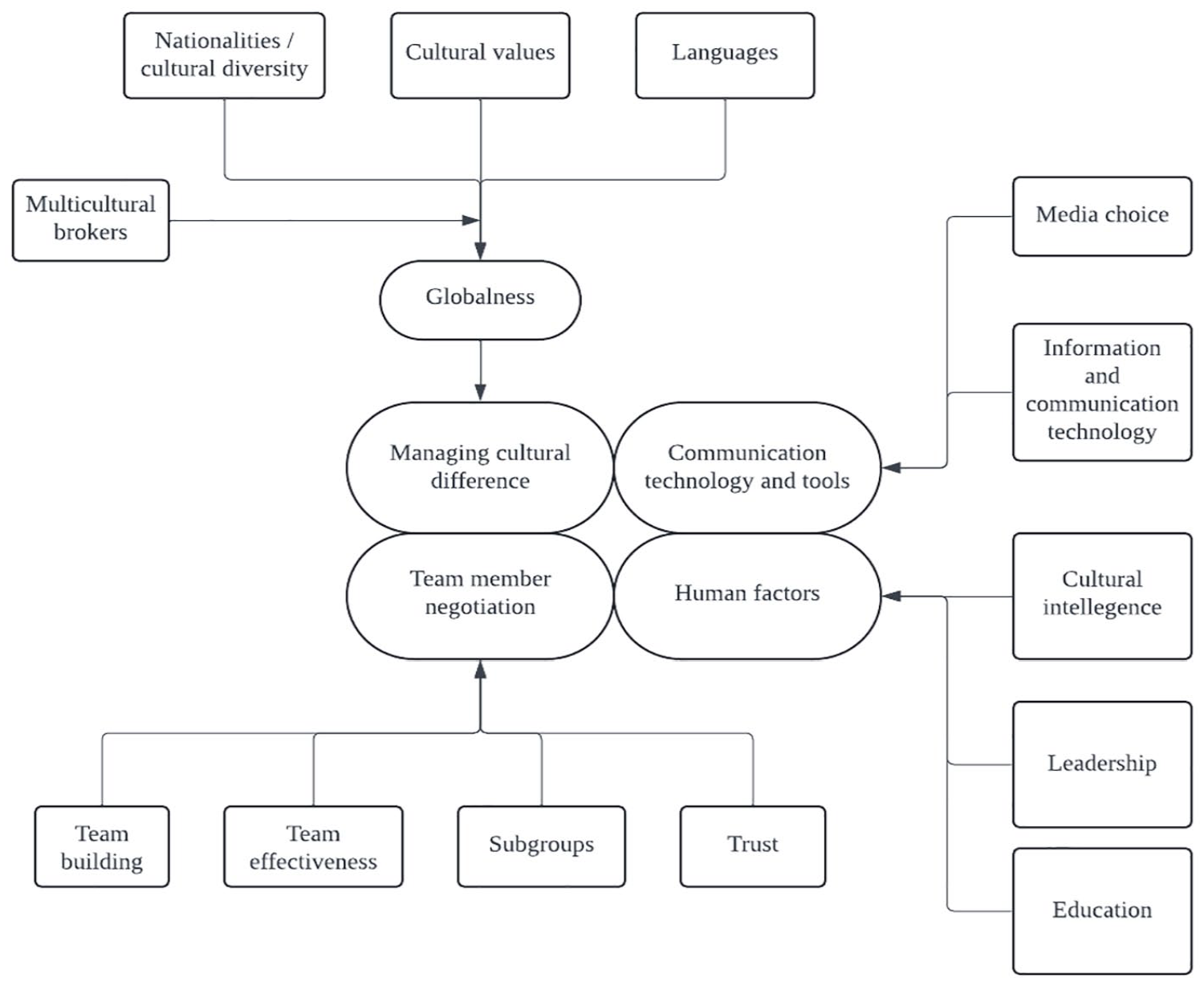
Main findings.
Findings
Managing Cultural Differences and Conflicts Through Communication
The first theme regarding the roles of culture in GVTs focuses on managing differences and resolving potential conflicts through communication. The concept of Global as an embodiment of the opportunities and challenges of diversity has been a focal point of recent research, particularly concerning cultural issues. In this context, the inherent globalness underscores the imperative of recognizing differences within GVTs. Most empirical studies highlight the major challenges caused by “globalness,” such as differences in cultural background, language barriers, time differences, distance, and knowledge sharing (Lohikoski et al., 2015; Susilo et al., 2023; Ünal, 2023). Therefore, strong intercultural communication skills, predictable communication methods, and skills in using communication project management tools are essential in a multinational organization.
The first focal point of current studies within this theme lies in how team members’ nationalities or cultural diversity influence communication in GVTs and their subsequent performance, which emphasizes the critical importance of understanding and addressing these differences. Cultural diversity increases the complexity of communication, making it harder to understand nuances, resolve misunderstandings and conflicts, and improve effectiveness. Geographical and cultural imbalances in GVTs also hinder knowledge sharing, particularly for isolated members excluded from communication channels (Ambos et al., 2016). Therefore, diversity can be both a strength and a significant challenge in these teams. Selected articles empirically illustrate the communication challenges stemming from such national or cultural diversity. According to Ala-Kortesmaa and Muñoz (2023), communication challenges in virtual teams arise from cultural and motivational differences. These challenges can be mitigated by increasing shared work time for social interaction and developing team-specific methods to foster online presence and closeness. Wickramasinghe and Nandula (2015) studied 216 team members in globally distributed virtual software development projects and found that diversity in team composition leads to relationship conflict, which affects team performance, and team leader support moderates this impact. Taras et al. (2019) analyzed data from 5,728 individuals in 804 GVTs and found that diversity decreases personal comfort and communication effectiveness, reducing satisfaction. However, it enhances team outcomes by bringing diverse perspectives and solutions. Yousef’s (2024) comparative study on virtual and face-to-face projects found cultural diversity to be a risk in GVTs, but strategic project management and understanding team members’ cultural backgrounds effectively mitigate these challenges.
Second, the reviewed articles reflected that host country culture or cultural values have emerged as a pivotal factor influencing intercultural communication, particularly in GVTs and expatriate work outcomes. Zaidman and Cohen’s (2020) study on Indo-Israeli teams highlights that cultural values significantly impact communication and knowledge transfer, which in turn affect team performance and individual well-being. More specifically, Indian team members viewed Israeli communication as aggressive, while Israelis perceived Indians’ avoidance and indirect communication styles as stressful. According to Zakaria and Ab Rahman Muton (2022), the behaviors of high-context team members, particularly in Malaysia, are not rigid. Instead, they act as “switchers,” adapting their communicative behaviors to collaborate more effectively with foreign team members. The study introduces cross-cultural code-switching, wherein individuals switch between direct speech, open knowledge sharing, and task-oriented goals, aligning closely with Hall’s dichotomous classification of high-context and low-context cultures. This notion of “switching” is further reiterated in Zakaria’s (2017) study on the United Nations World Summit on Information Society (WSIS) Civil Society’s communication patterns. The research reveals that cultural values shape decision-making processes across teams, and individuals often change their communication styles based on the situation, roles, and interlocutors involved. Arora et al. (2019) found that low power distance, individualist, and masculine cultures were linked to strong negative electronic word-of-mouth, while high power distance, collectivist, and less masculine cultures correlated with positive electronic word of mouth. It highlights the need for culturally adaptive strategies to improve GVT collaboration and effectiveness in social media environments.
Language, as another critical factor in intercultural communication, plays an essential part in forming, exacerbating, and mitigating cultural differences. Even with highly proficient linguists, multinational teams still face challenges such as information loss, ambiguous meaning, sociolinguistic variability, and difficulties adjusting to cultural norms (Weinzierl, 2024). Sampled articles show that English language proficiency was a key factor influencing performance, with cultural factors having a weak impact on peers’ evaluations of performance (Crowne, 2020). Research also indicates that in GVTs in the international business education field, being an international student can enhance team members’ performance, creativity, and leadership if their English language proficiency is perceived as strong (Crowne, 2023). Moreover, in teams with high openness to language diversity and strong English skills, greater national diversity reduces task and relationship conflict. However, when openness to language diversity and English skills are low, this effect is reversed (Soares et al., 2022). Klitmøller et al. (2015) conducted interviews, observations, and language proficiency evaluations of 27 GVT members situated in five European countries and unveiled that discrepancies in language proficiency, coupled with verbal media like telephones, often lead to social categorization. This categorization provokes stereotypical perceptions of those outside the group and fosters discriminatory behavior between groups.
Based on this, the function of multicultural brokers—individuals who navigate diverse cultural boundaries to reconcile differences among teammates in different subgroups—is discussed in the article data set (Eisenberg & Mattarelli, 2017). It indicates that brokers can mitigate the negative impacts of identity threats on the quality and quantity of knowledge-sharing in GVTs. This occurs through a curvilinear moderating effect, where the brokers’ role, appointment type, familiarity with subgroup members, and cultural intelligence each exert distinct moderating impacts (Eisenberg & Mattarelli, 2017).
Team Member Negotiation
The second salient theme derived from the data is team member negotiation. Achieving team cohesion is challenging given the diverse cultural backgrounds, making effective communication essential for bridging cultural gaps and building trust. According to the researched articles, an emphasis on current trends in culture and GVTs pertains to the team-building process, including team member management, interdepartment relationships, team communication climate, and member satisfaction. For example, coordination effectiveness, mediated by trust and team cohesion, is crucial for the performance of culturally diverse teams, which emphasizes the need for effective project coordination systems to enhance team cohesion and overall success (Paul et al., 2016). The creation of a flexible environment helps organizations mitigate virtual team coordination-related problems, such as uneven communication channels, lack of leadership, cultural differences and language barriers, and conflicting goals (Paul et al., 2016). Zaidman (2021) demonstrated how the discourse of professionalism in high-tech organizations shapes both employee-organization and peer relationships in GVTs. This professionalism can create paradoxes in interpersonal relationships, subtly affecting them negatively from an ethical perspective. Glikson and Erez (2020) found that relational content in the initial communications significantly influenced the development of a psychologically safe communication climate in GVTs, which, in turn, enhanced team performance. The findings underscore the importance of initial relational exchanges in reducing uncertainty and fostering positive team dynamics. Gilli et al. (2022) further highlight that team member satisfaction significantly mediates the relationship between cultural intelligence and individual performance, indicating that culturally aware team members who are satisfied with their team contribute more effectively to team success.
Recent studies also examine how culture and communication influence task effectiveness and relational effectiveness in small-group communication. Walker et al. (2018) conducted a Virtual Business Professional project, revealing that cultural differences influence tolerance for uncertainty, conflict resolution strategies, and attitudes toward hierarchy, all of which affect group dynamics and outcomes. By adopting functional strategies such as adaptation and managerial intervention, teams can navigate these differences more effectively. Lauring et al. (2022) studied 23 GVTs in the global R&D department of a Danish engineering company and found that individual approaches such as time zone adjustment and trust in peers positively influence job role clarity and performance, with trust being particularly crucial. However, high team openness to cultural diversity mitigates the need for individual trust in performance and amplifies the benefits of time zone adjustment on role clarity. Moreover, effective leadership is vital for facilitating communication and coordination within GVTs. Based on 71 interviews from eight teams in two global software companies, Nordbäck and Espinosa (2019) found that well-coordinated shared leadership (teams with multiple leaders) enhances effectiveness. Implicit coordination involves shared perceptions of leadership roles, which can be hindered by cultural differences, while behavioral coordination involves explicit actions to manage leadership activities and becomes increasingly important with higher degrees of shared leadership.
Literature has also explored how subgroups form and impact the working efficiency of GVTs. Gibbs et al. (2021) highlight that GVTs often fragment because of subgroups forming along demographic and geographical lines, such as between U.S. and Finnish team members. These subgroups arise from daily communication patterns and are reinforced by differing discourses within teams. The study found that these dynamics create division and intensify status disparities, leading to increased segregation and opposition between subgroups. Paul et al. (2016) examined challenges posed by subgroup formation in GVTs, focusing on coordination, trust, and cohesion. Their survey of teams from the United States and India revealed a symbiotic relationship between trust and team cohesion. Effective coordination in virtual teams creates a positive feedback loop, enhancing both trust and cohesion, thus elevating overall project performance.
Lastly, trust is a critical component for effective multicultural management and a key factor in effective communication in GVTs. Ford et al. (2017) emphasize that, beyond providing basic organizational support, successful managers focus on cultivating trustworthy relationships that underpin a harmonious communication climate in virtual teams. Killingsworth et al. (2016) found a direct relationship between trust and positive attitudes toward knowledge-sharing, finding that while trust and reciprocal benefits matter, affiliation does not significantly impact attitudes toward knowledge-sharing. This trust dynamic, consistent across cultures in virtual teams, emphasizes the importance of both intrinsic and extrinsic motivation. Morgan et al. (2014) found that psychological traits like trust, shared understanding, and cooperation are more crucial to GVT’s success than the variety of communication methods. While trust is essential for effective virtual teams, its dynamics vary with cultural backgrounds, diversity, and task nature. Zakaria and Ab Rahman Muton (2022) proposed the model of swift trust formation in GVTs, emphasizing the role of communication in influencing initial trust through first impressions, conflict management, and effective task coordination. Regular, clear, and culturally sensitive communication fosters trust and collaboration, whereas miscommunication can obstruct these processes.
Communication Technology and Tools
The third theme from the data set focuses on communication technology and tools, particularly their role in bridging cultural and intercultural gaps. Leveraging various media tools enables GVTs to standardize interactions, manage cultural differences, reduce misunderstandings, and enhance team cohesion and performance. Bjorvatn and Wald (2025) studied a multinational sample of 285 project teams and found that complexity affects internationally dispersed (virtual) teams more than domestic teams, prompting international teams to rely more heavily on rich and semi-rich communication media. Makarius and Mukherjee (2020) discussed the use of social media as an important communication tool on collaborative platforms in four leading global software development companies. Software companies with offshore workforces face challenges in establishing real-time communication, but social media tools provide a cost-effective solution for managing virtual teams and creating a shared culture.
The reviewed literature also highlights the role of information and communication technologies in GVTs, such as web conferencing, real-time communication tools, and collaborative platforms for documents and presentations. He et al. (2017) experimented with 30 Japanese-Canadian dyads negotiating via email and found that Computer-Mediated Communication (CMC) tools, such as automated language feedback and self-reflection, mitigated intercultural conflicts. These tools addressed challenges in perspective-taking, communication style perceptions, and negotiation differences, while fostering empathy and cultural understanding. Moreover, a global virtual project involving business schools across five countries demonstrated that technology-driven learning processes increased student commitment in the post-COVID era (Velinov & Bleicher, 2023). Computer-supported collaborative learning maintained high levels of student motivation and enriched students’ knowledge and engagement during the virtual collaboration project. Zhu and Smith (2025) proved that ICT-enabled contextualization positively influences job satisfaction by enhancing the understanding and interpretation of messages among virtual team members. Effective ICT support for contextualization helps bridge cultural gaps by facilitating clearer communication and understanding. This includes shared self-reflections and contextual information that account for the cultural values and perspectives of team members.
Effective communication and media choices bridge intercultural gaps and mitigate challenges brought by language barriers. Klitmøller et al. (2015) revealed that language proficiency differences, when combined with verbal media (e.g., telephone), often lead to biased intergroup behaviors; however, this is less evident with written media (e.g., email). This underscores the need for language training and virtual policies that encourage written communication in GVTs. Moreover, by interviewing team leaders and members from both mono- and multilingual teams, Tenzer and Pudelko (2016) uncovered that media choices and performance vary significantly between mono- and multilingual teams, primarily due to the cognitive load imposed by using foreign languages. Using redundant communication, where the same message is sent through multiple channels, helps alleviate these cognitive challenges, reduce misunderstandings, and decrease language-based anxiety. Furthermore, new media, like virtual meeting rooms and screen sharing, support effective knowledge exchange and mutual understanding despite linguistic differences.
Human Factors
The final theme derived from the reviewed articles is human factors, focusing on the interrelation between personal cultural capabilities (such as cultural intelligence), communication, and task performance. In an era where global connectedness is ever-increasing, understanding the dynamics of cultural intelligence and its implications for task performance has gained significant attention. Presbitero (2016) identified a correlation between cultural intelligence and personality traits, such as openness to experience and extraversion. Building on this foundation, he emphasized the importance of effective language use in globally dispersed teams, particularly how foreign language proficiency—or its absence—could significantly influence individual task performance in GVTs (Presbitero, 2020). An intriguing aspect was the exploration of foreign language anxiety, mediated by cognitive load theory, which revealed its potential to hinder performance. Yet, cultural intelligence emerged as a protective factor, helping mitigate these adverse effects. Presbitero (2021) also delved into interpersonal process effectiveness in GVTs and argued that cultural intelligence could significantly influence an individual’s efficacy within such teams. Drawing from the communication accommodation theory, it highlighted the intricate relationship between a member’s cultural intelligence and their communication accommodation, which further impacts team dynamics and efficiency (Presbitero, 2021).
Other scholars in the article set have explored how cultural intelligence contributes to GVT members’ communication, integration, collaboration, and performance. Henderson et al. (2016) conducted a moderated mediation analysis on 218 virtual global project team members and found that motivational cultural intelligence enhances communication alignment and role clarity in GVTs, which indirectly improves team satisfaction and performance. Richter et al. (2021) reveal that motivational cultural intelligence, defined as the interest and drive to engage in culturally diverse interactions, is necessary to achieve strong social integration and good team performance within GVTs. Mangla (2021) surveyed individuals working virtually during the COVID-19 pandemic and found that cultural intelligence significantly enhances virtual team effectiveness by improving communication, role clarity, collaboration, and trust. Shirish et al. (2023) conducted a two-wave survey and found that deep-level negotiated adaptive behaviors, driven by cultural intelligence metacognition, significantly improve GVT effectiveness by enhancing communication and facilitating role structure adaptation. Davaei et al. (2022) found that cultural and emotional intelligence significantly reduce intragroup conflicts in GVTs, emphasizing that process conflicts are detrimental to team performance and must be managed for optimal outcomes. Shaik et al., (2020) revealed that cultural intelligence fosters trust, enhances engagement, and reduces conflicts in GVTs. For example, a Japanese team member initially struggled with India’s iterative decision-making but excelled once they understood it. Therefore, fostering trust through culturally intelligent communication is essential for GVT’s success.
A leader’s competency is also critical for effectively managing GVTs. Based on 810 employees belonging to international IT companies, three essential e-competencies of leaders—e-communication skills, e-change management skills, and e-technological skills—have been found to significantly impact employee well-being during the COVID-19 pandemic (Chaudhary et al., 2022). Moreover, it is suggested that the relationship between a team’s openness to language diversity and individual team members’ job performance is moderated by inspirational motivation leadership and, to a lesser extent, by management by exception (Lauring & Jonasson, 2018). This indicates that in a global virtual setting, where fostering a positive communication climate can be challenging, goal setting by the team leader is vital in addressing communication gaps.
In an educational context, research has examined students’ intercultural abilities in GVT-style group work in classrooms and how classroom training prepares future GVT members to develop necessary competencies. For example, Dibble et al. (2019) revealed that students’ cultural intelligence indirectly influences their psychological safety through people-focused behaviors. This suggests that people-focused communication helps minimize dysfunctional conflict, express concern for team members, reduce stress, and maintain a balanced emotional climate, all of which are crucial for psychological safety. Vidovic et al.’s (2021) study of students in Organizational Behavior classes in Croatia and the United States shows that cross-cultural training improved virtual team efficacy, especially for Croatian students. Cultural differences, influenced by Croatia’s high-context and the U.S.’s low-context communication styles, shaped expectations regarding response times. Swartz et al. (2020) conducted a cross-cultural virtual teams project across classrooms in Scotland, Germany, and Portugal, finding that while students developed heightened awareness of intercultural communication challenges, some negative outcomes, such as increased dislike for intercultural interactions, also emerged. These findings reinforced the need for further investigation to refine training approaches that better prepare students for GVTs.
Studies also concentrate on global competency training modules to enhance students’ intercultural skills in global collaborative work, by incorporating digital learning and teaching tools to improve virtual communication and mitigate disruptions (Ndubuisi et al., 2022). Moreover, well-designed telecollaborative tasks can significantly enhance students’ intercultural communication skills by encouraging active engagement with peers from different cultural backgrounds (Ferreira-Lopes et al., 2021). Such training helps students cultivate positive attitudes toward intercultural relationships, increase cultural awareness, and develop practical skills for working in diverse teams.
Discussion
Role of Intercultural Communication in GVTs
The intercultural nature of GVTs plays a crucial role in shaping communication dynamics, influencing collaborative approaches, and fostering mutual understanding and respect among team members with diverse cultural backgrounds. Employees in GVTs create the social cohesiveness that connects them beyond the national cultures to which they belong (Shokef & Erez, 2015). First, culture significantly influences team formation and knowledge-sharing processes through its impact on communication preferences, trust building, learning styles, and perception of knowledge. The diversity and globalness of GVTs create potential challenges in collaboration. Managing cross-cultural conflict has become a priority for companies, as cultural differences often drive communication breakdowns. To manage conflict effectively in multicultural settings, GVTs should proactively recognize these cultural nuances, invest in tailored communication tools, and foster environments that prioritize understanding.
Moreover, culture plays a substantial role in the formation of subgroups within GVTs, serving as a primary dimension for members to identify similarities and differences, leading to the creation of in-groups and out-groups based on shared cultural norms, values, and communication styles. The performance of global teams comprising multiple nationalities can be challenged by the inherent formation of subgroups within the team. (Paul et al., 2016). This segmentation can foster division and disparity, hindering effective communication, collaboration, and trust, ultimately affecting team cohesion, knowledge sharing, and the achievement of common goals. Balancing cultural diversity and managing subgroups effectively are pivotal for maintaining harmony and enhancing productivity within GVTs.
In addition to cultural factors, the importance of personal competency in GVTs also emphasizes its influence on team dynamics and overall performance. Employees’ ability to adapt, learn, and communicate effectively within a multicultural framework is crucial for fostering team cohesion and productivity. As organizations continue to operate in an increasingly globalized world, developing personal competencies, particularly in intercultural communication, is essential. Investing in education on intercultural communication competency enhances individual adaptability and ensures team members can navigate cultural nuances more effectively, contributing to the successful functioning of GVTs.
Theoretical Contributions
This study provides a foundational contribution to the discourse on intercultural and organizational communication in the context of GVTs by synthesizing existing research and highlighting critical insights about culture for future academic investigation. It substantiates the importance of cultural differences by examining how culture influences various aspects of GVTs and advocating for greater focus on culture in GVT research. By integrating intercultural communication principles with organizational communication strategies, the review highlights how cultural variances are associated with communication styles, conflict resolution, team management, and the use of communication technologies. This synthesis offers a structured framework for understanding how these cultural dynamics shape team and organizational effectiveness in virtual settings.
Additionally, this study bridges research from the business and management fields with communication theories. Based on the understanding of cultural theories, such as high- and low-context communication frameworks, the study shows how current scholarly work demonstrates that culture and communication influence all aspects of GVT management, from team leadership to media choices and technology use, emphasizing the central role of effective communication in overcoming challenges. This approach validates the relevance of communication in business studies and offers a practical framework for organizations to manage and leverage cultural diversity in virtual teams effectively.
Practical Implications
The findings suggest that GVTs can improve their effectiveness by enhancing communication and cultural awareness. This includes implementing training programs focused on intercultural communication skills, cultural intelligence, and conflict management techniques tailored to the specific demands of virtual environments. For instance, workshops that simulate cross-cultural scenarios or real-time feedback on virtual communication can equip team members with the skills needed to navigate cultural complexities effectively.
Moreover, the integration of advanced communication technologies, such as real-time collaborative platforms and automated language feedback systems, plays a critical role in managing the challenges of virtual teamwork across cultures. Examples include real-time collaborative platforms (e.g., Microsoft Teams or Slack) and tools with automated language support, such as Grammarly or AI-powered translation systems. These tools help bridge language barriers and enhance the clarity of communication in culturally diverse teams. Additionally, leaders should foster a psychologically safe communication climate to build trust, reduce cultural and geographic barriers, and create a more inclusive, effective virtual work environment. This approach helps reduce the challenges of working across different locations and cultures, creating a more inclusive and effective virtual work environment.
Limitations
While this review provides contributions, certain limitations in its scope and methodology must be acknowledged. First, this review adopts a narrative approach, synthesizing existing research rather than quantifying results or testing causal models. As a result, it does not provide direct empirical evidence or statistical validation of the relationships between culture and communication, and their appearance in GVT studies.
Additionally, the keyword-based search approach used for identifying relevant literature may have excluded articles that do not explicitly contain the specified keywords but are still relevant to the topic. To mitigate this limitation, the reference lists of included articles were thoroughly reviewed to identify additional relevant studies. Despite these efforts, some relevant literature may still have been overlooked.
Conclusion
This study offers a comprehensive literature review of GVTs through the lens of intercultural and organizational communication, emphasizing the critical role that communication plays in managing cultural differences and enhancing team performance. It highlights the complexities and challenges inherent in GVTs. The findings emphasize that effective communication strategies, tailored to the cultural contexts of team members, are vital for mitigating conflicts, improving trust, and ensuring the successful operation of GVTs. Additionally, the study provides practical guidance for organizations to leverage cultural diversity and communication technology, contributing to the broader discourse on managing virtual teams in a globalized work environment.
For future studies, COVID-19, which has dramatically reshaped the work landscape, should be particularly highlighted. The forced shift to remote work posed immediate challenges for multinational enterprises, requiring team members from diverse cultural backgrounds to collaborate in virtual spaces. The pandemic has called for a deeper exploration of the interplay between culture and virtual collaboration in the context of COVID-19, especially how culture influences collaboration, communication, and conflict resolution within GVTs in this new normal. It is worth exploring whether high-context cultures have adapted differently to international teleworking during COVID-19 compared to low-context cultures. Additionally, future research could examine whether COVID-19 has permanently altered the working habits of people in high-context cultures. Such research is expected to enhance organizational resilience for GVTs and support their success in a postpandemic world.
In addition, future research on cultural adaptation and moderation in GVT management could explore how organizations navigate culture modes, focusing on whether to integrate or maintain distinct cultural identities. This involves identifying the optimal approach for specific organizational contexts and balancing the need for a unified organizational culture with the value of preserving individual cultural distinctions. Research could also examine strategies and policies that enable organizations to negotiate and effectively synergize diverse cultural perspectives, which aim to foster both unity and respect for diversity to enhance team performance and collaboration.
Footnotes
Declaration of Conflicting Interests
The author declared no potential conflicts of interest with respect to the research, authorship, and/or publication of this article.
Funding
The author received no financial support for the research, authorship, and/or publication of this article.
