



Abstract
This study compares AI-generated (ChatGPT and Gemini) and human-written business refusal texts. A genre analysis found that AI-generated texts are formulaic and less nuanced than human-written texts. Applying a rating of professional writing quality, inferential statistics revealed no significant difference in scores between Gemini and human-written texts, but revealed ChatGPT as lower. Human assessors identified authorship of AI-generated texts with an accuracy rate of 68.1%, and human-written texts with 86% accuracy. Key concerns for assessors were tone, relationship, language choice, content, and structure. The findings inform four key areas of focus for teaching business writing in the AI age.
Introduction
Training in written communication skills is in high demand, as organizations seek to help their employees improve the quality and effectiveness of their writing. Many business writing courses include a large component on the writing of negative messages, such as when a writer needs to refuse a reader’s request. These messages are a particularly challenging aspect of business correspondence, as considerable skill is required to ensure the act of refusal does not damage the relationship between writer and reader. It is thus very important for people engaging in business communication to have an awareness of this genre.
Updated research on business genres is particularly needed with the emergence of generative artificial intelligence (AI) tools. AI tools are able to generate natural-sounding text in response to a prompt, but how do the texts they generate compare to human-written ones? In other words, if AI-generated texts are equally as well-written as human texts, is there still a case for teaching this genre in business written communication training?
At the time of writing, there were no published studies comparing human-written and AI-generated texts in a business context. This exploratory study investigates business refusal texts from three writer groups: ChatGPT, Gemini, and Human. First, genre analysis is employed to understand the typical moves and steps of texts from each writer group and the differences between each. Next, human assessors are asked to blind-evaluate the texts by scoring them based on established business writing criteria, with the aim of finding out whether AI tool–generated texts are considered higher-quality than human writing. To gather information on whether there are identifiable and characteristic qualities of AI-generated versus human-written texts, participants are asked to identify authorship of the texts and explain what influences their decisions. Insights are used to make recommendations for business writing teachers and identify future directions for research at the intersection of generative AI and professional writing.
Literature Review
Genre Research in the Business Disciplines
Few people have explicit knowledge of the rhetorical and formal features of everyday texts. Hence, genre analysis is an important tool for providing understanding of how texts in a target genre are structured to engage effectively with readers (Hyland, 2022). Descriptions of how genres are used in specific discourse communities can function as models for writing instructors to apply to help learners achieve their communicative goals (Bhatia, 1993; Swales, 1990). In particular, frameworks have been developed by analyzing a corpus of texts considered representative of the genre of interest, to identify moves and steps that carry out distinct functions within the text.
John Swales (1990, 2004) conducted pioneering work on analyzing the organizational patterns of writing genres. Move analysis organizes common moves, steps, and text boundaries to give insight into how writers achieve their purpose (Swales, 1990; Vergaro, 2004). In addition to consideration of whether moves are obligatory or optional, genre analysts have considered their importance by referring to the percentage of texts in which a move appears to inform discussion about how typical, predominant, or conventional certain moves are in a genre (Biber et al., 2007; Henry & Roseberry, 2001). The information gained from move analysis can thus help writers make decisions on how they might structure their texts, taking into account the conventions of the discourse community in which their genre is situated.
While there is a healthy literature on genre-based approaches to teaching writing, almost all studies focus on academic writing in science and social science–based disciplines. Zhai and Razali’s (2023) recent systematic review found that of 54 articles published since 2003 on genre-based approaches, only 2 articles focused on the business subject area. Our study aims to fill this gap, as well as to address the future of writing in the generative-AI era.
Refusals and Politeness Strategies
There is a wide range of communicative purposes within business genres, with requests featuring prominently in previous studies (e.g., Kong, 1998; Nguyen & Miller, 2012; Park et al., 2021). Few studies in the professional writing literature have considered what happens when a request needs to be refused. Writing negative messages such as refusing a request is difficult and anxiety-inducing (Schryer, 2000), but a skill critical to interpersonal effectiveness in the workplace (de Rycker, 2014). The act of refusal can potentially damage the relationship between writer and reader and requires considerable thought and skill in constructing the message. As refusals are face-threatening acts, it is important to employ “politeness” strategies for lessening the threat and maintaining social harmony (Brown & Levinson, 1987). These strategies include the use of explanations and reasons to maintain goodwill when composing negative messages (Campbell, 1990).
Schryer (2000) identified the rhetorical organization of insurance claim denial letters as following a traditional structure: a neutral buffer opening, the policy explanation, the medical explanation, the decision, and a closing section. Textbooks mostly recommend this indirect approach to maintain the recipient’s face needs and goodwill, through a sequence of rhetorical moves typically involving an explanation and rationale before presenting the negative news (Creelman, 2012; De Rycker, 2014). The explanation-first order has been found to have a positive effect on reader evaluations of correspondence (Jansen & Janssen, 2010, 2013; Shelby & Reinsch, 1995). Thus, genre analysis can reveal useful insights into such text patterning, and the typical performances of the genre can form the basis of professional writing instruction.
Generative AI and the business context
Any study of business writing conducted since the launch of the hugely popular ChatGPT in November 2022 needs to consider the use of generative artificial intelligence (AI) tools built on large language models (LLMs). Business practitioners are increasingly using AI tools for purposes including the drafting of business messages (Cardon, Fleischmann, Logemann, et al., 2023). However, research is concentrated in the academic field, particularly around the applications and implications of ChatGPT in education (e.g., Bhullar et al., 2024; Rudolph et al., 2023). Few studies have evaluated its use in professional contexts, particularly for generating business emails.
AlAfnan et al. (2023) used established rubrics from university courses to assess AI-generated texts based on prompts from composition, business writing, and communication university courses. They found that in response to a prompt asking for a reply to an angry customer, ChatGPT-generated emails were formulaic and templated, rather than personalized. Jovic and Mnasri (2024) compared AI-generated emails (a routine complaint, a negative message, and a persuasive message) from four freely available LLMs (Bard, Bing Chat, ChatGPT 3.5, and Llama 2) to assess whether the content generated was clear, concise, accurate, and contextually relevant. Similar to AlAfnan et al. (2023), they found the generated texts fell short in providing sufficient supporting evidence, information, and detail. These studies were limited by the analysis of a very small number of texts, which were rated by only one assessor in each instance. Another major limitation is the lack of comparison between AI-generated and human-written emails. It is undoubtedly valuable to study the features of AI-generated texts and make comparisons between different LLMs. However, it is a glaring omission not to compare these to texts written by humans, whose writing the AI tools were trained to emulate.
Human and AI Authorship
Few published studies have yet explored whether humans can distinguish between human-written and AI-generated business texts. Previous studies into texts in other domains have found that human assessors experienced difficulty in determining authorship. Gunser et al. (2021) investigated literary texts generated by GPT-2 (an earlier model preceding what now powers ChatGPT) and written by humans. Nine human assessors with literature-specific backgrounds were asked to decide which texts were AI-generated versus human-written, and they misclassified over 26% of all texts. Another study found that human assessors were incapable of reliably detecting AI-generated poetry, with an average accuracy rate of 50.21%, or no deviance from chance (Köbis & Mossink, 2021).
Regarding academic texts, Casal and Kessler (2023) concluded that human assessors were not particularly effective in distinguishing between AI-generated and human-written research abstracts, with an overall positive identification rate of only 38.9%. However, the reviewers were more effective at identifying human authors of research abstracts (44.1% accuracy rate) than AI authors of abstracts (33.7%). Still in the academic context, Yeadon et al.’s (2024) research into authorship decisions on 300 AI-generated and human-written university physics essays by human evaluators (n = 5) found an average accuracy rate of 62.4%, which the authors reported as only marginally better than random chance.
Studies on authorship have been limited by either small numbers of human assessors or of texts evaluated, or both. There is little data on what factors influence human assessors when deciding whether a text is AI-generated or human-written, with only Casal and Kessler (2023) collecting qualitative data to gain insight into rationales for authorship decisions. Existing studies conducted in the academic realm may not generalize to the business context. Overall, it remains unclear whether AI-produced texts can emulate the human empathy needed for relationship-building text types such as face-saving refusal messages.
AI Literacy
AI literacy refers to the ability to understand, evaluate, and effectively use AI tools, particularly generative AI, in communication. Previous research in business communications has found AI literacy encompasses four key components: Application (knowing how to use AI tools for specific tasks), Authenticity (maintaining human voice, audience awareness, and trust), Accountability (ensuring accuracy, ethical use, and responsibility for AI-generated content), and Agency (retaining control over decision making and not overrelying on AI) (Cardon, Fleischmann, Aritz 2023). Developing AI literacy helps professionals navigate both the opportunities (e.g., enhanced productivity) and challenges (e.g., inaccuracy, bias, and ethical concerns) associated with AI in workplace communication (Getchell et al., 2022). An examination of the strengths and limitations of AI-produced communications, when compared to human-produced communications, is an essential first step to understanding how future professionals can apply their AI literacy to writing in the workplace, while maintaining an authentic voice, accountable processes, and agency over content.
Research gap
The review of the literature shows that research on business genres and AI-generated writing in the professional context needs updating. Our study adopts a mixed-method research design to answer the following research questions:
We answer these questions by analyzing human writing alongside text generated by two of the AI tools most commonly used in the workplace: ChatGPT 3.5 and Gemini. We also sought the help of business writing teachers to evaluate the texts.
Materials and Methods
The Texts
The first step was to collect texts for both the genre analysis (RQ1) and evaluation by human assessors (RQ2 and RQ3). For this, two business scenarios were developed:
(a) an internal communication, instructing the writer to refuse a colleague’s request to deliver a workshop on their behalf; and
(b) an external communication, instructing the writer to refuse a client’s request to increase the number of participants on a workshop beyond the maximum class size.
For each scenario, three prompts were created specifying different audiences, making a total of six prompts (Appendix A). There was no word limit for the output, and writers were instructed to invent names and details. The same six prompts were presented to three writer groups to generate a corpus of 54 texts, as shown in Table 1. All texts were collected in March 2024.
Breakdown of Writer Groups and Texts.
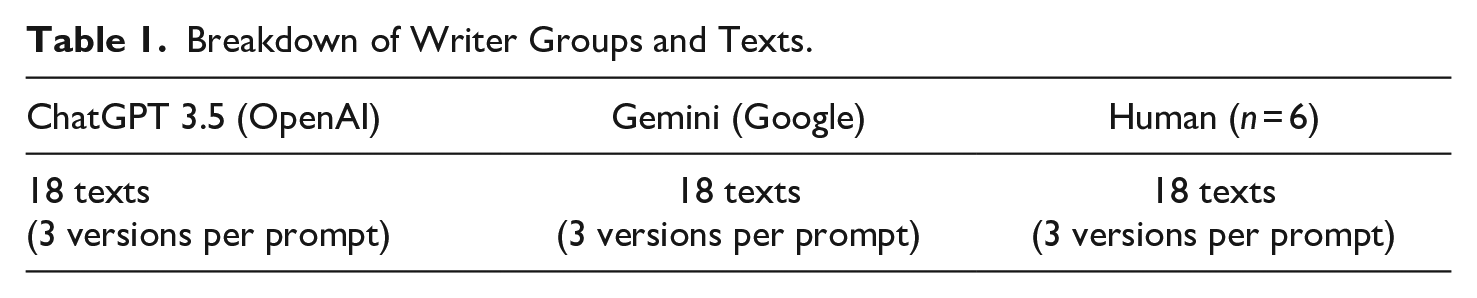
The six human writers were recruited from the researcher’s network of colleagues working as professional skills trainers, with between 7 and 30 years of experience in teaching business communication. They gave written permission for their texts to be used in the genre analysis and for the online task.
Data Collection
Participants
Participants for the main data collection phase were recruited through the researcher’s network of teachers with experience in teaching professional skills or Business English, including a writing component. Complete data were collected from a total of 36 participants, whose Business English–related teaching experience ranged from 1 to 25 years, with a median of 12.5 years. The majority of participants were located in Asia (81%), with others in Europe (11%), the Middle East (6%), and Central America (3%).
Scoring instrument
A scoring instrument was needed by which human assessors would be able to evaluate the texts in answer to RQ2 (Appendix B). There are few existing rubrics for the assessment of business writing, and none that were suitable for this current study (although Fraser et al. [2005] and Jovic & Msnari [2024] provided inspiration). For the purposes of this study, a three-scale analytic scoring rubric was created using the British Council’s established principles of effective business writing. These are known as the 3Cs (Clarity, Credibility, and Connection) and are used in professional skills writing courses globally, having been developed through many years of working with clients from different industries. Four descriptors were formulated under each of the Clarity, Credibility, and Connection scales to guide assessors on what to look for. For each text, the assessor was asked to give a score out of 5 on each scale, to produce a total score out of 15. The rubric was deliberately kept simple to reduce assessor fatigue. Analysis (presented in the findings section) demonstrated good internal reliability, as well as good concurrent validity when compared to a holistic scoring methods.
Online task
Data collection was conducted online using JISC Online Surveys (Version 3) to create a data elicitation task (Appendix C). Participants who had consented to participating in the research were emailed a link to the task to complete at a time and location of their choosing. Each participant was randomly allocated one text from each writer group (ChatGPT, Gemini, and Human), based on one of the six prompts. The order in which texts appeared was randomized and participants were not provided with information on the authorship of the texts they were shown. For each text, participants were asked to
Score the text using the scoring instrument
Give an additional score out of 10 representing their overall impression of the quality of the text (this score was used to check for concurrent validity)
Judge whether the text was human-written or AI-generated
Answer an open-ended question to explain what influenced their decision on authorship
Following this procedure, each of the 54 texts was rated by two separate assessors. One of the researchers also rated all of the 54 texts, providing a third rating as a benchmark.
Genre Analysis
A genre analysis based on the full corpus of 54 texts was conducted based on Swales’s (1990, 2004) move-step approach and by consulting the work of Upton and Cohen (2009) and Hyon (2018), who offered a more systematic description of the process for identifying and describing moves. The researcher read all 54 texts and established a working set of moves and steps categories. After piloting and refining the framework, the full set of texts was coded. The frequency of moves and steps were calculated, and patterns in organization and sequencing noted.
Quantitative and Qualitative Analyses
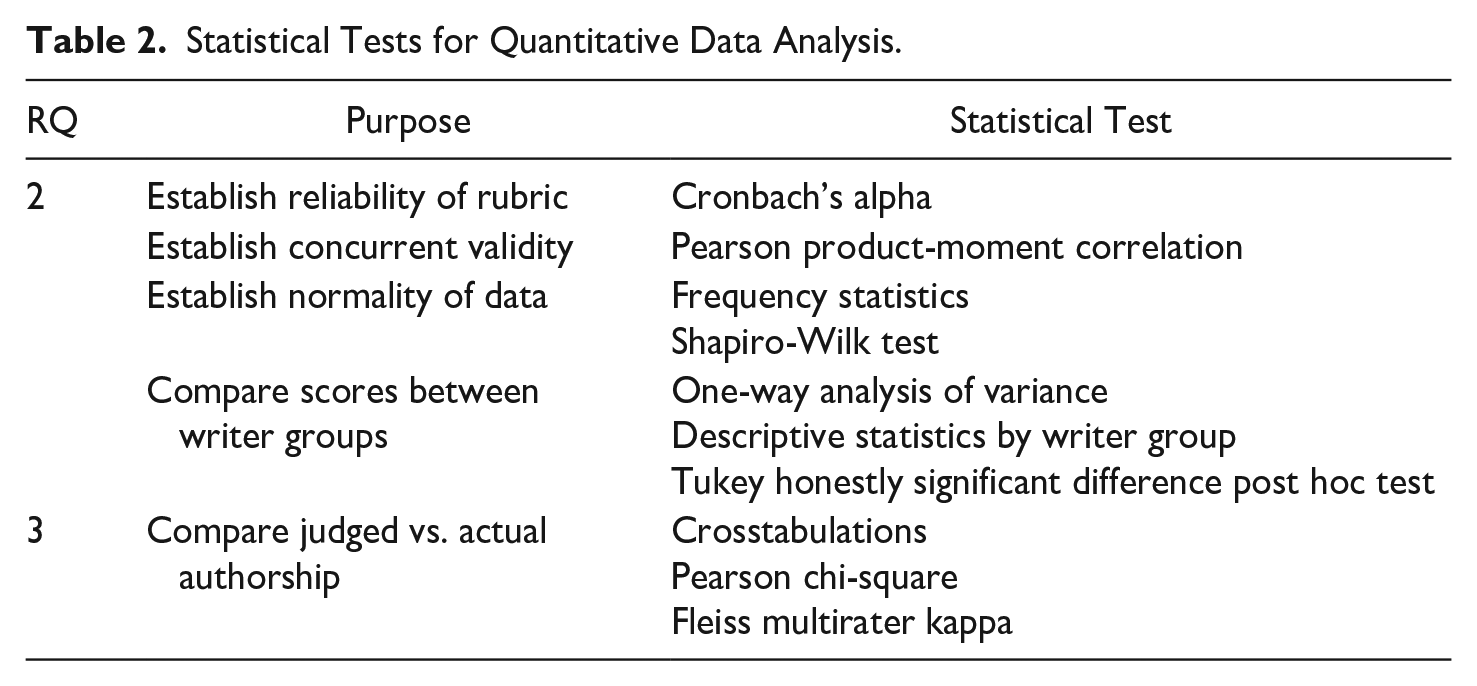
Quantitative data (scores and authorship judgments) gathered from the online task were analyzed using IBM SPSS Statistics (Version 29) with the tests listed in Table 2.
Statistical Tests for Quantitative Data Analysis.
Participant responses to open-ended questions were analyzed using thematic analysis, a qualitative method for identifying recurring themes within the data. Initial codes were assigned to capture interesting phrases, ideas, and potential themes. These codes were subsequently refined and grouped into broader thematic categories related to the research questions. Finally, the revised coding framework was systematically applied to all data, with analysis done using NVivo (Version 14).
Results
RQ1: A Move and Step Framework for Business Refusals
To determine what typifies the business refusal genre, the 54 texts were analyzed to produce a framework containing four major moves and segmentation of their associated steps (Table 3). Worked examples from each writer group are provided in Appendix D.
Move and Step Framework for Business Refusals With Examples.
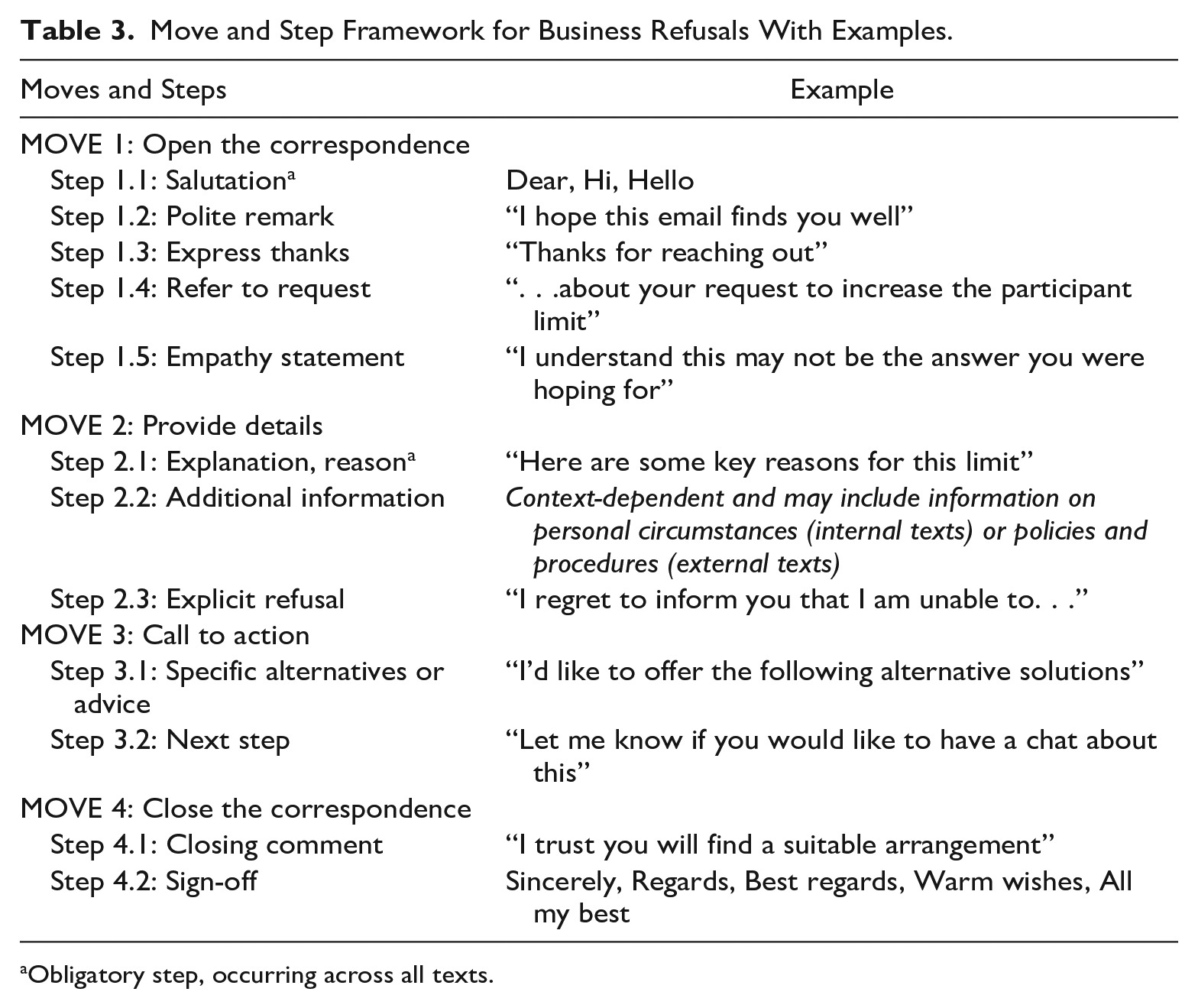
Obligatory step, occurring across all texts.
Differences between human-written and AI-generated texts could be seen through a study of whether specific moves occurred and in what order. Move occurrence counts were tabulated by step and are shown as percentages in Table 4, separated by writer group and text type. ChatGPT and Gemini texts were largely consistent in performing all steps within the framework, whereas human-written texts were inconsistent and often omitted steps. Only Step 1.1 Salutation and Step 2.1 Explanation was an obligatory step that occurred across all texts in the corpus.
Frequency of Step Occurrence by Writer Group, Text Type, and Total Corpus (Percentage).
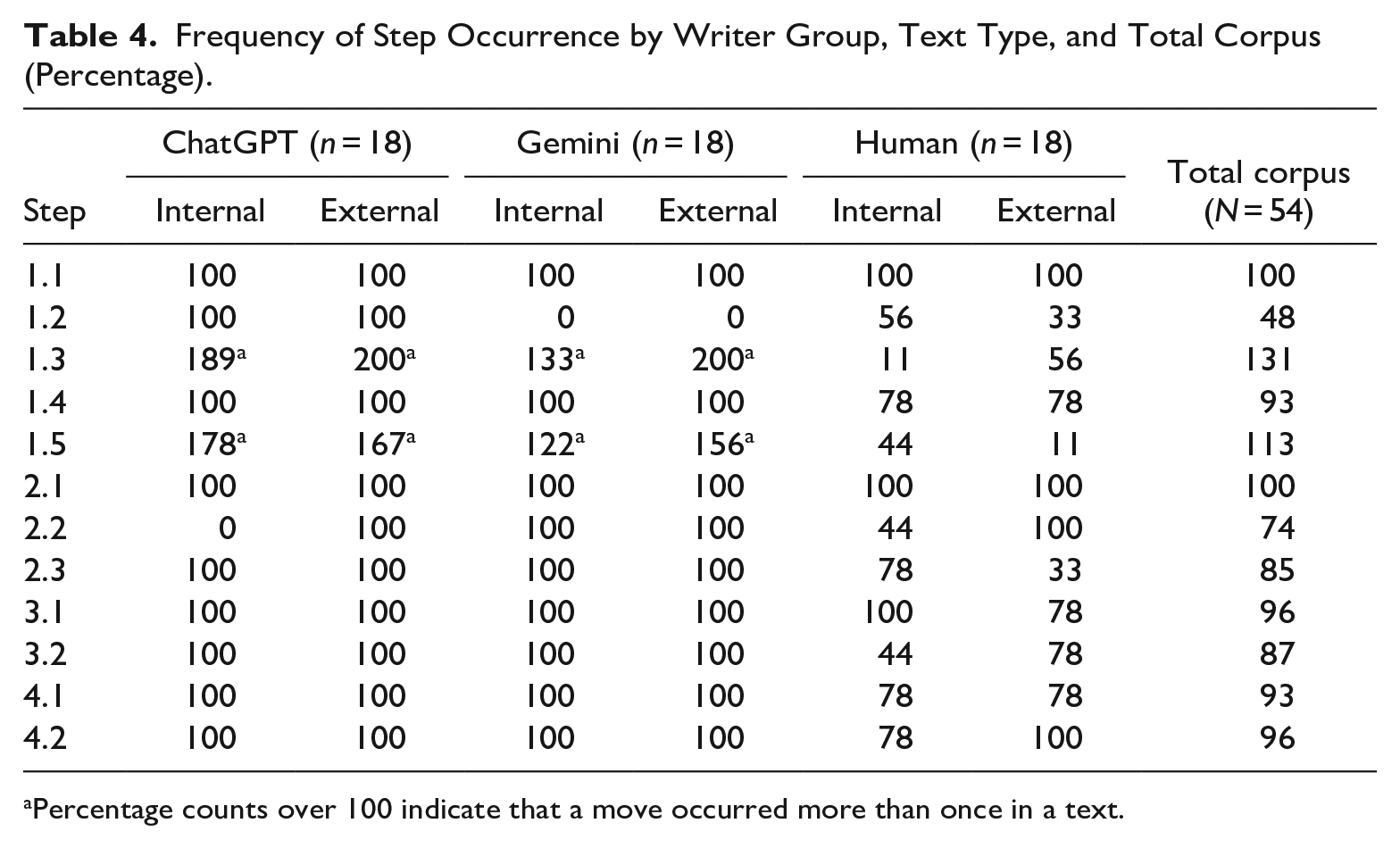
Percentage counts over 100 indicate that a move occurred more than once in a text.
While frequency counts provided insight into how often moves occurred, further analysis was needed to clarify the sequence in which moves and steps are made. In the majority of cases, moves and steps occurred in the order listed in the framework. One notable deviation from the framework is in Move 2 (Provide details), namely, how ChatGPT and Gemini texts present the refusal (Step 2.3). Both AI tools almost consistently delivered the refusal as the first step in Move 2, before the explanation (with the sequence being Step 2.3 → 2.1 → 2.2), with only two exceptions noted among 36 AI-generated texts. Conversely, all human-written texts that included an explicit refusal (2.3) followed the framework order and delivered the refusal as the final step of Move 2—the indirect structure recommended by scholars. Human writers were more likely to omit steps and deviate from their order listed in the framework, particularly when writing to a colleague at the same level or a longstanding customer. This will be a point we will return to in RQ3, as it was seen as a hallmark of human writing by the raters.
RQ2: Scoring Data
For the scoring rubric, reliability statistics produced a Cronbach’s alpha of .819, indicating a high level of internal consistency for the scale items (Clarity, Credibility, and Connection—hereafter referred to as the 3Cs). This showed that the three items were measuring the same construct of writing quality and further analysis could be done on the total score for the 3Cs. In addition to scoring texts on the 3C rubric, participants were asked to express their overall impression of the quality of the text as a score out of 10 (1 = poor, 10 = excellent). This holistic measure was intended as a second test of writing quality to establish concurrent validity. A Pearson product-moment correlation between the 3C total score and the overall impression score showed a strong, positive correlation (r = .811, n = 162, p < .001).
Comparison across writer groups and text types
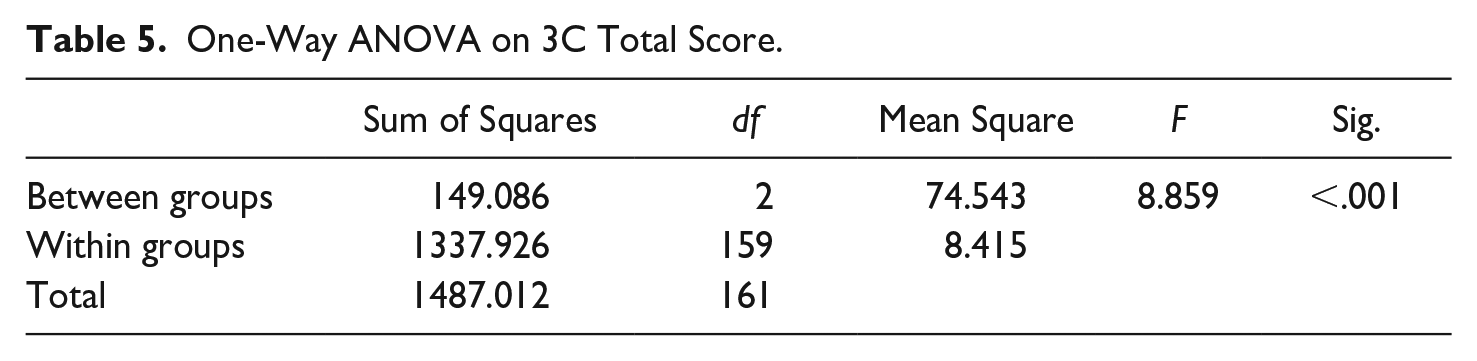
The 3C scores were submitted to a one-way analysis of variance (ANOVA) across the three writer groups. Table 5 shows there was a statistically significant difference between groups, with a medium to large effect size, F(2, 159) = 8.859, p < .001, η² = .100. This indicates that the writer group (ChatGPT, Gemini, Human) has a moderate influence on the variance in total writing scores.
One-Way ANOVA on 3C Total Score.
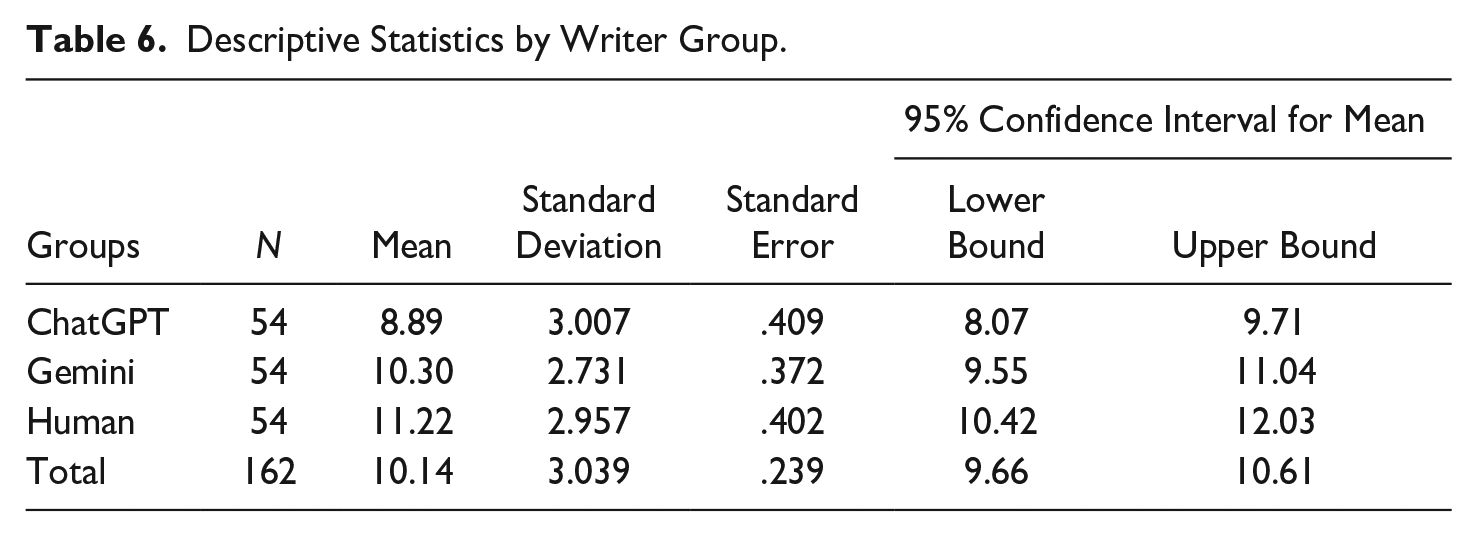
To identify which specific groups differed, descriptive statistics were conducted for the three writer groups (Table 6), along with a Tukey post hoc test (Table 7). The results showed that participants rated human-written texts (M = 11.22, SD = 2.957, p < .001) significantly higher than ChatGPT-generated texts (M = 8.89, SD = 3.007). There was also a significant difference in scores between ChatGPT-generated texts and Gemini-generated texts (p = .034). However, differences between Gemini-generated (M = 10.30, SD = 2.731) and human-written texts did not reach significance at the .05 level (p = .224).
Descriptive Statistics by Writer Group.
Tukey HSD Post Hoc Test: Multiple Comparisons on 3C Total Score by Writer Group.
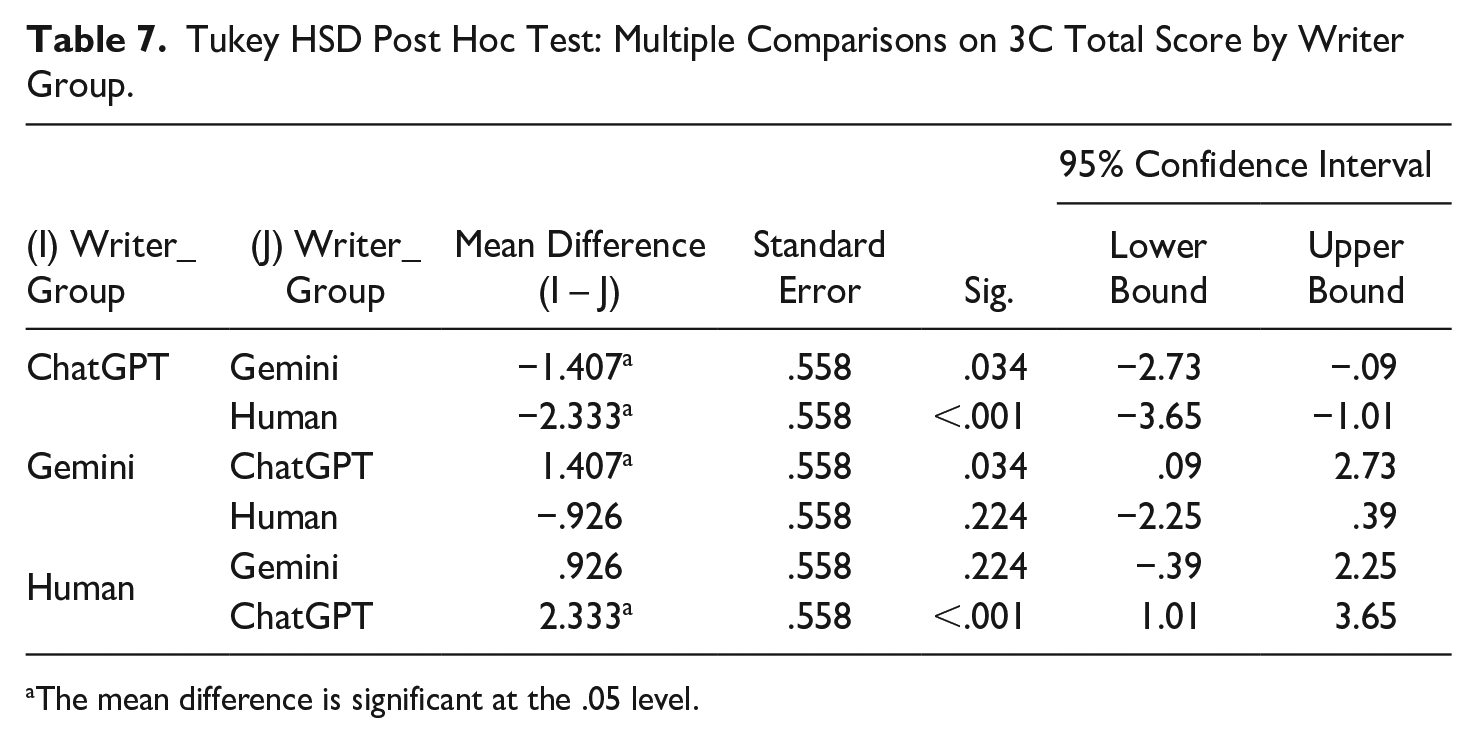
The mean difference is significant at the .05 level.
ChatGPT-generated texts had the lowest mean scores, while human-written texts scored the highest. Among the two AI tools investigated, raters preferred Gemini-generated texts over those generated by ChatGPT. Finally, to check for effects of text type (internal or external email) on total 3C scores, a two-way ANOVA was conducted. No statistically significant interactions were found between writer group, text type, and total 3C score (p = .448), meaning that the findings were the same regardless of whether the message was written for an internal or external reader.
RQ3: Authorship Judgments and What Influences Them
Quantitative results
After completing scoring based on the rubric, participants were asked to judge the authorship of each text (whether it was human-written or AI-generated). Table 8 shows crosstabulations for judged versus actual authorship. Overall accuracy of judgments was 74% (80 correct out of a total 108 attempts). Participants were most easily able to identify human-written texts, with an 86.1% accuracy rate (only 5 instances out of 36 where a human-written text was incorrectly identified as AI-generated). By contrast, there was more uncertainty around identifying the authorship of AI-generated texts, with a 68.1% accuracy rate. Within the AI writer groups, there was little difference between ChatGPT and Gemini, with accuracy rates of 66.6% and 69.4% respectively.
Crosstabulation: Judged Versus Actual Authorship.
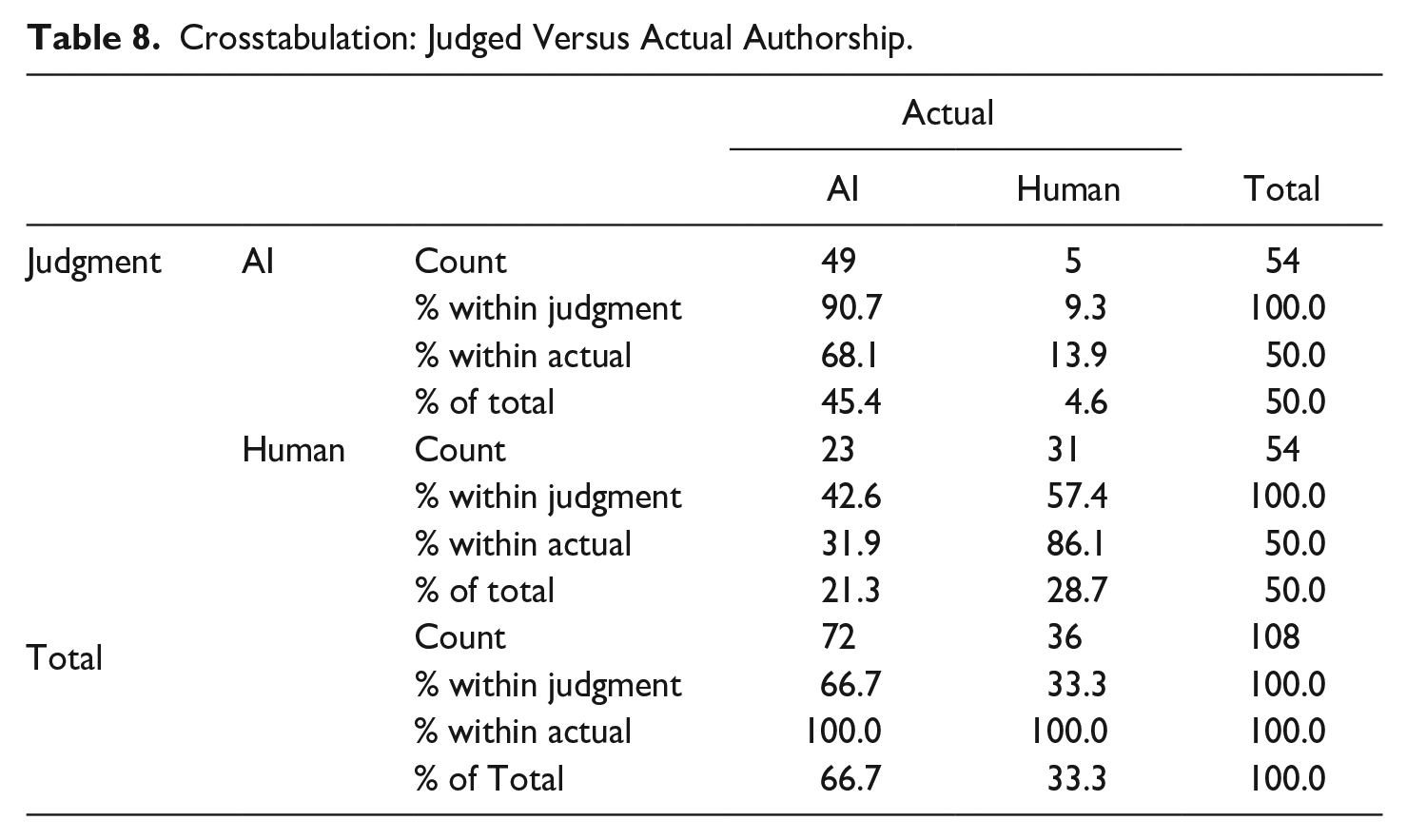
Results of a Pearson chi-square test show χ(1) = 28.167, p < .001, suggesting a statistically significant association between judged and actual authorship, with a moderate effect size (Cramer’s V = .511). Hence, participant judgments as to whether a text was written by a human or AI tool were not random. To further check that agreement between judged and actual authorship did not occur by chance, Fleiss’s kappa was run, and it showed that there was moderate agreement between judged and actual authorship, κ = .467 (95% CI, .278 to .655), p < .001.
Qualitative insights
After judging the authorship of the text, participants were asked to explain what influenced their decision as to whether the text was AI or human-written. Thematic analysis of the open-ended responses revealed that participants were most concerned with three broad characteristics of the texts: tone, relationship, and formality; language choice and grammatical accuracy; content, detail, and structure. These themes and some examples are summarized in Table 9.
Influences on authorship judgments.
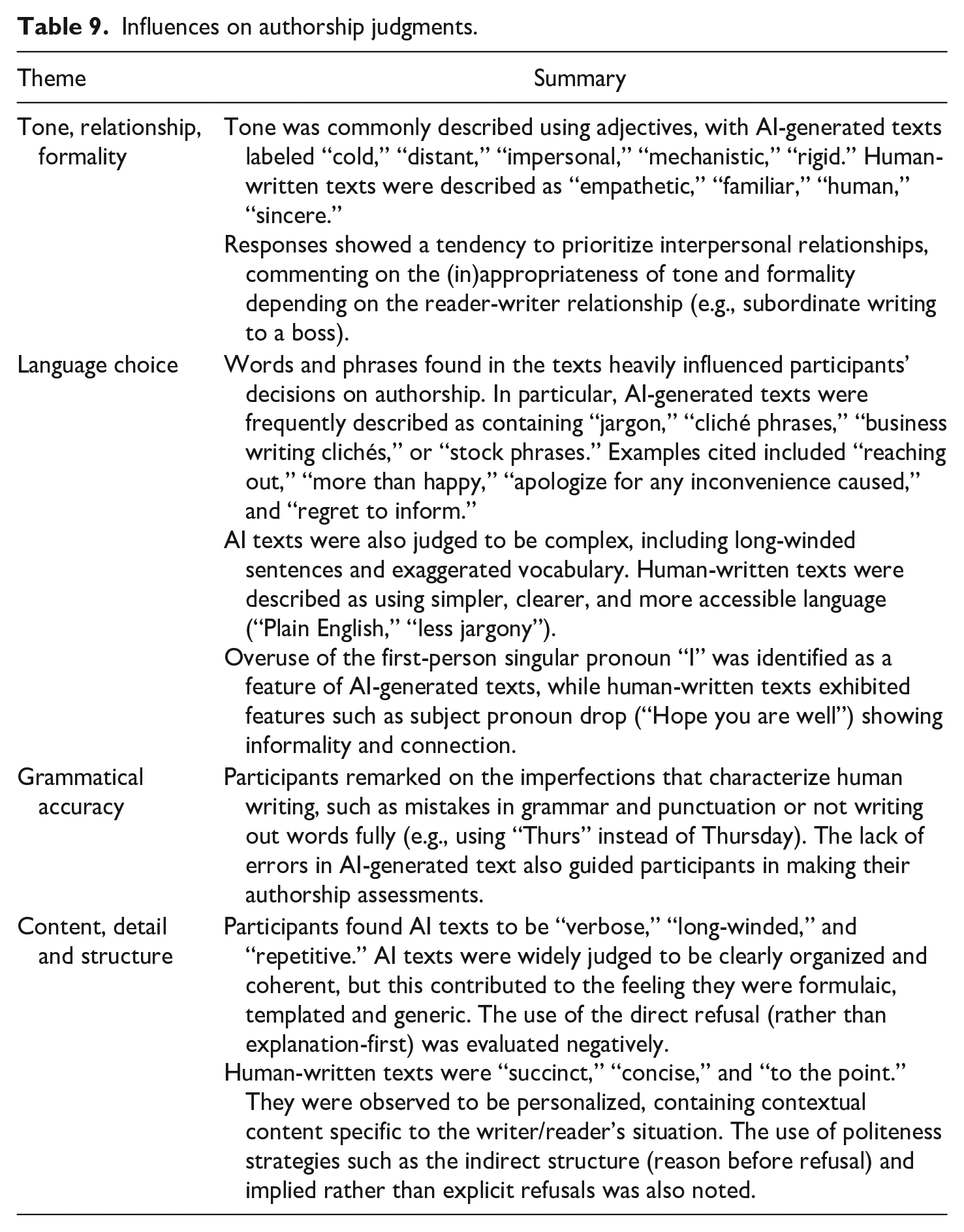
Overall, the three broad themes that emerged from the qualitative data show a preference for texts that consider the relationship between writer and reader. While AI-generated texts were notable for their grammatical correctness, they were also assessed to be formulaic and lacking in contextual awareness. By contrast, less clichéd language choice, concise messaging, specific rather than general content, and attention to interpersonal relationships were cited as the main influences when identifying texts as human-written.
Discussion
Our research contributes a genre framework for business refusals that did not exist in previous literature, showing that there are typical moves and steps employed across writer groups for business refusals. Frequency and sequencing analysis showed that texts generated by ChatGPT and Gemini applied moves and steps in a largely consistent manner across text type (internal, external) and did not adjust their approaches, despite the prompts specifying different writer-reader relationships. There was also a tendency for the AI tools to repeat steps such as expressing thanks (Step 1.3) and the empathy statement (Step 1.5), contributing to their perceived repetitive nature. The consistency with which AI texts applied genre moves corresponds with the findings of AlAfnan et al. (2023) and Jovic and Mnasri (2024), who also described AI-generated emails as formulaic and templated.
On the other hand, the human-written texts varied in the moves they employed, with differences seen between internal and external texts. Human writers were much more likely to omit steps, depending on the context and writer-reader relationship specified in the prompt. Particularly for external texts written to clients, it was expected that overt signals of politeness would be more consistently included; however, only 33% and 11% of human-written texts included a polite remark (1.2) and empathy statement (1.5), respectively. Instead, politeness may be inferred from the fact that only one-third of external texts included an explicit refusal statement (2.3). The remaining majority contained an implied refusal, which the reader would infer from the performance of other steps. For example, the writer would first offer an explanation to the customer before providing specific alternatives (in line with politeness strategies proposed by Campbell, 1990) and attempting to persuade the customer to accept one of these. Implied refusals can be interpreted as an indicator of human writing skill and a desire to maintain face (Brown & Levinson, 1987) not seen in the AI-generated texts, all of which delivered an explicit refusal statement, such as “I’m unable to approve your request.” Overall, human-written texts were more nuanced in their adoption of genre conventions and appeared to consider the text and audience type when choosing whether to include or omit moves, and how to sequence them.
Scoring data based on the three-scale rubric assessing Clarity, Credibility, and Connection (3Cs) showed that human assessors preferred human-written over AI-generated texts, with Human texts achieving the highest mean score, followed by Gemini and finally ChatGPT. The significant difference in scores between Gemini and ChatGPT texts suggests that Gemini may be the more effective AI tool for business writers. Interestingly, score differences between Gemini-generated and human-written texts did not reach significance. This may signal that Human and Gemini texts might be perceived similarly, but further research with a larger sample size would be needed to explore this aspect. In addition, human-written texts were judged to be of higher quality regardless of whether they were written for an internal or an external audience, with no statistically significant interactions found based on scenario type. Given the recent release of these AI tools, no previous published studies have compared the applications of ChatGPT and Gemini in business writing, nor are there studies comparing human-written with AI-generated business texts. AlAfnan et al. (2023) and Jovic and Mnasri (2024) found that assessors gave low scores to AI-generated business texts, but human-written texts were not part of either study. Some studies in academic domains have observed that AI models may be as good or better than humans at writing scientific (Yeadon et al., 2024) and argumentative essays (Herbold et al., 2023). However, our study shows they fall short in business writing. One explanation may be that business writing is heavily judged on the ability to build relationships with the reader, an area in which AI-generated texts do not perform as well compared to human-written ones.
On authorship, we found participants could correctly identify human or AI authorship of business refusal texts with a higher accuracy rate than by chance. These results diverge from the studies of Casal and Kessler (2023) and Yeadon et al. (2024), who found low accuracy rates in human raters’ ability to identify authorship. This may be attributable to the context in which these two previous studies were conducted: AI tools generate academic texts that can fool even experienced assessors, but fare less well in a business writing context that prioritizes relationships and connection to the reader. Similar to the present study, Casal and Kessler’s participants were more likely to correctly identify human-written texts as human. This suggests there are characteristics of human writing that make it readily identifiable as such and more positively perceived.
Findings on tone corresponded with research on AI-generated messages conducted by Coman and Cardon (2024), in which professionals rated ChatGPT-generated messages as less sincere and caring. Similar to participant comments in this study, Jovic and Mnasri (2024) found that the tone in LLM-generated emails was emotionally neutral and overly formal, pointing to difficulty in expressing sentiments. In terms of language choice, Campbell et al. (2023) found that a plain style avoiding jargon and nonrequisite words contributed positively to the perceived professionalism of business writers, and these perceptions may have influenced authorship judgments in this study. The tendency for AI-generated texts to be convoluted, verbose, and jargonistic was an indicator of AI authorship for many participants. Human writers paid attention to the writer-reader relationship and wrote messages that were concise and specific in a plain style, avoiding the use of clichéd language.
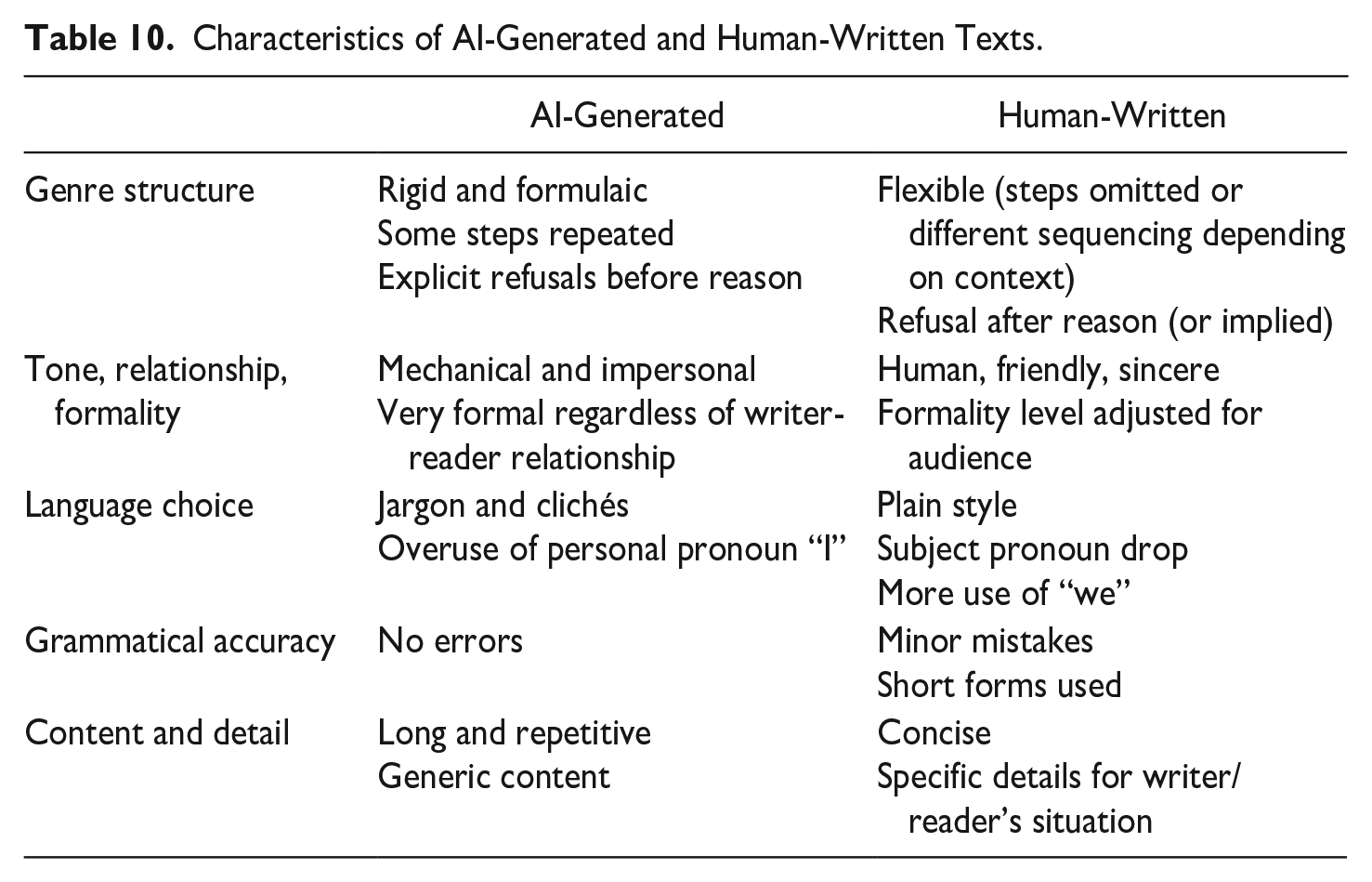
Table 10 summarizes the characteristics of AI-generated and human-written texts as found through the move structure analysis and qualitative data from participants.
Characteristics of AI-Generated and Human-Written Texts.
Conclusion and Recommendations
The introduction of this study included a provocative question for the profession: “Is there still a case for business writing training?” The short answer is yes. Business writing training and the teachers and trainers who deliver it are still needed in the AI age. Effective business writing, especially in difficult situations, requires a human touch, understanding of the reader’s needs and of the context itself. AI tools might help people draft communications in the future, but human awareness of the genre is needed so messages are not seen as detached or formulaic. We identify four key areas where teachers of business writing should focus their energies.
Raising Awareness of the Complex Nature of Genres
The broad and simplified genre framework presented here for business refusals is useful as a teaching tool for learners new to the business discourse community, as well as professionals looking to refine their skills. However, it should be seen as a flexible framework and understood as description rather than prescription (Pinto dos Santos, 2002), and emphasis needs to be on process over product (Creelman, 2012). Rather than simply providing a writing “formula,” teachers need to emphasize that genres are flexible and guide learners on how they can use and adapt generic conventions to best achieve their goals. Each writer-reader interaction should be handled in a context-specific manner, taking into account factors such as role relationships, tasks, and industry-specific practices or concerns (Zhang, 2013). Contextualization remains important and learners should be introduced to a genre’s conventions through analysis, critique, reflection, practice, and feedback.
Focusing on Involvement in the Writing Process
AI tools cannot replace the experience of attending classes and interacting with other learners and a teacher. The discussion process is hugely important for helping writers develop knowledge in how to persuasively structure arguments, build relationships, and embrace nuance (Ying, 2020). Business writing training should continue to focus on giving learners the opportunity to share authentic workplace experiences and engage in collaborative planning, writing, and editing. Practice is essential, as each performance of a genre is unique (Devitt, 2015) and involves consideration of how to perform rhetorical moves in ways to fulfil specific tasks in a specific discourse community. Learners then receive feedback on the textual performance from peers and their trainer, and reflect on it before performing again. They might also compare their human-written texts with texts generated by different AI tools, with discussion focusing on where AI can be used effectively to help and where human judgment remains most important. Fostering a sense of involvement will help retain text ownership and satisfaction in the writing process (Dhillon et al., 2024), as learners also hone their thinking skills.
Helping Learners Develop Aspects of Writing Voice That Feel Human
AI tools can be used to support parts of the writing process, such as in finding relevant arguments, suggesting organizational structure, and providing examples of styles that may be best suited to the writer’s audience and goals (DeJeu, 2024). The ability of AI tools to produce grammatically correct text reduces the need for intense grammar instruction in business writing courses, although learners should still be made aware of common errors. Instead, emphasis should be on using human judgment, creativity, empathy, and contextual knowledge to evaluate AI output to ensure a text achieves its communicative purpose. The results of our exploratory study suggest that having a relationship orientation, emotional understanding, and contextual knowledge are the main differentiating factors between human-written and AI-generated texts. Hence, business writing training should focus on developing the ability to analyze the purpose, audience, and context so that communication can be adapted to the specific situation at hand. Genuine empathy for the reader’s needs and expectations, along with a human voice, personality, and style (including nonstandard and idiosyncratic language), is what sets human writing apart. As the bulk of business writing converges on formulaic structures and clichéd phrases, which AI tools perpetuate, human writers should aim to engage and surprise their readers.
Developing AI Literacy
Current and future business writing curricula need to include a component on AI literacy (Cardon, Fleischmann, Aritz, et al., 2023; Getchell et al., 2022 provide starting frameworks). This should include aspects such as understanding how to use AI tools for specific tasks and for what tasks they might be appropriate; considering authenticity and the human element in communication; taking responsibility for AI-generated content and using it fairly; and discussing issues around governance, ethics and safety. Learners, along with their teachers, must be able to negotiate what AI-human collaboration should look like in their context. Applying these frameworks to the above example, a business communication trainer could engage in the following steps to raise AI literacy around “bad news” email writing:
Stage 1: brainstorming to share existing knowledge on Generative AI around its benefits and limitations; create rules for using AI in the workplace (ethical considerations); and think of tips to write good prompts
Stage 2: testing out prompting strategies to generate writing on the same topic as a human-written text
Stage 3: working together to review and evaluate output (both AI and human) to discern the extent to which they can be used accurately and ethically in the workplace, while maintaining human agency.
These activities aim to facilitate discussion around what AI can/cannot help with and where human writers’ strengths lie. This links to two main roles of business written communication training: (1) helping to raise awareness of genres, and (2) involving learners in the writing process so they know how to best achieve their goals.
Limitations and Future Research
We acknowledge several limitations of this study. First, genre analysis is not an exact science. Moves and their boundaries may be difficult to delineate (Samraj, 2014), resulting in different ways to code moves and steps. In addition, further linguistic analysis of the texts with computerized corpus techniques (Flowerdew, 2012, provides an example) could elaborate on differences in lexicogrammatical features and add a quantitative dimension to the perceptions around language choice reported by participants. Second, generative AI is constantly evolving and as newer LLMs are released, output generated from the same prompts used in this study may change. For consistency in this study, we generated each text with a single prompt. In reality, the prompt process is usually iterative, meaning that often more than one prompt is used to fine-tune the desired output. Future studies on AI and writing in the business context should consider (1) using newer versions of the platforms; (2) evaluating AI models beyond the two studied here; and (3) testing different prompt strategies (Knoth et al., 2024). Third, future studies could consider broadening the representativeness of the participant sample. The data in our study reflects the opinions and perceptions of teachers and trainers with a professional background in Business English, but does not capture the views of learners or business practitioners.
Finally, our study investigated AI-generated and human-written texts, in isolation of one another. However, actual use of the technology is more likely to involve a combination of AI technology and human judgment. Further study on how professionals are using AI tools in their writing would be helpful for understanding points in the writing process where technology can assist. Particular areas for focus would be when and where humans are choosing to use or not use AI, as well as how decisions are made on modifying AI-generated texts to suit a particular communicative purpose.
AI tools can enhance productivity and efficiency and play a valuable role in supporting and augmenting human work. However, they cannot yet replace humans, who possess moral reasoning, ethical judgment, and emotional intelligence. Our study showed some of the human aspects of writing that AI-generated texts do not fully replicate. Further research will be needed as the technology continues to evolve, so that teachers can help learners make use of the strengths of AI tools to assist with writing, while knowing how to compensate for weaknesses in the technology.
Supplemental Material
sj-docx-1-bcq-10.1177_23294906251322890 – Supplemental material for A Genre, Scoring, and Authorship Analysis of AI-Generated and Human-Written Refusal Emails
Supplemental material, sj-docx-1-bcq-10.1177_23294906251322890 for A Genre, Scoring, and Authorship Analysis of AI-Generated and Human-Written Refusal Emails by Winny Wilson and Heath Rose in Business and Professional Communication Quarterly
Footnotes
Declaration of Conflicting Interests
The author(s) declared no potential conflicts of interest with respect to the research, authorship, and/or publication of this article.
Funding
The author(s) received no financial support for the research, authorship, and/or publication of this article.

Supplemental Material
Supplemental material for this article is available online.
Author Biographies
References
Supplementary Material
Please find the following supplemental material available below.
For Open Access articles published under a Creative Commons License, all supplemental material carries the same license as the article it is associated with.
For non-Open Access articles published, all supplemental material carries a non-exclusive license, and permission requests for re-use of supplemental material or any part of supplemental material shall be sent directly to the copyright owner as specified in the copyright notice associated with the article.
