




Abstract
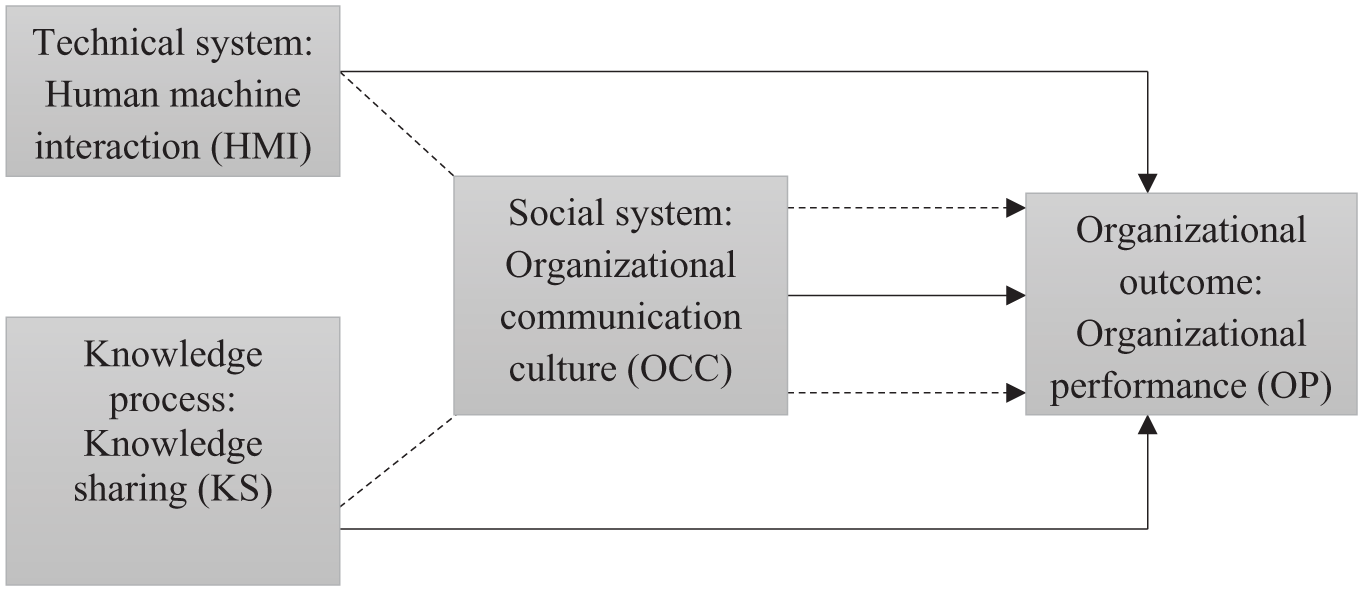
This work investigates the associations between human–machine interaction, knowledge sharing, and organizational communication culture on organizational performance (OP) within Indonesian organizations. In the context of digital transformation, it takes into account how socio-technical drivers are associated with performance outcomes. Utilizing a mixed-method process using Partial Least Squares Structural Equation Modeling (PLS-SEM) and Bayesian Networks (BN), data were gathered from 356 workers of medium and large-scale firms. Results disclose that: (1) HMI and KS are strongly and positively associated with OP; (2) OCC is positively associated with OP and helps to explain the rapports of HMI and KS with OP; (3) BN analysis identifies that OCC has the strongest association with OP; and (4) the overall model accounts for 67% of the variance of OP. This work contributes to the existing knowledge on factors that are associated with performance in emerging economies and underscores the important function that OCC has in leveraging digital engagement and KS.
Keywords
Get full access to this article
View all access options for this article.