



Abstract
The aim of this systematic review was to develop a thematic synthesis of existing qualitative studies to explore the use of humor in employee-to-employee workplace communication and provide a greater understanding of this area of research through the experiences of employees. A number of databases were searched using key terms and papers were selected using pre-specified criteria. The thematic synthesis approach of Thomas and Harden was used to review the final 23 papers. The findings from the thematic synthesis resulted in four temporal themes that described how humor was utilized during an employee’s organizational transition: (1) initiation into organizational humor, (2) joining a “tribe”—in-groups and out-groups, (3) exerting influence—humor as power, and (4) using the safety valve—humor to relieve tension. The temporal themes described in this study crossed organizational and cultural divides, where humor formed an essential part of work-based dialog.
Introduction
Humor plays a critical role in organizational communication, assisting in the socialization of new workers (Cooper-Thomas & Anderson, 2006), developing a sense of belonging (Tajfel & Turner, 1979), providing a means to exert power, (Kassing & Kava, 2013) and to relieve tension (Shurcliff, 1968). Workplace humor additionally provides numerous benefits such as enhanced work performance and general wellbeing, decreased stress, and improved group cohesion (Mesmer-Magnus et al., 2012). This review takes a broad, internationally and industrially diverse approach to the use of humor in workplace communication, however, it focuses on employee-to-employee communication to provide a pan-cultural employee-related review of workplace humor.
Humor defies a universally accepted definition, partly due to its multidimensional nature and ability to produce both positive and negative responses (Mesmer-Magnus et al., 2012). Yet in attempting to do so Bennett and Wilson (2018) simply suggested it is “something that makes us laugh or experience a humour response” (p. 3). Martin and Ford (2018) augment this definition with a clarification of what those components of humor might be; a stimulus that a person perceives as funny (cognitive response), which then leads to mirth (emotional response) and finally to a physiological response such as a laugh or smile. Furthermore, the identification of humor could be based on the speaker’s humorous intentions (Hay, 2000) or the listener’s response (Taylor, 1974). In line with employee-to-employee humor being central to this review, the definition of Nelson (2014) has been adopted, which suggests that “humour is identified by means of the speaker’s supposed intention combined with the response to which the utterance gives rise.” (p. 7), although this definition does focus more on verbal communication.
Humor has been further dissected into four distinctive styles (Martin, 1996), in which humor style relates to both the focus of the humor and its intended purpose. The four types are; affiliative—saying funny things to amuse others, improve relationships and ease tension; self-enhancing—a humorous outlook on life even in the face of adversity; aggressive—the use of sarcasm perhaps to ridicule others, possibly also with discriminatory undertones; and self-defeating—disparaging humor at one’s own expense. Using Martin’s classification, Mathew and Vijayalakshmi (2017) suggested those humor styles can be categorized as; healthy humor (affiliative and self-enhancing) as it leads to a positive state of mind, whereas unhealthy humor (aggressive and self-defeating) is considered detrimental to health (Martin & Ford, 2018).
Other influences on whether an individual perceives communication as humorous or not include personality. Goldberg’s (1990) influential work on distinct personality traits has also been used to investigate relationships with particular humor styles (Plessen et al., 2020). For example, health-promoting humor styles (affiliative and self-enhancing) have been related to extraversion, agreeableness, conscientiousness, and openness, while health-endangering humor styles (aggressive and self-deprecating) were linked to neuroticism.
This complexity within humorous communication where research has explored humor styles, health effects and links to personality, has also resulted in three traditionally dominant theories (Berger, 2017). These theories are based on the deeper purposes humor might serve within general communication, and the basis of that humor:
Superiority theory involves humor being used to disparage others and gain a sense of superiority or power (Gruner, 1997). The recognition of humor as a manifestation of feelings of superiority was first discussed by Plato and Aristotle (Lintott, 2016).
Relief theory suggests that humor serves to relieve tension (Shurcliff, 1968). Relief theory has its origins in the work of Sigmund Freud, who suggested that humor was a socially acceptable means of releasing suppressed emotions (Morreall, 1997).
Incongruity theory, by comparison, is based on the subject of the humor rather than its purpose, with the theory holding that people find the unexpected funny (Deckers & Devine, 1981). The theory was developed by the philosopher Immanuel Kant, who argued that we live in an orderly world with certain expectations and when those expectations are violated by incongruous events, laughter ensues (Morreall, 1997).
More recently, a notable addition is the comprehension-elaboration theory developed by Wyer (2003), which specifies the conditions under which individuals find humorous communication amusing or not. The theory states that amusement is determined initially by how difficult the humor is to understand and then by cognitive analysis of the social acceptability of the humor (Cooper, 2008).
However, Meyer (2000) argued that humor can serve a number of rhetorical functions at the same time, rather than serving one singular function or overarching theory. Meyer suggested that humor in communication can simultaneously serve to; identify the speaker and enhance their credibility, clarify certain points, enforce norms by leveling criticism and to differentiate oneself from another group. Meyer’s findings suggest that humor is a sophisticated linguistic tool that can achieve a number of objectives during communication, while serving existing theories (Gruner, 1997; Tajfel & Turner, 1979). This review adopted a similarly broad approach to theory and align findings with theoretical approaches where appropriate.
In transferring this understanding of humor in communication to the workplace, Plester (2016) recognized different organizational humor roles at work. “Jokers” (e.g., group leaders), define the humor agenda; “gatekeepers” (e.g., human resource managers), delineate the barriers of acceptable humor, and lastly; “the disengaged” (e.g., any employee) who may be the target of such humor. That disengagement could be as a result of being exposed to aggressive humor, which as Mathew and Vijayalakshmi (2017) previously argued was considered detrimental to health. Yet some evidence also suggests that the darker side of humor (aggressive) can help employees cope with stressful situations (Rowe & Regehr, 2010). Plester (2016) suggests that, in general, “humour may be used to spice up the banal and tone down the terrifying” (p. 130) in workplace communication.
The subject of humor has produced several literature reviews. Existing humor-based quantitative systematic reviews have focused on gender differences regarding humor, in which men were found to be more likely to engage in aggressive humor (Hofmann et al., 2020), also, as mentioned earlier, on humor styles and personality types (Plessen et al., 2020). More specifically, Mesmer-Magnus et al.’s (2012) review concluded that positive humor in the workplace led to enhanced work performance, job satisfaction, and group cohesion. While these reviews have mostly synthesized quantitative research, which provided measurable data on humor and workplace communication, the value of qualitative reviews have also begun to emerge in this area. Such reviews have focused on the experiences of participants and have tended to focus on specific settings such as the service industry (Mathies et al., 2016) and health care (Jones & Tanay, 2016; Pinna et al., 2018). The reviews concluded that while humor improved employee and customer relations, the capacity to ridicule, offend and upset was also acknowledged. In summary, the aforementioned systematic reviews included between 7 and 77 articles. While quantitative reviews had a broader scope looking at humor and associated phenomena, qualitative reviews focused on specific organizational settings.
Consequently, this qualitative systematic review aims to explore the use of humor between employees in workplace communication and rather than focusing on one organizational setting. Thus, this review has a broader scope and will access the use of humor across industries and countries. Mindful of the work of Alvesson and Sandberg (2011) and their focus on the potential of problematization—the need to challenge the assumptions of existing theoretical assumptions—we also use this review to interrogate the different theoretical perspectives relating to humor in the workplace. It is clear from the introduction to humor theories we have provided that they are largely descriptive and unpredictive. This approach further allowed for the exploration of workplace humor as a pan-cultural phenomenon, albeit with nuanced intercultural differences (Jiang et al., 2019). However, it will focus solely on employee-to-employee communication within those organizations, as the views of others, for example, contractors, are not fully immersed in the organizational culture (Fuller & Vassie, 2001). Employee’s experiences and perspectives were used to provide an employee-related review of organizational humor.
Method
Search Strategy
A mind map was initially used both to develop the review question and identify key search terms; the mind map provided a visual and creative radial diagram to explore the topic and sub-topics (Eppler, 2006). These search terms were refined with the assistance of an academic librarian, as were the chosen databases for the comprehensive literature search (Web of Science, Academic search ultimate, PsycINFO, PubMed, Communication mass media complete, and Scopus). Three core concepts were utilized: humor, communication, and workplace, which both aligned with the review question and provided appropriate literature. The associated synonyms of each concept were added to searches in each of the six databases—while also making use of truncation to account for any spelling differences—and where possible using Medical Subject Headings (MeSH) terms (see Supplemental Appendix 1). Each concept was searched separately, then those searches were combined. The titles and abstracts were then reviewed to identify suitable papers. The searches were conducted on 13th August 2020.
See Figure 1 for the PRISMA flow diagram of the selection process.
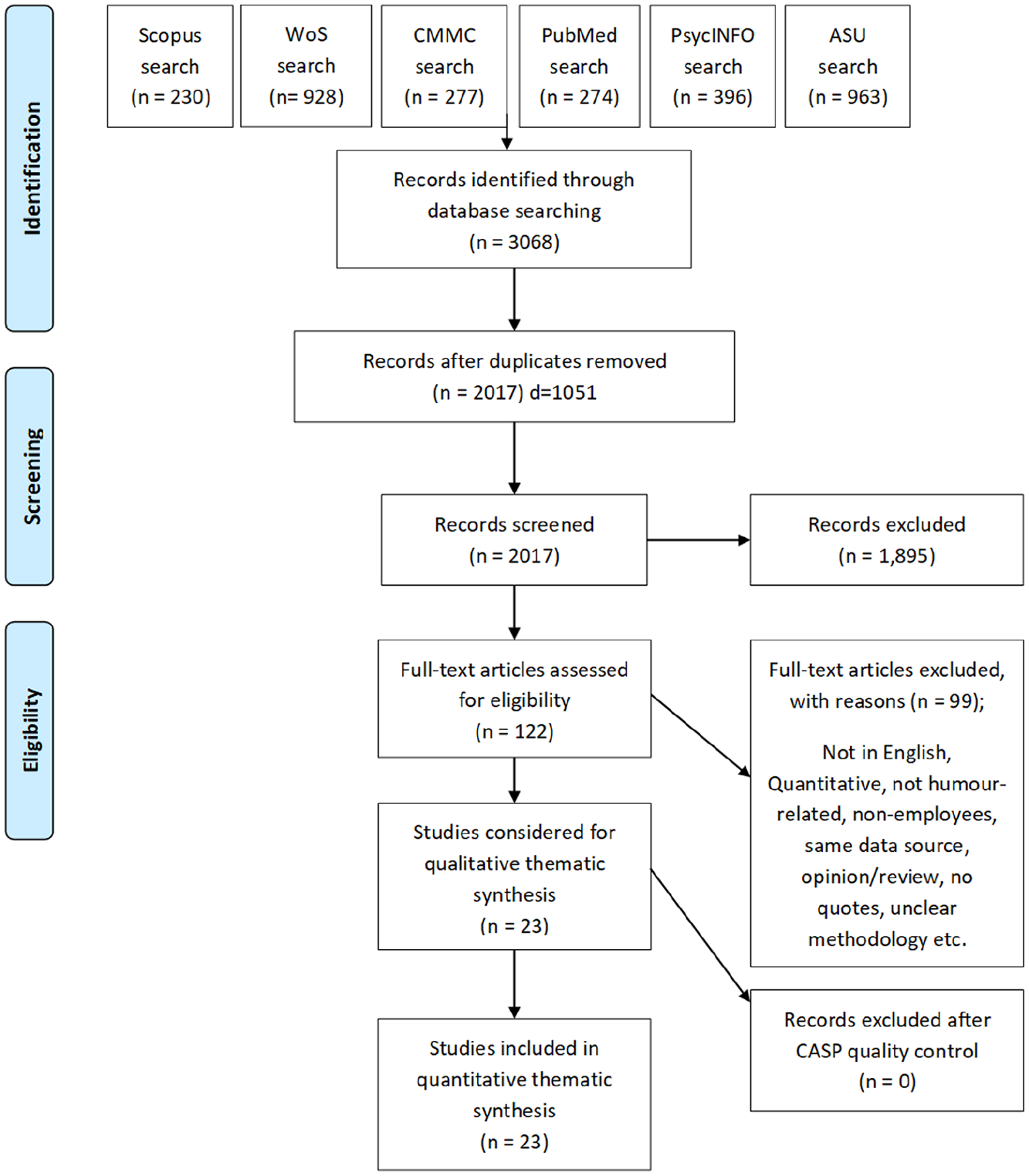
Prisma flowchart.
Eligibility of Studies
Papers were included for consideration using the following criteria: written or available in the English language; from a peer-reviewed journal, to confirm the credibility of findings; included humor as part of the research aim or questions; were in a workplace or organizational context; involved employee to employee communication in the workplace (to provide a specific focus on organizational humor), for example, in meetings, training, and general conversation.
The exclusion criteria for this review included: books; reports, articles in a non-peer-reviewed journal; review papers (systematic or narrative); opinion, theory, or editorial papers; quantitative studies; multiple papers from the same study or database (to ensure codes and themes were not double-counted); studies that did not involve humor as part of the research; contexts not involving the “workplace”; communication with others who were not employees, for example, visitors, students, and customers (to ensure the humor remained employee-centric); qualitative studies that did not include quotes; qualitative studies without a named approach or method.
A total of 3,068 papers were identified using the six databases. Subsequently, 1,051 duplicates were then removed using Endnote software. The titles and, where necessary, the abstracts of the remaining 2,017 papers were then reviewed. This resulted in 122 papers, for which the full text was reviewed against the inclusion/exclusion criteria. A total of 23 papers met the inclusion criteria and were included in the thematic synthesis (see Figure 1).
The exclusion of gray literature was a difficult choice. The basis of the decision was that such literature may have added a higher risk of bias due to potential flaws in the study (Balshem et al., 2013). By contrast, peer-reviewed articles have already been assessed for quality and, practically, were sufficient in number not to require alternative data sources.
Quality Appraisal
Contrasting views have been made on whether or not quality appraisals should be used to exclude papers in qualitative research reviews (Carroll et al., 2012; Spencer & Ritchie, 2011). However, following the thematic synthesis approach of Thomas and Harden (2008), in which quality assessment is a recognized step in the process, all papers were assessed for quality. This provided an objective measurement that minimized potential bias by understanding the respective strengths and weaknesses of each study. While some authors choose to exclude articles on a quality basis (Carroll et al., 2012), Sandelowski and Barroso (2003) argue that the inclusion of all studies also reduced a potential source of bias, that of excluding on quality alone.
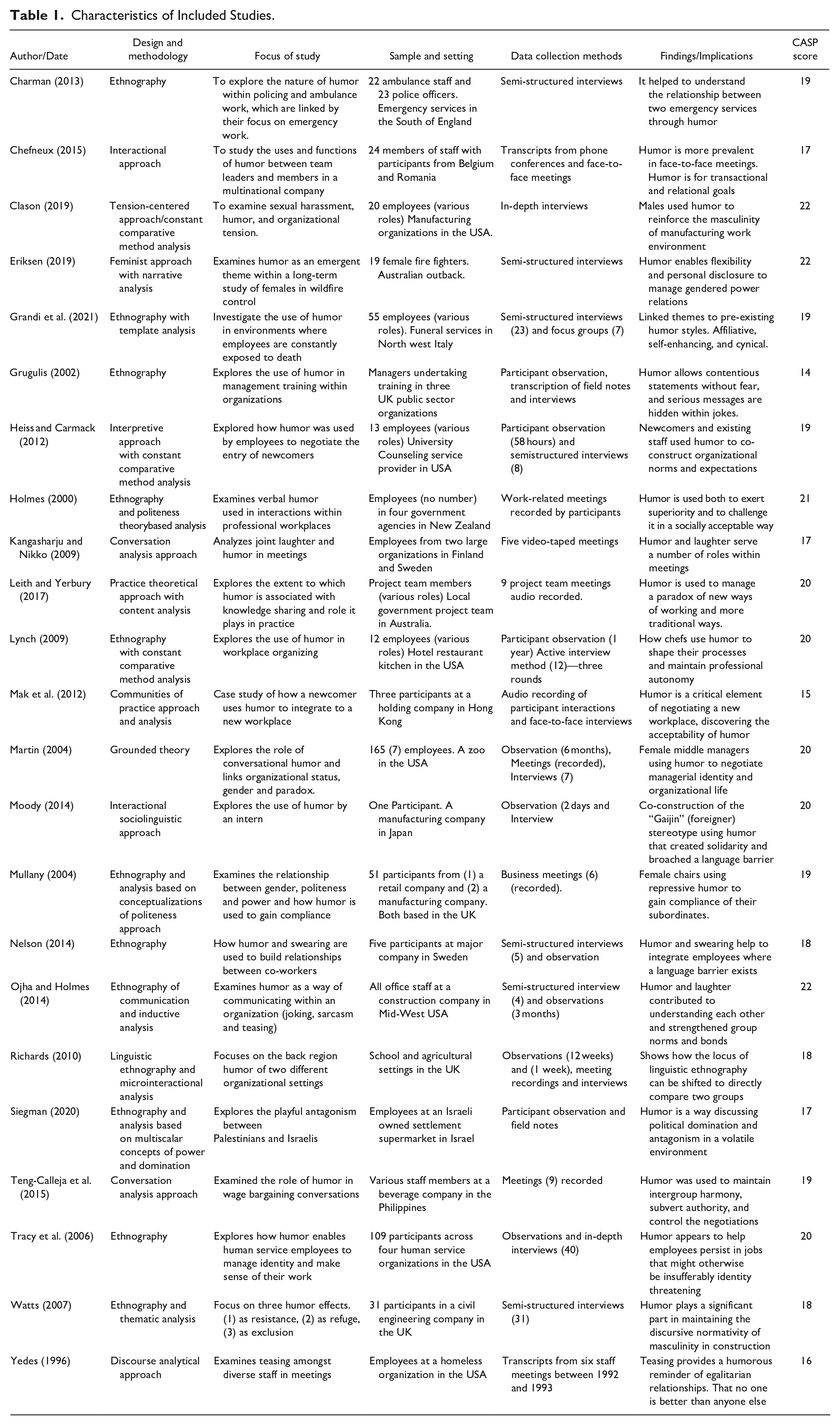
The Critical Appraisal Skills Programme (CASP) (2018) was used to assess the quality of studies. The CASP tool was considered appropriate due to both its wide use and its measure of methods, ethics and rigor to assess credibility (McKnight et al., 2019). It included 10 questions, two of which were for screening out inapplicable studies; the remaining eight questions were considered important to determine the specific strengths of qualitative research, such as research design, data collection, analysis, and ethics. The widely used three-point scoring system (Duggleby et al., 2012; Feder et al., 2006) was applied to the eight questions. A weak score (one point) was applied if there was no mention or explanation of the issue. A moderate score (two points) was awarded if the issue was discussed but not fully explained. A strong score (three points) was applied when the issue was fully explained and justified. An overall score was then calculated for all eight questions with a maximum score of 24. The scores for the 23 studies ranged from 14 to 22, with scores used to provide some measure of quality and not necessarily to exclude papers. The score could be affected by several factors, for instance, papers subjected to word limits by a journal may result in a lower score (Atkins et al., 2008). Additionally, three of the included studies were assessed by another researcher for the purposes of inter-rater reliability. Each answer to the eight CASP questions were compared, producing a good inter-rater agreement of over 80% (Barth et al., 2017).
All 23 papers were subjected to line-by-line coding according to the thematic synthesis approach of Thomas and Harden (2008). Subsequently, all papers added codes to the overall synthesis, and although some studies did not richly add to the depth of the subsequent themes, their nuanced views provided a more complete review of the subject (Verhage & Boels, 2017). The characteristics and CASP scores of the 23 studies are summarized in Table 1.
Characteristics of Included Studies.
Analysis and Synthesis
The thematic synthesis approach of Thomas and Harden (2008) was followed. The synthesis comprised three stages; (1) line by line coding of the findings in included papers, (2) development of descriptive themes, by collating and merging codes to provide collective meaning across the papers, and (3) to synthesize these descriptive themes into analytical themes. The resultant themes therefore provided an interpretation of the findings that went beyond those contained in the original papers.
Data Extraction
In line with the approach of Thomas and Harden, “data” were taken to be sections labeled “results” or “findings”; this included direct quotes from participants and the authors’ own interpretations. However, due to the variety of reporting styles within the included literature, “findings” that represented new concepts or detail were also discovered in abstracts and discussion sections, as also found by Rathbone et al. (2017). Line by line coding was then carried out on the 23 included papers. This was performed with the assistance of NVivo 12 software. Codes were developed inductively, in what was an iterative process in which codes were renamed, merged, and reviewed. Once the initial coding was complete, all findings were then re-read to ensure all coding had been applied correctly across the papers. This was specifically important to the initial papers to be reviewed, as codes developed later in the review also applied to these earlier papers.
Results
The resultant themes provided an interpretation of the findings that went beyond the contents of the 23 papers, while also staying close to the purpose of the review to understand better the use of humor between employees in workplace communication.
The thematic synthesis included papers published between 1996 and 2020. The research settings were varied; seven studies were conducted in the US, five studies in the UK, and other studies in Romania, Australia, Japan, Italy, New Zealand, Sweden, Finland, Israel, Hong Kong, and the Philippines. Workplace contexts included construction, hospitality, finance, education, retail, manufacturing, funeral services, and emergency services. Participant sample sizes ranged from 1 to 165. Methodologically, 12 (over half) of the studies used ethnographic approaches. The immersion of researchers in those ethnographic studies subsequently assisted in the development of themes, by allowing close contact with employees and exposure to the humor shared between them.
The collective meaning derived from the synthesis described a temporal transition. This transition utilized humor as a key tool to establish an employee’s place within the organization and to negotiate the day to day processes within it. This formation of themes to fit a temporal structure has been previously used to describe experiences of diseases, for example, in a thematic synthesis of dementia (Bunn et al., 2012) and a thematic analysis of HIV (Heiland et al., 2002). The thematic synthesis process led to the following analytical themes that described the temporal transition of employees in an organization: (1) initiation into organizational humor, (2) joining a “tribe”—in-groups and out-groups, (3) exerting influence—humor as power, and (4) using the safety valve—humor to relieve tension.
Initiation into Organizational Humor
This theme outlines how humor was utilized within organizations to both select and acclimatize new employees.
Even before individuals were appointed by an organization, it appeared that the humor of prospective candidates was being assessed at the interview stage. At this point, humor served as a gatekeeping function: “It’s our way of saying who we want to work with. . . For me, if they ain’t funny, I’m going to say no” (Heiss & Carmack, 2012, p. 121). This highlights the perception of humor as a desirable attribute in fellow employees.
Humor initially served to highlight a rapport, or not, between the new employee and existing staff at the organization. Once in position, new employees then used humor to cultivate working relationships, while existing staff inducted new employees into organizational humor norms. Humor also provided a non-confrontational means of pointing out mistakes made by the new employee.
When employees first joined an organization, it was often unclear what to expect and how to discover organizational norms. From the outset, humor was used to induct new staff into those organizational norms (Mak et al., 2012). It was for newcomers then to interpret this humor, understand their role within it and react accordingly (Nelson, 2014). This involved an element of risk on behalf of the newcomer, whereby they discovered the boundaries of acceptable humor (Martin, 2004). This might involve checking the reaction of colleagues and superiors to the injection of humor (Martin, 2004). In some instances, this humor failed, due to a newcomer’s lack of understanding regarding their status and the target of the humor.
Sometimes we talked about funny stories from before they [newcomers] got here. Then they told a joke about it. We got all protective and told them “no, that’s not your story to joke about. They weren’t here for it, why should they get to joke it up?” (Heiss & Carmack, 2012, p. 121).
However, although it appears mistakes could be made with humor, as above, work-based errors made by new staff offered the opportunity for humor to be used as a learning tool. Humor was used to highlight mistakes in a non-confrontational way, to aid organizational integration: “Teasing is a way to say ‘you’re doing something wrong’ without just saying it” (Heiss & Carmack, 2012, p. 116). This served to provide the newcomer with the professional norms of the role (Lynch, 2009), while simultaneously lessening the emotional impact of highlighting a weakness (Heiss & Carmack, 2012).
As a result of such learning, newcomers adapted humor styles to “fit in” with the specific organizational humor. Particular examples of this were; making jokes about bodily functions (Siegman, 2020), sharing funny social media videos with colleagues (Heiss & Carmack, 2012) or women in a stereotypically masculine environment taking on a traditionally male humor style. As one female factory worker remarked: “I’ll just muck in and be one of them” (Watts, 2007, p. 261). These actions served to cement organizational belonging and a new-found solidarity with one’s colleagues (Heiss & Carmack, 2012; Ojha & Holmes, 2014). However, this adaption of humor style also represented a potential erosion of individual identity, as workers sacrificed personal humor traits to align with organizational norms.
Joining a “Tribe”—In-Groups and Out-Groups
Humor in this next transition served to designate an employee’s group status within an organization. Humor then functioned to reinforce the solidarity of that group, while concurrently segregating those employees who were not part of the “tribe.”
Once an employee had gone through the initiation stage, it became apparent that organizations did not simply have one collective group. Here humor served to differentiate internal groups from one another, men from women (Clason, 2019), by nationality (Siegman, 2020) and workers from management (Lynch, 2009). As Lynch (2009) commented: “Workplace humour continuously brings people together, as well as creates barriers between groups” (p. 453). In this context humor simultaneously enforced group solidarity (in-group) and excluded others (out-group) (Charman, 2013).
Humor has been described as a social agent to form a bond between workers (Ojha & Holmes, 2014), a tool of social cohesion (Eriksen, 2019). This group cohesiveness served human affiliative needs, building positive personal relationships (Moody, 2014). Humor further reinforced the sense of belonging of the in-group. As a funeral company employee commented: They are my saviors [. . .] I am nourished [. . .] by their cabaret and I am very thankful for that. They don’t know it, but I laugh a lot here, [. . .] I laugh because they make me laugh, [. . .] there are moments that are priceless [. . .] paradoxically working in this place made me appreciate the worth of a laugh. (Grandi et al., 2021, p. 4)
Humor was also used to segregate the out-group. This was represented by interdepartmental humor, to criticize another department (Mullany, 2004) or more simply to question the status of an absent in-group team member (Nelson, 2014). The past experiences of employees also defined group status and the boundaries of acceptable humor. Employees in a homeless shelter who had experienced homelessness were able to access homelessness as a humorous topic whereas those who had not were in the out-group, and thus segregated from the use of such humor (Yedes, 1996). The absence of humor was also used for exclusion, where women were not party to the more bawdy humor used by some men (Clason, 2019). This may be partly attributed to the industrial culture in which the humor was generated, for example, the traditionally male dominated construction industry (Watts, 2007).
Paradoxically, it appeared employees traversed from the out-group to the in-group, through meeting inclusion criteria. Women working in a factory environment—rather than being excluded—may have been accepted, in that male workers presumed that by dint of their decision to work in a factory they would accept sexual humor and they then became part of the in-group. A male factory worker remarked: If you’re working in the shop, and you’re a woman, you have a different attitude or a different outlook on life than a secretary sitting behind a desk and typing. You have more—you’re more—I think you’re more open-minded into what’s actually going on in the world, you know. Maybe a little more hard-core. You know you can laugh it off and shrug it off. (Clason, 2019, p. 213)
While the deductive reasoning of the male factory worker may well have been misguided, humor also assisted in traversing groups by broaching language barriers and cultural divides which led to accessing the in-group (Moody, 2014; Nelson, 2014; Siegman, 2020).
Exerting Your Influence—Humor as Power
Employees used humor to affirm socially their individual and group identity. This theme then highlighted how humor became a tool to negotiate better terms, to challenge authority, ascend the ranks into management positions, and take control.
Initially, employees used humor to air discontent about working conditions. This served to soften the impact of confrontation and also reduced the possibility of refusing their demands (Chefneux, 2015). This strategy was utilized in wage negotiations where humor was used to issue demands in a less threatening manner (Teng-Calleja et al., 2015). This discourse strategy disguised the demands and was understood as “a device to sugar the pill.” (Holmes, 2000, p. 172).
Employees wanting to advance within an organization then used humor as a strategy to challenge existing authority. Younger employees were observed mocking older employees’ computer literacy (Watts, 2007). Holmes (2000) would describe this example as “contestive discourse” which was utilized by subordinates and directed at senior members of staff. Junior staff members used humor as an informal critique of superiors to destabilize the existing power-differential. As Watts (2007) suggests “humour is one way to ‘do power’ less explicitly” (p. 176).
When employees traversed into a management role, it was then that humor became a tool to exert that newfound superiority. To do so, managers deployed several tactics couched in humor to achieve the required goals. This included playful insults directed at high performers, which indirectly highlighted other staff members’ underperformance and the need to improve (Holmes, 2000). Managers also positioned themselves as “one of the team” allowing involvement in group humor, yet subtly enforcing expectations and authority. As Jen, a junior chef in a restaurant kitchen, found: He [Chef] more plays with you and it’s kind of saying that he’s watching you, and he knows what’s going on, and I’ll see him with some of the guys, and he makes fun of them to say that “Yes, I’m the Chef, and I know what you’re doing” (Lynch, 2009, p. 453).
Humor served to exert authority in other ways, for example, delegating work to subordinates in a way that avoided confrontation and encouraged staff to volunteer for the work (Mullany, 2004), challenging employees to do their fair share where the suspicion was that employees were “coasting” (Lynch, 2009; Yedes, 1996), and generally to increase productivity (Holmes, 2000). As one manager described: “So I guess I, maybe that is another reason I use it [humor], to kind of move people along” (Martin, 2004, p. 160).
Using the Safety Valve—Humor to Relieve Tension
As the temporal transition of employees continued, humor became a tool of mediation and relief in this final theme. Those in management positions and general employees used humor to negotiate the day-to-day challenges of organizational life, such as issuing orders, dealing with disagreements, boredom and coping with stressful situations.
Humor was used to ease tension when employees were dealing with a problematic topic or a contentious issue (Kangasharju & Nikko, 2009; Lynch, 2009; Martin, 2004). This served to relax group tensions and diffuse any disagreements. As Jan, leading a financial meeting at a zoo, confirmed: “OK, if there was a conflict, and if I thought it was one of those no-win situations, yes I would inject humor to try and separate the parties and divert it” (Martin, 2004, p. 160). Likewise, humor managed to break an impasse at the bargaining table during wage negotiations (Teng-Calleja et al., 2015) and, in doing so, management shifted the style of communication to reduce building tensions. That style was also applied to issuing orders or directives, with humor lessening the threat to the autonomy of the employee (Holmes, 2000) and softening the order to make it appear more acceptable (Chefneux, 2015).
Humor provided a safety valve for employees in the various cultures and industries encompassed by this review. In some cases, humor simply lightened the mood from the banality of work (Leith & Yerbury, 2017) and during demanding tasks (Teng-Calleja et al., 2015). This was ably summarized by Richards (2010) who argued humor “escapes the straitjacket of business talk” (p. 159).
However, the need for relief was particularly evident in work that was traumatic, leading to higher levels of emotional labor. The exposure to such trauma was evident in emergency service roles and prison wardens (Charman, 2013; Eriksen, 2019; Tracy et al., 2006), those dealing with homelessness (Yedes, 1996) and funeral employees (Grandi et al., 2021). Tracy et al. (2006) argued these employees “used humor to highlight the way their work was incongruous, chaotic, and threatening” (p. 293). Humor offered temporary relief from such work and reaffirmed a collective sense that employees were not alone. This was summed up by a funeral industry employee who needed to relieve the tension of being around the recently deceased and grieving relatives all day. “. . .we need to unplug for a while. Just among us, of course” (Grandi et al., 2021, p. 8). The use of humor as an adaptive coping mechanism for such work also demonstrated the temporal nature of this theme, as trauma eroded the psychological wellbeing of employees, humor provided a coping strategy to normalize those events.
Discussion
The aim of this systematic literature review was to provide a thematic synthesis of studies that explored the use of employee-related humor in workplace communication. This developed an account that was derived from countries, cultures, and industries. The thematic synthesis constructed temporal themes that described how humor supported an employee’s organizational transition. Four analytical themes were created from the included literature.
Findings and Existing Theory
The synthesis began with the initiation into organizational humor theme. This explored how humor was used prior to appointment and in the early stages of employment with a new organization. The findings are consistent with previous theoretical accounts on new member initiation (Sherif, 2015) and, specifically, the theory of organizational assimilation (Jablin, 2001), in that initiation humor partly functions as a gatekeeping tool to ensure humoristic alignment between the newcomer and existing staff. Those new employees then had to interpret that humor agenda to ensure their own humor was in keeping with that of the existing staff. Cooper-Thomas and Anderson (2006) also refer to this as organizational socialization, in which newcomers’ individual differences affect both the desire and approach to “fit-in.” Faux pas caused by language barriers or inappropriate topics provided an opportunity for the newcomer to learn both accepted organizational humor and the specifics of a job role. Newcomers used self-deprecating humor to communicate mistakes and lessen the impact of failure. However, existing staff used humor in these circumstances to reduce the threat of corrective messages and provide newcomers with occupational knowledge. This provided a basis for ongoing socialization and organizational acceptance for the newcomer.
The findings for this theme also suggested that newcomers, while absorbing the accepted humor to which they were exposed, adapted their own humor style to achieve peer acceptance. This aligns with the theoretical path model of peer acceptance developed by Sletta et al. (1995), who argue this is a demonstration of social competence (developed at a pre-school age) and which is then used adaptively by those newcomers in their new “playground.” The newcomer and existing staff used humor to cement their organizational acceptance as part of the corporate family (Ojha & Holmes, 2014). Casey (1999) found that humor had a role in eliciting feelings of bonding and belonging among new employees.
The following theme, joining a “tribe” -in-groups and out-groups, demonstrated the organizational “family” was built of disparate groups, centered around two conflicting purposes of humor, that of group cohesiveness and segregation. In many instances across the included studies, humor simultaneously served both of those purposes (Charman, 2013; Lynch, 2009; Mullany, 2004). These findings align with the social identity theory of Tajfel and Turner (1979). This theory states that the in-group (us) both exaggerate similarities within that in-group and subsequent differences with the out-group (them). Furthermore, the phenomenon also relates to leader-member exchange theory (Graen & Uhl-Bien, 1995), as organizational leaders had a key role in defining and maintaining in-group and out-group status through the use of humor.
It was noted that humor used to reaffirm in-group status was often affiliative (intended to amuse others and foster relationships). This aligns with the earlier work of Martin et al. (2003) on defining different humor styles. While affiliative humor might be used to bond the in-group, aggressive or derogatory humor was, at times, used to ridicule and exclude the out-group (Eriksen, 2019). Those in the out-group were often spared the direct exposure to this aggressive humor, where in-group members would redraw the lines of acceptable dialog in their presence (Clason, 2019). This last example could be framed as workplace bullying, and align with social rules theory, in that the in-group utilized negative social rules to ostracize those in the out-group (Ramsay et al., 2011).
One final aspect of this theme was the possibility to traverse from the out-group to the in-group and vice versa. This included nationalities stereotypically at odds, being accepted (Siegman, 2020), to some women adapting and taking on a more masculine humor style to access a male in-group (Eriksen, 2019) thus being accepted and therefore party to in-group male humor (Clason, 2019). Those latter two studies are perhaps also indicative of female acquiescence to align with stereotypical gender norms (Nielsen, 2017). Additionally, the traversing between groups also related to evolutionary set theory, where successful sets (in-groups) attract members and those in the out-groups adopt imitation strategies to gain access (Fu et al., 2012).
While the previous two themes utilized humor to forge a sense of organizational and group belonging, the exerting influence—humor as power theme encapsulated a temporal advance in which humor helped further ones standing at work. This theme, therefore, related to one of the main humor theories, that of superiority (Gruner, 1997). Yet, superiority theory would traditionally argue that all humor is used, in some way, to gain advantage and therefore power. This review, other literature (Lintott, 2016) and theories (Shurcliff, 1968) would counter that assertion and see the use of humor to exert power as merely one of the many purposes that it serves. Nevertheless, in this review, the use of superiority humor was widespread across industries and countries within the included studies.
Humor was used to negotiate potentially divisive workplace communication such as expressing discontent with working conditions (Chefneux, 2015) and negotiating wage increases (Teng-Calleja et al., 2015). Humor in these instances was not simply used to exert one’s own superiority (Morreall, 1997). Here it operated as a vehicle to deliver contentious dialog in a less threatening manner and simultaneously reduce the potential for refusal. This supports the findings of Meyer (2000) who argued that humor can serve several rhetorical functions, rather than serving a singular theory.
However, humor was used as a more overt means of exerting influence to challenge the authority of superiors (Siegman, 2020; Watts, 2007). Kassing and Kava (2013) recognize the use of humor in these circumstances as upward dissent expression with humor providing a non-confrontational means to air both discontent and further upward influence. Then, once superiors were again in a position of power, humor was used to enforce the expectations of subordinates and gain compliance (Lynch, 2009; Martin, 2004). These findings align with a previous theoretical account (Punyanunt, 2000) in highlighting the success of humor as a compliance-gaining strategy, a strategy in this review that crossed divides of both gender (Mullany, 2004) and culture (Yedes, 1996).
In the final theme using the safety valve—humor to relieve tension, the participants included in this review often resorted to humor to soften criticism (Holmes, 2000; Mullany, 2004), lighten the mood (Teng-Calleja et al., 2015), and cope with stressful work (Tracy et al., 2006). Humor appeared once more to be multi-purposive. Benne and Sheats (1948) describe the latter as the speaker taking on the “harmonizer” role, in which humor acted as the tension-releaser. This once more supports the findings of Meyer (2000) that humor does not simply serve a singular purpose but several functions simultaneously.
The use of safety valve humor was not restricted to those in power. Humor was used to ease tension by those frustrated by management intrusion into working practices (Lynch, 2009) or cultural oppression (Siegman, 2020). This served as a relief for those involved, in which humor made the situation more bearable. These findings align with relief theory (Shurcliff, 1968), in which humor is used to vent growing tensions and elicit a sense of relief.
That sense of relief was also experienced by employees in this review, using humor to lighten the mood. However, as the nature of that work became more psychologically demanding—such as for emergency service staff, prison wardens and funeral employees—humor served to protect employees from the potentially traumatic nature of their work. Humor in these circumstances took on a coping function, where employees used humor to normalize unpleasant situations (Grandi et al., 2021). The use of dark humor—that would appear callous or inappropriate to outsiders—served as a coping mechanism for those involved. As Rowe and Regehr (2010) suggest, this cynical and dark humor appeared to help those involved cope with the challenging circumstances of their work. Hochschild (2012) also identify that these employees require a high degree of emotional labor to undertake their work. In this review, humor was a means to regulate that emotional labor and act as a coping strategy.
Implications for Theory, Future Research, and Practice
The findings of previous qualitative reviews have highlighted the theoretical implications of work-based humor at an industrial level (Mathies et al., 2016; Pinna et al., 2018), for example, discovering an association with emergency service employees and use of relief-based humor. However, the theoretical contribution of this review lies in the meta-perspective view of how employee-related humor crosses organizational divides, an aspect which had not been adequately discussed in existing qualitative reviews. While the detail within the themes can be seen in the component studies, the strength of this review has been to outline a narrative staging through which humor serves different functions. The findings of this review have raised a novel taxonomy which suggested a temporal understanding of how humor is used in workplace communication. Future work on theory could focus on this temporal aspect of humor and explore further how it evolves, potentially leading to the development of a temporal humor theory that explains the different functions humor serves over an employee’s organizational tenure, for example, longitudinal research following new employees. Such research would also address a gap in the literature (Sandberg & Alvesson, 2011).
In terms of future research, the findings of this review described a temporal transition that employees experienced in organizations couched in humor. Therefore, a qualitative longitudinal study that crossed industries and cultures could further enlighten the temporal nature of employee-related humor and provide a deeper level of understanding. Additionally, as this review drew studies from around the world, future research could also explore global cultures and uncover differences and similarities in how humor is used in the workplace across multiple settings. This would provide a greater understanding of how humor functions within a culturally diverse workforce, including expatriated employees on international assignments. Conversely, it would also be valuable to study just one culture or perhaps narrow down further into sub-cultures, for example, based on ethnicity or language. The meta-analysis of Mesmer-Magnus et al. (2012) recognized the exploration of humor used within teams or between co-workers as a fruitful direction for future research. This could explore organizational sub-cultures such as health and safety teams.
The practical implications of this review suggest that organizations could benefit from the understanding of how humor underpins an employee’s temporal transition at work. Namely, that it supports an employee’s organizational initiation, acceptance and transition. This understanding could help provide clarity for organizations on how to support those different stages of transition while ensuring the humor used at each stage remains contextually appropriate. If organizations understand the rhetorical functions of humor at work and cascade this knowledge to employees, this could help foster both improved communication (Witt Smith & Khojasteh, 2014) and employee psychological wellbeing (Mesmer-Magnus et al., 2012).
Strengths and Limitations
This qualitative systematic review provided a meta-perspective of employee-related humor that was lacking in existing reviews. The thematic synthesis offered an understanding of the temporal nature of humor within organizations, which was supported by the rigorous approach laid out by Thomas and Harden (2008) and strengthened by the inclusion of peer-reviewed studies that produced themes from across the quality spectrum. Furthermore, the included studies were drawn from a variety of disciplines resulting in different epistemologies, designs, and approaches—although more than half of the studies were ethnographic in approach. The studies were drawn from several countries and industries—as well as the methodological differences—providing a comprehensive understanding of otherwise heterogeneous research (Lucas et al., 2007).
There are some limitations to acknowledge in this review. The results and themes reflect the first author’s analysis, which may have differed had other reviewers been involved with the thematic synthesis. Due to time constraints studies not in the English language were excluded due to the lack of translation capabilities. Nevertheless, that potential weakness was offset by the inclusion of studies from Italy, Japan, Israel, and the Philippines etc. It is also acknowledged that by not excluding papers on a quality basis this may be viewed as diluting the overall quality of the review. However, journal word limits may have partly accounted for lower scores and, furthermore, the inclusion of all papers added to the richness and texture of the overall review and would be weaker for their exclusion.
Conclusions
This literature review constructed a temporal staging to understand how humor was used in employee-to-employee workplace communication. Humor proved to be far more than a furtive means of having fun and lightening the mood. It was shown to a complex communication tool that crossed borders both industrially and nationally. This review exposes humor as an integral part of work-based dialog, utilized by employees at various temporal stages of their tenure, providing an important tool in navigating the dynamic workplace.
Supplemental Material
sj-docx-1-job-10.1177_23294884211069966 – Supplemental material for The Use of Humor in Employee-to-Employee Workplace Communication: A Systematic Review With Thematic Synthesis
Supplemental material, sj-docx-1-job-10.1177_23294884211069966 for The Use of Humor in Employee-to-Employee Workplace Communication: A Systematic Review With Thematic Synthesis by Stephen Taylor, Jane Simpson and Claire Hardy in International Journal of Business Communication
Footnotes
Authors’ Note
This manuscript is original and is not under consideration or published elsewhere.
Declaration of Conflicting Interests
The author(s) declared no potential conflicts of interest with respect to the research, authorship, and/or publication of this article.
Funding
The author(s) received no financial support for the research, authorship, and/or publication of this article.

Supplemental Material
Supplemental material for this article is available online.
Author Biographies
References
Supplementary Material
Please find the following supplemental material available below.
For Open Access articles published under a Creative Commons License, all supplemental material carries the same license as the article it is associated with.
For non-Open Access articles published, all supplemental material carries a non-exclusive license, and permission requests for re-use of supplemental material or any part of supplemental material shall be sent directly to the copyright owner as specified in the copyright notice associated with the article.
