



Abstract
Despite the pervasive threat of firearm violence across the United States, research has overwhelmingly centered on male victims, often overlooking the devastating impact on black women and girls. In 2023 alone, 2320 black women and girls were victims of firearm violence. This scoping review explores the effects of firearm violence on this demographic, examining the disproportionate burden of firearm-related homicide, suicide, and police violence, as well as the associated social, economic, and psychological consequences. It also analyzes the systematic factors contributing to this overlooked public health crisis. A search of EBSCOhost, PubMed, and Google Scholar databases was conducted in September 2024. Search terms related to firearm violence, black women, black girls, and intersecting factors such as race and gender were used to identify relevant studies. Peer-reviewed empirical articles focusing on black women and girls in the United States were included; reports, dissertations, and theses were excluded. All eligible studies were uploaded to DistillerSR for screening, analysis, and data extraction. Fifty-six studies were included, generating four themes: demography (n = 29), intimate partner violence (n = 10), neighborhood disparities (n = 11), and mental health consequences (n = 6). Findings revealed a disproportionate exposure to firearm violence among black women and girls, along with significant gaps in research focused on this population. Findings highlight the need for research on the intersection of race, gender, and firearm violence, especially regarding mental health and firearm suicide. Improved data collection and intersectional approaches are essential to understand and mitigate the impact of firearm violence on this demographic.
Keywords
Background
Firearm violence is a persistent public health crisis in the United States, with disproportionate and often overlooked impacts on marginalized populations, particularly black women and girls, whose unique experiences remain underrepresented in firearm violence research and prevention strategies (Posey, 2024). While much of the discourse around firearm violence often focuses on black males and their experiences, black women face disproportionately high rates of victimization (Hitchens, 2023). Compared to white women and other minority women, black women face the highest exposure to firearm violence, making it an urgent public health issue that deserves heightened attention and research (CDC Wonder, 2022; CDC Wonder, 2023). These disparities do not exist in isolation; they are rooted in systemic racism, historic and ongoing community disinvestment, concentrated poverty, housing segregation, and limited access to supportive services, all of which create conditions that increase vulnerability to firearm violence (Hitchens, 2023). Understanding this overlooked dimension of the crisis is vital for developing policies and interventions that acknowledge the unique challenges and vulnerabilities black women encounter in their daily lives.
For black women and girls, their experiences with firearm violence are shaped by a complex interplay of social, economic, and institutional factors (Lane et al., 2004; Morris and Scott, 2022; Posey, 2024). In 2022, the Centers for Disease Control and Prevention (CDC) reported that the firearm homicide rate among black girl teens and young adults aged 15–34 was nine times higher than that of their white counterparts. Additionally, 2320 black women died from firearm-related deaths in 2022 and 2023, including 1816 homicides and 504 suicides (CDC Wonder, 2022; CDC Wonder, 2023). Between 2019 and 2023, the age-adjusted firearm suicide rate among black women rose by 65%, while black males rose to 41% (CDC Wonder, 2023). Firearms were involved in 38% of all suicide deaths among black women in 2023, a rise from 27% in 2019 (CDC Wonder, 2023). Among black women aged 25 and older, the firearm-related death rate in 2022 and 2023 was twice that of their white counterparts, while the homicide rate for black women in this age group was approximately five times higher than that of their white counterparts during the same period (CDC Wonder, 2022; CDC Wonder, 2023). Furthermore, the firearm homicide rate among black girl teens was 11 times higher than their white counterparts (CDC Wonder, 2023). These findings highlight the disproportionate exposure to firearm violence faced by black women.
To fully understand the unique impacts of firearm violence on black women and girls, an interdisciplinary approach incorporating public health, sociology, gender studies, community-based participatory research, health equity and disparities research, violence prevention, epidemiology, and mental health and behavioral science is crucial. This work must also be grounded in the concept of intersectionality, first articulated by Kimberlé Crenshaw (1991), which highlights how overlapping identities such as race, gender, and class create distinct experiences of marginalization or privilege. Current research on the intersection of race, gender, and firearm violence is limited, and predominantly centers on the experiences of black men and boys (Walsh et al., 2025). From 2019 to 2023, the largest increase in age-adjusted firearm homicide rates was among black women at 44%. Black men saw an 18% increase, while rates for white women and men rose by approximately 15% (CDC Wonder, 2023). This sharp rise in firearm homicide rates among black women underscores the urgent need to center their experiences in research and policy discussions to address this overlooked dimension of the firearm violence crisis.
This review seeks to illuminate key themes, raise awareness of the lived experiences of black women and girls, and identify gaps in the firearm violence literature that require further investigation. We include both primary (direct victimization) and secondary (grief and loss) exposure in our definition of firearm violence experience in this review. By shedding light on these overlooked aspects, this study aims to guide policymakers, researchers, and practitioners in program development and delivery, expanding the scope of interventions to address the specific vulnerabilities of black women and girls, ultimately reducing gun violence and fostering healing within affected communities.
Methods
Research questions
The review aims to answer the following questions: What are the key themes in the current research about the experiences of firearm violence among black women and girls in the United States? What gaps remain, and what opportunities exist for future research, policy development, or intervention strategies?
Data sources and search strategy
For this scoping review, we focused on firearm violence and its impact on black women and girls. Studies were included if they met the following criteria: focused on black women’s and girls’ experience with firearm violence, including both primary exposure through direct victimization (e.g., interpersonal violence such as physical assault, domestic violence, and sexual assault, and intrapersonal violence such as self-harm and suicide), secondary exposure (e.g., grief and loss), and other contextual factors about their experiences (e.g., relevant behaviors and attitudes toward firearm ownership); published in peer-reviewed journals; conducted in the United States or in populations where the majority were U.S. based; and published in the English language. Because the aim of this scoping review was to explore the breadth and depth of existing literature on this topic, no publication date restrictions were applied. This allowed us to include both foundational and contemporary studies to better understand the historical context, evolving research trends, and persistent gaps in the literature related to firearm violence and its impact on black women and girls.
We began our scoping review by identifying relevant studies through searches of EBSCOhost, PubMed, and Google Scholar databases. The search strategy was developed using four concept groups, each containing multiple keywords combined with the Boolean operator OR, and linked together across concepts with the Boolean operator AND. The final search string was: (“Gun Violence” OR “Gun Homicide” OR “Homicide” OR “Firearm Violence” OR “Firearm Death”) AND (“Black” OR “Blacks” OR “African American” OR “Minority”) AND (“Women” OR “Woman” OR “Girls” OR “Adolescent” OR “Youth” OR “Gender”) AND (“Intimate Partner Violence” OR “Domestic Violence” OR “Domestic Partner Violence” OR “Femicide” OR “Femicide Violence”). The complete list of terms by concept group is presented in Fig 1. We included all of the articles that we found in these datasets.
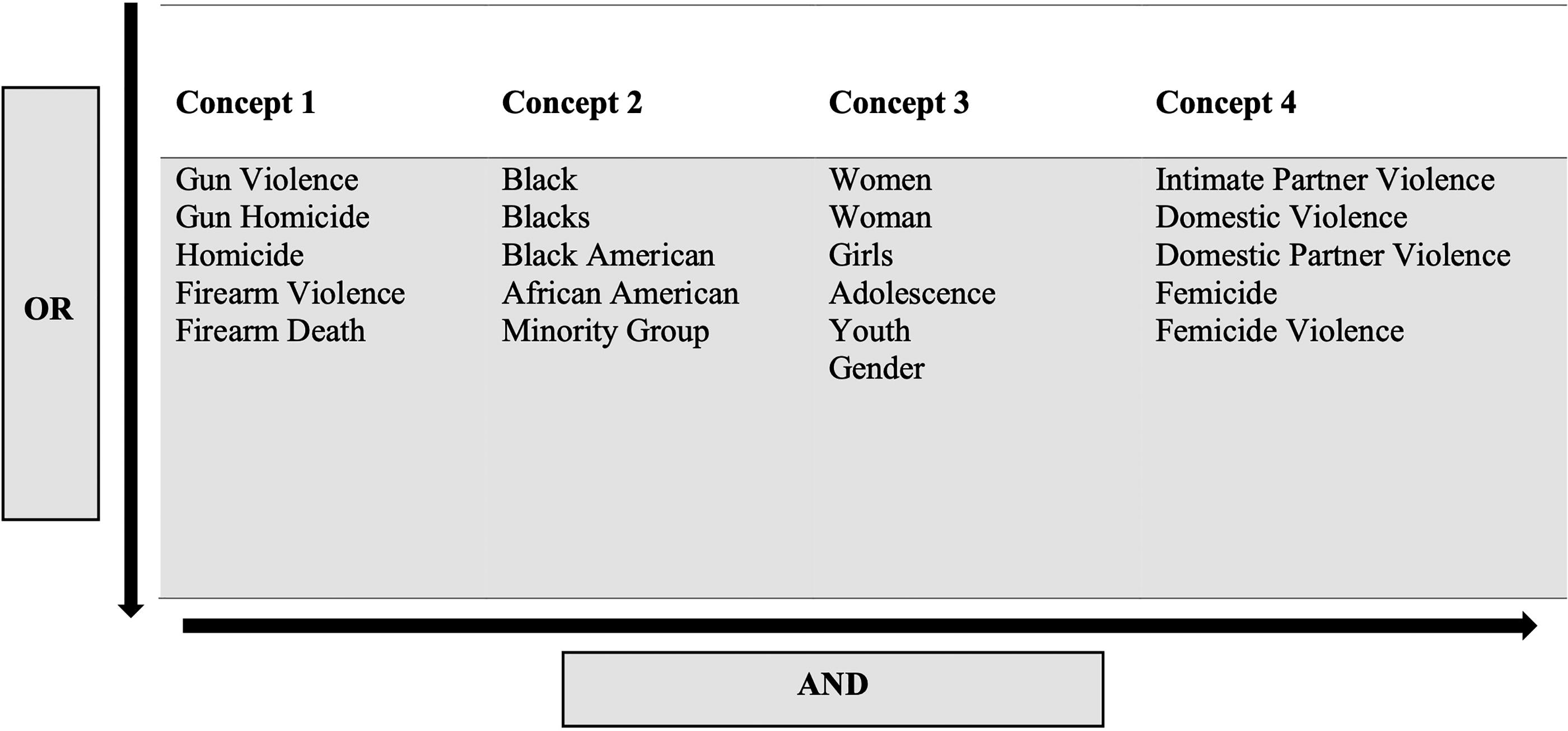
Search Terms with Boolean Operators.
To ensure comprehensiveness, we also manually reviewed the reference lists of eligible articles for additional relevant studies. We included peer-reviewed journal articles and excluded reports (i.e., agency and government reports), dissertations, and theses from the final analysis. This decision was made to maintain consistency in study quality and methodological rigor, as peer-reviewed sources undergo formal evaluation and allow for more reliable cross-study comparisons. Articles identified for potential inclusion were uploaded into DistillerSR, a literature review software designed to streamline the process of screening and analyzing studies, as well as data extraction. Additionally, a dual-review process was implemented, wherein two independent reviewers screened each article for relevance and quality. Discrepancies between reviewers were resolved through discussion or, when necessary, by a third reviewer to maintain rigor and reduce selection bias. While we employed a rigorous screening process, we did not conduct a formal quality assessment in accordance with scoping review methodology, which prioritizes breadth of coverage over critical appraisal.
Data collection and analysis
Two reviewers (T.L. and S.C.W.), an Asian woman and a black woman, conducted the primary literature search, which involved searching relevant databases and identifying potentially eligible studies. Following the search, both reviewers independently screened the titles and abstracts of identified articles to determine their relevance based on predefined inclusion criteria. Articles that passed the title and abstract screening were then subjected to a full-text review where the reviewers assessed whether the studies met the inclusion criteria for the final analysis. Data were extracted from the full-text articles, including citation details, year of publication, study location, population, socioeconomic factors, aspects of firearm violence, and key terms.
An inductive thematic analysis approach was used to identify emerging patterns across the studies included. T.L. and S.C.W. met weekly to refine the coding process, resolve discrepancies, and ensure consistency in theme development. Reflexive discussions were also part of the process, as we discussed how our positionalities might influence interpretation. In cases where consensus on study inclusion could not be reached, S.C.W. made the final decision. Findings from included studies were deemed statistically significance if p < 0.05, but this threshold applied only to the quantitative studies included in the review.
Results
Searches yielded a combined 553 records, 543 of which remained after 12 duplicates were removed (Fig. 2). Following the title and abstract screening, 163 records were retrieved for full-text review. Of these, 107 were excluded. The most common reasons for exclusion at this stage were for population (i.e., not focusing on African American or Black American, n = 60) and scope (i.e., focusing solely on gender without examining race, n = 12). Additionally, studies that did not specifically examine black women and girls were excluded to maintain the focus on firearm violence within these demographics (n = 35). The interrater agreement of the abstract screening (κ = 0.95) and full-study screening was strong (κ = 0.93).
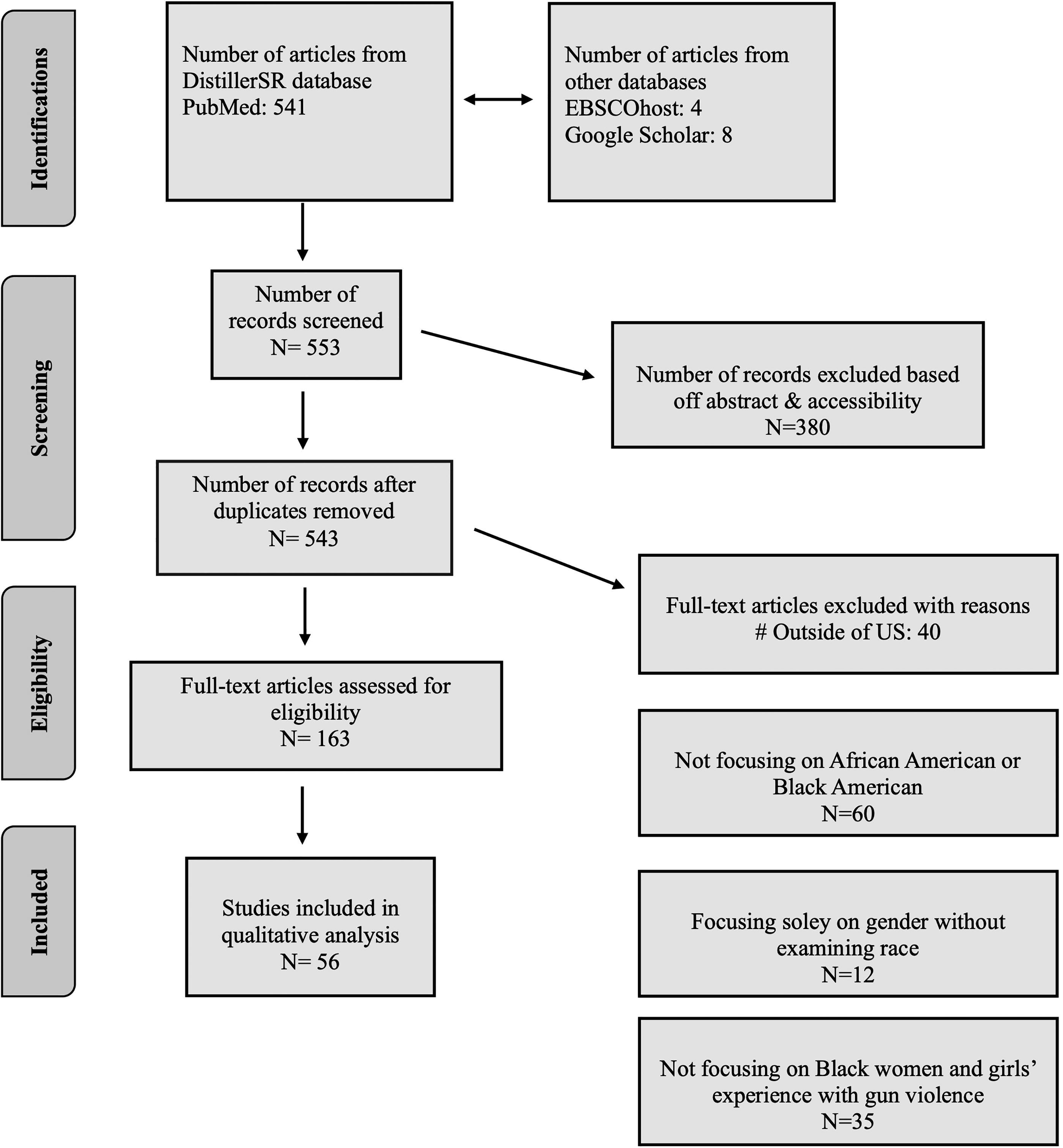
DistellerSR flow diagram of studies included in the scoping review.
Ultimately, 56 studies were included in this review (Table 1). Most studies included (64.3%, n = 36) were cross-sectional or cohort studies. Commonly used data sources included the National Vital Statistics System (n = 5), the National Violent Death Reporting System (NVDRS, n = 5), and state or national surveillance data (n = 8). There were 40 quantitative studies (71.4%), 11 qualitative studies (19.6%), and 5 mixed-method studies (8.9%). Majority of the studies examined primary exposure to firearm violence (n = 39), with 31 studies on interpersonal violence, 6 studies on intrapersonal violence, and 2 studies on both. A smaller portion focused on secondary exposure (n = 9). The remaining studies (n = 8) explored contextual factors (e.g., firearm ownership, attitudes, and behaviors) of black women and girls’ experiences with gun violence. Below, we summarize findings regarding firearm violence and African American or Black American populations, with a focus on demography, neighborhood disparities, intimate partner violence (IPV), and trauma/mental health consequences.
DistellerSR Study Articles Included

CDC, Centers for Disease Control and Prevention; CI, confidence interval; N/A, not available; OR, odds ratio.
Demography
A study was categorized as “demography” if it examined the role of race and gender in firearm violence. Our search yielded 29 articles that fell under this category. Out of the 29 records, 15 studies investigated the association between race and firearm violence (McIntosh and Santos, 1982; McIntosh and Santos, 1985; Gowitt and Hanzlick, 1986; Nance et al., 1997; Singh & Yu, 1996; Ikeda et al., 1997; Smith et al., 1998; Demetriades et al., 1998; Doddakashi et al., 2003; Richmond and Lemaire, 2008; Petrosky et al., 2017; Tuan and Frey, 2017; Izadi et al., 2020; Mason et al., 2023; Waller et al., 2024); 5 studies highlighted the role of gender (Coyne-Beasley et al., 2003; Azziz-Baumgartner et al., 2011; Ghiani et al., 2019; Semenza et al., 2024; Emezue et al., 2025); 3 studies examined black women’s and girls’ experience with firearms through an intersectional lens, recognizing the compounded impact of race and gender on the gun violence experiences of black women (Stark, 1990; Posey, 2024; Lantz et al., 2024); 2 studies centered around drug usage and gambling (Tardiff et al., 1994; Vaddiparti et al., 2016); and 4 studies focused on the implicit biases and stereotypes against black women (Plant et al., 2011; Ellyson et al., 2023; El-Zawawy, 2023; Johnson et al., 2024).
The study designs included 13 cohort studies (McIntosh and Santos, 1982; McIntosh and Santos, 1985; Singh & Yu, 1996; Gowitt and Hanzlick, 1986; Ikeda et al., 1997; Nance et al., 1997; Demetriades et al., 1998; Smith et al., 1998; Doddakashi et al., 2003; Azziz-Baumgartner et al., 2011; Tuan and Frey, 2017; Izadi et al., 2020; Mason et al., 2023), 9 cross-sectional studies (Tardiff et al., 1994; Richmond and Lemaire, 2008; Vaddiparti et al., 2016; Petrosky et al., 2017; Ghiani et al., 2019; Emezue et al., 2025; Lantz et al., 2024; Semenza et al., 2024; Waller et al., 2024), 3 experimental studies (Plant et al., 2011; Ellyson et al., 2023; Johnson et al., 2024), 1 case study (El-Zawawy, 2023), 1 mixed-method study (Coyne-Beasley et al., 2003), and 2 literature review articles that made theoretical contributions to the topic (Stark, 1990; Posey, 2024).
Race
Several earlier studies reported that black race was associated with increased vulnerability to firearm-related violence. Firearm homicide mortality rates among black women and girls were consistently higher than those of their white counterparts, a trend seen across different age groups (Ikeda et al., 1997; Smith et al., 1998; Demetriades et al., 1998; Singh & Yu, 1996; Nance et al., 1997; Coyne-Beasley et al., 2003). Evidence also linked the black race to more severe firearm injury circumstances. Data from the CDC Web-based Injury Statistics Query and Reporting System showed that the reduction in life expectancy due to gunshot wounds was greater for black women than white women (Richmond and Lemaire, 2008). A retrospective chart review found that black youth girl patients with gunshot wounds in Philadelphia hospitals sustained more severe injuries than their white counterparts (Nance et al., 1997).
Recent studies have continued to show similar results, highlighting racial disparities in firearm victimization (Petrosky et al., 2017; Tuan and Frey, 2017). Azziz-Baumgartner et al. (2011) analyzed IPV data in Massachusetts from 1993 to 2007 and reported a femicide incidence ratio of 12.0 (95% confidence interval: 8.4–17.2), for black women to white women. Waller et al. (2024) conducted a cross-sectional time series study of U.S. homicide rates between 1999 and 2020, finding that black women are six times more likely to be murdered by firearms than their white woman. Mason et al. (2023) identified an increase in gun homicides among non-Hispanic black women decedents in Chicago from 2015 to 2021, indicating that firearm violence continues to disproportionately affect this population. Izadi et al. (2020) examined the racial differences in trauma, and they found the prevalence of firearm-involved assault was 17.3 times higher in black women than white women. Four studies examined suicide data (McIntosh and Santos, 1982; McIntosh and Santos, 1985; Gowitt and Hanzlick, 1986; Doddakashi et al., 2003). Using data sources ranging from the Vital Statistics of the United States to State Health Departments, all studies found that while similar firearm-involved suicide rates were higher among white women than African American women, there were rising trends in suicide rates and an increasing proportion of suicides involving firearms among African American women.
Gender
Gender introduces another important dimension to firearm violence victimization among black women and girls (Semenza et al., 2024; Emezue et al., 2025; Ghiani et al., 2019). Research indicates gender differences in both the patterns of firearm violence exposure and in how individuals respond to it. Semenza et al. (2024) found that black women experience more pronounced functional impairments such as difficulty walking, concentrating, and performing self-care compared to black men following exposure to firearm violence. Emezue et al. (2025) reported that female students were less likely to report carrying firearms or being victims of gun violence. Gender differences also emerged in responses to interventions. Ghiani et al. (2019) examined the association between firearm laws and suicides, finding that while stricter state-level firearm laws were linked to lower firearm suicides among men, there was no effect observed in women. For black women, stricter firearm laws were associated with higher rates of non-firearm suicides compared to areas with less safety firearm laws, suggesting a shift to other suicide methods when firearms became less accessible.
Intersectionality
Intersectionality recognizes the interconnected nature of race, gender, and class and emphasizes how it creates unique privileges or disadvantages (Crenshaw, 1991). Our search yielded three articles that examined black women’s and girls’ experience with firearm violence through this lens (Stark, 1990; Posey, 2024; Lantz et al., 2024). Stark (1990) articulated the role of cultural and environmental factors in conceptualizing homicide, highlighting black women’s and girls’ heightened vulnerabilities due to racism and gendered violence. Similarly, Posey (2024) conceptualized the deaths of black women and girls as a form of structural and cultural violence, identifying firearm violence, IPV, targeted violence, and institutional violence as four key forms of black femicides. More recent research by Lantz et al. (2024) expanded the intersectional framework to include gender identity in discussions of black women’s and girls’ experiences with firearm violence. Using a national homicide database, they found that over 60% of transgender homicide victims were black and identified as women, underscoring the compounded risks posed by racism, transphobia, homophobia, and systemic violence.
Drug usage, gambling, and firearm exposure
Two articles outlined drug use and gambling as risk factors for firearm exposure (Tardiff et al., 1994; Vaddiparti et al., 2016). In an epidemiological survey conducted in New York City between 1990 and 1991, firearm homicide and cocaine use rates were both higher among black women than among their white or Latino counterparts (Tardiff et al., 1994). In a separate study of cocaine-using women in St. Louis, Missouri, most of whom were black, gambling severity was identified as a strong predictor of firearm exposure (Vaddiparti et al., 2016). These findings suggest that substance use and gambling may serve as compounding risk factors that increase the likelihood of firearm exposure among black women.
Implicit bias and cultural stereotyping
Three studies used an experimental design to understand implicit biases and cultural stereotypes against black women (Plant et al., 2011; Ellyson et al., 2023; Johnson et al., 2024). Ellyson et al. (2023) found that people tend to associate handguns with black women more than white women and often underestimate black women’s risk of experiencing IPV and sexual violence. Johnson et al. (2024) tested a hypothetical scenario in which a police officer shot a female victim who was simply reaching for the car registration. Participants reported more victim-blaming when the victim was black rather than white.
Plant et al. (2011) did not find evidence that black women were perceived as more threatening from a shoot/do not shoot simulation. In the study, participants, acting as officers, were tasked with deciding whether to shoot a suspect holding either a firearm or a neutral object. Results showed a tendency to mistakenly not shoot an armed black female suspect. This finding suggests that, in simulated high-pressure situations, black women may be less likely to be perceived as a threat compared to black men, indicating a different bias dynamic. In a real-world example, El-Zawawy (2023) conducted an in-depth investigation of Breonna Taylor’s case, examining video interviews with the detectives involved and analyzing their reaction times. The analysis found evidence suggesting the detectives were being deceptive during their interviews, underscoring the injustice in this case.
Neighborhood disparities
A study was assigned to the “neighborhood disparities” category if it addressed how neighborhood disparities influence black women’s and girls’ experience with firearm violence. Of those 11 studies, 3 focused on the health consequences of neighborhood disparities (Helmkamp, 1995; Oh et al., 2010; Matoba et al., 2019), 3 assessed participants’ trust and perception of their communities (Hitchens, 2023; Bowen et al., 2023; Degli Esposti et al., 2025), and 5 highlighted young black girls’ experience with community violence (Fingerhut et al., 1992; Lane et al., 2004; Shuval et al., 2012; Pabayo et al., 2014; Teplin et al., 2014). The study designs included four cross-sectional studies (Oh et al., 2010; Pabayo et al., 2014; Matoba et al., 2019; Degli Esposti et al., 2025), two mixed-method studies (Lane et al., 2004; Hitchens, 2023), three cohort studies (Fingerhut et al., 1992; Helmkamp, 1995; Teplin et al., 2014), and two qualitative studies (Shuval et al., 2012; Bowen et al., 2023).
Health consequences
Matoba et al., 2019) found that neighborhoods with elevated rates of firearm violence were associated with higher preterm births, low birth weight, and small-for-gestational-age infants. These neighborhoods, often predominantly inhabited by black individuals, were also characterized by younger maternal age, lower educational attainment, higher rates of single parenthood, and less adequate prenatal care. Importantly, Matoba et al. (2019) also reported that race itself is an independent predictor of poor birth outcomes, regardless of neighborhood conditions, underscoring the compounded risks associated with being both black and female. Similarly, Helmkamp (1995) found that active-duty black women had lower homicide rates than their civilian counterparts, indirectly highlighting the adverse neighborhood conditions outside of the military. In contrast, Oh et al. (2010) reported that perceptions of neighborhood crime did not significantly affect walking frequency among midlife African American women. The study suggested that these women employed strategies such as walking in safer locations or relying on social capital (e.g., trust in neighbors) to mitigate the effects of unsafe environments.
Perceptions of safety and community trust
Firearm violence-related losses, whether of friends or family members, can erode perceptions of safety and trust within communities (Hitchens, 2023). Hitchens (2023) found that black women who had experienced cumulative firearm homicide-related losses were significantly more likely to perceive their neighborhoods as unsafe. This erosion of trust has been linked to increased firearm ownership among black women; qualitative and quantitative evidence shows that self-protection was the primary motivation for purchasing a firearm (Bowen et al., 2023; Degli Esposti et al., 2025). However, many participants expressed regret over these purchases because, given societal perceptions of black women with firearms as threats rather than individuals seeking safety, guns offer limited protection (Bowen et al., 2023).
Experiences of young girls with community firearm violence
The disparity in firearm-related deaths is evident among adolescents. Fingerhut et al. (1992) and Pabayo et al. (2014) found that black teenage girls were more likely than their white counterparts to be shot by someone in their neighborhood, die from firearm homicides, and lose a close family or friend to murder. Delinquency was identified as a risk factor, with delinquent females four times more likely to die from firearm-related homicide than females in the general population (Teplin et al., 2014). Shuval et al. (2012) conducted a qualitative study in New Haven, Connecticut, where participants described pervasive firearm violence in their neighborhoods. One girl stated, “You walk on the street … you go out, and you die.” Lane et al. (2004) found that fear of victimization was a significant predictor of weapon-carrying intentions among African American girls in economically depressed neighborhoods. Approximately 9% of participants reported an intention to carry a gun, reflecting the extent to which safety concerns influence behavior in high-risk environments.
Intimate partner violence
Studies were included in this category if they focused on abuse and aggression in intimate relationships involving firearms. Of the 10 records, 4 explored pregnancy and quarantine as risk factors for IPV (Cheng and Horon, 2010; Kivisto et al., 2022; Afif et al., 2022; Joseph et al., 2024), 2 explored the role of firearm access (McFarlane et al., 1998; Gray et al., 2024), 3 analyzed the health consequences of IPV (Frazer et al., 2018; Campbell et al., 2002; Harper, 2022), and 1 investigated suicide attempts among black women (Frierson and Lippmann, 1990). Among the 10 records, 4 articles were cross-sectional studies (Afif et al., 2022; Kivisto et al., 2022; Gray et al., 2024; Joseph et al., 2024), 2 were cohort studies (McFarlane et al., 1998; Cheng and Horon, 2010), and the remainder included 1 literature review (Campbell et al., 2002), 1 special issue article (Frazer et al., 2018), 1 qualitative study (Harper, 2022), and 1 mixed-method study (Frierson and Lippmann, 1990).
Pregnancy and quarantine as risk factors
Analyses of NVDRS showed that black pregnant women were eight times more likely to die from firearm-related IPV than their non-pregnant and white counterparts (Kivisto et al., 2022; Joseph et al., 2024). Similarly, Cheng and Horon (2010) reported that more than half of all pregnancy-related homicides involved firearms, with black women facing 4-fold higher risks of intimate partner homicide than white women. These findings underscore persistent racial inequalities in IPV and pregnancy-related homicide. During the COVID-19 quarantine, these disparities intensified. Afif et al. (2022) analyzed firearm-involved violent incident data from the Philadelphia Police Department’s Registry and found a 11% increase in black female victims after the quarantine measures were implemented.
Firearm access as a risk factor
McFarlane et al. (1998) demonstrated that perpetrators’ access to firearms significantly increases the severity of abuse, with African American women reporting the highest rates of firearm access by abusers. Many states enacted firearm-restriction policies to protect women in abusive relationships. Gray et al. (2024) analyzed state-level firearm-restriction policies and found that while these policies reduced IPV-related homicides among white women, they had little to no effect on protecting women of color. Frierson and Lippmann (1990) documented a rising trend in firearm use during suicide attempts among African American women over an 11-year period, noting that these attempts were often impulsive and linked to severe relationship problems.
IPV and health
IPV carries significant mental health consequences for black women. Frazer et al. (2018) linked IPV to increased risks of PTSD, self-harm, and substance abuse, highlighting the need for comprehensive mental health support and systemic reforms. Campbell et al. (2002) found that economic dependency, systemic racism, and a lack of culturally competent support services often delay help-seeking among black women. Harper (2022) interviewed 11 women of color experiencing severe abuse and found that many avoided formal help to preserve their identity as strong and capable. In these cases, life-threatening violence often accelerated decisions to seek help, with firearms playing a central role both as tools of intimidation and as perceived means of self-protection.
Mental health consequences
Studies were included in this category if they explored how black women and girls grapple with trauma, grief, and long-term psychological effects. A total of six studies were identified: four studies focused on the mental health consequences of firearm violence among adolescents (Shakoor and Chalmers, 1991; Johnson, 2010; Voisin et al., 2011; Teplin et al., 2021) and two studies examined the coping mechanisms among adults (Sharpe et al., 2014; Morris and Scott, 2022). Designs included four qualitative studies (Johnson, 2010; Voisin et al., 2011; Teplin et al., 2021; Morris and Scott, 2022), one mixed-method study (Shakoor and Chalmers, 1991), and one cross-sectional study (Sharpe et al., 2014).
Adolescents’ mental health and coping mechanisms
Shakoor and Chalmers (1991) found that 70% of black girls in their study had witnessed traumatic events, such as shootings, stabbings, or killings. This co-victimization was linked to negative cognitive and emotional outcomes, including poor school performance, substance use, and aggressive behaviors as maladaptive coping mechanisms. Teplin et al. (2021) reported that being threatened with a firearm during adolescence significantly increased the likelihood of firearm ownership and perpetration of firearm violence in adulthood. Voisin et al. (2011) interviewed 32 black adolescents and identified 4 primary coping strategies for community violence: “getting through” (acceptance), “getting along” (self-defense), “getting away” (avoidance), and “getting back” (confrontation). Avoidance strategies, while protective in the short term, were associated with long-term risks such as depression and anxiety. Johnson (2010) found that African American girls who lost friends to firearm homicides used three meaning-making strategies: early construction (e.g., “why him?”), metaphysical construction (spiritual connection to the deceased), and motivational construction (valuing life more). These approaches helped them process grief and build resilience.
Coping with grief after firearm homicides
Black women who lose loved ones to firearm homicides often experience profound emotional burden and more intense grief than their male counterparts (Sharpe et al., 2014). Sharpe et al. found that black women were more likely to engage in spiritual- and ritual-centered healing rather than collective coping or cognitive debriefing. Morris and Scott (2022) noted that survivors frequently experienced self-blame, compounded by stigmatizing assumptions linking the deaths to gang or drug activity, as well as by distressing encounters with law enforcement.
Discussion
This scoping review categorized existing research on firearm violence experienced by black women and girls into four key areas: demography, neighborhood disparities, IPV, and mental health consequences. Despite the significant physical, mental, and social toll of firearm violence on this population, the small number of studies and variation in settings, populations, and outcomes across these categories limit our ability to draw definitive conclusions. Collectively, however, the research underscores that black women and girls face distinct patterns of victimization and vulnerability to firearm violence, shaped by the intersection of race, gender, and systemic inequities.
Of the 56 studies included, 44 focused on adult women and 12 on adolescents or youth. Most studies (n = 40) employed quantitative methods, while 16 used qualitative or mixed-method approaches. Few explicitly included LGBTQ+ individuals, and only a small subset disaggregated findings by gender identity or sexual orientation. Research was concentrated in urban environments, with minimal representation from rural or suburban contexts. Approximately two-thirds addressed individual-level outcomes (e.g., mental health, victimization, and mortality), while fewer examined structural or systemic contributors, such as neighborhood disinvestment or healthcare access. This distribution points to a need for more intersectional, community-level, and identity-inclusive research that captures the full scope of firearm-related harm experienced by black women and girls.
Findings from this review demonstrate the pervasive and disproportionate impact of firearm violence on black women and girls, reflecting broader inequities in firearm injury prevention and research. Studies in demography highlighted alarming disparities in firearm-related deaths, with black women being six times more likely than white women to die from firearm violence (Waller et al., 2024). Research on neighborhood disparities underscores the structural inequities that contribute to increased exposure to violence, linking firearm-related harm to systemic disinvestment, adverse birth outcomes, and chronic stress (Matoba et al., 2019). In the realm of IPV, firearms were identified as a critical factor in escalating abuse severity and contributing to the disproportionately high rates of IPV-related homicides among black women, particularly during pregnancy (Kivisto et al., 2022; McFarlane et al., 1998). Studies on mental health consequences revealed long-lasting psychological effects of firearm violence exposure, such as depression, PTSD, and maladaptive coping mechanisms, especially for black adolescents and women (Morris and Scott, 2022; Voisin et al., 2011). In many high-violence communities, black women also serve as mothers, caregivers, and community anchors who absorb the emotional, financial, and practical burdens of violence, often acting as advocates and first responders, underscoring the need for interventions that address both individual trauma and broader intergenerational impacts.
These findings emphasize the urgent need to integrate equity into firearm injury prevention efforts, ensuring that research, policy, and interventions account for the unique experiences of black women and girls. A one-size-fits-all approach to firearm violence prevention risks overlooking the structural and intersectional factors that drive disparities in victimization. Targeted, equity-driven solutions that address systemic barriers, enhance community resilience, and prioritize culturally responsive strategies are essential. Below, we provide recommendations to guide future research, policy, and practice based on the identified gaps and challenges in the existing literature.
Recommendations
To address the multifaceted impacts of firearm violence on black women and girls, this review proposes a comprehensive approach organized into four key categories. These recommendations emphasize research, policy, and practice aimed at mitigating harm, advancing understanding, and fostering resilience among affected populations while centering equity in firearm injury prevention efforts
Advance intersectional data collection and analysis
Applying an intersectional lens to research is vital for understanding how race, gender, socioeconomic status, and age intersect to shape the experiences of black women and girls with firearm violence. To advance intersectional data collection and analyses, it is essential that data systems move beyond fatal incidents to also include non-lethal forms of firearm violence, such as intimidation, threats, and psychological harm, which disproportionately affect marginalized groups and often go unreported or unrecognized in official statistics (Ellyson et al., 2023; Johnson, 2010). Capturing this broader range of experiences can reveal how multiple forms of oppression compound the impact of firearm violence. Expanding datasets such as the CDC’s NVDRS to include more identity-based and context-specific data will improve research accuracy and inform more equitable, targeted policy solutions (Waller et al., 2024).
While previous research has primarily relied on quantitative analyses of databases, there has been a recent shift toward incorporating qualitative perspectives that highlight the lived experiences of individuals. However, qualitative research has only been conducted in few cities, such as Chicago (Harper, 2022; Teplin et al., 2021; Voisin et al., 2011), Boston (Morris and Scott, 2022), and New Haven (Shuval et al., 2012), leaving gaps in understanding how these experiences vary across geographic and cultural contexts (Bowen et al., 2023). Expanding these efforts to include rural and other underrepresented regions is essential to capturing the diverse and nuanced realities of firearm violence and its intersectional impacts.
There is an urgent need for research focusing on black girls and youth, particularly those aged 0–15, who face heightened risks of victimization and trauma. This group often experiences severe, non-lethal forms of firearm violence, including intimidation, coercion, and physical harm. Additionally, they are frequently subjected to poly-victimization, encountering multiple types of violence and neglect simultaneously (Hitchens, 2023; Posey, 2024). Prioritizing studies on this demographic will provide an equity-informed foundation for developing interventions tailored to their unique challenges.
Apply an intersectional approach in firearm policy evaluation and implementation
An intersectional approach in firearm policy implementation and advocacy is crucial to addressing the complex interplay of race, gender, age, and socioeconomic status in shaping exposure to firearm violence. Firearm prevention policies must be designed with careful consideration of how different communities experience firearm violence and access to firearms, ensuring that interventions do not disproportionately criminalize marginalized populations. Additionally, policies should be evaluated using disaggregated data to measure their effectiveness across diverse demographic groups and to identify unintended consequences.
Partnerships with organizations such as Everytown for Gun Safety Support Fund (Everytown for Gun Safety Support Fund, n.d.), the Black Women’s Blueprint (Black Women’s Blueprint, n.d.), and the Community Justice Action Fund (Community, 2025), along with leading academic centers, including Johns Hopkins Center for Gun Violence Solutions (Johns Hopkins Bloomberg School of Public Health, n.d.), the Institute for Firearm Injury Prevention at the University of Michigan (University of Michigan, n.d.), and the Harvard Injury Control Research Center (Harvard T.H. Chan School of Public Health, n.d.) are critical. Community models such as Cure Violence Global (Cure Violence Global, n.d.), Brady United (Brady United Against Gun Violence, n.d.), and Advance Peace (Advance Peace, n.d.), paired with legislative frameworks such as the Violence Against Women Act (U.S. Department of Justice, n.d.) and the Bipartisan Safer Communities Act (Congress.gov, 2022), provide strong foundations for policy and program innovation. Collaborating across public health, community, and advocacy sectors is critical to overcoming systemic barriers and protecting those most at risk.
Strengthen IPV policies and interventions
Firearms often escalate the severity of IPV, placing black women at heightened risk. Many survivors face intersecting forms of abuse (physical, emotional, sexual, and coercion) involving firearms (Gray et al., 2024; McFarlane et al., 1998). Current IPV policies frequently fail to account for these complexities, particularly in vulnerable populations like foster care youth or those living in violent households (Harper, 2022). To advance equity in firearm-related IPV, policies must strengthen protections for survivors, restrict firearm access for abusers, and integrate culturally responsive, survivor-centered interventions to better protect black women and girls. Examples of effective initiatives include the “Disarm Domestic Violence” project led by the National Coalition of Against Domestic Violence (National Coalition Against Domestic Violence, n.d.), which works to close loopholes that allow abusers to access firearms and the work of the BLOOM Network, an intergenerational movement reimagining the wellness and empowerment of women on the South and West Sides of Chicago (BLOOM Network, n.d.). Efforts should also address systemic barriers that discourage help-seeking, such as stigma and fear of reinforcing stereotypes about black families (Posey, 2024). Equity-forced reforms must prioritize survivor agencies, ensuring that interventions are designed with input from those directly impacted by IPV-related firearm violence.
Engage communities and allocate resources for comprehensive support
Survivors and community leaders must play central roles in designing culturally relevant, community-based programs. This is especially important for black women and girls, who have historically been excluded from policy and program development processes, despite being disproportionately affected by firearm violence and its intergenerational trauma. Centering their voices ensures that interventions reflect lived realities, cultural values, and structural barriers often overlooked in mainstream solutions (Morris and Scott, 2022). Community-led programs such as Mothers in Charge and Moms Demand Action (Moms Demand Action, n.d.) demonstrate how survivor-driven leadership can inform policy and provide healing-centered support (Mothers in Charge, n.d.). These initiatives should address the physical, emotional, and social consequences of gun violence, with federal and state funding supporting holistic services such as mental healthcare, housing, financial assistance, and access to healthcare. Programs that focus on long-term recovery and empowerment are essential to breaking the cycle of trauma and fostering resilience among black women, girls, and youth. Leveraging federal programs like the Office for Victims of Crime grants and local initiatives supported by the Department of Justice will help ensure sustainable funding and implementation (Office for Victims of Crime, n.d.). Community-driven approaches help build trust, enhance participation, and ensure interventions are tailored to the unique needs of black women and girls, particularly those in high-risk environments (Hitchens, 2023). By focusing on these four areas, this approach addresses both the visible and invisible consequences of firearm violence, emphasizing the need for targeted interventions, integrated care, and systemic change. These recommendations aim to create a society where black women, girls, and youth are protected, supported, and empowered to heal and thrive.
Limitations
This review highlights significant limitations stemming from the scarcity of focused research on black women and girls affected by firearm violence. While the number of included studies (n = 56) represents a substantial contribution to the field, especially in comparison to other firearm violence reviews, key limitations remain. The geographic concentration of existing studies in urban areas potentially underrepresents the experiences of those in rural regions, where the dynamics of firearm violence may differ. Additionally, the sensitivity of our search strategy, while comprehensive, may have excluded studies focusing on younger populations or less commonly examined outcomes. The limited number of studies, combined with variability in their settings, target populations, and methodological approaches, complicates cross-study comparisons and reduces the generalizability of the findings.
Another key limitation is the reliance on quantitative studies, which, while informative, may not fully capture the lived experiences and complexities of black women and girls impacted by firearm violence. Qualitative insights were notably underrepresented, constraining the ability to explore nuanced and intersectional dimensions of their experiences. Many studies relied on secondary data and administrative records, underscoring the broader issue of limited original data collection specific to this population. Furthermore, this review did not conduct a systematized evaluation of study quality, as the primary aim was to highlight gaps and emphasize the importance of intersectional approaches rather than assess individual study rigor. These limitations underscore the urgent need for more targeted, diverse, and comprehensive research to advance understanding and inform meaningful action in this underexplored area.
Conclusion
This scoping review highlights the lack of comprehensive, identity-informed research on how firearm violence uniquely impacts black women and girls, particularly in relation to their health outcomes, exposure contexts, and intersectional vulnerabilities. The intersection of race, gender, and systemic inequities positions black women and girls at heightened risk, yet the literature remains fragmented and insufficiently representative. There is an urgent need for intersectional, community-driven research and targeted policy interventions to address the multifaceted impacts of firearm violence on this population. Collaborative efforts between public health, social science, and community stakeholders are essential to advancing equity in firearm injury prevention and promoting the safety and well-being of black women and girls.
Authors’ Contributions
J.H. conceptualized the study and design. S.C.W. and T.L. conducted data collection and analysis. S.C.W. and T.L. interpreted the data, drafted, and revised the article. C.K.C. contributed to funding for the project. All authors reviewed and approved the final submission.
Footnotes
Acknowledgments
The authors extend their sincere thanks to Kayla Hicks for her insightful guidance of the article.
Author Disclosure Statement
The authors declare that they have no known competing interests.
Funding Information
This research was supported by grants from the Robert Wood Johnson Foundation. Its contents are solely the responsibility of the authors and do not necessarily represent the official views of the funder. The funder had no role in the study design, statistical analysis, interpretation of the data, or drafting of this article.
Ethics Approval and Consent to Participate
The study was exempted by the Johns Hopkins Bloomberg School of Public Health institutional review board and deemed not to be human subjects research. All research was conducted in accordance with federal and state standards.
Availability of Data and Material
The datasets generated and/or analyzed during the current study are publicly available.