Abstract
Objectives:
Non-steroidal anti-inflammatory drugs (NSAID) are widely used for pain control in musculoskeletal conditions. The purpose of this study was to determine if long-term use of NSAIDs increases the incidience of rotator cuff tears.
Methods:
A retrospective comparative study using a national insurance database was performed. All patients who had a diagnosis of long-term NSAID use with active records in the database for at least 1 year or 2 years were identified. These patients were matched 1:1 to controls without NSAID use based on age, gender, and Elixhauser comorbidity index. Rotator cuff tendon tear rates were compared between each group. Sub-group analyses in the following age-ranges for each sex was also done: 35-45, 46-55, 56-65, 66-75.
Results:
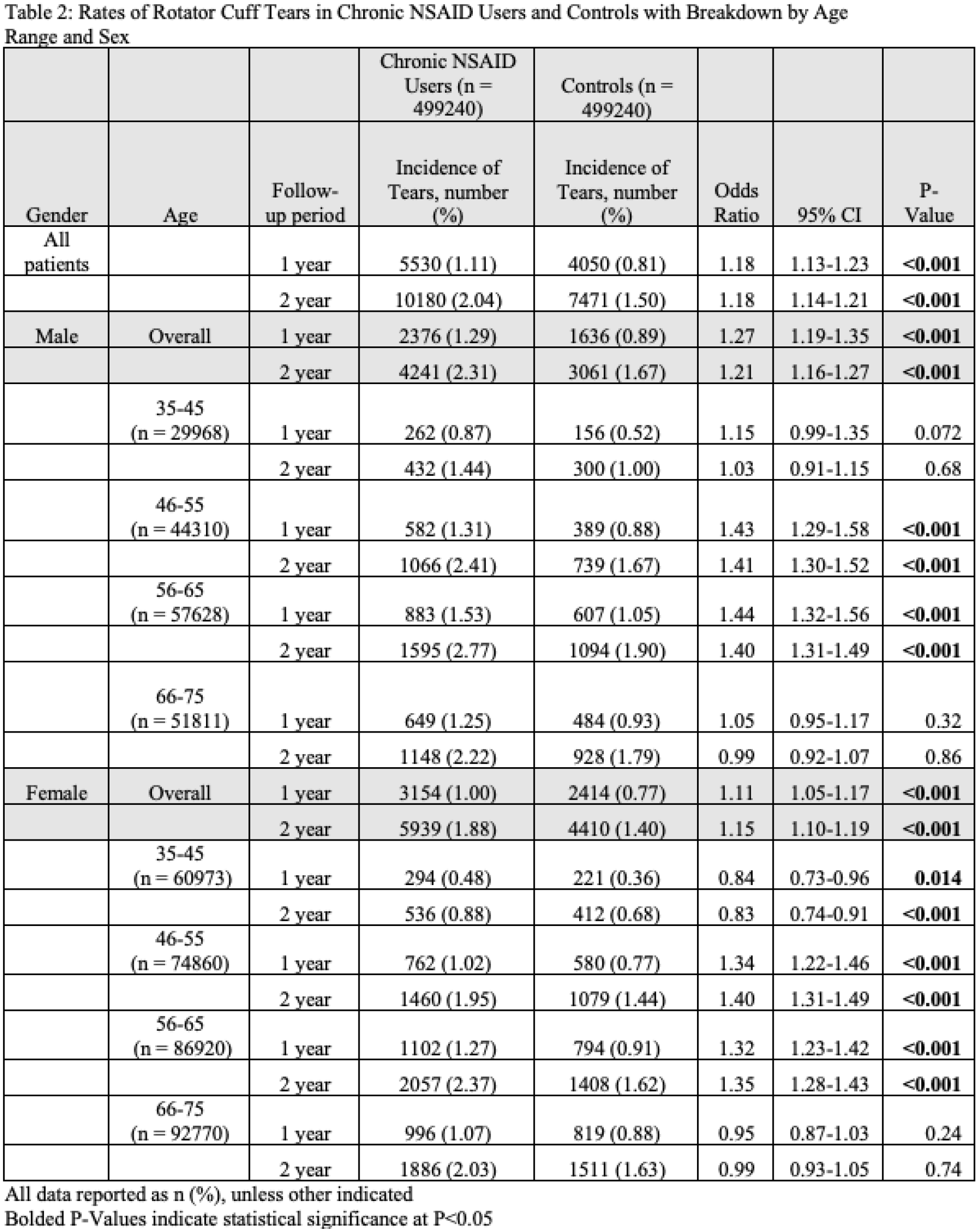
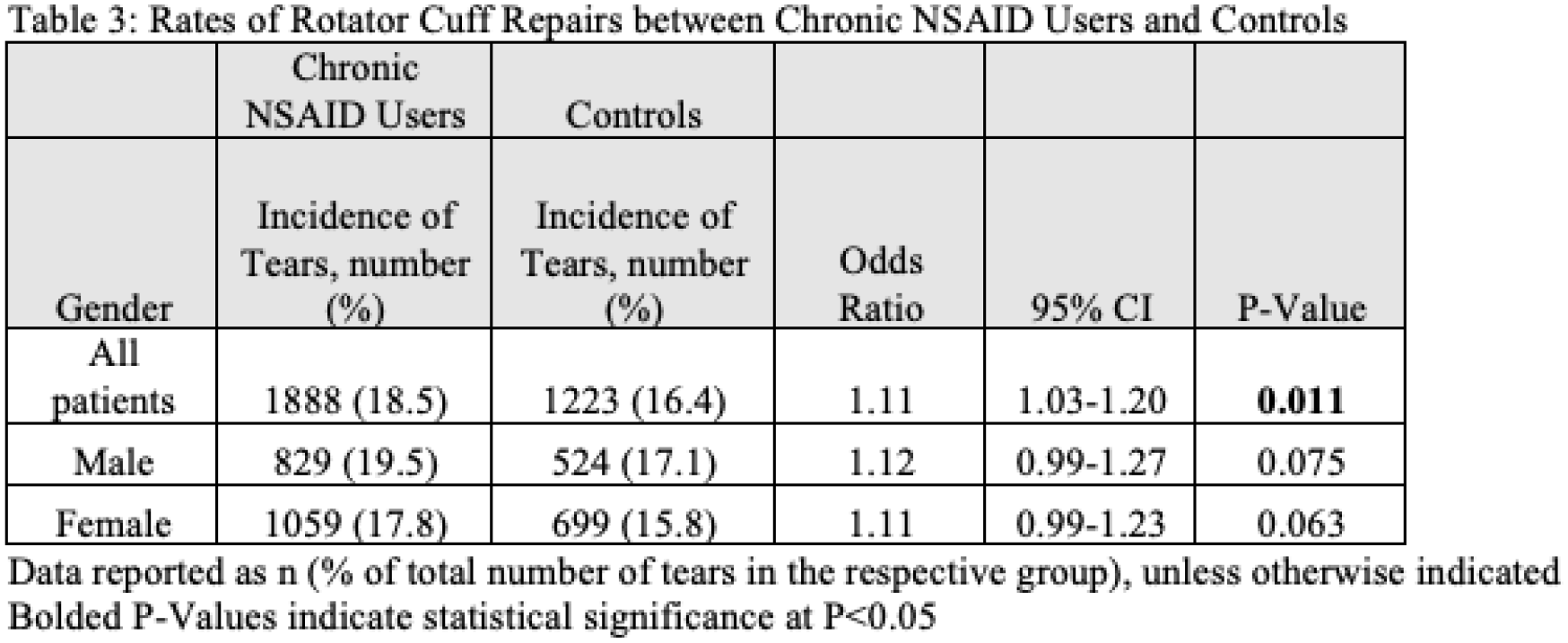
A total of 499,240 patients who had a history of long-term NSAID use were evaluated. 10,180 patients sustained a rotator cuff tear compared to 7,471 control patients (2.04% vs. 1.50%, respectively), with an adjusted OR of 1.18 (95% CI: 1.14-1.21; P<0.001). Male chronic NSAID users in the 46 to 55 age range had higher rates of rotator cuff tears compared to control patients of the same demographics (OR: 1.41; 95% CI 1.30 – 1.52; P<0.001). Female chronic NSAID users in the 46 to 55 age range had higher rates of rotator cuff tears compared to control patients of the same demographics (OR: 1.40; 95% CI 1.31 – 1.49; P<0.001). Comparable results were seen in the 56-65 age range for both males and females. Further, chronic NSAID users (n=1,888; 18.5%) underwent rotator cuff repair at higher rates compared to controls (n=1,223; 16.4%).
Conclusions:
Long-term NSAID use significantly increases the rates of rotator cuff tendon tears at the 1-year and 2-year follow-up periods, which is particularly notable in the middle-aged population. These findings suggest that middle aged patients with long-term NSAID use may be at a higher risk for rotator cuff tendon tears.