Abstract
Objectives:
The mid- to long-term clinical results of partial meniscectomy (PM) are variable, with some patients manifesting rapid degeneration of the affected compartment after meniscectomy. Variability in force redistribution across the articular surface after PM may explain this heterogeneous response. The objective of this study was to quantify the effects of PM on joint biomechanics and contact force redistribution across the tibial plateau of human knees during simulated gait.
Methods:
Nine human cadaveric knees were mounted on a multi-axis testing apparatus programmed to apply dynamic forces that mimic level-ground walking. Knees were tested before and after partial medial meniscectomy to determine peak contact stress, contact area, and to delineate the meniscal footprint from the cartilage-to-cartilage contact region. The percentage of compartment force through the meniscus (percent meniscal loading) throughout the stance phase of simulated gait was recorded and the difference between the intact state and PM condition was calculated for each knee.
Results:
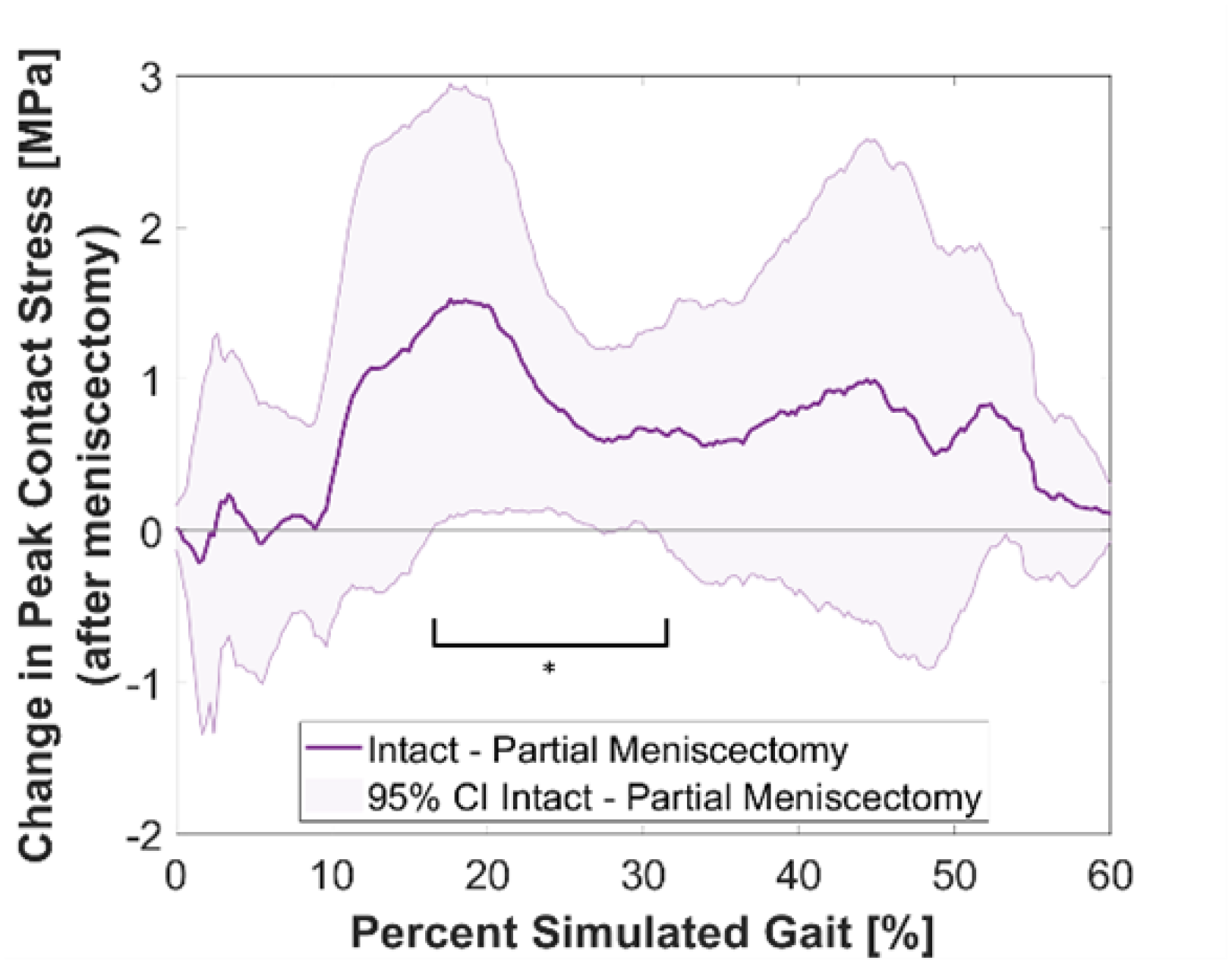
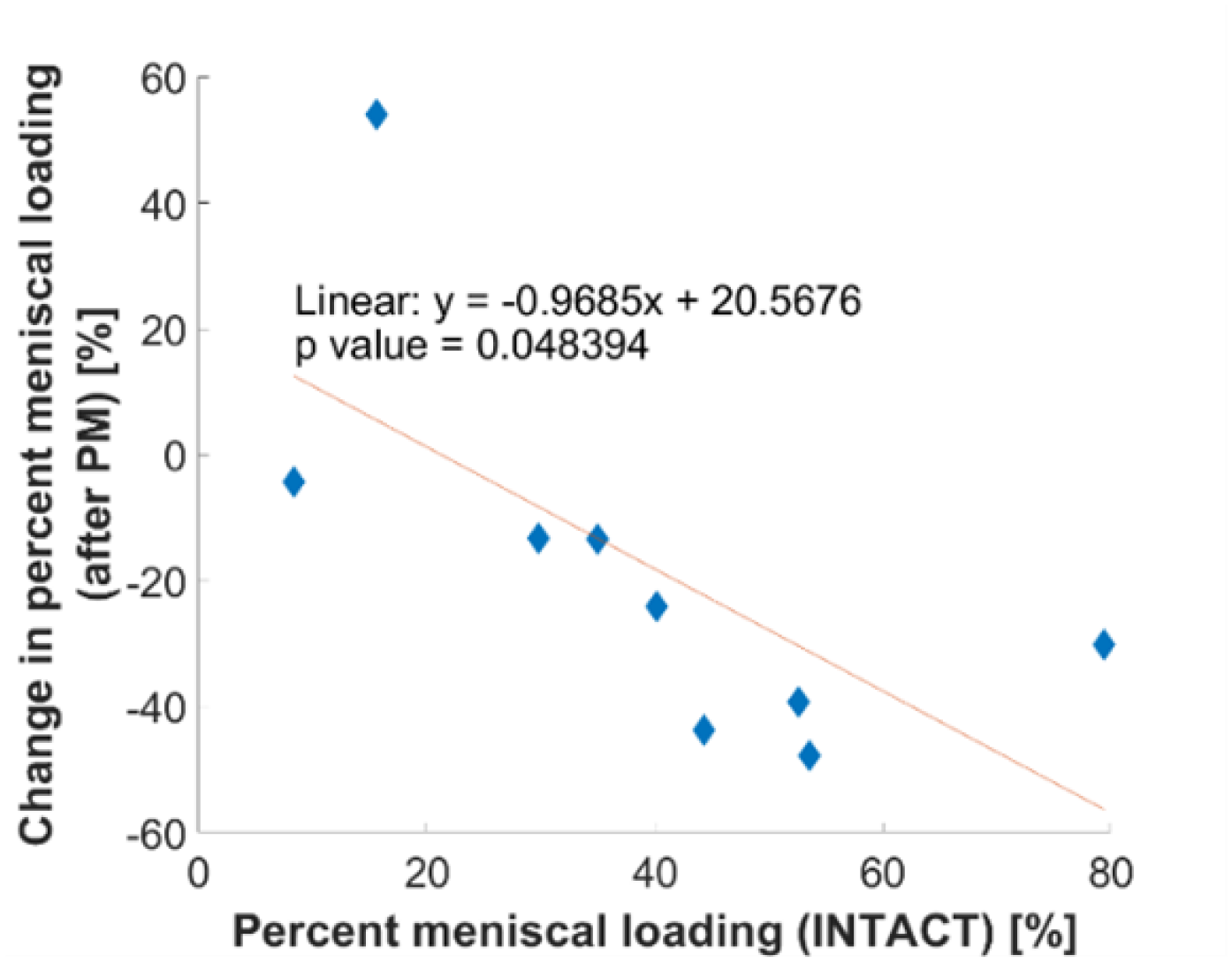
PM resulted in a significant increase in peak contact stress of 1.5 ± 1.4 MPa in mid-stance phase of gait and a significant decrease in contact area of 219 ± 84 mm2 over the entirety of simulated gait. PM also resulted in a significant decrease in percent meniscal loading of 32 ± 19% over the majority of simulated gait. An inverse, proportional relationship was observed between percent force through the native meniscal footprint and the change in percent meniscal loading following PM at heel strike, where knees with higher loads through the meniscus in the intact condition had a greater reduction in meniscal load following PM.
Conclusions:
We quantified the effects of PM on the redistribution of knee joint contact forces. All knees experienced a significant increase in peak contact stress and a significant decrease in contact area through most of simulated stance phase. PM was also associated with a significant decrease in percent meniscal force throughout most of the gait cycle, with the exception of heel strike, where knees with higher loads through the intact meniscus at baseline had a larger reduction in meniscal load following PM.