Abstract
Objectives:
Substantial developments in physeal-sparing surgical techniques for anterior cruciate ligament reconstruction (ACLR) have demonstrated safety and efficacy in treating skeletally immature patients. However, outcomes using all soft tissue quadriceps tendon (QT) autograft in this population are unknown. The purpose of this study was to evaluate outcomes including return to sport (RTS) and reinjury risk in skeletally immature patients ≥2 years after undergoing hybrid transepiphyseal ACLR using QT autograft.
Methods:
We retrospectively analyzed a consecutive series of skeletally immature patients who underwent primary QT autograft ACLR using a hybrid transepiphyseal technique with ≥2 years of follow-up. Outcomes included RTS (primary), ability to return to pre-injury level of competition, and subsequent ipsilateral/contralateral knee injury (secondary).
Results:
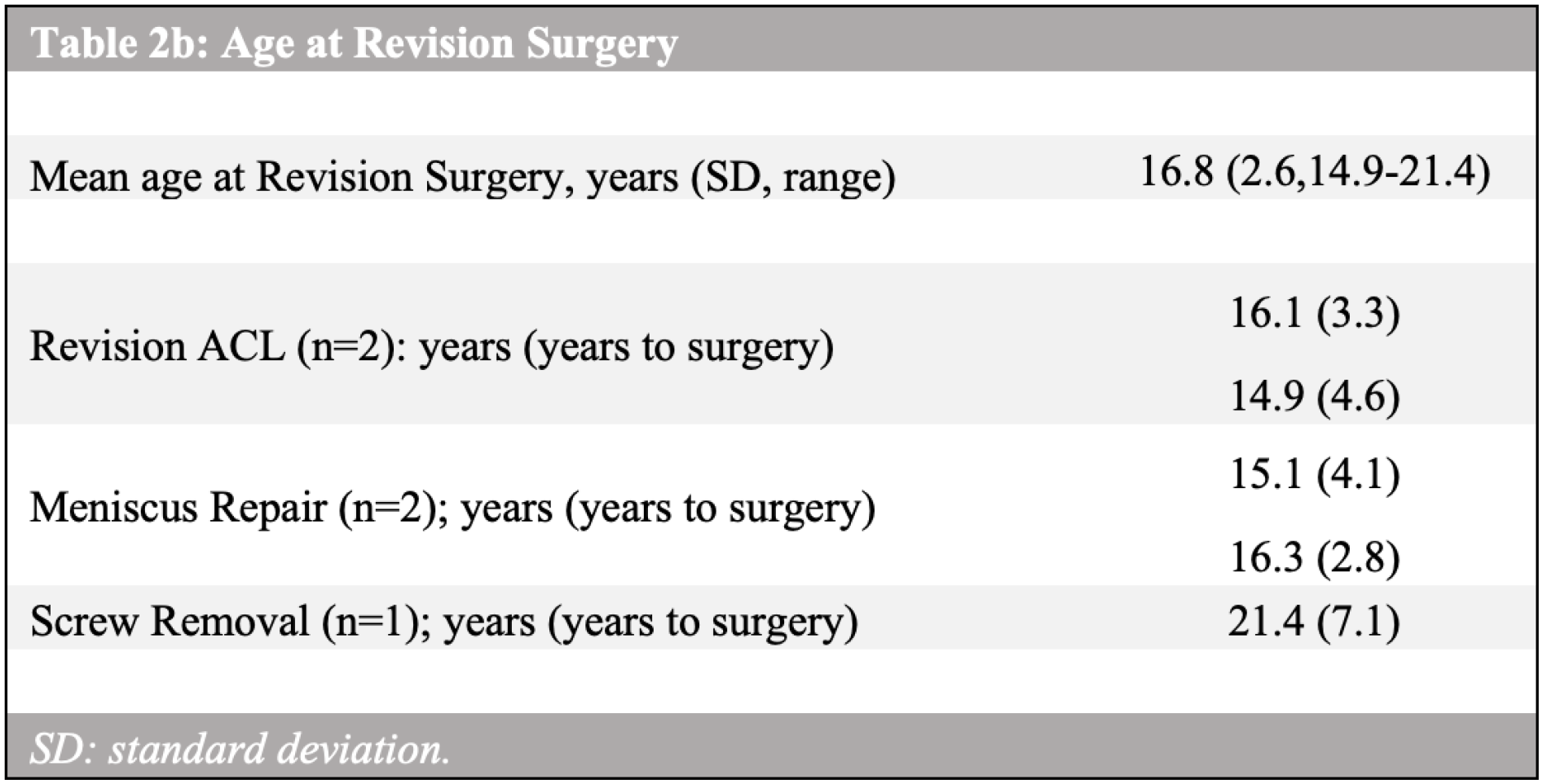
We identified and contacted 50 patients, of which 40 (80.0%) [(35 male, mean age: 12.6 (range: 9.4–16.0) years] completed the survey at 5.7 ± 2.8 (range: 2.0 – 11.5) years post-operation. Of those, 26 (65.0%) were competitive middle/high school athletes and 18 (45.0%) competed in 2 or more sports. Thirty-seven (92.3%) patients returned to unrestricted participation in sports and 35 (87.5%) patients returned to pre-injury level of competition at 10.6 ± 2.3 (range: 6–17) months. Five patients required subsequent ipsilateral knee surgery for ACL revision (n = 2; 5.0%), meniscus injury (n = 2; 5.0%), or symptomatic hardware (n = 1; 2.5%) after an average of 4.4 ± 1.7 (range: 2.8–7.1) years. Three patients (7.5%) sustained a subsequent contralateral ACL injury, and one patient sustained a contralateral posterior cruciate ligament sprain.
Conclusions:
Mid-term outcomes of patients treated with hybrid transepiphyseal ACLR using QT autograft are promising, with a high return to sport and relatively low graft tear risk compared to previous studies reporting on other graft choices. At a mid-term graft failure risk of 5%, the QT autograft is an excellent option in young skeletally immature athletes.