Abstract
Objectives:
The traumatic effusion associated with an acute anterior cruciate ligament (ACL) rupture contains pro-inflammatory cytokines, chemokines and matrix degrading enzymes. Aspiration of the effusion may help reduce the burden of joint inflammation. However, the short and mid-term implications of routine aspiration have not been well documented. The primary objective of this prospective, randomized control trial is to determine whether routine pre-operative aspiration upon presentation to the orthopaedic clinic impacts (a) all-cause re-operation rate in patients undergoing ACL reconstruction (ACLr) and, more specifically, (b) rate of surgical debridement for postoperative arthrofibrosis, a common clinical sequela of ACLr.
Methods:
Eligible patients presented to a single, academic sports surgeon with an acute ACL rupture and were clinically indicated for ACLr. Both sexes were included in this study. Exclusion criteria included pre-existing osteoarthritis (Kellgren-Lawrence grade 3 or greater), focal chondral injury (International Cartilage Repair Society grade 3 or higher), concurrent ipsilateral extra-articular injury, history of contralateral knee injury, or age greater than 62 years. Patients were randomized to either routine preoperative care or in-office aspiration of their traumatic effusion upon initial presentation. Patients underwent routine diagnostic arthroscopy at the time of ACLr to evaluate for concurrent chondral or meniscal pathology. Patients underwent standard postoperative rehabilitation and follow-up care.
Results:
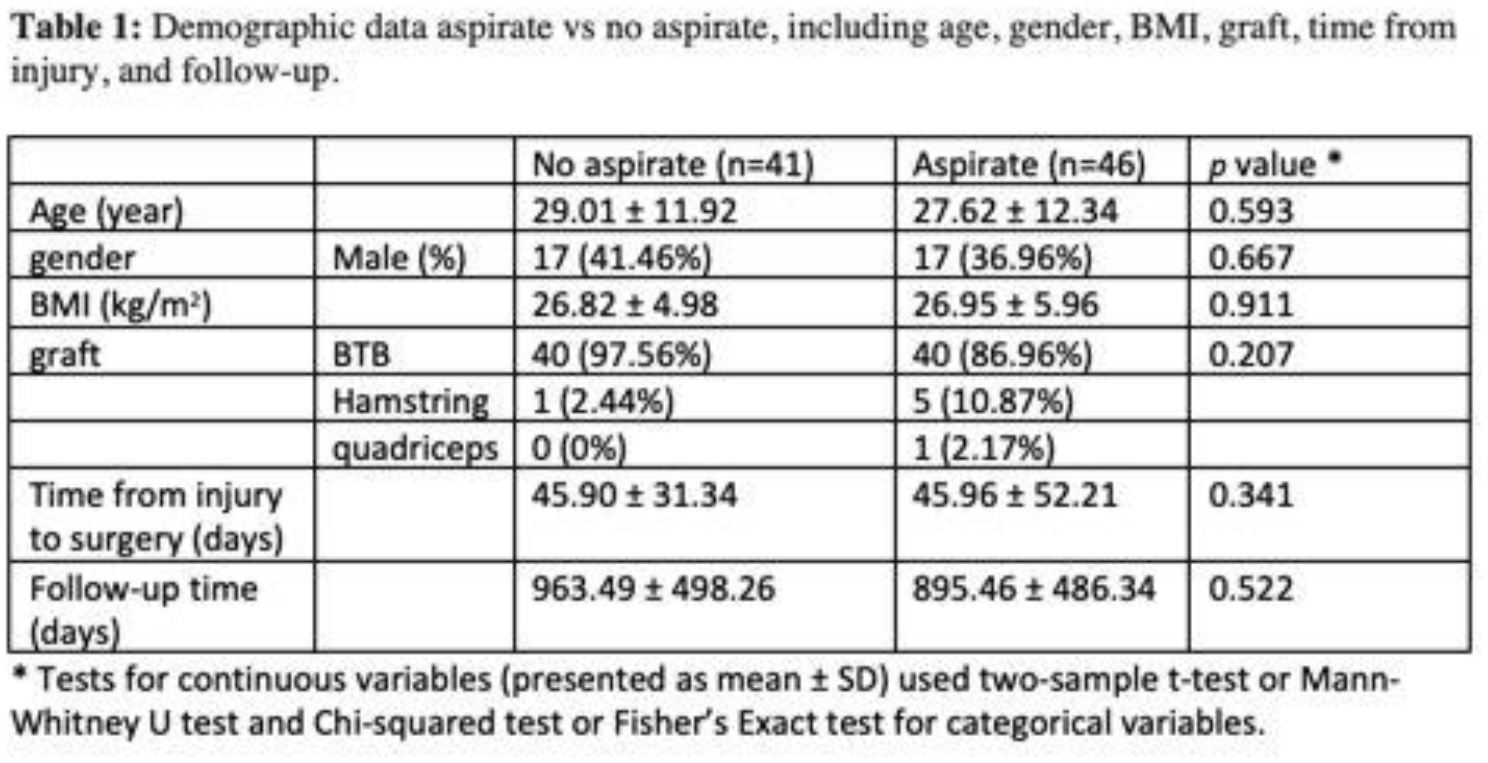
Eighty-seven patients were enrolled in this study, with 46 (53%) patients randomized to and undergoing preoperative aspiration (
Conclusions:
Preoperative aspiration does not modify rates of subsequent surgery following ACLr. In patients who develop arthrofibrosis after ACLr, preoperative aspiration is associated with a delay in the development of arthrofibrosis. This could be due to a decrease in burden of intraarticular inflammation after aspiration. Further study is needed to assess why aspiration delays the onset of arthrofibrosis and whether aspiration impacts long-term outcomes such as the development of post-traumatic OA.