Abstract
Objectives:
Wrestling is a physically demanding sport with young athletes prone to traumatic shoulder instability (SI). However, there is a paucity of data evaluating the results of shoulder instability surgery (SIS) in this cohort of athletes. The purpose of this study is to assess reoperation rates, patient-reported outcomes (PRO), and return to wrestling (RTW) following SIS in a cohort of competitive wrestlers.
Methods:
All competitive wrestlers with a history of SI and subsequent surgery at a single institution between 1996 and 2020 were identified. All directions of SI (anterior SI [ASI], posterior SI [PSI], and traumatic multidirectional SI [TMDI]) were analyzed. Exclusion criteria included revision SIS and less than 2 years of clinical follow-up. Patients were contacted for determination of reinjury rates, return to wrestling (RTW), and Western Ontario Shoulder Instability index (WOSI) scores.
Results:
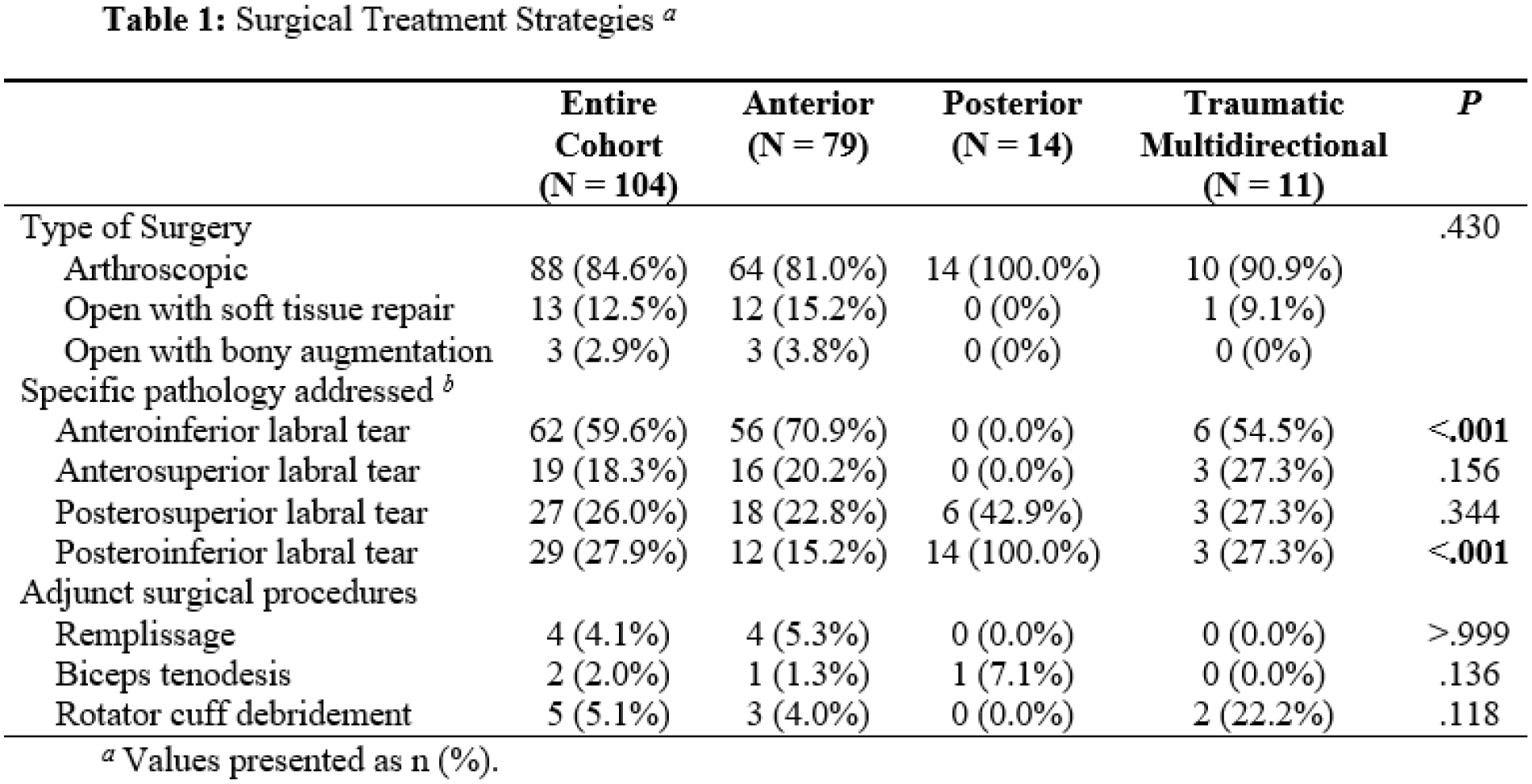
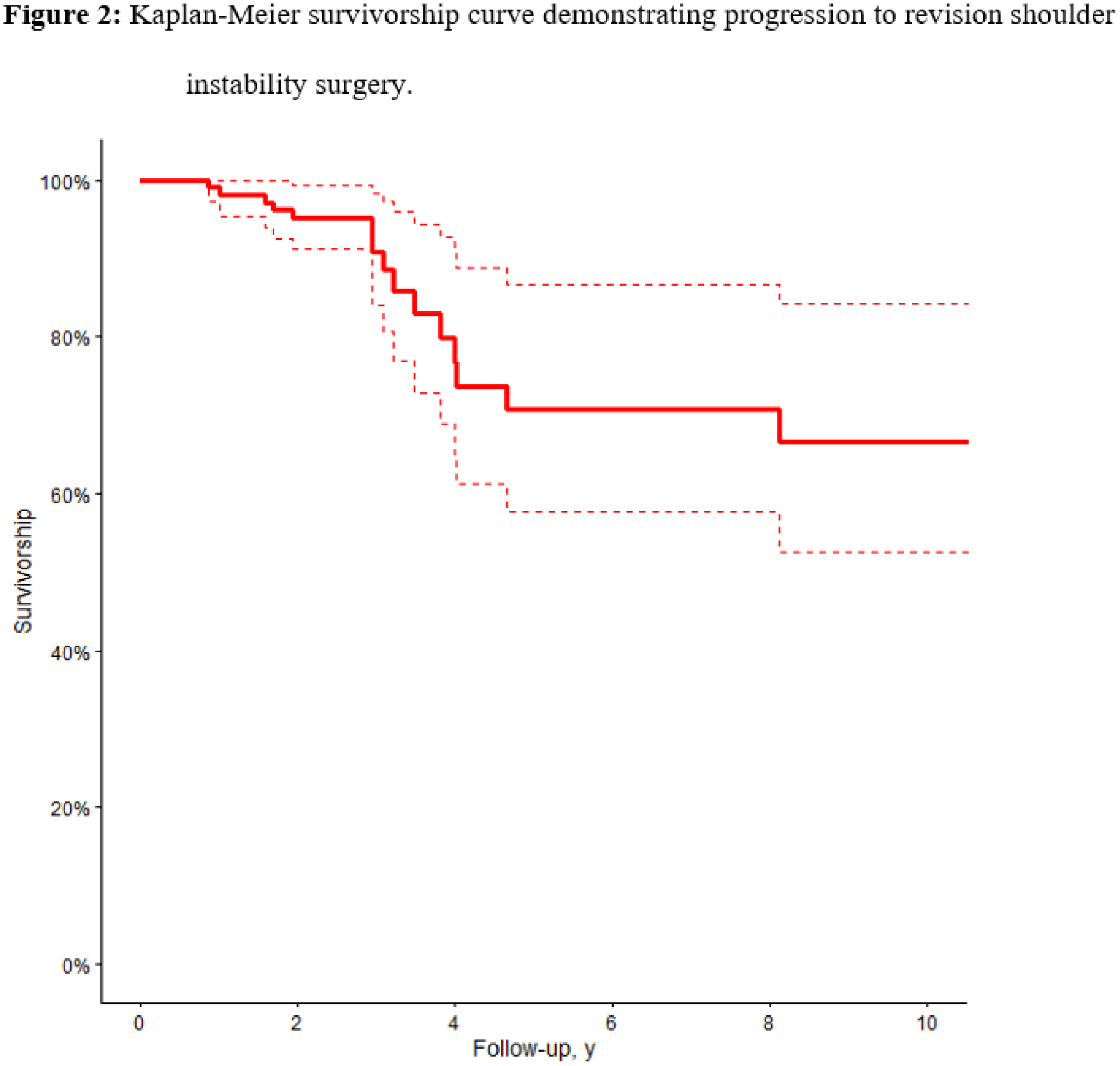
Ultimately, 104 wrestlers were included at a mean follow-up of 5.2 years (range, 2.0 – 22.0). Fifty-eight (55.8%) wrestlers presented for evaluation after a single SI event while 46 (44.2%) sustained multiple events prior to presentation. ASI was the most common direction (n = 79; 76.0%) followed by PSI (n = 14; 13.4%), and TMDI (n = 11; 10.6%). Surgical treatment was most commonly an arthroscopic soft tissue stabilization (n = 88; 84.6%), followed by an open soft tissue repair (n = 13; 12.5%) and open bony augmentation (n = 3; 2.9%) (Table 1). RTW occurred in 57.3% of wrestlers at a mean of 9.8 ± 9.6 months. Recurrent instability was the most common complication in 18 (17.3%) wrestlers. Revision SIS was performed in 15 (14.6%) wrestlers (Table 2). Across the entire cohort, Kaplan-Meier survivorship free from recurrent instability (Figure 1) and revision surgery (Figure 2) was 91.4% and 98.1% at 1 year, 90.4% and 92.5% at 2 years, 71.9% and 70.7% at 5 years, and 71.9% and 66.5% at 10 years, respectively. Pre-operative recurrent instability was an independent risk factor for post-operative recurrent instability (Hazard ratio [HR], 3.8; 95% confidence interval [CI], 1.33 – 11.03; P = .012).
Conclusions:
Anterior shoulder instability was the most common direction among competitive wrestlers presenting for SIS. Wrestlers with multiple dislocations prior to initial clinical presentation were 3.8 times more likely to experience post-operative recurrent instability.