Abstract
Objectives:
The purpose of this study is to compare clinical outcomes and return to sport (RTS) rates between patients that undergo osteochondral allograft (OCA) transplantation and autologous chondrocyte implantation (ACI), or matrix-induced autologous chondrocyte implantation (MACI), for patellofemoral articular cartilage defects.
Methods:
A retrospective review of patients who underwent an OCA, ACI, and MACI from 2010 to 2020 with a minimum two-year follow-up was conducted. Patient-reported outcomes (PROs) collected included: Visual Analog Scale for pain and satisfaction, Knee Injury and Osteoarthritis Outcome Score (KOOS), and return to sport (RTS) status. Logistic regression controlling for age, sex, BMI, bone marrow edema, mechanism of injury, lesions size and location was used to identify predictors of worse outcomes.
Results:
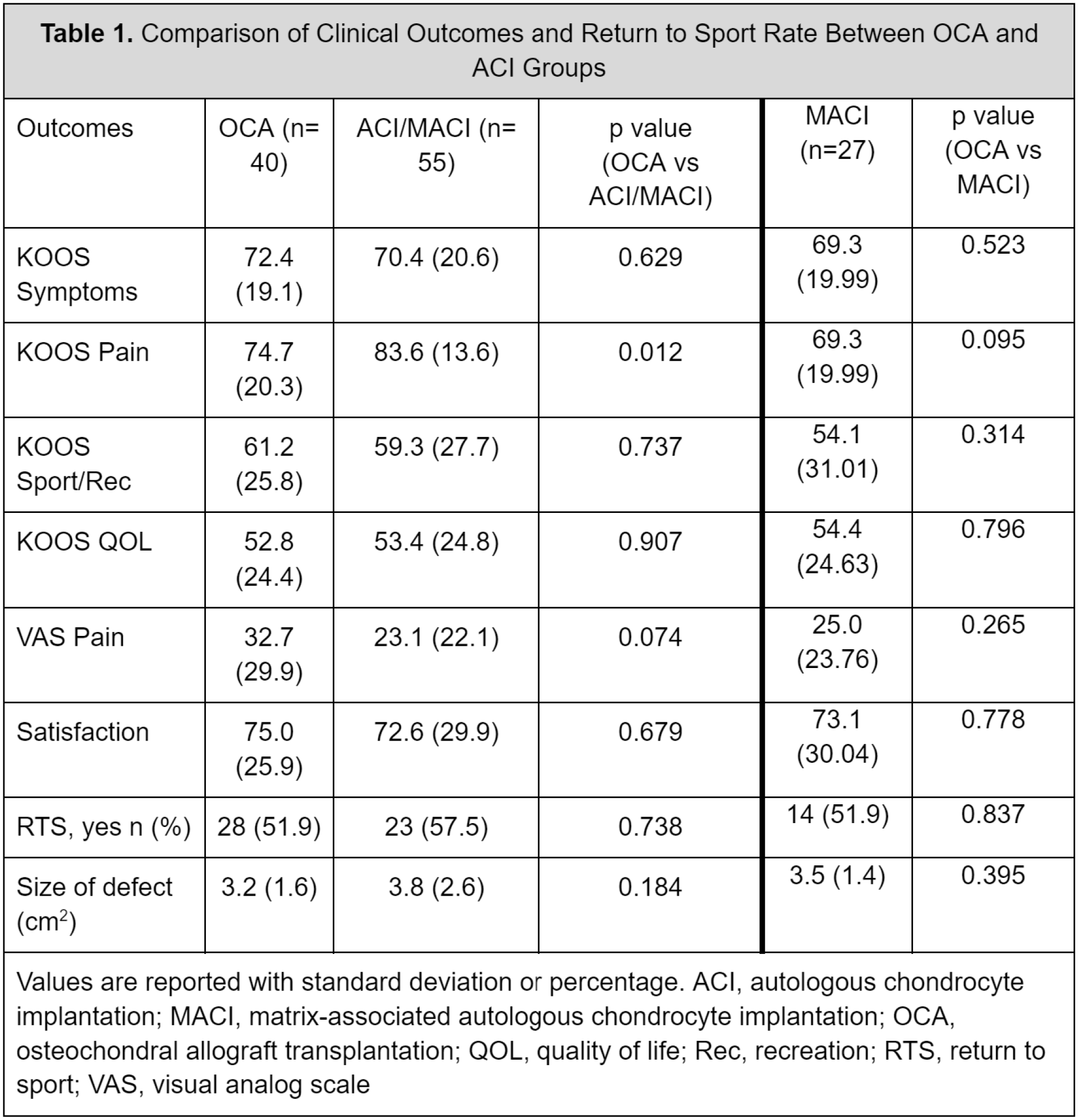
A total of 95 patients with a mean age of 32.1 years (± 10.0) and mean BMI of 26.5 (± 5.9) were included. ACI or MACI was performed in 55 cases (57.9%) and OCA in 40 (42.1%). Satisfaction was not significantly different between groups. VAS pain scores were higher in the OCA group, but did not reach significance. Overall, KOOS pain was significantly poorer in the OCA group than the ACI/MACI group, while KOOS symptoms, KOOS sport, and KOOS QOL subscores were non-significantly different. Overall, RTS rate was 54.3.%, with no significant difference in return between OCA or ACI/MACI groups. Increasing age was associated with lower satisfaction in the OCA group and poorer outcomes in the ACI/MACI group, while larger lesion area was associated with lower satisfaction and poorer outcomes scores in the ACI/MACI group.
Conclusions:
Clinical outcomes and return to sport rates are similar in patients that undergo OCA or ACI/MACI for patellofemoral articular cartilage defects, except in measures of pain, where patients undergoing OCA may experience more symptoms, particularly in the setting of trochlear defects.