



Abstract
Background:
River surfing (also called “rapid surfing”) involves surfing on stationary waves that are artificially created or placed in rivers and is gaining popularity, especially among surfers in landlocked areas but also among athletes without experience in ocean surfing. Different wave setups, types of boards, and types of fins, as well as the use of safety equipment, can lead to overuse and injuries.
Purpose:
To analyze the incidence, mechanisms, and risk factors of river surfing–related injuries for different types of waves and to evaluate the usage and appropriateness of safety equipment.
Study Design:
Descriptive epidemiology study.
Methods:
An online survey was distributed via social media to river surfers in German-speaking countries to collect information on demographics, injury history for the previous 12 months, wave site attended, use of (safety) equipment, and health issues. The survey was accessible between November 2021 and February 2022.
Results:
A total of 213 participants completed the survey: 195 participants from Germany, 10 from Austria, 6 from Switzerland, and 2 from other countries. The mean age was 36 years (range, 11-73 years), 72% (n = 153) were male, and 10% (n = 22) took part in competitions. Overall, 60% (n = 128) of surfers experienced 741 surfing-related injuries over the previous 12 months. The most common mechanisms of injury were contact with the bottom of the pool/river (n = 75 [35%]), with the board (n = 65 [30%]), and with the fins (n = 57 [27%]). The most frequent injury types were contusions/bruises (n = 256), cuts/lacerations (n = 159), abrasions (n = 152), and overuse (n = 58). Injuries affected mainly the feet/toes (n = 90), head/face (n = 67), hand/fingers (n = 51), knee (n = 49), lower back (n = 49), and thighs (n = 45). Earplugs were used by 50 (24%) participants, and a helmet was used regularly by 38 (18%) participants and never by 175 (82%) participants.
Conclusion:
The most frequent types of injury in river surfers were contusions/bruises, cuts/lacerations, and abrasions. The main mechanisms of injury were contact with the bottom of the pool/river, with the board, or with the fins. The feet/toes were more prone to injuries, followed by the head/face and hand/fingers.
River surfing is a sport and recreational activity. The wave is created artificially or naturally in a river. Some natural river waves are additionally modified to create a surfable wave. Through energy (artificial or by the river flowing), water is pushed against an obstacle, creating a stationary, or artificial, wave. The water comes from the front, which is the main difference compared to surfing in the ocean. The wave runs continuously compared to waves in the ocean or waves created in a wave pool. Another difference compared to surfing in the ocean is how athletes catch a wave. They enter from the side without needing to paddle for a wave and also do not require maintaining a prone position, lying or seated on the board, while waiting for the next wave.
Artificial waves are becoming more popular, and more competitions are taking place, especially in German-speaking countries (Germany, Switzerland, and Austria) with limited or no access to reliable waves. The most well-known artificial wave is probably the Eisbach in Munich. Surfers started to surf there in the 1970s. An example of an artificial wave is shown in Figure 1.
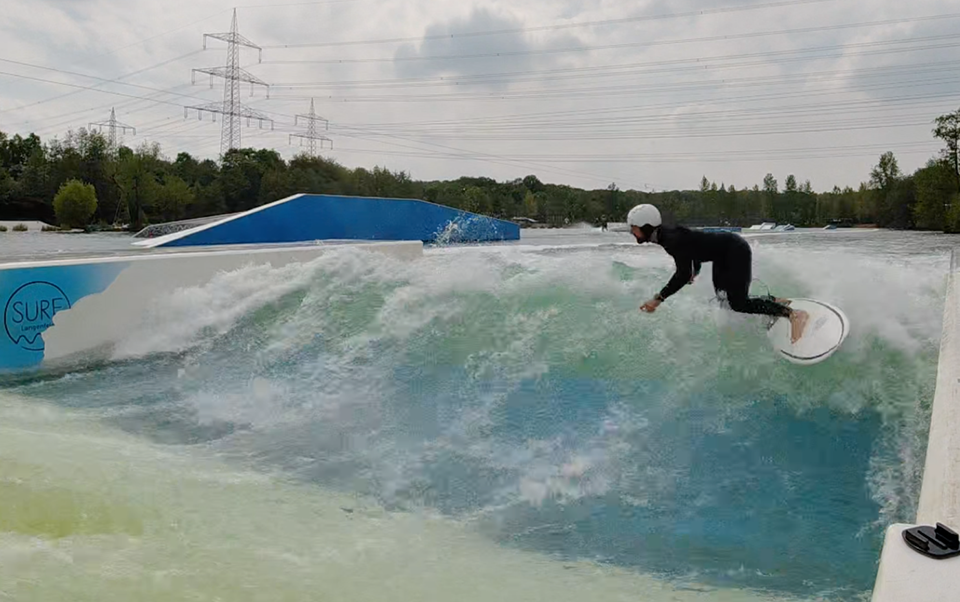
River surfer performing a top turn on an artificial wave.
Despite the increasing popularity of this sport, there are no data to be found on how many participate in river surfing. So far, the literature provides no data on injury epidemiology, and there are still no data on the acceptance and usage of safety equipment such as helmets, earplugs, leg ropes, and vests. Thus, the primary purpose of this study was to investigate the epidemiology of surfing-related injuries in a large and heterogeneous group of river surfers and to compare the results with studies of surfing in the ocean. 2 –5,7 –9 Additionally, we aimed to gather data on the usage and acceptance of safety equipment.
Methods
Survey Design and Distribution
Research ethics approval was received for the study protocol. An online survey was developed for river surfers in German-speaking countries (Germany, Austria, Switzerland) by means of a professional survey platform (LimeSurvey). The survey consisted of 6 sections (A-F): A. Participant demographics: age, sex, height, weight, body mass index, nationality B. Intensity and frequency of training: years of experience, main reasons for participation, how participant was introduced to the sport, preferred wave site, participation in competitions C. River surfing and safety equipment: type of surfboard, fin setup, use of safety equipment D. Injuries: performance of warm-up, injuries during previous 12 months, affected body part, type and severity of injury, mode and circumstances of injury E. Dietary and health habits: consumption of meat, fruits, vegetables, alcohol, and cigarettes F. Free commentaries
To ensure the practicability and relevance of included questions, the survey was pilot tested by 2 physicians experienced in ocean surfing and river surfing as well as by a professional river surfer. Any person, independent of age, who had participated in river surfing over the previous 12 months was allowed to take part in the survey; the online platform was available from November 2021 to February 2022. The survey was distributed on different river surfing–related Facebook sites in the German language, via Instagram accounts, and via mailing lists. River surfers who did not sustain any injuries were also asked to take part in the survey.
Wave Sites
A summary of the specific characteristics and relevant technical features of the main wave sites in Germany might help to clarify differences in potential risks and injuries. The most famous natural river wave is the Eisbach, located in Munich, Germany. It is created by harnessing naturally flowing water running over concrete on the bed of the river. It has a width of approximately 12 m, with wave heights ranging from 0.8 to 1.2 m depending on the water level and flow speed. The floor of the river and the river walls are composed of stones and concrete.
Surf Langenfeld, located in Langenfeld, Germany (Figure 1), is the first artificial wave that was created by a pool construction floating in a natural lake. It uses UNIT technology (UNIT Surf Pool) to pump lake water to an elevated platform, which then runs down over a ramp following gravity. Depending on adjustments, this creates a wave with a height of up to 1.60 m. The minimal depth in front of the wave is 45 cm and behind the wave is 1.20 m. The width of the wave is 8 m. The pool is made of steel, but the walls and floor are covered by high-density polyethylene with round edges.
Several sites use Citywave technology (Action Team Veranstaltungs) to create artificial waves in a pool using its own water supply. Several high-power pumps accelerate water over a ramp, creating a surfable wave. This technology can be installed both indoors and outdoors, and the wave height and flow rate can be adjusted to the demands of the surfers. The floor and side walls are covered by foam panels. Examples include the Citywave at Wellenwerk, Berlin (an indoor site), which reaches a wave height of up to 1.60 m and has a width of 8.50 m, and the Citywave at Hasewelle, Osnabrueck (also indoors), which reaches a wave height of up to 1.50 m and has a width of 7.50 m.
Injury Definitions
Injuries were described by the athletes themselves. To estimate the severity of the injuries, questions such as the need to see a doctor and time to return to sport after the injury were asked. Because data on the overall number of river surfers are not available, calculations of the overall injury incidence were not possible.
Statistical Analysis
Data were analyzed using Excel Version 16.16.25 (Microsoft). Variables were summarized using frequencies and descriptive statistics. All calculations were based on participants’ reports. Age, height, and weight were calculated in total and separately for male and female participants, indicating means and ranges. Participants chose from among multiple responses for questions regarding preferred wave site (all currently working waves in German-speaking countries were listed), main surfing motivation, injury mechanism, injury location, and injury type, from which frequencies were calculated. These answers were used to calculate the rate of injured surfers per particular wave site (eg, of the 62 participants who indicated surfing at the Eisbach, 36 reported at least 1 injury, resulting in a rate of injured surfers at the Eisbach of 58%). Finally, participants were grouped by sex (male/female), participation in competitions (yes/no), performing warm-ups (yes/no), surfing regularly (ie, surfing on a fixed date) or irregularly, using a helmet (yes/no), type of board (hardboard/softboard), and type of fin (flexible/rigid). For each group, the percentage of injured surfers was calculated. For the category of helmet usage, the percentage of surfers with head/face injuries was calculated separately. Data were compared using the chi-square test, with a significance level of P < .05.
Results
A total of 286 participants started the survey, and 213 completed it. The majority of participants (n = 195 [92%]) came from Germany; followed by Austria (n = 10 [5%]) and Switzerland (n = 6 [3%]); and 1 each (0.5%) from China and Costa Rica.
Participant Demographics
Overall, 60 river surfers (28%) were female and 153 (72%) male. The mean age was 36 years (range, 11-73 years). The mean height was 178 cm (range, 160-198 cm), the mean weight was 75 kg (range, 46-109 kg), and the mean body mass index was 23 kg/m2 (range, 17-32 kg/m2). There were 22 (10%) who indicated that they take part in competitions. For differences between male and female participants, see Table 1.
Demographics of Participants a

a Data are reported as mean (range) unless otherwise indicated.
Additionally, 23 participants (11%) had practiced the sport for less than 1 year, 76 (36%) for 1 to 2 years, 62 (29%) for 3 to 4 years, 19 (9%) for 4 to 5 years, and 33 (16%) for longer than 5 years. More than half of the respondents (n = 114 [54%]) started surfing on their own, 62 (29%) started by taking a class, 32 (15%) started with a recommendation from an experienced friend, and 5 (2%) started the sport some other way. Most participants surfed outdoors at Surf Langenfeld (n = 85 [40%]) or the Eisbach (n = 62 [29%]), while others surfed indoors at Hasewelle (n = 49 [23%]) or Wellenwerk (n = 39 [18%]). Most of the participants had experience in other water sports, with the majority (multiple answers allowed) in surfing (n = 145), followed by wakeboarding (n = 85) and stand-up paddleboarding (n = 65). Further, 71% (n = 151) regularly performed a warm-up routine before river surfing, while 29% (n = 62) did not.
Injury Incidence
Overall, 128 (60%) recalled surfing-related injuries within the previous 12 months, whereas 85 (40%) did not. These 128 surfers indicated a total of 741 injuries. Of these 128 participants, 52 (41%) needed to see a doctor, and 18 (14%) went on sick leave. Additionally, 67 (52%) had injury-related problems lasting for days, 39 (30%) for weeks and 22 (17%) for months. There were 19 (15%) who reported having long-term effects from an injury. Of 80 participants who stated that they surfed regularly, 55 (69%) reported experiencing an injury. Of 133 participants who surfed irregularly, 73 (55%) experienced an injury (Table 2).
Injury Frequency by Surfing Regularity

Mechanism, Localization, and Type of Injury
The highest number of surfers was injured because of contact with the bottom of the pool or river (n = 75 [35%]), followed by contact with the board (n = 65 [30%]) or fins (n = 57 [27%]) (Figure 2). A total of 117 surfers (55%) were injured during recreational activities, 28 (13%) during training, and 3 (1%) during competitions. Further, 36 (17%) were injured at the Eisbach, 34 (16%) at Surf Langenfeld, 26 (12%) at Hasewelle, and 21 (10%) at Wellenwerk. Considering that the greatest number of participants primarily surfed at Surf Langenfeld (n = 85 [40%]), followed by the Eisbach (n = 62 [29%]), the highest rate of injuries was reported at the Eisbach (58%), followed by Wellenwerk (54%), Hasewelle (53%), and Surf Langenfeld (40%) (Figure 3).

Mechanism of injury.

Injuries per wave site.
This distribution differed concerning head injuries. The highest percentage of head injuries was reported at Hasewelle (37%), followed by Citywave Wien (30%), Wellenwerk (28%), and the Reuss in Bremgarten (25%). The percentage of head injuries was 24% at the Eisbach and 16% at Surf Langenfeld. A physician was consulted for 30% of injuries at Citywave Wien, followed by 29% at the Eisbach, 25% at Citywave Boot Duesseldorf, and 20% at Urbansurf Zurich. At Surf Langenfeld, the percentage was 20%, at Wellenwerk 15%, and at Hasewelle 14%. Because of the partially low number of participants, these percentages might not be representative.
The most frequent types of injury were contusions/bruises (n = 256/741 [35%]), cuts/lacerations (n = 159 [22%]), abrasions (n = 152 [21%]), and overuse (n = 58 [8%]) predominantly affecting the feet/toes (n = 90 [12%]), head/face (n = 67 [9%]), hand/fingers (n = 51 [7%]), knee (n = 49 [7%]), lower back (n = 49 [7%]), and thighs (n = 45 [6%]). There were 11 participants who reported having had a fracture, which affected the feet/toes (n = 3), wrist (n = 2), rib cage (n = 2), and forearm, hand/fingers, buttocks, and ankle (n = 1 each). Overuse mainly affected the knee (n = 20 participants), followed by the shoulder (n = 6 participants) and neck (n = 5 participants). An overview of injury types by body location is presented in Figure 4.
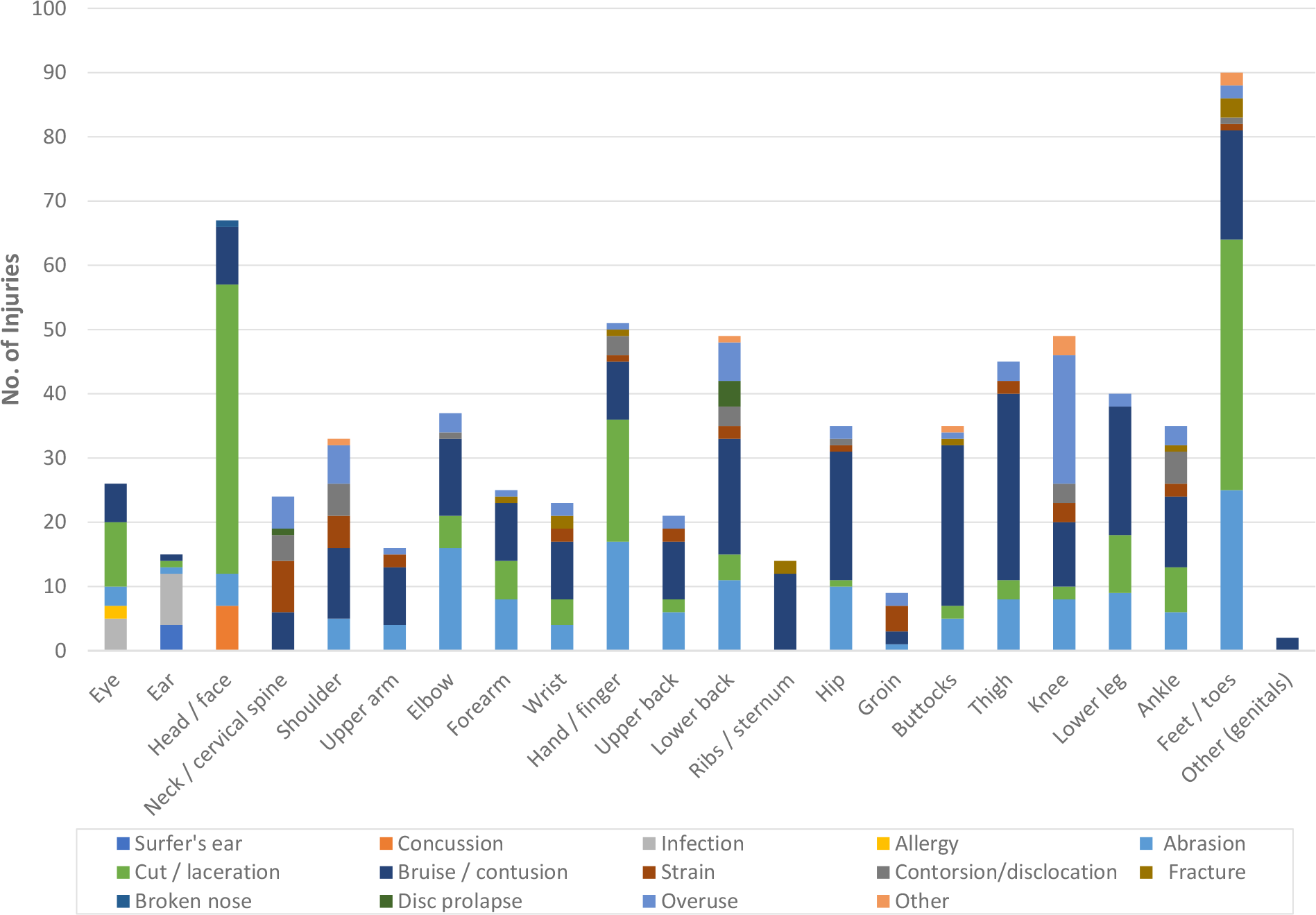
Types of injury incurred by body location.
Of the 52 surfers (342 injuries) who had to consult a physician, most reported a contusion/bruise (n = 101), an abrasion (n = 54), a laceration (n = 45), a cut (n = 43), and overuse (n = 32). The 19 participants (163 injuries) who indicated experiencing long-term harm reported a contusion/bruise in 44 cases, followed by an abrasion in 28, a cut in 22, a laceration in 17, and overuse in 12 cases.
Contusions/bruises were mainly caused by contact with the side walls (38%) and the floor (37%). Cuts/lacerations were mainly caused by contact with the fins (34%) or the board (33%). Figure 5 provides an overview of the injury type by injury mechanism.

Percentage differences in injury type by injury mechanism.
More abrasions were reported at Wellenwerk (31%) and Hasewelle (27%). The Eisbach showed higher percentages for contusions/bruises (40%). Figure 6 provides an overview of the injury type by wave site.
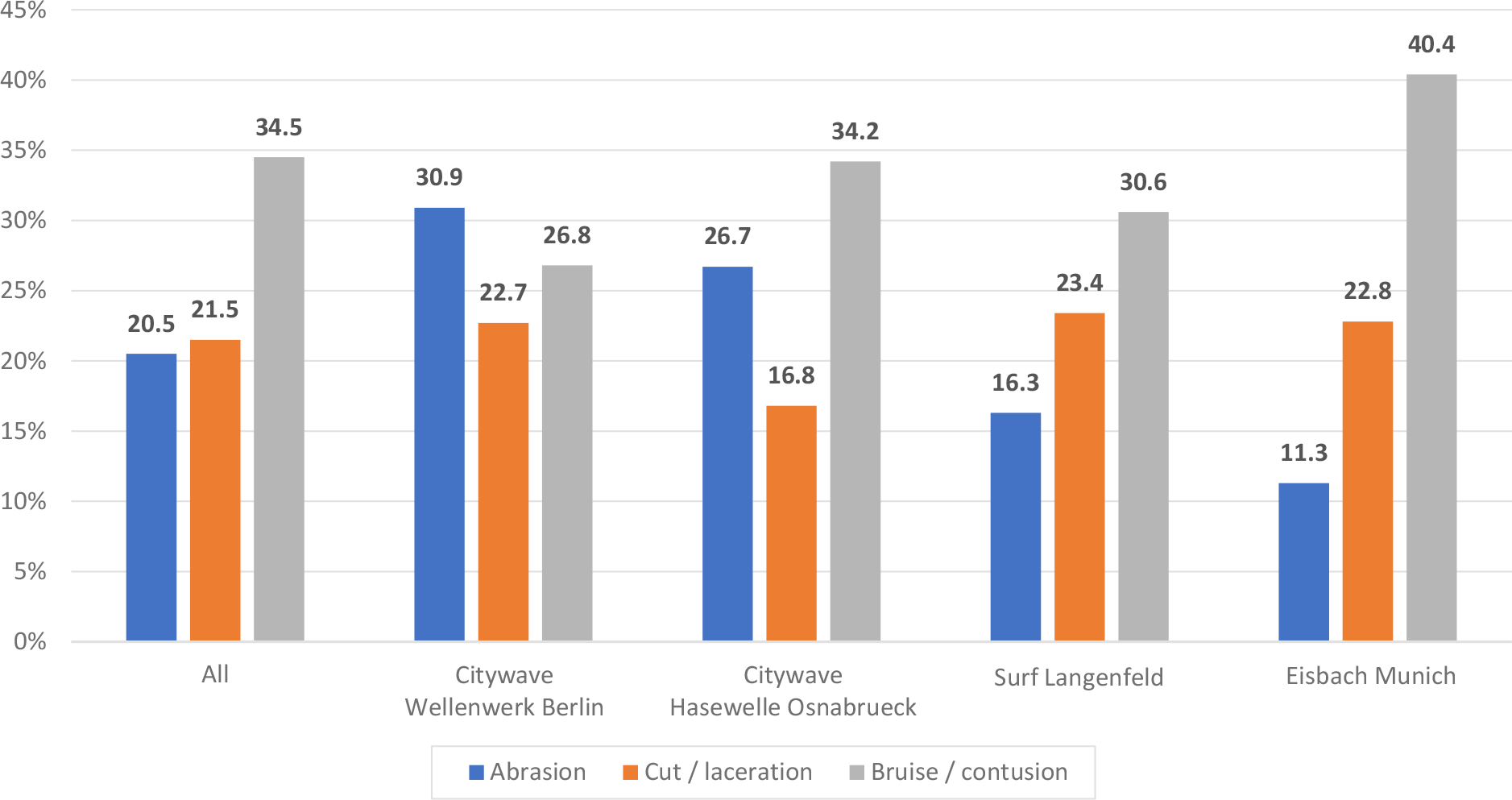
Percentage differences in injury type by wave site.
The feet/toes were predominantly injured, with 12% of all injuries. The most feet/toe injuries were reported at Hasewelle (17%) (Figure 7).

Percentage of injuries to foot/toes by wave site.
At Wellenwerk, the most commonly reported injury mechanism was contact with the fins (30%). Contact with the bottom of the pool or river was the most reported injury mechanism at Hasewelle (37%), followed by the Eisbach (28%) and Surf Langenfeld (27%). Maneuvers were reported as a mechanism of injury at the Eisbach (10%) and Surf Langenfeld (9%). Figure 8 provides an overview of the injury mechanism by wave site.
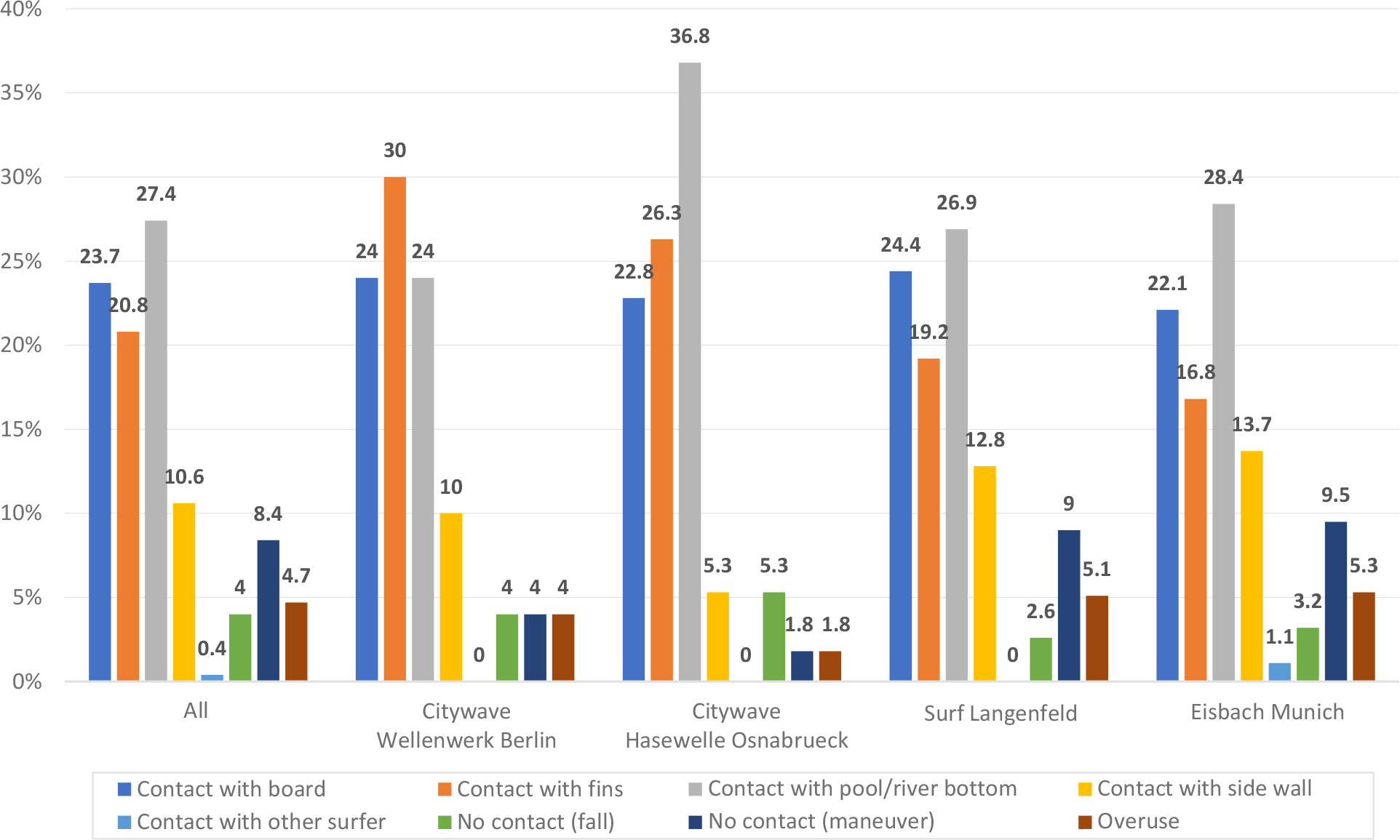
Percentage differences in injury mechanism by wave site.
Risk Factors
There were no significant differences in the frequency of injuries between male (n = 89/153 [58%]) and female (n = 39/60 [65%]) surfers. Participants practicing river surfing regularly reported significantly more injuries (69%) than participants surfing irregularly (55%) (Table 2).
A higher percentage of injuries was reported when using a hardboard (59%) compared to using a softboard (51%), without reaching statistical significance. Significantly more injuries (P = .004) were reported when using rigid fins (62%) than using flexible fins (44%). Participants performing a warm-up routine before river surfing recalled a higher percentage of injuries (n = 92/151 [61%]) than participants without a warm-up (n = 36/62 [58%]), without reaching significance.
Equipment and Safety Behavior
Overall, 173 participants (81%) owned a board, while 40 (19%) used rental boards. Preferred board types were hardboards (n = 176 [83%]), while softboards were used by 47 participants (22%). The preferred fin setup was a twin fin plus small middle fin (n = 145 [68%]), followed by a thruster (n = 49 [23%]), twin fin (n = 32 [15%]), quad fin (n = 10 [5%]), and single fin (n = 9 [4%]). Additionally, 55 participants (26%) used flexible fins, and 169 (79%) used rigid fins. Percentages do not result in the sum of 100% because multiple answers were possible.
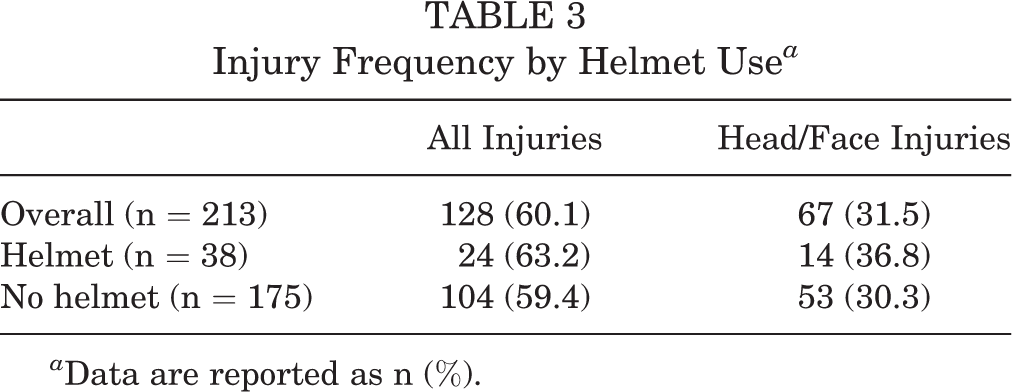
Concerning the use of a helmet, 38 indicated always wearing one, and 175 indicated never wearing one. A leash was used regularly by 210 participants (206 leg, 2 wrist, 2 other) and never by 3 participants. Earplugs were used by 50 participants. A vest and a nose clip were used by 9 participants each. Participants who used a helmet had a higher rate of overall injuries (63%) and a higher rate of head/face injuries (37%) (Table 3).
Injury Frequency by Helmet Use a
a Data are reported as n (%).
Health and Dietary Habits
The majority (n = 176) of river surfers reported being nonsmokers, 27 smoked fewer than 10 cigarettes per day, and 5 smoked more than 10 cigarettes per day. In general, river surfers were found to lead a healthy lifestyle, with limited alcohol and meat consumption and a regular intake of fruits and vegetables (Table 4).
Dietary Intake a

a Data are reported as No. of participants.
Discussion
The participants of the present study were relatively healthy, with an older mean age of 36 years. The most commonly reported mechanism of injury was hitting the ground, board, or fins. River surfers who practiced the sport on a regular basis indicated a higher percentage of injuries than those practicing irregularly. A higher rate of injuries was also found for female river surfers and for those using a hardboard compared to a softboard. Statistically significant more injuries were reported with the use of rigid fins compared to flexible fins. The most frequent types of injury were contusions/bruises (35%), cuts/lacerations (22%), abrasions (21%), and overuse (8%).
There are no data on river surfing available thus far with which to compare the results. Concerning ocean surfing, Nathanson et al 9 published the results of a similar survey in 2002. Lacerations were the most common acute injuries at 42%, followed by contusions at 13%, sprains/strains at 12%, and fractures at 8%. The lower extremity and head/neck were affected in 37% each. The most common mechanism of injury was contact with the surfer’s own board in 55%, contact with the sea floor in 17%, and contact with another surfer’s board in 12%. 9 Comparable results were published by Klick et al 4 in 2016, by Minghelli et al 7 in 2018, and recently by Bickley et al 1 in 2021. These authors also found that the most commonly reported mechanism of injury was contact with the surfer’s own board or another surfer’s board, followed by contact with the sea floor. 4,7 This is different from our findings in which most injuries were caused by hitting the ground, followed by contact with the board or fins. This can be explained by the setup of the installed or natural river waves in which the ground is closer to the surfer compared to the open sea. Surfing on a reef break might have similar results.
Studies on ocean surfing have reported that most injuries are in the lower extremities 2 –4,7,9 and head/face. 1,6 In ocean surfing, lacerations have been reported as the most common type of injury, 4,7,9 whereas our findings indicated that a contusion was the most commonly reported injury type in river surfing. This resonates with the different distributions of the injury mechanism mentioned before. Contact with the board, ground, or side walls in artificial waves mainly results in blunt trauma, whereas hitting the reef predominantly causes lacerations.
A recent literature review by McArthur et al 6 on the epidemiology of acute injuries in surfing differentiated between data collected by online surveys or health care facilities (HCFs). The skin was most commonly affected in 43.8% (survey) and 50.1% (HCF). Again, the most common injury mechanism was contact with the surfer’s own board in 36.7% (survey) and 73.4% (HCF). In HCFs, head, face, and neck injuries were most common (43.1%) versus lower limb injuries in survey data (36.4%). This might be caused by the fact that head injuries more often lead to medical treatment than injuries of the limbs.
Our results for wearing a helmet and having experienced an injury to the head/face were unexpected. Head injuries are common in ocean surfing as well and are mainly caused by contact with the surfer’s own board or with the reef. 1,4 –6 For this reason, even some professional surfers choose to wear a helmet when surfing shallow reef waves. It is possible that the participants of our study decided to wear a helmet after an injury occurred. We suggest wearing a helmet in river surfing, although its protective effect cannot be proven by our results.
It was not possible to determine the injury rate (ie, injuries per 1000 hours of river surfing) because the study did not collect information on the overall population of river surfers. Also, we could not define the incidence proportion (ie, the number of surfers injured in relation to the total number of surfers) because we did not have the total number of river surfers. There are no data available yet. This made it impossible to determine incidences and to compare them with other sports.
The data on river surfers taking part in competitions and river surfing at a recreational level are not sufficient to compare because we only had 22 participants who indicated taking part in competitions compared to 191 not taking part in competitions.
The percentages of injuries incurred at different wave sites need to be considered critically. This study included a random collection of participants, and the total numbers of athletes surfing at each wave site, as well as injured surfers at those sites, were not collected, which would be needed to validate at which wave site most injuries occur. For example, most of our participants surfed at Surf Langenfeld (n = 85), which might be explained by local knowledge and private promotion of our study.
There seem to be differences in the injury type depending on specific wave setups. Behind the waves of Hasewelle is a grid covered by shallow water, which might explain the higher rates of injuries to the feet/toes there. Contrary to this (eg, at Surf Langenfeld), there is much deeper water behind the waves, so it is less likely for surfers to hit the ground. The greater percentage of injuries at the Eisbach might be explained by the stone and concrete ground and side walls and at Wellenwerk by the fact that its waves are the most powerful of all. The higher percentage of head injuries and the greater number of injuries to the feet at Hasewelle might be caused by its shallow water and the grid behind the waves. Although Wellenwerk and Hasewelle use Citywave technology, the flow rate is much higher at Wellenwerk. This creates more powerful waves, but also much deeper water behind the waves, and thus probably a higher risk of getting hit by the fins and board but a lower risk of injuries to the feet.
Being injured by hitting the side walls is more likely at Surf Langenfeld and the Eisbach compared to Wellenwerk and Hasewelle. This might be explained by the fact that with the Citywave construction, the walls are covered by foam panels. However, the percentages of injuries might not be representative because of the partially low number of participants.
This information and the data gathered by the presented survey might enable us to reduce injuries by modifications to the equipment and to the different artificial wave setups. Each individual surfer could reduce the risk of injuries by covering the head with the arms when falling and surfacing from the water and trying not to dive deep when falling. A helmet (although not proven by our data) might help reduce the risk of head injuries, and wearing neoprene booties might reduce the risk of cuts and abrasions to the feet. The main factor for safety is the equipment of the surfer. Using a softboard is safer but is not suitable when striving for high performance, but using nose guards with a hardboard and flexible fins would be possible. When building new artificial wave sites, it is recommended to strive for water as deep as possible behind the waves and to cover the walls and floor with foam panels wherever possible.
Limitations
The study design of a retrospective online survey is susceptible to bias. Participants might not have accurately remembered their injuries sustained within the past 12 months. Another limitation is the self-reporting of injuries, which might not be as accurate as a report by a health professional. Some of the participants might not consider small scratches to be relevant, while others do. The same applies for the number of injuries. Some might, for example, report a contusion as a single injury, while others report the contusion, as well as a concomitant strain and abrasion, as separate injuries. It cannot be broken down how many participants sustained many incidents or one incident with several injuries. Also, the study cohort might not represent the overall general population participating in river surfing (participation bias). Surfers who have sustained an injury might have been more willing to participate than those without an injury. This bias is likely to be magnified by the distribution of the survey mainly via social media. Predominantly, river surfers are active who consider river surfing as a serious sporting activity. Thus, the large and growing proportion of beginners in river surfing without any sporting ambition is underrepresented by the present study. Therefore, the results of the present study are only specific for ambitious river surfers and might not be generalized for the whole river surfing population. Additionally, the survey was isolated to a single language, and the data may not be extrapolated to a wider population of river surfing athletes.
Despite these limitations, the present study first shows relevant information on injuries and risk factors in the growing sport of river surfing. Additionally, this is the first study specifically addressing the discipline of river surfing and evaluating the use of safety equipment. The gathered information might also help in modifying equipment and artificial waves to reduce the risk for injuries.
Conclusion
The most frequent types of injury were contusions/bruises, cuts/lacerations, and abrasions. The main mechanisms of injury were contact with the pool or river bottom, the board, or the fins. The feet/toes were more prone to injuries, followed by the head/face and hand/fingers.
Footnotes
Acknowledgment
The authors thank everyone who helped to distribute the survey as well as all participants. They also thank Louis Friedemann Thiele, an experienced rapid surfer who helped to create the survey and provided the authors with important information on the sport and the different wave setups.
Final revision submitted November 30, 2022; accepted December 13, 2022.
The authors have declared that there are no conflicts of interest in the authorship and publication of this contribution. AOSSM checks author disclosures against the Open Payments Database (OPD). AOSSM has not conducted an independent investigation on the OPD and disclaims any liability or responsibility relating thereto.
Ethical approval for this study was obtained from the University of Witten/Herdecke (No. 131/2019).