Abstract
Background:
Discoid meniscus, a congenital meniscus variant, may have greater incidence in Asian populations. No United States population-based studies have examined the discoid meniscus ethnic/racial distribution.
Hypothesis/Purpose:
In pediatric patients undergoing meniscus surgery, we hypothesize that ethnic/racial variability exists in patients with discoid meniscus and this variability is different than in patients with isolated medial meniscus tears.
Methods:
The Pediatric Health Information System (PHIS) was queried from 48 hospitals to examine patients 18 years of age and younger between 2015 and 2019, using ICD-10 codes. A cohort of patients treated surgically for discoid meniscus was compared to a cohort of patients treated surgically for medial meniscal tear. These two populations were compared based on age, gender, ethnicity/race, CPT® code, insurance, urban vs rural, and region of country. Univariate testing and multivariable logistic modeling were used to test for associations.
Results:
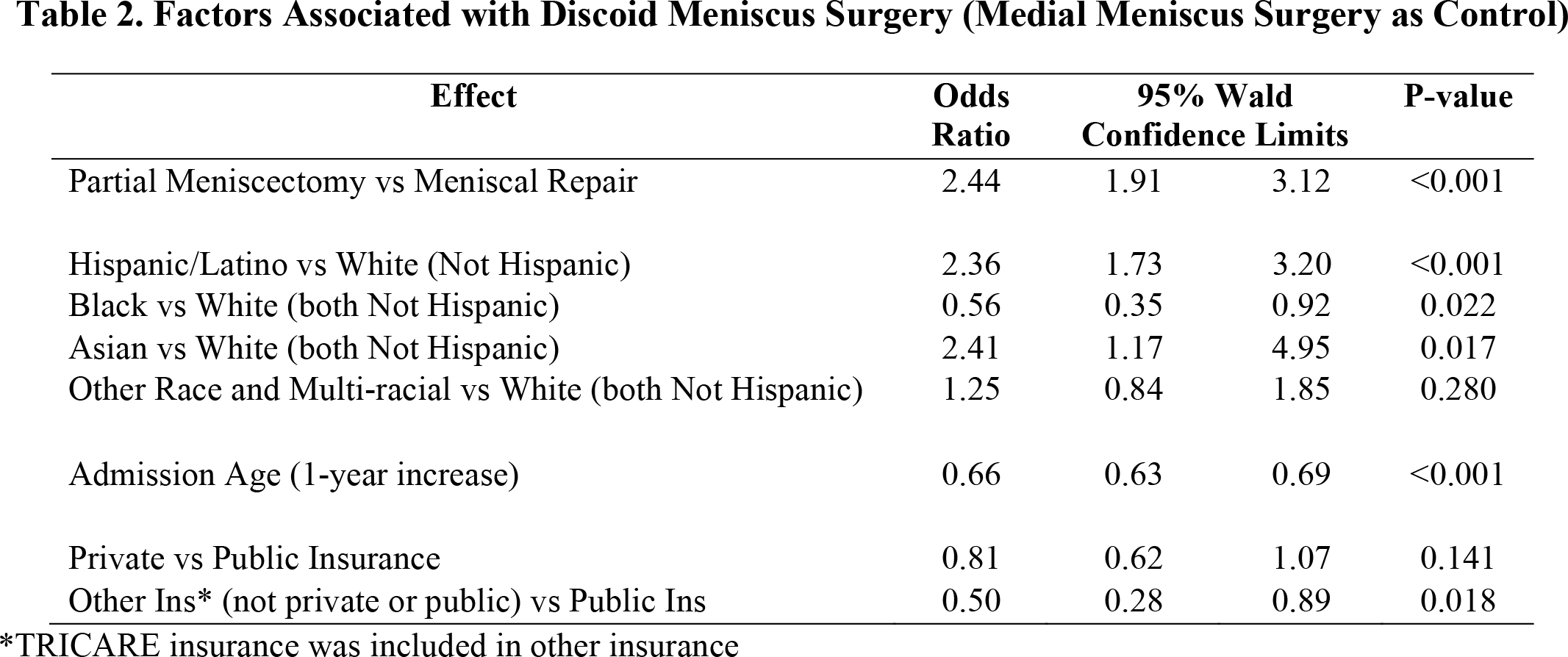
A discoid meniscus cohort of 399 children (median age, 13.0 years) was compared to a medial meniscus tear cohort of 3157 children (median age, 16.0 years) (p<0.001) (
Conclusion:
This study shows a significant association of ethnicity/race with discoid versus medial meniscus surgical treatment in children. Among pediatric patients that had surgery for discoid or medial meniscus, Hispanic/Latino and Asian patients were significantly more likely to have surgery for discoid meniscus than white patients. Hispanic/Latino children made up a greater percentage of the population having surgery for a discoid meniscus versus medial meniscus. When evaluating pediatric patients, younger age and Asian or Hispanic/Latino ethnicity should increase attention to the possibility of a discoid meniscus.