




Abstract

In the July 2021 issue of OJSM, a meta-analysis by our group was published with a focus on treating osteoarthritis of the knee through genicular artery embolization (GAE). 2 We are very grateful for the attention OJSM has given to this publication, which will be of value to the nascent interdisciplinary field of embolization-based strategies for treatment of musculoskeletal diseases. In the significant time window between our submission and the final publication, some canonical studies released their results; among them, an important publication by Little and colleagues 1 of the Royal Berkshire NHS Foundation Trust (Reading, UK), who addressed interim results of the GENESIS study (the preliminary results of which were addressed in our work). We commend the authors for their fantastic job, both in their methodology and in their interpretation of their findings. GENESIS is the largest reported cohort with patients suffering from mild-to-moderate knee osteoarthritis undergoing GAE.
In our meta-analysis, we included preliminary data from GENESIS. We feel compelled to mention that updating this analysis with recently released interim data has led to minor alterations in the findings reported in our paper. The original parameters are in Table 2 of our paper, and the altered version after including the interim results from the study of Little et al 1 are outlined in Table 1 below.
Quality Ratings of Included Studies According to NIH Quality Assessment Tool for Case Series Studies: Updated Version a
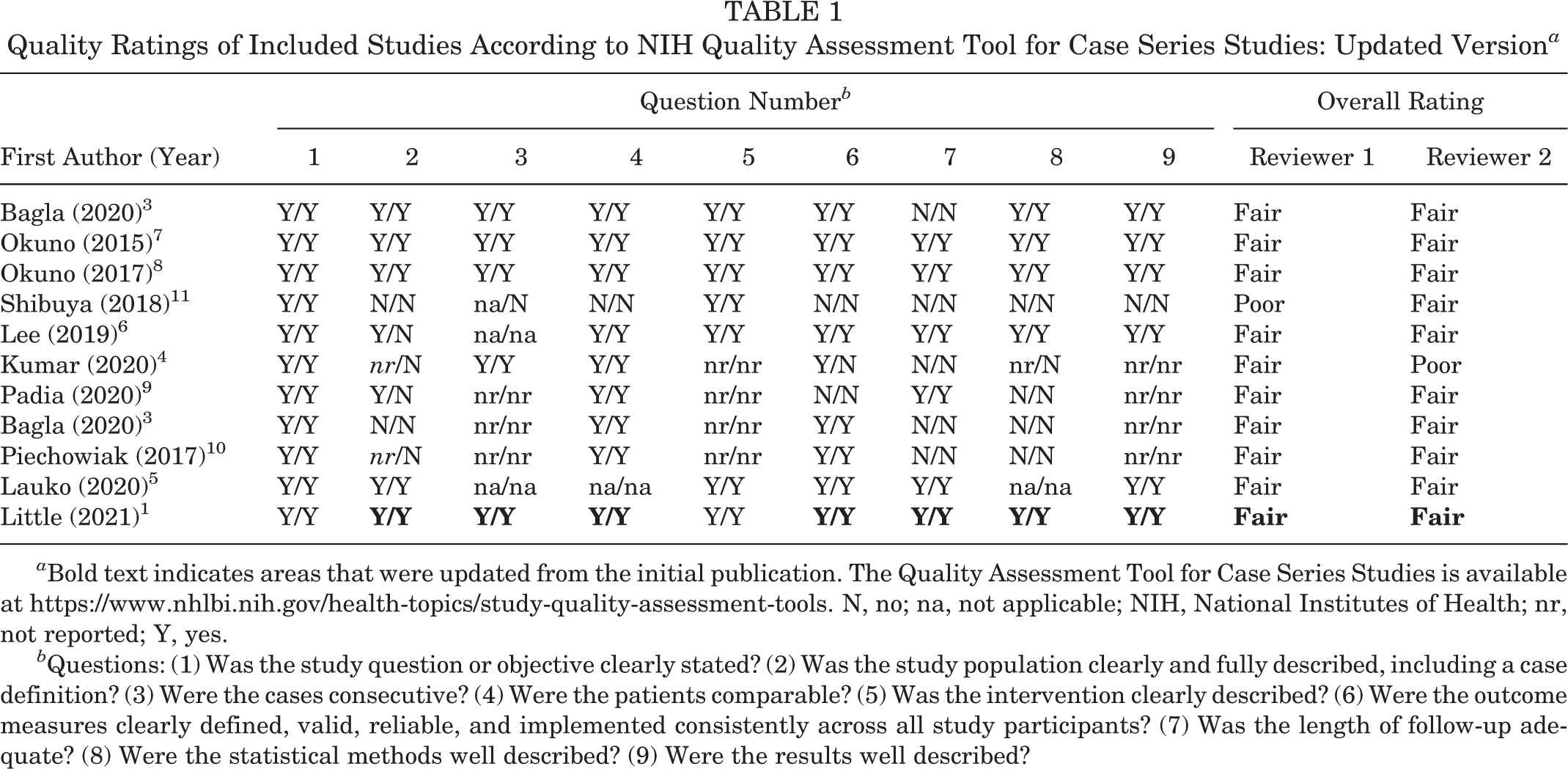
a Bold text indicates areas that were updated from the initial publication. The Quality Assessment Tool for Case Series Studies is available at https://www.nhlbi.nih.gov/health-topics/study-quality-assessment-tools. N, no; na, not applicable; NIH, National Institutes of Health; nr, not reported; Y, yes.
b Questions: (1) Was the study question or objective clearly stated? (2) Was the study population clearly and fully described, including a case definition? (3) Were the cases consecutive? (4) Were the patients comparable? (5) Was the intervention clearly described? (6) Were the outcome measures clearly defined, valid, reliable, and implemented consistently across all study participants? (7) Was the length of follow-up adequate? (8) Were the statistical methods well described? (9) Were the results well described?
We sincerely appreciate your attention to this matter and believe that these modifications, however minor and not radically affecting our published data, should be brought to the attention of the OJSM readership.
Footnotes
The authors declared that there are no conflicts of interest in the authorship and publication of this contribution. AOSSM checks author disclosures against the Open Payments Database (OPD). AOSSM has not conducted an independent investigation on the OPD and disclaims any liability or responsibility relating thereto.