




Abstract
Background:
The effect of concussions on professional athletes has been investigated in many sports. However, few studies have evaluated concussions in National Basketball Association (NBA) players.
Hypothesis:
We hypothesized that concussion incidence has increased, yet the return-to-play (RTP) rate will remain high following the institution of the NBA concussion policy (NBACP). We also hypothesized that the incidence of repeat concussions will be similar to first occurrences and that player performance and game availability will not be significantly affected by sustaining a concussion.
Study Design:
Descriptive epidemiology study.
Methods:
Publicly available records were searched to identify all concussions from NBA seasons 1999-2000 to 2017-2018. Player demographics and information regarding career history were tabulated. Incidence of concussion and RTP timing were evaluated before and after institution of the NBACP (2011). Minutes per game and game score per minute were evaluated pre- versus postconcussion. Player availability and performance were also compared with an age-, body mass index–, position-, and experience-matched control group of players who did not sustain a concussion.
Results:
A total of 189 concussions were reported in the NBA from 1999 to 2018, with a mean ± SD incidence of 9.7 ± 7.3 concussions per season. Following implementation of the NBACP, incidence significantly increased from 5.7 ± 2.8 to 16.7 ± 7.5 concussions per season (P = .007). All players returned to play following first-time concussion after missing 7.7 ± 8.6 days and 3.5 ± 4.1 games. RTP time was not significantly different after implementation of the NBACP (games missed, P = .24; days missed, P = .27), and there was no difference in concussion-free time interval (P = .29). Game score per minute and minutes per game were not significantly affected by sustaining a concussion (both P > .05).
Conclusion:
Concussion incidence in NBA players is approximately 17 instances per season since the 2011 institution of a league-wide concussion policy. The number of reported concussions significantly increased following the policy, in line with trends seen in other professional sports leagues. Players have retained a high rate of RTP after 3 to 4 missed games. Player performance and availability are not affected by sustaining a concussion following successful RTP.
Concussion, also known as “mild traumatic brain injury,” has been established as an important clinical entity affecting athletes at all levels of competition. 4,8,42,52,54,56,57 Current evidence suggests that the incidence of sport-related concussion ranges from 0.17 to 0.99 per 1000 athlete exposures, although this is likely an underestimation owing to underreporting and failure to seek medical treatment. 24,25,56,57 It has been postulated that concussions are associated with a broad spectrum of sequelae, ranging from transient neurological deficits 3,8,54 to long-term cognitive deficiency, mental health disorders, and overall lower quality of life. 3,23,31 Recent investigations have even described an increased risk of subsequent musculoskeletal injury following concussion, a finding of particular importance for athletes. 4,16,19,36
The increase in knowledge regarding concussions over the past 2 decades has led to the institution of concussion policies across all major professional sports in the United States, 7 including the National Football League (NFL), 39 Major League Baseball (MLB), 29 National Hockey League (NHL), 40 and the National Basketball Association (NBA). 38 The NBA concussion policy (NBACP), enacted ahead of the 2011-2012 season, utilizes the Concussion in Sport Group’s definition of sport-related concussion: a traumatic brain injury induced by biomechanical forces. 35 The policy is based on the principles of preseason education, annual baseline testing, acute evaluation and management, and a structured return-to-play (RTP) process. Under the protocol, any NBA player suspected of incurring a concussion must leave gameplay to undergo a neurological evaluation by an athletic trainer or team physician. Evaluation is conducted with the Sport Concussion Assessment Tool, 7 and if a concussion is diagnosed, NBA players are not able to RTP during the same game or the following day. Once the player is symptom-free at rest, he must progress through a graduated, stepwise RTP protocol without reexperiencing symptoms. After this is successfully completed, the player’s team physician makes the final decision regarding eligibility for RTP. The director of the NBACP is made aware of all cases and supervises the program. 38
Numerous investigations in recent years have examined concussive injuries in the NFL, 6,9,22,37 NHL, 11,26,27 and MLB. 5,48,50,53 In each of these professional leagues, authors have reported that the institution of league-wide, formalized concussion policies resulted in increases in concussion incidence. 26,37,50 However, in one of the relatively few investigations that has studied concussions in NBA players, Padaki et al 45 found that incidence was not statistically different following the institution of the NBACP but that RTP time had increased. In their study, the authors were limited by a relatively small sample size of years included, which they acknowledged. This may have led to the discrepancy between the NBA and the other leagues. As such, with the additional years passed since the inception of the NBACP, our study sought to reexamine concussions in the NBA.
The primary aim of this investigation was to evaluate concussion incidence before versus after inception of the NBACP. Secondary outcomes included analysis of RTP, the effect of concussion on player performance and game availability, and comparison of single versus multiple concussions. We hypothesized that concussion incidence has increased following the institution of the NBACP and that the RTP rate would be high. We also hypothesized that the incidence of repeat concussions similar to first occurrences and that player performance and game availability would not be significantly affected by sustaining a concussion.
Methods
Data Acquisition
Publicly available records and injury reports related to the NBA were reviewed from the start of the 1999-2000 season to the conclusion of the 2017-2018 season, and all instances of concussion were tabulated. Sources for data acquisition included official team injury reports, press releases, and personal websites, as well as professional statistical and transactional online sources. Specific online sources utilized for this data acquisition included the official website of the NBA (NBA.com), as well as the official sports websites of ESPN (ESPN.com), CBS (CBSsports.com), NBC (NBCsports.com), Fox (FoxSports.com), a professional analysis and statistics website (basketball-reference.com), and a transactional sports database (prosportstransactions.com). Events reported as “head injury” were also investigated for the possibility of inclusion. Every instance of suspected concussion was manually confirmed via cross-checking with official NBA injury reports. No instances of conflicting data were encountered during our review. For each confirmed concussive event, the following data were collected: demographic information, including player name, position, height, weight, age, and seasons played; date of concussion, concomitant injuries, and number of days and games missed before returning to play; and number of minutes played per game for 10 games before and after the concussion. These methods are similar to those previously utilized by numerous investigations of injury in professional sports. 13,14,21,30,34,44,45
Additionally, a player’s game score (GS) was calculated for 10 games prior to and 10 games following concussion. GS is an advanced per-game basketball statistic that is reported by professional sports analytics organizations 41 and statistical websites 1,2 and commonly utilized by sports media outlets. 15,17,18,46 It is intended to convey a player’s net contribution to his team on both offense and defense with a single number. Calculation of GS involves weighting all major statistical categories (including points, assists, rebounds, blocked shots, steals, field goals, free throws, personal fouls, and turnovers) and subtracting a player’s negative contributions from his positive contributions (Figure 1).

Formula for calculating game score. *Represents multiplication.
GS is an easily understood metric in terms of absolute number, as it is designed to be interpreted on the scale of the team’s overall points total for that game (ie, a player’s GS of 10 is considered average, and 40 is considered outstanding). GS was calculated by utilizing official game data from NBA.com, and results were cross-referenced with GS values reported by basketball-reference.com. For the purposes of our performance analysis, GS per minute (GS/min) was calculated by normalizing each player’s GS to his playing time within that individual game.
Incidence and RTP
After generation of the cohort of players who were concussed according to the stated methodology, athletes were excluded from all subsequent analyses if the concussive injury was not basketball related. All basketball-related concussions were included for calculation of incidence. The following additional exclusions were made for RTP analysis: repeat concussions, to remove the potential negative effects of subsequent occurrences; preseason injuries attributed to concerns regarding irregular schedules and coaching/roster inconsistencies; postseason concussions or instances of concussion with the recovery period overlapping the end of the regular season, owing to known scheduling variations when compared with the regular season; and concussions that occurred with other injuries, given the implicit potential for confounding. The resultant cohort was therefore compiled of players experiencing a first-time isolated concussion whose injury and RTP both occurred during the regular season.
Repeat Concussions
Given the poor quality of online reporting prior to 2000, we were unable to verify if players had experienced concussions prior to the study period. For that reason, all players were presumed not to have had concussions prior to the 1999-2000 NBA season. Data from all basketball-related concussions were stratified to sort for players who experienced >1 concussion during the study period. Demographic information for this cohort of players was compared with that of players concussed only a single time. Additionally, subgroup analysis was then performed on all instances of repeat concussions by use of Kaplan-Meier curves, and concussion-free time interval was compared before versus after the NBACP.
Player Performance and Game Availability
Game availability was evaluated by comparing the mean minutes per game from 5 and 10 games before concussion versus 5 and 10 games after concussion. Similarly, player performance was evaluated by comparing the mean GS per minute from 5 and 10 games before concussion versus 5 and 10 games after concussion. For both of these analyses, the following exclusions were used: repeat concussions and concussions that occurred with other injuries, as both have the potential to externally introduce deficits in a player’s performance or availability, and preseason concussions, as preseason gameplay may differ from regular or postseason play because results of games are inconsequential. Additionally, if a player did not have complete data at either the 5- or 10-game intervals for any reason (ie, if the player did not play 5 or 10 games before/after incurring a concussion), that player was removed.
Control Group
A matched-cohort analysis was constructed to compare postconcussive changes in performance and availability between individuals who were concussed and players with similar attributes who did not have a concussion. The control cohort was selected via blinded matching methodology that has been validated by several previous investigations. 13,14,21,43,44 Specifically, a deidentified database was generated consisting of all players without a concussion who participated in at least 1 NBA game during the seasons included in this study. Controls were matched by years of playing experience prior to the concussive event for the injured player (designated as the index game), age during the index game (±1 year), height, weight, and player position. If a player was listed at multiple positions, the position reported on the greatest number of game reports from that player’s career was used. All previously described data that were tabulated for players who were concussed were also collected for the control cohort. Changes in minutes per game and GS per minute were then compared between the concussed and control groups for 5 and 10 games before and after the index game.
Statistical Analyses
Student independent t tests were used to make comparisons between instances of concussion sustained before and after the institution of the NBACP, as we assumed that all concussive injuries were independent of one another. The years of play considered before the NBACP were the 1999-2000 to the 2010-2011 seasons, and the years of play considered after the NBACP were the 2011-2012 to the 2017-2018 seasons, Demographic information between players concussed a single time and those concussed multiple times was compared by use of Student independent t tests for continuous variables and chi-square analysis for categorical variables such as player position. The log-rank test was used to compare concussion-free time interval before versus after the NBACP. Paired t tests were utilized in the analysis of player performance and game availability. For all analyses, P < .05 was considered statistically significant. All statistical analyses were performed with RStudio software (v 1.0.143; R Foundation for Statistical Computing). Figure 2 illustrates a summary of the described methodology.

Flowchart demonstrating exclusions and resultant cohorts utilized for data analysis, including the number of concussions (Nc) and number of players (Np) considered at each stage.
Results
Incidence and RTP
In total, 189 concussions in 153 players were identified from NBA seasons 1999-2000 to 2017-2018. Four players were involved in concussions unrelated to basketball activities (3 motor vehicle accidents, 1 fall at home) and were excluded from all subsequent analyses. Characteristics of players who were concussed are presented in Table 1.
Characteristics of NBA Players With Concussions, 1999-2018 a
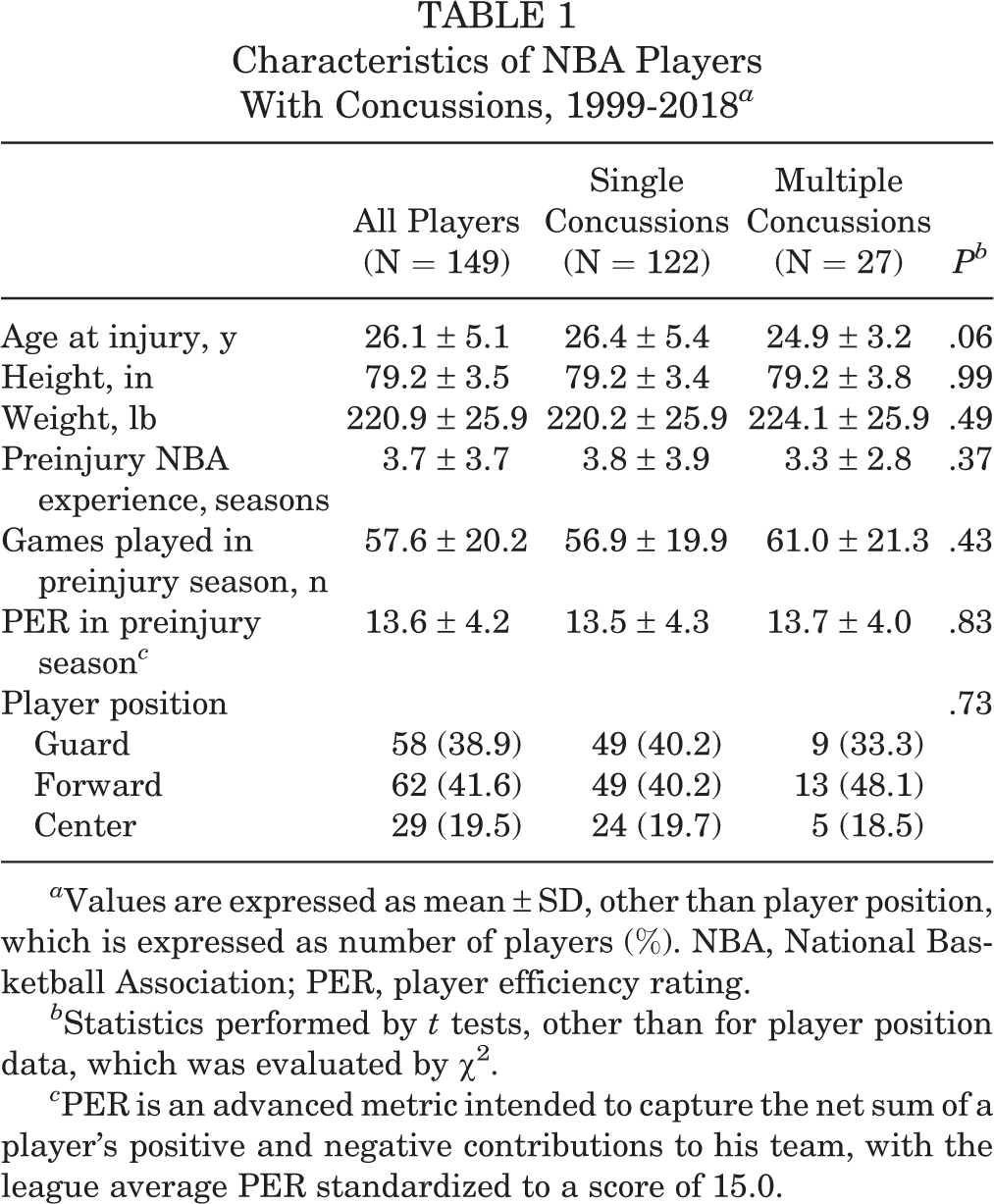
a Values are expressed as mean ± SD, other than player position, which is expressed as number of players (%). NBA, National Basketball Association; PER, player efficiency rating.
b Statistics performed by t tests, other than for player position data, which was evaluated by χ2.
c PER is an advanced metric intended to capture the net sum of a player’s positive and negative contributions to his team, with the league average PER standardized to a score of 15.0.
Summary data regarding concussion incidence and RTP are presented in Table 2. Several concussions occurred with other injuries (n = 6 fractures of the nose, orbit, jaw, or cheek bones; n = 2 neck injuries, including 1 herniated disc; n = 1 partially torn adductor muscle; n = 1 tailbone injury). These concussions were not included in the RTP analysis, as previously noted. Overall, the mean (±SD) incidence of concussions was 9.7 ± 7.3 occurrences per season. As an NBA season consists of 82 games, this equated to 11.8 ± 8.9 concussions per 100 games played. After the institution of the NBACP, there were significantly more concussive events recorded per season as compared with prior years (16.7 ± 7.5 vs 5.7 ± 2.8, P = .007). The greatest number of concussions were incurred in 2017-2018 (n = 29), the most recent year included in our analysis, and the fewest concussions were reported in 2002-2003 and 2003-2004 (n = 2 in both cases). All players were able to RTP following a first-time concussion, after missing a mean 7.7 ± 8.6 days and 3.5 ± 4.1 games. When stratified as before versus after adoption of the NBACP, RTP timing did not change significantly (P = .24 for games missed, P = .27 for days missed). (Table 2). Figure 3 displays the number of concussions incurred each year and the consequent number of days and games missed per injury during that season.
Incidence of Concussions and Return-to-Play Time a

a The overall study period encompasses the 1999-2000 to 2017-2018 seasons, and the NBACP was instituted ahead of the 2011-2012 season. Bolded P value represents statistically significant difference between pre- and post-NBACP (P < .05). IQR, interquartile range; NBACP, National Basketball Association concussion policy.
b Games and days missed are reported per instance of concussion.
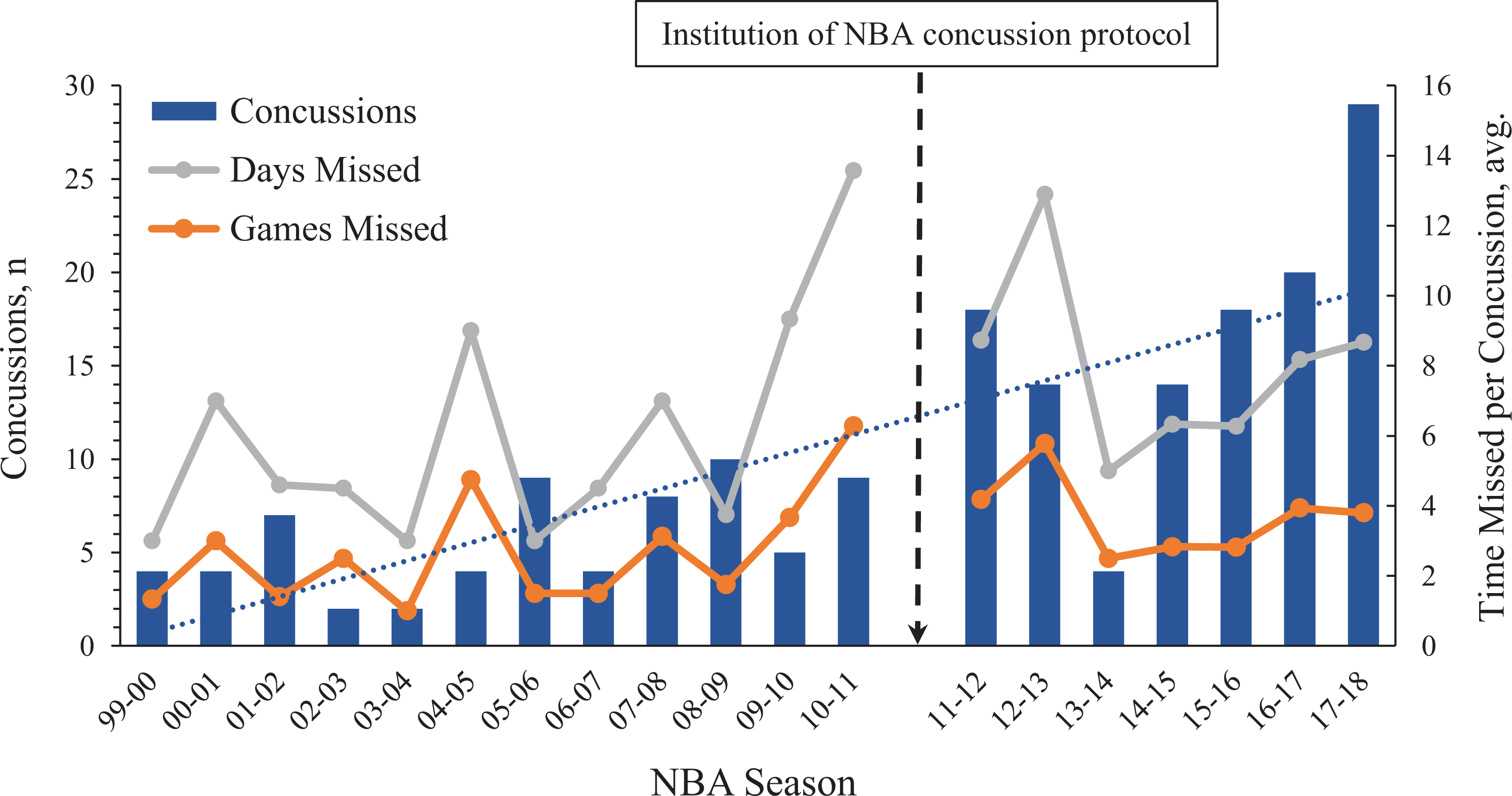
Number of concussions per season from 1999-2000 to 2017-2018 and consequent mean number of days and games missed per occurrence. The dotted line of best fit (R 2 = 0.6325) reflects the increase in concussion reporting across the study period.
Repeat Concussions
None of the evaluated demographic variables differed significantly between those athletes who experienced a single concussion and those who had multiple concussions (Table 1). Subgroup analysis of the 27 players (18.1%) who incurred multiple concussions revealed that 19 players had 2 concussions, 7 had 3 concussions, and a single player sustained 4 concussions, equating to 63 total occurrences including 36 repeats. The mean time between repeat concussions was 855.0 ± 897.6 days (median, 528.0; interquartile range, 254.0-1366.8 days). There were 4 instances of recurrence within a single season prior to the NBACP and 5 such instances following adoption of the NBACP (Fisher exact test, P = .26). Figure 4 presents the concussion-free time interval of NBA players following a first concussion. There was no significant difference in concussion-free time before the implementation of the NBACP versus after (log-rank test, P = .29).
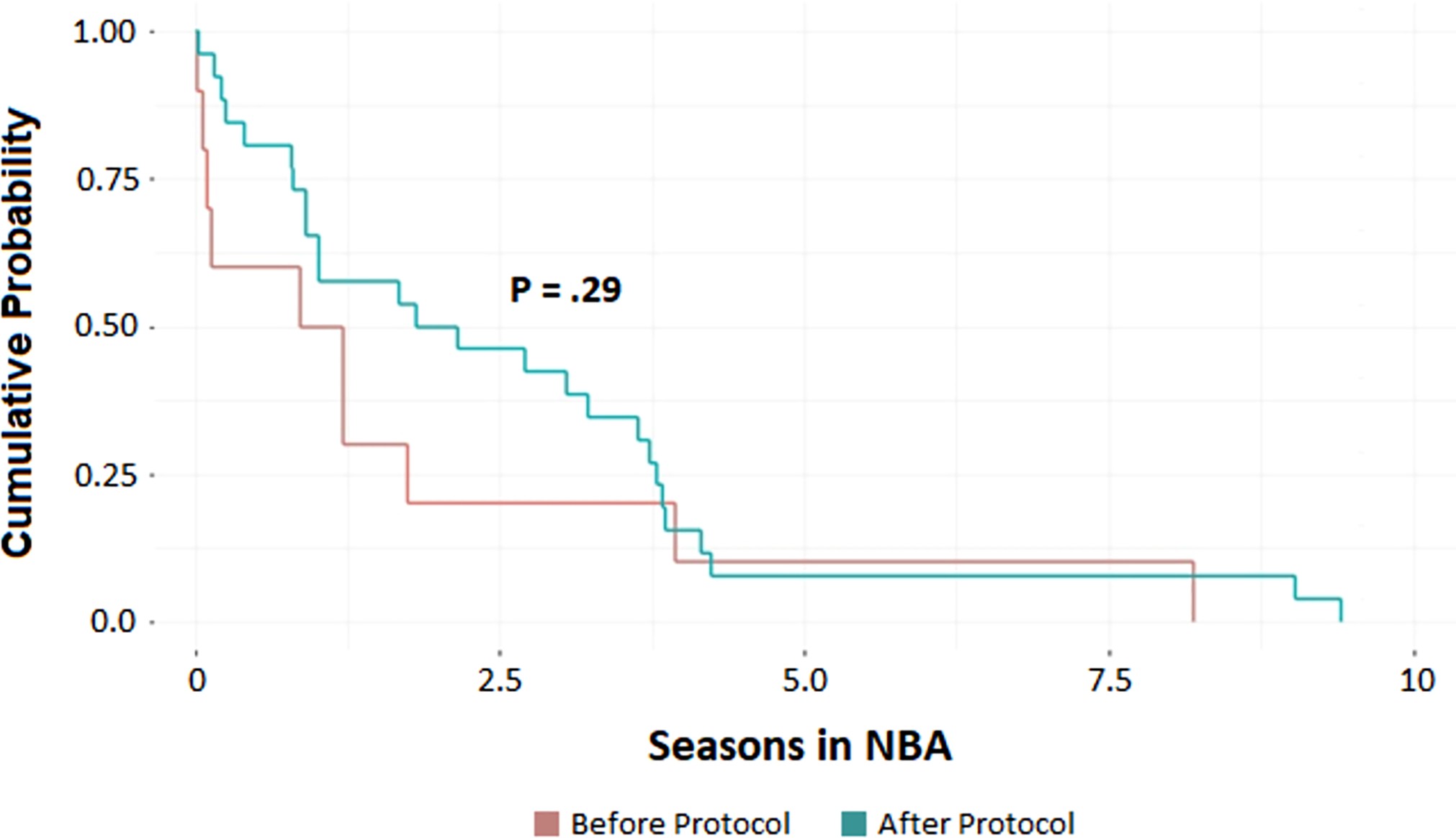
Kaplan-Meier analysis of repeat concussions, stratified by occurrences before vs after institution of the NBA concussion policy. NBA, National Basketball Association.
Player Performance and Game Availability
Results of in-game player performance and game availability analysis are displayed in Table 3. Mean GS per minute was not statistically different when compared from 5 games before versus 5 games after concussion (P = .65). When this interval was expanded to 10 games before and after concussion, differences remained nonsignificant (P = .53). Minutes played per game did not differ significantly between 5 games before versus 5 games after concussion (P = .62) or between 10 games before versus 10 games after concussion (P = .69).
Effect of Concussion on Player Performance and Game Availability a

a All values are expressed as mean ± SD.
With regard to matched-control analysis of player performance and availability, there were no significant differences in demographic variables between the concussed group and the nonconcussed, matched-control group (Table 4). The index time point utilized in these comparisons was defined as the date of injury for the player who was concussed. When changes in mean GS per minute 5 games before and after the index game were compared, there was no significant difference between the groups (concussed, –0.01 ± 0.28; controls, 0.05 ± 0.64; P = .38). This was also true when the time frame was expanded to 10 games before versus after concussion (concussed, 0.02 ± 0.15; controls, 0.01 ± 0.14; P = .59). Changes in minutes played per game were also analyzed at 5 games before versus after concussion (concussed, –0.23 ± 6.22; controls, –0.19 ± 6.03 min/game; P = .40), as well as 10 games before versus after concussion (concussed, 0.17 ± 6.11; controls, –0.17 ± 5.55 min/game; P = .40). Differences were not significant at either time interval.
Characteristics of Players Included in Matched Control Analysis a

a Values are expressed as mean ± SD, other than player position, which is expressed as number of players (%). NBA, National Basketball Association.
b The index time point is defined as the date of injury for the player with a concussion.
Discussion
The present investigation has several important findings. First, the incidence of concussions over the past 18 years is approximately 10 occurrences per season, and there has been a significant increase in frequency, from 6 to 17 concussions per season, following the institution of a league-wide concussion protocol. The amount of time missed following injury has remained relatively constant, at 7 to 8 days missed per concussion (equating to 3 or 4 games). Finally, we found that game score per minute and minutes played per game were not significantly affected by concussion following RTP.
The NBACP was designed to maximize the health and safety of players by utilizing a multifaceted approach: player and team education, baseline testing, acute evaluation and management, and stepwise RTP. 38 We found the incidence of concussions from 1999 to 2018 to be 9.7 ± 7.3 occurrences per year, with approximately 11 more concussions per season reported after enactment of the NBACP. In a prior study of NBA athletes, Drakos et al 10 reported a total of 73 concussions from 1988 to 2005, with a mean of approximately 4.3 concussions per season. More recently, in a study of 134 NBA players between 2006 and 2014, Padaki et al 45 found that the incidence of concussion over that time span was 14.9 occurrences per season. These results, in corroboration with the findings of the present investigation, highlight the current increase in the recognition and diagnosis of concussions in NBA players as compared with previous years.
Increase in concussion reporting after policy implementation has also been reported in other professional sports leagues. In a descriptive epidemiologic study of concussion and MLB players from 2005 to 2016, Sabesan et al 50 found that the reporting of concussions nearly doubled, with 112 players placed on the disabled list after the implementation of a policy requiring reevaluation of an athlete’s concussion status at 7 days, as opposed to 31 players placed on the disabled list in the years prior to the rule change. Additionally, Kuhn and Solomon 26 conducted a systematic review of studies investigating concussion incidence in the NHL and demonstrated analogous results following the league’s 1997 implementation of a standardized concussion program. The authors showed that the incidence of concussions from 1986 to 1997 ranged from 0.417 to 1.266 occurrences per 100 games, as reported by studies included in their review. They also found that this range increased dramatically to 2.073 to 4.878 in the following 5-year span. Moreover, Nathanson et al 37 described an increasing concussion rate among NFL tight ends from 2002-2007 to 2012-2014 and similarly acknowledged that this finding may be a result of improved concussion recognition and reporting secondary to a standardized protocol.
The etiology of the presently observed increase in concussion reporting in the NBA is likely due to several factors. Mandated preseason education facilitates proper recognition of concussive symptoms and encourages appropriate disclosure of symptoms to medical officials. Furthermore, the NBACP called for the standardized use of the Sport Concussion Assessment Tool to quantify athlete improvement. 12 Each athlete undergoes baseline preseason tests, and newly injured players undergo testing as well. This allows for functional comparisons with baseline status for newly injured players, which can be useful in confirming the diagnosis of concussion and can aid in management. More accurate injury reporting and established protocols for evaluation ensure that players promptly receive protective medical treatment when indicated. Overall, the standardization of diagnosis, treatment, and RTP protocols has likely improved recognition of concussive events and player safety in the professional realm.
Although there are similar surveillance programs in place to identify sport-related concussions in American collegiate basketball players, 54,57 these resources may not always be available to medical professionals or team officials at lower levels of competition. Indeed, Pierpoint et al 47 recently found that basketball-related concussion reporting was significantly greater at high schools with full-time certified athletic trainers than at those without (risk ratio, 4.50; 95% CI, 1.43-14.16). The authors also found that nonconcussion injury patterns were similar between groups. This suggests that basketball-related concussion may be particularly difficult to diagnose without proper resources and training when compared with other injuries. Therefore, it is paramount to disseminate information regarding recognition and management of concussions to medical providers and team officials at all levels. Efforts in concussion education should also target athletes themselves, as a positive correlation may exist between concussion knowledge and intent to report concussive symptoms among high school athletes. 51
When analyzing RTP following a concussive event, our study found that RTP time remained consistent throughout the study period (3.5 games) and was not affected by the NBACP (3.0 games before vs 3.9 games after). Additionally, Kaplan-Meier analysis showed no significant difference between recurrence-free time interval before and after the NBACP was enacted. The current NBACP does not detail a mandatory amount of time to be sat out after a concussion, and it would not be expected to change RTP timing. As mentioned previously, only the MLB has such a policy, in which the minimum postconcussion RTP time is 7 days. 7 Interestingly, the prior study by Padaki et al 45 found that the mean number of games missed after a concussion from 2006 to 2010 was 1.6, as opposed to 5.0 games missed from 2011 to 2014 following the institution of the NBACP. The authors also found a nonsignificant decrease in repeat concussions and concussive symptoms after the implementation of NBACP (7 in 2006-2010 to 1 from 2011-2014, P = .11). The discrepancy between the prior study and our results can be attributed to our increased sample size and evaluation period, as we examined 11 seasons after the NBACP whereas Padaki et al 45 examined 4 NBA seasons after implementation. Indeed, the differences found in the prior study in terms of more games missed and lower rate of repeat concussions is likely due to the small sample size, as noted by the authors.
The present study found no differences in player performance and game availability before or after concussion, nor were there any differences when comparing players who were concussed with matched controls. In a retrospective study of 51 players with a concussion and 51 control players in the NBA from 2005 to 2015, Yengo-Kahn et al 55 evaluated player performance over the first 5 games following RTP. They reported no significant difference in any major statistical category (points, rebounds, assists, steals, blocks, turnovers), personal fouls, plus-minus rating, minutes played, team’s win percentage, or player impact estimate. Return to baseline performance following concussion has similarly been reported in professional athletes in the NFL 28,49,58 and NHL. 27
Conversely, a cohort study of 66 athletes who were concussed and 68 controls in the MLB between 2007 and 2013 found that batting average (.235 vs .266), on-base percentage (OBP; .294 vs .326), slugging percentage (.361 vs .423), and on-base plus slugging (.650 vs .749) were significantly lower in the concussed group versus matched controls in the 2 weeks after RTP, but this statistically significant decrement was no longer apparent at a longer time frame of 4 to 6 weeks. The authors attributed these changes to the residual effects of concussion on the neurocognitive domains required for successful batting, including visual reaction time and prediction of ball location at higher speeds than seen in other sports. However, only OBP and slugging percentage differences remained significant after controlling for confounders, and there were no significant differences between groups in the components of OBP alone and slugging percentage alone. 53 Therefore, baseball appears to follow the trend of unchanged postconcussive performance, as most of the observed changes appear to be the result of statistical artifact. The effects of a concussion on athlete performance are likely multifactorial. Prior studies in corroboration with the current investigation suggest that there is no long-term effect of a single concussion on game performance and that concussive events likely have a relatively short effect on a player’s ability to perform. This concept should be evaluated in future studies, although the evaluation of short-term player data may present the potential for bias owing to low numbers.
This study is not without limitations. Primary among these are concerns regarding the unavailability of a centralized concussions database for NBA athletes. As we were able to include only publicly reported injuries, the potential exists for inapt exclusion of some undisclosed concussions, which intrinsically affects subsequent analyses. Furthermore, given the poor quality of online reporting prior to the study period, we were unable to verify concussion history for those players who began their careers before 1999. Our data did not capture the severity of each concussion, nor did it include information on other health issues or underlying mental health disorders. However, our methods have been used in several previous studies with publicly available data, allowing for comparisons. 20,32,33 Additionally, our analysis of pre- versus postconcussion performance and game availability did not account for extrinsic factors, such as changes in these parameters based on coaching strategy, roster variability, or opposing team. Last, although the controls and concussed players were matched by several parameters, there was a greater collection period for controls because they do not miss time attributed to injury, which can present as a potential bias. Nonetheless, this investigation provides an important update regarding concussions over the past 18 NBA seasons. It appears that while the frequency of reported concussion has increased after the institution of the NBACP, time to RTP has remained constant, and the protocol has not affected the incidence of repeat occurrences. Future research endeavors in the NBA and other major American sports leagues are necessary to inform policy changes that can further improve player health and safety.
Conclusion
Concussion incidence in NBA players has been approximately 17 instances per season since the 2011 institution of a league-wide concussion policy. The number of reported concussions significantly increased following the policy, in line with trends seen in other professional sports leagues. Players have retained a high rate of RTP after 3 to 4 missed games. Player performance and availability are not affected by sustaining a concussion following successful RTP.
Footnotes
One or more of the authors has declared the following potential conflict of interest or source of funding: B.F. has received consulting fees from Stryker and Sonoma Orthopedics; has stock/stock options in Jace Medical; receives research support from Arthrex, Smith & Nephew, and Stryker; receives publishing royalties from Elsevier; has received honoraria from Arthrosurface; and has received educational support from Medwest Associates. AOSSM checks author disclosures against the Open Payments Database (OPD). AOSSM has not conducted an independent investigation on the OPD and disclaims any liability or responsibility relating thereto.
Ethical approval was not sought for the present study.