




Abstract
Background:
Understanding the position-specific musculoskeletal forces placed on the body of athletes facilitates treatment, prevention, and return-to-play decisions. While position-specific injuries are well documented in most major sports, little is known about the epidemiology of position-specific injuries in National Association for Stock Car Automobile Racing (NASCAR) drivers and pit crew.
Purpose:
To investigate position-specific upper extremity injuries in NASCAR drivers and pit crew members.
Study Design:
Descriptive epidemiological study.
Methods:
A retrospective chart review was performed to assess position-specific injuries in NASCAR drivers and pit crew members. Included in the study were patients seen by a single institution between July 2003 and October 2014 with upper extremity injuries from race-related NASCAR events or practices. Charts were reviewed to identify the diagnosis, mechanism of injury, and position of each patient.
Results:
A total of 226 NASCAR team members were treated between July 2003 and October 2014. Of these, 118 injuries (52%) occurred during NASCAR racing events or practices. The majority of these injuries occurred in NASCAR changers (42%), followed by injuries in drivers (16%), carriers (14%), jack men (11%), fuel men (9%), and utility men (8%). The majority of the pit crew positions are at risk for epicondylitis, while drivers are most likely to experience neuropathies, such as hand-arm vibration syndrome. The changer sustains the most hand-related injuries (42%) on the pit crew team, while carriers commonly sustain injuries to their digits (29%).
Conclusion:
Orthopaedic injuries in NASCAR vary between positions. Injuries in NASCAR drivers and pit crew members are a consequence of the distinctive forces associated with each position throughout the course of the racing season. Understanding these forces and position-associated injuries is important for preventive measures and facilitates diagnosis and return-to-play decisions so that each team can function at its maximal efficiency.
Despite being one of the most popular sports in the United States, averaging 5.8 million viewers per race, National Association for Stock Car Automobile Racing (NASCAR) positions are almost completely unknown except to the most avid of fans. 12,15 In comparison, most Americans and physicians are familiar with the positions of the other professional sports such as baseball, football, soccer, and basketball. For physicians, understanding the musculoskeletal forces placed on the bodies of each position in the other major sports allows treatment, prevention, and return-to-play decisions to be made accurately. According to PubMed, there have been 3953 studies on football injuries, 2699 studies on soccer injuries, 1271 studies on baseball injuries, and 1111 studies on basketball injuries. Despite this vast number of publications in the medical literature in reference to the other major sports, only 5 publications to date exist on injuries in motors sports, none of which have had an upper extremity epidemiology focus. 1,2,10,11,13
NASCAR teams are composed of a driver and pit crew (and technically also crew chiefs and spotters). Crew chiefs are like head coaches making global strategy decisions whereas spotters can be thought of as coordinators that report to the crew chief (head coach) and drivers (quarterback of the team). Most physicians can generally understand the forces experienced by the drivers; however, there are subtle differences in grip on the wheel that can be important, particularly with respect to hand and upper extremity injuries.
The pit crew is composed of the following 7 positions: front and rear changers, front and rear carriers, jack man, fuel man, and a utility man. It is extremely rare for a crew member to change positions. These 7 members can refuel the car and change 4 tires in 12 to 15 seconds and commonly sustain musculoskeletal injuries. Changers remove and replace the lug nuts on the tires using an air-powered impact wrench designed to deliver high torque output with minimal effort, exerting 847 N·m of torque, and pull the old tires from the car. Carriers bring new 70-lb tires over the wall and align them on the studs of the car. Carriers also make adjustment to the track bars and wedges. The jack man carries a 25-lb hydraulic jack to raise the sides of the car during tire changes. The fuel man carries the 95-lb fuel cans on his shoulder to refill the car using 2 cans for a full fill. The seventh utility man performs odd jobs, such as windshield and grill cleaning, as well as repair work. This team of athletes trains 7 days per week for 10 months out of the year (February through November). Training includes strength/conditioning as well as position-specific skills training for several hours per day. The athletes undergo year-round random drug testing for performance-enhancing drugs.
There are 36 races occurring over a 10-month period annually. Races occur weekly from February through November and vary in length, with 5 to 10 pit stops per race. The pit crew performs approximately 73 unique maneuvers at each pit stop. With on-track passing often difficult given its aerodynamic realities, pit stop timing has become more important; if the average pit stop time increases by 0.3 seconds, the team will lose one-third of a mile over the course of the race. 3 Thus, teams have moved toward outfitting their crews with bigger, faster, stronger, and more agile personnel. 6 With the higher demands of the job come increased incidences of task-specific upper extremity injuries.
The purpose of this descriptive epidemiological study was to report position-specific injuries in NASCAR. NASCAR as a sport offers a unique opportunity for us to research as every team except 1 is located in our region. Our orthopaedic group serves as the official team physicians for roughly 30 of the 43 starting cars at each race. Of the other 13 cars per race, we see the overwhelming majority of their injuries as well but they do not have an official team physician.
Methods
A retrospective observational study, approved by our institutional review board, was conducted to assess position-specific injuries in NASCAR drivers and pit crew over the past 10 years. Charts were reviewed to identify diagnosis, mechanism of injury, and position of the subjects. Inclusion criteria were upper extremity injuries in NASCAR during racing events or practice. Exclusions included non–race-related injuries and non-driver or –pit crew NASCAR employees, such as fabricators, mechanics, or crew chiefs.
Results
A total of 226 injuries were reported by NASCAR team members treated at our facility from July 2003 to October 2014. Among these, 108 were excluded: 19 patients were not members of the pit crew team and 89 patients reported a non–race-related injury. That left 118 injuries that occurred during NASCAR-related activities (Table 1).
Common NASCAR Injuries by Position a

a Data for each position are provided as number of patients/number of injuries. CMC, carpometacarpal; EPL, extensor pollicis longus; FCU, flexor carpi ulnaris; FDP, flexor digitorum profundus; FDS, flexor digitorum superficialis; LB, loose body; LF, long finger; MC, metacarpal; MCP, metacarpophalangeal; PIP, proximal interphalangeal; RCL, radial collateral ligament; SL, scapholunate ligament; SLAC, scapholunate advanced collapse; TFCC, triangular fibrocartilage complex tear; UCL ulnar collateral ligament.
The majority of injuries occurred to NASCAR changers (42%). Of these injuries, 26% were elbow tendinopathies such as lateral epicondylitis (10/49). Also commonly occurring in changers were triangular fibrocartilage complex (TFCC) tears (14%). Other unique injuries included bicep ruptures (2/49) and hook of hamate fractures (2/49).
Carriers sustained the second most injuries of NASCAR pit crew members (14%). Crush injuries were the most common injuries (29%), with tendinopathies of the upper extremity occurring second in frequency (23%). Similar to changers, carriers demonstrated a notable incidence of hamate hook fractures (2/17).
The fuel man had a higher prevalence of tendinopathies (55%), 3 of which went on to develop complications from these conditions: 1 triceps and 2 biceps ruptures. Similar to other pit crew members, the jack man and utility man demonstrated a predominance of tendinopathies (38% and 30%, respectively).
Finally, drivers sustained certain injuries unique to their position. Neuropathies occurred in 26% of drivers’ injuries, including carpal/cubital tunnel syndrome and digital neuromas. Interestingly, the site of the digital neuroma was always the side of the digit in contact with the spoke of the steering wheel. The most commonly encountered injuries in NASCAR drivers were upper extremity fractures (32%), primarily distal radius fractures and scaphoid fractures.
Discussion
Changer
The changer sustains the most hand-related injuries (42%) on the pit crew team. They remove and replace the lug nuts and pull the old tires and replace them when needed during the course of the race. They can replace 5 lug nuts in approximately 1 second. Teams go through as many as 12 sets of tires during a single race and 38 races per season. This high-demand job subjects them to repetitive pronation/supination and eccentric loads. Of the changers who sustained injuries, 30% were tendinopathies, with lateral/medial epicondylitis being the most common (80%).
Aside from chronic overuse injuries, acute injuries are not uncommon in changers. Rotational forces will be exerted to the ulnar side of the wrist causing TFCC tears (seen in 7/49) (Figure 1). Furthermore, the torque can result in direct impact to the palm resulting in hook of hamate fractures (3/49). Similar direct blows to the palm in other sports result in hamate hook fractures such as a check-swing in baseball and a “fat” shot in golf. 4 Last, the changer is expected to change 2 tires (front/rear changer) in a limited amount of time. With these inadvertent time constraints, crush injuries are inevitable. This mechanism caused 20% of injuries, including mallet finger, nail bed injury, and distal phalanx fractures.
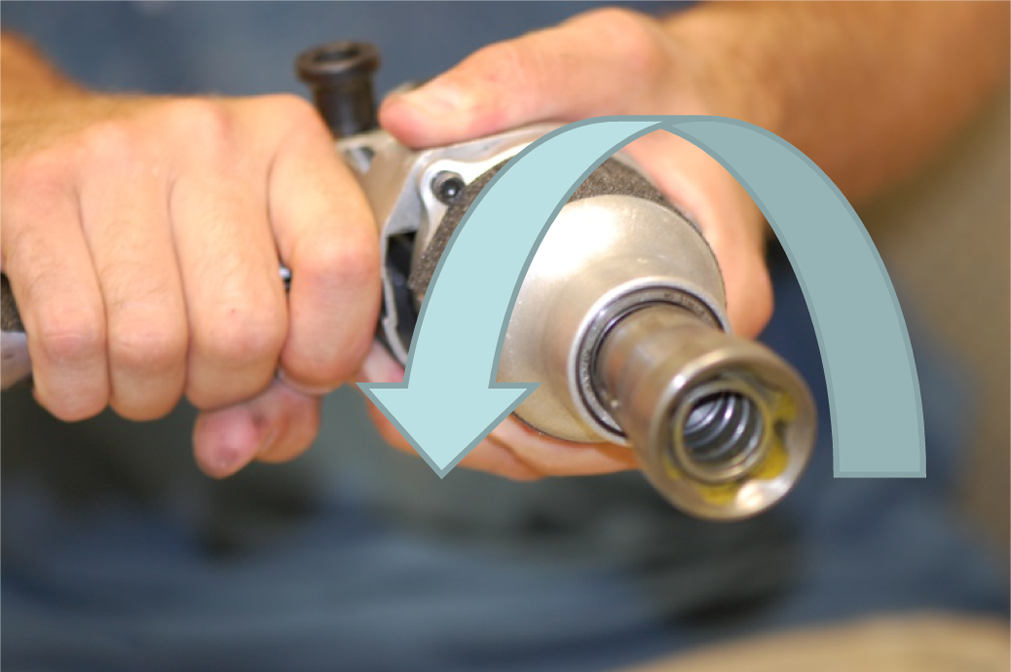
Air-powered impact wrench vector of force exerted on NASCAR changers causing torsional wrist injuries.
Carrier
Carriers bring new tires over the wall and align them on the car in addition to making adjustments to track bars and wedges. Carriers commonly sustain injuries to their digits (29%). Crush injuries occur due to the nature of the job, such as impaction required during aligning the tires onto the car in a short period of time. Also impaction of the palm to the tire explains the higher prevalence of hamate hook fractures (12%). 4
The average racecar tire weighs 70 lb, and placement of 2 new tires and removal of 2 old tires is required at each pit stop by the carrier. This combination of load and repetition makes tendinopathies a predictable problem in this population.
Fuel Man
Although the fuel man’s task seems simple at first glance, when one considers their duty in detail it is rather daunting. The fuel man empties two 12-gallon cans that weigh 95 lb each in 10 seconds at each pit stop. The position requires speed and strength, thus recruitment of ex–National Football League lineman/linebackers has become common practice. 6 Over the course of a NASCAR season they are subject to eccentric loads resulting in biceps and triceps ruptures (3/10). The majority of their injuries are tendinopathies of the elbow/wrist, representing 50% of their injuries.
Jack Man
Similar to the other positions on the crew the jack man requires strength and speed. The jack man operates a 35-lb hydraulic jack to raise/lower the car for tire changes. He must maneuver the jack from one side to the other and precisely raise/lower the car. If not coordinated exactly, the outcome may result in a loose lug nut or possible injury to a fellow member of the pit crew. Of the injuries seen, 38% are overuse tendinopathies including biceps, triceps, and epicondylitis.
Utility Man
The seventh utility man performs odd jobs such as windshield and grill cleaning along with repair work. Injuries seen in this group are secondary to the repetitive nature of their task resulting in injuries such as lateral epicondylitis (30%).
Driver
Drivers are the high-profile members of the NASCAR team. Prolonged exposure to vibration is thought to cause possible neuropathic-like conditions such as hand-arm vibration syndrome. 5,8,9,14 Additionally, the average length of a NASCAR race is approximately 4 hours; drivers are subject to sustained periods of gripping and thus propensity for carpal/cubital tunnel. Thus, it is not unusual to see neurologic sequelae in NASCAR drivers. Accordingly, 26% of the upper extremity complaints are neuropathic in nature such as carpal/cubital tunnel syndrome and neuromas. Specifically, neuromas develop along areas of pressure along the digits dependent on the driver’s grip technique.
Even the most novice NASCAR fan is aware crashes occur during competition. In 2012, a reported 102 accidents occurred during the NASCAR Sprint Cup Series. 7 As anticipated, these result in impact-related injuries. Crashes resulted in 32% of the injuries sustained in drivers, commonly causing fractures of the scaphoid and distal radius.
Impaction injuries to the carpus resulting in hamate hook fractures are alarmingly high for this small subset of individuals. Glove modifications including off-loader pads around pressure points may reduce the frequency of these unique fractures. A driver’s tendency to develop neuromas can be lessened with glove modification of padding pressure points depending on distinctive wear areas of old gloves.
All Positions
Similar to other sports, return to play is an important consideration. It is helpful for members to provide the physician with the equipment they commonly use. Position-specific splinting can be provided to accommodate their grip with the steering wheel, gas can, air-powered impact wrench, etc (Figure 2).

Position-specific casting to accommodate grip of air-powered impact wrench.
The previous literature on auto racing and injuries is scarce. The earliest published study was on short-track asphalt racing (not truly comparable to NASCAR) and found neck and knee injuries to be most common. 1 An interesting study examined the physical demands, injuries, and training in drivers interviewed for nearly an hour. Upper body strength was found to be the most important physical demand of drivers, and a positive correlation was found between standings in the series and length of time spent in resistance training. 2 The only other study of professional drivers was from Japan and examined “saloon” car drivers who experienced bruising and neck sprains most often. 13 No study has been published examining injuries in NASCAR drivers or pit crew members to date.
Having accumulated these data over the past several years, we have been able to begin making modifications to the equipment and training in the sport to attempt to decrease the number of injuries. A few examples include putting changers and carriers on a year-round tennis elbow stretching and strengthening protocol. While we have not been measuring compliance, we have noted a decrease in the number of cases since starting this protocol in 2013 (7 cases in 2012, 2 cases in 2013, 4 cases in 2014). Also, we have made some modifications for gloves in drivers to address early neuroma formations. We are presently investigating other modifications as well.
Conclusion
Our study found that upper extremity injuries are common in NASCAR. These include both traumatic and overuse injuries. The injuries that occur are somewhat position-specific given the unique physical demands of each position. Our study was unable to calculate the true incidence of injuries in NASCAR athletes, and further investigation is warranted. Preventative measures are being implemented, and further monitoring of injuries will evaluate their impact on reducing injuries.
Footnotes
Acknowledgment
The authors thank the staff of OrthoCarolina Research Institute for their assistance in study coordination and editorial assistance.
One or more of the authors has declared the following potential conflict of interest or source of funding: R.G.G. is a paid speaker for Auxillium, Biomet, and Smith & Nephew; receives royalties from Biomet; and is a paid consultant for Biomet and BME.