




Abstract
Transactional and intergenerational sexual relationships, often termed “sugar daddy-marandza” dynamics, are a key driver of HIV among adolescent girls and young women (AGYW) in sub-Saharan Africa (SSA). This narrative review synthesizes evidence from 29 studies across the region, using the term “marandza"—originating in Mozambique—as an illustrative lens to examine a region-wide phenomenon. The review confirms these relationships consistently increase HIV vulnerability due to power imbalances, economic dependency, and patriarchal norms. Poverty, consumerism, and peer pressure propel AGYW into these partnerships, which are characterized by low condom use and limited negotiation power. The findings demonstrate that the issue is rooted in structural inequalities rather than cultural specificity. Digital platforms are increasingly facilitating these transactional encounters. Effective response requires multisectoral, gender-transformative interventions focusing on economic empowerment, social norm change with men and boys, and youth-friendly health services. Future research should evaluate integrated program models and the evolving role of digital technology in reshaping these relationships.
Keywords
Introduction
Transactional and intergenerational sexual relationships, often involving older, financially secure individuals (“sugar daddies/mommies”) and younger partners, represent a critical dynamic influencing HIV risk among adolescent girls and young women (AGYW) aged 15–24 across sub-Saharan Africa (SSA).1–3 Transactional “sugar” relationships are a common form of sexual exchange, rooted in intersecting socio-behavioral, cultural, and economic factors such as poverty, consumerist aspirations, and peer influence.4,5 These relationships, termed “sugar daddy-marandza” dynamics in Mozambique, are characterized by marked age and economic asymmetries that reinforce unequal power relations and shape sexual health outcomes. The term “marandza,” originating in Mozambique, is used throughout this review as an illustrative lens to examine a region-wide phenomenon.
Evidence consistently demonstrates that HIV infection and AIDS-related mortality disproportionately affect AGYW in SSA. Studies consistently link transactional and intergenerational relationships to unsafe sexual practices, including inconsistent condom use, thereby increasing young women's vulnerability to HIV and other adverse health outcomes.6,7 In the region, adolescent girls and young women aged 15 to 24 account for 25% of new HIV infections despite representing only 10% of the population, and are 2 to 3 times more likely to be living with HIV than their male peers. 8 In Mozambique, HIV prevalence among young women (15-24) is 4.5 times higher than among young men. 9
While the association between transactional sex and HIV risk is well established, the specific mechanisms sustaining these practices remain less understood. Central to this gap is the interplay of gendered power imbalances, structural economic inequalities, and evolving social norms in the digital era. This review draws on Social Exchange Theory, 10 which posits that relationships are maintained through the exchange of resources and that power imbalances arise when one partner has greater access to valued resources. In sugar relationships, the partner with fewer economic resources (typically the younger woman) holds less bargaining power in sexual negotiations, limiting her ability to negotiate condom use or refuse unwanted sexual acts. Moreover, many young women perceive or rationalize these partnerships as romantic rather than transactional, complicating recognition of the associated risks and limiting the effectiveness of existing interventions.11,12 Without a more nuanced, context-specific understanding, public health responses risk oversimplification and fail to address the drivers underpinning these relationships.
This literature review is grounded in the urgent need to reduce AGYW's heightened vulnerability to HIV. As transactional and intergenerational sex remains a key driver of the epidemic, synthesizing available knowledge is critical to designing more effective, targeted interventions. Understanding the multifaceted motivations for participation, ranging from economic survival to the pursuit of social status, is essential for developing strategies that address root causes rather than merely mitigating symptoms.
Accordingly, this narrative review aims to: (1) synthesize evidence on the relationship between sugar daddy-marandza dynamics and HIV vulnerability among AGYW, and (2) analyze the structural, cultural, and individual factors that sustain these relationships and shape HIV vulnerability. By consolidating current evidence through a systematic appraisal of the literature, the review seeks to clarify established findings and outline priorities for further empirical research.
Methods
Study Design
This study employed a narrative literature review design, guided by established standards for rigor in narrative reviews. 13 A narrative review was selected for its flexibility in synthesizing diverse study types—including qualitative, quantitative, and mixed-methods research—to explore a complex, context-dependent social phenomenon. This approach allows for the integration of evidence across methodological traditions, which is essential for understanding both the epidemiological patterns and the lived experiences shaping sugar relationships. The approach was exploratory and aimed to consolidate existing knowledge rather than generate new primary data. The review considered published studies conducted in SSA that examined transactional and intergenerational sexual relationships and their association with HIV risk. Mozambique is used as an illustrative case study due to its high HIV burden among AGYW and its specific local terminology, with findings contextualized within the broader SSA region where similar dynamics operate under different names (eg, “blessers” in South Africa, “Big Dhara” in Zimbabwe).
Eligibility Criteria
The units of analysis in this review were scholarly articles, reports, and reviews addressing transactional and intergenerational sexual relationships in relation to HIV risk. Eligible sources included:
Peer-reviewed journal articles (quantitative, qualitative, or mixed-methods) Systematic and narrative reviews Reports and grey literature from recognized organizations (eg, WHO, UNAIDS, national statistics institutes, reputable research institutions). These sources were included because they often contain crucial national-level data, programmatic evaluations, and gray literature that provide context not captured in peer-reviewed publications.
No restrictions were placed on publication date. Studies were included if they:
(i) focused on sub-Saharan African settings;
(ii) examined transactional and/or intergenerational sexual relationships;
(iii) assessed links with HIV risk or related sexual health outcomes; and
(iv) had AGYW aged 15 to 24 as their primary population of interest, though studies including other populations were considered if they provided relevant comparative or contextual data.
Studies that did not address these themes or were outside the regional scope were excluded.
Data Sources and Search Strategy
Data were collected from major electronic databases, including PubMed, Medline, Embase, JSTOR, PsycINFO, the Cochrane Library, and Google Scholar. A systematic search was conducted between January 2000 and December 2024 using predefined search strings and keywords such as: “transactional sex,” “intergenerational relationships,” “sugar daddies,” “sugar mommies,” “blessers,” “adolescent girls,” “young women,” “gender,” “HIV,” and “sub-Saharan Africa.” Boolean operators (AND, OR) were used to combine search terms. Reference lists of included studies were also handsearched to identify additional relevant sources. A PRISMA-style flow diagram documenting the search and selection process was developed and is available as the Supplemental Material.
Study Selection Process
Two reviewers (first and second authors) independently screened titles and abstracts against eligibility criteria. Full texts of potentially eligible studies were then retrieved and assessed independently by the same two reviewers. Disagreements were resolved through consensus or consultation with a third reviewer. Hand-searching of reference lists continued until no new relevant studies were identified, indicating saturation.
Data Extraction
Data were extracted independently by two reviewers (first and second authors) using a standardized data extraction form (see the Supplemental Material). Extracted information included: author(s), year of publication, country, study design, population characteristics, sample size, key findings, and reported associations with HIV risk. A third reviewer verified a random 20% sample for accuracy. Inter-rater reliability for the extraction of data between transactional relationships and HIV outcomes was assessed using Cohen's kappa (κ = 0.89), indicating strong agreement.
Data Analysis and Synthesis
A thematic synthesis approach was applied. Thematic analysis was conducted by two reviewers who independently coded the extracted data using NVivo software. A codebook (see the Supplemental Material) was developed inductively from themes emerging in the literature and deductively from the research questions. Codes were grouped into categories, which were then reviewed and refined into final themes through team discussion. To ensure accuracy and minimize bias, findings were triangulated across multiple studies and methodological approaches, with qualitative insights used to contextualize and explain quantitative patterns. Where available, statistical results from quantitative studies (eg, odds ratios, prevalence estimates, confidence intervals) were extracted and reported as published in the original sources. Analysis remained conceptual and narrative rather than meta-analytic, with the goal of critically appraising the evidence, highlighting established knowledge, and outlining research gaps.
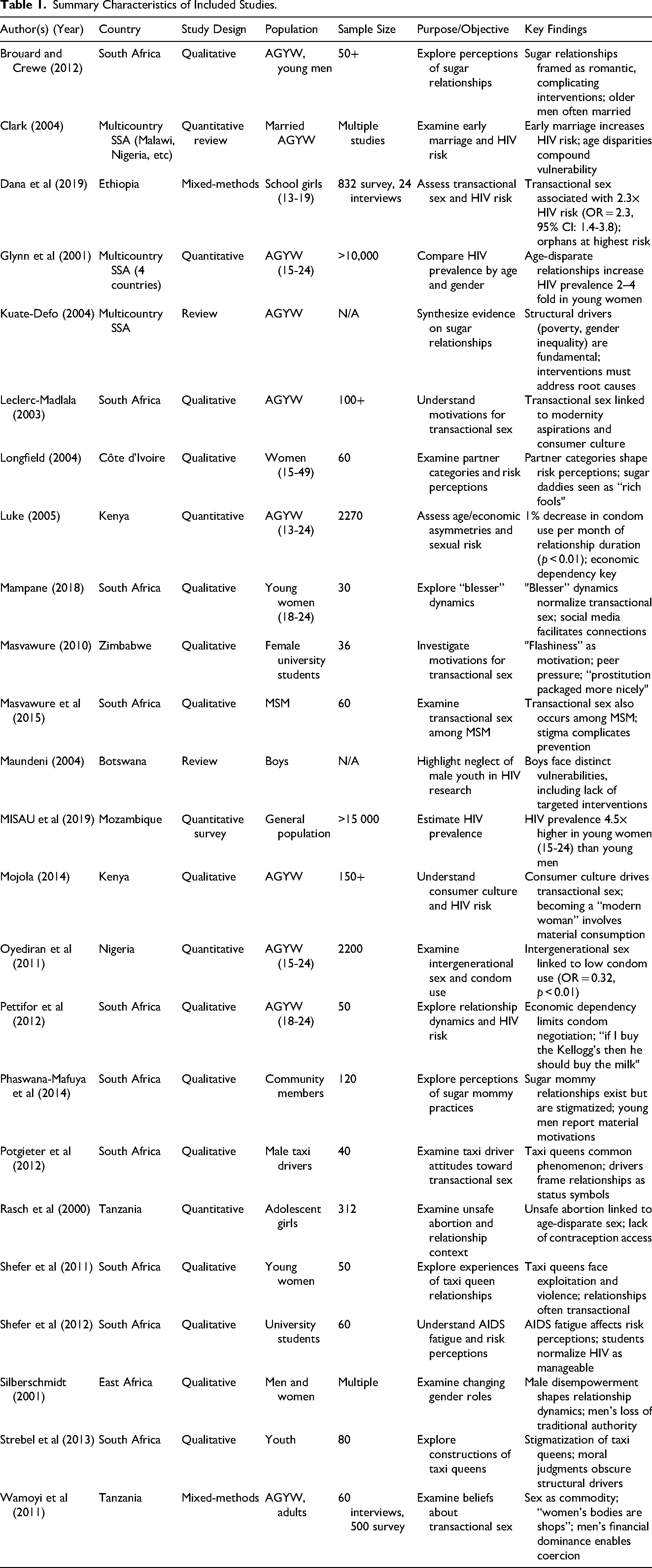
A total of 29 studies met the inclusion criteria and informed this review: 18 qualitative studies, 8 quantitative studies, and 3 mixed-methods studies (Table 1).
Summary Characteristics of Included Studies.
Quality Assurance and Reproducibility
To ensure comprehensiveness and reduce potential omissions, a broad search strategy was applied across multiple databases and complemented with manual reference checks. Only studies meeting explicit inclusion criteria were considered.
Ethical Compliance
As this study involved secondary analysis of published literature, no direct interaction with human or animal subjects occurred, and Institutional Review Board approval was not required. Ethical standards were upheld by accurately reporting, synthesizing, and citing all original sources, which themselves were assumed to have obtained the necessary approvals for their primary data collection.
Results
The results are organized thematically based on the thematic synthesis of the 29 included studies. Quantitative findings are integrated within each thematic section to provide a comprehensive picture of the evidence.
Key Characteristics and Terminology of Sugar Dynamics
Across the 29 included studies, sugar relationships consistently emerged as characterized by pronounced age and economic asymmetries between partners. Sugar daddies or sugar mommies are defined as older individuals who engage in sexual relationships with adolescents or young adults in exchange for financial or material support, including money, gifts, alcohol, or payment of educational expenses.1,6,12,14 These relationships, often framed as companionship, are characterized by structural asymmetries that undermine the younger partner's ability to negotiate safer sex. Beyond these structural inequalities, such arrangements are characterized by the absence of cohabitation. In many cases, the sugar daddy may provide housing support to guarantee private and respectable meeting spaces, while keeping the relationship discreet to protect their reputation. These older partners often hold positions of influence and are frequently married or involved in multiple concurrent relationships.15,16
Unlike conventional romantic relationships, which often aspire to long-term commitment and monogamy, sugar arrangements are typically short-term, nonexclusive, and “no-strings-attached."5,7,14 Partners may simultaneously engage in other sexual or emotional relationships, and while material exchange is often framed as affection, such encounters are rarely sustained without financial benefits. For many adolescent girls and young women, monetary or material advantage remains the primary motivation.5,7,14
Despite these transactional underpinnings, participants do not always identify as sex workers. Some emphasize chemistry and emotional connection, and a few hope such relationships might evolve into conventional partnerships or even marriage.11,12 Nevertheless, many young people themselves recognize the blurred boundaries between transactional sex and commercial sex work, often describing sugar relationships as “prostitution packaged more nicely." 5 In this sense, such arrangements can be understood as “pay-for-play” relationships, disguised under the language of romance and companionship.5,11
A striking finding across the literature is the variety of local terms used to describe these relationships, reflecting their widespread presence across SSA:
Despite variations in terminology, the underlying dynamics—economic dependency and age asymmetry—were strikingly comparable across contexts, suggesting the phenomenon is embedded within broader structural inequalities.
Cross-Country Patterns
The literature review addressed the research aim of analyzing the relationship between “sugar daddy-marandza” dynamics and HIV risk among AGYW. The synthesis revealed that these relationships—marked by pronounced age and economic asymmetries—were consistently associated with low condom use and heightened vulnerability to HIV infection.2,3,7,22–25 This association was documented across 24 of the 29 included studies (including qualitative, quantitative, and mixed-methods research), with quantitative studies reporting odds ratios ranging from 1.8 to 4.2 for HIV risk among AGYW engaged in transactional relationships.7,21
Findings from South Africa, Zimbabwe, Kenya, and Mozambique demonstrated similar dynamics. In South Africa, studies of “blesser” relationships documented how young women's economic dependency limited their ability to negotiate condom use.17,26 In Zimbabwe, research on “Big Dhara” relationships among university students highlighted peer pressure and consumerist aspirations as key drivers (these motivations are explored further in Section 3.3.1). In Kenya, Luke 6 found that condom use declined by 1% for each additional month of relationship duration, as greater familiarity fostered trust while eroding protection. In Mozambique, national survey data confirmed that young women faced a 4.5-fold higher HIV prevalence than young men, a disparity linked to age-disparate and transactional relationships. 9 Transactional and intergenerational sex was primarily driven by poverty, consumerist aspirations, and peer influence, which reinforced gendered power inequalities and limited women's capacity to negotiate safer sex.5–7
Drivers and Motivations
Drivers and Motivations for Young Women
Economic hardship, social aspirations, and peer pressure consistently emerge as drivers for young women's engagement in sugar relationships. Poverty alone does not fully explain engagement; rather, relative inequality, consumerist desires for “flashiness” and social visibility, and entrenched gender norms play decisive roles.5,12,27 Young women's motivations are multifaceted. Many seek financial security, educational support, and social status.4,12,25 For some, sugar relationships offer a pathway to a modern identity, allowing access to consumer goods, mobile phones, and fashionable clothing that confer social prestige among peers.4,5 “Flashiness"—the desire to display material wealth—was a primary motivator, driven by peer pressure and consumerist aspirations. A participant in Masvawure's 5 study explained: “I just need to be flashy on campus. I need to look good, have the latest phone, and wear nice clothes. That's what matters.”
For others, however, engagement is driven by desperate poverty and survival. A study from Tanzania found that some young women entered sugar relationships to afford basic necessities such as food and school fees, with one participant stating, “If I don't get money from him, I will not eat today.”
While young men can also be involved in transactional relationships (often with older women, a dynamic noted in South African studies), the disproportionate burden of HIV among AGYW justifies the primary emphasis on female youth throughout this review.
Motivations for Older Partners (Sugar Daddies/Mommies)
Older partners pursue sugar relationships for distinct reasons. Male sugar daddies often seek sexual gratification, companionship, and status reinforcement.4,12 For many, having a younger partner serves as a symbol of masculinity and social standing. In South Africa, research on “blessers” found that older men often framed their relationships with young women as a way to reclaim youth and status in the context of economic success. In Kenya, qualitative studies revealed that sugar daddies frequently described their younger partners as “trophies” that signaled wealth and virility to their male peers. A participant in Wamoyi et al's 14 Tanzanian study noted: “Having a young girlfriend shows that you are still strong and wealthy. It gives you respect among other men.”
Sugar mommy dynamics, though less frequently studied, reveal that older women sometimes engage with younger men for sexual satisfaction, dominance, or companionship. In South Africa, young men involved with sugar mommies reported motivations such as material gain (eg, cars, phones, rent payment), sexual learning, and peer prestige. However, the disproportionate burden of HIV among AGYW justifies the primary emphasis on female youth throughout this review.
Gendered Power Dynamics in Partner Selection and Negotiation
Young women's choice of older partners is frequently pragmatic rather than preferential. Material benefits usually outweigh sexual pleasure, and some develop strategies to avoid intercourse, such as pretending to be menstruating.6,14 At the same time, many maintain concurrent relationships with peers, where intimacy and sexual satisfaction are more central, yet this dual partnering heightens HIV risk through concurrency.6,14 Even when affection is acknowledged, most girls state they would not sustain these relationships without financial support: a young woman in Wamoyi et al's Tanzanian study explained: “no one is loved without money; it is seen as a business." 14 In this way, sex is framed as a commodity, while refusal to provide it for free is linked to self-respect. Men's financial dominance limits women's ability to negotiate condom use, reinforcing asymmetrical power relations. 1 From the perspective of Social Exchange Theory, 10 the partner less dependent on the relationship holds more bargaining power; in sugar arrangements, this imbalance consistently disadvantages young women.
Studies show that young women often view attractiveness as a form of “erotic capital,” consciously used to access wealth and social mobility through relationships with older men.14,28 Men, in turn, value these partnerships as symbols of status, seeking “trophy wives” or “arm candy.” While men frame transactional sex as reinforcing masculinity, some young women invert this logic, perceiving themselves as “lucky” to have been born women, able to use their sexuality for both pleasure and material gain. In this framing, they even mock men as “stupid” for paying for “goods” they cannot ultimately own.14,29
These relationship dynamics are reinforced by broader economic gender disparities across SSA, where women have lower rates of formal employment, land ownership, and access to credit compared to men. This structural marginalization increases young women's economic dependency on male partners even before entering sugar relationships, amplifying power imbalances.
HIV and Other Health Risks
Evidence across SSA confirms that sugar relationships are associated with high-risk sexual practices. Condom resistance is common among older male partners, who often justify nonuse by citing reduced pleasure or distrust, and may employ coercive tactics including alcohol provision to lower the inhibitions of young women.6,14 Multiple concurrent partnerships further amplify risk, as both partners may have other sexual relationships that create transmission networks.1,6 Luke further demonstrated that condom use declines as relationships progress—a 1% decrease in condom use for every additional month of relationship duration—as greater familiarity fostered trust while eroding protection, paradoxically leaving “romantic” sugar relationships riskier than commercial sex work, where condom use is often enforced. 6
Biological vulnerabilities compound these behavioral risks. Adolescent girls’ immature reproductive systems increase susceptibility to HIV infection, and older men's higher HIV prevalence magnifies the threat. 8 Studies also highlight unintended pregnancies and unsafe abortions as frequent outcomes of these relationships.12,30,31 In Tanzania, Rasch et al 30 found that adolescent girls seeking illegal abortions frequently cited age-disparate relationships as the context for their pregnancies, highlighting the limited reproductive autonomy of young women in these arrangements.
Beyond HIV, studies document additional health consequences. Research from Kenya and South Africa found elevated rates of other sexually transmitted infections (including chlamydia and syphilis) among AGYW in sugar relationships compared to those in age-matched partnerships. Repeated unprotected intercourse with older partners was associated with reproductive tract trauma, including vaginal tears and pelvic inflammatory disease. Several qualitative studies also noted psychological consequences, including anxiety, depression, and low self-esteem among young women who felt trapped in exploitative relationships but dependent on the material support.
Role of Digital Platforms
Emerging evidence suggests that digital platforms and social media are increasingly facilitating sugar relationships across sub-Saharan Africa. Applications such as WhatsApp, Instagram, and Facebook enable discreet communication between older partners and younger women, broaden the geographic reach of potential partners, and create new avenues for transactional encounters.11,17,19 Young women report using these platforms to showcase aspirational lifestyles, which in turn attracts potential benefactors. However, digital platforms also create new vulnerabilities, including exposure to online coercion, privacy violations, and normalized perceptions of transactional relationships.11,20
Discussion
This review demonstrates that transactional and intergenerational sexual relationships, commonly described as “sugar daddy-marandza” dynamics in parts of sub-Saharan Africa, are a consistent and significant driver of HIV vulnerability among AGYW across the region. The evidence reviewed, drawn from 29 studies across multiple countries, points to the interplay of age and economic asymmetries, gendered power imbalances, and consumerist aspirations as central mechanisms through which these relationships undermine safe sexual practices and increase HIV risk.
The findings align with broader structural interpretations of HIV vulnerability in sub-Saharan Africa, which emphasize that economic and gender inequalities are fundamental drivers of epidemic patterns.1,4,6,32,33 While individual behaviors (eg, condom nonuse) are proximal risk factors, the root causes lie in gender inequality, economic dependency, and social norms that normalize transactional exchanges. The consistency of findings across countries with varying cultural contexts—from Mozambique to South Africa to Kenya—suggests that these are not culturally specific practices but rather manifestations of structural inequalities that transcend national boundaries. This refutes essentialist notions that frame these relationships as unique to particular “cultures,” instead pointing to the shared dynamics of economic precarity and patriarchal gender norms.
The disproportionate HIV burden among AGYW documented by UNAIDS 8 and country-level surveys 9 must be understood within this structural context. Sugar relationships do not occur in a vacuum; they are embedded in economic systems where young women have limited livelihood options, educational systems that may not retain girls, and gender norms that grant men greater sexual and economic power. Interventions that focus solely on individual behavior change—such as HIV awareness campaigns—are unlikely to succeed without addressing these underlying structural drivers. Evidence from SSA supports this approach. For example, combination HIV prevention trials in South Africa and Tanzania that integrated cash transfers for young women, community mobilization around gender norms, and youth-friendly health services demonstrated significant reductions in transactional sex and HIV incidence. These multilevel interventions show promise for addressing the structural drivers identified in this review.
The emerging role of digital platforms identified in this review (see the Role of Digital Platforms section) represents both a challenge and an opportunity. While digital media may expand the reach and normalization of transactional relationships, these same platforms could be leveraged for prevention messaging, peer support, and linkage to youth-friendly health services. Innovations in digital health (mHealth) have shown promise in other areas of HIV prevention. For instance, the “MomConnect” platform in South Africa successfully reached millions of young women with maternal health information via mobile phones, demonstrating the scalability of mobile-based health interventions. Similarly, WhatsApp-based peer support groups for AGYW in Kenya have been shown to improve HIV testing uptake and reduce sexual risk behaviors. These models could be adapted for sugar relationship prevention.
Implications for Policy, Practice, and Research
The findings have important implications for policy, practice, and future research.
Policy Implications
First, national governments and ministries of health should prioritize structural interventions that address economic and gender inequalities. This includes funding for cash transfer programs that keep girls in school, policies that promote girls’ education and economic participation, and legal frameworks that protect young women from exploitation.
Second, HIV and reproductive health policies should explicitly recognize sugar relationships as a distinct driver of HIV risk among AGYW, moving beyond narrow frameworks focused on commercial sex work or age-disparate relationships alone.
Third, policies should mandate multisectoral collaboration between ministries of health, education, social welfare, and youth affairs to coordinate responses that address the multiple dimensions of vulnerability.
Practice Implications
First, health service providers should ensure that youth-friendly sexual and reproductive health services are accessible, nonjudgmental, and designed with input from AGYW themselves. These services should include HIV testing, treatment, and prevention technologies such as pre-exposure prophylaxis and postexposure prophylaxis.
Second, community-based programs should implement gender-transformative approaches that engage men and boys as allies in promoting safer sexual practices. This includes group education on gender norms, respectful relationships, and men's role in HIV prevention.
Third, programs should leverage digital platforms for prevention. This could include social media-based health promotion campaigns, confidential online counseling services, and digital referral systems to youth-friendly clinics. Evidence from SSA suggests that mobile-based interventions can effectively reach young women at scale.
Research Implications
Longitudinal studies that track AGYW over time to establish temporal relationships between engagement in sugar relationships and HIV acquisition, and to identify critical intervention points.
Context-specific studies that examine how local economic conditions, cultural norms, and policy environments shape the dynamics of transactional sex in different settings.
Intervention research that rigorously evaluates the effectiveness of integrated programs combining economic empowerment, social norm change, and health services. Such evaluations should use mixed methods to understand not only whether interventions work, but how and for whom.
Digital technology research investigating how social media and dating applications are reshaping transactional relationships, and how these platforms can be harnessed for prevention. This includes understanding young people's digital practices, privacy concerns, and preferences for online health information.
Research on sugar mommy dynamics and young men to better understand the full spectrum of transactional relationships and their health implications, while maintaining focus on the populations most affected by HIV.
Implementation science to identify effective strategies for delivering multi-sectoral interventions at scale in resource-constrained settings.
Limitations
As a narrative literature review, this study has several limitations. First, it is inherently constrained by the scope, quality, and availability of existing publications. Definitions of transactional and intergenerational relationships varied across studies, complicating direct comparison and synthesis. Second, the review did not employ a meta-analytic approach and therefore could not quantitatively assess effect sizes or pooled prevalence across studies. Third, publication bias may have influenced the findings, as studies with significant results are more likely to appear in peer-reviewed journals and be indexed in major databases. Fourth, the review's focus on English-language publications may have excluded relevant studies published in Portuguese, French, or local languages. Fifth, the quality of included studies varied, and while we applied systematic selection criteria, we did not conduct formal quality scoring or risk of bias assessment, which is a limitation of the narrative review approach. Finally, the rapidly evolving nature of digital platforms means that findings related to technology may quickly become outdated, warranting ongoing surveillance.
Despite these limitations, the synthesis provides a coherent overview of current knowledge, highlights consistent patterns across contexts, and identifies important gaps that warrant further empirical investigation.
Conclusion
In conclusion, sugar daddy–marandza relationships are embedded within broader structural inequalities of gender, economics, and social norms, rather than being culturally isolated practices. The evidence synthesized in this review demonstrates that these relationships consistently increase HIV vulnerability among AGYW across sub-Saharan Africa through mechanisms of power imbalance, economic dependency, and reduced condom negotiation. Addressing these dynamics requires a multidimensional approach that combines biomedical, social, and structural strategies. By situating HIV prevention within a framework that acknowledges and responds to the lived realities of young women, policymakers and practitioners can develop interventions that are both more effective and more sustainable in reducing HIV vulnerability among AGYW in sub-Saharan Africa.
Supplemental Material
sj-docx-1-jia-10.1177_23259582261457825 - Supplemental material for “Sugar Daddy-Marandza” Dynamics and HIV Vulnerability: A Literature Review of Transactional and Intergenerational Sexual Relationships Among Adolescent Girls and Young Women in Sub-Saharan Africa, With a Focus on Mozambique
Supplemental material, sj-docx-1-jia-10.1177_23259582261457825 for “Sugar Daddy-Marandza” Dynamics and HIV Vulnerability: A Literature Review of Transactional and Intergenerational Sexual Relationships Among Adolescent Girls and Young Women in Sub-Saharan Africa, With a Focus on Mozambique by Miguel Osorio, BSc, MPH, Dulce Osorio, MD, MGH, MIDI, Isabelle Munyangaju, MD, MSc (ID, Vacc), MBA, PhD, Teles Nhanombe, MD, Lizete Andissene Matos, BSc, Isabel Chissone, BSc, MPH, and Edy Nacarapa, MD, PhD, PgDHIV in Journal of the International Association of Providers of AIDS Care (JIAPAC)
Footnotes
Acknowledgments
The authors express their sincere gratitude to Professor Khatia Munguambe for her mentorship and inspiration, which fostered their interest in sexual and reproductive health and qualitative research. Appreciation is also extended to the study team for their valuable collaboration, and to the CERD—Centre for Studies on Risk and Development for its institutional support and contribution to the research process.

Ethics Approval and Consent to Participate
As this study involved secondary analysis of published literature, no direct interaction with human or animal subjects occurred, and Institutional Review Board (IRB) approval was not required. Ethical standards were upheld by accurately reporting, synthesizing, and citing all original sources, which themselves were assumed to have obtained the necessary approvals for their primary data collection.
Consent for Publication
We performed analysis on of published literature; consent for publication is not applicable.
Author Contributions
MO equally major contribution to the study design, data acquisition, study implementation, analysis and implementation of data, first draft writing, and approved the final version. DO and IM contributed equally to study implementation, writing, reading, and approved final version. TN, L-M.M, and IC contributed to data acquisition, and read and approved final version. EN contributed to the analysis and interpretation of data, reviewing, writing, reading, and approved the final version.
Funding
The authors received no financial support for the research, authorship, and/or publication of this article.
Disclaimer
The views and opinions expressed in this article are those of the authors and do not necessarily reflect the official policy or position of any agency to which they are affiliated.
Declaration of Conflicting Interests
The authors declared no potential conflicts of interest with respect to the research, authorship, and/or publication of this article.
Availability of Data and Materials
The datasets utilized in this study are available from the corresponding author upon reasonable request; however, they are not publicly accessible due to privacy constraints. The literature search and data collection for this review were conducted between January 2023 and March 2024. The studies included in this synthesis were published between 2000 and 2024, covering a 24-year period. The review was completed in April 2024.
Supplemental Material
Supplemental material for this article is available online.
References
Supplementary Material
Please find the following supplemental material available below.
For Open Access articles published under a Creative Commons License, all supplemental material carries the same license as the article it is associated with.
For non-Open Access articles published, all supplemental material carries a non-exclusive license, and permission requests for re-use of supplemental material or any part of supplemental material shall be sent directly to the copyright owner as specified in the copyright notice associated with the article.
