




Abstract
In many Western countries, household food waste is by far the largest contributor to the overall total food waste and threatens the sustainability of the food system. In order to identify the factors that influence households’ food waste decisions and to predict behaviour towards food waste, the paper employs perspectives from the theory of planned behaviour (TPB) and the expectation, motivation and attitude (EMA) model. This paper extends the TPB model by adding the construct of affective states, since there is strong empirical support for this. Data from respondents in the UK who were responsible for purchasing household food and making food-related decisions were analysed using partial least squares structural equation modelling (PLS-SEM). The results indicate that for the TPB, an individual’s attitude, PBC and affect had a statistically significant direct association with consumers’ intention to reduce food waste. In addition, the results show a direct positive association between intentions to reduce food waste and actual food waste behaviour. For the EMA, expectation influences motivation and attitude. Compared to the EMA, the TPB proves to be relatively good predictive models for understanding determinants of food waste reduction. The TBP also supports incorporating elements such as affective states, considering that the additional construct in the model contributes to improving understanding of consumers’ intention to reduce food waste. Collectively, household food waste can be reduced by avenues that influence individuals’ positive attitudes, increases the expectation that food waste reduction behaviour is within one’s control and evokes a positive affective state when food waste is reduced in households.
Introduction
Background to Household Food Waste
The 17 Sustainable Development Goals of the United Nations (SDG), underpinned by 169 targets, were adopted in 2015 by the 193 United Nations (UN) member states to stimulate action in areas of critical importance for humanity and the planet. To address sustainability as it pertains to consumption and production patterns, one of these goals, SDG 12, and specifically target 12.3, is to halve food waste at the retail and consumer level by 2030 (United Nations, 2017; United Nations General Assembly, 2015). This is because food waste is a global concern. Globally, more than a third of the food that is produced ends up being wasted (den Boer et al., 2023). Thus, food waste contributes to environmental pollution, burdens water and nitrogen resources, increases fossil fuel consumption and exacerbates food insecurity (Chapagain & James, 2013; Fami et al., 2021; Venkat, 2011).
In the United Kingdom (UK), just as with many Western countries, different actors and stakeholders are taking steps to prevent food waste from threatening the sustainability of the food system. However, these efforts largely depend on reducing household food waste as it is the biggest contributor to food waste. The household food waste collected in the UK amounts to 6.6 million tonnes, which is a staggering 70% of the total food waste produced in 2018 (Slorach et al., 2019; WRAP, 2020). This is against the backdrop of approximately 5 million adults and 2 million children not having sufficient food in the UK (Fareshare, 2019). The food waste hierarchy, which outlines steps for preventing and managing food waste, places waste reduction and waste redistribution atop the pyramid (Slorach et al., 2020; WRAP, 2017). Thus, this paper pays attention to this tier of the pyramid.
Across households, attitudinal characteristics affect the quantity of food waste the household generates and how it is managed (Aschemann-Witzel, et al., 2019; Mondéjar-Jiménez et al., 2016; Stangherlin et al., 2019). A change in attitudes 1 and putting into action behavioural intentions 2 to prevent or reduce waste are crucial if the household food waste issue is to be effectively addressed. However, it will be difficult to intervene and make effective changes without understanding household attitudes to food waste. Thus, this paper focuses on consumers’ attitudes, affect and behavioural intentions towards reducing, reusing and recycling food waste. Specifically, the objectives are to examine the household attitudes to food purchase and food waste, examine the affective components evoked when food is wasted, investigate the behavioural intentions towards reducing, reusing and recycling food waste and examine whether attitudes and affective factors are associated with the intentions to reduce food waste.
Links Between Food Waste and Attitudinal Factors, Norms and Affective States
The literature broadly categorizes the factors that determine the level of food waste among consumers as societal (historical, regulatory and supply chain), personal (demographic and psychological) and behavioural factors (Stangherlin & De Barcellos, 2018). However, this paper focuses on the personal and behavioural factors as these are likely to have the most significant influence on household food waste. Notably, attitudinal variables have been found to explain consumers’ behaviour towards food waste (Hebrok & Boks, 2017; Secondi et al., 2015). The consensus among several studies is that attitude towards food waste is mostly negative. However, the level of food waste varies with the extent of the consumer attitude. That is, a more negative attitude towards food waste results in lower food waste (Evans, 2012; Roodhuyzen et al., 2017; Stancu et al., 2016; van der Werf et al., 2021).
There is empirical evidence that actions and behaviours related to food waste reduction are influenced by norms (Qi & Roe, 2016; Stancu et al., 2016; Visschers et al., 2016). Norms, for example, social, moral and injunctive norms, act as guiding principles when making decisions and can be particularly effective where what constitutes correct behaviour is lacking. For example, failing to follow norms is associated with some sort of judgements (Higgs, 2015). However, there are also contradictory findings and propositions that because non-household members cannot observe food waste within a household is not visible to others, meaning they cannot be judged, subjective norms may not have as much impact on food waste behaviour or only modestly associated with the intention to reduce food waste (Graham-Rowe et al., 2015; Quested et al., 2013).
Few studies examined the association between affect (mood and emotion) 3 and the intention to reduce food waste. Among these, Russell et al. (2017) found that emotion was fundamental to explaining consumers’ intentions to reduce food waste and their food waste behaviour. Specifically, negative emotions motivated the intention to reduce food waste. For example, Graham-Rowe et al. (2014), Attiq et al. (2021a) and Matharu et al. (2022) found that quest to avoid experiencing negative emotions drives a reduction in household food waste. Similarly, Attiq et al.’s (2021b) findings suggest that anticipated negative emotions significantly impact food waste reduction behaviours, albeit for consumers visiting restaurants. The limited number of studies examining this overlooked but important relationship has been highlighted (Matharu et al., 2022). There is even notable scarcity of studies that employ the expectation, attitude and motivation model to food waste. With the increase in attention given to the food waste issue on the research and policymaking agenda, methods that offer an avenue to investigate all factors that affect food waste will help shed light on household deals with food waste. We build on existing frameworks that examined similar relationships by presenting pathways through which attitudes and affect are linked with behavioural intentions.
In the rest of the paper, the theoretical framework is presented, followed by the materials and methods. The results are then presented and discussed before concluding the paper.
Theoretical Framework
The Theory of Planned Behaviour (TBP)
The TBP is a popular applied expectancy-value model of attitude–behaviour relationships. The TPB (Ajzen, 1991) builds on the Theory of Reasoned Action (TRA) (Ajzen & Fishbein, 1980; Fishbein & Ajzen, 1973, 1975). The TRA postulates a causal sequence linking beliefs with attitude, social norm, intention and behaviour. According to the TPB, people’s behaviour depends on their attitudes, subjective norms and descriptive norms through behavioural intention. Generally, it is conjectured that intentions (the closest antecedent of behaviour) are determined by both a person’s attitudes and the subjective norms associated with the perceived normative pressure (behavioural control) to embrace a specific behaviour. Correspondingly, each of these elements is determined by salient beliefs. In this paper, we test the potential of the original TPB model to predict behavioural intention by adding a measure of affect (emotion). The predictive validity of TPB with respect to food waste has been affirmed by previous studies (Coşkun & Yetkin Özbük, 2020; Graham-Rowe et al., 2015; Soorani & Ahmadvand, 2019; van der Werf et al., 2019). Following this premise, we aim to systematically identify factors influencing food waste intentions. Thus, we hypothesize that attitude, subjective norm, perceived behavioural control and affect will be significant predictors of intention to reduce food waste (Figure 1).
Schematic Representation of the Factors that Influence Food Waste Intention and Behaviour from the Modified Theory of Planned Behaviour Perspective.
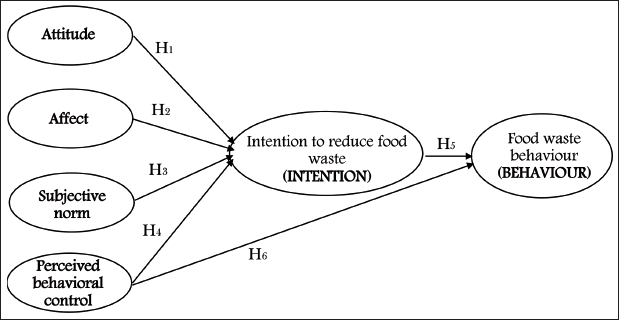
Specifically, the paper conjectures that:
The Expectation, Motivation and Attitude (EMA) model
From a related perspective, the EMA model (Gnoth, 1997) outlines the relationship between expectation, motivation and attitude (Figure 2). The EMA amalgamates perspectives from the behaviourist notion of drive-reduction and the cognitivist constructs of attitudes and value. Motives (a generic behavioural energizer) drive people to search the environment for objects that satisfy them, while people’s felt needs and value system determine their attitudes and expectations. After a need has been activated, the generated motivation is a major constituent in expectation formation and a person would choose certain behaviours to attain the expected results. Consequently, motivation affects how a person evaluates outcomes and thus impacts satisfaction formation (Gnoth, 1997). In other words, the EMA posits that attitudes are formed based on the interaction between a person’s expectations about a specific outcome and their motivation to achieve that outcome. Positive expectations and strong motivation typically lead to positive attitudes.
Conceptual Model of the EMA Model.
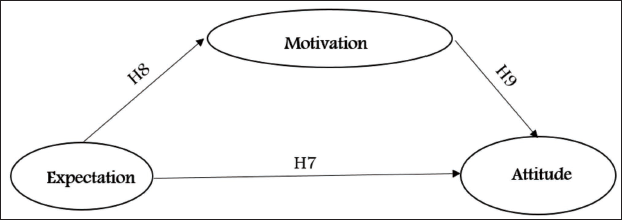
In the EMA, expectation leads to motivation through shaping an individual’s internal beliefs and anticipations about the outcomes of their actions. Positive expectations create a sense of anticipation and desire for a particular result, which, in turn, fuels motivation and influences attitudes and behaviours. Motivation—a key component of the EMA model—has been used in previous studies to explain household food waste. Motivation could be contingent upon altering cues of a person’s expectation regarding the consequences of their action and (or) the incentive value of the consequences resulting the action. Accordingly, we focus on three main motivations salient in the literature. That is, moral motivations, which denote concerns about and feelings of guilt arising from the thought that others may not have enough food. Considering that food is essential for human survival, the thought of wasting food may evoke something inherently immoral about wasting food (Matharu et al., 2022; Ribbers et al., 2023). Savings motivation refers to a consumer’s preparedness to take actions to reduce food waste for the sake of reducing losses associated with food waste. Time and money savings notably relate to people’s aversion to food waste (Watson & Meah, 2012). Environmental motivations, on the other hand, drive behaviour, action and importantly persistence towards avoiding or reducing the negative impact food waste imposes on the environment. Previous studies (Meah & Watson, 2013) have highlighted the gaps in the literature on fewer studies that identify elements that motivate household food waste minimization compared to studies that have focused on detecting the types of food wasted, the characteristics of household that waste food and how the feeling that is evoked by food waste.
Accordingly, the paper tests the hypotheses that:
Notably, hypotheses 1–6 are based on previous findings. However, these hypotheses have not been tested in the study in its extended form, that is, including H2 to the rest of the TBP in food waste studies. As such, this paper adds to advancing the literature. Further, this empirical work extends the expectation, attitude and motivation hypotheses from non-food to food waste studies.
Materials and Methods
Data Collection
The data analysed in this paper are from an online crowdsourcing platform, Prolific Academic that links researchers with participants registered with Prolific to participate in online research. Prolific has a representative sample of UK participants and is reported to have high transparency and accountability in crowdsourced online research. The data is also of higher quality than other crowdsourced samples (Eyal et al., 2021; Kelly et al., 2021). Data was collected from 402 respondents in July 2022. The screening was based on the participants being at least 18 years old, solely or jointly responsible for purchasing household food and having lived in the UK for at least six months each for the last 2 years. The characteristics of the sample are discussed in the section Results.
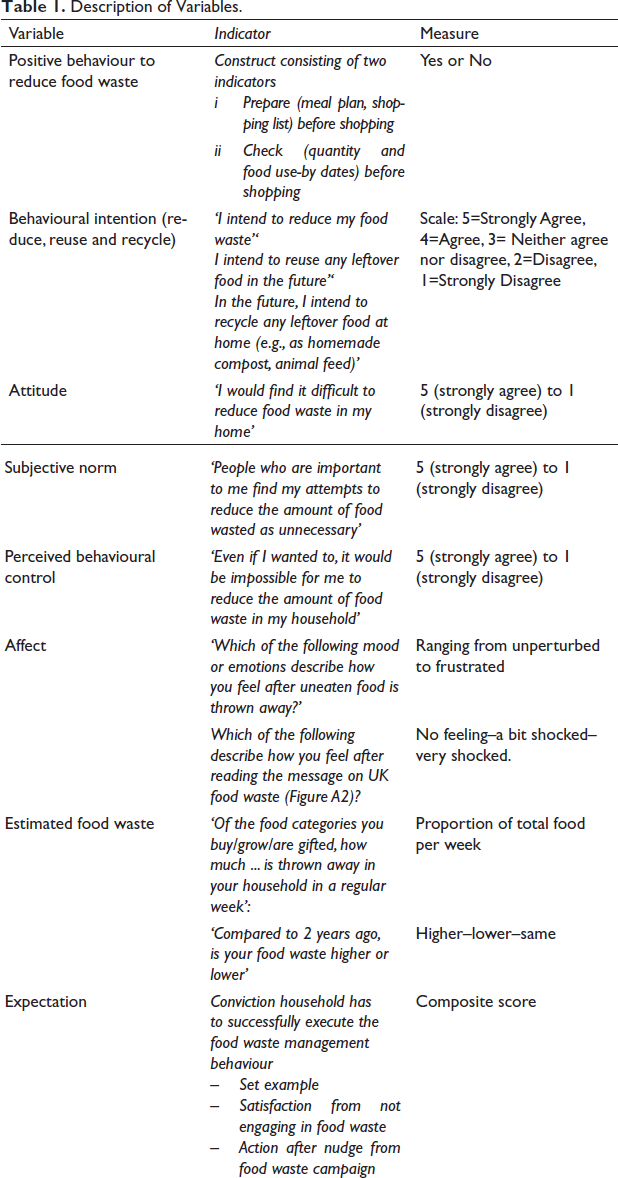
Due to the difficulty in measuring specific attitudes and behaviour directly, several studies have used proxy variables (Mondéjar-Jiménez et al., 2016). Therefore, all items of the constructs used in this paper were extracted from related studies in the literature. The latent variables and the means of measurement are presented in Table 1.
Description of Variables.
Analytical Method
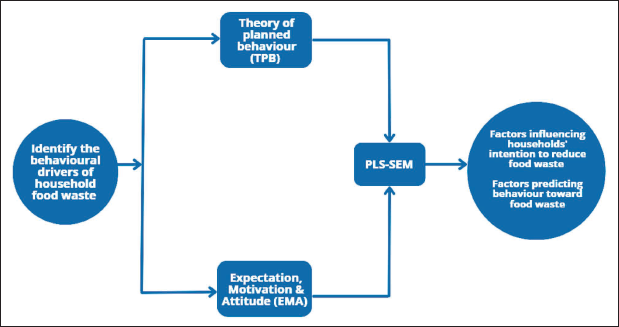
We analyse the data using structural equation modelling (SEM), as it enables the development of complex path models with direct and indirect effects with the benefit of greater precision in the modelling of the causal mechanisms highlighted in the study hypothesis. The data is analysed using the bootstrap method of the partial least squares structural equations modelling PLS-SEM Stata Package, which tested the hypothesized relationships of this paper using 1,000 generated subsamples, thus ensuring randomly generated samples from the original data set to ensure consistency of results (Hair et al., 2017). Using the PLS-SEM approach, the model is estimated in two steps, that is, the measurement model (which reports the relationships between latent variables and their defining indicators) and the structural model (for the relationship between latent variables). The methodology is summarized in Figure 3.
Summary of Methodology.
Results
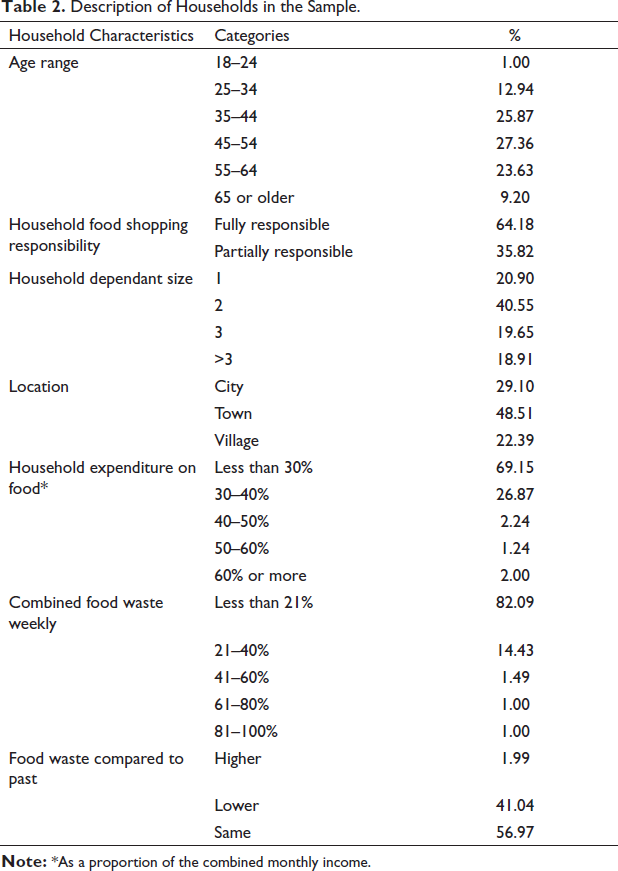
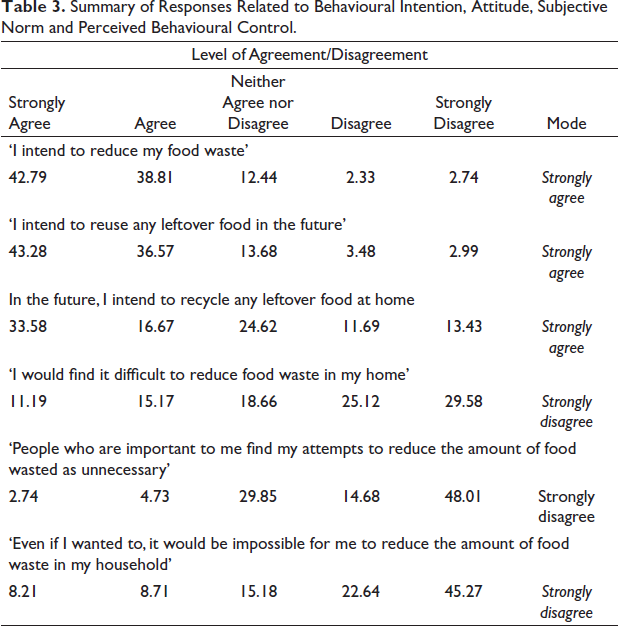
The sample comprised various age groups, with the modal age category being between 45 and 54 years. The majority (64%) were fully responsible for food shopping in their homes, and (69%) spent less than 30% of their household income on food. In addition, 82% reported the lowest category of food waste, that is, below 21%, with 56% reporting no change in food waste compared to 2 years before the survey (Table 2). Over half of the households in the sample either strongly agreed or agreed that they intended to reduce or reuse food in their households. Similarly, more than half of the households either strongly disagree or disagree that subjective norms and perceived behavioural control drive the decision to reduce the amount of food waste in their household. However, households did not show the same level of agreement with the proxy for attitude (Table 3).
Description of Households in the Sample.
Summary of Responses Related to Behavioural Intention, Attitude, Subjective Norm and Perceived Behavioural Control.
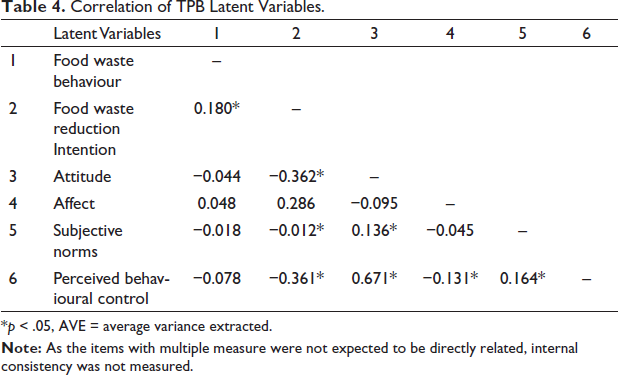
Correlation of Latent Variables
Attitudes, subjective norms and perceived behavioural control were negatively and significantly correlated with food waste reduction intention, although the correlation was small for subjective norms (Table 4). This could suggest that greater levels of constraints limiting an individual’s ability to convert their intention into action are associated with lower intention to reduce food.
Correlation of TPB Latent Variables.
*p < .05, AVE = average variance extracted.
Structural Model Evaluation and Hypotheses Tests of the TPB and EMA
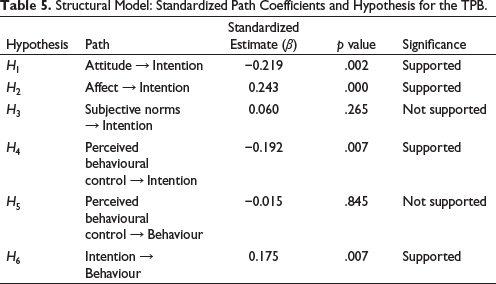
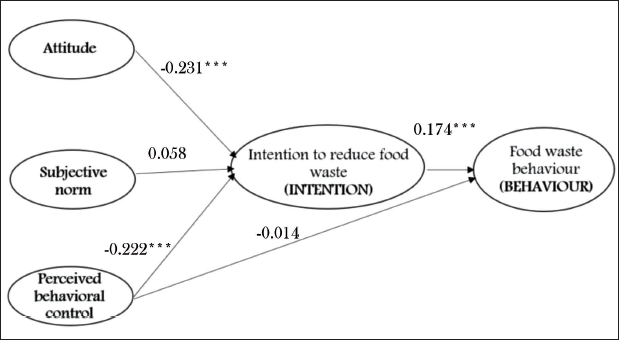
The standardized path coefficients in Figure 4 summarize the findings of the structural model of the TBP. The results indicate that Attitude and Perceived behavioural control had a statistically significant direct negative association with households’ intention to reduce food waste. That is, the stronger the level of agreement a household reported towards difficulty in reducing food waste in their home, the less likely the intention to reduce food waste. Furthermore, subjective norm independently was correlated with intent, but in the SEM model, it was not an independent predictor of the intent to reduce food waste. On the other hand, regarding the additional constructs in the modified TPB model, that is, Affect, the results showed a statistically significant and direct positive association between a negative affective state after food is wasted and consumers’ intention to reduce food waste. This finding implies that the more intense the negative affect towards food waste, the greater the likelihood of having the intention to reduce food waste. Finally, intentions to reduce food waste are associated with positive food waste behaviour. Thus, hypotheses H1, H2 and H4 are H6 are supported (Table 5). In comparison, the results are similar to the original TBP.
Structural Model for the Modified Theory of Planned Behaviour Model.
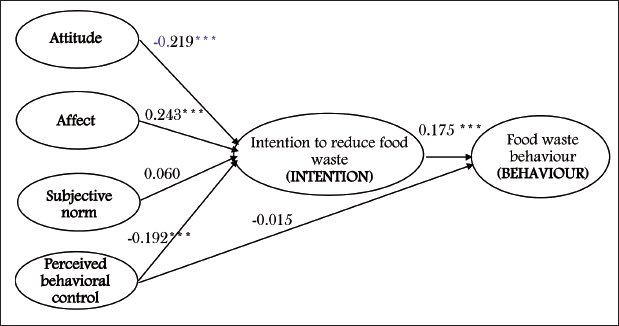
Structural Model: Standardized Path Coefficients and Hypothesis for the TPB.
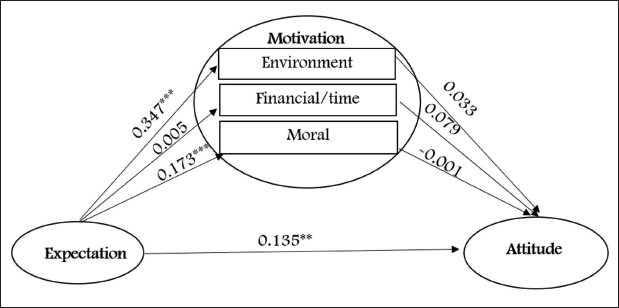
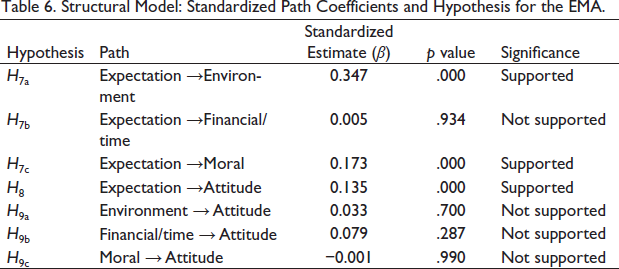
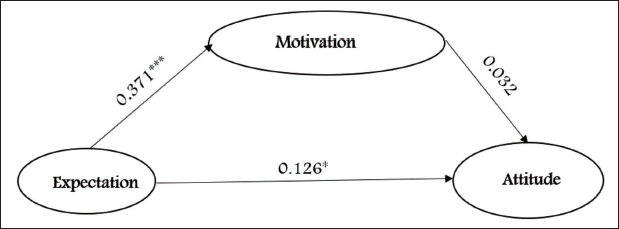
For the EMA model, the results in Figure 5 indicate that Expectation had a statistically significant direct positive association with (environmental and moral) motivation and with attitudes. We did not find any evidence of motivation being associated with attitudes. As a result, the hypothesis H9 is not supported (Table 6).
Structural Model for the Modified Theory of Planned Behaviour Model.
Structural Model: Standardized Path Coefficients and Hypothesis for the EMA.
Discussion
This paper aims to broaden our understanding of the factors that drive a reduction in food waste in households. Thus, the paper tested an extended framework of the TBP to explain the intentions to reduce food waste. The explanatory and predictive power of the TBP increased with the inclusion of affect to the model, thereby highlighting the need to consider other factors when the TBP model is used to investigate food waste behaviour. This suggestion aligns with past studies (Aydin & Aydin, 2022; Chen, 2022; Pakpour et al., 2014) that have extended the TBP in identifying the determinants of household food waste behaviour.
The finding that attitude has a significant and positive effect on the intention to reduce food waste in the household aligns with previous findings that households may only have a positive attitude to food waste reduction if they believe it will result in a positive outcome. This may also result from a high value being placed on food in a household and a better level of awareness influencing food waste behaviour (Hebrok & Boks, 2017). Based on these premises, the suggestion is that strategies that motivate positive attitudes and make salient the rewards or a positive outcome of reducing waste will be more effective in encouraging less food waste in households.
The finding that subjective norms did not significantly predict behavioural intention does not align with several past findings globally, which reported actions and behaviour related to food waste reduction are influenced by norms (Qi & Roe, 2016; Stancu et al., 2016; Visschers et al., 2016). It could be contested that subjective norms alone may not be sufficient to motivate the intention to reduce food waste. In line with Quested et al. (2013) and Graham-Rowe et al. (2015), this paper conjectures that because non-household members cannot observe food waste within a household is not visible to others, meaning they cannot be judged, subjective norms may not have as much impact on food waste behaviour or only modestly associated with the intention to reduce food waste.
The empirical evidence in this paper corroborates Russell et al. (2017), Attiq et al. (2021a) and Matharu et al. (2022) that food waste evokes a strong moral guilt-related affect, and this moral aspect is important in driving food waste reduction in households. This paper also provides further direct evidence and contributes to the literature by supporting the proposition that the intention to reduce food waste drives positive behaviour towards food waste reduction. This finding supports previous studies, which found an association between positive perceived behavioural control and intention to reduce food waste (McCarthy & Liu, 2017; van der Werf et al., 2019). Efforts targeted at ensuring the intent to cut food waste by the majority of households are transformed to action, and that obstacles that make households to postpone actions are removed would be steps in the right direction towards accomplishing SDG target 12.3.
The findings that expectation had a statistically significant direct positive association with environmental and moral motivations on the one hand, and with attitudes on the other hand are new in food waste studies. In its application to food waste, it is evident that the EMA model is more relevant to the prevention aspect of food waste. Assuming the expectation of all households is to avoid food waste, the greater the differences between expectation and actual behaviour, the greater the food waste levels. With high expectations, the thought of wasting food may evoke an uncomfortable feeling (Matharu et al., 2022; Ribbers et al., 2023), thus, motivating households to meet the expectation. However, that motivation does not drive attitudes directly may suggest the existence of confounding variables.
From a wider perspective and in line with Evans (2011) and Ellison and Lusk (2018), the paper takes the position that households do not deliberately or carelessly waste food. In some cases, households may genuinely have the intention of reducing food waste. However, several external constraints may limit transforming the intention to action. For example, incentives such as offering value through oversized portions, bulk sales and food sold at discounted prices from near-to-expiry contribute to household food waste. Previous studies also provide evidence that fruits and vegetables, for example, are mainly wasted because of poor quality at purchase (Graham-Rowe et al., 2014; Porpino et al., 2015). Hence, the paper recommends that interventions that recognize and accommodate both internal and external factors will be more effective in discouraging food waste. For example, this could be achieved by targeted messages that strengthen beliefs that wasting food is bad or campaigns that arouse positive feelings from reducing food waste together with advice on portion sizes and extending product life effectively combined with options for loose food dispensers for certain foods.
Policy Implications
The paper provides evidence of the significant impact that individual attitudes and emotions have on food waste behaviours. Food waste can be reduced by avenues that influence individuals’ positive attitudes, increase the expectation that food waste reduction behaviour is within one’s control and evokes a positive affective state when food waste is reduced in households. Tailored awareness campaigns could also play a pivotal role in reducing household food waste. For instance, emphasizing the environmental benefits and personal savings associated with reducing food waste can motivate individuals to act. Additionally, behavioural interventions that enhance perceived behavioural control, such as providing practical information on food storage, understanding food labels and cooking with leftovers, can support consumers to minimize waste.
Limitations and Future Recommendations
There are aspects of this paper that could be improved upon in future studies. For example, not limiting the examination to attitudes to that of the respondent representing the household only but surveying household members collectively to account for the attitudes of all household members with food decision-making responsibilities. Notably, a simplistic definition of food waste was provided to respondents, thus, one can argue that if their self-knowledge about food waste is utterly different, their responses may be less comparable. Also, certain confounders not accounted for may affect the indicators in this paper. For example, preparing before shopping represents positive behaviour to reduce food waste. However, the absence of such preparation does not definitively indicate the opposition. Thus, the efficiency of the indicators used in this paper could be improved in future studies.
Future studies can also aim to collect data from samples with more heterogeneity and tailor the measures of the behavioural intention, attitude, subjective norm and perceived behavioural control to better fit the context and improve the relevance to the target population. Finally, time series data and reliance on approaches (e.g., food diaries and waste audits) that reveal attitudes over self-report measures would provide better predictive strength. Also, the paper acknowledges that persons’ emotions could vary based on the situation, for example, when the food waste is generated from their own food, children’s food, food served at a restaurant or even stale items. This could have led to responses from different individuals may arise not due to differing emotions for the same situation but rather because they considered varying contexts.
Conclusion
The paper aims to predict behaviour towards household food waste from a modified TPB perspective. Structural equation modelling is estimated to assess the inter-correlations among the proposed constructs. The findings are that a favourable attitude, a high perceived behavioural control and a negative affective state after food is wasted positively impact the intention to reduce food waste. Thus, the findings validate the usefulness of the TPB and its extended form. However, the extension of the TBP predicted household food waste intentions better than the original TPB. This paper also introduces the EMA model to understanding the prevention of household food waste. The EMA suggests that when households expect to avoid food waste, but their actual behaviour differs from these expectations, food waste levels increase. High expectations might lead to discomfort at the thought of wasting food, thereby motivating households to align their behaviour with these expectations. Interestingly, the findings in the paper suggest that motivation does not directly influence attitudes, which could be due to the presence of other factors affecting the relationship. Collectively, reducing household food waste can be achieved through various approaches that impact individuals’ positive attitudes, raise their expectations of controlling food waste reduction behaviour and elicit a positive emotional state when successfully reducing food waste at home.
Appendix
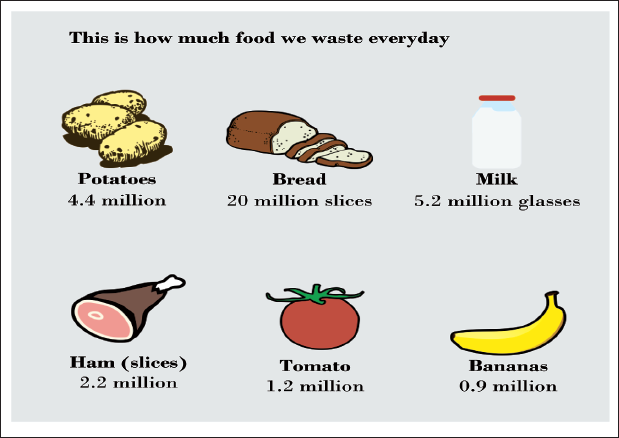
Example of Information Shown to Subjects to Elicit Affect.
Structural Model for the Original Theory of Planned Behaviour Model.
Structural Model for the Original EMA Model.
Footnotes
Author Contributions
Ningxin Zhao: Conceptualization, Investigation, Writing—Original Draft, Writing—Review & Editing.
Toritseju Begho: Conceptualization, Writing—Original Draft, Writing—Review & Editing, Visualization, Supervision.
Declaration of Conflicting Interests
The authors declared no potential conflicts of interest with respect to the research, authorship and/or publication of this article.
Funding
The authors received no financial support for the research, authorship and/or publication of this article.
