




Abstract
Aim:
This study evaluates the effect of different surface finishing procedures on the color and translucency values of monolithic zirconia materials on three different colored composite backgrounds.
Materials and Methods:
Sixty monolithic zirconia blocks of three different translucency levels were prepared in vitro using computer-aided design/computer-aided manufacturing (CAD/CAM) systems. The correlation between repeat measurements was 0.5, resulting in a sample size of nine samples per group to detect a medium effect size, f = 0.25. Half of the zirconia blocks in each group were subjected to glazing, while the other half were polished (n = 10). Composite blocks of three different colors were prepared to simulate dental substrates, and the zirconia specimens were placed on these composite backgrounds. The color parameters of the specimens were measured using a spectrophotometer on gray, black, and white backgrounds. Three-way repeated measure ANOVA was used to assess the interaction between the three independent variables (zirconia brand, surface finishing technique, and background color) and the effects of each tested variable on the changes in color and translucency.
Results:
The surface finishing techniques had a significant effect on the color and translucency of the monolithic zirconia materials. Glazing resulted in higher color differences and lower translucency values compared to polishing. For backgrounds of the same color, no significant differences were detected between the glazed zirconia groups for the same condition (p > .016).
Conclusion:
Overall, the study demonstrated the importance of selecting the appropriate surface finishing technique and translucency property of the monolithic zirconia materials to obtain the optimal esthetic results in dental restorations.
Introduction
Newly developed esthetic ceramic materials successfully meet the esthetic and natural appearance expectations of patients. Today, full ceramic materials are preferred over metal-supported ceramics for prosthetic restorations. In particular, zirconia restorations have become popular because they offer both esthetic and mechanical advantages.1,2
Today, zirconia material can be used as both a substrate (core) and monolithically in two different ways.3,4 When used as a zirconia substrate, the porcelain must be applied on the zirconia framework top. The efficacy of the chipping restoration hangs in the balance when the veneer porcelain structure reveals cracks or separations, posing a potential threat to both its durability and visual integrity. 5 To prevent these problems, monolithic zirconia systems have been introduced. At the forefront of dental technology, these advanced systems use zirconia in a monoblock configuration, making the use of traditional veneer porcelain layers unnecessary. Thus, the production of monolithic zirconias can eliminate porcelain connection failures in zirconia restorations.6-11
Iridium-stabilized tetragonal zirconia (Y-TZP) was developed to improve the esthetics of monolithic zirconia restorations.12-15 The Y-TZP ratios of this new generation of monolithic zirconia have been increased compared to the first monolithic zirconia produced.16,17 Yttria-stabilized dental zirconia is divided into 12 types. Zirconia (TZP, tetragonal zirconia polycrystalline) is divided into several types depending on the yttria content: 3Y-TZP (3 mol% Y-TZP), 4Y-TZP (4 mol% Y-TZP), 5Y-TZP (5 mol% Y-TZP), and 6Y-TZP (6 mol% Y-TZP). 18 By increasing the Y-TZP ratio, the microstructure of the ceramic crystal is completely stabilized with a visible cubic phase up to 53%.19-21 This has been done in order to improve the new- generation monolithic zirconias, such as translucency and light transmittance, in order to better mimic natural teeth.22-24 However, there are no studies on how the optical properties of these zirconia materials, with increased translucency, will be affected by the underlying tooth color.
Surface treatments are used to influence the optical properties of prosthetic restorations (glazing, polishing, etc.).25-28 In the clinic, restorations may need to be ground with diamond rotary instruments (DRIs) to adjust their occlusal contacts and make intraoral adjustments.29-31 After grinding, monolithic zirconia surfaces can become rough, giving them more surface area and higher surface energy. 32 Polishing and glazing are methods that can be used in the clinic to obtain smooth surfaces.33,34 The polishing process improves the roughness of the zirconia surface, extends the life of the restoration, reduces microbial attachment, and increases esthetics. 35 In the glazing process, unlike polishing, microcracks on the surface are filled with a glaze material, which provides the zirconia with strength during cooling. Different surface finishing protocols can influence the esthetics of monolithic zirconia.32,36-38 However, few studies have compared surface treatment results on the color and translucency of different monolithic zirconia materials.39,40
The compatibility between natural teeth and the selected restorative material affects the esthetic success of the restorations. 41 The color of the selected restorative material should be able to successfully mimic the natural tooth color and translucency property. Spectrophotometer devices are often preferred in studies evaluating color compatibility.39,40,42 The color values obtained with a spectrophotometer 43 can be expressed numerically by calculating them with various color system formulas, allowing for the calculation of color differences and translucency values. The current color difference formula, the CIEDE2000 formula model (ΔE00), shows changes in color difference perception depending on brightness, saturation, tone, and saturation–tone interaction. It has been reported that the ΔE00 formula is more sensitive and can show even the smallest changes when compared to the ΔE Lab formula.44-46 In a study by Ghinea et al., 47 when comparing the ΔE Lab and ΔE00 formulas used for color calculation, the authors reported that there was a significant difference in perceived and accepted thresholds between the two dental ceramic formulas.
The aim of this study was to investigate the influence of two varieties of surface finishes (glaze and polish), different zirconium oxide grades (multilayer (ML), ultratransparent, and supertransparent), and different color backgrounds (A1, A2, and A3) on color change and translucency parameters of different zirconium oxide monoliths. The null hypothesis (H0) was that surface finishing methods, zirconia brands, and different backgrounds have no effect on color change and translucency parameters.
Materials and Methods
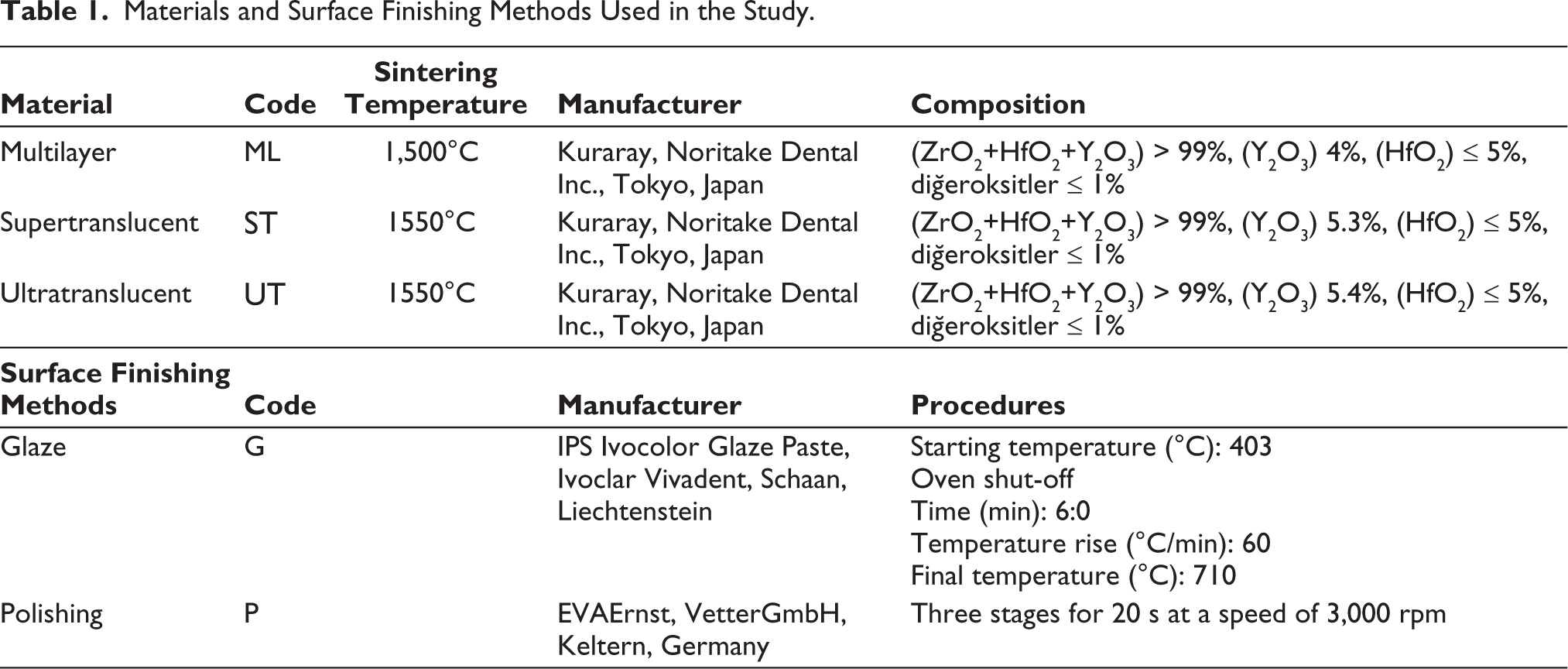
Table 1 lists the contents and manufacturers of materials used in this study.
Materials and Surface Finishing Methods Used in the Study.
Preparation of Samples
A total of 60 samples of different monolithic zirconia blocks with different translucency properties, such as Katana Zirconia (ML, supertranslucent STML, and ultra-supertranslucent ML) (Kuraray, Noritake Dental Inc., Tokyo, Japan), were prepared using a CAD/CAM system (Yenadent D43, Yenadent Ltd., Istanbul, Turkey) in a special laboratory to be 15 mm in diameter and 1.2 mm in thickness. The fabricated specimens were sintered in a sinter furnace (Furnaces Model MoS-B 160/1, Ankara, Turkey) according to the manufacturer’s instructions (Table 1). A digital caliper was used to check the thickness of the prepared specimens (TorQ 150 × 0.01 mm digital caliper, China.)
Preparation of Sample Surfaces
Two different surface treatments, glazing and polishing, were applied to the prepared zirconia samples. Each group of zirconia was divided by surface treatment into two separate subgroups (n = 10).
For half of the monolithic zirconia samples (Katana MLG, STG, UTG), a thin glaze layer (IPS Ivocolor Glaze Paste, Ivoclar Vivadent, Schaan, Liechtenstein) was applied to one surface only, as recommended by the manufacturer, and the samples were inserted into the furnace (Vacumat 6000 MP, VitaZahnfabrik, Bad Säckingen, Germany) for glazing (Table 1).
The other monolithic zirconia samples were polished. A zirconia polishing kit, EVE Diacera (EVAErnst, VetterGmbH, Keltern, Germany), was applied to the zirconia samples (Katana MLP, STP, UTP) using a micromotor (Ti-Max × 600 L; NSK, Tochigiken, Japan) in three stages for 20 s at a speed of 3,000 rpm. After the polishing process, the samples were rinsed with an air–water spray, then cleaned in distilled water for 1 minute in an ultrasonic bath (BandelinSonorex, Bandelin Electronic GmbH & Co, Berlin, Germany), and air dried.
Preparation of Composite Substructures
Liquid composite resins (3M ESPE, Minnesota, USA) of different shades (A1, A2, A3) were fabricated into 4 mm thick disc-shaped blocks using a layering technique. The prepared block, which mimics the tooth substructure, was adjusted to fit into the ground to be measured.
Measurement of Color Parameters of Monolithic Zirconia Samples
In three-dimensional color analysis, CIE L*a*b* indicates a color, L* indicates lightness, a* indicates red/green, and b* indicates yellow/blue. L, a, and b values are expressed as numbers from 0 to 100. 47 The L0, a0, and b0 values of the numbered monolithic zirconia samples were recorded by a spectrophotometer on specially prepared molds with gray, black, and white backgrounds, respectively. Then, the zirconia samples were placed on A1, A2, and A3 colored substructure blocks with optical glycerin, and the color values were measured again in gray, black, and white backgrounds. The measurements were carefully made in the same measuring room and at the same time of day. The translucent resin cement sensor was performed using a standard observer person with an aperture diameter of 3 mm and a spectrophotometer (VITA Easyshade→; VITA Zahnfabrik, Bad Säckingen, Germany) calibrated with a D65 illuminator. In the measurement, white, gray, and black special plastic boxes with a hole with a diameter of 3 mm in the center of 10 × 10 × 3 dimensions were prepared. Three measurements were taken from the midpoint of each sample, and the values were averaged. Spectrophotometer calibration was performed after each measurement.
Calculation of Color Change and Translucency Parameters of Monolithic Zirconia Samples
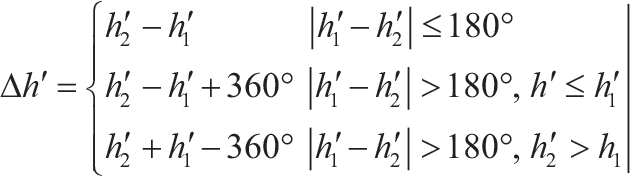
By matching with substructures of different colors (A1, A2, and A3), the ΔE00 values of the samples prepared were compared with the color values (L0, a0, and b0) measured on the gray background without substructures and the color values (L, a, and b) obtained from the measurements on the gray background. ΔE00 has a detectability threshold of 0.8 or an acceptability threshold of 1.8.
48
The ΔE00 formula is







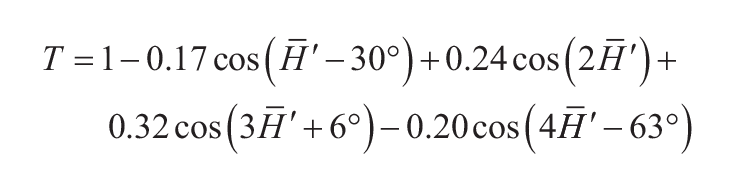


The translucency parameters of the prepared samples were calculated using the color values (Lb, ab, and bb) measured on a black background and the color values (Lw, aw, and bw) measured on a white background without substructures. Similarly, the translucency parameters were calculated by matching the zirconia samples with the different colored substructures on which the optical gel was applied; the color values measured on the black background (Lb, ab, and bb) and the color values measured on the white background (Lw, aw, and bw) were used. The translucency parameter (TP) formula (Equation (2)) is

Power Analysis
Power and sample size analysis was done in G*Power v.3.1.9.2 (http://www.psychologie.hhu.de) for “Repeated measures, within–between interaction.” The required sample size per group to detect a mean effect of f = 0.25 with an alpha of 0.05, 0.80 power, number of groups 6, number of measurements 3, correlation between measures 0.5, correction for non-sphericality (ε) 1, and number of groups 54 resulted in nine samples per group. Therefore, it was decided to prepare 10 specimens per zirconia group.
Statistical Analysis
Data were analysed using statistical software (IBM SPSS Statistics for Windows v.14.0; IBM Corp, Chicago, USA). The Shapiro–Wilk test (p < .05) was used to test for normal data distribution. In addition, box plots were checked for outliers. Three-way repeated measure ANOVA was used to evaluate the interaction of the three independent variables (zirconia brand, surface finishing technique, and background color) and the effects of each tested variable on the changes in color and translucency, and when differences were found to be significant, the means were evaluated using Bonferroni adjusted post hoc tests (α = 0.05).
Results
A three-way ANOVA test (Table 2) resulted in a significant difference in the mean value of ΔE00, which was influenced by background color, zirconia brand, and surface finishing procedure (p = .028), but with no significant interaction among zirconia brands and background color (p = .757). The three-way ANOVA test (Table 2) identified a difference in the mean value of TP that was significantly affected by background color and zirconia brands (p = .010), while no significant interaction was found between zirconia brands, surface finishing techniques, and background color (p = .280).
Three-way ANOVA Test for Influence of Zirconia Brand, Surface Finishing Methods, and Background Color on ∆E00 and TP Values.
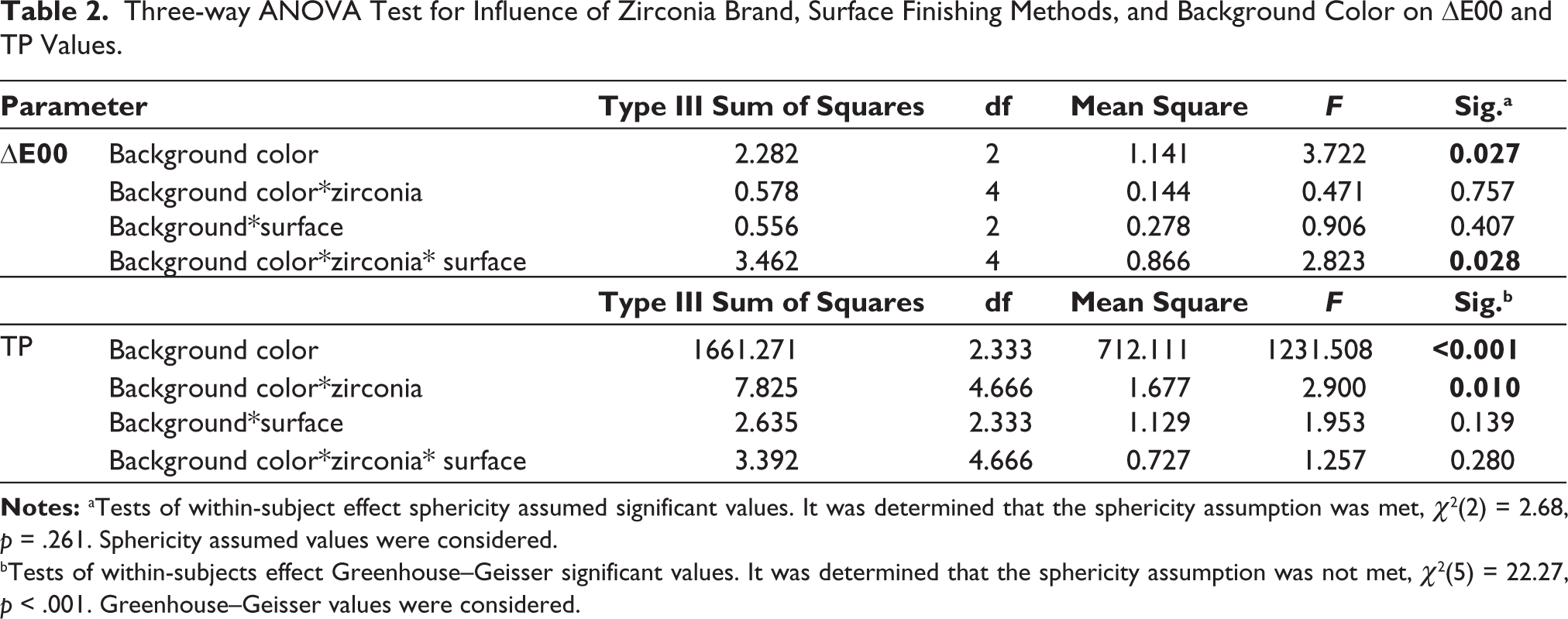
bTests of within-subjects effect Greenhouse–Geisser significant values. It was determined that the sphericity assumption was not met, χ2(5) = 22.27, p < .001. Greenhouse–Geisser values were considered.
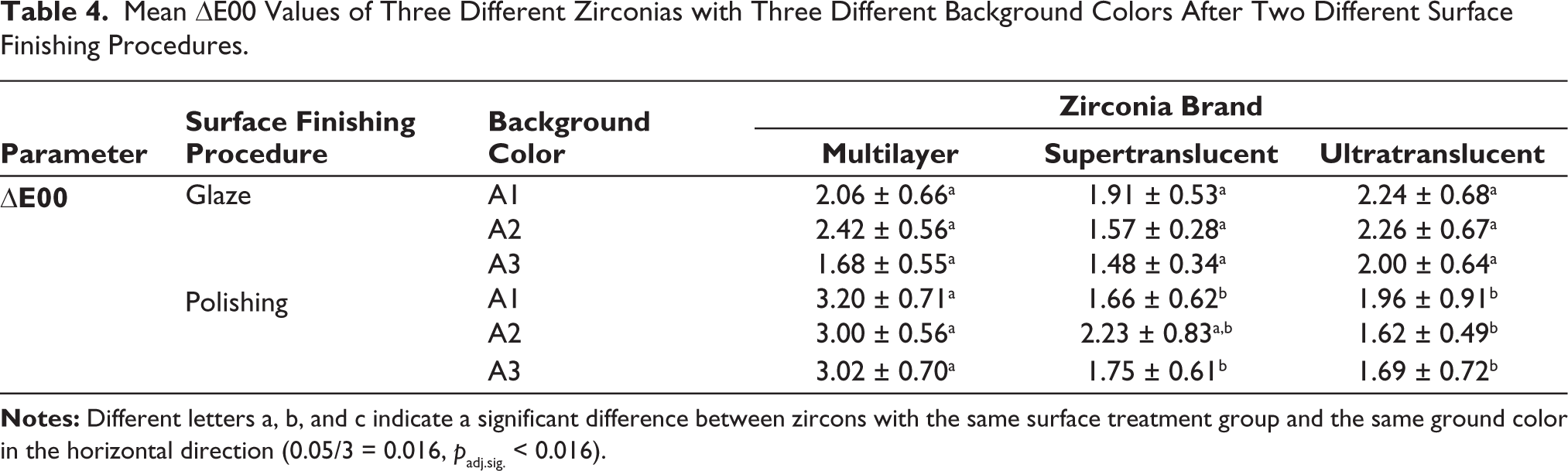
The mean values of the ΔE00 and TP zirconia brands after the glazing and polishing procedure, and after combination with different colored backgrounds, are presented in Tables 3, 4, and 5.
Color Differences (∆E00)
There was a significant difference between the ΔE00 values of the glazed multilayer groups when they were combined with the A2 and A3 background colors (padj.sig . = .009) (Table 3). However, the ΔE00 values indicated that the color differences of other zirconia groups were not significantly different to each other based on the change in the background color (padj.sig. > .016) (Table 3).
A significant difference was found between MLG and MLP group ΔE00 values when using the A1 color background (p = .001) (Table 3). Similarly, when the samples were combined with the A3 color background, there was a significant difference between the ΔE00 values of the MLG and MLP groups (p < .001) (Table 3). The ΔE00 values of STP were significantly higher than the values of STG (p = 0.036), and the ΔE00 values of UTG were significantly higher than the values of UTP (p = .043) for the A2 color background (Table 3).
Mean ∆E00 Values of Three Different Zirconias with Three Different Background Colors After Two Different Surface Finishing Procedures.
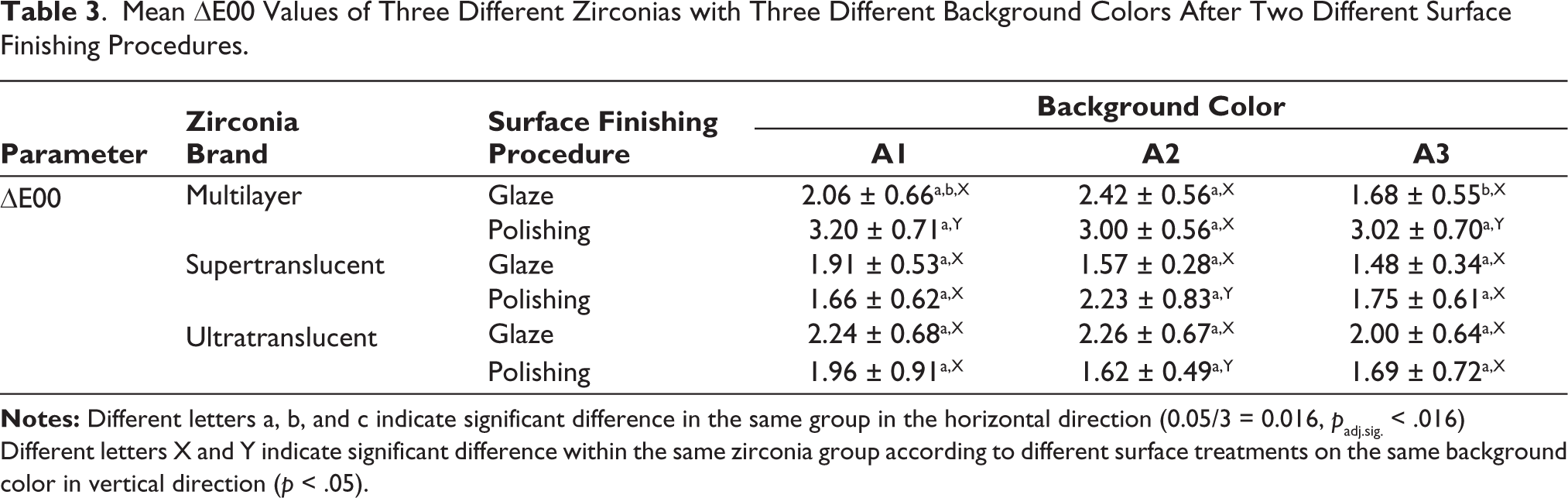
Different letters X and Y indicate significant difference within the same zirconia group according to different surface treatments on the same background color in vertical direction (p < .05).
The zirconia groups were compared for the same surface finishing procedures and the same color backgrounds (Table 4). The glazed zirconia groups had no significant differences in ΔE00 values for the A1, A2, and A3 color backgrounds (padj.sig. > .016) (Table 4). The ΔE00 values of MLP were significantly higher than the values of the STP and UTP groups when the A1 or A3 background was used (p < .001) (Table 4).
Mean ∆E00 Values of Three Different Zirconias with Three Different Background Colors After Two Different Surface Finishing Procedures.
Translucency Parameter
All colored backgrounds (A1, A2, and A3) showed significantly decreased TP values of both the polished and the glazed zirconia (p < .001). When measurements were taken without the colored background, there was a significant difference between the TP values of MLG and UTG (p = .003). However, for the same color background condition, there were no significant differences between the glazed zirconia groups (p > .016) (Table 5).
Mean TP Values of Three Different Zirconias with Three Different Background Colors After Two Different Surface Finishing Procedures.
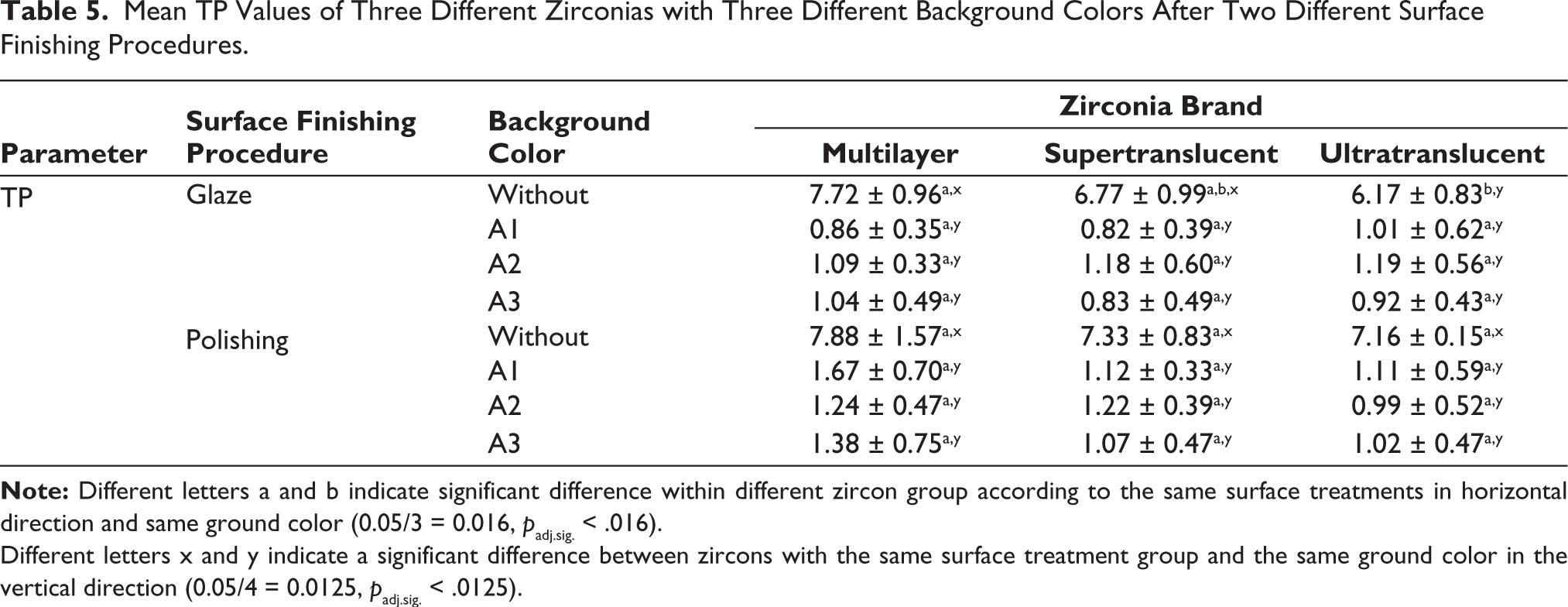
Different letters x and y indicate a significant difference between zircons with the same surface treatment group and the same ground color in the vertical direction (0.05/4 = 0.0125, padj.sig. < .0125).
Discussion
The effect of monolithic zirconia materials with diff- erent translucency properties on the color change and translucency parameter in different colored substructures was investigated. The hypothesis that different colored substructures, zirconia types, and surface treatments would not affect the color change was rejected, which is in line with the findings obtained from the study.
The kind of material selected for the restorations and the shade of the substructure tooth are effective factors in determining the shade of the restoration.6,12 Since the transparency of the monolithic zirconia has been improved, the color of the tooth tissue beneath these restorations is reflected from the underside of the restoration and affects the perceived color. Therefore, this may make it difficult to predict the color obtained in the clinic after cementation in ultrathin restorations. 7 Translucent ceramics transmit and scatter more light, so the final shade of the underlying tooth has a significant influence on the shade of the restoration. Previous studies have also reported that the shade of the substrate is an important determinant of the final shade of the ceramic restoration.3,13 The data from this study show that the color of the substrate has an effect on both the color change and the translucency of the zirconia.
Four different types of monolithic zirconia were introduced to suit the indications for the planned applications of monolithic zirconia on natural teeth in the clinic (3,4-5-6Y-TZP). 18 In the beginning, it was intended that 3Y-TZP would be an opaque material, and zirconia-based restorations were obtained by veneering a zirconia core with porcelain. More recently, however, the yttria content of the new generation CAD-CAM zirconia ceramics has been raised to approximately 4%, 5%, and 6% mol Y-TZP. The new generation of materials are referred to as multi-layered and have polychromatic and semitransparent zirconia gradient layers that range from mined dentine shades to the pre-milled block. These new multi-layered zirconia materials can be used for both posterior and anterior restorations.8,9 Harada et al.10,11 showed that Katana ML/HT contained 5.66% Y2O3 (approximately 3% mol); Katana STML, 8.15%; and Katana UTML, 9.32% (approximately 5% mol). This increased stabilizer content is responsible for the high resistance to aging, the elimination of the transformation hardening mechanism, and the appearance of a large number of cubic crystals in the microstructure. Increasing the yttria content increases the semitransparency of zirconia. 18 Multilayered zirconia had the lowest semitransparency; therefore, the ΔE00 values were found to be higher than in the other samples. In trials, ΔE00 < 2.25 was regarded as a clinically acceptable color difference.43-45 In this study, the ΔE00 values for the ST and ultratranslucent (UT) ML zirconia samples were lower than the acceptable clinical values for color change after both glazing and polishing. In the ML zirconia samples, the color change was within the clinically acceptable range after the glazing process, but it was above the clinically acceptable range for the surfaces with ML zirconia that were polished.
Polishing of zirconia surfaces offers various advantages, such as smoothing the surface and reducing defects,24,33 while glazing applied to zirconia surfaces shows a lower wear rate on antagonist teeth. 25 Different surface treatments applied to zirconia affect not only their mechanical properties but also their color change. 26 Previous research has examined the impact of various finishing processes on zirconia surface color change.26,27 Samples with glazed zirconia surfaces showed higher color stability. 35 Results of this examination showed that there was no significant difference in the color change values of the zirconia groups on the A1, A2, or A3 substrates when glazing was applied, but when polishing was applied, the color change value of the multilayer zirconia group on the A1 and A3 substrates was significantly higher than that of the DT multilayer zirconia group and the UT multilayer zirconia group. The results suggest that the applied surface treatments may affect color change. The effect of the surface treatments on translucency was also studied in this study. Consistent with the results of Kim et al., 31 there was no noticeable change in the translucency of zirconia restorations compared to the same substrate after glazing and polishing. When the translucency changes of different zirconias without a substrate were compared, high translucency values were found for all zirconia samples. Bacchi et al. 36 showed that monolithic zirconia restorations do not provide acceptable color matching on colorless substrates. According to the results of our study, the translucency values were higher when there was no substrate, and lower values were found on the A1, A2, and A3 color substrates. In comparison studies, it has been noted that UT multilayered zirconia has the highest translucency and yttria content, so it has the highest translucency value.9,11,16,17 Based on the results of our study, it can be said that the yttria content of zirconia does not have a meaningful influence on translucency when a substrate is used.
Studies that have examined the color change of zirconias have indicated that the use of various sinter protocols has a marked effect on particle size, porosity, and translucency.28-30 The sintering temperature and time were increased. This resulted in decreased particle size and increased semitransparency.28,37 Although the sintering time was the same for the different types of zirconia used in the study, the sintering temperature was higher for STML zirconia and UTML zirconia than for ML zirconia. Higher sintering closes pores and increases the density of the material.29,30 Consistent with this information, the lower semitransparency of the ML zirconia samples can be attributed to the reduced sintering temperature compared to the other zirconia types.
Studies have also shown that restorative thickness is a major determinant of optical transmittance; however, it does not affect the opacity of the material.12,40 Çömlekçioğlu et al. 12 support this view, stating that the thickness of zirconia is an appreciable predictor of the final color of the substrate. They found that the selected shade had an effect on the color change in zirconia samples with a thickness of 0.3-0.8 mm, while zirconias with a thickness above 0.8 mm showed an acceptable color change. In this study, the specimens were designed with a standard thickness of 1.2 mm. This also develops the translucency of monolithic zirconia restorations and the tooth color impact of the substrate.38,39,41 The data obtained in our study showed an acceptable color change in the samples.
The shade used is an important factor that links the restoration to the underlying tooth and influences the final shade of the restorative. With increasing translucency of the ceramic used in the restoration, the effect of the shade and the tooth color of the substrate becomes critical. 5 When evaluating the effect of the substrate color on monolithic restorations, the following ranking is observed: feldspathic ceramics > glass ceramics > zirconia ceramics.5,19,20 The more the selected shade is light, the more prominent the substrate color will be. 2 In the presence of a translucent shade, the present study investigated the influence of the tooth shade of the substrate on the restoration. However, Chanhg et al. 4 stated that the color mismatches caused by the substrate cannot be corrected only with shades, and the effect of the shade is low. It is stated that the color mismatches in the cervical region for Katana zirconias can be covered with shades, but there is no confirmed information for the middle thirds. Since the substrate color has more of an effect than the shade color according to this information, different substrates were compared without the shade factor in the study. More studies are needed to investigate the effect of shades on the final shade of the restoration. The purpose of this study was to analyse the color change and translucency of zirconia restorative materials in relation to the finishing technique and background. The hypothesis was that there would be no effect of different zirconia finishing processes and background, but the study found that no difference was observed between ST and UT monolithic zirconia, while significant color change was observed in ML monolithic zirconia during polishing. It was concluded that zirconia selection and different backgrounds were effective in the finishing process. The use of specimens of a certain thickness, the inclusion of A2 colored zirconia specimens, and the limited surface treatment of the specimens are limitations of this study. The studies began by looking at the impact of finishing treatments on the color change of a variety of monolithic zirconia materials.48,49 Then, translucency and mechanical properties were investigated after aging and staining.50,51 However, the influence of the background has not been investigated to date. This study will guide future clinicians in material selection and finishing. It may also help researchers to conduct further in vivo and in vitro studies evaluating different monolithic ceramics prepared with different thicknesses.
Conclusion
In spite of the limitations of this study, the following conclusions are made:
Improved translucent and aesthetic semi-translucent zirconia ceramics have sufficient aesthetics as ceramic restorations. UTML and STML zirconia samples showed lower ΔE00 values after polishing, while the values obtained for both surface treatments were clinically acceptable. For ML zirconia specimens, the discoloration after glaze treatment is clinically acceptable, whereas the discoloration on polished surfaces of ML zirconia is not clinically acceptable. When a substrate is used, the yttria content of zirconia has no significant effect translucency. Although the idea of comparing color difference and translucency is important for esthetic reasons, yet the impact of both techniques, polishing and glazing, on surface roughness and surface characteristics is of major concern and affects the longevity of the restoration as a whole.
Footnotes
Author Contributions
The authors planned the study together. EA collected the data, while KD performed the statistical analysis. The authors drafted the main text together. The final version was reviewed and submitted by both authors.
Data Availability
When our study is published in the journal, the data can be used openly, provided that permission is obtained.
Declaration of Conflicting Interests
The authors declared no potential conflicts of interest with respect to the research, authorship, and/or publication of this article.
Ethical Approval
In our study, no living tissue such as teeth or saliva was used and no living tissue was harmed. Ethical approval was not required for this in vitro study.
Funding
The authors received no financial support for the research, authorship, and/or publication of this article.
Informed Consent
Not applicable