




Abstract
Aim:
The degree of vertical (intrafamilial) and horizontal (extrafamilial) transfer of Streptococcus mutans (S. mutans) to a child shows differences according to cultures. The wrong care habits may result in transfer of S. mutans. The aim of this study was to determine the vertical and horizontal transmission of S. mutans to a child and effective factors.
Materials and Methods:
Mothers and kindergarten staff of 37 children aged between 4 and 5 years who initially started in two kindergartens (Group 1, n = 19; Group 2, n = 18) were included in this in vivo study according to 95% reliability and 80% theoretical power. Intraoral examination of mothers and children made according to the World Health Organization criteria (dmf-t/DMF-T) was done, following which mothers were asked to fill questionnaire forms including knowledge and attitudes of them about oral/dental health care. 1 mL saliva samples received from children/mothers/staff were examined microbiologically in order to isolate and quantify S. mutans. Arbitrarily primed polymerase chain reaction analysis was done to determine the genetic characteristics of S. mutans. All examinations were repeated to evaluate the horizontal transmission in the fifth month. Parametric tests (t-test and two-way analysis of variance) were employed for comparison of the variables that meet the normality assumption and nonparametric tests (Mann–Whitney) were also used.
Results:
It was observed that there is a statistically significant correlation between mother DMF-T values and mother–child S. mutans similarity level (P < .05). There is a statistically positive correlation between the habits of using a common fork, spoon, glass, and mother–child similarity level.
Conclusion:
Vertical and horizontal transfers occurred in Turkish families in order to prevent the transfer of S. mutans; wrong baby care habits that may lead to the transfer of S. mutans, which is the main factor in case of tooth decay, should be avoided.
Introduction
Tooth decay is a destruction of the hard tissues of the teeth caused by bacteria as a result of fermentation of carbohydrates. 1 According to the studies conducted in this area, the pathogens associated with caries are acquired in the mouth earlier than expected.2–5 S. mutans is the microorganism commonly associated with the development of caries.6,7 Having S. mutans at early ages is decisive for future caries experiences.8,9 S. mutans can maintain its vitality in very limited surfaces other than mouth, and saliva transfer is seen as the most important factor for transmission of this microorganism. 3 The transfer of these bacteria to the children and their acquisition, depending on the amount of bacteria in the mouth is mostly from the mother, father, or the caregiver.10–12
Vertical transmission refers to the interfamilial transfers of S. mutans.13,14 Comparing the species obtained from infant with the father, it has been accepted that the vertical transfer of these bacteria are mostly from the mother because they show more similarities (71%–90%) with the species in the mother.15–17 The probability of observing matching S. mutans genotypes between mother and child varies according to the traditional baby care habits, cultures, and situation of having close contact between mother and child.3,16,18,19 In the conducted studies, the detection of the S. mutans types in the child in the genotype different from the family members reveals that the child can also be infected from other sources.13,15
The horizontal transmission refers to the S. mutans transmission from the environment (from people living in a certain group to each other) to the child.13,14 It was stated that the environments where children are together such as kindergartens create suitable environments for the spread of infective bacteria.13,18 In the literature, the horizontal transmission in the kindergarten environment was investigated and it was found that there were bacteria of similar genetics among the children.13,18–20 It is stated that horizontal transmission is not only a transmission between children but also a transmission from other individuals (sitters, teachers, etc.) children are with for a long time. 19
Because polymerase chain reaction (PCR) based methods are the fastest, most reliable, and simplest for the detection, identification, and classification of microorganisms that are effective in the caries in dentistry, they are often used (such as Arbitrarily primed polymerase chain reaction [AP-PCR] and real-time PCR).11,13,17,21
Alves et al. 22 evaluated the effectiveness of vertical and horizontal transmission together in S. mutans colonization. But there was no report been encountered where two factors were evaluated together in Turkey. New studies are needed to fill this gap in the literature. The null hypotheses of this study were (a) vertical transfer from mother to child is observed, (b) S. mutans are transferred to children and between children and kindergarten staff by horizontal way. Presented study aimed to evaluate the vertical and horizontal transmission of S. mutans in children in the 4–5 age groups before they are contaminated because of nursery environment and investigate the habits that may be effective in the transmission by the AP-PCR method.
Materials and Methods
Setting and Design
A presented in vivo study was conducted at Pediatric Dentistry Department, Ankara University. The period of study was five months. The first session of the study was performed when the children initially started kindergartens. The second session was performed at the end of the first semester of the education year. A written informed consent for the procedures was obtained from the patients and their parents. Experimental procedures were approved by the Ethical Committee of University (no. 13–274).
Sampling Criteria
A power analysis was conducted to determine the sample volume of this in vivo study. It was estimated to have 13 participants in each group with 0.56 sensitivity, 95% reliability, and 80% theoretical power. Mothers and kindergarten staff of a total of 37 children aged between 4 and 5 years, who initially studied in two different kindergartens, were included in this study with the aim of evaluation of vertical and horizontal transmission of S. mutans in children.
Children were selected from a private kindergarten (Group 1: 19 children–mothers) and a government kindergarten (Group 2: 18 children–mothers) with different socioeconomic statuses in Ankara, Turkey.
The children spent 7–8 h in school each day and approximately 35–40 h each week. Exclusion criteria were the presence of systemic disease (cardiovascular problems, infection and immune system diseases, etc.), mental problems, and using antibiotics in the last 15 days.
In the first session, intraoral examination of the children and their mothers was done by a researcher dentist (E.K.), in accordance with the criteria of the World Health Organization (dmf-t/DMF-T). Then, detailed surveys were supplemented about oral health from the parents. 1 mL of saliva samples were collected at 10–12 am from all children and their mothers and these samples were sent to the microbiology laboratory for the isolation and quantification of S. mutans within 2 h of sample collection. Vertical transition was evaluated with 14 children in Group 1 and 15 children in Group 2 because of the fact that no samples were taken from five mothers in Group 1 and three mothers in Group 2.
In the fifth month when the horizontal transition was evaluated, 18 children in Group 1 and 13 children in Group 2 were evaluated because of the fact that one child in Group 2 and five in Group 1 had left the kindergarten. The period of study was five months.
Study Method
Microbial Sampling, Isolation, and Cultivation of S. Mutans
Saliva samples were vortexed (centrifuging) to obtain homogeneous suspensions and were cultivated on selective TYCSB agar (Thiosulfate-citrate-bile salts-sucrose agar; Sigma) as triplicates; these were supplemented with 0.2 U/mL bacitracin and sucrose (15%). Parallelly, controls were also made for each sample using Mitis Salivarius Agar (MA; sigma). The plates were incubated in 5% of CO2 at 37 ºC for 48 h. The colonies were examined morphologically with gram staining. Culture suspensions of S. mutans isolates were produced on Todd–Hewitt Broth agar (THB; Sigma) in 5% of CO2 at 37 ºC for 48 h. 23
DNA Extraction
S. mutans isolates were placed in 1.5 mL microcentrifuge tubes and bacterial cells were harvested by centrifugation for 10 min at 1500 g. The pellets were washed with 1 mL of TE buffer (10 mM Tris base, 1 mM EDTA, pH 8.0) and centrifuged again for 10 min at 1500 g. Classical proteinase K and phenol/chloroform method were used for DNA extraction as follows: 200 µL of enzyme solution (20 mg/mL lysozyme; 20 mM Tris-HCL pH 8.0; 2 mM EDTA; 1.2% Triton) was added to the bacterial pellets. After incubation for 30 min at 37 ºC, 4 µL of proteinase K (10 mg/mL) was added to the suspensions and incubated at 56 ºC for 30 min and at 95 ºC for 10 min by gently conversion several times. Thereafter, centrifugation using 200 µL Chloroform:Isoamyl Alcohol (24:1) for 5 min at 10,000–15,000 g and +4˚C was done three times. In the final phase, 3 M of sodium acetate (pH value 5.2) and 95% of ethanol were added at certain amounts and the solution was kept at –20 ºC for 12–15 h. The supernatants were washed twice with 70% of ethanol and the extracts were left at room temperature (RT) to be dried. 50–150 µL of the TE buffer was added to the extracts and left at RT to dry. Extracts were eluted in 50–150 µL of TE buffer and left at RT until dissolved. 42–85 µg/mL of DNA were recorded with spectrophotometric absorbance at 260/280 nm. The genomic DNA samples were kept at –20 ºC until the time of use.
Arbitrarily Primed Polymerase Chain Reaction
AP-PCR was performed using the primer 5’AGGGGTCTTG-3’ (OPA5). 24 Amplification reactions were performed twice to check the consistency and reproducibility of the method. PCRs were carried out in a 50 µL reaction mixture with 5 µL 10× Taq buffer (Solis BioDyne, Tartu, Estonia), 3 mM of MgCl2 (Solis BioDyne, Tartu, Estonia), 0.4 mM of each deoxynucleoside triphosphate (Solis BioDyne, Tartu, Estonia), 0.4 mmol of OPA5 primer (Metabion, Martinsried, Deutschland), 2U Taq DNA polymerase (FIREPol, Solis BioDyne, Tartu, Estonia), and 5 µL of DNA template (20–50 ng) in accordance with the recommendations of the manufacturer. DNA amplification was performed in a thermocycler (Whatman Biometra Thermocycler, Germany) with an initial denaturation at 94 ºC for 5 min, followed by 35 cycles of denaturation (94 ºC, 1 min), annealing (36 ºC, 2 min), and extension (72 ºC, 1 min), respectively.
The final extension step was at 72 ºC for 5 min. In all PCR amplifications, sterile distilled water was used instead of DNA as a negative control. PCR products were analyzed electrophoretically with 1% of agarose gel containing 0.5 mg/mL of ethidium bromide and were visualized under a transilluminator (Vilber Lourmat, Cedex, France). GeneRuler DNA Ladder (SM0241, Ferment as) was used. The visualized gels were examined with Bio-Rad, Bio-Profile Bio-1D++ for the matching analysis.
Saliva samples were received with the same methods and the microbiological examinations and AP-PCR evaluations were repeated in order to evaluate the horizontal transmission in the fifth month, which is enough time for contamination and coincided with the end of the first semester of the education year.
Statistical Analysis
The analysis of data obtained in our study was performed by using IBM SPSS Statistics 19 software (IBM Corp., Armonk, NY, USA). The assumption of normality was considered in the selection of the suitable method, while parametric tests (t-test, two-way analysis of variance) were employed for comparison of the variables that meet the normality assumption, and nonparametric tests (Mann–Whitney) were used for comparison of the variables that did not meet the normality assumption. In addition, correlation analysis was used to determine the correlation between variables and two-way analysis of variance was employed to identify the differences amongst the groups. P values < .05 were considered significant for results when tests of significance were applied.
Results
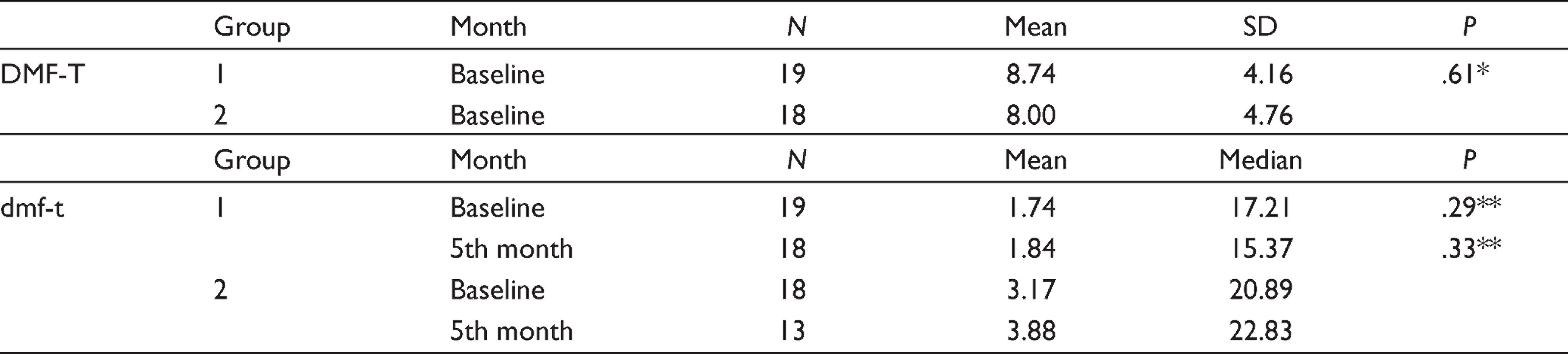
The average age of the mothers was 34.58 ± 4.1 (years) in Group 1, whereas it was 31.83 ± 4.52 (years) in Group 2. The average DMF-T (caries, missing, filled teeth count) values for mothers were 8.74 ± 4.16 in Group 1, while they were 8.0 ± 4.76 for Group 2. On the other hand, the average dmf-t values for children have been found as 1.74 ± 202 in Group 1 and 3.1 ± 3.89 in Group 2 (Table 1). There was no statistically significant difference between the groups in terms of DMF-T/dmf-t values for both mothers and children (P > .05). In both groups, there was a statically positive correlation between the amounts of saliva S. mutans in children and mothers (P < .05, P < .01; Table 2).
The Average DMF-T/dmf-t (Caries, Missing, Filled Teeth Count) Values for Mothers and Children
Correlation Between the Amount of Saliva S. Mutans in Children and Mothers in Both Groups

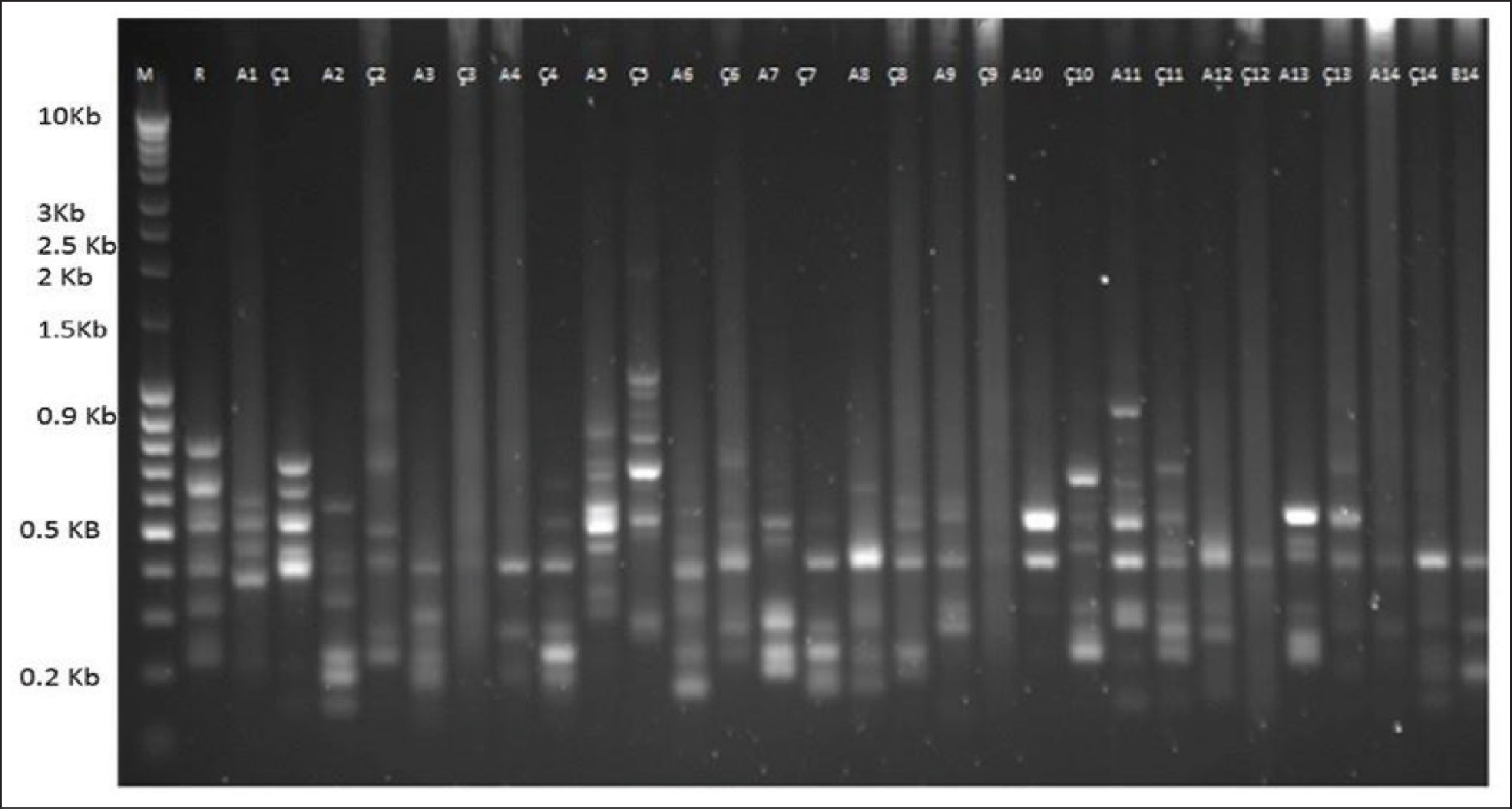
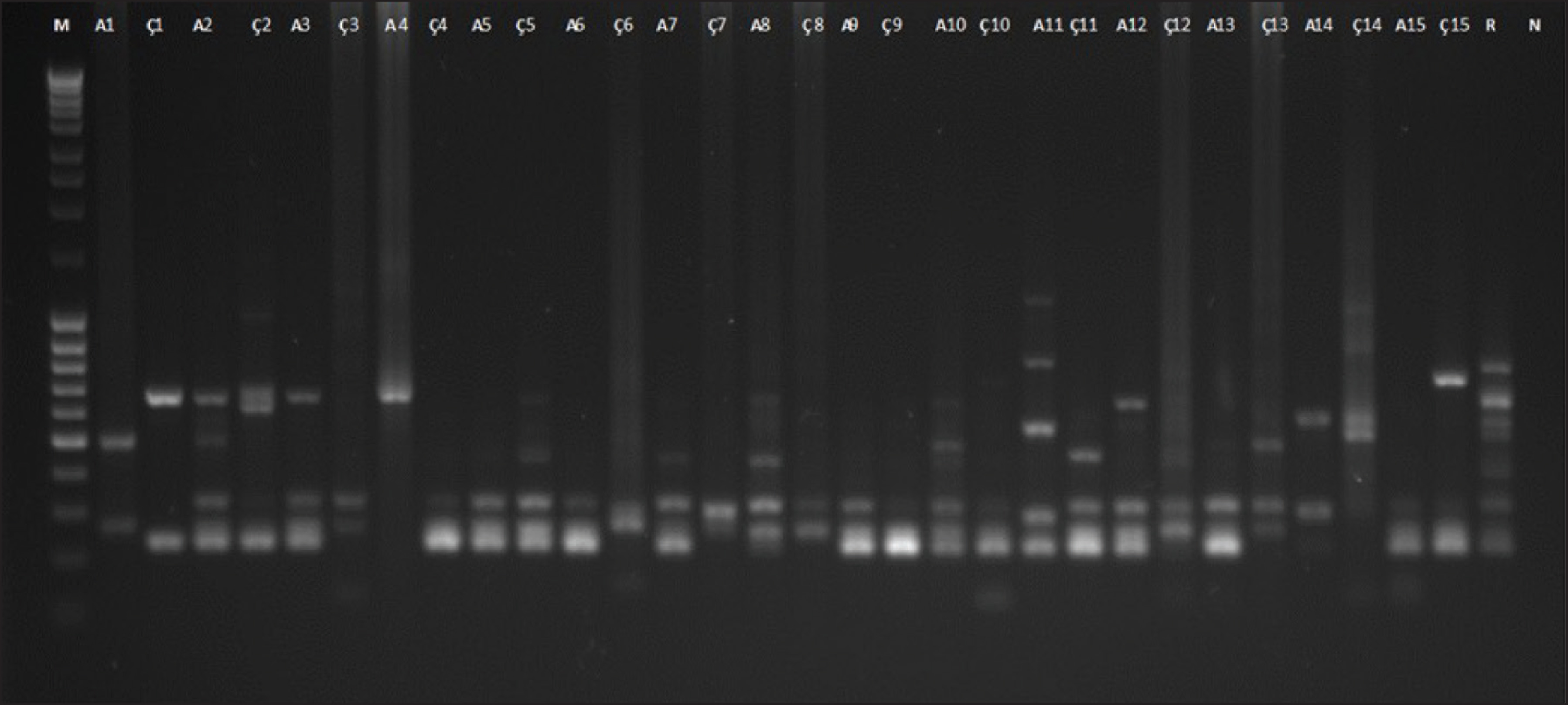
The gel electrophoresis images of the initial DNA samples obtained from children and mothers of both Group 1 and Group 2 are given in Figures 1 and 2, respectively. The levels of S. mutans similarities obtained between mother–child and child–child were evaluated by unweighted pair group method with arithmetic mean (UPGMA) analysis. In Group 1, the levels of similarities between mother and child ranged from 0% to 100%, while the average level of similarities was found as 54.62% ± 15.602. In Group 2, the levels of similarities between mother and child ranged from 36% to 87%, while the average level of similarities was found as 56.47% ± 28.22. In both groups, no statistically significant difference was observed in terms of similarity levels of mother–child S. mutans (P > .05).
S. mutans similarity level among children is 44.12% for Group 1 and 46.72% for Group 2; there is no statistically significant difference (P > .05) between similarity levels of children with each other in both groups. It was determined that there is 100% similarity by UPGMA analysis between the kindergarten staff, and teacher one, and child 12 and child 13 in Group 1, there is 80% similarity between the teacher and child 1, child 2, child 8, child 12, and child 17. A statistically significant relationship was found between DMF-T values of mothers and similarity levels of mother–child S. mutans (P < .05, P < .01; Table 3). There was no statistically significant correlation between saliva S. mutans amounts of mothers and similarity levels both in groups and intergroups (P > .05).
Relationship Between DMF-T Values of Mothers and Similarity Levels of Mother–Child S. Mutans

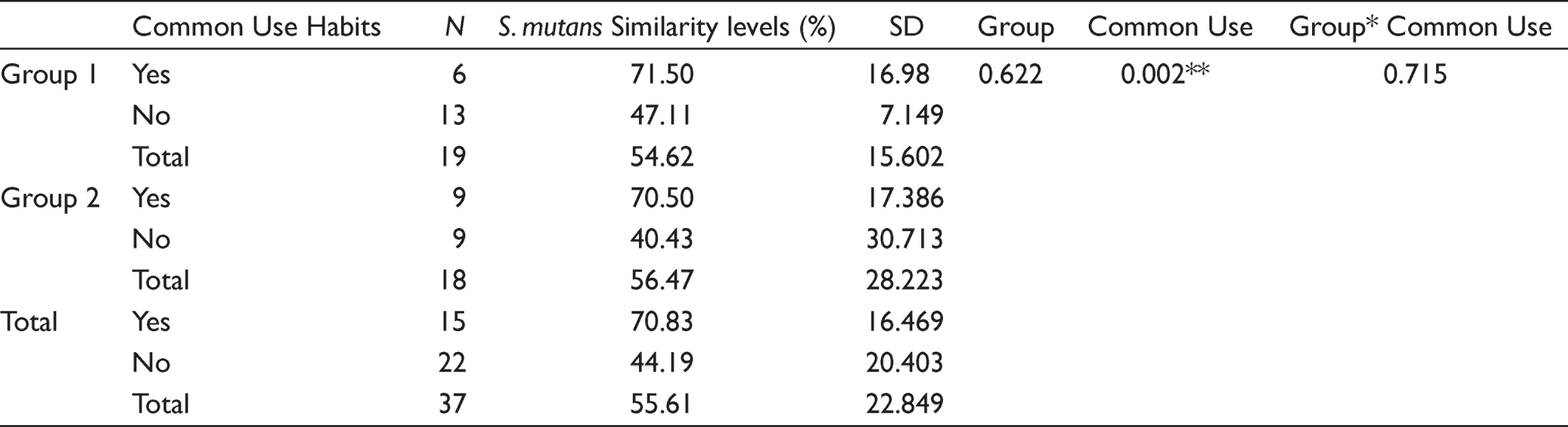
Sociodemographic findings and child-care behaviors were evaluated in accordance with questionnaire forms answered by mothers. A statistically positive correlation was found between common use habits of forks, spoons, and cups, and S. mutans similarity levels (P < .05; Table 4). There was no statistically significant relationship between the gender of the children and the similarity level of mother–child S. mutans; it has been found that the similarity level was numerically higher in girls compared to that in boys. Even though the habits of mothers such as checking the weaning spoons orally and kissing the child on the lips as well as the case in which the first caregiver was “mother only,” was not found statistically significant, they affected the transfer of S. mutans from mother to child (P > .05). The socioeconomic status had no effect on the transfer of S. mutans between mother and child (P > .05). There was no statistically significant relationship between brushing habits of mothers and children, applying a fluoride therapy to children, sleeping habits of mothers (with children), blood types, type of birth, and similarity level of S. mutans in groups and between groups (P > .05).
Correlation Between Common Use Habits of Forks, Spoons and Cups, and S. Mutans Similarity Levels
Discussion
Identifying the pathways is considered as an important step in the prevention of dental caries in order to prevent the spread of infection and provide more conscious selections for preventive methods.25,26 According to many studies conducted, there is a positive correlation between the amounts of S. mutans in a mother and a child’s oral flora.2,17,27 The findings of our study are also consistent with these findings.
In addition to the similarities observed in the amounts of S. mutans in mothers and children, it has been also determined that the S. mutans strains are also similar to each other genetically.2,9,13 The possibility of observing similar genotypes of S. mutans between mother and child shows differences between the cultures. The similarity between mother and child is reported as 71% in American society, 13 whereas it is 77% in Japanese society, 28 77% in Indian society, 2 81% in Brazil, 29 and 24% in Turkish society. 17 It has been also reported that the similarity level of mother–child S. mutans ranged from 24% to 100%.8,11,16,17,26 We propose that different values in the similarity levels may be caused by different levels of S. mutans in the saliva obtained from individuals included in the study, using different age groups and especially differences in terms of contact frequency and duration between mother and child depending on culture. In our study, the similarity level between mother and child was found as 54% for Group 1 and 56% for Group 2, respectively.
Tedjosasongko and Kozai, 18 reported that S. mutans transfer was observed at the rate of 33.3% between mother and child and 8.3% between father and child. It was also stated that the horizontal mode was effective in the settlement of other S. mutans strains (58.4%). Domejean et al. 30 investigated the horizontal transmission in kindergarten environment in children above 4 years of age. The study was conducted in three kindergartens and it was found that there were the same S. mutans genotypes in two children at each kindergarten. The transmission rate was reported as 6% for the whole group and 13% for the children infected with S. mutans. It was stated that these children spent 3.5–4 h in the kindergarten environment. It was stated that the time spent together and the common use of materials such as plates and spoons during eating and drinking are effective in horizontal transmission.19,31 In our study, the similarity was found as 44.12% for Group 1 and 46.72% for Group 2 in horizontal transmission. These values are higher compared to other studies reported; this may result from the long time (7–9 h) spent together in the kindergarten environment or the presence of conditions that lead to saliva contact (such as putting toys in the mouth or the use of glasses or spoons by all children).
Alves et al. 22 emphasized that kindergarten staff were not responsible for this transmission. In our study, it was found that the individual, who was responsible for the care of the children, and child 12 (c12) and child 13 (c13) had same S. mutans genotypes. In this case, it can be stated that the effective factor results from the close contact of the children with the teachers and other personnel, and with the wrong care habits (common use such as spoons and forks). In both groups, there was statistically significant relationship between S. mutans similarity levels and DMF-T values of mother. Because the oral cavities of mothers are favorable surfaces for the colonization of S. mutans leading to tooth decay, it can cause transfer of S. mutans from mother to child and result in tooth decay in the child by exceeding a certain threshold when this transfer continues chronically.
Wan et al., 3 reported that the level of S. mutans in the saliva of mother increases the probability of the child to be infected. On the other hand, Klein et al. 29 found that there is no connection between S. mutans amount in the saliva of mother and the transfer. According to our study, in both the groups there was an analogy between the amount of S. mutans in the mother and the level of similarity of mother –child; however, this situation was not found statistically significant. It has been also suggested that the infection risk of S. mutans from mother to child is mostly caused by close contact between the child and mother rather than higher level of S. mutans in the saliva of mother.
It has been presented that the habits such as using a common fork and spoon, consuming the same food by biting together result in transfer of saliva from mother to child.2, 3,31 In a study conducted by Wan et al., 31 it has been reported that the most important risk factor is using common kitchen tools in such transfers. In our study, a positive relationship was found between the usage habits of common forks, spoons, and cups, and similarity levels of mother–child S. mutans in both groups. In this high similarity level, the direct contact of saliva during this common use has been found to be highly effective.
Tedjosasongko and Kozai 18 have stated that kissing the child on the lips is a cause of S. mutans transfer between mother and child, whereas Aaltonen and Tenovuo 32 have stated that even this habit can be considered as a risk factor, it is not effective in the transfer of S. mutans. The findings of our study are consistent with the statement of Aaltonen and Tenovuo. 32 This habit will be a risk factor in case there is a direct saliva transfer between mother and child.
Li and Caufield 16 stated that the similarity level of S. mutans between mother and child is 88% in girls and 53% in boys, it has been reported that gender of the child is not effective in the similarity level in other studies.6,17,32 In our study, even though there was no statistically significant relationship between the similarity level of mother–child S. mutans and gender of the child, it has been determined that the similarity level is higher in girls compared to boys. It can be thought that early growth of teeth and/or close communication between girls and their mothers may be the cause of this case.
According to the findings of the questionnaire, there was no statistically significant relationship between the cases, in which the first caregiver is “mother only,” and the similarity level of mother–child S. mutans, the similarity level of these children with their mothers was found lower. If the child has the first caregiver other than mother, since the contact between mother and child is reduced.6,18 It has been determined that more dental caries are observed in the children of mothers with lower socioeconomic status 33 and they were found to be more risky in terms of transfer of S. mutans. 3 On the other hand, according to the studies conducted by Aaltonen and Tenovuo, there is no relationship between the socioeconomic status, education level of the mother, and transfer of S. mutans 32 In our study, there was no significant relationship between the socioeconomic status of mother and the similarity level of mother–child S. mutans.
This article is important to pediatric dentists because vertical transfer from mother to child and horizontal transfer from child–child and kindergarten staff to child have been observed. The null hypothesis was approved. Vertical transfer from mother to child has been shown with other studies but this article shows that the similarity level of mother and child has been observed in Turkish families. It has been also shown that the wrong care habits may result in transfer of S. mutans, which is the main factor in the tooth decay. Vertical transmission affected the children oral flora more than horizontal transmission.
Conclusion
It was determined that saliva transfer is the main factor in vertical and horizontal transmission of S. mutans that is the fundamental factor in caries. In order to prevent the transfer of S. mutans to the child, the individuals, who are responsible for the child, need to be informed about oral health and caries which is an infectious disease. Special care should be taken to create a carious-free community in our country with the policies of oral and dental health services.
Footnotes
Acknowledgements
This work was supported by the Scientific Research Committee of Ankara University.
Declaration of Conflicting Interests
The authors declared no potential conflicts of interest with respect to the research, authorship, and/or publication of this article.
Funding
The authors disclosed receipt of the following financial support for the research, authorship, and/or publication of this article: The research presented in this article was sponsored by an Australian Research Council Discovery Early Career Research Award (ARC DECRA) project titled ‘Agricultural Skill Development in India: Assessing Acquisition and Impact’ Project ID: DE180100901). Research assistance to support this project was also partially sponsored by a University of Melbourne DECRA Establishment Grant.