




Abstract
Aim:
The current exploratory research establishes a correlation between the general unemployment rate due to COVID-19 and its effect on dental healthcare service utilization, workforce, and education attainments.
Materials and methods:
The conceptual model utilized in the study is the circular flow diagram explaining economy organization. The study is an exploratory research review. PRISMA guidelines are followed for the review of articles. The literature data for the current review study is obtained from Web of Science, Statista, Grey Literature like, the Federal Bank St. Louis, American Dental Association (ADA), Health Policy Institute, to justify the economic impact in the dental industry sector. The search terms employed to search for literature from the Web of Science database are “Dental” and “COVID-19.” Only research articles published in the past one year in English language are included as the final sample of literature review. Statista, Federal Bank, and ADA are utilized to take into consideration evolving economic impact data due to COVID-19.
Results:
Much less of research has been performed on the impact of COVID-19 on dental economics, and this study is one of the insights of projections about COVID-19 impact in the dental healthcare sector. The projected hardships of the economy during and post pandemic demand for timely measures in place. The dental regulating bodies must undertake those protocols to save the dental healthcare industry.
Conclusions:
Unlike other healthcare sectors, the impact of COVID-19 will disproportionately affect the dental healthcare sector for several reasons. Given dental healthcare services aid in generating nation’s revenue like any other sector, it demands urgent actions from regulating authorities.
Introduction
The COVID-19 pandemic has affected dental health professionals, including all other healthcare sectors. Dental health professionals are at higher risk of being infected through blood, saliva, and droplets expelled through the treatment of asymptomatic COVID-19 infected patients. 1 Currently, the majority of dental practices are closed due to official closure or restrictive functionality orders issued by governing bodies in the majority of the regions around the globe.1–3 On March 16, the American Dental Association (ADA), a governing body in the USA, stated guidelines for dental professionals regarding postponement of elective surgeries in the USA. 4 Around that time, several regions of the globe were debating on a similar scenario to decide upon closure of public and private dental practices.
Moreover, the restrictive social distancing measures and complete lockdown inherently decreased dental consultations because of the postponement. The current exploratory research is one of the less explored dental economic effects implicated potentially due to COVID-19 pandemic measures. Reduction in elective treatment dental visits has impacted the dental health industry sector. 5 The inability to screen patients before deciding the treatment has led to dental practice closure around the globe. 5 The dental office production and revenue are strongly associated with the consumer’s disposable income and, in the current economic recession, might cause a decrease in patient demand for utilization of dental services. 6 The strict shelter-in-place orders to a varying extent in different parts of the globe have affected dental practices like other small- and large-scale businesses. 6
The current exploratory research review aims to explore and determine the association between decreased dental service utilization and potential economic impact in the dental healthcare sector around the globe, depending on the overall economic impact in the economy market. The basic circular flow diagram 7 is one of the economic models utilized as a conceptual model to support the argument of impact on dental economics and a potential impact the pandemic will cause in the time of forecasted recession. Further, the article reviews associated multifactor implications based on the conceptual model by considering practicing professionals, the graduate dental students/candidates as well as prospective students. Finally, the COVID-19 effects on the dental school applications for the advanced standing program as well as the standard four-year program are depicted.
The article aims to address and project potential implications and solutions through the analysis of current and projected scenarios on dental economics and policies. To the best of our knowledge, there is a shortage of empirical research or analysis on COIVD-19 impact on dental economics. Hence, the article addresses key components as the following questions by drawing correlations through the conceptual framework of microeconomics theory:
What impact will COVID-19 have on employment of dental practitioners? How will the global recession affect dental healthcare service utilization? How dental education and training will be affected due to COVID-19 non-pharmaceutical measures? Are there any commonalities of past recessions that could help provide insights on current COVID-19 impact on dental healthcare service utilization?
Materials and Methods
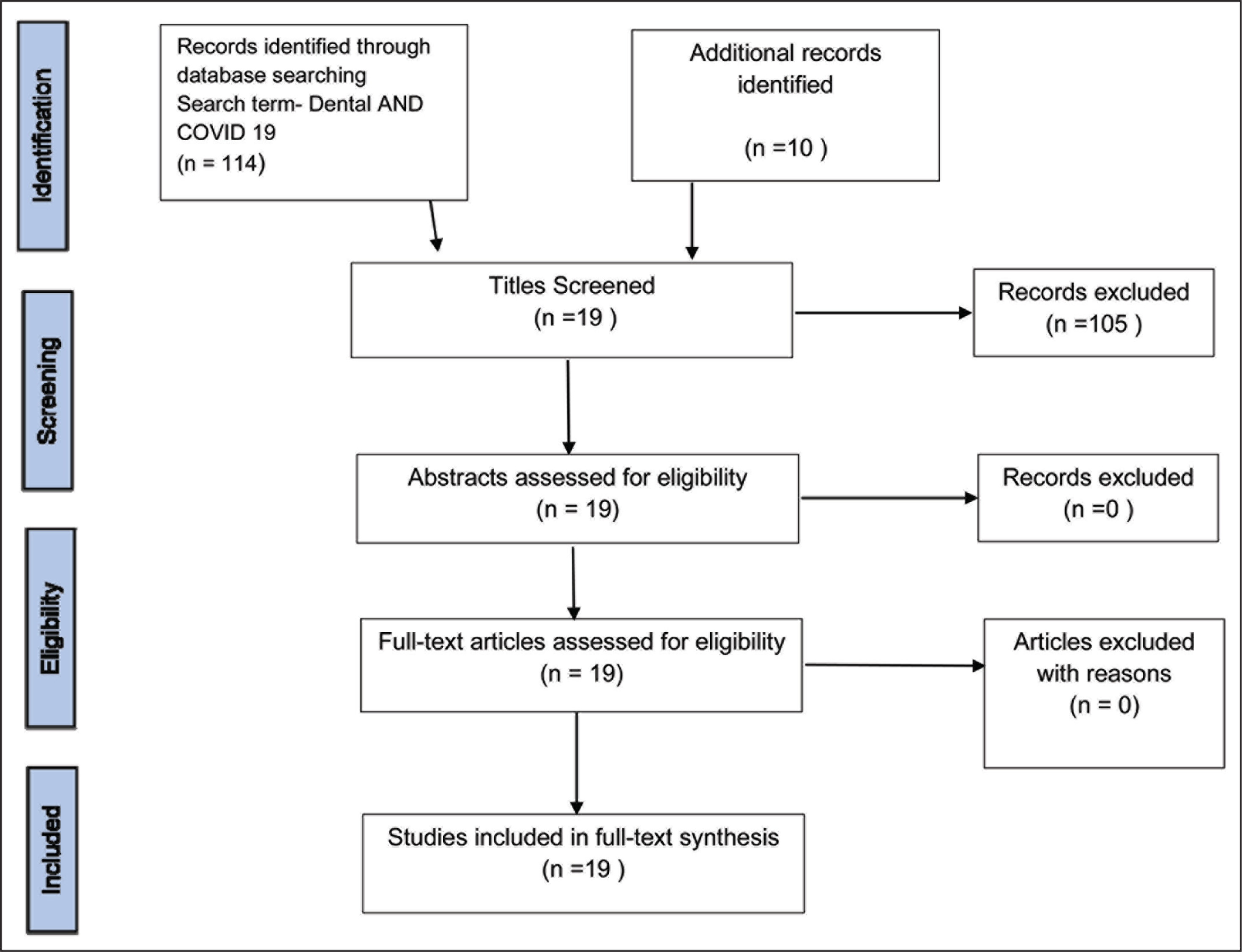
The data for this review study has been obtained from Web of Science, Statista, reliable online resources, the Federal Bank St. Louis, ADA, Health Policy Institute, and economic model to justify the economic impact in the dental industry. The absence of currently available literature and data on the dental economy encourages the utilization of online resources. The PRISMA guidelines are followed for the search of relevant literature on the Web of Sciences database. The search key words employed for the search are “COVID 19” and “Dental”. Majority of the available literature didn’t exclusively mention about dental economics, so grey literature is utilized for the current exploratory review. The final sample of articles utilized in this article can be found in the flow chart (Figure 1).
PRISMA flow chart of literature review performed utilizing Web of Sciences and online resources such as Statista, Federal Bank St. Louis, ADA
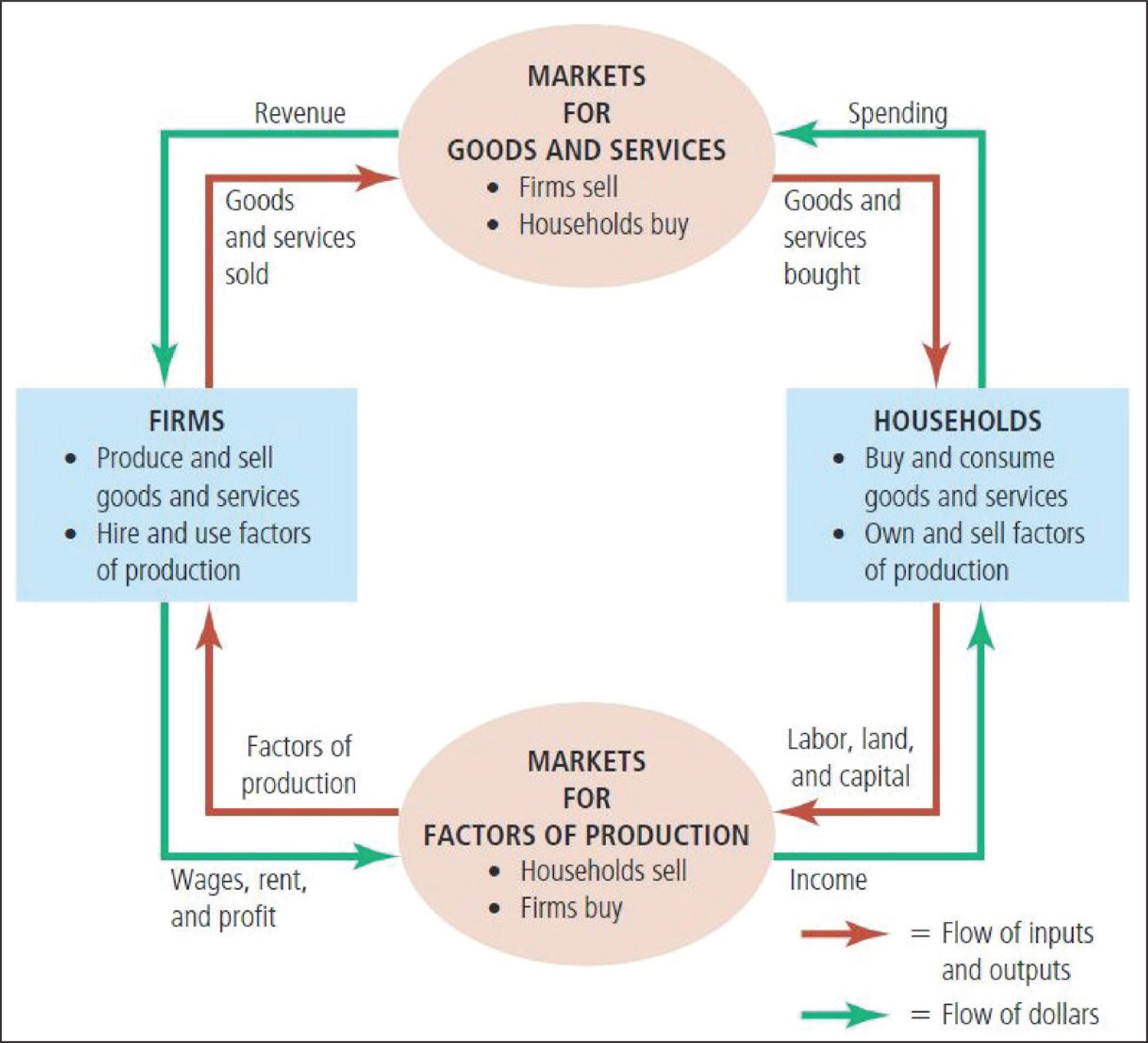
The Conceptual Economic Model: Circular Flow Diagram 7
The circular flow diagram explains how the entire economy is organized in the real world. The households are the consumer of goods and services produced in this case, that is, dental services, and firms are dental service providers who make and sell the goods and services. It can also include technicians, dental material producers, and suppliers. To better understand the current COVID-19 crisis, the markets for goods and services are currently lower in terms of revenue flow. The reason is restrictions imposed by non-pharmaceutical measures. The households are not buying, in this case, utilizing dental services, anymore. In return, the potential long-term impact the dental industry might face is a reduction in the hiring process and, in some scenarios, layoffs. The reason is that the market for factors of production is indirectly associated with the firm’s ability to generate revenue as the disposable income of households impacts the revenue. The wages for the dentists cannot be made depending on the type and status of dental practitioners as well as the type of employment setting. The multifactorial scenario to determine dental economic impacts due to COVID-19 includes the type of employment for dental practitioners, the utilization of dental healthcare services, disposable income loss (unemployment overall), interests in pursuing a dental degree to generate future workforce in the field, etc. (Figure 2).
Result
Determining factors of the conceptual model are evaluated taking into consideration broader components like Impact on dental industry and Dental education during and post COVID-19 period.
Employment for Dental Practitioners
The industries which hire dental health professionals include offices of dentists, offices of physicians, outpatient care centers, general medical and surgical hospitals, state government, dental schools, and occupation-specific employment in the industry. 8 The highest concentration of job among dentists are in offices of the dentist (98,970) followed by outpatient care centers (2,840). 8 It is safe to predict that the economic impact of COVID-19 can jointly affect dentists who are employed by any healthcare service provider sector or industry.
The official functionality orders issued by governing bodies in respective countries have caused a reduction in dental service utilization. Moreover, due to social distancing measures, the consumers of dental services might avoid dental visits to prevent getting the COVID-19 infection. 9 Also, the fee for dental service comes to some extent from employer-based dental insurances and partly from out of pocket. 6 In such a scenario, it is highly predictable that unlike other healthcare services, dental healthcare service utilization is highly based on employment rates, which generates disposable income.
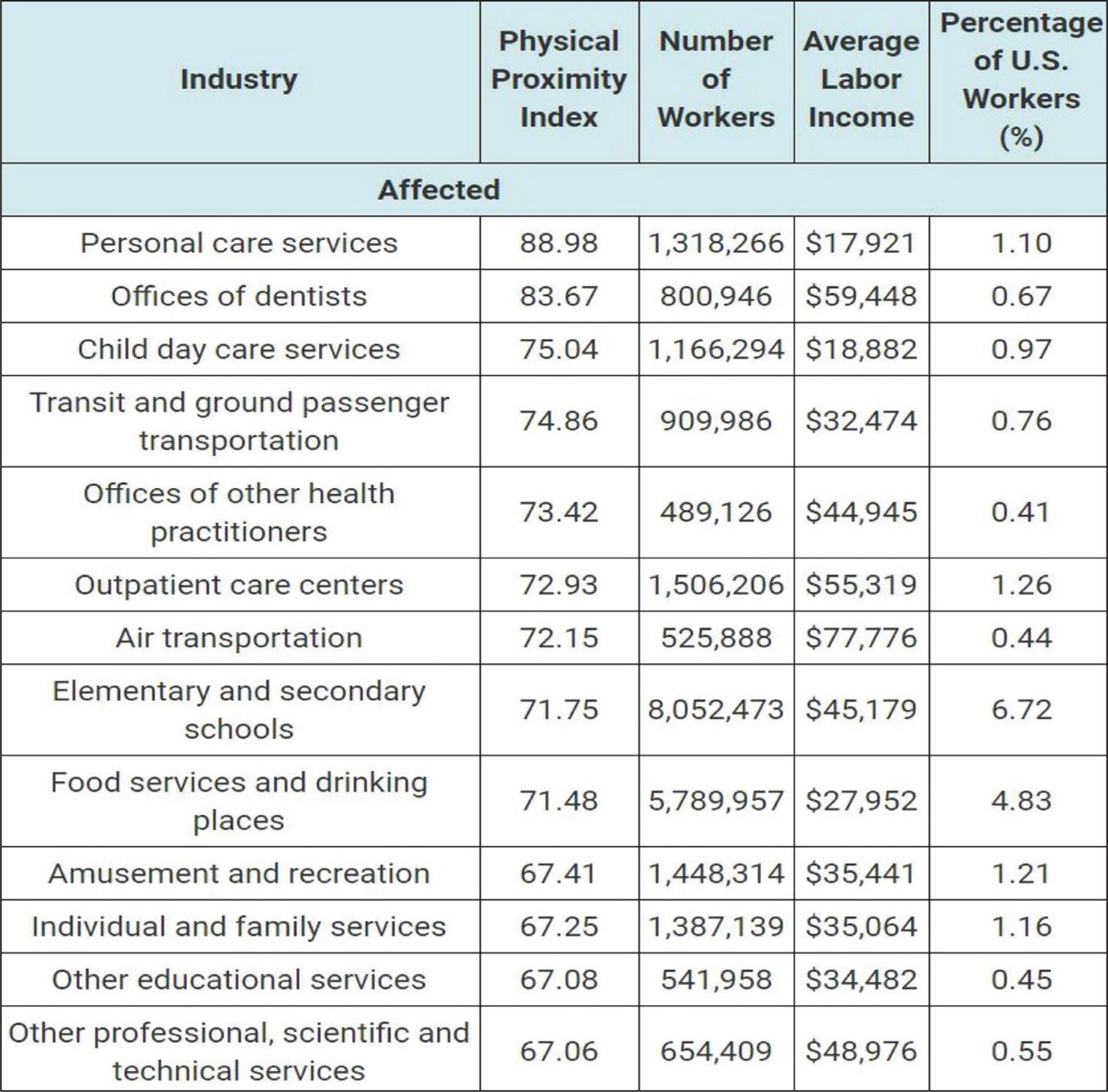
The recent reports on the effects of COVID-19 in the different industry sectors based on the extent of contact and face-to-face working were issued. 9 The disproportionate distribution of economic impact due to COVID-19 would strike contact intensive workforce and job sectors as depicted in Figure 3. The partial reason for this disparity might be effective social distancing measures and associated stigma of being infected.
The affected group accounts for a significant share of US employment and labor income: 35% of the total US employment and 27% of the total labor income. 9 So, the decline in demand for dental services offered by dental offices can profoundly impact jobs and labor. 9 Moreover, the type of establishments that hire dental professionals can determine the rate of unemployment among dental professionals. Higher the support system to save the establishments from getting bankrupt, higher the chances of retainment. Extended reopening until August 2020, might lead 46% of the Dentists in United States to file for bankruptcy as per recent survey administered by ADA. 10 This would mean higher unemployment rates among dental office establishments that hire dentists, dental hygienists, dental assistants, etc. Given the limited economic resources to support several industry sectors, it is unpredictable if the smaller dental establishments would survive longer or would they form a coalition with other sectors to survive. A recent survey administered by ADA determined that 93% of the 19,154 survey respondents stated that their private dental practice was neither owned by any franchise nor associated with larger dental group service providers. Of those, 81.7% work as private practitioners and 14.8% work as non-owner dentists. 11 Hence, it is essential to consider coalition-building among private dental practice owners to generate better revenue in the crisis (Figure 3).
Observations from Past and Present
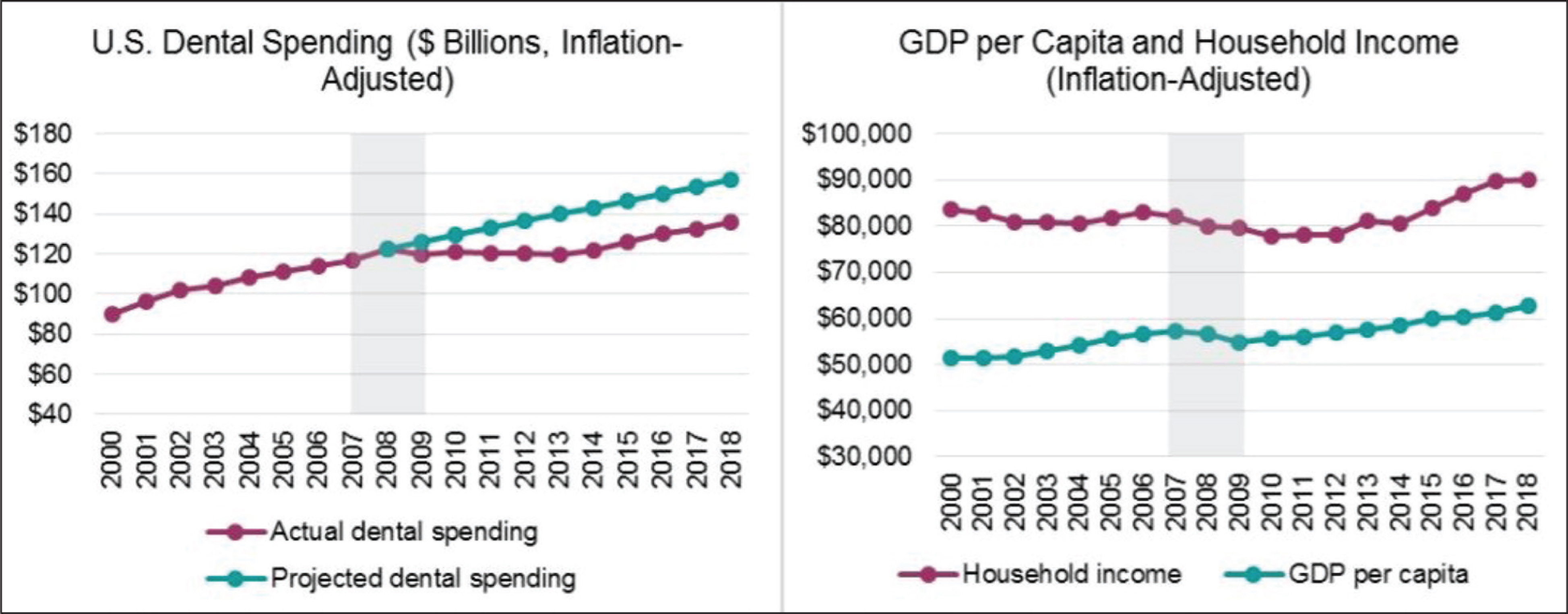
Although the type of employment can highly predict the impact on the dental economy, it is crucial to observe real-time data. Less than 5% of the patient volume in a dental practice was observed by 84.3% US dentists, as per recent survey administered by ADA. 10 Figure 4 represents that the dental service utilization spending took a while until around 2015 to recover the recession. Although it cannot be predicted what type of recovery the dental sector would acquire after the COVID-19 impact, reduction in dental service utilization and higher unemployment rates in dentists around the globe will be observable (Figures 4–6).
It can be established through Figures 4–6 that the recession impacts the dental industry sector to some extent, like any other business. They also depict different health sectors affected by the recession. It took up to six years, on average, to recover from the Great Depression. The factors affecting recovery might not be the same, but an overall projection can help prepare the dental healthcare sector. The flow of income and employment rate determine the utilization of dental healthcare services, unlike other essential healthcare services.
US dental spending post the Great Recession, and GDP. The actual dental expenditure was less than that projected and significantly varied post recession as the GDP per capita was lower
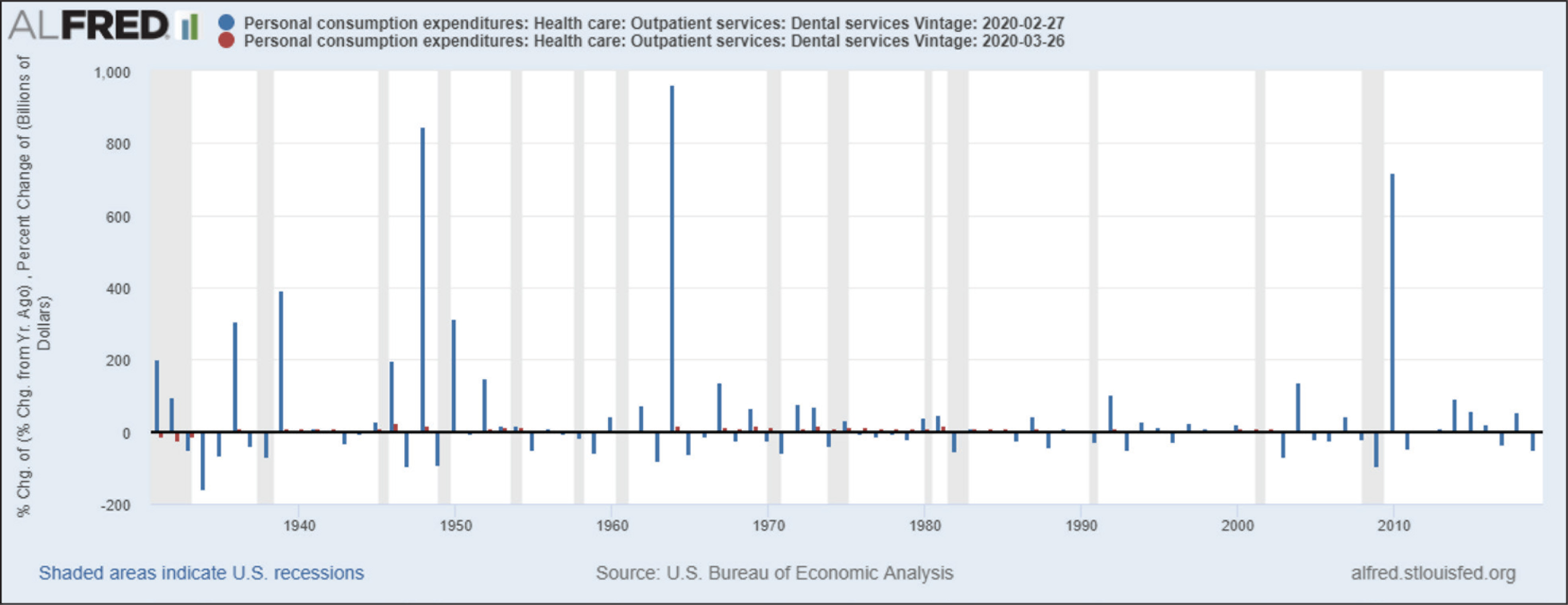
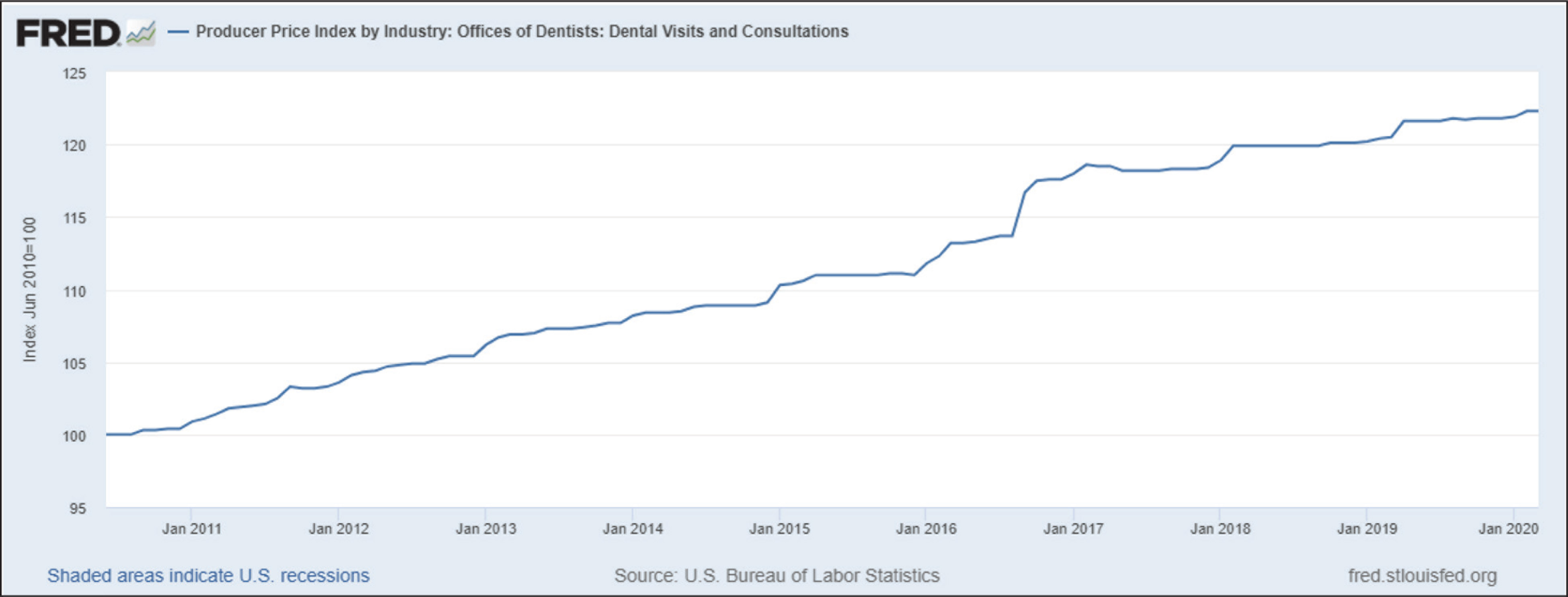
The reduction in utilization of dental services will affect the employment among dental hygienists, dentists, dental assistants, dental lab technicians, and dental material-producing and supplier industry. The circular flow diagram of the economic organization and the graphs justify the scenario. If the revenue is not generated through dental service utilization, spillover to not just dentists but to associated professionals can be projected in the COVID-19 crisis. It must be taken into consideration that the type of healthcare service provider, insurance type, amount out of pocket, co-insurance amount if any, all these factors play a crucial role in maintaining patient volume globally. Currently, the pandemic has shifted the perception from utilizing all dental services to just the emergency care services. Post COVID-19, to regain the patient volume and generate revenue for the dental economy sector, it is vital to restore patient’s trust in the measures the dental practices may take to avoid cross-infection. Modern technology can be utilized for a storytelling communication strategy to retain older patients as well as encourage both new and more former patients to continue using the elective as well as emergency dental healthcare services. 12 Utilizing social media for regaining patient’s trust regarding protective measures once the dental practices open, oral health trackers like other health trackers can help encourage patients to continue dental visits.
Loss of Personal Finances in COVID-19 Among Global Regions
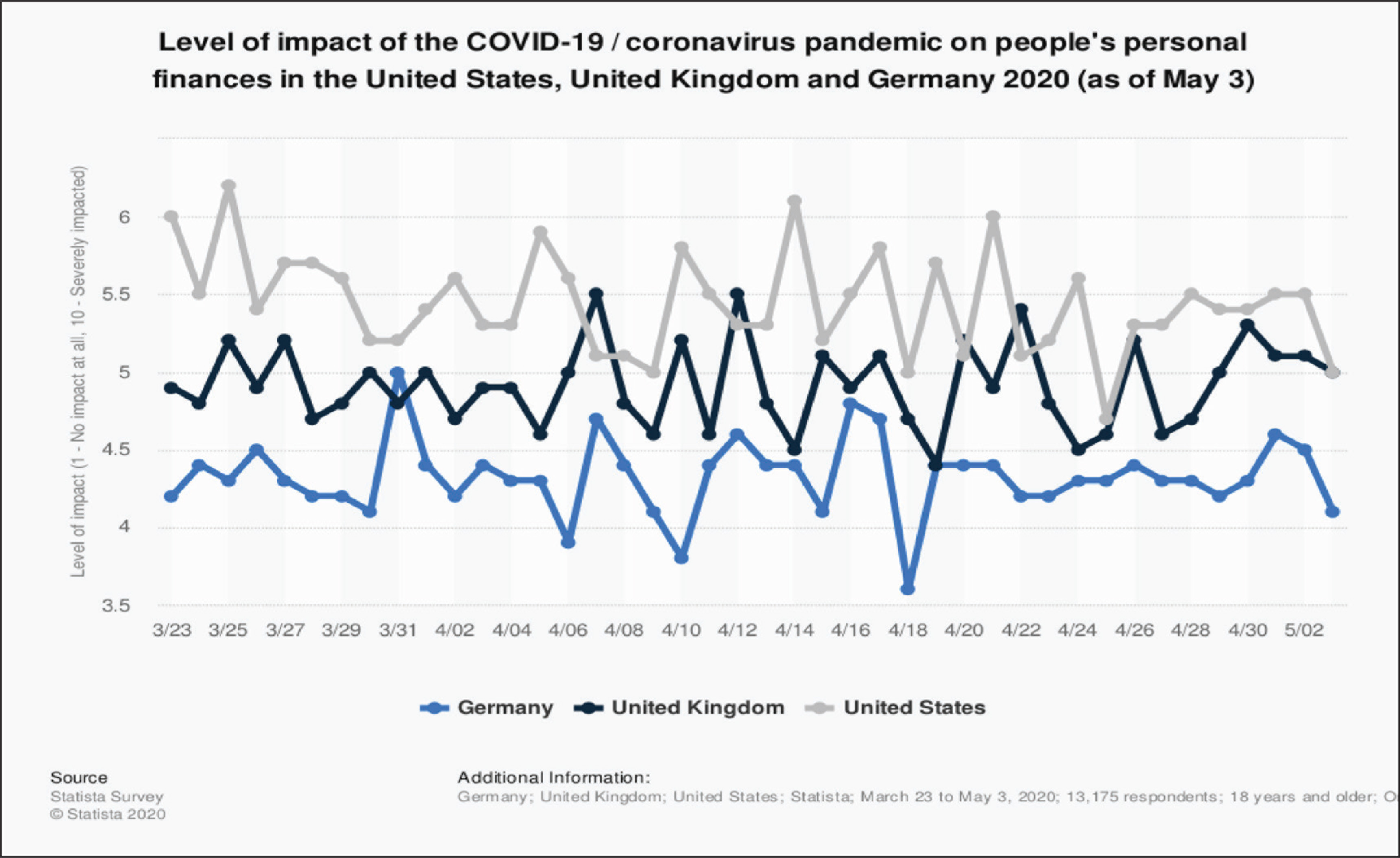
One of the factors vital to economy organization flow is personal finances (disposable income). The insurance providers charging higher copays for dental service utilization or dental visits might see a decline in dental services utilization post COVID-19. Higher out of pocket, less comprehensive dental insurances and reduced disposal income might lead to reduced patient visitations among general and specialty dental practices. As depicted from Figure 7, as of May 2, 2020, the people of the USA face higher impact of the loss of personal finances compared to the United Kingdom and Germany, the other two regions of the world. In such a scenario, it might be partially in the scope of the dentists and their practice to retain patient volume by providing a financial waiver to some extent or providing a finance plan to patients who are unable to pay on the first visit. It is essential to understand that the dental economy is two-faced, where not just the consumers of goods but also dental firms play a role in recovering to a stable economy and reducing unemployment rates among dentists. The unemployment rate and disposable income for a specific country’s economy determine the importance of the utilization of goods and services produced in that country. A total of 45% of dental practices partially paid their staff, while 28% didn’t pay at all to their team. 11 In this pandemic, utilization of telehealth services among dental practices—teledentistry—might also help to some extent 13 by not charging the patients with a very significant amount for regular consultations before the physical visit (Figure 7).
Level of the impact of COVID-19 among personal finances of people living in the USA, UK, and Germany where the USA seems to be affected highly compared to Germany and the UK
Impact on Dental Education
The services provided by dental schools are temporarily suspended until further notice, and the teaching–learning is conducted virtually.14,15 The teaching–learning experience of dental schools has been disrupted due to COVID-19 guidelines issued for the safety of school staff and students. 15 Shift to virtually learning due to closure of in-person student clinical rotations among dental schools, has occurred in efforts to protect dental school staff and students from infection. 15 Post COVID-19, given the postponement of elective treatments, dental students are expected to face unfulfilled clinic requirements, mainly third-year students of spring 2020. 15 Postponing in-person patient care appointments is challenging for dental students, given it is a vital component of any dental curriculum. 14 For the class of final year students, a qualifying license exam is required in which patients need to be brought to the examination. This seems to be beyond possibility during this pandemic given both the patient-perceived notion about getting infected by COVID-19 and dental school closures. For specific education fields in which in-person curricular requirements are necessary to get trained successfully, the pandemic has disrupted the learning process. Not only does it affect student learning, but economically, the revenue generated by dental schools might be affected due to reduced patient flow during and post the pandemic of COVID-19. Economically, mainly personal protective dental production supplier might increase their rates. The brunt of recession might be apparent over the long run, which the dental students might face. A requirement for possessing specific tools or technology to learn might increase the monetary burden on dental students. Given some students might be on the student loan, the economic brunt 16 might eventually cause higher student drop-off ratio in dental schools leading to reduced future dental healthcare workforce if necessary measures are not undertaken in time. The circular flow diagram justifies the reason for the drop in labor if disposable money is not generated for dental students.
While most schools are open for emergency treatments only, some dental schools are practicing social distancing in their preclinic simulation labs for learning environment as per the state policies, which differ from state to state. 14 It is beyond the scope of power for some dental teaching faculty as well as school technology to simulate and provide virtual manikin exercises. It also seems to be a burden for students who cannot afford the technology 17 economically to sit and pass in a virtual licensing exam. 18 A restructuring of the dental curriculum might be necessary considering all economic aspects both for faculty, administration, and students if the pandemic containment seems uncertain for licensing exams.
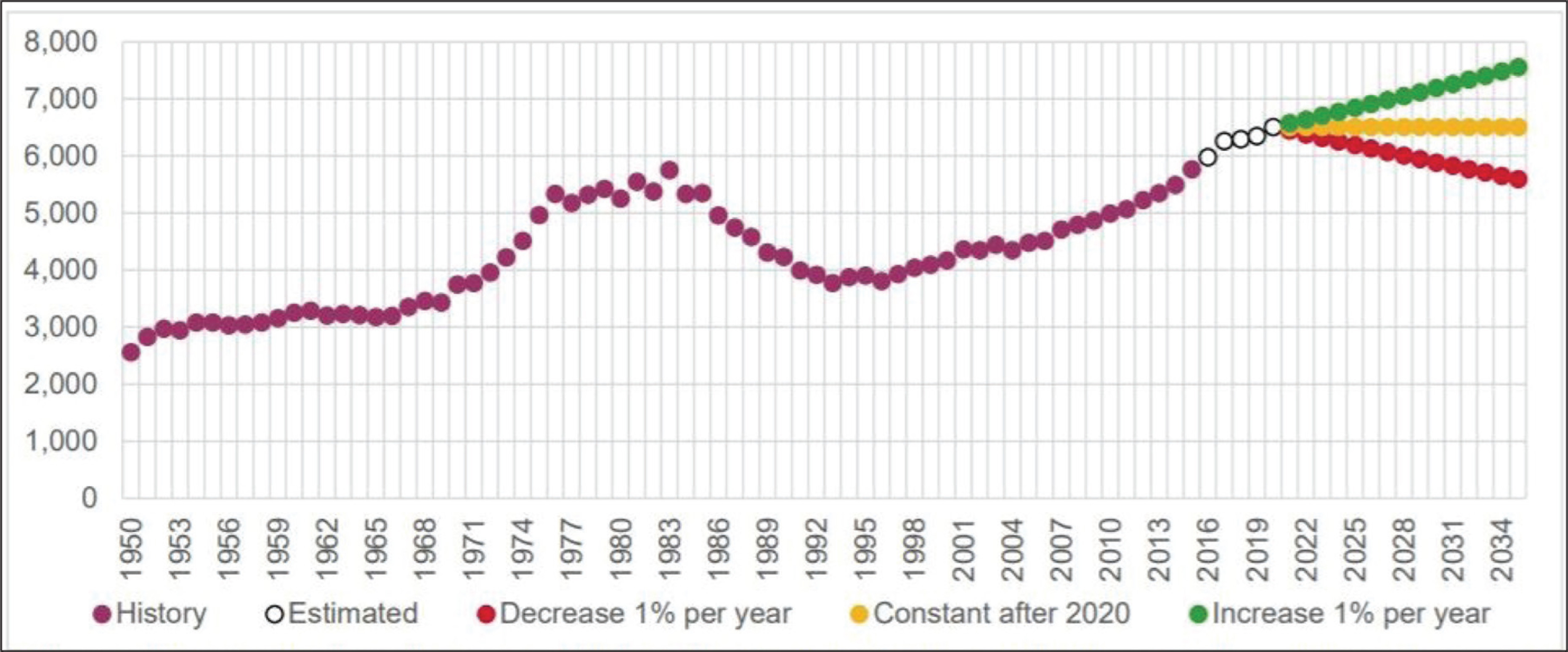
Additionally, the prospective student applying for advanced standing dental programs or dental degree programs might face similar economic burdens as well as delays in processing the applications. 17 The current travel restrictions, as well as the inability to visit the dental school campus, might impose some difficulty if the conventional face-to-face interviews were to be conducted in US dental schools. 17 The perception of prospective students in several ways might impact a lower turnover of applicants compared to previous years. 17 The conceptual model 19 explains how the US state-level dental workforce is formed, and a variation in the input of foreign dentists might affect the total ratio of practicing dentists. The expected number of graduates might decrease in the post-pandemic period for several factors higher than a 1% decrease, as projected in Figure 8. The economic factor might be a significant concern for a reducing trend among potential dental school applicants 16 (Figure 8).
Discussion
There are several policy implications to be considered, given the potential impact on dental health economics and outcomes. There are four major factors to be addressed:
Retain already practicing dental healthcare workforce. Retain the existing patient volume for elective dental treatments post pandemic. Stabilize the dental economy post COVID-19 pandemic. Retain the volume of prospective dental students.
To address the first factor, a multidisciplinary coalition building might serve partly as a solution for private small dental office owners. Mergers might help retain and pay the existing staff for that dental office. The regulating bodies of respective regions must take appropriate measures to maintain the dental healthcare workforce like any other healthcare professionals during this pandemic. To be able to retain existing patient volume, teledentistry might serve as a cushion effect for existing patients to some extent while other dental procedures are postponed.
A standard protocol for all private and public dental practice owners must be set to avoid any further confusion among patients. The dental association, as an entire community, must take appropriate measures to decide upon the type of dental healthcare insurances or dental healthcare financial support they might facilitate to encourage the patient to continue receiving elective treatments. Since economic factor is vital in retaining the utilization of dental services, some sort of financial relief or plan might help keep patient volume.
The third factor can be addressed by governing bodies of a country that has the authority for the distribution of economic resources. Like other industry sectors, the dental industry must be considered as a profoundly affected sector due to COVID-19, and similar measures, economic stimulus provided by national government to private/Government dental practices, must be taken to save the dental economy. Finally, considering technology capacity before deciding upon virtual interviews might help to some extent in retaining the volume of both native and international students. Extension of application deadlines, a waiver of some time for the requirement of standardized tests, and timely response from dental administration regarding the next steps might encourage prospective students to apply.
Conclusion
The current research projections are not based upon tested projection models given the dearth of secondary data analysis projection models brought to attention through PRISMA search. The strength of the paper is the utilization of a circular flow diagram as the conceptual framework to guide the decision-making of projections utilizing existing projections and literature available at the point in time. The dental healthcare workforce, dental education imparting institutions, and public or private dental practices might be affected disproportionately due to non-pharmaceutical measures. Given the potential stigma and uncertain echoes of keeping distance to avoid getting infected, dental healthcare services might be worst affected. They are also considered to be non-essential healthcare services, so during and post COVID-19 until an emergency, the dental industry might expect uncertain consequences in contributing to nation’s revenue unlike other medical healthcare sectors. Timely intervention cannot only help the dental healthcare providers but also the dental material production industries.
Footnotes
Acknowledgements
I would like to appreciate the support from the National Science Foundation Funded research center CHOT at the University of Louisville, for believing in us to attain our educational goals.
Declaration of Conflicting Interests
The author declared no potential conflicts of interest with respect to the research, authorship, and/or publication of this article.
Funding
The author received no financial support for the research, authorship, and/or publication of this article.