




Abstract
Background and Aims:
Animal models have been demonstrating that MMPs have an important function in the tooth eruption process. The aim of this study was to evaluate the association between genetic polymorphisms in MMP8 and MMP13 and delayed tooth eruption of permanent teeth.
Materials and Methods:
This cross-sectional study selected 216 children, 9- to 12-year-old, from public schools at Manaus, Amazonas, Brazil. During oral clinical examination, each permanent tooth emerged in the oral cavity was evaluated. Children were considered with delayed tooth eruption when at least one permanent tooth was delayed and were classified in 2 groups: children “with delayed tooth emergency” and “without delayed tooth emergency.” Saliva samples were collected from DNA extraction. The genetic polymorphisms rs17099443 and rs3765620 in MMP8, and rs478927 and rs2252070 in MMP13 were genotyped.
Statistical Analysis:
PLINK V1.07 (
Results:
The polymorphism rs17099443 in MMP8 was associated with delayed tooth eruption in the genotype distribution (P = .05). In the allele distribution, the C allele was underrepresented in children with delayed tooth eruption (P = .01; OR = 0.61, 95% confidence interval, 0.41–0.9).
Conclusion:
The genetic polymorphism rs17099443 in MMP8 is associated with delayed tooth eruption.
Keywords
Introduction
Matrix metalloproteinases (MMPs) comprise an important family of calcium-dependent zinc-containing enzymes. MMPs are the main regulators of extracellular matrix (ECM) turnover that are able to degrade most components of the ECM.1-5 The human MMP family is composed of 23 enzymes that are classified into collagenases, stromelysins, gelatinases, and membrane-type matrix metalloproteinase subfamilies. 6 MMP8, which is also known as collagenase-2, and MMP13, which is also known as collagenase-3, can degrade ECM components, as collagens, gelatin, aggrecan, perlecan, and fibronectin.6-8 Animal models have been demonstrating that MMPs have an important function in the tooth eruption process, which involves extensive degradation and reorganization of ECM components. 9 The expression of MMP8 and 13 was investigated during rat tooth eruption, and it was concluded that both enzymes are involved in this process. 10
Tooth eruption is the movement of the tooth from its site of development in alveolar bone to the occlusal plane in the oral cavity, which is defined as tooth emergence. Tooth eruption is a complex process, which is divided into 5 stages: preeruptive movements, intraosseous stage, mucosal penetration, preocclusal, and postocclusal stages. 11 It has been demonstrated that normal permanent tooth eruption into oral cavity occurs over a broad chronological age range and can be influenced by a number of reasons, including genetic factors. 12 However, the role of the genetic polymorphisms in the time of permanent tooth eruption is still unexplored. Therefore, the hypothesis of the present study is that genetic polymorphisms in MMP8 and MMP13 are involved in the delayed tooth emergency.
The present study aimed to evaluate the association between the genetic polymorphisms rs17099443 and rs3765620 in MMP8 and rs478927 and rs2252070 in MMP13 and delayed tooth eruption of permanent teeth.
Materials and Methods
Studied Population
The Human Ethics Committee of Amazon State University (923.569) approved this study. This cross-sectional study recruited patients between March and December of 2017. Two hundred sixteen children, age range from 9 to 12 years old, were selected from public schools at Manaus, Amazonas state, Brazil. Informed written consent was obtained from the legal guardians and/or parents, and age-appropriate assent document was used for all children. Biologically unrelated children, with no syndrome or systemic illness, history of dental trauma, teeth of early loss caused by caries, were included in the study. Children undergoing fixed or removable orthodontic treatment were excluded. The null hypothesis of the present study is that the genetic polymorphisms rs17099443 and rs3765620 in MMP8 and rs478927 and rs2252070 in MMP13 are not associated with delayed tooth eruption of permanent teeth.
Evaluation Permanent Tooth Emergency
Two specialists in pediatric dentistry (KRFV and SSE) performed the oral examination in the dental office under artificial light. Each permanent tooth emerged in the oral cavity of each patient was evaluated. A tooth was considered erupted when any part of its crown had penetrated the gingiva and was visible in the oral cavity. The timing of permanent teeth eruption was recorded on the chart.
Delayed tooth eruption was classified based on the table that is based on sex13-17 proposed for the Brazilian population. 18 Children were considered with delayed tooth eruption when at least one permanent tooth is delayed. Therefore, children were classified in 2 groups: “with delayed tooth emergency” and “without delayed tooth emergency.”
DNA Extraction and Genotyping Analysis
Initially, children were instructed to provide unstimulated saliva (5 mL) in a 50-mL propylene tube, and then to rinse the mouth with 10 mL of saline and expectorating the rinse until completing the tube’s volume. The tubes containing the samples were immediately transported and stored at −20°C for further analysis. Genomic DNA of patients was extracted from buccal epithelial cells from saliva samples and purified with ammonium acetate at 10 M and 1 mM EDTA as previously described. 19 Quantification of the concentration and purity of the DNA were determined by spectrophotometer (Nanodrop 1000; Thermo Scientific, Wilmington, DE, USA).
MMP8 and MMP13 are both located in the chromosome 11. Four polymorphisms in these genes were selected based on their minor allele frequency, which should be higher than 30%. The characteristics of the studied genetic polymorphisms are presented in Table 1, which demonstrated the type of the alteration and the global minor allele frequency. Two studied polymorphisms (rs17099443 and rs478927) are located in intronic region. The polymorphism rs3765620 is a missense in which threonine is replaced by isoleucine amino acid. The rs2252070 is an upstream variant. Genotyping was blindly performed by polymerase chain reactions (PCR) using the TaqMan assay 20 in a real-time PCR equipment using end-point analysis (Applied Biosystems; Prism QuantStudio 6 Flex PCR System; Thermo Fisher Scientific, Foster City, CA, USA). Real-time PCR reactions were performed in a total volume of 3 μL (4 ng DNA/reaction, 1.5 μL Taqman PCR master mix, 0.075 SNP assay; Applied Biosystems, Foster City, CA, USA). The thermal cycling was carried out by starting with a hold cycle of 95°C for 10 min, followed by 40 amplification cycles of 92°C for 15 s and 60°C for 1 min. The probes and the master mix were from Applied Biosystems.
Characteristics of the Studied Genetic Polymorphisms
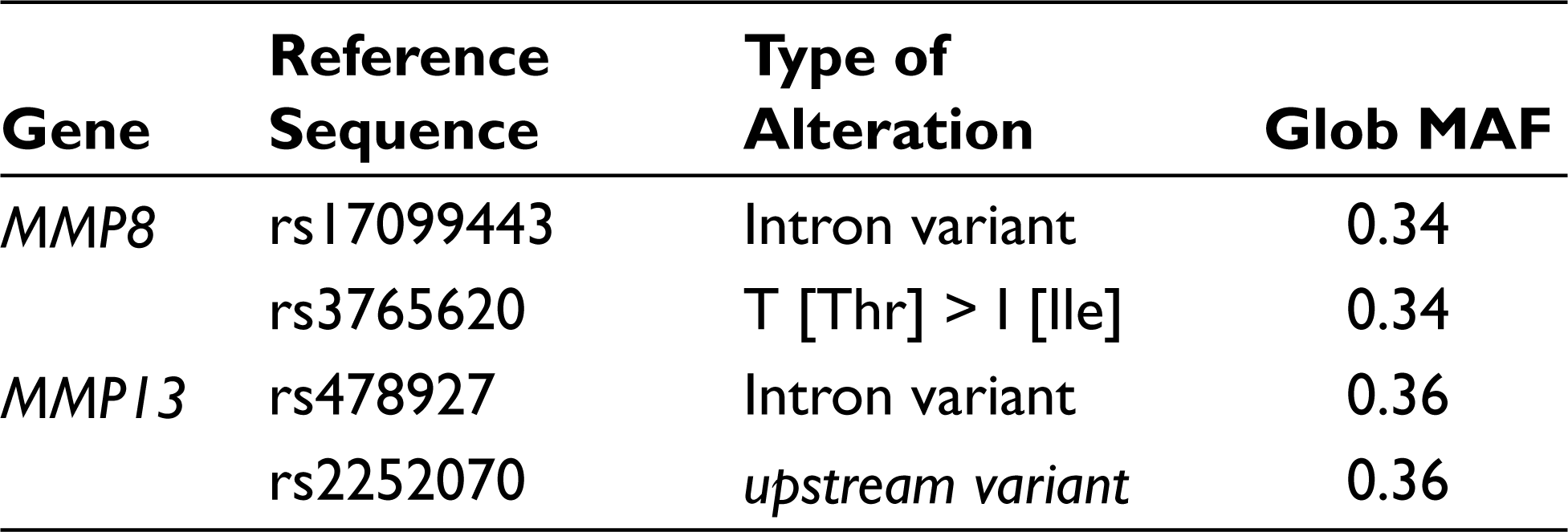
Abbreviation: MAF, minor allele frequency.
Statistical Analyses
The descriptive analysis was performed using the program GraphPad Prism 5.0 (San Diego, CA, USA), and allelic discrimination was analyzed using the program PLINK V1.07 (
The c2 or Fisher exact test and odds ratio were used to compare allele and genotype distributions in children “with delayed tooth eruption” and “without delayed tooth eruption.”
The Shapiro-Wilk test was used to verify the normality of the data. To compare the mean number of delayed teeth according to genotypes, the Kruskal-Wallis test with multiple comparison Dunn test was used. The established alpha for all comparisons was 5% (P ≤ .05).
Results
Out of 216 studied children, 108 (50%) were boys and 108 (50%) were girls. Eighty-seven (40.3%) children had mixed dentition, and 129 (59.7%) had permanent dentition. A total of 126 children were included in the group “delayed tooth emergency” and 90 children were included in the group “without delayed tooth emergency.” Table 2 demonstrated the absolute and relative frequency of each tooth with delayed eruption. The most common tooth with delayed tooth eruption was the upper first premolar (33.95%), followed by the lower first premolar (31.5%) and the upper second premolar (17.90%).
Delayed Tooth Eruption Distribution According to the Type of Teeth
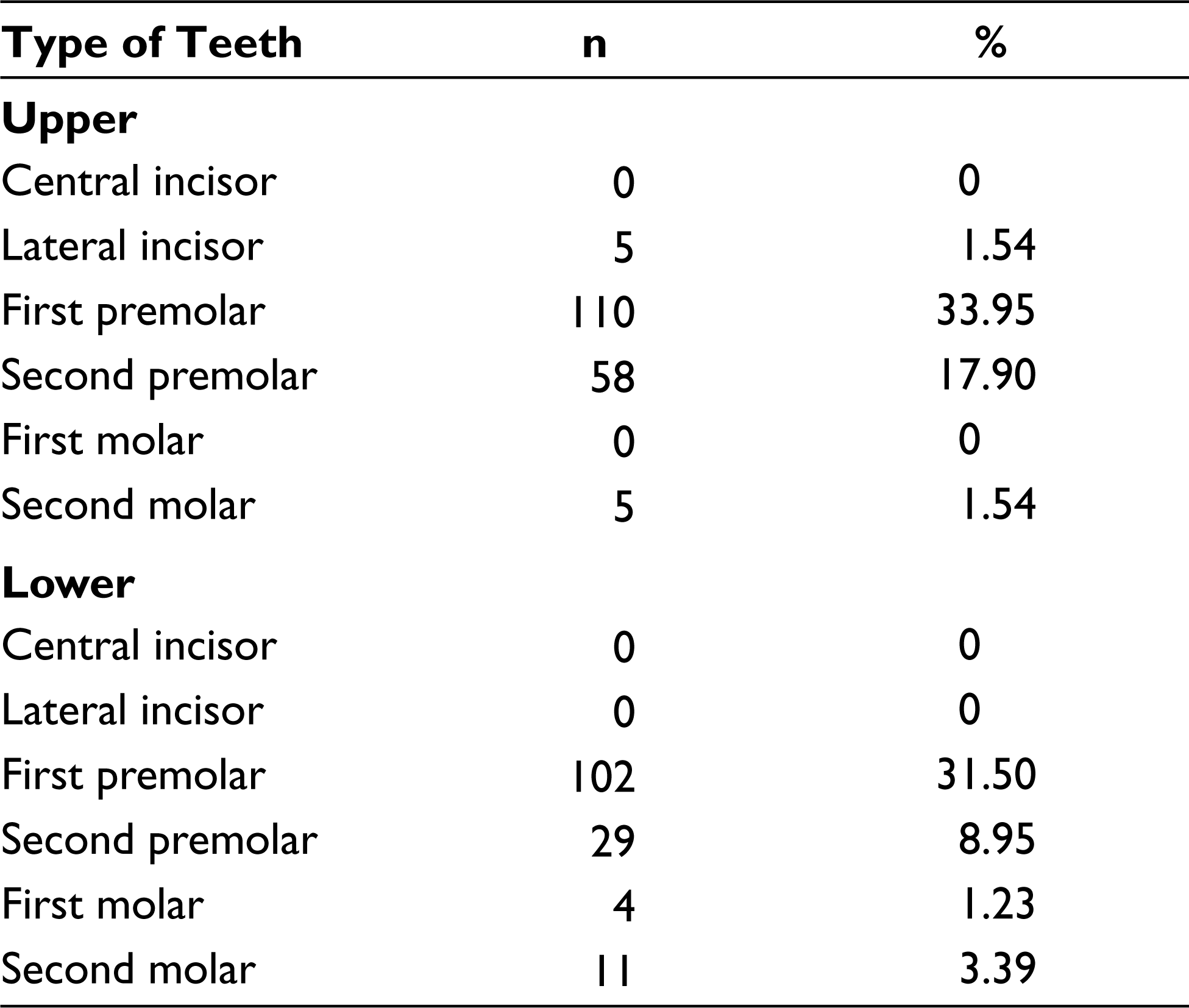
Table 3 presents genotype and allele distribution between the groups “delayed tooth emergency” and “without delayed tooth emergency.” MMP13 polymorphisms, rs478927 and rs2252070, and the polymorphism rs3765620 in MMP8 were not statistically significantly associated with delayed tooth eruption (P > .05). The polymorphism rs17099443 in MMP8 was statistically significantly associated with delayed tooth eruption (P = .05). There was a statistically significant difference in allele distribution between the 2 groups (P = .01). The C allele was less likely to be found among children with delayed tooth eruption (OR, 0.61; 95% confidence interval, 0.41-0.9) appearing to be a protective factor.
Genotype and Allele Distribution According to the Groups Delayed Tooth Eruption and Normal Tooth Eruption
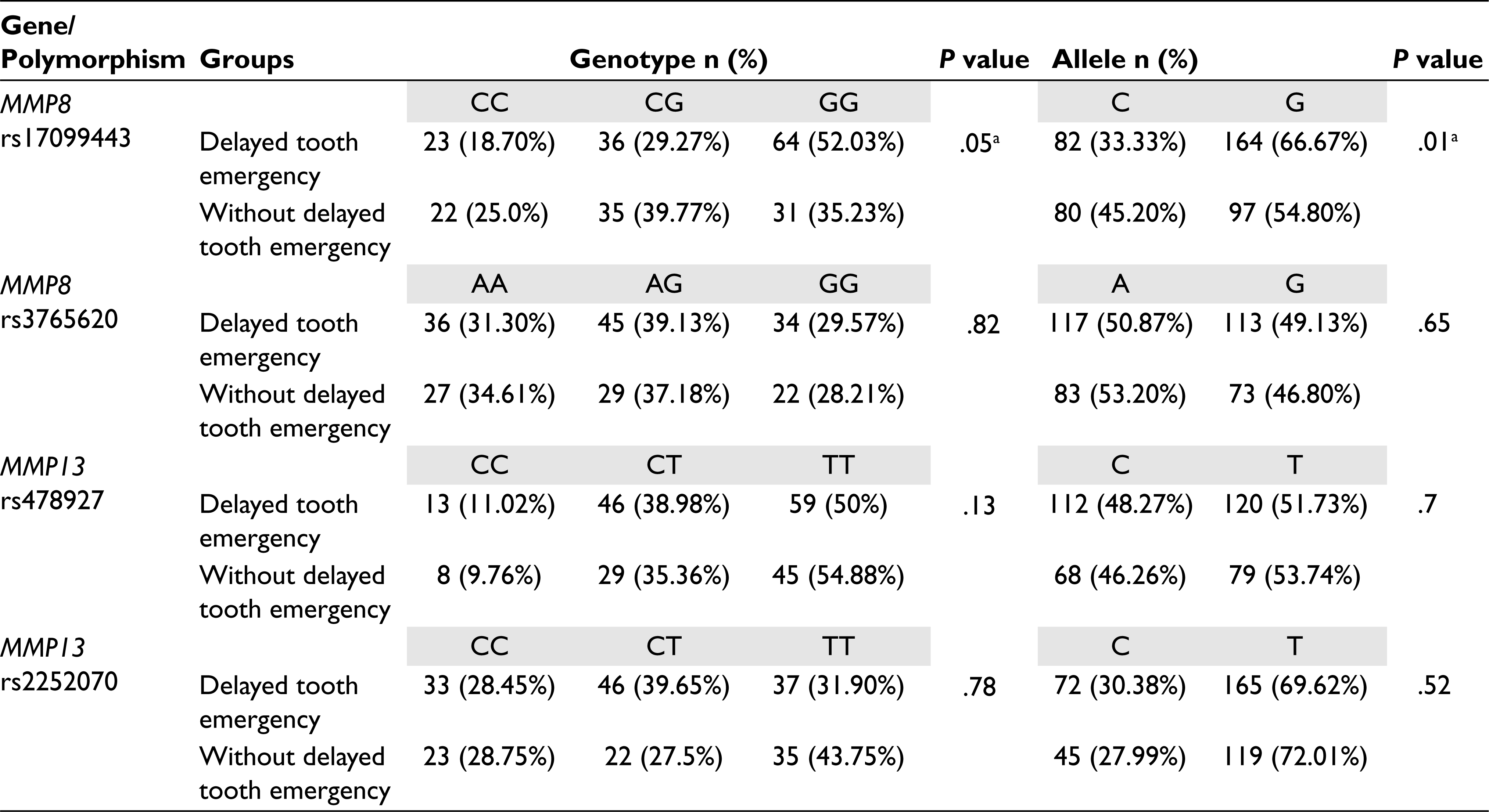
aStatistically significant difference.
Table 4 presents the mean number and the standard deviation (SD), minimum and maximum teeth with delayed eruption, according to the genotypes in all studied polymorphisms. The GG genotype of MMP8 rs17099443 showed a statistically significantly higher number of delayed teeth (P = .01).
Number of Delayed Tooth According to the Genotype
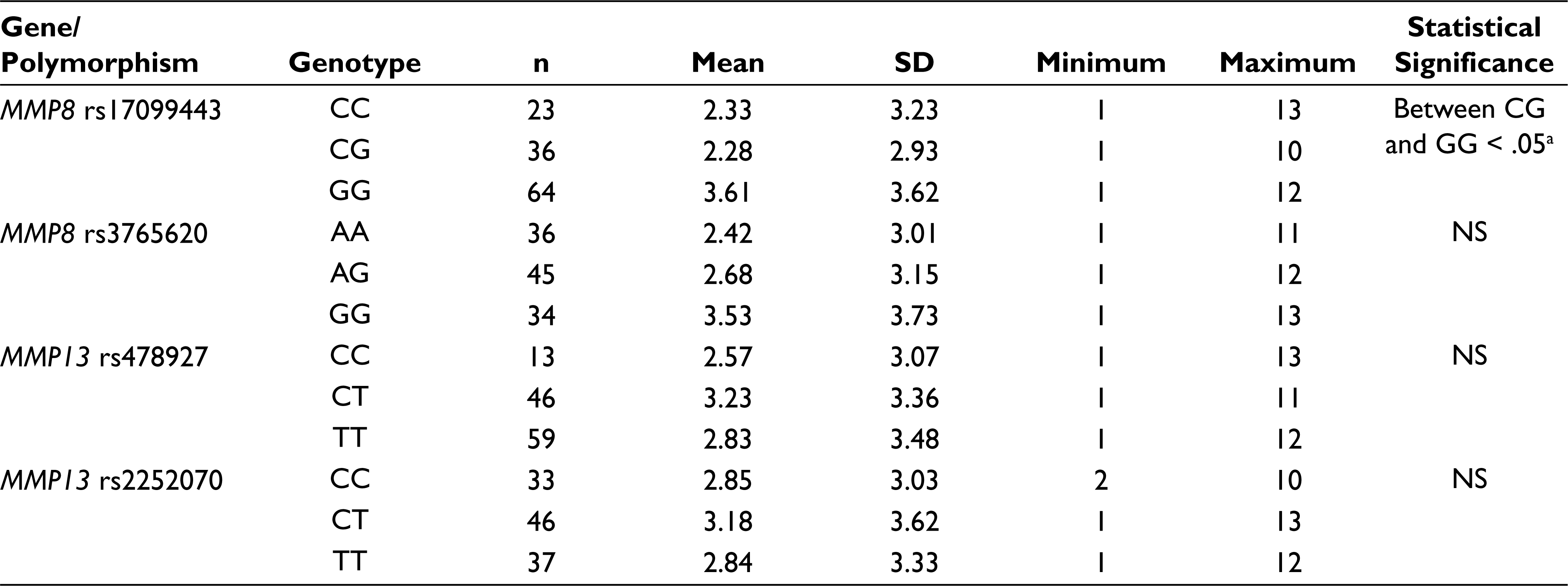
Abbreviations: SD, standard deviation; NS, not significant.
aStatistically significant difference.
Discussion
Genetic factors definitely are involved in tooth emergence. Studies from the past century have already postulated that genetic plays an important role in the chronology of tooth emergency. 21 A study performed with monozygotic twins presented a concordance rate of 0.9, whereas dizygotic twins and siblings presented a lower concordance rate. 12 Additionally, this concordance is higher than in unrelated individuals.22,23 Also, there are certain genetic disorders that affect tooth eruption. Most of these disorders have delayed permanent tooth eruption reported, and some are associated with complete failure teeth to erupt. 12 Although in the present study only nonsyndromic children were included, phenotypes observed in syndromic cases can give clues to possible mechanisms involved in isolated forms of delayed tooth eruption.
To the best of our knowledge, this is the first study that evaluated genetic polymorphisms in MMPs and timing of tooth eruption in humans. Animal models demonstrated that the remodeling of ECM might be regulated through a balance among the production of ECM molecules, the degradation of ECM by MMPs, and the inhibition of MMPs by TIMPs (tissue inhibitor of MMPs) during tooth eruption. 19 Although MMP8 and MMP13 are 2 of the most collagenolytic enzymes that degrade extracellular matrices of the inflamed periodontal tissue, little is known about the involvement of these enzymes in the physiologic remodeling of periodontal tissues during tooth eruption.
In this study, the genetic polymorphism rs17099443 in MMP8 was associated with delayed tooth emergency, and individuals who carry the C allele are less likely to have a delayed tooth emergency. A statistical association was not observed for the studied polymorphisms in MMP13. MMP8 is expressed in osteoblasts, osteocytes, periodontal ligament cells, cementoblasts, cementocytes, and odontoblasts during normal postnatal development, whereas MMP13 is confined to a small population of osteoblasts and osteocytes in alveolar bone during the tooth eruption, in the stage that the development of the periodontal tissue occurs. 10 This could explain the lack of the association between the polymorphisms rs478927 and rs2252070 in MMP13 and delayed tooth emergency.
A limitation of the present study is the absence of radiographic examinations. Supernumerary teeth, odontogenic and nonodontogenic tumors, cysts and ectopic eruption are factors that can be associated with delayed tooth eruption, in which a radiographic evaluation would be useful for such diagnosis. 24 Although it is possible that we included children with the conditions above, the prevalence of these conditions is extremely low in the general population and should not influence the results observed in the present study. Further studies could be performed using radiographic examinations to diagnose delayed tooth eruption and the stage of tooth development.
Conclusion
The genetic polymorphism rs17099443 in MMP8 was associated with tooth delay and could be a possible marker of the delayed chronology of the eruption of permanent teeth.
Footnotes
Declaration of Conflicting Interests
The authors declared no potential conflicts of interest with respect to the research, authorship, and/or publication of this article.
Funding
The authors received no financial support for the research, authorship, and/or publication of this article.