




Abstract
Background:
High incidence of fracture of all-ceramic crowns may compromise the clinical outcome and is a source of hassle for both patients and dentist.
Objective:
The objective of the present review was to identify reasons for high ceramic fracture or chipping and to minimize these incidents in dental settings.
Methods:
The final search strategy was executed on Medline via OvidSP, PubMed, and Web of Knowledge. Studies meeting the following inclusion criteria were included in the current review. (1) Literature in English language only, (2) in vitro studies, (3) studies providing evidence on ceramic fracture, and (4) studies only related to indirect restoration and ceramics. Moreover, the exclusion criteria were based on (1) articles other than English, (2) studies reporting direct restoration, (3) any non–peer-reviewed gray literature, and (4) studies discussing fracture other than ceramic material.
Results:
From the initial search strategy, 101 studies were retrieved from different databases. A total of 3 studies were scrutinized through other resources. Following duplicate removal (n = 24), 80 studies were screened for the title and abstract. Moreover (n = 49) studies were shortlisted for full text and review. Following review and discussion in the final result, only 26 studies were included.
Conclusions:
Many improvements in the material, its fabrication process, and surface treatments can reduce the incidence of fracture within the material.
Introduction
The increased acceptance of all-ceramic materials as a substitute for metal-ceramic restorations is accredited to their excellent aesthetics, chemical stability, and biocompatibility. 1 They are also excellent thermal and electrical insulators. However, the brittleness and low tensile strength of conventional glass ceramics has restricted their clinical applications. 1 Cost is always a significant factor with all-ceramic restorations along with the need for skilled ceramist and expensive milling machines. However, from a cost perspective, with the mounting cost of precious metals, all-ceramic crowns are competitive with metal-ceramic crowns. 2
Metal-ceramic restorations have been considered the gold standard in prosthetic dentistry for many years. There are many advantages of using this system including the excellent mechanical properties, adequate marginal adaptation, and satisfactory esthetic and good survival rate.3–6 On the other hand, the fabrication of these restorations involves multiple technical and operative steps, making the whole process highly technique-sensitive.7,9
With the increasing demand for esthetic restorations, all-ceramic restoration have become famous, as it fulfills patients’ needs of having a functional dental restoration with good esthetic. Core-veneered all-ceramic restorations have gained a lot of attention and acceptance in the last few years because they combine the strength of ceramic cores with the esthetics of veneering porcelain. 10 There are many reasons for porcelain failure including caries, pulpal involvement, periodontal health and technical failures due to fracture, loss of retention, and fatigue.11,12 The most common complication of all-ceramic restorations is a fracture, and it varies from ceramic fracture (catastrophic fracture) to minor chipping-off of the veneering porcelain.13,14
Several developed glass ceramics have been introduced and used effectively for crowns, 3-unit fixed partial dentures (FPDs) and anterior FPDs replacing the first premolar.15,16 These involve high alumina-content glass-infiltrated ceramic core material (In-Ceram® Alumina) and disilicate glass ceramics (Empress 2®). 15 However, these materials do not have adequate strength to withstand high loads in posterior sites, especially in the molar region. 16 In-Ceram Zirconia, which is another alteration of In-Ceram Alumina (by addition of 35% partially stabilized zirconia), increased the strength of ceramics and was suggested for posterior crowns and FDP frameworks. 10
Lately, the progress of advanced dental ceramics, which can be shaped from the CAD/CAM system, a computer-assisted design/computer-aided manufacture, has led to the application of partially stabilized zirconia in restorative dentistry.17–19 Due to their greater fracture strength and durability compared with other ceramic systems, the use of zirconia-based ceramics for dental restorations has increased in acceptance. 20
Although porcelain fused to zirconia restorations accounts for a large percentage of all-ceramic restorations, there are numerous reports of chipping-off of the veneering porcelain. Some report high rates of chipping, whereas others report none. Several theories for chipping have been proposed: low thermal conduction of zirconia, rapid heating and cooling, differences in thermal expansion, and surface finish. 21 Zirconia does have a low thermal conduction, preventing the transfer of heat to the veneer porcelain. Peak firing temperature of the porcelain combined with the zirconia thickness may be a cause of chipping. Zirconia thickness in the pontic area can easily be as much as 5–8 mm. If thermal conduction is a compromise, then low firing porcelains might be significantly affected by zirconia thickness.10,18
In recent years, all-ceramic coping materials have become more widely used by many dentists to have an acceptable esthetic result while maintaining excellent mechanical proprieties. 21 Ceramic restorations combine the toughness and strength of core materials, biocompatibility, and the esthetic properties of porcelain veneers. 22 Many complications such as fracture of crowns, fracture of connectors, secondary caries, and endodontic complications have been reported with the use of all-ceramic prosthesis, and chipping of porcelain veneers is the most mutual complication reported by dentists.23–27
Failure Mode of Veneered Y-TZP
Chipping and delamination are the main modes of failure cited throughout the literature. The behavior of cracks in veneered yttria-stabilized zirconia (Y-TZP) sheds some light on understanding the mechanism of such failures, and therefore it was studied extensively. Evidence has confirmed that chipping-off of the veneering porcelain is more of a problem in all-ceramic restorations than for porcelain-fused-to-metal (PFM) restorations.24,27 A high chipping rate of around 54% has been stated for Y-TZP core FDPs related to a 2% chipping rate in metal-ceramic FDPs. 13
Forces directed to veneered Y-TZP generally result in excessive tension on the core and compression on the veneering porcelain. Because Y-TZP is exceptionally strong and hard, cracks usually start in the porcelain veneer. Damage can initiate at either the load surface in the form of Hertzian outer and inner core cracks or from the far-field tensile surface in the form of radial cracks.30–33
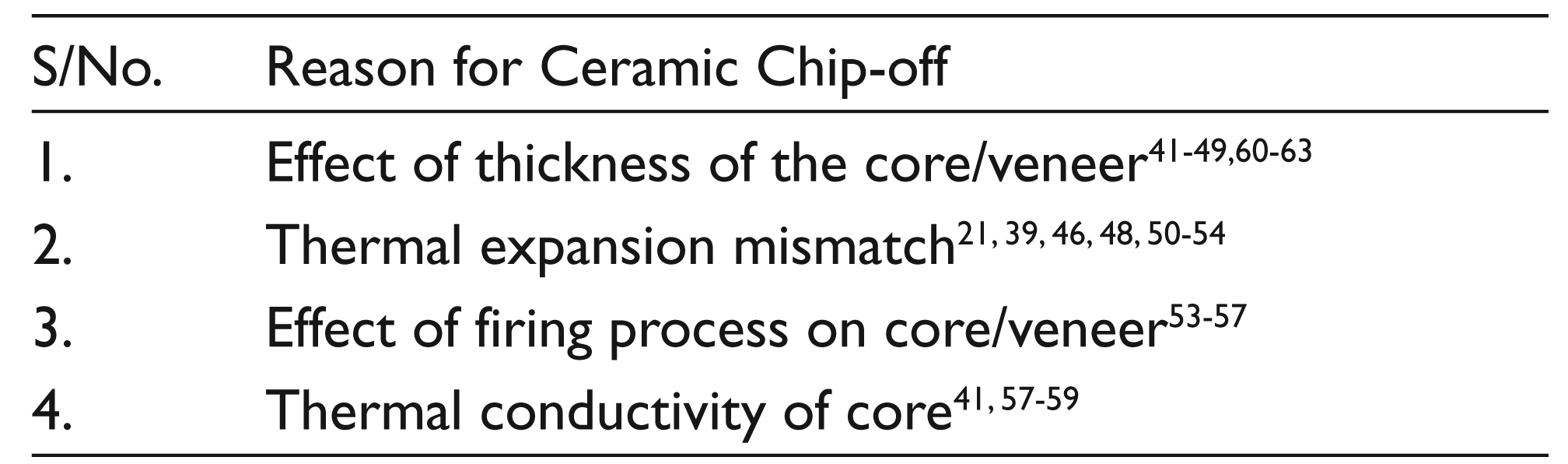
The outer cone cracks initiate outside the indenter contact area, whereas the inner cone cracks start within the contact area and quickly spread downward, at a relatively steep angle. Radial cracks might start because of the tensile stresses created during loading from the bending of the core ceramic support. The quasi-plastic deformation that occurs beneath the load can produce microcracks at grain boundaries, which can coalesce and extend into the occlusal surface; these are called median-radial cracks.34–37 Recent studies showed that inner cone cracking was the dominant mode of failure observed in cyclic loading tests done in a water medium.37–40 Common reasons for ceramic failure found as a result of the literature search are presented in Table 1.
Reasons for Ceramic Fracture in (Chip-Off) with Reference Studies
Materials and Methods
In the present review, a framework consisting of 5 stages was followed. Those stages are as follows. (1) Identifying the research question, (2) literature search, (3) study selection, (4) data extraction, and (5) summarizing and reporting the results. An initial search using different search terms, that is, ceramic, porcelain, repair, bonding, chipping, fracture, and diverse strategies (joining different keywords with OR, NOR, and AND, and truncation of the stem of words) was conducted on PubMed and a log for relevant terms was maintained. This pilot search led to the development of final search question and inclusion and exclusion criteria. The pilot search was conducted in the mid of 2018.
Research Question: What Evidence Is Available on Ceramic Fracture?
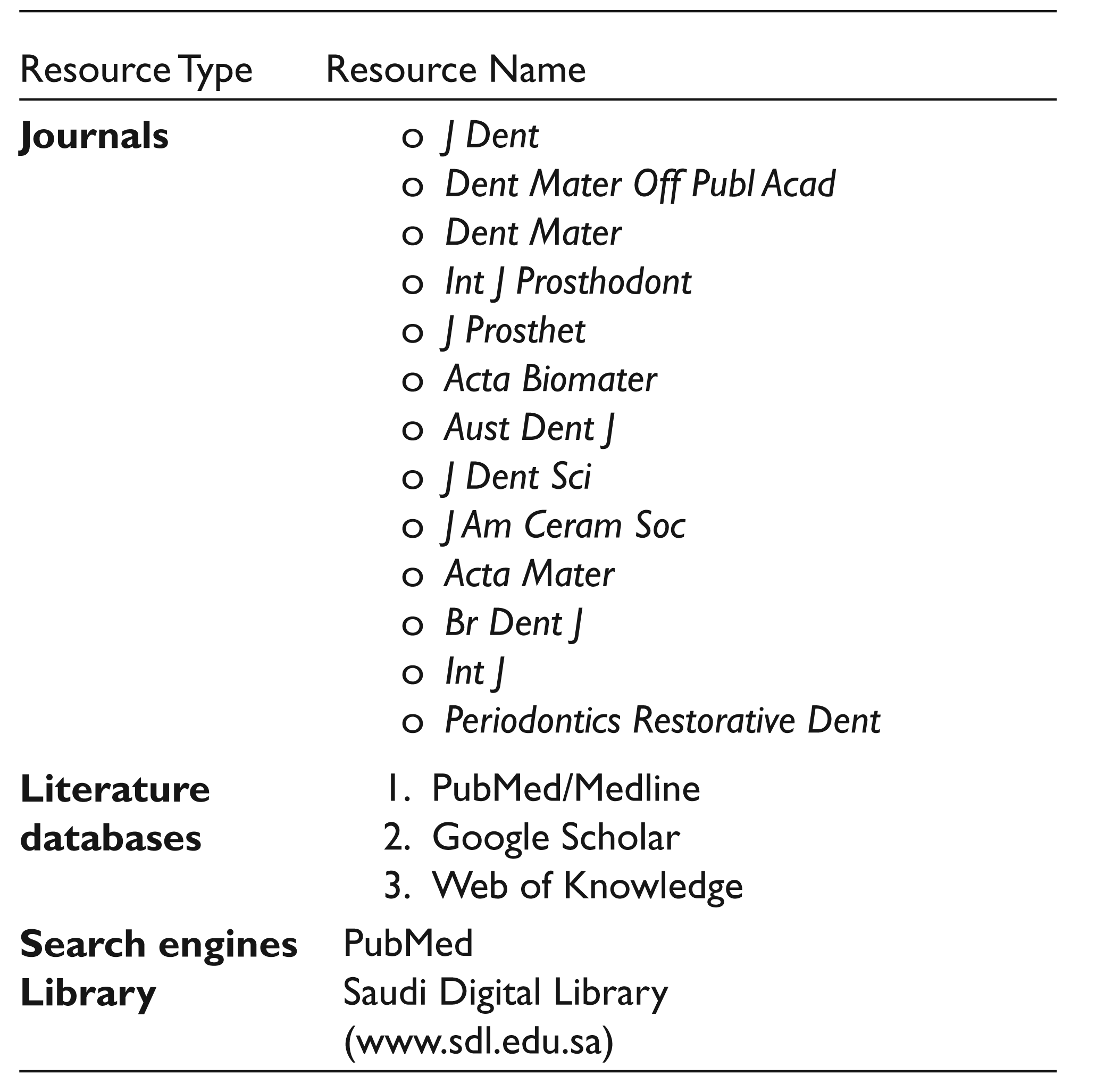
With the help of the librarian, a detailed search strategy was planned to use different Medical Subject Headings terms. The final search strategy, with database-specific modifications, was executed on Medline via OvidSP, PubMed, and Web of Knowledge. Studies meeting the following inclusion criteria were included in the current review. (1) Literature in English language only, (2) in vitro studies, (3) studies providing evidence on ceramic fracture, and (4) studies only related to indirect restoration and ceramics. Moreover, the exclusion criteria were based on (1) articles other than English, (2) studies reporting direct restoration, (3) any non–peer-reviewed gray literature, and (4) studies discussing fracture other than ceramic material. There were no date limitations applied for study designs or year of publication, and all studies published until June 2018 were considered for eligibility. Table 2 illustrates a list of databases, search engines, and library resources used for the literature search.
List of journal databases and resources for literature search
The studies were selected, screening was done, and duplicate studies were removed. After initial title and abstract screening, relevant studies meeting the research question theme were selected for full-text review. Following the full-text review, studies meeting the inclusion criteria were included in the final review. Disagreements were resolved by discussion with a colleague dentist, and a consensus was achieved. The online search was further complemented by hand searching and sifting through the bibliography of studies shortlisted for inclusion.
EndNote Citation Manager X7 was used to catalog the studies according to database, duplicates, initial screening, and final inclusion.
Results
From the initial search strategy, 101 studies were retrieved from different databases. A total of 3 studies were scrutinized through other resources. Following duplicate removal (n = 24), 80 studies were screened for the title and abstract. Moreover (n = 49) studies were shortlisted for full text and review. Following review and discussion in the final result, only 26 studies were included (Figure 1).
In all the shortlisted articles, the causes of fracture of ceramic or chipping revolved around 4 basic concepts that are as follows. (1) Failure due to core thickness, (2) mismatch in thermal expansion, (3) effect of the firing process in core veneer failure, and (4) thermal conductivity of core materials. All the studies had in vitro study designs and ranged from 2013 to 1981.
Discussion
Explanation of Evidence for Ceramic Chipping
Effect of Core Thicknesses on Core/Veneer Failure
Extensive laboratory studies were conducted to evaluate the mechanical properties of zirconia-based restorations. Several theories concerning the cause of veneer fractures have been presented, including the lack of support from underlying zirconia core, microstructural defects in veneering porcelain, residual thermal stresses, and low thermal degradation of zirconia. There lies a controversy over the role of framework thickness in the development of unstable cracks. Some clinical studies support the view that chipping-off of the porcelain layer can be avoided by increasing the thickness of Y-TZP and by reducing the thickness of the porcelain layer.42–44 On the other hand, Lawn et al 45 concluded in an in vitro study that the critical load for radial fracture is significantly affected by the total crown thickness (quadratically) and is much less dependent on the relative veneer/core ceramic layer thickness.
Swain 46 reported that when materials have poor thermal diffusivity, such as Y-YTZ and porcelain, the effective thickness for stress development corresponds to the total thickness of the restoration and therefore changing the ratio within the same restoration may have no effect on the development of tensile stresses. Low thermal diffusivity such as Y-TZP veneered by a thick layer of porcelain may generate high tensile stresses within the porcelain layer which in turn cause unstable cracking or chipping. 46
Proos et al 47 examined the influence of the thickness of ceramic coping on the maximum stresses that arise in an all-ceramic first premolar crown. The result of this study showed that the resulting peak tensile maximum principal stresses in each part of the crown existed below the fracture strengths of the respective materials making up the crown. The conclusion of this study was that “the thickness of the ceramic core has a significant influence on the resulting stresses in the coping, porcelain, and dentin of this axially loaded crown.” 47 Mainjot et al 48 conducted a study to measure stresses with the hole-drilling method, the stress profile in bilayered (Y-TZP framework/ Vita VM 9 “Vita Zahnfabrik, Bad Säckingen, Germany”) disk samples of 20-mm diameter with 1.5-mm-thick veneering ceramic layer. The study showed that compressive stress was observed on the surface and tensile stresses in the depth of most of the samples. The slow cooling procedure was found to promote the development of interior tensile stresses, except for the sample with a 3-mm-thick framework. The measurements performed highlight the importance of framework thickness, which determines the nature of stresses and can explain clinical failures encountered, especially with thin frameworks. 48
Alhasanyah et al 49 investigated the effect of selected variations in core thickness on the postfatigue fracture resistance of veneer porcelain on zirconia crowns. In this study, 4 different designs were used, which are as follows: (a) uniform 0.6-mm-thick core (group A), (b) extra thick 1.7-mm occlusal core support (group B), and (c) uniform 1.2-mm-thick core (group C). Copings were virtually designed and milled by the CAD/CAM technique. The mean postfatigue fracture failure loads recorded for all zirconia groups (A-1653 N, B-1841 N, C-1586 N) were significantly higher than the maximum clenching force that can be generated intraorally (880 N). The fracture resistance of group B was more than twice the maximum clenching force, providing a greater than 100% safety factor against failure, even under the highest intraoral stress levels. The study concluded that, in order to achieve best results, support should be maximized occlusally, that is, where the masticatory stresses are concentrated. 49
Zirconia in the form of yttrium-stabilized tetragonal zirconia polycrystals (Y-TZP) is now available as an alternative coping material with improved mechanical properties. Y-TZP, coping with porcelain veneer, also has superior esthetics, as compared to its metal-ceramic counterpart. 50 Typical mechanical properties of Y-TZP are a flexural strength of 900-200 MPa, the compressive strength of 2000 MPa, Young’s modulus of 210 GPa, and hardness of 1200 HV. [50,51] Previous reports in the literature indicate that typical intraoral forces during mastication and clenching may range from 5 to 376 N and 216 to 880 N, respectively.52,53 This makes Y-TZP a very favorable substitute coping material to metal for posterior crown and FPD applications.
Thermal Expansion Mismatch
The change in length per unit of the original length of material when 1°C raises its temperature is called the coefficient of thermal expansion (CTE) α. In other words, it refers to how much a material expands upon heating and contracts upon cooling. [1] It is calculated as follows:
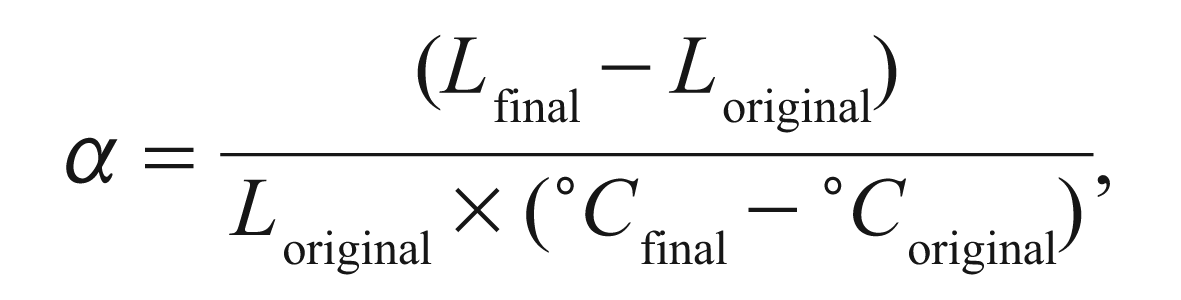
where Lfinal is the final length of the material after heating, Loriginal is the original length, °Cfinal is the final temperature, and °Coriginal is the starting temperature. The units are expressed in units of °C–1 or K–1, and more frequently in the exponential form because the values are usually very small, such as ppm K–1 or X10-6 K–1.
Every dental ceramic and alloy has its own CTE value. This will change slightly with temperature and is a product of the specific constituents of the material makeup and is reported by the manufacturers in material product data sheets.54–56 Under these circumstances, it would be ambiguous and even invalid to make direct comparisons of CTE values amongst different products. By the same token, trying to pick the correct combination of CTE between various products can be difficult and may lead to the failure of bilayer dental restorations, because differences in CTE values between core and veneering materials play a critical role in the stability of the bond between them.39,57,58 In the veneered zirconia, if the 2 material layers conduct heat differently, then more heat will escape from the material with the higher thermal conductivity. In this instance, for equal thickness components, the temperature gradients would not be symmetric, but the maximum temperature would occur within the material with the lowest thermal conductivity. 41 The quantity of heat that will dissipate from a heated body as it cools is determined by the density, specific heat, and thermal conductivity. If the temperature of a body is not constant, the rate of change with time depends on the thermal diffusivity of the material. 46
Originally, applying porcelain, veneers to the zirconia framework were engineered with the PFM concept in mind. The veneering ceramics were adapted to zirconia frameworks by performing the coefficient of thermal expansion (CTE) measurements and thermal shock testing. 21 The CTE was modified to achieve a lower value than that of the zirconia framework. Based on the principle that compressive stress improves the mechanical behavior of the veneering ceramic, this approach was intended to develop residual compressive stress within the veneer during the cooling process.50,2 Many studies measured residual stress profiles in veneering ceramic and proposed a slow cooling procedure to reduce fracturing in the veneer. However, zirconia-based samples often exhibited tensile stress in the interior of the veneering ceramic layer in contact with the framework. The presence of interior tensile stress was related to the slow cooling rate and to the high veneer/framework thickness ratio.48,51,52
It is hard to define the adequate ratio between veneering ceramic and zirconia, restricting the range of indications of zirconia-based restorations until a better understanding of such a delicate veneering process is achieved. With all-ceramic framework materials, especially with Y-TZP, most commercial suppliers have modified the processing guidelines compared with the well-known technique of the metal-ceramic systems. The consensus, though not genuinely verified as yet, states that residual stresses develop within the porcelain during rapid cooling and these contribute to chipping induced fractures. 48 Residual stresses can also be introduced during the firing process inside the porcelain layer and can be of 2 major origins: due to thermal expansion mismatch and tempering stress associated with temperature gradients during cooling.53,54 Residual stresses, which remain after the cooling in the porcelain layer, are one possible explanation for the differences of “chipping” failures between metal and Y-TZP-based all-ceramic restorations.
Effect of Firing Process on Core/Veneer Failure
The material parameters of all-ceramic restorations such as Young’s modulus or coefficient of thermal expansion of the partner materials, as well as the glass transition temperature of the porcelain do not differ significantly from those of the well-known metal-ceramic porcelains. It has been argued that the drastically different thermal conductivity of the framework materials (gold has approximately 150 times higher thermal conductivity than zirconia) may be the origin of this failure mode. 53 Because the firing samples were positioned on Y-TZP tray supports, on the floor of the firing chamber, they do not receive the same degree of heat as in the center of the firing chamber. Lenz and Thies 53 in their study observed that the position where the samples are placed have an immense influence on the stress produced between the metal and porcelain.
The desired degree of firing, therefore, can be controlled not only by the maximum temperature but also by the heating time. If the individual stages of porcelain sintering or fusion are passed through more slowly, the release of the air present within the veneering ceramic will function better. If the heating rate is too fast, the air present between the grains has less time to escape, which then leads to higher porosity and associated opacity. 30 It has been reported that the failure of the veneer of all-ceramic restorations may be because of inadequate support of the layer of veneer, as CAD software options do not enable the construction of an anatomical reduced shape. 55 Although this limitation was eliminated some years ago, chipping rates are still more significant than those of restorations based on metal frameworks, so there must be other reasons for the problem. One possible explanation of the greater incidence of cohesive failures of zirconia-based reconstructions compared with constructions with a metal framework is the difference in heat conductance and heat capacity of the framework materials. For example, because of the very high thermal conductance of metal frameworks, the complete frame is at a uniform temperature throughout cooling after the firing process. 56
Heat transmission from hotter to cooler regions of the veneer takes less time for metal-ceramic FDPs than for all-ceramic FDPs. Because high-temperature gradients, that is, high-temperature differences per unit length cause high stresses, veneering ceramics of all-ceramic restorations are at more risk of predamage (eg, microcrack formation) during the manufacturing process than those of metal-ceramic restorations. Also, taking into account the change of the veneering ceramics from a viscous material to a linear elastic material at the glass transition temperature has shown that transient (during cooling) and residual (after cooling, permanent) thermal stresses are highly dependent on the cooling conditions and the core material. Based on this theoretical background, a modified firing protocol, containing an extra cooling phase at the end, was developed with the intention of reducing cohesive failure of all-ceramic FDPs. 57
Thermal Conductivity of Core Materials
Theoretically, the previously mentioned principles should apply to any core material, whether it is a metal or a ceramic, regarding the type and magnitude of residual stresses that develop in the veneering porcelain of bilayered dental restorations. So why do zirconia-based restorations experience higher adhesive chipping fractures compared with other core-based restorations? It is thought to be because of its very low thermal conductivity compared with all other core materials.41,59 In order to understand how the thermal conductivity of core material can influence residual stress formation, first, we need to appreciate the considerable difference in thermal conductivity between zirconia and other core materials. Gold alloy is the best heat conductor (200 Wm–1 K–1), followed by base metals and alumina ceramic (40 Wm–1 K–1 and 30 Wm–1 K–1, respectively), while zirconia has a thermal conductivity of 2 Wm–1 K–1, which is 100 times less than gold alloys and 15 times less than alumina. 60
Consequently, when a metal-ceramic restoration is fast cooled by air-bench cooling, the veneering porcelain, which begins at a temperature above Tg, cools rapidly both from the outside and the inside of the restoration. On the other hand, when a zirconia-based restoration is cooled rapidly, the center of the veneering porcelain close to the zirconia core remains at temperatures above Tg for a longer duration. 61 This is because the zirconia core traps the internal temperature due to its very low thermal conductivity, while the surface of the restoration cools at a faster rate. This forms a large thermal gradient between the outer surface of the veneering porcelain and the inner regions, and in effect develops high residual tensile zones within the inner regions of the veneer. 62 In contrast, when zirconia restorations are cooled slowly, that is, the entire veneering porcelain thickness is allowed to cool down below Tg before the restoration is removed from the furnace, then any residual stresses that develop in the system are the result of CTE mismatch and geometric influences (core/veneer thickness ratio).41,63 Because no large thermal gradients develop between the inner and outer regions of the veneering porcelain when the porcelain is above Tg, only transient tensile stresses develop with no permanent residual stress zones. 63
The preparation of crown and FDPs involves a series of thermal sintering cycles and associated cooling processes prior to the build-up of the next layer. It has been found that the matching of the thermal expansion between the porcelain and underlying framework, be it metal or ceramic, is critical for the avoidance of cracking after firing. Experimentally, it has been found that a mismatch in CTE of more than 10% results in such cracking, with the nature of the cracks dependent on whether the porcelain has a higher or lower CTE than the framework. 58 When porcelain has a much higher CTE than the framework, cracks initiate normal to the surface because of the tensile stresses that develop in the porcelain on cooling. When the CTE of the framework is considerably higher than the porcelain, delamination of the porcelain may occur. De Hoff and Anusavice 57 generated a finite element model of this behavior and was able to predict the magnitude of the residual stresses as a function of the mismatch of CTE.
Conclusion
The widespread use of dental ceramics is due to their optimum strength, durability, and esthetic properties in comparison with other materials. However, ceramic chipping is a frequent problem with all-ceramic restorations. Reasons may be fabrication technique sensitivities (such as the thickness of the core/veneer, firing process, thermal expansion, and thermal conductivity) which lead to stresses remaining within the material or due to the phenomena of subcritical crack growth. Many improvements in the material, its fabrication process, and surface treatments are able to reduce the incidence of fracture within the material.
Footnotes
Declaration of conflict of intrest
The author declared no potential conflicts of interest with respect to the research, authorship, and/or publication of this article.
Funding
The author received no financial support for the research, authorship, and/or publication of this article.