




Abstract
The primary purpose of this study is to examine the role of diversity, equity and inclusion (DEI) initiatives and organizational culture on employees’ situational traits and employee retention within contemporary organizational settings. In addition, this study investigates the mediating effects of employees’ situational traits on the relationships between DEI initiatives and employee retention, as well as on the relationship between organizational culture and employee retention. The study employs structural equation modelling to analyse a sample of 429 working employees. The findings suggest that DEI initiatives have a more substantial influence on employee retention compared to organizational culture. Employee situational traits mediate the effect of organizational culture and DEI initiatives on retention, emphasizing the importance of individual experiences. Therefore, integrating DEI initiatives into the organizational culture can create an inclusive workplace, attracting and retaining a diverse workforce.
Keywords
Introduction
In recent years, management practices have evolved significantly to address the changing dynamics of the workforce. There is an increasing emphasis on creating inclusive and effective organizational cultures. As society, the economy and politics shift, the importance of managing diversity and inclusion has increased in organizational studies (Cook & Glass, 2009; Yadav & Lenka, 2020). A particularly important area of research focuses on the connection between employee retention; diversity, equity and inclusion (DEI) initiatives; and organizational culture. In light of globalization, technological advancements and sociocultural changes, organizations must adjust their strategies to support a more diverse workforce effectively. Diversity management and inclusion involve recognizing and considering differences among people as potential organizational strengths (Davis et al., 2016). It is essential to go beyond the fundamental differences in gender, age and nationality and to delve into the invisible elements that influence people’s experiences, such as their sexual orientation, personal traits, beliefs and points of view. Creating truly inclusive workplaces is easier when we ignore these deeper layers, leaving our understanding incomplete (Achyldurdyyeva et al., 2021). Hence, it is crucial to investigate companies’ strategies to attract and retain skilled personnel in a competitive environment.
Understanding the historical context of the relationship between employee retention, DEI and organizational culture is crucial for comprehending its current consequences. In the past, companies have often prioritized uniformity and conformity over diversity and inclusion, resulting in disengagement and poor performance, especially for marginalized populations. Recent social movements and transformations have highlighted the need to foster inclusive workplaces from an ethical and commercial standpoint. As a strategic approach, this research is grounded in the originating organizational importance of DEI, organizational culture and situational employee traits in relation to employee retention. Despite valuing DEI, many organizations struggle to translate these values into a tangible impact on employee retention. Many articles focus on the dichotomy of inclusion/exclusion in the workplace, where the degree to which individuals feel a part of essential organizational culture is considered a continuum concerning inclusion–exclusion (Mor Barak, 1999). Employees nowadays prioritize being engaged at work and express their expectations from their organizations and tasks more openly (Sharma et al., 2024). As per this new paradigm, organizations are responsible for providing support systems to their workers beyond direct management help. This study investigates how organizational culture and DEI practices impact employees’ situational characteristics and, consequently, their retention. By examining the mediatory role of employee situational traits, we can better understand how individual qualities interact with the organizational setting to influence retention (Canboy et al., 2023). Numerous studies have shown that having an inclusive workplace leads to improved employee well-being (Jaiswal & Dyaram, 2019), job satisfaction (Hwang & Hopkins, 2015), affective commitment (Ashikali & Groeneveld, 2015), perceptions of procedural and distributive justice (Le et al., 2018) and perceptions of an environment of trust (Downey et al., 2014). However, despite the rise in recognition of the importance of DEI in attracting and retaining talent, many organizations still struggle to align their DEI initiatives with developing positive employee traits and behaviours that support long-term commitment and retention (Dawson et al., 2023; Toroghi et al., 2024). This highlights the need for a deeper understanding of the mediating mechanism of employee situational traits, which are influenced by organizational culture and DEI activities and ultimately impact employee retention.
Many studies have looked at DEI initiatives, organizational culture and employee retention separately. However, there is very little research that explores how these factors interact with each other, especially considering how employees’ personal situations influence this interaction in today’s workplaces. As existing studies have often considered DEI initiatives and organizational culture individually, addressing this research gap can assist establishments in developing their managerial practices and retaining talent. The study aims to bridge the gap between employee exposure and organizational operations, providing crucial insights for creating workplaces beyond diversity and inclusivity. This study’s primary focus is to investigate how different factors, such as employees’ situational traits, organizational culture and DEI activities, interact and impact employee retention. The research also explores how DEI techniques and organizational culture can shape employees’ situational traits and improve retention. The study has three main objectives. First, to examine the linkages between organizational culture and employee retention; second, to evaluate the connections between distinct DEI policies and employee retention; and finally, to investigate how much employee situational traits affect the connection between organizational culture and employee retention and between DEI initiatives and employee retention. This research, therefore, aims to enhance the comprehensive understanding of how organizations can leverage their culture and DEI initiatives to improve talent retention.
Modern workplaces and fast-paced lifestyles, intensified by economic crises and information overload, present a challenge for organizations when managing the increased stress levels among employees (Hassard et al., 2017; Ledzińska & Postek, 2017; Rosa, 2013). Various conditions can lead to the development of traits that result in organizational-level performance indicators, such as overall firm performance or job satisfaction. Situations that offer sufficient cues for expressing trait-relevant behaviour are considered relevant to the trait (Tett et al., 2021). The organizational culture and environment significantly trigger employee traits that influence performance outcomes (Alam, Rafiq, Alafif, & Nasir, 2023). Therefore, organizations should prioritize the welfare of all individuals, ensuring inclusion for every employee, irrespective of their socio-demographic background. This research, thus, offers a deeper understanding of the dynamic interplay between organizational and DEI aspects that influence employees’ behaviour via their situational traits (Hassard et al., 2017).
Nkomo et al. (2019) emphasize that unless an inclusive and supportive organizational culture is embedded within the values of the organization, DEI initiatives alone cannot ascertain success. Furthermore, their study expresses that an organizational culture nurturing psychological well-being and safety contributes to lower turnover intention and more effective employee commitment. This research establishes these findings by investigating how the dynamics of organizational culture correspond with DEI initiatives to determine employee retention. Furthermore, this study investigates situational traits as mediators between DEI initiatives and employee retention, as well as between organizational culture and employee retention. Ashikali and Groeneveld (2015) observed that DEI initiatives contribute to favourable employee retention results, which emphasizes that when employees comprehend DEI initiatives as honourable and well-incorporated into organizational policies, employees are more likely to stay motivated (Brimhall et al., 2014). Accordingly, this research broadens their contribution by examining a situational traits–mediated model, extending a more refined apprehension of how DEI initiatives and organizational culture determine employee retention. By incorporating these orientations, this study aims to bestow both conceptually and practically the theory on DEI initiatives, organizational culture and employee retention, furnishing worthwhile perceptions for establishments endeavouring to institute more inclusive workplaces.
This research delves into the dynamics of employee retention within contemporary organizational settings, emphasizing the influence of employees’ situational traits on organizational culture, DEI initiatives and, ultimately, talent retention strategies. The document commences by outlining the research questions. It progresses to the second section, which concisely reviews the extant literature. The third section elucidates the methodological framework employed for the empirical investigation. The empirical findings and their implications are elaborated in the fourth section, while the fifth section discusses these outcomes comprehensively. The concluding section is dedicated to bibliographical references.
Literature Review
This study is developed principally on the social exchange theory, social identity theory, person–organization fit theory, equity theory and organizational culture theory. Determining the role of DEI and culture on situational traits, the social exchange theory suggests that individuals develop positive attitudes and citizenship when they experience equity, trust and support from their supervisor and organization (Cropanzano et al., 2017; Cropanzano & Mitchell, 2005). Additionally, the shared values, norms and practices shape individual traits and organizational behaviours as proposed by the organizational culture theory (Hatch, 1993; Hatch & Zilber, 2011). Accordingly, these theories furnish a strong conceptual and theoretical foundation for the conceptual framework proposed in this study, which examines the relationship among organizational culture, DEI, situational traits and employee retention.
Organizational Culture and Employee Situational Traits
Drawing on the organizational culture theory, a supportive and collaborative culture ascertains employees’ values, attitudes and traits by encouraging shared activities that coordinate with organizational values (Schein, 2010). The correlation between organizational culture and employee traits has been the subject of significant research. Connelly and Torrence (2018) emphasized the importance of these findings for human resource management practices and laws by reviewing the literature on positive and negative emotions. Alam et al. (2022) found that workers with high extraversion favoured using the problem-solving approach to resolve conflicts at work, and the situational cue associated with the problem-solving approach also activated the extraversion trait. Roy and Perrin (2018) illustrated how organizational culture affects the way non-profit organizations handle conflicts. They also showed how symbolic modifications to the organizational culture might end a conflict’s sequence. Fink and Yolles (2015) established a general cultural socio-cognitive trait theory of plural affective agency involving the interaction of cognitive and emotional qualities, which is relevant to mergers and acquisitions. Moreover, Alam, Rafiq, Alafif, Nasir, and Bashir (2023) stated in their study that compelling circumstances are essential in shaping people’s behaviours.
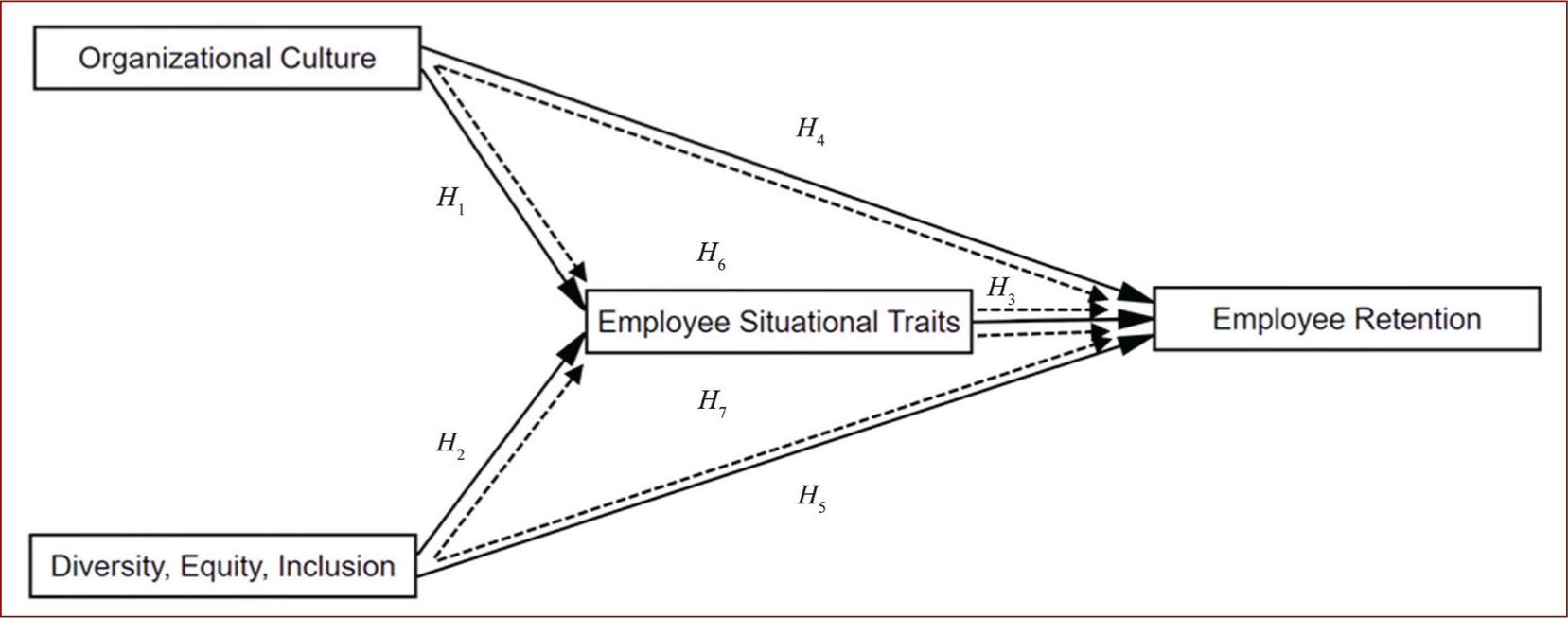
H1: Organizational culture positively impacts employee situational traits.
DEI and Employee Situational Trait
Grounded in the social identity theory, effective DEI initiatives strengthen employees’ situational traits and organizational commitment (Alshaabani et al., 2021). According to the research, DEI may be correlated with situational variables such as gender, personality traits and social desirability bias. The study by Kożusznik (2006) found that female managers had a greater propensity to control their effects using DEI. In a follow-up study, narcissism, psychopathy and Machiavellianism were found to be significant predictors of individual knowledge sabotage behaviour by Serenko and Choo (2020), suggesting a possible connection to DEI. Park and Kwak (2023) discovered in another study that reactions to the Black Lives Matter movement in sports were impacted by the social desirability bias. LaVan and Lopez’s (2022) analysis of current studies on the subject provided a thorough grasp of bias and discrimination in the workplace, which emphasized notable contributions from the fields of management, psychology and sociology. In a study by Kuriakose and Sreejesh (2022), behavioural conflict was found to have a negative correlation with employee well-being mediated by the negative affect state. It is important to remember, nonetheless, that additional studies are necessary to determine a stronger correlation between the situational qualities of employees and DEI (Desrayaud & Hurley, 2023).
H2: DEI positively impacts employee situational traits.
Employee Situational Trait and Employee Retention
As established by the social exchange theory, employees’ situational traits and qualities lead to supportive organizational experiences with long-term commitment (Chao et al., 2013). Employers can utilize this connection to encourage positive workplace behaviours among their employees (Cohen & Özsoy, 2021). Yang and Lee (2023) researched hotel employees to explore how their proactive personalities, work social support and employee resilience impacted their intent to switch careers. They concluded that employees with high levels of resilience, vital work social support and proactive personalities exhibit reduced career change inclinations. Ashill et al. (2009) studied frontline employees in contact centres to understand the moderating effect of job resourcefulness on the relationship between role stressors, burnout symptoms and service recovery performance. Their findings suggest that job resourcefulness mitigates the adverse effects of role stressors on employee burnout and service recovery performance. Chan et al. (2020) established a causal model to help banks identify the key factors influencing employees’ willingness to report suspicious transactions. Their research found that organizational atmosphere and regulatory focus are the two main factors that impact employees’ reporting intention. Lin and Chang (2005) studied employee mobility to understand the factors influencing employees to stay with a company or leave. Yang and Lee (2023) found that proactive personality and resilience are positively associated with reduced career change inclinations among hotel employees, taking into account employee situational attributes and retention. Finally, Chan et al. (2020) found that personality traits are one of the five elements that influence employees’ reporting intention of suspicious transactions from the perspective of organizational commitment.
H3: Employee situational trait positively impacts employee retention.
Organizational Culture and Employee Retention
Drawing on the person–organization fit theory, employees’ turnover intentions can be significantly reduced by cultivating organizational values in terms of culture, which leads to better alignment between employees’ personal values and those of the establishment (Thornburg, 2024). Effective human resource management strategies are crucial in reducing employee turnover, a significant concern for many organizations (Basnyat & Lao, 2019). According to their study, hotel employees value the execution of employee-oriented HRM policies more than the policies themselves. Employees also expect a proactive approach from the HR department that goes beyond growth opportunities. Organizational culture is another essential factor affecting employee turnover (Tyagi, 2021). Ghosh et al. (2013) found that affective commitment, normative commitment and objective clarity were the most critical indicators of employees’ intentions to remain with a company. According to Patra et al. (2023), in a study on information technology businesses, efficient staff management is significantly influenced by an organization’s social commitment, open organizational culture and personal growth and benefits. Employee participation is crucial for increasing organizational performance, reducing expenses, improving staff retention and enhancing product quality (Bandura & Lyons, 2014). Chapman (2009) underlined the value of staff orientation and socialization in libraries to encourage retention in a shrinking job market. Heinrich’s (2017) research discovered that companies in Michigan implement corporate social responsibility initiatives to attract and retain millennial workers. Hiring and promotion practices, training methods and corporate culture significantly impact managing and non-managing staff retention (Moncarz et al., 2009). Tymon et al. (2011) found that management support highly influences employee retention, perceived professional achievement, personal dedication and intrinsic reward. Dunger’s (2023) research showed that transformational leadership, team cohesion, salary, fairness and a caring attitude all positively affect organizational commitment. Arora et al.’s (2012) meta-analysis revealed a positive and negative correlation between organizational commitment and an unfavourable organizational climate. Allen and Vardaman’s (2021) comprehensive volume on the applicability and global implications of turnover theories emphasizes the significance of understanding how institutional contexts and cultures impact employee norms and behaviours. Morgan’s (2008) research provided practical leadership recommendations based on coaching experiences and anecdotal evidence for motivating and retaining top talent. Disparities in the definition and selection of talent were discovered in Thomas et al.’s (2023) study on the theoretical and conceptual foundations of talent management, highlighting programme quality issues and emphasizing the need to strike a balance between participant experience, motivation and retention.
H4: Organizational culture positively impacts employee retention.
DEI and Employee Retention
Individuals who experience inclusivity and justice within DEI initiatives exhibit weaker turnover intentions as predicted by the equity theory (Russen & Dawson, 2023). High staff turnover rates can negatively impact morale, expenses and productivity, making it crucial for businesses to retain a steady workforce. DEI are critical factors affecting employee retention in the workplace. Research shows that a less-inclusive workplace can negatively impact worker engagement, job satisfaction and the intention to leave (Hyseni et al., 2023; Norman & Johnson, 2022). Cultural diversity and inclusion in the workplace are essential, and HR professionals can take practical steps to improve cultural inclusivity (Norman & Johnson, 2022). US Steel’s focus on DEI resulted in significant investments in human capital and a quit rate of only 4%, compared to the US market’s overall quit rate of over 30% (Melnkovic & Wilding, 2022). This case study shows the possible advantages of DEI initiatives for employee retention. Developing diversity and bias training programmes, like bias habit-breaking training, can minimize bias and advance equity and inclusion. This form of exercise can boost employee retention (Cox, 2022). A joyful and welcoming work environment can increase work engagement and decrease the intention to leave (Tetteh et al., 2021). Educators and administrators from marginalized identities’ lived experiences are likewise not considered. DEI at the institutional, organizational and individual levels can reduce prejudice and result in increased DEI, reduced discrimination at work and better performance. This could increase employee retention rates (Waples & Botsford Morgan, 2022).
H5: DEI policies positively impact employee retention.
Mediating Effects of Employee Situational Traits
Resilience among employees, identified as a critical element for overcoming challenges, plays a crucial role in their intentions to stay with an organization (Yang & Lee, 2023). Resilient employees tend to adapt and persevere more effectively, helping to shield themselves from the adverse effects of career disruptions like those caused by the pandemic (Yang & Lee, 2023). A proactive personality, marked by a willingness to take initiatives and solve problems, also significantly impacts the desire to stay with a company (Rezwan & Takahashi, 2021). Additionally, the inclination towards goal orientation and organizational commitment is pivotal in determining an employee’s likelihood to leave or stay (Lin & Chang, 2005). Employees who are deeply committed to the organization’s goals and values are less likely to have the intention to leave. Similarly, goal-oriented individuals, focusing on their personal and professional development within the company, show stronger intentions to remain (Lin & Chang, 2005). As interpreted from online employee feedback, employee personality characteristics offer a crucial understanding of retention trends (Wu et al., 2024). Employees’ personality traits significantly determine job satisfaction and their propensity to leave, as evidenced in online critiques. Comprehending the impact of specific personality traits on satisfaction and turnover enables companies to customize their retention approaches more precisely.
H6: Employee situational traits will mediate between organizational culture and employee retention.
Golom and Cruz (2021) consider the intersectionality of DEI with other social identities to provide a framework for comprehending and resolving diversity-related workplace difficulties. Ueda et al. (2023) emphasize organizational and personal leadership while concentrating on organizational culture transformation and integrating shared DEI values throughout the business. Ponting and Dillette (2023) highlight the role of individual agencies and organizational structures in beginning, developing and implementing DEI practices in hospitality and tourism firms. Waples and Botsford Morgan (2022) offer a multi-level framework that encourages DEI at the institutional, organizational and personal levels to promote social justice reforms. They highlight the role that external factors play in this regard. Williams (2023) emphasizes the significance of business executives strategically creating and implementing diversity initiatives to promote an inclusive workplace culture. Lamba et al. (2021) emphasize the significance of intentional institutional efforts to strengthen a feeling of community when creating an inviting and inclusive culture. Cox (2022) highlights the value of successful diversity and bias training, using the bias habit-breaking training programme to illustrate a method that has been scientifically proven to produce notable and enduring improvements in DEI problems. Evan et al. (2023) explore how white DEI practitioners see their place in the profession and how they can promote DEI in the workplace. Hyseni et al. (2023) investigate how views of organizational citizenship behaviour and other marginalized identities in the workplace relate to disability. Nguyen et al. (2023) propose a path model of inclusion using data from recent studies. Dutta and Srinivasan (2024) investigate how organizations can effectively interact with marginalized and under-represented groups, particularly the LGBTQ community, to advance diversity and inclusion through comprehensive policies and practices. By planning, organizations can consciously harness the energy of supporters motivated to advance DEI reform, as explored by Li et al. (2022). Chaudhry (2022) elucidates the distinctions between DEI and the range of viewpoints that organizations need to adopt to recognize and evaluate each. Violanti (2021) emphasizes the significance of a responsible leadership strategy in reducing or eliminating bullying behaviours that can jeopardize the validity of DEI.
H7: Employee situational traits will mediate between DEI and employee retention.
Figure 1 illustrates the conceptual framework of this study.
Research Method
Survey Items and Data Collection Tool
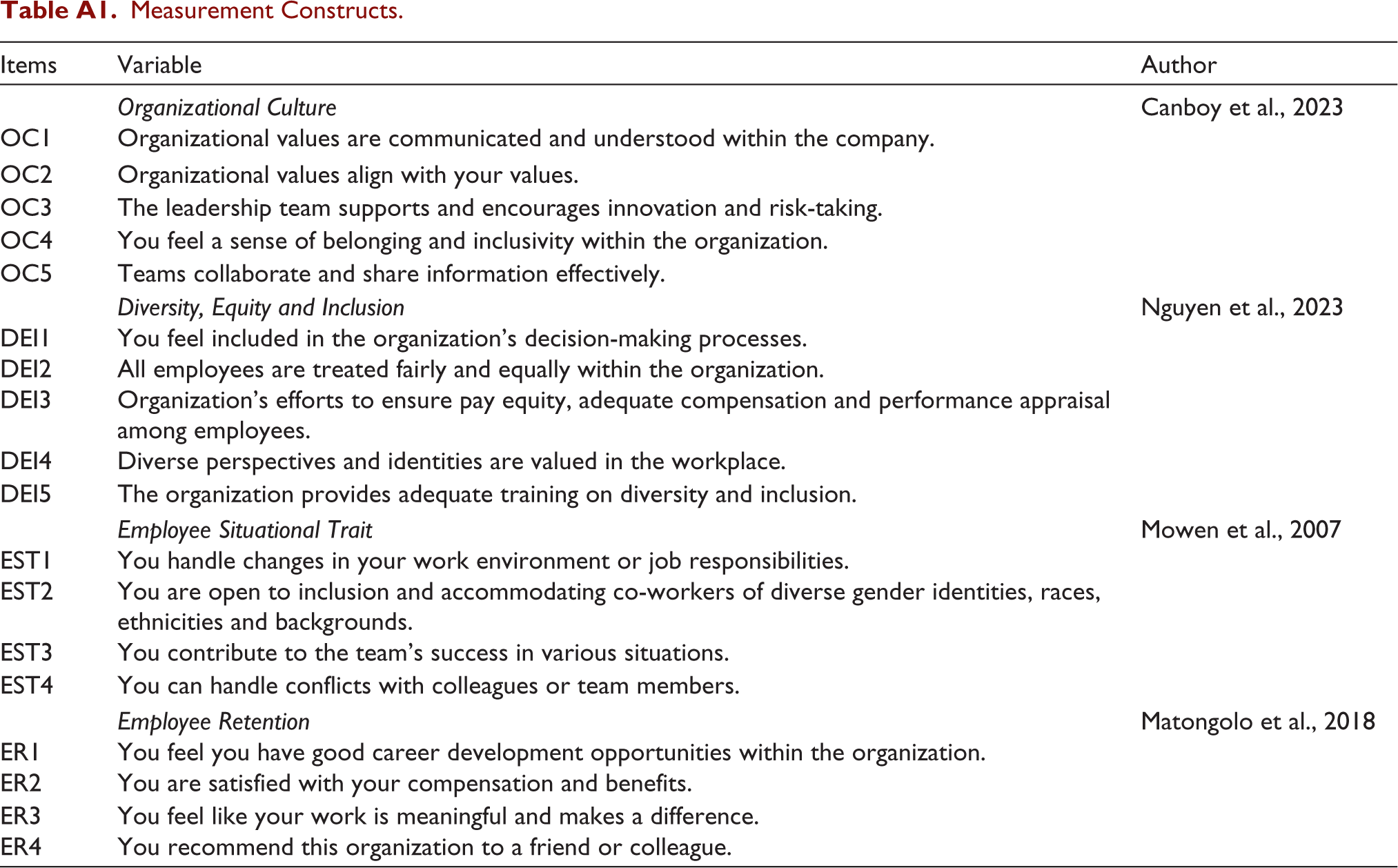
The study conducted by Canboy et al. (2023) was adopted to evaluate organizational culture. Furthermore, aspects of DEI were integrated from the research conducted by Nguyen et al. (2023). The characteristics of employee situational traits were derived from the research by Mowen et al. (2007). The essential elements for assessing employee retention were supplied by the study conducted by Matongolo et al. (2018). The research instrument was chosen for its proven effectiveness in assessing key variables in similar studies, ensuring the reliability and validity of the data collected. All items related to the mentioned constructs are detailed in Table A1.
Respondent Selection Criteria
The data were collected from a diverse group of employees, including those from private, public and self-employed sectors, to meet the study’s objectives. The sample consisted of 429 working individuals, chosen to ensure a wide representation of the workforce. This diverse group of employees was chosen to guarantee both representativeness of the population and statistical robustness. Moreover, the 429-sample size exceeds the minimum requirement for accomplishing reliable results at a 95% confidence level (Cochran, 1977; Cohen, 1988). This variety allows for a better understanding of organizational cultures and DEI initiatives across different work environments. Private sector organizations often focus on profit-driven goals, which can shape their DEI policies and employee retention strategies in ways that differ from those of public sector organizations. The latter tend to prioritize inclusivity and service-oriented approaches while adhering to regulations. In contrast, self-employed individuals generally have more freedom to create their own work culture and DEI practices, offering a unique viewpoint.
By exploring various workplace environments, the study aims to provide insights into how DEI initiatives and organizational culture influence employee retention. Researchers focused on employees working in Special Economic Zones (SEZs) located in NOIDA, Gurugram, DLF and Manesar within the Delhi and NCR regions. These SEZs include a mix of private, public and self-employed organizations, making them an excellent source for examining organizational cultures and DEI initiatives. The researchers employed non-probability sampling to allow flexibility in selecting respondents from different sectors, such as consulting, manufacturing, services and information technology. By including participants from various organizations, they sought to build a comprehensive understanding of different organizational cultures. Given the diverse professional experiences and backgrounds of the respondents in active SEZ environments, this survey offers valuable insights into the impact of DEI initiatives and organizational culture on employee retention.
Data Collection Process
Data for this study were collected over several months in the Delhi NCR region. Various locations, such as private, public and self-employed settings, were chosen for their relevance to the study’s objectives. This diverse range of locations aimed to capture variations in organizational cultures and DEI initiatives, considering the impact of different sectors on employee experiences. The duration of data collection was chosen to cover fluctuations influenced by socio-economic factors, organizational changes and external events, which ensured the study’s robustness. Considering the pragmatic limitations of accessing a particular target population, the data collection process employed a non-probability sampling technique. This approach was believed to be suitable for gathering applicable insights from respondents with direct experience towards the study variables, though it limits the generalizability of the findings. Additionally, this technique helped capture various perspectives that might be difficult to represent through traditional probability sampling.
Face and Content Validity
The survey instrument utilized in the research was validated for both face and content validity. A three-stage process was adopted to manifest face and content validity. First, the questionnaire was critiqued by three panel members in human resource management, organizational behaviour and DEI to ascertain alignment with the research constructs. Second, using 30 respondents, a pilot survey was carried out, accompanied by brief feedback discussions to measure the comprehensibility, articulation and clarity of the items. Based on the panel members’ reviews and feedback, essential changes were made to increase the questionnaire’s validity for the study population. Third, content validity was established by aligning the survey questions with established theories and existing literature on organizational culture. Additionally, the inclusion of items derived from studies by Canboy et al. (2023), Nguyen et al. (2023), Matongolo et al. (2018) and Mowen et al. (2007) contributed to content validity. These efforts aimed to create a reliable and valid survey instrument that accurately measures the intended constructs.
Common Method Bias and Social Desirability Bias
By loading all measurement indicators onto a single common latent construct, the common method bias (CMB) was addressed through the application of the latent-factor method (Podsakoff et al., 2003). To mitigate the potential effects of CMB, the researchers implemented several measures throughout the study, starting with the pilot phase. They utilized a counterbalancing design, presenting questions in varying orders to different participants to diminish the influence of response patterns resulting from a consistent question order. They also offered anonymity as an option to participants to lower the chances of social desirability bias. The participants were informed about the importance of providing honest and unbiased responses to capture their experiences and accurately contribute to more precise data. The study effectively addressed and diminished CMB by employing these strategies, leading to a more comprehensive and reliable exploration of the relationships between organizational culture, DEI initiatives and employee retention. The results confirmed that CMB was not a significant concern in this study, as the inner variance inflation factor values for all constructs were below 3.3 (Kock, 2015).
Results and Discussion
The socio-demographic characteristics of 429 respondents can be described as follows. Most respondents (56.6%) were between 21 and 30 years old, while 7.5% were between 18 and 20. About 27% of the respondents were aged between 31 and 40, and 8.9% were over 41. The survey had more male respondents (51%) than female respondents (47.6%), with 1.4% choosing not to disclose their gender identity. Regarding education, 62% of the respondents held postgraduate degrees, 28% had completed undergraduate studies and 10% held PhD qualifications. As for the employment sector, the majority (76%) of the respondents worked in the private sector, 17.7% were in the public sector and 4.7% were self-employed. With regard to work experience, 16.1% of the sample had less than 1 year of experience, 60.8% had worked for 5 or fewer years, 14.0% had between 6 and 10 years of experience and 9.1% had over 11 years of experience.
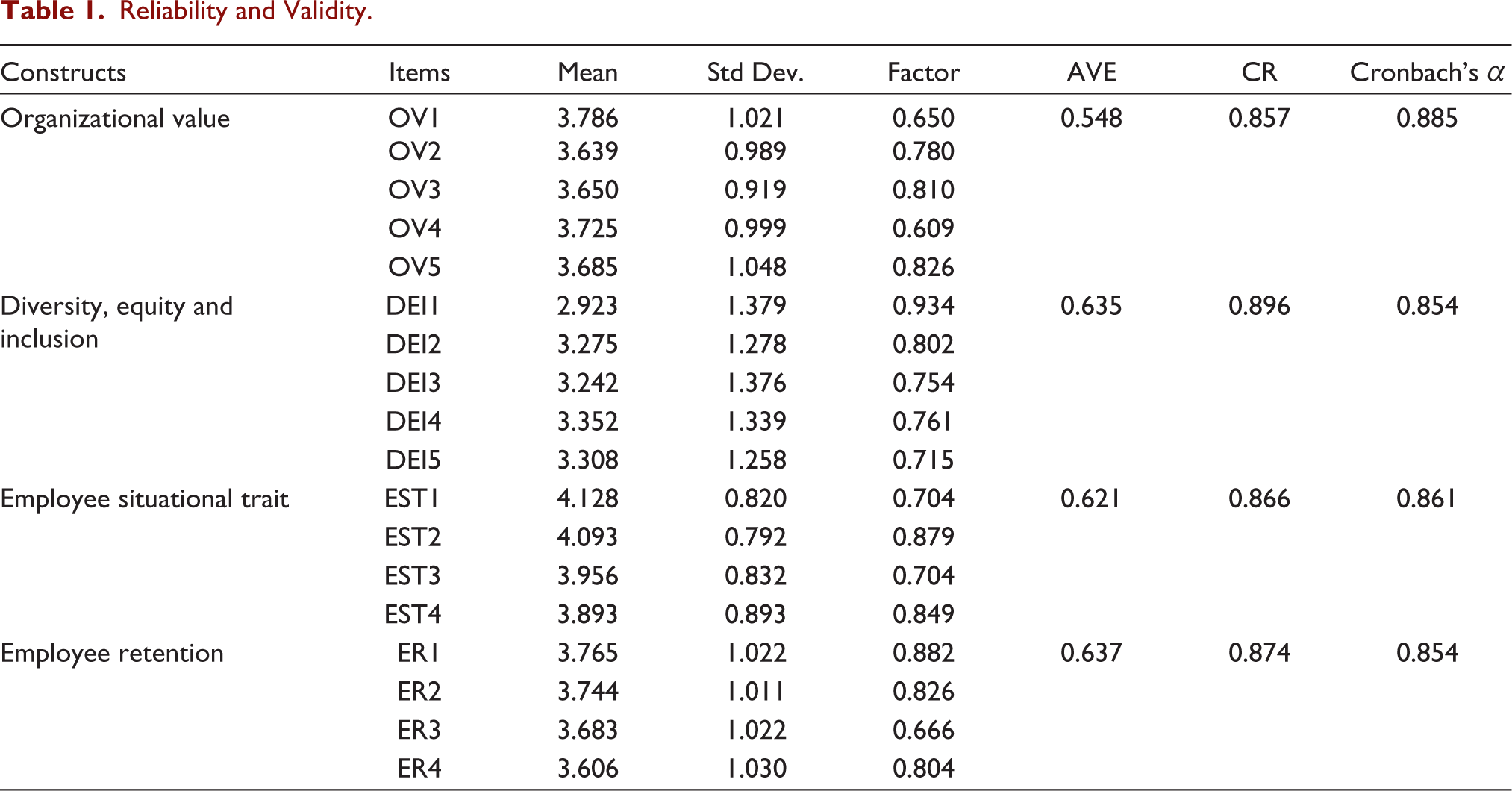
The internal consistency of the items, measured through Cronbach’s α, along with composite reliability (CR) for each item, was determined (Table 1). For satisfactory internal consistency, Cronbach’s α should exceed 0.70, indicating the reliability of the survey’s measurement items. The Cronbach’s α of all the constructs was between 0.854 and 0.885. The result shows that all the constructs are reliable and acceptable, as the CR of each construct is above the specified value of 0.5. The average variance extracted (AVE) was utilized to assess the construct’s convergent validity. The result shows that the AVE for each construct was above 0.5, which is acceptable. Cronbach’s α was also analysed for each build, and the result was above 0.7 (Nunnally, 1978). Thus, the instrument offers consistent and reliable results, as shown in Table 1. Additionally, to assess convergent validity, the AVE, CR and factor loadings were examined (Table 1). The factor loadings for all items exceeded the recommended threshold of 0.6. The AVE indicated that the variance among construct indicators ranged from 0.548 to 0.637 (above the 0.5 threshold), affirming the constructs’ convergent validity. The CR values also exceeded 0.7, showcasing how construct indicators reflect latent structures.
Reliability and Validity.
Researchers employed discriminant validity to distinguish the investigated measures from related constructs, determining their correlation. This was evaluated by the square root of the AVE and the KMO values. A KMO value above 0.5 indicates that the sample possesses adequate robustness. Furthermore, as presented in Table 2, the square root of the AVE for each construct exceeds the respective correlation coefficients, signifying satisfactory discriminant validity.
Correlations.
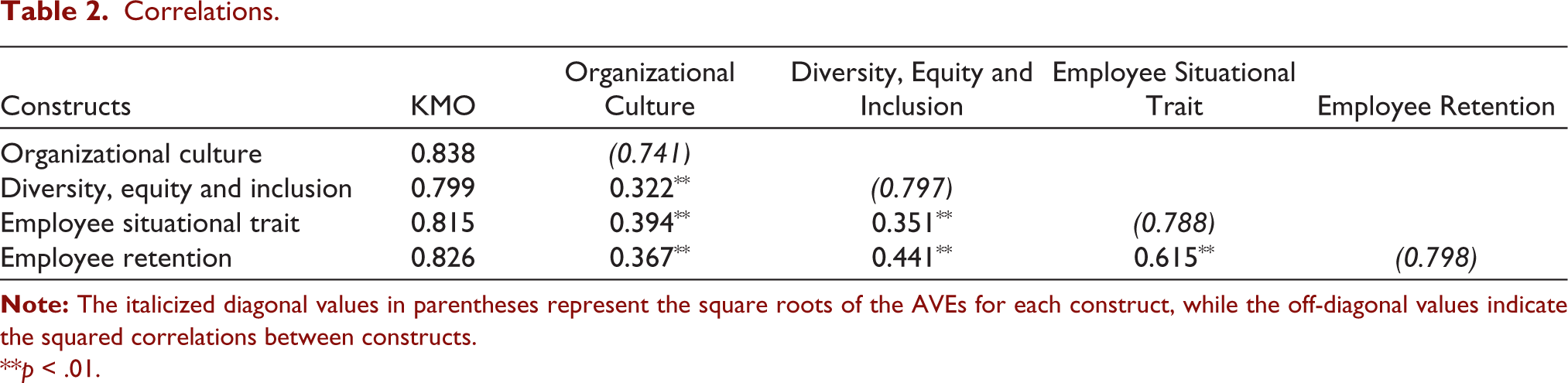
**p < .01.
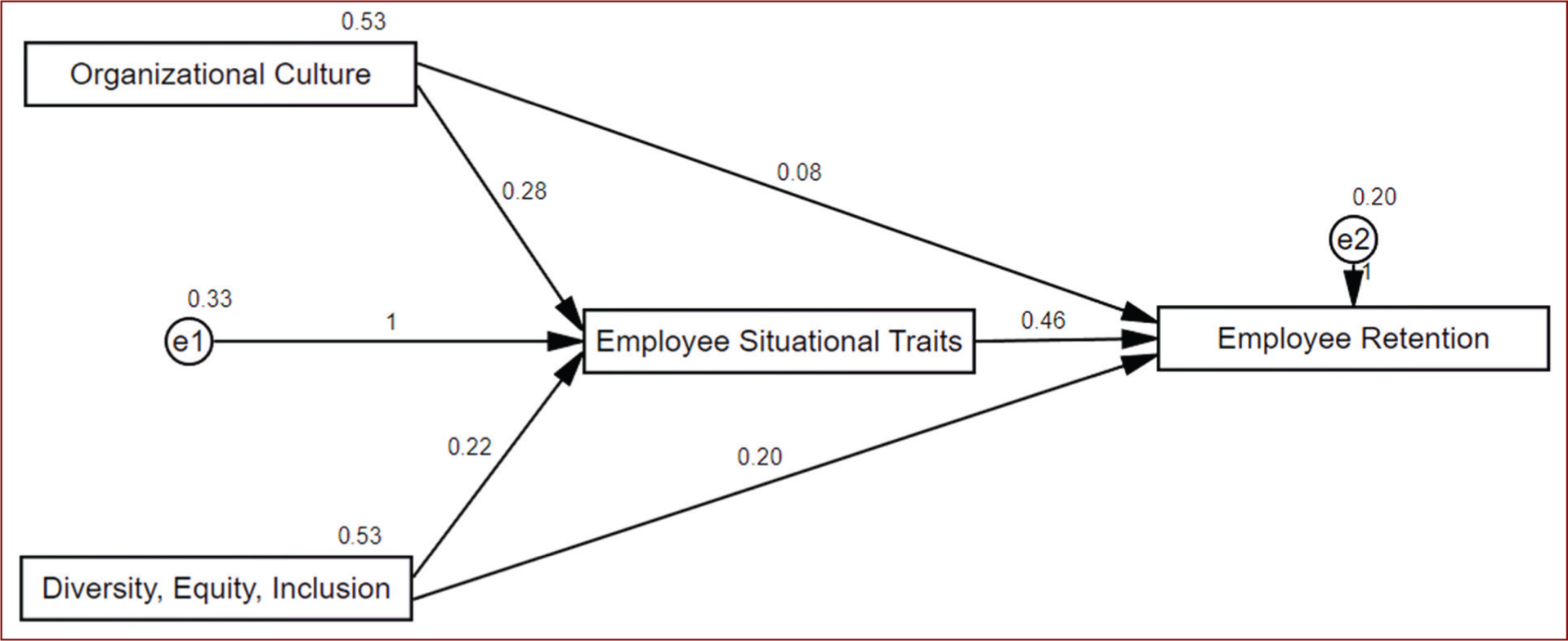
Table 3 reports the relationship between the variables. The proposed hypotheses are tested using structural equation modelling (Figure 2). The employee situational traits on the organizational culture (β = 0.281, p < .001) and DEI (β = 0.224, p < .001) of an employee are significant. Thus, H1 and H2 are supported. Organizational culture (β = 0.08, p < .05) was found to be a significant but not a prominent predictor of employee retention. Thus, H3 is supported. DEI (β = 0.197, p < .001) is estimated to have a positive and statistically significant relationship with employee retention. Thus, H5 is supported. Employee situational traits (β = 0.459, p < .001) are estimated to have a positive and statistically significant relationship with employee retention. Thus, H5 is supported.
Structure Equation Modelling.
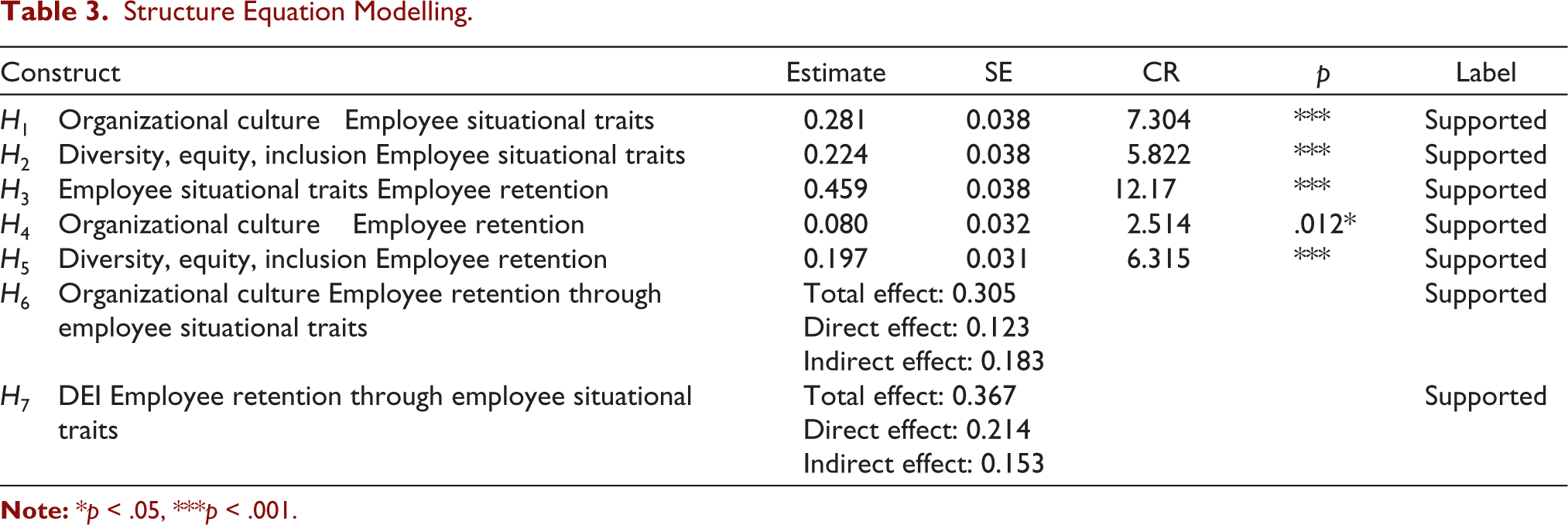
Structural Equation Modelling.
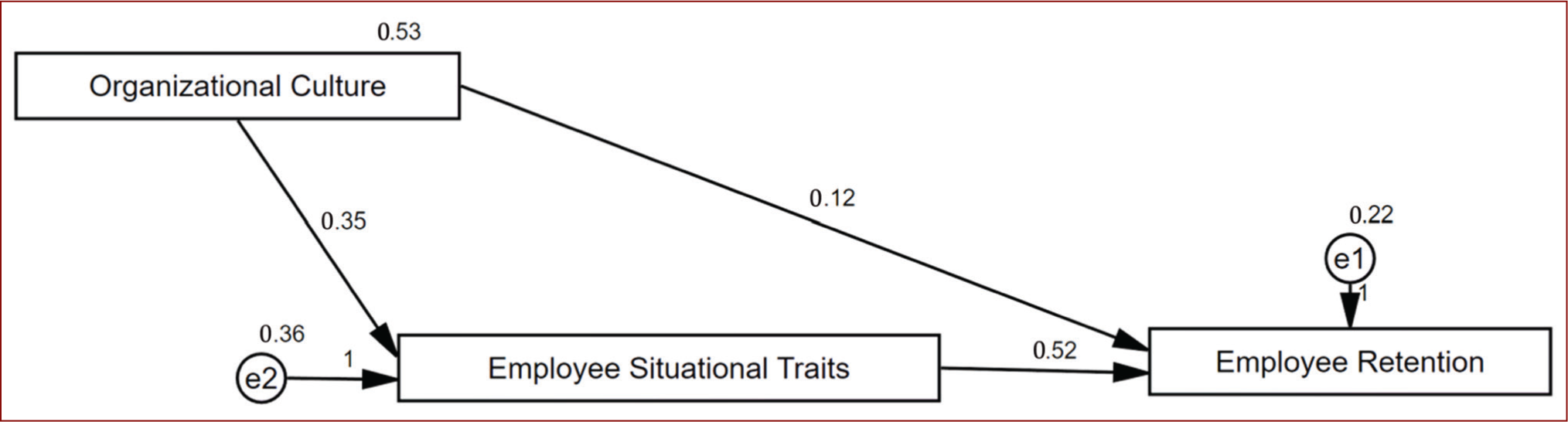
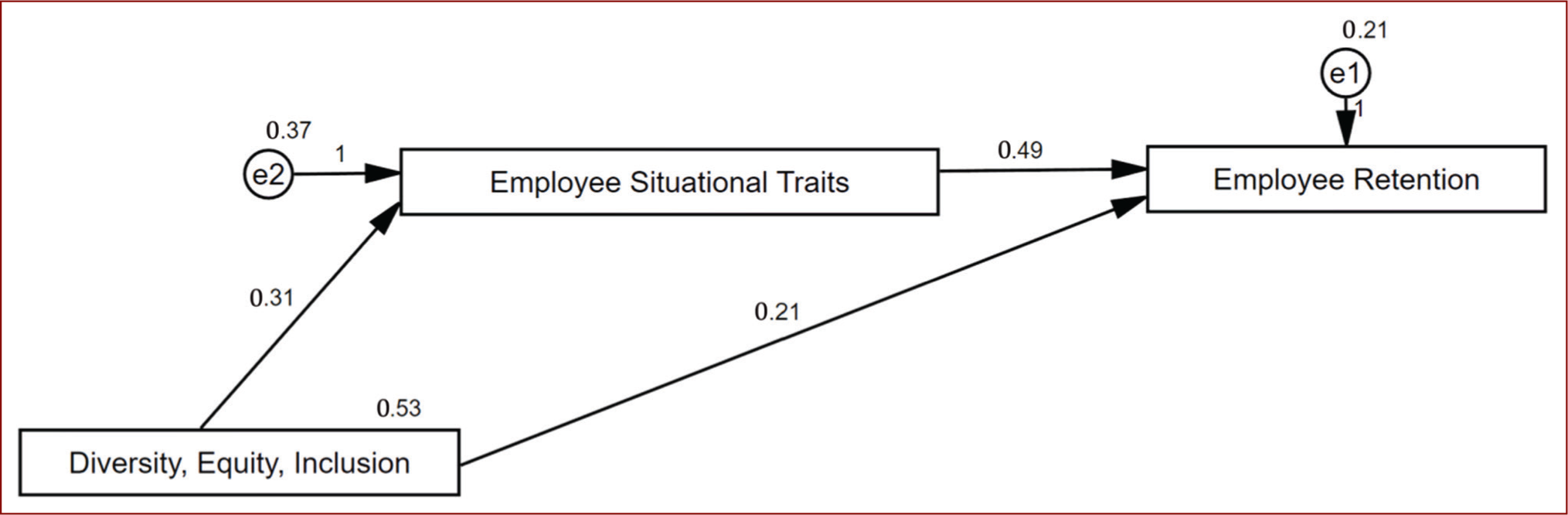
Additionally, the mediating roles of employee situational traits and DEI on the relationship between these two factors were also investigated (Figures 3 and 4). It can also be inferred for H6 that the indirect effect (0.183) and the direct effect (0.123) remain significant, demonstrating mediation (Hayes, 2022). Hence, H6 is supported. Similar results are observed for H7; the indirect effect (0.153) and the direct effect (0.214) remain significant, demonstrating mediation. Hence, H7 is supported. The analysis results supported the hypothesis, indicating that employee situational traits indeed mediate the relationship between organizational culture and employee retention. The study discovered that when employees exhibit certain situational traits, such as adaptability, resilience and problem-solving skills, they are more likely to experience higher retention levels in organizations that foster a positive and supportive culture. Furthermore, the study found that DEI initiatives indeed mediate the relationship between employee situational traits and employee retention. Inclusive and equitable practices within an organization were found to enhance the ability of employees with situational traits to navigate through challenges and maintain their commitment to the organization. Besides depicting statistical results, this research expresses the managerial implications of the formulated relationships. The results indicate that organizational culture and DEI initiatives have a significant influence on employee situational traits (H1, H2), which in turn potentiate employee retention (H3). It was also found that there is a direct positive effect of organizational culture on retention (H4, H5), although it is comparatively weaker than the stronger influence of DEI policies. These findings establish the central role culture and DEI play in determining sustainable workforce outcomes.
Mediating Analysis: H6.
Mediating Analysis: H7.
General Discussion
In the contemporary competitive employment landscape, holding on to exceptional talent is becoming more challenging. Companies have traditionally relied on cultivating a positive organizational culture to encourage employee loyalty and retention, as Jaiswal and Dyaram (2019) outlined. Recent research provides valuable insights into employee retention, highlighting several important findings. While a positive work environment is important, it is not the only factor in keeping employees. Employee situational traits play a crucial role in retention, showing a strong link between comprehensive DEI policies and higher retention rates, supporting previous findings (Le et al., 2018). The study questions the direct impact of organizational culture on retention, suggesting a need for re-evaluation. DEI policies contribute to a positive work environment and enhance employee situational traits, which leads to better retention. Employees who feel a sense of inclusion, have access to equitable treatment and career advancement opportunities, and work in diverse settings are more resilient and adaptable (Hwang & Hopkins, 2015). Therefore, the focus should shift from just organizational culture to actively integrating DEI practices into daily operations, leadership and decision-making (Ashikali & Groeneveld, 2015). Organizations that implement DEI policies can build a workforce capable of managing work-related conflicts and thriving amidst changes. Ultimately, the findings highlight how effective DEI policies—promoting diversity, ensuring equitable advancement and guaranteeing fair treatment—lead to increased employee retention rates. Moreover, the importance of employee situational traits, which help individuals assess and respond effectively to work situations, contributes to a dedicated and lasting workforce. These insights together showcase the multifaceted influences of DEI and employee traits on retention in today’s workplace.
The findings reveal that employee situational traits mediate the relationship between both organizational culture and DEI with employee retention, which coordinates well with prior findings proposing that encouraging environments with inclusive practices nurture affirmative employee retention behaviours (Dawson et al., 2023; Lin & Chang, 2005). The findings emphasize the essence of incorporating DEI initiatives and domesticating a substantial organizational culture to formulate employee traits such as organizational commitment and employee engagement, echoing previous literature foregrounding the gap between DEI adoption and meaningful behavioural outcomes (Melnkovic & Wilding, 2022; Tetteh et al., 2021).
Contrary to traditional beliefs, the analysis also indicates that while organizational culture remains essential for a healthy workplace, it might not be the foremost factor driving employee loyalty and retention. This insight challenges the conventional emphasis on shaping organizational culture to improve retention. Instead, the study advocates for a comprehensive approach that considers organizational and individual factors. Statistical modelling substantiates this view by demonstrating the mediating role of employee situational traits, emphasizing the necessity to recognize individual variances in dealing with work-related situations and the importance of providing customized support systems with specific resources and training (Ashikali & Groeneveld, 2015; Jaiswal & Dyaram, 2019; Hwang & Hopkins, 2015; Le et al., 2018). The analysis showed a significant correlation between strong DEI policies, positive employee situational traits and enhanced retention rates. Further investigation through structural equation modelling validated these observations, indicating that employee situational traits partly mediate the relationship between organizational culture, DEI policies and employee retention. In summary, the research advocates that DEI policies cultivate beneficial employee situational traits, which are more pivotal in retaining staff than the broader organizational culture itself. Thus, the research underscores the relevance of catering to individual employee perceptions and responses. Although organizational culture creates a foundational environment, how employees perceive and engage with that culture determines the ultimate impact on retention. This calls for a more individualized approach to employee engagement, focusing on understanding and nurturing situational traits through specific interventions such as training programmes, open lines of communication and supportive networks.
Conclusion
This study provides valuable insights into the relationship between organizational culture, DEI policies, employee situational traits and employee retention. It challenges the traditional view of organizational culture as one crucial factor driving employee loyalty and retention. Instead, it highlights the complex interplay between various factors influencing employee retention and shows how employee situational traits mediate this relationship. By recognizing the importance of positive employee situational traits and fostering them through effective DEI initiatives, organizations can create a more inclusive and resilient work environment that attracts diverse talent and retains and nurtures it for long-term success.
Managerial Implications
The practical implications of this research hold significant relevance for managers and practitioners in human resource management, offering a pathway to enhance strategies for attracting and retaining top talent. By integrating DEI policies into the core of the organizational culture, reflecting these values in everyday practices, leadership behaviours and decision-making processes, managers can foster a more inclusive and dynamic work environment. This involves investing in employee development to understand and nurture positive employee situational traits, designing targeted training programmes and creating development opportunities that promote resilience, adaptability and a sense of belonging. Open communication is crucial, allowing employees to voice concerns and suggestions and fostering trust and psychological safety. Building supportive networks through mentoring programmes, employee resource groups or team-building activities can also enhance a sense of community and belonging. By adopting these strategies, managers attract diverse talent and provide the tools and support necessary for employees to thrive and contribute to an organization’s long-term success.
Limitations and Recommendations for Future Research
While this study has yielded valuable insights, it is important to acknowledge its inherent limitations. One of the most significant limitations is that perceptions of organizational culture, DEI policies and employee situational traits can be subjective and susceptible to bias. Future research could benefit from addressing these limitations by incorporating objective organizational culture and employee behaviour measures. The exploration of DEI policies presents a rich field for academic inquiry, particularly regarding their influence on employee situational traits. Future research could delve into the impact of various leadership behaviours, the efficacy of mentoring programmes and the role of diversity and inclusion training in fostering employee development. Self-employed individuals, as highlighted in previous studies, may experience DEI dynamics differently than those within larger organizations that often have formalized DEI structures. To address this gap, further studies should investigate the effectiveness of DEI in predominantly self-employed and entrepreneurial environments, which would yield valuable insights into non-traditional organizational contexts.
Moreover, it is essential to consider the generalizability of current findings across diverse industries, varying organizational sizes and distinct cultural frameworks. This exploration would enhance our understanding of DEI’s multifaceted nature. To bolster the robustness of future research efforts, employing longitudinal study designs could provide a means to monitor changes in employee situational traits and retention rates over an extended period, offering a more comprehensive view of DEI’s long-term effects on the workforce. By addressing these limitations and expanding the scope of inquiry, future research can refine our understanding of the complex interplay between organizational culture, DEI policies, employee situational traits and employee retention. This will equip organizations with the knowledge and tools to build a thriving and resilient workforce in today’s dynamic job market.
Footnotes
Declaration of Conflicting Interests
The authors declared no potential conflicts of interest with respect to the research, authorship and/or publication of this article.
Funding
The authors received no financial support for the research, authorship and/or publication of this article.
Appendix
Measurement Constructs.
| Items | Variable | Author |
| Organizational Culture | Canboy et al., 2023 | |
| OC1 | Organizational values are communicated and understood within the company. | |
| OC2 | Organizational values align with your values. | |
| OC3 | The leadership team supports and encourages innovation and risk-taking. | |
| OC4 | You feel a sense of belonging and inclusivity within the organization. | |
| OC5 | Teams collaborate and share information effectively. | |
| Diversity, Equity and Inclusion | Nguyen et al., 2023 | |
| DEI1 | You feel included in the organization’s decision-making processes. | |
| DEI2 | All employees are treated fairly and equally within the organization. | |
| DEI3 | Organization’s efforts to ensure pay equity, adequate compensation and performance appraisal among employees. | |
| DEI4 | Diverse perspectives and identities are valued in the workplace. | |
| DEI5 | The organization provides adequate training on diversity and inclusion. | |
| Employee Situational Trait | Mowen et al., 2007 | |
| EST1 | You handle changes in your work environment or job responsibilities. | |
| EST2 | You are open to inclusion and accommodating co-workers of diverse gender identities, races, ethnicities and backgrounds. | |
| EST3 | You contribute to the team’s success in various situations. | |
| EST4 | You can handle conflicts with colleagues or team members. | |
| Employee Retention | Matongolo et al., 2018 | |
| ER1 | You feel you have good career development opportunities within the organization. | |
| ER2 | You are satisfied with your compensation and benefits. | |
| ER3 | You feel like your work is meaningful and makes a difference. | |
| ER4 | You recommend this organization to a friend or colleague. |