



Abstract
Social media has become a vital part of global communication, with increasing relevance in the healthcare sector. This study systematically examines the benefits, drawbacks, enablers and barriers of social media use in healthcare to inform best practices and policy development. Guided by the SPAR-4-SLR protocol and the TCCM framework, the review synthesizes findings across four dimensions: theory, context, characteristics and methods. Forty peer-reviewed articles were included, sourced from PubMed, CINAHL Ultimate, ProQuest One Academic and ScienceDirect databases. The findings indicate that social media’s characteristics offer benefits such as information sharing, health promotion, user engagement and public health surveillance. However, misinformation and privacy concerns were identified as major challenges. Policies, guidelines, governance and trust emerged as both barriers and enablers, depending on their presence or absence. The review highlights a critical gap in theory, with most studies lacking a robust theoretical foundation. Methodologically, primary empirical methods, particularly surveys and secondary/review designs dominated, while qualitative and mixed methods remained rare, suggesting the need for a broader methodological base, including longitudinal designs, grounded theory and in-depth qualitative inquiry to capture the experiences of users and organizations. This study emphasizes the importance of integrating theory into future research and adopting a more diverse range of methodologies. Effective governance, digital literacy and strategic oversight are crucial for maximizing the benefits of social media in healthcare while addressing its challenges. The findings support the development of a guiding framework to ensure the ethical and effective use of social media in healthcare.
Introduction
Social media has fundamentally transformed how individuals communicate, access information and acquire knowledge. It facilitates real-time interaction, fosters community support during crises and overcomes geographical and temporal barriers (Rimal, 2012). The rapid global exchange of information enabled by social media highlights its potential as a powerful tool for information dissemination. With more than 60% of the worldwide population connected to the internet, over five billion people are now active social media users (We Are Social Ltd, 2025). This widespread adoption highlights the integration of social media into daily life for a significant portion of the world’s population. Notably, an increasing number of users are turning to these platforms for health-related information (Denniss et al., 2022), presenting new opportunities for public health campaigns across a growing array of digital platforms (Gunasekeran et al., 2022). As observed in the business sector, where social media is integral for customer engagement, brand-building, communication, and organizational knowledge sharing (Chugh, 2012; Chugh, 2017), healthcare organizations are increasingly adopting similar strategies to engage with patients and improve health outcomes. As Moorhead et al. (2013) observed, social media introduces a novel dimension of interaction among the public, patients, health organizations and professionals, reshaping traditional communication pathways in health.
The increasing use of social media by patients for health-related purposes highlights the need to understand its broader implications within the healthcare sector (De Martino et al., 2017). A comprehensive review of social media use in this sector can yield valuable insights into its potential benefits and limitations for patients, healthcare professionals and health organizations. For instance, Ghalavand and Nabiolahi (2024) emphasize that effective social media management requires sustained commitment to reliability, trustworthiness and transparency. Building on this foundation, the present study addresses critical and emerging questions in healthcare organization management by examining the evolving role of social media and its implications for both practice and policy.
The importance of studying social media in healthcare continues to grow as both healthcare professionals and the public increasingly rely on these platforms to seek, share and disseminate health-related information. The global outbreak of COVID-19 in early 2020 amplified the demand for timely and credible health communication, highlighting the central role of social media in public health messaging. However, this period also exposed the risks of misinformation and the limited understanding of social media’s influence on health outcomes, factors that, in some regions, impeded effective public health responses (Gunasekeran et al., 2022). In light of these challenges, there is an ongoing call for more effective, trustworthy and strategically managed communication channels in the post-pandemic context (Kumar et al., 2024).
Consequently, investigating the role of social media in the healthcare domain can inform the development of more effective strategies for disseminating reliable information and enhancing health literacy (Prakash, 2024). Despite a growing body of research, there remains a lack of systematic literature reviews that comprehensively synthesize existing studies to evaluate the benefits, challenges, enablers and barriers associated with social media use in the healthcare domain (Chen & Wang, 2021).
In this review, health literacy refers to social media users’ cognitive and social skills that influence their motivation and ability to access, understand and use information in ways that promote and maintain good health (Nutbeam, 1998). The term healthcare professional encompasses clinical staff such as medical practitioners, nurses, dentists and allied health practitioners. The term health organization refers to regulatory bodies, government agencies, administrators and employees who engage with social media for professional purposes.
Despite the increasing use of social media in healthcare for public engagement, health promotion and information dissemination, research in this area remains fragmented. The review was undertaken to guide new research in the field of social media in the healthcare context (Paul, Lim, et al., 2021). Existing studies tend to focus narrowly on either the benefits or the risks, often overlooking the complex social, professional and organizational factors that influence their effectiveness. Moreover, there is a limited understanding of how healthcare practitioners and institutions navigate challenges such as misinformation, privacy concerns and audience engagement. This lack of a systematic, integrated perspective constrains efforts to develop informed strategies and to understand the interconnectedness of social media use characteristics.
To address this gap, the present study examines the global use of social media in healthcare by synthesizing existing literature and identifying key themes, theoretical frameworks and methodological approaches. Using the theories–contexts–characteristics–methods (TCCM) framework (Paul & Rosado-Serrano, 2019), the review classifies the literature into four dimensions: theories, contexts, characteristics (benefits, challenges, enablers and barriers) and methods, thereby providing a foundation for future research and practical guidance for health organizations. The research questions (RQs) guiding this study are as follows:
RQ1: How do stakeholders in the healthcare context perceive and experience the benefits and challenges of social media use for health-related communication? RQ2: What factors enable or constrain the effective use of social media platforms in a healthcare context? RQ3: What theoretical frameworks have been applied to study social media use in a healthcare context?
The rationale for conducting this systematic literature review is to gain a comprehensive understanding of how social media is utilized in the health domain globally and to map the current landscape of its application. Despite the growing prevalence of social media as a health communication tool, there remains a lack of a defined theoretical framework or guiding model to support decision-makers in managing its use within health organization management contexts. While it is widely acknowledged that social media must be managed effectively (Fraccastoro, 2021; Zhou et al., 2018), a deeper exploration of the existing literature is essential to identify the challenges, gaps and opportunities associated with its use in the healthcare context. Enhancing this knowledge base can contribute to the development of more robust guidelines and strategic approaches for managing social media in healthcare settings.
A key gap emerging from this review is the absence of a consistent theoretical foundation across studies. From a theoretical perspective, there is no widely agreed-upon framework for studying the use of social media in healthcare (Wang et al., 2019; Zhou et al., 2018). While some studies have applied the institutional theory (Dailah & Naeem, 2021) or behavioural models such as the technology adoption model (Hazzam & Lahrech, 2018), the overall lack of theoretical grounding is limited. This highlights a critical gap and an opportunity for future research to adopt and test robust theoretical models.
In terms of context, although this review focused specifically on healthcare, the geographical distribution of the included studies was somewhat limited. Notably, 45% of the studies adopted a broad, global perspective, with fewer studies offering in-depth, context-specific insights. This suggests that future research could benefit from greater geographical diversity, particularly through empirical investigations focused on individual countries or specific healthcare organizations.
Regarding characteristics, this study builds on the foundational work of Moorhead et al. (2013) and Chen (2021) by identifying both established and emerging benefits and challenges of social media in healthcare. Key benefits include timely information dissemination, engagement and improved public health communication. However, challenges such as misinformation, privacy concerns and organizational resistance persist. Interestingly, some factors, such as policy, governance and trust, function as both enablers and barriers.
From a methodological standpoint, the dominance of quantitative approaches in the reviewed literature suggests a need for more qualitative research. Qualitative methods could provide deeper insights into user experiences, organizational dynamics and contextual complexities that are often overlooked in large-scale surveys or statistical analyses.
The structure of this study is organized as follows. First, the research methodology is outlined, detailing the systematic review process and inclusion criteria. This is followed by an overview of the selected literature, including the journals and articles reviewed. The subsequent section presents an in-depth analysis of the findings, structured around the TCCM framework, covering theoretical foundations, contextual settings, key characteristics of social media use in healthcare and methodological approaches. The discussion then turns to future research directions, guided by gaps identified through the TCCM lens. Finally, the conclusion highlights the theoretical and practical implications of the study, offering recommendations for researchers and policymakers.
Research Methodology
This study follows the Scientific Procedures and Rationales for Systematic Literature Reviews (SPAR-4-SLR) protocol (Paul, Lim, et al., 2021), which offers a structured and rigorous framework for conducting systematic literature reviews. It supports interdisciplinary research and promotes a transparent, replicable process that enhances academic rigour. This review follows a domain-based, structured and characteristic-oriented approach, focusing on the development of key characteristics within the healthcare context. The primary objective is to consolidate the existing knowledge to guide and inform future research.
SPAR-4-SLR
This domain-based review (Palmatier et al., 2018; Saikia & Bhattacharjee, 2024) adopted the SPAR-4-SLR protocol (Paul, Lim, et al., 2021) as the primary methodological framework to guide the systematic review process. SPAR-4-SLR provides a structured approach to literature synthesis through its three-phase process: assembling, arranging and assessing. While the PRISMA approach is commonly used for systematic reviews, it was developed for general purposes and does not prescribe how to design, justify or theorize a review (Paul et al., 2021). In contrast, SPAR-4-SLR enabled the review to be conducted with conceptual and methodological rigour. Given the focus of this review on exploring the benefits, drawbacks, enablers and barriers to social media use in health-related communication, a topic situated at the intersection of management and communication disciplines, the SPAR-4-SLR was the most appropriate protocol. As such, PRISMA was not used, as its structure was less relevant to the goals and disciplinary alignment of this study.
Assembling
The first stage of the SPAR-4-SLR protocol, assembling, defined the domain, research questions, source type and source quality, and involved the identification and acquisition of suitable articles for review (Paul et al., 2021). Relevant literature was systematically identified and collected from credible databases using predefined keywords and inclusion/exclusion criteria to construct a comprehensive and replicable sample of studies.
This systematic literature review focused on the use of social media in healthcare, from the perspectives of healthcare stakeholders. Key characteristics were examined as defined by the authors. Given the breadth of the topic and the relatively sparse peer-reviewed literature, studies were selected based on relevance rather than restricted by the study type.
Inclusion and exclusion criteria (see Table 1) were developed to ensure the retrieval of high-quality and pertinent literature. Given the broad scope of the health domain, which encompasses public health, health communication and healthcare management, a comprehensive and inclusive search strategy was adopted. Searches were conducted across four databases: PubMed, CINAHL Ultimate (EBSCOHost), ProQuest One Academic and ScienceDirect. These databases were selected to capture discipline-specific perspectives that may not be comprehensively indexed in a single source, in line with recommendations for methodological rigour in systematic literature reviews (Bhimani et al., 2019; Paul, Lim, et al., 2021; Tranfield et al., 2003). After selecting the relevant papers, we verified their Scimago rankings, focusing on whether they were ranked in the four quartiles (Q1–Q4). This additional step ensured that only studies published in ranked, peer-reviewed journals were included, maintaining the credibility and academic rigour of the review (Paul, Lim, et al., 2021).
Inclusion and Exclusion Criteria.
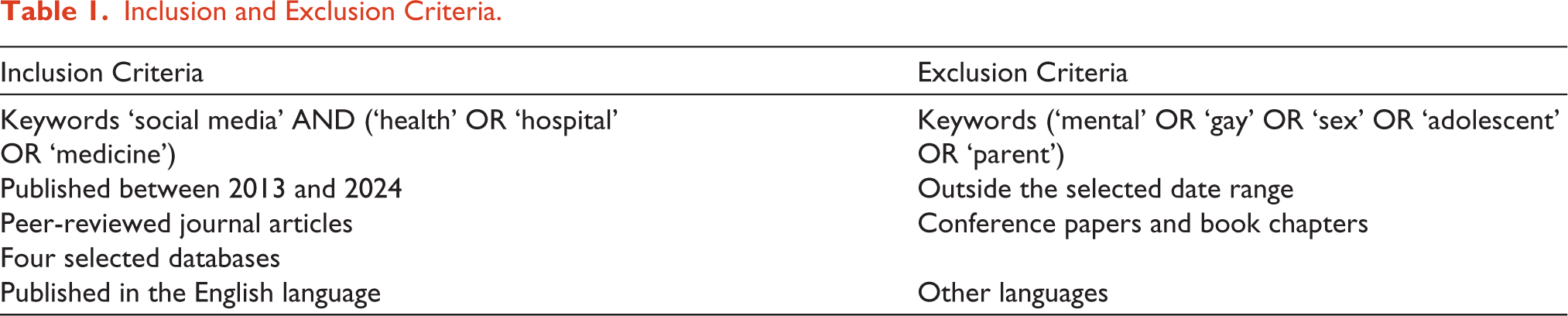
The search time frame was defined as 2013–2024. Although social media began to appear in academic discourse around 2010 (Kaplan & Haenlein, 2010), it was not until 2013 that scholarly interest in the characteristics of social media use in healthcare gained momentum (Moorhead et al., 2013). The following search string was applied to titles, abstracts and keywords: ‘social media’ AND (‘health’ OR ‘hospital’ OR ‘medicine’).
Preliminary searches returned several articles focused on mental health, which, while relevant to social media discourse, were outside the scope of this review. Therefore, the keyword ‘mental’ was added to the exclusion criteria (Fardouly et al., 2018). Similarly, terms such as ‘sex’ or ‘gay’ or ‘adolescent’ or ‘parent’ frequently appeared in irrelevant contexts and were also excluded (Guinta & John, 2018). Although these terms often intersect with broader health concerns, they represent distinct research domains.
Boolean operators ‘AND’, ‘OR’ and ‘NOT’ were employed to construct the search string. The final inclusion and exclusion criteria are summarized in Table 1.
Arranging
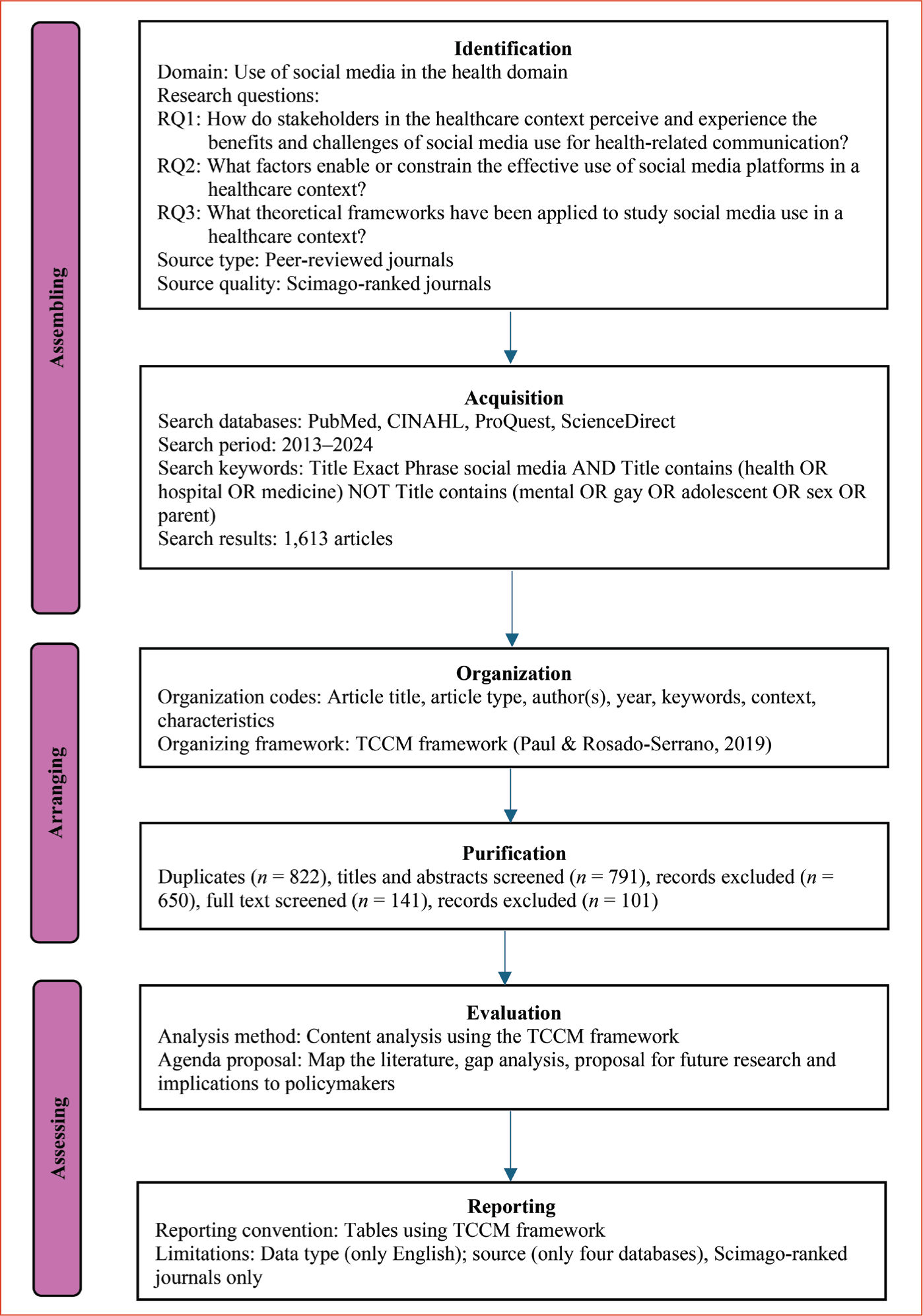
In this step, the collected studies were systematically organized using TCCM and thematic categorization, to enable meaningful analysis and synthesis (Paul, Lim, et al., 2021). Article metadata, including title, type, author(s), publication year, theoretical foundation, contextual setting, key characteristics and methodological approach, were compiled in an Excel spreadsheet. The TCCM framework was selected due to its capacity to support a comprehensive examination of multiple dimensions within the literature investigated (Saikia & Bhattacharjee, 2024). Figure 1 presents the organization and purification process.
Systematic Literature Review Phases of Assembling, Arranging and Assessing, Utilizing the SPAR-4-SLR Protocol (Paul, Lim, et al., 2021).
Assessing
The final phase involved the critical evaluation of the literature to identify gaps, contradictions and trends. At this stage of the SPAR-4-SLR protocol, researchers generate theoretical, contextual and methodological insights to inform future research agendas (Paul, Lim, et al., 2021). An Excel-based review methodology, grounded in the TCCM framework, was adopted to analyse the theoretical frameworks, context, characteristics (i.e., benefits, challenges, enablers and barriers) and methods of each study (Saikia & Bhattacharjee, 2024).
This transparent approach improves the credibility of the review by justifying source selection and ensuring consistency in the analysis. The protocol is particularly suitable for studies examining the integration of technology, such as social media, within healthcare settings (Paul et al., 2021). Notably, 90% of the included studies were published in high-ranking Quartile 1 and Quartile 2 journals, as classified by Scimago. Figure 1 summarizes the article selection process.
TCCM
This study also employs the TCCM framework (Paul & Rosado-Serrano, 2019) during the ‘arranging’ phase of the SPAR-4-SLR protocol. The framework is particularly valuable in fields with underdeveloped theoretical foundations, such as the use of social media in healthcare. As of writing, there appears to be no widely accepted theory underpinning this area of research. By systematically exploring the benefits, drawbacks, enablers and barriers, this review seeks to contribute towards shaping such theoretical foundations for future studies.
The TCCM framework facilitates this process by enabling a structured examination of four key dimensions (Paul & Rosado-Serrano, 2019). The theory dimension highlights that there is an absence of established theory, which presents a significant barrier to advancing understanding in the field. Most existing studies adopt descriptive or exploratory approaches and often lack theoretical grounding. This review seeks to address that gap by identifying patterns and insights that can inform the development of explanatory models. The context dimension captures the use of social media within the health domain. The characteristics dimension focuses on identifying the benefits, drawbacks, enablers and barriers to social media management in the health domain. The method dimension reflects the inclusion of diverse methodological approaches—qualitative, quantitative and mixed methods—although current evidence does not indicate a clearly superior approach for studying this phenomenon.
By applying the TCCM framework, this review identifies trends and insights that can inform the development of explanatory models, thereby moving the field beyond surface-level observations towards more robust, theory-driven research. Collectively, the TCCM dimensions help shape current understanding, expose inconsistencies and highlight areas requiring further investigation. These insights have practical implications for policymakers, healthcare professionals and researchers.
Descriptive Overview
To provide contextual grounding for the TCCM analysis, this section presents a descriptive overview of the selected studies, highlighting publication quality and trends, and article categories.
Publication Trends
To ensure the quality of sources, only articles published in Scimago-ranked journals were included. The distribution of the 40 selected articles is presented in Table 2.
Publication Quality.
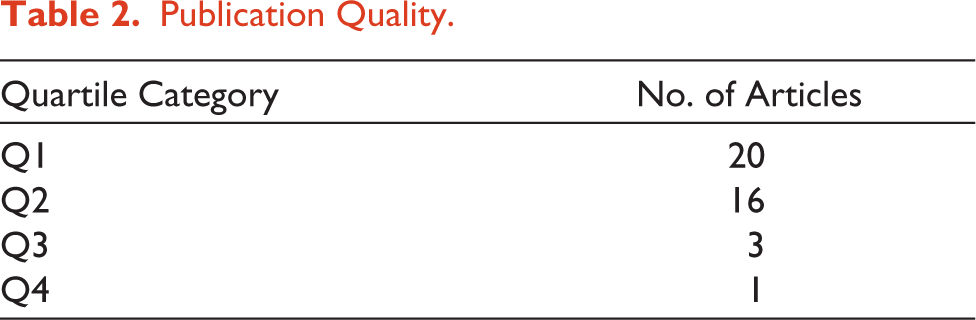
The predominance of Q1 and Q2 publications indicates that most sources come from higher-ranked journals, providing a strong basis for this review. While this reflects engagement with established and influential research, the review also identifies underexplored contexts and methods, offering directions for future studies. The articles were published between 2013 and 2024, with the publication trend illustrated in Figure 2.
Publication Trend.
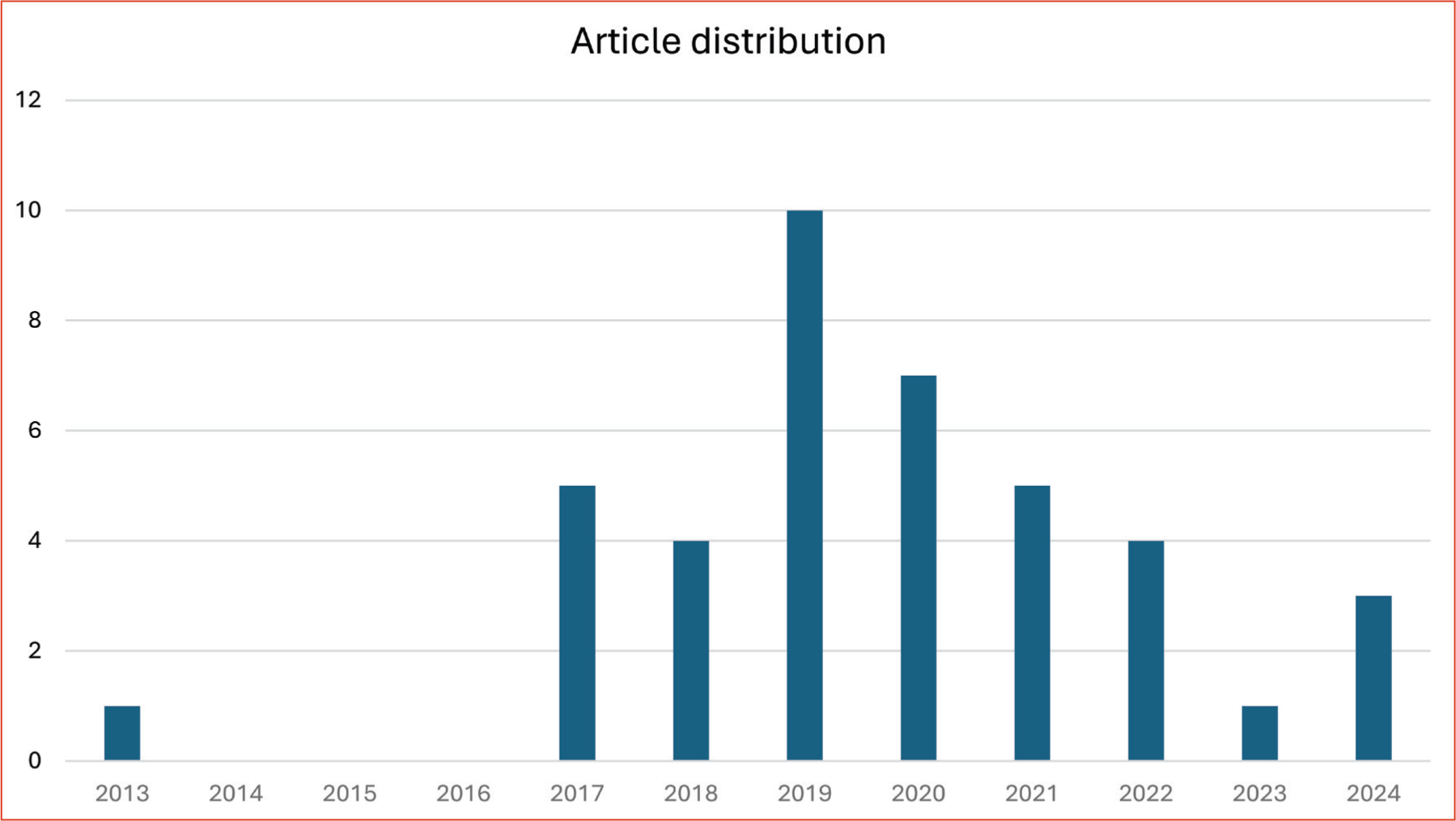
In their seminal paper, Moorhead et al. (2013) identified key uses, benefits and limitations, and highlighted gaps in research on the effectiveness of social media and research methodology. While no papers were found that fit the criteria in this review between 2014 and 2016, the field of inquiry gained momentum prior to and during the COVID-19 pandemic. Chen and Wang (2021) built on the work of Moorhead et al. (2013), emphasizing the role of government and health organizations in the use of social media and noting additional benefits, challenges and research gaps.
Article Categories
For this review, all studies meeting the inclusion criteria were considered (Tranfield et al., 2003). Articles were categorized as either primary empirical methods, secondary/review design or conceptual/non-empirical work. Table 3 presents the distribution of articles across these categories.
Article Categorization.
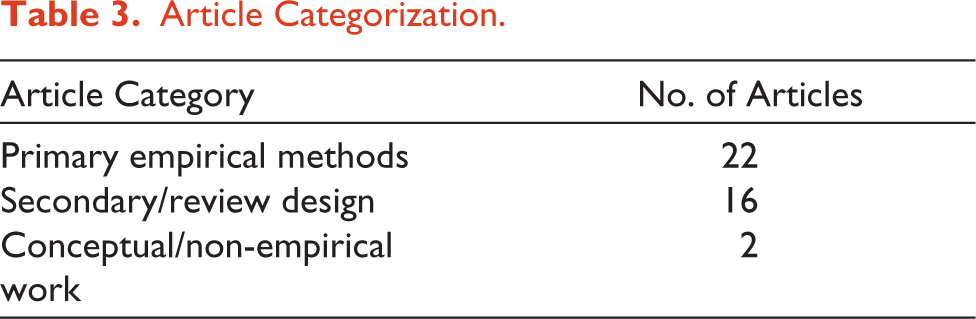
The categorization shows that primary empirical methods form the largest group, followed by secondary/review designs, with conceptual/non-empirical work being rare. Together, empirical and review-based studies account for 95% of the included articles, suggesting that research on social media use in healthcare is predominantly evidence-focused. The small number of conceptual contributions indicates limited theoretical exploration in this area, which may represent an opportunity for future research to develop conceptual frameworks that guide empirical investigations. A further breakdown of the categories is presented in the ‘Methods’ section.
Review Findings Categorized by Theories, Contexts, Characteristics and Methods (TCCM)
This study employed the TCCM framework to assess the current state of research on social media use in healthcare and to identify gaps for future investigation (Paul & Rosado-Serrano, 2019; Prasanna & Kushwaha, 2025). To reinforce the study’s primary objective, consolidating existing knowledge to guide and inform future research, the TCCM framework is employed as a structured lens for categorizing and synthesizing the literature (Bhattacharjee et al., 2022). This approach enables a systematic evaluation of theoretical foundations, contextual applications, research characteristics and methodological practices across the field.
The primary aim of this study was to systematically identify thematic patterns in the literature concerning social media use in healthcare contexts and to trace the evolution of this research domain (Singh & Dhir, 2019). This structured approach also enabled the identification of conceptual, contextual and methodological gaps that can inform future research directions (Paul, Merchant, et al., 2021; Paul & Rosado-Serrano, 2019).
Theories
This review revealed a lack of consensus regarding the application of theoretical frameworks in studies examining the use of social media within the health domain (Wang et al., 2019; Zhou et al., 2018). Only two studies explicitly employed theoretical models to guide their investigation of social media use in healthcare contexts. This finding aligns with results from a prior scoping review (Galea et al., 2025b), which similarly revealed a lack of strong theoretical grounding across studies on social media studies, underscoring a persistent gap in the literature.
Institutional Theory
Dailah and Naeem (2021) applied institutional theory to explore how organizational norms influence the adoption of social media among healthcare professionals. Their findings underscore that during crises such as the COVID-19 pandemic, institutional expectations and established practices significantly shape the acceptance and utilization of social media tools. The study emphasizes that social media adoption must be situated within organizational structures, which either facilitate or constrain its use in healthcare settings. In other words, social media use is not an isolated phenomenon; it is embedded within institutional frameworks that govern professional behaviour and technological engagement (Dailah & Naeem, 2021).
Integrated Behaviour Model and Technology Adoption Model
Hazzam and Lahrech (2018) grounded their study in the Integrated Behaviour Model and the Technology Adoption Model (TAM). The Integrated Behaviour Model was selected due to the behavioural nature of the healthcare sector, which is characterized by strict regulation and professional norms. TAM was chosen for its predictive power in explaining the adoption of new technologies. Based on these frameworks, the authors developed and tested a model that identified several key factors influencing social media use in healthcare, including benefit-focused attitudes aimed at improving communication, perceived usefulness of social media tools, behavioural intent, shaped by ease of use and perceived social norms, and organizational support, including habitual use.
Their findings suggest that health organizations should consider these factors when implementing social media strategies. By aligning technological adoption with behavioural and organizational determinants, institutions can enhance the effectiveness and acceptance of social media in clinical and administrative settings.
Contexts
The geographical distribution of the reviewed studies reveals a diverse range of contexts, with a notable emphasis on global perspectives. Table 4 highlights a broad international context, reflecting the widespread relevance of social media in healthcare across different regions.
Geographical Distribution of Reviewed Studies.
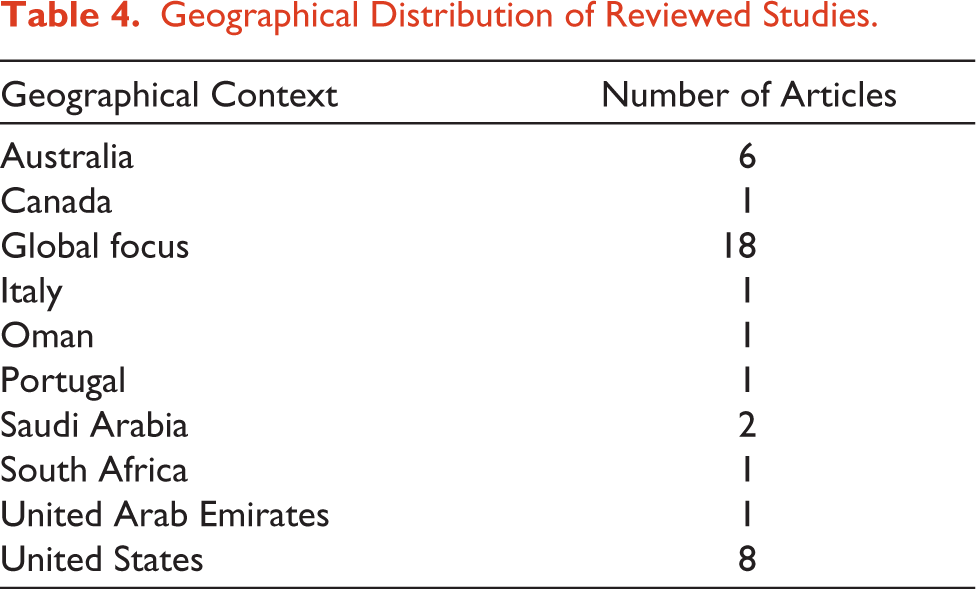
This distribution highlights a concentration of research in countries such as Australia and the United States, alongside a significant number of studies adopting a global focus. This pattern suggests that while specific national contexts are being explored, a considerable proportion of the literature addresses issues and trends that transcend geographical boundaries, highlighting the universal relevance of social media in healthcare.
Characteristics
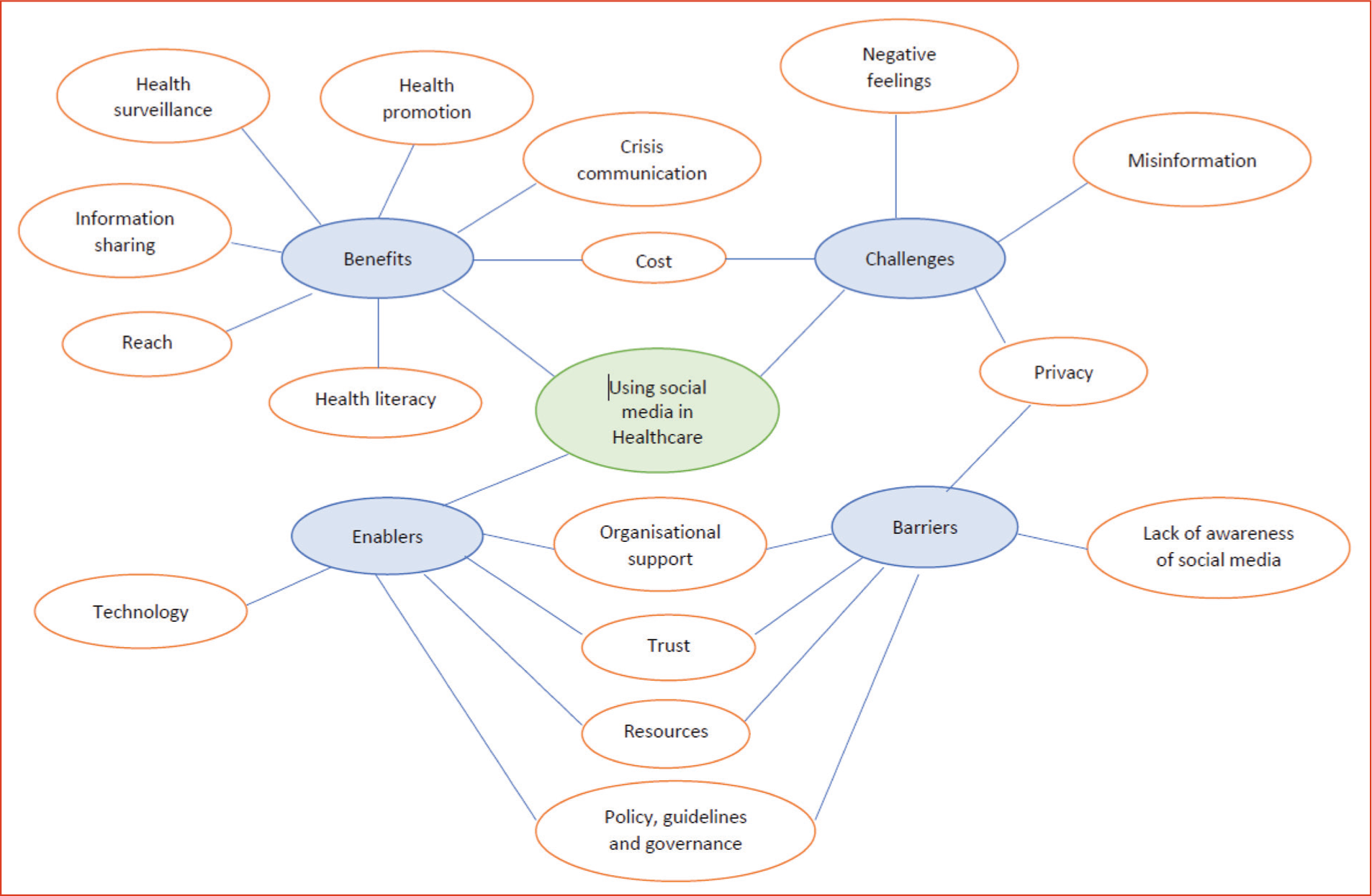
This section examines the key characteristics identified in the literature concerning the use of social media by health organizations. Figure 3 summarizes four thematic areas explored in this review, highlighting the characteristics of how stakeholders in the healthcare domain perceive and experience both the benefits and challenges of social media for health-related communication. These themes also reveal the conditions that enable or constrain the effective use of social media platforms within healthcare settings.
Mind Map of the Four Themes and Associated Characteristics.
Theme 1: Benefits
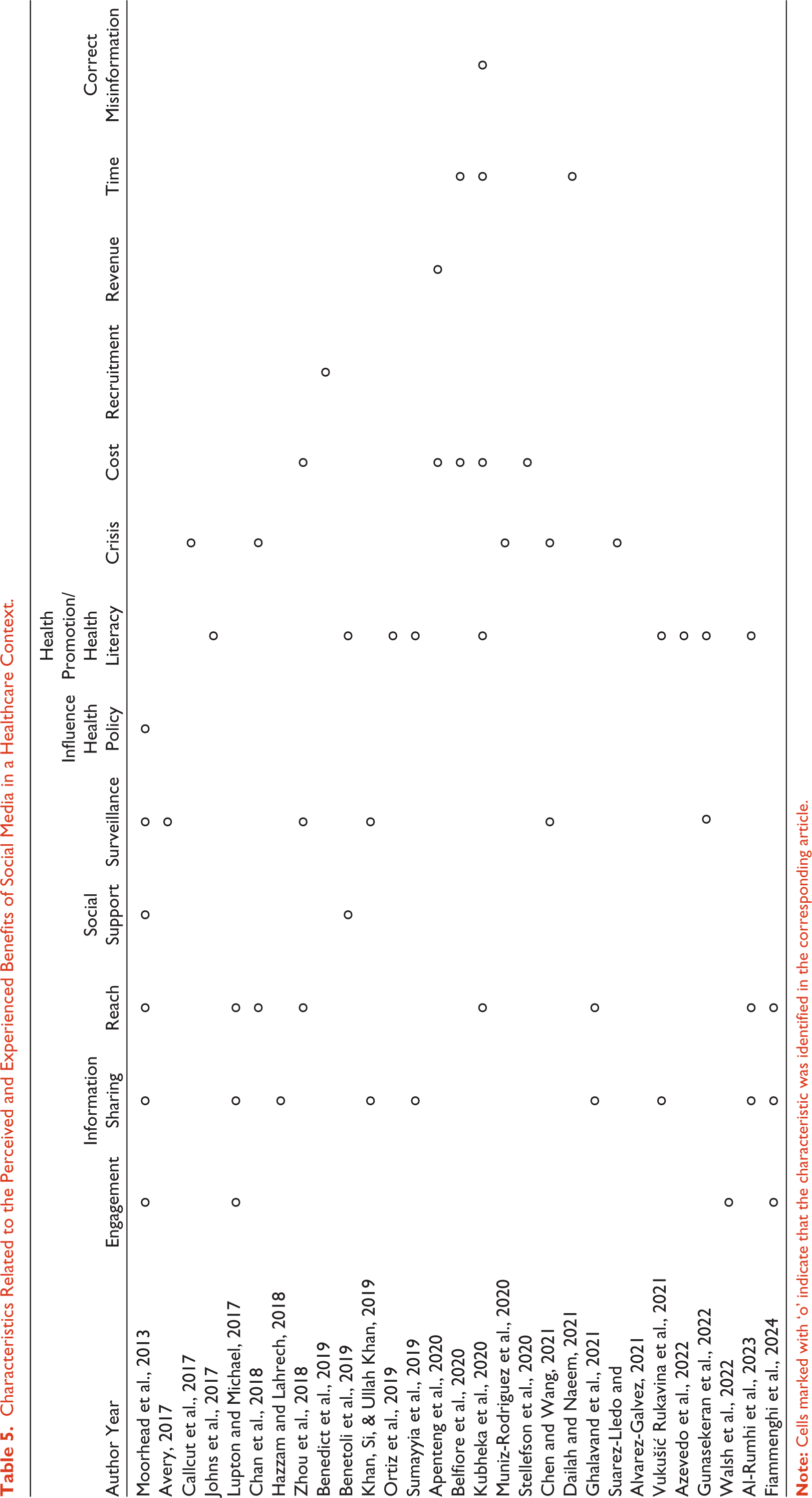
More than 60% of the reviewed articles addressed the benefits of social media in health contexts. These benefits include information sharing, interaction and engagement, social support, health promotion and more, as detailed in Table 5.
Characteristics Related to the Perceived and Experienced Benefits of Social Media in a Healthcare Context.
Social media is widely recognized as a powerful tool for health promotion (Johns et al., 2017; Kubheka et al., 2020; Stellefson et al., 2020) and education (Al-Rumhi et al., 2023; Azevedo et al., 2022; Benetoli et al., 2019; Gunasekeran et al., 2022; Johns et al., 2017; Kubheka et al., 2020; Ortiz et al., 2019; Sumayyia et al., 2019; Vukušić Rukavina et al., 2021). For example, a focus group study in Australia revealed that participants felt empowered by accessing relevant health information and peer support via social media (Benetoli et al., 2019). Similarly, patients in Saudi Arabia reported that health content on social media platforms enhanced the awareness of their conditions (Sumayyia et al., 2019).
Information sharing across user groups, patients, healthcare professionals and institutions was a consistent theme (Al-Rumhi et al., 2023; Fiammenghi et al., 2024; Lupton & Michael, 2017; Moorhead et al., 2013). This communication increases health literacy and promotes active patient participation in care decisions. Social media users can communicate with others and with healthcare professionals, helping patients gain knowledge about their condition and become more involved in the treatment process (Hazzam & Lahrech, 2018; Lupton & Michael, 2017; Vukušić Rukavina et al., 2021). Social media has the potential to increase health literacy (Benetoli et al., 2019), which in turn will benefit healthcare professionals as patients gain more knowledge about their health conditions and may become more proactive in their health management.
In professional contexts, social media platforms provide mechanisms to interact, share information and disseminate knowledge, promoting information sharing and learning, professional development and networking among healthcare professionals (Al-Rumhi et al., 2023; Hazzam & Lahrech, 2018; Vukušić Rukavina et al., 2021). For instance, forums and messaging apps enable clinicians to consult peers, share updates and resolve clinical challenges efficiently. This immediacy is particularly valuable in fast-paced environments where timely decisions are critical, supporting more informed and collaborative healthcare delivery.
Asynchronous communication through social media is a two-way communication tool that is not restricted by time zones or geographic boundaries. This flexibility allows users to exchange information and respond promptly, making it especially useful in healthcare settings where timely updates and collaboration are essential. Social media supports continuous, on-demand communication. Its global reach also enhances the ability to disseminate health information widely and efficiently, connecting billions of users across diverse regions (Chan et al., 2018; Ghalavand et al., 2020; Moorhead et al., 2013; Zhou et al., 2018).
Several studies documented the use of social media during public health emergencies such as natural disasters and pandemics. Social media can be used as a communication tool to reach at-risk populations in response to natural disasters, emergencies and disease outbreaks, to quickly and efficiently inform the public when a public health risk, such as COVID-19, emerges (Callcut et al., 2017; Chan et al., 2018; Chen & Wang, 2021; Muniz-Rodriguez et al., 2020; Vukušić Rukavina et al., 2021). The real-time communication feature of social media has the benefit of being able to locate and provide support to people in distress, act immediately in response to a crisis and communicate with many people simultaneously, potentially saving lives. The use of social media by government agencies can benefit society as a whole, particularly during a health crisis (Chen & Wang, 2021), which was evident during the COVID-19 pandemic.
Social media also plays a role in public health surveillance, helping track disease activity, detect emerging issues and collect public sentiment (Avery, 2017; Chen & Wang, 2021; Gunasekeran et al., 2022; Khan, Tracey, et al., 2019; Moorhead et al., 2013; Zhou et al., 2018). For instance, the Centers for Disease Control and Prevention (CDC) in the United States uses social media–based surveillance to track influenza outbreaks and provide updates on where an outbreak is occurring and how fast it is spreading (Zhou et al., 2018). Monitoring and analysing social media data during a crisis has the benefit of providing up-to-date information from the public to assist healthcare professionals and health organizations in making informed decisions and responding effectively.
Considering more traditional media such as magazines, radio, television and newspapers, social media offers a real-time and cost-effective way to promote health and raise awareness, amplifying health messages. Studies showed that social media is considered a low-cost tool (Apenteng et al., 2020; Stellefson et al., 2020; Zhou et al., 2018), and its social networking features allow information to spread akin to ‘word-of-mouth’ (Apenteng et al., 2020). It amplifies health messaging and facilitates peer-to-peer dissemination.
Healthcare professionals involved in medical research can benefit from using social media as a tool to recruit patients (Benedict et al., 2019). There is a potential financial benefit for health organizations that have adopted social media. A study comparing Facebook utilization and financial data found a relationship between hospital Facebook engagement and revenue among rural hospitals (Apenteng et al., 2020). It is possible that social media can be used to raise awareness about funding initiatives, and the benefit is increased revenue.
Health organizations benefit from using social media for patient recruitment in research and awareness campaigns (Benedict et al., 2019). Financial benefits have also been reported; for instance, one study showed a correlation between hospital Facebook engagement and increased revenue for rural hospitals (Apenteng et al., 2020).
A noteworthy finding is the dual role of social media in the context of misinformation. While misinformation is one of the platform’s greatest threats (discussed in the next section), recent studies recognize social media’s potential to correct false information and promote accuracy (Kubheka et al., 2020), especially during crises like COVID-19.
Theme 2: Challenges
More than 62% of the reviewed articles address the challenges of social media in the healthcare context. Misinformation emerged as the most frequently reported challenge, identified in 25 studies (Table 6), for example, by Steffens et al. (2019), Suarez-Lledo and Alvarez-Galvez (2021) and Wang et al. (2019). The literature on misinformation increased notably in 2019 (Table 6), with further five studies published after the onset of COVID-19.
In this review, misinformation is treated as an umbrella term encompassing all forms of health-related false or misleading information (Wang et al., 2019). The rapid dissemination of misinformation on social media is increasingly recognized as a public health threat (Gunasekeran et al., 2022). Users often consume and act upon deceptive content without verifying its accuracy, which can lead to harmful behaviours and delayed treatment.
Characteristics Related to the Perceived and Experienced Challenges of Social Media in a Healthcare Context.
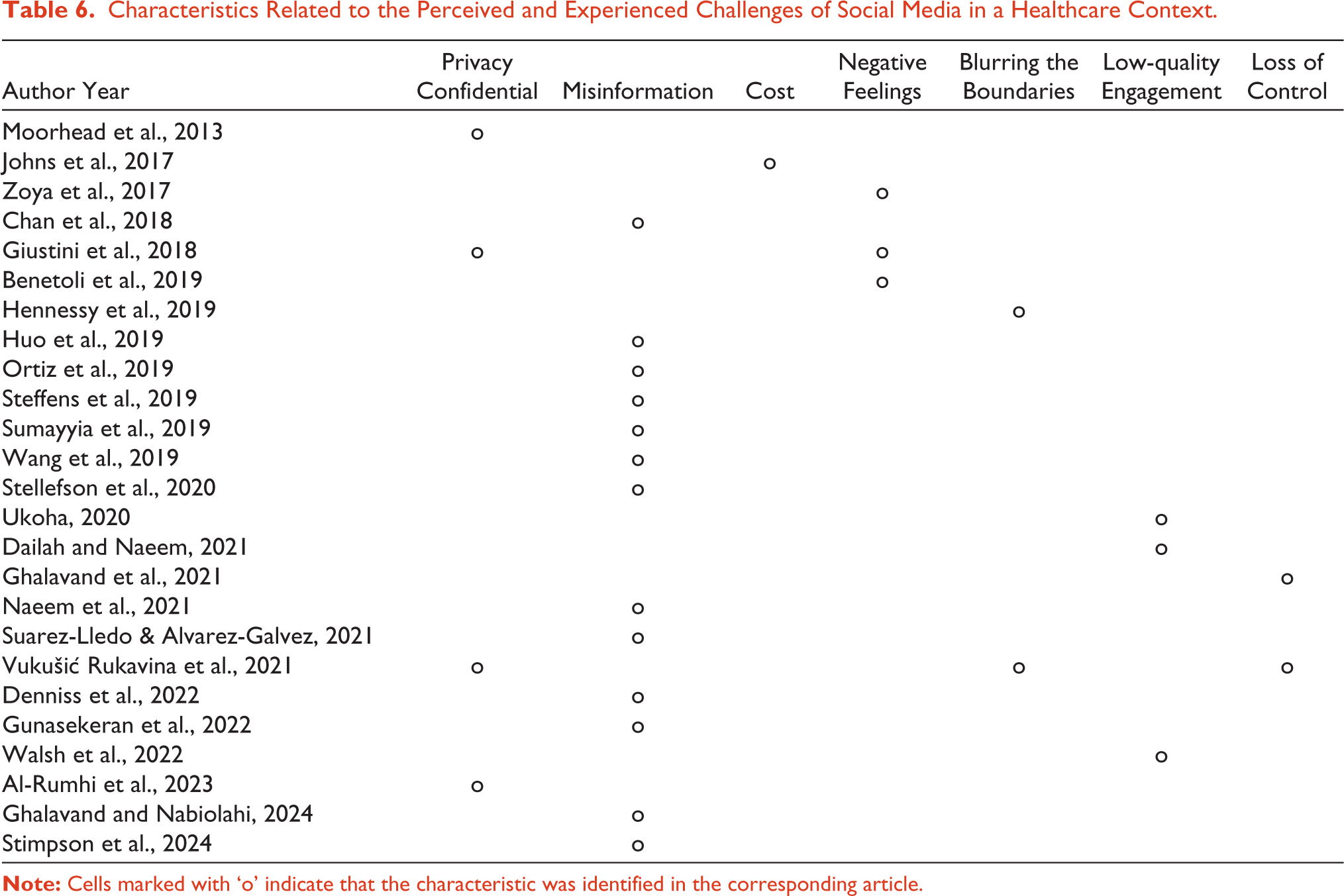
Anti-vaccine content and disease-related misinformation are especially prominent on social media, shaping public attitudes and behaviours (Wang et al., 2019). Results from a previous literature review found evidence of the potential for social media to have a significant impact on some people’s awareness, knowledge, attitudes and behaviour regarding vaccine information (Naeem et al., 2021; Ortiz et al., 2019). Communication staff in health-related organizations in Australia described social media engagement by anti-vaccine activists as hostile and likened it to a conflict zone, inducing fear and anxiety (Steffens et al., 2019; Wang et al., 2019). An exploratory study on fake news on social media, conducted during the COVID-19 pandemic, revealed that misinformation is taking over social media, increasing the risk of harm (Naeem et al., 2021). Misinformation generates anxiety among social media users and has the potential to have negative health consequences if action is taken based on false or misleading information.
Misinformation spread during disasters and emergencies contributes to public panic, compromises resources and hinders recovery efforts (Chan et al., 2018). Its rapid circulation via social media can affect decision-making and actions taken by both the public and emergency responders, ultimately disrupting coordinated public health responses and reducing the efficiency of crisis management strategies (Muniz-Rodriguez et al., 2020).
Social media can be a significant source of distraction in healthcare settings, affecting both patients and professionals. Several studies noted that information overload and distressing content on social media can negatively impact patients, particularly those managing chronic conditions. A focus group conducted in Australia found that participants experienced mental strain, wasted time and exposure to upsetting imagery (Benetoli et al., 2019), supporting the view that social media can complicate health decision-making and harm patient well-being (Giustini et al., 2018; Zoya et al., 2017). Similarly, a study of healthcare professionals in the United States reported that social media is an unnecessary distraction in clinical environments, detracting from workplace productivity (Zoya et al., 2017). The divergent nature of social media usage makes it easy for users to become sidetracked, which can be problematic in both patient care and professional practice.
The blurring of personal and professional boundaries was another concern, particularly regarding defamation, public backlash or reputational harm (Hennessy et al., 2019; Vukušić Rukavina et al., 2021). Healthcare professionals are increasingly seeking guidance and training to navigate the use of social media responsibly (Giustini et al., 2018). This supports the idea that healthcare professionals need training and guidelines on using social media effectively.
Although social media is often viewed as a low-cost solution, implementing it within healthcare settings entails significant financial and resource investments. A synthesized review highlighted that such strategies are not cost-neutral, pointing to expenses related to content management, staff training and technological infrastructure (Giustini et al., 2018). Additional studies have emphasized the need for robust research to fully understand the economic impact of social media adoption in health organizations (Johns et al., 2017).
Finally, privacy and data confidentiality emerged as notable concerns. The public nature of social media complicates the protection of personal health information, especially when patients or professionals share sensitive content (Al-Rumhi et al., 2023; Giustini et al., 2018; Moorhead et al., 2013; Vukušić Rukavina et al., 2021).
Themes 3 and 4: Characteristics Related to the Factors That Enable or Constrain the Effective Use of Social Media
Twenty-three articles identified the presences of guidelines, policy, procedures and governance as key enablers for the effective use of social media in the health domain, as detailed in Table 7 (Benetoli et al., 2019; Dailah & Naeem, 2021; Denniss et al., 2022; Fiammenghi et al., 2024; Ghalavand & Nabiolahi, 2024; Ghalavand et al., 2020; Giustini et al., 2018; Hazzam & Lahrech, 2018; Hennessy et al., 2019; Huo et al., 2019; Khan, Tracey, et al., 2019; Kubheka et al., 2020; Lupton & Michael, 2017; Naeem et al., 2021; Ortiz et al., 2019; Steffens et al., 2019; Stellefson et al., 2020; Stimpson et al., 2024; Sumayyia et al., 2019; Ukoha, 2020; Ukoha & Stranieri, 2019; Zhou et al., 2018; Zoya et al., 2017).
Characteristics That Enable or Constrain the Effective Use of Social Media.
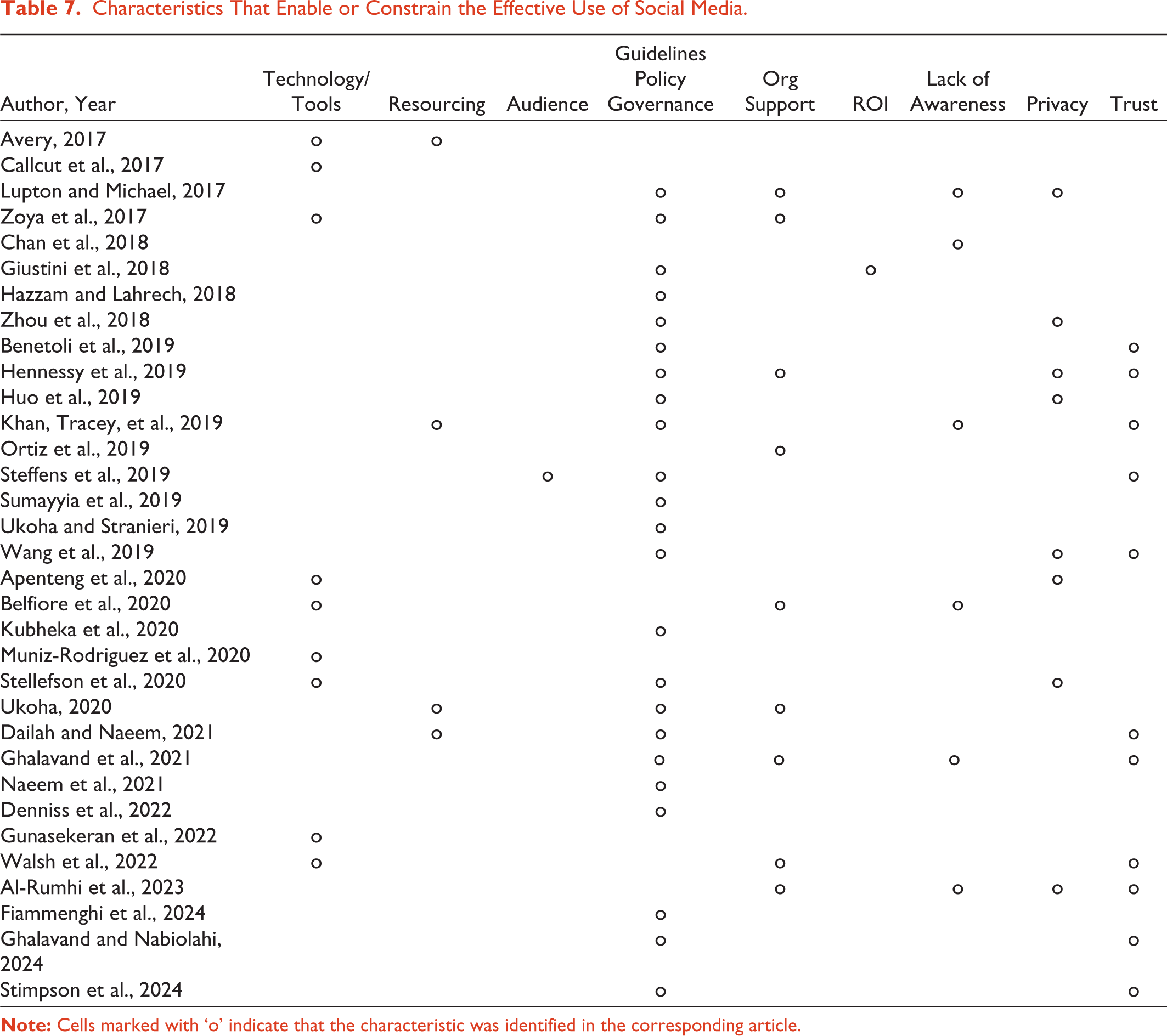
Organizational governance plays a pivotal role in setting clear expectations, ethical standards and regulatory compliance for the use of social media. In a study by Dailah and Naeem (2021), for instance, a lack of a formal policy from the Ministry of Health led to division among healthcare professionals: some adopted social media for professional use, while others refrained due to institutional ambiguity.
Health organizations play a critical role in guiding responsible social media engagement by implementing policies rooted in legal, ethical and strategic principles. To support this, best practices such as clearly defined communication objectives, staff training and reinforced ethical boundaries help ensure consistent and professional use (Stellefson et al., 2020; Zhou et al., 2018). When these frameworks are in place, healthcare staff are better equipped to navigate social media confidently and are in alignment with organizational standards.
However, several studies noted that many unanswered questions remain around governance, data analytics, professionalism, privacy and information accuracy, which continue to inhibit widespread adoption (Al-Rumhi et al., 2023; Apenteng et al., 2020; Hennessy et al., 2019; Huo et al., 2019; Lupton & Michael, 2017; Stellefson et al., 2020; Wang et al., 2019; Zhou et al., 2018). This lack of clarity causes barriers to the adoption of social media. In addition to addressing information accuracy, developing clear policies and guidelines by governments may reduce the risk of misleading information being shared on social media (Denniss et al., 2022; Gunasekeran et al., 2022; Naeem et al., 2021; Suarez-Lledo & Alvarez-Galvez, 2021; Sumayyia et al., 2019), increasing the trust and credibility of health information available.
In addition to policy development, awareness and understanding of existing guidelines are equally critical for effective social media adoption in healthcare (Al-Rumhi et al., 2023; Belfiore et al., 2020; Chan et al., 2018; Khan, Tracey, et al., 2019; Lupton & Michael, 2017; Zoya et al., 2017). This knowledge gap can discourage health professionals from using social media or lead to its misuse.
Privacy and confidentiality concerns further deter adoption. Ensuring data protection and secure communication is an ethical imperative for digital health interactions (Huo et al., 2019). Awareness of privacy standards improves healthcare professionals’ confidence in engaging through these platforms.
Beyond privacy and data protection, organizational capacity, including staff training and resource support, plays a crucial role in enabling effective social media use in healthcare (Belfiore et al., 2020; Dailah & Naeem, 2021; Ghalavand et al., 2020; Hennessy et al., 2019; Lupton & Michael, 2017; Walsh et al., 2022). Limited staffing and inadequate resources present significant barriers to strategic planning, content management and real-time social media monitoring, especially during health emergencies when rapid and coordinated communication is critical (Avery, 2017; Dailah & Naeem, 2021; Khan, Tracey, et al., 2019; Ukoha, 2020).
Several studies indicated that the absence of institutional backing, training programmes and social media strategies undermines effective usage (Belfiore et al., 2020; Dailah & Naeem, 2021; Ghalavand et al., 2020; Hennessy et al., 2019; Lupton & Michael, 2017; Walsh et al., 2022). Resource constraints, including insufficient staffing or budget, further impede implementation, especially in emergency contexts where rapid response is required (Avery, 2017; Dailah & Naeem, 2021; Khan, Tracey, et al., 2019; Ukoha, 2020).
Trust emerged in ten articles as both a barrier and an enabler to the use of social media in healthcare (Al-Rumhi et al., 2023; Benetoli et al., 2019; Dailah & Naeem, 2021; Ghalavand et al., 2020; Hennessy et al., 2019; Khan, Tracey, et al., 2019; Steffens et al., 2019; Walsh et al., 2022; Wang et al., 2019). While distrust in the credibility of online content can discourage engagement among users and health professionals, trust-building measures, such as transparency, content verification, and adherence to policy, can enhance participation and improve the effectiveness of health communication. Governments and organizations play a vital role in fostering trust by issuing verified health information, promoting digital literacy and implementing robust strategies to counter misinformation (Denniss et al., 2022; Gunasekeran et al., 2022; Suarez-Lledo & Alvarez-Galvez, 2021).
Seven articles discussed the role of technological tools and analytics in enabling social media use in the health sector (Apenteng et al., 2020; Avery, 2017; Belfiore et al., 2020; Gunasekeran et al., 2022; Hennessy et al., 2019; Muniz-Rodriguez et al., 2020; Walsh et al., 2022). The availability of social media monitoring platforms such as Hootsuite, Sprout Social and Buffer provides healthcare organizations with the ability to track audience engagement, monitor sentiment in real time, evaluate campaign success and manage cross-platform messaging.
While social media holds considerable promise for enhancing health communication, its effective integration into healthcare systems depends on a delicate balance of enabling factors and persistent barriers. Organizational governance, trust-building, technological infrastructure and policy clarity serve as critical enablers, empowering professionals to engage confidently and ethically. At the same time, unresolved issues around misinformation, privacy, resource constraints and institutional support continue to hinder widespread adoption. Addressing these challenges through coordinated strategies and evidence-informed frameworks will be essential for harnessing the full potential of social media in healthcare.
Methods
In line with the methods element of the TCCM framework, this section summarizes the research methods and study designs employed in the reviewed literature on social media use in healthcare. For the purposes of this review, methods refer to the specific techniques used for data collection and analysis, while designs refer to the overall structure of the study, including secondary analyses and conceptual contributions.
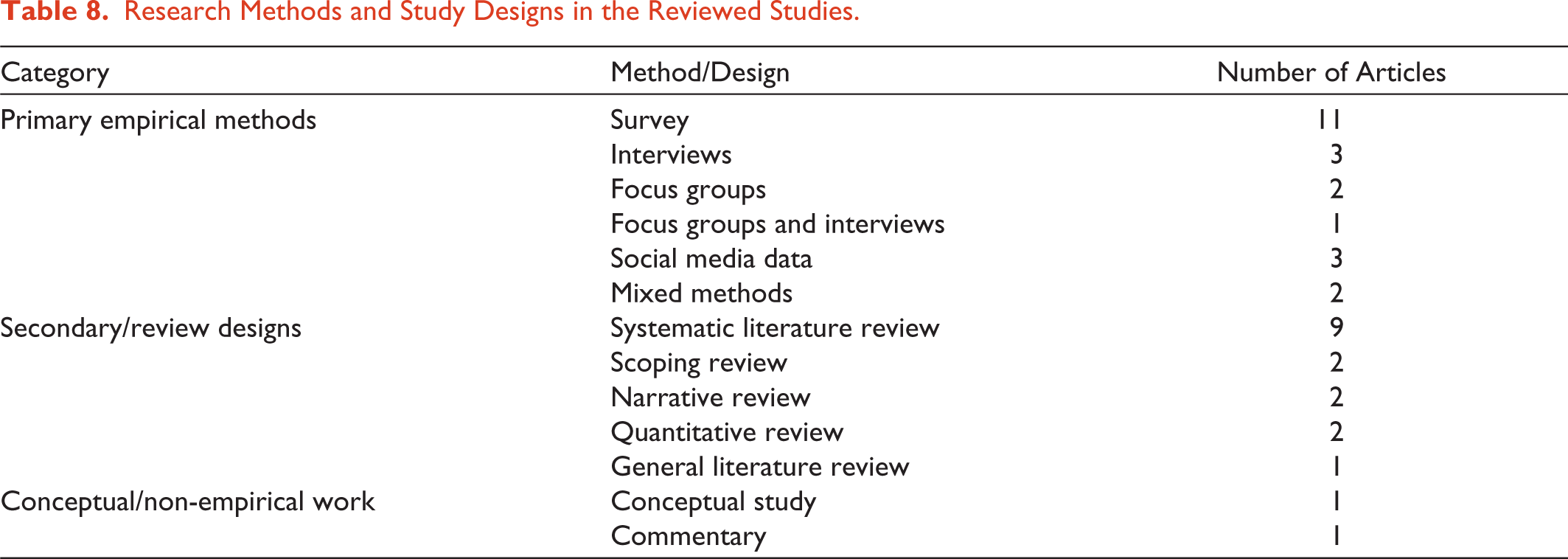
The findings show some methodological variety, as detailed in Table 8. Among primary empirical studies, surveys are the most frequently used method, followed by analyses of social media data. Qualitative approaches, comprising interviews (3), focus groups (2) and combined focus groups and interviews (1), appear in only six studies. Mixed methods are used in just two studies. In secondary/review designs, systematic literature reviews are dominant, while other review types are less common. The comparatively low number of qualitative and mixed-methods studies indicates limited methodological diversity and suggests opportunities for richer, context-specific investigations in future research (see the ‘Methods (Future Research)’ sub-section).
Research Methods and Study Designs in the Reviewed Studies.
Future Research Directions Based on the TCCM Framework
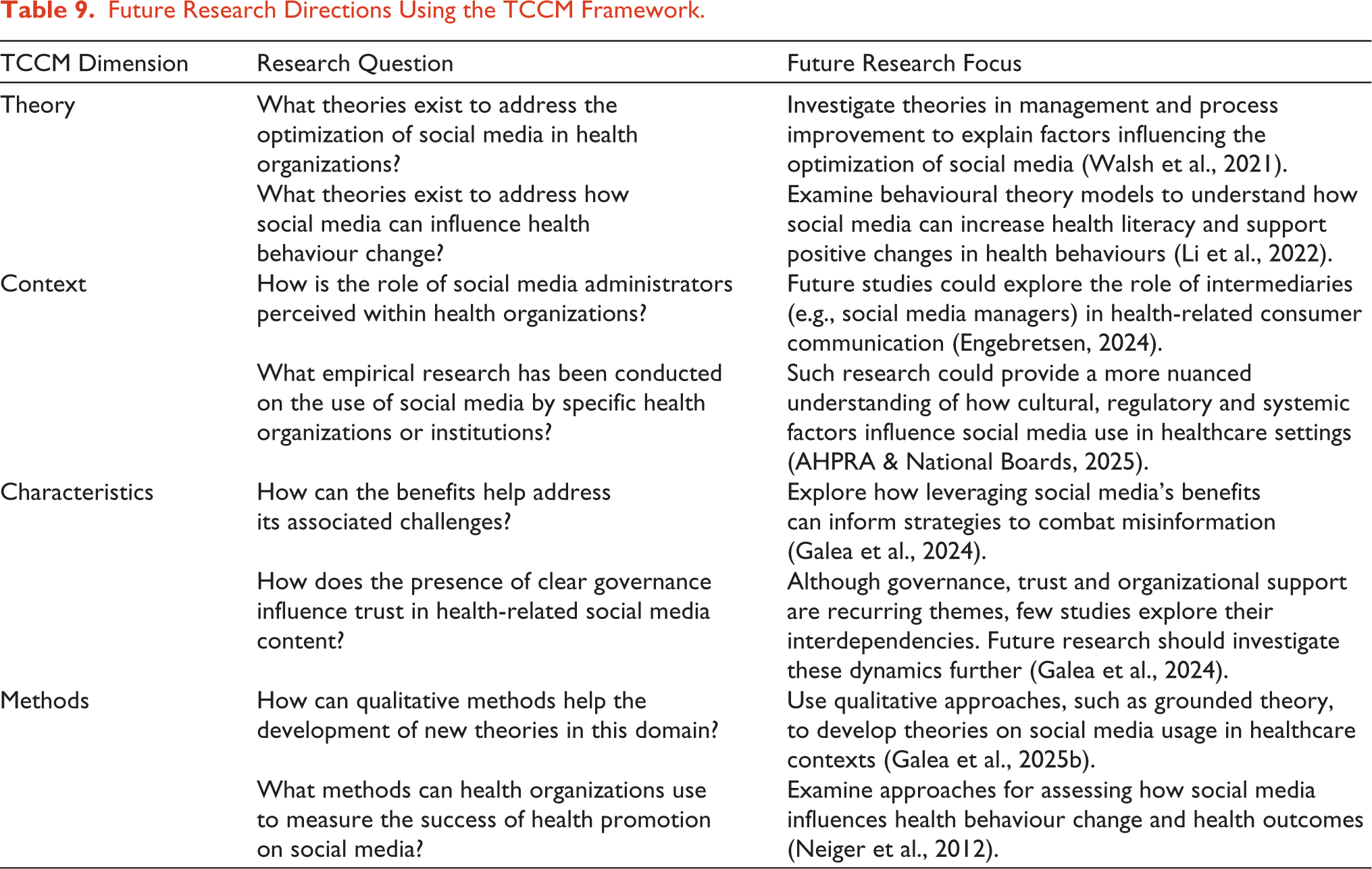
The increasing use of social media in health-related communication highlights the need to better understand and manage its utilization. This section outlines directions for future research on the use of social media by health organizations, guided by the TCCM framework (Paul & Criado, 2020; Paul & Rosado-Serrano, 2019). Table 9 presents a summary of the future research directions.
Future Research Directions Using the TCCM Framework.
Theories
In addition to providing criteria for article and journal selection, Paul and Criado (2020) emphasize the importance of developing a future research agenda that engages more deeply with theoretical underpinnings. Currently, there is no clear or dominant theoretical framework guiding investigations into the use of social media within health contexts (Galea et al., 2025b; Walsh et al., 2021). This lack of theoretical grounding limits the ability to generalize findings or to build cumulative knowledge in the field. Future research should focus on identifying, applying and testing relevant theories, particularly those related to behaviour change, management and communication, to strengthen the conceptual foundation of this domain (Li et al., 2022).
Context
The global reach of social media has encouraged studies that adopt broad, often international perspectives. However, this review finds that 45% of the included studies investigate social media use in health contexts at a generalized or global focus level. This broad scope may obscure important cultural, regulatory or systemic nuances. Future research would benefit from more focused, context-specific investigations at the country or community level, enabling a deeper understanding of how local factors influence social media adoption and effectiveness in healthcare settings (Engebretsen, 2024).
Furthermore, there is a noticeable underrepresentation of studies from certain geographical regions, particularly low- and middle-income countries. This gap highlights the opportunity for future research to explore social media use in these underrepresented contexts, where the dynamics and challenges may differ significantly from those in high-income nations.
Characteristics
The studies reviewed in this research were categorized according to perceived benefits, challenges, enablers and constraints associated with social media use in healthcare. A key insight is the fluidity of these characteristics. What is perceived as a barrier in some contexts (e.g., the lack of policies for using social media for health promotion) can function as an enabler in others (e.g., triggering the development of robust governance policies) (Galea et al., 2024). This duality reinforces the view that challenges can be mitigated or even transformed into benefits if adequately addressed (Chugh, 2018).
The most salient finding in this category is the consistent call for clear policy frameworks and organizational guidelines to support safe and effective social media use. The findings suggest that further research should explore theoretical models and strategic frameworks that can assist health organizations in optimizing social media use. In particular, future studies could investigate how governance mechanisms, such as policies, training and role clarity, support trust, mitigate misinformation and enhance engagement (Galea et al., 2025a).
Over 60% of the reviewed articles focused on the benefits of social media, which include improved information sharing, public engagement, social support and health promotion. These findings underscore the importance of aligning future research with practical strategies to overcome barriers and maximize benefits.
As social media adoption continues to increase across the health domain, new risks and challenges have begun to surface that were not prominent in earlier literature. One such issue is the rise of low-quality engagement and performative participation, where users or institutions engage superficially rather than meaningfully in online health discussions (Dailah & Naeem, 2021; Ukoha, 2020; Walsh et al., 2022) and the inability to control social media commentary (Ghalavand et al., 2021). Another growing concern is the inability to effectively moderate user-generated comments, particularly when these comments contain misinformation or inappropriate content that can compromise the credibility of the source (Ghalavand et al., 2021). Additionally, some healthcare professionals report experiencing a loss of professional identity and an erosion of boundary control due to the open and public nature of social media platforms (Vukušić Rukavina et al., 2021).
Methods (Future Research)
This review reveals some diversity in methodological approaches, reflecting the evolving and exploratory nature of research in this area. However, a substantial proportion of studies used review-based designs (16 out of 40) or quantitative survey methods (11 out of 22 empirical studies), indicating a reliance on literature synthesis and cross-sectional data collection. Few studies used qualitative or mixed methods, and no longitudinal designs were identified.
To advance the field, future research should employ more empirical designs and make greater use of underrepresented methodologies, such as longitudinal studies and qualitative inquiry. In particular, grounded theory could be a valuable approach for exploring emerging or poorly understood aspects of social media use in healthcare (Glaser & Strauss, 1967). Grounded theory’s emphasis on theory development makes it well-suited to generating novel insights into user behaviour, organizational adoption and policy implementation in digital health communication (Galea et al., 2025b).
Conclusion
This systematic literature review synthesized current trends in the use of social media within healthcare contexts. The analysis revealed a consistent absence of theory-driven approaches across the reviewed studies, suggesting a gap in conceptual frameworks that could guide both research and practice. Despite this, the findings affirm that social media offers substantial value to patients, healthcare professionals and health organizations. Its ability to facilitate real-time information sharing, enhance health literacy and serve as a cost-effective, globally accessible communication platform positions it as a vital tool in contemporary healthcare. Moreover, its potential to support public health surveillance and crisis response underscores its strategic significance.
The most prominent challenge identified was the spread of misinformation, particularly during public health emergencies. The COVID-19 pandemic exemplified the risks posed by inaccurate content and reinforced the critical role of health organizations in disseminating credible information. Other key barriers included limited organizational support and unclear policies, guidelines and governance protocols. In contrast, enabling factors such as robust policies, leadership engagement and investment in digital competencies were found to support effective social media adoption.
Overall, this review underscores the strategic and operational implications of integrating social media into health communication strategies. It highlights the need for clearer regulatory oversight, structured governance and theory-informed research to guide implementation. There is a particular need for empirical studies that assess the long-term impacts, measure outcomes and examine the return on investment of social media initiatives.
By identifying both challenges and opportunities, this review contributes to the evidence base for future research and practical decision-making. Health organizations that proactively address barriers and leverage enabling conditions will be better positioned to realize the full potential of social media. As digital communication continues to evolve, developing a comprehensive framework and best-practice guidelines will be essential to ensure the ethical, effective and sustainable use of social media in healthcare.
Theoretical Contribution
This systematic literature review contributes to the growing body of research on the use of social media in a healthcare context by synthesizing articles that address the benefits, challenges, enablers and constraints. It maps the literature in themes and identifies gaps for future research directions. The review advances current understanding in two key ways. First, it identifies a lack of integration between theory and empirical studies, with conceptual/non-empirical work comprising only 5% of the included studies. Second, by using the TCCM framework, it systematically maps gaps in theory, context, characteristics and methods, offering actionable insights for healthcare stakeholders to address misinformation, privacy and engagement challenges on social media platforms. By addressing these theoretical, methodological and practical gaps, this review provides a foundation for future research directions.
Many studies reviewed lacked a strong theoretical grounding. Future research should adopt or extend communication, behavioural or organizational theories to better understand how healthcare stakeholders use social media, how audiences respond to health-related communications and what health changes emerge. Theory-driven research will enhance the explanatory power of studies and improve cross-study comparability.
Most studies relied on primary empirical methods using surveys or secondary/review designs. Qualitative methods and mixed methods were comparatively rare. Future research could benefit from greater use of these underrepresented approaches, along with grounded theory and longitudinal designs, to capture complex behaviours and the evolving nature of social media use in health communication.
Practical Implications
Social media use in healthcare is inherently multi-faceted, involving stakeholders such as digital media designers, health communication specialists, social media specialists, organizational decision-makers and government bodies (Iandoli et al., 2021). This review offers a novel contribution by systematically applying the TCCM framework to synthesize the existing literature and identify underexplored areas, particularly in organizational decision-making, resource allocation, ethical oversight and risk management. By mapping these gaps, the review provides a structured foundation for future research and practical guidance for developing more effective, accountable and contextually appropriate social media strategies within the healthcare sector.
Limitations
The review has two primary limitations. First, while the review aimed for methodological rigour, the inclusion criteria focused solely on peer-reviewed journal articles. As a result, valuable insights from grey literature, including government reports, health agency publications or practitioner-oriented sources, may have been excluded, potentially limiting the breadth of perspectives considered. Second, the scope of the review was restricted to four databases: PubMed, CINAHL Ultimate, ProQuest One Academic and ScienceDirect. Although these are comprehensive databases, the exclusion of others and the absence of a snowballing technique or citation tracking may have resulted in the omission of additional relevant studies.
The applicability and generalizability of the findings from this study to domains outside health should be approached with caution, as the research was context-specific and focused exclusively on healthcare-related social media use.
Footnotes
Declaration of Conflicting Interests
The authors declared no potential conflicts of interest with respect to the research, authorship and/or publication of this article.
Funding
The authors disclosed receipt of the following financial support for the research, authorship and/or publication of this article: This work was supported by the Australian Government Research Training Program.