




Abstract
There is a growing emphasis on sustainability within the hospitality industry. However, research on hyper-local restaurants’ strategic sustainable strategies is scarce. Accordingly, this study aims to unveil the hyper-local Chinese restaurateurs’ critical success factors (CSFs). Grounded on the CSFs identified in the literature and validated by experts, data were collected from hyper-local restaurant owners and analysed through multi-criteria decision-making (MCDM), best–worst method (BWM) and hesitant fuzzy shapely order weights average (HSFOWA) approach. Results suggest that green entrepreneurial orientation is symbiotic, and green customer education, ability, motivation, capability, entrepreneurial orientation and high-commitment work practices significantly impact the sustainability of hyper-local restaurants. Findings stimulate sustainable strategies based on available CSFs. Practical and managerial implications are discussed.
Keywords
Introduction
During the COVID-19 pandemic, restaurateurs have dramatically increased in maintaining local business, operations and services to robust strategic innovation management (Zaoui et al., 2021). This phenomenon, termed hyper-local, involves a significant commitment that goes well beyond purchasing local food (De Chabert-Rios & Deale, 2018). The number of restaurateurs owed farmhouses or gardens that source a substantial portion of their processes to provide fresh crops like fresh fruits and other foodstuffs, has improved extensively over the years (De Chabert-Rios & Deale, 2018). Given this, hyper-local involves a significant direct relationship in selling/buying local food. The crucial strategies of a farmer/gardener skills, commitment, procedure to pact with crops/fruits sustainable operations and other prevalent challenges impact hyper-local restaurant competitive advantage, productivity and success (Liu et al., 2021; Melkonyan et al., 2020). Recent scholars addressed several drivers and antecedents that impact restaurant employees, competitiveness, image, service operations and financial performance (Cantele & Cassia, 2020; Hwang et al., 2020; Kim et al., 2020b). Accordingly, studies have hosted purchase preference and bullying influence consumer attention (Khan & Sharma, 2020). Few studies suggest that the highly unpredictable nature of consumer purchasing behaviour during the COVID-19 pandemic needs to imply strategic innovation management (Oliveira et al., 2022; Zaoui et al., 2021). The growing research and common verdicts split on wide-ranging themes. Besides, they are mainly interrelated to social responsibility, eco-innovation and entrepreneurial orientation (Luu, 2021; Sharma et al., 2020; Wong et al., 2021). However, there a gap exists in the literature notifying hyper-local restaurateurs, representing hyper-local restaurants remaining isolated. This gap warrants new insights into hyper-local restaurants’ complex operations, optimizations, services and interaction of various sustainable strategies suggested in the present research study.
Over the last decade, the mounting significance of hyper-local food as the primary intention of public and policy interest has been stressed in a combination of political, economic and sociocultural conditions (De Chabert-Rios & Deale, 2018; Kim et al., 2020a). Accordingly, hyper-local food provided by hyper-local restaurants and sustainable strategies has been brought into the middle-of-the-road actively affianced to reform new hospitality amenities, operations standards and classifications (Chan et al., 2021), especially in an emerging economy such as China (Li et al., 2020). For that reason, hyper-local food consumption and sustainability are exhibited, especially in Chinese restaurants (Liu et al., 2021). This helps us conceptualize that intersecting sustainable strategies can drive hyper-local Chinese restaurateurs’ higher and more sustainable competitive advantage. Given this, one expression calls for this multifaceted phenomenon of future hyper-local Chinese restaurants to become sustainable and inclusive green (Sharma et al., 2020). The present study thus examines Chinese hyper-local restaurateurs that directly influence Chinese hyper-local restaurants and will be more responsive if sustainable strategies are addressed to identify and optimize the potential critical success factors (CSFs).
In contrast, researchers have explored the restaurant industry and addressed several CSFs, i.e., customer experience, robotic technology and modernization, through several techno-conceptualizations (Lee et al., 2021; Rana, 2021; Zhong et al., 2021). For instance, much has been argued about conveying restaurant activity, service robot interaction, quality at macro and micro levels and leisure service (Chan et al., 2021; Hsiao et al., 2018). The present study emphasized responsiveness to essential CSFs grounded on resource-based theory (RBV) to entail our research question: how and when do hyper-local Chinese restaurateurs adopt sustainable strategies for robust hyper-local resource operations and policymaking? We argued that CSFs identified to establish sustainable strategies tend to cultivate hyper-local restaurateurs’ resources, seek the right opportunities for sustainable change, predict operations complications and enable future decision-making. Thus, carrying new resource-based conduct (Liu et al., 2021) might develop and help foster the hyper-local Chinese industry’s competitive advantage.
Recently, Chinese restaurants have reached sustainable resolutions to promote growth and development (Liu et al., 2021; Zhong et al., 2021). However, to cope with the entire strategy, hyper-local restaurateurs have several CSFs to preserve, sustain and thrive in the post-sustainability regimes. For instance, (a) green customer education (Lee et al., 2021), (b) green awareness, motivation and capability (Schniederjans & Khalajhedayati, 2021), (c) high-commitment work practices (HCWPs) (Chen et al., 2017). Moreover, (d) green entrepreneurial orientation (Alonso-Almeida & Álvarez-Gil, 2018) is suggested as CSFs to help nurture the hyper-local restaurants’ success and increase sustainable production and consumption. Such competitiveness retains green awareness, motivation and capability (Schniederjans & Khalajhedayati, 2021; Tiwari et al., 2021). These CSFs help us capture sustainable resource-based obligations for both hyper-local restaurateurs and restaurants, as justified in the academic settings of the RVB (Barney, 2001). The RBV describes the valuable resources by identifying organizational factors (e.g., CSFs) and impact personal dynamics (e.g., hyper-local restaurateurs), in turn increasing organizational performance (e.g., hyper-local restaurant performance). Similarly, RBV blends resource processes (i.e., valuable, rare, inimitable and organized) with individual behaviour change, providing us with the basis for proposing and identifying CSFs intersecting to bring sustainable strategies to spur organizational competitive advantage. This is also consistent with the reciprocal determinism construct of RBV, which, in the present context, implies that hyper-local restaurateurs are valuable and rare agents to bring sustainable production and performance (Barney, 2001; Canh et al., 2021).
The present study is structured into four major Chapters. The literature review in Chapter 2 contains a detailed CSFs explanation and MCDM methods, Theory of Fuzzy Set and Mathematical definitions. Chapter 3 is based on research methods, sampling, model procedure and results. The final Chapter, 4.0, significantly elaborated the interesting theoretical, practical and managerial implications and future research agendas for upcoming research to cope with hyper-local restaurants’ knowledge and deep-rooted understandings. Finally, the conclusions have been presented in Chapter 5.0.
Literature Review
Significance of Sustainable Strategies and Hyper-Local Restaurateurs’ Mitigation
Hyper-local food is associated with adverse consequences and has become a significant tourism and health issue in developed, developing and emerging countries (Melkonyan et al., 2020). The hyper-local food scenario is becoming even more detrimental with an increasing number of affected local and international consumers and customers staying in famed tourist destinations (Rousta & Jamshidi, 2020), such as the Muslim quarter of Xi’an China. Unhygienic raw materials, production processes and finished hyper-local food may cause and be found in various dietary complications (Choe & Kim, 2018). Chronic toxicity and digestive problems mark multiple physiological effects on international and local tourists. Researchers so far indicate that the significance of sustainable strategies plays a vital role in underpinning hyper-local restaurateurs’ and restaurants’ mitigation process (De Chabert-Rios & Deale, 2018). This helps us indicate and formulate sustainable strategies to cope with sustainable services and operations for hyper-local extenuation, especially for the Chinese hyper-local industry. Admittedly, a sustainable strategy is developing products or services in an extra sustainable manner throughout their entire product life cycle (Han & Huo, 2020). Such hyper-local transition to sustainable growth is contingent on a sustainable corporate strategy decoding environmental protection, innovation and economic prosperity (Hsiao et al., 2018). As a result, researchers used to mitigate the ‘green process’ to achieve a sustainable competitive advantage (Demirel et al., 2019; Han & Huo, 2020).
Taking the discussion forward, and considering the prominence of going green, understand the macro-micro levels in the Chinese hyper-local industry, where environmental sensitivity can be upsetting indigenous regimes and local vs. international inhabitants (Hsiao et al., 2018), especially in the Muslim quarter—the popular tourist destination. Drawing on RBV, we discuss the awareness of hyper-local restaurateurs’ performing as a resource-based agents to spur a sustainable environment, reassure sustainable strategy and offer social responsibility to authenticate sustainability orientation into broader theory and practice. In line with these viewpoints, green customer education relies on refining hyper-local restaurateurs about green plans, which the present study intends to impact Chinese hyper-local restaurateurs and restaurants’ competitive advantage.
Green Customer Education and Hyper-Local Restaurateurs’ Mitigation
The amount of green customer education encourages the hyper-local Chinese industry goal of increasing green service design (Lee et al., 2021). The fact is that green customer education is not static but highly dynamic along with the increasing green customer needs and choices (Liu & Tse, 2018). The current CSF identification leads hyper-local Chinese restaurateurs to those products or services which are friendly to the environment. Similarly, various green products and services (Hsiao et al., 2018). Green customer education is ‘an appropriate communication strategy for promoting green products’ (Sari et al., 2021). Prior research illuminated that only customer education is a strategic ability to notify, clarify and establish prevalent conceptions for customers (Peng & Li, 2021; Sari et al., 2021). However, green customer education develops hyper-local restaurateurs’ green awareness and assembles their interest to face, maintain and thrive green in more efficient and strategic pathways.
The understanding of green customer education is manifested to incorporate new insights into what hyper-local restaurateurs’ knowledge facilitates a customer to purchase hyper-local food and drags him/her more closely to adopt a straightforward environmental approach. Prior studies investigated dynamic customer experience, customer choice and intention on service innovation satisfaction (Lee et al., 2021; Liu & Tse, 2018; Peng & Li, 2021). The present study draws on RBV (Barney, 2001) and identifies green customer education that will likely implicate consumer interactions and restaurateurs’ strategic learning to perform a set of applicable conducts to ensure sustainable performance. Such potential CSF is pliable and ductile in generating a rare resource agent that advances hyper-local restaurateurs’ service innovation skills in performing green standards. Accordingly, the prior research under-explored green customer education CSF within the context of hyper-local restaurateurs’ and green hyper-local service standards. We argue that the hyper-local restaurant’s interface with customers in educating them about their green education offerings is a significant and inexpensive easy bonding of what luxury five-star and seven-star restaurants revealed by their inflated and complex structure.
Green Ability, Motivation and Capability Engendering Hyper-Local Restaurateurs
The green ability of hyper-local restaurateurs reflects their capability and motivates them to manage their environmental impact by providing environmentally conscious products, services and operations (Schniederjans & Khalajhedayati, 2021). The present study identified green ability, motivation and capability practice among hyper-local restaurateurs and restaurants to advocate efficiency and synergy between customers and consumers, facilitate ecological performance and maintain hyper-local restaurants’ performance. Past studies explain that green ability, motivation and capability broadly affect consumer-purchasing decisions, supply chain integration and green creativity (Han & Huo, 2020; Luu, 2021). Similarly, the present research is grounded on RBV (Barney, 2001), advocating that hyper-local restaurateurs are contingent upon such ability, motivation and capability that increases the likelihood of reaching higher sustainability by fruitfully spurring this CSF. Hence, green ability, motivation and capability signal to the market, stakeholders and customers that hyper-local industry positively affects sustainable operational strategy and overall competitive advantage.
Luu (2021) notes that restaurants experience a high level of improved sustainability while using green practices, such as green ability, motivation and capability. Consequently, when hyper-local restaurateurs adopt such green ability, motivation and capability, in turn, enrich hyper-local restaurants’ image, build loyalty in customers, stakeholders’ reliability and trust, and ensure a better overall hyper-local performance. Also, articulating the nature of sustainability toward local food suppliers such as hyper-local restaurateurs does not require significant financial investment but provides an immediate economic benefit (Melkonyan et al., 2020).
High-Commitment Work Practices and Hyper-Local Restaurateurs’ Mitigation
A thriving local business has multifaceted needs that require robust human resource management (HRM) system that props up the interesting quality food at low prices, prevents mishaps, mitigates risks and lines up with luxury brands and other competitors (Kim, 2019). Naturally, such multifaceted HRM needs will vary widely depending on the size and complexity of the restaurants. Larger restaurants often have a full-fledged HRM department compared to local food businesses and restaurants have only one person handling such happenings. Prior research stated that HRM systems like high-commitment work practices (HCWPs) are based on control and commitment (Arthur, 1994). Similarly, Chen et al. (2017) inform that ‘control approaches aim to increase efficiency, reduce labour cost, enhance reward system, while commitment approaches aim to robust effectiveness and productivity’ (p. 3). However, how and when ‘commitment’ and ‘control’ HCWPs significantly wave hyper-local Chinese restaurateurs and restaurants’ competitive advantage will make us inquisitive about identifying and raising this CSF within a hyper-local context.
Building HCWPs application and execution means encouraging employees with extensive training and development, performance-based appraisal setups, compensation and reward systems, and wide-ranging organizational support (Chen et al., 2017; Kim, 2019; Zhang et al., 2021). Recently, HRM scholars have characterized HCWPs in varied themes. For instance, Kim (2019) found that HCWP influences job engagement in the hotel industry. The verdicts of Li et al. (2020) explained that HCWPs serve as a strategic way out of hospitality management. Based on such beliefs, we contend that the allied literature is lacking from two perspectives: (a) how hyper-local Chinese restaurateurs can yield HCWPs, and (b) when HCWPs impact hyper-local Chinese restaurants’ performance. This help improves hyper-local Chinese restaurants’ actions globally if addressed on time. Looking into the RBV lens, HCWPs are considered rare and valuable resource negotiators rooted in hyper-local Chinese restaurateurs and restaurant traditional philosophy, ancient HRM plethora, thus changing and fostering hyper-local capabilities to spur sustainable performance.
Green Entrepreneurial Orientation and Hyper-Local Restaurateurs
Environmental issues are becoming increasingly significant in the COVID-19 pandemic (Chan et al., 2021), significantly threatening local consumer survival (Zaoui et al., 2021), resulting in an impact not only on developing economies but emerging and developed economies as well. Government and scholars have paid more attention to controlling such environmental degradation, especially from local food consumption (Choe & Kim, 2018; Melkonyan et al., 2020). In particular, recent studies have suggested that green entrepreneurial orientation plays a crucial role in achieving local business performance and minimizing environmental impacts and sustainability challenges (Canh et al., 2021; Demirel et al., 2019). Scholars theorized green entrepreneurial orientation as an emergent phenomenon and ‘pay special attention to the environmental enactment of green entrepreneurs and its relationship with strategy, brand reputation, and long-term business growth’ (Alonso-Almeida & Álvarez-Gil, 2018). For that reason, green entrepreneurial activity is an umbrella term for numerous hospitality management innovations that target social, economic and environmental challenges (Canh et al., 2021; Luu, 2021). However, green entrepreneurial orientation has been seen in luxury hotels and larger hospitality businesses. This helps us identify green entrepreneurial orientation as critical CSF, leading to the success of hyper-local restaurateur’s sustainable success and performance.
Advancing the RBV lens, in highly uncertain situations, organizations pursue to capture business opportunities that lead to sustainable competitive advantages and advance environmental performance (Barney et al., 2021). In this context, green entrepreneurial orientation mainly emphasizes those environmental activities by capturing eco-friendly opportunities and prospects while pursuing business operations (Alonso-Almeida & Álvarez-Gil, 2018). However, the green entrepreneurial orientation is threatened in hyper-local restaurateurs and restaurants context and has been largely ignored. This connection helps us select green entrepreneurial orientation as strategic CSF for the present study within the hyper-local restaurant context. We argue that by fostering green entrepreneurial orientation, hyper-local restaurateurs can be succeeded in (a) improving and adopting green practices within the core hyper-local business, (b) acquiring more interest and aims among other hyper-local partners, (c) acquiring and leveraging green knowledge to perform green activities more extensively. Consequently, green entrepreneurial orientation is a new promise to improve both sides of hyper-local restaurateurs’ sustainable entrepreneurship knowledge and orientation (Muneeb et al., 2020; Ruiz-Ortega et al., 2021). Understanding how green entrepreneurial orientation coupled with hyper-local restaurateurs’ and restaurant performance is essential for CSF and theoretically paves a new agenda for the hyper-local hospitality research gap.
The present research has selected four critical success factors based on the literature review: green customer education, green ability, motivation and capability, high-commitment work practices and green entrepreneurial orientation. Unlike previous research, a hybrid MCDM approach was used, based on Delphi’s methods, BWM and HSFOWA, to filter and rank managerial preferences. Following the prior research, MCDM and RBV combination unveiled the sustainable strategies (Yasmin et al., 2020), significantly influencing restaurant sustainable growth and development.
Multi-Criteria Decision-Making (MCDM)
The MCDM method has been applied as an incredible procedural process for qualitative and quantitative research (Yasmin et al., 2020). Interpreting real-world problems via MCDM is conceptualized as an insightful application (Liou et al., 2021). These methods are designed to advance the various approaches to unfold the twenty-first-century challenging gaps, e.g., ELECTRE-3 and 4, Prometheus-2, the VIKOR method, Cooperative Game theory, Composite Programming, Analytical Hierarchy Process, Multi-Criteria Utility Theory, Multi-criterion Q-Analysis, space mission via multi-attribute fuzzy ABC classification (Liu et al., 2021; Yasmin et al., 2020).
Best–Worst Method (BWM)
BWM has been executed to identify the best (e.g., most important, most desirable) and worst (e.g., least essential, least desirable) criteria by decision-makers (DM) based on the weight of the criteria that was determined through pairwise comparison (Rezaei, 2016). Similarly, Rezaei et al. (2015) and Rezaei (2016) have highlighted the BWM method’s initial strength in incorporating and implementing to assign every criterion pair (Mahdiraji et al., 2021). Accordingly, in other MCDM models, DM assigns his/her preferences by the score to the factor (Rezaei, 2016). Whenever a DM is put into action, the equality

The BWM method is organized into the following important steps.
Step 1: Delineate n criteria for decision building.
Step 2: Ascertain the best (B) and worst (W) criteria from the n criteria demarcated in step 1.
Step 3: Ascertain an ordinal number ranging from 1 to 9 for the rest of the criteria j grounded on the best criterion B such that the preference rank is recognized as: AB = (aB1, aB2, …, aBn), where aBn characterizes the preference rank of each criterion n relative to the best criterion B.
Step 4: Ascertain an ordinal number ranging from 1 to 9 for the rest of the criteria j grounded on the worst criterion W, such that the preference rank is recognized as: AW = (a1W, a2W, …, anW)T, where ajW characterizes the preference rank of each criterion n relative to the worst criterion W.
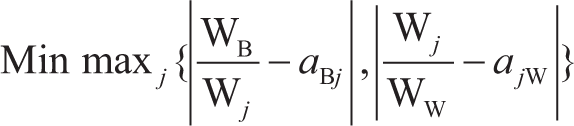
Step 5: Create the optimum weights for each one of the n criteria
s.t.
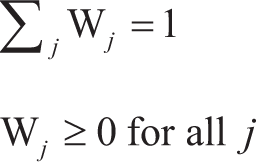
Model (2) is interpreted in the following way:
Min ζ
s.t.
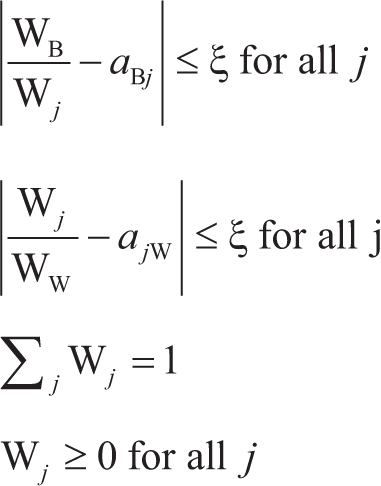
Associating with other pairwise-based MCDM approaches, this method has 4n − 5 controls as a substitute for 2(2n − 3). The supplementary restraint
For calculation of the uniformity rate, Equation (4) should be used:

The uniformity rate depicts how consistent intelligence developed through experts/DMs, while the consistency index personifies the higher intermission of a best–worst comparison,
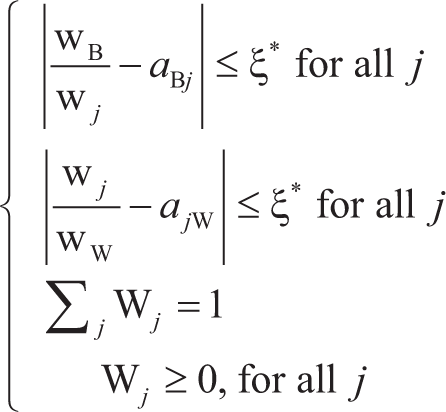
If one needs a uniformity rate of 0 (p* = 0), each constraint
Order Weights Average (OWA)
OWA has been defined as a wide-ranging method of MCDM in optimizing weights, including efficient decision-making optimization and inspiring results (Liou et al., 2021). At first, Yager (1998) acquaint with the OWA technique for strategic decision-making, and after that, this practice was applied in numerous conducts of operations research. The OWA method contemplates order weights different from standard ones (Hajizadeh et al., 2020). The method may be more affected to meet strategic optimization. Following is the detailed mathematical explanation:

Where W = [wh11, wh2, …, whn]T. whs e [0,1], R i whi = 1. bhs represents the largest jth of whi
The orness measure is used for evaluating the decision-maker’s attitude.

For a pessimistic attitude, if whs is selected then whs = whs* = [0, 0, …, 1 ]T. This is used for the aggregation rule of a pessimistic strategy.
For an optimistic attitude, if whs is selected then whs = w*hs = [1, 0, 0, …, 0]T. This is used for the aggregation rule of an optimal strategy.
For a normative approach, when whs is selected, then
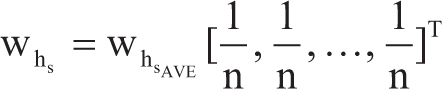
This approach is used for a normative strategy.
The computation of the maximum entropy distribution of weight based on orness measure is illustrated as follows;
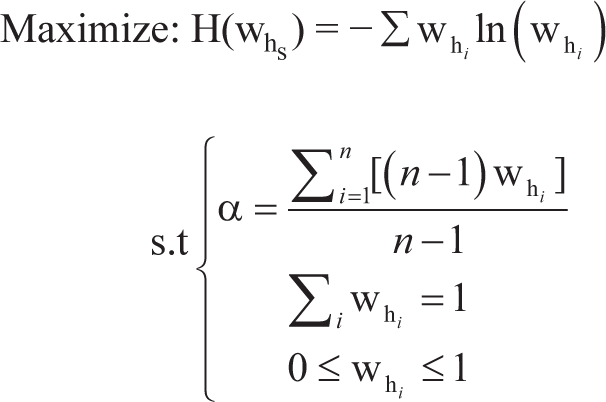
Theory of Fuzzy Set
Decision-making operations via optimization play a strategic role in hospitality management, as it refers to a strategic process that layoff all the processes for immediate calculation, action and execution (Yasmin et al., 2020). Such decision-making covers substantial results to cope with the grand challenges of disasters through a fuzzy set in prior hospitality literature (Liu et al., 2021; Mahdiraji et al., 2021). The fuzzy sets encompass the mathematical modelling and deep extension of prime notions and optimizations (Hajizadeh et al., 2020; Yazdi et al., 2021). These crucial sets have been defined as the universe of discourse—a classical set. The detailed mathematical definitions and explanations are as under:
Mathematical Definitions
Definition 1: We have set X, which is an intuitionistic fuzzy set (IFS) and A on X is a term of two functions

n shows the degree of membership, and v illustrates the non-membership of x of the A set. IFS is

When we have two A and B IFS in function nA, yA, nB and yB, the operations are
Complement
Union
Intersection
⊕-union
⊗-union

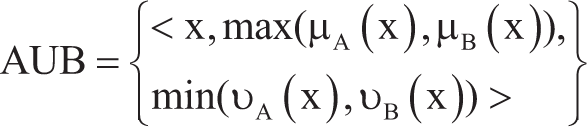
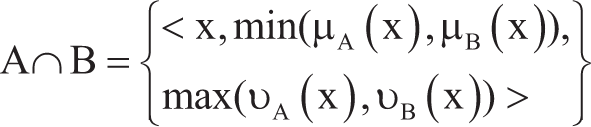


Definition 2: Consider X as a reference set, a hesitant fuzzy set of X with function h. When used, X is a subset of [0, 1]. h (x) is finite.
Definition 3: If X is a reference set, a hesitant fuzzy set is

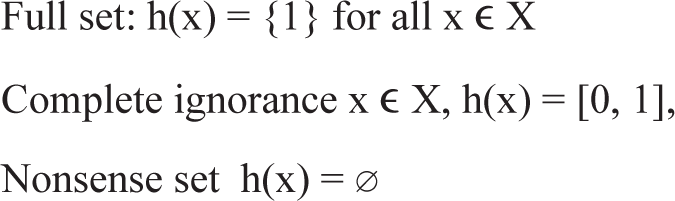
μ(x) = 1 And μ(x) = 0 points out empty and complete sets, which cannot be nonsense or complete ignorance.
With the fuzzy set n on the set of reference [0, 1], the hesitant fuzzy set shows μ–1.
Definition 4: The hesitant fuzzy set h(x) then h(x): = μ–1(x). Then

Consider M = {μ1, …, μN } and N is a membership function. Hesitant fuzzy set of M, hM is

Consider DMs allocate their preferences showing that M and hM is the set of opinion experts.
IFS Operations are:
We have h1, h2 and h2 as an IFS. Operations are





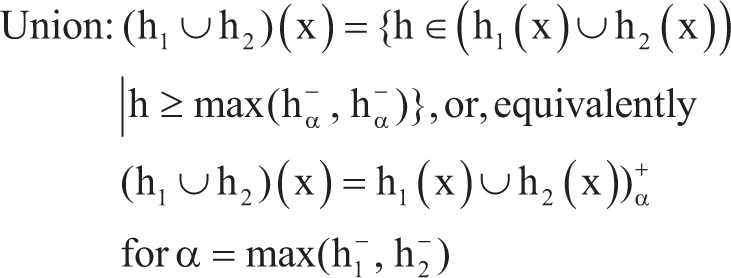
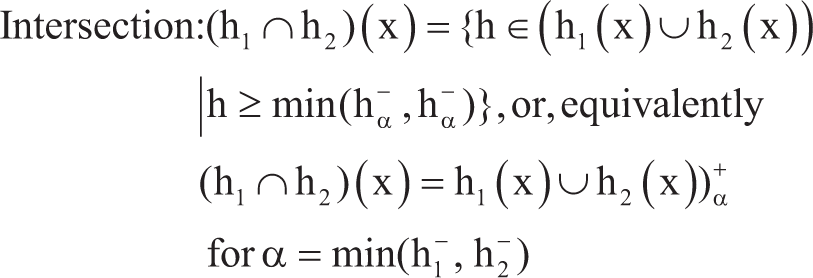
For the definition of two hesitant fuzzy sets, if a hesitant fuzzy set was a possible set of alternatives for all x, the lower bound of
Consider h1, h2 and h2 as an IFS. The properties are:

IFS is a kind of fuzzy type 2. IFS h based on fuzzy type 2 is

Envelope Aenv (h) of an IFS h has these properties



Research Methods
Sampling and Procedure
The present research reviewed the state-of-the-art literature review to identify the CSFs for hyper-local restaurateurs and restaurants. Numerous CSFs are impacting hyper-local restaurateurs and restaurants. However, the current study has considered the four prominent CSFs that are found renowned and most prominent. For instance, green customer education, green awareness, motivation, capability, high-commitment work practices and green entrepreneurial orientation. After selecting and identifying CSFs, the researchers approached three hyper-local restaurateurs who owned their restaurants in the Muslim quarter, Xi’an city, China. These hyper-local restaurateurs were from diverse divisions, such as (a) holding dry fruit gardens and farmhouses, (b) vegetable farmhouses and (c) fresh fruit, especially cherry fruit garden and farmhouse situated in Baoji village, a small fruiting village in the west of Xi’an. The researchers first invited them to participate in the present study, with a prime guarantee that their answers remain anonymous and confidential.
Second, we visited their gardens and farmhouses and asked them to answer our structured interviews on a 5-point Likert scale (1 strongly disagree to 5 strongly agree), following the guide Pettersen and Durivage (2008) proposed. The structured interview was first translated into Chinese and then back-translated to English, with the leading expertise provided by experts in the present studies to confirm the accuracy, reliability and validity (Berry, 1980). Each hyper-local restaurateur runs two prominent restaurants in the Muslim quarter, Xi’an city, where they trade fresh fruits, dry fruits, and a variety of fresh vegetables daily. Therefore, the present research is based on six hyper-local restaurants in Xi’an, China. To limit common method bias, we collected data on the selected CSFs from two informants (the owner of the hyper-local restaurateur and senior manager sales who sell/purchase their finished fruits and vegetables) while interviewing each hyper-local restaurateur (Podsakoff et al., 2003). Our structured interview questionnaire has two parts: (a) green customer education, green awareness, motivation and capability questions, and (b) high-commitment work practices and green entrepreneurial orientation questions. The detailed model procedure is presented in the Model Procedure section in Research Methods.
Model Procedure
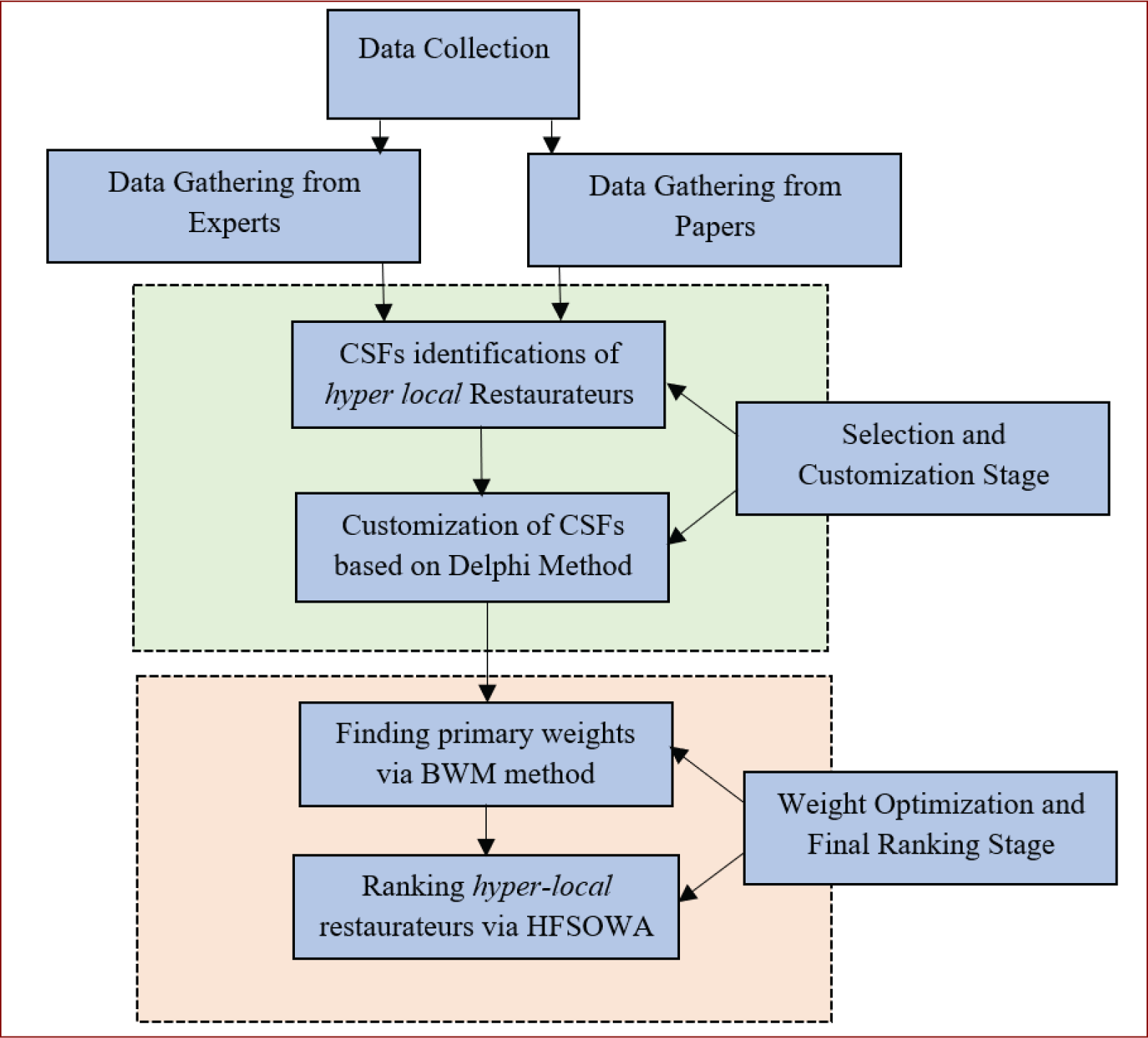
Step 1. CSFs identification: The present study identified four CSFs for hyper-local restaurants extracted from prior studies.
Step 2. CSFs selection: This study examined the appropriate CSFs from extensive literature from state-of-the-art research in strategic hospitality management (Table 1).
Step 3. CSFs filtration: Delphi’s method is used for filtering factors and customized for this research. In this step, a questionnaire design is based on all profound CSFs. Next, DMs are requested to weigh their preferences constructed on a 5-point Likert point.
Step 4. Finding primary weight by BWM: The BWM method is used for profound optimization to achieve the primary weights.
Step 5. Ranking by HFSOWA: The results show that each restaurant has the highest vs. worst priority according to the weight coefficients. The detailed research approach is presented in Figure 1.
The Proposed Research Approach.
DMs Scaling
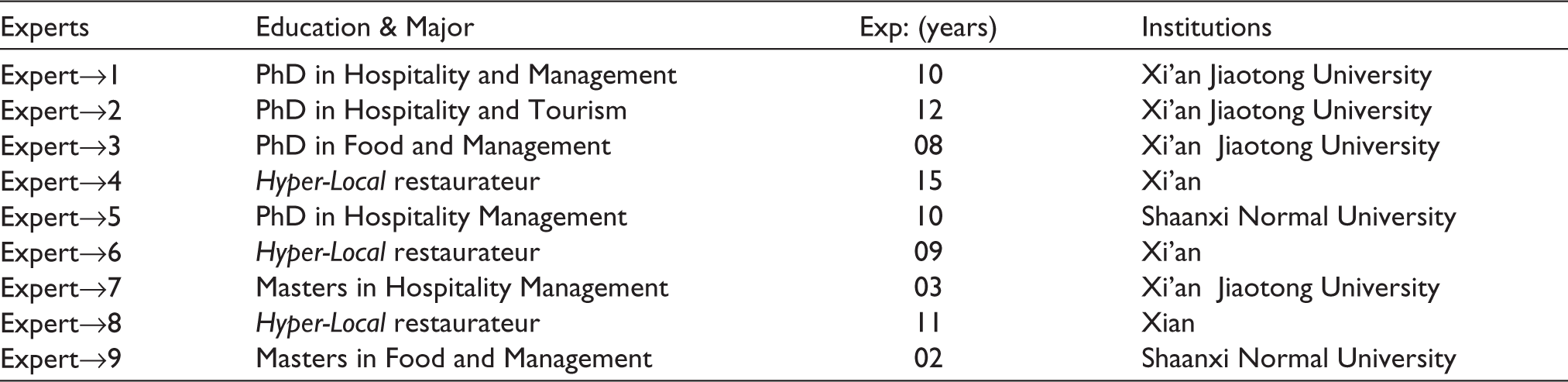
In the present study, DMs were designated from a particular zone concerning strategic hospitality management and tourism. The preliminary scale information specified in the sum-ups of these DMs is shown in Table 1.
DMs Scale & Information.
Results
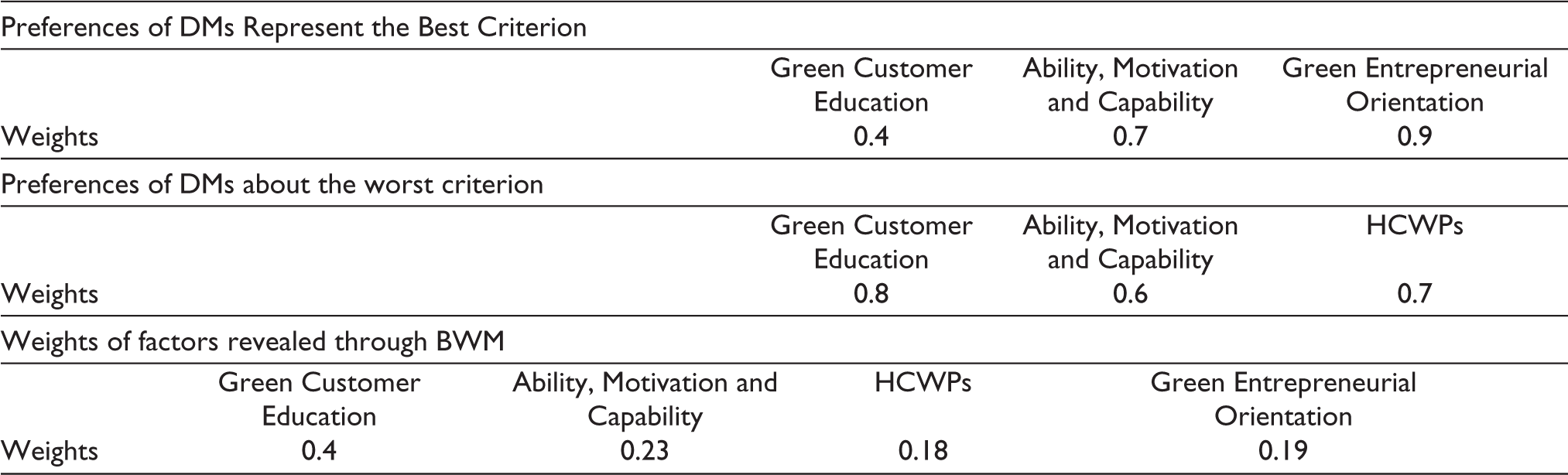
Operations approaches have insightful paradigms on fuzzy-based DMs preferences in hospitality management (Liou et al., 2021; Yasmin et al., 2020). Therefore, in this study, nine decision-makers have been reported to examine the significance of the weight criteria. To analyze the data through BWM, the Lingo V.18 and the HSFOWA method were performed in EXCEL V.2017 (Mahdiraji et al., 2021). This study constructs the criteria weights, where each DMs has weighted values for each characteristic of hyper-local restaurateurs. Following the prior research by Yasmin et al. (2020), the DMs preference found crisp numbers, fuzzy numbers and defuzzy numbers presented in Table 2. Next, based on the BWM method and HSFOWA weight optimization, a set of four factors revealed the most effective weight optimization, presented in Table 3. The HSFOWA findings represent 81.32%, which also aligns with the prior research findings of Hajizadeh et al. (2020). Next, we obtained values of each DMs criteria and aggregated them using the preferences of the CSFs. The decision matrix was designed and assessed through BWM. These results show the optimized weight criteria of the selected four CSFs. In BWM results (Table 3), we found the highest criteria weight of 0.4 for green customer education, which is significant. Prior studies argued that customer education significantly introduced service innovation packages (Peng & Li, 2021). Thus, our BWM results highlight that using these CSFs significantly enhances hyper-local service innovation.
Preferences of Decision Makers.

Preferences of DMs & BWM Weights.
The present study used Equation (8), an extended initial decision-making matrix (Table 4). Further, applying Equation (9), we demonstrate the final decision matrix. The final decision matrix and the highest criteria values are revealed in Table 5. We found the most satisfactory result when the green entrepreneurial orientation criterion has been identified as the most influential since it has the highest value of the weight coefficient of 0.19 (Table 3). Preceding studies found that entrepreneurial orientation leads to sustainability orientation and acts as a resource agent by increasing the likelihood of organizational competitive advantage (Canh et al., 2021; Ruiz-Ortega et al., 2021). Thus, our findings further highlight green entrepreneurial orientation within a hyper-local context to use such an application to reboot organizational competitive advantage. Prior studies further contended that green entrepreneurial orientation develops sustainable momentum (Canh et al., 2021; Luu, 2021), the momentum the present research findings expect within the hyper-local context to participate and spur the national economy and higher hyper-local sustainable performance.
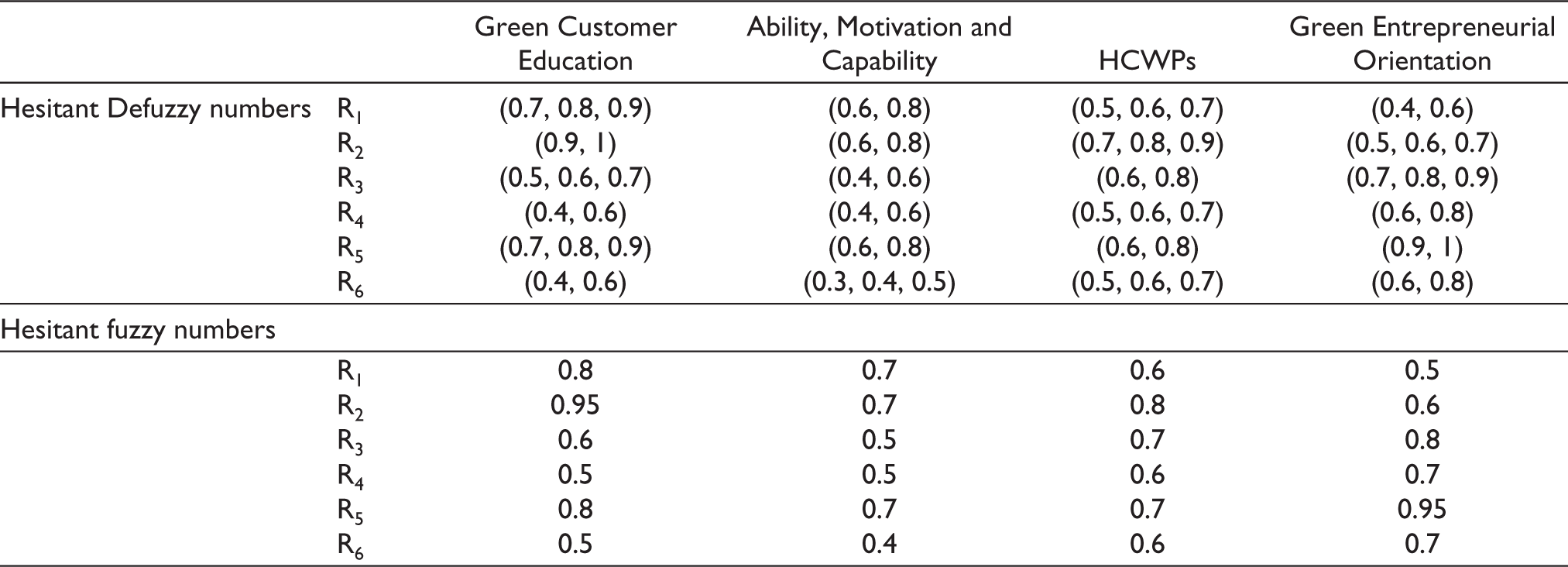
Hesitant Fuzzy and Defuzzy Numbers of Decision Matrix.
Final Decision Matrix.

Despite the discussion, the preferences of HFSOWA numbers are shown in Table 2, and after that, they transfer to crisp data by the defuzzy formula: a = lower number b = middle number c = higher number
DMs allocated their preferences to each criterion compared to the best and worst criteria. The best criterion has been found for green entrepreneurial orientation. The weight coefficient and the factors revealed through the BWM method are also presented in Table 3.
This study deployed the coefficients and transferred them into a defuzzy number by adopting the notions of prior research (Yasmin et al., 2020), which has been validated in Table 4. In addition, after calculations of defuzzy numbers, this study has measured the risk-taking (orness) of the model established via Equations (6) and (7). The hesitant fuzzy numbers of the decision matrix have been described in Table 6. The mathematical explanation is as under:
Uniformity rate = 0.99

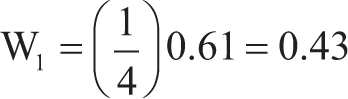
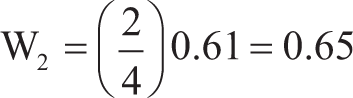
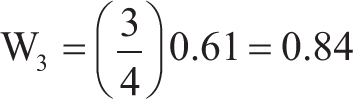
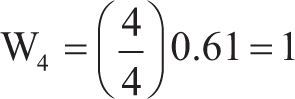
Following Equation (8), this study has normalized the decision matrix, presented in Table 6.
Normalized Decision Matrix.

Finally, based on Equation (9), the final decision matrix has been shown among six hyper-local Chinese restaurants. The findings revealed that hyper-local Chinese restaurant number 5 is manifesting a robust sustainable strategy, while on the other hand, hyper-local Chinese restaurant number 6 has a minor performance. The final findings are presented in Table 5.
Discussion
Response to the recent calls for more research on sustainable strategies (Cantele & Cassia, 2020; Hajizadeh et al., 2020; Hwang et al., 2020; Kim et al., 2020a) and hyper-local restaurants (De Chabert-Rios & Deale, 2018). This study highlighted RBV (Barney, 2001; Yasmin et al., 2020) and used MCDM methods, namely BWM and HSFOWA, to predict four significant CSFs spurring sustainable strategies in hyper-local restaurants. The findings of the present study help to reconcile the prior literature on the link between green entrepreneurial orientation and hyper-local Chinese restaurateurs’ productivity and revolution (Kim et al., 2020b; Lee et al., 2021). Specifically, we found that green entrepreneurial orientation influences hyper-local Chinese industry, which is more constructive and robust. In addition, our fuzzy and defuzzy decision matrix findings help foster the impact of green entrepreneurial orientation—weight coefficients 0.17 as ranked first, in turn, considering a crucial predictor of Chinese hyper-local restaurants’ integrity to contest future sustainability regimes (Cantele & Cassia, 2020; Liu et al., 2021). Also, our findings aligned with prior research to unveil other important CSFs, such as green customer education, green awareness, motivation, capability and HCWPs lay the foundation base to renovate hyper-local businesses (Chen et al., 2017; Sari et al., 2021; Schniederjans & Khalajhedayati, 2021). These results confirm an advanced likelihood and exhibit a more significant sustainability commitment in hyper-local food raised by Kim et al. (2020b). Thus, we align these findings to the insightful features of China’s hyper-local industry (De Chabert-Rios & Deale, 2018), favouring younger hyper-local restaurateurs with more promising sustainable restaurants (Liu et al., 2021). In doing so, we have extended the scholarship of sustainable strategies by underlining the possible effects of CSFs on hyper-local restaurateurs (De Chabert-Rios & Deale, 2018). Therefore, our study imprints and reinforces the sense of the sustainability process in a hyper-local context and vocalizes the need for future exploration to examine other CSFs’ reasoning and to rebuild the hyper-local industry’s sustainability progression and its spillover effects on hyper-local businesses. Given this, our findings imply the relevance of sustainable hyper-local industry in China, providing theoretical and practical implications.
Theoretical Implications
This study makes three significant contributions. This study has first addressed the research limitations and revealed the novel context of hyper-local restaurants building sustainable strategies CSFs (a) green customer education and (b) ability, motivation and capability, (c) HCWPs and (d) green entrepreneurial orientation. Our findings indicate that the hyper-local restaurants adopt the identified CSFs, thereby transforming those sustainable CSFs into enriched productivity and participating values that hyper-local restaurateurs need to accomplish competitive advantage. The hyper-local restaurateurs never feel that their cognition has been affected, taking them one step toward sustainable competitive advantage (De Chabert-Rios & Deale, 2018). Such a sustainable one-step forward pushes productivity and service operations, which in turn serves as a sustainable hyper-local food consumption (Liu et al., 2021) that can help foster hyper-local restaurants to fulfil their responsibilities to perform more sustainably. By illuminating these CSFs’ roles, the current study fuels and nurtures Xi’an Muslim quarter indigenous contribution to the domestic and national economy and incentivizes hyper-local industry at a broader level of theory and practice.
Second, by incorporating RBV (Barney, 2001), we found the borderline exigency impact of green entrepreneurial orientation on hyper-local restaurant production and services. The findings of the current scholarship help to reunite the prior works on the link between green entrepreneurial orientation and restaurants’ innovative productivity (Canh et al., 2021; Luu, 2021; Ruiz-Ortega et al., 2021). Specifically, we found a novel straight impact of green entrepreneurial orientation on the sustainable performance of hyper-local restaurants through green customer education and HCWPs, which is more constructive for the worldwide hyper-local restaurateurs to spur competitive advantage. Our findings indicate that green entrepreneurial orientation is facilitative in improving hyper-local restaurateurs’ knowledge and information to take decisive action-activity in promoting sustainable enactment. Conversely, no relationship is found between hyper-local restaurateurs’—sustainable strategies. Prior works’ conclusions relate to green supply chain integration, barriers to sustainable food consumption and hotel corporate social responsibility performance (Han & Huo, 2020; Liu et al., 2021; Wong et al., 2021). Thus, more research is needed to unveil a fuller picture of hyper-local restaurants and sustainable strategies.
Third, we apply RBV (Barney, 2001) to probe the influence of identified CSFs on hyper-local Chinese industry, which offers a novel application domain for RBV and benefits our understanding of how receivers (e.g., hyper-local restaurateurs’) may integrate systems benefits (e.g., hyper-local restaurants) in reaching sustainable performance. Prior work mainly emphasizes how entrepreneurial activity on natural resource rents signals to external and internal stakeholders regarding sustainable performance (Canh et al., 2021). However, the present study substantially contributes that identified CSFs act as resource cognition building to augment the performance of hyper-local restaurants. In doing so, we have extended the scholarship of RBV by highlighting the possible impacts of resource cognition-building setups that signals hyper-local restaurateurs’ proactivity, commitment and skills. Therefore, our study has tinted and underpinned the meaning of the RBV transmission process in a hyper-local restaurants context and enunciated the need for future research to test the hyper-local restaurants’ understanding and reconstruction processes like green entrepreneurial orientation nudging hyper-local restaurateurs’ commitment and its significant spill over effects on hyper-local restaurants sustainable performance.
Practical Implications
The present study also carries significant practical implications. Most importantly, our study directs to implant sustainable strategies through identified CSFs highlighting green entrepreneurial orientation helps advance hyper-local restaurants. In doing so, we maximize such benefits for hyper-local restaurateurs that seek to achieve a tremendous competitive advantage, promoting the Chinese hyper-local industry and informing them about the role of green entrepreneurial orientation in bringing sustainable change. This underlines the need for green entrepreneurial orientation and good responsiveness to the boundary conditions of the Chinese hyper-local industry and hyper-local restaurateurs to succeed in the targeted organizational competitive advantage. Hence, hyper-local industry and hyper-local restaurateurs should be aware that simply implanting green entrepreneurial orientation might not result in optimal hyper-local success unless green customer education, HCWPs and ability, motivation and capability are also evidence.
For instance, we recommend to the worldwide hyper-local industry that such CSFs could be applied in hyper-local restaurants with well-structured procedures and policies (De Chabert-Rios & Deale, 2018; Melkonyan et al., 2020). The effectiveness of these CSFs will be enhanced by providing resource-building setups (Barney et al., 2021), which further benefit hyper-local industries to exploit sustainable performance. A bundle of critical questions that the hyper-local industry could use for assessing the alignment between sustainable strategies and hyper-local outcomes includes: Are current hyper-local restaurants providing sustainable strategies to reach sustainable performance? This is the mark that we seek to examine in forthcoming research studies.
Limitations and Future Research
Our study should be interpreted with some limitations. First, we propose (a) green customer education and (b) ability, motivation and capability, (c) HCWPs and (d) green entrepreneurial orientation based on RBV (Barney, 2001) to transmit sustainability signals to hyper-local restaurateurs. There could be other potential CSFs between identified to help build hyper-local restaurant status, such as internal environmental locus impacting hyper-local restaurants’ image (Hwang et al., 2020). Hence, further research could consider alternative CSFs, operations tools and novel theories—for instance, how hyper-local restaurants evidence dynamic customer experience (Lee et al., 2021) and when hyper-local restaurants will act as eco-innovator to build sustainable hyper-local industry (Sharma et al., 2020).
Second, this study collected data from six hyper-local Chinese restaurants and attempted to provide preliminary evidence for our identified CSFs. We highly encourage future researchers to collect maximum hyper-local restaurant data to examine the generalizability of our findings. Third, we composed data from multiple divisions (i.e., dry fruit gardens and farmhouses, vegetable and fresh fruit gardens and farmhouses) to reduce the negative impact of common method bias (Podsakoff et al., 2003); however, we could not draw a causal relationship due to the lack of a longitudinal design using repeated measures. Hence, it would be helpful in future studies to repeat our judgments with more rigorous research intentions. In addition, we encourage future research to replicate such MCDM method tools and examine how other operations research MCDM methods tools like Fuzzy DEMATEL and FBWM with FTOPSIS techniques (Liou et al., 2021; Liu et al., 2021), could make a fuller representation of hyper-local sustainable restaurants.
Conclusion
This study has revealed that green customer education, ability, motivation, capability, HCWPs and green entrepreneurial orientation significantly impact the sustainability of hyper-local restaurants. Besides, these identified CSFs’ effect is only significant when the hyper-local industry receives a positive resource-building process, enabling sustainable hyper-local services to thrive. Together, these findings help simplify the connotation between sustainable structures and outcomes and underline green entrepreneurial orientation’s importance. We hope this study could assist as an impetus for future examination to elucidate the effect of identified CSFs on hyper-local restaurants by observing the sustainability ladder and broader boundary conditions incorporating hyper-local restaurateurs and restaurants.
Footnotes
Declaration of Conflicting Interests
The authors declared no potential conflicts of interest with respect to the research, authorship and/or publication of this article.
Funding
The authors received no financial support for the research, authorship and/or publication of this article.