




Abstract
Making the multinational companies’ (MNCs) products attractive among the low- and the high-income consumers is challenging in an emerging market. This study uses the 4As framework (affordability, accessibility, acceptability and awareness) to investigate the marketing activities that three Western companies from the industries such as telecoms, brewery and decorative paint implemented to match the needs in the Indian market. By proposing to split affordability into three categories, the study extends the 4As framework. Three general strategies emerged, each one composed of six 4As marketing activities. The strategies, one for each industry, show different approaches to how companies could develop the demand for their products. Each strategy is linked to one of the three categories of affordability: (a) Serving consumers across economic classes (affordable to everyone). (b) Serving consumers looking for an international lifestyle (affordable to the mainstream and the premium segments). (c) Serving consumers seeking a higher level of materialism (affordable to the premium segment). The study presents theoretical and managerial implications, and suggestions for future research.
Introduction
For many companies, expanding into emerging markets is crucial to their long-term survival. This is not only because traditional markets are becoming saturated; in addition, emerging markets offer new opportunities due to rapid growth, economic liberalization and increasing income levels (Kumar et al., 2015; Rana, 2020). However, many MNCs struggle to succeed in emerging markets, and the use of inadequate marketing strategies is considered one major reason (Al-Kwifi et al., 2020; Dawar & Chattopadhyay, 2002; Elg et al., 2015; London & Hart, 2004). Cultural diversity and challenging market characteristics cause difficulties implementing appropriate marketing strategy decisions up front (e.g., Al-Kwifi et al., 2020; Dawar & Chattopadhyay, 2002). Besides, if the management views the emerging market as an extension of traditional markets, adaptations are likely to be minimized to achieve greater returns by realizing cost savings through economies of scale (e.g., Vrontis et al., 2009).
Research making use of the marketing mix elements (the 4Ps: product, price, promotion and place) and the standardization/adaptation framework provide essential insight into whether adaptations are required for one or more of the 4Ps in emerging markets. However, knowledge about the degree of adaptation provides limited insight into the marketing activities that are essential to carry out in order to increase the consumption of foreign products in an emerging market context (Hult et al., 2000; Jiménez-Asenjo & Filipescu, 2019; Kustin, 2004; Sridhar & Mishra, 2011). A major focus of the 4Ps framework is implementing differentiation strategies (i.e., market segmentation, targeting and positioning), which is less relevant in an emerging market where creating demand is a major concern (Dadzie et al., 2017; Mathur et al., 2020; Tasavori et al., 2016).
This study uses the 4As marketing framework (affordability, acceptability, awareness and accessibility) (e.g., Sinha & Sheth, 2018) to investigate how MNCs developed product demand among consumers. The framework has received increasing interest among researchers, and it is considered highly relevant to the emerging markets where creating the demand for new consumption choices is a key challenge (Arunachalam et al., 2019; Dadzie et al., 2017; Maity & Singh, 2021; Mathur et al., 2020). Evidence shows that 4As marketing activities have positive outcomes such as increasing the market share and the financial performance (Dadzie et al., 2017). Abendroth and Pels (2017) showed how the 4As could be used to identify resources that are required to improve consumption choices among low-income consumers. Maity and Singh (2021) showed how 4As marketing activities help low-income entrepreneurs to develop their markets resulting in financial values. Although researchers argue that the 4As marketing activities are applicable for targeting both high-income and low-income consumers (Abendroth & Pels, 2017; Dadzie et al., 2017), the 4As framework has so far been used to investigate how the consumption opportunities among the low-income people could be extended (e.g., Abendroth & Pels, 2017; Arunachalam et al., 2019; Maity & Singh, 2021; Mathur et al., 2020). However, how to create demand for the company’s products is a challenge among all customer groups (Javalgi & Grossman, 2016; Sanyal et al., 2021; Sharma et al., 2020). Also, how the 4As marketing activities differ between types of products has not yet been addressed, as far as we know. The companies included represented telecoms, brewery and decorative paint.
Because of strict control of the economy by the Indian Government, the product choices were limited until 1991. When the deregulation process of the economy started, a new consumption culture opened up, as a wide variety of product categories were made available not only as premium products but also on a mass scale (Eckhardt & Mahi, 2012). In 2018, India ranked as the third largest country after China and the USA in terms of purchasing power parity. In the same year, the size of the population was 1.356 billion people (Mathur, 2019). About 45% of the population is younger than 25 years. These young people are likely to seek a modern lifestyle and to engage in consumption of Western brands much faster than older generations (Sengupta et al., 2022). Moreover, an increasing number of people in the rural areas are immigrating to the big cities providing them with employment and better income. Thus, India offers a relevant context to investigate marketing activities serving as guidance to how consumers faced with more consumption choices could be approached. India is viewed as an ideal context for an inquiry as companies from Western countries experience great challenges in developing the Indian market (Elg et al., 2015; Johnson & Tellis, 2008). Thus, selecting Western companies operating in the Indian market increases the probability that the cases offer valuable information (Langley & Abdallah, 2011). The research questions are as follows:
What kinds of 4As marketing activities do three Western companies implement to create product demand among consumers in the Indian market? Based on the identified 4As marketing activities, what kinds of general marketing strategies emerge?
The study extends the literature on international marketing that advocates the importance of advancing our knowledge of how to perform successfully in the emerging markets (e.g., Rana et al., 2021). More specifically, the study contributes to the literature that focuses on the 4As framework in emerging markets (e.g., Abendroth & Pels, 2017; Dadzie et al., 2017; Sinha & Sheth, 2018). To make the 4As applicable across economic classes, affordability should be classified into three categories. The study proposes three general marketing strategies, each of them composed of six 4As marketing activities. Each strategy is linked to one of the three proposed categories of affordability. Telecoms: Serving consumers across economic classes (affordable to everyone). Brewery: Serving consumers looking for an international lifestyle (affordable to the mainstream and premium segments). Decorative paint: Serving consumers seeking a higher level of materialism (affordable to the premium segment). This research has some managerial implications. Practitioners lack knowledge about how to approach consumers advantageously in emerging markets (Arunachalam et al., 2019; Sharma et al., 2020). By assessing the strategies proposed in this study the managers would learn more about the types of resources required to increase the demand among the target consumers.
Literature Review
The 4As Framework
The marketing mix framework with its 4Ps has received criticism from researchers claiming that it is too firm-centric and inward-looking, and that it does not take the needs and preferences of the consumers in emerging markets sufficiently into account (Abendroth & Pels, 2017; Dadzie et al., 2017; Sinha & Sheth, 2018). The 4As framework is considered to be an appropriate tool to study marketing activities in emerging markets because it is an outward-looking and market-oriented framework focusing on what the consumers in these markets need and desire to achieve (Abendroth & Pels, 2017; Sheth, 2011).
Affordability addresses the issue of pricing and refers to ‘consumers’ ability and willingness to pay’ (Sinha & Sheth, 2018, p. 219). In India, the saving rate is high due to lack of institutionalized social structures, and consumers do not easily start spending their savings even though purchase options and purchasing power are increasing (Dawar & Chattopadhyay, 2002; Pick & Müller, 2011). Indians are searching for the best value at the cheapest price (Pick & Müller, 2011), and they replace a brand easily if the alternative is cheaper (Dabas et al., 2012). At the same time, many consumers want to improve their social status by buying foreign branded products paying a premium price rather than buying local products that are cheaper (Chakraborty & Sadachar, 2021; Eckhardt & Mahi, 2012).
Acceptability is defined as ‘the extent to which a product meets or exceeds the needs of consumers from a cultural and functional perspective’ (Sinha & Sheth, 2018, p. 220). Consumer products appeal to tastes, habits and customs, which are often unique to each society. Thus, modifying one or more of the product attributes is necessary to comply with the market conditions and consumer preferences (Sridhar & Mishra, 2011). Although Indians are open to foreign consumer choices, they also value their traditional consumption practices. Many consumers are inclined to purchase Western brands if elements of the product are combined with local values, needs, sensory preferences and ethnic details such as colours and patterns (Banerjee, 2008; Chakraborty & Sadachar, 2021; Eckhardt & Mahi, 2012).
Accessibility is defined as ‘the extent to which consumers can easily acquire and use a product’ (Sinha & Sheth, 2018, p. 220). In India, organized retailing is developing in the big cities such as Mumbai, Hyderabad and Chennai (Dabas et al., 2012), but the major share of the retail sector is unorganized (about 95%). The mom-and-pop (family owned) shops dominate. They are present in both urban and rural areas, selling a variety of consumer products (Kumar et al., 2015). In parallel with these traditional sales channels, the digitized sales channels are developing. The potential is considered to be huge in India, considering the high teledensity and the increasing number of internet subscriptions (Mathur, 2019).
Awareness refers to ‘The extent to which consumers know about the characteristics of goods and services, and are persuaded to purchase and repurchase it’ (Sinha & Sheth, 2018, p. 221). A large share of consumers are unfamiliar with brands sold by MNCs, explained by lack of interest in global brands (Alden et al., 2006), market heterogeneity (e.g., illiteracy, limited reach of media) and unbranded competition (Sinha & Sheth, 2018). Therefore, many Indians need to learn about new consumption choices (Arunachalam et al., 2019). Interacting with consumers is essential to share knowledge of the product and to create a positive connection between the foreign brands and the customer (Elg et al., 2015; Tasavori et al., 2016). Thus, for a company to succeed in an emerging market, it must implement marketing activities that provide accessibility to and awareness of acceptable and affordable solutions matching the consumers’ needs and preferences (Sinha & Sheth, 2018).
Research Methodology
A qualitative research approach was applied to investigate marketing activities implemented by three Western companies in the Indian market. The analysis of the data has followed the Gioia methodology, which provides a systematic inductive approach to discover new concepts that could extend the 4As framework. This method was developed as a response to editors’ critique expressing that qualitative research often lacks scholarly rigour, and the evidence supporting the statements is often not clear. The Gioia approach helps demonstrate the connections between the first order categories (informant/source centric data), the second order themes (marketing activities) and the 4As. The first order categories provide the data that constitutes the evidence base for both the marketing activities implemented by the MNCs and how the 4As framework could be extended (Gioia et al., 2013).
Case Selection and Data Collection
A governmental organization, the New Delhi office providing services supporting businesses that want to establish themselves and operate in India, provided a list of companies and their contact information. The key criteria in the selection of companies are as follows: having been physically present in the market for at least 2 years, representing different business sectors and having a website. Companies located in New Delhi and Mumbai were identified as relevant cases for practical reasons. Interview requests were sent by e-mail to 30 companies, and 13 accepted to give an interview. This relatively low level of acceptance could be explained by lack of supportive research culture and personal networks with key people (Bangara et al., 2012; Saini & Budhwar, 2008). Of the 13 companies, three were selected for this study because they revealed that they had to change several aspects of their marketing activities after entry into the Indian market to match market needs. The companies served consumers, providing products that were new to many Indians.
The companies are subsidiaries in MNCs with their headquarters in a European country. The number of employees in each company is 400 or more, and they have been operating in India as foreign direct investments for 10 years or more. At the time of entry, the companies were facing intense competition including domestic and foreign companies, and achieving profitability was a challenge. The companies represent different industries: telecoms, brewery and decorative paint, which ensured variation in the marketing activities to be investigated. Cases providing different kinds of products and targeting different groups of consumers are likely to reveal new insights and to provide more information than cases that are similar to each other. Multiple cases make it possible to compare and to clarify whether a finding is unique to a single case or is found across cases (Eisenhardt & Graebner, 2007).
An enquiry was sent by e-mail to the CEOs of the selected subsidiaries, asking for an interview with the person who holds the first-hand information about the marketing strategy carried out in India (Gioia et al., 2013). The main topics to be covered in the interview were described and sent by e-mail to the CEOs and the informants selected by the CEOs. The interviewer presented the topic as a study on the company’s marketing activities in the Indian market. The informants were the Marketing Directors, and one informant was interviewed per company. This study gathers information at the subsidiary level. The subsidiary has, by being present in the host market, access to first-hand market information (Tian & Slocum, 2014). To encourage greater disclosure of information and acceptance of participation, the respondents were assured that the companies would be treated anonymously. Accordingly, the names and nationality of the companies and information about the informants are not reported. The informants were interviewed in English and face-to-face at the companies’ offices in India. The interviews lasted on average 1.5 h, and they were conducted by the author.
The semi-structured interview guide included some introductory questions (i.e., year entering, competitive situation). Existing literature served as guidance for constructing the questions that aimed at exploring the products, promotion, sales and distribution and pricing activities. The semi-structured interview allowed the respondents to answer according to their thinking and experience, and it allowed the interviewer to ask for further elaboration on issues considered to be of interest. The interviews were recorded and then transcribed by the author before the transcripts were sent to the respondents for confirmation of the accuracy (Chetty & Agndal, 2007). The interview data were supplemented by other sources of information to get a broader picture of marketing activities carried out in the Indian market (Piekkari et al., 2010). Based on information retrieved from the companies’ websites, research reports, annual reports and newspaper articles produced in India covering the selected companies, a case report for each of the companies was prepared. Promotion material and brochures were made available by the informants, and visits to retailer stores were carried out. To maintain the anonymity of the companies these sources are not reported in the text or in the reference list.
Data Analysis
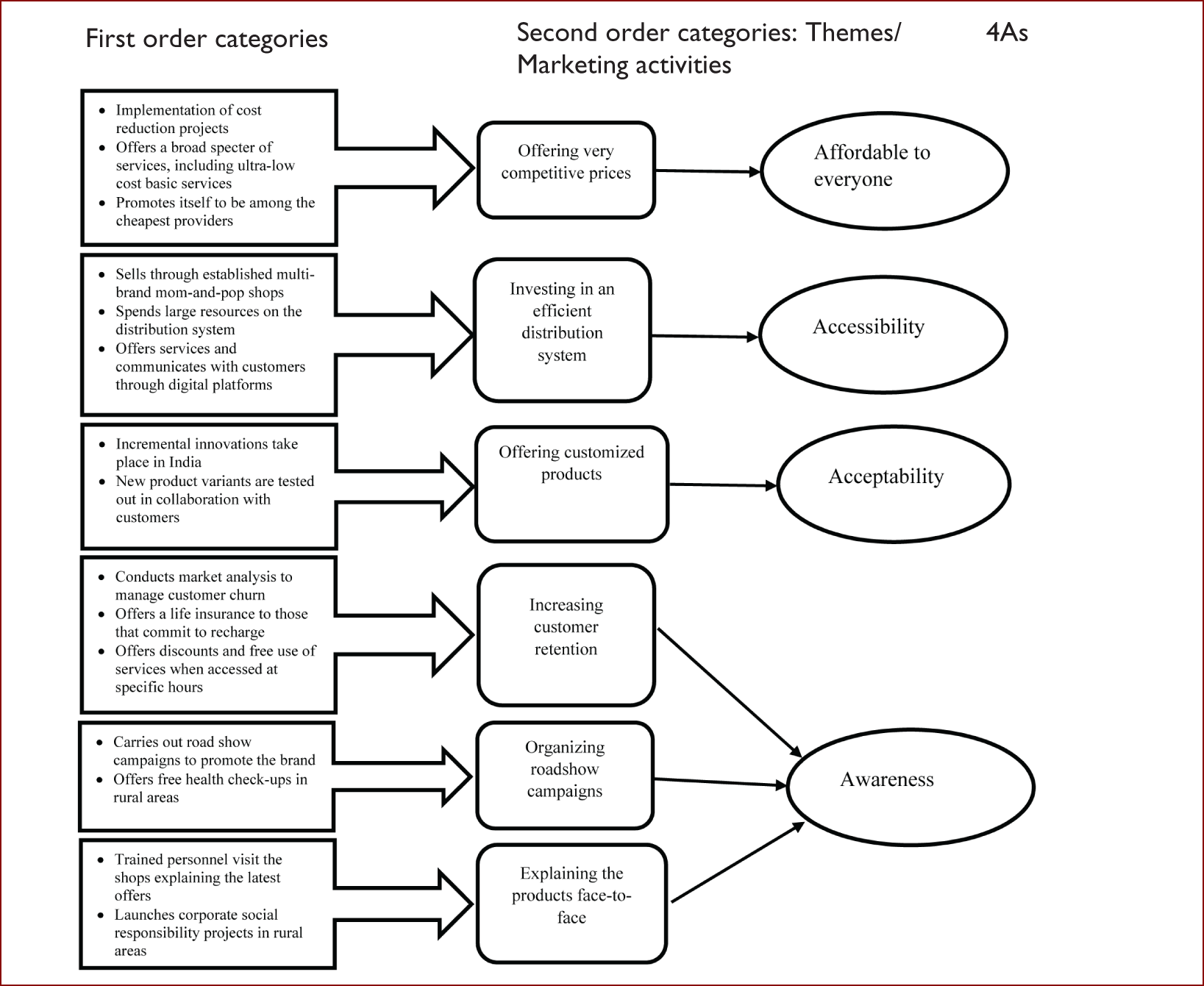
The interview protocols and the case reports were imported into the NVIVO version 12+ for analysis. The data for the individual company were analyzed. The analysis was started out by using open coding, which sought to discover marketing initiatives understood as first order categories that used terms adhering to the information expressed by the data. The next step implied a research centric approach, a second order analysis, searching for similarities between the first order categories. The first order categories that were related to a similar theme were grouped together, resulting in second order themes (Gioia et al., 2013). Six themes representing marketing activities were formed for each company. The question ‘which one of the 4As does it relate to?’ was asked for each of the marketing activities (themes). The literature was consulted in order to identify the connections between the marketing activities and the 4As for the individual company. The connections between the sets of first order categories, the second order themes and the 4As formed the basis for a data structure (Gioia et al., 2013). The data structure for the telecom company is presented in Figure 1.
Findings
Telecoms: 4As Marketing Activities
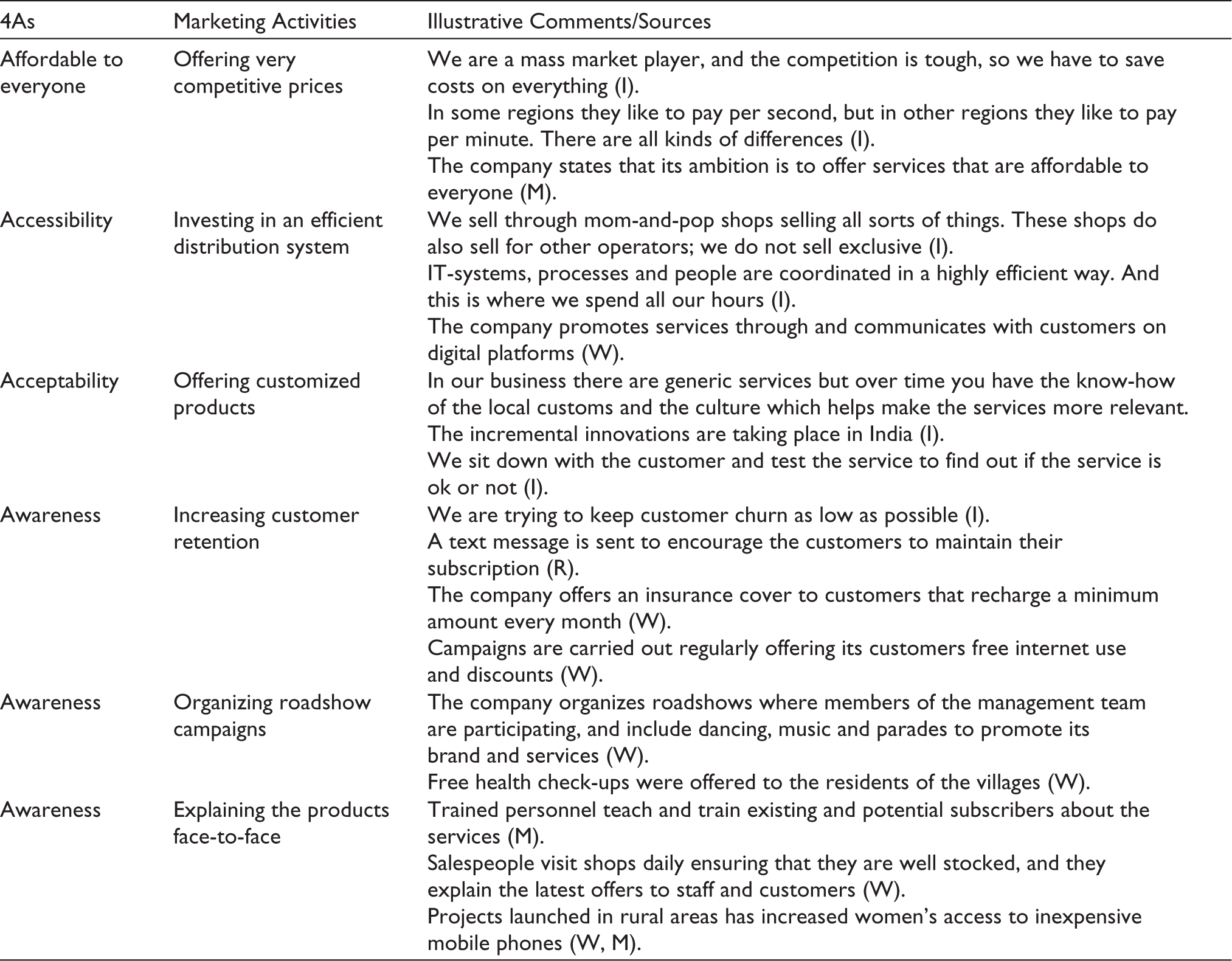
The company entered India at the end of 2000. The teledensity has grown rapidly since 2000, reaching 90.52 at the end of 2019 (TRAI, 2020). The company started out by serving the high-income people. The company failed, among other things because the segment targeted was too small, there was a strong pressure on price and the company was faced with difficulties in differentiating from the competitors. The company acquired an increasing number of net additional SIM customers after it decided to target the mass market, which makes up 95% of the total market. Table 1 presents selected comments and sources supporting the development of the six marketing activities. Table 1 shows which of the 4As each of these activities represents.
Telecoms: 4As Marketing Activities: Summary and Findings.
Affordable to Everyone: Offering Very Competitive Prices
The ambition was to offer services affordable to everyone, including low-income people in the cities and in the rural areas. Serving the mass market required an extremely efficient organization that could compete on price. Several cost reduction projects were implemented, among them outsourcing the operation of the networks and optimizing the service systems, which enhanced the capacity and reduced the operating costs. By changing the pricing from charging premium prices to being among the cheapest providers of a broad spectre of package options at very competitive prices, the company’s products became affordable to everyone. The informant pointed out, ‘We compete on price, we have to offer low cost to the consumers. The company has a cost-based strategy’.
Accessibility: Investing in an Efficient Distribution System
The company sold through mom-and-pop shops, which is essential to increase the demand (Sharma et al., 2019). About 1,000 distributors, who had an exclusive agreement with the company, supervised field sales agents who supplied these shops with the company’s products. The internet subscribers were served through digital and social platforms (i.e., Facebook, Twitter). Accessibility was achieved by integrating the traditional distribution system, a large number of mom-and-pop shops in urban and rural areas, with IT-systems, and processes. The company spent most of its hours in developing and improving its distribution system. The informant explained, ‘we are training the whole system, including the mom-and-pops, the IT, the payment, the product, the daily visits. This is where we win’.
Acceptability: Offering Customized Products
The headquarters was responsible for developing the early stage of the product, and the incremental innovation took place in India. The company asked for customers’ feedback on the suitability of new products before they were finalized. The informant explained, ‘In general in our business there are generic services, but over time you have the know-how of the local customs and the culture which helps make the services more relevant’. Customization was related to ensuring that the functionality of the products was matching market characteristics in terms of form (i.e., size, design). Key modifications were related to payment and frequency of purchases, which required a range of small unit sizes in the low-end. Many users call on a mom-and-pop shop daily to recharge their cash card because of low and irregular income (Dawar & Chattopadhyay, 2002).
Awareness: Increasing Customer Retention
Many Indians have multiple phones and dual SIM mobile phones as they easily switch between brands. The informant explained, ‘In our business we have something called customer churn, which means that customers come on board and then they leave, and we are trying to keep customer churn as low as possible’. To encourage customers to maintain their subscription, the company sent a text message to those who had a decline in use of the services. In an emerging market, providing discounts and package offers is essential to navigate the customer’s mind into an attachment to the services of a telecom company (Javed & Khan, 2022). Data packages at a discount were offered if accessed between 11.00
Awareness: Organizing Roadshow Campaigns
Employees travelled large distances across cities and villages to promote the company’s products and expansion plans to existing and potential customers, shops and partners. The roadshow campaigns facilitated a direct interactive experience including dancing, music and parades to draw attention to the company’s brand. These campaigns engaged and educated people about the brand and products, which was essential to attract the attention of non-customers in areas where media coverage is limited (Arunachalam et al., 2019; Pisoni, 2010). The slogan ‘Gaam No Faydo, Telecom’s No Vaydo’ (Benefit of villages, Telecom’s promise) (anonym ref) was promoted, and free health check-up was offered in the villages.
Awareness: Explaining the Products Face-to-Face
Trained personnel visited the mom-and-pop shops to educate customers and potential customers about the mobile and internet services provided by the company. In addition, sales field agents did not only stock the shops with supplies but also ensured that the sales staff was informed about the latest products. Getting the sales staff on their side was important because customers’ brand choice in multi-brand shops is heavily dependent on sales staff’s preferences (Douglas & Craig, 2011). Social projects were organized to create awareness of the brand among inexperienced and illiterate women in rural areas. The company reached out to the villages by engaging persons who lived there in explaining to the citizens how the products could improve their lives. Engaging people living in the villages was important because villagers rely on personal ties to learn about new consumption options (Arunachalam et al., 2019; Tasavori et al., 2016).
Brewery: 4As Marketing Activities
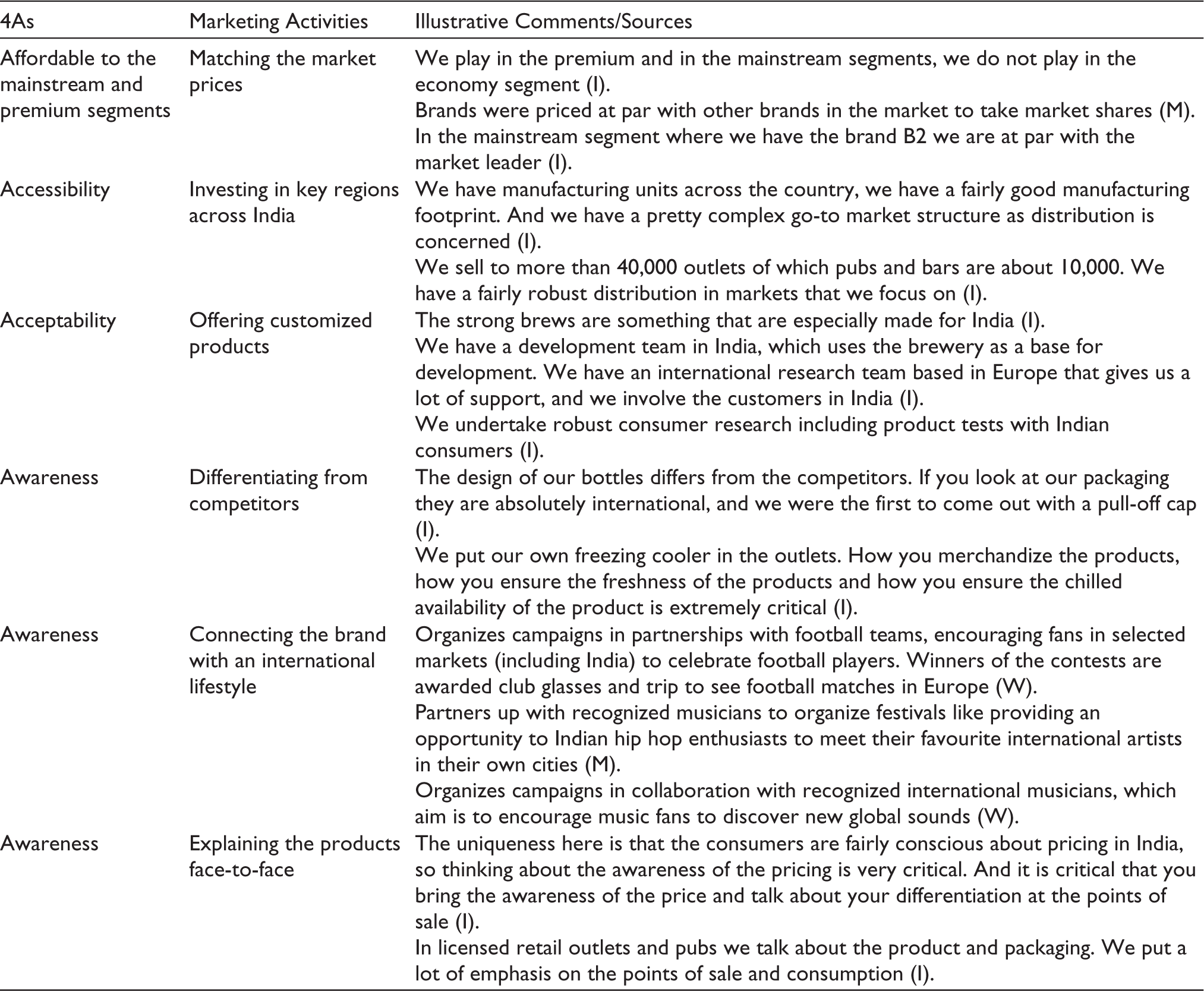
The company was established as a foreign direct investment by starting out with its first manufacturing unit in India at the end of 2000. The company has two key brands (B1 and B2). B1 was sold to the premium segment (5% of the total market), and B2 was sold to the mainstream segment (80% of the total market). Initially, the company focused on selling the mild beer (less than 5% alcohol) based on recipes used in other international markets. The sales did not develop as expected because the company overestimated the number of Indians who were willing to buy high-priced products not traditionally consumed in their country (about 2 L of beer on average per person annually). Eighty-five per cent of the total volume sold in India is strong beer (5–8% alcohol). The market share started increasing after the initial strategy was changed. Table 2 presents selected comments and sources supporting the development of the six marketing activities. Table 2 shows which of the 4As each of these activities represents.
Brewery: 4As Marketing Activities: Summary and Findings.
Affordable to the Mainstream and Premium Segments: Matching the Market Prices
Beer is a luxury product for the average Indian, and it is far less affordable in India compared with high-income markets when comparing the average income per capita (Blecher et al., 2018). The company charged higher prices than the competitors. Competitors were offering alternative options to a less price through the same sales points as the brewing company, which made it difficult to convince consumers to buy and re-buy the company’s high-priced products (Kim & Ko, 2012; Sharma et al., 2020). The company lowered the prices at par with the market prices, making the beer affordable to a larger number of people in the mainstream and premium segments. The informant explained, ‘If you do not get your pricing right, you will never get to win. The Indians are very, very value conscious. If you get the right value for the money, it will definitely sell in India’.
Accessibility: Investing in Key Regions Across India
The company pursued an expansive strategy by establishing manufacturing units in key regions viewed as centres from where products were being supplied to neighbouring markets. The sales department took care of the distribution to the intermediaries (i.e., distributors, wholesalers) that supplied multi-brand licensed shops, pubs and bars in average and major cities. The informant stated, ‘We have a fairly robust distribution in markets where we focus on top cities and outlets’. By selling through outlets in urban areas, the company targeted the middle-class people who were open to new consumption choices and to taking part in the night life scene (Javalgi & Grossman, 2016; Sengupta et al., 2022).
Acceptability: Offering Customized Products
The company, which started out by focusing on the mild beer segment, realized that it had to engage more in the strong beer segment to increase the market share. Both brands were extended to include variants matching the Indian consumers’ preferences for strong beer and flavour. The Indian team and the headquarters contributed with their expertise in the development of new products, which were tested out in the market before they were launched. The company took cultural elements into consideration by introducing brews meeting Indians’ traditional preference for strong alcoholic drinks (Banerjee, 2008; Sengupta et al., 2022). The informant explained, ‘the strong brews are something that are especially made for India. …, these recipes are particularly made for India, considering Indian taste pallets and Indian preferences’.
Awareness: Differentiating from Competitors
The products provided uniqueness and points of differences by integrating new products matching the Indians’ taste buds with the global image of the brands, such as the global template, packaging and logos. The visibility at the outlets is essential to attract the attention from existing and new customers in the purchasing situation (Menguc et al., 2007). The informant explained, ‘so we put our own freezing coolers in the outlets … how you ensure the freshness of the products and how you ensure the chilled availability of the products is extremely critical’. The company was the first to introduce a pull-off cap in the Indian market by adding this new packaging to its most selling brand, providing extra value to the customers as it made opening the bottle easy. Although the new packaging was easy to imitate (Sorescu & Spanjol, 2008), it provided a differentiator that was appreciated by the customers.
Awareness: Connecting the Brand with an International Lifestyle
Awareness building activities that appealed to the individuals’ aspirations to be associated with an international lifestyle were carried out, expressed by the following: ‘The targeted audience in India is the social drinker, who goes with like-minded people and believes in getting the most out of life’ (anonym ref). By organizing social events and festivals for the young people and inviting international artists as performers, the company promoted its global logo towards the young people who have a desire to build a social image that could be associated with a contemporary lifestyle (Sengupta et al., 2022; Shaikh et al., 2017). For example, consumers in India and 24 other countries were invited to celebrate Liverpool football club’s first premier league title in 30 years by sharing a limited edition of ‘champions’ cans’, thus engaging like-minded people across countries (Liverpool FC fans).
Awareness: Explaining the Products Face-to-Face
The points of sale and the points of consumption were the critical touchpoints, where the products were explained to the customers and the customers could experience the quality by means of visualization and consumption. Sales personnel called on the points of sale, including pubs and bars, to talk with the customers about products, pricing and packaging to create a positive connection with the brand. The informant explained, ‘it is critical that you bring the awareness of the price and talk about your differentiation at the points of sale’.
Decorative Paint: 4As Marketing Activities
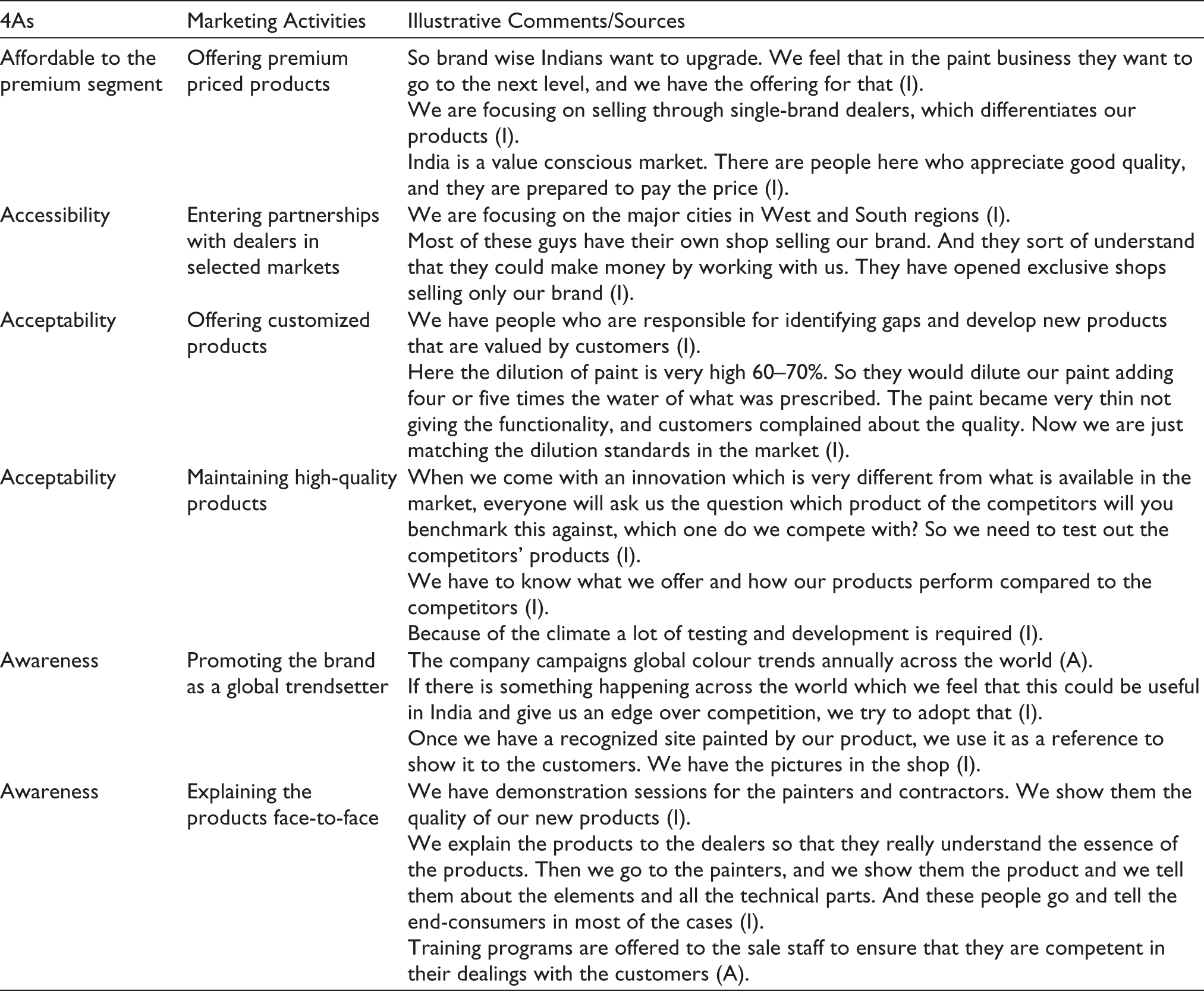
The company, which sold decorative paints (interior and exterior), was established in the middle of 2000 as a foreign direct investment, locating its manufacturing unit close to its main markets. The company started out by selling its products through multi-brand shops but decided to change to selling through single-brand shops in order to stand out as a premium brand company. Table 3 presents selected comments and sources supporting the development of the six marketing activities. Table 3 shows which of the 4As each of these activities represents.
Decorative Paint: 4As Marketing Activities: Summary and Findings.
Affordable to the Premium Segment: Offering Premium Priced Products
The informant explained, ‘What we are realizing is that the multi-brand route is not working very well for us.’ In multi-brand shops the company ended up competing with the low-end products where the margins were very narrow. By selling through single-brand shops, which was the MNC’s international strategy, the company targeted those consumers that were able and willing to pay the premium price. The single-brand shops signified exclusivity and minimized the distractions from competing and low-end brands, which made it easier to prove the product quality and thus allowed charging premium prices (Porter, 1990). The dealers operating the single-brand shops had the flexibility of charging the same price as the competitors (comparable products), or a higher or less price. The informant pointed out, ‘they are mostly selling at higher price than the competitors’. Indians are not only concerned about the price but also about the brand and quality, and they want to upgrade ‘from a small car, to a medium car, to a big car. So brand wise they also want to upgrade’.
Accessibility: Entering Partnerships with Dealers in Selected Markets
The company withdrew from some markets and strengthened its position by entering partnerships with dealers in selected major cities. The informant explained, ‘We are trying to do business with a restricted set of dealers that we feel give us maximum potential’. The close cooperation with dealers who exclusively sold the company’s brand helped serving the premium segment effectively. The dealers experienced the value of selling the products as premium because that differentiated them from the competitors. In this way, the company avoided competition and could serve key markets where the customers were prepared to buy premium products (Sharma et al., 2019).
Acceptability: Offering Customized Products
Asking feedback from dealers and customers ensured that products added to the existing product range included characteristics required in the market. The customizations were related to the functionality of the products. For example, to accommodate products to India’s climatic conditions, such as heavy rains causing leakages, a new waterproof paint, including antifungal and temperature reduction properties, was developed to prevent leakages in houses. Matching local standards (i.e., the extent of dilution) was necessary to ensure acceptance. The informant stated that ‘changing habits and educating people is too much effort without much result, you know’. If we do not succeed in differentiating from the competitors ‘we are just matching the standards, completely matching the standards’.
Acceptability: Maintaining High-Quality Products
Frequent testing at the research and development lab in India ensured that the products were superior in terms of meeting usage requirements, including correction of misfits/gaps in the product range (i.e., upgrading and adding new products), and follow-up of market demands (i.e., local usage conditions). Testing was essential to ensure that the quality was superior to the competitors, and it assured the customers that it was worth paying the premium price (Schilke et al., 2009). The informant explained, ‘we need to test out the competitors’ products because sometimes we feel that the competitors might be overclaiming’.
Awareness: Promoting the Brand as a Global Trendsetter
The MNC’s global campaigns promoting the latest colour trends were also launched in India and showcased at the shops. By displaying material at the shops visualizing villas with the most updated furnishings, designs and colours, the company demonstrated that it was an important global trendsetter. Consumers exposed to visual cues that trigger their imagination are inclined to accept new brands (Bruner II & Kumar, 2005), and owning a modern house is a lifelong dream for many Indians (Javalgi & Grossman, 2016). The informant pointed out, ‘So when you promote, it has to be aspirations. People don’t have to experience it, you know’. Pictures of recognized landmarks located in a global city such as Paris were promoted at campaigns and displayed at the shops. The informant explained, ‘We show it to the customers, see, this is what we have done, they get more assurance of the quality’. If the company’s products were used for icon constructions known worldwide, the product must also be very good for the house: ‘from Paris to your home’.
Awareness: Explaining the Products Face-to-Face
The sales personnel were offered training programs about the quality of the products and how they differentiated from competing products. The dealers’ competence in explaining and recommending the products is important because the shop is the place where the customers can learn about the functionalities of the products (Heine & Phan, 2011). The informant pointed out, ‘We are focusing on how they will sell more, how they will get more business’. In addition, taking part in exhibitions and visiting construction sites were essential to explain and demonstrate the products to customers such as architects, painters, interior designers and developers because they recommended the products to the end-consumers. Consumers move from low-end products to premium priced and higher margin products if they believe that the product gives them something extra (Dawar & Chattopadhyay, 2002). The informant explained, ‘So that is what we are trying to do with our products, we try to show them the value … once the customer sees the value, he will pay the premium’.
Discussion
Creating Product Demand: Three General Marketing Strategies
Table 4 presents the main findings. As highlighted in Table 4, two of the marketing activities were applied by all companies: explaining the products face-to-face and offering customized products. Explaining the products face-to-face implied informing the consumers about the products at the points of sale, exhibitions and at their homes. Many consumers in emerging markets are unaware of international brands, and therefore need to be educated about them (Arunachalam et al., 2019). By providing valuable information about the products face-to-face, the company develops trust, which is essential to convince consumers in emerging markets to buy and re-buy the products (Ozdemir et al., 2020).
Summary: 4As Marketing Activities and General Strategies.
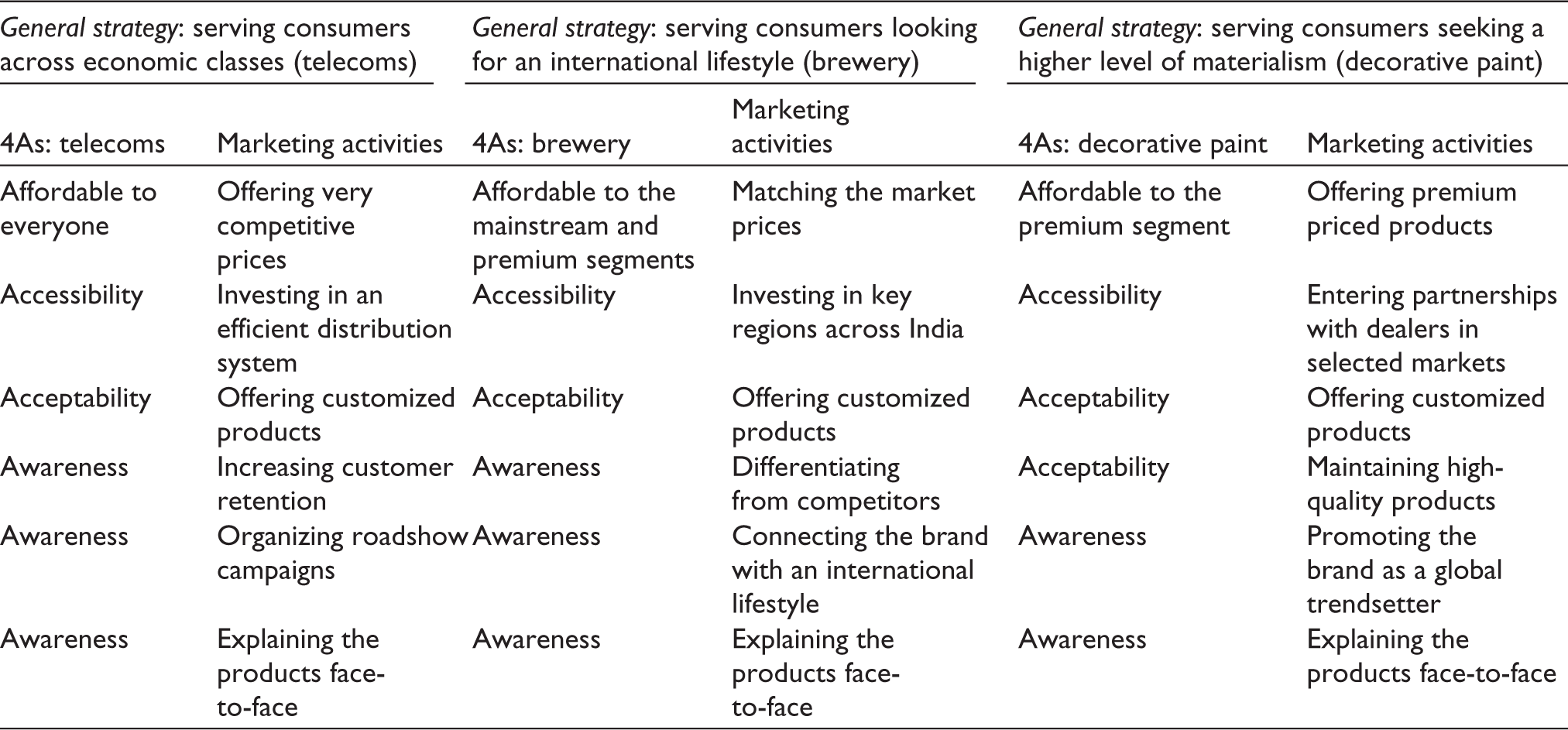
The implications of customizing the products differed between the companies. For the telecom company customizations were related to the ambition to provide products that could be affordable to everyone. By providing a spectre of products, including small unit sizes of low-cost services, the company managed to convert non-consumers to consumers of services that could improve their day-to-day lives (Pandey et al., 2022). The overall strategy of the telecom company was Serving consumers across economic classes. The telecoms’ business approach could be associated with the common good principle, which implies promoting opportunities enhancing the well-being for all people within a community (Mele, 2009). By offering very competitive prices through an extremely cost-efficient distribution system, consumers across economic classes could take part in a shared community for achieving several benefits. Creating demand for telecom services in the mass market does not only benefit the company, but also improves the consumers’ well-being. Telecom services provide access to business opportunities, education and health services, which is essential to decreasing the divide between the economic classes (Maity & Singh, 2021). The awareness activities, increasing customer retention and organizing roadshow campaigns, implied offering free health check-ups and an insurance cover affordable to the low-income people. The company signalled that it cared about the welfare of people, thus creating associations about its brand as being socially responsible (Alden et al., 2006; Javed & Khan, 2022).
For the brewing company, offering customized products implied extending its product range by including variants of strong brews in order to match the consumers’ preferences for flavours and taste. Also, the price level was reduced: matching the market prices. This was essential to make the products affordable to a larger number of the mainstream and premium segments. The overall strategy pursued by the company was serving consumers looking for an international lifestyle. The brewing company targeted the young people in major cities prepared to consume foreign product options in new settings such as pubs and bars (Riefler et al., 2012). Connecting the brand with a global consumer culture is essential to attract the attention of consumers in an emerging market (Alden et al., 1999), and two awareness activities helped the company to achieve such connection. To differentiate from competitors, the company emphasized the global image of the brands, which was signified by packaging and logos. Connecting the brand with an international lifestyle was implemented by engaging consumers to take part in activities that could connect them with a lifestyle shared with others across countries. Activities to create a positive connection between the young Indians and the global image of the brand appealed to both the individuals’ aspirations to be associated with a modern lifestyle and the Indians’ strong preference for belonging to a social community (Banerjee, 2008; Chakraborty & Sadachar, 2021). By inviting consumers to take part in activities that connected consumption of the brand with a global culture (e.g., sports, arts, nightlife scene), the consumers could experience a lifestyle shared with like-minded people worldwide (Chakraborty & Sadachar, 2021; Riefler et al., 2012).
For the decorative paint company, two acceptability activities were implemented. Offering customized products implied matching the functional needs in the market such as regional usage conditions and climate. In combination with activities maintaining high-quality products superior functionality of the products was ensured. By entering partnerships with dealers in selected markets, the company could target consumers who were prepared to pay for the premium priced products. The general strategy of the company was serving consumers seeking a higher level of materialism. Materialism can be understood as ‘the importance ascribed to the ownership and acquisition of material goods in achieving major life goals or desired states’ (Richins, 2004, p. 210). A key domain in materialism is the use of possessions in defining the success of others and oneself (Richins, 2004). By combining high-quality functional products with global trends, the company could target consumers who would buy the products in order to achieve personal goals associated with a higher level of materialism (Chakraborty & Sadachar, 2021; Javalgi & Grossman, 2016). Indians who live in the large cities are exposed to global brands, and many of them seek status by paying premium price for such brands (Chakraborty & Sadachar, 2021). The company showcased itself as a global trendsetter and a worldwide recognized brand by attaching non-functional aspects such as status, aesthetics and uniqueness to the brand (Shaikh et al., 2017). The awareness activity, promoting the brand as a global trendsetter, implied visualizing villas with the latest furnishings, designs and colours. Thus, it could trigger the consumers’ desire to upgrade their homes to better quality matching global trends. Such upgrades demonstrate financial success, and social recognition and status are achieved (Javalgi & Grossman, 2016).
Conclusion
The findings extend the 4As framework (affordability, acceptability, accessibility and awareness) in several ways. First, the study shows that the 4As framework is applicable to studying how the demand could be created among consumers who belong to different economic classes. However, to make it useful across economic classes, affordability should be classified according to three categories: affordable to everyone, affordable to the mainstream and premium segments and affordable to the premium segment. Second, three general marketing strategies emerged, one for each of the three proposed categories of affordability:
Serving consumers across economic classes (affordable to everyone). Serving consumers looking for an international lifestyle (affordable to the mainstream and premium segments). Serving consumers seeking a higher level of materialism (affordable to the premium segment).
Third, each company implemented six marketing activities, of which two were put into use by all three companies: offering customized products (acceptability) and explaining the products face-to-face (awareness). The two kinds in common seem to be crucial, independent of type of industry or class of consumers.
The study has some managerial implications. The six marketing activities that constitute each of the three strategies provide guidance to how to create the demand for different types of products in an emerging market. First, having a good understanding of the target consumers is essential because who the consumers are, (i.e., what their needs and desires are, economic class, villagers, urban people), influences the choice of marketing activities suitable for increasing the product demand. It is advisable to make analyses for the specific region in question. Evidence shows that in India, consumers’ preferences for foreign brands vary across regions (Sengupta et al., 2022). Second, when planning to enter an emerging market, it is essential to create a program that delineates the 4As marketing activities that should be implemented. Identifying the resources and investments necessary to succeed should be part of this planning. For example, convincing consumers to buy your products requires investments in staff whose main activity would be to interact with consumers, explaining the products and what they could benefit from them. Also, ensuring the target consumers’ access to your products requires investments in infrastructure, which is not well developed yet in a country such as India. Accessibility of the products is a key factor that influences sales in an emerging market (Bahadir et al., 2015). Whether the company should enter partnerships with local business and/or invest in new or upgrade current distribution system are critical decisions to be made.
Limitations and Future Research
The study has several limitations that offer a starting point for further research. First, the 4As marketing activities identified in this study are by no means exhaustive or conclusive; they portray the practices of three companies representing different industries (telecoms, brewery and decorative paint). Future research could demonstrate the validity of the proposed marketing activities by including companies from other industries. This could extend the spectre of general marketing strategies and provide further knowledge about how to create the demand among target consumers. Second, although the demand among the target consumers increased resulting from the marketing activities that were implemented by the three companies, the study does not show how the demand developed, nor how the set of 4As marketing activities could be changing over time. Developing a market involves going through stages, as market characteristics (i.e., technology, economic development, government regulations, competitive situation and consumer preferences) are changing in fast moving emerging markets. Thus, a longitudinal study of selected companies could provide knowledge about the dynamic nature of 4As marketing activities. Third, the study does not investigate the impact of market characteristics on 4As marketing activities. Dadzie et al. (2017), who focused on the market in Ghana, show that market characteristics influence the usefulness of 4As marketing activities. Investigating the impact of market characteristics on the usefulness of 4As marketing activities in India and other emerging markets could help explain why transferring marketing activities used in one emerging market do not produce the same results in another (Sharma et al., 2020). Fourth, the impact of the identified 4As marketing activities on performance (i.e., market share, sales growth and profitability) was not investigated. The proposed 4As marketing activities could be used as a departure point to develop measures that could be tested in a survey in India. This would provide knowledge about the extent to which the identified marketing activities can be generalized across industries serving consumers, and as to whether they impact performance. Results from this study would help validate the usefulness of the proposed 4As marketing activities and provide guidance to managers regarding how marketing activities could be ranked in terms of importance to increase the demand for their products.
Footnotes
Declaration of Conflicting Interests
The author declared no potential conflicts of interest with respect to the research, authorship and/or publication of this article.
Funding
The author received no financial support for the research, authorship and/or publication of this article.