



Abstract
The COVID-19 pandemic has disrupted the fashion retail industry. The Gulf Cooperation Council Countries (GCC) is the home of family-centric shopping malls and brick and mortar stores (B&M). This article aims to provide a critical look at the business strategies which the fashion retail companies need to adopt to provide consumers with an integrated online and B&M service which will be essential to survive in the post-pandemic business environment. This article is based on the rich industry experience of the authors and extensive secondary research on the business strategies being employed by the leading fashion retailers in the GCC region to combat the pandemic disruption. The study highlights the importance of a comprehensive rethink on business strategy for the GCC fashion retailers with adoption of digitalization technologies and an adaptive supply chain as the pillars to survive the post-pandemic normal of business environments. The study concludes with a look to the future strategies for fashion retailers in developing a digitalization blueprint, using cloud technologies and big data analytics, leveraging social media, building an agile and adaptive supply chain with omnichannel capability, and ensuring that future products and services are sustainable and socially responsible.
Introduction
E-commerce is the business of selling, buying, logistics or other transactions via the Internet. It relates to technology-mediated exchanges between parties (individuals and/or organizations) (Vladimir, 1996). The global retail landscape is facing a significant shift in the retail value chain. New retail business models and competitors are emerging, and traditional brick and mortar (B&M) store-based retailers are facing threats from all directions. This is primarily due to the emergence of e-commerce under the rising influence of digitalization. B&M retailers are experiencing a downward pressure on revenues and profits. In 2017, the e-commerce industry made a significant impact when it crossed 10% of all global retail sales (Charbel et al., 2019). Today, e-commerce market stands a $2.2 trillion, and is growing at a compounded annual growth rate (CAGR) of 24%, at least four times faster in comparison to global retail sector. The annual fashion sales revenue in the Middle East’s Gulf Cooperation Council (GCC) countries of United Arab Emirates (UAE), The Kingdom of Saudi Arabia (KSA), Oman, Kuwait, Bahrain and Qatar total approximately to $50 billion, reflecting the region’s significant market for fashion (Al Maqhosi, 2019). E-commerce is now seen as the key growth engine for global retail, its share has grown from 7% in 2012 to 39% in 2017 and is expected to cross 50% by 2020. In developed economies of the West, e-commerce is growing at a CAGR of 20% (Boumediene et al., 2017). The proportion of e-commerce retail to the Gross Domestic Product for Western Europe is in double digits for many countries. Approximately, one-third of the e-commerce spends are in the fashion retail category. It is safe to conclude that the retail industry in the Middle East and North Africa (MENA) inclusive of the GCC is on the verge of a decisive shift. E-commerce is a reality, remapping the customers’ path to purchase, reinventing customer experiences, disrupting legacy business models and fostering new growth opportunities for retailers across all sizes, as well as for an emerging generation of pure play e-commerce companies such as Noon and Jumia. The GCC consumers are also becoming increasingly connected, with adoption of digitalization solutions on the uptrend. As more and more shoppers migrate to online stores, corporations typically follow suit, fostering a gradual and irreversible development of the digital environment in areas such as media and e-commerce. Mass Internet acceptance in MENA, especially in the GCC, took off around the mid-2000s, mostly driven by intelligent devices like smartphones, supported by social media and turbocharged by faster internet speeds. Corporations started to see digitalization taking a more crucial role in business strategy post-2010, with media leading from the front. Within the duration of just five years, the share of digital media shot up from less than 10% in 2012 to more than 30% by 2017. Internet penetration is very high in the UAE and KSA at 99% and 89%, respectively, as compared to China, which is just about 57% (Kemp, 2019).
The retail fashion spend in some GCC countries is among the highest on a per capita basis globally, reaching approximately $500 and $1,600 per person in KSA and UAE, respectively (Amed et al., 2020). Dubai in UAE is the GCC region’s fashion shopping capital, but other GCC markets are growing fast, with KSA taking a place at the top of the table. Dubai is the flagbearer and benchmark for fashion retail and will continue to play the leading role as the GCC’s window to the fashion world, supported by modern world-class malls offering top-end consumer experience (Ventures Onsite Project Database, 2019). In KSA, the fashion market is going through some significant structural and dynamic shifts. KSA is the biggest and most populous country in the region and is in the process of a social reform, investing significantly in nurturing a thriving cultural scene to attract local population and international visitors alike (Al Meena, 2019). The social reforms have enabled women, who are now playing an increasingly active and significant role in defining the retail fashion market’s future. The recent relaxation of norms and laws on women’s dress has disrupted how women, both local population and international visitors, consume retail fashion in KSA. Customer attitudes and requirements are in a constant state of flux, as customers want more value, variety, transparency and instant gratification. The GCC fashion companies are therefore required to adapt to these changing circumstances, with fashion designers, social platforms, social media stars and influencers, and local style trends starting to feature consistently and significantly more in the global fashion platforms and narratives (Taki et al., 2020). The GCC is experiencing a tectonic shift from being a traditional importer of fashion trends to an emerging exporter. Retail fashion companies must strategize carefully about how best to grow in the GCC, and the strategies will play an important role in B&M retail and e-commerce (Ventures Onsite Project Database, 2019). A winning e-commerce strategy, in-depth knowledge of the customer and cost efficiencies will be critical to survive in this market.
COVID-19 Impact on the Fashion Retail Industry
B&M stores, the lifeline of the GCC retail sector, are currently going into a tailspin because of the coronavirus pandemic and the resulting lockdown in GCC and worldwide of retail outlets (Dubai Future Foundation, 2020). Fashion retailers, electronics stores, furniture stores and restaurants have seen a huge drop in prices during the initial months of the lockdown. The COVID-19 fear and lockdowns have led to new consumer behaviours as they are confined to their residence. Consumers are shopping for everything, that is, groceries, fashion, home décor and fitness equipment online. A long-standing migration of consumers towards e-commerce was accelerated. The coronavirus pandemic has changed the way we consume and relate to the world around us (Roggeveen & Sethuraman, 2020). A metamorphosis in consumption trends had been underway even before the health crisis—the pandemic merely sped some of these up. In this aspect, corporations have been inclined to make substantial changes to their business processes (Nair, 2020). Overnight, operations and processes of many companies had to go virtual. It is uncertain whether and how many consumers will return to traditional means of shopping after the pandemic eases. Some transformations may be long-lasting. Digitalization is an obvious play and retailers had been turning to online platforms even before COVID-19. The only difference was that it was not a matter of life and death, which could possibly be the case now, given that most people are still staying indoors (Shahani, 2020). Researchers have examined the effects of the pandemic causing a structural change in consumption and accelerating the digital transformation in the marketplace. Retailers may acclimatize to the digital transformation in the marketplace to recover or even use this to grow further after COVID-19 (Kim, 2020). COVID-19 has disrupted consumer lives from all the fronts. Corporations and global commerce will embrace new processes once the world recovers post-COVID-19. Multiple new developments in retail such as direct-to-consumer model (D2C) and omnichannel (OC) fulfilment would materialize in the retailers of tomorrow. Retailers that identify these shifts proactively will be the winners in the post-COVID-19 era. Some scholars have analysed these multifaceted scenarios in Fast Moving Consumer Goods (FMCG) and retail companies of India and have enumerated developments in these markets and potential policies companies must implement to recover in the post-pandemic phase (Shetty et al., 2020). COVID-19 has resulted in the biggest financial crisis since the Second World War, affecting every business vertical. The fashion vertical is particularly vulnerable due to its seasonal and optional nature. The revenues for the global fashion industry are expected to drop by 27% to 30% in 2020 year on year (Amed et al., 2020). Lack of information about the duration or impact of the pandemic are adding on to the struggles of the industry. Disrupting both supply and demand, the pandemic has created a storm for the fashion industry. The fashion industry operates with integrated global supply chains and lockdowns in supplier countries have dried up inventory creating the supply side crisis. Consumer spending freeze on discretionary goods (under which fashion is the prime category) has created a demand side crisis. An increase in e-commerce/OC business models is expected to impact fashion retail in the coming years. A study conducted to investigate the factors affecting customers’ online shopping behaviour during the COVID-19 pandemic in Bangladesh (Neger & Uddin, 2020) concluded that the psychological factor was the primary factor, not price or product. A study that explored the effect of COVID-19 on fast-fashion retailers’ supply chain concluded that marketing and e-commerce agility is the basis for fast-fashion brands to sustain in the post-COVID-19 pandemic future (Kannappan, 2020).
Business Strategy for the ‘New Normal’
Retailers are currently focused on crisis management and contingency planning, but they will need to shift towards restructuring the fashion business altogether. The tectonic shifts in the global economy and customer behaviour in the post-coronavirus world will necessitate the rewiring of fashion retail (Helm et al., 2020). To deal with ever evolving lockdown constraints, alleviate the detrimental influence of the pandemic and adjust to customer and economic shifts, retailers must incept new business strategies and tools across the value chain to make the business sustainable (Pantano et al., 2020). Retail fashion players must innovate on all aspects of OC—digitalization, social commerce and channel agnostic demand and supply fulfilment.
Many scholars have studied the substantial impact of COVID-19 on economic, political and social aspects all around the world (Bretas & Alon, 2020). A study of retail and service businesses in Brazil reported radical changes in business strategies which were emerging out of negotiations between retailers and landlords, and flexible business models to cater to the pandemic-affected environment. This is true for all developing and emerging economies. Another study by scholars on the impact of the COVID-19 pandemic on e-commerce grocery retail in Germany emphasized the opportunities of innovation in the online sector which were accelerated in this disruptive environment (Dannenberg et al., 2020). To cope with new constraints, alleviate the negative effect of the pandemic and acclimatize to economic and customer behaviour changes, retailers must innovate with new strategies to insulate their business models against an uncertain future. Fashion retailers must implement and stabilize these strategic innovations and quickly scale up those strategies that work to make fundamental and long-lasting changes to their companies (Sharma et al., 2021).
The shift in consumer mindsets in terms of their purchasing habits, and unnegotiable expectations on fast delivery, immediate gratification, anytime anywhere access, easy navigation and multiple delivery options will drive the future strategies of retailers. The Internet of things (IOT), smart cities and the emerging 5G technology will lead to a deluge of data on consumer habits. Retailers need big data analytics tools to create consumer profiles and gain insights on buying patterns, and consumer product preferences. The GCC’s biggest fashion retailer, Landmark Group, uses its customer loyalty programme Shukran effectively for predictive big data analytics on customers’ behavioural intention towards purchasing. The customer behaviours and buying patterns help identify the needs of the consumer enabling the fashion retail giant send out recommendations about latest products with special discounts for their special and personal occasions. Chalhoub Group, the region’s leading luxury beauty retailer, uses data analytics to set up customer specific, segmented and automated consumer journeys unique to their consumers and merchandize. Using this data and understanding the consumer behaviour and counterintuitive insights helps Chalhoub Group offer increasingly personalized journeys, consumer experience and highly focused and accurate recommendations to consumers. Cloud technologies will be another key enabler to reinvent unproductive legacy applications, make efficient supply chains and drive differentiated customer experiences in an OC environment. Fawaz Al Hokair, one of the largest franchise retailers in the KSA, has implemented Amazon Web Services (AWS) for its technology infrastructure, with advanced cloud technologies to serve the customers better and accelerate its overall digital transformation strategy. Their strategy is focused on adapting to the fast-changing OC retail industry and catering to a digitally connected customer base. These platforms are supported by big data analytics, predictive and recommendation engines that leverage machine learning services to provide a personalized shopping experience through customer insights.
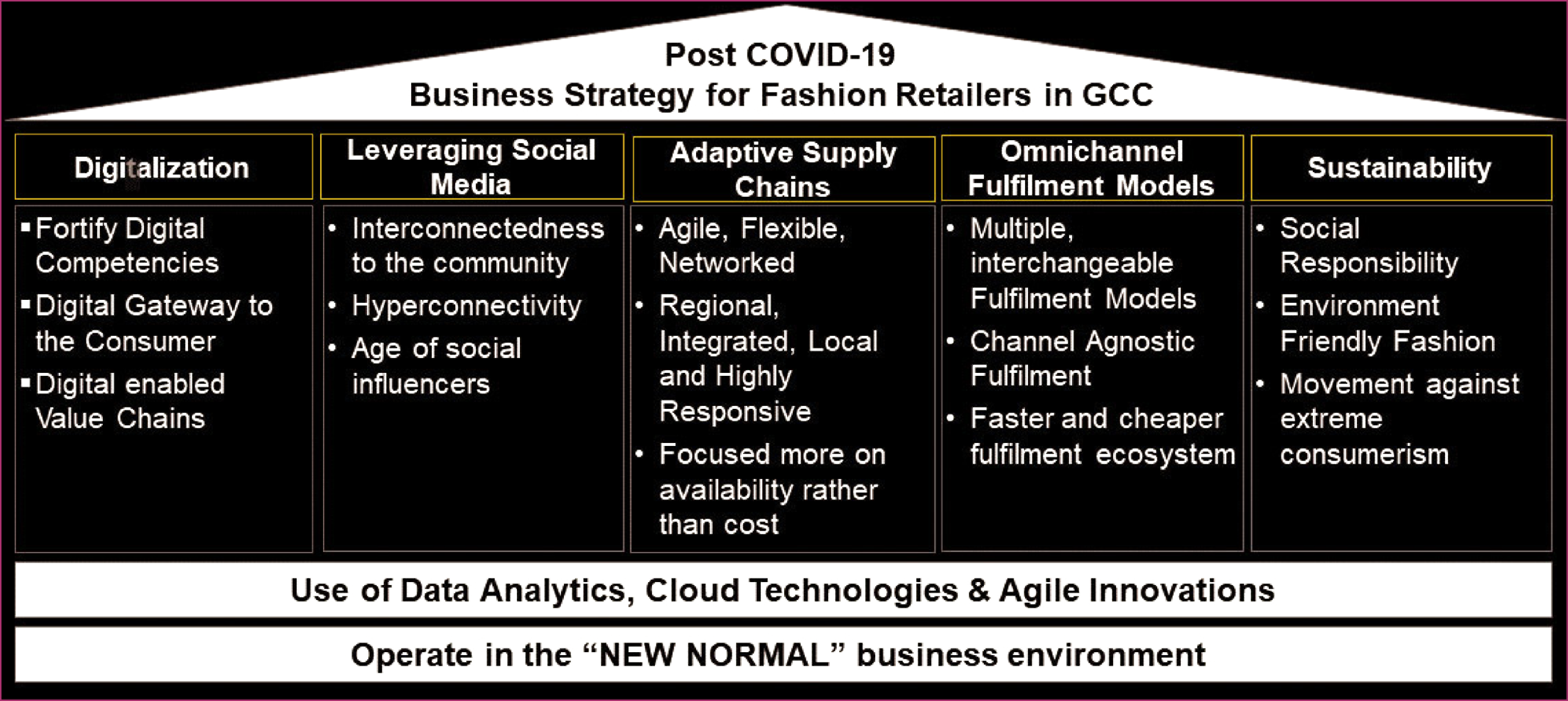
The impact of the pandemic on customer behaviour will lead to the emergence and acceleration of the following trends and business strategies in the fashion retail sector that will have permanent and lasting impact in terms of a new normal of doing business. Figure 1 encapsulates the work-streams of the post COVID-19 business strategy for fashion retailers in GCC.
Digitalization
The disruptive, abrupt shift to ‘remote’ brought about by COVID-19 shook retailers around the globe. Digital was the silver bullet to ensure business continuity, manage resources and working capital, keep retail running online, keep the company afloat and find the right answers to connect with consumers. This transformation had to ensure permanent and dynamic change, ever adjusting to the changing pandemic environment (Harvard Business Review Analytic Services, 2021). Social distancing has emphasized the significance of digital channels more than ever and the worldwide lockdowns affecting businesses have made digital an imperative necessity across the entire business value chain. Retailers need to fortify their digital competencies urgently to ensure that consumers demand is constantly exceeded. Digitalization will not only ensure survival of the business but also bring immediate benefits of increased productivities, time savings, seamless customer experience and an efficient enabler towards optimized supply chains. Digitalization centralizes data and allows retrieval from multiple devices across the supply and demand workstreams. Information is accessible to employees and customers anytime and anywhere, which enables conversions and relevant insights into customers’ minds enabling personalization. Digitalization will enable lean and optimized supply chain processes.
Smartphones, tablets and laptops have essentially become people’s gateway to the rest of the world, and with work-from-home freeing up more time for leisure, the way these devices are consumed has changed. Mobile phones have become a new mask, almost, enabling people to socially connect without the risk of catching the virus, and that has fuelled a lot of new consumption habits. In a post-COVID-19 pulse survey conducted in May 2020, it was found that 53% of GCC consumers had increased the use of smartphones for online shopping due to the COVID-19 pandemic, 39% had increased their purchases via computers/laptops and 31% using a tablet frequently for online shopping (Taki et al., 2020). This was a result of customers using multiple devices when working from home and browsing during the lockdowns. A total of 49% of the respondents reduced shopping in physical stores. It is very likely that mobile e-commerce will continue to increase post-reopening of the economies and relaxation of social distancing rules. Unlike the Western world, mobile shopping is a growing trend here in the GCC. The impact of COVID-19 has forced this major change. Shoppers who were hitherto resistant to using mobile payment channels discovered that shopping for goods and services on their smartphones and tablets was not only safe and easy but convenient too (Thomson, 2020). Most strikingly, the pandemic lockdown has forced more consumers who were previously resistant to change to try out online retail shopping channels, with many consumers willing to continue to use the online channels once the COVID-19 pandemic is over. It therefore appears certain that digital engagement by Middle East shoppers will become stronger and more widespread, even after the lifting of current social distancing measures. In this increasingly digital market setting, retailers will need to leverage learnings gained from research to target shoppers and meet their expectations. Major GCC marketplace e-commerce players such as Noon and Amazon, and hypermarket giants like Carrefour, have made hyperconnectivity and digitalization as the core around which all consumer strategies are built. At the same time, retailers will need to find the appropriate balance between their online offering and traditional stores (Kacholia, 2020). Consumers are also exploring alternative ways to choose or substitute products—for example, by combining initial store visits with subsequent online purchases. Price and value will consequently become critical for retailers as they chase increasingly sophisticated, internet-savvy customers, both online and in-store. The growing pre-pandemic demand for digital payment and credit solutions will also be further boosted by the lockdown due to the pandemic (Liisa et al., 2020). In the GCC, digital payments with smart gateways enabling contactless payments are the new norm. The use of mobile wallets has exploded with local players such as Etisalat Wallet and Beam Wallet joining international players such as Google Pay and Apple Pay. The UAE strategy of a cashless ecosystem soon has driven the strategies of companies like PayPal which has launched a dirham service enabling flexible payments across multiple currency conversions. Companies will increasingly invest in automation and digital solutions both online and in stores, even develop a virtual mall, which is digitalizing a physical store (Bergsma & Santos, 2020). Fashion industry professionals at Seamless Middle East 2020, the premier supply chain conference in the Middle East, emphasized that retailers were most interested in purchasing e-commerce marketplace solutions and platforms, Artificial Intelligence and Machine Learning applications, and data analytics solutions (Shah, 2020). Scholars (Fletcher & Griffiths, 2020) have researched the COVID-19 pandemic and lockdown periods using the VUCA (volatility, uncertainty, complexity and ambiguity) concept for analysing unpredictable external events affecting businesses. In the context of digital transformation, their article emphasized that companies need to accelerate towards digital maturity, companies who are less digitally mature are very vulnerable to external disruptive events and finally companies with a high level of digital development are more adaptive to disruptive external environments. Another research study in Indonesia (Priyono et al., 2020) analysed how small and medium enterprises dealt with disruptive environmental deviations to the COVID-19 pandemic by using digital technologies to transform the business models. Scholars have highlighted the role of digital technologies in enhancing productivity and performance in small and medium enterprises (Papadopoulos et al., 2020).
There will also be innovative shifts in the fashion system such as the digital-enabled change of season merchandize, acceleration towards seasonless design strategy and the end-to-end digital-enabled value chain for fashion. Landmark Group offers web exclusive products to its consumers. The advent of digital technologies in customer service like chatbots, virtual assistants will revolutionize the way human interaction is perceived and will add the personal touch to online shopping (Hoyer et al., 2020). Chalhoub Group has embarked on a major digital transformation strategy to rewrite the group’s operational DNA to transform the group into an OC hybrid retailer, capable of delivering competitive customer service in both channels—online and B&M stores.
In the B&M channel, customers can get the look and feel of the products before purchasing; this is very critical construct for fashion. In the online channel, retailers need to replicate this experience, the concept of ‘Try before you buy’ (Grewal et al., 2020). Multiple technologies are available such as Virtual Reality, Augmented Reality (AR), 3D Visualization and Immersion Technologies. Leading eyewear fashion retailer Lenskart, use ‘3D Try On’ technology using AR, where the consumer can see how the frame looks on him at 180 degrees angles. Another Landmark brand, Shoe Mart uses 360 degrees visualization for the consumer to feel the product online. Home Centre, the leading Home brand in the GCC uses AR for 3D visualization of furniture setups and layouts.
The GCC, being the world hub of family-centric shopping malls, will still see consumers returning to B&M stores once the lockdown is over, and retailers will need digital technologies to completely revamp the customer experience in a store. Retailers like Gulf Marketing Group which own the Sun & Sands Sports store network are repositioning the stores as health and fitness destinations. Danube Home, a leading Home retailer in the GCC, redesigned their website to create a virtual showroom. During the pandemic, they used Zoom to book appointments with consumers to showcase products in real time. Landmark Group uses interactive ‘Magic Mirrors’ another technology based on AR to create a digital trial room and enhance customer experience for its high street fashion brands such as Splash and Max. Retailers now use Bluetooth beacons or beacon systems in the stores to guide and aid the shopper once he enters the store to his preferred choices based on the analytics history of the shopper. Mobile, agile and self-scanning retail check out technologies will play an important part in attracting customers back into the stores. Using computer vision technology to analyse store traffic patterns and accordingly design store layouts to adhere to social distancing norms is mandatory for survival.
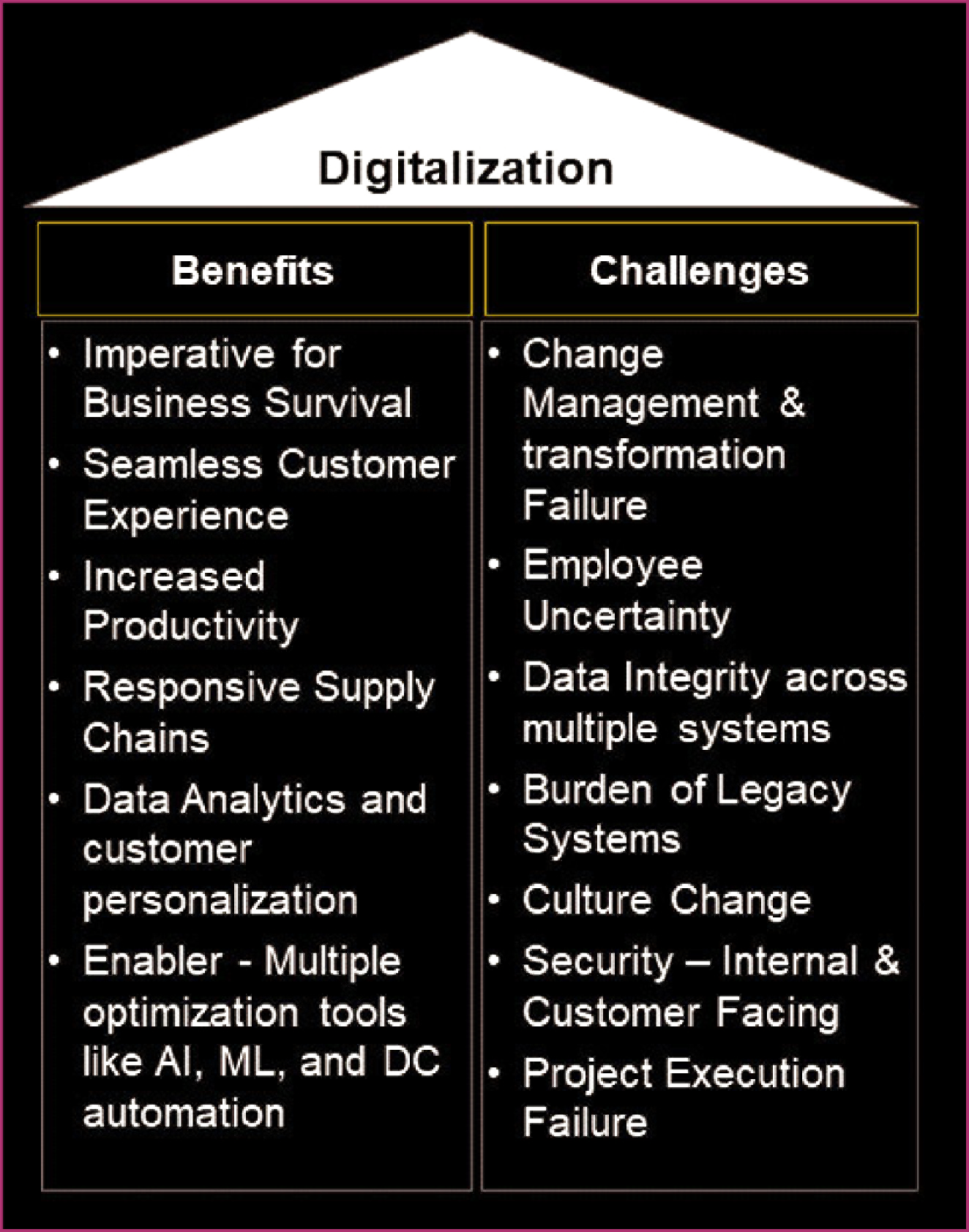
Figure 2 highlights the benefits and challenges of a digital transformation journey for a fashion retailer. Digital transformation incorporates all the trans-formational and transitioning endeavours in which retailers will implement digital technology, practices and a digital culture, but it is not just a technology implementation project (Hoberg et al., 2017). Digital transformation is ultimately connecting and facilitating the customer through technology; hence, the business return on investment is determined by the value we add to the customers (Reinartz et al., 2019). Since digital transformation touches every part of the company, it transforms and shapes the future experience of all internal and external stakeholders. It has a permanent impact on company employees, consumers and the organization business goals. If digital transformation efforts fail, the consequences will be catastrophic. The digitalization transformation journey for a fashion retailer is a necessity to survive the post-pandemic present and secure the future, but the change process is complex with multiple risks endangering the business. Mandating digitalization consumes critical resources of time and money. A robust governance and project management structure needs to drive this transformation with full top leadership sponsorship, else it is a recipe for disaster (Afandi, 2017). Many digitalization projects fail because of poor and incomplete execution. It is advisable to approach this critical transformation in a modular and function-wise methodology rather than the big-bang approach of 100% transformation across the organization at once overhauling all the processes at one go in the shortest possible time. It is advisable to identify strategic stage-wise changes with the key processes which are internal or customer facing getting top priority in this journey (Bughin et al., 2019). Digitalization transformations fail because the organization is unable to manage the culture changes required and employee uncertainty through a structured change management process (Hartl & Hess, 2017). Employee resistance to changes and costs of reskilling and retraining will overshadow the benefits of digitalization unless this change is managed. Employees understand the need to welcome the digitalization changes for the business survival, but they need to be re-skilled and re-trained with a completely new set of digitalization tools. Implementing new technologies means integrating it into rest of the existing systems and infrastructure and unless this is thoroughly thought through and implemented it will end in a failure. Compromise of internal system security and leak of consumer confidential information remain the key threats in the digitalized environment. For retailers, there are severe repercussions of these catastrophic digitalization risks. These lead to critical service disruptions, exposure of confidential consumer private information leading to loss of credibility, trust and reputation with customers and partners. The risks encompass organization-wide stakeholders involving implications related to legal, risk, governance, marketing and compliance issues (Pandey et al., 2020). In the Middle East region, there are examples involving some of the top retailers, sea freight liners and logistics players who have been affected by these risks (Benny, 2020).
In conclusion, retailers are investing in digitalization solutions for specific business results and for success it requires an organization-wide cohesive plan to tie all the software under a clearly outlined digital transformation strategy (Kittelberger & Allramseder, 2019). While most retailers can decide to use the sophisticated and innovative solutions to capture customers, the digital transformation journey become irrelevant and will fail without a durable future focused adoption strategy and implementation plan in place. This capability to execute with an end goal in mind will define the success or failure of the digital transformation journey (Gurbaxani & Dunkle, 2019).
Digitalization attributes and their importance for the e-commerce channel has been extensively researched by various scholars (Hall et al., 2017). The critical analysis of various digitalization factors was conducted based on the four criteria that a typical customer uses to decide to shop on a particular e-commerce platform such as Technology (Social Media, Email, Mobile Apps, SMS), Convenience (Self-Check Outs, Personalization, Anytime Anywhere Access, 24*7 online service), Value (Price, Speed, Instant gratification, Omni Channel, Price comparison) and Trust (Security, Privacy, Reliability, Sustainability) (Escobar-Rodríguez & Bonsón-Fernández, 2017). To understand the ranking of the criteria, the pair-wise comparison method was adopted on a scale of 1 (equal importance) to 9 (extremely important) and the survey was circulated among 25 users of e-commerce platforms, in the UAE. Results revealed that convenience is the top-most factor, followed by trust, value and technology. The average consistency ratio was found to be at 4.6%, which is within the acceptable limit of 10%.
Leveraging Social Media
The post-COVID-19 pulse survey (Taki et al., 2020) indicated that 75% of GCC residents increased their consumption of social media such as Twitter, Facebook, TikTok and Instagram due to spare time because of isolation rules like social distancing. A total of 71% of GCC respondents reported increased usage of WhatsApp, WeChat and other social messaging apps since the outbreak of the pandemic, while 54% reported increased usage of video chat apps such as Zoom and FaceTime. The consumer is hooked on Instagram stories, Snapchat and TikTok videos—retail marketing needs to metamorphose into experiential marketing. As per one more study (Global Media Insight, 2020), 98.98% of the population in UAE is tuned to at least one form of social media, YouTube at 88%, Facebook at 79% and Instagram at 68%. These findings confirm that social media channels such as messaging and video chat apps are an essential link for customers looking to stay connected to the community and shop during lockdown. It may be early to predict how these intentions will influence long-term customer shopping behaviour as the Middle East comes out from the lockdown measures and the pandemic is ultimately contained. However, retailers with established digitalization solutions have a competitive advantage and will be able to leverage and reach consumers through the social media to fathom their requirements, market the products and services and ultimately see online conversions. Products are marketed to the customer virtually and directly through influencers in this age of social media. Retailers use influencers to replicate the experience of human touch and feel, and trust in influencers drives the consumers to purchase. Similarly, online reviews by influencers, word of mouth and celebrity endorsements are powerful social media tools to strengthen the intention to purchase. The post-COVID-19 consumer will also be more community–centric; hence, social media campaigns emphasizing localized products will have greater impact.
Adaptive Supply Chains
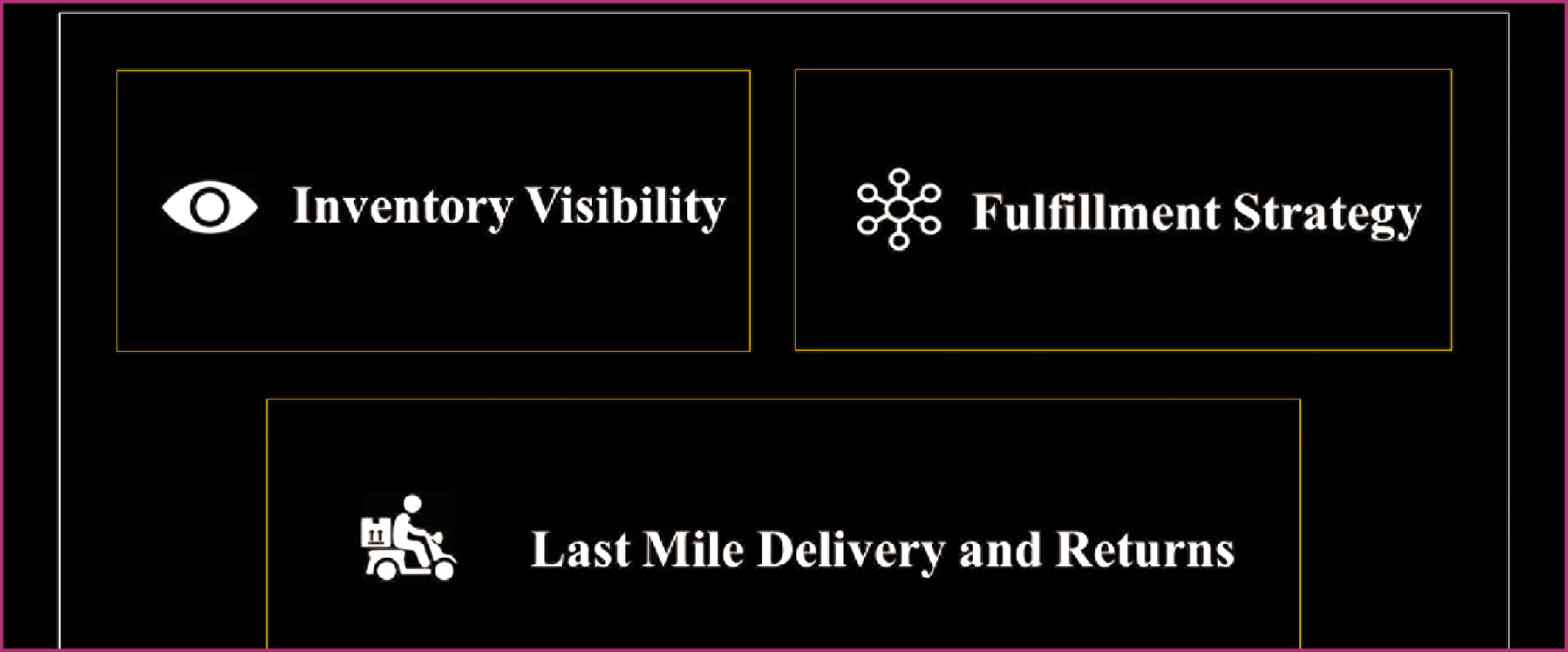
Scholars have studied from the perspective of global risk management, the extensive and complex effects of COVID-19 pandemic on the supply chains of fashion retailers (McMaster et al., 2020). While many companies are in a transformation towards agile, flexible and networked supply chain models, the pandemic highlighted the challenges in global supply chains risks in extreme demand volatility and supply disruption situations, clearly concluding on the imperative need to build flexibility to mitigate supply chain disruption risks (Ivanov, 2020). Retailers will require to address external black swan events like the pandemic from both ends of the fashion supply chain—upstream and downstream (Senir & Büyükkeklik, 2020). The supply value chain needs to be relooked at with view to strengthening regional integrated supply chains for redundancy. Retailers are again falling back on nearshoring production activities to ensure flexibility, speed and autonomy for their production facilities. In the age of global, high lead time and low-cost supply chains are being revisited and local, highly responsive, but maybe at a higher production cost supplies are back in contention. This is because speed and adaptability are the essence, that is what the pandemic crisis has taught the retailers. When normalcy is attained post pandemic, retailers should avoid complacency and continue the recovery and resiliency strategies heralding the permanent transformation for the global fashion businesses enabling them to operate in the new normal. As shown in Figure 3, the three logistics pillars post pandemic will be inventory visibility and availability, fulfilment strategies and last mile delivery and returns management. The merchandize available at all nodes in the supply chain, be it the store, distribution centre or even in-transit needs to be visible to the consumer as a single view of inventory enabling high availability and customer promise. The fulfilment strategy must enable a highly efficient and speed enabled network of supply nodes comprising right sized and automated distribution centres, dark stores and micro-fulfilment centres. The Landmark Group has invested in the largest fully automated robotic Distribution Centre (DC) in the GCC to serve customers—both online and offline (Logisticsgulf, 2019). It not only increases the speed to market efficiency but the technological advancements within the facility ensure that their business is well-equipped to meet the challenges of high volumes and is built to handle the greater appetite for the demanding and ever-growing e-commerce customers hence allowing the company to adapt to the dynamic post-pandemic future. The last mile delivery ecosystem must evolve from a traditional courier delivery to modes such as Click & Collect (C&C), crowd sourced delivery and ultimately autonomous delivery concepts like drones. Order tracking technologies are critical to keep the consumers updated on the status of their orders. There is a very high percentage of cash-on-delivery transactions in the GCC e-commerce market, this leads to high return rates, hence retailers need to put in robust processes and technologies for returns and reverse logistics. The cost percentage of last mile and returns is the highest hence large local marketplaces such as Noon and Amazon, and retailers like Landmark Group, have developed their own captive delivery capabilities. Third party logistics players such as Aramex, Fetchr and Shipa are in the forefront of investing in last-mile technology focused on customer centricity and reduction of friction points in the customer interfaces.
The biggest challenges facing retailers in a post-pandemic world are handling the demand volatility and the constantly changing customer channel mix. To confront these challenges, retailers are investing in smart technologies for physical automation which help handling the scale and volatility and ensure speed, accuracy and flexibility. To meet the stringent post-pandemic social distancing requirements in DCs, retailers are also investing in technologies such as cobots, autonomous mobile vehicles and proximity monitoring solutions. Optimized rule-based algorithms are deployed in this automated environment to ensure rule-based decision-making. Technologies such as Blockchain, IoT, IoT sensors like active RFID (Radio Frequency Identification) and Robotic Process Automation have gained traction in the digitalization of supply chains. Landmark Group along with HSBC Middle East and DP World (GCC’s leading port operator) executed the GCC’s first cross-border LC (Letter of Credit) blockchain transaction with the supplier for Hong Kong. Landmark brands, Max and Splash use RFID technology to ensure stock visibility and availability at the stock keeping unit level to ensure high service level for consumers. Alshaya, a retail franchise pioneer in the Middle East, has embarked on a complete supply chain and retail enterprise transformation to improve operational efficiency to deliver a superior customer experience and enable ongoing growth and innovation. This supply chain transformation was undertaken to support their OC offer, manage the scale and complexity, enable agility in merchandizing and inventory management, and make the supply chain planning and execution across transportation and warehouse operations completely interfaced and collaborative.
Omnichannel Fulfilment Models
As the shift to e-commerce and online purchasing sustains and potentially extends, due to the continuing customer anxiety about COVID 19 infections, customers across age groups have already shifted to e-commerce channels (UNCTAD, 2020). The longer the pandemic lasts, the greater the probability that e-commerce and OC buying will become the new normal (Shi et al., 2020). While this transference is prominent in essential goods categories, the channel change in apparel, fashion and luxury retailers is also slowly but surely affecting B&M sales. The change in customer preference to e-commerce will challenge the future and rationale of B&M stores. OC is an experience where customers can engage, interact and transact with the retailer across multiple and/or simultaneous touch points both on the buying and delivery side. Powering personalized and unique in-store experiences will become imperative to drive traffic, using physical stores to enable the OC experience will be critical to retain profitability (Amed et al., 2020). Multiple new developments in retail fulfilment such as D2C, OC Fulfilment, C&C from store, Buy Online Pickup at Curb, Parcel Locker (PL) and Delivery and Forward delivery (FODEL) to local store chains for collection would materialize in the fulfilment models for the retailers of tomorrow, all based on how the consumers decide, whichever fulfilment mode is faster and/or cheaper. Retailers that identify these shifts proactively will be the winners in the post COVID-19 era. Retailers will have to build on the three pillars of inventory visibility, fulfilment strategies and last-mile delivery efficiency to offer consumers a complete OC experience. With the world shrinking through digital collaborations, the customers have the flexibility and visibility to order conveniently through multiple channels. They can place an order either through a marketplace, call centre, social media, store, kiosk or website. As a retailer, it is a survival strategy to ensure that the customer gets the accurate delivery on or before the promised time through any of the optimum and multiple delivery channels that the retailer can deploy (Cai & Lo, 2020).
Ajmal perfumes, a leading lifestyle retailer in the UAE, has built an OC strategy linked closely to its marketing and distribution network thus enabling them to move at a pace satisfying the consumer demands. Carrefour is investing in several dark stores to crash lead times and costs enabling unbeatable customer promise. Several leading retail businesses in the GCC are strategizing cross-collaboration initiatives between their brands for using the spare supply chain capacities to ensure swift OC deliveries. During the pandemic, Landmark Group had also tied up with gig economy companies such as Careem (a vehicle for hire company, subsidiary of Uber in the Middle East) and Cafu (fuel delivery service company) to use their spare capacities for customer parcel deliveries. Similarly, Landmark Group which has highly automated distribution centres has utilized its spare capacities for multiple companies under a new third-party logistics (3PL) venture, Omega Logistics. These companies now have access to these automated technologies for crashing lead times, costs and operate in a safe, secure OC operations which is critical to gain trust with consumers in a pandemic environment where contactless and hygiene environments are a necessity.
Sustainability
The pandemic has induced a customer behaviour of discretionary purchase and consumption. Retail fashion comes under this category and retailers need to take cognizance of these changes in consumer behaviour. The pandemic is also likely to hasten consumer mind shifts towards social and environmental responsibility, such as an increasing antagonism towards waste-generating business models and positive movement for sustainable business models. The pandemic has presented the fashion industry with an opportunity to reset and completely reshape the industry’s sustainability value chain as the values that define sustainability are in sharp focus, with intense discussions on the harmful effects on the environment due to excessive waste, rampant materialism, excess consumption and reckless business practices. This focus on sustainability and social responsibility will be a very critical construct for the future Gen-Z and millennial consumers, who already have a heightened awareness of the degradation of the environment due to the extreme exploitation of natural resources fed by extreme consumerism. The trust construct influencing the behavioural intention to shop has never been so intense and critical for the customer–retailer relationship. Customers of the future can be expected to buy more eco-friendly products, sustainable fashion apparel and accessories. The post-COVID-19 consumer values, transparency and product quality assurances, retailers will have to review sourcing practices accordingly and enhance the supply chain traceability. Retailers that are able to reconfigure their philosophies and business models into sustainable and environment friendly ways will grab the future consumer. Innovations for reducing stock, catering to sustainability trends, upcycling old season stock for new season by intelligent modifications in fabric and design, simplified fashion calendar to reduce supply chain inefficiencies are all mandatory for the post-COVID-19 future (Bulović & Čović, 2020).
The Landmark Group has published a sustainability report (Landmark Group, 2020) aligning the group priorities to global objectives such as the United Nations Sustainable Development Goals, as well as national agendas of GCC countries where they operate. They also operate the largest single rooftop solar-powered system installed at their DCs in Dubai. All their brands are also focused on sustainability and environment. Splash Fashions, their fashion brand is a member of Better Cotton Initiative and Sustainable Apparel Coalition—two key global organizations facilitating retail companies to discuss and implement sustainable practices across their supply chain. Splash has rechristened itself as a socially and environmentally responsible fashion retailer in the Middle East and has been at the forefront in raising awareness on sustainable development. The leading GCC high street fashion brand has been moving towards a 100% sustainable model. Right from design and development, raw material selection, production facilities, warehousing and logistics, retailing and stores fittings, to post-consumer waste management, Splash has made sustainability centric to all these processes, creating an industry benchmark for the sustainable fashion sector. Splash is not only focused on creating awareness about ecological conservation among its consumers but also wants to support consumers to follow a lifestyle that is nature friendly. The brand showcases fashion apparel manufactured with eco-friendly fabrics in all its popular fashion lines, featuring sustainability percentages in the range of 90% (Friday, 2020). Splash is also the biggest end-user of recycled polyester in the GCC region, it has recycled on an average 28 million bottles per annum. In comparison to the conventional process of using new polyester, this energy-saving process can power the UAE for 10 minutes equivalent of electrical energy. Since 2015, Splash has mandated using FSC paper to their suppliers resulting in a reduction of 200 metric tons of plastic waste generated via garment tags and packaging. In line with the company’s socially and environment-friendly ethos, their annual fashion calendar spotlights on fostering awareness on endangered species and their extinction, the root causes and ruinous environmental consequences. Major 3PL service providers in the region such as Agility, Aramex and CEVA amongst others are investing significantly in green logistics innovations to ensure sustainability in all services provided.
Conclusion
In conclusion, fashion retailers should keep a close look-out on several developments that have emerged and fast-tracked since the COVID-19 pandemic in this region. The lockdowns have forced consumers who were hitherto unwilling to use e-commerce channels having no option but to use the same. It is highly probable that consumers will continue with online shopping even after the pandemic has passed. It is therefore certain that digital and online engagement by GCC consumers will become durable and more extensive, even after the withdrawal of lockdown measures and social distancing norms. In this multifaceted and intricate digital environment, fashion retailers will have to leverage insights acquired from data analytics to seek out customers and fulfil their requirements. Parallelly, retailers need to arrive at the right balance between their e-commerce proposition and B&M stores. Consumers are exploring unique ways to shop using a mix of showrooming (evaluating products in B&M stores and then buying online) and webrooming (evaluating products online and then buying the final selected product in a B&M store). The constructs of price and value are critical for retailers as they pursue increasingly digital savvy and Internet educated customers on both channels—e-commerce and in-store. Digital payment and wallet solutions have been further encouraged by the lockdown measures and establishing a safe a secure payment gateway is paramount to maintain the consumer trust. COVID-19 has highlighted the importance of health, wellness and sustainability for the consumers. Retailers will need to develop sustainable products to cater to a renewed sense of the environment and social responsibility amongst the customers. Fashion retail being a discretionary purchase in such pandemic times, retailers will need to incorporate all the above elements in their business strategies to survive. And for their supply chains, the key levers for survival will be an agile, resilient and adaptive supply chain. Coming out of the pandemic, in a fickle customer loyalty environment, retailers that cater to these digital savvy consumers with an OC fulfilment solution will survive.
Footnotes
Declaration of Conflicting Interests
The authors declared no potential conflicts of interest with respect to the research, authorship and/or publication of this article.
Funding
The authors received no financial support for the research, authorship and/or publication of this article.