




Abstract
Background
Scholarly activity is a key aspect of plastic surgery training, influencing resident selection and career progression. However, research productivity among Canadian plastic surgery residents has not been quantified.
Methods
This cross-sectional study included Canadian plastic surgery residents enrolled between 2015 and 2024, identified through a systematic web search. Scholarly metrics were extracted from Scopus and PubMed. Descriptive statistics summarized demographics and research metrics of residents. Multivariable logistic and negative binomial regression analyses were used to identify associations and predictors of research productivity, defined as publications-per-postgraduate year (PGY).
Results
Overall, 309 trainees were included (163 active, 146 graduates). Among 163 active residents, 53% identified as female, 41% held a graduate degree, and 11% of active residents were enrolled in a Clinician-Investigator Program (CIP). Mean publication-per-PGY was 0.62 ± 0.92. Higher research productivity was independently associated with preresidency publications (incidence rate ratio [IRR] = 1.09, P < .001), CIP enrolment (IRR=1.88, P = .041), and female identification (IRR=0.58 for males, P = .017). Among 146 graduates, 58% were female, 46% held a graduate degree, and 84% pursued at least one fellowship. Twenty-seven percent hold faculty positions. Faculty appointment was associated with higher research metrics (P < .001), and graduate degree status was the sole independent predictor (odds ratio = 3.41, P = .015). Program requirements and the productivity of PDs and RDs were not significant.
Conclusions
Research productivity among Canadian plastic surgery residents is primarily influenced by individual factors, specifically preresidency research and CIP enrolment. Program-level factors such as research requirements and metrics of PDs and RDs are not associated with higher productivity in residents. Graduate degree status is a predictor of academic career pursuit, but not of fellowship. These findings aim to enhance scholarly involvement throughout the trainee lifespan and those aspiring for a faculty appointment.
Introduction
Scholarly activity is an established Entrustable Professional Activity (EPA) for postgraduate medical trainees and plays a key role in developing competent plastic surgeons, as outlined within the CanMEDS competencies that describe the educational standards for Canadian physicians.1,2 Furthermore, engagement with research during training builds upon existing knowledge to further the growth of academic plastic surgery. It is also a commonly evaluated aspect when selecting for future plastic surgeons, as a part of the Canadian Residency Matching Service (CaRMS). 3 As such, publications have been considered a highly weighted component of plastic surgery residency applications.4–6
Prior studies have evaluated the research productivity of Canadian attending plastic surgeons. 7 Compared to other surgical specialties in Canada, plastic surgery is ranked low in productivity. 8 A study of plastic surgery residents in the United States evaluated predictors of academic productivity of plastic surgery residents and found that dedicated research time during medical school was a significant factor. 9 Program-level factors such as institution, faculty size, and mentorship also influence productivity for plastic surgery residents. 10 However, baseline productivity and associated factors have not been studied for Canadian plastic surgery residents.
Overall, this study aims to quantify the research productivity of Canadian plastic surgery residents and identify any individual- or program-level factors that may contribute to scholarly productivity. We hypothesize that residents with preresidency publications will have higher productivity. Additionally, we hypothesize that those who go on to graduate school or enroll in the Clinician-Investigator Program (CIP) will have higher productivity. For program-level factors, it is anticipated that programs with required research components will have higher levels of productivity. Our findings will provide valuable insights for residency programs to identify curriculum gaps and enhance training, ultimately helping programs, residents, and applicants understand and improve their competitiveness in the field, and highlighting academically focused programs.
Methods
Study Design
A retrospective cross-sectional study of Canadian plastic surgery trainees over a 10-year period (2015-2024) was conducted. Canadian plastic surgery residents’ names were identified from academic program websites and program social media. Active residents were considered those enrolled in plastic surgery programs during the 2024 to 2025 academic year, and graduated residents are those who graduated in 2024 or earlier. Program director (PD), research director (RD), and program information were obtained from the CaRMS program descriptions webpage and/or residency program website.
Data Collection
Demographic information, such as program attended, postgraduate year (PGY), and self-identified gender, was extracted from residency program websites. When pronouns were unavailable for a resident, GenderAPI was used to determine gender. 11 Using Scopus, each resident was searched to obtain scholarly metrics, including the number of publications, h-index, total number of citations, authorship position, number of original articles (ie, excludes case series/reports, editorials, reviews), and year of first publication. For trainees who were not available on Scopus, an advanced search was performed on PubMed, and available metrics were extracted. This process was repeated for PDs and RDs. Two reviewers independently collected data for each resident, and any discrepancies were resolved by consensus.
Variables
The expected residency start year was used to define residency and preresidency periods. To accurately account for the lag time of publications, the total number of publications, including those published during PGY-1, represents publications before residency. The total number of publications during residency was separated from preresidency publications and divided by the resident's PGY level to calculate publications-per-PGY, which represents the average number of publications produced each year in residency.
Statistical Analysis
All analyses were conducted using R (version 4.5.0). Continuous variables were summarized using means with standard deviations or medians with interquartile ranges, depending on the distribution. Categorical variables were summarized as frequencies with corresponding percentages. All analyses were performed using complete-case methodology; missing values were not imputed in primary models.
Research productivity during residency was defined as the number of peer-reviewed publications-per-PGY. Residents were dichotomized into high and low productivity groups based on the median publications-per-PGY (0.48). Bivariate analyses were used to assess associations between demographic, academic, and program-level characteristics and publication productivity (high or low). Binary categorical variables were analyzed using Fisher exact test. For categorical variables with more than 2 levels and sparse cell counts, including residency program and medical school alma mater, Fisher exact test with Monte Carlo simulation (2000 replicates) was used to calculate P values. Continuous variables, including counts of original research articles, were compared using the Wilcoxon rank-sum test due to non-normal distributions.
To identify independent predictors of high productivity, a multivariable logistic regression model was constructed. Covariates were selected a priori based on conceptual relevance and absence of multicollinearity with the outcome. The final model included gender, graduate degree status, number of preresidency publications, and years of research experience. A secondary negative binomial regression was conducted using publications-per-PGY as a continuous outcome to address overdispersion and incorporate additional program-level predictors, including CIP enrolment, PD productivity metrics, and RD productivity metrics.
To analyze graduate outcomes, all individuals who completed plastic surgery residency training were evaluated for 2 primary endpoints: pursuit of fellowship training and appointment to a faculty position. Research productivity was characterized using total publications, first-author publications, total citation count, and h-index. Bivariate comparisons were performed to assess associations between demographic and research-related variables and each outcome. Categorical variables were analyzed using Pearson χ2 or Fisher exact test, depending on expected cell counts. Continuous variables were compared using the Wilcoxon rank-sum test due to non-normal distributions. Separate multivariable logistic regression models were constructed to identify independent predictors of fellowship training and faculty appointment. Covariates included total publications, first-author publications, citation count, h-index, and graduate degree status. All models were constructed using complete-case analysis. To assess the robustness of the results, a sensitivity analysis using multiple imputations by chained equations was conducted. Five imputed datasets were generated using predictive mean matching, and pooled estimates were derived using Rubin's rules.
Results
Demographics of Active Residents
Among 163 Canadian plastic surgery residents in the 2024 to 2025 academic year, 76 residents identified as female (53%), 41% held a graduate degree, and 11% were enrolled in a CIP. The median publication rate was 0.48 publications-per-PGY. Residents were stratified into high (n = 83) and low (n = 80) productivity groups based on this threshold. Descriptive cohort characteristics are shown in Table 1. The average number of preresidency publications was 4.4 ± 5.1, and the mean publications-per-PGY was 0.62 ± 0.92.
Descriptive Characteristics of the Active Plastic Surgery Resident Cohort.
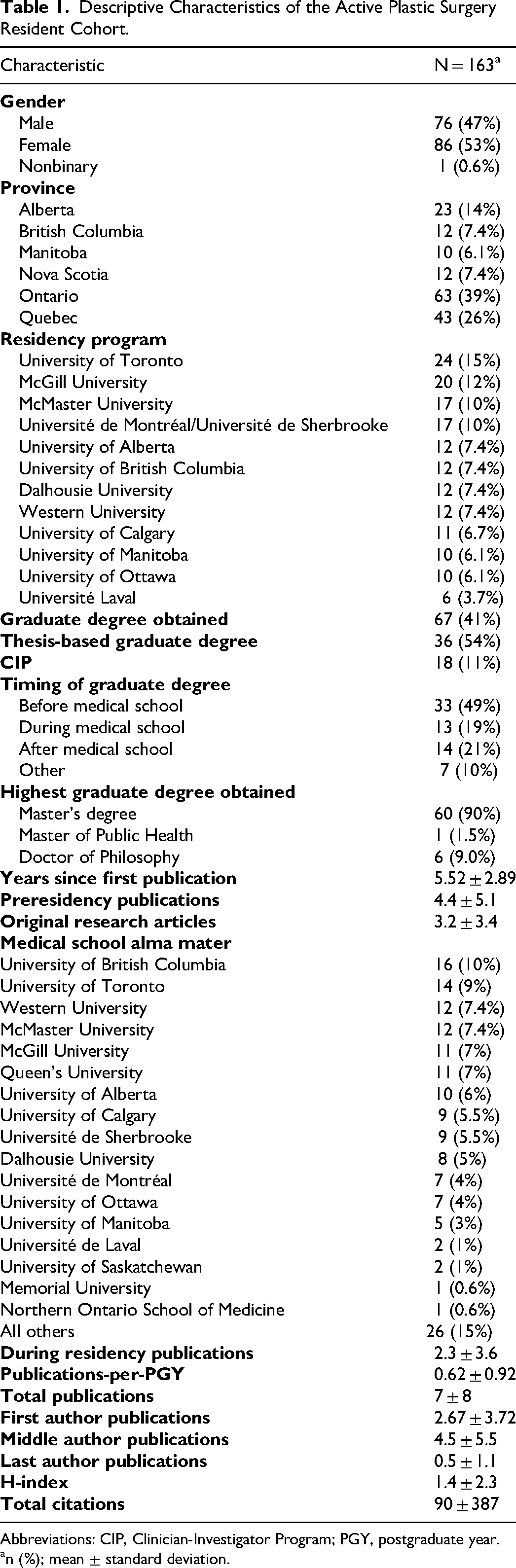
Abbreviations: CIP, Clinician-Investigator Program; PGY, postgraduate year.
n (%); mean ± standard deviation.
Demographics of Graduates
A total of 146 plastic surgery residency graduates were included in the final graduate cohort. Of these, 42% were male and 46% had obtained a graduate degree (Table 2). The majority pursued fellowship training (84%, 122/163), and 27% (40/146) held a faculty appointment (ie, any level of professorship) at the time of data collection. The median number of total publications was 7 (IQR 4-15), and the median number of first-author publications was 4 (IQR 1-7). Median citation count was 161 (IQR 16-161), and the median h-index was 4.6 (IQR 2-7).
Descriptive Characteristics of Graduated Plastic Surgery Residents.
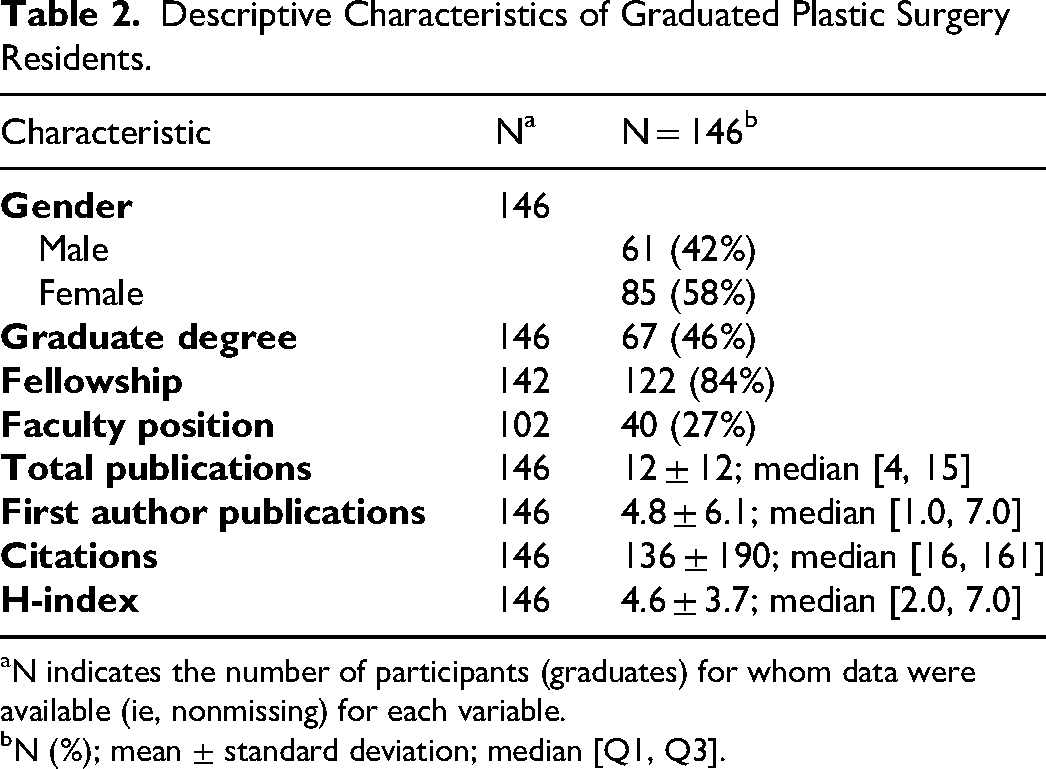
N indicates the number of participants (graduates) for whom data were available (ie, nonmissing) for each variable.
N (%); mean ± standard deviation; median [Q1, Q3].
Demographics of Program Directors, Research Directors, and Program Characteristics
Thirteen Canadian plastic surgery programs, their PDs, and their RDs were reviewed. There are 11 English programs (85%) and 2 French programs (15%). Regarding PD demographics, 7 were men (54%) and 6 were women (46%). Five PDs (38%) hold a master's degree, and only one holds a doctoral degree (8%). Eleven RDs for 10 programs were reviewed. Two programs did not have information regarding their RDs available. Four (36%) were men, 7 RDs (64%) hold a master's degree, and 3 RDs (27%) hold a doctoral degree.
Predictors of Research Productivity for Active Residents
Bivariate comparisons revealed that residents in the high productivity group had significantly more original research articles (4.7 ± 3.5) than those in the low group (2.1 ± 2.9; P < .001) (Table 3). The residency program attended was not significantly associated with productivity status (P = .194). Other variables, including geographic province, timing or type of graduate degree, PDs’ research productivity, and the presence of program research requirements, were not associated with publication productivity.
Bivariate Comparisons by Publications-per-PGY (Median Cutoff = 0.48).

n (%); mean ± standard deviation.
Fisher's exact test; Wilcoxon rank-sum test.
In a multivariable logistic regression model including gender, graduate degree status, preresidency publications, and years of research experience, only preresidency publication count emerged as an independent predictor of high productivity (odds ratio [OR] = 1.12; 95% CI: 1.04-1.22; P = .007) (Table 4). Gender, graduate degree status, and prior research experience were not significantly associated.
Multivariable Logistic Regression Predicting High Publication Productivity (Publications-per-PGY > 0.48).
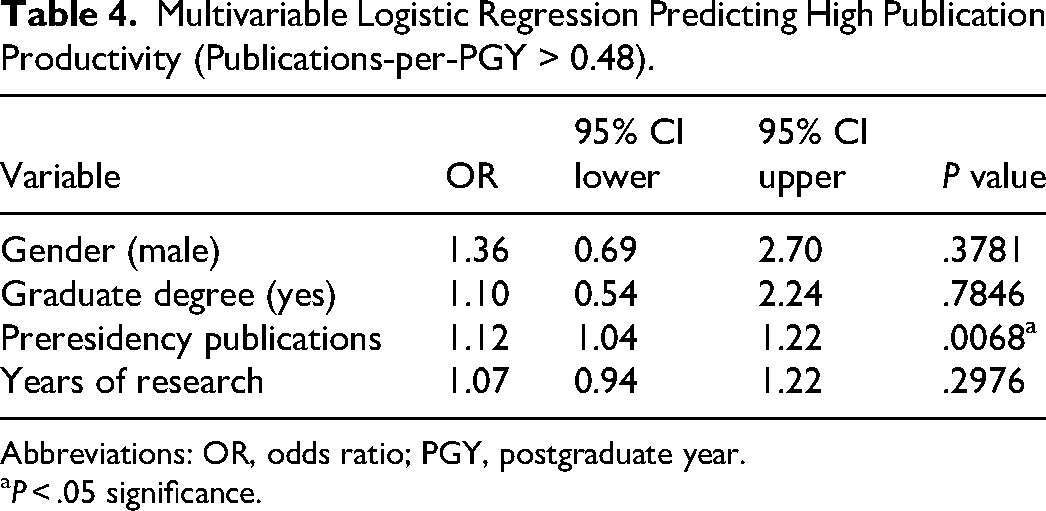
Abbreviations: OR, odds ratio; PGY, postgraduate year.
P < .05 significance.
In a secondary negative binomial regression model, both preresidency publications (incidence rate ratio [IRR] = 1.09; 95% CI: 1.06-1.13; P < .001), CIP enrolment (IRR = 1.88; 95% CI: 0.99-3.35; P = .041) were independently associated with increased publication rates during residency (Table 5). Male residents had lower adjusted publication rates than female residents (IRR = 0.58, P = .017). No significant associations were found for gender, graduate degree status, PD, or RD metrics (including h-index, citations, or last-author publications).
Negative Binomial Regression Predicting Publications-per-PGY.
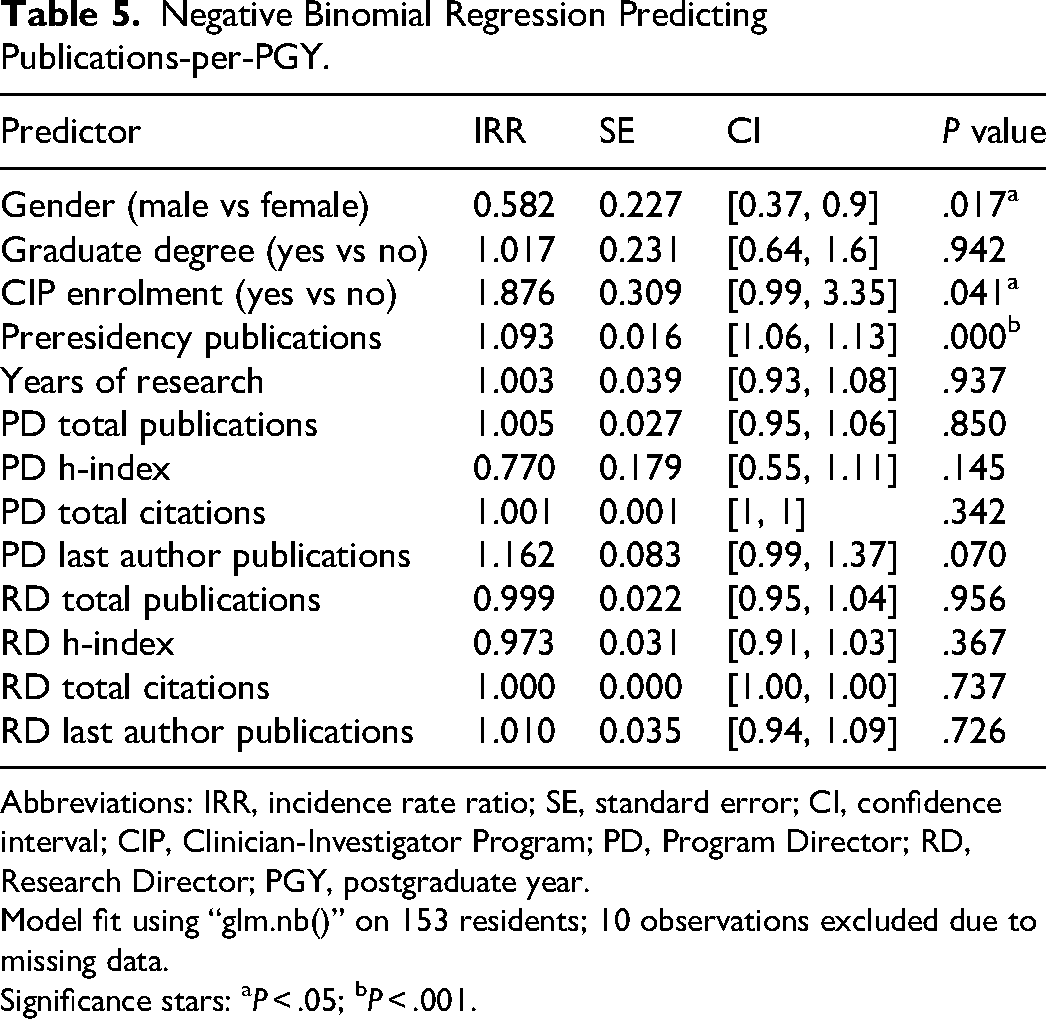
Abbreviations: IRR, incidence rate ratio; SE, standard error; CI, confidence interval; CIP, Clinician-Investigator Program; PD, Program Director; RD, Research Director; PGY, postgraduate year.
Model fit using “glm.nb()” on 153 residents; 10 observations excluded due to missing data.
Significance stars: aP < .05; bP < .001.
Predictors of Research Productivity in Graduates
In bivariate comparisons (Table 6), none of the research productivity measures were significantly associated with fellowship pursuit. In contrast, faculty appointment was significantly associated with higher research productivity across all metrics. Graduates with academic appointments had more total publications (20 vs 8; P < .001), more first-author publications (8.3 vs 3.0; P < .001), more total citations (249 vs 99; P < .001), and higher h-index scores (7.3 vs 3.7; P < .001). Gender, residency program, and graduate degree status were not significantly associated with either fellowship or faculty appointment in bivariate analysis.
Characteristics of Graduates by Fellowship and Professorship Status.
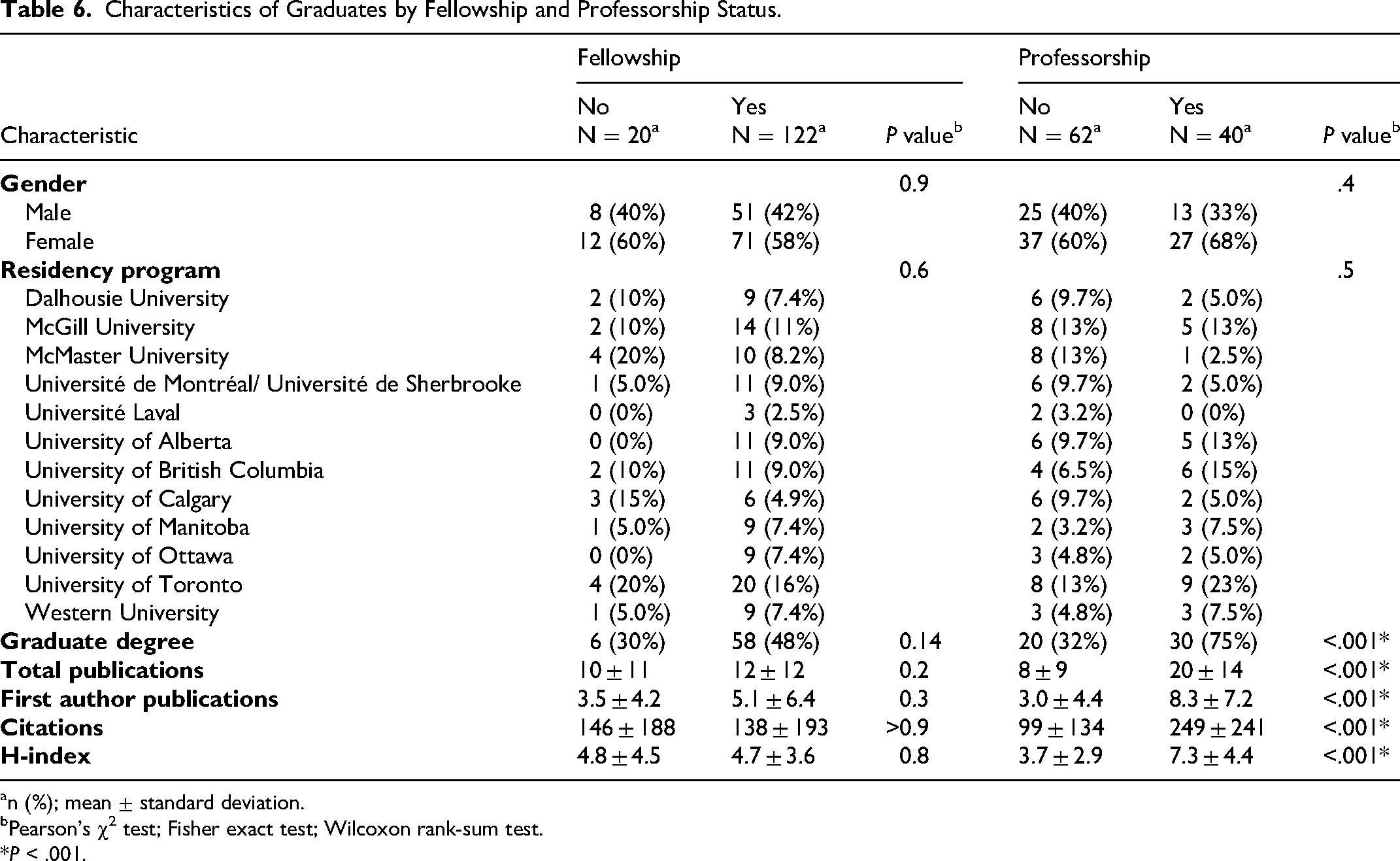
n (%); mean ± standard deviation.
Pearson's χ2 test; Fisher exact test; Wilcoxon rank-sum test.
*P < .001.
Predictors of fellowship pursuit and faculty appointment were also evaluated. None of the predictors, including publication metrics and graduate degree status, were significantly associated with fellowship pursuit in the adjusted multivariable logistic regression model (Table 7). However, graduate degree status was independently associated with holding a faculty appointment (OR = 3.41; 95% CI: 1.28-9.40; P = .015).
Multivariable Logistic Regression: Predictors of Fellowship and Professorship in Plastic Surgery Graduates.
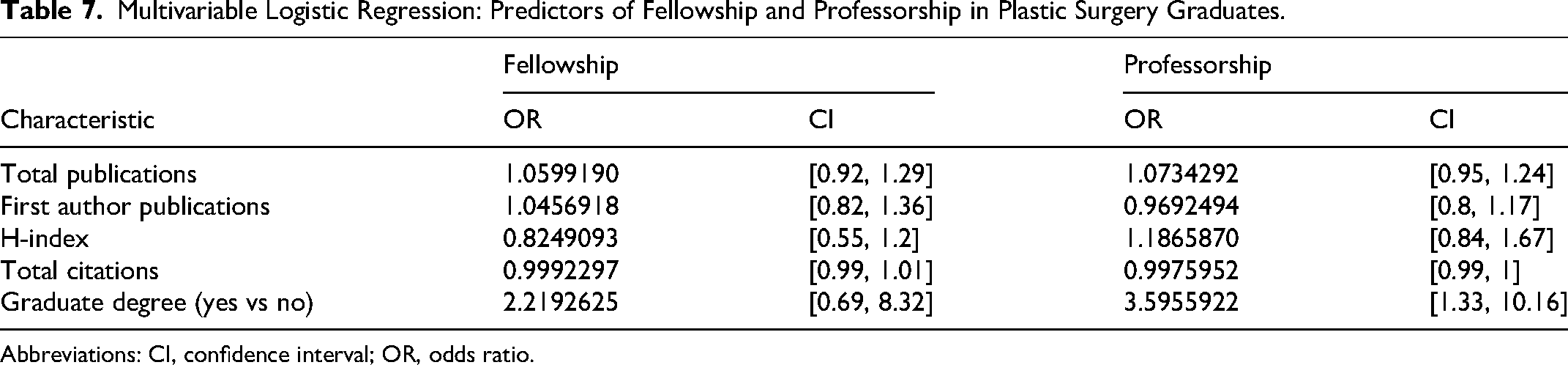
Abbreviations: CI, confidence interval; OR, odds ratio.
A sensitivity analysis using multiple imputations confirmed the robustness of these results. In the imputed model, graduate degree status remained a significant predictor of faculty appointment (OR = 3.94; 95% CI: 1.30-11.92). No other variables reached significance in either model, including for fellowship pursuit, suggesting that graduate degree attainment may be the strongest predictor of academic career trajectory in this cohort.
Discussion
In the present study, 309 Canadian plastic surgery residents were evaluated over a 10-year period, including currently active residents and graduates. We found that the research productivity of Canadian plastic surgery residents is primarily influenced by individual factors and that graduates who hold a faculty position are more likely to be involved in research and more likely to have obtained a graduate degree.
Significant Factors in Residents’ Research Productivity
Prior research experience was an influential factor in residency research productivity. We found that the number of preresidency publications was positively associated with higher publications-per-PGY, suggesting that those residents who were involved in research earlier in their training may continue to be productive as residents. This finding suggests that resident research productivity is driven in part by self-motivation and individual interest, as those who do have a research interest may engage in scholarly activity to a greater extent than their peers. Accordingly, those enrolled in the CIP, who are likely to be among the self-motivated residents, were also found to have significantly higher publications-per-PGY.
Clinician-Investigator Program enrolment was also an independent predictor of productivity, potentially also due to having dedicated research time during residency, and as a result, may increase their productivity during residency. This is in contrast to a US study of plastic surgery residents, which found that mandatory dedicated research time during medical school was associated with a higher total number of publications, but dedicated research time during residency was not. 9
Other individual-level factors were also significant. Original research articles were higher for residents with higher publications-per-PGY. This contrasts with the idea that studies such as literature reviews and case reports/series would result in higher research productivity, as these study designs typically do not require ethics approval and patient recruitment. 12 Furthermore, previous work has highlighted that most medical student research falls within lower levels of evidence design types. 13 One explanation for higher levels of productivity in those who are involved in original research may be that these trainees are more familiar with research methodology or have higher levels of mentorship and institutional support, resulting in higher productivity. Another significant factor was gender, as binomial regression showed that being male was an independent predictor of fewer publications. This differs from previous studies showing that male plastic surgery trainees and staff have a higher number of publications.14,15 Other studies have found no gender differences. 16
In comparison to resident-level factors, program-level factors such as curriculum design are outside of the individual resident's control. No variables related to research requirements or PD or RD productivity were associated with research productivity. Our results differ from previous studies, showing that required research blocks and initiatives have increased research productivity in their trainees.17–19
Canadian Plastic Surgery Resident Graduates’ Career Paths
Our findings in the graduate cohort highlight the role of research and scholarly activity in the development of future academic plastic surgeons. Among graduates, those with faculty appointments had significantly higher research metrics, such as higher total publications, first-author publications, h-indices, and citation counts (all P < .001). The only independent predictor of faculty appointment in this cohort was completion of a graduate degree (P < .001). These findings may indicate that residents who pursue academic careers have a history of interest and motivation in research. However, graduate degrees are often a requirement for faculty consideration in Canada, which may confound their predictive value. In terms of fellowship pursuit, no research metrics were associated, and there were no significant predictors.
Our findings contribute to an understanding of the importance of research throughout plastic surgery training in Canada. First, the findings provide prospective applicants to the specialty with preliminary information about the expectations for research as part of CaRMS. Current residents can compare their research productivity to national averages and understand how scholarly activity plays a role in career trajectories. Finally, our findings provide valuable insights for residency programs to identify curriculum gaps and enhance training, ultimately helping programs, residents, and applicants understand and improve their competitiveness in the field, and highlighting academically focused programs.
Limitations
This study has several limitations. Firstly, the data relied on publicly available sources. Despite cross-referencing across several sources, this approach may not capture all residents or program personnel, particularly those on a leave of absence or omitted from online registries. Secondly, the lag time between project initiation and publication date may vary greatly, depending on the study duration, resubmissions, and/or the review process. As such, although we attempted to account for this by including publications during residents’ PGY-1 years as preresidency publications, some may not be published until much later and may underestimate the number of preresidency productivity. There is no current method to determine exact project conception dates, and reporting details in studies remain variable. Thus, the official publication date remains the best marker of timing. By using the publication date for all residents, we ensure comparability of the data. Third, some graduates were still completing their fellowship or pursuing a second fellowship, thus would not have a faculty appointment at the time of data extraction, but may pursue one following fellowship completion. This may underestimate the proportion of graduates who are pursuing an academic trajectory.
Conclusion
Canadian plastic surgery residents are expected to have some level of research engagement by the end of their training, but may vary in their level of achievement. Prior research experience, preresidency publications, enrolment in the CIP program, and completion of a graduate degree were all associated with increased research productivity. These findings provide valuable insights for residency applicants, current trainees, and program directors. Aspiring plastic surgeons can assess their competitiveness in the application process, residents can benchmark their productivity against national standards, and programs can evaluate their research curriculum to optimize training and academic development. Future work should explore strategies to enhance research engagement and support for Canadian plastic surgery residents.
Footnotes

Ethical Approval
This article does not contain any studies with human or animal subjects.
Author Contributions
Anna-Lisa V Nguyen contributed to conceptualization, methodology, data collection, data analysis, writing—original draft, writing—revision and editing. Justin Haas contributed to methodology, data analysis, writing—original draft, writing—revision and editing. Carolyn Wang contributed to data collection, writing—original draft, writing—revision and editing. Achilleas Thoma contributed to conceptualization, methodology, writing—original draft, writing—revision and editing, supervision. Helene Retrouvey contributed to conceptualization, methodology, writing—original draft, writing—revision and editing, resources, supervision.
Funding
The authors received no financial support for the research, authorship, and/or publication of this article.
Declaration of Conflicting Interests
The authors declared no potential conflicts of interest with respect to the research, authorship, and/or publication of this article.
Data Availability
The data used in this study are available upon request to the corresponding author.
Related Publications
This study was accepted as a podium presentation at Plastic Surgery The Meeting 2025 in New Orleans, Louisiana.