



Abstract
Introduction
Plastic and reconstructive surgery (PRS) has been associated with high career satisfaction among practicing surgeons. An American survey found that 93% felt becoming a plastic surgeon was the right decision, while only 4% regretted their career choice. 1 While plastic surgeons report a high satisfaction rate during attending staff years, this is less reflective among trainees.2,3 Plastic surgery residents face challenges including high workload, stress, fatigue, and emotional strain, with burnout rates reported between 40% and 65% in the literature.4,5 These concerns have prompted residency programs and accrediting bodies to develop structured wellness initiatives aimed at supporting resident well-being. 6
In Canada, the Royal College of Physicians and Surgeons highlights physician health and well-being as a core component of the CanMEDS “Professional” role, and the Canadian Medical Association (CMA) has published policy statements and national surveys underscoring the need for systemic support for physician wellness.7–9 Accreditation standards set by the Canadian Residency Accreditation Consortium also explicitly require that residency programs foster safe and supportive learning environments that promote resident wellness. 6 Together, these national initiatives underscore the importance of wellness in postgraduate medical education (PGME).
However, for wellness initiatives to be effective, they must not only exist but also be transparent and accessible to residents and prospective applicants. Program websites are often the primary source of information for trainees when evaluating potential residency programs, while social media platforms are also becoming an increasingly important source of program information for applicants.10–12 Among available platforms, Instagram is the most widely used by medical students and residency applicants, with several studies demonstrating that applicants engage with Instagram more frequently than Twitter/X or Facebook.12,13 The CMA offers a compilation of wellness resources for all 17 Canadian medical schools; however, this is not available at the residency level. 14 Previous studies in other surgical specialties have shown that residency program websites frequently lack comprehensive wellness information, but the extent of this gap within Canadian plastic surgery has not been examined. 15 Therefore, the purpose of this study was to evaluate the transparency of wellness resources among Canadian plastic surgery residency programs through their program websites, their Canadian Resident Matching Service (CaRMS) program descriptions, and Instagram accounts. This work can serve as a call-to-action for each program's involvement in physician wellness, particularly as the CanMEDS competency framework is set to be revised in 2026. 16
Methods
Study Design
A cross-sectional analysis of Canadian PRS residency programs was performed in September 2025, aligning with the period when applicants commonly review program materials before the CaRMS deadline in November. The Strengthening the Reporting of Observational Studies in Epidemiology (STROBE) checklist for cross-sectional studies was used as a reference. 17 A comprehensive list of plastic surgery residency programs across Canada was compiled from the Canadian Society of Plastic Surgeons (CSPS) website. 18 A systematic content analysis was performed of the available residency websites and CaRMS profiles, and the associated programs’ Instagram pages if available.
Participants
Inclusion criteria included the official website and Instagram account of each Canadian accredited PRS residency program, and each program's affiliated institutional PGME website. Exclusion criteria included websites that may be affiliated with or mention a Canadian PRS residency program but are not any of the aforementioned resources, and other forms of social media that are not Instagram (e.g., X and TikTok).
Data Collection, Outcomes, and Measures
Residency Program Data
Publicly available demographic data from each residency program was recorded, including the number of residents, male-to-female ratio, and number of residents per postgraduate year.
Website Content Analysis
Plastic and reconstructive surgery residency program websites were assessed for:
Mention of “wellness,” “well-being,” or other similar terminology on the program website, including all tabs within the website. Programs with French language websites were assessed for mention of “bien-être.” Search tab searches for wellness were conducted when available. Search terms included “wellness” and “well-being” and “bien-être.” A link (URL) to program-related or institutional-related wellness resources.
Canadian Resident Matching Service website program descriptions for the 2026 R-1 match cycle were assessed for mention of the terms “wellness” or “well-being.” Programs with French language descriptions were assessed for mention of “bien-être.”
Instagram Content Analysis
Images from each program's Instagram account were categorized using standardized operational definitions as follows:
Wellness content: Posts explicitly referencing resident well-being or wellness initiatives, including any use of terms such as “wellness,” “well-being,” “self-care,” “work–life balance,” or “bien-être” in the caption or hashtags. Social content: Posts depicting residents participating in informal or program-organized social activities outside of direct clinical duties (eg, retreats, dinners, team-building events, holiday gatherings). Academic-related content: Posts focused on education, scholarship, or training, including academic half-days, conferences, research activities, simulation sessions, or content using terms such as “education,” “teaching,” “learning,” or “academic.” Other content: Posts not captured within the above categories, such as resident or faculty profiles, operative photos, recruitment announcements, or general program updates.
These data were collected during September 2025. The total number of Instagram posts, number of highlights, number of “wellness” highlights, total number of followers, and total number of following were also recorded.
Bias
Variables and criteria for data collection were determined a priori to maximize objective data extraction. Two authors (CW and TI) independently extracted data from program websites and Instagram and cross-referenced their results. A third author (KY) resolved any disagreements regarding categorization of posts when required to minimize potential for bias. Interrater agreement was not formally assessed. The study size was fixed at n = 12, based on the existing number of accredited Canadian PRS residency programs.
Data Handling and Statistical Methods
Descriptive statistics were used to summarize demographic data, and the frequency and distribution of website content. Absolute counts (number of mentions of “wellness” and other predefined content categories: social, academic, other) were recorded for each program. Results were reported as absolute counts, proportional representation, means with standard deviations, and medians with interquartile ranges, as appropriate.
Results
Residency Program Data
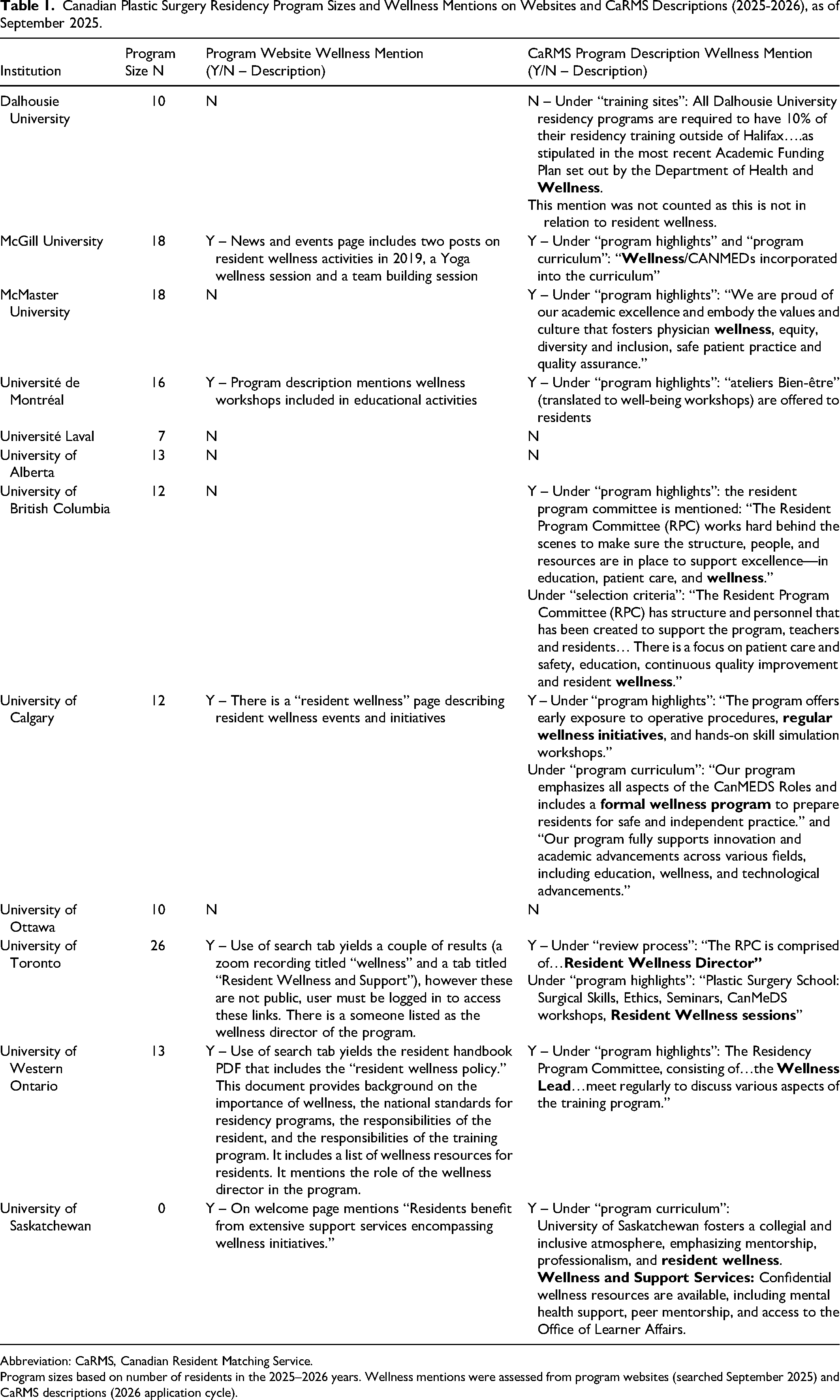
All 12 PRS residency programs were included and analyzed where data were available. The current total number of residents enrolled in each Canadian plastic surgery residency program ranged from seven at Université Laval to 26 at the University of Toronto. The University of Saskatchewan currently has no residents, as their program is set to begin in 2026. Program size can be seen in Table 1.
Canadian Plastic Surgery Residency Program Sizes and Wellness Mentions on Websites and CaRMS Descriptions (2025-2026), as of September 2025.
Abbreviation: CaRMS, Canadian Resident Matching Service.
Program sizes based on number of residents in the 2025–2026 years. Wellness mentions were assessed from program websites (searched September 2025) and CaRMS descriptions (2026 application cycle).
Website Content Analysis
Of the 12 Canadian plastic surgery residency programs, six (50%) mentioned wellness on their official program websites (Table 1). Only one program (University of Calgary) had a dedicated tab for resident wellness. Western University was the only program that linked a formal wellness policy document. The University of Toronto website returned several results for “wellness” when queried through the search function; however, these pages required resident login access. McGill University mentioned wellness events in the “News and Events” section, while the Université de Montréal and University of Saskatchewan each included only brief mentions of wellness within their general program descriptions.
Eight programs (67%) mentioned wellness in their CaRMS website program descriptions for the 2026 R-1 match (Table 1). Mentions within CaRMS program descriptions were generally brief acknowledgments that wellness was incorporated into the curriculum or that it is a program highlight (McGill University, Université de Montréal, University of Toronto). Several programs (University of Western Ontario, University of Toronto) mentioned a wellness lead/director being a part of the residency program committee. The University of Calgary was the only program to state that it had a formal wellness program, and the University of Saskatchewan mentioned the wellness and support resources that are available to residents.
Instagram Content Analysis
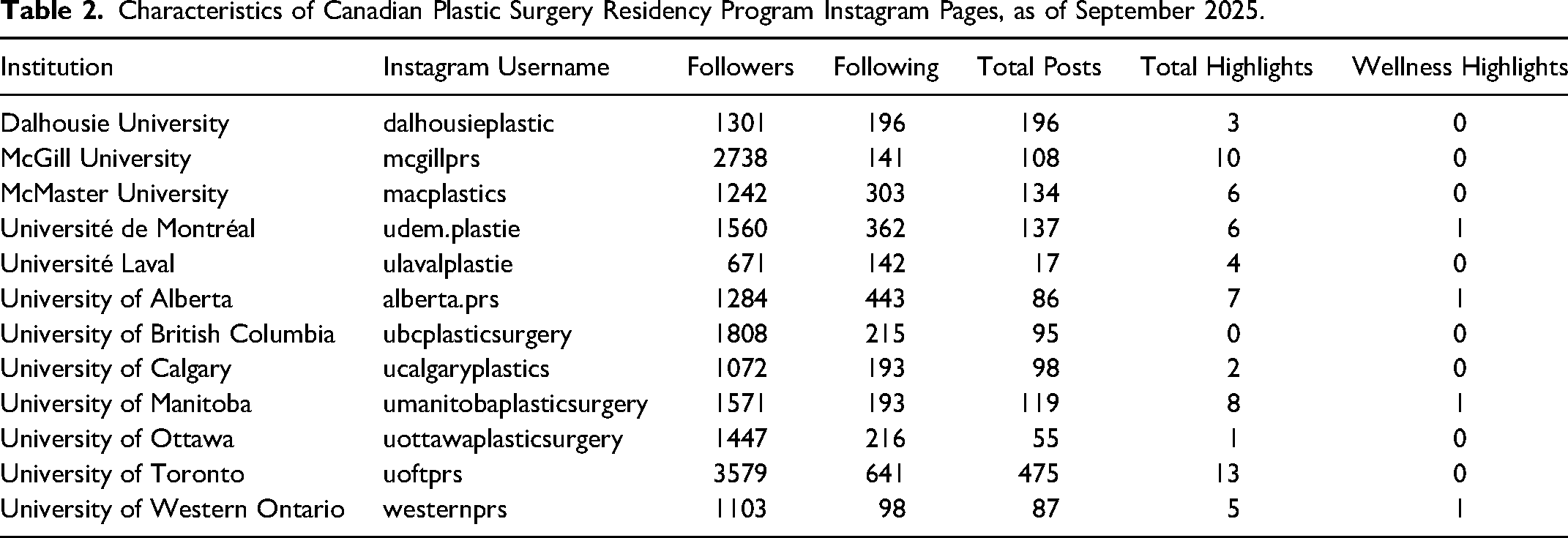
Canadian PRS residency official program accounts demonstrated substantial variation in number of followers and activity as of September 2025 (Table 2). Follower counts ranged from 671 (Université Laval) to 3579 (University of Toronto). The earliest posts across residency program Instagram accounts were made between 2017 and 2022. Only four programs (Université de Montréal, University of Alberta, University of Manitoba, and Western University) had one wellness-dedicated Instagram highlight, and the remainder of the programs did not. Of note, the University of Saskatchewan's plastic surgery residency program is due to start on July 1, 2026. They did not have an Instagram account at the time of our data extraction and were excluded from the Instagram content analysis.
Characteristics of Canadian Plastic Surgery Residency Program Instagram Pages, as of September 2025.
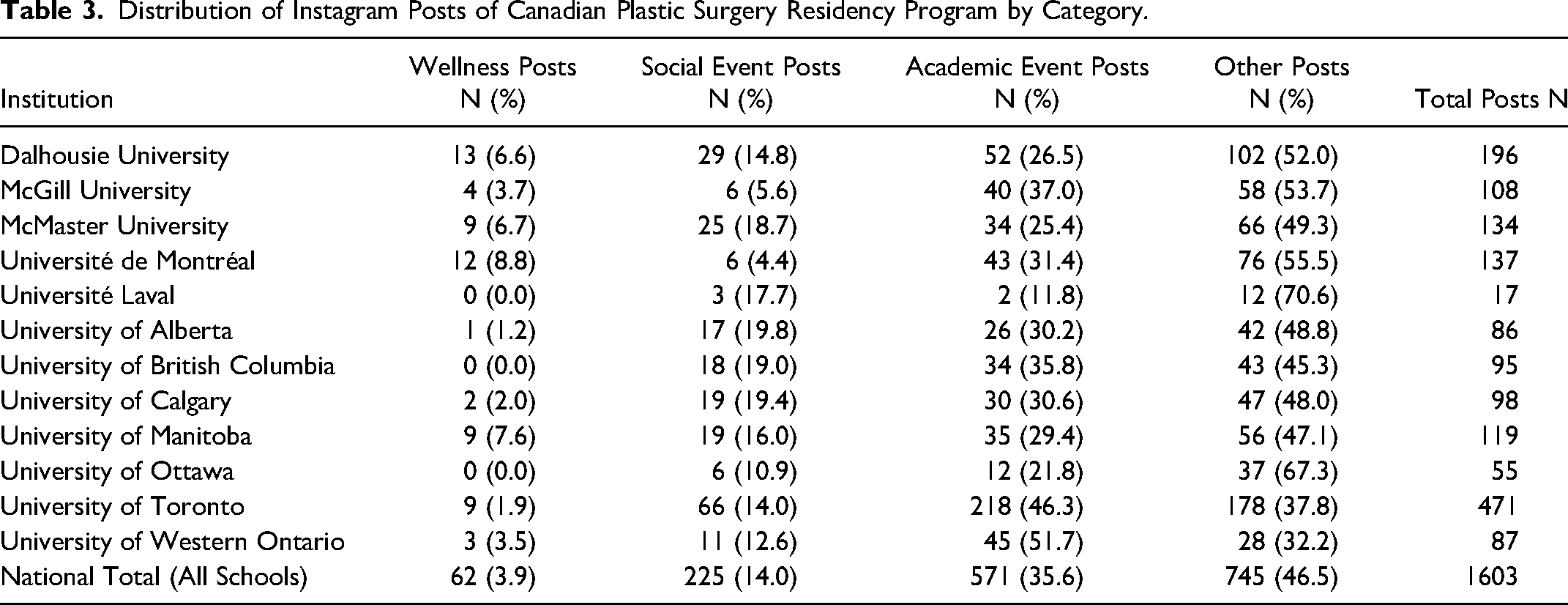
Across the 12 Canadian PRS residency program Instagram accounts, a total of 1603 posts were identified (Table 3). Of these, 62 posts (3.9%) were categorized as wellness-related, 225 (14.0%) as social events, 571 (35.6%) as academic activities, and 745 (46.5%) as other content. Figure 1 displays the distribution of total post types by institution, with relative distribution of categories varying by institution. Université de Montréal had the highest proportion of posts mentioning wellness (8.8%), whereas Université Laval, the University of British Columbia, and the University of Ottawa had no wellness posts identified. For social event posts, the highest proportions were at the University of Alberta (17 posts, 19.8%), the University of Calgary (19 posts, 19.4%), and the University of British Columbia (18 posts, 19.0%). Academic event posts comprised the second-largest category overall (35.6%), with the University of Toronto (218 posts, 46.3%) and the University of Western Ontario (45 posts, 51.7%) having the highest proportions. Posts categorized as “other,” which tended to be posts such as resident or staff spotlights and informational posts, were the largest category overall. They were especially dominant at Université Laval (12 posts, 70.6%) and the University of Ottawa (37 posts, 67.3%).
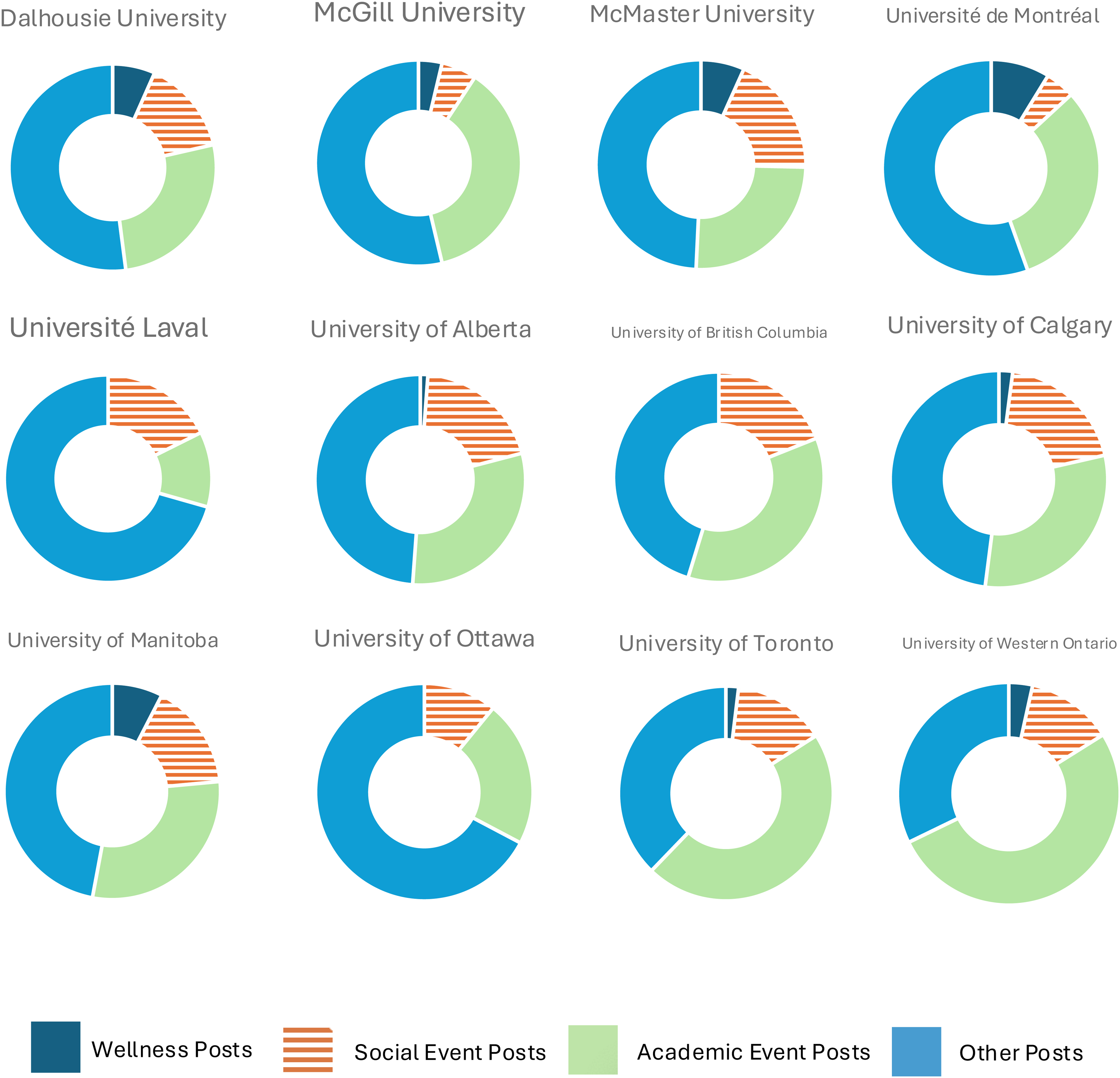
Proportions of Instagram posts by category (wellness, social event, academic, other) across Canadian plastic surgery residency programs.
Distribution of Instagram Posts of Canadian Plastic Surgery Residency Program by Category.
Both the total number and the proportion of wellness posts were plotted over time (Figures 2 and 3). Peaks were observed in certain years for individual institutions (such as University of Manitoba in 2021), but no sustained upward trend was identified nationally. Overall, wellness-related content represented only a small fraction of program-level Instagram activity.
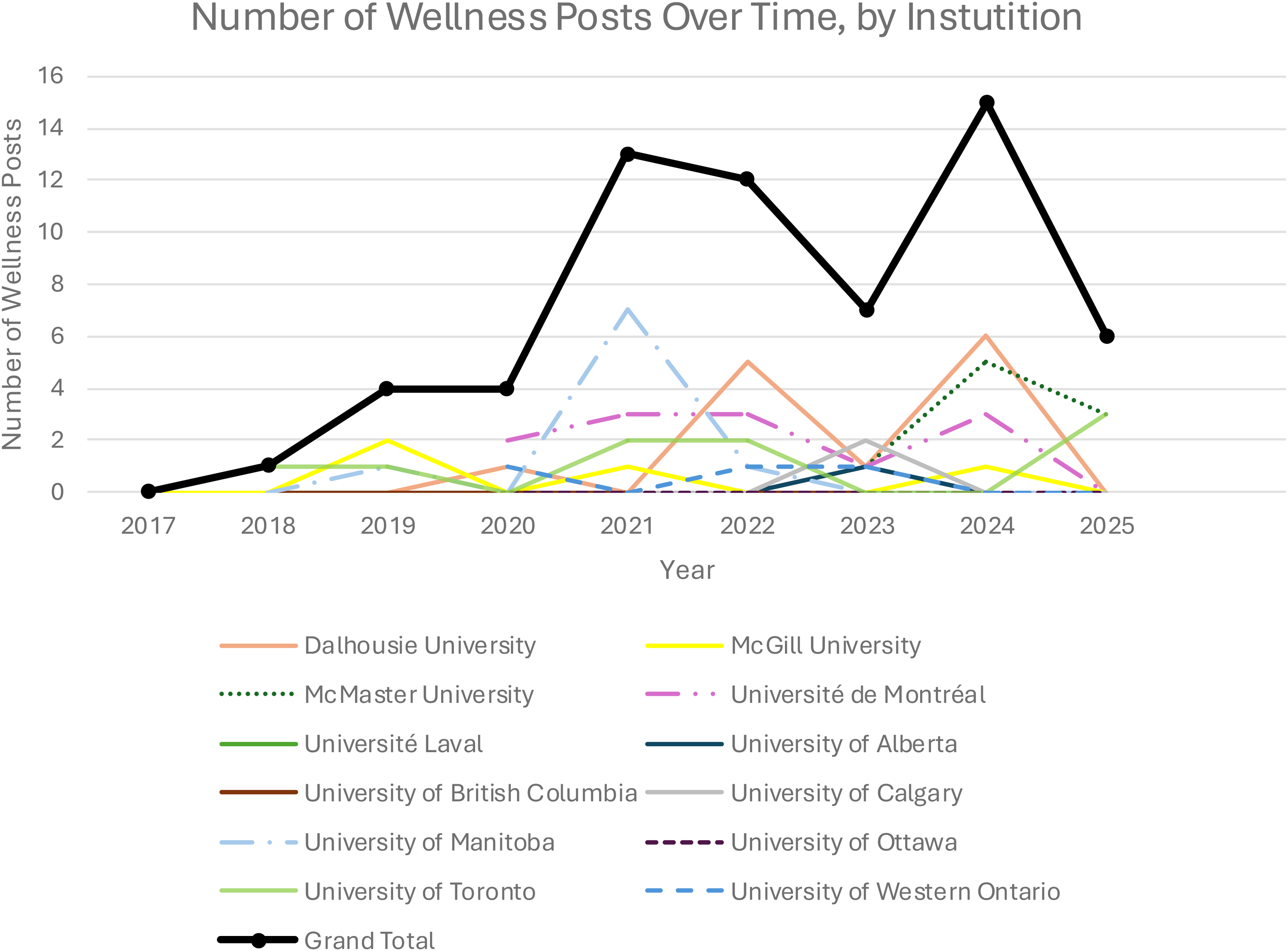
Number of wellness Instagram posts over time, by year and institution.
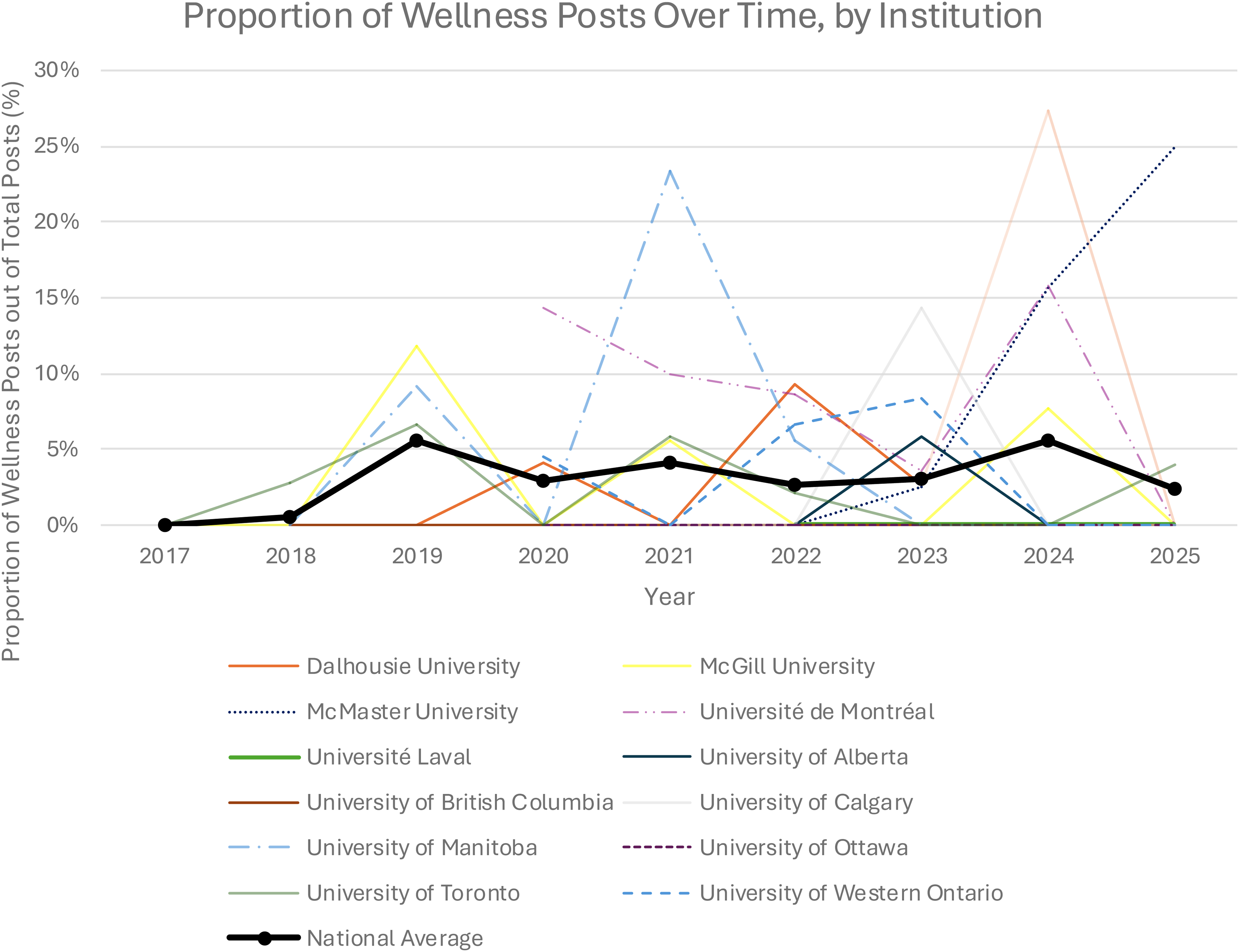
Proportion of wellness posts out of total Instagram posts over time, by year and institution.
Discussion
Our study aimed to evaluate the transparency of wellness across Canadian PRS residency programs through different forms of media, including their program websites, CaRMS program descriptions, and Instagram accounts. Overall, wellness content was inconsistently communicated across platforms, similar to trends reported in other specialties and jurisdictions. We found that half of the programs did not mention wellness on their websites. This is slightly higher but comparable to a recent U.S. study of plastic surgery residency programs, which found that 86 of 128 American programs (67.2%) did not mention wellness on their website. 15 Although the purpose of our study was not to evaluate the internal wellness programming of residency programs, existing literature suggests that formalized wellness curricula remain uncommon in plastic surgery training. 19 Studies have shown that while program leadership generally recognizes the importance of resident well-being, only a minority of programs have dedicated or structured wellness curricula, and few openly advertise these initiatives on public platforms such as websites.15,19–21 Program directors have reported interest in adopting or adapting wellness curricula from other institutions, highlighting a broader lack of standardization in how wellness is implemented and communicated across programs. 19 Similarly, in other disciplines within medicine such as emergency medicine, residency program websites have been shown to rarely have dedicated wellness tabs. 22
Instagram is a commonly utilized platform by both residents/fellows and medical students. A recent study evaluating the utility and impact of Canadian PRS Instagram accounts on resident recruitment and engagement showed that 93% of surveyed Canadian PRS residents use Instagram, and that preferred content included posts about program culture. 23 The surveyed PRS residents rated resident recruitment as the highest priority of a PRS training program's Instagram account. The same study surveyed medical students, 56% of whom indicated that Instagram influenced their decision to apply to a program. 23 Similarly, an American study looking at wellness culture among PRS residency programs’ social media accounts showed that Instagram was predominantly used (n = 76, 93%) with significantly higher rates of engagement than the others (such as Facebook and X). 20 The authors reviewed all social media posts and categorized them into seven classes of wellness content, finding that Instagram had the highest mean percentage of wellness-related posts overall at 25.3%, however “wellness-specific activities/lectures” accounted for just 2.4%. 20 In our present study, analysis of program social media accounts revealed that specific use of the term “wellness” constituted less than 4% of total content across programs, similar to the above American study. While social posts highlighting resident camaraderie, retreats, and program events were more common (14%), these were not framed using the language of “wellness” or directly signaled as such. However, social cohesion, team-building activities, and resident camaraderie—although not labeled as “wellness”—are also important components of wellness culture. These posts may implicitly reflect supportive environments and positive resident experiences, even when not explicitly framed as wellness initiatives. Recognizing this nuance is essential when interpreting the role of social media in conveying program culture. Nevertheless, the sparse use of the term “wellness” and related terms such as “well-being” itself suggests limited explicit signaling of wellness as a program priority to prospective applicants.
Across all platforms, the explicit reference to wellness varied by program. Even when mentioned, there was often no subsequent description of the initiative. Wellness was not prominently communicated and did not appear to be prioritized in public-facing digital narratives from our content analysis. Recent commentary has also highlighted that physician humanism and wellness have been underemphasized in the 2015 CanMEDS, calling for their integration into the upcoming framework revision. 24 As accreditation standards evolve and the CanMEds framework is revised, improving the accessibility and clarity of wellness information will be critical for informing applicants and reinforcing programs’ commitment to resident well-being. Developing national reporting guidelines—for example, requiring that residency programs describe available wellness resources, personnel (such as wellness leads) on CaRMS program descriptions or institutional websites could enhance transparency and support informed decision-making among applicants.
Limitations
A limitation of this study is the cross-sectional nature of our data collection and analysis. Program websites may not be frequently updated, and this also depends on who is responsible for such updates (program director vs dedicated website personnel). For instance, McGill University's site referenced wellness activities only within the “News and Events” section which may be updated over time. Instagram pages are similarly frequently changing with new posts being added and removed. Oftentimes, the Instagram page is run by either a resident or a program administrator and is typically an “additional responsibility” outside their primary role. The number of Instagram posts and activity likely depends on the commitment and workload of the individual running the Instagram account. Our data analysis also only includes a single time point in September 2025.
Another limitation of this study is that we did not include all potential sources of information available to residents and applicants. Wellness resources and programming may be communicated verbally during info sessions, interviews, or informal networking, which our methodology could not capture. Our search methods only identified posts with an explicit mention of wellness and may have excluded other social events geared towards resident well-being. Additionally, while Instagram has been shown to be the most commonly used social media by PRS programs, some schools also have other social media accounts such as X and Facebook, which we did not evaluate in this present study. 20
Finally, it is important to acknowledge that wellness being mentioned on a program's website or social media may not reflect the true extent or quality of wellness offered to residents. This study cannot draw conclusions regarding the availability of wellness programming within residency programs. The objective of this study was to evaluate the transparency of plastic surgery residency programs in providing public information regarding their wellness programming or culture.
Conclusion
This is the first study to examine how wellness is communicated across Canadian PRS residency programs using publicly accessible platforms, including program websites, CaRMS descriptions, and Instagram. Our analysis demonstrated substantial variability in how programs present wellness-related information. Some programs highlighted wellness more prominently, whereas others provided minimal or no publicly available information, suggesting differences in communication strategies of wellness initiatives. As accreditation standards evolve to incorporate wellness, ensuring its visibility will be essential for both meeting requirements and supporting recruitment, since prospective trainees increasingly prioritize program culture and support structures. Standardization of wellness programming reporting on program websites or within CaRMS descriptions may aid applicants in understanding program culture and available supports. By highlighting the current variability in transparency of wellness initiatives, this study aims to raise awareness and encourage programs to strengthen the accessibility of wellness information, ultimately fostering healthier training environments and preparing more resilient future clinicians.
Supplemental Material
sj-docx-1-psg-10.1177_22925503261419778 - Supplemental material for Transparency of Wellness Programming Across Canadian Plastic Surgery Residency Programs
Supplemental material, sj-docx-1-psg-10.1177_22925503261419778 for Transparency of Wellness Programming Across Canadian Plastic Surgery Residency Programs by Carolyn Wang, Kimberley Yuen, Taylor Incze, Evan Fang and Josephine A. D’Abbondanza in Plastic Surgery
Footnotes
Author Contributions
Carolyn Wang: Methodology, investigation, formal analysis, and writing. Kimberley Yuen: Conceptualization, methodology, investigation, and writing. Taylor Incze: Conceptualization, investigation, formal analysis, and writing. Evan Fang: Investigation and writing. Josephine D’Abbondanza: Supervision, methodology, and writing.
Declaration of Conflicting Interests
The authors declared no potential conflicts of interest with respect to the research, authorship, and/or publication of this article.
Funding
The authors received no financial support for the research, authorship, and/or publication of this article.

Supplemental Material
Supplemental material for this article is available online.
References
Supplementary Material
Please find the following supplemental material available below.
For Open Access articles published under a Creative Commons License, all supplemental material carries the same license as the article it is associated with.
For non-Open Access articles published, all supplemental material carries a non-exclusive license, and permission requests for re-use of supplemental material or any part of supplemental material shall be sent directly to the copyright owner as specified in the copyright notice associated with the article.
