




Abstract

The Medicine Wheel, also known as the Sacred Hoop, is a concept embraced by some Indigenous communities and is expressed in many formats—in artwork (Figure 1), on land, and on paper. The movement on the wheel is circular and reflects the interconnections between the cycle of life and all aspects of health: physical, spiritual, mental, and emotional health. The authors remind us of the important notion that as surgeons, we must understand—and recognize—all domains of health when treating our patients. Either consciously or unconsciously failing to recognize the importance of the connections between these aspects of health that may lead to nonadherence, lack of trust by our patients, increased risk of complications, and other potential poor outcomes that may not be measurable by our typical outcome measures. When treating our Indigenous patients specifically, we cannot focus only on the physical issue at hand without explicitly exploring and considering all other aspects of health.
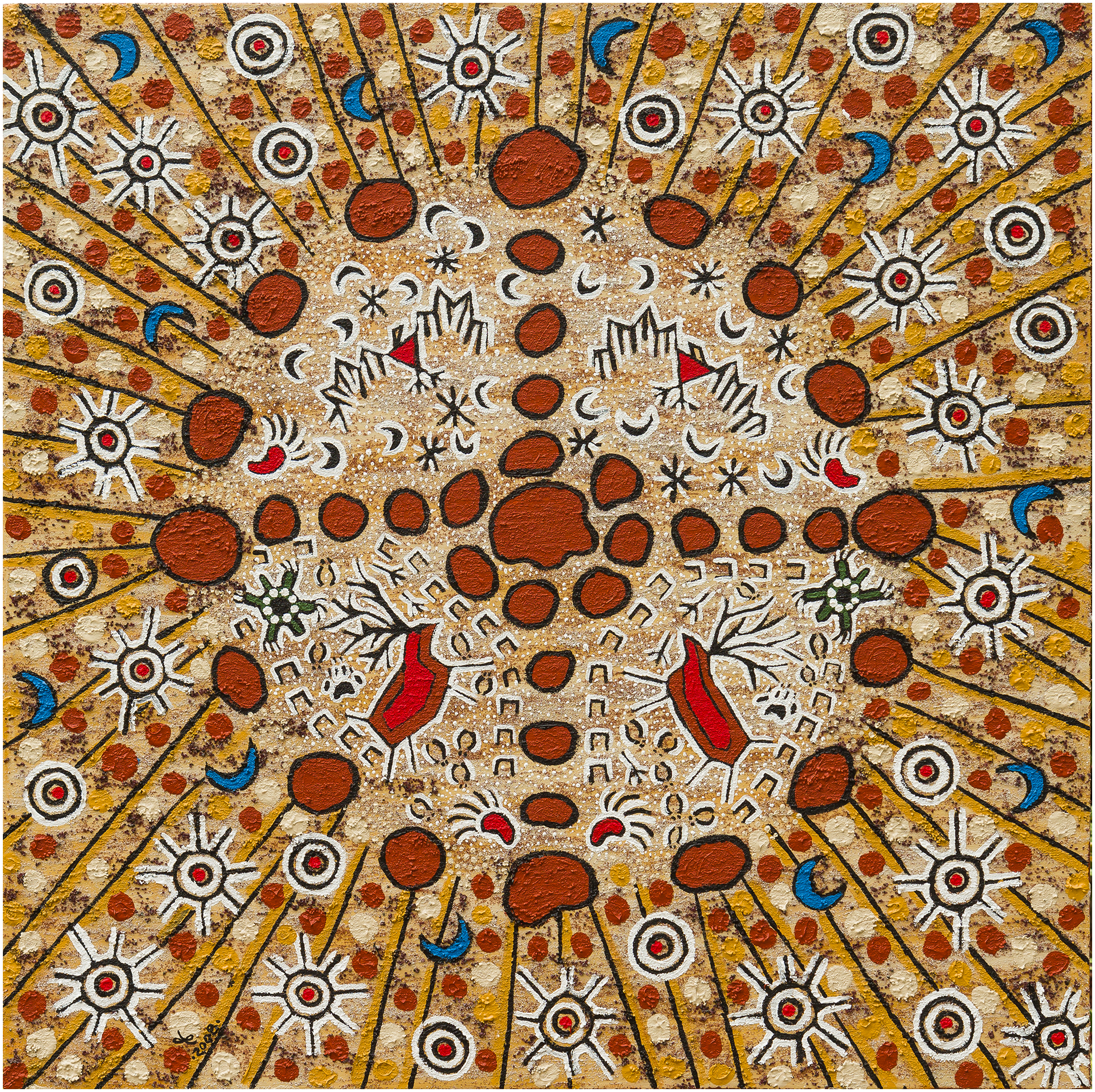
“Sacred medicine wheel” by First Nations Metis artist Leah Marie Dorion. Used with permission by the artist and DaVic Gallery of Native Canadian Arts, Coquitlam, B.C. https://nativecanadianarts.com/.
Introducing the concept of the Medicine Wheel to plastic surgeons exemplifies the value of true inclusivity in the space of surgery. An inclusive surgical space provides all patients with a more equitable opportunity for excellent outcomes by adapting their surgical journey to accommodate both their physical and cultural needs. By learning and embracing a variety of approaches to health, we are able to create more innovative approaches in our own practices which ultimately leads to improved outcomes for more patients. These are the moments that empower us as surgeons to begin the process of slowly dismantling the barriers faced by Indigenous patients when accessing surgical care in our healthcare system. 1 We need to do better, and we can if we prioritize inclusive surgical care.
Diversity in our surgical care teams is one important part of trying to work toward the goal of more inclusive surgical care. However, we must always recognize that without true inclusion, diversity has less value. Our Division of Plastic, Reconstructive, and Aesthetic Surgery EDI taskforce enforces the value of inclusion by reinforcing the concept that “diversity is a number, while inclusion is a climate.” The most challenging—and most rewarding—part about integrating the concepts of EDI into our clinical spaces is constantly learning and relearning how to listen to each other, and how to adapt our traditional practices as we integrate new concepts. By reflecting on the concept of the Medicine Wheel, it is clear that when we are treating our patients—whether they are Indigenous, or of another cultural or ethnic background—we must also realize that we may not know what that wheel looks like for each patient, and we may not understand their wheel unless we take the time to truly listen and to consider—and check—our own blind spots or biases as they explain what it is that they need to balance their journey to better health. As we adapt our practices and programs to optimize inclusion, we must develop our reflexivity, a practice wherein we critically reflect on how our own lens effects our patient interactions. This is a quality that we should constantly practice and teach our learners.
How can we bridge the differences in Indigenous health frameworks and values in our clinical spaces? The second concept introduced in this editorial highlights another Indigenous concept called the “aisttosastip” or two-eyed seeing, wherein the strengths of both Indigenous and Western knowledge and ways of knowing are merged. 2 The two “conceptual lenses” synergize to create a richer picture, like the vision between two eyes. This concept again reflects the value and importance of learning from different cultural perspectives and how, by listening with an open mind and intentions, and being open to different perspectives, one may end up with a new perspective and subsequent approach, that may never have been anticipated. This is analogous to a familiar concept in medicine, where we endeavor to actively check our blind spot to always keep an open mind. Using the teachings of the medicine wheel and two-eyed seeing, we will learn to be better caregivers and advocates for our Indigenous patients and colleagues.