



Abstract
Background:
Endometriosis remains a significant challenge to women’s health, with delays in diagnosis and suboptimal outcomes. This review aimed to consolidate recent findings and guide future strategies for improved detection, treatment, and patient care.
Methods:
A literature review was conducted using the PubMed and Cochrane Library databases. We included studies published in 2023 or later that evaluated epidemiological data, diagnostic biomarkers, and therapeutic interventions. Particular attention was given to emerging modalities, such as artificial intelligence-driven diagnostics, novel hormonal treatments, and integrative care approaches.
Results:
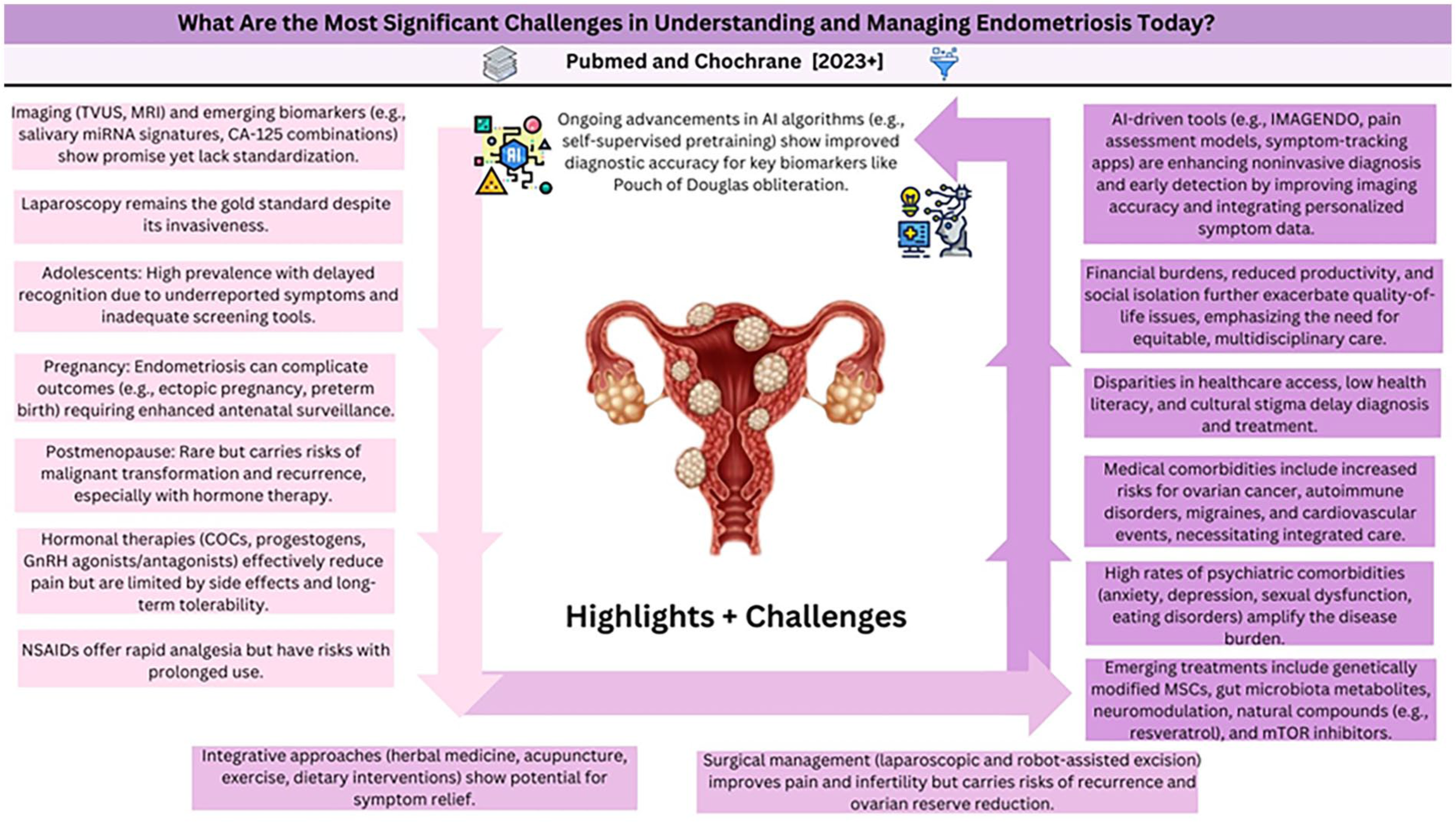
Recent findings underscore the complex genetic and immunological factors that contribute to the progression of endometriosis. Symptom normalization and limited clinician awareness can lead to delayed diagnosis, which worsens patient outcomes. Biomarkers and advanced imaging techniques show promise for earlier detection but lack standardization and universal availability. Hormonal therapies remain the cornerstone of treatment, whereas surgical approaches offer symptomatic relief and fertility benefits, albeit with risks such as recurrence and potential ovarian reserve reduction. Moreover, mental and medical comorbidities further exacerbate disease burden and underscore the need for integrated healthcare. Innovative options, including neuromodulation, mTOR inhibitors, and integrative pain management methods, are being actively investigated. Socioeconomic and cultural disparities compose access challenges, emphasizing the importance of multidisciplinary, patient-centered management.
Conclusion:
Major gaps remain in the early detection, comprehensive management, and equitable access for endometriosis. This review highlights the need for refined diagnostic tools, advanced treatment approaches, and integrated care strategies. Ongoing research and multidisciplinary collaboration are essential for improving patient outcomes and quality of life.
Get full access to this article
View all access options for this article.
References
Supplementary Material
Please find the following supplemental material available below.
For Open Access articles published under a Creative Commons License, all supplemental material carries the same license as the article it is associated with.
For non-Open Access articles published, all supplemental material carries a non-exclusive license, and permission requests for re-use of supplemental material or any part of supplemental material shall be sent directly to the copyright owner as specified in the copyright notice associated with the article.
