




Abstract
Introduction:
Truss core material, which is a new type of ultra-light material with comprehensive properties, is used in the aerospace industry. The aim of this paper is to investigate the dynamic behavior of three-dimensional Kagome sandwich plates with truss core under transverse and in-plane excitation in the case of 1:1 internal resonance.
Methods:
Firstly, the averaged equation is obtained by means of the method of multiple scales. Then, the nonlinear system is analyzed applying the theory of normal form. Eventually, we analyze the dynamic behavior, mainly periodic motions, for the truss core sandwich panels by using numerical simulation.
Results:
Numerical results are presented here for the nonlinear dynamic behavior of the model of truss core sandwich plates, which provides theoretical guidance to vibration control.
Conclusions:
Considerable insight has been gained concerning the sign of parameter of the model controlled by material property.
Keywords
Introduction
Truss material is attracting widespread interest in fields such as the aerospace industry, and the research of the dynamic analysis of vibration of this material is urgent. Truss material is a kind of periodic ultra-light material with good properties in terms of heat dissipation, vibration control, and energy absorption. 1 The truss sandwich structure, which is a light-weight multifunctional structure for excellent performance, is composed of the upper and lower layers of skin and the core layer. The three-dimensional (3D) truss materials mainly consist of pyramid configuration, tetrahedral configuration, octahedral configuration, and 3D Kagome configuration, among others. The Kagome sandwich structure is a new type of truss sandwich structure with excellent mechanical properties newly proposed in recent years. Compared with tetrahedral and pyramid cores, the 3D Kagome core structure has better performance in the resistance to plastic buckling performance at the equivalent core density. 2 Wallach and Gibson analyzed the mechanical properties of 3D truss material, 3 including the elastic moduli, shear strengths, among others, which gave a good description of the measured properties. Hyun and Karlsson studied the mechanical properties of Kagome and tetragonal truss cores by the method of finite element simulation under compressive and shear loading. 4 Wang et al. studied the performance characteristics of 3D Kagome truss core sandwich plates by means of numerical simulation, 2 which proved the accuracy of the study by Hyun and Karlsson. 4 It is shown that Kagome truss core sandwich plates have greater load capacity and deferred susceptibility in contrast to a tetrahedral core. The 3D truss core sandwich structures are shown in Figure 1.
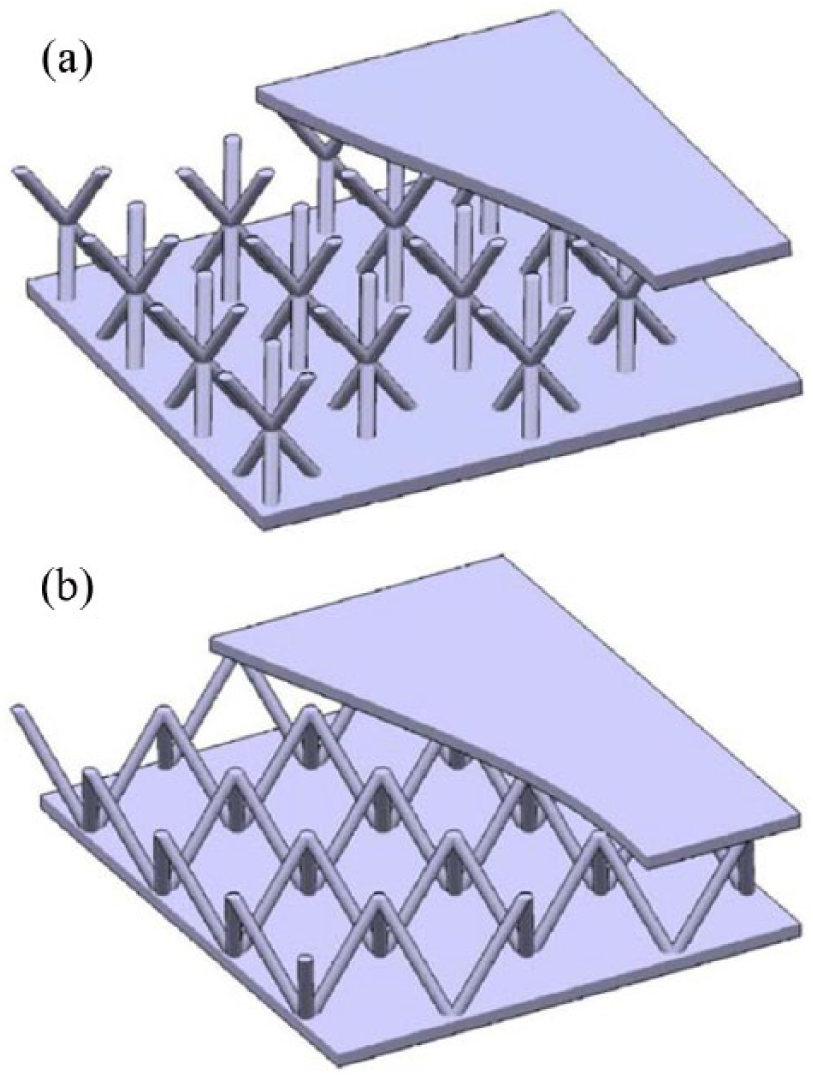
Three-dimensional truss core sandwich structures: 5 (a) 3D Kagome core; (b) tetrahedral core.
At present, modern aerospace vehicle structures call for good properties in terms of load bearing, heat dissipation, electronic shielding, etc. The truss core sandwich plates are gradually being applied in the aerospace field because of their good mechanical properties and functions of structure. In the vehicle running process, the vibration of aircraft components occurs at large amplitude, which could cause serious damage. Therefore, the study of truss core sandwich plates and the dynamic analysis of vibration are significant.
The research of the vibration for truss core sandwich plates is gradually increasing. Lou et al. analyzed free vibration of simply supported sandwich beam with pyramidal truss core via numerical simulation. 6 Xu and Qiu investigated free vibration and optimization of composite lattice truss core sandwich beams and discussed the effect of geometric and material parameters under the influence of natural frequencies. 7 Zhang et al. explored dynamic properties, 8 such as the existence of period, multi-period, and chaotic responses, for truss core sandwich plates subjected to excitations. Zhang and Chen studied the global bifurcations and single-pulse homoclinic orbits of truss core sandwich plates by using the method of global perturbation and numerical simulation. 9 Yang et al. investigated the manufacturing defect sensitivity of modal vibration responses of carbon fiber composite pyramidal truss-like core sandwich cylindrical panels. 10 Chen et al. investigated the dynamics of a truss core sandwich beam with NES (nonlinear energy sink) device. 11 However, few researchers have addressed the problem of the effect of the material parameters for dynamic behavior of the vibration of truss core sandwich plates.
The theory of normal forms, which could be used to investigate the qualitative theory of nonlinear dynamical systems, 12 is composed of traditional normal form and hypernormal form (the unique normal form or simplest normal form). The French mathematician Poincaré was the first to introduce normal form theory. Later, many internationally and domestically well-known scholars, such as Ushiki, Arnold, Holmes, Chow, Elphick, Wang, and Cushman et al., made enormous contributions to the development and the computing method of the theory of normal form. However, the results of hypernormal form about high dimension vector field are scarce compared to plane vector field. In 1999, Gamero et al. studied the issue of hypernormal form of 3D nilpotent system and the corresponding coefficient relationships by using near identity nonlinear transformation and parameter transformation, 13 which was applied to the simplification of the normal form of the autonomous electronic oscillator. In 2004, Murdock researched the basic theory of hypernormal form and algorithms by means of the knowledge of algebra. 14 In 2014, Li et al. applied linear grading function and multiple Lie brackets to obtain a unique normal form. 15
In this paper, we mainly concentrate on the dynamic behavior of a simply supported 3D Kagome truss core sandwich plate. The perturbation analysis of the model of truss core sandwich plates will be investigated for 1:1 internal resonance by using the method of multiple scales, and four dimensionally averaged equations in first order are obtained. Applying the method of combining new grading function with multiple Lie brackets, the hypernomal form at cubic of average equation in first order is obtained. By means of the numerical simulation, the nonlinear dynamics of the model of truss core sandwich plate will be discussed.
Methods
In this section, perturbation analysis of truss core sandwich plate model is investigated by using the method of multiple scales. The truss core sandwich plate is equivalent to a laminated plate according to the equivalent sandwich plate method.
8
Establish the coordinate system in the middle of the board. The length of the plate along the
The model is simplified in Figure 2.
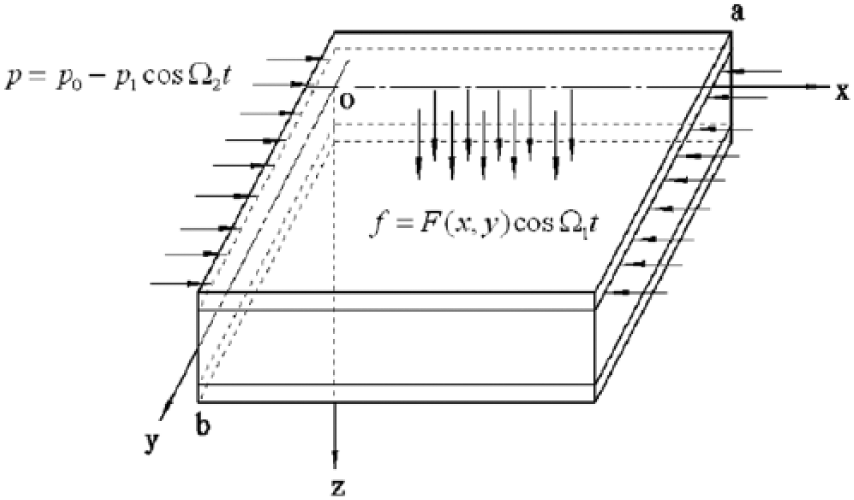
Mechanical model of a truss core sandwich plate.
Perturbation analysis of truss core sandwich plate model
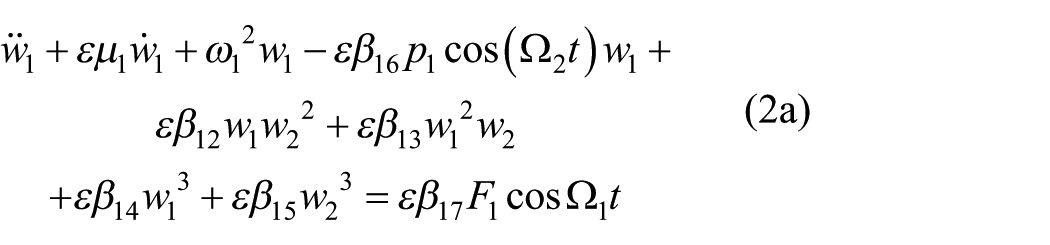
The two-degree-of-freedom nonlinear ordinary differential equation of truss core sandwich plate is as follows: 8
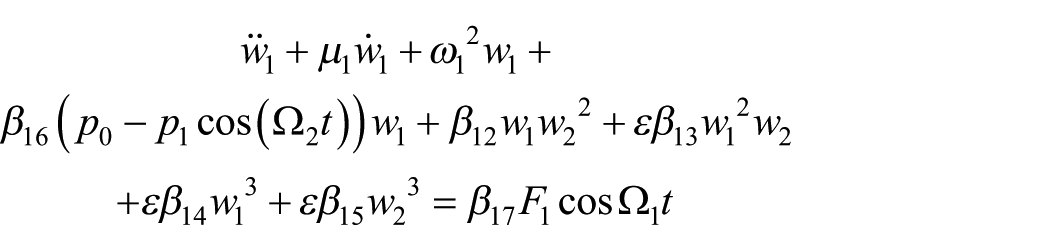
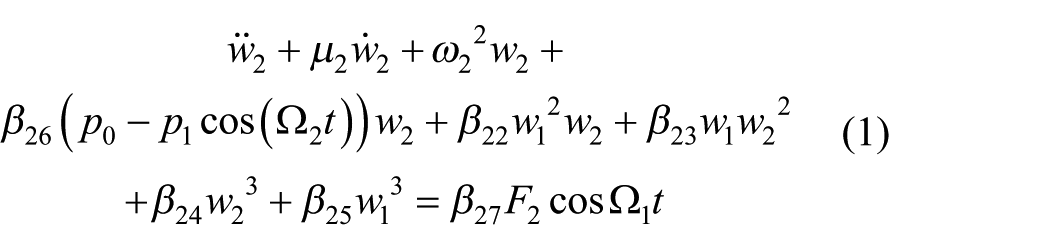
in which


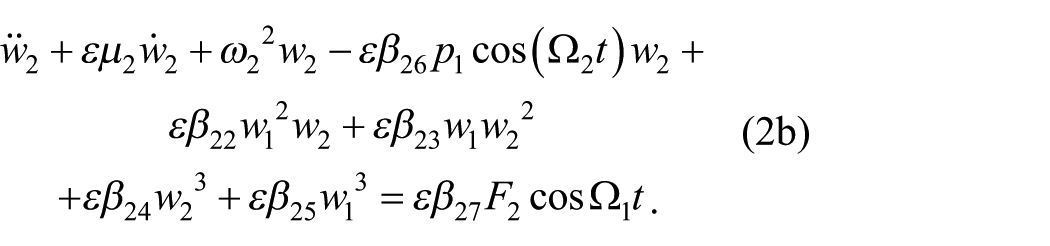
The two-degree-of-freedom nonlinear ordinary differential equation of truss core sandwich plate with small parameter
Consider the case

where
We obtain the averaged equation by using the method of multiple scales:
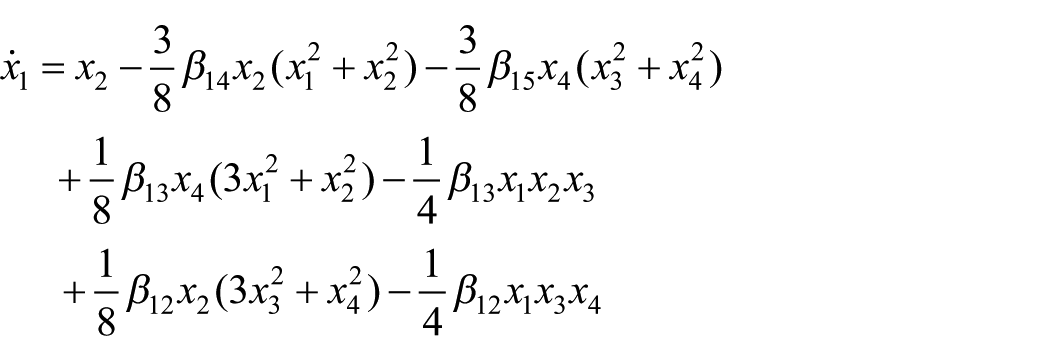
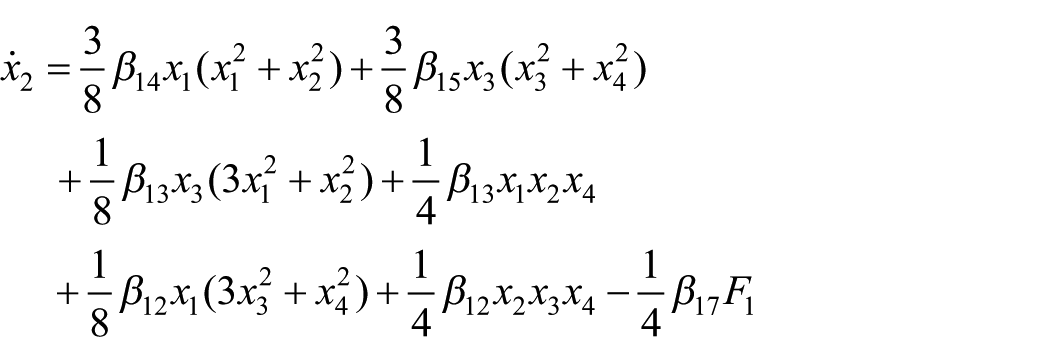
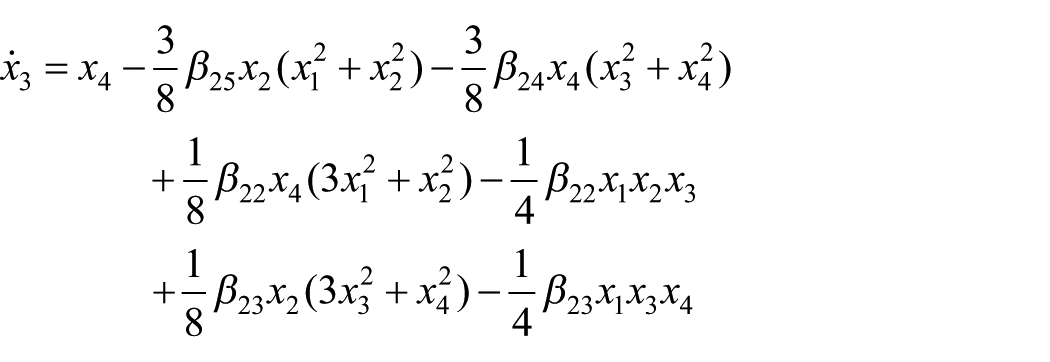
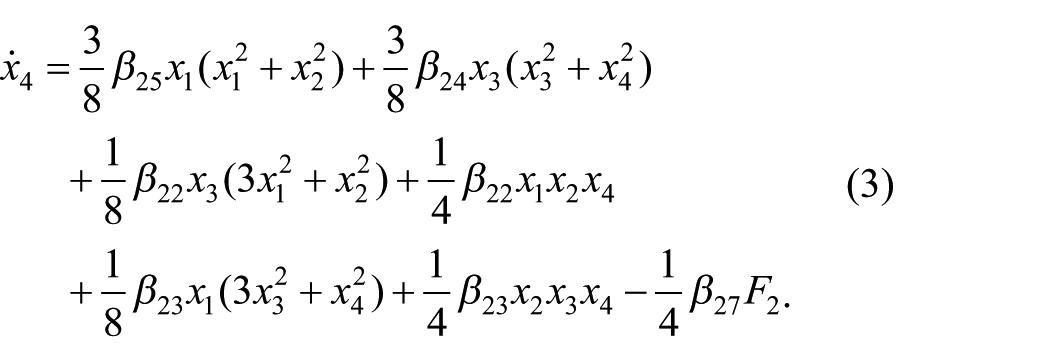
Obviously, the linear part of averaged equation in first order of this model has the double zero eigenvalue, and system of equations (3) is a nilpotent system with symmetries.
Hypernomal form of averaged equation
In order to simplify the equation and facilitate analysis of the nonlinear dynamic behavior of the truss core sandwich plate model, we will figure out the hypernomal form at cubic of averaged equation by combining new grading function with multiple Lie brackets in this part.
Let

where
Denote the new grading function




We introduce some new notation for the matrix:
(1)
(2)
(3)
(4)
(5)
(6)
where
It is easy to verify that


Denote the system of equations (3) as

where
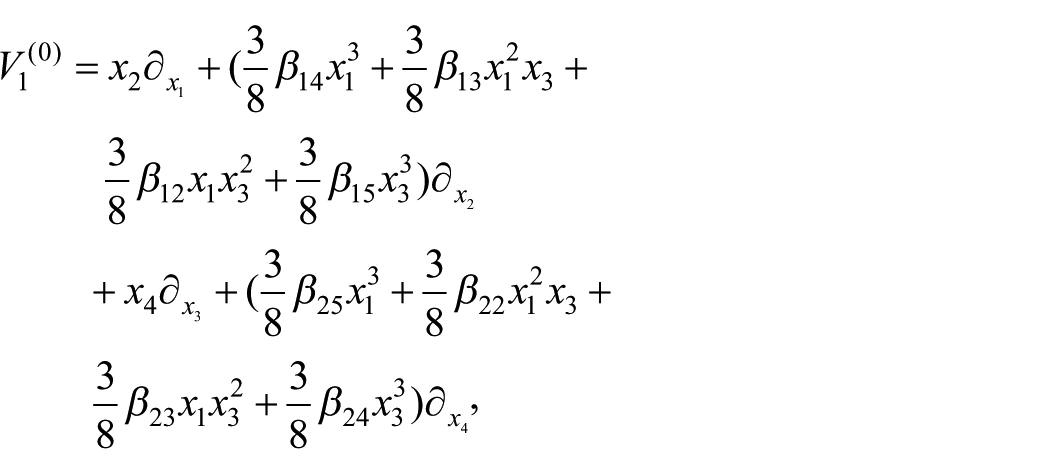
Define the linear operator as

The fundamental space




Then we calculate the complementary subspace and kernel space by applying the method of combining new grading function with multiple Lie brackets. 15
The complementary subspace of
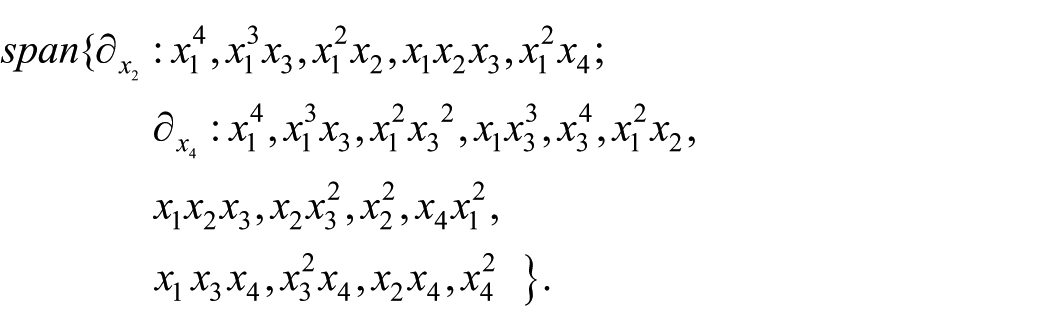
The complementary subspace of
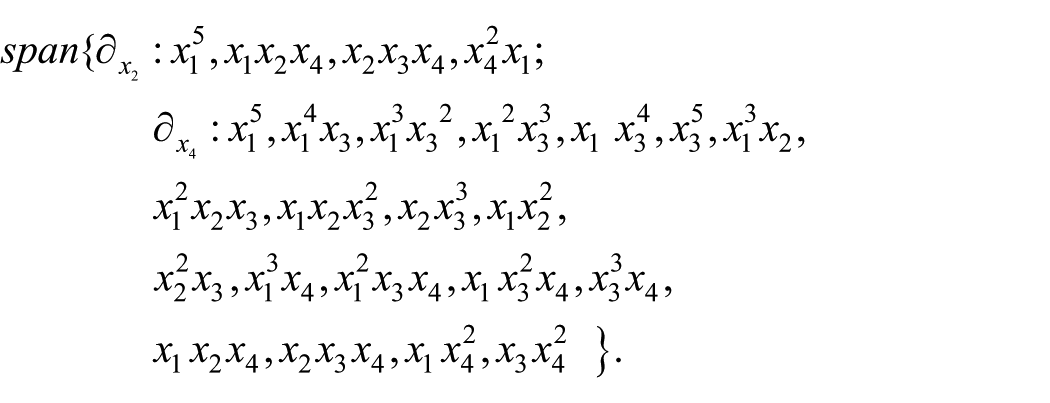
For
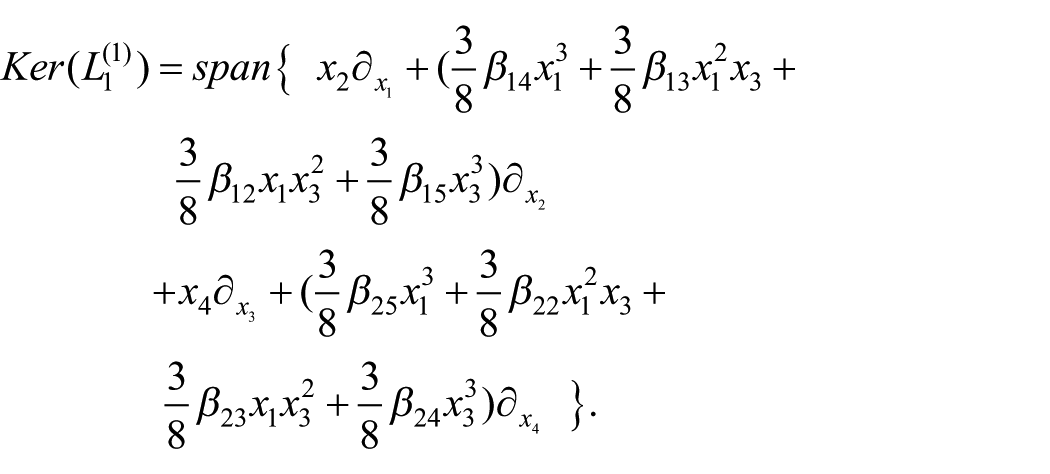
When

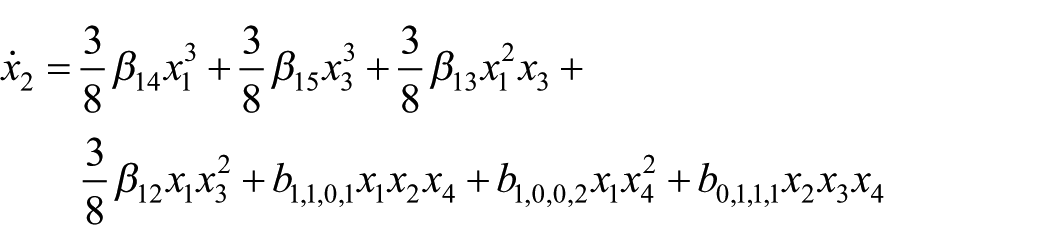

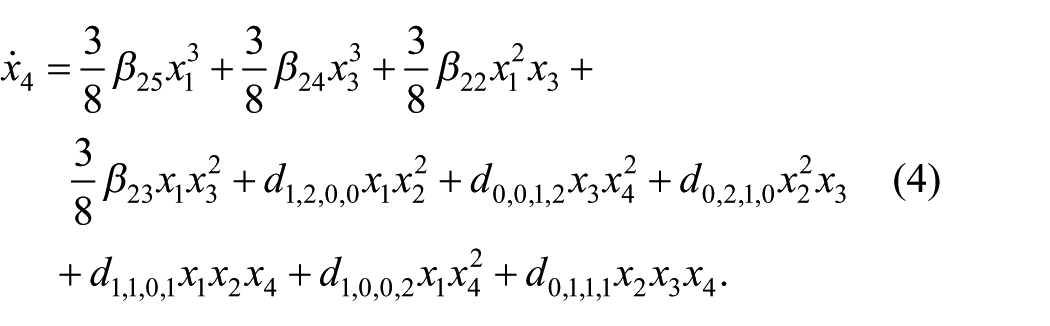
The coefficients are uniquely determined by the origin system. From the coefficient of correspondence, we know that

The hypernomal form after simplification is topologically equivalent to the original system. These results play an important role in further study of the hypernormal form of high dimensional vector field of nilpotent and the periodic solution, bifurcation, and chaos theory of the model of a truss core sandwich plates.
Results
The parameters
For convenience, scale transform is introduced as follows:


The system could be denoted as follows:




Under the condition of

We suppose that the family of closed orbit of the system (equations (4)) is as follows:

There exists an open interval
Obviously, the parameters
The effect of the sign of parameter
The sign of
We introduce some notation for the parameter and initial values, which are of the form


Under the condition of the parameter
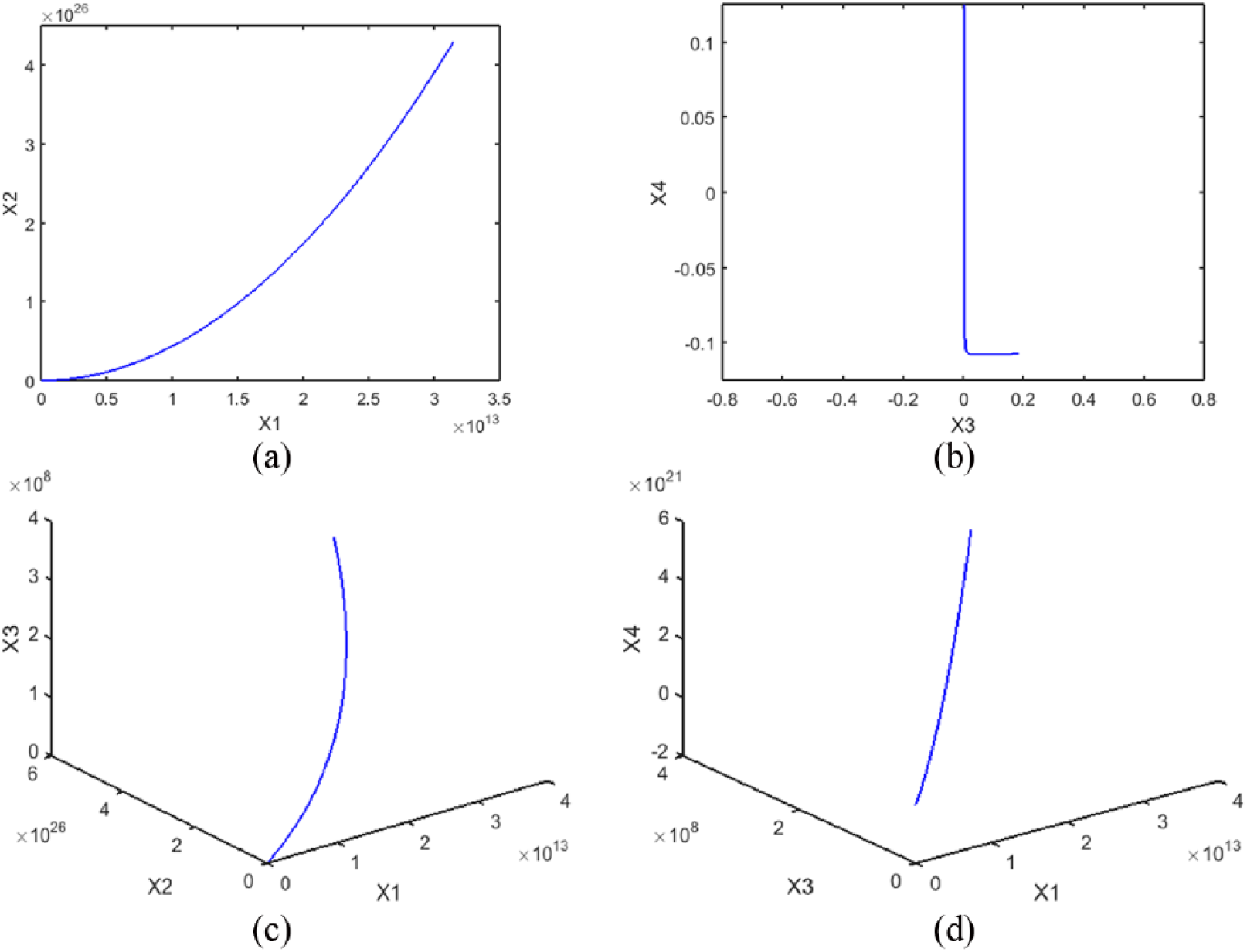
The phase diagram when the parameter
Under the condition of the parameter
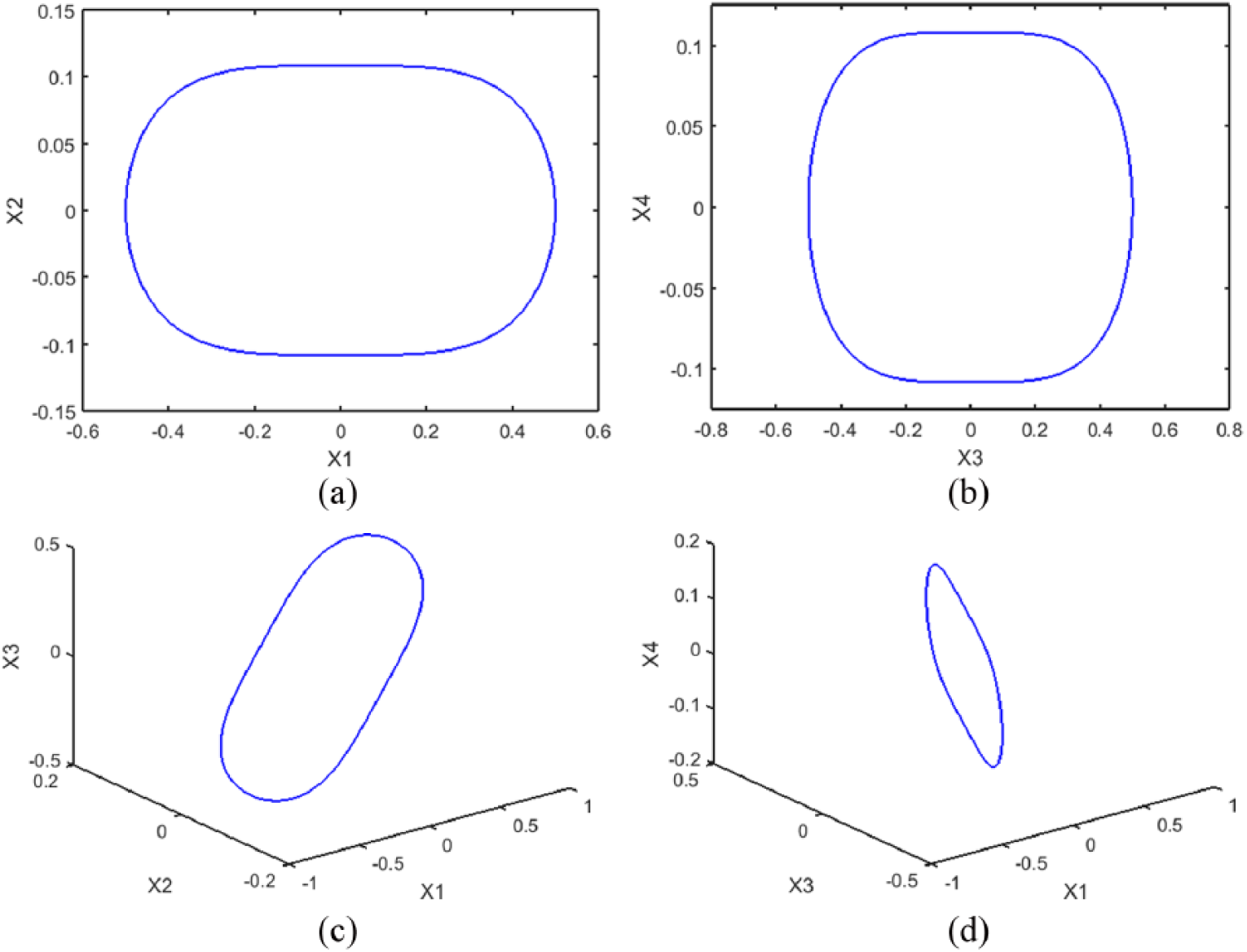
The phase diagram when the parameter
Through the analysis of the Hamiltonian function and the validation of the numerical analysis, it is proved that the periodic solution occurs if
The effect of the sign of parameter
Determining the initial value, the sign of parameter
Under the condition of the parameter
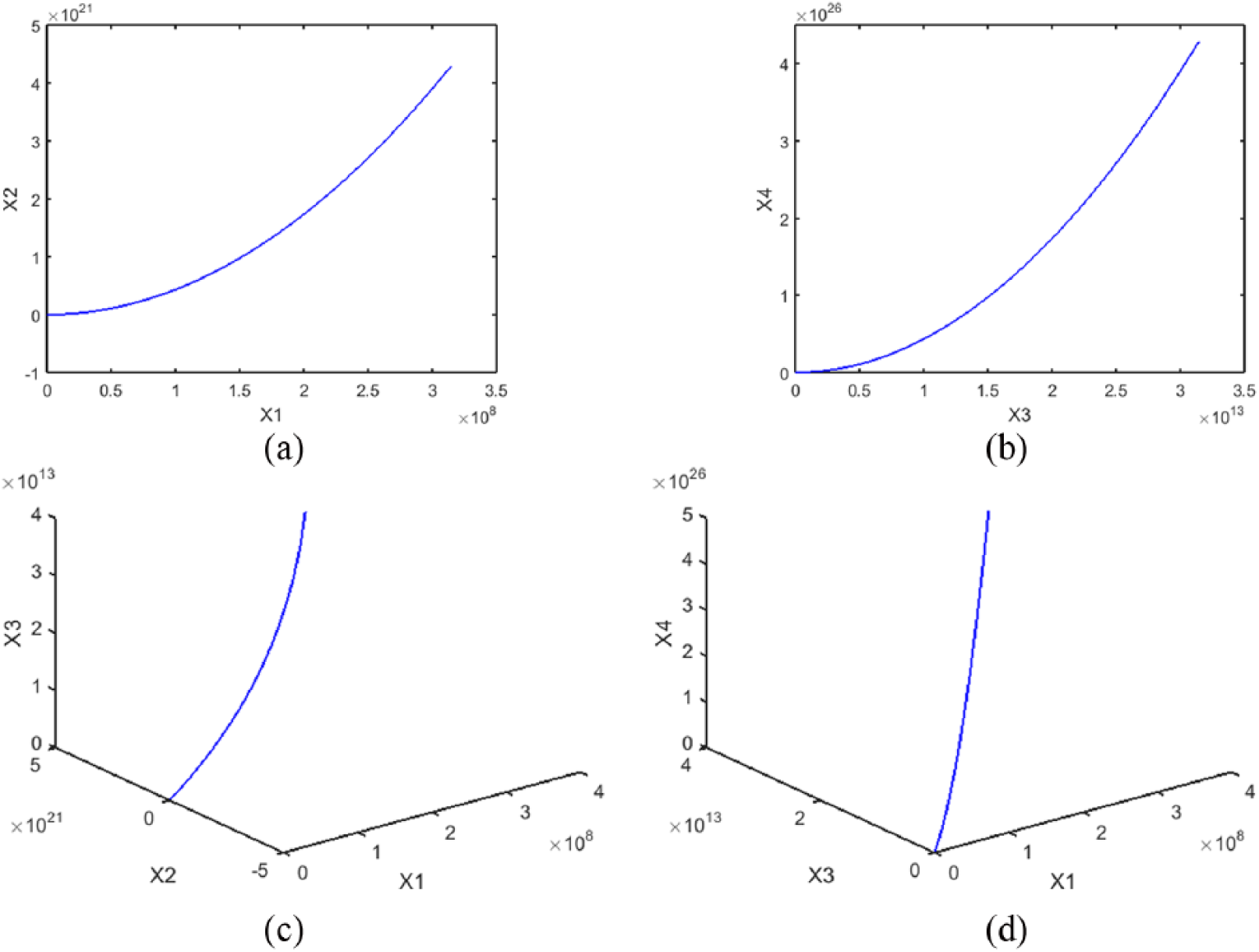
The phase diagram when the parameter
Under the condition of the parameter
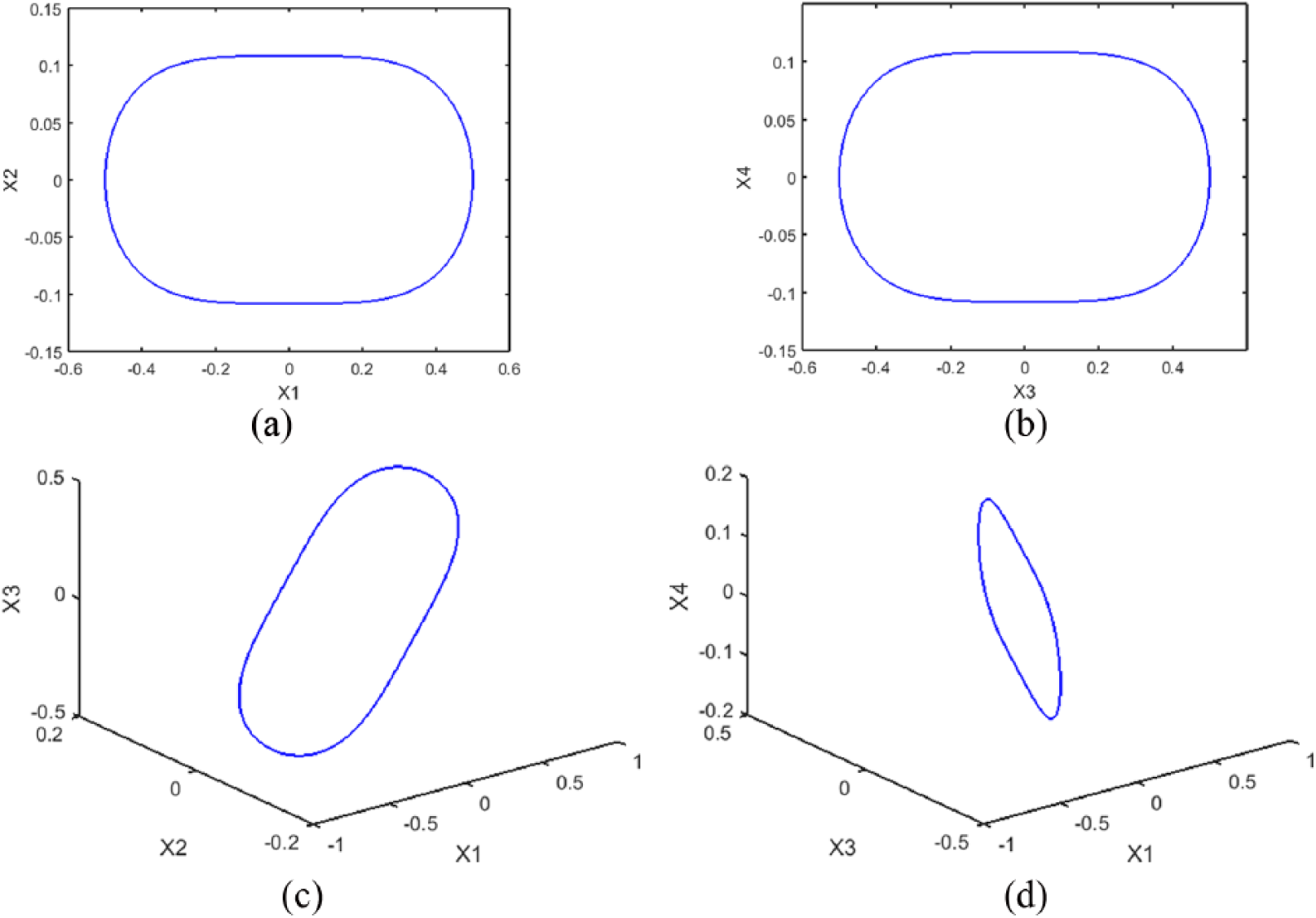
The phase diagram when the parameter
Through the analysis of the Hamiltonian functions and the validation of the numerical analysis, it is proved that the periodic solution may occur if
Discussion
Some principles about this research of simulation are as follows:
The periodic solution of nonlinear autonomous system corresponds to the oscillation process of energy balance. When the energy emitted is equal to the dissipated energy, the system reaches a stable oscillation state. When
In the numerical simulation, the differential equations and the conditions of corresponding solution are established to reflect the quantities of each problem, and determining the parameters to be analyzed is of great significance.
Because periodic solutions of the hypernormal form of the averaging equation correspond to the amplitude modulated oscillations, jumping phenomena occur in amplitude modulated oscillations. Study on periodic solutions of the model of truss core sandwich plate can provide theoretical guidance to the vibration control for the selection of the material parameters.
Research on previous study of truss core sandwich plates mainly focused on the influence of excitation. In this paper, the relationship between periodicity of vibration and parameters is investigated. Firstly, the averaged equation was obtained by means of the method of multiple scales. Applying the theory of combining new grading function with multiple Lie brackets, the hypernormal form was shown. Eventually, we investigated the nonlinear dynamic behavior of the model of truss core sandwich plates, which provides theoretical guidance to the vibration control, to avoid the damage of large amplitude vibrations. Through numerical simulation, the parameter of the model controlled by material property is discussed. The existence of periodic solutions of the system of truss core sandwich plates is investigated. At the same time, future work should include the specific effects of other parameters apart from
Footnotes
Declaration of Conflicting Interest
The author(s) declared no potential conflicts of interest with respect to the research, authorship, and/or publication of this article.
Funding
The author(s) disclosed receipt of the following financial support for the research, authorship, and/or publication of this article: The research project is supported by National Natural Science Foundation of China (11772007, 11372014, 11072007 and 11290152) and also supported by Beijing Natural Science Foundation (1172002, 1122001), the International Science and Technology Cooperation Program of China (2014DFR61080).