




Abstract
Background:
Despite the fact that a number of traditional shale inhibitors have been utilized widely in drilling operations, the same additive may be unfavorable for different drilling due to environmental protection requirements which limit scales of use. Hence, a series of polyammonium compounds was prepared from dimethylamine, epichlorohydrin, and melamine (DEM).
Methods:
To concentrate our efforts, we used both standard and extra methods to investigate the inhibitive properties of a melamine crosslinking agent using mud balls immersion tests, linear expansion measurements, laser particle distribution measurements, thermogravimetric analysis, and scanning electron microscopy.
Results:
The anti-swelling rate of DEM-8 reached up to 92.3% when its concentration reached 0.8%. DEM-8 has strong inhibitive capability to bentonite hydration swelling. DEM-8 can affect the bentonite particle size at a large scale. It may adsorb on the surface of clay through hydrogen bonds and electrostatic interaction by an anchoring effect and a hydrophobic effect.
Conclusions:
Compared with a blank solution, DEM-8 displays high inhibitive ability against the hydration and swelling of clay. The mud ball is more stable in DEM-8 solution and its swelling degree is very low compared with that of the control test. The inhibition mechanism of DEM-8 to shale can be deduced in that hydrogen bonding, ion exchange, and anchoring effect help to control the hydration and swelling.
Introduction
Shale oil/gas has been one of the technologies highlighted in the world in recent years. Borehole stability problems, such as borehole wash-out, stuck pipe, disintegration of cuttings, and bit balling, occur in shale formations mostly due to hydration and swelling of water-sensitive shale during the drilling.1–3 As the water-sensitive shale (high montmorillonite content) is immersed in water-based drilling fluid, a swelling or dispersion of the shale may occur rapidly, depending on the chemical composition of shale and the drilling fluid. As a result, a number of shale inhibitors have been utilized widely in drilling operations,4,5 but the same additive may be unfavorable for different drilling due to environmental protection requirements, which limits the scale of use. 6 Recently, organic amine chemicals have attracted much attention from researchers due to their high performance as a shale inhibitor. They have been applied widely in many oilfields with great success in terms of high inhibition ability, stable rheological properties, and high lubrication.7–9 Currently, polyamine has been developed as a shale inhibitor in many water-based oilfield working fluids because it has superior compatibility with traditional additives. Besides, the polyamine is environmentally friendly, so it has drawn the attention of researchers. 10 In the current work, the inhibitive properties of a melamine crosslinking agent were evaluated by experiments involving mud balls immersion tests, linear expansion measurement, particle distribution measurements, thermogravimetric analysis (TGA), and scanning electron microscopy (SEM). In addition, the inhibitive mechanism is discussed.
Experimental Procedures
Materials and Reagents
Dimethylamine, melamine, and epichlorohydrin were obtained from Xi’an Chemical Reagent Co. Ltd. Bentonite, xanthan gum, and carboxymethylcellulose (CMC) were all supplied by Yanchan Oilfield Chemical Company.
Synthesis of DEM
Dimethylamine and epichlorohydrin with a mole ratio of 1:1 as well as melamine used as the crosslinking agent were employed to synthesize shale inhibitor below 60°C,11,12 as shown in Figure 1. The final product, melamine crosslinking agent, is abbreviated as DEM in the following text.
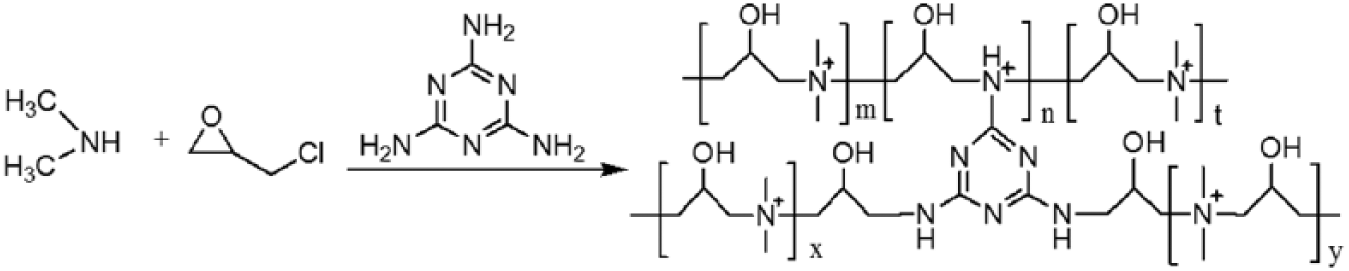
Synthetic principle of crosslinked polycation inhibitor (DEM).
Inhibitive Ability Evaluation
The swelling of bentonite in water was evaluated by a shale expansion instrument (NP-01, Haitongda, Co., Ltd., Qingdao), with reference to Chinese petroleum and natural gas industry standards SY/T5971-1994 and SY/T6335-1997. Mud ball immersion experiments were conducted as follows: 10 g bentonite and 10 mL tap water were used to form a mud ball, which was then was placed in 80 mL aqueous solutions or tap water for 24 h.13,14 The appearance of the mud balls was recorded and compared.
Performance in Drilling Fluid
The water-based drilling fluid was prepared with a dosage of 4% bentonite (m/m), and the apparent viscosity (AV), plastic viscosity (PV), yield point (YP), API filtration (FL), and friction coefficient (TG) were evaluated using a viscometer (ZNN-D6S, Haitongda, Co., Ltd., Qingdao) according to the reported methods.15–17
Particle Distribution Test
The bentonite was dispersed in a certain solution or tap water with a dosage of 4% (m/m), and was stirred for 24 h. Inhibitor was added into the dispersion before the test, and it was stirred for another 20 min. Then the particle size distribution was measured by a laser particle size analyzer (LS-13320, Beckman Coulter, Inc., USA), referring to the reported method.11,12
Thermogravimetric Analysis and Scanning Electron Microscopy
The bentonite samples were dispersed in tap water or inhibitor solution over 24 h, and were then separated from the water and dried at 105°C for TGA and SEM. The TGA experiment was conducted on a TGA/DSC thermal analysis instrument (1/1600, Mettler Toledo, Inc.) at a ramp of 20°C/min from room temperature to 825°C under nitrogen flow. The surface morphology of the bentonite samples was evaluated by a digital microscope imaging scanning electron microscope (model SU6600, serial No. HI-2102-0003) at a 40.0 kV accelerating voltage, referring to the reported method.11,12
Results and Discussion
Screening of Reaction Conditions
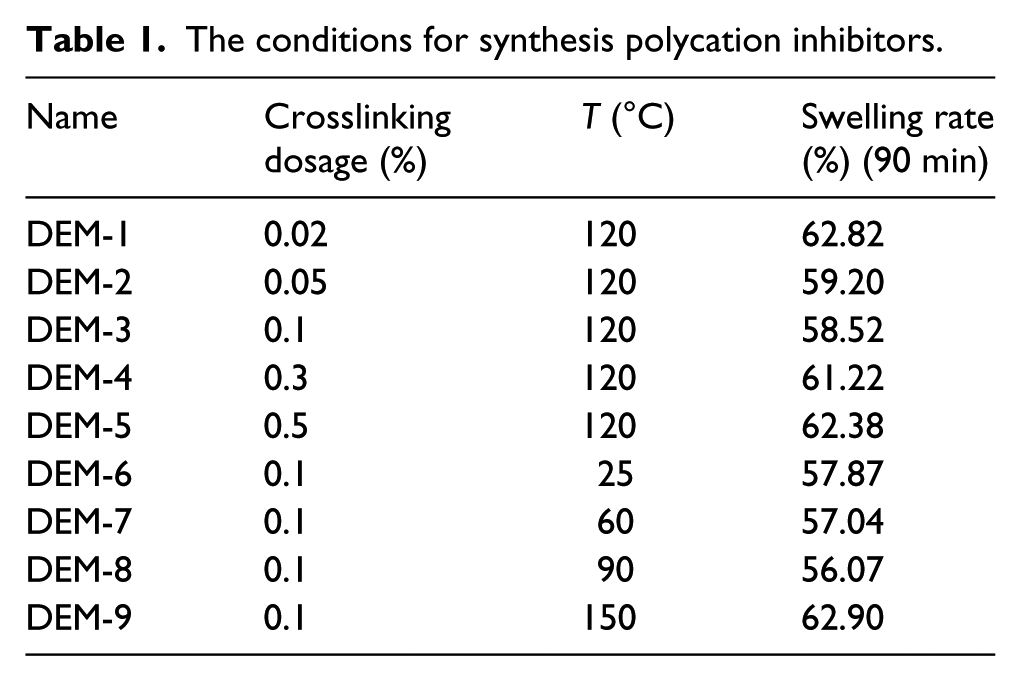
The effects of the dosage of melamine and reaction temperature on the inhibitor’s performance were investigated in terms of the clay-swelling rate, and the results are shown in Table 1. Obviously, as the concentration of melamine is 0.1%, the anti-swelling rate of clay is the lowest. So it is advisable to choose 0.1% crosslinking agent in the following experiment. Furthermore, under different temperature, 0.1% crosslinking agent was investigated on the effect of clay-swelling rate, and the results show that the product synthesized under 90°C is better, and inhibition of clay hydration of DEM-8 is the best. So DEM-8 was selected for the further study in detail.
The conditions for synthesis polycation inhibitors.
Swelling Inhibition
Then the inhibition of the synthesized DEM against the swelling of bentonite was evaluated through the linear swelling rate with time in different inhibitor solutions. As shown in Figure 2, independent of network poly-quaternary ammonium salts addition, the swelling rate increases dramatically during the first 10 min, and then it increases slightly. Compared with the control sample, the inhibitor shows high inhibitive ability to swelling of bentonite. The swelling rate reaches to a minimum at a certain concentration in DEM-8 solution. The inhibition depends on the adsorption of poly-quaternary ammonium salts on the clay surface through electrostatic interaction and hydrogen bonds by an anchoring effect and a hydrophobic effect. Since the inhibition is a complex function, the swelling rate does not show a linear relation with the concentration. According to results from comprehensive testing, 0.5% DEM-8 may be an optimum.
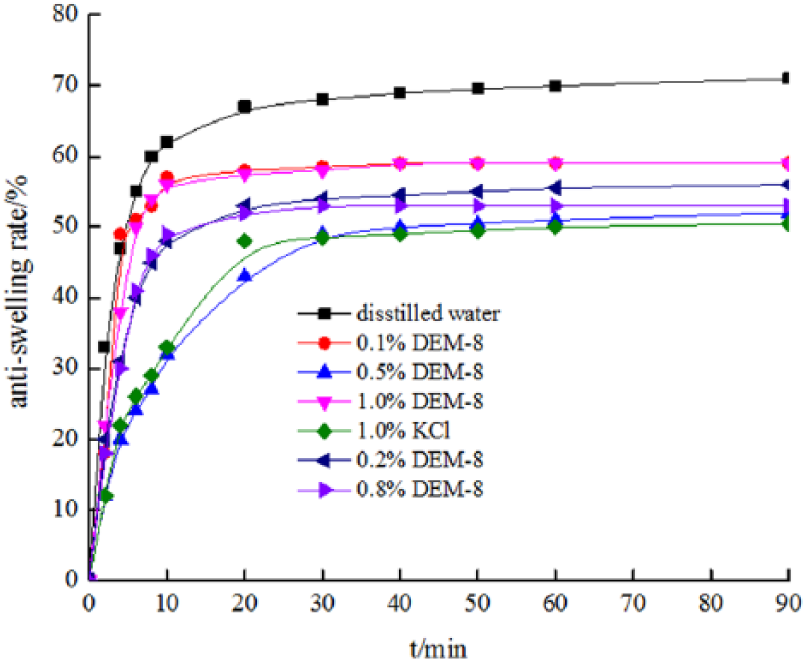
The screening of the concentration of inhibitors.
To provide more intuitive information on the function of DEM-8, the mud ball test was conducted. Four mud balls were placed in tap water, 0.5% DEM-8, and 1.0% KCl. As shown in Figure 3, this showed that the mud ball immersed in tap water swelled clearly and surface became unsmooth. The mud ball immersed in 1.0% KCl does not swell clearly, and the surface is free of cracks and smooth. The mud ball immersed in 0.5% DEM-8 solution changed slightly, and its surface is still smooth with a little cracks. Finally, the mud ball immersed in 0.5%DEM-8 + 1.0% KCl displayed the similar appearance with that of 0.5% DEM-8. The results showed that
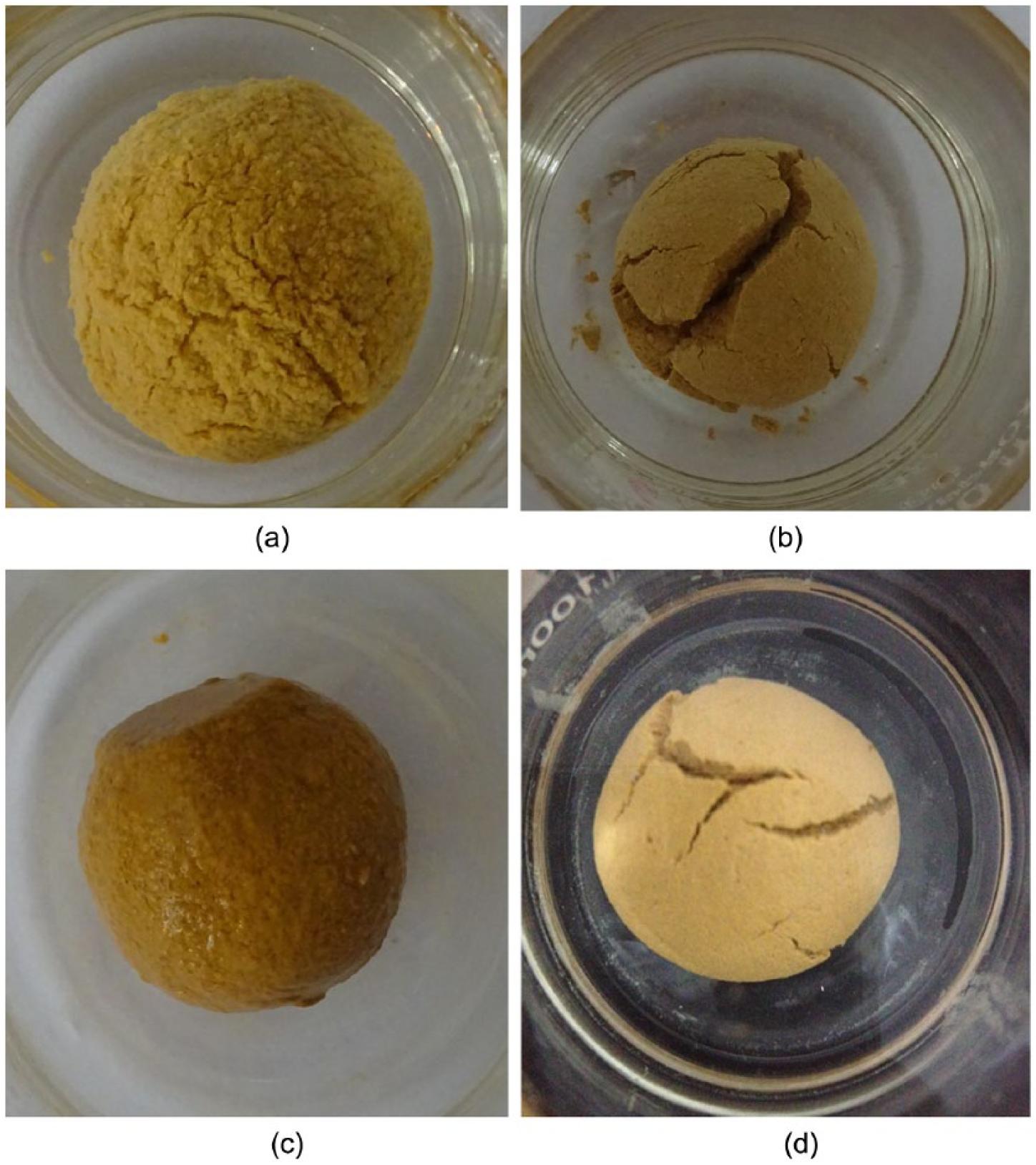
The appearance of mud balls immersed in different treatment solutions for 12 h: (a) tap water, (b) 0.5% DEM-8, (c) 1.0% KCl, (d) 0.5% DEM-8 + 1.0% KCl.
A centrifugal separation technique was used to determine the influence of anti-swelling property of DEM against clay referring to petroleum and natural gas industry standard SY/T5971-1994 of China, as shown in Figure 4. The results show that the anti-swelling rate of DEM exhibits a tendency to first increase and then reduce with the increase of its concentration in the range from 0.1% to 1.2%. It is obvious that the anti-swelling rate of DEM-8 reaches a maximum (92.3%) with a concentration of 0.8%.
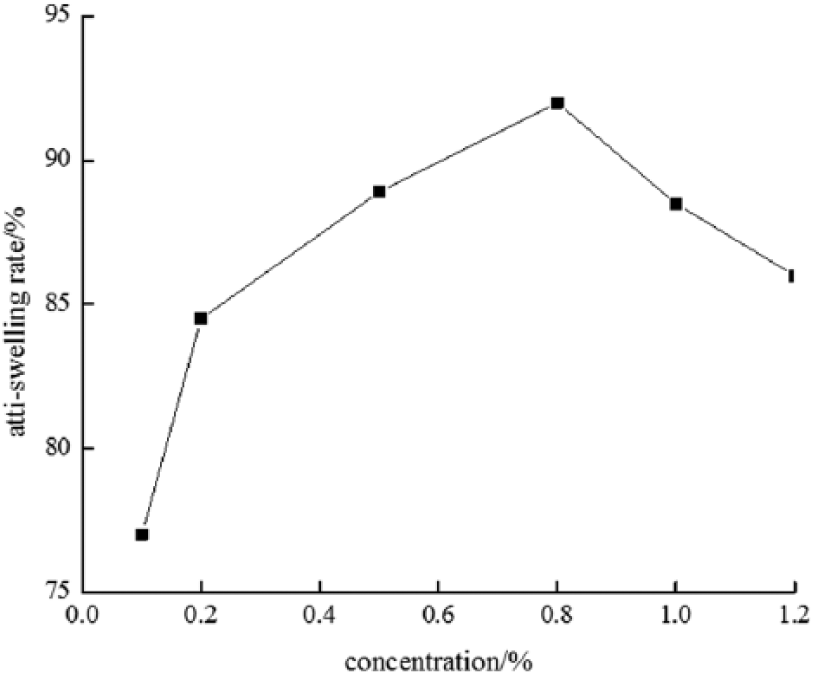
The effect of DEM-8 concentration on anti-swelling rate.
Performance in Water-Based Drilling Fluids
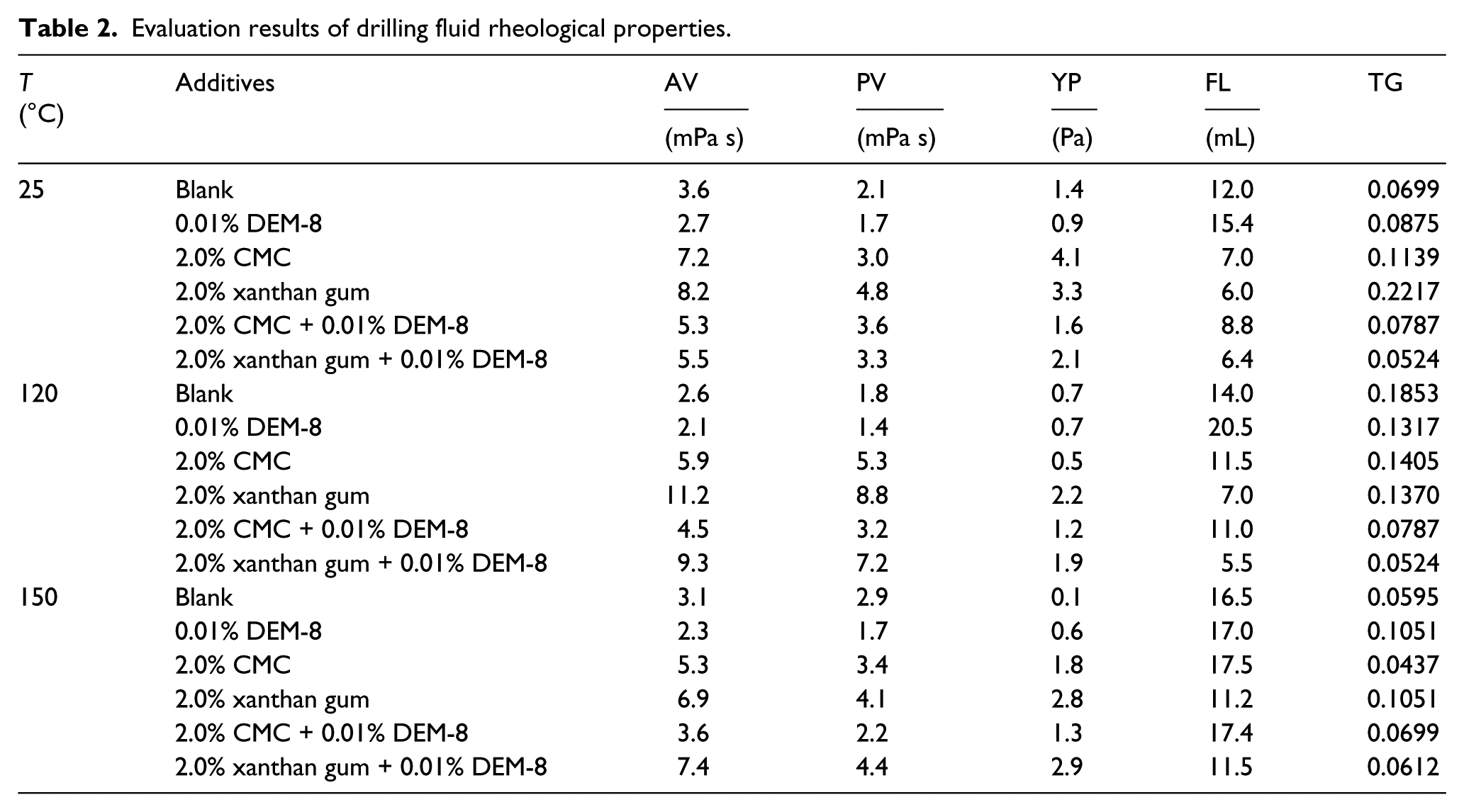
The performance of DEM-8 in water-based drilling fluids was measured in accordance with GB/T 16783.1-2006, and the results are shown in Table 2. It was found that, with addition of DEM-8, the viscosity and shearing force of the drilling fluid were lower than the control sample without inhibitor, but the filtration property does not appear to be significantly changed, indicating that DEM-8 can restrain the bentonite slurry deep swelling to reduce the viscosity effectively. The synthesized DEM-8 and traditional drilling fluid additives have excellent de-filtration effects. The results also indicated that DEM-8 is compatible with the common drilling fluid additives, xanthan gum and CMC, and it does not enhance the filtration when added to the water-based drilling fluid composition. The most important thing is that DEM-8 can reduce the viscosity under high temperature, and thus can be used as a viscosity reducer.
Evaluation results of drilling fluid rheological properties.
Inhibitive Mechanism Analysis
Particle Size Distribution Test
The effect of DEM-8 on the bentonite particle size distribution is shown in Figure 5, and the control samples were also investigated. It shows the average size of virgin bentonite particles is 38.08 μm, and the hydrated bentonite particles were reduced to 11.06 μm. The result is different as DEM-8 was added into the bentonite suspension before and after the hydration of bentonite. When the original bentonite was added in the DEP-8 solution, the average size of particles does not change obviously after 16 h, and the size is a little larger than that of original bentonite. When 0.5% DEM-8 was introduced into the aged bentonite suspension, it was found that the particle size increased to a large scale. The average size is much larger than that of the hydrated bentonite suspension and similar to the unhydrated one, which may be attributed to the flocculation function of DEM-8. Based on the experimental data, we found that DEM-8 can inhibit bentonite from hydration and swelling.
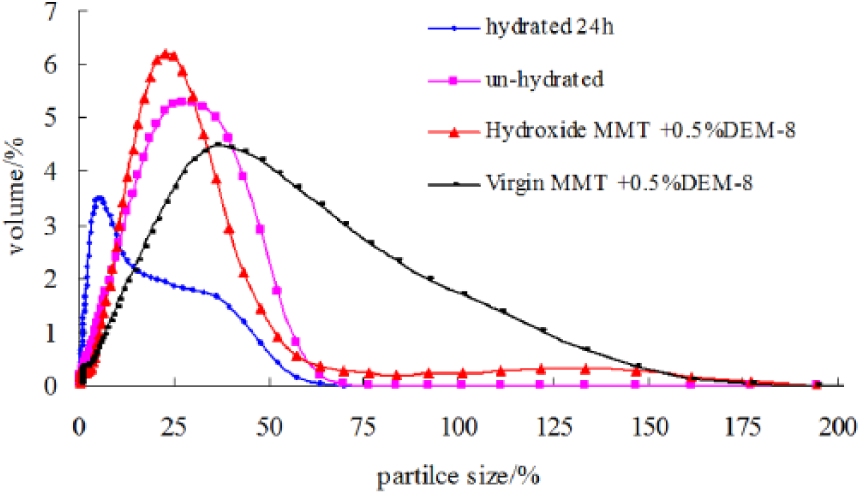
The distribution of clay particle size in different suspensions.
TGA
The relationship between mass loss and temperature can be evaluated by TGA. 18 Three weight loss steps can be found in the curves of bentonite samples modified in different ways, as shown in Figure 6. The weight loss of the bentonites treated by DEP-8 solution differs from the control samples significantly between room temperature and 300°C. The weight loss of tap water treated bentonite is 5.92% from 25°C to 250°C, and the weight loss of the 0.5% DEM-8 modified bentonite is 2.12%. It is obvious that the DEM can reduce the water content of the sample, and after 300°C the organic compounds will decompose. From this test, it can be concluded that 0.5% DEM-8 can obviously inhibit the bentonite from absorption of water.
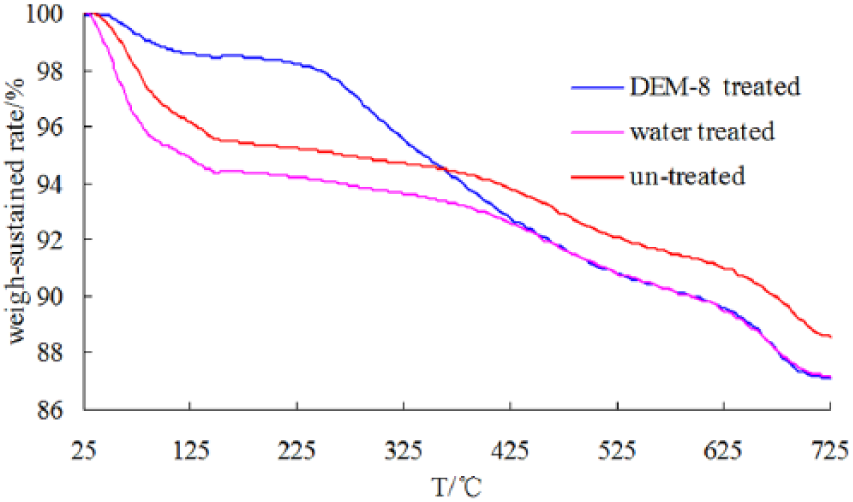
The TGA of different bentonite samples.
SEM
In order to study the morphology of bentonite modified with different chemicals, SEM was conducted. Figure 7(a) shows the SEM image of the virgin bentonite. Figure 7(b) displays the bentonite immersed in water for 24 h, and it can be observed that the particles changed to smaller particles after the modification. Figure 7(c) displays the bentonite immersed in 0.5% DEM-8 for 24 h. As a result, the particle size of 0.5% DEM-8-immersed bentonite is similar to the original one, and they are much larger than that of the bentonite immersed in tap water. It can be deduced that the interaction of polyammonium and bentonite, as well as the hydrogen bonds between ammonium groups, hydroxyl groups, and siloxane groups from DEM-8 and bentonite, can enhance the absorption of DEM-8 on the clay surface and inhibit the hydration and restrict the swelling of the clay. 19
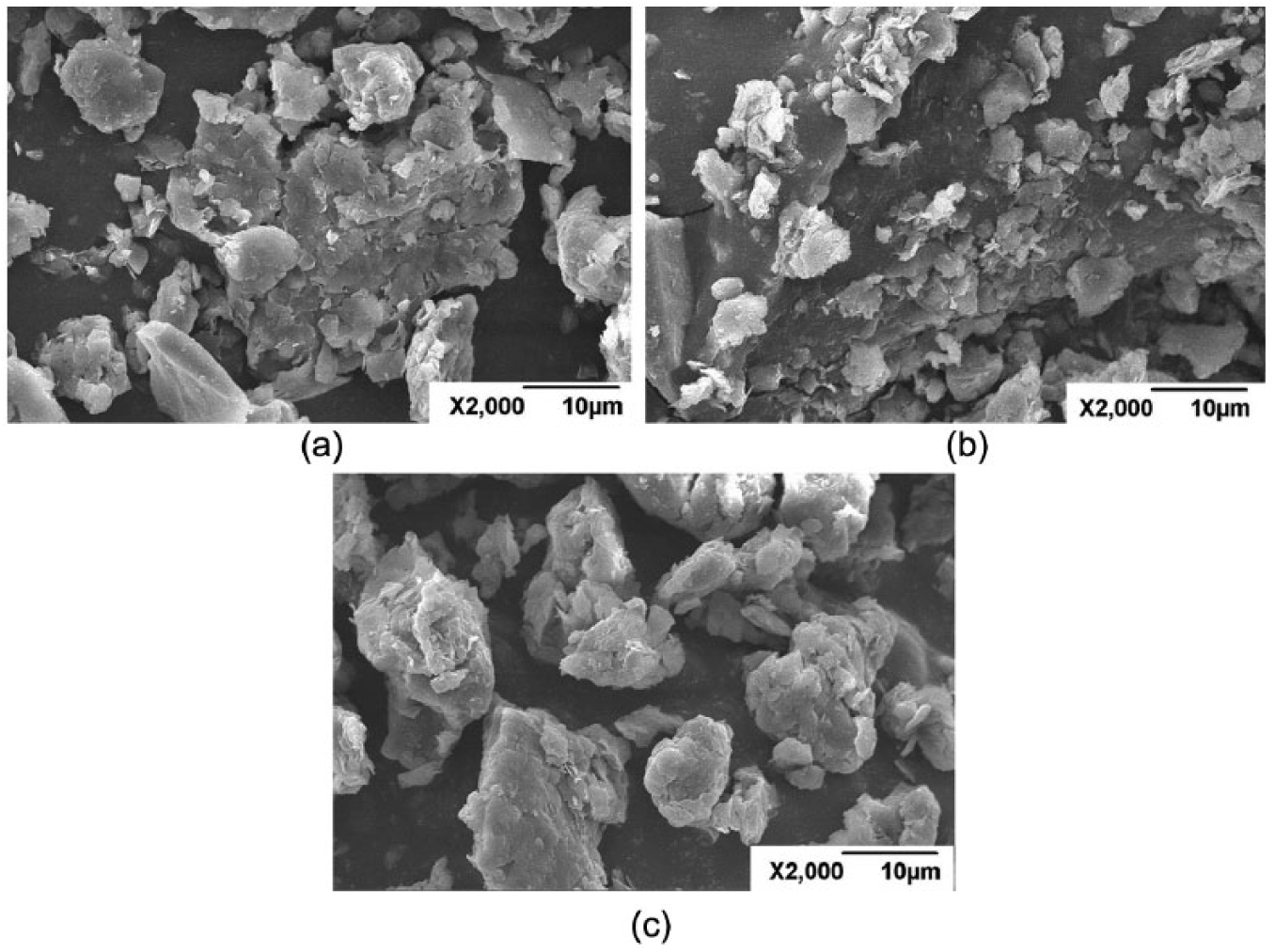
SEM pictures of bentonite treated with different methods: (a) virgin bentonite; (b) bentonite treated with water; (c) bentonite treated with DEM-8.
Conclusions
In this work, a crosslinked polycation inhibitor (DEM) was synthesized from epichlorohydrin, dimethylamine, and melamine. The inhibitive properties of DEM-8 to the swelling of clay were studied in detail. The research showed that, compared with a blank solution, DEM-8 displays high inhibitive ability against the hydration and swelling of clay. The anti-swelling rate of 0.5% DEM-8 reaches up to 85%. The mud ball is more stable DEM-8 solution and its swelling degree is very low compared with that of the control test. TGA, ion exchange tests, and scanning electron microscope analysis were used to study the inhibition mechanism. The inhibition mechanism of DEM-8 to shales can be deduced in terms of the hydrogen bonding, ion exchange, and anchoring effects that help to control the hydration and swelling.
Footnotes
Declaration of Conflicting Interests
The author(s) declared no potential conflicts of interest with respect to the research, authorship, and/or publication of this article.
Funding
The author(s) disclosed receipt of the following financial support for the research, authorship, and/or publication of this article: The work was supported by the Natural Science Foundation of Shaanxi Province (grant number 2017JQ2041) and the National Science Foundation of China (grant number 50874092).