




Abstract
Introduction:
Modified epoxy suitable for ultraviolet (UV) curing is prepared by using organic silicon toughening. The curing kinetics of the composite are studied by dielectric analysis (DEA), and the two-phase compatibility of the composite is studied by scanning electron microscopy (SEM).
Methods:
The tensile properties, heat resistance, and humidity resistance of the cured product are explored by changing the composition ratio of the silicone and the epoxy resin.
Results:
SEM of silicone/epoxy resin shows that the degree of cross-linking of the composites decreases with an increase of silicone resin content. Differential thermal analysis indicates that the glass transition temperature and the thermal stability of the composites decrease gradually with an increase of silicone resin content. The thermal degradation rate in the high temperature region, however, first decreases and then increases. In general, after adding just 10%–15% of the silicone resin and exposing to light for 15 min, the composite can still achieve a better curing effect.
Conclusions:
Under such conditions, the heat resistance of the cured product decreases a little. The tensile strength is kept constant so that elongation at breakage is apparently improved. The change rate after immersion in distilled water at 60°C for seven days is small, which shows excellent humidity resistance.
Introduction
Alicyclic epoxy resin has the advantages of high tensile strength, compressive strength, temperature resistance, and excellent weatherability compared to traditional epoxy resin. It can be cured by an acid anhydride curing agent or cationic catalyst. It also has disadvantages, however, like brittleness, poor toughness, and other shortcomings. With the increasing demands for high-performance materials, modification of alicyclic epoxy resin is an attractive area of research.1–3 Silicone resin is a cross-linked semi-inorganic polymer that use a Si-O-Si bond as the main chain and silicon atoms to connect the organic group, with excellent flexibility, weather resistance, and hydrophobicity, along with other characteristics. These also have shortcomings, however, such as low bonding strength, long curing times, and not easy to apply. Following the addition of a suitable proportion of silicone resin into the epoxy resin by blending or copolymerizing, the flexible Si-O bond can be introduced in the cured product to reduce the internal stress of the epoxy resin. That further improves the toughness, thermal stability, and humidity resistance, but maintains the characteristics of epoxy resin.4–6 Hence, this improves the performance of silicone-modified epoxy resin, and has good prospects for further development.
At present, the curing of silicone-modified epoxy resin predominantly uses the heat curing method. There are few reports of using a ultraviolet (UV) curing method to achieve silicone-modified epoxy resin curing. With the increasing demands for environmental protection, UV curing has been widely used in environmental protection, energy saving, and improving efficiency. 7 The limited penetration of UV light, however, poses a challenge for effective curing where ultraviolet light cannot penetrate. Therefore, curing of resins of increased thickness has become a challenge for UV curing.8–10 In particular, the addition of organic silicon resin reduces the concentration of the epoxy functional group, making it harder to cure the resin. To address these problems, the UV curing behavior of epoxy resin is studied by combining the photo initiator with the thermal initiator. The effect of the resin ratio on the curing kinetics of silicone resin (ES)/epoxy resin (CEP) composite is studied by dielectric analysis (DEA). The tensile properties and humidity resistance of the cured product are tested. The thermal properties of the cured product are analyzed by thermogravimetric analysis (TGA) and differential scanning calorimetry (DSC). This lays a foundation for the broader application of UV cured epoxy resin.
Methods
Experimental materials
Alicyclic epoxy resin UVR6128, bis(3,4-epoxycyclohexylmethyl) adipate (CEP) was procured from Jiangsu Taizhou Teideer Chemical Co. Ltd (Jiangsu Province, China). Silicone resin ES-06 (ES) was procured from Wujiang City Heli Resin Co. Ltd (Jiangsu Province, China). Cationic photoinitiator 820, bis(4-methylphenyl)iodonium hexafluorophosphate was procured from Jiangyan Jiasheng Technology Co. Ltd (Jiangsu Province, China). Cationic thermal initiator T was procured from Shenzhen Chuchuang New Materials Co. Ltd (Guangdong Province, China).
Experimental procedure
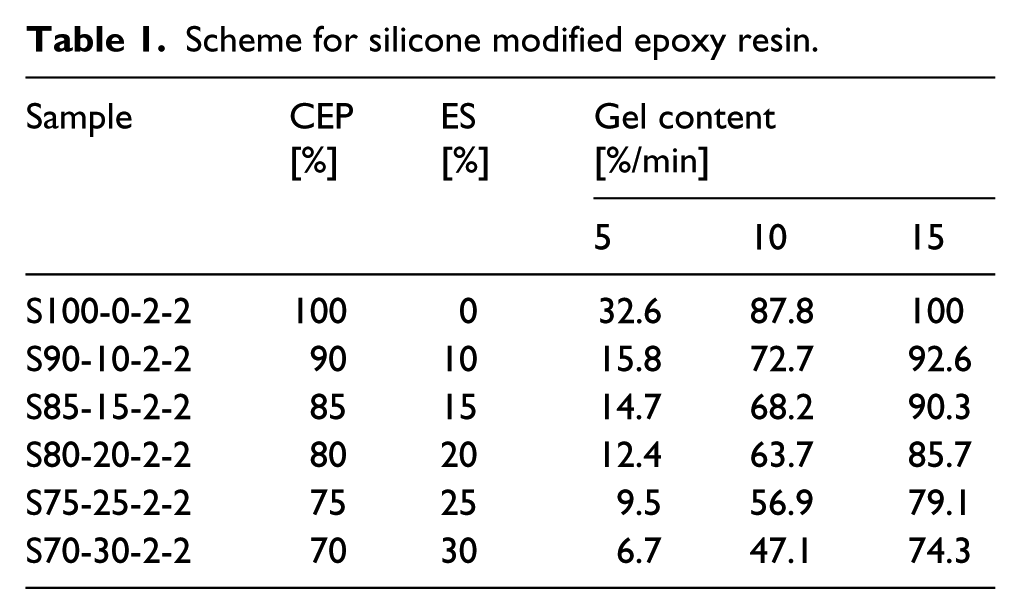
To study the effect of the resin ratio on the properties of the modified epoxy resin, the materials were combined as shown in Table 1. According to Table 1, the ES/CEP composite is prepared by adding different proportions of silicone and epoxy resin. Photo initiator 820 (2%) and cationic thermal initiator T (2%) were then added to the blended resin. The mixture was stirred at room temperature for 48 h. After pouring the modified epoxy resin into the mold, it was placed under a 1000 W high pressure mercury lamp at 15 mm pressure, and irradiated for 15 min for curing. After curing the mold is cooled and removed.
Scheme for silicone modified epoxy resin.
Performance testing
Dielectric analysis (DEA)
A Netzshch DEA28800A02 device (NETSCH-Geratebau Gmbh, Selb, Germany) is used to monitor the resin curing reaction process. The evenly mixed resin in different ratios was used to coated the surface of the sensor, and the coating width kept to about 1 mm. The sampling frequency was set to 10 Hz, the starting temperature of the resin kept to about 25°C, and the dielectric properties of the resin were measured with the curing time.
Scanning electron microscopy (SEM) analysis
The curing product is broken in liquid nitrogen, followed by spray treatment of the cross-section and the fracture morphology was then observed by JSM-5610LV (JEOL and headquartered in Tokyo, Japan).
Tensile properties test
According to GB/2567-2008, the tensile properties of the resin are tested with a WDS-1 electronic universal tensile machine from Jinan Taist Co. Ltd (Shandong Province, China). The operating temperature and the tensile rate are kept at room temperature and 1 mm/min, respectively.
Differential scanning calorimetry (DSC) test
The glass transition temperature of the cured product was measured using a DMA 2980 differential scanning calorimeter from Tainstruments Co., New Castle, USA. The temperature is kept at 10°C/min and the temperature range is selected as 20–500°C.
Water resistance test
The weight of the sample after curing is recorded as M1. The sample was then immersed in distilled water at a temperature of 60°C for seven days and weighed as mass M2. The water resistance of the modified epoxy resin is then calculated as

Results and discussion
Dynamic analysis of modified epoxy resin
The chosen resin in this paper is consists of epoxy resin (CEP) and silicone resin (ES). Under ultraviolet light irradiation, cationic photo initiator 820 absorbs the light energy to decompose the Lewis acid and then initiates the curing reaction of the epoxy resin. Because of the limited penetration of the ultraviolet light, it can only cause curing of the surface resin, and it is difficult to cure deep inside the resin. But the curing reaction of the epoxy resin is an exothermic reaction: the heat produced by the exothermic reaction and the ultraviolet light irradiation can promote the decomposition of the thermal initiator T (initiator T has the characteristics of low temperature initiation and can effectively initiate polymerization at 80℃). The decomposition of initiator T also initiates the curing of the epoxy resin, so that the curing reaction can continue so long as a certain temperature is reached where ultraviolet light is not available. 11 The ionic viscosities for the different resin ratios with the irradiation time curve are shown in Figure 1. The ionic viscosity is characterized by the resin ion activity, which can indirectly characterize the degree of curing of the resin. 12 According to the literature, 12 the degree of curing α can be represented as a function of time

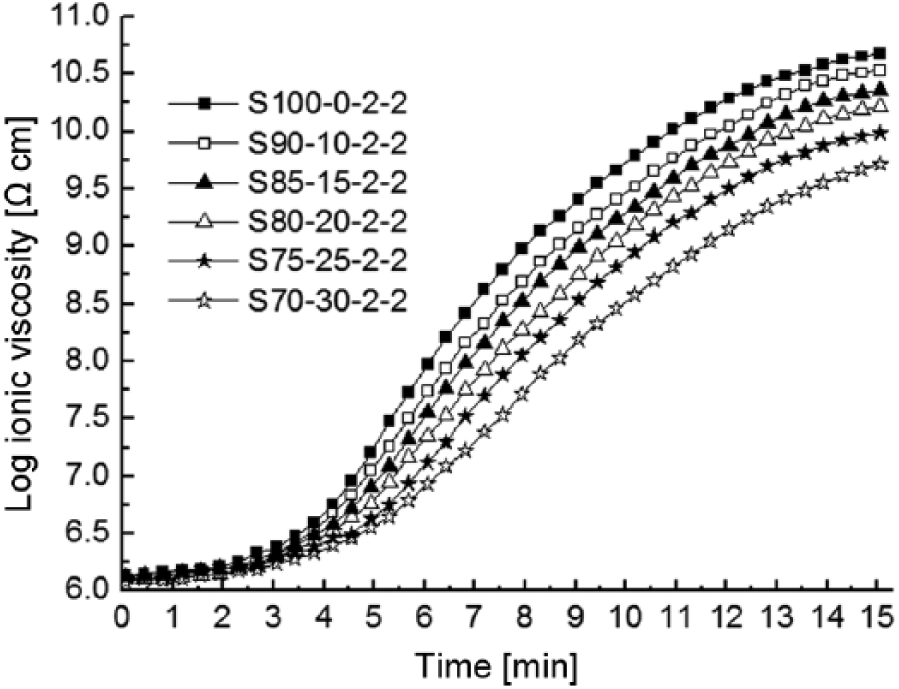
Effect of resin component concentration on UV curing kinetics.
where α(t) represents the curing degree of the resin varying with time;
SEM analysis
The micro-morphologies of cured resins with different ratios are shown in Figure 2. Figure 2(a) shows the unmodified epoxy resin. The cross-section is relatively smooth, which produces fewer stress stripes in the same direction. There is no obvious stress dispersion phenomenon with a typical brittle fracture. The mixed resins with different proportions of silicone are shown in Figure 2(b) to (f). It can be seen that the stress stripes and the dispersion of the fracture direction of the cured epoxy resin gradually increase and the ductile fracture is seen. Although the cross-sections of cracked samples S90-10-2-2 and S85-15-2-2 increase, there is no obvious two-phase structure when the silicone resin content is less than 15%. This indicates that the blended resin has good compatibility. This is consistent with the experimental results where the tensile strength of the cured product does not significantly decrease after adding 15% silicone resin. When the silicone resin content is increased, the cross-section of the cured product shows a two-phase structure and the size of the dispersed phase is increased. This indicates that the compatibility of the two-phase structure gradually deteriorates. This is due to the process of curing as the epoxy and silicone resins react. The curing reaction is mainly composed of the first kind when the silicone resin content is small. It is easy to form the continuous phase of the highly cross-linked three-dimensional network structure. The second reaction gradually increases when the silicone resin content is greater. This indicates that the dispersed phase has increased. During the curing process, the two reactions are carried out sequentially. Some of the molecules in the epoxy resin system participated in the second curing reaction to form the gel region. As the first reaction forms a three-dimensional network structure during the continuous phase of the three-dimensional network structure, the structural resistance increases. Finally, phase separation occurs under thermodynamic action due to the different dissolution parameters of the two-phase structure. As a result, the compatibility of the two phases deteriorates.
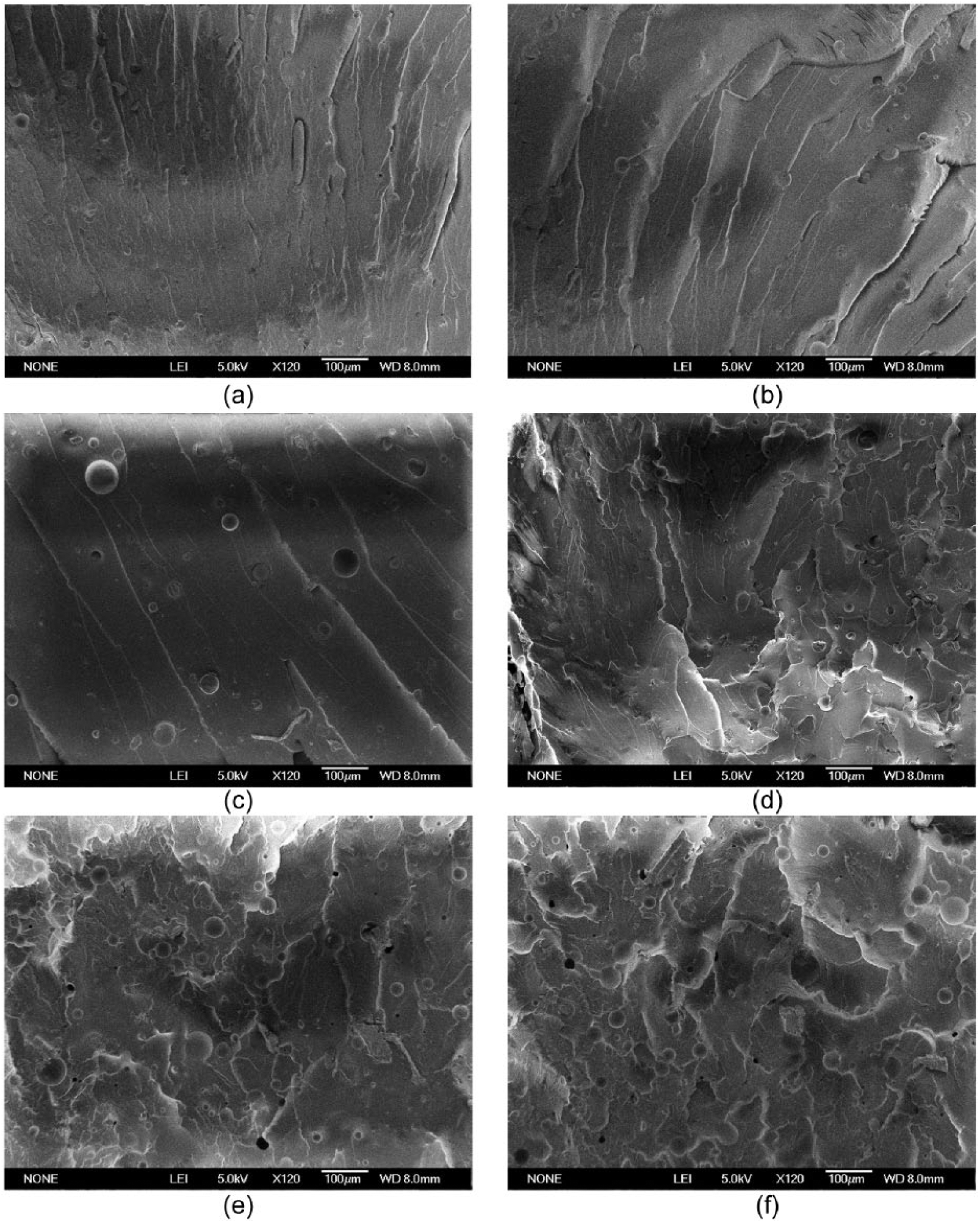
Scanning electron micrographs for resins with different ratios: (a) unmodified epoxy resin, (b) modified epoxy resin with 10% organic resin, (c) modified epoxy resin with 15% organic resin, (d) modified epoxy resin with 20% organic resin, (e) modified epoxy resin with 25% organic resin, and (f) modified epoxy resin with 30% organic resin.
Mechanical properties of the modified epoxy resin
A comparison of the tensile properties of the cured materials with different proportions of epoxy resin is shown in Figure 3. It can be seen from Figure 3 that the silicone resin content of the cured product has a great impact on the tensile strength and the elongation at the breaking point. With the increase of silicone resin content, the tensile strength of the cured product increases at first, and then continuously decreases. The elongation at breaking point increases at first and then decreases, reaching the maximum by adding 20% organic silica. Adding the silicone resin gives good tenacity in the epoxy resin; the strength of the resin will usually be reduced. It can, however, be clearly seen from Figure 3 that the tensile strength of epoxy resin does not show a significant decline by adding an appropriate amount of silicone resin (not more than 15%), whereas the toughness is significantly improved. This is mainly due to the introduction of appropriate toughness from silicone resin, which can be used as a soft phase toughening epoxy resin. It can reduce internal stress, better coordinate the strain, and distribute the load to improve the performance of the material. At the same time, a small amount of silicone resin toughens the epoxy resin, which does not significantly change the main chain structure of the resin. Therefore, compared with pure epoxy resin, the degree of cross-linking of the cured product is small and the tensile strength of the resin system does not decrease naturally, while the tenacity increases. The tensile strength and elongation at the breaking point of the resin obviously decreases when the silicone resin content exceeds 20%. This is mainly due to the same irradiation time as the silicone resin content increases, the resin gel rate drops significantly, and the internal cracking defects increase. Meanwhile, the specific gravity of the epoxy resin decreases with the increase in the mass fraction of silicone resin, dramatically reducing the degree of cross-linking in the epoxy resin. Therefore, the excess of ES decreases the mechanical properties of the resin comprehensively.
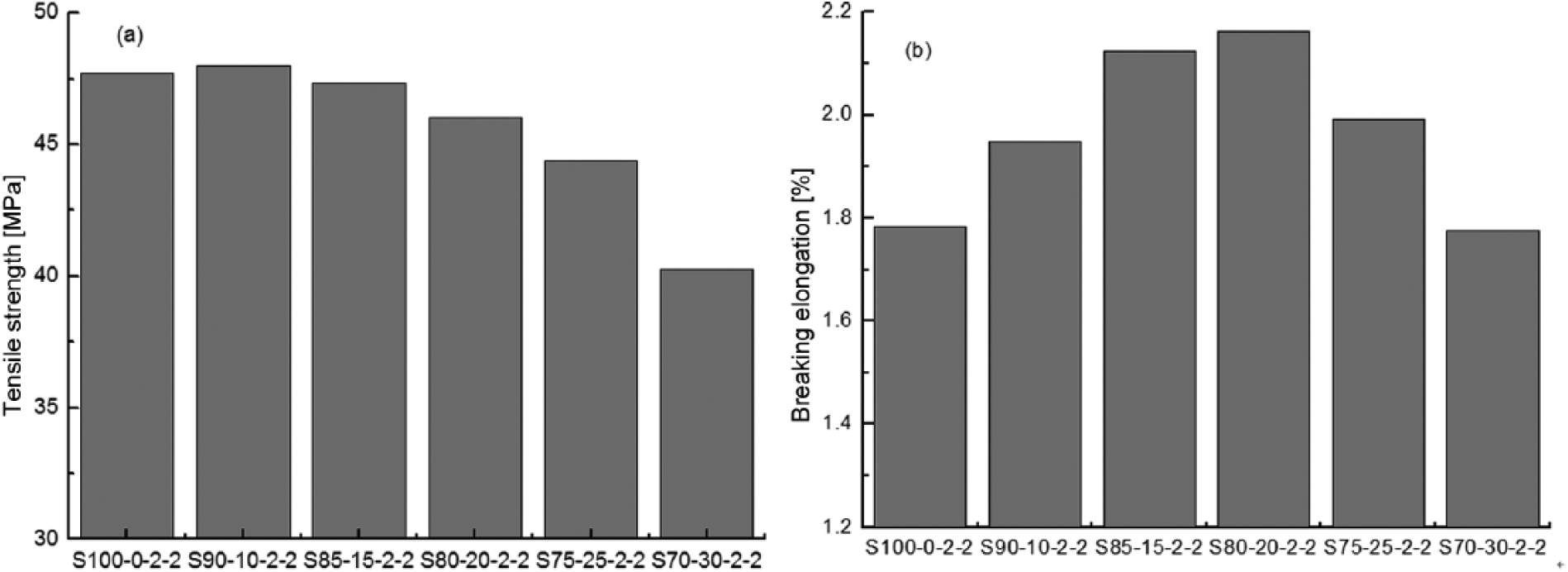
Effect of ES fraction on the tensile properties of ES/CEP blended resin.
Analysis of heat resistance of modified epoxy resin
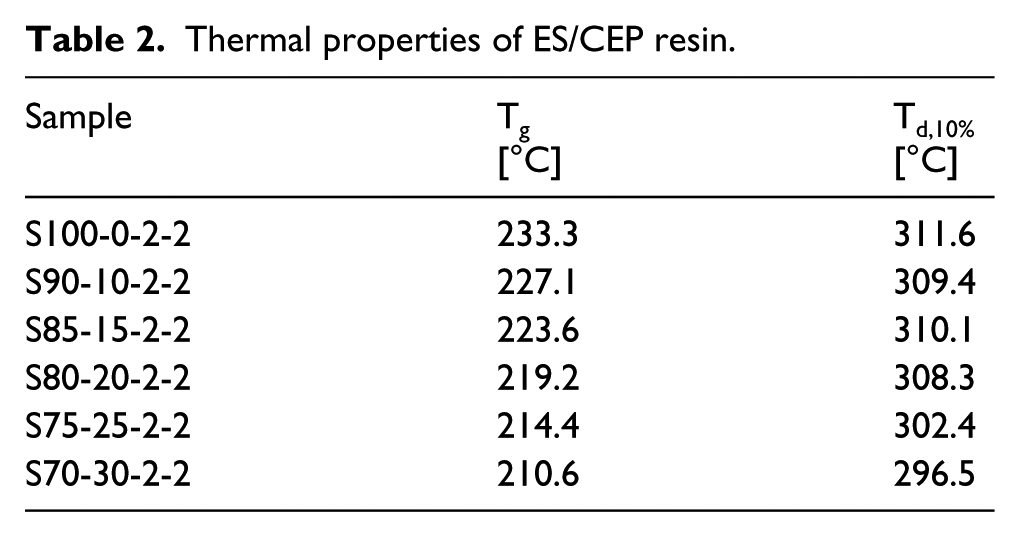
Table 2 shows the glass transition temperatures (Tg) for the prepared resins, and Figure 4 shows the DSC curves for different proportions of resin. It can be seen from Figure 4 that the glass transition temperature of the cured product continuously decreases with the increase in silicone resin content. This could be attributed to two aspects: one side of the silicone resin chain with the reactive groups and epoxy functional groups is consumed by the epoxy group so that the degree of cross-linking of curing decreases, while the introduction of flexible Si-O-Si segments reduces the stiffness of the resin system. Thus, the heat resistance of the resin system also decreased, that is, the glass transition temperature of the cured product decreases. On the other hand, it can be seen from the analysis above that the curing rate of the polymer decreases with the increase of silicone resin content, the degree of curing decreases with the same irradiation time, and the lowered degree of curing obviously results in a decrease of heat resistance of the resin. In general, the glass transition temperature of the blended resin with 10% ES content is smaller. This indicates that the blends have better compatibility. The interpenetrating entanglement among the macromolecules reduces the temperature decline rate during glass transition of the resin.
Thermal properties of ES/CEP resin.
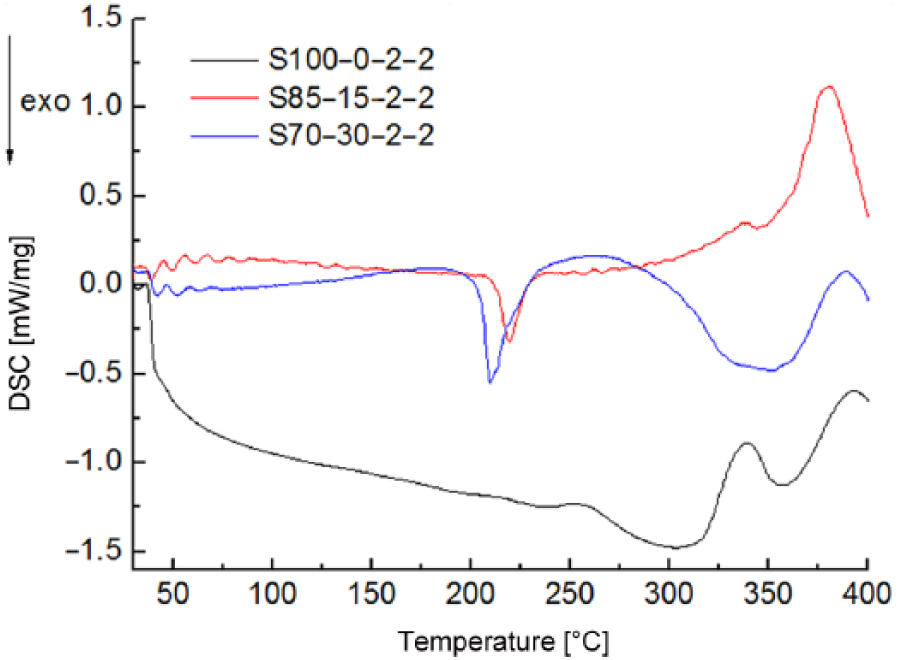
DSC curves for ES/CEP resin.
Thermogravimetric curves for resins of various proportions are shown in Figure 5. It indicates that the different ratios for the resin curing material heat loss process can be divided into two stages. The first stage is mainly between 200~350°C, where the weight loss of about 5%–15% is mainly caused by the decomposition of initiator and uncured monomer molecules. In Table 2, Td,10% indicates the temperature corresponding to a weight loss of 10% of the cured product, and the temperature was set at the initial decomposition temperature. It can be seen from Table 2 that the initial decomposition temperature of the resin decreases with the increasing content of the silicone resin. This suggests that the heat resistance of the resin decreases with the increasing content of the silicone resin in the low temperature range. This is mainly due to the increase in the content of uncured monomer in the resin with the increasing content of the silicone resin. The second stage is mainly in the range 350~450°C; the rapid weight loss stage mainly includes the breaking of molecular bonds and the conversion of macromolecules into small molecules. It can be seen from Figure 5 that the degradation rates for this stage decrease at first and then increase with the increasing content of silicone resin. This indicates that the introduction of an appropriate proportion of silicone resin can improve the high temperature performance of the cured product. There may be two reasons: on one hand, the siloxane groups in the silicone resin have reacted with the epoxy groups to form Si-O-Si and Si-O-C bonds as part of the polymer cross-linking network. The energies of Si-O-Si and Si-O-C bonds are much higher than that of C-C bonds, so thermal decomposition of polymer materials requires more energy. At the same time, after the decomposition of Si-O-Si and Si-O-C, the SiO2 formed will produce a dense silicon-containing protective layer that helps to improve the thermal stability of the material.14–15 On the other hand, the decrease of the degree of curing is also an important reason for the decrease in the heat resistance of the cured product when the silicone resin content exceeds a certain value. Therefore, a means of improving the photo-curing efficiency of the prepolymer by increasing the silicone resin content is the key to improving the heat resistance of the cured product.
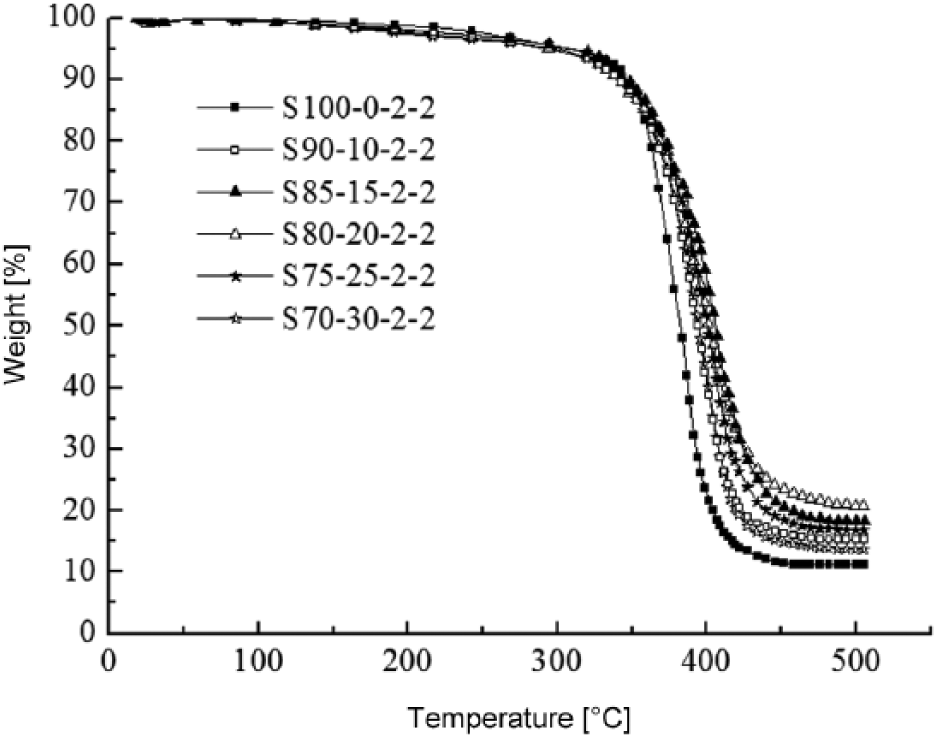
TG curve of ES/CEP resin.
Humidity resistance of modified epoxy resin
In a hot-wet environment, the effect of water molecules on the resin cured product is mainly through the resin surface and internal diffusion, resulting in swelling of the resin and dissolving the polymer within low molecular weight compounds. Therefore, the change in the quality of the cured material is caused by two aspects: one is the increase in the quality of the material due to the absorption of the material, and another is the decrease in the mass of the material. The rate of change of the mass of the cured product with different resin ratios after seven days in distilled water at 60°C is shown in Figure 6. It can be seen from Figure 6 that the quality of the cured materials decreases at first and then increases with the increase in silicone content. The quality of the cured materials increases to varying degrees when the silicone content is 15% or less. The increase of curing quality is mainly due to absorption of water by the resin. According to the analysis of resin curing kinetics and micro-morphology, the resin blends give good compatibility and degree of curing. The amounts of low molecular weight compounds in the resin are lower and hydrolysis is weaker. Meanwhile, the Si-O bond introduced forms a hydrophobic layer that leads to an improvement in water resistance of the cured product. With the increasing content of silicone resin, the compatibility of the cured product deteriorates. The degree of curing and cross-linking decreases and the small molecular monomer in the blended resin increases. Thus, the hydrolysis effect is increased in the hot-wet environment, resulting in a decrease in resin quality and a decrease in water resistance.
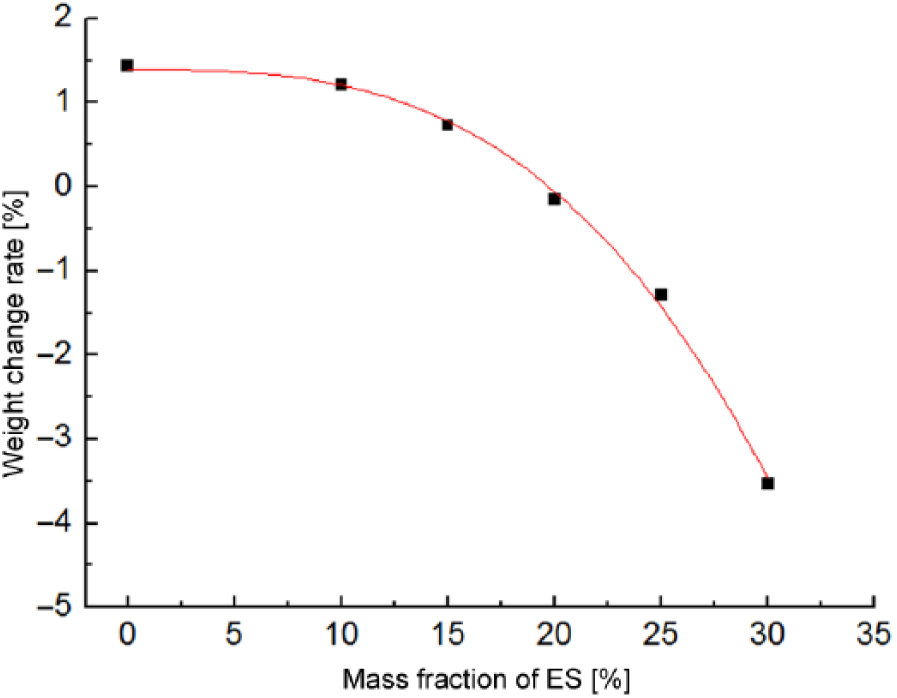
Effect of organic silicone resin content on mass change of cured material in a hot-wet environment.
Conclusions
With the increase of organic silicone content, the curing rate of the ES/CEP blend resin gradually decreases, and the degree of curing gradually decreases for at the same irradiation time. It can be seen from the scanning electron microscopy that the failure mode of the epoxy resin is changed from brittle failure to ductile failure. The degree of cross-linking of the composite system is decreased and hence the compatibility between ES and CEP is deteriorated.
The mechanical properties of ES/CEP resin blends are improved with the introduction of an appropriate proportion of silicone resin. The tensile strength of the cured product is almost constant when an ES content of 15% is added to the composite system, and the elongation at breaking point is increased by 19.2%. Regarding heat resistance, the glass transition temperature and the thermal stability of the cured product decrease after the addition of silicone resin, but the thermal degradation rate in the high temperature region decreases. In general, the cured product exhibited good heat resistance when 10% to about 15% silicone resin is added. At the same time, the damp heat test reports that the mass change rate of the cured product is the smallest at 60°C when the organic resin is about 15%, and it shows good humidity resistance.
Footnotes
Declaration of Conflicting Interests
The author(s) declared no potential conflicts of interest with respect to the research, authorship, and/or publication of this article.
Funding
The author(s) disclosed receipt of the following financial support for the research, authorship, and/or publication of this article: This research received no specific grant from any funding agency in the public, commercial, or not-for-profit sectors.