




Abstract
Introduction:
In this study, the asphalt mixture (porosity <2%) was tested for use between the upper and middle layers of the asphalt pavement to improve its interlayer structure and to enhance its related waterproof and anti-cracking ability.
Methods:
Considering the weather characteristics and traffic conditions in Jiangxi Province, appropriate raw materials were selected. Based on the technical indexes of the raw materials, expected porosity (<2%), and AC-5 standard for the asphalt mixture, experiments were conducted to determine the best gradation range of the waterproof and anti-cracking layer, and to obtain the optimum amount of the asphalt and fiber used based on Marshall tests.
Results:
The high-temperature rutting test, low-temperature cracking test, and water stability test were conducted to evaluate the pavement performance of the waterproof and anti-cracking layer.
Conclusions:
A waterproof and anti-cracking layer was added between the upper and middle layers of the asphalt pavement, which has excellent performance for avoiding cracks and water damage.
Keywords
Introduction
In the hot and rainy areas of South China, the common pavement distresses are cracks and water damage. Water damage can greatly affect pavement conditions, which is generally caused by uneven mixing of asphalt asphalt and by using materials without controlling for the correct ratios. The semi-rigid base is generally one of the most widely used basic level structure forms of asphalt pavement in China, and has many advantages such as good board character, great rigidity, strong diffusion stress, and good water stability. However, the cracks, caused by the cracking of the semi-rigid base, low temperatures, and fatigue, can provide paths for rain or snow to infiltrate the pavement structure. Under the influence of repeated traffic loads, instant deformation of the pavement can be observed that can generate high-pressure water. In addition, erosion and mud accumulation are also observed, causing water damage to the asphalt pavement, reducing road capacity, increasing the cost of highway maintenance, and reducing the service life of the road. 1
In China, a waterproof layer is generally paved on the base surface (i.e., at the bottom of the thick asphalt layer), which can only protect the base layer from water erosion rather than the asphalt layer. 2 In other countries, a flexible permeable base and thick asphalt layer (i.e., 20 cm) are widely used in asphalt pavement. To date, few studies have investigated the waterproofing and anti-cracking techniques used for semi-rigid asphalt pavement. A waterproof and anti-cracking layer employs a kind of asphalt mixture with porosity less than 2%, which can prevent water infiltrating the middle surface layer and getting below the pavement structure. Based on the climate characteristics and traffic conditions in Jiangxi Province, and related studies, the waterproof layer can be considered to sit above the wearing course of the asphalt pavement and the middle layer for enhancing its adhesion and preventing rainwater from entering the middle and lower surface of the asphalt surface. 3 Basalt fiber and Styrene-Butadiene- Styrene block copolymer (SBS)-modified asphalt were selected as the raw materials for the anti-cracking layer of asphalt pavement because they have obvious superiority in road performance. 4 Basalt fiber can: (1) prevent and reduce the evolution of asphalt pavement cracks; (2) reduce the pavement formation caused by temperature stress; (3) reduce high-temperature rutting; (4) compensate for the lack of low-temperature brittleness; and (5) reduce water damage to the pavement. Basalt fiber, a new mineral fiber for roads, plays a critical role in extending the service life of the asphalt pavement. Fiber was added to the asphalt mixture for the purpose of reinforcement as well as strengthening the adhesion between the asphalt and mineral materials. 5 In Jiangxi Province it is very hot in summer; common asphalt and low-standard modified asphalt cannot provide sufficient high-temperature resistance. 6 SBS-modified asphalt is the most widely used technology in the world, and has shown good performance on resisting high and low temperature, as well as fatigue cracking. In addition, SBS-modified asphalt can enhance the water stability of pavements.
Experiments on raw materials
SBS-modified asphalt
SBS-modified asphalt has good high-temperature resistance and strong bonding ability, which can improve the tensile strength of pavement in water and thus can improve the water stability of asphalt pavement. 7 Therefore, SBS-modified asphalt is the best choice for the waterproofing and anti-cracking mixture. The penetration (25 °C), softening point, and ductility (5 °C) of SBS-modified asphalt were measured based on Chinese standard JTG E20-2011 (Table 1). 8
Performance indexes of SBS-modified asphalt.

Mineral aggregates
The physical properties of the limestone and limestone powder (raw materials) are shown in Table 2.
Physical properties of mineral aggregates.

Basalt fiber
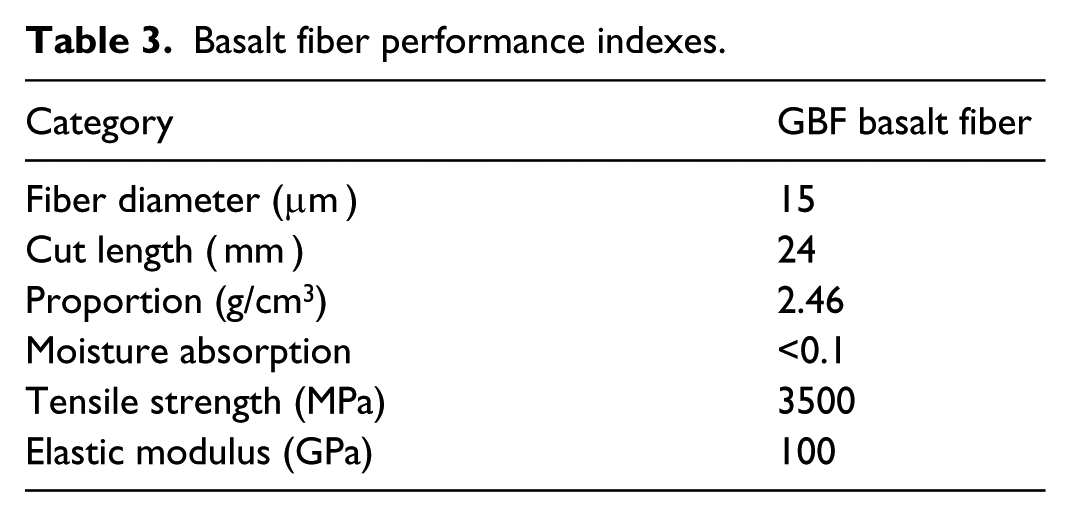
Basalt fiber is a new type of high-performance green mineral fiber, 9 which has very good application prospects. It has good physical and mechanical performance, which is shown in Table 3.
Basalt fiber performance indexes.
Experimental results and analysis of Marshall tests
The waterproofing and anti-cracking mixture is composed of aggregates, mineral powder, SBS-modified asphalt, and basalt fiber. The limestone mineral material and modified asphalt were used because of their special function in the pavement structure, where these materials have small particle sizes (≤5 mm), and have larger asphalt–aggregate ratio and lower porosity.
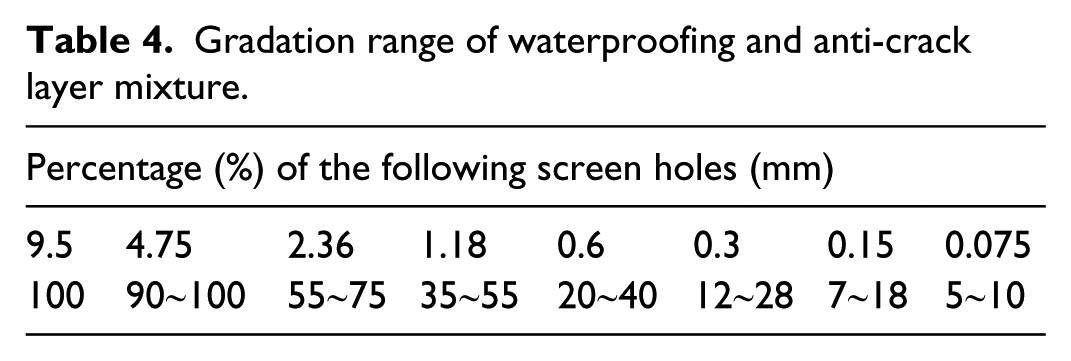
During practical engineering, the recommended gradation range in the standard is not the range used in specific projects. Therefore, tests should be conducted within the recommended range based on the specific characteristics of the raw materials provided. Based on the expected porosity (2%), the size of the asphalt mixture used in the waterproof anti-cracking layer is below 4.75 mm. Because there is no corresponding standard for the mix proportion design, AC-5 was used as the reference. The gradation range of the mixture is shown in Table 4.
Gradation range of waterproofing and anti-crack layer mixture.
The determination of the gradation curve
The initial gradation was determined by screening the raw materials, and the final gradation for the mineral was 2.36~4.75:0.075~2.36:0~0.075 = 31.5:67.5:1.0. The gradation curve is shown in Figure 1. The mass percentage of the particles of 0.075 mm size (10.4%) is slightly larger than the engineering gradation range (10.0%).
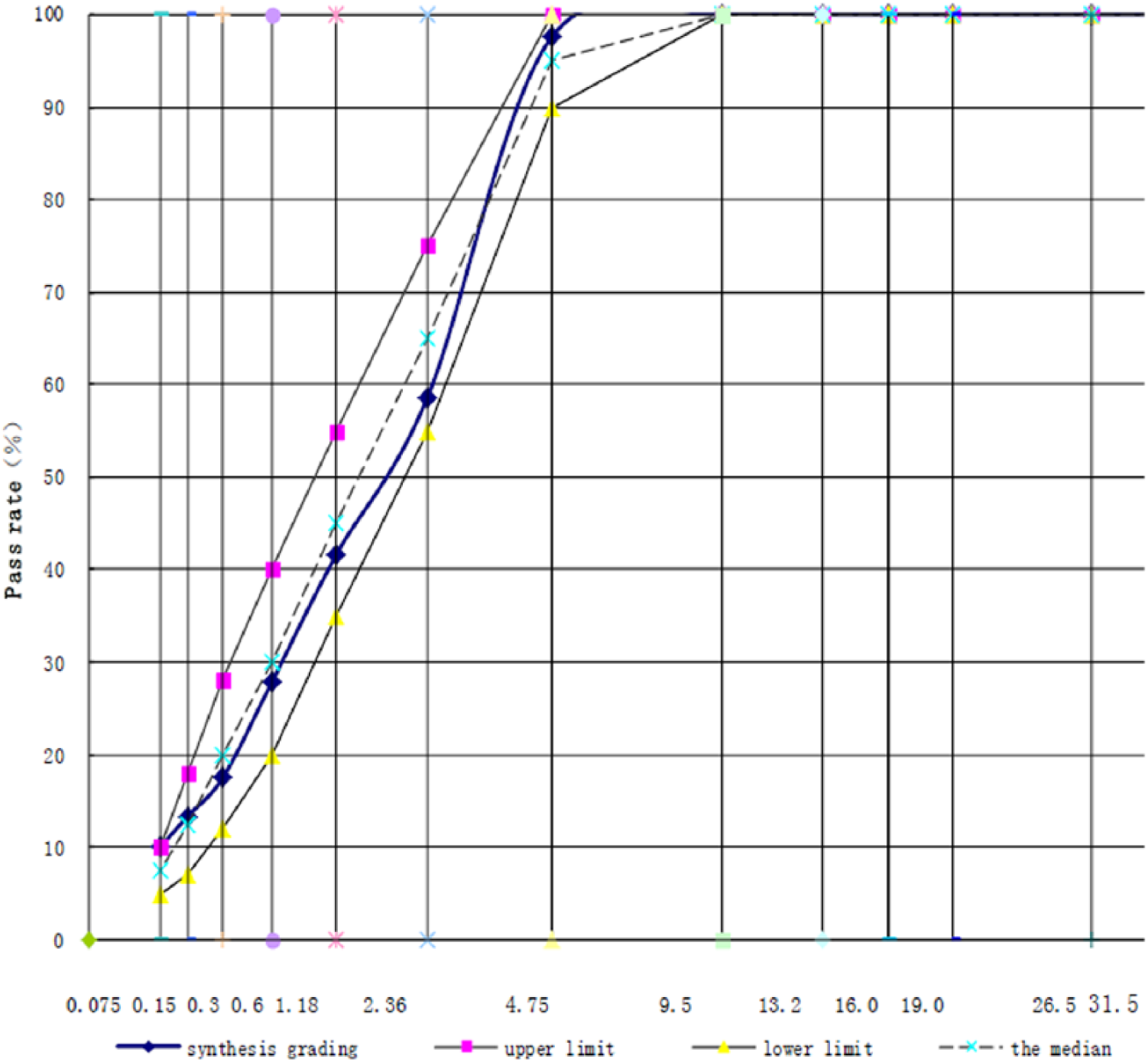
Synthesis grading curve.
Marshall test results analysis
The optimum dosage of the asphalt was first determined by the Marshall test with no fiber added. Then, a certain amount of fiber was added as the admixture to the asphalt mixture based on the same gradation. Under each specific fiber content, five groups of Marshall specimens were shaped based on the typical compaction method. The optimum asphalt–aggregate ratio under each fiber content was determined based on the relationship between the asphalt–aggregate ratio and volume indexes.
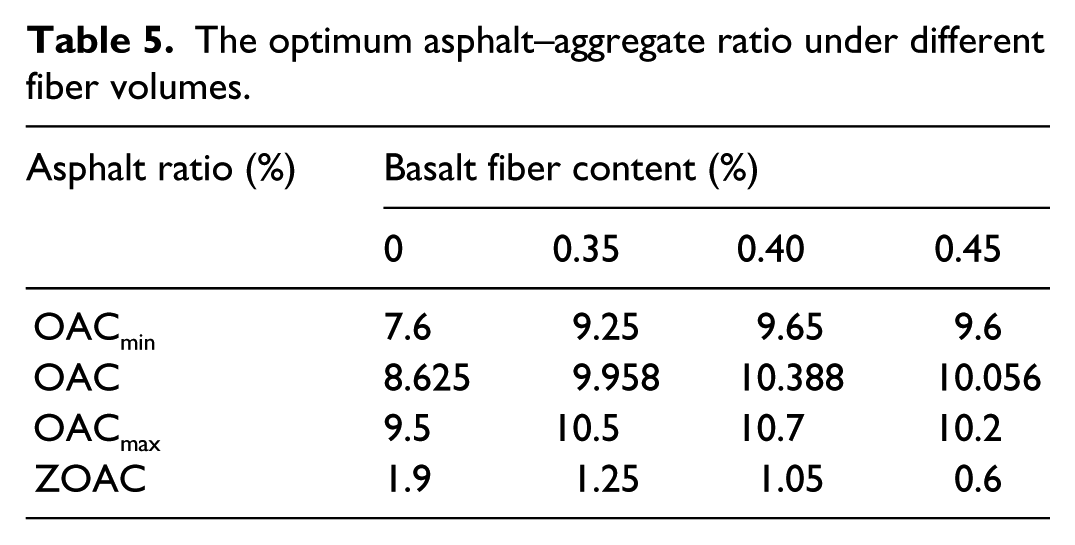
According to the technical specification for highway asphalt pavement construction (JTJF40-2011), 10 the relationship between the asphalt–aggregate ratio and the volume indexes at different fiber contents was drawn (data not shown). The optimum asphalt–aggregate ratios under different fiber contents were calculated (Table 5), and then the volume indexes that corresponded to each best aggregate ratio were tested (Table 6).
The optimum asphalt–aggregate ratio under different fiber volumes.
Marshall test results for the optimum asphalt–aggregate ratios under different fiber contents.
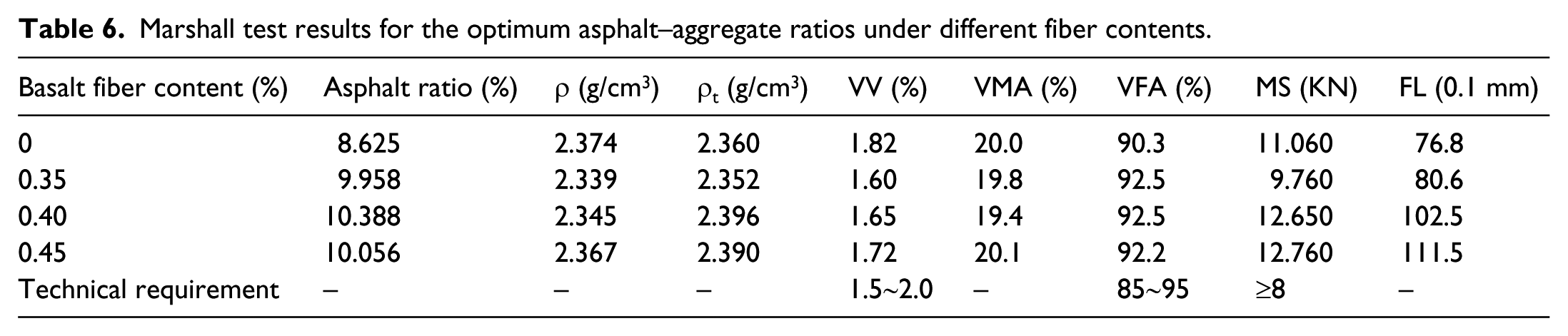
Figure 2(b) shows the relationship between the optimum asphalt content and the related optimum fiber contents. As basalt fiber dosage increases, modified asphalt content also increases, because more asphalt is needed to wrap the basalt fiber surface. The greater surface area the basalt fiber has, the stronger its adsorption capacity toward asphalt will be. Therefore, the amount of the modified asphalt increases as well. However, the amount of fiber-adsorbed asphalt may not increase when the amount of fiber reaches a certain value, which is because basalt fiber is difficult to disperse evenly. The Marshall test shows that the optimum content of basalt fiber in the asphalt mixture is about 0.4%.
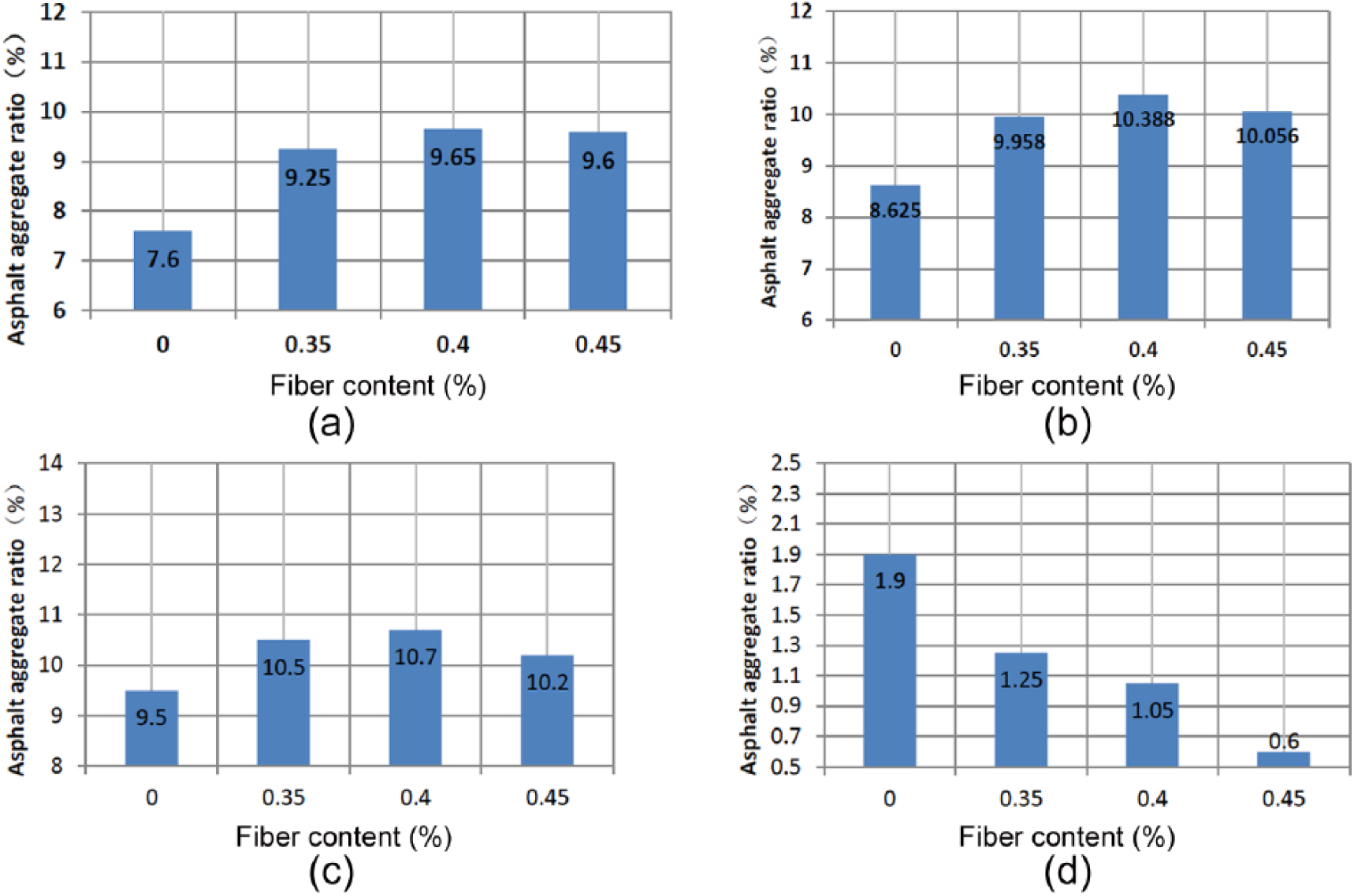
Relationship between fiber content and the optimum asphalt–aggregate ratios. (a) Diagram of different fiber content and OACmin; (b) diagram of different fiber content and OAC; (c) diagram of different fiber content and OACmax; (d) diagram of different fiber content and ZOAC.
As shown in Figure 2(a), OACmin increases with increasing fiber content, and then decreases with increasing fiber content, indicating that the relationship between added fiber content and asphalt is nonlinear.
As shown in Figure 2(c), OACmax increases with increasing fiber content, and then decreases with increasing fiber content. Three curves have similar changing trends, which indicates that excess fiber can worsen the dispersion and micelles are more easily formed, leading to a stable value of OACmax.
OACmax – OACmin is expressed as ZOAC, which reflects, to some extent, the adjustable range of OAC. As shown in Figure 2(d), ZOAC decreases with increasing fiber content, and then increases with increasing fiber content. The optimal dosage of fiber is 0.4%.
Performance analysis of the waterproof and anti-cracking layer
High-temperature rutting test and result analysis
According to the highway engineering asphalt and asphalt mixture test rules (JTJ E20-2011), 8 the high-temperature rutting tests were conducted when the basalt fiber content was 0%, 0.35%, 0.40%, and 0.45%. The dynamic stability of asphalt mixture at 60 °C was measured and is listed in Table 7.
Dynamic stability test results.
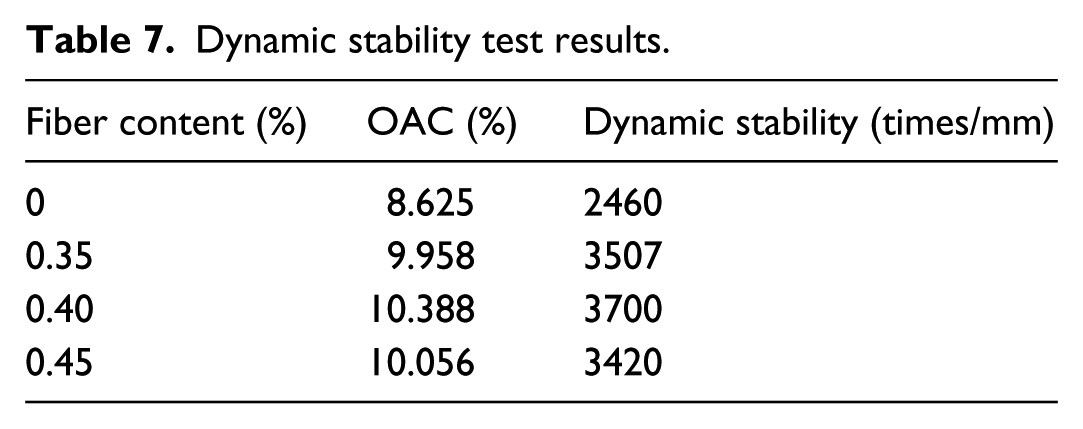
As shown in Table 7, within a certain range in which the fiber content is less than the optimal value, the dynamic stability of the mixture increases with increasing fiber content. When the fiber content is 0.4%, the dynamic stability is the greatest, and then the dynamic stability gradually decreases with increasing fiber volume. 11 The results show that the temperature performance of the asphalt mixture is the best when the fiber content reaches an optimal value. T effect of the basalt fiber on the stability, dispersion, and reinforcement is the best as well.
Bending test and result analysis
The winter temperature in Jiangxi Province is generally below zero, which will reduce the bending tensile strain and stiffness modulus of the asphalt mixture, leading to a decrease in the stress–relaxation ability. Also, the temperature contracted stress may accumulate because of the aging of the asphalt, leading to pavement cracking. 12 Therefore, in some regions with high temperature differences, low-temperature resistance should be considered as well. In this study, an Material Test System (MTS) material testing machine was employed and data were acquired automatically via computer. Experiments were conducted at −10 °C, and a centralized loading mode was used. Experiments were performed using asphalt mixtures under different aggregate ratios. The experimental results are shown in Table 8.
Trabecular bending test results.

As shown in Table 8, the basalt fiber–asphalt mixture is generally better than the ordinary asphalt mixture after comparing their tensile strengths, failure strains, and stiffness modulus. The optimum asphalt content increases with increasing fiber volume, which increases the tensile and flexural strength and improves the stress–relaxation phenomenon. Meanwhile, the SBS basalt fiber with high strength and high modulus modified asphalt mixed material has high tensile strength and toughness. Therefore, the reinforced effect of the basalt fiber can improve the low-temperature deformation resistance of the mixture. Meanwhile, the bridging effect of basalt fiber can increase the ability of the mixture for resisting degeneration, and increase the stiffness modulus and the ultimate flexural-tensile strength. Therefore, basalt fiber plays a critical role in improving the anti-cracking performance of the asphalt mixture at low temperatures.
Water stability test and result analysis
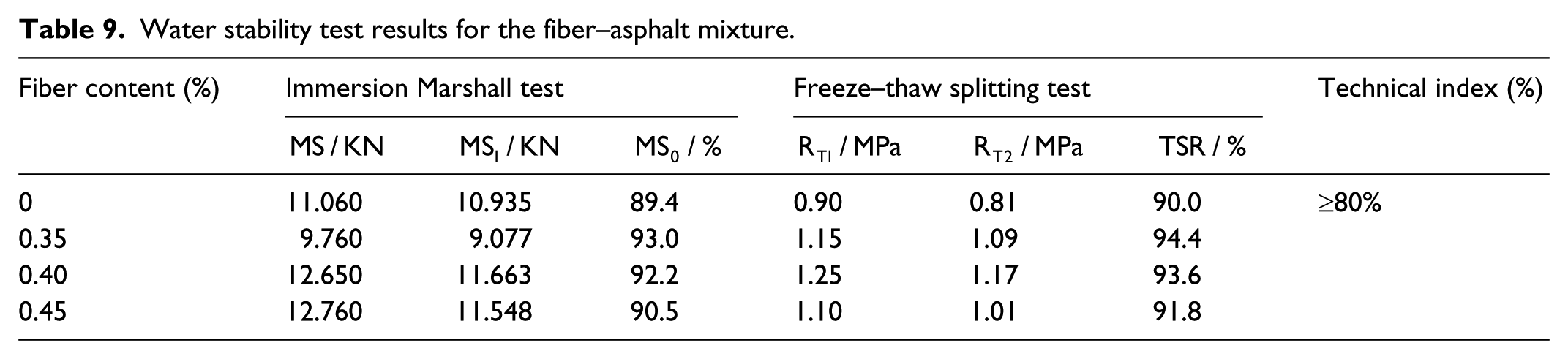
When the asphalt mixture is immersed in water, the bonding ability between asphalt and mineral material will be reduced, which will eventually lead to the reduction of the overall mechanical properties of the asphalt pavement. In our study, the Marshall test and freeze–thaw splitting test were carried out based on the related test method of the asphalt mixture.
Table 9 shows that the incorporation of basalt fiber into the asphalt mixture improves the anti-water damage-resistance properties. However, when the fiber content is larger than the optimal value, the residual stability and residual strength ratio decrease. Because the surfaces of the basalt fiber material and asphalt are alkaline and acidic, respectively, the adhesion ability of the asphalt will be enhanced when the fiber is mixed with asphalt. Furthermore, the specific surface area of the fiber is relatively large. When the asphalt and fiber are mixed together, the structure asphalt amount used will be greatly increased. At the same time, the surface of the aggregates will be covered with basalt fiber and asphalt, which can increase the asphalt film thickness of the aggregates and effectively stabilize the asphalt, preventing water from entering the interface of the mixture and asphalt–aggregate, and thus avoiding the shedding of the asphalt and aggregate.
Water stability test results for the fiber–asphalt mixture.
Determination of water permeability coefficient
In general, water will destroy the bonding between asphalt and aggregates, which will cause peeling of the asphalt. In addition, water may reach the interface of the base layer and the surface layer, leading to road erosion, mud accumulation, frost boiling, and other diseases, and even cause the separation between the base layer and the surface layer, thereby weakening the pavement strength. Therefore, in order to ensure the durability of the asphalt pavement, we should try to reduce the seepage coefficient of the waterproof and anti-cracking layer.
The water permeability experiments were carried out under different fiber contents based on the method given in the “Highway engineering asphalt and asphalt mixture test procedures” (JTG E20-2011). 8 The permeability coefficients of the fiber–asphalt mixture are shown in Table 10.
The permeability coefficient of fiber–asphalt mixture.

With the increase of fiber content, the porosity of the waterproof and anti-cracking layer shows an increasing trend, but porosity is still less than 2%; therefore, the waterproof and anti-cracking layer is basically impermeable.
Analysis of the stress intensity factor at crack tip of the waterproof and anti-cracking layer
The waterproof and anti-cracking layer between the upper and the middle layer can effectively relieve the stress concentration of the pavement structure. In order to delay the generation and development rate of the reflection crack, ABAQUS software was used to compare the stress intensity factors of a crack tip in the pavement structure in the absence and presence of the waterproof and anti-cracking layer.
As can be seen from Table 11, when the road has traffic load, the load intensity factor K1 (with waterproof and anti-cracking layer) and K2 (without waterproof and anti-cracking layer) decreases by 31.7% and 35.4%, respectively. It can be seen that the waterproof and anti-cracking functional layer between the upper and the middle layer can significantly reduce the stress intensity factor caused by the traffic load.
Numerical comparison of crack tip strength factors.

Conclusion
The mixture used for the waterproof and anti-cracking layer is mainly composed of SBS-modified asphalt, fine aggregate (<5 mm), basalt fiber, and powder. The mixture was characterized by a larger asphalt–aggregate ratio.
Basalt fiber–asphalt mixture is superior to ordinary asphalt mixture in high-temperature performance, low-temperature crack resistance, and water stability.
Each optimum asphalt content corresponded to each fiber content. Under the experimental conditions in our study, the optimum fiber content is about 0.4%, and the corresponding optimal ratio of the asphalt is about 10.388%.
The waterproof anti-cracking layer is a type of functional layer made of asphalt mixture, which plays an important role in waterproof and anti-cracking performance. In this paper, the performance of the waterproofing and anti-cracking properties was studied based on experiments related to high-temperature rutting, low-temperature crack resistance, and water stability.
Footnotes
Declaration of Conflicting Interests
The author(s) declared no potential conflicts of interest with respect to the research, authorship, and/or publication of this article.
Funding
The author(s) disclosed receipt of the following financial support for the research, authorship, and/or publication of this article: This work was financially supported by the science and technology fund project of Jiangxi Provincial Education Department (GJJ151138) and the Science and Technology Fund Project of Jiangxi Provincial Transportation Department (2015C0003).