




Abstract
Introduction:
Personal care products (PCPs), including cosmetics and skincare products, have seen increased usage over the past two decades. Increasing evidence suggests that certain ingredients in PCPs pose health and environmental risks. For instance, parabens, commonly used as preservatives, are associated with increased cancer risks and reproductive toxicity among women. Despite the availability of safer alternatives, many lack the knowledge to identify harmful substances in PCPs and to seek out alternatives. Knowledge translation (KT) tools offer a solution to bridge this gap by simplifying complex information to improve risk perception. This review aimed to identify effective elements of mobile applications as KT tools focused on environmental health, to increase risk perception and promote behavior change.
Methods:
A comprehensive scoping review was conducted by searching various databases including PubMed, Google Scholar, Ovid Medline, and CINAHL, yielding 1092 articles. An additional 240 sources related to user-app reviews of 8 mobile apps were identified through a manual Google search. All sources underwent title and (if applicable) screening, followed by full-text review for eligibility.
Results:
The review included a total of 16 relevant articles, 7 websites, and 6 user app reviews. Key findings revealed 11 elements categorized into 4 main themes: toolkit accessibility and affordability, simplicity of presented information, personalization of features, and a clear focus on knowledge sharing.
Conclusion:
Using the elements identified in this research, future studies should focus on creating and evaluating environmental health toolkits to build capacity for effective knowledge translation that enhances environmental health awareness and health promotion.
Keywords
Introduction
Women are exposed to an average of 114 different chemicals a day from personal care products (PCPs). 1 These diverse chemicals are found in a range of products, including hair relaxers, straighteners, feminine hygiene products, fragranced products, and cosmetics. 2 Some chemicals of concern include formaldehyde, phthalates, parabens, lead, mercury, triclosan, and benzophenone, all of which have been linked to adverse health effects. 2 For instance, parabens are widely used in cosmetics and self-care products as preservatives against microbial growth. However, their potential endocrine-disrupting properties can interfere with the action or metabolism of androgens, thyroid hormones, and glucocorticoids, thereby increasing the risk of breast cancer.3–5
With increasing evidence linking health risks to chemicals of concern, alternative products have been progressively implemented into the market. Indeed, there are non-toxic and safer alternatives available, often labeled as free from phthalates, parabens, triclosan, bisphenol A (BPA), and other similar chemicals. 6 Research indicates that opting for PCPs with these labels can lower personal exposure to potential endocrine-disrupting chemicals (EDC). 6 For instance, a study on paraben-free products found that using these products reduced women’s urinary paraben concentration by at least 43%, suggesting a decreased risk of exposure to EDC. 6 However, recent findings from a study examining risk perception, knowledge, and beliefs about six chemicals found in PCPs—parabens, BPA, phthalates, perchloroethylene, lead, and triclosan—among women aged 18–35, showed a low perception of health risk. 7 Between 20% and 94% of the women surveyed were unaware of these chemicals, raising concerns due to the known adverse health effects.3,5 Therefore, despite the existence of safer product alternatives, the lack of awareness of the risks means that women are not equipped with the necessary knowledge to limit their exposure to harmful chemicals or explore those alternatives.8,9
Although regulations that focus on consumer safety for PCPs entering the market exist, they are limited to mandatory ingredient disclosure and the prohibition of certain ingredients. 10 This leaves many products and their ingredients unassessed for user safety. Compounding this issue is the lack of knowledge regarding the independent, synergistic, or additive effects of chemicals found in these PCPs, which often remain unknown for years after entering the market. 11 The extended latency period of disease development associated with chronic low-level exposures to these chemicals further complicates assessment. Research on safer PCP alternatives, free of harmful chemicals, is underway, but it is still in its preliminary stages. Plant-derived substances such as lectins, alkaloids, terpenoids, polypeptides, polyphenols, and polyacetylenes, which exhibit antibacterial and antifungal properties, are being integrated into cosmetic products as alternatives to conventional chemicals. 12 Due to the novelty of this topic, women often lack awareness or the skills to identify harmful PCPs and consequently may not seek safer alternatives. Encouraging the use of established safer alternatives to toxic ingredients is crucial for reducing exposure and promoting healthy living.
A knowledge translation (KT) toolkit comprises a set of resources and tools designed to facilitate the practical application of theoretical knowledge within a specific field of study. 13 In the realm of environmental health awareness and health promotion, KT toolkits can offer comprehensive guidance on conducting KT activities effectively, bridging the gap between knowledge and action, often referred to as the “know-do” gap. 14
A systematic review assessing the effectiveness of educational toolkits as KT strategies, including disease-specific interventions for health professionals, caregivers, or patients, reported that 75% of the studies were partially or mostly effective in promoting changes in outcomes. 13 Consequently, educational toolkits can serve as a preventative measure, empowering women to make evidence-based informed decisions and promoting positive behavioral changes to potentially mitigate adverse health effects. 15
To our knowledge, there is limited research that examines the elements of effective educational toolkits as KT strategies specifically focused on environmental health awareness and health promotion related to PCP use. Therefore, our primary research question is: What elements of educational toolkits contribute to improved risk perception and positive behavior change concerning the reduction of toxicant exposure from PCPs?
Methods
The project was conducted in accordance with the Preferred Reporting Items for Systematic Reviews and Meta-Analyses (PRISMA) guidelines 16 (Supplemental File 1). Additionally, the Arksey and O’Malley framework for scoping reviews was used to identify the research questions, develop a search strategy, extract the data, and report the results. 17 Given the iterative nature of scoping review methodology and the exploratory scope of this review, a protocol was not registered.
This study reviewed existing literature and identified relevant studies on effective educational toolkits aimed at enhancing risk awareness and health promotion related to PCPs. This approach provided a comprehensive overview that addresses our primary research question, allowing for the identification of knowledge gaps and the evaluation of their significance. Consequently, a scoping review was selected to achieve these objectives. 18
Search strategy
In collaboration with a health sciences librarian at Ontario Tech University, relevant keywords were devised to facilitate a targeted search in scholarly databases. Guided by the population, concepts, context framework (PCC) we identified relevant databases, developed our search strategies, and finalized inclusion and exclusion criteria. 19 From September to November 2023, the following databases were searched from inception without language or geographic restrictions: PubMed, Google Scholar, Ovid Medline, and CINAHL (Supplemental File 2). Additionally, we used the Google Search engine to identify gray literature. This comprehensive approach enabled us to gather evidence-based articles and firsthand consumer experiences, offering a thorough and authentic understanding of user perspectives on the effectiveness of toolkits and existing PCP-related mobile applications.
To broaden the search and ensure comprehensive coverage of academic literature, we used a combination of subject headings and keywords such as “toxins,” “parabens,” “knowledge translation tools,” “environmental health,” “risk perception,” “behavior change,” and “personal care products” (Table 1). Academic articles were not required to address all concepts simultaneously for inclusion in the initial search results. For example, search terms such as “‘indoor environment’ OR ‘personal environment’ OR ‘home environment’ OR household OR residen*” were used to identify articles related to environmental health concerns (refer to appendix for complete search strategy). While our primary focus of this review was on mobile applications used as KT tools in the context of environmental health, specifically relating to PCPs, we found limited existing interventions that directly addressed behavior change in relation to PCPs. Thus, many of the included sources addressed broader environmental health concerns and featured toolkit elements transferable to the context of PCPs.
Keywords and MeSH terms used for searching databases.

Additionally, to supplement academic sources, a manual Google search was conducted between September 25 and November 1, 2023 using the standard Google Search engine (www.google.ca). The latest version of Chrome (version 117.0) on Macbook Air (MacOS 14 “Sonoma”) was used at Ontario Tech University, Oshawa ON, Canada. Exact IP addresses were not recorded. Searches were performed while logged into a university-associated Google account using the default browser profile. Incognito mode was not used, which may have influenced search rankings. The Google search was used to identify relevant gray literature, including toolkits developed by non-governmental or community-based organizations as well as publicly available online toolkits developed for knowledge users. An exploratory scan of the Apple App Store and Google Play store yielded dozens of environmental health apps. From these, eight (Think Dirty, Yuka, System Akvile, SkinRocks, Amacare, OnSkin, Acne-safe, and Skinsafe) were randomly selected for further investigation. The random selection was intended to reduce selection bias while maintaining feasibility, given the large number of apps that exist. For each app, we used search queries that combined the app name with “reviews” and screened the first three pages (default setting of 10 results per page). This limit was chosen because it was sufficient to capture relevant information for our study, including user feedback on apps and related gray literature (see Supplemental File 3).”
Selection criteria
Screening was conducted manually by two independent reviewers (RD and GD) in two stages: (1) title and abstract, and (2) full text using Google Sheets for reference management and tracking of the screening process. The screening was conducted independently using a standardized screening form developed before screening began and was pilot tested on the first 10 studies to ensure consistency (Supplemental File 4). There was 90% agreement on the selected articles. In the first stage of screening, titles and abstracts were reviewed and classified as relevant or irrelevant according to the inclusion criteria. During the second phase of screening, the full text of the relevant studies was reviewed for eligibility. Any discrepancies in screening and data extraction were first discussed and resolved through consensus between the two reviewers. If consensus could not be reached, a third reviewer was consulted to adjudicate and finalize the decision.
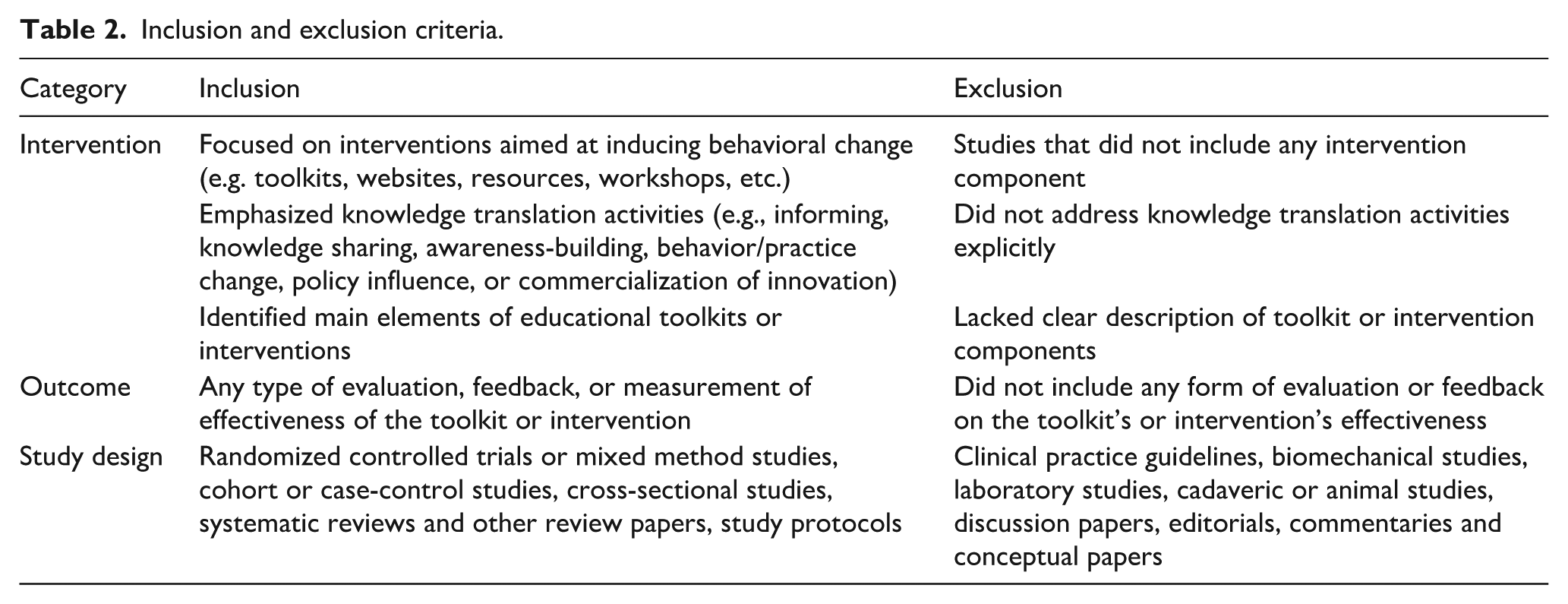
Scholarly studies were included if: (1) they focused on environmental health interventions aimed at inducing behavioral change; (2) the knowledge translation activity was emphasized with efforts to inform, share knowledge, build awareness, change practice/behavior, inform policy, or commercialize an innovation; (3) the main elements of educational toolkits or interventions were identified; and (4) there was any type of evaluation, feedback, or measurement of the effectiveness of the toolkit or intervention (Table 2). Environmental health encompasses various aspects of human health and wellbeing, as it is determined by an individual’s surrounding physical, chemical, biological, and social environments. This may include chemical hazards, such as exposure to EDC, as well as behavioral factors influenced by one’s social and built environments, such as alcohol use or eating patterns. The reference lists of included reviews were not manually screened to identify any additional relevant primary studies, as our search strategy was designed to be comprehensive and reproducible within the project’s timeline and scope. Gray literatures were selected to be included in this review if they focused on addressing the effectiveness of specific features of the website or app. The selection process mirrored that used for scholarly articles. RD and GD independently conducted Google searches, scanning websites for relevance and descriptions of mobile app features with potential to enhance risk perception and promote behavior change. As with scholarly articles, any discrepancies in data extraction were discussed and resolved through consensus between the two reviewers, with a third reviewer consulted when consensus could not be reached
Inclusion and exclusion criteria.
Data extraction and synthesis
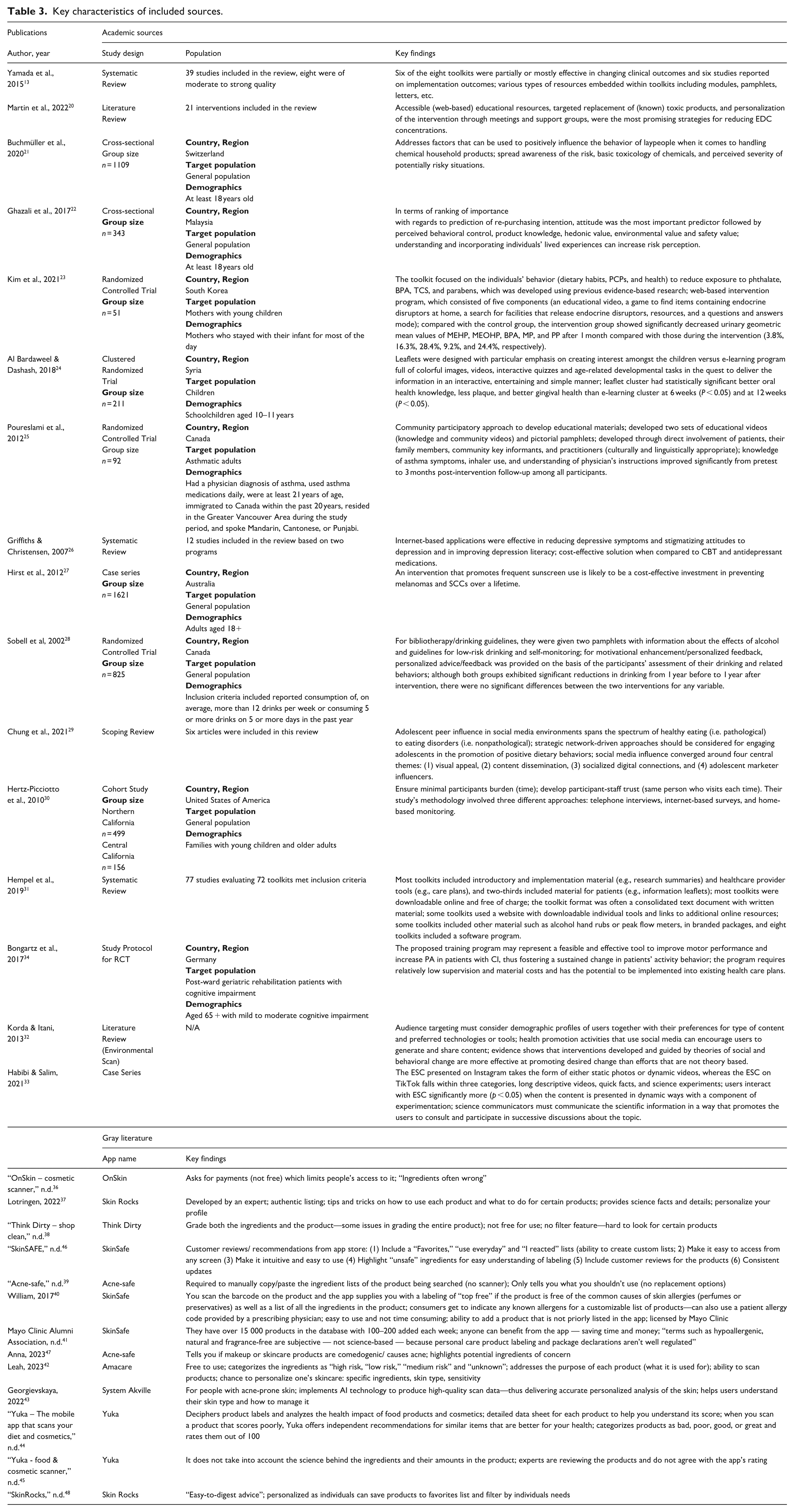
Information was extracted from scholarly articles into Google Sheets was organized by author names, publication year, study design, sample size, type and duration of toolkit and intervention, primary study outcomes, and key toolkit elements (Table 3). For gray literature, data were drawn from app reviews, focusing on perceived effectiveness and suggested improvements. This information was organized by app name and key findings from user feedback. Information extracted focused specifically on mobile app features that relate to user experience. These features included mentions of affordability, free availability, ease of understanding, and other usability factors. For example, affordability was defined as any explicit mention of the resource being low-cost or budget friendly. Additionally, ease of understanding referred to resources described as user-friendly, simple, or suitable for lay audiences. This extraction aimed to capture insights into how these features influence users’ risk perception and contribute to behavior change promotion.
Key characteristics of included sources.
Thematic inductive analysis was employed to identify key elements within the toolkits. Recurring features and strategies across the sources were extracted and analyzed for overlap, leading to the development of themes relevant to the research question.
Results
A total of 1092 scholarly articles were identified through the electronic databases. After conducting title and abstract screenings and eliminating duplicates, 69 articles remained and were evaluated according to our eligibility criteria based on the full text (Figure 1). A total of 56 articles did not meet our inclusion criteria, leaving a final count of 16 articles for data extraction.

The PRISMA flowchart outlines the article selection process for this scoping review. 16
The initial Google search returned an unquantifiable number of total results (25+ million hits). For feasibility and relevance, only the first three pages were screened. Thus, 240 sites, including blogs and apple app reviews, underwent title and content screening, excluding 227 websites because they did not address the effectiveness of specific elements of the app being searched. This process resulted in 13 sites included in our research study (Figure 1). Therefore, a total of 29 records, both academic and non-academic, were included for data extraction (Table 3).
Peer-reviewed publications included a total of 16 academic articles: 6 randomized controlled trials (RCT), 5 scoping reviews, 3 systematic reviews, 1 longitudinal cohort study, and 1 cross-sectional study (Figure 1). In addition, 13 non-academic sources were reviewed, comprising 5 consumer review websites, 2 TikTok videos and 6 user-generated app reviews sourced from Apple App Store. The websites and videos provided informal yet valuable commentary on functionality, usability, and trustworthiness, while the App Store reviews highlighted practical, real-world feedback from everyday users. All 29 sources highlighted a focus on improved risk perception and positive behavior change, as well as identified essential features of the effectiveness of the assessed toolkit or intervention (Table 3).
Although this review was centered on PCPs, we found relatively few interventions that explicitly addressed behavior change in relation to PCPs. Specifically, only four studies focused on behavior change in relation to chemical exposures from PCP.20–23 Six studies explored behavior change in relation to a variety of environmental health topics, including oral health, 24 respiratory health, 25 mental health, 26 sunscreen use and cancer risk reduction, 27 alcohol use, 28 and eating behaviour 29 ; while the remaining six studies focused on media involvement and addressing components of educational toolkits.13,30–34
Despite the limited number of PCP-specific studies, many of the environmental health toolkits and mobile applications reviewed share common features and strategies that are transferable to the context of PCPs.
Thematically, results of the 29 identified sources revealed several core themes related to components of an effective educational toolkit on environmental health, promoting increased risk perception and positive behavioral change. Elements of effective toolkits focused around four central themes: (1) accessibility (n = 23), (2) knowledge sharing (n = 5), (3) personalization (n = 11), and (4) simplification (n = 9; Table 4).
Extracted sources and associated themes.

Theme identified for the shaded cells.
Theme 1: Accessibility
The ease of access to educational materials can enhance participants’ perception of harm, thus leading to positive behavior change. Among the 16 articles reviewed, 12 emphasized the importance of accessibility and affordability of toolkits in promoting behavior change. Martin et al. 20 focused on six behavior interventions to investigate the most effective strategies in reducing women’s exposure to endocrine-disrupting chemicals. The study highlighted accessible web-based educational resources in effectively prompting behavior changes in reducing women’s exposure to EDC. 20 Additionally, Hertz-Picciotto et al. 30 provided longitudinal population data on seasonal and long-term changes in exposure-related behaviors, including household product use. Their study’s methodology involved three different approaches: telephone interviews, internet-based surveys, and home-based monitoring, to compare data outcomes regarding feasibility, acceptability and reliability. The study highlighted the importance of minimizing participant burden via intensifying staff efforts and optimizing time efficiency protocols, like using bar scanners, which maintained high retention rates and enhanced compliance and adherence to the educational methods employed. 30
Various platforms such as the internet, digital interfaces, and social media emerged as crucial for making educational resources affordable and accessible.13,20,23,25,26,29,32–34 This approach was lauded as a cost-effective means of improving health, adaptable to users’ on-the-go needs. 35 Moreover, offering multilingual support improved inclusivity, catering to diverse linguistic backgrounds. 31
A RCT of 825 participants conducted by Sobell et al. 28 to assess behavior change in relation to alcohol consumption found that traditional strategies like mailing pamphlets, contributed to improved risk perception and behavior change concerning alcohol consumption. Cost analysis revealed that brief mail interventions could effectively reduce drinking at a low cost per participant. 28 Through an RCT, Al Bardaweel and Dashash 24 compared the effects of using traditional educational leaflets and E-applications in promoting oral health knowledge and hygiene among schoolchildren. Results of using physical leaflets to induce behavior change were significant, further supporting Sobell et al 28 study. These findings underscore the feasibility of administering accessibility in toolkits, suggesting that simple, low-cost interventions can be highly effective in promoting behavior change.
User reviews of PCP-related applications echoed research findings, emphasizing the importance of accessibility and affordability.36–45 Users expressed a preference for affordable or free-access apps, expressing sentiments such as “This app should be free.” 36 Blogs further stressed the importance of prioritizing a fast and direct user experience, particularly for individuals using such apps while shopping. 37 One user review highlighted the time-saving benefit of using an app by stating, “By using this app to look up a product, I no longer have to research whether or not a product ingredient is good or bad for me which saves me a lot of time,” emphasizing the need for a swift and efficient interface. 38
Theme 2: Knowledge sharing
The second feature emphasized among seven of the included articles was the ability of a toolkit to disseminate evidence-informed knowledge to improve risk perception. From this scoping review results, an RCT by Bongartz et al. 34 aimed at enhancing physical mobility of geriatric patients with mild to moderate stage cognitive impairment following ward-based rehabilitation, emphasized the importance of knowledge sharing that encourages patients to translate their intentions into behavior change. Consistent professional explanation and review of exercises ensured that patients fully understood activities and the evidence supporting them. Moreover, building trust between staff and participants was essential for maintaining high retention rates in activities focused on facilitating behavior change. 30 Trustworthy relationships can help facilitate knowledge sharing, enhancing participants’ risk perception and potentially leading to improved behavior change.
Chung et al. 29 conducted a scoping review on the influence of social media use among adolescent peers on eating behaviors. The review found that food-related content generated by adolescents on social media, while employing similar strategies to food-related advertisements, was perceived and engaged with differently. 29 The review highlighted that social networking builds peer social support, providing a safe space for users, especially teens, to share knowledge and emotional vulnerability, trusting and confiding in peers compared to automated ads targeted to teens. 29 This suggests that toolkits incorporating peer influence strategies to share knowledge and spread awareness to promote consumer behavior were more effective and relatable to users than advertisements. Such strategies can facilitate community engagement and foster a sense of inclusivity and belonging, thereby increasing risk awareness and promoting behavior change.
User reviews also emphasized the appeal and effectiveness of providing evidence-informed analysis of product ingredients, rather than offering rigid product ratings with limited information.38,44 Users appreciated features such as ingredient analysis, which provided detailed information on the health implications of each ingredient. For instance, one reviewer stated, “My favorite feature is the ingredient analysis, though! It shows every ingredient in every product in their database. . .and shows you exactly which ingredients are healthy, which are questionable, and which are dangerous.” 38 Another reviewer commented “They don’t just slap a grade on said item, they clarify the entire ingredient list” 38 This deeper understanding of the health risk assessment at the ingredient level enables users to make informed decisions rather than solely relying on an overall product rating. This approach is crucial as many skincare products share common ingredients, and merely labeling a product as “bad” without explaining its health implications could lead to negligence in evaluating product grading. Therefore, providing more knowledge on specific harmful ingredients equips users with the knowledge needed to make evidence-informed choices.
Theme 3: Personalization
Personalized recommendations and tailored lists that address individual user needs, were identified in eight of the included studies and were shown to boost user engagement and satisfaction with toolkits or intervention. 20 Martin et al. 20 found that integrating shopping advice, such as avoiding specific products and providing personalized recommendations and strategies to avoid toxins, heightened risk perception and potentially drove positive behavioral changes. An earlier study also found that encouraging the routine use of sunscreen helped reduce the risk of developing melanomas and squamous cell carcinomas. 27
Interventions that tailor learning materials to a patient’s unique life experiences—such as their age, culture, or lifestyle—illustrate the core principle of personalization. By aligning educational content with individual preferences and contexts, these approaches address limitations of traditional methods and enhance the relevance of information, resulting in better risk perception and healthier behaviors. 22 For instance, Sobell et al. 28 conducted an RCT to evaluate the effectiveness of personalized strategies tailored to individuals’ alcohol consumption needs. Participants were randomly divided into two groups: one group received two pamphlets with information about the effects of alcohol, guidelines for low-risk drinking, and self-monitoring instructions, while the other group received motivational materials for personalized feedback based on their self-reported drinking habits and related behaviors. 28 The motivational materials and personalized feedback were intended to promote behavior change by enhancing self-efficacy. The study showed that both intervention groups demonstrated a significant reduction in alcohol consumption after a year compared to baseline, although there was no noticeable distinction between the two groups. These results underscore the efficacy of personalized content in driving behavioral change.
Analysis of user app reviews further supported the value of personalized features.40–43,46 For instance, apps offering customization options tailored to individual preferences (e.g. fragrance-free, sensitive skin, oily/dry skin), personalized shopping tips, and personalized recommendations were highly favored. A reviewer noted, “The Fragrance-Free filter helped my skin a lot, but once I add the common preservative free filter, I got even better!” 46
Theme 4: Simplification
There was a recurring emphasis on simplifying complex information, such as product labels and scientific terminology, to improve understanding and help informed decision-making, as identified in eight of the included studies. For instance, educational toolkits that simplified label information and avoided excessive jargon, were shown to increase risk perception and promote behavior change, addressing challenges faced by many individuals about understanding product labels. 21 Similarly, research showed that concise, straightforward, culturally, and linguistically appropriate interventions can enhance knowledge gain about asthma and improve inhaler use, with benefits sustained over the short term. 25
The identification of simplified content as an important element of educational toolkits was supported by user app reviews.39,40,42,44,47,48 A reviewer’s comment on an app, “I was shocked to find that most products I was using contained at least 1-3 ingredients on the list. Thank you for creating this so we can educate ourselves on what products really contain!,” 39 underscored the importance of providing a clear breakdown of ingredients, thereby enhancing user convenience, and promoting informed decision-making.
Discussion
Summary of findings
Drawing from our results, only 4 of the 16 academic articles that were included in this review focused on chemicals related to PCP,20–23 with just 1 being a RCT evaluating the effectiveness of the toolkit elements identified. 23 While the remaining 12 articles explored educational toolkits in broader environmental health contexts and offered transferable KT elements in the context of PCPs, the lack of interventional studies directly focusing on behavior change in relation to PCP use underscores a notable gap in the existing literature. This gap informed the purpose of this review: to identify and synthesize effective elements of environmental health toolkits as KT tools aimed at enhancing risk perception and encouraging positive behavior change.
In this review, we examined numerous studies and user feedback on educational toolkits aimed at promoting behavioral change. A total of 11 elements were identified: ease of access; affordability; a fast and direct user experience; multilingual platform support; peer-generated content; a trustworthy app interface; tailoring to individual needs; offering personalized recommendations; incorporation of shopping tips; simplified label information; and a clear breakdown of product ingredients. These elements were categorized across 4 interconnected themes—accessibility, knowledge sharing, personalization, and simplifications. This review suggests that rather than functioning as isolated pillars, these themes form a highly interconnected and interdependent system that collectively shapes user experience, motivation, and ultimately behavior. Interconnected themes are essential in qualitative research because they reflect the complex, multifaceted nature of human behavior and experience, highlighting how different factors converge to influence outcomes. Recognizing this interconnectedness allows for a more holistic understanding and avoids oversimplifying interventions as single-dimensional solutions. As Braun and Clarke 49 emphasize in thematic analysis, examining relationships between themes can yield deeper insights and better inform practice and policy.
To ensure our findings were meaningfully interpreted in relation to the review’s objectives, the discussion was structured around the 11 key elements identified, which were grouped into 4 overarching and interrelated themes.
Accessibility: The foundational layer for effective KT tools
Our review findings are consistent with existing literature, suggesting that accessibility is not merely the affordability of an app, but it encompasses a wide range of elements that collectively help with improving knowledge transfer and promoting behavior change.15,50,51 For example, a scoping review examining educational toolkits in healthcare found that integrating multimedia formats (e.g. combining written content with audiovisual materials) significantly improved knowledge transfer, particularly among diverse user groups. 50 Additionally, the study by Wolff et al. 51 emphasized the importance of culturally appropriate materials and addressing users’ varying literacy, numeracy, and linguistic needs. These findings are echoed in broader digital health frameworks. The World Health Organization’s Global Strategy on Digital Health 2020–2025, a strategy designed to “improve health for everyone,” emphasized accessibility, affordability, and multilingual design as central pillars in the development of equitable and inclusive digital health tools. 52 Those tools aim to serve a wider purpose of preventing, detecting, and responding to epidemics and pandemics. 52 Schueller et al. further contend that tools which fail to consider the needs of marginalized users, such as those from low-income backgrounds or with limited digital literacy, risk reinforcing, rather than reducing, existing health inequities. 53 Thus, further emphasizing the basic need for affordable and linguistically supportive platforms for disseminating information.
Within the context of environmental health, accessibility takes on added urgency. Populations most vulnerable (e.g. women and children) to environmental exposures are often those least reached by conventional educational campaigns. 54 Mobile applications, when designed with accessibility in mind, offer a scalable and cost-efficient platform for increasing risk perception and driving behavior change. As such, ensuring accessibility is not only a matter of good design but also a critical step toward achieving the broader aim of KT in environmental health—namely, to democratize knowledge and empower at-risk communities to make informed decisions.
Knowledge sharing: Social drivers of engagement
While accessibility lays the groundwork,
Additionally, a systematic review observed that trust was the foundation for effective knowledge sharing within learning communities. 57 With high levels of trust, learners were found to be more likely to share their knowledge and any challenges faced, highlighting an exchange of knowledge through community engagement. Furthermore, Willis 58 conducted interviews with individuals who participated in online health communities related to arthritis to understand their motivation for joining and how knowledge sharing has helped manage their disease. They identified four themes: processing disease diagnosis and acceptance, collaborating with others to solve problems by sharing information, recognizing personal limitation regarding disease-related health literacy, and understanding that health is variable.
Together, accessibility and knowledge sharing form a synergistic foundation for effective knowledge translation tools, where accessible platforms enable diverse users to engage meaningfully with personalized, peer-driven content.
Personalization: Enhancing relevance and self-efficacy
This theme is supported by earlier research.61–63 For example, Ball et al. 62 conducted a systematic review of behavior-change tools used by family physicians and found that the most commonly employed strategies included goal setting and planning, feedback and monitoring, social support, shaping knowledge, and repetition with substitution. Another meta-analytical evidence by Noar et al. 64 found that tailored health messages significantly outperformed generic materials in influencing behavior, and Bandura 65 emphasizes that self-efficacy, boosted through tailored feedback and goal setting, is a critical determinant of behavior change.
Therefore, mobile apps that enable users to set goals, track progress, and receive personalized tips not only improve motivation but also support long-term adherence to health behaviors. 64 In the context of environmental exposures, where behavioral responses may not have immediate feedback, personalized content may help sustain user engagement by reinforcing perceived relevance and control.
Personalization builds upon the foundations of accessibility and knowledge sharing by ensuring that information is not only available and trusted but also relevant to individual users’ unique circumstances. When educational content and recommendations are tailored to users’ life experiences and goals, it enhances self-efficacy and motivation, which are essential for sustained behavior change.
Simplification: Translating knowledge to action
Simplification must go beyond reducing word count; it must involve layering information so users can explore content at varying depths depending on their prior knowledge and interest. This theme of simplification is consistent with the previous literature.63,66 In this study to develop a toolkit for individuals with prediabetes, patients felt that risk/fear messages needed to be conveyed more strongly. To address this feedback, the authors adapted the toolkit to include a clear explanation of the risks. Additionally, the authors presented the information at different levels of summary, including key message that were followed by more detailed descriptions, to address concerns about knowledge gaps and variations in learning. 63 Additionally, Zarcadoolas 66 argued that while health literacy is complex and multifaceted, rethinking message simplification is vital for health communication and health promotion. This understanding is needed to address the gaps between health messages, those delivering the messages, and the public.
Simplification forms the final piece in the coherent puzzle of KT for sustained behavior change by making complex information clearer and more accessible, thereby empowering users to make informed decisions.
Interconnected elements: A synergistic design model for effective KT tools
Collectively, these themes point toward a
Strengths and limitations
This study provided a thorough overview of the current literature regarding effective elements of educational toolkits using diverse study designs and methodologies, including scoping reviews, cross-sectional studies, cohort studies, RCTs, systematic reviews, as well as app reviews and websites. Also, it included both qualitative and quantitative evidence, which contributed to a comprehensive understanding of the subject matter. This strengthens our review by providing a comprehensive approach to screening literature and addressing our research question. It also further highlights the need for continued investigation to bridge knowledge gaps and to guide future research endeavors. This initiative lays the groundwork for future studies to further refine and evaluate their effectiveness in promoting behavior change concerning PCP use, with a particular focus on women.
Several limitations were noted, warranting consideration. For one, the implemented search was restricted to four databases (i.e. PubMed, Google Scholar, Ovid Medline, and CINAHL). This restriction could limit the scope of included research articles, which might introduce selection bias into the findings of this review. 67 Having more reviewers could allow for more databases to be searched, decreasing this selection bias. The manual search for gray literature was not conducted in Incognito Mode. This may have introduced more bias to the results by subjecting it to personalization based on the browser’s cache, location, and user history. Furthermore, no sensitivity checks were completed by repeating the gray literature search on a different browser. This presents limitations in the replicability of the review. Additionally, the quality assessment of the included studies was limited, as it primarily aimed to map existing literature and identify knowledge gaps, which may have impacted the reliability of the findings. Moreover, scoping reviews do not attest to a cause-and-effect relationship between variables, such as the use of an app and behavioral change. The absence of a clear cause-and-effect relationship may raise questions about whether the observed behavioral changes were directly attributable to the use of the toolkit or if the toolkit was merely utilized for maintenance purposes. Finally, this scoping review only included studies published in English, which may exclude international research published in languages other than English. These limitations highlight the need for caution when interpreting our findings and underscore the importance of conducting interventional research to address these shortcomings.
Implications and recommendations
Findings from this review highlight the need to develop an environmental health-related educational toolkit aimed at enhancing knowledge translation and supporting behavioral changes regarding exposures from PCPs. Specifically, user reviews suggest the importance of developing resources that are accessible, personalized, simple and can facilitate the sharing of knowledge among peers. Most of the academic sources included in this review were conducted in high income countries, such as the United States of America, Australia, and Germany. This presents a significant concern due to the differing exposure limits, product regulations, and built environments in high- and low-income countries. Low- and middle-income countries bear a disproportionate burden of economic insecurity and environmental pollution, therefore, further research should be conducted in these countries to address the environmental health disparities. 68 Furthermore, many of the academic sources looked at educational toolkits and their use among the general population. Older adults, specifically those aged 65 years and older, were often excluded from the study population. This presents an area of future research as the elements identified as necessary for younger and middle-aged populations may differ for those who are older.
The findings from this review can inform and provide recommendations for the development of future educational toolkits aimed at promoting behavioral change within environmental health research. First, ensure the toolkit is accessible by emphasizing ease of access, affordability, fast and direct user experiences, and providing multilingual approaches. Second, incorporate knowledge sharing and community engagement by building trusted relationships with the users and including peer-generated content. Third, allow for personalization of the user experience by tailoring the educational content to individual needs and providing personalized recommendations. Finally, ensure that the toolkit’s content is simplified through clear explanations of label information and product ingredients.
Conclusion
In conclusion, this scoping review highlighted the multifaceted nature of educational toolkits aimed at promoting behavioral change regarding environmental health. Key themes of accessibility, knowledge sharing, personalization, and simplification emerged as crucial components for enhancing risk perception and driving positive behavioral outcomes. Overall, these identified elements have been supported by the literature as important for improving consumers’ risk perception of toxic harm in their products, and thereby promoting positive behavior change to potentially reduce their risk of exposure to toxins found in PCPs. The interconnected and complementary themes underscore the significance of adopting a comprehensive approach in educational toolkits designed to foster behavior change.
Moving forward, conducting interventional research to develop effective environmental health toolkits, and establishing causal relationships between toolkit use and behavioral change, will strengthen the evidence base for tailored educational interventions targeting PCP-related chemical exposures. By empowering individuals with the knowledge and tools to make informed decisions about PCP use, these interventions have the potential to mitigate health risks associated with exposure to harmful chemicals in PCPs. KT toolkits emphasizing accessibility, knowledge sharing, personalization, and simplification have the potential to encourage individuals to make informed decisions and adopt healthier behaviors.
Supplemental Material
sj-docx-2-phj-10.1177_22799036251395252 – Supplemental material for Risk perception of personal care products: A scoping review of knowledge translation strategies in environmental health
Supplemental material, sj-docx-2-phj-10.1177_22799036251395252 for Risk perception of personal care products: A scoping review of knowledge translation strategies in environmental health by Ranim Diyab, Graziella De Michino, Susan Jamuria Yousufzai and Caroline Barakat in Journal of Public Health Research
Supplemental Material
sj-docx-3-phj-10.1177_22799036251395252 – Supplemental material for Risk perception of personal care products: A scoping review of knowledge translation strategies in environmental health
Supplemental material, sj-docx-3-phj-10.1177_22799036251395252 for Risk perception of personal care products: A scoping review of knowledge translation strategies in environmental health by Ranim Diyab, Graziella De Michino, Susan Jamuria Yousufzai and Caroline Barakat in Journal of Public Health Research
Supplemental Material
sj-docx-4-phj-10.1177_22799036251395252 – Supplemental material for Risk perception of personal care products: A scoping review of knowledge translation strategies in environmental health
Supplemental material, sj-docx-4-phj-10.1177_22799036251395252 for Risk perception of personal care products: A scoping review of knowledge translation strategies in environmental health by Ranim Diyab, Graziella De Michino, Susan Jamuria Yousufzai and Caroline Barakat in Journal of Public Health Research
Supplemental Material
sj-docx-5-phj-10.1177_22799036251395252 – Supplemental material for Risk perception of personal care products: A scoping review of knowledge translation strategies in environmental health
Supplemental material, sj-docx-5-phj-10.1177_22799036251395252 for Risk perception of personal care products: A scoping review of knowledge translation strategies in environmental health by Ranim Diyab, Graziella De Michino, Susan Jamuria Yousufzai and Caroline Barakat in Journal of Public Health Research
Supplemental Material
sj-pdf-1-phj-10.1177_22799036251395252 – Supplemental material for Risk perception of personal care products: A scoping review of knowledge translation strategies in environmental health
Supplemental material, sj-pdf-1-phj-10.1177_22799036251395252 for Risk perception of personal care products: A scoping review of knowledge translation strategies in environmental health by Ranim Diyab, Graziella De Michino, Susan Jamuria Yousufzai and Caroline Barakat in Journal of Public Health Research
Footnotes
Acknowledgements
No additional contributors.

Author contributions
CB conceptualized and supervised the study. RD, GDM, SJY: researched literature and conceived the study. RD and GDM: conducted result extraction and analysis and wrote the first draft of the manuscript. All authors reviewed and edited the manuscript and approved the final version of the manuscript.
Funding
The authors disclosed receipt of the following financial support for the research, authorship, and/or publication of this article: This work was supported by the Ontario Tech University Faculty of Health Sciences Dean’s Discretionary Fund.
Declaration of conflicting interests
The authors declared no potential conflicts of interest with respect to the research, authorship, and/or publication of this article.
Supplemental material
Supplemental material for this article is available online.
References
Supplementary Material
Please find the following supplemental material available below.
For Open Access articles published under a Creative Commons License, all supplemental material carries the same license as the article it is associated with.
For non-Open Access articles published, all supplemental material carries a non-exclusive license, and permission requests for re-use of supplemental material or any part of supplemental material shall be sent directly to the copyright owner as specified in the copyright notice associated with the article.
