




Abstract
Background:
COVID-19 lockdowns involved precautions and social rules that resulted in drastic changes to daily life activities in every setting. University students were not left out as their education was affected and they had to resort to online learning from their homes. The lockdowns did not only affect their education but also potentially affected their dietary habits and lifestyle behaviors. We evaluated the reported dietary habits and lifestyle behaviors of students from a Ghanaian University before and during the COVID-19 lockdown.
Materials and Methods:
Following a cross-sectional design, 220 students were recruited from the University for Development Studies in Ghana. Data was collected by means of an online questionnaire. Chi-square test (χ2) analysis was used to examine associations among variables.
Results:
About 59% of the students skipped meals before COVID-19 whereas 47.8% skipped meals during the COVID-19 lockdown. While 64.1% consumed homemade meals before the COVID-19, 82.3% consumed homemade meals during the COVID-19 lockdown. In addition, there was a significant increase in the consumption of homemade food (p < 0.001), level of healthy foods choices (p = 0.029), and a reduced skipping of meals (0.014) during the COVID-19 lockdown. Again, 56.4% of the students engaged in exercise before the lockdown while 45% participated in exercise during the lockdown.
Conclusions:
The lockdown had an impact on some of the dietary and lifestyle habits of the students. University students should be supported with appropriate nutrition education and counseling programs to help them adopt healthy dietary and lifestyle habits.
Background
In its wake, the corona virus 2019 (COVID-19) outbreak altered the habits and lifestyles of individuals and populations, with a drastic reduction of any form of socialization. 1 Physical distancing and self-isolation strongly impacted individuals potentially affecting eating habits and lifestyle behaviors. 2 In order to stem its spread several governments imposed lockdowns in their countries which brought a disruption of daily routines, along with fear and anxiety regarding the spread of the disease and its consequences for individuals’ finances, work, family, and personal matters. 3
On 17th March 2020, the Government of Ghana declared a lockdown to curb the spread of the COVID-19 after the first case was reported on 12th March 2020. 4 This brought about significant changes in the learning of university students as they had to switch to complete online learning. Students thus resorted to remote learning rolled out by the various universities. This came along with home stays, reduced access to recreation and physical activity facilities and decreased movement (both by foot and vehicles). As reported elsewhere, students were stuck indoors to take up lessons online, channeling their frustration on food as a coping mechanism to the stress and isolation.1,2,5 Obviously, their dietary habits and lifestyle behaviors is expected to be affected with the consequent risk of sedentary lifestyles, and sleep habits. There is however, limited data regarding the impact of the COVID-19 lockdown on the dietary habits of university students especially from Ghana. The current study intends to fill this gap. We investigated the reported dietary habits and lifestyle behaviors of students from the University for Development Studies (UDS) before and during the COVID-19 lockdown in Ghana. The findings make available evidence from a setting of a developing country and among tertiary students, that can be useful to other developing countries. Such evidence could inform the design of public health interventions to improve the dietary and lifestyle habits of this group of young adults.
Materials and methods
Study design and setting
This study followed a cross-sectional design and was conducted at the University for Development Studies (UDS). The UDS was established in 1992 by the government of Ghana with a view of increasing the development of the then three Northern regions (the Northern, Upper East, and Upper West Regions). Being the fifth public university to be established in Ghana, UDS has five campuses in which three are currently operational (i.e. Tamale Campus, City and Nyankpala Campuses). The University has six schools, six faculties three institutes and four centers. This study focused on all students of the Tamale campus of UDS, located in Dungu along the Kumasi Road. Tamale campus houses the School of Medicine (SoM), School of Pharmacy and Pharmaceutical Sciences, School of Nursing and Midwifery, School of Allied Health Sciences (SAHS), and the Faculty of Education (FOE), with about 19,720 student.
Study population
All students of the University for Development Studies on the Tamale campus were eligible to take part in the study. The participants were selected based on all levels to prevent being bias during data collection. All students aged 18 years were eligible to take part in the study. Students who were sick and/or unwilling to participate were excluded.
Sample size determination and sampling procedure
Using the following formula, we determined the sample size for the study.

Z represents Z-score at 95% confidence level, which is equivalent to 1.96.
P represents the prevalence of the impact of COVID-19 on dietary habits which estimated at 50% since there was no previous study from Ghana to refer to.
E represents the margin of error which is stated at 5% thus 0.05


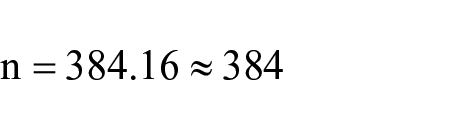
Convenient sampling was employed in this study. Students were located in their hostels and on campus, where the questionnaire in a form of an online link (designed using google forms) was shared via WhatsApp.
Data collection methods
The structured self-administrated online questionnaire was designed using Google forms. Data collection was done from January to February 2021. The questionnaires were developed based on set objectives to seek answers to the main objective of the study and for the needs of this survey. The data was collected at both classrooms and students’ hostels. The first part of the questionnaire focused on the socio-demographic characteristics that is, sex, age, country of residence, department, marital status, number of children.
The second section of the questionnaire evaluated the dietary habits and practices of the participants before and during the lockdown. These were related to meal type, meal frequency, skipping of meals, water intake, changes in food intake, and intake of supplements. The frequency of the intake of certain food groups (e.g. fruits and vegetables, meat and meat products, fats, and oils, etc.) were also assessed according to the following categories 1-“Never,” 2-“1–4 times/week,” 3-“once/day,” 4-“2–3 times/day,” and 5-“4 or more times/day”. The questionnaire also assessed other food and grocery-related items before and during the lockdown. These were shopping habits; reading food labels, using a grocery list, and cleaning groceries. Other lifestyle behaviors reported by participants before and during the lockdown were also assessed. These were physical activity, exercising frequency and duration, sedentary behaviors, time for studies and entertainment, and sleeping habits.
Data analysis
The statistical package for social sciences (SPSS) software version 25 and GraphPad Prism was used for data analysis. Categorical data were described and presented using frequencies and percentages while continuous data were analyzed using means and standard deviations. A Chi-square test was used to determine the dietary habits and lifestyle behavior of the students before and during the COVID-19 lockdown. A p-value less than 0.05 in all analyses was considered statistically significant.
Results
Demographic and general characteristics of the students
A total of 384 students were given the weblink to the questionnaire and 220 responded yielding a response rate of 57.3%. Out of the 220 students who participated in this study, 39.5% were females; 63.2% were less than 25 years old and the rest were within 25 years or more (36.4%). The mean age of the students was 24.0 years (SD = 3.88), 44.1% were in the school of allied health sciences and 40% described their general state of health as being excellent in the last 3 months (Table 1).
Demographic and general characteristics of the students.

Change in dietary habits during COVID-19 lockdown
Table 2 describes whether students had changed their dietary habits during the COVID-19 lockdown. About 37% increased their food intake, 20.5% decreased their food intake and 40.9% did not change their food intake. While 8.6% of the students were already on a special meal plan before the COVID-19 lockdown, 15% more started a special meal during the COVID-19 lockdown. Most of the special diet (12.3%) was a low-fat diet, followed by a low-calorie diet (7.7%). More than half (60%) of the participants thought higher income was a factor that could improve their dietary intake. About 48% started taking supplements during the COVID-19 lockdown, while 9.1% of the students were already on supplements before the COVID-19 lockdown with vitamin C (47.3%) being the most common supplement. About 19% of the students started taking herbs and spices during the COVID-19 lockdown, while almost all the students (80.9%) thought a balanced diet increased the immune system against the disease, followed by drinking fluid (64.5%) and practicing physical activity (60.9%).
Change in dietary habits of the students during COVID-19 lockdown.

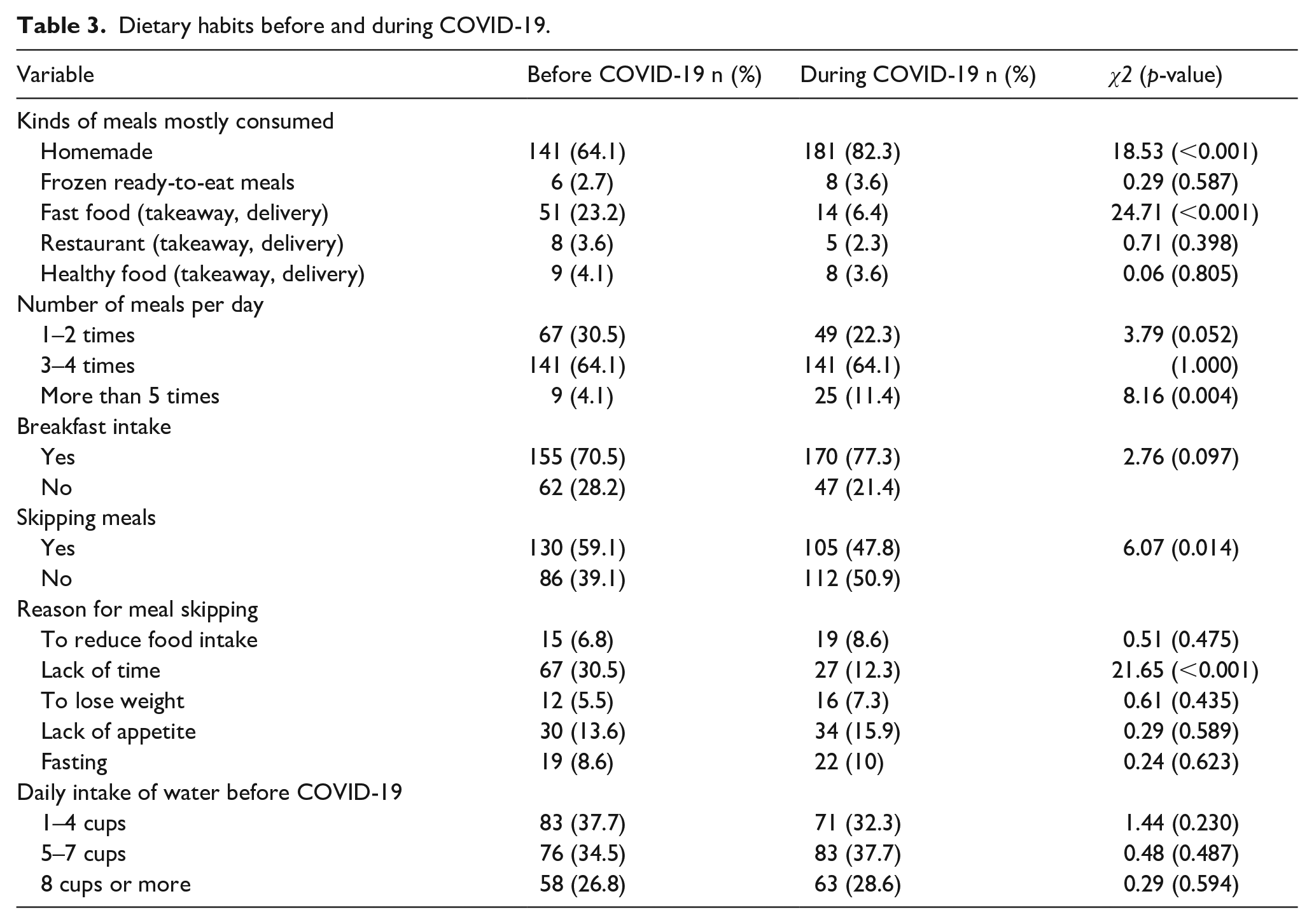
Table 3 indicates further dietary habits of the students before and during COVID-19 lockdown. About 59% of the students skipped meals before COVID-19 whereas 47.8% skipped meals during the COVID-19 lockdown. While 64.1% consumed homemade meals before the COVID-19 lockdown, 82.3% consumed homemade meals during the COVID-19 lockdown. In addition, there was a significant increase in the consumption of homemade foods (p < 0.001), level of healthy food choices (p = 0.029), and a reduced skipping of meals (0.014) during the COVID-19 lockdown.
Dietary habits before and during COVID-19.
Shopping, purchasing, and food stocking behavior
Table 4 shows whether the purchasing and storage behavior of the students changed during COVID-19 lockdown in which 56.8% of the students reportedly made a list before grocery shopping, 52.3% stocked up food during COVID-19, 61.4% checked food labels before purchasing food, and 50% sanitized food items before storing them. The food items that were mostly stocked were fresh fruits and vegetables and dry foods (rice, pasta, pulses, and bulger).
Shopping, purchasing, and food stocking behavior during COVID 19.

Physical activity and sedentary behavior before and during COVID-19 lockdown
Table 5 shows the physical activity and sedentary behaviors of the participants. Thirty-six percent of the students spent more time on entertainment and 29.1% spent more time on their computers. Furthermore, a significant proportion of the students spent more than 5 h on their computer during the COVID-19 lockdown compared to a lower proportion spending the same on their computers before the lockdown (p = 0.001). About 58% and 31.4% of the students had less than 7 h per night of sleep before and during COVID-19 lockdown respectively. Moreover, the proportion of students who had a good and very good sleep at night increased significantly during the COVID-19 lockdown compared to those before the COVID-19 lockdown (p < 0.001).
Physical activity and sedentary lifestyle.

n: Sample size; χ 2 : Chi-square statistic.
Discussion
We investigated the influence of COVID-19 lockdown on the dietary habits and lifestyle behaviors of students of the University for Development Studies in Ghana.
An important finding of this study was that the proportion of those who consumed five or more meals per day increased significantly from 4.1% before the COVID-19 lockdown to 11.4% during the lockdown. This is much higher than the difference obtained by Cheikh Ismail et al. 6 from a report of assessment of eating habits and lifestyle during the COVID-19 pandemic among 2970 participants across 18 countries which showed an increase from 2.2% before COVID-19 to 6.2% during the COVID-19 lockdown. It is possible to suggest that students had enough to eat as they were staying with families and did not have to manage with the little, they usually have while in school. Also, there was probably enough time to prepare any kind of food desired by the students as it is evidenced in this study in which the proportion of those who did not skip meals increased significantly from 39.1% before the lockdown to 50.9% during the lockdown. Moreover, the percentage of participants who skipped their breakfast as a result of time factor decreased from 30.5% to 12.3% before and during the period of lockdown respectively. Furthermore, 6.8% of the students increased the intake of breakfast during the COVID-19 lockdown. This is consistent with the findings of Cheikh Ismail et al. 6 who reported a decreased skipping of meals from 64.4% before the pandemic to 45.1% during the pandemic. Contrarily, Husain and Ashkanani 7 found that the rate of skipping breakfast did not change greatly but slightly increased during the lockdown. Authors explained that their finding could be due to participants’ lack of time, intentional skipping of breakfast to cut calories and poor appetite.
Generally, people became conscious of their dietary habits and food intake since the COVID-19 pandemic struck, as strengthening their immune system and controlling underlying illness became the priority. This current study noticed a change in a specific meal plan with 15% of the student population starting a new diet plan to cut down both caloric and fat intake in their quest to maintain or reduce weight as they were less physically active.
This current study also showed that the percentage of students who had homemade foods during COVID-19 increased from 64.1% to 82.3%. This is consistent with the results of a previous study that reported a decrease in the sales of snacks as a result of the increased production of homemade snacks. 8 This goes further to demonstrate increased healthy eating among students during the COVID-19 lockdown as we have reported in this study a decrease in the consumption of fast foods during the lockdown.
Furthermore, this current study noticed an increase in food stocking from 17.3% before the COVID-19 lockdown to 52.3% during the lockdown. Among the foods stocked, fresh fruits and vegetables were the highest (56.8%), followed by dried foods (54.5%) which included pulses and rice, followed by fresh meat (45%), and then milk and milk products. More importantly, 50% of the students started paying attention to food hygiene that is, sanitization of food before storage. Similarly, a study conducted among Turkish university students recorded an increase in shopping for food and much attention being paid to hygiene. 9 This is probably due to the students adhering to the general safety guidelines provided for the prevention of COVID-19 infections which includes regular hand washing and hygiene.
It is evident that eating healthy and being physical active are the foundations of good health and well-being and the effective functioning of the immune system. 10 The restrictions from the COVID-19 lockdown that perpetuates social isolation could result in physical inactivity and the adoption of poor dietary habits such as binge eating. 11 In this current study, physical activity fell by 11.4% among students due to the social distancing as students were not able to participate in social related games such as football, volleyball, basketball, and among others.
Moreover, this present finding has shown that students spent more than 5 h per day on their computers, rising from 12.7% before to 29.1% during the COVID-19 lockdown. Also, students who spent time on computers or television for entertainment for more than 5 h a day during the pandemic rose about twice the number before the pandemic. Students, therefore, felt stuck indoors thus channeling their idleness on food (which mostly is fat and carbohydrate-rich foods) as a coping mechanism to the boredom and loneliness. It is possible to suggest that the more students are physically active, the healthier their dietary habits
Growing evidence from studies shows that adequate nutrient consumption is essential for sleep. One large study on micronutrient inadequacy in short sleep in the USA done by Ikonte et al., 12 found that lack of key nutrients, such as magnesium, vitamins A, C, D, E, and K could be associated with sleep problems. In correlation with this present study, healthy lifestyle habits were increased evidenced by the percentage of sleep quality and the number of hours students slept during the period of the COVID-19 pandemic.
The findings of our study shows an interesting conundrum in which there is an increase in the consumption of healthy foods such as fruits, vegetables, pulses and among others together with an increase in sedentary lifestyle behaviors and decrease in participation in high physical activity. The effects of these on the nutritional status of participants need further investigation.
This study has limitations worth noting. Firstly, self-reports were used to assess physical activity, diet, smoking, and sleeping habits. Self-reports are liable to recall bias. Due to restrictions during the COVID-19 a web-based survey tool that had the potential of selection bias was used. This limitation was minimized by making the survey link available to all students through their respective WhatsApp groups. The findings are also limited by the study being conducted in a single institution thereby affecting its generalizability. The low response rate, which is common with online questionnaires, is also a recognized limitation of this study.
Conclusion
The lockdown period affected the dietary habits of the students. Students skipped meals less often, ate more breakfast and generally had healthy dietary habits during the lockdown. However, students frequently engaged in sedentary lifestyle behaviors and participated less frequently in high level of physical activity but had increased number of sleep hours during the COVID-19 lockdown. University students should be supported with appropriate nutrition education and counseling programs to help them adopt healthy dietary and lifestyle habits.
Footnotes
Acknowledgements
Authors wish to thank all students who took part in the study.
Declaration of conflicting interests
The author(s) declared no potential conflicts of interest with respect to the research, authorship, and/or publication of this article.
Funding
The author(s) received no financial support for the research, authorship, and/or publication of this article.
Ethical consideration
Approval was obtained from the University for Development Studies Ethical Review Committee; under whose supervision the research was conducted. Voluntary participation was encouraged from qualified participants. Also, names of participants were excluded from the questionnaire to ensure the anonymity and confidentiality of participants.
