




Abstract
The number of mental health problems in children and adolescents has been increasing. One of the causes of mental health problems is trauma in the family, such as childhood adversities. The aim of this study was to review the relationship between childhood adversities and mental health problems. The method in this study was a systematic review using three databases: CINAHL, PubMed, and SCOPUS. The results of the review were reported according to the PRISMA guidelines. The keywords used in this study were mental health or mental illness or mental disorder or psychiatric illness AND adolescents or teenagers or teenagers or youth AND parental divorce or parental separation OR parental death or parental loss or parentally bereaved. The inclusion criteria for the articles were English language and published from 2017 to 2021. This study recorded 477 articles, screened according to the topic, and then the final articles were 35. The results of the systematic review showed evidence that childhood adversities were related to mental health problems according to the ICD-10 diagnosis, ADHD and personality disorders, depression, post-traumatic, smoking behavior, and alcohol abuse, and distress. Interventions for children with childhood adversities were needed to prevent mental health disorders.
Keywords
Introduction
The number of mental health problems has been increasing, especially among children and adolescents.1–3 Stressors of life, as well as trauma, can cause mental health problems. 4 The first onset of mental health problems usually happens before the age of 18 years 5 and the most common mental health problems are depression and anxiety. This mental health problem also can trigger suicidal attempts. 4
More than 30,000 children were adopted by individuals who are not their family members. Furthermore, several surveys indicated that they did not live with their families or parents.6–8 These conditions are life-threatening for children as well as parents. 9 Children feel loss of support, loss of affection, decrease in cognitive stimulation, also social interaction is disrupted. 10 Parents with these conditions also tend to be frustrated and uncontrolled, so the role of parents cannot be maximized. 11 Further, it also leads to childhood adversities (CA).
Data from WHO stated that more than 38% of adults in 21 countries have experienced CA. 12 The definition of CA is still being debated, but several studies define it as abuse and neglect that occurs during childhood and adolescence. 12 CA also can be defined as parental divorce, parental death, parental substance abuse, parental hospitalization, parental criminality, residential instability, household living on public assistance, or parental migration. 13
Several studies regarding the relationship between childhood adversities and mental health have been published and well-documented.10,14–16 There was one study related to the meta-analysis about the effect of parental divorce on mental health among children. 17 So, the aim of this study was to conduct a systematic review of the relationship between childhood adversities and mental health problems.
Research methods
This procedure of systematic review was registered in PROSPERO number CRD42021277448 to avoid duplicates and bias.
Literature search strategy
We performed a systematic review to search original studies from three databases, CINAHL, PubMed, and SCOPUS. This study followed the previous study for guiding the systematic review.17,18 We reported the systematic reviews according to the PRISMA (Preferred Reporting Items for Systematic Review and Meta-Analysis) guideline. 19 The keywords were used in this study were mental health or mental illness or mental disorder or psychiatric illness) AND (adolescents or teenagers or teen or youth) AND (parental divorce or parental separation) OR (parental death or parental loss or parentally bereaved) for CINAHL. We used the combination TITLE-ABS-KEY (mental AND health) OR TITLE-ABS-KEY (mental AND illness) OR TITLE-ABS-KEY (mental AND disorder) OR TITLE-ABS-KEY (psychiatric AND illness) AND TITLE- ABS-KEY (adolescents) OR TITLE-ABS-KEY (teenagers) AND TITLE-ABS-KEY (parental AND divorce) OR TITLE-ABS-KEY (parental AND separation) OR TITLE-ABS-KEY (parental AND death) OR TITLE -ABS-KEY (parental AND loss)) for SCOPUS. Furthermore, we used the combination (((((((((mental health[MeSH Terms]))) OR (mental illness[MeSH Terms]))) OR (mental disorder[MeSH Terms])) OR (psychiatric illness[MeSH Terms] )) AND (adolescents[MeSH Terms])) OR (teenagers[MeSH Terms])) AND (Parental divorce[MeSH Terms])) OR (Parental separation[MeSH Terms]))) OR (Parental: Abstract, Full text, English, Adolescent: 13–18 years, from 2017 to 2021) for PubMed. The articles were restricted from 2017 to 2021 and only English language. We recorded 477 articles (Figure 1).
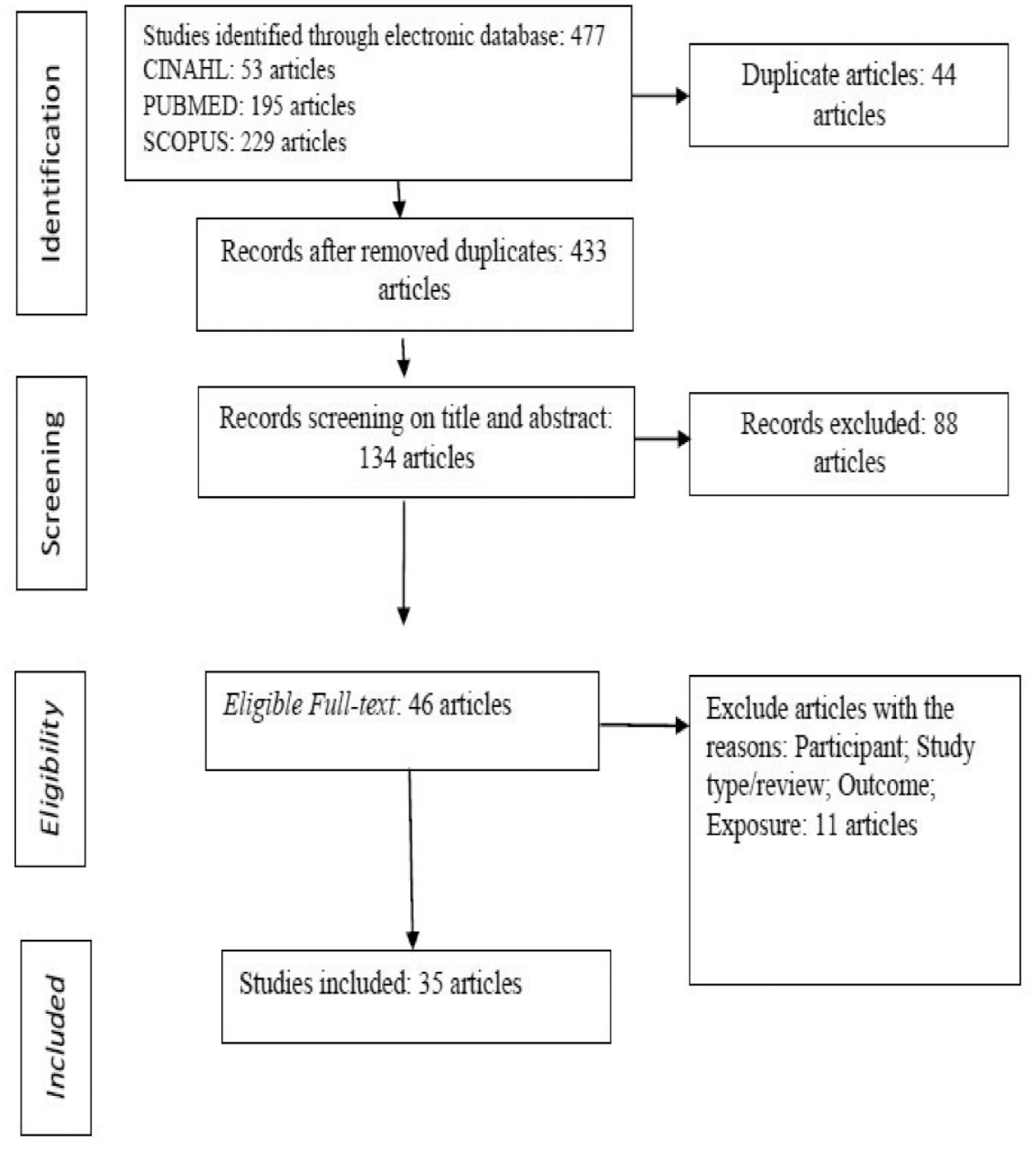
Flowchart of study selection.
Inclusion criteria
We performed a systematic review that focused on the relationship between childhood adversities, such as parental divorce, parental death, parental substance abuse, parental hospitalization, parental criminality, residential instability, household living on public assistance, and parental migration (left behind children). 10 The outcome was mental health based on the WHO ICD 10 classification of Mental and Behavioral Disorders, depression, anxiety disorder, stress, suicide, and behavioral disorder due to alcohol, drugs, and smoking. However, it does not limit it to other mental health disorders. 17
Results
Figure 1 describes the article selection procedure. In this study, we recorded 477 articles. Then we removed duplicate articles. Two independent authors screened on titles and abstracts, and 46 eligible articles were obtained. Also, we excluded articles that did not correspond to our interests. So, in total, we had 35 articles in this study.
This review showed that 35 articles focused on mental health problems based on the WHO ICD 10 classification of Mental and Behavioral Disorders: mental health disorders (9 articles), ADHD and personality disorders (2 articles), depression (7 articles), post-traumatic (1 article), substance abuse (4 articles), and stress (1 article), and most of the articles were predominantly concerned with suicide (11 articles). In terms of exposure, all of the articles focused on childhood adversities; one or more types of childhood adversities (30 articles), household dysfunction (1 article), parent hospitalized (1 article), adoptive parents (1 article), and left behind children (LBC) (1 article) (Table 1).
Characteristic of samples included in the systematic review.

The articles were predominantly from the European continent, Denmark, Finland, Norway, England, and Bosnia (17 articles). Studies from Asia (Turkey, Taiwan, India, Korea, China, Saudi Arabia, Japan, and Lebanon) were 13 articles, from the USA three articles and Australia two articles (Table 1).
In terms of study design, most of the articles were predominantly prospective studies (21 articles). The age of the respondents varied from children to adults; however, the studies were limited by the time of childhood adversities as children or adolescents (Table 1).
Mental health problems, post-traumatic growth (PTG), and stress
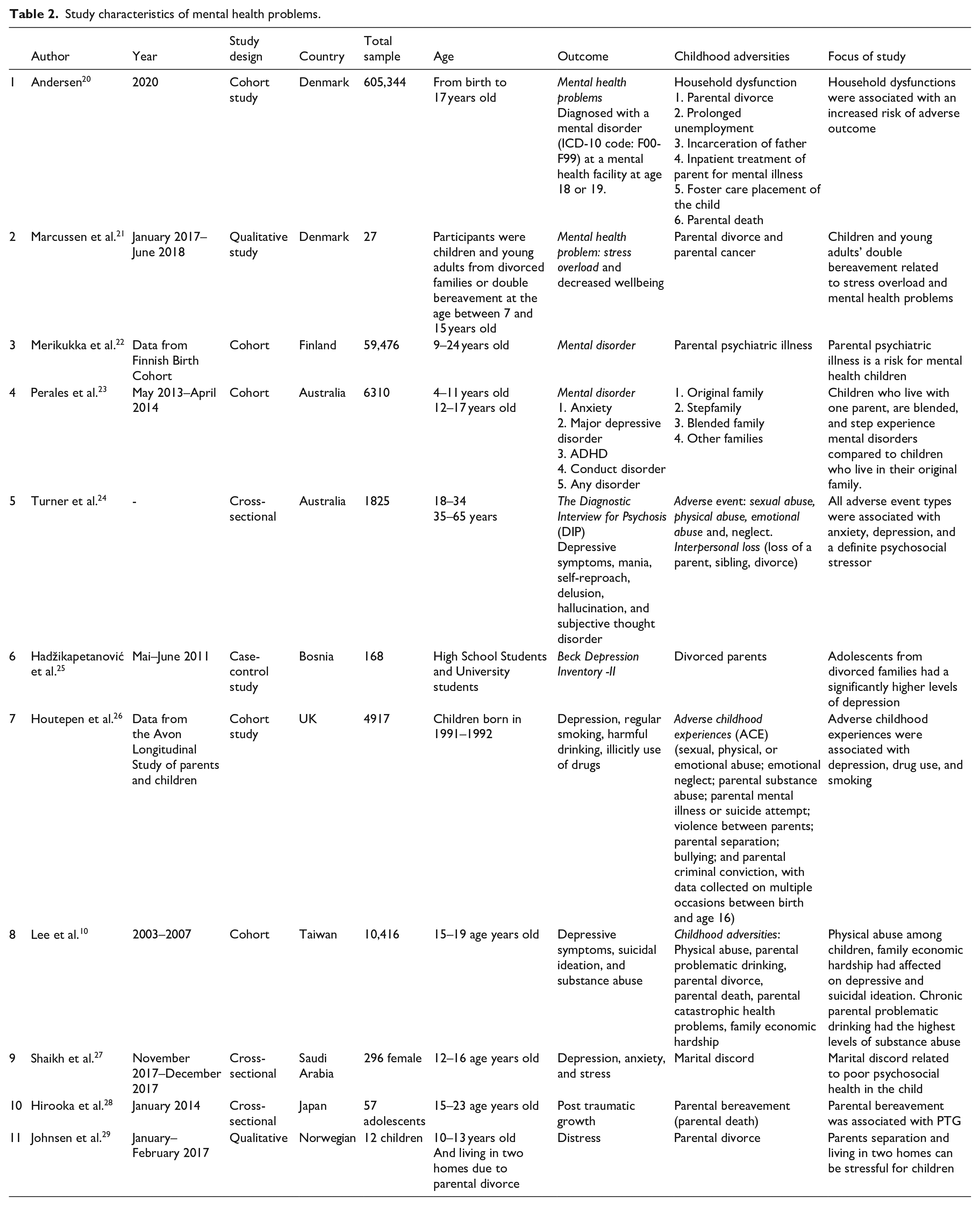
Table 2 shows that mental health problems were the outcome of exposures such as household dysfunction, parental divorce, parent jobless for more than 9 months, parents who were in prison, parents who were hospitalized at the psychiatric hospitals, children who live in orphanages, parent died, parents who were undergoing treatment, adoptive parents, and parental abuse. Mental health problems were determined using a self-report questionnaire or mental health based on the WHO ICD 10 classification (ICD-10 code: F00-F99). In addition, the review showed that PTG was the outcome of children who lost their parents due to cancer. PTG was measured using a self-report questionnaire (Japanese version of PTGI). Distress is also the outcome of parental divorce among children.
Study characteristics of mental health problems.
Suicide and self-harm
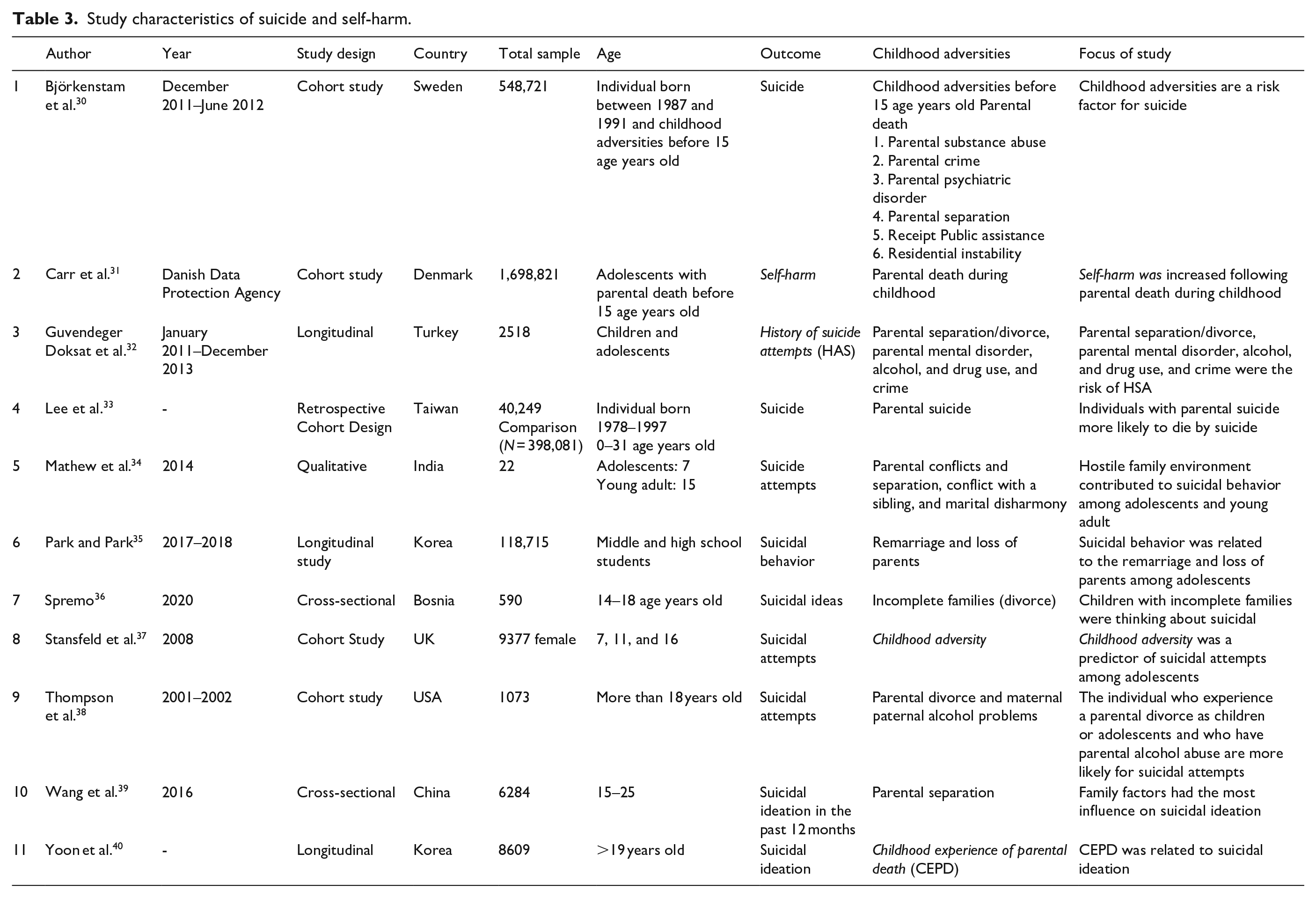
Table 3 shows that suicide, including suicidal ideations and suicidal attempts, were outcomes of childhood adversities (parental divorce, parental abuse, childhood experience of parental death (CEPD), and parental suicide). Suicide was diagnosed according to ICD 10 as well as a self-report questionnaire to report suicidal ideation such as the KOWEPS questionnaire.
Study characteristics of suicide and self-harm.
ADHD and personality disorders
Table 4 showed that childhood adversities were strongly related to ADHD and personality disorders.
Study characteristics for ADHD and personality disorder.

Depression
Table 5 showed that depression was an outcome of exposure to childhood adversities, parental divorce, parents who were hospitalized, parents who were in prison, parental death, parental disabilities, and mental disorders, broken families, leaving orphanages, and childhood abuse. Also, children with LBC (left behind children), because their parents have to go to work for more than 6 months. Depression was determined using self-report questionnaires such as the Beck Depression Inventory 2, Childhood Depression Inventory as well as medical diagnoses (DSM IV, ICD 10).
Study characteristics for depression.

Substance abuse
Substance abuse in this review was alcohol abuse, smoking and drugs abuse (table 6). Children with a history of parental divorce, parental divorce plus alcoholics, and children with parental divorce living with adoptive parents were predictors of substance abuse.
Study characteristics for tobacco smoking and alcohol abuse.

Discussion
This systematic review study provided evidence of the relationship between childhood adversities and mental health problems. The results showed that childhood adversities were significantly related to mental health problems. The original studies in this systematic review were published from 2017 to 2021.
There are several pathways that explain the relationship between childhood adversities and mental health problems. Childhood adversities such as family dysfunction usually occur in families with low socioeconomic status, and have effects on the psychological development of children. 20 This situation also leads to stress among children 21 as well as depression.25,43,44,46,47 In addition, parental conflict or parental divorce causes children to lose love and caring. Several studies also indicated that childhood adversities were associated with changes in the brain, specifically decreased hippocampal volume and impaired HPA axis. 53
Childhood adversities that contributed to mental health problems in this study were: family dysfunction (household dysfunction, parental divorce, jobless parents for more than 9 months, parental criminality, parental hospitalization at psychiatric hospital, children living in orphanages, parent died, parents who were undergoing treatment, adoptive parents, and parental abuse. These childhood adversities had a strong relationship with mental health problems such as stress overload and decreased wellbeing, mental disorders such as anxiety, major depressive disorder, ADHD, personality disorders, mania, delusions, and hallucinations.20–24 Based on these results, programs and interventions for children and adolescents, are needed especially to develop resilience and coping to deal with trauma in the family.
Another type of mental health problem related to childhood adversities was suicidal ideation and suicidal attempt.30–40 Children with a parental history of suicide had more risk of suicide as well; this idea was caused by disruption of self-regulation. In addition, they were more likely to be depressed and tended to conduct self-injury. 30 Meanwhile, children with parental died and parental divorce also felt loneliness and sadness. These feelings also can lead to suicidal ideation. 36
Childhood adversities were also associated with mental health problems: personality disorder 42 and ADHD. 41 Personality disorder was caused by the disruption of educational performance. The process of children’s education was disrupted due to problematic families, 20 while ADHD was caused by parents with alcohol abuse. Pregnant women who are alcoholics can affect the fetus. 41 Childhood adversities were also associated with children’s smoking behavior and alcohol abuse. This situation was caused by a lack of parental control over children’s behavior, especially children who lived with only one parent due to divorce or living with adoptive parents.
Limitation of the study
Some limitations in this study need to be considered and used as suggestions for further research. This study conducted a systematic review and has not yet measured the quantitative effect of the impact of family dysfunction, including childhood adversities on mental health. So a meta-analysis study is needed for further research.
Conclusion
Childhood adversities such as household dysfunction, parental hospitalization, adoptive parents, and left behind children (LBC) were closely related to mental health problems according to the ICD-10 mental health disorders, ADHD and personality disorders, depression, post traumatic and stress, substance abuse, and suicide. Interventions for children with childhood adversities are needed to prevent mental health disorders among them.
Footnotes
Acknowledgements
We would like to thank LPDP for their support of this study.
Author contributions
The authors contributed equally.
Declaration of conflicting interests
The author(s) declared no potential conflicts of interest with respect to the research, authorship, and/or publication of this article.
Funding
The author(s) disclosed receipt of the following financial support for the research, authorship, and/or publication of this article: the work was supported by LPDP Indonesia.
Ethics approval
We did not apply ethics because we conducted a systematic review. However, the protocol of this study was registered at Prospero number CRD42021277448.
Significance for public health
A childhood adversity (CA) is a public health issue with broad implications for mental health. Data from WHO stated that more than 38% of adults in 21 countries have experienced CA. These conditions are life-threatening. So, therefore, the aim of this study was to conduct a systematic review of the relationship between childhood adversities and mental health problems. Childhood adversities such as household dysfunction, parental hospitalization, adoptive parents, and left-behind children (LBC) were closely related to mental health problems according to the ICD-10 mental health disorders, ADHD and personality disorders, depression, post traumatic ad stress, substance abuse, and suicide. Interventions for children with childhood adversities are needed to prevent mental health disorders among them.